PAWS Pet Poison Plant Guide
Is American Mandrake Poisonous to Dogs, Cats, Horses, and Livestock?
Yes—American Mandrake, better known as Mayapple, Podophyllum peltatum, is poisonous to dogs, cats, horses, livestock, and other animals. The roots, creeping rhizomes, leaves, stems, flowers, seeds, and unripe green fruit contain podophyllotoxin and related cytotoxic lignans. Ingestion commonly causes drooling, nausea, vomiting, abdominal pain, diarrhea, reduced appetite, and lethargy. Sap and resin may also cause redness, painful inflammation, blistering, or ulceration of the lips, muzzle, skin, and eyes. Large rhizome, root, seed, extract, resin, or medication exposures can produce weakness, incoordination, tremors, neurologic depression, blood-cell abnormalities, organ injury, respiratory weakness, or coma.
Fully ripe golden-yellow fruit pulp contains much less toxin than the rest of the plant and has historically been eaten by people in small quantities. That limited exception does not make Mayapple a pet-safe fruit. The seeds remain part of the poisonous plant, unripe fruit is toxic, ripeness may be difficult to judge, and an animal normally consumes the complete fruit rather than carefully separating ripe pulp from seeds and incompletely ripened tissue. Several fruits may also cause drooling, vomiting, abdominal discomfort, or diarrhea.
About this guide: This page provides general pet-poisoning information and cannot diagnose or treat an individual animal. For any suspected exposure, contact a veterinarian or animal poison-control service immediately. Do not induce vomiting, give medication, or attempt home decontamination unless directed by a veterinary professional.
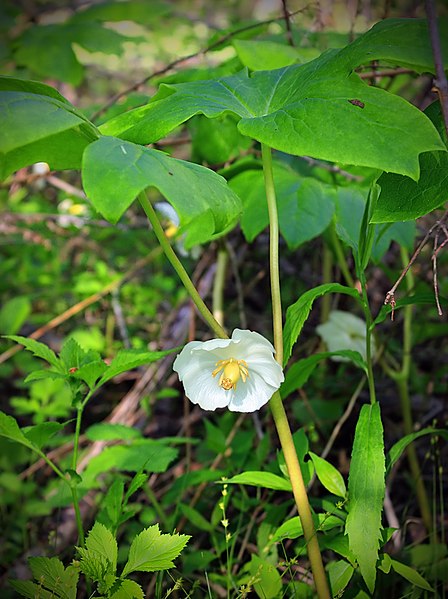
American Mandrake
Podophyllum peltatum L.
Accepted botanical synonyms include:
Anapodophyllum peltatum Moench
Podophyllum callicarpum Raf.
Podophyllum montanum Raf.
Historical forms include:
Podophyllum peltatum f. aphyllum Plitt
Podophyllum peltatum f. biltmoreanum Steyerm.
Podophyllum peltatum f. callicarpum (Raf.) J.M.H.Shaw
Podophyllum peltatum f. deamii Raymond
Berberidaceae — Barberry Family
American Mandrake; Mayapple; May Apple; May-Apple; Mayapple Root; Mandrake; Wild Mandrake; Indian Apple; Indian Apple Root; Hog Apple; Hogapple; Devil’s Apple; Duck’s Foot; Duck-Foot; Raccoonberry; Raccoon Berry; Umbrella Leaf; Umbrella Plant; Wild Lemon; Ground Lemon; Ground-Lemon; Pomme de Mai; Podophylle Pelté
Anapodophyllum peltatum, Podophyllum callicarpum, and Podophyllum montanum are former botanical names associated with Podophyllum peltatum.
American Mandrake and Wild Mandrake should not be confused with European Mandrake, Mandragora officinarum, or related Mandragora species. European Mandrake belongs to the nightshade family and contains tropane alkaloids such as atropine, hyoscyamine, and scopolamine.
Indian Apple is an ambiguous name that may be used for unrelated plants in different regions.
Umbrella Plant is also used for Schefflera, Cyperus, Darmera, and other unrelated plants. The common name alone is not sufficient for identification.
Devil’s Apple may also refer to Datura or certain Solanum species. Those plants have different toxins and poisoning syndromes.
Himalayan Mayapple or Indian Podophyllum commonly refers to Podophyllum hexandrum, a separate Asian species with a related but not identical toxin profile.
Podophyllotoxin and Related Cytotoxic Lignans
American Mandrake contains aryltetralin lignans, with podophyllotoxin as the principal clinically important compound. Related plant constituents include alpha-peltatin, beta-peltatin, their glycosides, and additional structurally related lignans.
These compounds are chemically active plant defenses rather than simple gastrointestinal irritants. A limited plant exposure commonly produces drooling, vomiting, abdominal pain, diarrhea, and lethargy, while a sufficiently large or concentrated exposure can affect the nervous system, bone marrow, liver, kidneys, gastrointestinal motility, and respiratory function.
The toxin mixture and concentration vary among individual colonies, plant tissues, seasons, environmental conditions, and analytical methods. No single concentration can be assigned reliably to every leaf, rhizome, fruit, or seed.
How Podophyllotoxin Disrupts Cell Division
Podophyllotoxin binds to tubulin and inhibits the polymerization of microtubules. Without functioning microtubules, a cell cannot construct the mitotic spindle required to separate chromosomes during normal cell division.
Cells may become arrested during mitosis and eventually die. Rapidly renewing tissues are particularly vulnerable after a substantial absorbed dose, including the gastrointestinal lining and bone marrow.
This mechanism helps explain why gastrointestinal irritation may appear first while leukopenia, thrombocytopenia, anemia, neuropathy, or other systemic complications can emerge later after severe poisoning.
Podophyllotoxin should not be confused mechanistically with every medicine derived from it. Semisynthetic anticancer derivatives may act through topoisomerase pathways, while natural podophyllotoxin itself is best known for disrupting tubulin and microtubule formation.
Podophyllin Resin Versus the Living Plant
Podophyllin is not one pure chemical. It is a concentrated resinous mixture historically obtained from dried roots and rhizomes of American or Himalayan Mayapple and contains podophyllotoxin, peltatins, and other lignans.
An animal chewing a living plant encounters naturally distributed lignans mixed with water, fiber, and other plant tissue. A concentrated resin, tincture, powder, extract, podophyllotoxin solution, or podofilox medication can deliver a much larger and more readily absorbed dose.
Severe human podophyllin intoxication has followed both ingestion and excessive topical exposure. Reported complications include profound gastrointestinal illness, central and peripheral neurotoxicity, bone-marrow suppression, hepatic dysfunction, renal injury, altered mental status, respiratory weakness, and coma.
Those severe reports establish the potential systemic toxicity of concentrated preparations, but they should not be presented as the inevitable outcome after one small Mayapple leaf bite.
Roots, Rhizomes, Leaves, Fruit, and Seeds
The underground rhizome and roots are major practical hazards because they are dense, resinous, persist after the foliage disappears, and may be exposed by animal digging, erosion, trail work, grading, landscaping, or plant removal.
They should not, however, be described as universally containing more podophyllotoxin than every leaf. Species-specific research has found substantial variation, with some Mayapple leaf samples containing concentrations equal to or greater than those in corresponding rhizomes.
Leaves, stems, flowers, green fruit, and seeds should all be treated as poisonous. Young spring foliage may be easily reached, while seeds and fruit become the primary exposure concern later in the season.
The whole plant remains toxic during visible growth, and the underground system remains hazardous through dormancy.
Ripe Fruit Is a Limited Exception, Not Pet Food
Fully ripe Mayapple fruit becomes soft, aromatic, and golden yellow, sometimes with pink, reddish, or purplish coloration. Its pulp contains the least podophyllotoxin of the major plant parts and has historically been eaten by people in carefully limited quantities.
This exception does not make the whole fruit safe for animals. The seeds remain part of the toxic plant, and a chewing animal may crush them. A fruit may be partly green, firm, incompletely ripe near the stem, spoiled, moldy, or contaminated with soil and other woodland material.
Large numbers of fully ripe fruits can still cause vomiting, drooling, diarrhea, and abdominal discomfort. No dependable safe pulp amount, seed count, or whole-fruit count has been established for a pet.
Local Irritation, Blistering, and Ulceration
Fresh sap, crushed plant tissue, and concentrated podophyllin resin can injure living tissue directly. Contact may cause burning, redness, swelling, blistering, erosions, or painful ulceration.
The lips, gums, tongue, nose, muzzle, eyelids, facial skin, paws, and thinly haired body areas are vulnerable. An animal that paws at an irritated mouth may transfer resin to the face or eyes.
Plant residue on fur can prolong exposure and may be swallowed during grooming. Vomited root, rhizome, or concentrated product material can also remain irritating and should be handled with gloves.
Eye exposure is especially concerning because direct cytotoxic irritation may accompany mechanical injury from soil or plant fragments.
No Dependable Safe Dose
No safe leaf amount, rhizome weight, root quantity, seed count, fruit count, podophyllotoxin concentration, or lethal dose has been established for an individual dog, cat, horse, livestock animal, rabbit, bird, or other pet.
Risk depends on the plant part, amount swallowed, fruit maturity, animal size and health, duration of contact, product concentration, and whether vomiting or diarrhea interferes with hydration.
Root, rhizome, numerous-seed, concentrated-resin, extract, and medication exposures deserve greater concern than one brief leaf bite or a small amount of completely ripe pulp.
Soil, fertilizer, pesticide, mulch, mushrooms, other poisonous woodland plants, medication ingredients, and foreign material may alter the expected syndrome.
Early Oral and Gastrointestinal Signs
Signs may begin within several hours and commonly include lip licking, repeated swallowing, excessive drooling, nausea, vomiting, abdominal discomfort, diarrhea, reduced appetite, panting, lethargy, and depression.
Dogs may pace, eat grass, stretch repeatedly, assume a hunched posture, whine, or resist abdominal handling. Cats may hide, crouch, drool, vomit, stop grooming, approach food and turn away, or become unusually quiet.
One brief bite of a leaf may cause no visible signs or limited gastrointestinal irritation. Root, rhizome, seed, green-fruit, extract, or medication exposure warrants greater concern even before severe signs develop.
Vomiting, Diarrhea, Dehydration, and Mucosal Injury
Vomiting may be brief or recurrent. Diarrhea may be soft, watery, urgent, mucus-containing, or accompanied by abdominal cramping and straining.
Repeated gastrointestinal losses can cause dry or tacky gums, sunken eyes, reduced urination, weakness, cool extremities, rapid heart rate, poor circulation, electrolyte abnormalities, and collapse.
Blood in vomit, coffee-ground material, black stool, substantial bloody diarrhea, painful swallowing, or severe focal abdominal pain may indicate more extensive mucosal injury or another serious toxic or gastrointestinal process.
An animal that repeatedly vomits after drinking cannot correct meaningful dehydration through voluntary water intake alone.
Mouth, Skin, and Eye Injury
Sap and resin may cause painful redness, burning, swelling, blistering, erosion, or ulceration of the lips, gums, tongue, muzzle, nose, paws, eyelids, and skin.
An affected animal may paw at the mouth, rub the face, lick continuously, resist head handling, or refuse food because chewing and swallowing are painful.
Eye exposure can cause intense tearing, blinking, squinting, conjunctival redness, eyelid swelling, light sensitivity, discharge, cloudiness, or inability to open the eye.
Continued licking, scratching, and rubbing can deepen tissue injury and spread contamination. Open lesions may later develop secondary bacterial infection.
Neurologic and Respiratory Effects
Neurologic effects are less common after ordinary plant nibbling but can occur after substantial root, rhizome, seed, extract, resin, or medication exposure.
Possible findings include excitement, unusual hyperactivity, weakness, stumbling, swaying, loss of coordination, reduced reflexes, tremors, profound depression, seizures, reduced responsiveness, or coma.
Peripheral neuropathy and autonomic dysfunction may emerge after the initial gastrointestinal illness has improved. Weakness, abnormal gait, reduced limb responses, constipation or paralytic gastrointestinal dysfunction, and impaired breathing can therefore be delayed.
Labored breathing, shallow respiration, gasping, blue-gray gums, inability to stand, or reduced responsiveness requires emergency care.
Delayed Blood-Cell and Organ Abnormalities
A large systemic podophyllin or podophyllotoxin exposure can damage rapidly dividing bone-marrow cells. Leukopenia, thrombocytopenia, and anemia may develop after the initial gastrointestinal phase.
Possible warning signs include fever, unusual susceptibility to infection, profound fatigue, pale gums, pinpoint skin bleeding, bruising, nosebleeds, blood in urine or stool, or bleeding that is difficult to stop.
Liver and kidney abnormalities, hypoglycemia, electrolyte disturbances, low blood pressure, and circulatory compromise have also been reported in severe concentrated-product poisoning.
These delayed complications are documented much more strongly after resin, medicinal-product, or very large exposures than after one small bite of a growing plant.
Horses, Livestock, and Small Animals
Horses cannot vomit and may instead develop salivation, feed refusal, abdominal pain, diarrhea, depression, weakness, incoordination, tremors, or colic-like behavior.
Cattle, sheep, and goats may show reduced appetite, salivation, diarrhea, ruminal slowing, abdominal discomfort, weakness, abnormal gait, or recumbency after substantial exposure.
Rabbits and guinea pigs cannot vomit. Drooling, appetite loss, fewer droppings, tooth grinding, abdominal enlargement, diarrhea, weakness, or gastrointestinal stasis requires prompt veterinary care.
Companion birds may develop regurgitation, altered droppings, appetite loss, fluffed posture, weakness, tremors, poor balance, or reduced responsiveness.
Expected Course and Prognostic Warning Signs
Mild gastrointestinal signs after limited plant exposure commonly improve within approximately one to three days. Mouth, skin, and eye ulceration may require a longer healing period.
Repeated vomiting, severe or bloody diarrhea, inability to retain water, progressive weakness, abnormal gait, tremors, collapse, breathing changes, reduced urination, fever, bruising, bleeding, or new signs after apparent improvement requires reassessment.
A major rhizome, root, resin, extract, or medication exposure may require monitoring beyond the resolution of vomiting because neurotoxicity and bone-marrow suppression can be delayed.
Plant Identity, Range, and Poisoning-Relevant Habitat
American Mandrake, Podophyllum peltatum, is a native North American woodland perennial in the Barberry Family. Mayapple is its more widely used common name.
Its native range extends from southeastern Canada through much of the central and eastern United States, including the Great Lakes, Northeast, Mid-Atlantic, Appalachians, Southeast, lower Mississippi region, and portions of the central plains.
Animals most often encounter it in deciduous woods, forest openings, moist slopes, riverbanks, stream corridors, roadsides, shady field margins, thickets, wooded fence lines, parks, campgrounds, rural yards, old home sites, wooded pastures, and native-plant landscapes.
Dense colonies may occur beside hiking trails or beneath open woodland where dogs can move directly through the foliage. Livestock exposure is most likely along wooded pasture margins or after woodland vegetation is cut, uprooted, or deposited in an enclosure.
Clonal Colonies and Hidden Underground Exposure
A Mayapple patch may appear to consist of many separate plants, but numerous shoots are commonly connected by one branching underground rhizome system.
The rhizomes extend beyond the visible leaves. A dog may uncover poisonous underground material while digging beside a colony even when no shoot is directly above that location.
The above-ground plant often becomes yellow or disappears during summer dormancy, but the rhizome and roots remain alive and toxic below the soil.
Erosion, flooding, trail maintenance, grading, woodland clearing, animal digging, fallen trees, utility work, and transplanting can expose dense pieces of rhizome at any season.
Identification of Leaves, Flowers, Fruit, and Rhizomes
Mayapple shoots carry one or two broad, umbrella-shaped leaves divided into several deep, rounded lobes. The leaf stalk attaches beneath the blade, producing the shield-like or peltate structure reflected in the scientific name.
One-leaf shoots are usually nonflowering. Reproductive shoots generally divide near the top and bear two leaves, with one nodding white flower developing beneath them. Both shoot types remain poisonous.
The flower is easily missed because it hangs below the leaf canopy. It usually has six to nine waxy white petals surrounding numerous yellow anthers.
The developing fruit is green, firm, and oval to lemon-shaped. It becomes soft, fragrant, and golden yellow as it ripens. Pink, reddish, or purplish areas may occur, but color alone does not prove complete ripeness.
The shallow creeping rhizome is jointed and brown to reddish brown, with attached roots and scars where previous shoots emerged. Soil-covered rhizome pieces can resemble sticks, roots, or chewable plant debris to a dog.
Seasonal Exposure Patterns
Young foliage emerges rapidly in early spring, often before the forest canopy fully develops. Tender new growth may attract curious puppies and animals investigating the first available woodland vegetation.
Flowers and green fruit appear beneath the leaves during spring and early summer. Their hidden position can make exposure difficult for an owner to recognize without lifting the foliage.
Fruit ripens during summer as some leaves begin yellowing or declining. Fallen fruit may remain beneath the colony after the foliage becomes less conspicuous.
During late summer, autumn, and winter, the greatest exposure shifts underground. Digging animals and land disturbance can uncover poisonous rhizomes even when the site appears empty.
Ripe Fruit, Wildlife, and the Seeds
The fully ripe fruit pulp contains the least podophyllotoxin and has a history of carefully limited human consumption. The exception applies only to fully ripe pulp, not to green fruit, seeds, leaves, or underground parts.
Box turtles and some wild animals consume ripe fruit and help disperse the seeds. Their feeding behavior and natural tolerance do not establish that whole fruit is safe for dogs, cats, livestock, rabbits, or companion birds.
A pet normally eats the complete fruit rather than separating the pulp from the seeds. It may crush the seeds, swallow partially green tissue, consume several fruits, or eat spoiled fruit from the woodland floor.
Whole-fruit ingestion should therefore be evaluated from the amount, ripeness, animal size, signs, and presence of crushed seeds rather than from the fact that the pulp has historical food use.
Look-Alikes and Naming Confusion
European Mandrake, Mandragora officinarum, is unrelated. It belongs to the Nightshade Family and contains atropine-like tropane alkaloids capable of causing dilated pupils, dry mucous membranes, rapid heart rate, agitation, delirium-like behavior, urinary retention, seizures, and coma.
Himalayan or Indian Mayapple is Podophyllum hexandrum, formerly and alternatively classified as Sinopodophyllum hexandrum. It also contains podophyllotoxin and may appear in herbal or medicinal products labeled simply “podophyllum.”
Devil’s Apple can refer to species of Datura or Solanum. Umbrella Plant is used for Schefflera, Cyperus, Darmera, and other unrelated plants. Indian Apple and Ground Lemon also have regional uses outside Mayapple.
Autumn Crocus, Pokeweed, mushrooms, Daffodil, and several woodland plants can produce overlapping gastrointestinal or systemic signs. Exact identification is particularly important when severe bloody diarrhea, pupil changes, profound agitation, cardiac abnormalities, or rapid organ failure develops.
Dogs, Cats, Horses, Livestock, and Exotic Animals
Dogs are most likely to be exposed while moving through a colony, biting leaves, eating low fruit, carrying uprooted plant material, or digging up rhizomes. A dense underground piece is a more concerning exposure than one exploratory leaf bite.
Cats may chew young foliage, hide beneath the leaves, contact sap on the face or coat, or ingest residue while grooming. Continued appetite refusal requires attention because prolonged fasting can create secondary metabolic disease.
Horses may encounter the plant in wooded pasture, along fence lines, or within cleared brush. Horses cannot vomit, so salivation, feed refusal, abdominal pain, diarrhea, weakness, or incoordination may be the principal findings.
Livestock exposure is most likely when normal forage is scarce or when leaves, fruit, roots, and rhizomes become mixed into hay, silage, brush piles, or land-clearing debris. Goats should not be used deliberately to clear a Mayapple colony.
Rabbits, guinea pigs, companion birds, reptiles, and other exotic animals should not receive Mayapple leaves, fruit, seeds, or roots. Limited species-specific evidence does not establish safety.
Concentrated Products, Diagnosis, Prognosis, and Prevention
Podophyllin resin, purified podophyllotoxin, podofilox preparations, wart medications, herbal extracts, tinctures, powders, and products labeled “podophyllum” can deliver a much larger dose than casual contact with a living plant.
Exposure may occur when an animal chews a container, licks a treated human skin site, contacts spilled medication, or gains access to an herbal product. The exact product, concentration, amount missing, treatment area, application time, and complete ingredient list should be preserved.
No routine clinical test directly confirms podophyllotoxin in an ordinary veterinary case. Diagnosis depends on plant or product identification, the part and amount involved, timing, clinical signs, and exclusion of other toxins.
Useful evidence includes complete leaves, flowers, green or ripe fruit, seeds, rhizome fragments, photographs of the colony, nursery labels, medication packaging, ingredient lists, and material found in vomit.
Blood counts, electrolytes, glucose, liver and kidney values, urinalysis, blood pressure, neurologic examinations, and respiratory monitoring may be appropriate after a significant exposure. Serial blood counts may be needed when delayed bone-marrow suppression is possible.
The prognosis is good after most limited leaf exposures or small amounts of ripe pulp without significant seed ingestion. It becomes more guarded after rhizome, root, numerous-seed, resin, extract, or medication exposure and when neurologic dysfunction, extensive ulceration, bone-marrow suppression, low blood pressure, respiratory weakness, or organ injury develops.
Prevent exposure by supervising animals in woodland colonies, blocking digging where rhizomes are present, removing disturbed plant material immediately, securing every fruit and seed during cleanup, and storing medicinal or herbal products in closed pet-resistant cabinets.
Immediate Steps After American Mandrake Exposure
- Stop further exposure. Move the animal away from leaves, stems, flowers, fruit, seeds, roots, rhizomes, sap, woodland debris, disturbed soil, and any podophyllin- or podophyllotoxin-containing product.
- Wear gloves. Sap, resin, contaminated saliva, fur, and vomit may irritate human skin and can be transferred to the animal’s face or eyes.
- Preserve identification evidence. Save the plant, fruit, seeds, rhizome fragments, photographs of the colony, medication container, ingredient list, and material found in vomit.
- Identify the material involved. Determine whether the animal encountered a leaf, green fruit, fully ripe pulp, seeds, root, rhizome, resin, extract, wart medication, or an unidentified “podophyllum” product.
- Estimate the amount and timing. Record the missing quantity, approximate exposure time, animal’s weight, current signs, and relevant medical conditions.
- Remove only loose visible material. Carefully lift leaves, fruit, seeds, roots, or rhizome pieces resting at the lips or front of the mouth. Do not perform a blind finger sweep.
- Wipe accessible residue. Use a damp cloth on the lips, gums, tongue, and muzzle of a fully alert animal that is breathing and swallowing normally.
- Contact a veterinarian promptly. Any root, rhizome, seed, unripe-fruit, concentrated-product, medication, substantial, or uncertain exposure warrants professional guidance.
Do Not Attempt Unsupervised Home Treatment
- Do not induce vomiting at home. Mayapple can already cause vomiting and tissue injury, and additional vomiting may worsen dehydration, ulceration, or aspiration risk.
- Do not give hydrogen peroxide, salt, mustard, syrup of ipecac, detergent, oil, or use manual gagging. These methods can cause gastric injury, aspiration, sodium poisoning, or airway trauma.
- Never use hydrogen peroxide as a feline emetic. It can severely injure a cat’s stomach and esophagus.
- Never attempt to induce vomiting in a horse. Horses cannot vomit.
- Do not administer activated charcoal at home. It may be considered professionally after selected significant exposures but can be inhaled by a vomiting, weak, stumbling, seizing, sedated, or poorly swallowing animal.
- Do not force milk, oil, food, water, electrolyte products, or sugar. These substances do not neutralize podophyllotoxin and may be aspirated.
- Do not give human antidiarrheals, antacids, bismuth products, pain relievers, sucralfate, acid suppressants, herbal remedies, or leftover prescriptions. They are not Mayapple antidotes and may be unsafe or obscure a serious exposure.
- Do not apply human creams or ointments to irritated tissue. Anesthetics, steroids, antibiotics, zinc products, essential oils, and other ingredients may be harmful when licked.
Skin, Fur, Mouth, and Eye Decontamination
Prevent licking and grooming until plant resin and sap have been removed. Wearing gloves, wash contaminated paws, muzzle, skin, or coat with lukewarm water and a mild species-appropriate cleanser.
Rinse thoroughly without aggressive scrubbing. Do not use bleach, alcohol, peroxide, solvents, concentrated vinegar, essential oils, or harsh degreasers.
Redness, swelling, blistering, erosion, open sores, persistent pain, or continued licking requires veterinary examination and assessment for secondary infection.
If plant material, resin, soil, or medication enters an eye, begin prompt irrigation with sterile saline or clean lukewarm water. Prevent rubbing during and after irrigation.
Do not scrape the eye or use tweezers, cotton swabs, human redness drops, or leftover eye medication. Persistent squinting, cloudiness, discharge, eyelid swelling, blood, or inability to open the eye requires prompt examination.
When Emergency Examination Is Required
- Persistent gastrointestinal illness: Repeated vomiting, inability to retain water, severe or bloody diarrhea, black stool, substantial abdominal pain, or continuing food refusal requires examination.
- Dehydration or poor circulation: Dry or tacky gums, sunken eyes, reduced urination, pale gums, cool extremities, profound weakness, inability to stand, or collapse requires urgent treatment.
- Neurologic abnormalities: Stumbling, severe incoordination, reduced reflexes, tremors, seizures, profound depression, coma, or delayed weakness after apparent improvement is an emergency.
- Respiratory abnormalities: Labored or shallow breathing, gasping, blue-gray gums, inability to maintain normal posture, or reduced responsiveness requires immediate care.
- Extensive contact injury: Widespread blistering, ulceration, severe facial pain, inability to eat, or significant eye injury requires professional treatment.
- Possible bone-marrow suppression: Fever, bruising, pinpoint bleeding, pale gums, nosebleeds, blood in urine or stool, or unusual susceptibility to infection after a major exposure requires urgent testing.
- Concentrated-product exposure: Podophyllin resin, podofilox, podophyllotoxin medication, extract, powder, tincture, or an unknown product should be evaluated before severe signs appear.
Veterinary Examination and Decontamination
The veterinarian will assess the exact plant or product, material and amount involved, exposure time, hydration, abdominal pain, mucosal injury, neurologic status, breathing, circulation, and risk of delayed toxicity.
Professional emesis may be considered only after a recent meaningful ingestion in a fully alert, stable, asymptomatic dog that can protect its airway. It is inappropriate after drooling, vomiting, weakness, stumbling, tremors, seizures, reduced responsiveness, abnormal breathing, or impaired swallowing develops.
Activated charcoal may be considered after a significant recent root, rhizome, seed, resin, extract, or medication exposure when the potential benefit exceeds the aspiration risk and the patient can protect its airway.
Gastric lavage would be reserved for exceptional severe exposures under anesthesia with airway protection. It is not routine after a minor leaf or ripe-pulp exposure.
The mouth, pharynx, skin, and eyes should be examined for residual resin, erosions, ulcers, or retained plant material. Sedation may be required when pain or patient resistance prevents safe inspection.
Veterinary Supportive Treatment and Monitoring
No specific antidote exists. Treatment is based on the amount, plant part, product concentration, and gastrointestinal, neurologic, hematologic, dermatologic, ocular, respiratory, and circulatory effects.
Veterinarian-selected antiemetics such as maropitant or ondansetron may control continuing nausea and vomiting. Subcutaneous or intravenous fluids may replace losses, correct dehydration, and support circulation.
Electrolytes, glucose, acid-base balance, kidney values, liver values, blood pressure, urine production, oxygenation, and body temperature may require monitoring after a significant exposure.
Sucralfate may be considered when repeated vomiting, hematemesis, painful swallowing, esophagitis, erosive gastritis, or documented mucosal injury indicates a need for barrier protection. It does not neutralize podophyllotoxin and can interfere with absorption of other medications.
Prescription analgesia, wound care, protective collars, eye medication, nutritional support, and treatment of secondary infection may be needed for mouth, skin, or ocular ulceration.
Tremors or seizures may require injectable anticonvulsant or muscle-relaxant medication, oxygen, airway protection, temperature control, and correction of glucose or electrolyte abnormalities.
Respiratory weakness, profound neurologic depression, or coma may require intubation, assisted ventilation, intensive nursing care, and continuous monitoring.
Delayed Bone-Marrow and Neurologic Monitoring
A complete blood count may be appropriate at presentation after a major root, rhizome, resin, extract, or medication exposure and may need to be repeated because leukopenia, thrombocytopenia, and anemia can be delayed.
New fever, bruising, bleeding, pallor, profound fatigue, or infection after the gastrointestinal signs improve requires prompt reassessment.
Neurologic monitoring should continue when weakness, stumbling, reduced reflexes, gastrointestinal paralysis, urinary dysfunction, or respiratory weakness develops after the initial illness.
Improvement in vomiting does not prove that a severe concentrated exposure has completely resolved.
Horses, Livestock, Rabbits, and Other Animals
Remove every horse or livestock animal from Mayapple colonies, uprooted rhizomes, cleared woodland vegetation, suspect hay, and brush piles. Examine all animals sharing access.
Do not drench or force oil, charcoal, feed, water, or medication into a weak, bloated, coughing, recumbent, seizing, or poorly swallowing animal.
Large-animal evaluation may include oral examination, abdominal assessment, hydration and electrolyte testing, fluid therapy, rumen or intestinal support, neurologic monitoring, and serial blood testing after significant exposure.
Rabbits and guinea pigs require prompt care for drooling, appetite loss, reduced fecal output, diarrhea, tooth grinding, abdominal enlargement, weakness, or lethargy because gastrointestinal stasis can become critical.
Birds, reptiles, and other exotic animals require species-specific guidance. Dog and cat emesis, charcoal, medication, and fluid protocols should never be improvised for another species.
Prognosis, Recovery, and Prevention
The prognosis is good to excellent after most small leaf exposures or limited ingestion of fully ripe pulp without substantial seed consumption. Mild gastrointestinal signs commonly improve within one to three days.
Contact ulcers may require a longer recovery period. Healing depends on the depth, location, secondary infection, and whether the animal continues licking or rubbing the affected tissue.
The prognosis becomes more guarded after rhizome, root, numerous-seed, resin, extract, or medication ingestion and when neurologic dysfunction, bone-marrow suppression, extensive ulceration, respiratory weakness, persistent low blood pressure, or organ injury develops.
Prevent recurrence by supervising pets in woodland colonies, blocking digging where rhizomes are present, removing uprooted material immediately, collecting fallen fruit and seeds, and remembering that the site remains hazardous after summer dormancy.
Store podophyllin, podofilox, wart medications, extracts, and herbal products inside closed pet-resistant cabinets. Keep animals away from treated skin and clean spills promptly while wearing gloves.
Frequently Asked Questions About American Mandrake and Animal Poisoning
How poisonous is American Mandrake to dogs and cats?
American Mandrake is a genuine cytotoxic poisonous plant. Limited leaf exposure commonly causes drooling, vomiting, abdominal pain, diarrhea, appetite loss, and lethargy. Roots, rhizomes, numerous seeds, green fruit, resin, extracts, and medications create greater concern because they can produce neurologic dysfunction, severe gastrointestinal injury, bone-marrow suppression, organ abnormalities, respiratory weakness, or coma.
What is the principal toxin in Mayapple?
Podophyllotoxin is the principal clinically important toxin. It belongs to a group of cytotoxic lignans that also includes alpha-peltatin, beta-peltatin, and related glycosides. The exact mixture and concentration vary among plant parts, individual colonies, seasons, and environmental conditions.
How does podophyllotoxin injure cells?
Podophyllotoxin binds to tubulin and prevents normal microtubule formation. Cells cannot construct the mitotic spindle needed for division and may become arrested during mitosis. Rapidly renewing tissues such as the intestinal lining and bone marrow are particularly vulnerable after a large absorbed dose.
Are podophyllin and podophyllotoxin the same thing?
No. Podophyllotoxin is a defined toxic molecule. Podophyllin is a concentrated resinous mixture traditionally extracted from Mayapple roots and rhizomes and contains podophyllotoxin, peltatins, and other compounds. A resin or medicinal-product exposure can deliver a substantially larger dose than one bite of a living leaf.
Which part of American Mandrake is most dangerous?
Roots and rhizomes are major practical hazards because they are dense, resinous, remain underground after dormancy, and may be swallowed in substantial pieces. Seeds, green fruit, leaves, stems, and flowers are also poisonous. Chemical studies show that some leaves can contain as much or more podophyllotoxin than corresponding rhizomes, so no green plant part should be treated as harmless.
Is fully ripe Mayapple fruit safe for pets?
No. The soft golden-yellow pulp contains the least podophyllotoxin and has a history of limited human consumption, but the whole fruit contains poisonous seeds. Ripeness can be misjudged, unripe tissue may remain near the stem, and several ripe fruits can still cause drooling, vomiting, diarrhea, and abdominal discomfort.
Are Mayapple seeds poisonous?
Yes. Seeds remain part of the toxic plant even when surrounded by fully ripe pulp. A dog or another chewing animal may crush them before swallowing. No dependable safe seed count has been established for a pet.
Can one bite of a Mayapple leaf cause serious poisoning?
One small leaf bite often causes no signs or limited gastrointestinal irritation. Serious illness is more likely after a larger exposure, a small animal eating substantial foliage, or ingestion of roots, rhizomes, seeds, green fruit, concentrated resin, extract, or medication. No universal safe leaf amount exists.
How quickly do signs begin, and can toxicity be delayed?
Drooling, nausea, vomiting, abdominal discomfort, diarrhea, and lethargy may begin within several hours. Neuropathy, gastrointestinal paralysis, leukopenia, thrombocytopenia, anemia, or organ abnormalities can appear later after a major systemic exposure. Resolution of early vomiting does not always end the monitoring period.
Can Mayapple burn or ulcerate the mouth and skin?
Yes. Sap, crushed tissue, and concentrated resin are directly irritating and cytotoxic. Contact may cause burning, redness, swelling, blistering, erosion, or painful ulcers on the lips, gums, muzzle, paws, eyelids, and skin. Contaminated fur and saliva can spread the material during grooming.
Can Mayapple injure an animal’s eyes?
Yes. Sap or resin can cause intense conjunctival and corneal irritation, while soil and plant fragments may add mechanical injury. Begin gentle irrigation promptly. Persistent squinting, redness, cloudiness, discharge, eyelid swelling, or inability to open the eye requires veterinary examination.
Can Mayapple cause stumbling, tremors, seizures, or coma?
These effects are possible but are not expected after every minor leaf exposure. They are more concerning after substantial root or rhizome ingestion, numerous seeds, concentrated podophyllin, extracts, medication, severe dehydration, or another concurrent toxin. Any neurologic abnormality requires urgent assessment.
Can Mayapple cause delayed bone-marrow suppression?
Yes, after a sufficiently large systemic exposure. White blood cells, platelets, and red blood cells may decline because podophyllotoxin injures rapidly dividing bone-marrow cells. Fever, infection, bruising, pinpoint bleeding, pale gums, blood in urine or stool, or profound fatigue may appear after the gastrointestinal signs begin improving.
Is the plant still poisonous after the leaves disappear?
Yes. The above-ground shoots often become yellow or disappear during summer dormancy, but the creeping rhizome and roots remain alive and toxic below the soil. Digging dogs, erosion, trail work, construction, or land clearing may expose them during any season.
How is American Mandrake different from European Mandrake?
American Mandrake is Podophyllum peltatum in Berberidaceae and contains podophyllotoxin lignans. European Mandrake belongs to Mandragora in the Nightshade Family and contains atropine-like tropane alkaloids. European Mandrake is more likely to cause dry mouth, dilated pupils, agitation, rapid heart rate, urinary retention, delirium-like behavior, and seizures.
Is American Mayapple the same as Himalayan Mayapple?
No. Himalayan or Indian Mayapple is Podophyllum hexandrum, historically also called Sinopodophyllum hexandrum or Podophyllum emodi. It also contains podophyllotoxin. A product labeled only “podophyllum” may contain either species or a concentrated mixture and should be evaluated from its exact ingredient list.
Are podophyllin, podofilox, and wart medications dangerous to pets?
Yes. These are concentrated products and can be substantially more dangerous than a small plant bite. Exposure can occur when a pet chews a container, licks a treated human skin site, contacts a spill, or ingests an herbal preparation. Preserve the container and obtain professional poison guidance before signs develop.
Is Mayapple poisonous to horses, livestock, rabbits, and birds?
Yes. Horses and livestock may develop salivation, feed refusal, abdominal pain, diarrhea, weakness, incoordination, or tremors. Rabbits and guinea pigs may stop eating and develop gastrointestinal stasis. Companion birds may show regurgitation, altered droppings, weakness, tremors, or appetite loss. Mayapple should not be used as forage for any animal.
Should I induce vomiting or give activated charcoal?
Do not induce vomiting at home. A veterinarian may consider professional emesis after a recent substantial ingestion in a fully alert, stable, asymptomatic dog. Activated charcoal may be considered professionally after selected significant root, rhizome, seed, resin, extract, or medication exposures, but it must not be forced into a vomiting, weak, neurologically abnormal, or poorly swallowing animal.
How is Mayapple poisoning diagnosed and treated?
Diagnosis depends on identifying the plant or product, determining the part, amount, concentration, and timing, and evaluating gastrointestinal, skin, eye, neurologic, blood-cell, liver, kidney, respiratory, and circulatory findings. There is no specific antidote. Treatment may include decontamination, anti-nausea medication, fluids, pain control, mucosal protection for documented injury, wound and eye care, seizure control, respiratory support, and serial blood counts.
What is the prognosis, and how can exposure be prevented?
The prognosis is good after most small leaf exposures or limited ripe-pulp ingestion without significant seed consumption. It becomes more guarded after rhizome, root, numerous-seed, resin, extract, or medication exposure and when neurologic dysfunction, bone-marrow suppression, organ injury, or respiratory weakness develops. Supervise animals in woodland colonies, prevent digging, remove disturbed rhizomes and fallen fruit, and secure every medicinal or herbal product.