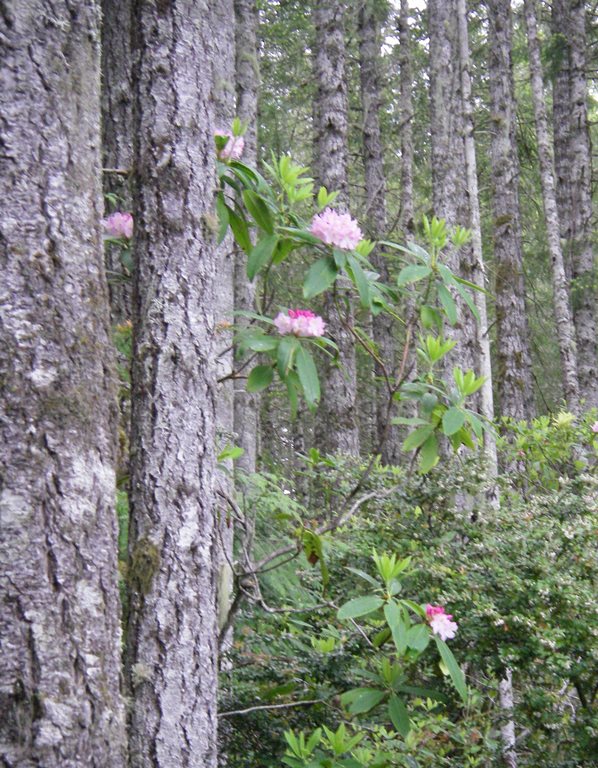
Rhododendron spp
Ericaceae
Azalea; Rhododendron; Rosebay; Rhododendron spp.; Yellow Azalea
Grayanotoxin (aka. andromedotoxin, rhodotoxin, acetylandromedol), arbutin glucoside.
Dose-dependent symptoms may include burning or irritation of the mouth, excessive salivation, vomiting, diarrhea, weakness, dizziness, depression, tremors or twitching, impaired coordination, low blood pressure, slow heart rate, abnormal heart rhythm, respiratory distress, collapse, coma, and death in severe cases.
The primary toxic principle Grayanotoxin (aka: andromedotoxin, acetylandromedol, rhodotoxin and asebotoxin), is a neurotoxin found in a variety of plants to include Rhododendron species (rhododendrons, azaleas), Kalmia angustifolia (sheep laurel), Kalmia latifolia (mountain Laurel), and Pieris species (Andromeda). Grayanotoxin may also be found in honey made from the nectar of these plants. The first recorded poisoning involving Grayanotoxin comes from the Greek professional soldier and writer Xenophon. In his most famous work, the Anabasis, he describes the effects of tainted honey on the army of Cyrus the Younger in his unsuccessful attempt to overthrow Artaxerxes 11 (401 to 400 BC):
"the number of bee hives was extraordinary, and all of the soldiers that ate of the honey combs lost their senses, vomited and were affected with purging, and none of them was able to stand upright; such as had eaten only a little were like men greatly intoxicated, and such as had eaten much were like mad men and some like persons at the point of death. They lay upon the ground, in consequence, in great numbers, as if there had been a defeat; and there was general dejection. The next day, no one of them was found dead; and they recovered their senses about the same hour they had lost them on the preceding day.”
Grayanotoxins work by binding to sodium channels in cell membranes. The binding unit is the group II receptor site, localized on a region of the sodium channel that is involved in the voltage-dependent activation and inactivation. These compounds prevent inactivation; thus, excitable cells (nerve and muscle) are maintained in a state of depolarization, during which entry of calcium into the cells may be facilitated. This action is similar to that exerted by the alkaloids of veratrum and aconite. All of the observed responses of skeletal and heart muscles, nerves, and the central nervous system are related to the membrane effects.-- U S Food & Drug Administration Center for Food Safety & Applied Nutrition (Food borne Pathogenic Microorganisms and Natural Toxins 1992) [In layman's terms grayanotoxins, disrupt the natural electrical current present in cells preventing the cells from returning to normality, leaving them permanently excited.]
Symptoms of poisoning occur after a dose-dependent latent period of a few minutes to two or more hours (Gunduz et al., 2006).When plants containing grayanotoxins are ingested, blood pressure begins to drop which can lead to dizziness, vomiting, diarrhea, tremors, heart disturbances and may cause breathing problems. If a large amount of the plant is consumed, such as would be the case if cattle, horses or sheep are allowed to graze in areas containing plants known to have grayanotoxins then convulsions, coma and death may result.
All parts of the plant are poisonous especially the foliage and contain some glycosides, to include Andromedotoxin which is chemically similar to turpentine. Andromedotoxin like turpentine will burn the mouth, which tends to discourage potential victims from consuming dangerous quantities. As such plants containing andromedotoxins are typically not very palatable to horses unless it is the only food source available. Cattle and sheep tend to be more at risk, for they are considerably less finicky about what they ingest and most will readily eat the leaves or flowers of Rhododendrons or "Azalea"s such as Yellow Azalea.
In order for serious clinical signs to develop, an animal would generally need to ingest 0.2% by weight of green leaves, flowers or stems containing andromedotoxin; although any amount could pose a potentially serious problem. To put it another way, a 60lb dog would need to eat a little less than 2 ounces for serious clinical signs to develop. Exercise common sense and keep hungry livestock away from areas where these plants are known to grow. If your pet is prone to chewing on things or grazing the backyard for roughage prevent them from accessing areas containing these plants.
Grayanotoxin Poisoning: Overview and Symptoms
- Severity Factors: Depends heavily on the amount ingested and the concentration of the toxin, which can vary significantly between cases.
- Early Symptoms: A burning sensation in the mouth usually occurs first, which often discourages further ingestion. This is typically followed by hypersalivation, vomiting, diarrhea, muscular weakness, and impaired vision.
- Advanced Symptoms (Large Ingestion): May lead to dyspnea (rapid, shallow breathing), depression, and prostration. Ruminants may experience bloat.
- Secondary Risks: Aspiration pneumonia can develop if vomit or fluids are inhaled into the lungs. Serious cardiovascular effects—including bradycardia, hypotension (due to vasodilation), and atrioventricular block—may occur and can be lethal.
Immediate Response to Azalea or Rhododendron Ingestion
- Remove the Source: Take away any remaining leaves, flowers, stems, nectar, honey, or plant material and prevent further ingestion.
- Check the Mouth: If safe, remove visible plant fragments from the animal’s mouth. A burning or irritating sensation may occur shortly after chewing the plant.
- Do Not Wait for Severe Signs: Grayanotoxin poisoning can progress from drooling, vomiting, and diarrhea to weakness, low blood pressure, abnormal heart rhythm, collapse, coma, or death.
- Do Not Induce Vomiting Unless Directed: Vomiting may be part of treatment when ingestion is recent, but it should be done only under veterinary or animal poison-control direction. Azalea and Rhododendron poisoning can involve cardiovascular depression, weakness, low blood pressure, abnormal heart rhythm, altered mentation, and aspiration risk, making unsupervised home vomiting potentially dangerous.
- Seek Veterinary Care Immediately: Contact your veterinarian, an emergency veterinary clinic, ASPCA Animal Poison Control, or Pet Poison Helpline at once, especially if the animal is weak, depressed, breathing abnormally, staggering, collapsing, or showing heart-rate abnormalities.
Symptoms Requiring Emergency Care
- Digestive Signs: Excessive salivation, vomiting, diarrhea, abdominal discomfort, loss of appetite, or repeated retching.
- Neurologic Signs: Dizziness, weakness, twitching, tremors, impaired coordination, depression, prostration, coma, or seizure-like activity.
- Cardiovascular Signs: Low blood pressure, slow heart rate, abnormal rhythm, collapse, pale gums, weakness, or signs of shock.
- Respiratory Signs: Rapid, shallow breathing, difficulty breathing, aspiration risk, or signs of fluid or vomit entering the lungs.
- Livestock Concerns: Ruminants and grazing animals may develop bloat, severe weakness, prostration, coma, or death after larger ingestions.
Veterinary Treatment
- Decontamination: A veterinarian may induce vomiting, perform gastric lavage, administer activated charcoal, or repeat charcoal dosing depending on the amount ingested, timing, species, and clinical signs.
- Supportive Care: Treatment is primarily symptomatic and supportive and may include fluid therapy, respiratory support, oxygen, gastrointestinal protectants, and close monitoring.
- Cardiac Support: Severe bradycardia, hypotension, heart block, or abnormal rhythm may require veterinary medications and cardiac monitoring.
- Aspiration Management: Animals that vomit repeatedly, become weak, or inhale vomit or fluids may require treatment for aspiration pneumonia.
- Bring a Sample: If possible, bring a sample or photo of the plant, flowers, leaves, or honey source to help confirm identification.
Prognosis and Recovery
- Small Ingestions: Because grayanotoxins are metabolized and excreted relatively quickly, mildly affected animals may begin improving within hours with appropriate care.
- Large Ingestions: Severe cases may progress to collapse, coma, or death within one to two days. Prognosis is guarded when significant cardiovascular, respiratory, or neurologic signs are present.