Caesalpinia gilliesii; Poinciana gilliesii
Leguminosae
Bird of Paradise; Bird of Paradise Bush; Peacock Flower; Barbados Pride; Pride of Barbados; Poinciana; Yellow Bird of Paradise; Desert Bird of Paradise; Caesalpinia gilliesii; Poinciana gilliesii
Presumed hydrocyanic acid/hydrogen cyanide in the leaves; tannins in the seeds and pods; and other gastrointestinal or oral irritant compounds.
Oral irritation, intense burning and irritation of the mouth, tongue, and lips, excessive drooling, pawing at the mouth, difficulty swallowing, nausea, vomiting, diarrhea, abdominal discomfort, and possible incoordination. Large ingestions or seed/pod ingestion may be more concerning. Deaths in rabbits have been reported.
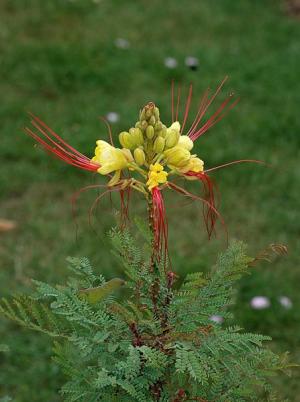
Caesalpinia gilliesii, also known as Poinciana gilliesii, Bird of Paradise, Peacock Flower, Barbados Pride, Pride of Barbados, and Poinciana, is a showy ornamental shrub or small tree grown for its brilliant flowers and distinctive tropical appearance. Although it shares the common name “Bird of Paradise” with the better-known Strelitzia plants, this plant is not the same as Strelitzia reginae, the Crane Flower or Bird of Paradise Flower commonly used in tropical floral arrangements. The distinction matters because different plants may share the same common name while belonging to different families and containing different toxic principles.
This plant is widely valued as a landscape ornamental because of its bright yellow to orange flowers, long red stamens, delicate foliage, and heat-tolerant growth habit. In warm climates it may be used in gardens, borders, xeriscape plantings, and ornamental landscapes where pets may encounter fallen flowers, leaves, seed pods, or plant debris. Its striking appearance has contributed to its popularity, but its common landscape use also increases the likelihood of accidental exposure by dogs, cats, rabbits, and other animals.
The toxic principle has been reported as possible hydrocyanic acid, also referred to as hydrogen cyanide, particularly in the leaves. Pet Poison Helpline further notes that the leaves contain hydrocyanic acid, while the seeds and pods contain tannins. ASPCA likewise lists Caesalpinia gilliesii as toxic to dogs and cats, with the toxic principle described as possibly hydrocyanic acid. Because of the plant’s bitter or irritating properties, ingestion may cause immediate irritation of the mouth and throat, which tends to limit the quantity normally consumed.
Clinical signs are expected to be primarily irritant and gastrointestinal in most companion-animal exposures. The most common signs include oral irritation, intense burning and irritation of the mouth, tongue, and lips, excessive drooling, pawing at the mouth, difficulty swallowing, nausea, vomiting, diarrhea, and abdominal discomfort. Incoordination is also possible. While most ordinary dog and cat exposures are expected to resolve with appropriate supportive care, larger ingestions, seed or pod ingestion, exposure in smaller animals, and exposure in rabbits should be treated more cautiously.
The plant should not be treated as a harmless ornamental simply because many cases are expected to be self-limiting. ASPCA notes that deaths in rabbits have been reported, and this makes the plant more concerning for rabbits and other small herbivores that may consume larger quantities of foliage or pods relative to body size. As with any toxic or potentially toxic ornamental, good environmental awareness is the best prevention: prevent pets from chewing leaves, flowers, seed pods, or fallen plant material, and remove pruned or dropped debris from areas accessible to animals.
Immediate Response to Bird of Paradise Ingestion
- Remove the Source: Prevent further ingestion by removing leaves, flowers, seed pods, seeds, stems, or fallen plant debris from the pet’s reach.
- Identify the Plant: Confirm whether the plant is Caesalpinia gilliesii / Poinciana gilliesii rather than Strelitzia reginae, because different plants share the common name Bird of Paradise.
- Identify the Part Ingested: Determine whether the pet chewed leaves, flowers, seeds, pods, or stems. Leaves and seed pods may be more concerning because leaves are associated with possible hydrocyanic acid and seeds/pods with tannins.
- Rinse and Flush the Mouth: If ingestion was recent and it is safe to do so, rinse and flush the mouth thoroughly with water to remove plant residue and reduce oral irritation.
- Monitor for Oral and Digestive Signs: Watch for burning or irritation of the mouth, drooling, pawing at the mouth, difficulty swallowing, nausea, vomiting, diarrhea, abdominal discomfort, or reluctance to eat or drink.
- Contact Veterinary Help: Consult a veterinarian, emergency veterinary clinic, ASPCA Animal Poison Control, or Pet Poison Helpline if symptoms are present, if seeds or pods were eaten, if the amount is unknown, if the animal is a cat, rabbit, puppy, kitten, small animal, elderly animal, or medically fragile, or if there is any difficulty swallowing or incoordination.
Inducing Vomiting and Decontamination
- Do Not Induce Vomiting Casually: Because this plant may cause oral and throat irritation and has been associated with possible hydrocyanic acid/hydrogen cyanide exposure, vomiting should not be treated as a routine home step for every animal.
- Inducing Vomiting in Dogs Only: If ingestion was very recent and the dog is alert, breathing normally, able to swallow, and not showing weakness, collapse, tremors, incoordination, repeated vomiting, severe oral irritation, difficulty swallowing, or breathing difficulty, a veterinarian or animal poison-control professional may recommend inducing vomiting with fresh 3% hydrogen peroxide.
- Cat Warning: Hydrogen peroxide should not be used to induce vomiting in cats unless a veterinarian specifically directs it. Cats are more prone to irritation and complications from hydrogen peroxide, and home vomiting attempts may create more risk than benefit.
- Do Not Induce Vomiting in an Unstable Animal: Vomiting should not be attempted in any animal that is weak, collapsed, sedated, having trouble breathing, unable to swallow normally, showing neurologic signs, already vomiting repeatedly, or showing significant mouth or throat irritation.
- Veterinary Decontamination: If decontamination is appropriate, a veterinarian may induce vomiting, administer activated charcoal, provide anti-nausea medication, or recommend other treatment depending on the part ingested, amount consumed, timing, species, and symptoms.
Symptoms Requiring Veterinary Care
- Oral Irritation: Intense burning of the mouth, tongue, or lips; excessive drooling; pawing at the mouth; gagging; or difficulty swallowing.
- Digestive Signs: Nausea, vomiting, diarrhea, abdominal discomfort, loss of appetite, or repeated attempts to vomit.
- Neurologic or Systemic Signs: Incoordination, weakness, collapse, tremors, abnormal behavior, severe lethargy, or signs that the animal is becoming systemically ill.
- High-Risk Exposures: Seed or pod ingestion, large ingestion, unknown amount, rabbit exposure, or ingestion by a very small, young, elderly, pregnant, or medically fragile animal should be treated more cautiously.
Supportive Care and Treatment
- Hydration: Ensure the pet receives adequate fluids to reduce the risk of dehydration from vomiting, diarrhea, drooling, or refusal to drink.
- Oral Comfort: Pets with mouth irritation may benefit from veterinary-directed soothing care, anti-nausea medication, pain control, or other supportive measures if discomfort prevents eating or drinking.
- Gastrointestinal Support: Treatment is generally symptomatic and supportive and may include anti-nausea medication, gastrointestinal protectants, fluids, or monitoring depending on severity.
- Observation: Animals showing incoordination, weakness, repeated vomiting, persistent diarrhea, or signs of worsening illness should be monitored by a veterinarian.
Prognosis and Recovery
- Most Dog and Cat Exposures: Pets with mild oral irritation or gastrointestinal upset generally make a full recovery with appropriate supportive care.
- Expected Recovery: Many uncomplicated cases are expected to improve within 24 to 48 hours after ingestion, provided vomiting and diarrhea are not severe and the animal remains hydrated.
- Higher-Risk Cases: Prognosis is more guarded when large amounts are consumed, seeds or pods are eaten, neurologic signs develop, or the exposed animal is a rabbit or other small herbivore.
- Prevention: Prevent access to the plant, especially fallen seed pods, seeds, pruned branches, and plant debris in areas where pets or rabbits may graze, chew, or forage.