PAWS Pet Poison Plant Guide
Is Blue Periwinkle Poisonous to Dogs, Cats, Horses, and Livestock?
Yes—Blue Periwinkle, Vinca major, should be treated as poisonous to dogs, cats, horses, livestock, rabbits, and other animals that eat it. The plant contains dozens of pharmacologically active indole and related alkaloids. Most limited exposures are expected to cause no signs or temporary gastrointestinal illness such as nausea, vomiting, diarrhea, abdominal discomfort, appetite loss, or lethargy.
A substantial ingestion may produce more serious weakness, low blood pressure, poor coordination, tremors, an abnormal pulse, collapse, or seizures, although species-confirmed veterinary cases involving Vinca major are sparse and no safe animal dose has been established. Blue Periwinkle must also be distinguished from Madagascar periwinkle, Catharanthus roseus, the plant associated with vinblastine and vincristine.
About this guide: This page provides general pet-poisoning information and cannot diagnose or treat an individual animal. For any suspected exposure, contact a veterinarian or animal poison-control service immediately. Do not induce vomiting, give medication, or attempt home decontamination unless directed by a veterinary professional.
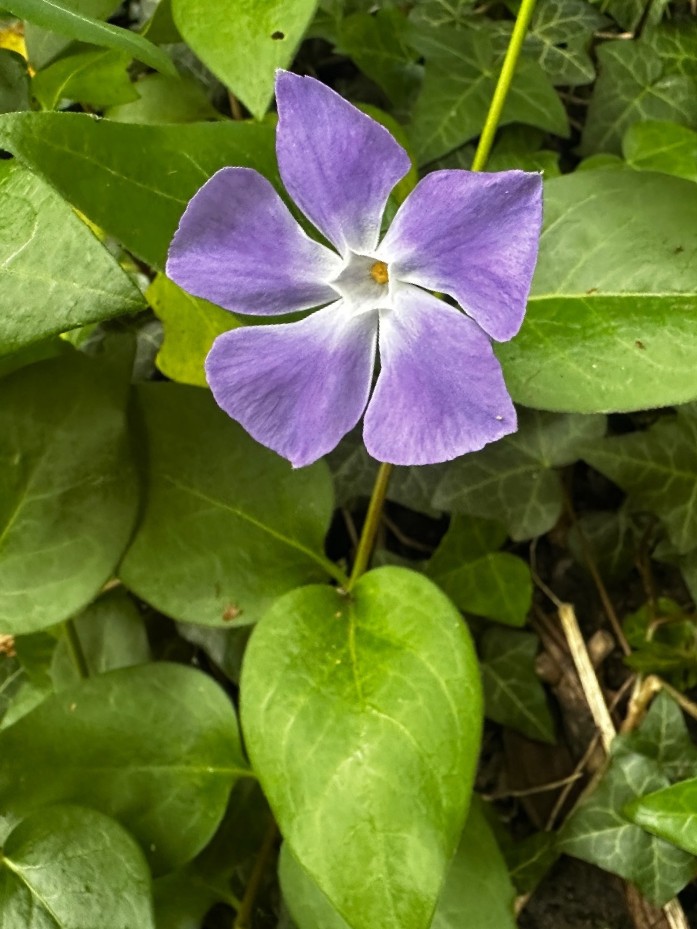
Blue Periwinkle
Vinca major L.
Relevant botanical synonyms include Pervinca major (L.) Garsault, Vinca grandiflora Salisb., and Vinca minor subsp. major (L.) Bonnier & Layens.
Accepted infraspecific taxa include Vinca major subsp. major, Vinca major subsp. hirsuta (Boiss.) Stearn, and Vinca major subsp. balcanica (Pénzes) Kozuharov & A.V.Petrova.
Vinca major var. variegata Loudon is currently treated as a synonym within Vinca major subsp. major rather than as a separate species.
Apocynaceae
Vinca is generally placed in subfamily Rauvolfioideae, tribe Vinceae, and subtribe Vincinae.
Blue Periwinkle, Bigleaf Periwinkle, Big-Leaf Periwinkle, Big Periwinkle, Greater Periwinkle, Large Periwinkle, Greater Myrtle, Running Myrtle, Creeping Myrtle, Periwinkle, Vinca, Vinca Vine, Bigleaf Vinca, Variegated Vinca, Variegated Periwinkle, Sorcerer’s Violet, Vinca major
“Periwinkle” and “Vinca” are also used for Vinca minor and for Madagascar periwinkle, Catharanthus roseus. Madagascar periwinkle was formerly classified as Vinca rosea and is the principal natural source of vinblastine and vincristine. It is not the same plant as Vinca major.
A Chemically Diverse Alkaloid Plant
Blue Periwinkle contains dozens of monoterpene indole alkaloids and several additional classes of secondary metabolites. Direct investigations of Vinca major have isolated ajmalicine-type, aspidosperma-type, eburnamine-type, corynanthe-type, pyridine, oxindole, and other structurally distinct alkaloids.
This diversity matters because the plant cannot be described accurately as containing one universal “vinca toxin.” Different compounds act at different receptors, transport systems, enzymes, vascular targets, and cellular membranes. Many were identified because of their unusual chemical structures rather than because they had caused a documented animal poisoning.
The alkaloid profile also varies among roots, leaves, stems, cultivated forms, geographic populations, and growing conditions. A 2014 investigation of cultivated Vinca major isolated nine newly described vinmajines and 43 previously known indole alkaloids and concluded that ecological conditions may substantially influence the types present.
Directly Confirmed Vinca major Compounds
Exact-species research has identified ajmalicine, also called raubasine; reserpine; vincamine; vincadifformine; akuammine, historically called vincamajoridine; isovallesiachotamine; 11-hydroxyajmalicine; and numerous compounds named from the species, including majoridine, majorinine, vincamajine, vincamajoreine, lochvinerine, majvinine, vincamajorines, vinmajorines, vinmajines, and vinmajpyridines.
Roots have yielded reserpine and related alkaloids. A modern comparative study directly detected vincamine in the leaves of ordinary Vinca major and the variegated cultivated form. Other investigations have isolated iridoids, monoterpenoid glucoindole alkaloids, flavonoids, and pyridine alkaloids from aerial tissues.
A confirmed chemical constituent is not automatically a proven cause of natural poisoning. Laboratory isolation establishes that a compound occurred in the tested material. It does not establish how much a dog, cat, horse, or grazing animal absorbs after chewing the living plant or which compound dominates the clinical response.
Ajmalicine and Vascular Tone
Ajmalicine is an indole alkaloid known pharmacologically for blocking alpha-adrenergic vascular signaling and reducing vascular resistance. In a sufficient purified dose, that action can lower blood pressure.
Its presence provides a biologically credible explanation for weakness, pale mucous membranes, cold extremities, poor pulse quality, fainting, or collapse after a substantial exposure. No study has established that ordinary chewing of one or two Blue Periwinkle leaves delivers an ajmalicine dose sufficient to produce clinically important hypotension.
The plant contains many compounds simultaneously, so natural poisoning cannot be predicted from purified-ajmalicine pharmacology alone.
Reserpine and Monoamine Storage
Reserpine has been isolated from Vinca major roots. It inhibits vesicular monoamine transporter 2, preventing dopamine, serotonin, and norepinephrine from being stored normally in neuronal vesicles. Pharmacologic exposure can reduce sympathetic activity and produce sedation, reduced motor activity, low blood pressure, and other central or autonomic effects.
That mechanism supports greater caution when a dog digs up and consumes a root mass. It does not establish that every root contains a constant reserpine concentration or that a leaf bite reproduces the effects of medicinal reserpine.
Reserpine’s pharmacology is also prolonged compared with a simple gastrointestinal irritant, but no species-specific animal study has defined the duration of reserpine-like effects after raw Blue Periwinkle ingestion.
Vincamine and Related Alkaloids
Vincamine is a vasoactive eburnamine-type alkaloid detected directly in Vinca major leaves. It has been investigated pharmacologically for effects on cerebral blood flow, vascular tone, and neurologic function.
Vincamine itself is not a strong cholinesterase inhibitor, and its therapeutic or laboratory actions should not be converted into a complete explanation for Blue Periwinkle poisoning. The plant contains a mixture that includes compounds with different and sometimes opposing actions.
Vincadifformine and numerous related indole alkaloids have also been isolated. Many are better characterized chemically than toxicologically, and their contribution to natural animal exposure remains uncertain.
Laboratory Activity Does Not Equal the Natural Poisoning Syndrome
Extracts and purified alkaloids from Vinca major have been tested for cytotoxic, antimicrobial, antioxidant, vasorelaxant, hypotensive, sedative, and enzyme-related effects. These studies use selected solvents, purified fractions, cultured cells, isolated tissues, or experimental doses.
A hydroalcoholic extract applied directly to cultured cells is not equivalent to a dog chewing a vine. Cell death in a laboratory assay does not prove that ordinary plant ingestion produces bone-marrow failure, widespread tissue necrosis, or chemotherapy-like toxicity.
The most defensible natural-exposure conclusion is that the plant can irritate the gastrointestinal tract and may produce vascular, autonomic, neurologic, or cardiovascular effects when enough chemically active material is ingested.
Blue Periwinkle Does Not Equal Madagascar Periwinkle
The medical expression “vinca alkaloids” commonly refers to vinblastine, vincristine, vinorelbine, vindesine, and related antimitotic drugs developed from Madagascar periwinkle, Catharanthus roseus.
Catharanthus roseus was formerly classified as Vinca rosea. That former name caused vinblastine and vincristine to be attributed repeatedly to every ornamental called vinca or periwinkle.
Vinblastine and vincristine are not established principal constituents of Vinca major. Blue Periwinkle should not be described as though chewing the groundcover gives an animal an injectable chemotherapy exposure.
Bone-marrow suppression, severe peripheral neuropathy, intestinal ileus, and inhibition of mitosis are important complications of antimitotic vinca drugs and potentially of substantial Catharanthus exposure. They are not the established defining syndrome of authenticated Vinca major ingestion.
Gastrointestinal Irritation
The plant’s bitter latex, indole alkaloids, iridoids, phenolic compounds, and fibrous tissue can provoke nausea and gastrointestinal irritation. This is the most plausible and proportionate concern after a limited companion-animal exposure.
Possible effects include salivation, repeated swallowing, vomiting, abdominal discomfort, reduced appetite, and diarrhea. Continuing gastrointestinal losses can cause dehydration and electrolyte abnormalities even when direct systemic alkaloid effects remain limited.
The plant’s unpleasant taste often limits consumption, but cut vines, uprooted mats, contaminated forage, or a persistent plant-chewing animal can defeat that natural deterrent.
Severe Neurologic and Cardiovascular Effects Remain Possible but Poorly Defined
Broad veterinary references for Vinca describe low blood pressure, weak pulses, incoordination, tremors, neck weakness, convulsions, coma, paralysis, and death after substantial ingestion.
These warnings are biologically plausible from the plant’s pharmacologically active alkaloids, but detailed peer-reviewed, species-confirmed veterinary case reports involving Vinca major are sparse. The severe syndrome should therefore be presented as a possible high-dose outcome rather than the expected result of every nibble.
Progressive weakness, collapse, seizures, or paralysis after a suspected exposure also requires investigation for pesticides, nicotine products, medications, another poisonous plant, spinal injury, metabolic disease, or a different periwinkle species.
All Parts Should Remain Inaccessible
Leaves, stems, flowers, milky latex, roots, paired seed follicles, and seeds should remain inaccessible to animals. Most real-world exposures involve foliage and long trailing stems because they form nearly all of the readily available biomass.
Roots deserve additional practical concern when a dog pulls up a rooted runner or excavates an established mat, but no direct part-by-part animal study proves that the roots are always the most toxic tissue.
Likewise, the presence of alkaloids in aerial material does not prove that flowers, leaves, and stems contain identical concentrations.
Variegated Plants Are Not Proven Safe
The common cream-edged cultivar remains Vinca major. Exact research has identified alkaloids in material described as Vinca major cv. Variegata, and a modern leaf comparison detected vincamine in the variegated form.
Variegation changes leaf pigmentation and appearance. It does not establish removal of the alkaloid pathways or provide a safe cultivar for pets or livestock.
Fresh and Dried Material
Fresh vines, wilted clippings, dried material, roots, and plant fragments in hay or garden waste should all remain inaccessible.
Drying may alter individual compounds and their availability, but no exact-species study has established a drying period, hay-curing process, or household treatment that makes Blue Periwinkle safe.
Dried fragments mixed with desirable forage may be consumed more readily because animals cannot separate them easily from the surrounding material.
No Established Animal Toxic Dose
No dependable toxic dose, lethal dose, leaf count, vine length, root weight, or amount per kilogram has been established for dogs, cats, horses, cattle, sheep, goats, rabbits, guinea pigs, poultry, birds, reptiles, or other animals eating authenticated Vinca major.
Risk depends on the amount swallowed, plant part, alkaloid profile, animal size, repeated access, underlying disease, hydration, concurrent medication, and whether the plant was correctly identified.
A brief taste is less concerning than prolonged chewing or ingestion of an uprooted mat, but no household quantity can be declared universally safe.
Most Limited Exposures Cause No Signs or Gastrointestinal Illness
Many animals that taste one leaf or briefly mouth a vine are expected to remain asymptomatic or develop only temporary gastrointestinal signs. The plant is bitter and fibrous, and most animals do not voluntarily consume a large amount.
Early signs may include lip licking, repeated swallowing, salivation, nausea, reduced appetite, vomiting, abdominal discomfort, or diarrhea. Vomit may contain leaves, flowers, stems, foam, food, bile, or pieces of rooted runner.
The limited species-confirmed case record does not justify predicting collapse, paralysis, or death after every exploratory bite.
Vomiting, Diarrhea, and Abdominal Pain
Abdominal discomfort may appear as restlessness, pacing, repeated stretching, a hunched posture, guarding of the abdomen, vocalization, looking toward the flank, or reluctance to be touched.
Diarrhea may range from one loose stool to repeated watery output. Continuing vomiting or diarrhea can cause dehydration, potassium and chloride losses, weakness, reduced urine production, and worsening blood-pressure abnormalities.
Blood in vomit or stool is not an established routine Blue Periwinkle finding. It warrants evaluation for significant gastrointestinal injury, another plant, medication exposure, infection, foreign material, parasites, or clotting disease.
Lethargy and Appetite Loss
An affected animal may hide, sleep more than usual, refuse normal activity, eat less, or appear generally unwell after gastrointestinal exposure.
Mild lethargy may result from nausea and fluid loss. Pronounced weakness, inability to stand, poor responsiveness, or collapse raises concern for hypotension, neurologic dysfunction, another toxin, or a more serious concurrent disease.
Continued food refusal requires particular attention in cats, rabbits, guinea pigs, birds, and other small animals that can develop secondary metabolic or gastrointestinal complications.
Low Blood Pressure and Poor Circulation
Hypotension is a plausible systemic effect because several exact-species alkaloids can influence vascular tone, sympathetic transmission, or monoamine handling.
Warning signs include pale or gray mucous membranes, cold ears or paws, weak pulses, delayed capillary refill, profound fatigue, difficulty standing, fainting, reduced responsiveness, or collapse.
Blood pressure cannot be determined reliably from appearance or a brief home pulse check. Weakness or collapse after a meaningful exposure requires professional measurement and evaluation.
Heart-Rate and Rhythm Changes
A substantially affected animal may develop a slow, rapid, weak, or irregular pulse because of autonomic effects, hypotension, dehydration, electrolyte loss, stress, or another exposure.
No characteristic electrocardiographic pattern has been established for species-confirmed Vinca major poisoning. Treatment must therefore follow the documented rhythm and circulation rather than the plant name.
Fainting, an irregular chest beat, poor pulse quality, pale gums, or recurrent weakness warrants electrocardiography and repeated blood-pressure assessment.
Incoordination, Tremors, and Progressive Weakness
Severe broad-genus poisoning descriptions include incoordination, stumbling, tremors, neck weakness, reduced muscle strength, recumbency, and inability to stand.
These signs appear to require a substantially greater exposure than a routine taste and are not well documented in exact-species veterinary case series.
An animal with rapidly progressive weakness should also be evaluated for pesticide exposure, nicotine, medication ingestion, another poisonous ornamental, spinal trauma, hypoglycemia, electrolyte disturbance, or primary neurologic disease.
Seizures, Profound Depression, and Coma
Tremors, convulsions, seizures, profound depression, coma, and death appear in broad Vinca toxicology references as possible severe outcomes.
They should be treated as emergency warning signs without implying that they are the expected progression of Blue Periwinkle ingestion. Reduced cerebral blood flow, electrolyte abnormalities, hypoglycemia, another toxin, or an unrelated neurologic disorder may produce the same findings.
Repeated seizures, failure to regain awareness, collapse, or worsening depression requires immediate airway, oxygenation, glucose, cardiovascular, and neurologic assessment.
Respiratory Abnormalities
Breathing difficulty is not expected after a minor foliage taste. Rapid, shallow, labored, slow, or irregular respiration may develop during profound hypotension, neurologic depression, seizure activity, aspiration of vomit, shock, or another toxic exposure.
Coughing during or after vomiting, fever, nasal discharge, worsening respiratory effort, or abnormal lung sounds may indicate aspiration pneumonitis or pneumonia.
Blue-gray gums, open-mouth breathing, gasping, inability to stand, or declining awareness requires emergency respiratory support.
Skin and Coat Contact
Milky latex or crushed plant material may produce mild localized irritation in a sensitive animal, although ingestion is the principal concern.
Redness, licking, rubbing, or discomfort should improve after the material is washed away. Persistent swelling, blistering, ulceration, discharge, or hair loss suggests a more significant contact injury or another substance.
Eye Exposure
Sap or plant debris in the eye can cause tearing, redness, eyelid spasm, squinting, swelling, or repeated pawing.
Continuing pain, haze, cloudiness, discharge, or inability to open the eye warrants veterinary examination for retained debris, abrasion, or corneal ulceration.
Dogs
Dogs may chew trailing stems during play, pull runners from the soil, eat clippings, investigate compost, or consume vines discarded after groundcover removal.
Most small exposures are expected to cause no signs or temporary vomiting, diarrhea, appetite loss, abdominal discomfort, or lethargy. Repeated chewing, roots, several vines, or an unknown amount deserves greater caution.
Weakness, stumbling, pale gums, tremors, collapse, seizures, or abnormal breathing requires urgent assessment and should not be attributed automatically to Blue Periwinkle without considering mixed exposures.
Cats
Cats may nibble leaves, flowers, or cut vines and may contact sap while hiding or moving beneath dense groundcover.
Possible signs include drooling, vomiting, diarrhea, hiding, food refusal, lethargy, weakness, or poor coordination.
Persistent anorexia is important even when direct toxin signs remain mild because prolonged food refusal can produce serious secondary complications in cats.
Horses
Horses cannot vomit. Exposure is most plausible when vines or clippings contaminate hay, green waste, field margins, abandoned garden areas, or forage.
Possible signs include feed refusal, salivation, colic, diarrhea, depression, weakness, incoordination, tremors, an abnormal pulse, recumbency, or collapse.
Marked diarrhea, persistent colic, an abnormal pulse, progressive weakness, or neurologic signs requires immediate large-animal examination.
Cattle, Sheep, Goats, and Other Livestock
Livestock may eat Blue Periwinkle when uprooted groundcover or landscape trimmings are discarded into paddocks, pens, pastures, or open compost, or when escaped vines contaminate forage.
Reported livestock concerns include diarrhea, vascular dilation, low blood pressure, weakness, poor coordination, tremors, and recumbency. Exact species-specific dose information is lacking.
Several animals becoming ill together requires investigation of all shared feed, water, pesticides, fertilizers, garden waste, and surrounding poisonous plants.
Rabbits and Guinea Pigs
Rabbits and guinea pigs cannot vomit. They may instead show food refusal, drooling, abdominal discomfort, diarrhea, reduced fecal output, a hunched posture, tooth grinding, weakness, or poor balance.
Reduced eating can progress to gastrointestinal stasis, dehydration, altered intestinal flora, and metabolic deterioration. Waiting for vomiting is inappropriate in these species.
Poultry, Pet Birds, and Other Exotic Animals
Species-specific evidence is sparse, and no safe dose has been established. The plant should not be offered as green feed, browse, cage decoration, nesting material, bedding, or enrichment.
Reduced appetite, regurgitation, altered droppings, weakness, tremors, poor balance, reduced activity, or abnormal breathing warrants species-appropriate veterinary care.
Expected Course
Mild gastrointestinal signs may begin within several hours and improve over the same day or by the following day once exposure stops and hydration is maintained.
No exact onset or recovery period has been established for authenticated Vinca major poisoning. Repeated access, continued vomiting, dehydration, hypotension, aspiration, or neurologic signs can prolong illness.
Persistent vomiting or diarrhea, pronounced weakness, incoordination, tremors, an abnormal pulse, collapse, seizures, breathing changes, or failure to improve requires veterinary examination.
Plant Identity and Native Range
Blue Periwinkle is Vinca major L., a trailing evergreen perennial or subshrub in Apocynaceae, the dogbane family. It is native primarily to the Mediterranean region, southern Europe, northwestern Africa, portions of the Balkans, Türkiye, and the western Caucasus.
It has been introduced widely through ornamental cultivation and now grows beyond gardens in many temperate and subtropical regions. It is particularly successful in shaded, moist, disturbed, riparian, woodland-edge, and drainage habitats.
Its vigorous rooted runners can form extensive colonies and can establish new plants from discarded fragments.
Relevant Historical Names
The accepted scientific name is Vinca major L. Older botanical records may use Pervinca major, Vinca grandiflora, or Vinca minor subsp. major.
These names help interpret older floras and plant labels but do not represent separate veterinary poisoning syndromes.
How to Recognize Blue Periwinkle
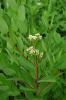
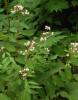
Blue Periwinkle produces long, trailing or scrambling stems that root at nodes when they remain in contact with soil. Flowering shoots rise above the vegetative mat, while nonflowering runners may extend for several feet.
The opposite leaves are glossy, leathery, broadly oval to somewhat heart-shaped, and commonly approximately two to four inches long. Fine hairs along the leaf margins and petioles are useful identification features.
The flowers arise singly from the leaf axils. Each has a narrow tube opening into five blue, violet, lavender, or occasionally white lobes arranged in a pinwheel pattern.
When fruit develops, it consists of paired narrow follicles rather than a fleshy berry. Broken stems may release pale milky latex.
Vinca major Versus Vinca minor
Greater and lesser periwinkle are closely related evergreen groundcovers with opposite leaves and blue-violet flowers.
Vinca major generally has larger leaves, flowers, and more robust stems. Its leaf margins and petioles are conspicuously hairy. Vinca minor usually has smaller leaves with smooth margins and nearly hairless petioles.
Their alkaloid profiles overlap but are not identical. Neither species should be assumed to have the chemistry or documented clinical effects of the other.
Not the Same as Madagascar Periwinkle
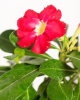
Madagascar periwinkle is Catharanthus roseus, formerly named Vinca rosea. It is generally an upright bedding plant rather than a rooted trailing groundcover.
Its flowers may be pink, red, white, lavender, or multicolored and often have a contrasting central eye. Blue Periwinkle typically has larger blue-violet pinwheel flowers and long ground-rooting stems.
The distinction is toxicologically important because vinblastine and vincristine are associated with Catharanthus roseus, not established as defining alkaloids of Vinca major.
Variegated Blue Periwinkle
The commonly cultivated cream-edged form is usually sold as Vinca major ‘Variegata.’ It remains the same species and should receive the same poisoning precautions.
Green reversions, pale portions of leaves, flowers, stems, roots, and clippings should all remain inaccessible. Variegation is not evidence that alkaloid production has stopped.
Where Dogs and Cats Encounter It
Dogs and cats may encounter Blue Periwinkle in residential yards, shaded beds, woodland gardens, apartment landscaping, parks, cemeteries, drainage corridors, riparian areas, hanging containers, abandoned gardens, and naturalized groundcover.
Dogs may chew vines during play, pull runners from the soil, carry uprooted mats, or investigate piles created during pruning and removal.
Cats may nibble leaves or flowers, shelter beneath dense mats, or contact cut plant material brought indoors.
Where Horses and Livestock Encounter It
Horses and livestock are more likely to receive a meaningful exposure when cut vines, uprooted mats, or landscape waste are discarded into paddocks, pens, pastures, goat yards, or open compost.
Escaped plants may also grow along waterways, field margins, woodland edges, old homesteads, or abandoned gardens adjoining grazing land.
The living plant is generally unpalatable, but cutting and mixing it with desirable forage may reduce the animal’s ability to avoid it.
Poisonous Parts and Practical Exposure
Leaves, stems, flowers, latex, roots, follicles, and seeds should remain inaccessible. Most exposures involve leaves and vines because they make up the majority of accessible material.
No exact-species study establishes a safe part or proves that every tissue contains an identical concentration. An uprooted root mass may create a greater practical dose, while extensive foliage is the more likely livestock exposure.
Repeated small exposures may matter when an animal returns to the same groundcover over several days.
Fresh, Wilted, and Dried Material
Fresh plants, wilted clippings, dried vines, roots, and fragments mixed with hay or bedding should all be treated as unsafe.
No validated drying, composting, hay-curing, soaking, or household-processing method has been shown to remove the full alkaloid mixture reliably.
Plant fragments can also root and establish new patches when discarded on moist ground, extending future exposure.
Evidence Limitations
Blue Periwinkle has a well-documented and chemically diverse alkaloid profile, but species-confirmed natural animal poisoning reports are sparse.
Chemical isolation studies demonstrate what was present in particular extracts and plant samples. They do not provide a dog, cat, horse, or livestock toxic dose or prove that every identified alkaloid contributes materially to an accidental exposure.
Many severe “vinca poisoning” descriptions fail to distinguish Vinca major, Vinca minor, and Catharanthus roseus. Accurate plant identification is therefore central to interpretation.
Diagnosis
There is no routine clinical test that confirms Blue Periwinkle ingestion or measures the total biologically active alkaloid burden.
Diagnosis depends on reliable plant identification, the part and estimated amount eaten, timing, gastrointestinal signs, hydration, blood pressure, heart rate and rhythm, neurologic findings, and exclusion of other causes.
Owners should preserve a representative flowering vine, the nursery label, photographs of the whole growth habit, opposite leaves, hairy margins and petioles, rooted nodes, and any safely collected vomited fragments.
Differential Diagnoses
Important alternatives include Madagascar periwinkle, lesser periwinkle, oleander, dogbane, pesticides, nicotine products, human medications, toxic mushrooms, infectious gastroenteritis, foreign bodies, primary neurologic disease, and cardiovascular disease.
Profound peripheral neuropathy, bone-marrow suppression, intestinal ileus, or marked blood-cell abnormalities should prompt confirmation that the plant was not Catharanthus roseus or that another medication or toxicant was involved.
Veterinary Monitoring
Evaluation may include hydration, blood pressure, electrocardiography, blood glucose, electrolytes, kidney values, packed cell volume, total solids, neurologic examination, oxygen assessment, and testing directed by the animal’s signs.
A brief normal examination may be sufficient after a very small exposure in an asymptomatic animal, while pronounced weakness, fainting, tremors, collapse, or an unknown ingestion justifies closer observation and repeated measurements.
Prognosis
The prognosis is good to excellent for most limited exposures causing no signs or temporary gastrointestinal illness.
The outlook becomes more guarded with continuing fluid loss, severe hypotension, unstable cardiac rhythm, aspiration, profound weakness, repeated seizures, coma, or respiratory failure.
Because the exact-species clinical record is limited, recovery should be based on the individual animal’s sustained ability to walk, eat, drink, breathe, and maintain normal circulation.
Exposure Prevention
Keep plant-chewing pets away from established mats, hanging containers, cuttings, and newly uprooted groundcover.
Remove clippings promptly and place all vines, roots, and seed-bearing material in closed waste rather than open compost or animal enclosures.
Never discard landscape trimmings into paddocks, pastures, pens, stalls, rabbit runs, poultry areas, or livestock-accessible piles.
Immediate Steps After Ingestion
- Prevent further access: Remove the animal from the groundcover, hanging container, clippings, compost, hay, forage, discarded vines, or uprooted mat.
- Estimate the exposure: Determine whether the animal tasted one leaf, chewed repeatedly, swallowed several vines, consumed roots, or had access over several days.
- Remove only loose visible material: If the animal is calm and this can be done safely, remove pieces resting at the lips or front of the mouth. Do not scrape the mouth or reach blindly toward the throat.
- Keep the animal calm: Restrict strenuous activity while veterinary guidance is obtained because meaningful exposure may cause weakness or low blood pressure.
- Allow only voluntary water intake: An alert animal swallowing normally may have access to fresh water. Do not pour, spray, syringe, or force liquids or food into the mouth.
- Preserve identification evidence: Save a flowering vine, clear photographs, the nursery label, cultivar name, root fragments, and safely collected vomited material.
- Contact a veterinarian when the exposure is meaningful or uncertain: Prompt guidance is appropriate after repeated chewing, ingestion of roots or several vines, an unknown amount, or any developing signs.
After Skin or Coat Contact
Prevent the animal from grooming visible latex or crushed plant material from the coat. Wearing gloves, wash the affected fur or skin gently with lukewarm water and a mild species-appropriate cleanser, then rinse thoroughly.
Do not scrub inflamed or damaged skin. Clean contaminated collars, harnesses, bedding, brushes, towels, and carriers.
Persistent redness, swelling, pain, blistering, discharge, repeated licking, or hair loss warrants veterinary guidance.
Eye Exposure
If sap or loose plant debris entered an eye and no object appears embedded, begin gentle irrigation with sterile saline or clean lukewarm water when the animal tolerates this safely.
Do not rub the eye or use tweezers, cotton swabs, human redness-relief drops, topical anesthetics, leftover antibiotics, or corticosteroid-containing eye medication.
Continuing tearing, squinting, redness, cloudiness, swelling, discharge, or pawing at the face requires veterinary examination for retained material or corneal injury.
Do Not Attempt Unsupervised Home Treatment
- Do not induce vomiting: Hydrogen peroxide, salt, mustard, syrup of ipecac, detergent, oil, manual gagging, and fingers in the throat can cause gastrointestinal injury or aspiration.
- Never give hydrogen peroxide to a cat: It can cause serious esophageal and gastric inflammation, ulceration, and bleeding.
- Never attempt vomiting in horses, rabbits, or guinea pigs: These animals cannot vomit.
- Do not force mouth flushing: Water may enter the lungs when an animal is vomiting, weak, sedated, uncoordinated, or swallowing abnormally.
- Do not give activated charcoal at home: A vomiting, weak, hypotensive, trembling, seizing, or poorly swallowing animal can aspirate charcoal.
- Do not give milk, yogurt, oil, bread, or food as an antidote: These do not neutralize the alkaloid mixture and may worsen nausea or aspiration risk.
- Do not give owner-selected stomach or diarrhea medication: Antacids, bismuth products, loperamide, sucralfate, and leftover prescriptions do not remove the plant alkaloids.
- Do not give heart, blood-pressure, or neurologic medication: Vasopressors, antiarrhythmics, sedatives, stimulants, or anticonvulsants require diagnosis and monitoring.
- Do not assume the plant contains vincristine or vinblastine: Those compounds are associated principally with Catharanthus roseus. Accurate plant identification is still important because the two plants may share the name vinca.
When Emergency Examination Is Especially Important
- Several vines, roots, or an unknown amount were swallowed: The animal may have received a meaningful and difficult-to-estimate alkaloid dose.
- Vomiting continues or diarrhea becomes severe: Dehydration and electrolyte loss can worsen weakness and blood-pressure abnormalities.
- The animal becomes markedly lethargic or cannot stand normally: Hypotension, neurologic dysfunction, or another toxin may be involved.
- Stumbling, tremors, neck weakness, or poor coordination develops: These signs require neurologic and cardiovascular assessment.
- Gums are pale or gray, extremities are cold, or the animal faints: Inadequate circulation may be present.
- The pulse feels slow, rapid, weak, or irregular: Electrocardiography and blood-pressure measurement are required.
- Seizures, profound depression, or unresponsiveness occurs: These are severe systemic signs requiring immediate stabilization.
- Breathing becomes rapid, shallow, labored, slow, or irregular: Aspiration, shock, neurologic depression, or another emergency may be present.
- The plant was identified only as “vinca” or “periwinkle”: Madagascar periwinkle or another species may have been involved.
- Several livestock animals are affected: Stop the pasture, hay, feed, or clipping source and preserve representative samples.
Veterinary Assessment
The veterinarian will evaluate plant identity, amount and part eaten, timing, vomiting and diarrhea, hydration, abdominal comfort, blood pressure, pulse quality, heart rhythm, coordination, reflexes, mental status, breathing, and possible exposure to another plant or chemical.
Blood testing may include glucose, electrolytes, kidney values, hydration markers, packed cell volume, total solids, and other measurements selected for the patient’s condition.
Electrocardiography and repeated blood-pressure measurements may be appropriate when the animal is markedly weak, fainting, collapsed, or has an abnormal pulse.
Professional Gastrointestinal Decontamination
A veterinarian may consider medically induced vomiting after a recent substantial ingestion when a dog or cat remains fully alert, neurologically normal, cardiovascularly stable, breathing normally, swallowing safely, and capable of protecting the airway.
Emesis is inappropriate when the animal is already vomiting repeatedly, weak, hypotensive, trembling, seizing, sedated, breathing abnormally, or unable to swallow normally.
Horses, rabbits, and guinea pigs cannot vomit and must not undergo attempted emesis.
Activated Charcoal
A veterinarian may consider activated charcoal in a selected stable patient when a meaningful amount remains in the gastrointestinal tract and the airway can be protected.
There is no exact-species evidence establishing charcoal as mandatory treatment. Vomiting, neurologic weakness, impaired swallowing, ileus, dehydration, or aspiration risk may outweigh its benefit.
Cathartic-containing products can worsen diarrhea, dehydration, and electrolyte loss.
Gastrointestinal and Fluid Support
Veterinarian-selected anti-nausea medication may be used after decontamination decisions have been completed. Injectable medication may be preferable when vomiting prevents oral treatment from remaining in the stomach.
Intravenous crystalloids are appropriate when clinically important dehydration, poor perfusion, hypotension, continuing vomiting or diarrhea, or systemic illness is present.
Electrolyte correction must follow measured abnormalities. Potassium, sodium, calcium, magnesium, and glucose should not be supplemented by an owner.
Treatment of Low Blood Pressure
Fluid loss and reduced circulating volume should be corrected with appropriate intravenous crystalloids when they contribute to hypotension.
When clinically important hypotension persists after appropriate volume correction and treatment of other abnormalities, a veterinarian may add a monitored vasopressor or inotropic drug.
Blood pressure, heart rhythm, lung sounds, urine production, and perfusion require repeated reassessment during treatment.
Neurologic and Seizure Care
Severe tremors may require veterinarian-selected muscle-relaxant or sedative treatment. True seizures require anticonvulsant medication, glucose and electrolyte assessment, oxygen, temperature control, and airway protection.
Excessive sedation can worsen hypotension or ventilation, so treatment must be selected and adjusted according to the individual patient.
Respiratory and Aspiration Support
Oxygen is appropriate for respiratory distress, poor perfusion, aspiration, seizures, or reduced responsiveness.
An animal unable to protect its airway or maintain adequate ventilation may require intubation and assisted ventilation.
Coughing, fever, hypoxemia, worsening respiratory effort, or abnormal lung sounds after vomiting may justify chest imaging and treatment directed at aspiration injury. Antibiotics are used when bacterial pneumonia is suspected or documented rather than automatically after every vomiting episode.
Horses and Livestock
Remove every animal from the suspect plant, trimmings, hay, feed, or compost. Do not continue feeding the material while waiting for plant identification.
Do not drench or force-feed an animal that is weak, recumbent, coughing, salivating excessively, or swallowing poorly.
Large-animal care may include gastrointestinal evaluation, fluids, electrolyte correction, blood-pressure and pulse assessment, electrocardiography, neurologic examination, and investigation of all shared environmental exposures.
Rabbits, Guinea Pigs, Birds, and Other Small Animals
Do not force food or water into a weak, regurgitating, poorly swallowing, severely distended, trembling, or respiratory-compromised animal.
Rabbits and guinea pigs with reduced food intake or fecal output may require treatment for gastrointestinal stasis, dehydration, pain, hypothermia, and altered motility.
Birds and other small animals may require species-specific fluid support, oxygen, temperature management, nutritional planning, and treatment of tremors or seizures.
Recovery and Prognosis
Most animals with a limited exposure and mild gastrointestinal signs have a good to excellent prognosis.
Improvement should include cessation of vomiting and diarrhea, return of appetite, normal coordination and strength, comfortable breathing, adequate hydration, and stable circulation.
The prognosis becomes more guarded with severe hypotension, continuing fluid loss, unstable rhythm, aspiration, seizures, profound neurologic depression, coma, or respiratory failure.
Persistent or worsening signs require continued veterinary monitoring rather than home observation based on a fixed recovery time.
Frequently Asked Questions About Blue Periwinkle and Animal Poisoning
Is Blue Periwinkle poisonous to dogs and cats?
Yes. Vinca major contains dozens of pharmacologically active alkaloids. Most limited exposures are expected to cause no signs or temporary vomiting, diarrhea, abdominal discomfort, appetite loss, or lethargy. A substantial ingestion may produce hypotension, marked weakness, incoordination, tremors, an abnormal pulse, collapse, or seizures, although exact-species veterinary case evidence is limited.
What is the accepted scientific name?
The accepted name is Vinca major L. Relevant historical names include Pervinca major, Vinca grandiflora, and Vinca minor subsp. major.
Is Blue Periwinkle the same as Madagascar periwinkle?
No. Blue Periwinkle is the trailing groundcover Vinca major. Madagascar periwinkle is the usually upright bedding plant Catharanthus roseus, formerly called Vinca rosea. Their alkaloid profiles and documented toxicology are different.
Does Vinca major contain vincristine or vinblastine?
Vincristine and vinblastine are defining antimitotic alkaloids of Catharanthus roseus and are not established principal constituents of Vinca major. The confusion arose because Madagascar periwinkle was formerly classified in the genus Vinca.
Can Blue Periwinkle cause chemotherapy-like bone-marrow suppression?
That is not the established syndrome of authenticated Vinca major ingestion. Bone-marrow suppression and severe peripheral neuropathy are associated mainly with vinblastine, vincristine, and related antimitotic drugs derived from Catharanthus roseus. Such findings should prompt reconsideration of the plant identification or another exposure.
Which alkaloids have been confirmed in Vinca major?
Confirmed examples include ajmalicine, reserpine, vincamine, vincadifformine, akuammine or vincamajoridine, isovallesiachotamine, majoridine, majorinine, vincamajine, vincamajoreine, lochvinerine, majvinine, vincamajorines, vinmajorines, vinmajines, and vinmajpyridines. Many have been characterized chemically without being linked to a specific natural veterinary syndrome.
Does the plant really contain more than forty alkaloids?
Yes. One direct investigation isolated nine newly described vinmajines and 43 previously known indole alkaloids from cultivated Vinca major. The profile may vary with environment and plant material, so not every individual plant necessarily contains the same mixture at the same concentrations.
Why might Blue Periwinkle lower blood pressure?
Some exact-species alkaloids influence vascular tone or sympathetic signaling. Ajmalicine can block alpha-adrenergic vascular effects, while reserpine alters monoamine storage. Their presence makes hypotension biologically plausible after a large ingestion, but no raw-plant animal dose has been established.
Does every animal that eats it develop hypotension?
No. Most small exposures are more likely to cause no signs or mild gastrointestinal illness. Low blood pressure is a greater concern when a meaningful amount was swallowed or when the animal develops pale gums, cold extremities, profound weakness, fainting, or collapse.
Can Blue Periwinkle cause paralysis or seizures?
Severe broad-genus poisoning descriptions include profound weakness, tremors, convulsions, coma, and paralysis. These outcomes appear uncommon and are not well documented in exact-species veterinary case series. Progressive weakness or seizures still require emergency assessment for Blue Periwinkle, another plant, pesticide, medication, or neurologic disease.
Which parts are poisonous?
Leaves, stems, flowers, latex, roots, paired seed follicles, and seeds should remain inaccessible. Exact part-by-part concentrations have not been mapped sufficiently to declare one tissue safe or to prove that every part has an identical alkaloid burden.
Are the roots more dangerous than the leaves?
Roots contain documented alkaloids including reserpine and can provide a concentrated practical exposure when a dog pulls up a rooted mat. No comparative animal study proves that roots are always more toxic than foliage from every plant population.
Is variegated Blue Periwinkle safe?
No. The cream-edged cultivar remains Vinca major. Alkaloids have been investigated in the variegated form, and vincamine has been detected directly in its leaves. Variegation is not evidence of detoxification.
How can Vinca major be distinguished from Vinca minor?
Vinca major generally has larger leaves and flowers, more robust stems, and conspicuous hairs along the leaf margins and petioles. Vinca minor usually has smaller leaves with smooth margins and nearly hairless petioles.
How much Blue Periwinkle is toxic?
No dependable toxic dose, lethal dose, leaf count, vine length, root weight, or amount per kilogram has been established for any animal species. A brief taste is less concerning than repeated chewing or ingestion of several vines or roots, but no household amount can be guaranteed safe.
Why are severe poisonings rarely reported?
The plant is bitter, fibrous, and generally unpalatable, so most animals stop after a small taste. Severe cases may also be underreported or recorded simply as “vinca poisoning” without confirming whether the plant was Vinca major, Vinca minor, or Catharanthus roseus.
Is dried Blue Periwinkle still poisonous?
It should be treated as poisonous. No exact-species study has shown that ordinary drying, wilting, composting, or hay curing removes the full alkaloid mixture reliably.
Can it contaminate hay or livestock feed?
Yes. Escaped vines, cut groundcover, or landscape waste may be incorporated into hay or other forage. Dried fragments can be difficult for animals to sort from desirable feed, and contamination may be uneven.
Is Blue Periwinkle poisonous to horses?
It should be kept out of horse-accessible areas. Possible signs after meaningful ingestion include salivation, feed refusal, colic, diarrhea, depression, weakness, incoordination, tremors, an abnormal pulse, recumbency, or collapse. Horses cannot vomit.
Is it poisonous to cattle, sheep, and goats?
Yes. Livestock should not eat the living plant, landscape trimmings, or contaminated forage. Reported concerns include diarrhea, vasodilation, hypotension, weakness, poor coordination, tremors, and recumbency, although exact-species dose information is lacking.
What about rabbits and guinea pigs?
No safe dose has been established. These species cannot vomit and may show food refusal, drooling, abdominal discomfort, diarrhea, reduced fecal output, weakness, or poor balance. Loss of appetite can progress to gastrointestinal stasis.
What about poultry, pet birds, and reptiles?
Species-specific information is limited. No part should be offered as food, browse, bedding, nesting material, enclosure decoration, or enrichment. Regurgitation, altered droppings, weakness, tremors, impaired balance, or breathing changes warrants veterinary care.
Should I make my dog or cat vomit?
No home vomiting method should be used. Hydrogen peroxide, salt, mustard, ipecac, detergent, oil, and manual gagging can cause injury or aspiration. A veterinarian may consider professional emesis only in a recent substantial exposure involving a fully alert, stable dog or cat that can protect its airway.
Should I give activated charcoal?
Do not give charcoal at home. A veterinarian may consider it in a selected stable patient, but vomiting, weakness, low blood pressure, tremors, seizures, impaired swallowing, or neurologic depression can make administration dangerous.
Is there an antidote?
No specific antidote is routinely available. Treatment is based on the animal’s findings and may include anti-nausea medication, fluids, electrolyte correction, blood-pressure support, ECG monitoring, oxygen, seizure control, nutritional support, and treatment of aspiration or other complications.
When is emergency veterinary care required?
Emergency care is warranted for repeated vomiting or severe diarrhea, marked weakness, pale gums, cold extremities, stumbling, tremors, an abnormal pulse, fainting, collapse, seizures, profound depression, or abnormal breathing.
What is the prognosis?
The prognosis is good to excellent for most limited exposures involving no signs or temporary gastrointestinal illness. It becomes more guarded with severe hypotension, continuing fluid loss, unstable rhythm, aspiration, profound weakness, seizures, coma, or respiratory failure.
How can future exposure be prevented?
Keep plant-chewing animals away from established mats and containers, remove clippings immediately, collect uprooted runners and roots, and place all material in closed waste rather than open compost, paddocks, pens, stalls, rabbit runs, poultry areas, or livestock-accessible piles.