PAWS Pet Poison Plant Guide
Is Chinese Holly Poisonous to Dogs, Cats, Horses, and Livestock?
Yes, Chinese Holly, Ilex cornuta, is considered mildly poisonous to dogs, cats, horses, and livestock when its leaves or fruits are eaten. Triterpenoid saponins and other bitter gastrointestinal irritants can cause drooling, nausea, vomiting, diarrhea, abdominal discomfort, appetite loss, and temporary depression. The stiff, horn-tipped leaves may also scrape or puncture the lips, gums, tongue, or throat. Serious systemic poisoning is not expected from an ordinary exposure, but persistent vomiting, dehydration, severe abdominal pain, difficulty swallowing, or ingestion of a large amount requires veterinary attention.
About this guide: This page provides general pet-poisoning information and cannot diagnose or treat an individual animal. For any suspected exposure, contact a veterinarian or animal poison-control service immediately. Do not induce vomiting, give medication, or attempt home decontamination unless directed by a veterinary professional.
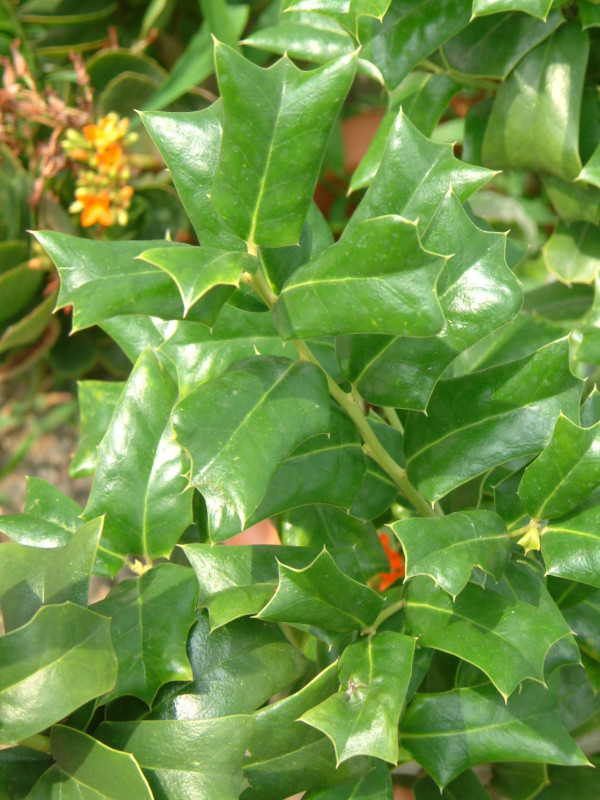
Chinese holly
Ilex cornuta Lindl. & Paxton
Important botanical synonyms and historical names include:
Ilex cornuta var. fortunei (Lindl.) S.Y.Hu
Ilex cornuta f. gaetana Loes.
Ilex cornuta f. typica Loes. — not validly published
Ilex fortunei Lindl.
Ilex fortunei f. aureovariegata Schelle
Ilex furcata Lindl. ex Göpp.
Aquifoliaceae Bercht. & J.Presl — Holly Family
Chinese Holly belongs to the order Aquifoliales and the genus Ilex. Aquifoliaceae is represented principally by hollies ranging from small shrubs to large evergreen or deciduous trees.
Chinese Holly, Chinese Horned Holly, Horned Holly, Horn Holly, Horned-Leaf Holly, Chinese Horned-Leaf Holly, Chinese Ilex, Holly, Ilex cornuta, Ilex fortunei, Ilex furcata
Important cultivated forms include Burford Holly, Burford Chinese Holly, Ilex cornuta ‘Burfordii’; Dwarf Burford Holly, ‘Dwarf Burford’ or ‘Burfordii Nana’; Carissa Holly, ‘Carissa’; Rotunda Holly or Dwarf Chinese Holly, ‘Rotunda’; Needlepoint Holly, ‘Anicet Delcambre’; and yellow-fruited ‘D’Or’.
‘Nellie R. Stevens’ is a hybrid holly involving Chinese Holly and English Holly rather than a cultivar of pure Ilex cornuta.
Triterpenoid Saponins and Glycosides
Chinese Holly contains numerous pentacyclic triterpenes and triterpenoid glycosides, including compounds classified as saponins. These bitter plant-defense compounds provide the best-supported explanation for the mild gastrointestinal syndrome associated with eating holly fruit or foliage.
Saponins can interact with cell membranes and irritate the lining of the mouth, stomach, and intestines. After a meaningful ingestion, an animal may drool, become nauseated, vomit, develop loose stool or diarrhea, show abdominal discomfort, or temporarily refuse food.
Although laboratory studies have isolated many individual triterpenoids and glycosides from Chinese Holly, no single compound has been established as the sole veterinary toxin responsible for ordinary pet exposures. The clinically useful description remains low-severity gastrointestinal irritation associated with the plant’s saponin-rich chemistry.
Fruit Is the Most Likely Exposure
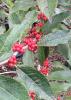
The round red structures commonly called berries are botanically drupes. Each contains fleshy tissue surrounding several hard, bony inner stones called pyrenes. Female plants and fruiting cultivars may produce large numbers of these fruits during autumn and winter.
The fruit is more likely to be swallowed than the tough foliage because it is colorful, rounded, and may accumulate beneath the shrub. Puppies, scavenging dogs, poultry, and other animals may eat several fruits while investigating the ground.
Fruit saponins are intensely bitter, which may help limit ingestion. The bitterness does not make the fruit safe, but it contributes to the generally self-limiting nature of many exposures.
Leaves Can Cause Chemical and Mechanical Irritation
Chinese Holly leaves are leathery and commonly bear several rigid triangular spines. The species name cornuta means horned and refers to these conspicuous projections.
Chewing the foliage may expose the mouth to both irritating plant compounds and physical injury. The spines can scrape or puncture the lips, gums, tongue, palate, pharynx, or esophagus, causing head shaking, lip smacking, drooling, pawing at the mouth, or reluctance to swallow.
Cultivars vary substantially. ‘Rotunda’ has strongly spined foliage, while ‘Burfordii’ and ‘Carissa’ commonly have a single prominent terminal spine. A smoother-looking cultivar can still cause gastrointestinal irritation if swallowed.
Caffeine and Theobromine Are Not Established Practical Toxins Here
The genus Ilex includes beverage plants such as Yaupon Holly, Ilex vomitoria, and Yerba Mate, Ilex paraguariensis, whose leaves contain caffeine and related methylxanthines. That chemistry should not be applied automatically to every holly species.
Caffeine or theobromine has not been established as a clinically important toxin in ordinary Chinese Holly ingestion. Restlessness, marked tachycardia, tremors, and seizures would therefore be unusual and should prompt investigation for chocolate, coffee, tea, stimulant medication, another plant, pesticide, or unrelated disease.
Cyanogenic Compounds Should Not Be Generalized Across Hollies
A cyanogenic glycoside has been reported from European Holly, Ilex aquifolium, but the presence of that compound in one species does not establish a cyanide hazard from Chinese Holly.
Rapid respiratory distress, bright red mucous membranes, severe seizures, sudden collapse, or a bitter-almond odor is not the expected Chinese Holly syndrome. Those findings require immediate investigation for another toxicant rather than being attributed automatically to Ilex cornuta.
Hard Fruit Stones and Indigestible Plant Material
The hard pyrenes inside the fruits are not the primary chemical toxin, but swallowing many fruits can create a physical gastrointestinal burden. Small animals may develop constipation, abdominal discomfort, or, rarely, obstruction if a large quantity of stones, woody stems, or decorative plant material is ingested.
Holiday branches may also be held together with wire, ribbon, string, floral picks, glue, or artificial decorations. These materials can present a greater mechanical hazard than the mild inherent toxicity of the holly itself.
No Established Toxic Dose
No dependable berry count, leaf quantity, or gram-per-kilogram toxic dose has been established for dogs, cats, horses, livestock, birds, rabbits, or other animals.
Clinical effects depend on the quantity eaten, plant part, cultivar, animal size, chewing, gastrointestinal sensitivity, and whether another plant or decorative material was swallowed at the same time. A small taste may cause no signs, while repeated ingestion can produce vomiting, diarrhea, and dehydration.
Expected Gastrointestinal Signs
Most symptomatic Chinese Holly exposures cause mild gastrointestinal irritation. Signs may include lip licking, nausea, drooling, vomiting, loose stool, diarrhea, abdominal discomfort, appetite reduction, lethargy, or temporary depression.
Signs may begin within several hours of ingestion. No exact onset period applies to every animal, and the timing depends on the amount swallowed, stomach contents, plant part, and whether hard fruit stones or another substance were also consumed.
Mouth Injury from Spiny Leaves
A pet that chews the sharply pointed foliage may shake its head, smack its lips, paw at the mouth, gag, or drool because of scratches or punctures. Small amounts of blood may be visible when a spine injures the gum, tongue, or inner lip.
Persistent bleeding, marked pain, repeated gagging, inability to swallow, or coughing after chewing leaves warrants examination for a retained spine, deeper pharyngeal injury, or another foreign object.
Vomiting and Diarrhea
Vomiting may occur once or several times as the stomach expels bitter, indigestible plant material. Diarrhea is generally mild but can become clinically important when it is frequent or accompanied by continued vomiting.
Repeated fluid loss may cause dry or tacky gums, weakness, reduced urination, sunken eyes, poor appetite, and worsening lethargy. Puppies, kittens, toy-breed dogs, elderly animals, and patients with kidney, heart, endocrine, or gastrointestinal disease can become dehydrated more quickly.
Abdominal Pain, Constipation, and Foreign Material
A large ingestion of fruit and hard pyrenes may cause abdominal discomfort, straining, reduced stool production, or constipation. Swallowed twigs, woody stems, wire, ribbon, or floral picks may create a separate obstruction or perforation risk.
Repeated unproductive vomiting, a tense or enlarged abdomen, severe pain, inability to pass stool, or progressive weakness is not typical of a simple mild saponin exposure and requires prompt imaging and examination.
Signs in Horses and Livestock
Horses cannot vomit. They may instead develop salivation, feed refusal, mild colic, soft manure, diarrhea, or reduced gastrointestinal motility after consuming substantial fruit or foliage.
Cattle, sheep, goats, poultry, and other livestock may show reduced appetite or transient digestive upset after eating holly material. Serious group illness should prompt investigation of shared feed, pesticides, toxic clippings, mold, infectious disease, or another plant.
Unexpected Neurologic or Cardiovascular Signs
Marked agitation, pronounced tachycardia, persistent tremors, seizures, severe ataxia, coma, respiratory failure, primary kidney failure, or major cardiac arrhythmias are not expected from an uncomplicated Chinese Holly exposure.
Those findings should prompt investigation for another holly species, chocolate, caffeine products, medication, pesticide, toxic mushroom, fertilizer, another ornamental plant, or unrelated illness.
Expected Course and Warning Signs
Most uncomplicated cases improve after access to the plant ends and the gastrointestinal irritation subsides. Mild signs are generally short-lived and do not progress to organ failure.
Veterinary evaluation is warranted for repeated vomiting, inability to retain water, profuse or bloody diarrhea, marked abdominal pain, dehydration, continuing food refusal, difficulty swallowing, substantial mouth injury, reduced stool production, weakness, collapse, or illness inconsistent with a low-toxicity plant exposure.
Identification
Chinese Holly is a dense broadleaf evergreen shrub or small tree. Unpruned plants may become approximately 15–25 feet tall, although many landscape cultivars remain considerably smaller or are maintained as clipped hedges.
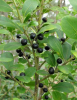
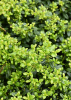
The leaves are alternate, leathery, glossy dark green, and commonly rectangular to oblong. Typical leaves have a prominent terminal spine and several additional hornlike spines along the margins. Mature growth on some plants may become less strongly spined.
Small greenish-white flowers appear during spring. Chinese Holly is generally dioecious, meaning male and female flowers occur on separate plants, although certain female cultivars can produce fruit without normal pollination.
The fruits ripen red on most cultivars and may persist through winter. Each fruit is attached by a relatively long stalk and contains several hard, wrinkled or pitted pyrenes.
Native Range and Landscape Exposure
Ilex cornuta is native from central and southern China to South Korea and Hainan. It grows naturally in ravines, hills, woodland margins, and beside mountain paths.
It is planted widely as a hedge, foundation shrub, barrier, screen, specimen, and security planting. The rigid spines make it useful beneath windows or along property boundaries but also create a mouth-injury hazard when animals chew the foliage.
Chinese Holly has escaped cultivation in parts of the southern United States. Animals may encounter it in residential yards, parks, old homesites, wooded edges, roadsides, and naturalized areas.
Burford, Dwarf Burford, and Other Cultivars
‘Burfordii’ is a large, commonly planted female cultivar that usually has one terminal leaf spine and can set abundant red fruit without pollination. Its fruiting branches are sometimes brought indoors for winter decoration.
Dwarf Burford, also called ‘Dwarf Burford’ or ‘Burfordii Nana,’ is a more compact landscape form. Its smaller overall size does not change the saponin-related gastrointestinal concern.
‘Carissa’ is a compact cultivar with a single terminal spine and little or no fruit. ‘Rotunda’ forms a low, dense mound with exceptionally rigid multi-spined leaves and generally limited fruit production.
‘Needlepoint,’ also sold as ‘Anicet Delcambre,’ is a fruiting screen or hedge cultivar. ‘D’Or’ produces yellow rather than red fruit. All should be treated as Chinese Holly despite differences in leaf shape and fruit production.
Chinese Holly Is Not Every Plant Called Holly
American Holly, Ilex opaca; English Holly, Ilex aquifolium; Japanese Holly, Ilex crenata; Yaupon Holly, Ilex vomitoria; Winterberry, Ilex verticillata; and Inkberry, Ilex glabra are separate species.
Holly Osmanthus, Osmanthus heterophyllus, resembles a holly but belongs to Oleaceae. Oregon Grape Holly belongs to Mahonia. Sea Holly belongs to Eryngium. Common names alone should not be used to transfer one species’ chemistry or treatment expectations to another.
Caffeine-Containing Hollies
Yaupon Holly and Yerba Mate have documented histories as caffeine-containing beverages. Their traditional use does not establish that Chinese Holly fruit or foliage produces a clinically important methylxanthine syndrome in pets.
The distinction matters because methylxanthine poisoning is characterized by marked restlessness, rapid heart rate, tremors, hyperthermia, and seizures. Ordinary Chinese Holly exposure instead produces predominantly local mouth irritation and gastrointestinal upset.
Preserved Veterinary Context
Toxic Plants of North America, by George E. Burrows and Ronald J. Tyrl, summarizes the generally low veterinary risk:
Rarely, digestive tract problems are reported for horses or other animal species (Finance 1987). Effects in pets are usually limited to apparent irritation of the gastrointestinal tract with salivation, vomiting, and perhaps diarrhea in some cases (Volmer 2002). Feeding trials in young calves fed frozen I. myrtifolia (myrtle holly) every third day over 16 days or daily for 35 days produced no adverse clinical or pathologic effects (Pence et al. 2001).
The calf feeding trial involved Myrtle Holly rather than Chinese Holly, so it does not prove that every quantity of Ilex cornuta is harmless. It does support the broader conclusion that severe livestock poisoning is not the ordinary outcome of holly exposure.
Holiday and Decorative Exposures
Chinese Holly branches may be used in wreaths, garlands, table arrangements, and winter decorations. Indoor branches place berries and leaves at pet level and may also include floral wire, ribbon, artificial snow, preservatives, candles, or other hazardous materials.
Mixed holiday greenery may contain English Holly, mistletoe, yew, lilies, amaryllis, or other plants with different toxic effects. Every component should be identified before illness is attributed solely to Chinese Holly.
Diagnosis
No laboratory test specifically confirms Chinese Holly ingestion. Diagnosis generally depends on plant identification, access to fruits or foliage, compatible mild gastrointestinal signs, and exclusion of another exposure when illness is severe.
Preserve a leafy branch, fruit, photographs of the entire shrub, the landscape label, and any vomited plant material. Decorative arrangements should be saved intact so wire, ribbon, preservatives, and other plant species can be identified.
Persistent vomiting, abdominal pain, bloody stool, reduced fecal output, severe weakness, or unexpected neurologic findings may justify blood testing, urinalysis, abdominal radiographs, ultrasound, or other diagnostics based on the suspected complication.
Prevention
Collect fallen fruit from dog runs, kennels, patios, paths, poultry areas, and play yards. Keep puppies and scavenging animals away from heavily fruiting shrubs until cleanup is complete.
Place cut holly decorations beyond the reach of pets and collect dropped berries and leaves promptly. Dispose of branches in a closed container rather than open compost accessible to animals.
Do not feed holly clippings to horses or livestock. Provide adequate forage and prevent access to large piles of pruning debris, especially when branches are mixed with unidentified landscape plants.
Immediate Steps After Chinese Holly Exposure
- Stop further ingestion. Remove the animal from the shrub, fallen fruit, clipped branches, holiday arrangement, pruning debris, or other accessible plant material.
- Remove only loose visible fragments. If the animal is calm and swallowing normally, take away berries or leaves resting at the lips or front of the mouth. Do not reach blindly into the throat.
- Check for physical mouth injury. Look for bleeding, a retained leaf spine, swelling, repeated gagging, or obvious pain around the lips, gums, tongue, and palate. Do not scrape or probe an injured area.
- Gently wipe the mouth when needed. A soft cloth dampened with water can remove loose plant residue from the lips and accessible gums. Do not spray or pour water toward the throat.
- Identify what was swallowed. Determine whether the animal ate red or yellow fruits, spiny leaves, woody stems, decorative wire, ribbon, floral foam, artificial snow, preservatives, or another plant in the arrangement.
- Allow voluntary water when appropriate. An alert animal that swallows normally and is not vomiting repeatedly may have access to fresh water. Do not force liquids by syringe or bottle.
- Observe for gastrointestinal signs. Monitor vomiting, diarrhea, appetite, abdominal comfort, water intake, activity, urination, and stool production.
- Contact a veterinarian when the exposure is not clearly minor. Prompt guidance is appropriate after a large fruit ingestion, repeated vomiting, substantial mouth injury, swallowed decorative material, or exposure involving a very young, small, elderly, pregnant, or medically fragile animal.
Do Not Attempt Unsupervised Home Treatment
- Do not induce vomiting at home. Hydrogen peroxide, salt, mustard, syrup of ipecac, and manual gagging can cause gastric injury, aspiration, electrolyte disturbance, or more harm than this ordinarily mild plant exposure.
- Do not give activated charcoal routinely. Chinese Holly generally causes local gastrointestinal irritation rather than a severe absorbed toxicosis. Charcoal offers limited expected benefit and can be aspirated by a vomiting or depressed animal.
- Do not give laxatives or cathartics. Mineral oil, castor oil, sorbitol, magnesium products, and similar remedies may worsen diarrhea, dehydration, and aspiration risk.
- Do not give anti-diarrheal medication without veterinary direction. Loperamide, bismuth, kaolin-pectin products, and similar medicines are unnecessary for most exposures and may interfere with assessment of obstruction, hemorrhage, infection, or another cause.
- Do not give milk, oil, bread, yogurt, or herbal remedies as antidotes. These do not neutralize saponins and may worsen nausea.
- Do not administer sucralfate, antacids, or acid-reducing medication automatically. These treatments may be useful for documented esophageal or gastric injury but are not routine Chinese Holly antidotes.
- Do not give human pain relievers or leftover prescriptions. Ibuprofen, naproxen, acetaminophen, aspirin, and other medications may cause a more serious secondary poisoning.
When Veterinary Examination Is Important
- Persistent gastrointestinal signs: Repeated vomiting, inability to retain water, profuse diarrhea, blood in vomit or stool, continuing appetite loss, or marked abdominal discomfort requires evaluation.
- Dehydration or weakness: Dry or tacky gums, sunken eyes, reduced urination, increasing lethargy, weak pulses, or collapse indicates more than transient stomach irritation.
- Mouth or throat injury: Continuing bleeding, repeated gagging, painful swallowing, refusal to drink, coughing, or evidence that a spine remains embedded requires oral or pharyngeal examination.
- Possible obstruction: Repeated unproductive vomiting, abdominal enlargement, severe pain, constipation, inability to pass stool, or known ingestion of many hard pyrenes, woody stems, wire, ribbon, or floral picks warrants imaging.
- Unexpected systemic signs: Marked restlessness, tremors, seizures, severe ataxia, abnormal heart rhythm, breathing difficulty, coma, or organ abnormalities are inconsistent with ordinary Chinese Holly irritation and require investigation for another exposure.
- Livestock group illness: Several animals becoming ill after access to the same clippings, feed, or pasture debris suggests another toxic plant or shared contaminant and requires immediate source control.
Veterinary Examination and Diagnostic Priorities
The veterinarian will assess hydration, perfusion, abdominal comfort, gastrointestinal motility, swallowing, oral wounds, stool production, and the possibility of another plant, chemical, or foreign object.
Most mild exposures do not require laboratory testing. Persistent vomiting, diarrhea, weakness, or inability to drink may justify evaluation of hydration, glucose, electrolytes, kidney function, and other values according to the patient’s condition.
Oral examination may identify a retained leaf spine, mucosal puncture, laceration, or pharyngeal injury. Sedation may be necessary when pain or patient movement prevents a safe examination.
Abdominal radiographs or ultrasound may be considered when numerous fruits, hard pyrenes, woody material, floral wire, ribbon, or another object may have been swallowed.
Professional Decontamination
Most Chinese Holly exposures require no aggressive gastrointestinal decontamination. Removal of the plant, gentle clearing of loose oral material, access to water when swallowing is normal, and observation are generally proportionate to the low expected toxicity.
Clinic-induced vomiting may be considered only after an exceptional, very recent ingestion involving a large quantity of fruit or a more concerning mixed exposure in an alert, asymptomatic dog with normal breathing and swallowing.
Emesis is contraindicated when the animal is already vomiting repeatedly, weak, depressed, dysphagic, neurologically abnormal, unable to protect its airway, or suspected of swallowing sharp wire, woody material, or another object that should not be returned through the esophagus.
Activated charcoal and gastric lavage are not routinely warranted for Chinese Holly alone. They would be considered only when another clinically important toxin was swallowed at the same time and the anticipated benefit outweighs the procedural risks.
Vomiting, Diarrhea, and Hydration
Treatment is primarily supportive. Persistent nausea or vomiting may be treated with a veterinarian-selected antiemetic such as maropitant or ondansetron after obstruction, foreign material, pancreatitis, infectious disease, and another toxin have been considered.
Fluid support should be based on measured dehydration, perfusion, ongoing losses, body weight, kidney function, urine production, electrolyte values, and cardiopulmonary condition.
An animal with mild signs and normal swallowing may need only voluntary oral water. Repeated vomiting or diarrhea may require subcutaneous or intravenous fluids and correction of measured electrolyte abnormalities.
Anti-diarrheal drugs are usually unnecessary. Hydration, a suitable diet, and investigation of persistent, painful, or bloody diarrhea are more important than suppressing intestinal movement.
Gastrointestinal and Oral Protection
Sucralfate may be considered when repeated vomiting or physical leaf injury has caused painful swallowing, hematemesis, suspected esophagitis, or erosive gastritis. It creates a protective barrier over damaged mucosa rather than neutralizing holly saponins.
Because sucralfate can reduce absorption of other oral medications, its timing may need to be separated from food and additional drugs.
Acid suppression may be selected when reflux esophagitis, erosive gastritis, hematemesis, melena, or another acid-related complication is documented or strongly suspected. One episode of mild vomiting does not justify routine acid suppression.
Oral punctures or lacerations may require removal of retained plant material, irrigation, pain control, and treatment of secondary infection when clinically indicated.
Foreign-Body Treatment
Hard fruit stones generally pass without difficulty when only a few are swallowed, but a substantial accumulation can contribute to constipation, obstruction, or continued abdominal discomfort.
Endoscopic retrieval may be possible when foreign material remains in the stomach. Surgery may be required for a confirmed obstruction, perforation, linear foreign body, or sharp decorative object.
Foreign-body treatment addresses the physical complication rather than the mild saponin exposure and should not be delayed when imaging shows progressive obstruction.
Horses and Livestock
Remove horses, cattle, sheep, goats, poultry, and other animals from holly clippings, decorative branches, heavily fruiting shrubs, or mixed landscaping waste.
Horses cannot vomit. Veterinary management may include oral examination, colic assessment, evaluation of intestinal motility, hydration support, and investigation of choke or obstruction when woody material was consumed.
Ruminants may require assessment of rumen motility, abdominal distention, manure production, hydration, and the complete clipping mixture. Severe signs or illness in several animals is inconsistent with a routine small Chinese Holly exposure and warrants investigation for a more toxic plant or contaminant.
Recovery and Prognosis
The prognosis is excellent for most uncomplicated Chinese Holly exposures. Mild drooling, nausea, vomiting, loose stool, appetite reduction, or temporary lethargy generally improves after further ingestion is prevented.
Recovery may take longer when repeated gastrointestinal losses cause dehydration, a spiny leaf injures the mouth or throat, or numerous fruit stones or decorative materials were swallowed.
Improvement should include cessation of vomiting, decreasing diarrhea, comfortable swallowing, voluntary drinking, return of appetite, normal urination and stool production, and restoration of normal activity.
A guarded course would be unusual for Chinese Holly alone and should prompt investigation for obstruction, perforation, another poisonous plant, pesticide, medication, infectious disease, or underlying illness.
Frequently Asked Questions About Chinese Holly and Animal Poisoning
Is Chinese Holly poisonous to dogs and cats?
Yes, but its toxicity is generally low. Eating the fruit or leaves may cause drooling, nausea, vomiting, diarrhea, abdominal discomfort, appetite reduction, and temporary depression.
Is Chinese Holly poisonous to horses?
Chinese Holly may cause salivation, feed refusal, mild colic, or diarrhea after substantial ingestion. Horses cannot vomit, and chewing spiny leaves may injure the mouth or pharynx.
Which part is most likely to make a pet sick?
The red fruits are most likely to be swallowed because they fall to the ground and resemble berries. Leaves also contain irritating compounds and may cause physical mouth injury from their rigid spines.
Are Chinese Holly fruits true berries?
No. They are drupes containing fleshy outer tissue and several hard inner stones called pyrenes. “Berry” remains the familiar common term.
Can Chinese Holly kill a pet?
Fatal systemic poisoning is not expected from an ordinary exposure. Serious illness is more likely to involve severe dehydration, gastrointestinal obstruction, swallowed decorative material, another plant, or an unrelated condition.
Does Chinese Holly contain caffeine or theobromine?
Caffeine and related methylxanthines occur in certain beverage hollies, but they have not been established as clinically important toxins in ordinary Ilex cornuta exposure. A stimulant syndrome should prompt investigation for another source.
Can Chinese Holly cause cyanide poisoning?
Chinese Holly is not recognized as a practical cyanide-poisoning hazard. Cyanogenic chemistry reported from another holly species should not be transferred automatically to Ilex cornuta.
Is Burford Holly the same plant as Chinese Holly?
Burford Holly is the cultivated form Ilex cornuta ‘Burfordii.’ Dwarf Burford, Carissa, Rotunda, Needlepoint, and D’Or are other Chinese Holly cultivars.
Are Burford Holly berries poisonous?
They contain the same general low-severity gastrointestinal irritants as other Chinese Holly fruit. A few fruits may cause no signs, while a larger ingestion can produce vomiting or diarrhea.
Can the spiny leaves injure a pet?
Yes. The stiff points may scratch or puncture the lips, gums, tongue, palate, or throat. Persistent drooling, bleeding, gagging, or painful swallowing requires examination for retained plant material or deeper injury.
Should I make my dog vomit after eating Chinese Holly?
No home vomiting attempt should be made. Most exposures are mild, and hydrogen peroxide or another emetic can cause more irritation and aspiration risk than the holly itself.
Does activated charcoal help?
Activated charcoal is not routinely needed because Chinese Holly generally causes local gastrointestinal irritation rather than a severe absorbed toxicosis. It may be considered only for a separate charcoal-responsive exposure.
Can swallowed fruits cause an obstruction?
A few fruit stones usually pass, but swallowing many drupes, woody stems, wire, ribbon, or floral picks can create an obstruction or perforation risk. Repeated vomiting, severe abdominal pain, or reduced stool production requires prompt evaluation.
How long do symptoms last?
Mild vomiting, diarrhea, drooling, or appetite loss is generally short-lived. Persistent signs, inability to retain water, blood, weakness, or failure to improve warrants veterinary examination.
What is the prognosis?
The prognosis is excellent for uncomplicated Chinese Holly exposure. A severe or prolonged course should prompt investigation for dehydration, foreign material, another plant, a chemical exposure, or underlying disease.