Eastern Star Dianthus Ingestion and Skin Irritation
Is Eastern Star Poisonous to Dogs, Cats, Horses, and Other Animals?
Yes—Eastern Star, the hybrid Dianthus cultivar ‘Red Dwarf,’ should be treated as mildly toxic to dogs, cats, and horses that chew it. Flowers, leaves, and stems may cause vomiting, diarrhea, drooling, appetite reduction, or abdominal discomfort, while sap or crushed foliage can produce localized redness, itching, or dermatitis in a sensitive animal. Serious systemic poisoning is not expected from an ordinary nibble, but persistent vomiting, substantial diarrhea, dehydration, significant skin inflammation, or an uncertain plant identity requires veterinary assessment.
About this guide: This page provides general pet-poisoning information and cannot diagnose or treat an individual animal. For any suspected exposure, contact a veterinarian or animal poison-control service immediately. Do not induce vomiting, give medication, or attempt home decontamination unless directed by a veterinary professional.
Eastern Star
Dianthus × hybrida ‘Red Dwarf’
Eastern Star is the commercial name used for the patented hybrid cultivar ‘Red Dwarf,’ also marketed as STAR SINGLE™ Eastern Star.
The cultivar was produced from Dianthus ‘Brehemen’ as the female parent and an unidentified Dianthus as the pollen parent. It should not be assigned automatically to Dianthus caryophyllus, Dianthus barbatus, Dianthus chinensis, Dianthus deltoides, or another named species.
Caryophyllaceae Juss. — Pink or Carnation Family
Order: Caryophyllales
Eastern Star, Eastern Star Dianthus, Eastern Star Pink, STAR SINGLE™ Eastern Star, Star Single Eastern Star, ‘Red Dwarf,’ Red Dwarf Dianthus, Red Dwarf Pink, Hybrid Pink, Dwarf Hybrid Pink, Dianthus × hybrida ‘Red Dwarf’
“Pinks” is a broad common name for many compact, narrow-leaved Dianthus plants and may be used appropriately for Eastern Star. “Carnation” may be used loosely in the nursery trade for cultivated Dianthus hybrids, but true or border carnation normally refers to Dianthus caryophyllus.
Sweet William ordinarily refers to Dianthus barbatus; China Pink to Dianthus chinensis; Cheddar Pink to Dianthus gratianopolitanus; Maiden Pink to Dianthus deltoides; and Cottage Pink or Garden Pink commonly to Dianthus plumarius and related garden forms. These names describe related Dianthus plants, not exact botanical synonyms for Eastern Star.
A Low-Severity Irritant Exposure
Eastern Star is best classified as a mildly toxic ornamental rather than a major systemic poison. The characteristic concerns associated with cultivated Dianthus are gastrointestinal irritation after ingestion and localized dermatitis after contact with sap or crushed foliage. Ordinary chewing is not expected to produce the profound cardiac, neurologic, renal, hepatic, or respiratory syndromes associated with highly poisonous garden plants.
The exact toxic principle in Eastern Star has not been identified. Veterinary poison references often describe the principle in carnations and pinks simply as an unknown irritant. No controlled feeding study, toxic-dose determination, or published companion-animal case series specific to the ‘Red Dwarf’ cultivar has established which individual compound causes its mild clinical effects.
Triterpenoid Saponins in the Genus
Members of Caryophyllaceae are chemically diverse, and triterpenoid saponins occur in several genera. Saponins are glycosides whose molecular structure can interact with biological membranes. Depending on the compound, concentration, exposure route, and animal species, they may contribute to nausea, vomiting, diarrhea, mucosal irritation, or other effects.
Research on cultivated carnation, Dianthus caryophyllus, identified three glycosides derived from gypsogenic acid in the aerial portions of the plant. Other investigations have isolated numerous oleanane-type triterpenoid saponins from species such as Dianthus superbus and Dianthus chinensis.
Those findings demonstrate that it is inaccurate to describe the entire genus as lacking saponins. They do not establish the concentration or exact saponin profile of Eastern Star, nor do laboratory studies of isolated compounds prove that an animal chewing a garden plant will develop a severe saponin toxicosis. The observed pet syndrome remains predominantly mild and irritant.
Other Possible Irritating Constituents
Dianthus plants contain additional secondary metabolites, including flavonoids, phenolic compounds, volatile aromatic constituents, and other plant chemicals. Fragrant cultivars may produce a clove-like aroma, but fragrance intensity does not provide a dependable measure of animal toxicity.
Plant sap, bitter tissue, fibrous material, and multiple minor compounds may act together rather than one molecule functioning as a potent systemic toxin. The gastrointestinal reaction may also be partly mechanical: chewed leaves and stems are fibrous, poorly digestible plant material capable of provoking nausea or irritating the stomach and intestines.
Essential oil, concentrated extract, herbal preparation, or another processed product should not be treated as equivalent to chewing a few flowers. Concentration can greatly alter exposure, and a product may contain alcohol, solvents, carrier oils, sweeteners, preservatives, or other active ingredients not present in the living plant.
Contact Dermatitis
Sap or crushed foliage can cause localized skin irritation in susceptible animals. Direct contact may occur when a pet chews a stem, lies in a damaged planting, walks through cut foliage, digs in a container, or rubs the muzzle and abdomen against the plant.
The expected reaction is localized redness, itching, licking, rubbing, or a mild rash rather than corrosive chemical burns. Damaged skin, sparsely haired areas, the lips, eyelids, spaces between the toes, and the underside of the abdomen may be more sensitive.
A contact reaction is not automatically a true allergy. Direct irritation can occur on first exposure, whereas allergic contact dermatitis involves an immune response that may become more pronounced after sensitization. The appearance alone may not reliably distinguish the two.
Plant Parts and Exposure Amount
Leaves are most consistently associated with the low-severity irritant classification, but pets may chew flowers, petal bases, flower stalks, stems, or entire pieces pulled from a container. No dependable toxic dose or plant-part threshold has been established for Eastern Star.
A brief nibble is more likely to cause no signs or transient gastrointestinal upset than serious illness. A large meal, repeated grazing, consumption by a very small animal, or ingestion accompanied by fertilizer, pesticide, mulch, potting medium, or foreign material creates a different risk assessment.
Wilted and dried clippings may retain irritating compounds and fibrous material. Drying should not be assumed to make the plant safe, although ordinary dried garden debris is not known to become dramatically more poisonous than fresh Eastern Star.
Species-Specific Evidence
The mild gastrointestinal and dermatitis classification is most commonly applied to dogs, cats, and horses through experience with carnations and related pinks. Published evidence defining the response of rabbits, guinea pigs, hamsters, gerbils, birds, reptiles, goats, sheep, or cattle to Eastern Star itself is limited.
That limitation should not be converted into a severe undocumented syndrome. Small herbivores and birds may nevertheless be affected significantly by appetite loss, diarrhea, altered droppings, dehydration, or disruption of normal gastrointestinal movement even when the plant’s chemical toxicity is modest.
Expected Early Gastrointestinal Signs
An animal that develops signs after chewing Eastern Star will most commonly show mild gastrointestinal irritation. Vomiting, nausea, drooling, lip licking, reduced appetite, soft stool, diarrhea, abdominal discomfort, or mild lethargy may begin within several hours of ingestion.
Some animals remain completely normal after a small nibble. Others may vomit once and recover without further illness. The absence of signs after a minor exposure is consistent with the plant’s low-severity classification, but it does not prove that every amount or every related Dianthus cultivar is harmless.
Persistent Vomiting, Diarrhea, and Dehydration
The primary medical concern is not usually a progressive organ-specific poison syndrome. It is the secondary effect of continued vomiting or diarrhea. Repeated fluid loss can produce dehydration, electrolyte abnormalities, weakness, poor circulation, and delayed recovery.
Animals that cannot retain water, pass frequent watery stool, stop eating, or become increasingly quiet require closer assessment. Dry or tacky gums, reduced urination, sunken eyes, poor skin elasticity, weakness, cool extremities, or collapse indicate that the exposure is no longer appropriately managed by simple home observation.
Blood in vomit, substantial red blood in stool, black tarry stool, severe abdominal pain, repeated unproductive retching, or abdominal distention is not expected from an ordinary Eastern Star nibble. Those findings may indicate more extensive gastrointestinal injury, a foreign body, another toxin, hemorrhagic disease, pancreatitis, obstruction, or an unrelated illness.
Skin and Coat Reactions
Contact with sap or crushed plant tissue may cause localized redness, itching, licking, rubbing, small raised areas, or a mild rash. The paws, muzzle, lips, eyelids, lower abdomen, and other sparsely haired regions are common contact sites.
Mild irritation may improve after the residue is removed and the skin is washed. Persistent inflammation, blistering, extensive swelling, open sores, widespread hives, or continued self-trauma is not typical of a simple brief exposure and warrants veterinary examination.
Facial swelling, difficulty breathing, collapse, or widespread hives suggests a possible hypersensitivity reaction or another exposure rather than the ordinary direct-irritant syndrome. Genuine anaphylaxis is an emergency even though it is not an expected routine effect of Eastern Star.
Eye Exposure
Sap, pollen, soil, or crushed plant particles transferred into an eye may cause blinking, squinting, tearing, conjunctival redness, rubbing, or discharge. These findings often reflect mechanical irritation rather than a plant-specific ocular toxin.
Continuing pain, corneal cloudiness, marked swelling, visual difficulty, or inability to open the eye after gentle irrigation may indicate retained debris, corneal abrasion, ulceration, or another eye injury requiring professional examination.
Dogs and Cats
Dogs may nibble flowers, pull at low-growing stems, dig up rooted plants, or consume discarded clippings. Puppies and dogs that habitually chew vegetation are more likely to ingest enough material to develop vomiting or diarrhea.
Cats may chew a potted plant or cut-flower stem, but substantial outdoor ingestion is less common. A cat that vomits repeatedly, stops eating, becomes dehydrated, or appears unusually depressed should be examined because cats can develop clinically important complications from appetite loss and dehydration even when the original irritant is mild.
Horses and Grazing Animals
Horses do not vomit. A horse that consumes ornamental clippings may instead show reduced appetite, mild colic, soft manure, diarrhea, depression, or changes in gastrointestinal sounds. Ordinary Eastern Star exposure is not expected to cause a characteristic fatal equine syndrome.
Large-volume ingestion is unlikely when adequate forage is available, but dumped landscape waste can contain multiple plants, herbicides, fertilizers, plastic pots, wire, ties, or other hazards. Several animals becoming ill together requires investigation of the complete material rather than attributing every sign to Dianthus.
Rabbits, Rodents, Birds, and Other Pets
Published cultivar-specific evidence is limited. Rabbits and rodents may gnaw the low foliage or roots, while birds may shred flowers and stems during play. Appetite loss, reduced fecal output, diarrhea, abnormal droppings, weakness, or altered behavior can become medically important quickly in small animals.
Reptiles are not known to have a characteristic Eastern Star poisoning syndrome. Illness after exposure may involve pesticide residue, fertilizer, contaminated substrate, another plant, inappropriate environmental conditions, or an unrelated disease.
Signs Suggesting Another Exposure
Tremors, seizures, severe loss of coordination, profound depression, abnormal pupil size, marked heart-rate changes, breathing difficulty, kidney failure, liver failure, coma, or progressive multiple-organ dysfunction is not expected from uncomplicated Eastern Star ingestion.
Those signs require evaluation for another plant, medication, pesticide, fertilizer, mushroom, recreational substance, concentrated herbal product, foreign body, infectious disease, metabolic disorder, or other medical emergency.
Expected Course
Mild nausea, one or two vomiting episodes, soft stool, or localized skin irritation should begin improving after access ends and the residue is removed. Many uncomplicated animals recover within several hours to approximately one day.
Recovery may take longer when a substantial amount was swallowed, vomiting or diarrhea continues, dehydration develops, the skin remains contaminated, or the animal has preexisting gastrointestinal, kidney, liver, endocrine, or allergic disease.
Eastern Star Is a Specific Hybrid Cultivar
Eastern Star is a named compact Dianthus cultivar rather than a separate wild species. Its formal cultivar denomination is ‘Red Dwarf,’ and Eastern Star is the commercial name under which the plant is widely sold.
The cultivar was selected for a low cushion-like habit, narrow blue-green foliage, scented red flowers with darker centers, and a long flowering period. Those features place it among the ornamental plants commonly called pinks.
The parentage is only partly identified. ‘Brehemen’ was the female parent, while the pollen parent was an unidentified Dianthus. Assigning the cultivar automatically to carnation, Sweet William, China Pink, or Maiden Pink would therefore create false taxonomic precision.
How to Recognize Eastern Star
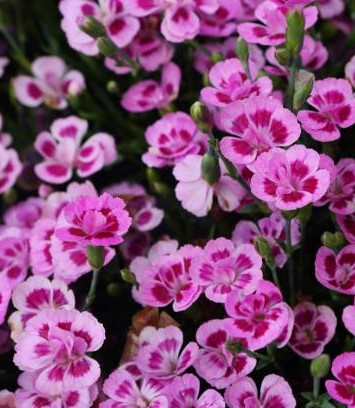
Eastern Star forms a compact mound of narrow, grass-like, blue-green to silvery-green leaves. The flowers are carried just above the foliage and are typically red with a darker burgundy or maroon central eye.
Individual flowers usually have five broad petals with toothed or fringed outer margins. The flower pattern and low growth distinguish it from the tall florist carnation and from Sweet William, which generally produces dense rounded clusters of numerous smaller flowers.
A nursery tag reading Eastern Star, STAR SINGLE™ Eastern Star, ‘Red Dwarf,’ or plant patent PP14,437 supports identification. Photographs should include the complete plant, foliage, individual flowers, label, container, and any damaged portion.
Where Pets Encounter It
Eastern Star is commonly placed at the front of flower borders, along paths, in rock gardens, around patios, in porch containers, and in low mixed plantings. Its compact growth keeps flowers and foliage directly within reach of dogs, puppies, outdoor cats, rabbits, and other animals.
Indoor exposure can occur when flowering plants are sold as seasonal gifts or when stems are used in a mixed arrangement. Cats may reach a bouquet on a counter or table, while a dog may pull discarded stems from a trash container.
Garden work creates another exposure route. Deadheading, trimming, dividing, transplanting, or replacing plants can leave flowers, leaves, stems, roots, sap-contaminated gloves, and clippings where animals can chew them.
Common Names That Cause Identification Errors
“Dianthus,” “pinks,” and “carnation” are often used loosely across the nursery and florist trades. The names do not always identify a single species, and different hybrids may be sold without detailed parentage.
Sweet William is usually Dianthus barbatus, China Pink is Dianthus chinensis, Maiden Pink is Dianthus deltoides, Cheddar Pink is Dianthus gratianopolitanus, and Cottage Pink commonly refers to Dianthus plumarius. These relatives share a broadly low-severity irritant reputation but are not exact synonyms for Eastern Star.
“Indian Pink” may refer to unrelated plants such as Spigelia marilandica, which has a different toxin profile. A common name containing “pink” is not sufficient for poison assessment without examining the plant itself.
Flowers, Leaves, Stems, and Roots
Leaves are most often associated with mild gastrointestinal and skin irritation in horticultural references. Pets may nevertheless chew flowers, petal bases, stems, or uprooted material, and no cultivar-specific study establishes a harmless plant part.
The practical approach is to prevent ingestion of the entire plant while avoiding exaggerated claims that every small contact will cause illness. One pet may nibble a flower without signs, while another may vomit after eating more foliage or may develop dermatitis after sap exposure.
Freshly cut or crushed tissue may release more sap onto the mouth, skin, and coat. Wilted or dried clippings remain unsuitable for feeding and may still cause gastrointestinal irritation or create a choking or obstruction hazard when swallowed in a large fibrous mass.
Containers, Clippings, and Secondary Hazards
An animal digging in an Eastern Star container may encounter fertilizer granules, systemic insecticide, slug bait, water-retaining crystals, moldy potting medium, decorative stones, plastic labels, wire, or broken pottery. These materials may be more dangerous than the plant.
Mixed bouquets may contain lilies, tulips, daffodils, chrysanthemums, eucalyptus, baby’s breath, ribbon, floral wire, wooden picks, preservative solution, or foam. Symptoms that are too severe for ordinary Dianthus exposure should prompt review of every bouquet component.
Essential oils and concentrated herbal preparations bearing a carnation or Dianthus name are not equivalent to a garden plant. Product labels, ingredient lists, concentrations, carrier substances, and amounts must be evaluated separately.
Risk to Dogs, Cats, and Horses
Dogs and cats are expected to experience mild gastrointestinal irritation or contact dermatitis rather than progressive systemic poisoning. Young animals, very small pets, repeated chewers, and animals with preexisting digestive disease may develop more noticeable effects.
Horses may encounter Eastern Star through ornamental beds or discarded garden waste rather than ordinary pasture grazing. A small exposure is unlikely to cause severe poisoning, but diarrhea and colic deserve attention because horses cannot vomit and can develop significant fluid and electrolyte loss.
There is no established safe quantity for any species, but the plant should not be placed in the same hazard category as oleander, cycads, true lilies in cats, yew, water hemlock, castor bean, or other plants known to cause life-threatening organ injury.
Small Mammals, Birds, and Livestock
Species-specific evidence for rabbits, guinea pigs, hamsters, gerbils, pet birds, goats, sheep, and cattle is sparse. The absence of reports does not prove that every exposure is harmless, but a severe cultivar-specific systemic syndrome should not be claimed without evidence.
In rabbits and guinea pigs, reduced food intake and declining fecal production may be more important than vomiting because these animals cannot vomit. Birds and small rodents may receive a relatively large dose for body size when they shred or consume an entire potted plant.
Livestock should not be fed Dianthus clippings or mixed ornamental waste. Group illness after dumped vegetation requires identification of all plants and any associated lawn chemicals, herbicides, pesticides, or foreign material.
Diagnosis
No laboratory test confirms Eastern Star ingestion or identifies a specific circulating toxin. Diagnosis depends on a reliable plant identification, witnessed chewing, missing flowers or foliage, plant fragments in vomit or stool, sap contact, and a compatible mild gastrointestinal or dermatologic syndrome.
Blood testing is usually unnecessary after a trivial exposure in an animal that remains normal. Persistent vomiting, substantial diarrhea, dehydration, weakness, blood loss, abnormal heart rate, neurologic signs, or suspected mixed exposure may justify a complete blood count, serum chemistry, electrolytes, urinalysis, imaging, or other targeted testing.
Diagnostic imaging may be needed when the animal swallowed a large wad of fibrous stems, stones, plant labels, floral wire, ribbon, foam, or broken container material. Continued vomiting after the expected irritant period should not automatically be attributed to the plant.
Prognosis and Prevention
The prognosis is excellent for an ordinary Eastern Star exposure. Most animals recover after the plant is removed, skin contamination is washed away, and any brief gastrointestinal illness resolves.
Prevent repeat exposure by moving containers away from habitual chewers, placing a barrier around low beds, promptly collecting clippings and spent flowers, and keeping discarded bouquets in a closed trash container.
A pet that repeatedly eats ornamental plants may need safer chewing enrichment, environmental changes, dietary assessment, behavioral management, or veterinary evaluation for nausea or another condition that encourages abnormal plant eating.
Immediate Steps After Eastern Star Exposure
- Stop further chewing. Move the animal away from the plant, fallen flowers, clippings, roots, container, mixed bouquet, and any spilled potting material.
- Check the animal before attempting cleanup. Confirm that breathing, awareness, swallowing, and movement are normal. Collapse, breathing difficulty, severe weakness, tremors, or seizures is not an expected mild Dianthus reaction and requires immediate emergency care.
- Remove only loose visible plant fragments. If the animal is calm and cooperative, lift away petals, leaves, or stems resting at the lips or front of the mouth. Do not probe the throat or force the jaws open.
- Wipe away accessible residue. A soft cloth dampened with water may be used gently around the lips, muzzle, and front of the mouth. Avoid vigorous rubbing or directing liquid toward the throat.
- Allow voluntary access to fresh water. An alert animal that swallows normally and is not vomiting repeatedly may drink on its own. Do not syringe or pour water into the mouth.
- Identify the exact plant and other materials. Save the nursery tag, container label, bouquet list, product packaging, photographs, and a sample of the plant. Check for fertilizer, pesticide, slug bait, ribbon, wire, foam, stones, or another toxic plant.
- Monitor the amount and clinical course. Record the plant part, estimated amount, time of ingestion, vomiting, diarrhea, appetite, drinking, urination, skin changes, and any preexisting medical conditions.
After Skin, Coat, or Eye Contact
Wear gloves and wash exposed paws, muzzle, abdomen, or coat with lukewarm water and a mild species-appropriate cleanser. Rinse thoroughly and prevent licking until the residue has been removed. Collars, harnesses, bedding, carriers, and grooming tools may also need cleaning.
Localized redness or itching may reflect direct irritation rather than a true allergy. Continued scratching, chewing, or licking can create secondary skin injury even after the plant residue is gone.
If plant sap, soil, or debris enters an eye, irrigate gently with sterile saline or clean room-temperature water. Do not use medicated eye drops unless prescribed for the current injury. Persistent squinting, tearing, cloudiness, discharge, or visual difficulty requires veterinary examination and may justify fluorescein staining to exclude a corneal abrasion or ulcer.
Do Not Attempt Unsupervised Home Treatment
- Do not induce vomiting with hydrogen peroxide, salt, mustard, syrup of ipecac, or manual gagging. Eastern Star usually causes mild irritation, while home emesis can produce gastric injury, aspiration, sodium poisoning, or more severe illness than the plant itself.
- Do not forcefully flush the mouth. Pouring or spraying liquid toward the throat can cause aspiration, particularly in a frightened, nauseated, weak, or uncooperative animal.
- Do not give activated charcoal without veterinary direction. The exact irritant is unknown, the ordinary syndrome is mild, and the benefit of charcoal has not been established. Charcoal can be aspirated and may worsen dehydration or gastrointestinal discomfort.
- Do not give milk, yogurt, oil, butter, food, electrolyte products, or herbal remedies as antidotes. They do not neutralize the plant and may provoke additional vomiting or interfere with examination.
- Do not give Kapectolin, Kaopectate, bismuth products, loperamide, or another antidiarrheal medication at home. Product formulations vary, some ingredients are unsafe for certain species, and slowing intestinal movement can be counterproductive when foreign material or another toxin is involved.
- Do not give sucralfate, antacids, omeprazole, famotidine, or leftover stomach medication automatically. These agents do not neutralize Dianthus irritants and may be unnecessary after a mild exposure.
- Do not give antihistamines or corticosteroids as universal antidotes. Direct sap irritation is not the same as an allergic reaction, and medication may cause sedation, mask progression, or be inappropriate for the animal’s species and health status.
- Do not give human pain relievers or leftover veterinary prescriptions. Ibuprofen, naproxen, acetaminophen, aspirin, and many other drugs can create a substantially more dangerous secondary poisoning.
When Veterinary Examination Is Especially Important
- Persistent gastrointestinal illness: Repeated vomiting, inability to retain water, frequent watery diarrhea, blood in vomit or stool, black stool, severe abdominal pain, or worsening appetite loss requires examination.
- Dehydration or circulatory changes: Dry or tacky gums, reduced urination, sunken eyes, weakness, cool extremities, poor pulse quality, inability to stand, or collapse indicates clinically significant fluid loss or another serious problem.
- Significant skin or facial reaction: Widespread rash, marked swelling, blistering, open sores, persistent self-trauma, facial swelling, hives, or breathing changes requires professional treatment.
- Eye injury: Ongoing squinting, tearing, discharge, corneal cloudiness, swelling, or apparent visual difficulty after irrigation needs prompt examination.
- Large, repeated, or concentrated exposure: Consumption of a substantial portion of the plant, repeated grazing, an essential oil, herbal preparation, extract, or unknown product requires individual poison assessment.
- High-risk patient: Very young, elderly, pregnant, medically fragile, extremely small, or chronically ill animals may tolerate vomiting, diarrhea, appetite loss, or medication errors poorly.
- Unexpected systemic signs: Tremors, seizures, severe incoordination, abnormal heart rhythm, breathing difficulty, profound depression, coma, or progressive organ dysfunction suggests another toxin, mixed exposure, or unrelated emergency.
Veterinary Examination and Diagnostic Priorities
The veterinarian will determine whether the animal has uncomplicated irritant gastroenteritis, dehydration, painful dermatitis, ocular injury, foreign-body ingestion, or exposure to another toxic substance. The history should include the plant label, amount missing, time since exposure, product form, other bouquet or garden components, and all medications already given.
Testing is often unnecessary when signs are mild and improving. Continued vomiting, diarrhea, weakness, blood loss, abnormal examination findings, or uncertain identification may justify bloodwork, electrolyte measurement, urinalysis, fecal testing, abdominal radiographs, ultrasound, or another targeted procedure.
No rapid test confirms an Eastern Star toxin. Laboratory and imaging studies are used to measure complications and exclude more serious explanations for the animal’s illness.
Professional Gastrointestinal Decontamination
Most ordinary Eastern Star exposures do not require induced vomiting because the expected toxicity is low and the plant may already provoke spontaneous vomiting. The risks of emesis can exceed the likely benefit after a small nibble.
A veterinarian may consider clinic-induced vomiting when a dog has very recently swallowed an unusually large amount, remains alert, has a protected airway, and has no contraindication. Emesis should not be attempted in a weak, sedated, neurologically abnormal, repeatedly vomiting, dysphagic, or respiratory-compromised animal.
Professional emesis in cats is also an individual clinic decision and should not be attempted with household hydrogen peroxide. The mild expected syndrome means that aggressive decontamination is rarely justified solely for ordinary plant chewing.
Activated charcoal is not routinely indicated because the responsible irritant is uncertain, serious systemic absorption is not expected, and binding efficacy has not been established. Gastric lavage would be highly unusual and reserved for an exceptional, substantial recent ingestion in an anesthetized and intubated patient when a veterinarian determines that the likely benefit outweighs aspiration and procedural risks.
Vomiting, Diarrhea, and Gastrointestinal Treatment
A veterinarian may use an antiemetic such as maropitant or ondansetron when vomiting persists or nausea prevents drinking and eating. Medication choice depends on species, age, hydration, underlying disease, suspected obstruction, and whether another toxin was involved.
Sucralfate may be considered professionally when repeated vomiting has produced painful esophagitis, hematemesis, erosive gastritis, or another documented mucosal injury. It forms a protective barrier rather than neutralizing the plant irritant and can interfere with absorption of other medications.
Acid suppression with omeprazole, famotidine, or another agent is not routine after a simple Dianthus nibble. It may be selected when there is evidence of esophagitis, erosive gastritis, gastrointestinal bleeding, or another acid-related complication.
Veterinary management of diarrhea generally prioritizes hydration, electrolyte balance, an appropriate diet, and exclusion of obstruction, infection, hemorrhagic disease, or another toxin. Antimotility medication may be counterproductive when intestinal clearance of irritating material is desirable.
Fluid, Electrolyte, and Nutritional Support
An animal with one mild vomiting episode may need only observation and voluntary access to water. Oral, subcutaneous, or intravenous fluids may be selected when examination shows dehydration, poor intake, continuing vomiting, diarrhea, or impaired circulation.
Fluid therapy is based on measured dehydration, maintenance requirements, perfusion, body weight, continuing losses, heart and kidney function, and the animal’s ability to drink. One fixed fluid volume is not appropriate for every patient.
Electrolytes, kidney values, glucose, and acid-base status may need monitoring when gastrointestinal losses are prolonged. Intravenous crystalloids are used first when hypovolemia or poor perfusion is present; persistent hypotension despite appropriate volume replacement requires reassessment and, when indicated, veterinarian-directed vasopressor support.
Food may be reintroduced in small, appropriate portions after vomiting has stopped and the animal shows voluntary interest. Force-feeding a nauseated, vomiting, sedated, painful, or dysphagic animal creates aspiration risk.
Dermatitis and Allergic Reactions
Mild direct irritation may require only thorough washing and prevention of licking or scratching. Veterinary treatment may include species-appropriate itch control, pain relief, wound care, or treatment of secondary infection when self-trauma has damaged the skin.
An antihistamine may be useful when hives or a histamine-mediated reaction is suspected, but it does not neutralize sap or replace washing. Corticosteroids may be considered for selected inflammatory or allergic reactions after infection, ulceration, patient age, concurrent disease, and other contraindications are assessed.
True anaphylaxis is not a routine Eastern Star effect. Facial swelling accompanied by breathing difficulty, collapse, weak pulses, or profound gastrointestinal signs requires emergency treatment that may include epinephrine, oxygen, airway protection, intravenous crystalloids, and blood-pressure support.
Horses and Grazing Animals
Remove horses and livestock from ornamental clippings and inspect the complete material for other plants, fertilizer, pesticide, wire, plastic, and foreign objects. Horses cannot vomit, so treatment focuses on examination, hydration, gastrointestinal motility, manure production, and signs of colic.
Nasogastric evaluation, fluid therapy, pain management, or laboratory testing may be considered when a horse consumed a substantial amount or develops persistent colic, diarrhea, feed refusal, depression, or dehydration. Routine gastric decontamination is not expected after a minor Eastern Star exposure.
When several animals become ill together, the veterinarian may need representative plant samples, photographs of the dumping site, feed samples, pesticide records, and examination of neighboring plants.
Rabbits, Rodents, Birds, and Other Pets
Rabbits and guinea pigs cannot vomit. Reduced appetite, declining fecal production, abdominal distention, diarrhea, or lethargy requires prompt veterinary attention because gastrointestinal stasis and dehydration can become more serious than the original mild plant irritation.
Birds and small rodents should be monitored for altered droppings, regurgitation, reduced food intake, fluffed posture, weakness, or behavioral change. Medication and fluid treatment must be species-specific; products intended for dogs or cats should not be improvised for small animals.
Prognosis and Recovery
The prognosis is excellent for most ordinary Eastern Star exposures. Animals with no signs or brief mild gastrointestinal upset usually recover completely after access ends and hydration and appetite remain adequate.
Improvement should include cessation of vomiting, firmer stool, normal interest in food and water, normal activity, adequate urination, and decreasing skin redness or itching. Persistent or worsening signs indicate that complications, a larger exposure, another bouquet component, a foreign body, or an unrelated illness must be reconsidered.
Recovery may be delayed by dehydration, prolonged appetite loss, significant dermatitis, corneal injury, underlying disease, or exposure to a concentrated product. Prevent recurrence by removing accessible plants and clippings and replacing them with verified pet-safer ornamentals where an animal repeatedly grazes.
Frequently Asked Questions About Eastern Star and Animal Poisoning
Is Eastern Star a carnation?
Eastern Star is a hybrid Dianthus cultivar formally named ‘Red Dwarf.’ It may be described broadly as a pink or dwarf carnation-type plant, but it is not correctly identified as the species Dianthus caryophyllus. Its pollen parent was unidentified, so a more specific species assignment would be unsupported.
Is Eastern Star the same plant as Sweet William or China Pink?
No. Sweet William normally refers to Dianthus barbatus, while China Pink refers to Dianthus chinensis. They belong to the same genus and share a broadly mild irritant reputation, but they are not exact synonyms for Eastern Star.
How poisonous is Eastern Star to dogs and cats?
Eastern Star is considered a low-severity ornamental. Chewing may cause vomiting, diarrhea, drooling, appetite reduction, abdominal discomfort, or mild lethargy. Sap or crushed foliage may cause localized dermatitis. Life-threatening systemic poisoning is not expected from an ordinary nibble.
What toxin is in Eastern Star dianthus?
The exact cultivar-specific toxic principle has not been identified. Carnations and other Dianthus species contain triterpenoid saponins and numerous additional plant compounds, but no study has established which compound or concentration is responsible for Eastern Star’s mild pet-poisoning syndrome.
Do all parts of Eastern Star have the same toxicity?
No study has compared toxin concentrations among its flowers, leaves, stems, and roots. Leaves are most consistently associated with mild gastrointestinal and skin irritation, but pets should not be allowed to chew any plant part. Fresh cuttings may spread more sap, while dried stems remain fibrous and unsuitable for ingestion.
Can Eastern Star cause a rash?
Yes. Sap or crushed foliage may cause localized redness, itching, licking, rubbing, or a mild rash in a sensitive animal. Wash the exposed skin or coat and prevent self-trauma. Widespread hives, facial swelling, breathing difficulty, blistering, or persistent inflammation requires veterinary care.
Should I make my dog vomit after eating Eastern Star?
No home vomiting method should be used. The expected poisoning is usually mild, while hydrogen peroxide, salt, mustard, ipecac, or manual gagging can create gastric injury, aspiration, or electrolyte poisoning. A veterinarian may consider clinic-induced vomiting only after an unusually large, recent ingestion in an appropriate patient.
Does an animal need activated charcoal after eating Dianthus?
Activated charcoal is rarely justified after ordinary Eastern Star chewing. The exact irritant is unknown, severe systemic absorption is not expected, and charcoal’s binding benefit has not been demonstrated. It can also be aspirated or worsen dehydration, so it should be used only when a veterinarian identifies a specific reason.
How long do Eastern Star symptoms last?
Mild nausea, isolated vomiting, soft stool, or brief skin irritation should begin improving after the plant is removed, commonly within several hours to about one day. Repeated vomiting, continuing diarrhea, dehydration, appetite loss, or persistent dermatitis requires veterinary evaluation.
Are cut flowers, wilted plants, or dried clippings safe?
No. Cut, wilted, or dried material should still be kept away from animals. It may retain irritating compounds and can cause gastrointestinal upset, choking, or obstruction if a large fibrous piece is swallowed. Bouquets and garden waste may also contain more dangerous plants or foreign materials.
Is Eastern Star dangerous to horses?
Eastern Star is not expected to cause a severe characteristic equine toxicosis, but horses may develop reduced appetite, mild colic, soft manure, or diarrhea after consuming ornamental clippings. Because horses cannot vomit, persistent colic, diarrhea, depression, or dehydration deserves examination.
What about rabbits, guinea pigs, birds, and other small pets?
Published Eastern Star-specific evidence is limited. These animals should not be allowed to eat the plant, and appetite loss, reduced fecal production, diarrhea, abnormal droppings, weakness, or behavioral change should prompt species-appropriate veterinary advice. Small animals can deteriorate from dehydration or gastrointestinal dysfunction even when the original plant irritant is mild.
Could severe symptoms mean the plant was misidentified?
Yes. Seizures, severe weakness, abnormal heart rhythm, breathing difficulty, kidney or liver failure, coma, or progressive multiple-organ illness is not expected from uncomplicated Eastern Star ingestion. Recheck the plant, bouquet, fertilizer, pesticide, potting products, foreign material, medications, and other possible exposures immediately.