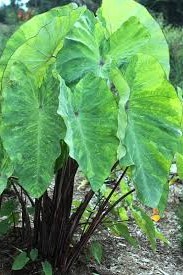
Colocasia esculenta
Araceae
Elephant Ear, Elephant Ears, Taro, Taro Root, Dasheen, Eddoe, Malanga, Cocoyam, Wild Taro, Colocasia, Caladium, Elephant’s Ear
Insoluble calcium oxalate crystals in the form of raphides; irritant plant sap; possibly proteinase or other inflammatory compounds depending on plant tissue. Rhizomes, corms, tubers, stems, leaves, sap, and all raw plant parts should be considered irritating and unsafe for pets.
Immediate burning and irritation of the mouth, lips, tongue, and throat; excessive drooling; pawing at the mouth; head shaking; gagging; choking; vomiting; difficulty swallowing (dysphagia); swelling of the mouth, tongue, lips, or throat; hoarse or weak vocalization; reduced appetite; diarrhea; abdominal discomfort; depression; and possible skin or eye irritation after sap contact. Rarely, significant upper-airway swelling may cause breathing difficulty or dyspnea. Large ingestions may cause persistent vomiting, diarrhea, dehydration, electrolyte imbalance, weakness, and shock, but serious systemic poisoning is uncommon because raw Elephant Ear is painful and irritating when chewed.
Elephant Ears, Colocasia esculenta, are large tropical aroids grown for their dramatic, oversized, heart-shaped leaves. The plant is commonly used in wet garden beds, pond margins, tropical borders, patio containers, and summer landscape displays. The name “Elephant Ears” is descriptive and practical: the leaves can become huge, soft-looking, and broad enough to attract children, pets, and grazing animals. For dogs and cats, however, the plant is not soft or harmless when chewed. It contains insoluble calcium oxalate crystals capable of causing immediate burning and swelling of the mouth and throat.
This plant is also surrounded by naming confusion. Colocasia esculenta may be called Elephant Ear, Taro, Dasheen, Eddoe, Malanga, Cocoyam, or Wild Taro. Some garden centers also use Elephant Ear loosely for related aroid plants in Alocasia, Xanthosoma, and Caladium. Those plants are not all botanically identical, but they share the same practical pet-safety concern: raw aroid tissue can contain insoluble calcium oxalate crystals that injure and irritate the mouth, tongue, throat, and upper digestive tract.
The food-name issue is especially important for Colocasia esculenta. Taro is an important food crop in many parts of the world, but that does not mean raw Elephant Ear plants are safe for pets. Traditional food preparation relies on proper cooking, processing, soaking, or other preparation methods to reduce the irritating calcium oxalate burden. A dog digging up a tuber, a cat chewing a raw leaf, a rabbit nibbling a stem, or a horse browsing raw foliage is not receiving a properly prepared food. Raw plant material should be treated as toxic and irritating.
One of the more common plant toxins, insoluble calcium oxalate crystals can be found in many popular houseplants, tropical ornamentals, and landscape plants. The vast majority of these plants belong to the Araceae family and cause a similar clinical syndrome. Within the Araceae, genera such as Alocasia, Arisaema, Caladium, Colocasia, Dieffenbachia, Epipremnum, Monstera, and Philodendron contain calcium oxalate crystals in the form of raphides. The Araceae family is one of the most diverse in the plant kingdom, comprising thousands of species, many of which are cultivated as foliage plants.
When consumed, these plants cause an intense burning sensation of the mouth, throat, lips, and tongue; excessive drooling; choking; gagging; and potentially serious swelling of the throat that can cause difficulty or inability to swallow. Symptoms can occur immediately or within two hours after ingestion. In most cases the pain is immediate enough that a pet stops chewing before a large amount is swallowed.
All parts of Elephant Ears should be considered irritating and unsafe in the raw state, including leaves, stems, sap, rhizomes, corms, tubers, roots, flowers, and discarded garden material. The underground parts deserve special mention because dogs may dig them up, chew them like roots or toys, or encounter them during planting, division, overwintering, or garden cleanup. Large leaves may get the attention, but the thick stems and underground storage organs can also release irritating calcium oxalate crystals when bitten.
These plants contain special cells called idioblasts. Found in a number of plant species, both poisonous and non-poisonous, idioblasts differ from neighboring cells in that they contain non-living substances such as oil, latex, gum, resin, tannin, pigments, or minerals. One of these substances is raphides, or bundles of needle-like crystals of calcium oxalate that tend to be blunt at one end and sharp at the other. The crystals are packed in a gelatinous substance that may contain free oxalic acid.
When animals chew on the leaves, stems, or tuber-like tissues of the plant, the tip of the idioblast is broken, allowing saliva from the animal or sap from the plant to enter the cell. This causes the gelatinous material to swell, forcing the raphides, or needle-like calcium oxalate crystals, to shoot out from the cells into the surrounding area. The calcium oxalate crystals then penetrate and embed themselves into the tissues of the mouth, tongue, throat, and upper digestive tract, causing immediate pain and aggravation, as would be expected when microscopic needles are lodged in the mouth and throat.
The idioblasts may continue to expel raphides for a considerable amount of time after chewing, allowing the crystals to irritate the lining of the stomach and intestines and causing additional gastrointestinal upset. This is why a pet may continue drooling, gagging, vomiting, or refusing food after the obvious plant material has already been removed from the mouth.
In addition to calcium oxalate crystals, some aroid species may also contain proteinase or proteolytic enzymes that break protein down into amino acids and stimulate the release of kinins and histamines. Kinins and histamines are part of the body’s natural response to tissue damage and foreign bodies, but in this situation the inflammatory response can worsen the swelling, pain, and irritation caused by embedded calcium oxalate crystals.
In the vast majority of cases, clinical signs present immediately or within two hours of ingestion. Clinical signs include obvious pain and irritation, generally expressed by head shaking, excessive drooling, pawing at the mouth, gagging, vomiting, or dry heaving. The animal may also whine, bark, meow, or yelp in an unusually hoarse or weak-sounding voice. Other signs include depression, diarrhea, inappetence, and swelling of the mouth, throat, and tongue.
In some cases, swelling may be severe enough to interfere with normal swallowing. Rarely, swelling of the upper airway may restrict oxygen intake and result in dyspnea, meaning shortness of breath or gasping for air. This complication is uncommon, but it is the reason Elephant Ear ingestion should not be dismissed when a pet is gagging continuously, unable to swallow, or breathing abnormally.
Due to the fact that raw Elephant Ear tissue is irritating to the mouth, large ingestions are uncommon. If, however, a pet manages to consume a large amount of raw leaves, stems, or tuber material, clinical signs can be worse. Vomiting and diarrhea can severely dehydrate the animal, cause electrolyte imbalance, and lead to weakness or shock. Older descriptions sometimes include dramatic systemic outcomes after massive calcium oxalate ingestion, but with ordinary Elephant Ear exposure the safer modern framing is oral pain, swelling, dysphagia, gastrointestinal upset, dehydration risk, and rare airway compromise rather than expected permanent liver or kidney damage.
Elephant Ears are especially relevant in outdoor landscapes because they are often planted at ground level where pets can walk through them, chew damaged leaves, drink from nearby pond margins, or dig around the base. In colder climates, tubers may be lifted and stored indoors for winter, creating another exposure risk if dogs find stored corms or rhizomes. Cut leaves, divided tubers, and garden cleanup debris should not be left where pets or livestock can chew them.
Immediate Response to Elephant Ear Ingestion
- Remove the Source: Prevent further ingestion by removing the pet or grazing animal from Elephant Ears, Taro, Malanga, leaves, stems, rhizomes, corms, tubers, sap, cuttings, clippings, pond-margin plantings, or any remaining plant material.
- Identify the Plant: Confirm whether the plant is Colocasia esculenta, commonly called Elephant Ear, Taro, Dasheen, Eddoe, Malanga, or Cocoyam. Also consider whether the plant may be a related Elephant Ear-type aroid such as Alocasia, Xanthosoma, or Caladium.
- Determine the Plant Part Eaten: Try to determine whether the animal chewed a leaf, stem, sap-rich stalk, raw rhizome, corm, or tuber. Underground parts and thick stems may create a more meaningful exposure because dogs may chew them longer.
- Remove Plant Material from the Mouth: If ingestion was recent and it is safe to do so, remove visible leaves, stems, fibers, tuber fragments, or sap-contaminated material from the mouth.
- Rinse the Mouth: Flush the mouth gently with cool water to remove remaining sap, plant fibers, and insoluble calcium oxalate crystals.
- Offer Soothing Food if Safe: If the pet is alert, breathing normally, and able to swallow, a small amount of milk, yogurt, cottage cheese, or another calcium-containing food may help soothe the mouth and throat.
- Wash Sap from Skin or Fur: If sap contacted the skin, lips, paws, muzzle, belly, eyes, or fur, wash the area with water and mild soap where appropriate. Eye exposure should be discussed with a veterinarian.
- Do Not Force Anything by Mouth: Do not force food, water, milk, medication, or peroxide into the mouth of an animal that is choking, gagging severely, gasping, unable to swallow, collapsed, extremely weak, or showing significant throat swelling.
- Watch for Symptoms: Monitor for drooling, pawing at the mouth, head shaking, gagging, vomiting, difficulty swallowing, hoarse vocalization, swelling of the lips, tongue, mouth, or throat, diarrhea, reduced appetite, depression, weakness, or breathing difficulty.
- Contact Veterinary Help if Needed: Consult a veterinarian, emergency veterinary clinic, Pet Poison Helpline, or another animal poison-control professional if swelling is present, if breathing or swallowing is affected, if vomiting or diarrhea persists, if a raw tuber or large amount was eaten, or if the exposed animal is very small, young, elderly, medically fragile, or already ill.
Inducing Vomiting and Decontamination
- Oral Irritation Is the Main Concern: With Elephant Ears, the most immediate problem is painful irritation of the mouth, tongue, lips, throat, and upper digestive tract from insoluble calcium oxalate crystals.
- Vomiting Is Not Usually the First Priority: Because the irritation begins as soon as the plant is chewed, rinsing the mouth, reducing pain, and monitoring swelling and swallowing are usually more important than trying to empty the stomach.
- Getting Plant Material Out Still Matters: If a dog has recently swallowed a meaningful amount of raw leaves, stems, rhizome, corm, or tuber material, removing remaining plant material from the stomach may reduce continued gastrointestinal irritation.
- Spontaneous Vomiting May Occur: The pet may vomit naturally because raw Elephant Ear plant material is bitter, irritating, fibrous, and difficult for the digestive tract to tolerate.
- Inducing Vomiting in Dogs Only: If ingestion was recent and the dog is alert, breathing normally, able to swallow, and not showing severe oral swelling, choking, breathing difficulty, repeated vomiting, weakness, collapse, tremors, seizures, or neurologic signs, a veterinarian or animal poison-control professional may recommend inducing vomiting with fresh 3% hydrogen peroxide.
- Cat Warning: Hydrogen peroxide should not be used to induce vomiting in cats unless a veterinarian specifically directs it. Cats are more prone to irritation and complications from hydrogen peroxide, and home vomiting attempts may create more risk than benefit.
- Do Not Induce Vomiting in an Unstable Animal: Vomiting should not be attempted in any animal that is weak, collapsed, sedated, having trouble breathing, unable to swallow normally, already vomiting repeatedly, showing severe mouth or throat swelling, tremors, seizures, abnormal heart signs, or neurologic signs.
- Activated Charcoal: Activated charcoal is rarely useful for ordinary calcium oxalate irritation because the crystals injure tissue mechanically as they are chewed. A veterinarian or poison-control professional may still consider it if a large mixed ingestion occurred or if another toxin is suspected.
- Gastric Lavage: Gastric lavage is not needed for typical small chewing exposures, but a veterinarian may consider controlled decontamination if a very large amount of raw tuber, rhizome, or plant material was ingested and the animal can be safely managed in a clinical setting.
Symptomatic Care and Treatment
- No Specific Antidote: There is no specific antidote for Elephant Ear ingestion. Treatment is symptomatic and supportive.
- Mouth and Throat Pain: Oral pain is common after chewing Colocasia esculenta. Veterinary care may include additional mouth rinsing, pain control, anti-nausea medication, and monitoring for swelling.
- Swallowing Difficulty: Repeated swallowing attempts, refusal to eat, refusal to drink, hoarse vocalization, gagging, or inability to swallow normally may indicate significant throat irritation and should be taken seriously.
- Swelling Control: Swelling of the lips, tongue, mouth, or throat should be monitored closely. Antihistamines, corticosteroids, or anti-inflammatory medication may be used under veterinary direction, but breathing or swallowing problems require urgent evaluation rather than home treatment alone.
- Airway Monitoring: Noisy breathing, rapid shallow breathing, gasping, choking, repeated gagging, or inability to swallow may indicate dangerous throat swelling and should be treated as an emergency.
- Hydration: Ensure the pet receives adequate fluids if vomiting, diarrhea, drooling, or reduced drinking occurs. Persistent vomiting, diarrhea, or refusal to drink can lead to dehydration and may require veterinary fluid therapy.
- Monitor Vomiting and Diarrhea: Repeated vomiting, persistent diarrhea, blood in stool, inability to keep water down, weakness, worsening lethargy, or signs of dehydration should prompt veterinary evaluation.
- Gastrointestinal Protection:
- Kapectolin: To alleviate gastrointestinal upset and diarrhea, Kapectolin may be given at a dose of 1 to 2 ml/kg four times daily to help coat and protect the stomach lining.
- Sucralfate: Sucralfate may be used for gastrointestinal irritation because it reacts with stomach acid to form a paste-like protective barrier between irritated tissue and stomach contents.
- Dogs greater than 60 lbs: 1g every 6 to 8 hours.
- Dogs less than 60 lbs: 0.5g every 6 to 8 hours.
- Cats: 0.25g every 8 to 12 hours.
Garden, Tuber, and Food-Plant Confusion Prevention
- Control Access to Outdoor Plantings: Elephant Ears are often grown in wet beds, pond margins, tropical borders, and large containers. Keep pets and grazing animals away from accessible leaves, stems, and exposed bases.
- Watch Dogs That Dig: Dogs may dig up raw rhizomes, corms, or tubers and chew them like roots or toys. Underground parts should be kept out of reach during planting, division, storage, and winter lifting.
- Do Not Confuse Raw Taro with Safe Food: Taro, dasheen, malanga, and related food names do not make raw Elephant Ear plant material safe for pets. Proper human food preparation is not the same as a pet chewing raw leaves or tubers.
- Clean Up Garden Debris: Pick up cut leaves, divided tubers, broken stems, rhizome pieces, and spent plant material promptly.
- Store Tubers Securely: If Elephant Ear tubers are lifted for winter storage, keep them in a closed, pet-inaccessible location.
- Use Caution Around Related Plants: Plants sold as Elephant Ear may include Colocasia, Alocasia, Xanthosoma, or Caladium. Treat all raw elephant-ear-type aroids as unsafe for chewing pets unless specifically identified as safe by a reliable source.
Prognosis and Recovery
- General Outlook: Most pets recover well after a small taste or brief chewing exposure, especially when the mouth is rinsed quickly and the pet remains able to swallow and breathe normally.
- Expected Recovery: Mild cases often improve within several hours, although drooling, mouth sensitivity, hoarse vocalization, reduced appetite, or mild gastrointestinal upset may last longer.
- Higher-Risk Cases: Prognosis becomes more guarded if the animal chews raw tuber or rhizome material, develops significant oral or throat swelling, cannot swallow, vomits repeatedly, becomes dehydrated, or has trouble breathing.
- Veterinary Care: Veterinary evaluation is recommended when symptoms are persistent, severe, involve swelling, affect breathing or swallowing, involve eye exposure, or when the plant identity is uncertain.
- Prevention: Prevent further ingestion, keep Elephant Ears away from pet-accessible areas, secure raw tubers and rhizomes, clean up garden debris, and monitor pets that have a history of chewing or digging ornamental plants.