Mother-in-Law’s Tongue Steroidal Saponins, Gastrointestinal Irritation, and Fibrous-Leaf Exposure
Is Mother-in-Law’s Tongue Poisonous to Dogs, Cats, Horses, and Livestock?
Yes—Mother-in-Law’s Tongue, Dracaena trifasciata, is poisonous or potentially irritating to dogs, cats, horses, livestock, rabbits, guinea pigs, birds, reptiles, and other animals. It remains widely known by its former scientific name, Sansevieria trifasciata, and by the common name Snake Plant. The plant contains numerous steroidal saponins that can irritate the mouth, stomach, and intestines, producing drooling, nausea, vomiting, abdominal discomfort, diarrhea, appetite loss, depression, or lethargy.
Most limited natural-plant exposures cause mild to moderate gastrointestinal illness rather than life-threatening organ failure. Exact dog, cat, horse, and livestock dose-response studies are lacking, and no number of leaf bites has been established as universally safe or toxic. The bitter taste and early irritation often limit consumption, but puppies, kittens, compulsive plant chewers, birds, and animals playing with broken leaves may swallow substantially more material.
Direct plant research has identified numerous steroidal glycosides, including trifasciatosides A through N, together with other steroidal saponins and pregnane glycosides. Those chemical discoveries confirm that the saponin warning is based on exact-species analysis. They do not prove that every named compound produces a different symptom or that laboratory activity from a purified extract predicts the result of one household leaf bite.
The long leaves add a physical hazard separate from their chemistry. Tough fibrous strips may contribute to gagging, repeated vomiting, constipation, or gastrointestinal obstruction, especially when swallowed with potting soil, bark, decorative stones, plastic, fertilizer, moss, or pieces of the container. Persistent vomiting, abdominal enlargement, repeated unproductive retching, severe pain, or failure to pass stool is not ordinary transient saponin irritation and requires veterinary examination.
Dilated pupils are sometimes reported in cats after exposure to plants in the broader Dracaena group, but this finding is not specific to Mother-in-Law’s Tongue. Fear, pain, low light, eye disease, hypertension, medication, cannabis, neurologic disease, and other toxins can also enlarge the pupils. Tremors, seizures, collapse, severe respiratory abnormalities, major cardiac disturbances, liver failure, or kidney failure is not the expected result of an uncomplicated Snake Plant nibble and should trigger investigation for another cause.
About this guide: This page provides general pet-poisoning information and cannot diagnose or treat an individual animal. For any suspected exposure, contact a veterinarian or animal poison-control service immediately. Do not induce vomiting, give medication, or attempt home decontamination unless directed by a veterinary professional.
Mother-in-Law’s Tongue
Dracaena trifasciata (Prain) Mabb.
Nathaniel Wallich’s material was formally described by David Prain as Sansevieria trifasciata in 1903. David Mabberley transferred the species into Dracaena in 2017, creating the accepted combination Dracaena trifasciata (Prain) Mabb.
The accepted homotypic synonym based upon the same botanical type is:
- Sansevieria trifasciata Prain
The species currently includes two accepted subspecies:
- Dracaena trifasciata subsp. trifasciata — the subspecies containing the familiar cultivated Snake Plants
- Dracaena trifasciata subsp. sikawae (R.H.Webb & Yinger) Takaw.-Ny. & Thiede — a separately recognized taxon that should not be treated as a nursery synonym for every Snake Plant
Historical names placed within Dracaena trifasciata subsp. trifasciata include:
- Sansevieria aureovariegata Mottet
- Sansevieria jacquinii N.E.Br.
- Sansevieria trifasciata var. laurentii (De Wild.) N.E.Br.
Molecular phylogenetic research demonstrated that species formerly assigned to Sansevieria form a lineage nested within Dracaena. Retaining Sansevieria as a separate genus would therefore leave Dracaena incomplete as an evolutionary group. Nursery, horticultural, veterinary, and poison-control material still commonly uses Sansevieria trifasciata, and that former name remains important for identification and search intent.
Asparagaceae — Asparagus Family; formerly placed in Agavaceae and Dracaenaceae
Mother-in-Law’s Tongue; Mother-in-Law Tongue; Mother-in-Law’s Plant; Snake Plant; Snakeplant; Striped Snake Plant; Variegated Snake Plant; Green Snake Plant; Good Luck Plant; Saint George’s Sword; St. George’s Sword; Sword of Saint George; Viper’s Bowstring Hemp; Bowstring Hemp; African Bowstring Hemp; Devil’s Tongue; Jinn’s Tongue; Snake Tongue; Sansevieria; Sansevieria Plant; Tiger’s Tail; Tiger Tail Plant
Compact rosette forms may be sold as Bird’s Nest Snake Plant, Golden Bird’s Nest, Golden Birds Nest, Dwarf Snake Plant, or Hahnii Snake Plant. These are not separate nontoxic species.
Common cultivar and trade names include ‘Laurentii’, ‘Hahnii’, ‘Golden Hahnii’, ‘Bantel’s Sensation’, ‘Black Gold’, ‘Black Robusta’, ‘Futura Robusta’, ‘Futura Superba’, ‘Golden Flame’, ‘Moonshine’, ‘Silver Queen’, ‘Twisted Sister’, ‘Whitney’, ‘Zeylanica’, and numerous variegated or compact nursery selections. Some trade names are applied inconsistently, and “Zeylanica” in the houseplant trade may identify a visual form of D. trifasciata rather than correctly identified Dracaena zeylanica.
Historical or synonymized scientific names include Sansevieria trifasciata, Sansevieria trifasciata var. laurentii, Sansevieria aureovariegata, and Sansevieria jacquinii.
“Snake Plant” also refers broadly to many other species formerly placed in Sansevieria, including African Spear, Whale Fin Snake Plant, Starfish Snake Plant, and additional flat-, cylindrical-, or paddle-leaved species. “Mother-in-Law Plant” may be used for the unrelated and more dangerous cardiac-glycoside succulent commonly called Mother of Millions. Scientific identification is essential when the common name is uncertain.
Direct Chemical Evidence and the Veterinary Evidence Boundary
Mother-in-Law’s Tongue contains a chemically diverse group of steroidal glycosides. Direct exact-species research has isolated steroidal saponins, pregnane glycosides, homoisoflavonoids, a dihydrochalcone, organic acids, and additional secondary metabolites from the whole plant or aerial portions.
The chemical evidence is stronger than the veterinary dose evidence. No controlled study has established which individual compound or concentration causes vomiting in a dog, mydriasis in a cat, colic in a horse, or illness in a rabbit or bird. Public pet guidance therefore combines confirmed plant chemistry with poison-center observations and the expected gastrointestinal effects of orally ingested saponins.
This distinction prevents two opposite errors. The plant should not be called harmless merely because severe case reports are uncommon, but laboratory identification of many bioactive compounds should not be exaggerated into predictions of routine hemolytic anemia, liver failure, kidney failure, cardiac arrest, or fatal neurologic poisoning.
The First Steroidal Saponin Investigation
A 1996 phytochemical investigation of the whole plant isolated twelve steroidal saponins, ten of which were previously undescribed. That work provided direct evidence that the familiar Snake Plant is rich in steroidal saponins rather than merely being grouped with other saponin-containing houseplants.
The compounds included spirostanol-type structures with steroidal aglycones attached to sugar chains. The precise structure of each glycoside matters in chemical and pharmacologic research because sugar configuration can influence solubility, membrane interaction, metabolism, and biological activity.
The study did not administer raw leaves or the purified compounds to companion animals. It cannot establish a dog-safe leaf amount or identify one isolated saponin as the sole cause of the clinical syndrome.
Trifasciatosides A Through J
Later investigation isolated four individually named trifasciatosides A through D and three pairs of related regioisomeric compounds designated trifasciatosides E through J. Twelve previously known compounds were isolated from the same extract.
Several purified trifasciatosides demonstrated moderate antiproliferative activity against cultured human cervical-cancer cells. That laboratory finding confirms that selected molecules interact with living cells under experimental conditions, but it does not mean that an animal chewing a leaf receives an anticancer treatment or develops predictable systemic cytotoxicity.
Companion-animal exposure involves the entire moist plant matrix, variable digestion, incomplete absorption, and a much less controlled dose than a laboratory assay.
Trifasciatosides K Through N
Further analysis of the aerial parts identified two pairs of steroidal-saponin regioisomers named trifasciatosides K and L and trifasciatosides M and N. The same study identified the dihydrochalcone trifasciatine C, aconitic acid, 1-methyl aconitic acid, and a glycolipid.
The K–N compounds did not show significant antiproliferative activity in the tested cell system. Absence of that one laboratory effect does not establish gastrointestinal safety, and presence of an isolated organic acid does not make that acid the principal pet toxin.
Pregnane Glycosides
Four pregnane glycosides were isolated from the whole plant in a separate investigation. Pregnane glycosides are steroid-derived compounds but are not automatically cardiac glycosides.
The word steroidal can create confusion. Snake Plant steroidal saponins and pregnane glycosides should not be equated with the cardenolides in Oleander, Desert Rose, Foxglove, or Kalanchoe. A straightforward Snake Plant exposure is not expected to produce the digitalis-like combination of severe hyperkalemia, heart block, ventricular arrhythmias, and cardiac arrest.
How Steroidal Saponins Irritate the Digestive Tract
Saponins contain a lipid-soluble steroidal portion linked to one or more water-soluble sugar chains. This combination gives them surfactant or soap-like behavior and allows interaction with cholesterol and other membrane components.
When a leaf is chewed, released saponins contact the oral and gastrointestinal lining. The resulting irritation can produce an unpleasant bitter reaction, lip licking, salivation, repeated swallowing, nausea, vomiting, abdominal cramping, increased intestinal secretion, soft stool, or diarrhea.
The effect is dose-dependent but cannot be calculated by leaf length alone. A small bite may produce no visible sign, while an animal that shreds several mature leaves, repeatedly returns to the plant, or consumes a concentrated preparation receives a much larger and less predictable exposure.
Bitter Taste and Self-Limiting Consumption
The unpleasant taste and early stomach irritation often discourage continued chewing. This helps explain why many household incidents remain limited.
Bitterness is not a dependable safety system. Puppies may shred leaves during play, cats may repeatedly nibble leaf tips, birds can cut through tissue rapidly with the beak, and rabbits may continue eating plant material offered mistakenly as forage.
A damaged, wilted, frost-injured, freshly divided, or newly rooted plant may also smell or feel different enough to attract an animal that ignored the intact specimen.
Laboratory Hemolysis Does Not Mean Routine Hemolytic Anemia
Many saponins can damage red-cell membranes when mixed directly with blood in laboratory conditions or introduced by a route that bypasses the gastrointestinal barrier. This property is commonly called hemolytic activity.
Orally ingested saponins may be absorbed incompletely, altered by digestion, metabolized, or excreted before reaching a comparable blood concentration. Clinically important red-cell destruction is not an established characteristic syndrome of ordinary Mother-in-Law’s Tongue ingestion.
Pale gums, jaundice, red or brown urine, rapid breathing, profound weakness, or collapse requires investigation for bleeding, immune-mediated hemolysis, onion or garlic exposure, zinc, acetaminophen, infection, shock, or another toxin rather than automatic attribution to a Snake Plant nibble.
Plant Parts and the Limits of Tissue-Specific Data
The whole plant and aerial portions have yielded steroidal saponins and related glycosides in direct chemical research. The leaves are the most common household exposure because they are large, accessible, and frequently broken for propagation.
Rhizomes, roots, flower stalks, flowers, berries, seeds, sap, cuttings, and dried debris have not each been compared through veterinary feeding studies. No part should be offered as food or enrichment merely because its exact concentration has not been published.
Indoor plants flower and fruit infrequently, but mature greenhouse or outdoor specimens may produce pale greenish-white flowers and orange berries. Rarity is not evidence of safety.
Fibrous Leaves and Mechanical Injury
Snake Plant leaves contain strong fibers historically associated with bowstring and cordage uses. Long strips may be swallowed with limited chewing and can contribute to gagging, esophageal irritation, repeated vomiting, constipation, or obstruction.
A retained leaf strip may become more important than the saponins when vomiting persists after the expected irritant period. Plant fibers can also become entangled with string, thread, ribbon, wire, or material from a decorative arrangement.
Do not pull firmly on a strip extending from the mouth or rectum. A linear foreign body can be anchored internally, and traction may injure the esophagus or intestines.
Sap and Skin Contact
Freshly cut leaves and rhizomes release watery plant sap containing dissolved and suspended plant constituents. Local redness, itching, or irritation is possible on sensitive or damaged skin.
Direct veterinary evidence for a characteristic Snake Plant contact dermatitis is limited. A skin reaction after repotting or plant contact may also involve fertilizer, pesticide, rooting hormone, potting media, mold, bacteria, another plant, or friction.
Sap retained beneath a collar, harness, bandage, dense coat, or between the toes can prolong exposure. Contaminated fur also creates a later oral dose when the animal grooms.
Not a Calcium-Oxalate Plant
Mother-in-Law’s Tongue is not known for the insoluble calcium-oxalate raphides found in Pothos, Philodendron, Monstera, Dieffenbachia, Peace Lily, or Schefflera.
It may cause mild mouth discomfort, but sudden extreme needle-like pain, profuse drooling, marked tongue enlargement, extensive oral ulceration, or inability to swallow saliva is not the expected Snake Plant syndrome.
Those findings require examination for a raphide-bearing plant, caustic chemical, electrical injury, insect sting, bone, stick, thread, or another foreign object.
Research Extracts Are Not Equivalent to Raw Plant Exposure
Experimental studies have evaluated ethanol, methanol, chloroform, and other extracts for anti-inflammatory, antiallergic, antiulcer, antimicrobial, metabolic, or cytotoxic effects. Some prepared extracts were tolerated by rodents within their experimental conditions.
Extraction can concentrate selected compounds while excluding fibers, insoluble material, nursery chemicals, microbes, and other constituents. A research extract made from identified material under laboratory conditions is not equivalent to a dog chewing a nursery plant or a cat swallowing a leaf with fertilizer and soil.
Experimental tolerability should therefore moderate unsupported claims of extreme systemic lethality without being used to declare the living plant safe.
Nursery and Container Co-Exposures
Commercial specimens may be treated with systemic insecticides, foliar pesticides, fungicides, fertilizer, growth regulators, wetting agents, leaf-shine products, and cleaning chemicals. Granules or fertilizer spikes may remain in the potting medium.
Containers may include bark, coconut fiber, perlite, pumice, sand, charcoal, sphagnum moss, water-retaining crystals, decorative gravel, glass, wire, plastic labels, and broken ceramic. These materials can produce chemical poisoning or gastrointestinal obstruction independently of the plant.
Tremors, seizures, extreme weakness, excessive secretions, markedly abnormal pupils, major rhythm abnormalities, respiratory failure, or collapse is disproportionate to ordinary saponin irritation and increases concern for a chemical co-exposure or another diagnosis.
No Validated Toxic Dose or Specific Antidote
No validated toxic dose exists for dogs, cats, horses, livestock, rabbits, guinea pigs, birds, reptiles, or other domestic animals. Risk depends on the amount and tissue, chewing, plant chemistry, body size, medical history, hydration, swallowed fibers, container material, and chemical treatment.
There is no specific antidote. Treatment controls nausea and vomiting, maintains hydration, evaluates persistent abdominal signs, removes foreign material when necessary, cleans skin and eye exposure, and provides toxin-specific care for pesticides, fertilizer, or other co-exposures.
Expected Timing and Severity
Gastrointestinal signs may begin within several hours after chewing or swallowing Mother-in-Law’s Tongue, although no exact onset applies to every animal. Amount, chewing, stomach contents, plant condition, body size, and concurrent exposures influence the timeline.
A small exploratory bite may produce no visible illness. More substantial or repeated access may cause drooling, nausea, vomiting, abdominal discomfort, soft stool, diarrhea, appetite loss, depression, or lethargy.
The expected natural-plant syndrome is mild to moderate and gastrointestinal. Severe neurologic, cardiovascular, respiratory, liver, or kidney disease requires investigation beyond the Snake Plant itself.
Bitter Reaction and Mouth Discomfort
An animal may pull away from the leaf, shake its head, lick its lips, salivate, swallow repeatedly, paw at the muzzle, or refuse additional food. These signs may reflect bitterness, mild mucosal irritation, nausea, or a retained strip of plant material.
Severe immediate oral burning, extensive blistering, pronounced tongue swelling, or inability to swallow saliva is atypical and raises concern for a calcium-oxalate plant, caustic substance, sting, electrical burn, or foreign body.
Vomiting, Diarrhea, and Abdominal Discomfort
Vomiting is one of the most consistently reported effects. Vomit may contain green leaf fragments, stringy fibers, sap, soil, bark, moss, perlite, gravel, fertilizer, plastic, or pieces of the container.
Abdominal discomfort may appear as restlessness, repeated stretching, a hunched posture, guarding, vocalization, flank watching, or reluctance to lie down. Mild cramping should improve as the gastrointestinal irritation resolves.
Repeated unproductive retching, progressive abdominal enlargement, severe pain, persistent vomiting, failure to pass stool, or renewed vomiting after apparent improvement suggests foreign material, obstruction, pancreatitis, or another disease.
Blood in Vomit or Stool
Small red streaks may follow repeated retching because irritated stomach or esophageal tissue can bleed superficially. Blood should not be dismissed automatically as an expected harmless sign.
A substantial volume of red blood, coffee-ground material, black tarry stool, bloody diarrhea, pale gums, rapid breathing, weakness, or collapse requires prompt examination for significant gastrointestinal injury, a foreign object, medication, clotting disorder, another toxin, or unrelated disease.
Dehydration
Repeated vomiting and diarrhea can cause tacky gums, sunken eyes, reduced skin elasticity, thirst, weakness, decreased urination, low blood pressure, and worsening lethargy.
Puppies, kittens, toy breeds, birds, small mammals, geriatric animals, and patients with kidney, heart, endocrine, or gastrointestinal disease can become unstable more quickly than a healthy adult animal.
Dogs
Dogs may chew leaf tips, shred an entire leaf during play, pull up rhizomes, knock over a pot, or swallow propagation pieces. Most affected dogs develop drooling, vomiting, diarrhea, abdominal discomfort, appetite loss, depression, or temporary lethargy.
Persistent signs frequently require evaluation of the whole scene. Dogs are especially likely to ingest gravel, bark, plastic labels, fertilizer granules, moss, root balls, and pot fragments along with the plant.
Cats
Cats may nibble leaf margins repeatedly, chew fresh propagation cuts, climb through a large plant, or groom sap and potting material from their paws. Possible signs include drooling, vomiting, diarrhea, hiding, food refusal, depression, or lethargy.
Dilated pupils have been reported in cats exposed to plants in the wider Dracaena group, but exact-species evidence is limited and mydriasis is nonspecific. The veterinarian should be told whether both pupils are enlarged and whether vision, balance, heart rate, awareness, or behavior has changed.
Continued food refusal deserves attention. Persistent nausea or pain can lead to dehydration and serious secondary metabolic complications in cats even when the original plant is not expected to cause direct organ failure.
Horses and Livestock
Mother-in-Law’s Tongue is not normal forage, but horses and livestock may encounter discarded houseplants, greenhouse waste, tropical landscape clippings, propagation material, or uprooted plants.
Possible signs include salivation, feed refusal, mild colic, soft manure, diarrhea, depression, or reduced activity. Horses cannot vomit and may express gastrointestinal irritation through poor appetite, pawing, flank watching, stretching, or changes in manure.
Marked neurologic disease, severe respiratory signs, major rhythm abnormalities, or sudden death is not characteristic of the documented Snake Plant chemistry and requires investigation of mixed ornamental waste, pesticides, toxic feed, or another disease.
Rabbits, Guinea Pigs, and Other Small Herbivores
These animals may develop drooling, food refusal, abdominal discomfort, diarrhea, lethargy, or reduced fecal output. They cannot vomit, and early nausea may be recognized only as reduced interest in food.
Secondary gastrointestinal stasis can become more serious than the initial irritant exposure. Abdominal enlargement, painful posture, markedly reduced feces, weakness, or continued food refusal requires prompt species-experienced care.
Birds
Birds can shred the stiff leaves efficiently and expose the mouth, crop, feet, feathers, and eyes to sap and fibers. Possible signs include beak wiping, regurgitation, altered droppings, reduced appetite, weakness, or crop discomfort.
Direct avian dose data are lacking. A bird that becomes weak, uncoordinated, tremulous, or breathless may have swallowed a pesticide, fertilizer, metal, potting material, or another toxic plant and requires urgent evaluation.
Reptiles and Tortoises
Mother-in-Law’s Tongue should not be used as browse or live edible vegetation for tortoises and herbivorous reptiles. The saponin exposure is uncertain, and stiff fibers may be poorly suited to the animal’s gastrointestinal tract.
Possible concerns include reduced appetite, regurgitation, diarrhea, abnormal posture, reduced fecal output, weakness, or obstruction. Environmental temperature may alter how quickly reptile illness becomes visible.
Skin and Eye Signs
Fresh sap may produce localized redness, itching, or irritation in a sensitive animal. The muzzle, lips, feet, abdomen, and other sparsely haired areas are the most plausible contact sites.
Eye exposure may cause tearing, blinking, squinting, redness, eyelid swelling, discharge, or continued face rubbing. A stiff leaf edge or plant fiber can also scratch the cornea independently of chemical irritation.
Signs Suggesting Another Cause
Severe tongue swelling, inability to swallow, immediate intense oral pain, tremors, seizures, pronounced incoordination, major pupil abnormalities with altered awareness, respiratory failure, coma, liver failure, kidney failure, life-threatening arrhythmias, or collapse is not the expected uncomplicated Snake Plant syndrome.
These findings raise concern for Pothos or another calcium-oxalate plant, Mother of Millions, pesticide, fertilizer, medication, cannabis, mushroom, metabolic disease, neurologic illness, foreign material, or another poisonous ornamental.
Duration and Prognosis
Many uncomplicated cases improve progressively after access stops and hydration remains adequate. Vomiting, diarrhea, nausea, or reduced appetite may resolve over several hours, but no fixed one- or two-day recovery period can be guaranteed.
The prognosis is generally good to excellent for a limited natural-plant exposure. It becomes more serious with repeated fluid loss, substantial bleeding, aspiration, prolonged food refusal, gastrointestinal obstruction, pesticide exposure, or incorrect plant identification.
Accepted Botanical Identity
Mother-in-Law’s Tongue is Dracaena trifasciata, a rhizomatous African geophyte in Asparagaceae. It remains widely sold as Sansevieria trifasciata, and both names may appear simultaneously on nursery tags, plant databases, veterinary lists, and product labels.
The transfer into Dracaena was not merely a cosmetic renaming. Chloroplast-DNA research found the former genus Sansevieria nested within Dracaena. Including the Snake Plants within Dracaena produces a classification more consistent with their evolutionary relationships.
The former family placements Agavaceae, Dracaenaceae, Ruscaceae, and older broad Liliaceae treatments may remain visible in historical literature. The currently accepted family is Asparagaceae.
Native Range and Introduced Distribution
The accepted native range extends from southern Nigeria through Cameroon, the Central African Republic, Equatorial Guinea, Gabon, Congo, and the Democratic Republic of the Congo, with a separate native occurrence in Tanzania.
Cultivation has spread the species through tropical and subtropical regions worldwide. It has escaped from gardens in several frost-free areas and may form persistent colonies from discarded rhizomes and plant fragments.
Growth Form and Rhizomes
Mother-in-Law’s Tongue is an evergreen or drought-deciduous succulent geophyte without a conspicuous above-ground woody trunk. Leaves arise in clusters from thick horizontal rhizomes at or beneath the soil surface.
The rhizomes produce new growing points and allow an established plant to spread into a dense colony. In a crowded container, expanding rhizomes may distort or crack the pot. Freshly divided rhizomes and roots remain plant material and should not be left where animals can chew them.
Root rot changes the exposure scene. Soft decomposing rhizomes may be mixed with fungi, bacteria, fertilizer, pesticide, and stagnant water, creating hazards not explained by the plant’s saponins alone.
Leaves
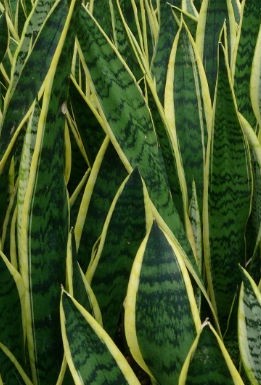
The leaves are stiff, upright, succulent, and sword-shaped, commonly marked by gray-green or silvery horizontal bands across a darker green background. Mature leaves often reach several feet in height, while compact cultivars form short rosettes.
Variegated plants may have yellow, cream, white, pale-green, or silver margins and central stripes. The ornamental pigment pattern does not establish a toxin-free area of the leaf.
The sharp leaf tip can irritate an eye or skin mechanically, and the tough internal fibers may remain as long strips after chewing. A broken leaf continues to contain sap and saponins whether fresh, callused, rooted, wilted, or dry.
Flowers and Fruit
Mature plants may produce an upright flower stalk bearing numerous small pale greenish-white to cream-colored flowers. Flowering is irregular indoors and may be associated with plant maturity, strong light, root restriction, or seasonal conditions.
The flowers can be fragrant and may release sticky nectar. Pollinated flowers can form orange or reddish-orange berries containing seeds.
Flowers, fruit, and seeds have not been demonstrated to be safe animal food. Their rarity in ordinary homes should not be confused with a nontoxic classification.
Published Extension Classification
North Carolina State Extension classifies the plant as having:
“Low severity poison characteristics.”
The same profile describes expected effects as follows:
“Toxic if ingested: vomiting (occasionally with blood), depression, nausea, diarrhea, anorexia, hypersalivation, dilated pupils (cats). The sap can cause skin irritation.”
Earlier extension wording summarized the plant as:
“LOW TOXICITY IF EATEN”
Low severity does not mean nontoxic. It indicates that ordinary natural-plant exposures are expected to cause gastrointestinal or local irritation rather than the small-dose cardiac, liver, kidney, or neurologic failure associated with substantially more dangerous plants.
Saponins as Plant Defenses
Saponins contribute to defense against herbivores, insects, fungi, and microbes. Their bitter taste and membrane activity make the leaves less palatable and can produce early nausea after chewing.
The plant’s resilience and low maintenance do not indicate low biological activity. Drought tolerance, thick leaves, and defensive chemistry are adaptations that help the plant survive in seasonally dry environments.
Trifasciatosides and Other Exact-Species Compounds
Direct chemical research has identified trifasciatosides A through N from extracts of the plant. Other investigations isolated additional steroidal saponins and four pregnane glycosides.
The aerial portions also yielded trifasciatine C, aconitic acid, 1-methyl aconitic acid, and a glycolipid. Separate work identified sappanin-type homoisoflavonoids.
These discoveries document a richer chemistry than the single word saponin suggests. They do not establish that the organic acids or flavonoids are principal pet toxins, and they do not provide a simple leaf-count calculation.
Why Severe Systemic Poisoning Is Uncommon
Most orally ingested saponins act primarily at the gastrointestinal surface and are not absorbed completely. The bitter taste and early nausea often limit continued consumption.
Unlike Desert Rose, Oleander, Foxglove, or Kalanchoe, Mother-in-Law’s Tongue is not recognized as a cardenolide cardiac-glycoside plant. Unlike true lilies in cats, it is not associated with characteristic acute kidney failure. Unlike Sago Palm, it is not associated with a primary liver-failure syndrome.
Serious outcomes are more likely to involve dehydration, aspiration, prolonged anorexia, swallowed fibers or container material, nursery chemicals, underlying disease, or incorrect plant identification.
Mother-in-Law’s Tongue Versus Mother of Millions
Mother-in-Law’s Tongue is the upright Snake Plant, Dracaena trifasciata. It produces stiff sword-shaped leaves from basal rhizomes and is associated mainly with steroidal-saponin gastrointestinal irritation.
Mother of Millions and Mother of Thousands are Kalanchoe species or hybrids that commonly produce plantlets along their leaf margins. They contain cardiac glycosides capable of causing serious rhythm abnormalities and death.
The common names “Mother-in-Law Plant” and “Mother-in-Law’s Plant” are sometimes applied inconsistently. A complete photograph and scientific label are far safer than selecting treatment from one common name.
Mother-in-Law’s Tongue Versus Pothos
Pothos or Devil’s Ivy is Epipremnum aureum, a climbing aroid with heart-shaped leaves. Its insoluble calcium-oxalate crystals cause immediate intense oral pain, drooling, tongue irritation, and swallowing difficulty.
Snake Plant generally causes nausea, vomiting, and diarrhea without the same needle-like mouth injury. Severe immediate oral burning should prompt reconsideration of the plant identification.
African Spear and Cylindrical Snake Plants
African Spear is Dracaena angolensis, formerly Sansevieria cylindrica. Its leaves are cylindrical or nearly cylindrical rather than broad and flat.
Starfish and braided Snake Plants are commonly selections or arrangements of cylindrical-leaved relatives. They should receive comparable no-ingestion precautions, but their exact chemistry should not be assumed to match every trifasciatoside measurement from D. trifasciata.
Whale Fin Snake Plant
Whale Fin Snake Plant is Dracaena masoniana, formerly Sansevieria masoniana. It produces one or a few exceptionally broad paddle-shaped leaves from each growing point.
Its distinctive leaf shape makes it easy to separate visually from classic Mother-in-Law’s Tongue. It remains a related ornamental and should not be offered as browse or enrichment.
‘Laurentii’
‘Laurentii’ is the familiar yellow-edged form with dark green cross-banded leaves. Its historical botanical name, Sansevieria trifasciata var. laurentii, is now included within Dracaena trifasciata subsp. trifasciata.
Leaf propagation may not preserve its yellow margins because cut-leaf propagation can produce nonvariegated shoots. Division of the rhizome is commonly used to retain the cultivar pattern. Both the variegated and reverted green material require the same animal precautions.
‘Hahnii’ and Golden Bird’s Nest
‘Hahnii’ forms a compact rosette of short leaves and is widely sold as Bird’s Nest Snake Plant. Golden or cream-variegated selections may be marketed as ‘Golden Hahnii’ or Golden Bird’s Nest.
The compact size can place the entire plant within reach on desks, tables, and low shelves. Dwarf growth does not establish reduced saponin content.
‘Moonshine’, ‘Bantel’s Sensation’, and Other Distinctive Cultivars
‘Moonshine’ has broad silvery or pale green leaves. ‘Bantel’s Sensation’ produces narrower leaves with long white or silver vertical striping. ‘Twisted Sister’ has compact twisting yellow-variegated foliage, while ‘Black Gold’, ‘Whitney’, and related selections emphasize dark central color and contrasting margins.
Unusual color or shape can obscure the Snake Plant identity on a nursery label or online listing. Cultivar selection has not demonstrated removal of the steroidal-glycoside chemistry.
Indoor Exposure
Most household exposures involve leaves extending beyond a shelf, a floor-standing pot, broken sections on the floor, plants knocked over during play, or repeated cat nibbling at leaf tips.
A high stand is useful only when the long leaves, falling fragments, and climbing route remain inaccessible. Cats may reach the plant from furniture, curtains, shelves, or adjacent windowsills.
Propagation and Division
Snake Plants are commonly propagated through rhizome division or cut-leaf sections placed in water or potting medium. Every cutting remains a piece of the same saponin-containing plant.
Propagation stations may also contain rooting hormone, fertilizer, fungicide, stagnant water, algae treatments, glass vessels, plastic supports, and heating equipment. The entire setup should remain inaccessible rather than only the green leaf.
Cuttings that have formed a dry callus are not animal-safe. Drying the wound reduces plant rot but does not establish that the tissue has lost its steroidal glycosides.
Potting Soil and Container Material
Succulent potting mixtures may include bark, sand, perlite, pumice, gravel, coconut fiber, peat, charcoal, fertilizer, wetting agents, and water-retaining products. Decorative arrangements may add polished stones, glass, moss, metal stakes, or plastic ornaments.
An animal that digs through the pot may ingest more foreign material than plant tissue. Persistent vomiting, abdominal enlargement, repeated retching, painful posture, constipation, or failure to pass stool requires evaluation for obstruction.
Drainage water can contain dissolved fertilizer, pesticide, bacteria, fungi, and decaying root products and should not be used as pet drinking water.
Pesticides, Fertilizer, and Leaf-Shine Products
Systemic insecticides remain within plant tissues after the leaf surface appears dry. Foliar sprays, fungicides, fertilizer spikes, granular products, growth regulators, and leaf-shine coatings may also be present.
The full treatment history is essential when the animal develops tremors, seizures, pronounced weakness, abnormal secretions, severe pupil changes, breathing difficulty, or collapse. Those findings are not adequately explained by ordinary Snake Plant saponins.
Dogs
Dogs may shred a long leaf during play, chew leaf tips, pull up a root ball, or raid discarded propagation material. Expected signs are drooling, vomiting, diarrhea, appetite loss, abdominal discomfort, and lethargy.
Because dogs often ingest the entire scene, the veterinarian should be told about missing stones, bark, fertilizer, labels, plastic, glass, wire, and container fragments.
Cats
Cats may repeatedly nibble leaves, groom sap after knocking over the plant, or chew new shoots emerging from the soil. Their signs may be subtle and include quiet drooling, hiding, vomiting, food refusal, diarrhea, or reduced activity.
Possible pupil dilation should be documented but not used as the sole diagnosis. Continued anorexia, abnormal vision, unequal pupils, poor balance, rapid heart rate, tremors, or altered awareness requires a broader examination.
Horses and Livestock
Large-animal exposure is uncommon unless people discard greenhouse material, houseplants, rhizomes, or tropical landscape clippings into an enclosure.
Remove all animals from the source, preserve the complete waste pile, and inspect for more dangerous ornamentals. Salivation, feed refusal, colic, diarrhea, or depression may follow ingestion, but severe neurologic or cardiac illness suggests another cause.
Rabbits, Guinea Pigs, Birds, and Reptiles
Mother-in-Law’s Tongue should not be used as forage, cage decoration, nesting material, shredding material, perches, or terrarium browse. The stiff fibers and saponin chemistry make it unsuitable even when one animal previously appeared unaffected.
Small herbivores can develop serious secondary gastrointestinal dysfunction when nausea interrupts feeding. Birds may shred the leaves efficiently, while reptiles may show only subtle food refusal, regurgitation, or reduced fecal output.
Diagnosis
Diagnosis uses confirmed plant access, the amount and tissue consumed, the time course, gastrointestinal findings, hydration, appetite, abdominal examination, chemical-treatment history, and evidence of foreign material.
Preserve a complete leaf and plant photograph, nursery and cultivar labels, pesticide and fertilizer containers, propagation products, potting-medium samples, and plant, fiber, stone, or plastic material recovered from vomit or stool.
No rapid blood or urine test confirms Snake Plant poisoning. Laboratory testing evaluates fluid loss, electrolytes, kidney perfusion, bleeding, inflammation, organ function, or a suspected co-exposure.
Differential Diagnosis
Vomiting and diarrhea can result from spoiled food, garbage, parasites, infection, pancreatitis, medication, another plant, pesticide, fertilizer, potting soil, or an intestinal foreign body.
Severe oral pain suggests an insoluble-calcium-oxalate plant. Dangerous arrhythmias raise concern for Kalanchoe, Oleander, Desert Rose, Foxglove, or medication. Tremors, seizures, collapse, or respiratory failure requires investigation of pesticides, drugs, mushrooms, metabolic disease, and neurologic illness.
Prognosis and Prevention
The prognosis is generally good to excellent after a limited natural-plant exposure. Most animals recover when access is stopped, vomiting and diarrhea are controlled, and hydration remains adequate.
Prevention requires a physically inaccessible room or enclosure, prompt collection of broken leaves, secure propagation stations, covered or inaccessible potting material, and locked storage for chemicals. The outlook becomes more serious with dehydration, aspiration, prolonged food refusal, gastrointestinal obstruction, chemical exposure, or incorrect identification.
Immediate Response
- Stop further exposure: Move the animal away from the plant, broken leaves, rhizomes, roots, flowers, berries, propagation cuttings, potting soil, drainage water, and spilled container material.
- Preserve the evidence: Save a complete leaf, photographs of the whole plant, nursery labels, cultivar tags, fertilizer and pesticide packaging, and material recovered from vomit or stool.
- Estimate the maximum amount: Determine whether the animal took one bite, shredded an entire leaf, swallowed long strips, consumed repeated fallen pieces, or pulled apart the root system.
- Check for co-exposures: Determine whether fertilizer, pesticide, leaf shine, rooting hormone, decorative stones, moss, pot fragments, plastic, or water-retaining crystals were also swallowed.
- Record the timeline: Note when access occurred and when drooling, vomiting, diarrhea, food refusal, lethargy, pupil changes, or abdominal signs began.
- Contact a professional: Obtain veterinary or animal poison-control guidance for more than a minor nibble, persistent signs, blood in vomit, continued food refusal, foreign-material ingestion, chemical exposure, or uncertain identification.
Assess the Animal
- Check responsiveness: Marked weakness, confusion, collapse, or reduced responsiveness requires urgent veterinary care.
- Check breathing: Rapid, labored, noisy, shallow, open-mouth, or weak breathing is not expected after a simple nibble and requires emergency assessment.
- Check swallowing: Repeated gagging, inability to swallow saliva, severe tongue swelling, or choking suggests another plant, foreign material, or significant oral injury.
- Check the abdomen: Distension, severe pain, repeated unproductive retching, or inability to pass stool may indicate obstruction.
- Check hydration: Tacky gums, sunken eyes, weakness, reduced urination, or inability to retain water indicates clinically important fluid loss.
- Check the pupils in cats: Report whether both pupils are enlarged and whether vision, balance, awareness, or behavior appears abnormal.
Remove Loose Material from the Mouth
- Wear gloves: Sap may irritate sensitive skin, and a nauseated or frightened animal may bite unexpectedly.
- Remove visible loose pieces: Carefully take accessible leaf strips and fragments from the lips and front of the mouth when handling is safe.
- Avoid blind sweeps: Do not reach deeply into the throat or push fibrous material toward the airway.
- Do not pull fixed strips: Leaf fiber, string, or other material extending from the mouth may be anchored internally and requires veterinary removal.
- Wipe visible sap: Use a damp cloth on the lips and front of the mouth in a fully alert animal.
- Rinse only when safe: A gentle low-pressure rinse may be considered only when the animal is conscious, breathing normally, swallowing normally, and able to protect the airway.
- Stop if coughing or gagging begins: Further oral cleaning becomes unsafe when swallowing is impaired.
Do Not Induce Vomiting at Home
- Do not give hydrogen peroxide automatically: Snake Plant commonly causes spontaneous nausea and vomiting, while long fibrous strips may increase gagging, esophageal injury, or aspiration risk.
- Never give peroxide to a cat: Hydrogen peroxide can cause severe feline gastric and esophageal injury.
- Never induce vomiting after signs begin: Do not attempt emesis in an animal that is vomiting, gagging, weak, bloated, trembling, collapsed, breathing abnormally, or swallowing poorly.
- Do not induce vomiting after foreign-material ingestion: Stones, glass, wire, plastic, ceramic, and long fibrous strips may cause injury on return.
- Do not use household emetics: Salt, mustard, ipecac, dish soap, oil, syrup, fingers in the throat, and manual gagging are unsafe.
- Do not induce vomiting in horses, livestock, rabbits, guinea pigs, birds, or reptiles: Household emesis is inappropriate or physiologically impossible in these species.
- Allow professional selection: A veterinarian or poison-control professional may consider controlled emesis after a recent substantial mixed exposure in an appropriate fully alert, stable, asymptomatic dog.
Activated Charcoal
- Do not give charcoal routinely: Charcoal is generally unnecessary for uncomplicated local gastrointestinal irritation and does not remove swallowed fibers or stones.
- Use only for a justified co-toxin: A veterinarian may consider charcoal if pesticide, medication, concentrated extract, or another absorbable poison was swallowed.
- Never force charcoal: Do not administer it to a vomiting, gagging, coughing, weak, sedated, trembling, recumbent, or poorly swallowing animal.
- Do not repeat doses without direction: Repeated charcoal can cause dehydration, constipation, electrolyte abnormalities, high blood sodium, obstruction, or aspiration.
- Do not use household charcoal: Barbecue briquettes, fireplace ash, burned food, and homemade carbon are not medical activated charcoal.
Do Not Give Household Remedies or Owner-Selected Medication
- Do not give milk or dairy: Milk, yogurt, cheese, cream, and ice cream do not neutralize steroidal saponins and may worsen gastrointestinal upset.
- Do not give oil: Cooking oil, coconut oil, and mineral oil do not protect the stomach and may be aspirated.
- Do not give anti-diarrheal medication: Loperamide, bismuth products, kaolin mixtures, and similar remedies should not be owner-selected.
- Do not give antacids: Human antacids do not reverse the plant’s chemistry and may contain inappropriate ingredients.
- Do not give sucralfate without direction: Its indication and administration must be determined by a veterinarian.
- Do not give human pain medication: Ibuprofen, naproxen, acetaminophen, aspirin, and similar drugs can create an additional poisoning.
- Do not give herbal remedies: Teas, extracts, essential oils, charcoal foods, and additional plant products can complicate the original exposure.
Food and Water
- Do not force food: A nauseated, vomiting, painful, bloated, or poorly swallowing animal may choke or aspirate.
- Offer water cautiously: Small amounts may remain available only when the animal is fully alert, swallowing normally, breathing normally, and not repeatedly vomiting.
- Do not force fluids: Syringed, poured, or drenched water can enter the lungs.
- Avoid human electrolyte drinks: Sports drinks and flavored hydration products may contain excessive sugar, sodium, caffeine, artificial sweeteners, or xylitol.
- Monitor food intake: Continued refusal may indicate nausea, abdominal pain, dehydration, foreign material, or another illness.
- Follow veterinary feeding instructions: Food can be reintroduced appropriately once vomiting is controlled and obstruction has been excluded.
Vomiting, Diarrhea, and Blood
- Track every episode: Record frequency, volume, color, and whether leaves, fibers, blood, soil, stones, fertilizer, plastic, mulch, or container pieces are present.
- Save representative material: Place recovered plant and nonplant fragments in a sealed container for the veterinarian.
- Watch for dehydration: Tacky gums, sunken eyes, weakness, reduced urination, or inability to retain water requires care.
- Watch for significant bleeding: More than a small streak of red blood, coffee-ground vomit, black stool, bloody diarrhea, pale gums, or weakness requires prompt examination.
- Watch for obstruction: Persistent vomiting, abdominal swelling, repeated retching, constipation, or failure to pass stool may indicate swallowed fibers or container material.
- Watch for aspiration: Coughing, nasal discharge, fever, rapid breathing, or renewed lethargy after vomiting may indicate aspiration pneumonia.
- Do not muzzle a vomiting animal: A muzzle can trap vomit and interfere with breathing.
Potting Soil and Foreign Material
- Inspect the entire container: Determine whether stones, bark, perlite, pumice, moss, fertilizer spikes, water crystals, plastic, glass, wire, or pottery pieces are missing.
- Do not assume the plant is the only problem: Foreign material may cause persistent vomiting, constipation, pain, choking, or intestinal obstruction.
- Do not pull material from the rectum: A protruding strip or string may be anchored inside the gastrointestinal tract.
- Bring samples or photographs: The clinic may need to identify potting and decorative materials.
- Seek care for obstruction signs: Repeated vomiting, abdominal swelling, painful posture, lack of stool, or continued retching requires prompt imaging and examination.
Skin and Coat Exposure
- Prevent grooming: Stop the animal from licking sap, plant fragments, fertilizer, or pesticide residue from the coat and feet.
- Wear protective gloves: Fresh sap can irritate sensitive human skin.
- Remove contaminated equipment: Take off collars, harnesses, blankets, clothing, boots, or bandages holding residue against the skin.
- Pick out leaf fibers: Remove visible strips without rubbing them farther into the coat.
- Wash thoroughly: Bathe affected fur and skin with lukewarm water and mild pet-safe shampoo, then rinse completely.
- Clean the environment: Wash bedding, carriers, tools, floors, propagation surfaces, and other items that can cause re-exposure.
- Seek care for persistent irritation: Continuing redness, swelling, blistering, pain, discharge, or open lesions requires veterinary examination.
Do not apply alcohol, bleach, vinegar, solvents, concentrated detergent, essential oils, human rash creams, topical anesthetics, antibiotic ointment, or steroid medication without veterinary direction.
Eye Exposure
- Begin irrigation immediately: Flush the affected eye with sterile saline or clean lukewarm water for at least fifteen to twenty minutes.
- Use a gentle continuous flow: Allow fluid to run across the eye without scraping the surface or pushing plant fibers beneath the eyelids.
- Prevent rubbing: Stop the animal from pawing at the eye or rubbing against furniture, walls, carpet, fencing, perches, or the ground.
- Do not use tools: Tweezers, cotton swabs, cloth, and fingernails can worsen corneal injury.
- Do not apply human eye medication: Redness relievers, anesthetic drops, ointments, and leftover prescriptions may worsen or conceal injury.
- Seek prompt examination: Continued squinting, cloudiness, swelling, discharge, visible fibers, light sensitivity, or inability to open the eye requires veterinary care.
Pesticide, Fertilizer, and Propagation Products
- Find every product label: Preserve systemic insecticide, foliar spray, fertilizer, fungicide, leaf-shine, rooting-hormone, algaecide, and potting-product packaging.
- Report recent treatment: Tell the veterinarian when the plant was sprayed, fertilized, watered with a systemic product, divided, or repotted.
- Check drainage and rooting water: Stagnant water may contain dissolved chemicals, microbes, and decomposing plant material.
- Watch for unexpected signs: Tremors, seizures, extreme weakness, markedly abnormal pupils, excessive secretions, major rhythm changes, or breathing difficulty suggests more than simple saponin irritation.
- Do not mix a neutralizer: Vinegar, baking soda, bleach, oils, detergents, and household chemical combinations may worsen exposure.
- Contact a professional promptly: A chemical co-exposure can convert a low-severity plant incident into a significant poisoning.
Safe Transportation
- Call ahead: Tell the clinic that Mother-in-Law’s Tongue, Snake Plant, Dracaena trifasciata, or Sansevieria trifasciata was involved.
- Keep the airway clear: Position a vomiting or weak animal so saliva and stomach contents can drain from the mouth.
- Do not muzzle: A muzzle can interfere with vomiting and breathing.
- Prevent falls: Use a padded carrier, stretcher, rigid board, sling, or blanket for a weak or uncoordinated animal.
- Allow the easiest breathing position: Do not compress the neck, chest, or abdomen.
- Bring the evidence: Take the plant, labels, chemical containers, potting samples, photographs, and recovered fragments.
Veterinary Evaluation
- Confirm plant identity: Distinguish Snake Plant from Mother of Millions, Pothos, African Spear, Whale Fin Snake Plant, and unrelated plants sharing similar names.
- Assess hydration: Repeated vomiting or diarrhea may require electrolyte, kidney, glucose, and circulation evaluation.
- Examine the mouth and throat: Severe burning, swelling, choking, or retained fibers may indicate another plant, chemical injury, sting, or foreign body.
- Evaluate the abdomen: Radiographs, ultrasound, endoscopy, or additional imaging may be required when fibers, stones, plastic, glass, or pot fragments were swallowed.
- Evaluate blood loss: Significant blood in vomit or stool may require red-cell, protein, clotting, and gastrointestinal assessment.
- Investigate severe signs: Tremors, seizures, collapse, abnormal breathing, major pupil changes, or profound weakness requires evaluation for pesticides, medication, metabolic disease, or another toxin.
Veterinary Treatment
Veterinarian-selected anti-nausea medication may reduce vomiting, discomfort, fluid loss, and aspiration risk. Subcutaneous or intravenous fluids may be used according to hydration, circulation, kidney function, medical history, and continuing losses.
Measured electrolyte abnormalities should be corrected according to laboratory findings rather than with an automatic household replacement plan. Persistent vomiting, abdominal pain, enlargement, constipation, or reduced fecal output may require imaging, endoscopy, or surgery when foreign material is suspected.
A veterinarian may select gastrointestinal protectants when examination indicates meaningful esophageal, stomach, or intestinal irritation. The presence of one red streak in vomit does not create an automatic home-treatment protocol, and significant bleeding requires diagnostic evaluation.
Pesticides, fertilizer, rooting products, leaf shine, xylitol, medication, or another plant require toxin-specific management. The usually limited Snake Plant syndrome must not delay treatment of a more dangerous co-exposure.
Cats
- Monitor food intake closely: A cat that continues to refuse food after the initial nausea should be evaluated promptly.
- Report pupil changes accurately: Tell the veterinarian whether both pupils are enlarged and whether vision, balance, awareness, or heart rate appears abnormal.
- Prevent repeated nibbling: Cats may return to the same plant after initial signs improve.
- Never use hydrogen peroxide: Peroxide is not a safe feline emetic.
- Do not force feed a nauseated cat: Persistent vomiting, obstruction, or impaired swallowing must be excluded first.
Horses and Livestock
- Remove plant waste: Prevent access to discarded houseplants, greenhouse material, rhizomes, leaves, flowers, berries, and tropical landscape clippings.
- Preserve mixed waste: Another poisonous ornamental may have been discarded with the Snake Plant.
- Examine the group: Animals sharing the same debris may have consumed different quantities.
- Provide known-safe forage: Hungry animals are more likely to investigate unpalatable ornamentals.
- Do not induce vomiting: Household emesis is inappropriate in horses and ruminants.
- Do not drench affected animals: Salivating, weak, coughing, bloated, or poorly swallowing livestock may inhale oral fluids.
- Seek large-animal care: Persistent diarrhea, colic, feed refusal, weakness, respiratory signs, or abnormal neurologic findings requires evaluation.
Rabbits, Guinea Pigs, Birds, and Reptiles
- Do not attempt vomiting: Household emesis is inappropriate and dangerous in these species.
- Monitor appetite immediately: Continued food refusal can become a serious gastrointestinal or metabolic emergency.
- Monitor feces or droppings: Diarrhea, reduced output, abnormal color, blood, or cessation requires species-specific advice.
- Do not force feed before assessment: Poor swallowing, regurgitation, obstruction, abdominal distension, or severe weakness must be excluded.
- Remove contaminated habitat material: Replace food, water, bedding, substrate, perches, toys, and decorations exposed to plant sap or chemicals.
- Maintain species-appropriate temperature: Avoid overheating or chilling a weak exotic animal during transport.
- Use a species-experienced veterinarian: Fluids, nutrition, restraint, imaging, and medication differ substantially among species.
Monitoring and Recovery
- Monitor vomiting: Episodes should decrease rather than become more frequent or contain increasing blood.
- Monitor diarrhea: Stool consistency and frequency should improve while hydration remains adequate.
- Monitor appetite: Normal interest in food should return as nausea resolves.
- Monitor hydration: Gum moisture, activity, water intake, circulation, and urine production should return toward normal.
- Monitor for obstruction: Continued vomiting, abdominal swelling, constipation, pain, or reduced fecal output after other signs improve may indicate retained material.
- Watch for aspiration: Coughing, fever, nasal discharge, rapid breathing, or renewed lethargy after vomiting requires reassessment.
- Attend rechecks: Persistent gastrointestinal, kidney, electrolyte, respiratory, ocular, or chemical-exposure abnormalities may require repeat testing.
Prevention and Prognosis
- Restrict access: Keep Mother-in-Law’s Tongue in rooms or enclosed areas inaccessible to animals.
- Secure cuttings: Store propagation leaves, rhizomes, rooting jars, and freshly divided plants away from pets.
- Collect broken material: Remove fallen or damaged leaf sections before animals can chew them.
- Secure potting material and chemicals: Keep fertilizer, pesticides, drainage water, decorative stones, and propagation products inaccessible.
- Typical prognosis: Most limited natural-plant exposures carry a good-to-excellent prognosis.
- Guarded circumstances: Severe dehydration, aspiration, substantial bleeding, prolonged food refusal, foreign-body obstruction, pesticide exposure, or incorrect plant identification creates a more serious outlook.
Frequently Asked Questions About Mother-in-Law’s Tongue and Animal Poisoning
Is Mother-in-Law’s Tongue highly poisonous?
It is poisonous or irritating, but most limited natural-plant exposures are low in severity and produce gastrointestinal illness rather than life-threatening systemic poisoning. Drooling, nausea, vomiting, diarrhea, appetite loss, depression, and lethargy are the most credible effects. The assessment becomes more serious when repeated vomiting causes dehydration, long fibers or container material create obstruction, the plant was treated with chemicals, or the identification is wrong.
Is Sansevieria trifasciata still the correct name?
Sansevieria trifasciata remains a valid and widely recognized historical name, but the accepted scientific name is Dracaena trifasciata. Molecular research found the former Snake Plant genus nested within Dracaena. Nursery labels, older veterinary references, and plant owners continue to use both names, so both remain useful for identification and search intent.
What are trifasciatosides?
Trifasciatosides are steroidal saponins isolated directly from Mother-in-Law’s Tongue. Researchers have named compounds A through N, in addition to other steroidal saponins already known from related plants. Their discovery confirms the plant’s saponin chemistry, but no individual trifasciatoside has a validated toxic dose in dogs, cats, horses, birds, rabbits, or reptiles.
Are Snake Plant saponins cardiac glycosides?
No. The plant contains steroidal saponins and pregnane glycosides, but it is not recognized as a cardenolide cardiac-glycoside plant like Oleander, Desert Rose, Foxglove, or Kalanchoe. Severe hyperkalemia, heart block, and ventricular arrhythmias are not the expected uncomplicated Snake Plant syndrome. Major cardiovascular abnormalities require investigation for another plant, medication, pesticide, or disease.
Can Snake Plant saponins destroy red blood cells?
Some saponins can damage red cells when placed directly in contact with blood under laboratory conditions. That does not mean ordinary oral exposure routinely causes hemolytic anemia, because gastrointestinal absorption is limited and depends on molecular structure and dose. Pale gums, jaundice, dark urine, rapid breathing, or profound weakness requires investigation for bleeding, immune disease, another toxin, or infection rather than automatic attribution to Snake Plant.
Can Mother-in-Law’s Tongue cause bloody vomit?
Small red streaks may occur after repeated vomiting irritates the stomach or esophagus, and occasional blood is included in broader poison-control descriptions. Significant red blood, coffee-ground material, black stool, bloody diarrhea, pale gums, weakness, or collapse is not a minor expected finding. It requires veterinary evaluation for substantial gastrointestinal injury, foreign material, medication, clotting disease, or another toxin.
Can Snake Plant cause dilated pupils in cats?
Dilated pupils have been reported in cats exposed to plants in the broader Dracaena group, but exact Mother-in-Law’s Tongue evidence is limited and pupil enlargement is nonspecific. Fear, pain, low light, eye disease, high blood pressure, medication, cannabis, and neurologic disorders can produce the same appearance. Report whether both pupils are enlarged and whether vision, balance, heart rate, or behavior has changed.
Can the long leaves cause an intestinal obstruction?
The tough leaves can separate into long fibrous strips, and an animal may swallow soil, stones, plastic, moss, wire, or pot fragments during the same incident. Direct obstruction reports from the leaf alone are limited, but persistent vomiting, repeated unproductive retching, abdominal swelling, severe pain, constipation, or failure to pass stool requires imaging. Do not pull firmly on a strip extending from the mouth or rectum because it may be anchored internally.
Are the roots and rhizomes poisonous?
Rhizomes and roots should remain inaccessible. The whole plant has yielded steroidal glycosides in chemical investigations, although every organ has not been compared through veterinary dose studies. Repotting also exposes animals to fertilizer, pesticide, rooting products, mold, stones, plastic, and decomposing material. No underground portion has been established as safe chewing material.
Are Snake Plant flowers and orange berries poisonous?
They should be treated as potentially poisonous even though ordinary indoor plants flower and fruit infrequently. No veterinary study establishes the flowers, berries, or seeds as safe, and tissue-specific saponin concentrations have not been compared comprehensively. Remove flowers and fruit from animal-accessible areas rather than assuming that only the leaves matter.
Is Golden Bird’s Nest safer than a tall Snake Plant?
No. Golden Bird’s Nest and ‘Hahnii’ are compact forms of the same species or closely related horticultural material. Their short rosette leaves may reduce the amount available in one bite but do not demonstrate absence of steroidal saponins. Dwarf size and yellow variegation are ornamental traits, not evidence of a nontoxic cultivar.
Is ‘Laurentii’ poisonous?
Yes. ‘Laurentii’ is the familiar yellow-edged Mother-in-Law’s Tongue and remains within Dracaena trifasciata. The yellow margin does not create a safe portion of the leaf. Green shoots that revert during propagation require the same precautions as the variegated parent.
Is Mother-in-Law’s Tongue the same as Mother of Millions?
No. Mother-in-Law’s Tongue is Dracaena trifasciata and usually causes saponin-related gastrointestinal irritation. Mother of Millions is a Kalanchoe with plantlets along its leaf margins and contains cardiac glycosides capable of producing dangerous arrhythmias. Confusing the two plants can substantially underestimate the urgency of the exposure.
Is Snake Plant the same as Pothos?
No. Pothos is Epipremnum aureum and contains insoluble calcium-oxalate crystals that cause immediate intense oral pain, drooling, and swallowing difficulty. Snake Plant lacks that classic crystal injury and more commonly causes nausea, vomiting, and diarrhea. Severe immediate mouth burning suggests Pothos, another raphide-bearing plant, or a chemical injury.
Can nursery chemicals be more dangerous than the plant?
Yes. Systemic insecticides, foliar sprays, fertilizer, fungicides, leaf-shine products, and rooting chemicals may produce signs far more serious than uncomplicated saponin irritation. Tremors, seizures, extreme weakness, excessive secretions, major pupil abnormalities, breathing difficulty, or collapse increases concern for a chemical co-exposure. Preserve every product label and report when the plant was last treated.
Should I make my dog vomit?
Do not induce vomiting unless a veterinarian or animal poison-control professional specifically directs it while the dog remains fully alert, stable, asymptomatic, breathing normally, swallowing normally, and able to protect its airway. Long leaf fibers, stones, plastic, or pot fragments may injure the esophagus on return. Hydrogen peroxide must never be used in cats, and salt, mustard, oil, dish soap, ipecac, or manual gagging is unsafe.
Does activated charcoal help?
Activated charcoal is not routinely required after uncomplicated Snake Plant ingestion and does not remove leaf fibers or container material. A veterinarian may consider it when pesticide, medication, concentrated extract, or another absorbable toxin was swallowed. It must never be forced into a vomiting, gagging, coughing, weak, sedated, trembling, recumbent, or poorly swallowing animal.
When does Snake Plant exposure require emergency care?
Repeated vomiting or diarrhea, inability to retain water, substantial blood in vomit, pale gums, continuing food refusal, severe abdominal pain or enlargement, repeated unproductive retching, reduced fecal output, difficult breathing, tremors, seizures, marked weakness, collapse, or reduced responsiveness requires prompt veterinary care. Suspected fertilizer, pesticide, stone, glass, wire, plastic, or pot-fragment ingestion also warrants early professional guidance.