Pothos Calcium Oxalate Raphides, Oral Burning, Airway Swelling Risk, and Eye-Sap Injury
Is Pothos Poisonous to Dogs, Cats, Horses, and Livestock?
Yes—Pothos, Epipremnum aureum (Linden & André) G.S.Bunting, is poisonous and strongly irritating to dogs, cats, horses, livestock, birds, rabbits, guinea pigs, reptiles, and other animals that chew it. The primary toxic mechanism is local injury from insoluble calcium oxalate raphides, microscopic needle-shaped crystals stored in specialized plant cells. When leaves, stems, aerial roots, rooted cuttings, or sap-containing tissue are bitten, crushed, pruned, or rubbed into an eye, the crystals can penetrate the lips, gums, tongue, palate, throat, esophagus, skin, or corneal surface and cause immediate burning pain, drooling, pawing at the mouth, gagging, vomiting, swelling, and difficulty swallowing.
Most Pothos exposures are painful but not life-threatening because the immediate burning sensation usually stops an animal from eating a large amount. The important emergencies are different from soluble-oxalate plants and true lilies: rare throat or laryngeal swelling that interferes with breathing, aspiration after vomiting or forced home treatment, severe eye exposure from sap or plant debris, prolonged inability to eat, and mixed exposures involving another plant, fertilizer, pesticide, potting-soil additive, moss pole, wire, clip, tie, or foreign material. Kidney failure, liver failure, seizures, coma, and sudden death are not expected from uncomplicated Pothos raphide injury alone.
About this guide: This page provides general pet-poisoning information and cannot diagnose or treat an individual animal. For any suspected exposure, contact a veterinarian or animal poison-control service immediately. Do not induce vomiting, give medication, or attempt home decontamination unless directed by a veterinary professional.
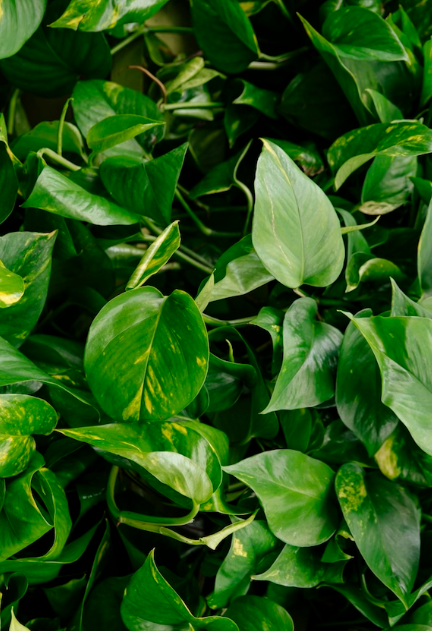
Pothos
Epipremnum aureum (Linden & André) G.S.Bunting
- Pothos aureus Linden & André — basionym and important older horticultural name
- Scindapsus aureus (Linden & André) Engl. — homotypic historical combination still encountered on older labels and poison-plant lists
- Rhaphidophora aurea (Linden & André) Birdsey — homotypic historical combination
- Epipremnum mooreense Nadeaud — heterotypic synonym
- Epipremnum pinnatum ‘Aureum’ — older horticultural treatment or cultivar-style usage; useful for label searches but not the current accepted species name for this page
Araceae — Arum or Aroid Family
Pothos; Golden Pothos; Devil’s Ivy; Devil’s Vine; Ivy Arum; Taro Vine; Hunter’s Robe; Golden Hunter’s Robe; Solomon Islands Ivy; Money Plant; Golden Money Plant; Marble Queen Pothos; Jade Pothos; Neon Pothos; Lime Pothos; N’Joy Pothos; Pearls and Jade Pothos; Snow Queen Pothos; Tricolor Pothos; Variegated Pothos; Giant Pothos.
Historical and taxonomic search variations include Pothos aureus Linden & André, Scindapsus aureus (Linden & André) Engl., Rhaphidophora aurea (Linden & André) Birdsey, Epipremnum mooreense Nadeaud, and the older horticultural usage Epipremnum pinnatum ‘Aureum’.
Several common names are ambiguous. “Money Plant” may refer to Epipremnum aureum, Crassula ovata, Pachira aquatica, Lunaria species, or other unrelated plants. “Satin Pothos” and “Silver Pothos” usually refer to Scindapsus pictus, not Epipremnum aureum. “Cebu Blue Pothos” and “Baltic Blue Pothos” are generally forms of Epipremnum pinnatum. Heartleaf Philodendron is Philodendron hederaceum, a different aroid with a similar insoluble-calcium-oxalate irritation syndrome but a different botanical identity.
Principal Toxic Mechanism: Insoluble Calcium Oxalate Raphides
The principal toxic material in Pothos is insoluble calcium oxalate arranged as microscopic needle-shaped crystals called raphides. These crystals are stored in specialized plant cells called idioblasts. When an animal bites, tears, chews, crushes, or grinds a leaf, stem, aerial root, rooted cutting, or sap-containing piece of plant tissue, idioblasts rupture or discharge and release crystal bundles directly into the contacting tissue. The injury begins at the point of contact rather than after a poison has been absorbed into the bloodstream.
The crystals are narrow, sharp, and physically irritating. They can penetrate the lips, gums, tongue, palate, pharynx, esophagus, skin, conjunctiva, and corneal surface, creating many tiny puncture wounds. That local injury explains the abrupt onset of burning pain, drooling, pawing at the mouth, head shaking, repeated swallowing, gagging, and swelling. A very small bite can be painful when crystals strike sensitive oral or ocular tissue, while a larger bite may be limited by the animal’s immediate refusal to continue chewing.
Pothos should be handled clinically as an insoluble-oxalate aroid. The practical hazard applies to leaves, vines, stems, aerial roots, rooted cuttings, pruning debris, sap, and plant fragments. Mature outdoor plants, juvenile houseplants, variegated cultivars, and green reverted leaves should all be treated as potentially irritating. No cultivar should be described as safe merely because the leaf is more green, more yellow, more white, more compact, or sold under a novelty name.
Insoluble Oxalate Is Not Soluble Oxalate Poisoning
Insoluble calcium oxalate raphides must be distinguished from soluble oxalate salts found in plants that can cause systemic hypocalcemia and kidney injury after substantial ingestion. Pothos raphides do not dissolve readily in the gastrointestinal tract and are not expected to be absorbed in a way that produces widespread oxalate deposition in the kidneys. Their dominant effect is local mechanical and inflammatory injury where plant tissue or sap touches living tissue.
This distinction changes the whole clinical interpretation. Acute renal failure in a cat after a bouquet exposure suggests true lily or daylily exposure, not ordinary Pothos ingestion. Hypocalcemic tremors, systemic collapse, and renal tubular oxalate deposition belong to a different oxalate category. If a dog, cat, horse, bird, rabbit, or other animal develops kidney failure after Pothos access, dehydration, shock, another toxin, true lilies, soluble-oxalate plants, medication, preexisting kidney disease, or mistaken plant identification must be investigated.
The same boundary applies to liver failure, seizures, coma, major cardiac abnormalities, and sudden death. Those findings are not the expected direct result of uncomplicated Pothos raphide exposure. They may occur secondarily from severe airway obstruction, hypoxia, aspiration, shock, dehydration, or a mixed exposure, but they should not be presented as the routine toxic syndrome of Epipremnum aureum.
Needle Effect, Sap Constituents, and Proteinase Evidence Boundaries
Raphides do more than sit loosely on the surface of a leaf. Their needle shape allows them to penetrate tissue and may help carry irritating sap constituents into the damaged area. Aroid toxicology literature and broader plant-defense research describe a “needle effect,” in which raphides intensify the activity of other biologically active compounds by mechanically opening a path through protective tissue. This provides a plausible explanation for why some calcium-oxalate plants produce pain out of proportion to the amount swallowed.
The evidence boundary matters. Experimental work demonstrating synergy between purified raphides and cysteine protease was performed in another raphide-containing plant system rather than in controlled dog or cat Pothos poisoning. Proteases and other proteinaceous factors have also been discussed more extensively in Dieffenbachia, taro, pineapple, kiwifruit, and other plants than in exact Epipremnum aureum veterinary cases. Pothos clearly contains the clinically important raphide hazard, but a specific “Pothos proteinase” should not be listed as an equal confirmed toxin unless exact-species evidence proves its identity, concentration, and veterinary relevance.
Histamine, kinins, prostaglandins, oxalic acid, and other inflammatory mediators have been proposed in discussions of aroid irritation. These mechanisms should be treated as potential contributors to local pain and swelling, not as separate reasons to publish a systemic toxic-dose claim. Treatment is directed at exposed tissue, pain, swelling, vomiting, hydration, eyes, and airway risk rather than at a circulating antidote-reversible poison.
Fresh, Cut, Wilted, Dried, and Propagated Material
Freshly cut vines, broken petioles, crushed leaves, pruning debris, and rooted cuttings can expose animals to sap and crystal-containing tissue. Propagation jars are a common household hazard because they place roots, nodes, and soft stems at drinking or play height. A cat, bird, rabbit, or curious puppy may chew a cutting that would otherwise have been out of reach in a hanging basket.
Drying, wilting, or aging does not make Pothos safe. Calcium oxalate is a stable mineral, so dry leaves, brittle stems, and older pruning debris can still contain irritating crystals. Dry material may release less wet sap, but chewing it can still expose the mouth to raphides and plant fragments. A dried leaf behind furniture, a vine in a trash can, or plant waste in a compost pile should not be treated as harmless animal forage.
Outdoor and greenhouse material adds mixed-exposure concerns. Pothos may be attached to bark, moss poles, coir poles, trellises, wire, ties, clips, wood stakes, fertilizer-treated substrate, pesticide-treated foliage, or potting medium. Those materials are not Pothos toxins, but they matter clinically because they can cause foreign-body injury, chemical exposure, choking, obstruction, or aspiration risk. The complete exposure source matters more than the plant name alone.
Eyes, Skin, and Corneal Injury
Eye exposure is a special Pothos hazard because raphide-containing sap or plant debris can remain under the eyelid and continue abrading the cornea with each blink. A published human case of Epipremnum aureum keratopathy documented severe bilateral eye injury after plant-debris exposure. That case does not prove identical severity in every animal, but it strongly supports treating persistent ocular pain after Pothos exposure as medically important rather than as a minor houseplant nuisance.
Skin exposure is usually less dramatic than oral or ocular exposure, but sap can cause localized redness, itching, burning, or dermatitis, especially on damaged skin, thinly haired areas, or after repeated contact. Animals can transfer sap from paws or fur into the mouth or eyes during grooming. People pruning or propagating Pothos can also transfer sap on hands, tools, gloves, or clothing to an animal’s face.
No Validated Veterinary Toxic Dose
Pothos has no established veterinary toxic dose or lethal dose for dogs, cats, horses, cattle, sheep, goats, rabbits, guinea pigs, birds, reptiles, or other domestic animals. The painful response depends partly on contact location and tissue sensitivity rather than on the total swallowed plant weight. A single punctured leaf can produce dramatic drooling, while a larger swallowed amount may be limited by immediate burning and refusal to continue chewing.
Large ingestions are uncommon because the plant is self-limiting in most animals: it hurts quickly. Risk rises when a puppy shreds a hanging vine, a cat repeatedly chews dangling leaves, a bird dismantles a cutting, a rabbit or guinea pig is offered houseplant leaves, a horse or goat receives landscape waste, or an animal with oral pain is forced to drink, eat, vomit, or swallow charcoal. The most serious outcomes are usually airway compromise, eye injury, aspiration, dehydration, prolonged anorexia, or another exposure rather than systemic Pothos poisoning.
Immediate Onset and the Oral-Burning Pattern
Clinical signs usually begin while the animal is chewing Pothos or within minutes afterward. The animal may suddenly drop the leaf, back away from the plant, shake the head, rub the face, paw at the mouth, vocalize, drool, gag, or refuse food. That rapid onset is an important clue that the problem is direct oral irritation rather than a delayed systemic poison.
Typical oral signs include burning pain, redness, lip swelling, tongue swelling, excessive salivation, repeated swallowing, mouth rubbing, retching, gagging, difficulty eating, and reluctance to allow examination of the mouth. A dog may paw forcefully at the muzzle or rub the face against the floor. A cat may crouch, drool in long strings, repeatedly lick the lips, approach food but withdraw after trying to bite, or resist handling around the jaw.
The pain may appear dramatic even after a small bite because the crystals injure sensitive tissue directly. Mild cases improve as the mouth is cleared and inflammation settles. Persistent distress, inability to swallow, progressive swelling, repeated vomiting, respiratory noise, or eye pain is not a routine “wait and see” event.
Swelling, Gagging, Vomiting, and Aspiration Concerns
Swelling can involve the lips, tongue, gums, oral mucosa, pharynx, and laryngeal region. Most swelling remains localized and does not obstruct breathing, but rare cases can involve enough throat or laryngeal swelling to create noisy breathing, open-mouth breathing, panic, cyanosis, inability to swallow saliva, neck extension, or collapse. These signs require immediate airway assessment, not owner-selected antihistamines or delayed home observation.
Vomiting may occur from swallowed plant material, gagging, oral pain, upper gastrointestinal irritation, or distress. Diarrhea and abdominal discomfort are possible but are usually less prominent than mouth pain and drooling. Repeated vomiting is more concerning because it can cause dehydration, re-expose irritated tissue, increase aspiration risk, or indicate another exposure such as fertilizer, pesticide, potting-soil additive, mold, medication, or a second plant.
Aspiration is a preventable complication. A drooling animal with oral swelling or impaired swallowing is not a good candidate for forced water, forced milk, forced food, owner-administered charcoal, or home vomiting. Coughing after vomiting, fever, nasal discharge, labored breathing, or worsening lethargy after an episode of gagging or vomiting may indicate aspiration and should be evaluated.
Dogs and Cats
Dogs most often chew Pothos as dangling vines, fallen leaves, pruned stems, rooted cuttings, or plant waste pulled from a trash can. Puppies may shred several leaves or vines before the burning stops the behavior. Signs may include sudden salivation, head shaking, pawing at the mouth, gagging, vomiting, refusal of treats, and temporary lethargy from pain and distress.
Cats often bite trailing leaves, play with moving vines, chew propagation cuttings, or groom sap from the coat. Copious drooling can look alarming, and the cat may seem interested in food but unable or unwilling to eat. Continued food refusal deserves attention because cats can develop serious secondary problems when they do not eat for an extended period, even when the original plant exposure was not expected to cause systemic poisoning.
Dogs and cats should also be evaluated for mixed household exposures. A knocked-over pot may involve potting medium, fertilizer pellets, pesticides, decorative stones, moss pole material, coir fiber, wire, clips, plant ties, broken ceramic, or another plant. Those items can change the clinical picture and may create obstruction, choking, chemical exposure, or foreign-body injury.
Horses, Livestock, and Browsing Animals
Horses cannot vomit. A horse that chews Pothos may show sudden salivation, head shaking, tongue or lip swelling, repeated attempts to swallow, feed refusal, coughing, gagging motions, quidding, or respiratory noise. Persistent dysphagia, throat swelling, coughing, or reluctance to eat deserves veterinary examination because airway, esophageal, and aspiration complications are more important than vomiting in this species.
Cattle, sheep, goats, and other browsing animals are unlikely to encounter Pothos in ordinary temperate pasture, but exposure can occur where the vine has naturalized outdoors, grows in warm-climate landscapes, is kept in greenhouses, or is discarded into pens as houseplant or landscape waste. Drooling, muzzle rubbing, oral inflammation, reduced feed intake, and reluctance to chew are expected signs. Hungry or confined animals may consume more plant waste than a free-ranging animal would choose.
Several animals affected at once should prompt investigation of the entire dumped or cut material, not just Pothos. Landscape waste may include oleander, yew, azalea, lilies, bulbs, pesticides, fertilizer, mold, foreign material, or unknown ornamentals. Pothos oral irritation should not be used to explain severe herd signs that do not fit local raphide injury.
Birds, Rabbits, Guinea Pigs, Reptiles, and Other Exotics
Birds can shred leaves and stems rapidly with the beak, exposing the tongue, oral cavity, choana, and upper airway to crystals. Warning signs include beak wiping, oral fluid, refusal of food, regurgitation, voice change, open-mouth breathing, facial swelling, weakness, or inability to perch. A bird with breathing difficulty or prolonged refusal of food needs prompt avian veterinary care.
Rabbits, guinea pigs, chinchillas, and other small herbivores should not be offered Pothos or unidentified houseplant leaves. They may show salivation, oral discomfort, reduced eating, reduced fecal output, gastrointestinal slowdown, lethargy, or abdominal discomfort. Because these species cannot safely vomit and depend on continuous gastrointestinal function, prolonged refusal of food may become more dangerous than the initial mouth injury.
Herbivorous reptiles and tortoises may encounter Pothos in planted enclosures, indoor free-roam areas, greenhouses, or tropical outdoor pens. Exact reptile dose information is not available, but reduced appetite, oral irritation, abnormal stool, regurgitation, weakness, eye irritation, or altered responsiveness should prompt review of enclosure temperature, hydration, substrate, pesticides, fertilizers, and every plant in the habitat.
Eye and Skin Signs
Eye exposure may produce immediate tearing, blinking, squinting, redness, light sensitivity, eyelid swelling, discharge, face rubbing, conjunctivitis, corneal edema, or ulceration. Sap and crystal-containing debris trapped beneath the eyelid can keep damaging the corneal surface after the initial exposure. Persistent eye pain is more medically urgent than a brief uncomplicated oral taste.
Skin contact may cause localized redness, itching, burning, or dermatitis, especially where sap contacts damaged skin, thinly haired areas, or a site repeatedly exposed during pruning, play, or grooming. Animals may transfer sap from paws or coat into the mouth or eyes. Continued licking, scratching, swelling, or spreading irritation should be examined because secondary infection, chemical exposure, or another plant may be involved.
Signs That Do Not Fit Uncomplicated Pothos Exposure
Renal failure is not an expected Pothos effect. Pothos raphides are insoluble calcium oxalate crystals acting locally, not soluble oxalate salts causing systemic hypocalcemia and kidney injury. Reduced urination, abnormal kidney values, severe dehydration, or collapse after a reported Pothos exposure should trigger investigation for dehydration, shock, another toxin, true lilies in cats, soluble-oxalate plants, preexisting kidney disease, medication exposure, or mistaken plant identification.
Convulsions, coma, profound weakness, persistent neurologic signs, severe cardiac abnormalities, major liver injury, or sudden death also do not fit uncomplicated Pothos ingestion. Possible explanations include pesticides, fertilizers, medications, electrical injury from chewing cords near the plant, aspiration, hypoxia, another plant, toxic mushrooms in potting medium, mold, foreign material, or unrelated illness. The visible Pothos should not end the diagnostic search when the clinical picture is incompatible.
Duration and Prognosis
Most uncomplicated oral cases improve substantially within several hours and resolve within approximately one day. More extensive stomatitis can make eating painful for several days, especially when the animal chewed a thick vine, multiple leaves, or a rooted cutting. Signs continuing for one or two weeks are not the expected routine course and should prompt examination for retained plant fragments, oral ulceration, dental injury, esophageal irritation, aspiration, a foreign body, or another diagnosis.
The prognosis is good to excellent for most limited oral exposures. Prognosis becomes more guarded when the animal develops airway swelling, aspiration, severe eye injury, prolonged food refusal, dehydration, or complications from forced home treatment. Animals with prompt veterinary attention for eye injury or rare airway compromise may still recover well, but the outcome depends on the severity of corneal damage, oxygen deprivation, aspiration, or secondary complications.
Accepted Identity, Taxonomy, and Native Range
Pothos is a tropical evergreen climbing aroid whose accepted botanical name is Epipremnum aureum (Linden & André) G.S.Bunting. The species is native to Mo‘orea in the Society Islands of French Polynesia and has been widely cultivated, moved, and naturalized in warm tropical and subtropical regions. Its popularity as a houseplant makes indoor exposure far more common than exposure to wild populations in many households.
The plant has passed through several names, which explains why older books, nursery labels, and poison references may use Pothos aureus, Scindapsus aureus, Rhaphidophora aurea, Epipremnum mooreense, or Epipremnum pinnatum ‘Aureum’. Those names matter for literature searching and label interpretation, but they should not be presented as current accepted names. The ordinary houseplant word “pothos” also creates confusion because Pothos is a separate botanical genus, while houseplant Pothos usually means Epipremnum aureum or a plant marketed as a pothos.
From a poisoning standpoint, the common-name problem is practical. An owner may report “money plant,” “silver pothos,” “satin pothos,” “Cebu Blue pothos,” “philodendron,” or “ivy,” and each name may point to a different plant. Many of those plants are still aroids and may still cause insoluble-oxalate irritation, but accurate identification matters when signs are severe, prolonged, or inconsistent with simple raphide injury.
How to Recognize Juvenile Houseplant Pothos
The form normally grown indoors is juvenile. It has flexible trailing or climbing stems with alternate, glossy, heart-shaped to ovate leaves. Golden Pothos typically shows irregular yellow or golden marbling on green leaves, while Jade, Marble Queen, Neon, N’Joy, Pearls and Jade, Snow Queen, Lime, and other cultivars differ in the amount and color of variegation. Variegation changes appearance; it does not remove the raphide hazard.
The petiole is grooved and partly sheaths the stem. Brown aerial roots emerge from nodes and help the vine cling to bark, moss poles, coir poles, trellises, walls, and other supports. These nodes are important in pet exposures because cats and puppies often chew dangling internodes or rooted cuttings rather than only leaves. A complete photograph should show leaves, petioles, stems, nodes, aerial roots, and the pot or support system.
Heartleaf Philodendron, Philodendron hederaceum, is frequently mistaken for Pothos. From an immediate first-aid standpoint, both are insoluble-oxalate aroids and require similar precautions. Botanically they differ: Pothos has grooved petioles and lacks the conspicuous free cataphylls associated with new philodendron growth. That distinction is most important when a page, label, or owner report tries to make species-specific claims.
Mature Outdoor Vines, Flowers, Fruit, and Naturalized Growth
When Pothos climbs outdoors in a tropical climate, the stems can thicken and the leaves can become dramatically larger than indoor hanging-basket leaves. Mature leaves may develop deep splits, perforation-like divisions, or a more giant aroid appearance, making the plant look different from the small juvenile houseplant. Outdoor vines may climb trees, cover walls, spread as groundcover, or persist in warm landscapes.
Flowers are uncommon even on mature plants and exceptionally rare indoors. When produced, the inflorescence follows the typical aroid pattern of a spadix surrounded by a spathe. Pets are therefore exposed overwhelmingly to leaves, stems, roots, aerial roots, sap, and pruning material rather than flowers or fruit. If a flowering or fruiting aroid is involved, preserve photographs because other aroids may be present.
Naturalized or landscape Pothos can expose roaming dogs, horses, goats, cattle, poultry, tortoises, and wildlife in warm climates. Landscape trimmings should never be thrown into a pasture, kennel run, poultry pen, rabbit enclosure, compost pile, or browsing-animal area. The plant may be mixed with other ornamentals whose toxicity is completely different.
Cultivars, Trade Names, and Common Look-Alikes
Golden Pothos, Marble Queen, Jade, Neon, N’Joy, Pearls and Jade, Snow Queen, Lime, and Tricolor Pothos are treated as toxic Pothos forms for animal-safety purposes. Differences in leaf color, speckling, sectoral variegation, compact growth, or marketing name do not make the plant safe. A reverted green vine is not safer than a strongly variegated vine.
Satin Pothos and Silver Pothos usually refer to Scindapsus pictus, a different aroid with dark green leaves marked by silvery patches. Cebu Blue Pothos and Baltic Blue Pothos are generally forms of Epipremnum pinnatum. These plants may cause similar raphide irritation, but they are not botanical synonyms of Epipremnum aureum. A poison page should not merge them casually simply because retailers use “pothos” broadly.
Money Plant is especially unreliable. Depending on region, it may mean Epipremnum aureum, Jade Plant, Money Tree, Silver Dollar Plant, or another ornamental. The wrong “money plant” identification can shift the expected syndrome from oral raphide injury to gastrointestinal upset, saponin-type irritation, choking, or another hazard. A photograph is more useful than the name alone.
Indoor Exposure Settings: Hanging Baskets, Offices, Shelves, and Cuttings
Most dog and cat exposures occur indoors. Pothos is commonly displayed in hanging baskets, on shelves, on bookcases, in offices, in bathrooms, in greenhouses, or trained up moss or coir poles. A high shelf is not enough when vines trail down into reach, leaves fall behind furniture, or a cat can climb to the plant. Long vines become toys for kittens, puppies, parrots, and other curious animals.
Cats may bite dangling leaves, pull vines down, chew rooted cuttings, drink from propagation jars, or groom sap from the coat after brushing against the plant. Dogs may pull a hanging basket down, chew fallen leaves, shred pruned vines, dig in the pot, or swallow support material. Birds can dismantle leaves and stems efficiently with the beak. Rabbits and guinea pigs may chew any reachable houseplant leaf if allowed to free-roam.
Propagation creates a frequent hazard. Jars of rooted cuttings place nodes, aerial roots, soft stems, and plant water at muzzle height. The main hazard is chewing the cutting, but plant fragments, sap, fertilizer, algae, bacterial growth, or standing water may complicate the exposure. A propagation jar should not double as a pet water source.
Support Poles, Potting Media, Fertilizer, and Foreign-Body Hazards
Modern Pothos setups often include moss poles, coir poles, bark boards, trellises, wire frames, clips, twist ties, fishing line, elastic plant tape, stakes, decorative stones, and self-watering inserts. These are not Pothos toxins, but they can be more dangerous than a single leaf. String-like ties can act as linear foreign bodies, wire can puncture tissue, clips can lodge in the mouth or stomach, and coir or moss can contribute to choking, vomiting, obstruction, or aspiration.
Potting medium may contain perlite, bark, fertilizer prills, slow-release fertilizer, insecticide granules, fungicide, compost, mold, mushrooms, or soil amendments. A dog that tears apart a Pothos pot may have a mixed exposure involving plant crystals and pot contents. The veterinarian should be told whether the animal swallowed soil, fertilizer, stones, stakes, support material, or the plant label.
Pruning and repotting deserve special caution. Fresh cuts release sap, loose leaves fall to the floor, and tools, hands, gloves, or towels can carry sap to an animal’s face or eyes. Collect debris immediately, clean surfaces and tools, and wash hands before handling pets or contact lenses.
Dogs, Cats, Horses, Livestock, Birds, and Exotics
Dogs and cats are the primary household patients. Dogs tend to chew or shred leaves and vines, while cats often bite moving leaves or groom sap after contact. Continued appetite loss is especially important in cats because prolonged anorexia may create secondary metabolic problems. Toy-breed dogs, puppies, kittens, senior animals, and patients with airway disease, dental disease, kidney disease, or gastrointestinal disease deserve a lower threshold for veterinary contact.
Horses and livestock most often encounter Pothos through dumped houseplant waste, greenhouse trimmings, warm-climate landscape material, or naturalized vines rather than ordinary pasture. Horses cannot vomit and should be watched for salivation, feed refusal, quidding, throat swelling, coughing, and respiratory noise. Cattle, sheep, and goats may drool, stop chewing, rub the muzzle, or refuse feed after chewing discarded vines.
Birds, rabbits, guinea pigs, chinchillas, reptiles, and other exotics are not protected simply because most poison lists emphasize dogs and cats. Birds can shred plant material quickly relative to body size. Rabbits and guinea pigs can develop serious gastrointestinal slowdown when oral pain prevents eating. Herbivorous reptiles and tortoises may encounter Pothos in planted enclosures or tropical outdoor pens. These animals should not be offered Pothos as enrichment or forage.
Diagnosis, Veterinary Evaluation, and Differential Diagnoses
Diagnosis usually begins with witnessed chewing, recognizable plant material, and abrupt oral pain. Bring a photograph or safely contained sample showing leaves, petioles, stems, nodes, aerial roots, variegation, pot label, and support system. A single detached heart-shaped leaf may be difficult to distinguish from Philodendron, Scindapsus, or another aroid.
A veterinarian may examine under the tongue, between the teeth, along the palate, and near the pharynx for retained plant fibers, severe swelling, ulcers, dental injury, electrical burns, string, wire, wood splinters, or another foreign body. Persistent gagging, difficulty swallowing, coughing, or regurgitation may justify evaluation of the pharynx, larynx, or esophagus. Eye exposure may require fluorescein staining and ophthalmic treatment.
Important differential diagnoses include true lilies and daylilies in cats, soluble-oxalate plants, Peace Lily, Calla Lily, Philodendron, Dieffenbachia, Monstera, Syngonium, electrical-cord injury, oral foreign body, dental trauma, insect sting, allergic reaction, caustic chemical exposure, fertilizer or pesticide ingestion, toxic mushrooms in potting soil, aspiration, and unrelated gastrointestinal disease. Severe systemic signs require a broader workup rather than assuming Pothos explains everything.
Treatment, Prognosis, and Prevention
There is no antidote for Pothos raphide injury. Treatment removes accessible plant material, reduces pain, controls vomiting, protects hydration, evaluates the airway, and treats eyes or skin when exposed. Bloodwork is not routinely required after a minor confirmed exposure, but it becomes appropriate when vomiting is severe, dehydration is present, signs are prolonged, plant identification is uncertain, or another toxin may have been consumed.
The prognosis is good to excellent for most uncomplicated oral exposures. Drooling and distress often improve over several hours, and many animals are substantially better within a day. More extensive stomatitis can interfere with eating for several days. Eye injury, aspiration, prolonged anorexia, or rare airway swelling requires closer monitoring and can lengthen recovery.
Prevention is straightforward but must account for trailing growth. Keep plants where falling leaves, cuttings, and vines cannot enter an animal’s reach. Shorten dangling stems before they become toys. Do not place propagation jars where animals can drink from or chew them. Bag plant waste immediately, keep support materials secure, clean sap from tools and surfaces, and keep escaped vines or landscape trimmings out of animal areas.
Immediate Steps After Exposure
Remove access to the Pothos plant, fallen leaves, pruned vines, rooted cuttings, propagation jar, outdoor vine, potting medium, and support setup. Most Pothos exposures are painful but not systemically poisonous, so the first goal is to stop further crystal contact without forcing the animal to swallow, vomit, or aspirate. Prevent other animals from chewing the same plant debris.
- Move the animal away from the source: Secure the pot, hanging basket, support pole, cuttings, compost, trash, or landscape trimmings.
- Preserve identification evidence: Save a complete leaf and stem section with nodes, or photograph the plant, pot label, variegation, petioles, aerial roots, and support materials.
- Check for mixed exposures: Look for chewed moss pole, coir, wire, clips, ties, fertilizer pellets, pesticide products, soil, stones, broken ceramic, or other plants.
- Separate other animals: Keep dogs, cats, birds, rabbits, guinea pigs, reptiles, and livestock away from fallen leaves, vomit, plant water, and pruning debris.
- Record the timeline: Note the earliest possible access, the amount missing, first signs, breathing and swallowing status, and whether sap entered the eyes.
Clear the Mouth Only When It Is Safe
If the animal is alert, breathing normally, and swallowing normally, remove only loose plant pieces visible at the front of the mouth. Do not reach deep into the throat, scrape inflamed tissue, pry the mouth open aggressively, or risk being bitten by an animal in pain. The crystals cause local injury, so harsh handling can add physical trauma without removing embedded raphides.
- Use gentle wiping: A damp cloth may help remove loose debris from the lips and front of the mouth.
- Use gentle rinsing only when safe: A light flow of clean lukewarm water may be used if the animal can swallow normally and the head can be positioned so fluid drains out rather than toward the throat.
- Stop if swallowing is abnormal: Coughing, choking, gagging, panic, weakness, repeated vomiting, or abnormal breathing means rinsing can become dangerous.
- Do not pull lodged material: String, plant ties, long fibers, wire, or firm stems may create a foreign-body problem and should be handled by a veterinarian.
An alert animal may be allowed voluntary access to a small amount of cool water if swallowing is normal. Do not force water, milk, food, or any other liquid. Forced oral administration is one of the easiest ways to turn a painful mouth exposure into aspiration pneumonia.
Eye, Skin, and Coat Exposure
Wear gloves when handling freshly cut Pothos or a contaminated animal. Sap and plant debris on the coat can be swallowed during grooming or transferred to the eyes. Remove contaminated collars, harnesses, clothing, bedding, and blankets until they can be washed.
- Wash skin and fur: Use lukewarm water and a mild animal-safe cleanser, then rinse thoroughly.
- Prevent grooming: Keep the animal from licking paws, coat, or chest until sap and debris are removed.
- Flush exposed eyes immediately: Use sterile saline or clean lukewarm water for sustained gentle irrigation.
- Do not delay eye irrigation: Begin flushing before trying to identify the exact cultivar or label.
- Seek eye care promptly: Continued squinting, redness, cloudiness, discharge, swelling, light sensitivity, or rubbing requires veterinary examination.
Eye exposure is not just a cosmetic problem. Raphide-containing debris under an eyelid can continue abrading the corneal surface. A veterinarian may need to stain the cornea, remove retained debris, provide pain control, and prescribe ophthalmic medication selected for the species and injury.
Do Not Induce Vomiting at Home
Do not induce vomiting unless a veterinarian or animal poison-control professional specifically directs it after reviewing the animal’s species, timing, clinical signs, airway status, and complete exposure. Pothos injury occurs primarily in the mouth and throat. Vomiting does not remove crystals already embedded in tissue and may re-expose irritated surfaces, worsen pain, and increase aspiration risk.
- Do not give hydrogen peroxide: It can cause prolonged vomiting, gastric irritation, esophageal injury, dehydration, and aspiration.
- Do not use salt, mustard, ipecac, dish soap, detergent, oil, or syrup: These can create a second poisoning or chemical injury.
- Do not gag the animal: Fingers, tools, or manual throat stimulation can injure the mouth and airway.
- Do not try to make cats vomit: Household emesis is unsafe and inappropriate in cats.
- Never try to make horses, ruminants, rabbits, guinea pigs, rodents, or birds vomit: These species should not be treated as vomiting-capable household patients.
Do Not Give Charcoal, Milk, Medication, or Household Remedies Without Direction
Activated charcoal is generally not useful for Pothos because the problem is local crystal injury, not absorption of a toxin that charcoal can bind effectively. Charcoal can also be aspirated when an animal is drooling, gagging, vomiting, sedated, weak, or swallowing poorly. Milk and dairy products should not be treated as antidotes or forced into an animal with oral swelling.
- Do not force activated charcoal: It does not remove embedded raphides and can enter the lungs.
- Do not force milk, yogurt, food, oil, bread, or water: These do not neutralize Pothos and may worsen vomiting or aspiration risk.
- Do not give diphenhydramine automatically: Antihistamines do not remove crystals or secure a narrowing airway.
- Do not give owner-selected corticosteroids: Steroids may be inappropriate when corneal injury, infection, gastrointestinal injury, or another diagnosis is present.
- Do not give human pain medication: Ibuprofen, naproxen, acetaminophen, aspirin, numbing gels, and leftover prescriptions can cause serious harm.
- Do not give antidiarrheal or stomach medication on your own: Treatment depends on examination findings and the complete exposure.
A veterinarian may choose oral rinsing, calcium-containing comfort measures, anti-nausea medication, analgesia, anti-inflammatory treatment, fluids, airway support, or ophthalmic care after assessing the animal. Those decisions are case-specific. They should not be converted into owner-administered home protocols.
When Emergency Care Is Needed
- Breathing difficulty: Noisy breathing, open-mouth breathing, neck extension, rapid respiratory effort, blue or pale gums, collapse, or panic requires immediate emergency care.
- Progressive swelling: Rapidly increasing tongue, throat, muzzle, or facial swelling can threaten swallowing or breathing.
- Inability to swallow: Continuous drooling, choking motions, regurgitation, saliva running from the mouth, or refusal or inability to swallow water requires examination.
- Persistent vomiting: Repeated vomiting, blood in vomit, severe lethargy, abdominal pain, or inability to retain voluntary water is more than a routine mild reaction.
- Eye pain: Continued squinting, blinking, rubbing, redness, cloudiness, discharge, or light sensitivity after irrigation requires prompt care.
- Prolonged food refusal: Cats, rabbits, guinea pigs, birds, juveniles, seniors, and medically fragile animals should be examined promptly when oral pain prevents eating.
- Signs that do not fit: Seizures, coma, major weakness, reduced urination, cardiac abnormalities, or progressive systemic illness should trigger investigation for another exposure or disease.
Veterinary Examination and Treatment
Veterinary care begins with assessment of the mouth, tongue, pharynx, airway, hydration, pain level, and eye exposure. Accessible plant material can be removed and the oral cavity gently irrigated. The veterinarian may examine beneath the tongue, along the palate, between the teeth, and at the back of the throat for retained fibers, ulcers, swelling, dental injury, foreign material, or another cause of oral pain.
Treatment may include analgesia, anti-nausea medication, fluids when vomiting or poor intake has caused dehydration, and clinician-selected anti-inflammatory care when swelling is substantial. Gastrointestinal support is chosen only when signs justify it. Bloodwork is not routine after a minor confirmed exposure, but it becomes appropriate when vomiting is severe, dehydration is present, plant identity is uncertain, or signs suggest another toxin.
Severe laryngeal or pharyngeal swelling requires oxygen and airway planning. Depending on the animal’s condition, care may include injectable medication, sedation, intubation, ventilation, or another airway procedure. Antihistamines or corticosteroids may be used in selected patients for a specific inflammatory or allergic component, but they are not substitutes for securing a narrowing airway.
Ocular treatment begins with thorough irrigation and examination of the cornea, often including fluorescein staining. Corneal ulceration, persistent crystals, severe inflammation, infection risk, or delayed healing may require ophthalmic medication and rechecks. Human eye drops should not be applied unless specifically prescribed for that animal.
Dogs, Cats, Horses, Livestock, Birds, and Small Herbivores
Dogs and cats should be monitored for breathing, swallowing, drooling, vomiting, appetite, hydration, and eye comfort. Cats require special attention when they stop eating because prolonged anorexia can become a serious secondary problem. Vomit, plant debris, and chewed support material should be kept away from other animals.
Horses and livestock should be removed from dumped houseplant waste, landscape trimmings, or naturalized vines. Horses cannot vomit, so feed refusal, coughing, throat swelling, salivation, quidding, respiratory noise, or signs of aspiration deserve prompt large-animal evaluation. Cattle, sheep, and goats should be offered clean feed and observed for oral pain, drooling, feed refusal, and signs that another plant or chemical was present in the waste.
Birds, rabbits, guinea pigs, chinchillas, and reptiles should be managed with species-specific veterinary guidance. Birds with open-mouth breathing, voice change, weakness, or poor perching need urgent care. Rabbits and guinea pigs that reduce eating or fecal output need prompt attention because gastrointestinal stasis can become the primary danger. Reptile cases should include review of temperature, hydration, enclosure substrate, fertilizers, pesticides, and all plants in the habitat.
Recovery, Monitoring, and Prevention
Most limited oral exposures improve over several hours and resolve within approximately one day. More substantial stomatitis may interfere with eating for several days. Improvement should be steady: drooling should decrease, swallowing should become easier, vomiting should stop, appetite should return, and swelling should not continue to progress.
- Monitor breathing: Any noisy, open-mouth, labored, or worsening breathing requires urgent care.
- Monitor swallowing: Continued saliva pooling, choking motions, or inability to swallow is concerning.
- Monitor appetite: Prolonged food refusal is important in cats, rabbits, guinea pigs, birds, and young animals.
- Monitor eyes: Squinting, cloudiness, discharge, or rubbing after rinsing requires examination.
- Monitor for mixed-exposure signs: Severe lethargy, seizures, kidney changes, cardiac signs, or collapse should not be blamed on uncomplicated Pothos alone.
Prevent recurrence by placing Pothos where vines, fallen leaves, and cuttings cannot be reached; shortening trailing stems before they become toys; keeping propagation jars inaccessible; cleaning sap from tools and surfaces; bagging plant waste immediately; and keeping moss poles, clips, ties, wire, fertilizer, and potting medium away from animals that chew. In warm climates, keep escaped vines and landscape trimmings out of paddocks, poultry runs, kennels, aviaries, tortoise pens, and browsing-animal areas.
Frequently Asked Questions About Pothos and Animal Poisoning
Is Pothos poisonous to dogs?
Yes. Dogs that chew Pothos can develop immediate oral burning, drooling, head shaking, pawing at the mouth, gagging, vomiting, lip or tongue swelling, and refusal of food. The plant is usually painful rather than systemically fatal because insoluble calcium oxalate raphides injure the mouth and throat at the point of contact. Emergency care is needed if breathing becomes noisy or difficult, swelling progresses, vomiting is repeated, the dog cannot swallow, eye pain occurs, or the exposure involved fertilizer, pesticide, potting soil, support material, or another plant.
Is Pothos poisonous to cats?
Yes. Cats may show dramatic drooling, mouth pain, pawing at the face, vomiting, reluctance to swallow, and refusal of food after chewing Pothos. Pothos is not a true lily and is not expected to cause the acute kidney failure associated with true lilies or daylilies, but a cat that stops eating still needs attention because prolonged anorexia can create serious secondary illness. Any possible true-lily exposure in the same room, bouquet, or plant group should be treated as a separate emergency.
Can Pothos harm horses, cattle, goats, or sheep?
Yes. Any animal that chews Pothos can develop raphide injury. Horses may salivate, shake the head, develop tongue or throat swelling, cough, quid feed, refuse feed, or develop respiratory noise; horses cannot vomit. Cattle, sheep, and goats are most likely to encounter Pothos through dumped houseplant waste, greenhouse waste, warm-climate landscape trimmings, or naturalized vines. Several sick animals or severe systemic signs should trigger investigation for other toxic plants, pesticides, mold, fertilizer, or foreign material in the same waste.
Is Pothos dangerous for birds, rabbits, guinea pigs, or reptiles?
Yes. Birds can shred leaves and stems quickly with the beak, exposing the mouth and upper airway to crystals; open-mouth breathing, voice change, weakness, poor perching, or refusal of food needs prompt avian veterinary care. Rabbits and guinea pigs may develop salivation, mouth pain, reduced eating, and reduced fecal output, and gastrointestinal stasis can become the main danger if they stop eating. Reptiles and tortoises may encounter Pothos in planted enclosures or outdoor pens, and abnormal appetite, stool, behavior, or eye signs require review of the entire habitat and plant list.
Which parts of Pothos are poisonous?
Leaves, stems, vines, aerial roots, rooted cuttings, sap, pruning debris, and dried fragments should all be treated as irritating. Indoor plants rarely flower or fruit, but any aroid inflorescence or fruiting material should also be kept away from animals. Fresh cut stems and propagation cuttings are common hazards because they are soft, accessible, and sap-containing. Dry or wilted leaves are still a concern because calcium oxalate crystals are stable minerals and do not disappear simply because the leaf has dried.
What are Pothos raphides?
Raphides are microscopic needle-shaped crystals of insoluble calcium oxalate stored in specialized plant cells called idioblasts. When an animal chews or crushes Pothos tissue, the crystal bundles are released into the mouth or other contacting tissue. The needles puncture soft surfaces and cause immediate burning pain, redness, salivation, inflammation, swelling, and sometimes gagging or vomiting. This is a local mechanical and inflammatory injury, not a delayed bloodstream poison.
Does Pothos contain a proteinase toxin?
Pothos clearly contains irritating calcium oxalate raphides, and broader aroid and plant-defense literature supports the idea that raphides can intensify injury by helping biologically active compounds enter damaged tissue. However, a specific clinically dominant Pothos proteinase has not been established well enough to list it as an equal principal toxin. Protease evidence is stronger in other plant systems, so the Pothos page should describe possible co-irritants cautiously and keep treatment focused on local crystal injury, swelling, pain, eyes, hydration, and airway risk.
Can Pothos cause kidney failure?
Uncomplicated Pothos ingestion is not expected to cause kidney failure. Its crystals are insoluble calcium oxalate raphides that act locally in the mouth, throat, skin, and eyes. This is different from soluble oxalate poisoning and different from true-lily poisoning in cats. Abnormal kidney values, reduced urination, collapse, or severe dehydration after a reported Pothos exposure should prompt investigation for dehydration, shock, true lilies, soluble-oxalate plants, medication, preexisting kidney disease, another toxin, or mistaken plant identification.
Can Pothos cause liver damage, seizures, coma, or sudden death?
Those are not characteristic direct effects of uncomplicated Pothos exposure. Severe neurologic signs, liver failure, coma, cardiac abnormalities, or sudden collapse suggest another plant, medication, pesticide, fertilizer, electrical injury, aspiration, hypoxia, obstruction, potting-soil contaminant, or unrelated disease. Rarely, severe throat or laryngeal swelling could become life-threatening by interfering with breathing, but that is an airway emergency caused by local swelling rather than a systemic Pothos neurotoxin.
How quickly do symptoms start after chewing Pothos?
Signs usually start immediately or within minutes because the crystals injure tissue as soon as the plant is chewed. Sudden drooling, head shaking, pawing at the mouth, gagging, refusal of food, or face rubbing shortly after chewing a leaf or vine fits the Pothos pattern. Illness beginning many hours later without earlier oral pain is less typical and should raise concern for another exposure, another plant, gastrointestinal disease, medication, pesticide, or unrelated illness.
How long does Pothos poisoning last?
Many mild cases improve within several hours and are substantially resolved within about a day. More extensive stomatitis can make eating painful for several days, especially after chewing a thick vine, several leaves, or a rooted cutting. Symptoms that continue for one or two weeks are not the expected routine course and should be reassessed for retained plant debris, oral ulceration, dental disease, esophageal irritation, aspiration, foreign material, another toxin, or a mistaken plant identification.
Can Pothos sap damage an animal’s eyes?
Yes. Sap and plant debris can cause severe conjunctival and corneal irritation, and retained raphide-containing particles can continue abrading the cornea. Flush the eye immediately with sterile saline or clean lukewarm water. Continued squinting, blinking, rubbing, cloudiness, redness, discharge, light sensitivity, or swelling requires prompt veterinary examination. A published human case of Epipremnum aureum keratopathy shows why eye exposure should not be dismissed as harmless household-plant contact.
Can touching Pothos irritate skin?
Yes. Pothos sap can cause localized redness, itching, burning, or dermatitis, especially where it contacts damaged skin, thinly haired areas, or areas repeatedly exposed during pruning or grooming. Wash the coat or skin with lukewarm water and a mild animal-safe cleanser, then prevent licking until residue is removed. People should wear gloves when pruning or propagating Pothos and wash hands before touching an animal’s mouth, eyes, or food bowl.
Are dried Pothos leaves still toxic?
Yes, dried leaves and stems should still be treated as irritating. Calcium oxalate crystals are stable minerals and do not disappear simply because plant tissue dries or wilts. Dry material may contain less wet sap, but chewing can still expose the mouth to raphides and brittle plant debris. Fallen leaves behind furniture, pruning waste in a trash can, or dried vines in a compost pile should be kept away from animals.
Is water from a Pothos propagation jar poisonous?
The major hazard is chewing the submerged roots, nodes, stems, or leaves, not a clean jar of water that simply holds an intact cutting. In real homes, however, propagation water can contain plant fragments, sap, fertilizer, algae, bacteria, or additives, and it places soft plant tissue at drinking height. Do not use a Pothos propagation jar as an animal water source, and treat chewing of rooted cuttings as a normal Pothos exposure.
Are Marble Queen, Neon, Jade, N’Joy, and other Pothos cultivars toxic?
Yes. Golden, Marble Queen, Neon, Jade, N’Joy, Pearls and Jade, Snow Queen, Lime, Tricolor, reverted green vines, and other Epipremnum aureum forms should all be kept away from animals that chew plants. Leaf color and variegation do not remove the calcium oxalate raphides. A white, yellow, chartreuse, or highly variegated leaf should be handled as toxic in the same practical way as a green one.
Is Satin Pothos the same as Golden Pothos?
No. Satin Pothos or Silver Pothos usually refers to Scindapsus pictus, while Golden Pothos is Epipremnum aureum. Both are aroids that can cause insoluble-calcium-oxalate oral irritation, but they are different botanical species and should not be listed as synonyms. The immediate first-aid approach is similar for a mild chew exposure, but correct identification remains important when symptoms are severe, prolonged, or unusual.
Is Pothos the same as Heartleaf Philodendron?
No. Heartleaf Philodendron is Philodendron hederaceum, while Pothos is Epipremnum aureum. Pothos generally has grooved petioles and lacks the conspicuous free cataphylls associated with new Philodendron growth. Both plants contain insoluble calcium oxalate and can cause similar oral burning, drooling, swelling, and vomiting, so emergency first aid is usually similar, but the names should not be merged on a botanical page.
Should I make my dog or cat vomit after eating Pothos?
No. Do not induce vomiting unless a veterinarian or animal poison-control professional specifically directs it after evaluating the case. Vomiting does not remove crystals already embedded in the mouth and throat, and it can re-expose irritated tissue, worsen pain, and increase aspiration risk. Hydrogen peroxide, salt, mustard, oil, detergents, fingers in the throat, and manual gagging can create a second injury. Cats should not receive household emesis attempts.
Will activated charcoal help after Pothos ingestion?
Activated charcoal is generally not useful for Pothos because the problem is local mechanical injury from insoluble crystals rather than absorption of a toxin that charcoal can bind effectively. Giving charcoal to a drooling, vomiting, weak, sedated, or poorly swallowing animal can also cause aspiration. A veterinarian may consider decontamination only when another toxin or mixed exposure is suspected and the animal’s airway and swallowing are safe.
Should I give milk after a Pothos exposure?
Do not force milk or treat it as an antidote. Forced milk, water, food, or yogurt can enter the lungs when the mouth or throat is swollen or the animal is gagging. Some veterinary protocols may allow or recommend carefully selected oral comfort measures in an alert animal with normal swallowing, but that is different from an owner forcing dairy at home. The safe first steps are removing access, clearing only loose visible plant material, avoiding forced swallowing, and contacting a veterinary professional when signs persist.
Should I give Benadryl for Pothos swelling?
Do not administer diphenhydramine automatically. Pothos swelling begins with crystal penetration and tissue injury, not simply a conventional allergy. Antihistamines cannot remove raphides, cannot guarantee control of throat swelling, and may sedate an animal whose breathing and swallowing need close monitoring. Rapidly increasing swelling, noisy breathing, open-mouth breathing, collapse, or inability to swallow saliva requires emergency veterinary care.
What should I do immediately after my pet chews Pothos?
Remove the plant and collect fallen leaves, vines, cuttings, and support materials. If the animal is alert, breathing normally, and swallowing normally, gently clear only loose plant material from the front of the mouth and wipe the lips with a damp cloth. Do not induce vomiting, force liquids, or give charcoal or medication. Flush any exposed eye immediately. Contact a veterinarian or animal poison-control service for persistent pain, drooling, vomiting, appetite loss, swelling, eye signs, uncertain plant identification, or signs that do not fit simple oral irritation.
Does Pothos need bloodwork after a small chew exposure?
Bloodwork is not routinely necessary after a minor, clearly identified Pothos exposure with brief oral irritation and rapid improvement because kidney and liver injury are not expected from uncomplicated insoluble raphide exposure. Testing becomes appropriate when vomiting is severe, dehydration is present, signs are prolonged, the animal is medically fragile, plant identification is uncertain, a cat may have contacted true lilies, or another toxin such as fertilizer, pesticide, medication, soluble oxalate plant, or potting-soil contaminant may have been involved.