True Aloe Latex, Aloin, Whole-Leaf Exposure, Stimulant-Laxative Poisoning, and Product-Form Confusion
Is True Aloe Poisonous to Dogs, Cats, Horses, and Livestock?
Yes—True Aloe, Aloe vera (L.) Burm.f., is poisonous to dogs, cats, horses, livestock, rabbits, guinea pigs, birds, reptiles, and other animals when the bitter yellow latex or whole leaf is swallowed. The greatest practical poisoning concern is the yellow latex layer beneath the green rind and any whole-leaf material that mixes that latex with gel, rind, sap, and plant fiber. Aloe latex contains hydroxyanthracene derivatives, especially aloin A and aloin B, historically called barbaloin and isobarbaloin, along with aloe-emodin, emodin, chrysophanol-related compounds, resins, chromones, and other bitter phenolics. Aloe tissues also contain saponins and additional compounds that may contribute to nausea, vomiting, diarrhea, oral irritation, and lethargy.
A properly separated, purified clear inner gel is much lower risk than the whole household leaf, but pets do not fillet aloe cleanly. A dog, cat, rabbit, bird, tortoise, or goat chewing an intact leaf tears through the rind and latex-bearing tissue before reaching the center. Poisoning most often causes drooling, lip licking, vomiting in animals capable of vomiting, abdominal cramping, urgent or profuse diarrhea, appetite loss, lethargy, dehydration, electrolyte abnormalities, weakness, tremors in more significant cases, and orange, red-brown, or dark urine. Concentrated aloe latex, raw whole-leaf juice, dried latex powder, poorly labeled supplements, topical products with added drugs, repeated ingestion, very small animals, pregnancy, kidney disease, heart disease, and continued diarrhea create higher-risk situations than a tiny taste of plain gel.
About this guide: This page provides general pet-poisoning information and cannot diagnose or treat an individual animal. For any suspected exposure, contact a veterinarian or animal poison-control service immediately. Do not induce vomiting, give medication, or attempt home decontamination unless directed by a veterinary professional.
True Aloe
Aloe vera (L.) Burm.f.
Important historical synonyms and former combinations include:
- Aloe barbadensis Mill.
- Aloe perfoliata var. vera L.
- Aloe perfoliata var. barbadensis (Mill.) Aiton
- Aloe vulgaris Lam.
- Aloe indica Royle
- Aloe chinensis Loudon
- Aloe rubescens DC.
Historical variety, form, and horticultural search names include:
- Aloe barbadensis var. chinensis Haw.
- Aloe vera var. chinensis (Loudon) Baker
- Aloe vera var. lanzae Baker
- Aloe vera var. littoralis J.Koenig ex Baker
- Aloe flava Pers.
- Aloe elongata Murray
Important non-synonym confusion names:
- Agave americana L. — American Aloe, Century Plant, or Maguey; separate Asparagaceae plant with different sap and raphide-related irritant hazards
- Aloe ferox Mill. — Cape Aloe; separate aloe species used historically as a medicinal aloe source and not the same species as True Aloe
- Aloe perryi Baker — Socotrine Aloe; separate species historically associated with medicinal aloe products
- Aloe arborescens Mill. — Candelabra Aloe or Krantz Aloe; separate ornamental and medicinal aloe species
- Haworthia, Gasteria, Gasteraloe, and related succulent hybrids — small rosette succulents that may be mislabeled or casually called aloe but are not automatically Aloe vera
Asphodelaceae — Asphodel Family
Aloaceae and Liliaceae may appear in older botanical, horticultural, medicinal, cosmetic, herbal, and veterinary references. Those older family placements are useful for literature searching, but they do not change the identity of Aloe vera or the poisoning distinction between the bitter yellow latex, the green rind, and the clear inner gel.
True Aloe; Aloe Vera; Aloe; Barbados Aloe; Barbadoes Aloe; Curaçao Aloe; Curacao Aloe; Medicinal Aloe; Medicine Plant; Burn Plant; Burn Aloe; First-Aid Plant; First Aid Plant; Indian Aloe; Chinese Aloe; Common Aloe; Healing Plant; Miracle Plant; Potted Aloe; Household Aloe; Sábila; Sabila; Zábila; Acíbar.
Historical and taxonomic search variations include Aloe vera (L.) Burm.f., Aloe barbadensis Mill., Aloe barbadensis Miller, Aloe perfoliata var. vera L., Aloe perfoliata var. barbadensis (Mill.) Aiton, Aloe vulgaris Lam., Aloe indica Royle, Aloe chinensis Loudon, Aloe rubescens DC., Aloe barbadensis var. chinensis Haw., and Aloe vera var. chinensis (Loudon) Baker.
“Aloe” is a product, genus, plant, ingredient, and marketing word, not a complete poison assessment. American Aloe usually refers to Agave americana, which is not an aloe. Cape Aloe usually refers to Aloe ferox. Socotrine Aloe may refer to Aloe perryi or historically traded medicinal aloe products. Commercial products labeled aloe juice, aloe water, whole-leaf aloe, decolorized aloe, aloe latex, aloe gel, burn gel, after-sun gel, or aloe supplement may contain purified inner gel, raw whole-leaf extract, decolorized whole-leaf extract, latex-derived material, preservatives, sweeteners, alcohol, essential oils, lidocaine, benzocaine, salicylates, fragrances, or other ingredients. The complete plant or product label matters more than the word aloe alone.
Leaf Anatomy: Rind, Latex, and Gel Are Different Exposures
True Aloe does not contain one uniform substance from rind to center. A freshly cut leaf exposes three clinically different materials: the green outer rind, a thin layer of bitter yellow latex immediately beneath that rind, and the clear mucilaginous gel filling the central water-storage tissue. Most serious gastrointestinal concern centers on the yellow latex and on whole-leaf material that allows that latex to contaminate the gel.
The outer rind provides structure and protection. It is fibrous, bitter, and attached to vascular tissue that carries the latex. The clear inner gel consists mostly of water and polysaccharides, including acetylated mannans such as acemannan. Properly separated gel contains much less aloin than latex-rich whole-leaf material, which is why aloe can appear in food, cosmetic, wound-care, and skin products while the intact household plant remains classified as poisonous to dogs, cats, and horses.
That difference disappears when an animal chews the plant. A pet, rabbit, bird, tortoise, goat, or horse does not remove the rind and drain the latex before reaching the clear center. The swallowed mouthful may contain rind, gel, latex, sap, leaf fiber, soil, potting media, fertilizer granules, pesticides, or pieces of container material. Homemade leaf filleting can also smear yellow latex across the clear gel, especially when owners cut the leaf quickly, scrape close to the rind, or leave the unused leaf within reach.
Aloin A, Aloin B, Barbaloin, and Aloe-Emodin Anthrone
The principal purgative compounds in Aloe latex are hydroxyanthracene derivatives, especially aloin A and aloin B. These compounds have historically been called barbaloin and isobarbaloin. Aloe latex may also contain aloe-emodin, emodin, chrysophanol or chrysophanic acid, anthrones, chromones, resins, and smaller quantities of other phenolic compounds. The whole exudate is chemically complex, but aloin and its microbial metabolites explain the characteristic stimulant-laxative syndrome better than a vague “sap irritation” label.
Aloin is a C-glycoside rather than a simple freely absorbed caustic irritant. After aloin reaches the large intestine, intestinal microorganisms can convert it into more active anthrone metabolites, especially aloe-emodin-9-anthrone. This microbial activation step explains why diarrhea may follow the initial stomach irritation rather than appearing instantly at the moment the leaf is chewed. The plant’s bitterness, rind fiber, and sap can provoke early nausea or vomiting, while the anthraquinone pathway becomes more important once material reaches the lower bowel.
The active metabolites stimulate the colonic lining, increase intestinal water content, alter electrolyte movement, increase mucus secretion, and affect large-intestinal propulsion. The result is not merely “faster bowel movement.” The colon receives and retains more fluid while muscular activity and secretion change. Stool becomes progressively softer and more frequent, and a sufficiently large or concentrated exposure can produce watery diarrhea, abdominal cramping, tenesmus, fecal urgency, house soiling, dehydration, potassium loss, and acid-base disturbance.
The older shorthand that aloin “opens chloride channels” captures one piece of stimulant-laxative physiology but is too narrow by itself. Hydroxyanthracene metabolites can increase chloride secretion into the intestinal lumen, alter sodium and water movement, affect epithelial transport, stimulate intestinal motility, increase mucus, and irritate the mucosa. Water follows the altered electrolyte gradient, and the animal loses fluid through repeated stool. That is why a case can move from “the plant causes diarrhea” to a real medical problem involving dehydration, weakness, electrolyte derangement, reduced urine output, and poor circulation.
Aloe-emodin and emodin are related anthraquinone compounds with broad biological activity. They have been studied in toxicology, pharmacology, genotoxicity, carcinogenicity, antimicrobial, and cell-signaling contexts. Those research uses should not be turned into pet treatment advice. The same biologically active chemistry that makes aloe-latex derivatives medically interesting can make uncontrolled plant chewing or supplement ingestion unsafe.
Saponins, Resins, Bitter Sap, and Local Irritation
Saponins occur in Aloe tissues and are included by veterinary poison-control sources among Aloe’s toxic principles. Saponins possess detergent-like properties and can irritate biological membranes. In practical terms, they may contribute to nausea, vomiting, oral irritation, lip licking, drooling, diarrhea, and lethargy. They do not replace aloin as the best explanation for the plant’s classic laxative syndrome, but they help explain why a chewed whole leaf can irritate more than one portion of the gastrointestinal tract.
The rind and latex may also irritate the lips, gums, tongue, nose, eyelids, paws, and thinly haired or damaged skin. This local contact effect is separate from the intestinal laxative effect. A dog that carries a split leaf may develop mouth irritation and later diarrhea. A cat that walks through sap may groom the material from its paws. A bird or reptile may receive repeated small exposures from leaf residue placed in an enclosure.
The word latex can cause confusion. Aloe latex is the yellow exudate from the leaf and is not the same material as natural rubber latex. A patient may react to Aloe sap, to the plant’s anthraquinones, to a product ingredient, or to a true rubber component in a separate item. The clinical question is not whether the animal has a “latex allergy” in the human rubber-glove sense; it is what plant or product material actually contacted the mouth, skin, eye, or gastrointestinal tract.
Plant Age, Leaf Position, Stress, and Processing Change the Exposure
The latex burden is not fixed. Plant age, leaf age, leaf position, cultivar, water stress, sun exposure, season, injury, harvest method, storage time, processing, drying, and product preparation all affect the final concentration of aloin and related compounds. A thin young leaf, a mature outer leaf, a fresh broken leaf, a dried whole leaf, a freeze-dried latex powder, and a commercial decolorized gel are not chemically equivalent.
Actively growing leaves and latex-bearing tissue may be more relevant than old dry leaf fragments in many household exposures, but drying should not be treated as detoxification. Dried Aloe latex products historically existed precisely because the purgative chemistry can persist after water is removed. A powdered supplement, capsule, concentrated whole-leaf product, or raw latex preparation can deliver more active material than a pet would obtain from one small lick of gel.
Commercial processing creates additional differences. Inner-gel products are designed to separate the central gel from the rind and latex. Decolorized whole-leaf products are typically filtered to reduce hydroxyanthracene derivatives. Nondecolorized whole-leaf extracts retain more latex-related chemistry. A label that says “aloe juice” or “aloe drink” does not by itself identify which of these exposures occurred. Ingredient lists, processing claims, aloin content if provided, dose, flavoring, preservatives, sweeteners, and added drugs matter.
NTP Whole-Leaf Extract Evidence and How Not to Misuse It
National Toxicology Program studies are important because they examined different Aloe preparations rather than treating aloe as one uniform ingredient. In short-term rat testing, Aloe gel extract and decolorized whole-leaf extract had far lower aloin A content than nondecolorized whole-leaf extract. Nondecolorized whole-leaf extract produced more pronounced gastrointestinal effects, lower body-weight gains, shorter gastrointestinal transit times, and large-intestinal changes in longer studies.
In the two-year rat study, nondecolorized Aloe vera whole-leaf extract produced increased large-intestine adenomas and carcinomas and clear evidence of carcinogenic activity under the study conditions. That evidence matters for product-form warnings, chronic exposure, and the distinction between latex-rich whole-leaf material and purified or filtered products. It does not mean that one dog bite of a household leaf is a colon-cancer event, and it does not mean every topical gel or decolorized product has the same hazard profile.
The correct public safety boundary is this: raw whole-leaf and latex-rich Aloe preparations are materially different from purified low-aloin inner gel, and chronic or concentrated exposure is not equivalent to a single small accidental taste. For veterinary triage, the immediate risk remains vomiting, diarrhea, dehydration, electrolyte loss, and any additional ingredient in the product. For prevention, owners should treat Aloe drinks, powders, capsules, raw latex products, whole-leaf extracts, and homemade preparations like medications rather than like harmless plant water.
No Dependable Toxic Dose for Pets or Livestock
No dependable toxic dose has been established for dogs, cats, horses, cattle, sheep, goats, pigs, rabbits, guinea pigs, birds, reptiles, or other companion animals. Most small plant exposures cause no signs or self-limited gastrointestinal illness, but the absence of a fatal-dose number should not be converted into dismissal. Body size, pregnancy, age, hydration, kidney function, heart disease, species, product form, repeated access, amount of yellow latex, and severity of diarrhea all change the risk.
A puppy that shreds a thick leaf, a cat that stops eating after vomiting, a rabbit with reduced fecal output, a bird that repeatedly chews a succulent leaf, a horse with diarrhea after access to discarded plants, and a dog that swallows concentrated Aloe latex capsules are not the same case. The practical dose question is not “how many leaves are lethal?” but “what material was swallowed, how concentrated was it, what species is involved, and is fluid or electrolyte loss beginning?”
Expected Clinical Pattern
The most expected signs after an animal chews True Aloe are vomiting and diarrhea. Vomiting may occur early as bitter latex, rind fiber, sap, and plant pieces irritate the mouth and stomach. Diarrhea may follow as aloin and related hydroxyanthracene derivatives reach the large intestine and are converted by gut microorganisms into active stimulant-laxative metabolites. A patient may therefore appear nauseated first and then develop progressively softer, more urgent, or more watery stool later.
Severity ranges widely. A brief leaf-tip nibble may cause no sign or only one episode of vomiting. A larger intact-leaf exposure can produce repeated vomiting, abdominal cramping, mucus in stool, frequent trips outside, house soiling, watery diarrhea, fecal urgency, straining, and lethargy. Concentrated latex, whole-leaf extract, powders, capsules, repeated access, or exposure in a very small animal can produce more serious fluid and electrolyte loss than one small household plant bite.
Accelerated defecation is the direct pharmacologic effect for which Aloe latex was historically used as a stimulant laxative. That effect becomes poisoning when the dose is uncontrolled, the patient is small or medically fragile, fluid loss is substantial, diarrhea is nearly continuous, or the animal cannot maintain hydration. The owner-facing mistake is to say “it only causes diarrhea” as if diarrhea cannot become dangerous. Repeated watery stool can produce dehydration, potassium depletion, weakness, poor perfusion, reduced urination, and secondary kidney stress.
Vomiting, Diarrhea, Abdominal Pain, and Dehydration
Dogs and cats may lick their lips, drool, swallow repeatedly, vomit, refuse food, appear restless from abdominal cramping, or become quiet and withdrawn. Diarrhea may be soft, watery, urgent, mucus-covered, or frequent. A dog may ask to go outside repeatedly and pass smaller amounts each time as the colon becomes irritated. Cats may hide, stop eating, vomit foam or plant pieces, or produce loose stool in or outside the litter box.
Continuing vomiting or diarrhea can cause dehydration. Warning signs include tacky or dry gums, sunken eyes, reduced skin elasticity, worsening lethargy, weakness, increased thirst, inability to keep water down, rapid or weak pulse, reduced urination, or collapse. Puppies, kittens, toy-breed dogs, elderly pets, animals with kidney or heart disease, and small exotic species have less reserve and can become clinically dehydrated faster than a healthy adult medium-sized dog.
Blood in vomit or stool is not the expected mild pattern. It may reflect significant intestinal irritation, straining, another product ingredient, pancreatitis, foreign material, ulceration, infectious disease, or a different toxin. Profuse diarrhea, black stool, fresh red blood, coffee-ground vomit, or severe abdominal pain deserves veterinary examination rather than repeated home treatment.
Electrolyte Loss, Tremors, Weakness, and Heart Rhythm Concerns
Potassium loss is a concern after severe or prolonged purgation. Hypokalemia can contribute to muscular weakness, tremors, poor intestinal motility, abnormal gait, reduced appetite, worsening lethargy, and abnormal heart rhythm. These complications are much less likely after one small bite than after repeated diarrhea, concentrated latex, or prolonged vomiting and poor intake.
Tremors are reported in veterinary Aloe poison descriptions, but they are not the defining sign of a routine limited ingestion. Trembling may accompany abdominal pain, anxiety, weakness, dehydration, potassium loss, hypoglycemia, or an additional product ingredient. Persistent tremors, incoordination, seizures, collapse, abnormal mentation, or a very weak pulse should prompt reassessment for severe dehydration, another toxin, another plant, a medication exposure, a concentrated product, or unrelated disease.
Marked cardiovascular signs are also not expected from a trivial plant taste. A rapid pulse may accompany dehydration, pain, fever, shock, or anxiety. An irregular rhythm may occur with electrolyte disturbance, underlying heart disease, medication exposure, or more severe systemic illness. Veterinary evaluation may include electrolyte testing and heart-rhythm monitoring when weakness, collapse, significant dehydration, or an abnormal pulse is present.
Reddish, Orange, or Brown Urine
A reddish, orange-brown, tea-colored, or dark-brown change in urine may occur after anthraquinone exposure. Pigmented metabolites can discolor urine without the color necessarily representing blood. That point is useful because it prevents automatic panic, but it should not become false reassurance. Owners cannot reliably distinguish pigment, blood, hemoglobin, myoglobin, bilirubin, dehydration-related concentration, urinary disease, liver disease, or kidney involvement by looking at the urine.
Red or brown urine should be reported, especially when it occurs with weakness, repeated vomiting, ongoing diarrhea, pale gums, muscle pain, reduced urination, straining, painful urination, collapse, or failure to drink. Reduced urine output after vomiting and diarrhea may indicate dehydration severe enough to compromise kidney perfusion. A single discolored urine sample from an otherwise improving patient is different from dark urine plus lethargy and poor hydration.
Mouth, Skin, Eye, and Topical-Product Signs
Sap and latex may irritate the lips, gums, tongue, nose, face, paws, or skin of a sensitive animal. Possible signs include lip licking, pawing at the mouth, rubbing the face, redness, itching, localized swelling, drooling, or refusal to chew. The yellow latex can stain fur, and a pet may continue ingesting it by grooming unless the residue is removed.
Eye exposure deserves separate attention. Aloe sap, latex, or a commercial burn gel can irritate the eye surface. Squinting, tearing, redness, pawing at the eye, cloudiness, or continued discomfort after gentle rinsing warrants veterinary examination. A corneal scratch from a leaf tip, added alcohol, fragrance, anesthetic, preservative, or essential oil can matter as much as the Aloe itself.
Topical products may cause signs unrelated to the plant. Some burn gels, sun products, lotions, wound products, and cosmetic preparations contain alcohol, lidocaine, benzocaine, salicylates, essential oils, fragrances, preservatives, moisturizers, antiseptics, or other active ingredients. A pet that licks a person’s treated skin or its own treated coat may develop sedation, neurologic signs, methemoglobinemia, gastrointestinal irritation, or other product-specific effects depending on the formula. The complete ingredient list is part of the poisoning history.
Dogs
Dogs may bite thick leaves because they are cool, moist, and easy to tear. Puppies may shred an entire leaf during play before the bitter taste discourages them. Outdoor dogs may dig up clumps, chew offsets, raid compost, carry trimmings, or lick a cut leaf used for a homemade burn remedy. The most likely signs are vomiting, diarrhea, appetite loss, abdominal discomfort, lethargy, and occasionally urine discoloration or tremors after a larger exposure.
A small dog can receive a proportionally meaningful dose from the same leaf that would only mildly affect a larger dog. Whole-leaf products, dried latex, capsules, powders, and drinks deserve more concern than a tiny lick of plain gel. Dogs also commonly swallow potting mix, decorative stones, fertilizer granules, plastic labels, broken pot fragments, or topical-product packaging during the same incident. Persistent retching, abdominal distention, no stool, or repeated vomiting after plant chewing may require evaluation for foreign material as well as plant chemistry.
Cats
Cats may bite leaf tips, climb into a planter, lick sap from a cut surface, walk through spilled gel, or groom latex from their paws. Vomiting, drooling, diarrhea, hiding, appetite loss, and lethargy are the most likely signs. A cat that stops eating after any poisoning event deserves more attention than a dog with the same appetite loss because prolonged feline anorexia can create secondary complications.
Home emesis is not appropriate for cats. Hydrogen peroxide can cause serious injury, and cats do not have a safe owner-administered vomiting method. Veterinary care focuses on exposure assessment, anti-nausea treatment when needed, hydration, and monitoring. If the exposure involved a windowsill, greenhouse, bouquet area, or topical product, the veterinarian should be told about every plant and ingredient present, not only the Aloe.
Horses, Cattle, Sheep, Goats, Pigs, and Camelids
Horses cannot vomit and may instead show salivation, feed refusal, abdominal discomfort, increased intestinal sounds, colic-like signs, diarrhea, sweating, depression, weakness, dehydration, or reduced manure quality. A single potted houseplant usually creates a smaller exposure than a pile of discarded Aloe leaves or processing waste, but horses should not be allowed to browse Aloe plants, trimmings, or supplement waste.
Cattle, sheep, goats, pigs, alpacas, and llamas may be exposed when Aloe plants, landscape waste, greenhouse debris, supplement residue, or processing material are discarded into pens, pastures, compost, or bedding. Possible signs include reduced appetite, drooling, abdominal cramping, diarrhea, dehydration, weakness, reduced production, and depressed behavior. Group access should be treated as a group exposure even if only one animal shows signs first.
Livestock first aid often goes wrong when owners drench animals. Do not force oil, milk, water, charcoal, electrolyte solution, or home mixtures into an animal with diarrhea, weakness, depression, bloat, regurgitation, or impaired swallowing. Aspiration pneumonia and worsening abdominal stress can create a more serious problem than the plant exposure itself.
Rabbits, Guinea Pigs, Birds, Reptiles, and Other Small Animals
Rabbits and guinea pigs cannot vomit. After Aloe exposure they may show drooling, food refusal, tooth grinding, abdominal discomfort, soft stool, diarrhea, lethargy, reduced fecal output, weakness, or reduced water intake. Gastrointestinal hypomotility or stasis can become a secondary emergency even when the original plant exposure would be considered only a gastrointestinal irritant in a dog.
Birds may chew succulent leaves repeatedly and receive a substantial exposure relative to body weight. Possible signs include regurgitation, watery droppings, crop discomfort, weakness, fluffed posture, tremors, reduced food intake, poor perching, or collapse. Birds also may be exposed to Aloe from cage greenery, human skin products, or household remedies. Reptiles and tortoises may show more subtle signs such as reduced appetite, inactivity, abnormal stool, dehydration, or weakness, and their clinical course may be influenced by temperature and husbandry.
No dog-and-cat home treatment plan should be improvised for exotics. Rabbits, guinea pigs, birds, reptiles, and small mammals have different vomiting ability, hydration needs, gut physiology, medication tolerance, and stress risk. A small exotic animal that stops eating after exposure should be managed with species-specific veterinary guidance.
Duration, Complications, and Prognosis
Most uncomplicated dog and cat exposures improve within several hours and resolve within approximately one or two days once plant access is stopped and hydration is maintained. Mild cases may need little more than observation and veterinary guidance. Moderate cases may need anti-nausea medication, fluids, electrolyte support, and monitoring for stool frequency and urine output.
Recovery takes longer when diarrhea is profuse, vomiting continues, potassium falls, kidney values change, food refusal persists, aspiration occurs, another product ingredient is involved, or the animal consumed concentrated latex or whole-leaf extract. Small animals may require hospitalization earlier because they have less fluid reserve. Persistent diarrhea, weakness, abnormal urine, reduced urination, tremors, collapse, or failure to resume normal eating and drinking requires reassessment rather than repeated home medication.
Aloe vera Is the Accepted Name
The accepted botanical name is Aloe vera (L.) Burm.f. The name Aloe barbadensis Mill. refers to the same species and remains so common in medicine, cosmetics, food products, gardening, poison-control lists, herbal references, and veterinary literature that removing it would make identification harder rather than clearer. A label that says Aloe barbadensis is usually pointing to the familiar True Aloe rather than a different safety category.
The plant is currently placed in Asphodelaceae. Aloaceae and Liliaceae appear in older references because the taxonomic boundaries around Aloe and its relatives have changed over time. This matters for searching old citations and product labels, not because the leaf chemistry changes when the family name changes.
The species is associated botanically with northern Oman’s Hajar Mountains and has been spread by cultivation, medicine, cosmetics, food products, and ornamental gardening across warm regions of the world. For animal poisoning, the natural range is less important than the exposure setting: a windowsill, kitchen counter, bathroom, greenhouse, patio pot, medicinal garden, school plant collection, plant-trimming pile, compost bin, veterinary waiting room, farm shop, livestock supplement shelf, or bottle of Aloe-containing product.
Why a Healing Plant Can Also Be Poisonous
Aloe earned its reputation as a household healing plant through the use of the clear inner gel on minor burns, dry skin, and irritation. That reputation is not imaginary, but it applies mainly to properly separated gel and to particular topical preparations. It does not make every part of the living leaf safe to swallow.
The same leaf contains a pharmacologically powerful bitter latex directly beneath the green rind. Historically, dried Aloe latex was used as a stimulant laxative because it works. In uncontrolled animal exposure, that same laxative effect becomes a poisoning mechanism. A plant can contain both a soothing gel and a purgative drug because those materials occupy different tissue layers.
Most owner confusion comes from treating the word aloe as though it names one uniform material. It does not. Fresh household leaf, clear gel, yellow latex, raw whole-leaf juice, decolorized whole-leaf extract, dried latex powder, capsule supplement, topical burn gel, after-sun lotion, shampoo, wound product, and flavored drink are different exposure categories. Some are mostly low-aloin gel. Some may contain latex-derived hydroxyanthracene derivatives. Some contain other ingredients that are more important than Aloe.
How to Identify True Aloe
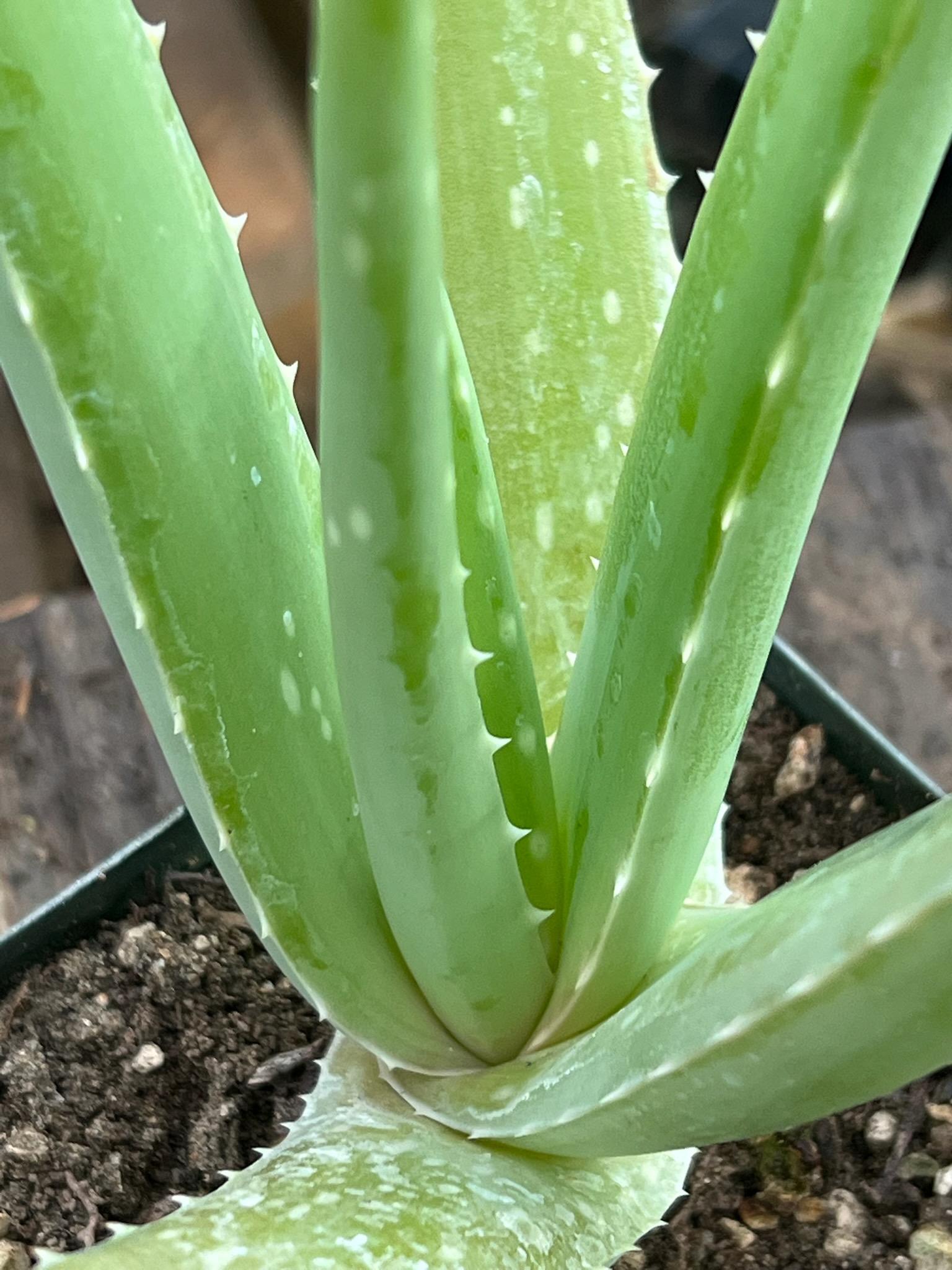
True Aloe is a succulent perennial that usually forms a basal rosette rather than a woody trunk. Its leaves are thick, fleshy, lance-shaped, and gray-green to green, with small pale teeth along the margins. Leaves often grow approximately 12 to 24 inches long under household cultivation, but size varies with light, age, container size, watering, and cultivar.
Young leaves may display pale spots or mottling that becomes less conspicuous as the plant matures. The leaf interior is filled with clear, slippery, mucilaginous gel. When a leaf is cut, yellow or yellow-brown latex may drain from the layer near the rind before or while the clear gel is exposed. That yellow exudate is a major identification clue for the toxic portion of the leaf.
Mature plants may produce offsets around the base, eventually forming a clump of rosettes. In good conditions, they may send up an upright flowering stalk with tubular yellow flowers. Indoor plants may never flower if light, age, or growing conditions are insufficient. Lack of flowers does not make the plant safe or change the leaf chemistry.
The Rind, Latex, and Gel in Real Household Exposure
The outer rind provides protection and structural support. Immediately beneath it are vascular bundles and latex-containing tissues that release the intensely bitter yellow exudate commonly called Aloe latex. The center contains the clear gel used in many topical and commercial products. Cutting a leaf makes the distinction visible: clear gel fills the interior, while yellow material drains from the layer near the rind.
Dogs and cats rarely encounter a perfectly separated gel fillet. They encounter the whole leaf. Dogs may tear the leaf into strips, chew rind, swallow fibrous material, or carry pieces through the house. Cats may bite leaf tips, lick a cut surface, or groom sap from paws and fur. A person may cut a leaf for a burn and leave the knife, cutting board, tissue, discarded rind, dripping latex, or treated skin within reach. Those are the common household pathways that turn a “healing plant” into a pet-poisoning event.
Commercial product exposure can be even harder to interpret. A small lick of plain purified gel is not the same as swallowing a raw whole-leaf juice, dried latex capsule, flavored supplement drink, laxative product, or topical gel containing lidocaine, benzocaine, alcohol, essential oils, fragrance, preservatives, salicylates, or other drugs. Product labels, ingredient lists, and processing statements should be saved exactly as they appear.
Aloin, Barbaloin, and the Laxative Mechanism
Aloin occurs mainly as aloin A and aloin B, historically called barbaloin and isobarbaloin. Gut microorganisms convert these glycosides into active anthrone metabolites after they reach the large intestine. The metabolites stimulate colonic contractions and secretion while reducing net water and electrolyte absorption. The result is faster intestinal transit and a larger volume of water remaining in the stool.
That mechanism is why the toxic syndrome centers on abrupt diarrhea rather than on an undefined generalized poison. The plant’s latex acts like an uncontrolled stimulant-laxative exposure. Severe purgation can become dangerous through dehydration, potassium loss, acid-base disturbance, weakness, reduced blood volume, reduced blood flow to the kidneys, and worsening lethargy. The smaller or more medically fragile the animal, the less fluid loss it takes to become clinically significant.
The mechanism also explains why the timing may not be immediate. A pet may vomit early from bitter sap and stomach irritation, then develop diarrhea later as aloin-derived metabolites act in the large intestine. Owners should not assume the case is finished just because the first vomiting episode stops.
University Extension, Veterinary Poison Lists, and What Brief Tables Miss
Brief plant-poison tables commonly list Aloe as causing vomiting, lethargy, diarrhea, and sometimes tremors or urine discoloration, while identifying saponins and anthraquinones as the toxic principles. Those summaries are useful for triage, but they do not explain the product-form problem, the difference between gel and latex, or why repeated diarrhea can become medically important.
The University of Wisconsin Extension table cited in the legacy PAWS material lists Aloe vera sap in large quantities as the toxic portion and identifies diarrhea as the expected effect. That brief statement is directionally correct. The deeper veterinary interpretation is that severe or continuing diarrhea can cause dehydration and electrolyte imbalance, which can then produce weakness, tremors, poor perfusion, reduced urination, and kidney stress. “Diarrhea” is the beginning of the clinical reasoning, not the end of it.
Dark or Reddish Urine
Veterinary references commonly include urine color change among possible Aloe signs. Anthraquinone metabolites can produce orange, red-brown, tea-colored, or dark discoloration as they are excreted. That discoloration may be pigment rather than blood, and it may resolve as the exposure clears.
Appearance alone is not diagnostic. Blood in urine, hemoglobin, myoglobin from muscle injury, bilirubin, severe dehydration, urinary tract disease, liver disease, and other poisons can create similar colors. Dark urine combined with weakness, repeated vomiting, ongoing diarrhea, reduced urination, pale gums, collapse, or muscle pain should not be brushed off as “just Aloe pigment.” Veterinary evaluation may include urinalysis, hydration assessment, kidney values, and muscle or liver markers depending on the whole case.
Contact Dermatitis, Eye Exposure, and Topical Products
Aloe gel is generally tolerated topically by many people and animals, but irritation and allergic contact dermatitis have been reported. Plant latex contacting the lips, nose, eyelids, paws, damaged skin, or mouth may cause redness, itching, burning, rubbing, swelling, or localized discomfort. Some animals react to Aloe itself; others react to the alcohol, fragrance, preservatives, essential oils, anesthetics, antiseptics, salicylates, or other ingredients in a commercial product.
Eye exposure deserves caution because plant sap, leaf tips, gritty residue, or product additives can irritate the ocular surface. Squinting, tearing, redness, cloudiness, pawing, or persistent discomfort after exposure should be examined. A leaf edge can scratch the cornea, and a topical product formulated for human skin may not be safe for an animal’s eye or for ingestion by licking.
Owners should not apply household Aloe products to animals until the entire ingredient list has been reviewed. A product marketed as soothing can still contain lidocaine, benzocaine, essential oils, alcohol, tea tree oil, menthol, camphor, salicylates, or other substances that change the risk completely. Prevent licking of treated human skin, pet skin, bandages, or grooming residue unless a veterinarian has approved the full formulation.
Pregnancy and Reproductive Caution
Pregnant animals should not be allowed to eat True Aloe or oral Aloe-latex products. Older herbal and toxicology references warn against oral Aloe latex during pregnancy because stimulant laxatives can cause severe cramping, diarrhea, dehydration, and possible pelvic or uterine effects. That caution remains sensible even though the evidence that aloin directly and predictably causes uterine contractions in every animal species is not strong enough to state as settled fact.
The practical risk does not require proving a direct uterine mechanism. Severe diarrhea, abdominal straining, reduced intake, dehydration, electrolyte loss, and weakness can threaten a pregnant animal without the plant being a specific fetal malformation toxin. A pregnant dog, cat, horse, goat, cow, sheep, rabbit, or small pet has no medical reason to consume uncontrolled Aloe latex, and concentrated products deserve veterinary review even when early signs appear mild.
Dogs and Cats
Dogs may bite thick leaves because they are cool, moist, and easy to tear. Puppies may shred leaves during play. Cats may chew leaf tips, climb into pots, lick sap from a cut surface, walk through spilled gel, or groom plant residue from paws and fur. Both species are exposed to rind and latex before reaching the inner gel.
The usual syndrome is vomiting, diarrhea, appetite loss, lethargy, and sometimes tremors or urine discoloration. Most plant-only exposures are not fatal, but plant size, animal size, amount swallowed, repeated chewing, medical fragility, and product form can change the picture. A dog that ate a concentrated latex supplement or a cat that stops eating after vomiting should not be handled like a dog that licked a small amount of plain inner gel.
Horses, Livestock, Rabbits, Birds, Reptiles, and Other Animals
Horses are considered susceptible even though they cannot vomit. Possible signs include salivation, feed refusal, abdominal discomfort, colic-like behavior, increased intestinal sounds, diarrhea, sweating, depression, weakness, and dehydration. Aloe plants, processing waste, and supplement residue should not be discarded into paddocks or livestock pens.
Cattle, sheep, goats, pigs, alpacas, and llamas may be exposed through greenhouse waste, landscaping debris, compost, discarded leaves, or supplement products. A one-houseplant exposure is usually limited, but a pile of succulent leaves or processing waste can create group access. Livestock cases should include inspection of the full pile for pesticides, fertilizers, mold, other toxic plants, plastic, twine, and foreign material.
Rabbits and guinea pigs cannot vomit and may show diarrhea, abdominal discomfort, food refusal, lethargy, or reduced fecal output. Pain and digestive disturbance can lead to gastrointestinal hypomotility or stasis. Birds may chew succulent leaves repeatedly and receive a substantial exposure relative to body weight; regurgitation, watery droppings, weakness, tremors, poor perching, or reduced food intake requires avian veterinary guidance. Tortoises and other reptiles should not be offered Aloe leaves or rind as browse because species-specific safe doses are not established and signs may be subtle.
Diagnosis
Diagnosis usually depends on evidence of a chewed Aloe plant or product, the amount missing, the part involved, the product form, the onset of vomiting or diarrhea, and exclusion of more dangerous causes. Useful evidence includes photographs of the whole plant, damaged leaves, yellow exudate, rind, gel, potting material, product packaging, supplement labels, topical-product ingredients, and the estimated exposure time.
No routine veterinary test confirms aloin exposure in real time for ordinary cases. Bloodwork and urinalysis may be appropriate when diarrhea is severe, vomiting continues, the animal appears weak, urine changes color, dehydration is suspected, the patient is very young or old, or the exposure involved a concentrated product. Electrolytes, kidney values, blood glucose, hydration status, acid-base status, urine concentration, and cardiac rhythm may require evaluation in a more serious case.
Differential diagnoses include spoiled food, pancreatitis, intestinal foreign body, infectious gastroenteritis, dietary indiscretion, other toxic succulents, agave, oxalate plants, lilies in cats, pesticides, fertilizers, essential oils, topical anesthetics, salicylates, human medication, and unrelated urinary disease. The stronger or more atypical the signs, the less safely they can be attributed to Aloe alone.
Important Look-Alikes and Product Confusion
Many Aloe species resemble True Aloe, and several contain related anthraquinones or saponins. A nursery label reading only “aloe” may not establish the exact species, but the same basic veterinary precautions remain appropriate when a pet chews a bitter succulent leaf. Cape Aloe, Socotrine Aloe, Krantz Aloe, and ornamental aloe hybrids should not be assumed safe because they are not Aloe vera.
Agave species are frequently called American Aloe even though they belong to a different family and contain different irritants. Haworthia, Gasteria, and hybrid succulents may resemble small Aloe plants. Some are lower-risk plants, some are not identified well enough to judge, and some are mixed into planters with fertilizer, decorative stones, pesticides, or other plants. Whole-plant photographs and labels matter.
Commercial clear gel, decolorized juice, raw whole-leaf juice, dried latex, capsules, powders, colon-cleanse products, cosmetics, shampoos, sprays, lotions, burn gels, after-sun products, and wound products are chemically different exposures. A dog that licks a small amount of plain purified gel has not had the same exposure as a dog that swallows dried Aloe-latex capsules or a lotion containing lidocaine and essential oils.
Veterinary Treatment and Prognosis
No specific antidote exists. Treatment is directed at stopping exposure, controlling vomiting and diarrhea, restoring fluid and electrolyte losses, protecting circulation and kidney perfusion, and addressing any additional ingredient in a commercial or homemade preparation. Mild cases may require only monitoring and removal of access. Moderate cases may require antiemetic medication, fluid therapy, electrolyte correction, gastrointestinal support, and monitoring of urine output.
Veterinary care may include oral examination, eye examination when sap or product reaches the eye, skin decontamination, bloodwork, urinalysis, blood-glucose monitoring, potassium correction, kidney-value monitoring, and heart-rhythm observation in weak or electrolyte-abnormal patients. Severe hypokalemia or dehydration requires measured correction rather than simply encouraging the animal to drink more.
The prognosis is generally good. Most pets recover fully within approximately one or two days after a limited plant exposure. Prognosis becomes more guarded when diarrhea is profuse, dehydration is advanced, kidney values are affected, the patient is very small or medically fragile, pregnancy is involved, food refusal persists, or a concentrated whole-leaf or latex preparation was consumed.
Prevention
Keep the living plant where animals cannot reach leaf tips or pull the pot down. Long Aloe leaves can extend beyond shelves, windowsills, and counters that appear secure. Remove damaged leaves and offsets immediately rather than leaving bitter latex and plant pieces on the floor. Dispose of rind, latex-covered pieces, trimmings, and unused homemade gel in a closed animal-inaccessible container.
Do not apply household Aloe products to an animal until every ingredient has been reviewed. Prevent licking of topical products from the animal’s skin, another pet’s skin, or human skin. Wash hands, knives, cutting boards, and towels after cutting fresh leaves, and keep pets away from the treated area until the product is dry or otherwise protected according to veterinary guidance.
Store Aloe drinks, powders, capsules, latex products, raw whole-leaf preparations, colon-cleanse products, and cosmetic formulations like medications. The fact that Aloe is sold as natural, medicinal, soothing, edible, organic, or gentle does not make every preparation safe for every animal.
Immediate Steps After Exposure
Prevent further ingestion. Move the animal away from the plant, broken leaves, offsets, discarded rind, yellow latex, homemade gel, supplements, drinks, powders, capsules, lotions, burn gels, shampoos, sprays, and topical products. Remove the plant or product from the room or enclosure rather than assuming the animal will avoid the bitter taste after the first bite.
- Identify the exact material: Determine whether the animal licked purified clear gel, chewed an intact leaf, swallowed yellow latex, ate rind, consumed dried latex, drank aloe juice, swallowed a supplement, or licked a topical product.
- Remove loose plant material safely: Clear visible pieces from the lips and front of the mouth only if the animal is alert, breathing normally, swallowing normally, and can be handled without being bitten. Do not reach deeply into the throat.
- Wipe away visible sap: Use a damp cloth to remove yellow latex or plant residue from the lips, muzzle, paws, feathers, scales, and surrounding fur when this can be done without delaying needed care.
- Prevent grooming: Keep the animal from licking sap or topical product from the coat, paws, skin, feathers, or another animal until residue has been removed.
- Preserve evidence: Photograph the complete plant, damaged leaf, yellow exudate, product container, supplement bottle, ingredient list, and the amount missing. Save a secured sample when it can be transported without exposing another animal.
- Record the clinical timeline: Note exposure time, first vomiting episode, stool frequency, urine color, drinking, urination, appetite, pregnancy status, medical conditions, and all products involved.
- Contact a veterinarian or animal poison-control service: Report the species, weight, age, amount, product form, symptoms, and whether the animal is small, pregnant, elderly, very young, or medically fragile.
An alert animal that is not vomiting may have normal access to fresh water, but water should not be forced. A small taste of plain inner gel may require only observation in many healthy dogs and cats. A chewed whole leaf, yellow latex exposure, concentrated product, ongoing vomiting, repeated diarrhea, abnormal urine, pregnancy, or exposure in a rabbit, guinea pig, bird, reptile, horse, or livestock animal deserves more caution.
Do Not Attempt Unsupervised Home Treatment
- Do not induce vomiting: Hydrogen peroxide, salt, mustard, syrup of ipecac, dish soap, detergent, and manual gagging can cause stomach injury, prolonged vomiting, aspiration, or additional poisoning.
- Do not force water or electrolyte drinks: A nauseated, weak, vomiting, or poorly swallowing animal may inhale forced fluids. Severe dehydration requires measured veterinary fluid therapy rather than drenching.
- Do not give milk, oil, bread, yogurt, food, or another laxative: These substances do not neutralize aloin and may worsen nausea, diarrhea, or aspiration risk.
- Do not administer activated charcoal automatically: Charcoal is not necessary for every Aloe exposure and may be aspirated by an animal that is vomiting, weak, tremoring, sedated, or swallowing poorly.
- Do not give Kapectolin, Kaopectate, bismuth, loperamide, sucralfate, antacids, antiemetics, probiotics, corticosteroids, antihistamines, or leftover veterinary medication without direction: Some products are unsafe for particular species or may conceal worsening intestinal disease.
- Do not give human pain medication: Ibuprofen, naproxen, acetaminophen, aspirin, and similar products can create a separate and more dangerous poisoning.
- Do not drench horses or livestock: Forced oral treatment can be aspirated and may worsen abdominal distention, stress, or fluid imbalance.
Antidiarrheal medication is a common owner mistake. The problem is not simply that the bowel is moving; the bowel may be irritated, secreting fluid, losing electrolytes, and trying to clear plant-derived material. Slowing intestinal movement with an inappropriate product can be dangerous in the wrong species or clinical setting. Veterinary guidance is needed before suppressing diarrhea, especially when blood, severe pain, fever, weakness, dehydration, or product additives are involved.
When Emergency Examination Is Especially Important
- Vomiting or diarrhea is repeated: Continuing fluid loss can rapidly produce dehydration and electrolyte abnormalities.
- The animal cannot retain water: Vomiting after drinking or refusing all fluids increases the need for professional treatment.
- Stool is profuse, bloody, black, mucus-heavy, or nearly continuous: Severe intestinal irritation and fluid loss require prompt assessment.
- Weakness, tremors, poor coordination, or collapse develops: These signs may reflect dehydration, potassium loss, hypoglycemia, another product ingredient, or a larger exposure.
- Urine becomes dark red, orange, tea-colored, or brown: Pigment from anthraquinone metabolites is possible, but blood, muscle injury, liver disease, urinary disease, or reduced kidney function must be considered.
- Urination decreases: Reduced urine output with vomiting or diarrhea may indicate severe dehydration or kidney perfusion concerns.
- The animal is pregnant, very young, elderly, tiny, or medically fragile: These patients tolerate fluid and electrolyte losses less safely.
- A concentrated product was swallowed: Dried latex, whole-leaf extract, capsules, powders, colon-cleanse products, and poorly labeled supplements can contain much more active material than one bite of a leaf.
- A topical product was licked: Lidocaine, benzocaine, alcohol, essential oils, salicylates, fragrances, preservatives, antiseptics, or other active ingredients may create a separate toxic exposure.
- A rabbit, guinea pig, bird, reptile, or other exotic stops eating: Food refusal or reduced fecal output can become serious even when the original plant exposure seems mild.
Veterinary Evaluation and Decontamination
The veterinarian will determine whether the exposure involved low-risk inner gel, an intact leaf containing latex, a raw whole-leaf product, a concentrated latex preparation, or a topical product with additional ingredients. Hydration, abdominal comfort, stool frequency, vomiting frequency, blood glucose, urine output, strength, mentation, heart rhythm, pregnancy status, and species physiology all influence treatment.
Veterinary decontamination is considered case by case. Inducing vomiting is generally unnecessary once spontaneous vomiting or significant diarrhea has begun and may be unsafe in a weak, symptomatic, tremoring, sedated, or poorly swallowing patient. Cats, horses, rabbits, guinea pigs, birds, and reptiles should not receive owner-style vomiting attempts. A veterinarian may consider controlled emesis in an appropriate dog only when the timing, amount, airway safety, neurologic status, and expected benefit justify it.
Activated charcoal may be considered for selected concentrated-product or mixed-product exposures, but it is not a routine treatment for every chewed Aloe leaf. Charcoal does not reverse diarrhea already caused by active metabolites and can be aspirated if swallowing is impaired. When a topical or supplement product contains other toxins, decontamination decisions may change according to those ingredients.
Fluid, Electrolyte, Gastrointestinal, and Kidney Support
Supportive care may include veterinarian-selected antiemetic medication, intravenous or subcutaneous fluids, potassium and other electrolyte correction, gastrointestinal support, blood-glucose monitoring, and observation of kidney function and urine production. The route and amount of fluid support depend on dehydration severity, vomiting, stool losses, circulation, kidney function, species, body size, and whether the animal can drink voluntarily without vomiting.
Potassium correction is not a guess. Severe or prolonged diarrhea can lower potassium enough to worsen weakness, tremors, appetite loss, poor intestinal motility, and heart rhythm. A veterinarian may measure electrolytes and correct abnormalities gradually and safely. Simply forcing water into a nauseated animal does not replace lost electrolytes and can cause aspiration.
Kidney abnormalities after Aloe exposure are usually a concern in the setting of severe dehydration, prolonged purgation, concentrated or repeated oral preparations, or another product ingredient rather than a routine consequence of one tiny plant taste. Reduced urination, rising kidney values, persistent dark urine, collapse, or advanced dehydration changes the case from a simple plant nibble to a medical problem requiring monitoring and rechecks.
Mouth, Skin, and Eye Decontamination
Visible sap on the lips, muzzle, paws, coat, feathers, or skin can be wiped away with lukewarm water and a mild cleanser when the animal is stable enough for cleaning. The goal is to stop continued grooming and ingestion. Prolonged bathing should not delay emergency care for a weak, vomiting, tremoring, collapsed, or dehydrated patient.
Eye exposure should be handled gently. If sap or a product enters the eye, the eye may be gently flushed with sterile saline or clean water while veterinary care is arranged, provided the animal can be handled safely. Persistent squinting, redness, tearing, cloudiness, pawing, or pain requires examination. Corneal injury, chemical irritation, or added product ingredients may require treatment beyond rinsing.
Contact dermatitis or localized inflammation is managed by removing residue and treating ongoing irritation as needed. Corticosteroids, antihistamines, topical antibiotics, or pain medication should not be selected by the owner from the plant name alone. The veterinarian must determine whether the problem is irritation, allergic reaction, infection, corneal ulceration, self-trauma, or toxicity from an added ingredient.
Dogs and Cats
Dogs should be monitored for drooling, vomiting, diarrhea, abdominal pain, appetite loss, lethargy, weakness, tremors, urine color, drinking, and urination. A dog that chewed a thick whole leaf may have swallowed rind, latex, gel, potting soil, fertilizer, or plastic. A dog that licked an Aloe burn product may have swallowed drugs or solvents not present in the plant.
Cats should be monitored for hiding, drooling, vomiting, diarrhea, food refusal, dehydration, weakness, and grooming of sap from paws or fur. Prolonged food refusal matters. A cat that does not resume eating after the initial gastrointestinal signs improve needs follow-up rather than repeated home remedies.
Both species should be protected from re-exposure. Move the plant fully out of reach, not merely higher on a shelf if leaves hang down. Clean the floor, windowsill, cutting board, knife, towel, and treated skin area after fresh-leaf use. Dispose of rind and latex-covered waste in a closed container.
Horses and Livestock
Horses, ponies, and donkeys should be removed from Aloe plants, trimmings, landscaping debris, supplement waste, and processing material. They cannot vomit. Salivation, feed refusal, colic-like signs, increased intestinal sounds, diarrhea, depression, weakness, or dehydration after access deserves large-animal veterinary guidance.
Cattle, sheep, goats, pigs, alpacas, llamas, and other livestock should be removed from all Aloe waste and mixed debris. Do not drench affected animals with oil, water, milk, charcoal, electrolytes, or home remedies. Forced oral treatment can be aspirated or worsen stress and abdominal discomfort. Preserve samples of the plant, feed, water, supplement, and any mixed waste for inspection.
Group exposure should be managed as a group event. One animal may show diarrhea before the others, but all animals with access should be observed. Pregnant animals should be separated from the source even when signs are absent because severe diarrhea, dehydration, and reduced intake are unnecessary pregnancy risks.
Birds, Rabbits, Guinea Pigs, Reptiles, and Other Small Pets
Birds with regurgitation, watery droppings, weakness, fluffed posture, tremors, poor perching, reduced intake, or collapse need avian veterinary advice. Minimize handling stress, keep the bird appropriately warm, and do not force food or water. Cage papers can help track droppings and urine changes.
Rabbits and guinea pigs cannot vomit, so lack of vomiting is not reassuring. Food refusal, reduced fecal output, diarrhea, tooth grinding, abdominal discomfort, lethargy, or weakness after exposure requires prompt species-specific care. Gastrointestinal stasis can become more important than the original plant chemistry if appetite and fecal production decline.
Reptiles and tortoises should be kept within their appropriate temperature range and evaluated by an exotic-animal veterinarian if ingestion is meaningful or signs develop. Do not offer Aloe leaves as forage, browse, moisture source, or enclosure greenery. Abnormal stool, inactivity, weakness, dehydration, and reduced appetite may be subtle early signs.
Recovery, Rechecks, and Prognosis
Most dogs and cats recover completely after a limited plant exposure. Vomiting and diarrhea commonly improve within several hours and resolve within approximately one or two days. Improvement should be steady: vomiting should stop, stool frequency should decline, appetite and activity should return, urine output should remain adequate, and hydration should normalize.
Recovery may take longer when fluid loss is substantial, potassium falls, kidney values change, food refusal continues, aspiration occurs, or the animal consumed concentrated latex or whole-leaf extract. Small animals may require hospitalization sooner because they have less fluid reserve. Rechecks may be needed for persistent diarrhea, abnormal urine, kidney-value changes, electrolyte abnormalities, pregnancy concerns, eye injury, or exposure to another product ingredient.
Persistent diarrhea, weakness, abnormal urine, reduced urination, tremors, collapse, severe abdominal pain, or failure to resume normal eating and drinking requires reassessment rather than repeated home medication. The prognosis is good for most uncomplicated plant exposures, but it becomes more guarded with advanced dehydration, severe electrolyte disturbance, kidney involvement, concentrated products, very small patients, or medically fragile animals.
Prevention After the Incident
Keep True Aloe plants out of reach of dogs, cats, rabbits, birds, reptiles, and livestock. Trim leaves before they hang off shelves or windowsills. Remove broken leaves, offsets, and cut surfaces promptly. Dispose of rind, yellow latex, plant pieces, and homemade-gel waste in a closed animal-inaccessible container.
Store Aloe drinks, powders, capsules, raw latex, whole-leaf extracts, burn gels, lotions, shampoos, after-sun products, and cosmetics like medications. Do not let animals lick Aloe products from human skin, animal skin, bandages, towels, or grooming residue. Review every ingredient before applying a product to an animal. “Contains aloe” is not a safety clearance.
Frequently Asked Questions About True Aloe and Animal Poisoning
Is Aloe barbadensis the same plant as Aloe vera?
Yes. Aloe barbadensis Mill. is a botanical synonym of the accepted name Aloe vera (L.) Burm.f. Both names continue to appear on nursery labels, cosmetics, supplements, food products, topical gels, and veterinary poison lists. For pet-safety purposes, the important question is not which of those two names appears on the label; it is whether the animal reached clear gel, whole leaf, yellow latex, rind, or a concentrated product.
Why is the family listed as Asphodelaceae instead of Aloaceae or Liliaceae?
Modern botanical classification places True Aloe in Asphodelaceae. Aloaceae and Liliaceae are older placements that still appear in historical, medicinal, horticultural, cosmetic, and veterinary references. The family-name change does not change the plant or its toxicology, but preserving the older names helps owners and researchers find older material.
What part of True Aloe is poisonous?
The greatest concern is the bitter yellow latex immediately beneath the green rind. It contains aloin A and aloin B, historically called barbaloin and isobarbaloin, along with related anthraquinone and anthrone compounds. A pet chewing an intact leaf is exposed to that latex together with rind, clear gel, sap, saponins, and fibrous plant tissue, so a whole-leaf bite is not the same as purified inner gel.
Is the clear inner Aloe gel poisonous?
Properly separated and purified inner gel is much lower risk because it contains far less aloin than the yellow latex. A household leaf is not pre-cleaned gel. Chewing through the rind contaminates the mouthful with latex-bearing tissue, and homemade gel can be smeared with yellow latex during cutting. Commercial gels may also contain alcohol, fragrance, preservatives, anesthetics, essential oils, or other ingredients that are unsafe for animals.
What are aloin and barbaloin?
Aloin is the common name for two related hydroxyanthracene glycosides, aloin A and aloin B. Barbaloin and isobarbaloin are older names associated with these compounds. Intestinal microorganisms convert aloin into active metabolites such as aloe-emodin-9-anthrone, which stimulate the large intestine and promote fluid-rich stool.
How does Aloe latex cause diarrhea?
Its anthraquinone-derived metabolites stimulate colonic contractions, increase intestinal water content, increase mucus secretion, alter chloride, sodium, and water movement, and reduce net reabsorption of water and electrolytes. The result can range from soft stool to abrupt, repeated watery diarrhea. Severe or prolonged purgation can then cause dehydration, potassium loss, weakness, poor perfusion, reduced urination, and secondary kidney stress.
What did the University of Wisconsin source say about Aloe?
The University of Wisconsin Extension toxic-plant table cited in the legacy PAWS material lists Aloe vera sap in large quantities as the toxic portion and identifies diarrhea as the expected effect. That brief statement is directionally correct, but the medically important extension is that severe or continuing diarrhea can produce dehydration and electrolyte imbalance, especially in small, young, elderly, pregnant, or medically fragile animals.
Why can urine turn red or brown after Aloe ingestion?
Anthraquinone metabolites can discolor urine orange, red-brown, tea-colored, or dark brown. That change may be pigment rather than blood, but appearance alone cannot distinguish pigment from blood, hemoglobin, myoglobin, bilirubin, urinary disease, liver disease, or dehydration-related concentration. Dark urine with weakness, reduced urination, pale gums, vomiting, or ongoing diarrhea deserves veterinary assessment.
Can Aloe cause tremors?
Tremors are reported in veterinary Aloe poison descriptions but are less characteristic than vomiting, diarrhea, and lethargy. Trembling may reflect abdominal pain, anxiety, dehydration, potassium loss, hypoglycemia, a concentrated exposure, or another ingredient in an Aloe product. Persistent tremors, poor coordination, seizures, or collapse should prompt evaluation for severe dehydration, another toxin, or a complication.
Can Aloe damage the kidneys?
A small plant bite does not ordinarily cause primary kidney failure. Severe vomiting and diarrhea can reduce circulating volume and kidney perfusion, and concentrated or prolonged oral Aloe-latex exposure has been associated with more serious toxicology concerns. Reduced urination, marked weakness, dark urine, dehydration, or abnormal kidney values changes the case and requires veterinary follow-up.
Can Aloe cause contact dermatitis?
Yes. Aloe sap, latex, gel, or commercial products can cause irritant or allergic skin reactions in susceptible animals and people. Redness, itching, rubbing, swelling, burning, or irritation may affect the lips, nose, face, paws, eyelids, or damaged skin. Added ingredients in lotions, gels, shampoos, sprays, or burn products may also cause reactions or poisoning when licked.
What should I do if Aloe gets in my pet’s eye?
Prevent rubbing and gently flush the eye with sterile saline or clean water if this can be done safely. Persistent squinting, tearing, redness, cloudiness, pawing, or pain requires veterinary examination. The problem may be sap irritation, a corneal scratch from the leaf, or an added ingredient in a commercial product rather than the Aloe gel alone.
Is True Aloe dangerous during pregnancy?
Pregnant animals should not be allowed to eat the plant or oral Aloe-latex products. Direct uterine stimulation is not proven consistently across species, but uncontrolled laxative effects, abdominal cramping, dehydration, electrolyte loss, reduced intake, and weakness create unnecessary risk to the dam and pregnancy. Concentrated products deserve veterinary review even when the dam initially appears stable.
Are Aloe drinks and supplements safe for pets?
Not automatically. Products differ in whether they contain purified inner gel, decolorized whole-leaf extract, raw whole-leaf extract, latex-derived material, concentrated aloin, sweeteners, flavorings, preservatives, alcohol, or other active ingredients. The complete label and amount swallowed must be reviewed before the risk can be judged. Dried latex, powders, capsules, and colon-cleanse products are higher concern than a tiny lick of plain purified gel.
What is the difference between decolorized and nondecolorized whole-leaf Aloe?
Decolorized whole-leaf products are processed, commonly by filtration, to reduce latex-derived hydroxyanthracene compounds such as aloins. Nondecolorized whole-leaf extracts retain more of that latex-related chemistry. This distinction matters because long-term animal studies found large-intestine toxicity and carcinogenic activity with nondecolorized whole-leaf extract under experimental conditions. That does not make every Aloe gel the same hazard, but it does mean product processing matters.
Does the NTP whole-leaf extract study mean one leaf bite causes cancer?
No. The NTP evidence involved repeated long-term exposure to nondecolorized whole-leaf extract in laboratory rodents and is important for understanding product-form risk and chronic exposure. It should not be misapplied to a one-time pet nibble. For an accidental animal exposure, the immediate concerns are vomiting, diarrhea, dehydration, electrolyte loss, product additives, and whether the animal swallowed concentrated latex or whole-leaf material.
Should I give my pet water after Aloe exposure?
An alert animal that is not vomiting may have normal access to fresh water. Do not force water, electrolyte drinks, milk, broth, or food into the mouth. Forced fluids can be aspirated, and they do not correct severe dehydration or electrolyte loss. An animal that cannot keep water down, is weak, has profuse diarrhea, or urinates less needs veterinary fluid assessment.
Should I give antidiarrheal medicine after Aloe ingestion?
Do not give antidiarrheal medication without veterinary direction. Some human gastrointestinal products are unsafe for particular species, and suppressing diarrhea can be inappropriate when the bowel is irritated, the animal is dehydrated, blood is present, or another toxin or product ingredient is involved. Veterinary care focuses on hydration, electrolyte balance, nausea control, and determining whether medication is safe for that patient.
Should I make my dog vomit after eating True Aloe?
Do not induce vomiting at home. Hydrogen peroxide, salt, mustard, ipecac, dish soap, and manual gagging can cause injury, prolonged vomiting, or aspiration. Veterinary emesis is rarely needed for simple Aloe leaf exposures once vomiting or diarrhea has started, and it may be unsafe in a weak, tremoring, sedated, poorly swallowing, or neurologically abnormal patient.
Is activated charcoal needed after Aloe ingestion?
Not routinely. Activated charcoal may be considered by a veterinarian for selected concentrated-product or mixed-toxin exposures, but it is not necessary for every chewed leaf and does not reverse diarrhea already caused by active metabolites. It should not be forced into an animal that is vomiting, weak, tremoring, sedated, seizuring, or swallowing poorly.
Is True Aloe poisonous to horses?
Yes, horses are considered susceptible, although they cannot vomit. They may show salivation, feed refusal, colic-like discomfort, increased intestinal sounds, diarrhea, depression, weakness, dehydration, or sweating. Aloe plants, trimmings, processing waste, and supplement residue should not be discarded into paddocks, stalls, hay areas, or manure piles accessible to horses.
Is True Aloe poisonous to cattle, sheep, goats, and pigs?
It can be when enough whole-leaf or latex-containing material is eaten. Livestock may be exposed through greenhouse waste, landscape trimmings, compost, processing residue, or supplements. Signs may include reduced appetite, drooling, abdominal cramping, diarrhea, dehydration, weakness, and reduced production. Do not use Aloe plants or processing waste as browse, bedding, enrichment, or feed.
Is True Aloe safe for rabbits and guinea pigs?
No. Rabbits and guinea pigs should not be fed Aloe leaves, rind, latex, or whole-leaf products. They cannot vomit, and digestive upset can become serious if appetite drops or fecal output decreases. Drooling, tooth grinding, food refusal, diarrhea, reduced feces, lethargy, or weakness after exposure requires prompt species-specific veterinary advice.
Is True Aloe safe for birds or reptiles?
True Aloe leaves and latex should not be used as cage greenery, bird enrichment, poultry treats, tortoise forage, reptile browse, or moisture source. Birds may develop regurgitation, watery droppings, weakness, tremors, reduced food intake, or poor perching. Reptiles may show reduced appetite, abnormal stool, dehydration, inactivity, or weakness. Species-specific safe doses are not established.
Is American Aloe the same as True Aloe?
No. American Aloe usually refers to Agave americana, also called Century Plant. It is a different plant in Asparagaceae with different irritant hazards. The shared word aloe does not mean the plants have the same toxicology, treatment priorities, or product uses. Whole-plant photographs and labels should be preserved for identification.
Is Cape Aloe the same as True Aloe?
No. Cape Aloe usually refers to Aloe ferox, a separate aloe species historically used as a medicinal aloe source. It may contain related anthraquinone laxative compounds, but it is not the same species as Aloe vera. For animal safety, do not offer Cape Aloe or unidentified aloe leaves as food, browse, or home treatment.
How do veterinarians diagnose True Aloe poisoning?
Diagnosis usually depends on evidence of a chewed plant or product, the part involved, the amount missing, product ingredients, timing, vomiting, diarrhea, urine color, hydration, and exclusion of more dangerous causes. Photographs of the plant, damaged leaf, yellow exudate, product packaging, and ingredient list are useful. Bloodwork, electrolytes, kidney values, urinalysis, and heart-rhythm assessment may be recommended in more serious cases.
What differentials matter most?
Important differentials include dietary indiscretion, pancreatitis, intestinal foreign body, infectious gastroenteritis, spoiled food, other toxic succulents, agave, oxalate plants, lilies in cats, pesticides, fertilizers, topical anesthetics, salicylates, essential oils, human medication, urinary disease, liver disease, muscle injury, and unrelated kidney disease. Severe collapse, seizures, persistent blood, or major neurologic signs should not be attributed automatically to a small Aloe nibble.
How do veterinarians treat True Aloe poisoning?
Treatment is supportive and case-specific. It may include anti-nausea medication, fluid therapy, potassium and electrolyte correction, gastrointestinal support, blood-glucose monitoring, kidney-value monitoring, urinalysis, eye irrigation, skin decontamination, and treatment for any additional ingredient in a commercial product. There is no specific antidote that neutralizes absorbed aloe anthraquinones.
What is the usual prognosis?
The prognosis is generally good. Most limited exposures cause temporary vomiting, diarrhea, lethargy, or appetite loss and resolve within one or two days. Profuse diarrhea, severe dehydration, electrolyte abnormalities, abnormal urine, reduced urination, kidney-value changes, pregnancy, exotic species, very small patients, or concentrated Aloe-latex ingestion makes the case more serious.
How can True Aloe poisoning be prevented?
Keep plants out of reach, remove broken leaves and offsets immediately, dispose of rind and latex-covered pieces in a closed container, and secure Aloe drinks, gels, powders, capsules, lotions, and burn products like medications. Do not allow pets to lick Aloe products from human skin, animal skin, bandages, towels, or grooming residue unless the complete formulation has been approved by a veterinarian.