PAWS Pet Poison Plant Guide
Is Arrow-Head Vine Poisonous to Dogs, Cats, Horses, and Livestock?
Yes—Arrow-Head Vine, Syngonium podophyllum, is poisonous to dogs, cats, horses, livestock, and other animals that chew it. Its leaves, petioles, stems, aerial roots, and sap contain insoluble calcium oxalate crystals arranged in microscopic needle-shaped bundles called raphides. Chewing ruptures specialized plant cells and drives these crystals into the lips, gums, tongue, oral lining, throat, and other exposed tissues. The result is usually immediate burning pain, excessive drooling, pawing at the mouth, gagging, swelling, painful swallowing, food refusal, and sometimes vomiting.
Most animals stop chewing quickly because the pain is intense, which limits the amount swallowed. Serious swelling near the pharynx or larynx is uncommon but can obstruct airflow and become life-threatening. Unlike plants containing absorbable soluble oxalates, Arrow-Head Vine is not expected to cause systemic calcium depletion, oxalate crystal deposition in the kidneys, or acute oxalate-related kidney failure.
About this guide: This page provides general pet-poisoning information and cannot diagnose or treat an individual animal. For any suspected exposure, contact a veterinarian or animal poison-control service immediately. Do not induce vomiting, give medication, or attempt home decontamination unless directed by a veterinary professional.
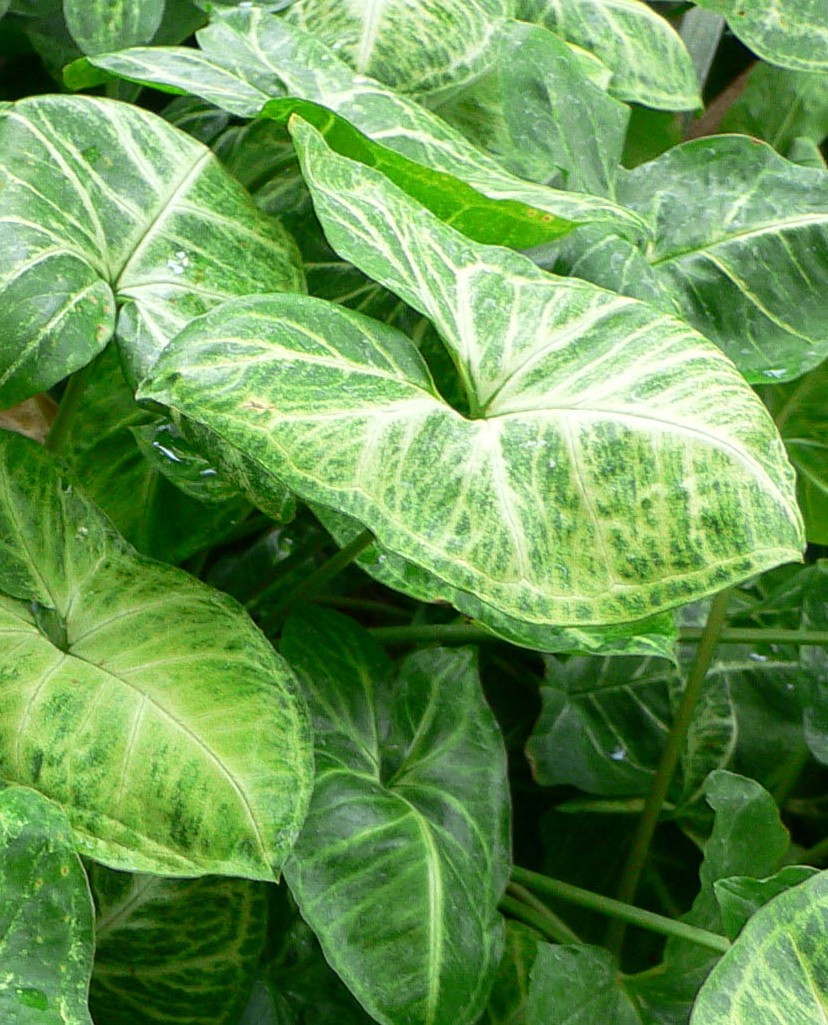
Arrow-Head Vine
Syngonium podophyllum Schott
Recognized botanical synonyms and historical names include:
Arum auritum Vell.
Pothos auritus Willd.
Syngonium affine Schott
Syngonium amazonicum Engl.
Syngonium decipiens Schott
Syngonium gracile (Miq.) Schott
Syngonium podophyllum var. multisectum Engl.
Syngonium podophyllum var. typicum Engl.
Syngonium poeppigii Schott
Syngonium riedelianum Schott
Syngonium ruizii Schott
Syngonium ternatum Gleason
Syngonium vellozianum Schott
Syngonium vellozianum var. decipiens (Schott) Engl.
Syngonium vellozianum var. latilobum Engl.
Syngonium vellozianum var. oblongisectum Engl.
Syngonium vellozianum var. poeppigii (Schott) Engl.
Syngonium vellozianum var. riedelianum (Schott) Engl.
Syngonium willdenowii Schott
Syngonium xanthophilum Schott
Xanthosoma gracile Miq.
“Nephthytis” remains widely used as a nursery and household name, but true Nephthytis is a separate African aroid genus. The accepted genus for Arrow-Head Vine is Syngonium.
Araceae
Arrowhead Vine, Arrowhead Plant, Arrowhead Philodendron, Goosefoot Plant, Goosefoot Vine, Five Fingers, American Evergreen, African Evergreen, Nephthytis, Syngonium, Trileaf Wonder, Green Gold Nephthytis, Green Gold Naphthysis
“Nephthytis” and “African Evergreen” are misleading trade names because Syngonium podophyllum is a tropical American species. “Green Gold Naphthysis” is a frequently repeated misspelling of Green Gold Nephthytis.
Insoluble Calcium Oxalate Raphides
The established toxic principle in Arrow-Head Vine is insoluble calcium oxalate arranged in bundles of microscopic needle-shaped crystals called raphides. The crystals are stored inside specialized plant cells known as idioblasts and remain enclosed until a leaf, petiole, stem, aerial root, or other fresh tissue is crushed or chewed.
Once the idioblasts rupture, bundles of raphides are released into the mouth and surrounding tissues. Their narrow pointed shape allows them to penetrate the lips, gums, tongue, palate, oral lining, pharynx, and any other moist surface they contact. The resulting physical injury produces the rapid burning pain, inflammation, swelling, salivation, gagging, and reluctance to swallow that characterize aroid poisoning.
This is primarily a localized contact injury rather than a conventional absorbed systemic poison. The dramatic distress can begin after only a small bite because thousands of tiny crystals may be released from a limited amount of damaged tissue.
Species-Specific Raphide and Druse Anatomy
Microscopic investigation of Syngonium podophyllum leaves has documented both raphide-containing and druse-containing idioblasts. Druses are rounded clusters of calcium oxalate crystals, while raphides form narrow needles bundled together within elongated cells.
Researchers described small druse idioblasts throughout the leaf blade and multiple forms of raphide idioblasts, including defensive crystal-bearing cells positioned within internal tissue spaces and near portions of the leaf where physical disruption can release them.
This anatomy confirms that the irritant crystals are genuinely present in this species rather than being inferred solely from its membership in Araceae. The narrow raphides are clinically more important than the rounded druses because they are better suited to penetrating soft animal tissue.
The Mechanical Needle Effect
Raphides function as a defense against herbivores. When an animal bites the plant, the crystals puncture the mucous membranes and produce immediate pain. The animal commonly drops the plant, shakes the head, paws at the mouth, or retreats from further chewing.
Plant sap and other endogenous compounds may enter the microscopic punctures and intensify inflammation. Experimental research involving other raphide-bearing plants has demonstrated a broader “needle effect,” in which raphides help biologically active substances cross protective tissue barriers.
That general mechanism should not be overstated for Arrow-Head Vine. A specific clinically important protease or protein toxin has not been established adequately in S. podophyllum. Insoluble calcium oxalate raphides remain the defensible principal toxin listing.
Insoluble and Soluble Oxalates Cause Different Syndromes
The term calcium oxalate can describe two very different plant-poisoning hazards. Arrow-Head Vine contains insoluble crystals that remain largely at the point of contact and cause mechanical irritation of the mouth, throat, skin, and eyes.
Plants containing large amounts of soluble oxalates release absorbable oxalate that can bind circulating calcium, produce hypocalcemia, and contribute to calcium oxalate deposition within the kidneys. Those plants may cause weakness, tremors, seizures, abnormal heart rhythms, metabolic disturbance, and kidney failure after a sufficient exposure.
That systemic soluble-oxalate syndrome is not expected after uncomplicated Arrow-Head Vine chewing. Routine calcium supplementation, prolonged kidney monitoring, or renal-failure treatment is not indicated solely because an animal developed oral burning and drooling after biting a correctly identified Syngonium podophyllum.
Kidney abnormalities, profound weakness, seizures, persistent cardiac disturbances, marked metabolic changes, or reduced urine production should broaden the investigation to another plant, ethylene glycol, medication, household chemical, metabolic disease, or a mixed exposure.
Poisonous Plant Parts and Cultivars
Leaves, petioles, green stems, mature climbing stems, aerial roots, sap, and freshly cut plant material should all be treated as irritants. Leaves and trailing stems create the most common household exposure because they are easily reached by cats and dogs.
Juvenile plants usually display simple arrow-shaped leaves. Mature climbing vines can produce much larger leaves divided into several lobes or segments. The change in leaf form does not change the underlying raphide hazard.
Pink, red, cream, white, lime-green, mottled, variegated, miniature, compact, and named cultivated forms remain potentially irritating. Variegation alters pigmentation and appearance; it does not demonstrate the absence of crystal-bearing idioblasts.
Fallen leaves, pruning debris, broken stems, and cuttings rooting in water remain capable of releasing sap and crystals. Dry, badly deteriorated tissue may become less juicy, but drying is not a dependable household detoxification method.
Skin and Eye Contact
Fresh sap may irritate the skin, particularly where the barrier is already damaged or the animal repeatedly licks and rubs the area. Redness, itching, burning, swelling, or localized dermatitis may develop after contact.
Eye exposure can be substantially more painful. Raphides and sap beneath the eyelids or on the corneal surface may cause intense tearing, squinting, redness, eyelid spasm, light sensitivity, cloudiness, and corneal epithelial injury.
An animal may transfer sap from a contaminated paw or coat into the eye during grooming. Ocular exposure is still a localized contact injury rather than systemic oxalate poisoning, but continuing pain requires prompt examination because corneal damage cannot be assessed reliably from appearance alone.
No Dependable Safe Amount
No safe leaf area, stem length, sap quantity, crystal concentration, or toxic dose has been established for an individual dog, cat, horse, livestock animal, rabbit, bird, or other pet.
Most animals stop after a limited bite because pain is immediate. Severity depends on the amount chewed, location of crystal contact, depth of oral exposure, animal size, preexisting airway disease, ability to clear plant material, and whether sap entered the eyes.
The amount swallowed is not the only consideration. A small amount contacting the laryngeal region can be more dangerous than a larger amount confined to the front of the mouth because swelling near the airway may interfere with breathing.
Immediate Oral Pain and Distress
Clinical signs usually begin while the plant is being chewed or within minutes because the raphides act directly on the tissues they contact. An animal may abruptly drop the leaf, cry out, shake the head, paw at the face, rub the mouth on the floor, retreat from food, or behave as though a sharp object is lodged in the mouth.
Excessive drooling, lip smacking, repeated swallowing, gagging, retching, tongue movements, and reluctance to close the mouth are common. The saliva may become foamy or stringy because swallowing is painful.
The intensity of the animal’s distress may appear disproportionate to the amount chewed. This is expected with raphide injury because a small bite can release numerous microscopic needles.
Swelling of the Lips, Tongue, Mouth, and Throat
Inflammation may cause redness and swelling of the lips, gums, tongue, palate, oral lining, pharynx, and surrounding facial tissues. The animal may resist opening the mouth or having the face touched.
Painful swallowing can cause food refusal, reluctance to drink, repeated unsuccessful attempts to swallow, or saliva running continuously from the mouth. The bark, meow, whinny, or other vocalization may sound weak, hoarse, or altered when tissues near the throat are inflamed.
Most swelling remains localized and begins subsiding as the crystals are cleared and inflammation decreases. Progressive enlargement of the tongue, throat, face, or neck is not appropriate for home observation because it may threaten the airway or indicate another exposure.
Airway Obstruction and Respiratory Warning Signs
Severe pharyngeal or laryngeal swelling is uncommon but represents the principal life-threatening complication. Narrowing near the upper airway can progress even after the animal has stopped chewing.
Warning signs include noisy breathing, harsh inspiratory sounds, rapid or labored respiration, exaggerated chest or abdominal movement, neck extension, inability to settle, panic, open-mouth breathing in a cat, blue-gray gums, weakness, or collapse.
These signs require immediate emergency transport. Food, water, oral medication, and attempts to examine the back of the throat can worsen stress or aspiration risk and should not delay airway management.
Profound respiratory distress can also result from aspiration, a lodged plant fragment, another foreign body, an allergic reaction, or a caustic substance. The presence of Arrow-Head Vine does not exclude those emergencies.
Vomiting and Gastrointestinal Irritation
Dogs and cats may vomit after swallowing chewed leaves, stems, sap, or saliva containing plant material. Vomiting may occur once or recur when oral and esophageal irritation is more extensive.
Abdominal discomfort, nausea, reduced appetite, and diarrhea can occur after swallowed material reaches the gastrointestinal tract. These findings are usually secondary to local irritation rather than systemic absorption of oxalate.
Repeated vomiting can cause dehydration, electrolyte disturbance, esophageal irritation, and aspiration. Blood, coffee-ground material, black stool, severe abdominal enlargement, persistent retching, or pronounced focal pain is not expected after a simple limited exposure and requires investigation for another toxin, gastrointestinal injury, or foreign material.
Horses and Grazing Animals
Horses and livestock may develop sudden hypersalivation, head shaking, repeated tongue movements, painful chewing, feed refusal, oral redness, swelling, and difficulty swallowing after chewing Arrow-Head Vine or related raphide-containing material.
Horses cannot vomit. Repeated coughing, nasal discharge containing feed or saliva, neck extension, unsuccessful swallowing, or continued drooling must also be differentiated from esophageal choke, dental injury, oral foreign material, pharyngeal trauma, or caustic exposure.
Substantial livestock exposure is uncommon because Arrow-Head Vine is more often a houseplant, but outdoor exposure can occur where it is used as tropical groundcover, has escaped cultivation, or is discarded with landscape clippings.
A grazing animal that cannot eat, swallow, or control saliva requires veterinary examination even when breathing appears normal.
Eye and Skin Signs
Eye exposure may cause immediate blinking, tearing, squinting, redness, eyelid swelling, light sensitivity, pawing at the eye, or persistent eyelid closure.
Corneal irritation or ulceration may produce cloudiness, discharge, marked pain, or apparent visual difficulty. The severity of a corneal injury cannot be determined reliably without direct examination and fluorescein staining.
Skin contact may cause localized redness, itching, burning, or irritation, particularly on the lips, muzzle, paws, thinly haired skin, or previously damaged tissue.
Continuing licking and rubbing may worsen inflammation and spread sap to the mouth or eyes.
Expected Course and Atypical Signs
Most uncomplicated oral exposures begin improving within several hours and resolve within approximately twelve to twenty-four hours. Appetite and drinking should return as oral pain and swelling subside.
Persistent inability to swallow, repeated vomiting, increasing swelling, continuing food refusal, worsening pain, dehydration, coughing, fever, or signs extending beyond the expected short course requires veterinary reassessment.
Convulsions, coma, profound neurologic depression, persistent cardiac abnormalities, systemic hypocalcemia, kidney failure, marked liver injury, or prolonged multisystem illness is not characteristic of correctly identified Arrow-Head Vine exposure.
Those findings should prompt investigation for soluble-oxalate plants, true lilies in cats, ethylene glycol, pesticides, medication, household chemicals, metabolic disease, foreign material, or another poisonous plant.
Plant Identity, Native Range, and Exposure Locations
Arrow-Head Vine, Syngonium podophyllum, is a tropical American climbing aroid native from Mexico through Central America, the Caribbean region, and much of tropical South America. It grows primarily in wet tropical forest and forest-edge habitats.
The species has been introduced into Florida, Hawaii, Caribbean islands, tropical Asia, Pacific islands, and other frost-free regions. In suitable climates it may escape cultivation, climb trees, spread as groundcover, and place leaves and stems within reach of outdoor animals.
Most dog and cat exposures occur indoors. The plant is commonly kept in pots, hanging baskets, wall planters, terrariums, propagation containers, and glasses or jars of water used to root cuttings.
The names Nephthytis, African Evergreen, and Arrowhead Philodendron are misleading. True Nephthytis is an African genus, and Syngonium podophyllum is not a true Philodendron, although these plants belong to Araceae and may share insoluble-calcium-oxalate hazards.
Juvenile and Mature Leaves Can Look Like Different Plants
Juvenile houseplants usually have simple arrow-shaped or sagittate leaves. This familiar form explains the names Arrow-Head Vine and Arrowhead Plant.
As the vine matures and climbs, later leaves become larger and progressively divided into multiple lobes or segments. Mature foliage may look so different that an owner does not recognize it as the same species.
The changing leaf form explains names such as Goosefoot, Five Fingers, and Trileaf Wonder. Leaf maturity affects appearance, not the need to treat the tissues as raphide-containing irritants.
Pink, red, white, cream, lime, green, mottled, and heavily variegated cultivars can further complicate identification. Clear photographs should include the complete plant, stems, juvenile and mature leaves when present, growth habit, and pot label rather than one isolated leaf.
How Household Exposures Occur
Cats may chew dangling leaves, pull trailing vines from shelves, investigate cuttings in water, or brush against broken stems and later groom sap from the coat or paws.
Puppies and young dogs may chew fallen leaves, pull a pot down by the vine, mouth stems during play, investigate recently pruned material, or gain access to discarded plants in trash or compost.
Freshly cut stems left on a counter edge, floor, windowsill, or propagation station remain capable of releasing raphides and sap. Water used to root cuttings may contain plant residue, although chewing the fresh cutting presents the greater recognized hazard.
Sap transferred to the coat or feet may create a delayed mouth or eye exposure during grooming even when the animal did not initially chew the plant.
Species-Specific Crystal Anatomy and the Aroid Syndrome
Microscopic research on Syngonium podophyllum has documented both druse- and raphide-containing idioblasts within the leaves. The raphides are the structures most closely associated with the immediate oral-pain syndrome.
Arrow-Head Vine shares this mechanism with many other aroids, including Dieffenbachia, Philodendron, Pothos, Monstera, Peace Lily, Calla Lily, Caladium, Aglaonema, and Anthurium.
These plants differ in appearance and may contain different accompanying compounds, but a witnessed bite followed immediately by oral burning, drooling, pawing, and painful swallowing strongly supports the insoluble-raphide syndrome.
The immediate pain often limits ingestion and helps explain why severe systemic poisoning is unusual despite dramatic early distress.
Important Toxicologic Distinctions and Look-Alikes
Arrow-Head Vine should not be confused toxicologically with soluble-oxalate plants such as many Oxalis, sorrels, docks, and rhubarb leaves. Those plants can cause systemic hypocalcemia and kidney injury after sufficient ingestion.
True lilies in the genera Lilium and Hemerocallis create a separate emergency in cats because even limited exposure can cause acute kidney failure. Peace Lily is an aroid with raphides and does not produce the same feline renal syndrome as a true lily.
Arrowhead plants in aquatic or wetland genera such as Sagittaria are unrelated to Syngonium podophyllum. A common name containing “arrowhead” does not establish identical toxicology.
Nephthytis, Philodendron, Pothos, and Syngonium may be confused in household trade. Preserving the plant label and photographing stems, petioles, complete leaves, and growth form improves identification.
Diagnosis and Differential Diagnosis
Diagnosis is usually based on witnessed chewing, reliable plant identification, abrupt oral pain, hypersalivation, pawing at the mouth, swelling, and difficulty swallowing.
The veterinarian may examine the lips, gums, tongue, palate, beneath the tongue, pharynx, and visible airway for retained plant material, edema, trauma, or another foreign body. Breathing effort and the ability to swallow safely take priority over an extensive oral examination in a distressed animal.
Blood tests are not always necessary after a mild, clearly identified exposure. They may be appropriate when vomiting is persistent, dehydration develops, the signs are prolonged or atypical, or soluble oxalate, ethylene glycol, another toxin, or systemic disease remains possible.
Differential diagnoses include oral foreign bodies, electrical burns, caustic chemicals, insect stings, allergic reactions, dental trauma, esophageal obstruction, snake or arthropod envenomation, and other raphide-containing plants.
Veterinary Treatment and Airway Protection
No antidote dissolves raphides after they penetrate tissue. Treatment is supportive and focuses on removing remaining plant material, reducing pain and inflammation, maintaining hydration, treating vomiting, and protecting the airway.
A veterinarian may gently cleanse accessible oral tissues and remove retained fragments under direct visualization. Sedation may be needed when pain prevents a safe examination, but airway status must be considered before sedating a patient with throat swelling.
Veterinarian-selected analgesics, anti-inflammatory treatment, antiemetics, and fluid therapy may be used according to the species and severity. Carefully selected soothing or calcium-containing oral material may occasionally be used professionally after swallowing safety has been confirmed, but it should not be forced at home.
Animals with significant pharyngeal or laryngeal swelling may require oxygen, injectable medication, repeated airway examinations, hospitalization, intubation, and assisted ventilation. A temporary surgical airway is rarely necessary but may be lifesaving when swelling prevents normal airflow or oral intubation.
Eye exposure may require prolonged irrigation, fluorescein staining, pain control, topical antimicrobial medication when corneal injury is present, lubrication, and repeat examinations.
Activated charcoal has little value against crystals acting through direct mechanical penetration and may be aspirated by an animal with oral swelling or impaired swallowing. Inducing vomiting is generally undesirable because it returns plant material through already injured tissues.
Prognosis and Prevention
The prognosis is good to excellent for most uncomplicated dog and cat exposures. Many animals improve substantially after loose material is removed and acute inflammation begins subsiding.
The prognosis remains guarded until the airway is secure when progressive pharyngeal or laryngeal swelling develops. Aspiration, severe dehydration, corneal injury, or an unidentified mixed exposure can prolong recovery.
Prevention requires more than placing the pot on a nominally high shelf. Cats climb, vines descend, leaves fall, and cuttings are frequently rooted in accessible glasses of water.
Homes with persistent plant-chewing animals are safest when Arrow-Head Vine is removed or kept inside a genuinely inaccessible enclosure. Hanging vines should be trimmed before they descend into reach, and every fallen leaf, broken stem, and pruning fragment should be collected immediately.
Wear gloves while pruning or propagating, wash sap from tools and surfaces, secure cuttings, and prevent animals from grooming contaminated paws or coats.
Immediate Steps After Exposure
- Stop further chewing. Move the animal away from the plant and secure every fallen leaf, trailing stem, aerial root, cutting, propagation container, and pruning fragment.
- Check breathing first. Noisy or labored breathing, neck extension, open-mouth breathing in a cat, rapidly increasing swelling, blue-gray gums, weakness, or collapse requires immediate emergency transport.
- Remove only loose visible pieces. Carefully lift plant material resting at the lips or front of the mouth when this can be done without being bitten. Do not perform a blind finger sweep or reach toward the throat.
- Wipe away accessible sap. Use a damp cloth on the lips, muzzle, and easily reached front portions of the mouth when the animal is alert, breathing normally, and swallowing safely.
- Preserve identification evidence. Save a leaf-and-stem sample, pot label, cultivar label, and clear photographs of the entire plant and growth habit.
- Record the exposure. Note when chewing occurred, the part involved, estimated amount missing, vomiting, swelling, eye contact, and any preexisting airway or swallowing disorder.
- Contact a veterinarian. Obtain guidance for continuing pain, swelling, vomiting, difficulty swallowing, eye exposure, uncertain plant identification, or any horse or livestock feeding difficulty.
Do Not Attempt Unsupervised Home Treatment
- Do not induce vomiting. Bringing raphide-containing material back through the esophagus and mouth can cause additional injury and increases aspiration risk when swallowing is painful or impaired.
- Do not use hydrogen peroxide at home. It can injure the stomach and esophagus, is particularly unsafe in cats, and is inappropriate for an insoluble-oxalate oral-irritant exposure.
- Do not use salt, mustard, syrup of ipecac, detergent, oil, manual gagging, or fingers in the throat. These methods can cause poisoning, aspiration, or traumatic injury.
- Never attempt to induce vomiting in a horse. Horses cannot vomit.
- Do not force water, milk, yogurt, cheese, food, broth, oil, or electrolyte drinks. Forced swallowing may worsen pain or cause aspiration in an animal with mouth or throat swelling.
- Do not give activated charcoal. Charcoal does not neutralize or remove embedded raphides and may be inhaled by an animal with impaired swallowing.
- Do not give diphenhydramine, other antihistamines, corticosteroids, pain medication, antacids, bismuth products, sucralfate, antidiarrheals, or leftover prescriptions. These are not universal raphide antidotes and should be selected only after veterinary examination.
Mouth and Swallowing Care
Do not repeatedly manipulate a painful mouth. Excessive handling can increase distress, worsen swelling, cause a bite injury, or push plant material farther back.
A gentle wipe of visible sap and loose fragments is appropriate only when the animal remains calm, alert, and able to swallow normally. Do not pour or spray water into the mouth.
Continuous drooling, repeated gagging, inability to retain water, food refusal, an altered voice, or persistent unsuccessful swallowing requires examination of the mouth, pharynx, and upper airway.
Give nothing by mouth to an animal that is vomiting repeatedly, breathing abnormally, severely swollen, collapsed, seizing, or unable to swallow safely.
Eye and Skin Exposure
If sap entered an eye and no object is embedded, begin gentle irrigation with sterile saline or clean lukewarm water while preventing the animal from rubbing the eye.
Do not rub the eye or use tweezers, cotton swabs, cloth, human redness drops, or leftover ophthalmic medication on the eye surface.
Persistent squinting, tearing, redness, cloudiness, discharge, eyelid swelling, light sensitivity, or inability to open the eye requires prompt veterinary examination.
Wash sap from the skin, paws, or coat with lukewarm water and a mild species-appropriate cleanser. Rinse thoroughly and prevent grooming until residue has been removed.
When Emergency Examination Is Required
- Airway abnormalities: Noisy, harsh, rapid, labored, or open-mouth breathing; gasping; neck extension; blue-gray gums; or collapse requires immediate care.
- Progressive swelling: Increasing enlargement of the tongue, lips, face, throat, or neck should not be monitored indefinitely at home.
- Inability to swallow: Continuous drooling, repeated choking motions, regurgitation, inability to retain water, or refusal to swallow requires airway and hydration assessment.
- Persistent gastrointestinal illness: Repeated vomiting, inability to keep water down, blood, black stool, marked abdominal pain, or progressive weakness requires examination.
- Eye injury: Continuing squinting, cloudiness, discharge, bleeding, or eye rubbing requires corneal evaluation.
- Atypical systemic illness: Tremors, seizures, collapse, abnormal heart rhythm, profound depression, reduced urination, or kidney abnormalities suggests another or additional exposure.
- Horse or livestock feeding difficulty: Persistent salivation, coughing, nasal discharge, inability to eat, or inability to swallow requires evaluation for edema, choke, dental injury, or foreign material.
Veterinary Examination and Oral Treatment
The veterinarian will assess the lips, tongue, oral lining, palate, beneath the tongue, pharynx, swallowing ability, voice, breathing effort, oxygenation, and degree of swelling.
Remaining plant fragments may be removed under direct visualization, and accessible tissues may be gently cleansed. Sedation may be used when needed for a thorough examination, but the airway must be evaluated before administering sedating medication.
Veterinarian-selected analgesics can control significant oral pain. Anti-inflammatory medication may be used when swelling is clinically important, but antihistamines and corticosteroids are not automatic antidotes and should be chosen from the examination findings.
Professionally selected soothing or calcium-containing oral material may sometimes help clear residual crystals when the animal is alert and swallowing safely. It should not be forced and is not a substitute for airway assessment.
Veterinarian-selected antiemetics such as maropitant or ondansetron may be used for continuing vomiting. Subcutaneous or intravenous fluids may be needed when painful swallowing or gastrointestinal losses prevent adequate hydration.
Airway and Respiratory Treatment
An animal with significant pharyngeal or laryngeal edema may require oxygen, injectable treatment, continuous observation, repeated airway examinations, and hospitalization.
Progressive obstruction may require placement of an endotracheal tube before the airway becomes impossible to access. Assisted ventilation may be necessary when breathing remains inadequate.
A temporary surgical airway may be required rarely when severe swelling prevents effective airflow or ordinary intubation. Protecting oxygen delivery takes priority over oral decontamination.
Coughing, abnormal lung sounds, fever, worsening respiratory effort, or oxygen abnormalities after vomiting may require chest imaging and treatment for aspiration pneumonitis or pneumonia.
Eye Treatment
Veterinary eye examination may include prolonged irrigation, magnification, fluorescein staining, eyelid eversion, and removal of retained plant material.
Corneal injury may require species-appropriate pain control, lubrication, topical antimicrobial medication, and follow-up examinations to confirm healing.
Steroid-containing eye medication should not be used when a corneal ulcer is possible because it can delay healing and worsen infection.
Horses, Livestock, and Other Animals
Remove all animals from the plant, clipped material, discarded vines, and contaminated forage. Examine every animal sharing access rather than waiting for additional cases to become obvious.
Do not drench or force water, oil, charcoal, feed, or medication into an animal that is drooling heavily, coughing, choking, regurgitating, breathing abnormally, or swallowing poorly.
Large-animal examination may include inspection of the mouth and pharynx, evaluation for choke, airway assessment, pain control, fluid therapy, and treatment of secondary aspiration or dehydration.
Rabbits, guinea pigs, companion birds, reptiles, and other exotic species require species-specific advice. Dog and cat treatment should not be improvised for another animal.
Recovery, Prognosis, and Prevention
Most uncomplicated cases improve within several hours and recover within approximately twelve to twenty-four hours. The prognosis is good to excellent when breathing and swallowing remain normal.
Recovery may take longer after extensive oral trauma, repeated vomiting, dehydration, corneal injury, aspiration, or significant airway swelling.
Continued drooling, swelling, eye pain, food refusal, vomiting, coughing, or difficulty swallowing should be reassessed rather than accepted as a normal prolonged effect.
Remove the plant from homes with persistent plant-chewing animals or keep it in a genuinely inaccessible enclosure. Trim trailing vines before they descend into reach, secure propagation cuttings, and collect every fallen leaf and pruning fragment immediately.
Frequently Asked Questions About Arrow-Head Vine and Animal Poisoning
How poisonous is Arrow-Head Vine to dogs and cats?
Arrow-Head Vine causes a painful localized poisoning syndrome rather than the organ failure expected from some highly systemic plants. Chewing releases insoluble calcium oxalate raphides that penetrate the mouth and throat, causing immediate burning, drooling, pawing, gagging, swelling, difficulty swallowing, and sometimes vomiting. Most animals recover fully, but swelling that threatens the airway is an emergency.
What is the principal toxin?
The established toxic principle is insoluble calcium oxalate arranged in needle-shaped raphides. These crystals are stored in specialized idioblast cells and are released when leaves, stems, petioles, aerial roots, or other tissues are crushed or chewed.
Are raphides a chemical poison or a physical injury?
They primarily cause microscopic physical penetration. The crystals puncture the lips, tongue, oral lining, and throat and trigger intense inflammation. Plant sap and other compounds may intensify irritation through those punctures, but the mechanical needle effect remains the best-established cause of the acute syndrome.
Does Arrow-Head Vine contain a toxic protease?
A specific clinically important protease has not been established adequately as a principal toxin of Syngonium podophyllum. Research with other raphide-bearing plants shows that proteases may sometimes act through tissue punctures made by crystals, but that broader model should not be presented as proof of a particular Syngonium protein toxin.
Which parts of Arrow-Head Vine are poisonous?
Leaves, petioles, trailing and climbing stems, aerial roots, sap, broken plant material, and fresh cuttings should all be treated as irritants. Leaves and hanging stems create the most frequent household exposure. Juvenile and mature foliage remain hazardous even though their shapes may differ dramatically.
Can Arrow-Head Vine cause kidney failure or low blood calcium?
Those are not expected effects of its insoluble raphides. Systemic hypocalcemia and oxalate-related kidney injury occur with absorbable soluble oxalates from a different group of plants. Kidney failure, seizures, persistent heart abnormalities, or major metabolic disturbances after a supposed Syngonium exposure requires investigation for another toxin or diagnosis.
How quickly do symptoms begin?
Signs usually begin during chewing or within minutes. The animal may drop the plant, cry out, shake the head, paw at the mouth, drool heavily, gag, or refuse to swallow. Swelling can become more apparent over the following minutes or hours, so breathing and swallowing should continue to be monitored.
Can one bite cause severe distress?
Yes. A limited bite can release thousands of microscopic crystals and produce dramatic pain and drooling. Severe systemic poisoning remains unlikely, but the location of exposure matters. A small amount contacting the laryngeal region may be more dangerous than a larger amount confined to the front of the mouth.
Can Arrow-Head Vine poisoning be fatal?
Death is not typical. The principal life-threatening complication is severe swelling that obstructs the upper airway. Aspiration, major dehydration, corneal injury, a lodged foreign object, or an unidentified mixed exposure may also make a case more serious. Noisy breathing, blue-gray gums, collapse, or progressive swelling requires immediate treatment.
Is Arrow-Head Vine poisonous to horses and livestock?
Yes. Horses and grazing animals may develop salivation, head shaking, tongue movements, painful chewing, feed refusal, oral swelling, and difficulty swallowing. Horses cannot vomit. Persistent salivation or feeding difficulty must also be distinguished from choke, dental injury, caustic exposure, or a foreign body.
Can the sap injure an animal’s eye?
Yes. Sap and raphides may cause immediate tearing, squinting, redness, eyelid spasm, light sensitivity, and corneal injury. Begin gentle irrigation when safe, prevent rubbing, and obtain veterinary care when pain, cloudiness, discharge, or eyelid closure continues.
Can Arrow-Head Vine irritate the skin?
Fresh sap may cause localized redness, itching, burning, or dermatitis, particularly on damaged skin or thinly haired areas. Wash the coat or skin and prevent grooming until residue has been removed. Persistent swelling, blistering, pain, or discharge requires examination.
Why is the plant called Nephthytis?
Nephthytis became established as a nursery and household trade name through historical misidentification and usage. The accepted plant is Syngonium podophyllum, a tropical American species. True Nephthytis belongs to a separate African genus, so the trade name does not identify a nontoxic alternative.
Why can mature Syngonium look different from the familiar arrowhead plant?
Juvenile plants generally have simple arrow-shaped leaves. As the vine matures and climbs, later leaves become larger and divided into several lobes or segments. Mature and juvenile foliage may look like different plants, but both remain capable of releasing raphides.
Are pink, white, red, or variegated cultivars safe?
No. Pink, cream, white, lime, red, mottled, compact, and highly variegated cultivars should all be treated as raphide-containing forms unless reliable identification proves they are a different species. Ornamental pigmentation does not remove calcium oxalate idioblasts.
Should I make my pet vomit?
No. Do not induce vomiting or give hydrogen peroxide. Vomiting brings sharp plant material back through already injured tissues and may cause aspiration when swallowing is painful or impaired. Home emetics are inappropriate for an insoluble-oxalate oral-irritant exposure.
Should I give milk, yogurt, food, Benadryl, or activated charcoal?
Do not force dairy products, food, fluids, antihistamines, or medication into an animal with oral or throat swelling. Forced swallowing may be painful or unsafe. Activated charcoal does not neutralize embedded raphides and may be aspirated. A veterinarian may select soothing material or medication only after confirming that swallowing and breathing are safe.
How is Arrow-Head Vine poisoning treated?
There is no antidote that dissolves embedded raphides. Veterinary care may include removal of plant fragments, gentle oral cleansing, pain control, anti-inflammatory treatment when appropriate, antiemetics, fluids, oxygen, repeated airway examinations, intubation for serious swelling, and eye treatment when sap contacts the cornea.
How long do symptoms last, and what is the prognosis?
Uncomplicated oral irritation usually improves within several hours and resolves within approximately twelve to twenty-four hours. The prognosis is good to excellent when breathing and swallowing remain normal. Persistent swelling, food refusal, vomiting, eye pain, coughing, or difficulty swallowing requires reassessment for extensive injury, aspiration, a foreign body, another toxin, or incorrect plant identification.