Pig Lily Toxicity, Calcium Oxalate Raphides, and Acute Oral Injury
Is Pig Lily Poisonous to Dogs, Cats, Horses, and Livestock?
Yes—Pig Lily, Zantedeschia aethiopica, is poisonous and intensely irritating to dogs, cats, horses, cattle, sheep, goats, pigs, rabbits, guinea pigs, birds, reptiles, and other animals that chew, crush, or swallow it. Its leaves, petioles, flower stalks, white spathes, yellow spadices, true flowers, berries, seeds, roots, rhizomes, sap, and damaged plant tissue contain or may release insoluble calcium oxalate crystals called raphides. These microscopic needles are stored in specialized plant cells and are released when the tissue is bitten, torn, cut, crushed, shredded, or otherwise damaged.
Raphides puncture and abrade the lips, gums, tongue, palate, mouth, pharynx, and other tissues they contact. Signs usually begin immediately or within minutes and may include sudden distress, head shaking, pawing or rubbing at the mouth, excessive drooling, repeated swallowing, gagging, coughing, oral redness, localized swelling, refusal to eat or drink, and vomiting in animals capable of vomiting. Swallowed plant material may also cause nausea, abdominal pain, appetite loss, diarrhea, and dehydration when gastrointestinal signs continue.
Most animals release the plant quickly because the first bite is painful, and most correctly identified uncomplicated exposures remain localized and improve with supportive care. That self-limiting response is not dependable for puppies, persistent plant-chewing cats, parrots, rabbits, guinea pigs, rooting pigs, or hungry livestock. A toppled potted plant, discarded floral arrangement, uprooted rhizome clump, or naturalized wetland colony may provide access to a much larger quantity than one household leaf.
Swelling near the back of the mouth or larynx is uncommon but can threaten the airway. Rapidly increasing tongue, throat, or facial swelling, harsh or noisy inhalation, open-mouth breathing, an extended head and neck, inability to swallow saliva, blue-gray gums, panic, collapse, or declining responsiveness requires immediate emergency veterinary care. An animal with abnormal breathing or swallowing should receive nothing by mouth.
Pig Lily is not a true lily. True lilies belong to Lilium, and daylilies belong to Hemerocallis; both can cause fatal acute kidney injury in cats after very small exposures. Pig Lily belongs to Araceae and produces an immediate local raphide-injury syndrome rather than characteristic true-lily nephrotoxicity, but that distinction should not be used until every plant in a bouquet, memorial display, garden, or waste pile has been identified.
About this guide: This page provides general pet-poisoning information and cannot diagnose or treat an individual animal. For any suspected exposure, contact a veterinarian or animal poison-control service immediately. Do not induce vomiting, give medication, or attempt home decontamination unless directed by a veterinary professional.
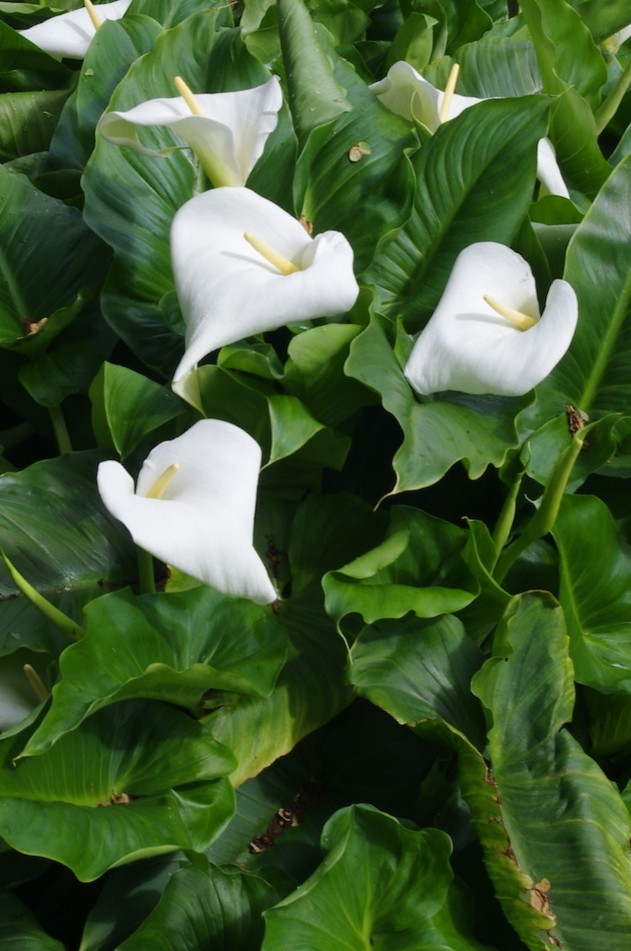
Pig Lily
Zantedeschia aethiopica (L.) Spreng.
- Calla aethiopica L. — basionym and historically important source of the common name Calla Lily
- Arodes aethiopicum (L.) Kuntze — historical homotypic synonym
- Calla moschata Moench — illegitimate historical homotypic name
- Colocasia aethiopica (L.) Link — historical transfer to the genus Colocasia
- Otosma aethiopica (L.) Raf. — historical homotypic synonym
- Richardia aethiopica (L.) Spreng. — widely encountered historical name
- Richardia africana Kunth — illegitimate superfluous historical name
- Calla aethiopica var. nana Hovey — historical horticultural varietal name
- Calla ambigua Salisb. — historical heterotypic synonym
- Pseudohomalomena pastoensis A.D.Hawkes — historical heterotypic synonym
- Calla palustris L. — Bog Arum or Wild Calla; a separate accepted wetland aroid and not a synonym of Pig Lily
- Zantedeschia albomaculata, Zantedeschia rehmannii, Zantedeschia pentlandii, and cultivated Zantedeschia hybrids — separate spotted-leaf or colored-spathe callas with a similar raphide hazard
- Lilium spp. and Hemerocallis spp. — true lilies and daylilies; unrelated plants that cause a different and potentially fatal renal syndrome in cats
Araceae — Arum or Aroid Family
Pig Lily; Pig-Lily; Calla Lily; Calla-Lily; White Calla Lily; White Arum Lily; Arum Lily; White Arum; Cape Arum; Florist’s Calla; Florist Calla; Garden Calla; Trumpet Lily; Lily of the Nile; Varkoor; Varkoorblom; Pig’s Ear; Pig Ear Lily
Historical and taxonomic search variations include Calla aethiopica, Arodes aethiopicum, Calla moschata, Colocasia aethiopica, Otosma aethiopica, Richardia aethiopica, Richardia africana, Calla aethiopica var. nana, Calla ambigua, and Pseudohomalomena pastoensis.
“Calla Lily,” “Arum Lily,” and “lily” are ambiguous names. Colored Calla Lilies may be other Zantedeschia species or hybrids, Bog Arum is Calla palustris, true arums belong to Arum, and true lilies and daylilies belong to Lilium and Hemerocallis. Preserve the complete plant and scientific label because these groups have different botanical identities and clinically different poisoning risks.
Insoluble Calcium Oxalate Raphides
Pig Lily contains insoluble calcium oxalate in the form of microscopic needle-shaped crystals called raphides. Calcium and oxalate are combined into a mineral that does not dissolve readily in saliva or gastrointestinal fluid, so the crystals remain primarily within the tissues they contact rather than behaving like a freely absorbed systemic poison. Their sharp shape, concentrated storage, and rapid release from damaged cells make them capable of producing immediate and sometimes intense physical injury.
Raphides are formed within specialized plant cells called crystal idioblasts. Numerous needles may be packed into organized bundles and held inside a vacuole or gelatinous matrix until the plant tissue is damaged. Chewing, crushing, cutting, trampling, shredding, or breaking a leaf, stalk, spathe, spadix, berry, root, or rhizome can release the crystal bundle directly against moist oral, ocular, dermal, esophageal, or gastrointestinal surfaces.
Calcium oxalate crystals are widespread in Araceae, but their shape, abundance, organization, and tissue distribution vary among species and plant organs. A nursery plant identified only as Calla Lily may be *Zantedeschia aethiopica*, another species, or a hybrid whose complete tissue-by-tissue crystal profile has not been measured. The absence of visible crystals does not establish safety because raphides are microscopic and remain concealed until tissue is damaged.
Leaves, petioles, flower stalks, white spathes, yellow spadices, true flowers, berry clusters, seeds, roots, rhizomes, sap, divided clumps, wilted stems, and discarded plant material should therefore remain inaccessible. This precaution does not require claiming that every organ contains an identical crystal concentration. It reflects the documented family mechanism, the lack of an animal-safe tissue threshold, and the frequent uncertainty surrounding cultivated and naturalized plants.
Idioblasts, Crystal Formation, and Release
Crystal idioblasts differ from neighboring plant cells in size, internal organization, vacuole development, membrane systems, and their ability to accumulate calcium and oxalate without injuring surrounding tissue. Calcium oxalate formation is a controlled biological process rather than accidental mineral contamination. The crystals may contribute to calcium regulation, oxalate sequestration, tissue organization, defense against herbivores, or several of these functions simultaneously.
Some raphide-containing cells can release crystals rapidly after pressure, water movement, or tissue damage alters the cell. Other idioblasts simply rupture and spill their bundles when the surrounding plant tissue is torn. The popular description that every raphide is fired like a spring-loaded dart is an oversimplification, but the clinical result remains the same: biting distributes large numbers of sharp microscopic crystals directly into sensitive tissue.
Once raphides have penetrated the mucosa, they cannot be extracted individually at home. Gentle wiping or rinsing may remove loose sap, fragments, and surface crystals, but aggressive scrubbing can drive debris more deeply into injured tissue and increase pain. Treatment focuses on ending exposure, controlling pain and inflammation, protecting the airway, supporting hydration, and managing complications while the tissue heals.
Mechanical Injury and the Immediate Pain Response
When an animal bites Pig Lily, raphides puncture and abrade the lips, gums, tongue, palate, and pharynx. This injury activates pain receptors immediately and triggers inflammation, salivation, head shaking, face rubbing, pawing at the mouth, repeated swallowing, gagging, and refusal to continue chewing. Visible tissue may become red, tender, abraded, swollen, or occasionally blood-tinged.
The speed and intensity of this first reaction explain why many exposures are self-limiting. An animal often drops the plant before swallowing a large amount because chewing becomes painful almost immediately. That natural deterrent reduces average intake but does not protect a determined puppy, curious parrot, plant-chewing cat, rabbit, rooting pig, or hungry grazing animal.
One large leaf, flower stalk, berry cluster, or rhizome division may provide substantially more tissue than a small bite suggests. A dog can pull an entire plant from a pot, pigs may uncover underground rhizomes, birds can shred a spathe and spadix rapidly, and livestock may encounter multiple plants growing densely in a wet pasture. Floral displays and landscaping debris may also contain wire, foam, ribbon, plastic, other toxic plants, and chemical residues.
Proteinaceous Co-Irritants and the Evidence Boundary
Veterinary toxicology references often report that Calla Lily and other aroids release proteolytic enzymes or proteinaceous irritants when their cells are damaged. The microscopic wounds created by raphides may allow accompanying substances to reach deeper tissue, stimulate inflammatory mediators, and increase pain, redness, edema, and mucosal injury. Experimental research in other raphide-containing plants supports this type of synergistic needle effect.
The exact identity, concentration, tissue distribution, and clinical importance of every proteinaceous co-irritant in *Zantedeschia aethiopica* have not been defined fully. No single named protease has been established as a universal second toxin in every population, cultivar, flower, leaf, berry, and rhizome. It would therefore be inaccurate to present one enzyme as equally confirmed with the calcium oxalate crystals.
The best-supported description is that raphides create the primary mechanical injury and may facilitate additional inflammatory plant constituents. This qualification explains why a seemingly small exposure may produce disproportionate pain or swelling without overstating uncertain chemistry. Veterinary treatment should follow the animal’s airway, oral lesions, swallowing ability, eye involvement, gastrointestinal signs, and clinical progression rather than an assumed enzyme concentration.
Oral, Pharyngeal, and Laryngeal Injury
The mouth and back of the throat are the most clinically important exposure sites. An animal may develop intense burning, drooling, lip licking, repeated swallowing, gagging, coughing, food dropping, reluctance to drink, or a hoarse or altered vocalization. The lips, tongue, palate, oral mucosa, pharynx, and tissues surrounding the larynx may become inflamed.
Most swelling remains localized and does not obstruct breathing. Severe edema near the larynx is uncommon, but major oropharyngeal swelling and airway injury have been documented after exposure to other raphide-containing aroids. Because the consequence of a narrowing airway can be catastrophic, breathing and swallowing must be assessed before rinsing, feeding, or giving oral medication.
Harsh inspiratory noise, stridor-like breathing, wheezing, open-mouth respiration, an extended head and neck, rapidly increasing tongue or facial swelling, inability to swallow saliva, blue-gray mucous membranes, panic, weakness, or collapse indicates an airway emergency. An animal showing these signs should receive nothing by mouth and should be transported immediately. Oxygen, sedation, intubation, suction, or emergency airway intervention may be required.
Persistent gagging or repeated swallowing can also indicate a retained flower stalk, petiole, rhizome fragment, floral wire, ribbon, pick, plastic tube, or plant label. Chemical irritation and a foreign body may occur simultaneously. A complete oral and pharyngeal examination is necessary when signs do not improve after loose visible material is removed.
Esophageal and Gastrointestinal Effects
Plant fragments swallowed despite the oral pain can carry raphides into the esophagus, stomach, and intestines. Nausea, dry heaving, vomiting, abdominal discomfort, appetite loss, and diarrhea may follow. Vomit may contain thick saliva, foam, mucus, leaves, spathe tissue, berry material, rhizome fragments, soil, floral foam, moss, or decorative debris.
Gastrointestinal signs are usually brief because pain tends to limit the amount swallowed and the crystals act primarily at contacting surfaces. Repeated vomiting can nevertheless inflame the esophagus and stomach, produce blood streaking, cause dehydration, and increase aspiration risk. Diarrhea may add substantial water and electrolyte loss in small, young, elderly, or medically fragile animals.
Tacky gums, sunken eyes, reduced urination, progressive weakness, cold extremities, weak pulses, prolonged capillary refill, or inability to retain water indicates clinically important dehydration. Electrolyte abnormalities may develop after prolonged vomiting or diarrhea, but they are secondary complications rather than proof that raphides have circulated through the bloodstream.
A swallowed flower stalk, rhizome, root mass, floral pick, wire, ribbon, plastic tube, foam fragment, plant label, decorative stone, or container piece creates a separate obstruction or trauma hazard. Persistent vomiting, abdominal enlargement, severe pain, reduced stool, or symptoms returning after temporary improvement may require radiographs, ultrasound, endoscopy, or surgery. Plant and plastic foreign bodies may not be clearly visible on ordinary radiographs.
Skin, Fur, Feather, and Eye Exposure
Broken leaves, cut stems, divided rhizomes, damaged berries, and florist trimmings can release sap and crystal-containing tissue onto skin, fur, feathers, clothing, tools, floors, counters, and furniture. Contact may cause stinging, redness, itching, tenderness, or localized swelling, particularly when residue remains against damaged or sensitive skin. Sap trapped beneath a collar, harness, bandage, clothing, feathering, or matted coat can prolong exposure.
Grooming converts a skin exposure into an oral exposure. An animal licking contaminated paws, fur, feathers, or equipment may develop sudden drooling and mouth pain even though it was never observed chewing the plant. Prompt washing should remove plant residue, and grooming should be prevented until decontamination is complete.
Sap and fragments may enter an eye when an animal bites a stalk, rubs against garden foliage, investigates bouquet waste, or transfers material from a contaminated paw. Raphides can abrade the conjunctiva and corneal surface, causing tearing, squinting, redness, eyelid swelling, light sensitivity, discharge, and persistent rubbing. A small fragment can remain beneath an eyelid and continue injuring the eye after surface rinsing.
Continued squinting, cloudiness, an irregular corneal surface, severe redness, discharge, swelling, or inability to open the eye requires prompt examination. Veterinary treatment may include fluorescein staining, eyelid eversion, retained-fragment removal, pain control, and prescribed ophthalmic medication. Human redness-relief drops, topical anesthetics, and leftover steroid medication can worsen an unrecognized corneal ulcer.
Insoluble and Soluble Oxalates Are Different Hazards
Insoluble calcium oxalate raphides must be distinguished from soluble oxalates found in plants such as certain docks, sorrels, rhubarb leaves, and halogeton. Soluble oxalates can dissolve in the gastrointestinal tract, enter the bloodstream, bind circulating calcium, and contribute to hypocalcemia and calcium-oxalate deposition within the kidneys. That systemic mechanism may cause muscular weakness, tremors, cardiac abnormalities, renal injury, and death.
Pig Lily raphides remain primarily within the tissues they contact. They do not ordinarily dissolve in sufficient quantities to produce systemic calcium depletion or widespread renal crystal deposition. Primary oxalate nephrosis, systemic hypocalcemia, and delayed calcium-oxalate kidney failure are therefore not expected after a correctly identified uncomplicated exposure.
Kidney abnormalities after a suspected Pig Lily incident require a broader investigation. Severe vomiting and dehydration may reduce kidney perfusion, but true lilies in cats, antifreeze, soluble-oxalate plants, medication, urinary obstruction, or primary renal disease must also be considered. The visible Calla Lily should not be used to explain a syndrome its mechanism does not support.
Plant Parts, Fruit, Rhizomes, and Seasonal Material
Leaves, petioles, flower stalks, white spathes, yellow spadices, true flowers, berries, seeds, roots, thick rhizomes, sap, cut sections, and divided clumps should all be treated as irritating. Orange or yellow-orange berry clusters may attract animals, while the fleshy underground rhizome may attract digging dogs and rooting pigs. No reproductive or underground structure has been established as animal-safe.
Flowering plants create household and florist exposures, while mature fruiting colonies create outdoor and livestock exposures. Berry clusters may remain after the white spathe has withered, and rhizome fragments may remain hidden after visible foliage has been removed. Garden renovation, wetland control, winter lifting, and clump division bring concentrated plant material to ground level.
A rhizome section is not merely a toxic plant part; it is also dense foreign material capable of lodging in the esophagus, stomach, or intestine. Discarded sections can establish new plants if left in wet soil or accessible compost. Every fragment should be collected and contained.
Fresh, Wilted, Dried, Frost-Damaged, and Discarded Material
Drying, wilting, frost injury, aging, or cutting does not prove that calcium oxalate crystals have disappeared. Raphides are mineral structures and may remain physically intact after water is lost from the surrounding tissue. Fallen leaves, dried spathes, cut flower stalks, dead berry clusters, uprooted roots, and stored rhizomes should remain inaccessible.
Dry floral material may become brittle and fragment into small pieces that spread across floors, vehicle interiors, counters, church aisles, funeral homes, waste containers, and animal enclosures. A cat may bat a dried spathe from a table, a bird may shred a stalk, or a dog may carry a rhizome from an open trash bag.
Compost and landscape waste may contain Pig Lily mixed with mold, mushrooms, fertilizer, herbicide, floral foam, wire, plastic, food waste, and other poisonous plants. Illness after access to mixed waste should not be assigned automatically to raphides. Representative material from the complete source should be preserved.
Pesticides, Herbicides, Fertilizers, and Co-Exposures
Potted, florist-grown, landscaped, and naturalized Pig Lilies may be treated with insecticide, fungicide, systemic pesticide, herbicide, fertilizer, growth regulator, floral preservative, or leaf-shine product. The animal owner may not know which products were applied by a nursery, florist, landscaper, wetland contractor, or property manager. Sap and chemical residue may contaminate the same mouth, coat, paws, feathers, tools, or surfaces.
Marked muscle fasciculation, profuse respiratory secretions, pinpoint pupils, severe agitation, tremors, seizures, abnormal bleeding, major heart-rate changes, or profound weakness requires product-specific investigation. Those findings extend beyond an uncomplicated local raphide syndrome. Preserve all labels and request treatment records from the florist, nursery, landscaper, or control contractor.
Potted plants may also expose animals to slow-release fertilizer, water-retaining crystals, decorative moss, gravel, mold, mushrooms, saucer water, plastic labels, and broken containers. Floral arrangements may contain wire, tape, pins, tubes, foam, ribbons, preservatives, and other plant species. Treatment must account for the complete scene rather than only the white spathe.
Toxic-Dose and Evidence Limitations
No validated safe bite, leaf count, flower count, berry count, rhizome weight, or body-weight threshold applies to every dog, cat, horse, livestock animal, rabbit, guinea pig, bird, reptile, or other species. Most household exposures are limited because pain interrupts chewing, but the severity of local injury depends on the amount crushed, tissue involved, crystal density, persistence of chewing, and location of contact.
A small bite near the back of the throat may be more clinically important than a visibly larger injury confined to the lips. A small bird can release numerous crystals over a limited oral surface, while a large dog may dismantle an entire plant and swallow foreign material. Pigs and livestock may reach underground or naturalized plant masses unavailable to ordinary household pets.
Statements that one leaf is harmless, a certain number of berries is fatal, or every livestock ingestion causes death are unsupported. Triage should focus on breathing, swallowing, swelling, oral pain, gastrointestinal losses, eye involvement, foreign material, species, repeated access, and every associated plant or chemical. The animal’s clinical condition is more informative than a guessed amount alone.
Immediate Onset and Expected Clinical Pattern
Pig Lily signs usually begin immediately or within minutes because raphides injure tissue as soon as the plant is bitten or crushed. An animal may abruptly release the leaf or flower, cry out, shake its head, rub its face against the ground, or paw repeatedly at its mouth. This rapid onset strongly supports a local irritant exposure when it follows witnessed chewing.
Early findings commonly include lip licking, repeated swallowing, excessive drooling, thick or stringy saliva, foaming, gagging, coughing, oral pain, and reluctance to continue eating. The lips, gums, tongue, palate, and visible oral mucosa may become red, tender, abraded, or swollen. Small amounts of blood may appear in saliva when crystals or plant fragments injure tissue.
Most uncomplicated exposures remain confined to oral discomfort and begin improving after access ends and loose contamination is removed. Some animals swallow plant material before pain stops them, while others return to chew repeatedly. Gastrointestinal signs, progressive swelling, eye injury, aspiration, or a foreign body may therefore complicate what initially appears to be a minor mouth exposure.
Drooling, Head Shaking, and Oral Pain
Excessive salivation is one of the most characteristic findings. Saliva may hang in long strands, pool around the lips, soak the chest, or appear foamy because swallowing is painful. The animal may move its tongue continuously, smack its lips, grind its teeth, rub its muzzle, vocalize, or resist closing its mouth.
Dogs may paw forcefully at the face or scrape the muzzle against the floor. Cats may crouch, hide, drool quietly, make repetitive tongue movements, or resist oral examination. Horses and livestock may salivate heavily, drop feed, chew abnormally, reduce rumination, or stand with the head extended.
Severe oral pain can make an animal appear thirsty while preventing comfortable drinking. The animal may approach the bowl, attempt one swallow, and pull away. Continued inability to drink increases dehydration risk and may indicate deeper pharyngeal injury rather than irritation confined to the front of the mouth.
Persistent one-sided chewing, localized bleeding, food dropping, or pain continuing after generalized swelling improves may indicate retained spathe tissue, stem fiber, floral wire, ribbon, pick, or dental injury. A painful animal may require sedation for examination beneath the tongue, across the palate, behind the molars, and near the pharynx.
Tongue, Pharyngeal, and Laryngeal Swelling
Local inflammation may enlarge the lips, tongue, soft tissues of the mouth, or pharynx. Mild swelling often remains stable and resolves as loose plant residue is cleared and the inflammatory response subsides. Rapidly expanding swelling near the back of the mouth can interfere with swallowing and, rarely, airflow.
Repeated swallowing, gagging, coughing, neck stretching, hoarseness, altered barking or vocalization, difficulty moving food or water, and inability to swallow saliva may indicate pharyngeal involvement. These findings require more caution than front-of-mouth pain. Nothing should be forced orally while swallowing remains uncertain.
Harsh or noisy inhalation, stridor-like sounds, wheezing, open-mouth breathing, an extended head and neck, flared nostrils, blue-gray gums, panic, weakness, or collapse indicates respiratory compromise. An animal losing its airway can deteriorate quickly even though most Pig Lily exposures remain localized. Emergency airway treatment takes priority over rinsing, feeding, or medication.
Facial or tongue swelling may also result from an insect sting, allergic reaction, caustic chemical, electrical injury, another plant, or trauma. Severe swelling should not be attributed automatically to raphides without examination. Outdoor flowers may carry bees, wasps, ants, pesticides, or other irritants.
Gagging, Choking, and Esophageal Obstruction
Gagging may result from inflammation, but it can also indicate a retained flower stalk, petiole, rhizome fragment, floral pick, wire, ribbon, tape, plastic tube, or plant label. A rigid or fibrous piece may become trapped across the palate, around the teeth, beneath the tongue, or within the pharynx. Persistent signs require evaluation rather than repeated blind attempts to clear the throat.
Continuous drooling, repeated swallowing, regurgitation, neck extension, coughing whenever water is offered, or inability to swallow saliva suggests possible esophageal obstruction. Panic, silent respiratory effort, inability to move air, blue-gray mucous membranes, or sudden collapse suggests choking. These are mechanical emergencies independent of the calcium oxalate crystals.
Ribbon, string, wire, tape, or a long plant fiber visible from the mouth or rectum must not be pulled. Linear material may be anchored internally and can damage the tongue, esophagus, stomach, or intestine when tension is applied. Veterinary imaging and controlled removal are safer.
Vomiting, Diarrhea, and Abdominal Discomfort
Dogs and cats that swallow plant material may develop nausea, dry heaving, vomiting, abdominal pain, appetite loss, depression, and diarrhea. Vomit may contain foamy saliva, mucus, food, leaf fragments, white-spathe tissue, berry material, fibrous stalk, rhizome, soil, floral foam, or decorative debris. One brief episode may resolve without complication, but repeated episodes require closer assessment.
Vomiting carries plant fragments and crystals back across already irritated oral and esophageal tissue. Continued retching can intensify pain and produce small streaks of blood. Coffee-ground material, repeated fresh blood, severe abdominal pain, enlargement, or recurrent unproductive retching requires urgent evaluation.
Diarrhea may be soft, watery, urgent, mucus-covered, or accompanied by cramping and straining. Persistent gastrointestinal losses can cause dehydration even though the crystals remain localized. Tacky gums, sunken eyes, reduced urination, weak pulses, cold extremities, worsening lethargy, or inability to retain water indicates a need for veterinary fluid support.
A missing stalk, root mass, rhizome section, floral pick, wire, foam, plastic tube, label, stone, or container fragment may cause obstruction. Recurrent vomiting, reduced stool, abdominal enlargement, appetite loss, or signs returning after apparent improvement requires imaging. The recognizable Pig Lily should not distract from associated foreign material.
Food Refusal and Secondary Nutritional Complications
Mouth pain and painful swallowing can reduce food intake even when vomiting is absent. Dogs may refuse dry food while remaining interested in softer food, and cats may approach the bowl repeatedly without eating. Continued anorexia indicates that pain, nausea, swelling, or retained material remains clinically important.
Prolonged food refusal is especially concerning in cats because inadequate intake can lead to additional metabolic complications after the obvious drooling begins improving. Rabbits and guinea pigs depend on continuous food intake for normal gastrointestinal movement and may develop stasis, abdominal pain, reduced fecal output, and weakness. Birds can deteriorate quickly when oral pain prevents feeding.
Force-feeding is unsafe until airway function, swallowing, neurologic status, and obstruction risk have been assessed. Food or liquid delivered by syringe can enter the lungs. Species-experienced veterinary guidance is necessary when a small animal or bird stops eating after exposure.
Skin, Fur, and Feather Findings
Sap and damaged plant tissue may cause stinging, redness, itching, localized swelling, tenderness, or dermatitis. The reaction may be most noticeable on sparsely haired skin, the muzzle, paws, abdomen, inner thighs, or areas beneath contaminated equipment. Continuous licking and scratching can turn limited irritation into open wounds or secondary infection.
Residue trapped beneath a collar, harness, bandage, clothing, blanket, feathering, or matted fur prolongs contact. A contaminated animal may later develop drooling after licking its coat. Removal of equipment and thorough washing should occur even when no visible skin lesion is present initially.
Extensive blistering, rapidly spreading redness, severe pain, facial involvement, fever, discharge, or tissue destruction is not a routine uncomplicated Pig Lily finding. Another plant, pesticide, herbicide, fertilizer, floral preservative, cleaning chemical, burn, contact allergy, or infection should be investigated. Persistent or worsening lesions require examination.
Eye Pain and Corneal Injury
Eye exposure may cause immediate tearing, squinting, redness, eyelid swelling, light sensitivity, discharge, and face rubbing. Sap, crystals, pollen-bearing floral material, and fragments may remain beneath the eyelids or abrade the corneal surface. The animal may keep one eye tightly closed or resist light.
Irrigation should begin promptly, but symptoms persisting after flushing require examination. Corneal cloudiness, a visible surface defect, continued squinting, severe redness, discharge, or inability to open the eye may indicate abrasion or ulceration. Fluorescein staining and examination beneath the eyelids help determine the injury.
Eye pain may worsen when the animal rubs its face against carpet, furniture, pasture fencing, or bedding. A veterinary-recommended protective collar may be necessary to prevent self-trauma. Human topical anesthetics and steroid drops can delay healing or worsen an unrecognized ulcer.
Dogs and Cats
Dogs may chew garden foliage, pull down a potted plant, raid bouquet waste, carry a flower stalk, dig up rhizomes, or investigate wetland vegetation. Puppies may swallow floral foam, ribbon, wire, plastic tubes, labels, moss, fertilizer granules, soil, and decorative stones along with the plant. Immediate drooling, head shaking, pawing at the mouth, gagging, and vomiting are typical.
Cats may bite the edges of leaves or spathes, climb to a floral display, knock a bouquet onto the floor, or groom sap from their paws and coat. Drooling, repetitive mouth movements, hiding, vomiting, and food refusal may follow. The absence of true-lily nephrotoxicity does not make continued anorexia, dehydration, or aspiration unimportant.
A Calla Lily may appear in the same bouquet as true lilies. When plant identity or arrangement contents are uncertain, a feline exposure must not be downgraded solely because one white spathe resembles Pig Lily. Preserve every flower, leaf, pollen-bearing structure, vase, label, and photograph.
Persistent gagging, repeated vomiting, progressive tongue swelling, inability to drink, or missing floral accessories requires examination. Any breathing change requires emergency care regardless of the amount believed to be eaten.
Horses and Livestock
Horses may encounter Pig Lily in naturalized wetlands, drainage corridors, stream margins, greenhouse waste, discarded floral arrangements, landscape clippings, or mixed ornamental debris. Horses cannot vomit and may show profuse salivation, repeated swallowing, oral pain, feed refusal, coughing, pharyngeal swelling, colic, diarrhea, or respiratory noise. Thick stalks and rhizomes may also contribute to choke.
Cattle, sheep, goats, pigs, llamas, alpacas, and other livestock may develop mouth pain, drooling, reduced intake, diarrhea, weakness, or respiratory difficulty after browsing colonies or receiving cut plants with forage. Livestock usually avoid the irritating plant when adequate feed is available, but hunger, drought, confinement, overgrazing, pasture disturbance, and contaminated cuttings can alter normal selection.
Pigs have a particular exposure route because rooting can uncover and damage the thick underground rhizomes. The common names Pig Lily and varkoor do not establish tolerance or edibility. Rooting areas should be inspected when the plant occurs near pens, wetlands, drainage channels, or garden waste.
Group exposure requires removal of every animal from the source. Mixed ornamental or wetland-control debris may contain yew, Oleander, rhododendron, azalea, cycads, Cherry Laurel, true lilies, pesticides, wire, or plastic. Severe neurologic, cardiovascular, hepatic, or rapidly fatal illness does not fit routine Pig Lily irritation and requires investigation for another source.
Rabbits, Guinea Pigs, and Companion Birds
Rabbits and guinea pigs may stop eating after one painful bite. They cannot vomit and depend on continuous intake for normal gastrointestinal movement. Drooling, food refusal, reduced fecal production, abdominal enlargement, painful posture, or weakness requires prompt veterinary guidance.
Pig Lily should never be offered as forage, bedding, a chew plant, or enclosure enrichment. Leaves collected from wet ground or garden waste may resemble acceptable greens to an owner unfamiliar with the species. Forced feeding should not begin until oral pain, swallowing, airway function, and obstruction risk have been assessed.
Parrots and other birds can shred leaves, spathes, spadices, stalks, berries, and rhizome tissue efficiently with their beaks. Sap and crystals may spread across the beak, tongue, face, feet, and feathers. Beak wiping, facial rubbing, regurgitation, reduced feeding, oral swelling, inability to perch, or open-mouth breathing requires urgent avian care.
Reptiles and Other Exotic Animals
Reptiles, amphibians, and invertebrates may encounter Pig Lily used in naturalistic ponds, humid enclosures, or outdoor runs. Direct chewing, prolonged skin contact, sap, herbicide, fertilizer, contaminated feeder insects, and decaying plant material create multiple exposure routes. A plant ignored for weeks is not proven safe because access and behavior may change.
Small exotics have limited physiologic reserve and can deteriorate rapidly from dehydration or reduced intake. Dog and cat treatment assumptions cannot be transferred automatically. Species-experienced care is appropriate when feeding, fecal output, balance, breathing, or responsiveness changes.
Findings That Do Not Fit Uncomplicated Pig Lily Exposure
Seizures, coma, prolonged paralysis, systemic hypocalcemia, major arrhythmias, primary liver failure, severe anemia, uncontrolled bleeding, or progressive kidney failure is not the expected direct raphide syndrome. These findings require investigation for another toxin, oxygen deprivation, metabolic disease, pesticide, medication, foreign material, or unrelated illness. The presence of Pig Lily does not establish causation for every abnormality.
Kidney abnormalities may follow severe dehydration, but direct soluble-oxalate nephrosis is not the expected mechanism. Antifreeze, soluble-oxalate plants, true lilies in cats, medication, urinary obstruction, and primary renal disease should be considered. Tremors and profuse secretions may indicate pesticide exposure, while abrupt cardiovascular collapse may indicate another toxic ornamental.
Illness continuing for one or two weeks is not routine. Persistent drooling, swelling, gagging, vomiting, diarrhea, food refusal, coughing, or eye pain may reflect retained plant material, severe tissue injury, aspiration, corneal damage, obstruction, infection, or another diagnosis. Reassessment is more appropriate than assuming the crystals are still producing an uncomplicated reaction.
Duration and Prognosis
Most limited exposures improve substantially within several hours and resolve within approximately one day. Drooling and oral pain should decrease steadily as loose contamination is cleared and inflammation subsides. Appetite and normal drinking should return without progressive swelling or breathing abnormalities.
Recovery may take longer when chewing was extensive, the pharynx was involved, vomiting caused dehydration, the animal refuses food, or the eye was injured. Aspiration pneumonia, corneal ulceration, laryngeal edema, esophageal trauma, and foreign-body disease follow a different clinical course. Those complications may require hospitalization, oxygen, airway management, imaging, ophthalmic treatment, endoscopy, or surgery.
The prognosis is generally good to excellent after a correctly identified uncomplicated exposure. The outlook depends on airway security, swallowing ability, hydration, eye damage, aspiration, and foreign material rather than systemic oxalate absorption. Prompt recognition of breathing difficulty and complete identification of mixed floral or pasture material provide the best opportunity for recovery.
Plant Identity, Accepted Taxonomy, and Historical Names
Pig Lily, Zantedeschia aethiopica, is a large rhizomatous perennial in Araceae. Carl Linnaeus originally described it as Calla aethiopica, and Kurt Sprengel later transferred it to Zantedeschia. That taxonomic history explains why Calla Lily remains its most familiar common name even though the plant is no longer classified in the genus Calla.
Historical botanical literature also placed the species in Arodes, Colocasia, Otosma, Richardia, and Pseudohomalomena. Names such as Richardia aethiopica and Richardia africana remain common in older horticultural records and poison references. Current taxonomy accepts *Zantedeschia aethiopica* and treats these combinations as synonyms rather than separate toxic plants.
“Calla,” “Arum,” and “lily” have been exchanged so freely in horticulture that common names alone are unreliable. Bog Arum is *Calla palustris*, true arums belong to *Arum*, true lilies belong to *Lilium*, and daylilies belong to *Hemerocallis*. Accurate identification matters because their poisoning mechanisms and emergency priorities differ substantially.
The Meaning of Pig Lily and Varkoor
Pig Lily and the Afrikaans name varkoor, commonly translated as pig’s ear, are longstanding southern African names. The names may refer to the broad ear-shaped foliage, the plant’s association with wet ground disturbed by animals, or traditional regional usage. They do not establish that pigs can eat the plant safely.
Pigs may encounter a greater proportion of underground tissue than many other domestic animals because rooting exposes the thick rhizomes. Freshly damaged rhizomes release sap and raphide-bearing tissue, while swallowed pieces may create gastrointestinal foreign-body concerns. Pig enclosures, wet paddocks, drainage areas, and garden-waste sites should therefore be inspected for both foliage and underground fragments.
White Arum, Cape Arum, Florist’s Calla, Garden Calla, Trumpet Lily, Lily of the Nile, and White Calla Lily are additional names used for the same species. Some are also applied to other plants. The scientific name and complete specimen should control the identification.
Native Range, Wetland Habitat, and Seasonal Growth
Pig Lily is native to southern Africa. Its accepted native distribution includes the Cape Provinces, Free State, KwaZulu-Natal, Northern Provinces, Eswatini, and Lesotho. It grows naturally in marshy depressions, stream margins, pond edges, wet meadows, seepage zones, montane grassland, drainage corridors, and other sites where its rhizomes remain moist.
The plant may remain evergreen where temperatures and water availability are favorable. In seasonally dry areas, foliage may die back and reappear when moisture returns. Frost may damage the visible leaves without killing protected rhizomes beneath the soil.
Dormant or damaged plants can be overlooked during pasture inspection. Rhizomes remain capable of producing new growth, and dry or decaying foliage may retain mineral crystals. Land managers should identify the colony before the visible flower display disappears.
Moisture-loving growth does not mean the plant is aquatic in every setting. It may persist in gardens, old homesteads, ditches, coastal marshes, irrigated landscapes, shaded lawns, pond margins, and seasonally wet pasture. Animal access changes with rainfall, water levels, mowing, drainage work, and pasture condition.
Naturalization, Wetland Colonies, and Livestock Exposure
Centuries of ornamental cultivation have carried Pig Lily far beyond southern Africa. It has naturalized in parts of Europe, North Africa, the Americas, Australia, New Zealand, oceanic islands, and other mild regions. In favorable wetlands it may form dense colonies that displace safer vegetation and produce large quantities of foliage, rhizomes, flowers, and berries.
A naturalized colony creates a different exposure from one indoor potted plant. Horses, cattle, sheep, goats, pigs, dogs, poultry, and wildlife may encounter many connected plants growing along water or pasture margins. Flooding, ditch clearing, mowing, herbicide treatment, and mechanical removal may scatter damaged plant material into areas animals can reach.
Livestock often avoid Pig Lily when adequate forage is available because chewing is painful. Hunger, drought, overgrazing, confinement, pasture disturbance, recently cut vegetation, and mixing with palatable feed can override normal avoidance. Unpalatability is therefore a useful but incomplete defense.
Reports that livestock death can occur should be interpreted cautiously. Exact dose-response data and detailed natural veterinary case series are limited, and severe outcomes may involve airway swelling, aspiration, dehydration, shock, mixed vegetation, herbicide, or another plant. The absence of common fatality does not justify leaving dense colonies in animal-accessible wetland or pasture.
Rhizomatous Growth and Clump Expansion
Pig Lily grows from thick fleshy underground rhizomes that produce leaves, roots, flowering stalks, and offsets. Established plants form dense clumps and may spread when rhizomes enlarge or break apart. Small retained fragments can survive removal and regenerate.
Rhizomes become especially accessible during garden renovation, clump division, construction, drainage work, erosion, rooting by pigs, or digging by dogs. Fresh cut surfaces expose moist internal tissue and sap. Uprooted clumps left on soil, tarps, patios, trailers, or waste piles provide concentrated animal access.
The rhizome also creates a mechanical hazard. Dense pieces may lodge in the pharynx, esophagus, stomach, or intestine, particularly when swallowed with soil, stones, plastic, or roots. A dog vomiting after digging up a plant may have both raphide irritation and a foreign body.
Plant removal requires collecting the underground material rather than cutting only the leaves. Removed rhizomes should go directly into a closed animal-inaccessible container or approved disposal system. Accessible compost may allow both poisoning and reinfestation.
Leaves, Petioles, and Plant Size
Pig Lily produces large glossy green leaves on long smooth petioles. The blades are commonly arrow-shaped, spear-shaped, or broadly heart-based and may form a dense canopy above the rhizome. Plants growing in shade or consistently wet soil can become taller and more lush than specimens in exposed or seasonally dry locations.
Large leaves place substantial plant tissue within reach of grazing animals and household pets. A dog may pull a leaf from a container, a cat may bite a hanging margin, and livestock may take several bites from a dense colony before the irritation stops them. The long petiole may then become a choking or esophageal hazard.
Wilted, yellowed, frost-damaged, or cut leaves remain unsafe. Owners frequently place removed foliage temporarily on a floor, counter, garden path, trailer, or open waste container. Those discarded leaves may be more accessible than the intact plant.
Spathe, Spadix, True Flowers, Berries, and Seeds
The conspicuous white structure commonly called the flower is a spathe, a modified bract associated with the reproductive structure. It curves around a central yellow spadix bearing numerous tiny true flowers. Neither the white spathe nor yellow center is a harmless petal arrangement.
The spathe is usually white internally and greener toward its outer base. As the inflorescence ages, it may become greener, collapse, or dry around the developing fruit. Cut flower use frequently separates the stalk and inflorescence from the rest of the plant without removing the raphide hazard.
After pollination, the lower portion of the spadix may develop a dense cluster of rounded berries. Fruit begins green and may become softer and yellow-orange or orange as it matures. The berries, pulp, seeds, remains of the spadix, and attached plant tissue should all remain inaccessible.
Berry clusters create a seasonal outdoor exposure distinct from the white floral stage. Their color, softness, and clustered form may attract dogs, pigs, birds, and curious children. Fallen fruit may remain beneath dense foliage or be carried into animal areas by water, wildlife, mowing, or garden cleanup.
Cut Flowers, Weddings, Funerals, Churches, and Memorial Displays
Calla Lilies are widely used in wedding bouquets, funeral arrangements, memorial displays, churches, hotels, restaurants, offices, event venues, and formal floral decorations. A pet may therefore encounter Pig Lily without anyone in the household purchasing a potted plant or recognizing the arrangement as toxic. Delivery may occur during a period when attention is divided.
Cut flower stalks, white spathes, yellow spadices, leaves, and sap remain irritating after removal from the parent plant. Fallen pieces, bouquet trimmings, discarded arrangements, and water containing plant residue should remain inaccessible. A floral display placed high on a table remains reachable to a climbing cat or after one stalk falls.
Floral wire, tape, pins, plastic tubes, water capsules, ribbon, foam, decorative picks, beads, and preservatives create separate hazards. An animal pulling one stalk may dislodge the complete arrangement. Every missing accessory should be inventoried before the exposure is treated as plant irritation alone.
Memorial and funeral arrangements may contain both Calla Lilies and true lilies. Cats can develop renal failure from *Lilium* or *Hemerocallis* leaves, petals, pollen, or vase water. Preserving only the Calla Lily while discarding the rest of the arrangement could conceal a much more dangerous exposure.
Pig Lily Is Not a True Lily
Pig Lily belongs to Araceae rather than Liliaceae. True lilies generally have leafy stems and flowers composed of six petal-like tepals with prominent pollen-bearing anthers. Pig Lily produces a white spathe surrounding a yellow spadix and grows from a rhizome.
True lilies and daylilies can cause severe acute kidney injury in cats after very small exposures. Pig Lily instead causes immediate oral burning, drooling, gagging, swelling, and gastrointestinal irritation through insoluble calcium oxalate raphides. It does not ordinarily create the characteristic delayed renal tubular necrosis of true-lily toxicosis.
The distinction prevents unnecessary claims that every Pig Lily exposure requires the same renal treatment protocol as a true-lily exposure. It should not create complacency when identification is uncertain. A mixed bouquet containing one Calla Lily and one true lily must be managed according to the true-lily risk.
Colored Calla Lilies and Zantedeschia Hybrids
Plants sold as yellow, pink, red, orange, purple, burgundy, black, or spotted Calla Lilies may belong to other *Zantedeschia* species or complex hybrids. Their leaves may be narrower, spotted, seasonally dormant, or produced from tuberous underground structures rather than the massive rhizomatous clumps typical of *Z. aethiopica*.
Flower color does not establish safety. These plants remain aroids capable of producing calcium oxalate crystals and a similar acute oral irritation syndrome. A broad Pig Lily page should not silently assign every colored commercial calla to *Zantedeschia aethiopica*, but uncertainty within the genus does not remove the need for first aid.
Nursery tags and florist invoices should be preserved when available. Trade names, color series, and hybrid brands may not identify the exact parents. Public copy should distinguish confirmed exact-species botany from genus-level toxicology.
Peace Lily, Anthurium, Dieffenbachia, and Other Aroid Look-Alikes
Peace Lily belongs to *Spathiphyllum* and generally has narrower glossy leaves and smaller white spathes. Anthuriums commonly have waxy red, pink, white, green, or purple spathes and heart-shaped leaves. Both contain raphides and may cause a similar immediate oral syndrome.
Dieffenbachia has broad variegated leaves on cane-like stems and is associated with some of the most severe documented aroid airway injuries. Philodendron, Monstera, Epipremnum, Syngonium, Aglaonema, Alocasia, Caladium, and elephant-ear plants also share the insoluble-calcium-oxalate hazard.
Bog Arum, *Calla palustris*, is a separate wetland aroid with a smaller white spathe and red fruit. True *Arum* species are separate plants that may contain raphides and additional irritants. Common names alone cannot determine the species or exact severity.
Uncertainty among raphide-containing aroids should not delay immediate mouth, airway, skin, and eye assessment because the initial priorities overlap. Exact identification remains important for excluding true lilies, soluble-oxalate plants, pesticides, and other toxic ornamentals.
Dogs and Cats
Dogs may chew garden leaves, pull down a potted plant, carry a cut flower stalk, investigate florist waste, or dig up a rhizome. Puppies may swallow foam, wire, ribbon, plastic tubes, soil, fertilizer granules, labels, and container fragments along with the plant. Exposure reconstruction must include the complete arrangement or growing site.
Cats may bite leaves or spathes, climb to floral displays, knock over vases, or groom sap from their paws and coat. A high table does not provide dependable protection. Fallen pollen-bearing structures and vase water from mixed bouquets must also be evaluated for true-lily exposure.
Immediate drooling and mouth pain support a raphide injury, but persistent anorexia, vomiting, gagging, or hiding requires follow-up. The fact that Pig Lily does not cause classic true-lily nephrotoxicity does not make prolonged food refusal or dehydration harmless.
Horses, Cattle, Sheep, Goats, and Other Livestock
Horses may encounter Pig Lily in naturalized wetlands, drainage channels, stream margins, greenhouse waste, cut-flower waste, landscape clippings, or mixed ornamental debris. Horses cannot vomit and may develop salivation, repeated swallowing, coughing, feed refusal, pharyngeal pain, colic, diarrhea, or respiratory noise. Thick stalks and rhizomes may cause choke.
Cattle, sheep, and goats may browse plants where wet pasture has been overgrazed or where dense colonies have displaced safer forage. Cut or herbicide-treated vegetation may become more accessible after land management. An animal that normally avoids the living plant may consume wilted or mixed material.
One sick animal should trigger removal of the entire group and preservation of representative plants from several locations. Uneven access means apparently normal animals may have consumed less or may not yet show signs. Do not return animals until cut plants, rhizomes, berries, herbicide residue, and other toxic vegetation have been addressed.
Severe neurologic, cardiovascular, hepatic, or rapidly fatal illness requires a broader investigation. Naturalized Pig Lily may grow with other toxic wetland or ornamental plants, and control sites may contain herbicides, machinery fluids, wire, sharp debris, or contaminated water.
Pigs and Rhizome Exposure
Pigs can expose underground rhizomes while rooting in wet soil, garden beds, drainage margins, or waste piles. Breaking the rhizome releases fresh sap and crystal-bearing tissue before the animal swallows it. Rooting may also scatter fragments across the enclosure and allow the plant to regenerate.
Oral pain, drooling, food refusal, vomiting, diarrhea, coughing, or respiratory noise requires assessment. A swallowed rhizome piece may produce obstruction independently of the raphides. Continued abdominal pain, repeated vomiting, or reduced manure requires imaging or further investigation.
Pig Lily should not be discarded into pig pens or used as green feed. The common name must never be interpreted as evidence that pigs traditionally consume it safely. Prevention requires removing both visible foliage and underground structures.
Rabbits, Guinea Pigs, Birds, Reptiles, and Other Exotics
Pig Lily should not be offered as forage, bedding, nesting material, a chew plant, perch decoration, or enclosure enrichment. Rabbits and guinea pigs may develop enough mouth pain to stop eating, allowing gastrointestinal stasis and reduced fecal output to become the dominant emergency. Their inability to vomit does not protect them from oral or intestinal injury.
Companion birds can crush leaves, spathes, spadices, berries, stalks, and rhizomes efficiently and spread sap across the beak, tongue, face, feet, and feathers. Oral swelling and pain can prevent normal feeding, while grooming contaminated feathers adds continued exposure. Open-mouth breathing, inability to perch, or progressive facial swelling requires urgent avian care.
Reptiles, amphibians, and invertebrates may encounter the plant in naturalistic ponds, humid enclosures, or outdoor runs. Direct chewing, prolonged skin contact, sap, herbicide, fertilizer, contaminated feeder insects, and decaying tissue create multiple uncertainties. Exact species-specific safe-use studies are unavailable.
Documented Veterinary Exposure and Evidence Limitations
European poison-center and veterinary-toxicology research recognizes *Zantedeschia aethiopica* as a cause of companion-animal intoxication. Reported cases include dogs and cats, and one poison-center investigation specifically recorded a cat exposure. These data confirm that the plant produces clinically relevant animal incidents rather than merely theoretical toxicity.
Poison-center records are not the same as detailed clinical case reports. They often lack precise plant quantity, complete symptom progression, laboratory values, treatment protocols, and long-term follow-up. They cannot establish a validated toxic bite, frequency of airway obstruction, or exact prognosis for every species.
The exact-species veterinary literature does not support presenting renal failure, liver failure, seizures, coma, or systemic hypocalcemia as routine direct effects. Severe outcomes are more plausibly associated with airway compromise, aspiration, dehydration, shock, foreign material, chemical treatment, another plant, or incorrect identification. Evidence limitations should narrow claims without minimizing the immediate oral and respiratory hazard.
Diagnosis and Exposure Reconstruction
Diagnosis usually relies on reliable plant identification, witnessed chewing, and the immediate combination of mouth pain, head shaking, drooling, rubbing or pawing at the face, gagging, and localized swelling. No routine blood test confirms that raphides contacted the mouth. Laboratory testing is used to evaluate dehydration, electrolyte abnormalities, another toxin, or illness extending beyond the expected local syndrome.
Preserve photographs of the entire plant, leaves, petioles, white spathe, yellow spadix, berry cluster, rhizome, growing site, pot, bouquet, and nursery or florist label. Save chewed fragments and representative vomit when safe. Every plant in a mixed floral arrangement or waste pile should be retained until identified.
Record the timeline, maximum amount damaged, vomiting, respiratory noise, swallowing difficulty, eye exposure, skin contact, and every missing foreign object. Identify fertilizers, pesticides, herbicides, floral preservatives, foam, tape, wire, and maintenance products. These details determine whether the case remains an uncomplicated raphide exposure.
Oral examination may require sedation when pain prevents safe visualization. Eye exposure may require fluorescein staining and eyelid eversion. Persistent vomiting or suspected foreign material may justify radiographs, ultrasound, endoscopy, or surgery. Chest assessment is appropriate when aspiration is suspected.
Differential Diagnosis and Findings Requiring Another Explanation
Other raphide-containing aroids can produce a similar syndrome, including Dieffenbachia, Philodendron, Monstera, Epipremnum, Syngonium, Anthurium, Peace Lily, Caladium, Alocasia, and Aglaonema. Initial first-aid priorities may overlap, but exact identity remains important. Some related aroids have better-documented severe airway injury than Pig Lily.
Caustic cleaners, batteries, electrical burns, dental disease, oral foreign bodies, insect stings, medication, snakebite, and trauma can cause drooling and swelling. Choking, esophageal obstruction, and linear foreign material may occur with or without plant toxicity. Persistent one-sided signs or inability to swallow requires complete examination.
Kidney failure, hypocalcemia, seizures, coma, major arrhythmias, severe anemia, liver failure, and prolonged neurologic depression do not fit uncomplicated Pig Lily exposure. Soluble oxalates, antifreeze, true lilies in cats, pesticide, medication, yew, Oleander, cycad, or another toxin should be considered. The diagnosis should expand rather than force every finding into a raphide explanation.
Prognosis, Recovery, and Prevention
The prognosis is generally good to excellent when the exposure is limited and breathing remains normal. Most animals improve substantially within several hours as loose contamination is cleared and inflammation subsides. Drooling, pain, and reluctance to eat should decrease steadily rather than worsen.
Recovery is more complicated when the pharynx or larynx is involved, vomiting causes dehydration, the animal refuses food, the cornea is injured, or foreign material was swallowed. Aspiration pneumonia, esophageal obstruction, airway compromise, and gastrointestinal obstruction may require hospitalization. Prognosis then depends on the complication rather than the raphides alone.
Keep potted Pig Lilies and floral displays in rooms animals cannot enter rather than relying on tables, stands, or shelves. Cats climb, flower stalks fall, and bouquet water spills. Remove mixed true-lily arrangements completely from cat households.
Wear gloves during cutting, division, digging, transport, and wetland control. Wash tools, vehicles, footwear, clothing, and contaminated surfaces. Collect every leaf, stalk, berry cluster, rhizome, root, floral accessory, and control-site fragment directly into a closed animal-inaccessible container.
Do not dump Pig Lily into pastures, drainage ditches, ponds, compost piles, poultry yards, rabbit runs, livestock pens, or pig enclosures. Naturalized colonies require follow-up because rhizome fragments and seeds can produce new plants. Prevention must address the entire plant, underground system, floral materials, and surrounding waste.
Immediate Response After Exposure
- Stop further access: Move the animal away from the plant, cut flowers, fallen leaves, stalks, spathes, spadices, berries, roots, rhizomes, bouquet water, wetland colonies, and discarded material.
- Preserve the complete plant: Save the nursery or florist label, leaves, white spathe, yellow spadix, berries, rhizome, photographs, and every other plant in a mixed arrangement or waste pile.
- Record the exposure: Note the time, maximum amount damaged, plant parts involved, and when drooling, gagging, swelling, vomiting, or breathing changes began.
- Inventory associated objects: Identify missing wire, pins, ribbon, tape, plastic tubes, floral picks, foam, labels, stones, fertilizer, rhizome pieces, and container fragments.
- Preserve chemical information: Save pesticide, herbicide, fertilizer, floral-preservative, leaf-shine, and wetland-control product labels.
- Contact a professional: Call a veterinarian or animal poison-control service when identity is uncertain, symptoms are more than mild and brief, or breathing, swallowing, eyes, or food intake are affected.
Immediate oral pain often limits the amount swallowed, but visible damage does not reveal whether crystals reached the pharynx or whether a foreign object was ingested. Airway and swallowing assessment takes priority over rinsing, feeding, or medication. Every plant and accessory in a mixed display must be considered.
Check the Airway Before Doing Anything by Mouth
- Listen for respiratory noise: Harsh inhalation, stridor-like sounds, wheezing, gasping, or unusually loud breathing may indicate upper-airway involvement.
- Watch the tongue and face: Rapidly increasing lip, tongue, facial, or throat swelling requires emergency care.
- Check gum color: Pale, gray, or blue-gray mucous membranes indicate inadequate oxygenation or circulation.
- Watch body position: Open-mouth breathing, flared nostrils, or an extended head and neck may indicate respiratory distress.
- Assess swallowing: Inability to swallow saliva, continuous gagging, neck stretching, or coughing whenever water is offered requires examination.
- Give nothing by mouth during airway difficulty: Water, food, pills, charcoal, and liquid medication may be aspirated.
Respiratory difficulty can worsen rapidly even though most exposures remain localized. Leave for emergency care immediately rather than attempting prolonged mouth washing. Call ahead so the clinic can prepare oxygen and airway equipment.
Remove Only Loose Visible Material
- Wear gloves: Protect your skin and eyes while handling damaged plant tissue, sap, saliva, bouquet water, or vomit.
- Clear the front of the mouth: Remove only loose leaves, spathe pieces, berries, stalk fragments, roots, rhizome, foam, or ribbon visible around the lips and front of the tongue.
- Do not perform a blind finger sweep: Reaching deeply may push material farther toward the airway or result in a bite.
- Check around the teeth: A stem, wire, ribbon, tape, or root fiber may wrap around teeth, lodge beneath the tongue, or become wedged across the palate.
- Do not pull resistant material: A stalk, wire, string, ribbon, tape, or plant fiber may be anchored in the throat or gastrointestinal tract.
- Do not attempt to remove individual crystals: Embedded microscopic raphides cannot be picked from tissue one by one.
Persistent gagging, one-sided chewing, localized bleeding, or inability to drink after loose material is removed warrants a complete oral examination. Sedation may be necessary because painful animals resist handling, and hidden fragments may remain behind the molars or near the pharynx.
Gently Wipe or Rinse the Mouth Only When Safe
- Use a damp cloth: Gently remove visible sap and debris from the lips, gums, and front of the tongue.
- Use cool or lukewarm water: Allow a gentle stream to pass across the front of the mouth without directing it toward the throat.
- Position the head for drainage: Water, saliva, and debris must be able to leave the mouth freely.
- Do not scrub: Vigorous rubbing may drive crystals and debris more deeply into irritated tissue.
- Do not syringe liquid: Forced water can enter the lungs.
- Stop if distress increases: Coughing, choking, panic, worsening gagging, or abnormal breathing requires immediate transportation.
Rinsing removes loose surface contamination but cannot extract raphides already embedded in tissue. The goal is brief decontamination rather than prolonged irrigation of a struggling animal. A rinse must never delay emergency airway care.
Do Not Induce Vomiting
- Do not give hydrogen peroxide: Vomiting carries plant crystals back across injured tissue and can worsen oral, esophageal, and gastric irritation.
- Never give hydrogen peroxide to a cat: It can cause severe feline stomach and esophageal injury.
- Do not use salt, mustard, detergent, oil, syrup, or manual gagging: These methods can create another poisoning or physical injury.
- Do not induce vomiting after gagging or swelling: Poor swallowing and pharyngeal injury increase aspiration risk.
- Do not induce vomiting after floral-accessory ingestion: Wire, pins, picks, rigid stalks, plastic tubes, foam, glass, and container fragments can cause additional injury while returning through the esophagus.
- Never attempt vomiting in horses, rabbits, guinea pigs, ruminants, pigs, birds, or other non-vomiting species: Household emesis is ineffective or dangerous.
Routine emesis is not useful because the primary injury begins when the plant contacts the mouth and throat. By the time signs appear, vomiting does not reverse crystal penetration. Veterinary treatment focuses on pain, swelling, hydration, airway function, and complications.
Do Not Give Activated Charcoal or Unsupervised Medication
- Do not force activated charcoal: It does not remove crystals embedded in tissue and may be aspirated by a drooling, gagging, vomiting, weak, or poorly swallowing animal.
- Do not use household charcoal: Barbecue briquettes, fireplace ash, burned food, and homemade carbon are not medical activated charcoal.
- Do not give diphenhydramine automatically: Antihistamines do not remove raphides or secure a narrowing airway and may cause sedation.
- Do not give anti-diarrheal medication: Loperamide, bismuth products, and owner-selected veterinary products do not treat the primary injury.
- Do not give sucralfate automatically: It is a prescription medication and does not remove raphides or treat airway swelling.
- Do not apply numbing gels: Benzocaine, lidocaine, and similar products may be toxic, interfere with swallowing, or hide worsening injury.
- Do not give human pain medication: Ibuprofen, naproxen, aspirin, and acetaminophen can create a second poisoning.
A veterinarian may select analgesia, antiemetic medication, an anti-inflammatory, an antihistamine, or gastrointestinal protection according to the animal’s findings. Those drugs are supportive and indication-specific rather than Pig Lily antidotes. Owner-selected medication may delay recognition of airway deterioration.
Water and Food
- Allow small voluntary drinks only when safe: Fresh water may remain available to an alert animal that is breathing and swallowing normally.
- Prevent rapid gulping: Drinking a large amount after gagging or vomiting may trigger another episode.
- Do not force water: Syringing fluid into a gagging or poorly swallowing animal can cause aspiration.
- Do not give milk or oil as an antidote: These do not remove embedded raphides and may worsen vomiting or diarrhea.
- Do not force food: Mouth pain, pharyngeal swelling, nausea, or retained material may make feeding unsafe.
- Report continued food refusal: Persistent anorexia is especially important in cats, rabbits, guinea pigs, birds, and small exotics.
No household food or drink neutralizes the crystals. Comfort and nutrition must be balanced against swallowing safety and aspiration risk. An animal that cannot swallow saliva safely should receive nothing orally.
Skin and Fur Decontamination
- Remove contaminated equipment: Take off collars, harnesses, clothing, bandages, blankets, or bedding holding sap against the skin.
- Wash promptly: Use lukewarm water and mild pet-safe shampoo.
- Rinse thoroughly: Residual sap and shampoo can continue irritating the skin.
- Prevent grooming: Stop licking until plant material has been removed from the coat.
- Do not scrub aggressively: Friction may worsen mechanical irritation.
- Clean surrounding surfaces: Wash floors, tools, counters, vases, carriers, vehicles, and other contaminated objects.
- Seek care for persistent lesions: Spreading redness, swelling, blistering, severe pain, discharge, or facial involvement requires examination.
Eye Exposure
- Begin irrigation immediately: Flush with sterile saline or clean lukewarm water for at least 15 to 20 minutes.
- Flush from the inner corner outward: Direct liquid away from the opposite eye and face.
- Do not rub the eye: Rubbing may drag crystals across the corneal surface.
- Do not apply human eye products: Redness relievers, anesthetics, antibiotics, and steroid drops may be inappropriate.
- Prevent self-trauma: Stop persistent face rubbing without placing pressure on the eye or airway.
- Obtain prompt examination: Continued squinting, tearing, cloudiness, swelling, discharge, or inability to open the eye requires veterinary care.
Veterinary examination may include eyelid eversion, removal of retained debris, fluorescein staining, pain control, and prescribed ophthalmic medication. Corneal injury cannot be excluded merely because the eye appears temporarily better after flushing.
Watch for Gastrointestinal and Foreign-Body Complications
- Track vomiting: Record frequency, blood, dark material, plant fragments, berries, rhizome, foam, ribbon, and whether water remains down.
- Track diarrhea: Note frequency, blood, black stool, mucus, and changes in activity.
- Watch hydration: Tacky gums, sunken eyes, reduced urination, weak pulses, cold extremities, or increasing lethargy requires treatment.
- Watch abdominal comfort: Severe pain, enlargement, repeated unproductive retching, or recurrent vomiting may indicate retained material.
- Inventory missing objects: Identify missing stalks, rhizomes, roots, wire, pins, ribbon, tape, picks, tubes, foam, labels, stones, and container fragments.
- Never pull visible string or wire: Linear material may be anchored internally.
- Watch for aspiration: Coughing, fever, nasal discharge, rapid breathing, or renewed lethargy after vomiting requires reassessment.
Emergency Findings
- Rapidly increasing swelling: Progressive tongue, facial, pharyngeal, or throat swelling may threaten the airway.
- Breathing difficulty: Harsh inhalation, open-mouth breathing, gasping, blue-gray gums, panic, or collapse is an emergency.
- Inability to swallow: Continuous drooling, neck stretching, repeated gagging, or inability to swallow saliva requires prompt examination.
- Repeated vomiting or diarrhea: Frequent episodes, blood, severe pain, or inability to retain water requires treatment.
- Eye injury: Persistent squinting, cloudiness, discharge, or inability to open the eye requires urgent care.
- Food refusal: Continued inability to eat is especially important in cats, rabbits, guinea pigs, birds, and small exotics.
- Unexpected systemic signs: Tremors, seizures, profound weakness, coma, markedly reduced urination, jaundice, or major cardiac abnormalities requires investigation for another cause.
Safe Transportation
- Call ahead: Tell the clinic that a raphide-containing aroid exposure and possible airway or foreign-body problem are involved.
- Keep the animal calm: Struggling increases oxygen demand and may worsen respiratory distress.
- Use a carrier or stretcher: Do not force a weak or distressed animal to walk.
- Position for drainage: Keep the head so saliva and vomit can leave the mouth.
- Do not muzzle a vomiting or respiratory-compromised animal: A muzzle may trap vomit or restrict airflow.
- Bring the evidence: Transport the plant, bouquet, label, photographs, chemical packages, missing-object inventory, and contained vomited material.
Veterinary Examination and Airway Management
There is no specific antidote because the primary injury is mechanical penetration and inflammation caused by crystals embedded in contacting tissue. Veterinary examination assesses breathing, tongue and pharyngeal swelling, swallowing ability, oral lesions, hydration, eye involvement, abdominal discomfort, and foreign material. A painful or frightened animal may require sedation for safe examination.
Oxygen and close airway monitoring may be sufficient when swelling is stable and breathing remains effective. Progressive obstruction may require endotracheal intubation, suction, controlled sedation, or emergency airway intervention. Airway treatment should not be delayed while waiting for the exact cultivar or floral source to be identified.
Veterinarian-selected anti-inflammatory or antihistamine medication may be used when clinically appropriate, but neither removes the crystals. Analgesia helps restore comfortable swallowing and feeding. Medication choice depends on species, airway status, hydration, existing disease, and the examination findings.
Veterinary Gastrointestinal, Fluid, Eye, and Foreign-Body Treatment
Veterinarian-selected antiemetic medication may reduce continued vomiting, fluid loss, pain, and aspiration risk. Subcutaneous or intravenous fluids may be used when drinking is inadequate or dehydration has developed. Electrolytes, glucose, kidney values, and acid-base status may be checked when gastrointestinal signs are prolonged or severe.
Retained stalks, rhizomes, wire, pins, picks, ribbon, tape, plastic tubes, floral foam, labels, stones, and container fragments may require radiographs, ultrasound, endoscopy, or surgery. Not every organic or plastic object is visible on standard radiographs, so clinical evidence remains important. Persistent signs after oral irritation should have improved warrant further investigation.
Eye treatment may include continued irrigation, fluorescein staining, removal of trapped particles, analgesia, and prescription ophthalmic medication. Skin injury may require bathing, topical care, pain control, anti-inflammatory medication, and prevention of self-trauma. Aspiration pneumonia requires respiratory assessment and finding-specific treatment.
Horses and Livestock
- Remove the entire group: Prevent access to naturalized colonies, greenhouse waste, floral displays, landscape clippings, contaminated forage, and control-site debris.
- Identify every plant: Yew, Oleander, rhododendron, azalea, cycads, Cherry Laurel, true lilies, and other dangerous plants may be present.
- Do not attempt vomiting: Horses and ruminants must not receive household emetics.
- Do not force-drench affected animals: Salivation, coughing, swelling, and poor swallowing increase aspiration risk.
- Check for choke: Thick stalks, petioles, rhizomes, roots, wire, and floral material may lodge mechanically.
- Preserve several samples: Collect complete plants and representative material from different parts of the colony, waste pile, or feed source.
- Preserve control-product labels: Herbicide or pesticide exposure may change the clinical syndrome and treatment.
Pigs
- Inspect rooting areas: Look for exposed rhizomes, broken roots, and disturbed wet soil.
- Remove underground fragments: Cutting foliage alone does not eliminate the exposure.
- Do not use the plant as feed: The name Pig Lily does not indicate edibility or tolerance.
- Watch for obstruction: Continued vomiting, abdominal pain, reduced manure, or enlargement may indicate a swallowed rhizome.
- Remove the entire group: Uneven rooting and feeding may expose one pig much more heavily than another.
Rabbits, Guinea Pigs, Birds, and Other Exotics
- Remove all access: Collect leaves, flowers, berries, stems, rhizomes, contaminated bedding, and enclosure material.
- Do not attempt vomiting: Rabbits and guinea pigs cannot vomit, and home emesis is unsafe for birds and other exotics.
- Do not force food or water: Oral pain, swelling, weakness, or abnormal breathing creates an aspiration risk.
- Monitor food and output: Reduced eating, fewer feces, regurgitation, diarrhea, or abdominal enlargement requires prompt care.
- Clean contaminated feathers or skin carefully: Prevent grooming until sap and plant tissue are removed.
- Seek emergency care for severe signs: Open-mouth breathing, inability to perch, recumbency, severe swelling, or reduced responsiveness is an emergency.
Monitoring and Recovery
- Monitor breathing: Respiratory effort and noise should remain normal.
- Monitor swallowing: The animal should progressively regain the ability to drink and eat comfortably.
- Monitor drooling: Salivation should decrease rather than continue or worsen.
- Monitor hydration: Gum moisture, drinking, urination, and activity should return to normal.
- Monitor eyes and skin: Pain, redness, swelling, and discharge should improve after decontamination.
- Watch for delayed coughing: Coughing, fever, nasal discharge, or increasing respiratory effort may indicate aspiration.
- Return for recurrent signs: Renewed vomiting, gagging, food refusal, weakness, or swelling requires reassessment.
Most limited uncomplicated exposures have a good-to-excellent prognosis and improve substantially within several hours. Severe airway swelling, aspiration, persistent vomiting, dehydration, corneal injury, prolonged food refusal, or a swallowed foreign body changes the outlook. Recovery should be steady rather than temporary improvement followed by deterioration.
Frequently Asked Questions About Pig Lily and Animal Poisoning
Is Pig Lily poisonous to dogs and cats?
Yes. Pig Lily contains insoluble calcium oxalate raphides that cause immediate burning pain, redness, excessive drooling, gagging, localized swelling, vomiting, and difficulty swallowing. Severe airway swelling is uncommon, but noisy breathing, inability to swallow saliva, blue-gray gums, weakness, or collapse requires immediate emergency care.
Is Pig Lily poisonous to horses and livestock?
Yes. Horses, cattle, sheep, goats, pigs, and other livestock should not consume the plant. Naturalized colonies may occur in wetlands, drainage corridors, and wet pasture, while greenhouse, landscaping, and floral waste can expose confined animals. Possible signs include salivation, oral pain, feed refusal, repeated swallowing, coughing, diarrhea, colic, and respiratory difficulty.
Is Pig Lily the same as Calla Lily?
Pig Lily, White Arum Lily, Cape Arum, and the traditional large white Calla Lily generally refer to Zantedeschia aethiopica. Colored plants sold as Calla Lilies may be other Zantedeschia species or hybrids. They remain raphide-containing aroids but should not all be assigned automatically to the white-flowered species.
What is the accepted scientific name?
The accepted name is Zantedeschia aethiopica (L.) Spreng. It was originally described as Calla aethiopica, which explains the persistent common name Calla Lily. Historical literature may also use Richardia aethiopica, Richardia africana, Colocasia aethiopica, or another synonym.
Is Pig Lily a true lily?
No. It belongs to Araceae, while true lilies belong to Lilium and daylilies belong to Hemerocallis. This distinction is critical for cats because true lilies and daylilies can cause fatal acute kidney injury, whereas Pig Lily primarily causes immediate local injury from insoluble calcium oxalate crystals.
Can Pig Lily cause kidney failure in cats?
It does not cause the characteristic primary kidney-failure syndrome associated with true lilies and daylilies. Its insoluble raphides remain mainly within the tissues they contact rather than dissolving and depositing in the kidneys. Abnormal kidney values require investigation for dehydration, true-lily exposure, antifreeze, soluble oxalates, medication, urinary disease, or another cause.
Which parts of Pig Lily are poisonous?
Leaves, petioles, flower stalks, white spathes, yellow spadices, true flowers, berries, seeds, sap, roots, and thick underground rhizomes should all be treated as irritating. Cut, wilted, dried, frost-damaged, and discarded material remains unsafe because drying does not prove that the mineral crystals have disappeared.
What are the white flower and yellow center?
The white funnel-shaped structure is a modified bract called a spathe. The yellow central structure is a spadix bearing numerous tiny true flowers. Both are plant tissues capable of releasing raphides and remain hazardous after being cut for a bouquet or floral display.
Are Pig Lily berries poisonous?
Yes. The green berries may soften and become yellow-orange or orange as they mature, but the fruit, pulp, seeds, remains of the spadix, and attached tissues should remain inaccessible. Their bright clustered appearance may attract dogs, pigs, birds, and other curious animals.
Are the underground rhizomes poisonous?
Yes. The thick fleshy rhizomes contain irritating tissue and become accessible during digging, rooting, clump division, drainage work, or garden renovation. A swallowed rhizome piece may also lodge in the esophagus or gastrointestinal tract, creating a physical obstruction in addition to the raphide injury.
What happens when an animal chews Pig Lily?
Chewing ruptures specialized cells containing bundles of microscopic calcium oxalate needles. The released raphides puncture and abrade the lips, gums, tongue, palate, and throat, causing immediate pain, inflammation, salivation, swelling, gagging, and difficulty swallowing. Swallowed material may also cause vomiting, abdominal discomfort, or diarrhea.
Does Pig Lily contain a proteinase in addition to calcium oxalate?
Veterinary references report proteolytic or proteinaceous co-irritants in Calla Lily and related aroids, and experimental research shows that raphides may intensify other defensive substances through a needle effect. No single exact-species proteinase has been established as a universal second toxin in every Pig Lily plant. Insoluble calcium oxalate remains the confirmed primary toxic principle.
Can Pig Lily cause throat swelling or breathing difficulty?
Yes, although life-threatening airway involvement is uncommon. Inflammation may affect the tongue, pharynx, or tissues surrounding the larynx. Noisy inhalation, open-mouth breathing, rapidly increasing swelling, inability to swallow saliva, blue-gray gums, panic, weakness, or collapse requires immediate emergency care.
How quickly do symptoms begin?
Mouth pain, drooling, head shaking, and pawing or rubbing at the mouth usually begin immediately or within minutes because the crystals injure tissue during chewing. Vomiting, appetite loss, abdominal discomfort, or diarrhea may follow after plant material is swallowed. A delayed systemic syndrome without the expected local signs requires investigation for another cause.
How long does Pig Lily poisoning last?
Most uncomplicated cases improve substantially within several hours and resolve within approximately one day. Signs that continue for days, recur after improvement, or progressively worsen may indicate retained plant material, dehydration, aspiration, corneal injury, foreign-body disease, or another diagnosis. Recovery should be steady rather than intermittent.
Can Pig Lily cause seizures, coma, or liver failure?
Those are not expected direct effects of an uncomplicated insoluble-calcium-oxalate exposure. Seizures, coma, systemic hypocalcemia, liver failure, progressive kidney failure, major rhythm abnormalities, or profound paralysis requires immediate investigation for another toxin, oxygen deprivation, metabolic disease, pesticide, medication, or unrelated illness.
Can the sap irritate skin or eyes?
Yes. Sap and damaged tissue may cause stinging, redness, itching, tenderness, or localized swelling on skin. Eye exposure can cause severe pain, tearing, squinting, redness, eyelid swelling, retained debris, and corneal abrasion. Persistent eye pain after irrigation requires prompt veterinary examination.
Are cut Calla Lilies in bouquets still poisonous?
Yes. Cut stalks, spathes, spadices, leaves, sap, trimmings, and bouquet water remain potential exposure sources. Floral wire, pins, ribbon, foam, plastic tubes, preservatives, and other flowers add separate hazards. Mixed arrangements must be checked carefully for true lilies when cats are present.
Does wilting or drying make Pig Lily safe?
No. Calcium oxalate raphides are mineral structures and may persist after the plant wilts, dries, freezes, or dies. Dry flower stalks and rhizome pieces may also become rigid, splintered, or capable of causing choking and gastrointestinal obstruction.
Should I make my dog vomit?
Do not induce vomiting unless a veterinarian or animal poison-control professional specifically directs it. Vomiting carries crystals and plant material back across already injured tissue and increases aspiration risk. Hydrogen peroxide may also produce additional esophageal and stomach injury.
Should I give Benadryl or activated charcoal?
Do not give either automatically. Activated charcoal cannot remove crystals embedded in tissue and may be aspirated, while diphenhydramine does not secure a narrowing airway and may cause sedation that complicates swallowing and examination. Medication should follow veterinary assessment of the actual injury.
How do veterinarians treat Pig Lily exposure?
There is no specific antidote. Treatment may include removal of retained plant material, oral irrigation, pain control, antiemetics, fluids, airway monitoring, oxygen, emergency intubation for severe swelling, eye examination, aspiration treatment, and removal of swallowed stalks, rhizomes, wire, ribbon, foam, or other foreign material.
When is Pig Lily exposure an emergency?
Emergency findings include rapidly increasing tongue or throat swelling, noisy or difficult breathing, inability to swallow saliva, blue-gray gums, repeated choking, severe weakness, collapse, or reduced responsiveness. Prompt care is also required for persistent vomiting, dehydration, severe eye pain, prolonged food refusal, or suspected floral-accessory or rhizome ingestion.
What is the prognosis?
The prognosis is generally good to excellent after a limited uncomplicated exposure. Most animals improve as loose contamination is removed and inflammation subsides. Severe airway swelling, aspiration, dehydration, corneal injury, prolonged food refusal, esophageal damage, or a swallowed foreign body may prolong recovery and require hospitalization.
What should I do if an animal eats Pig Lily?
Remove access, preserve the complete plant and label, and inventory every missing floral, garden, or container component. Remove only loose material visible at the front of the mouth, and gently wipe or rinse only when the animal is fully alert, breathing normally, and swallowing normally. Contact a veterinarian or animal poison-control service and seek immediate care for progressive swelling, abnormal breathing, inability to swallow, repeated vomiting, severe weakness, eye pain, collapse, or reduced responsiveness.