Jack-in-the-Pulpit Toxicity and Insoluble Calcium Oxalate Injury
Is Jack-in-the-Pulpit Poisonous to Dogs, Cats, Horses, and Livestock?
Yes—Jack-in-the-pulpit, Arisaema triphyllum, is poisonous and intensely irritating to dogs, cats, horses, livestock, rabbits, birds, and other animals that chew it. The plant contains microscopic needle-shaped crystals of insoluble calcium oxalate called raphides. Chewing or crushing the tissue releases those crystals into the lips, tongue, gums, mouth, throat, esophagus, skin, or eyes, causing immediate mechanical injury and inflammation.
The underground corm presents the largest practical exposure because it is a compact mass of plant tissue that may be dug up, chewed repeatedly, or swallowed in a large piece. Leaves, petioles, the spathe and spadix, flowers, red fruit, seeds, sap, seedlings, cormlets, roots, and dried material should also remain inaccessible. Most limited oral exposures cause intense but temporary pain, drooling, gagging, painful swallowing, food refusal, and sometimes vomiting. Progressive tongue, pharyngeal, or laryngeal swelling is uncommon but can obstruct breathing and become life-threatening.
About this guide: This page provides general pet-poisoning information and cannot diagnose or treat an individual animal. For any suspected exposure, contact a veterinarian or animal poison-control service immediately. Do not induce vomiting, give medication, or attempt home decontamination unless directed by a veterinary professional.
Jack-in-the-pulpit
Arisaema triphyllum (L.) Schott
Important botanical synonyms and former combinations include:
- Arum triphyllum L. — basionym
- Alocasia triphylla (L.) Raf.
- Arisaema atrorubens (Aiton) Blume
- Arum atrorubens Aiton
- Arisaema zebrinum G.Nicholson
- Arisaema triphyllum var. typicum Engl.
Important taxonomic distinctions:
- The name Arisaema triphyllum has historically been used broadly for an eastern North American species complex.
- Plants once classified as varieties, forms, or subspecies of A. triphyllum may now be recognized as the separate species Arisaema pusillum, Arisaema quinatum, and Arisaema stewardsonii.
- Arisaema acuminatum is also recognized separately in current treatments, although its placement within the wider complex has varied.
- Flora treatments that retain a broad A. triphyllum concept may continue to use older subspecies or variety names for the same regional populations.
- Green Dragon, Arisaema dracontium, is a separate North American species and not merely another form of A. triphyllum.
Araceae — Arum or Aroid Family
Jack-in-the-Pulpit; Jack in the Pulpit; Jack-in-the-Pulpit Plant; Jill-in-the-Pulpit; Jack or Jill in the Pulpit; Indian Turnip; Indian Onion; Wild Turnip; Three-Leaved Indian Turnip; Pepper Turnip; Wild Pepper; Bog Onion; Marsh Turnip; Swamp Turnip; Meadow Turnip; Dragon Root; Brown Dragon; Memory Root; Starch Wort; American Arum; Three-Leaved Arum; Indian Cradle; Indian Jack-in-the-Pulpit; Parson-in-the-Pulpit; Priest’s-Pintle; Lady-in-a-Chaise; Lord-and-Lady; Devil’s Ear; Wake Robin; Arisaema triphyllum; Arum triphyllum; Arisaema atrorubens
Jill-in-the-Pulpit and Jack or Jill in the Pulpit refer to the plant’s ability to produce male, bisexual, or female inflorescences and to change sexual expression between growing seasons.
Devil’s Ear is the established form of the name sometimes rendered incorrectly as Devil’s Dear.
Wake Robin is also widely used for Trillium species and does not identify Jack-in-the-pulpit reliably by itself.
Dragon Root and Brown Dragon may also be applied to Green Dragon, Arisaema dracontium, a related but separate North American species.
Indian Turnip, Wild Turnip, Bog Onion, Marsh Turnip, Swamp Turnip, and Indian Onion describe the appearance or historical processing of the underground corm. Jack-in-the-pulpit is not a true turnip in Brassicaceae or an onion in the genus Allium.
Lord-and-Lady and Lords-and-Ladies are also used for European arums, particularly Arum maculatum. Those plants share a raphide-based irritant mechanism but are not botanical synonyms of Arisaema triphyllum.
Insoluble Calcium Oxalate Raphides
The principal confirmed toxic structures in Jack-in-the-pulpit are insoluble calcium oxalate crystals shaped as elongated microscopic needles called raphides. Calcium oxalate can occur in plants as several crystal forms, including druses, prisms, crystal sand, styloids, and raphides. The sharp needle form is particularly important because it can penetrate soft epithelial tissue rather than merely passing across the surface as an inert mineral particle.
Raphides are formed and stored inside specialized plant cells called crystal idioblasts. An idioblast differs structurally or chemically from neighboring cells and may store crystals, pigments, latex, oils, resins, tannins, or other defensive substances. In a raphide idioblast, numerous needles are aligned in a bundle within a vacuole containing mucilage and cellular fluid.
Exact-species research examining floral organs of Arisaema triphyllum documented calcium oxalate crystals in reproductive structures. This is important because it confirms that the hazard is not confined to the underground corm or green foliage. The spathe, spadix, true flowers, developing ovaries, fruiting structure, and associated tissues should not be treated as non-toxic merely because the plant is flowering or fruiting.
How Chewing Produces Immediate Tissue Injury
Chewing, tearing, digging, slicing, crushing, or otherwise damaging the plant disrupts the crystal-containing cells. Raphides are released into wet plant debris and sap and are pressed, rubbed, or driven into the lips, tongue, gums, palate, pharynx, esophagus, skin, or eye. The animal’s own chewing motion, tongue movement, swallowing, pawing, and grooming can spread the crystals over a larger surface.
Some members of Araceae possess specialized biforine or biforine-like idioblasts from which crystal bundles can be discharged under pressure as internal mucilage swells. That active ejection mechanism is well documented within the family but has not been characterized in enough exact anatomical detail to state that every raphide in Arisaema triphyllum is fired through a uniform explosive structure.
The clinically important fact does not depend on whether each crystal is actively ejected or mechanically released. Large numbers of sharp needles become embedded in highly sensitive mucous membrane. They create microscopic punctures, disrupt epithelial barriers, activate pain receptors, and initiate inflammation, redness, edema, and continued tissue sensitivity after the visible plant piece has been removed.
Embedded crystals and ongoing inflammation explain why pain, drooling, gagging, and food refusal may continue after the animal has stopped chewing. The persistence of symptoms does not mean that the crystals are circulating systemically or being deposited throughout the kidneys, liver, or other organs.
The Needle Effect and Other Plant Constituents
Experimental research involving raphides from other plants demonstrated a synergistic “needle effect.” Needle-shaped calcium oxalate enhanced the penetration and biological action of a cysteine protease, while amorphous calcium oxalate did not produce the same result. The work supports the broader concept that raphides can breach an epithelial barrier and allow additional plant-defense compounds to act more intensely.
That experiment did not involve Arisaema triphyllum, dogs, cats, horses, or naturally chewed Jack-in-the-pulpit tissue. It does not prove that a specific protease such as bromelain, actinidin, or another named enzyme is present at a clinically important concentration in this species.
Arisaema raphide preparations and related species may contain proteins, carbohydrates, and additional irritant constituents, but the exact contribution of each component to natural Jack-in-the-pulpit poisoning has not been resolved. Insoluble calcium oxalate raphides remain the confirmed primary hazard, with other sap constituents treated as possible amplifiers rather than equally established toxins.
Corms, Leaves, Flowers, Fruit, and Seeds
Every plant part should remain inaccessible, including the corm, cormlets, true roots, shoots, petioles, leaves, spathe, spadix, flowers, fruit, seeds, sap, seedlings, and dried material. The corm is a short, solid, swollen underground stem used for seasonal storage. It is not a layered bulb, a true onion, a turnip, or an ordinary root.
No reliable exact-species comparison proves that the corm contains the highest numerical concentration of raphides in every plant or season. It nevertheless creates the greatest practical household and landscape exposure because a dog can uncover and chew a large mass of dense tissue. Corms and cormlets are exposed during erosion, flooding, transplanting, garden renovation, wildlife digging, or seasonal dormancy when no visible leaves remain to identify the plant.
Leaves and petioles can produce immediate oral injury after one or more bites. The spathe and spadix contain active floral tissue rather than being decorative structures. The bright-red fruit cluster is also irritating and should not be treated as safe because wild birds consume and disperse it. Crushing fruit can expose the mouth, skin, eyes, tools, clothing, and surrounding surfaces to sap and pulp.
Seeds are physically smaller than corms but remain parts of the toxic plant. A swallowed seed may pass without creating the same oral exposure as extensively chewed pulp, while a seed that is cracked or chewed can expose surrounding tissues. Fruit, seeds, and plant debris can also create choking concerns in small animals and birds.
Drying, Heating, and Historical Processing
Historical food processing of Jack-in-the-pulpit relied on extensive preparation rather than ordinary cooking. Accounts describe thin slicing, prolonged drying, aging, pit cooking, repeated heating, or grinding thoroughly processed corm material into starch or flour. Those traditions reflect recognition that fresh or incompletely processed tissue is intensely acrid and injurious.
Drying can alter plant tissue and may eventually reduce the physical and chemical irritancy of carefully processed material. It does not create a dependable pet-safe method. Crystal persistence depends on particle size, duration, temperature, moisture, tissue breakdown, and the completeness of processing. A corm that merely looks dry can still contain enough intact raphides to injure the mouth and throat.
Boiling one piece briefly, microwaving it, baking it casually, freezing it, fermenting it, or leaving it outdoors cannot be assumed to reproduce a historically validated preparation. No processed Jack-in-the-pulpit product should be fed to a pet, horse, livestock animal, rabbit, or bird.
Local Raphide Injury Versus Soluble-Oxalate Poisoning
Insoluble calcium oxalate raphides must be distinguished from absorbable soluble oxalates. Soluble oxalate in plants such as sorrel, dock, Oxalis, and rhubarb leaves may enter circulation after a sufficiently large exposure, bind ionized calcium, contribute to hypocalcemia, and injure renal tubules through calcium oxalate deposition.
Jack-in-the-pulpit instead produces a predominantly local contact syndrome. The principal effects are pain, salivation, stomatitis, edema, dysphagia, gagging, vomiting, skin irritation, and ocular injury. Ordinary chewing is not expected to produce systemic hypocalcemia, calcium-oxalate nephrosis, or widespread crystal deposition.
Kidney failure, hypocalcemic tremors, persistent cardiac abnormalities, severe metabolic derangement, liver failure, or generalized neurologic collapse requires investigation for dehydration, another plant, medication, toxin, hypoxia, or unrelated disease rather than automatic attribution to raphides.
Human Case Evidence and the Absence of an Animal Dose
A published exact-species case involved a four-year-old child who developed oral-cavity and airway edema after ingesting Arisaema triphyllum root tissue. The report demonstrates that local injury can become medically serious and validates close airway observation after a meaningful corm exposure.
Related human cases involving other Arisaema species describe severe oral pain, hypersalivation, aphonia, progressive oropharyngeal swelling, intubation, stomatitis after fruit ingestion, pseudomembranous conjunctivitis, corneal erosion, and prolonged oral symptoms. These cases strengthen the genus-level concern while remaining evidence from different species and human patients.
No controlled veterinary dose-response study or modern authenticated dog-and-cat case series defines a safe leaf area, fruit count, seed count, corm weight, toxic dose, or lethal dose for Arisaema triphyllum. Immediate pain usually limits consumption, but that natural deterrent is not reliable in puppies, compulsive chewers, birds, livestock, or animals that excavate and swallow a corm rapidly.
Immediate Oral Pain and Salivation
Clinical signs usually begin while the animal is chewing or within minutes. This rapid onset distinguishes Jack-in-the-pulpit from many absorbed systemic poisons that require digestion, metabolism, or circulation before signs appear. An animal may take one bite, recoil abruptly, drop the plant, cry out, shake the head, open and close the mouth repeatedly, or begin frantic facial movements.
Raphides penetrating the lips, tongue, gingiva, inner cheeks, palate, and pharynx cause burning, stinging, or stabbing pain. Dogs commonly paw at the muzzle, rub the face against furniture or soil, lick the lips, and produce heavy ropes of saliva or foam. Cats may crouch, hide, scrape at the mouth, extend the tongue, or groom frantically. Birds may wipe the beak repeatedly, shake the head, stop vocalizing, or refuse food.
The mouth can become red, swollen, and extremely tender even when no large ulcer or plant fragment is visible. The crystals are microscopic, and the severity of pain cannot be judged solely by the amount of visible tissue injury.
Continued pawing or rubbing can move crystals and sap from the mouth onto the face and into the eyes. Claws may also produce secondary scratches or corneal trauma while the animal attempts to relieve the pain.
Dysphagia, Gagging, and Airway Swelling
Raphide contact with the back of the tongue, pharynx, or upper esophagus may produce repeated swallowing, gagging, retching, coughing, dry heaving, neck extension, throat clearing, or refusal to swallow. Painful swallowing is called odynophagia; impaired movement of food or liquid through the throat is dysphagia. Either condition can prevent an animal from drinking despite thirst.
An altered, weak, hoarse, or absent bark, meow, whinny, chirp, or other vocalization suggests irritation around the larynx. Thick saliva may hang from the mouth because swallowing is painful or mechanically impaired.
Most exposures do not progress to critical airway obstruction. Exact-species human evidence nevertheless documents airway edema, and related Arisaema cases have required endotracheal intubation. Progressive tongue enlargement, swelling beneath the jaw, stridor, wheezing, harsh inspiration, snoring-like respiratory sounds, open-mouth breathing, rapid shallow respiration, abdominal effort, flared nostrils, or an extended head and neck requires immediate emergency treatment.
Pale, gray, or blue mucous membranes, collapse, severe panic, weak respiratory movement, or declining responsiveness indicates inadequate oxygenation. Secondary hypoxic seizures, coma, cardiac arrest, or death can occur if a severely narrowed airway is not secured, even though the raphides are not acting as a circulating neurotoxin.
Vomiting, Gastrointestinal Irritation, and Dehydration
Vomiting can result from gagging, swallowed plant material, upper gastrointestinal irritation, or the intensity of oral pain. Some dogs and cats vomit once and begin improving; others experience repeated retching after a larger corm, leaf, or fruit exposure.
Bringing chewed tissue back through the esophagus, throat, and mouth can re-expose already injured surfaces. This is why deliberate vomiting is generally inappropriate. Repeated vomiting also raises the risk of aspiration when swallowing and airway protection are impaired.
Diarrhea and abdominal discomfort can occur when enough plant tissue reaches the stomach and intestine, although oral and pharyngeal signs usually dominate. A dog may become restless, stretch repeatedly, hunch, guard the abdomen, or lose interest in food. Horses, rabbits, and guinea pigs cannot vomit and may instead show feed refusal, salivation, abdominal discomfort, reduced fecal output, colic, or gastrointestinal stasis.
Heavy drooling, vomiting, and refusal of water can cause dehydration. Tacky gums, sunken eyes, reduced urination, weak pulses, increasing lethargy, cool extremities, or a rapid heart rate indicates that fluid loss has become clinically important. Very young, small, elderly, or medically fragile animals can deteriorate more quickly.
Ocular and Skin Injury
Sap, fruit pulp, corm juice, plant fragments, or contaminated paws can cause intense ocular pain, tearing, eyelid spasm, squinting, conjunctival redness, swelling, light sensitivity, corneal haze, or apparent visual impairment. Rubbing may push additional crystals against the corneal surface.
An exact-species animal eye case has not been published, but a closely related human case involving Arisaema ringens documented severe pseudomembranous conjunctivitis, corneal edema, and a central epithelial defect after sap exposure. The corneal lesion healed after ophthalmic treatment, but the case demonstrates that Arisaema sap can injure more than the superficial conjunctiva.
Continued squinting, pain, cloudiness, discharge, unequal pupils, or inability to open the eye after irrigation raises concern for retained crystals, corneal abrasion, ulceration, stromal inflammation, or secondary infection.
Fresh corm sap, fruit pulp, and crushed tissue may also cause localized burning, redness, itching, papules, blistering, or dermatitis on sensitive skin. Residue held beneath a collar, harness, dense coat, skin fold, or bandage may prolong contact. Grooming contaminated fur converts an external exposure into an oral exposure.
Dogs, Cats, Horses, Livestock, Birds, and Small Mammals
Dogs are most likely to encounter the plant while digging in woodland soil, disturbing a dormant corm, chewing an exposed garden division, or investigating the conspicuous red fruit cluster. A corm can provide a much larger exposure than one bite of a leaf and may also be swallowed as a compact foreign body.
Cats may chew leaves, contact ornamental plantings, or groom sap from the paws and coat. Persistent feline food refusal requires attention even when breathing remains normal because prolonged anorexia can lead to secondary hepatic lipidosis.
Horses and livestock may encounter Jack-in-the-pulpit in wooded pasture, floodplain edges, uprooted plants, storm debris, cleared woodland vegetation, or discarded garden material. Salivation, tongue discomfort, feed dropping, repeated swallowing, nasal discharge, coughing, feed refusal, and respiratory noise are more useful signs than vomiting in species unable to vomit.
Rabbits and guinea pigs cannot vomit and may respond to oral injury by refusing food and water. Reduced fecal output or abdominal distention can progress to gastrointestinal stasis. Birds may shred the spathe, leaves, fruit, or corm and expose the beak, tongue, oral cavity, crop entrance, facial skin, and eyes.
Mechanical Complications and Atypical Signs
A whole corm, cormlet, wad of fibrous tissue, fruit cluster, root mass, plant label, wire, or garden debris can cause choking, esophageal lodging, gastric retention, or intestinal obstruction independently of the raphides.
Persistent regurgitation, heavy drooling without improvement, immediate return of water, repeated unproductive retching, abdominal enlargement, reduced stool, progressive pain, or illness that returns after apparent recovery warrants imaging and evaluation for retained material.
Kidney failure, liver failure, generalized tremors, persistent seizures, major cardiac arrhythmias, profound coma, widespread hemorrhage, or sudden group deaths are not the expected direct effects of uncomplicated Jack-in-the-pulpit exposure. Those findings require investigation for soluble oxalates, pesticides, treated plant material, another toxic species, medication, mushroom, hypoglycemia, electrolyte disturbance, organ disease, or severe hypoxia.
Expected Course and Emergency Findings
Mild oral irritation may improve substantially within several hours once chewing stops and loose material is cleared. Moderate stomatitis, tongue discomfort, or pharyngeal irritation can interfere with eating and drinking through the remainder of the day or longer.
Persistent drooling, food refusal, repeated vomiting, coughing, altered voice, or painful swallowing into the following day requires veterinary reassessment. A routine two-week oral syndrome is not expected and should not be accepted without investigating retained plant material, corneal injury, infection, another toxin, or an unrelated oral or gastrointestinal disorder.
Emergency findings include progressive tongue or throat swelling, noisy or labored breathing, inability to swallow saliva, blue-gray gums, collapse, respiratory panic, repeated gagging, severe dehydration, significant eye pain, corneal cloudiness, or suspected ingestion of an intact corm.
Accepted Identity, Range, and the Jack-in-the-Pulpit Complex
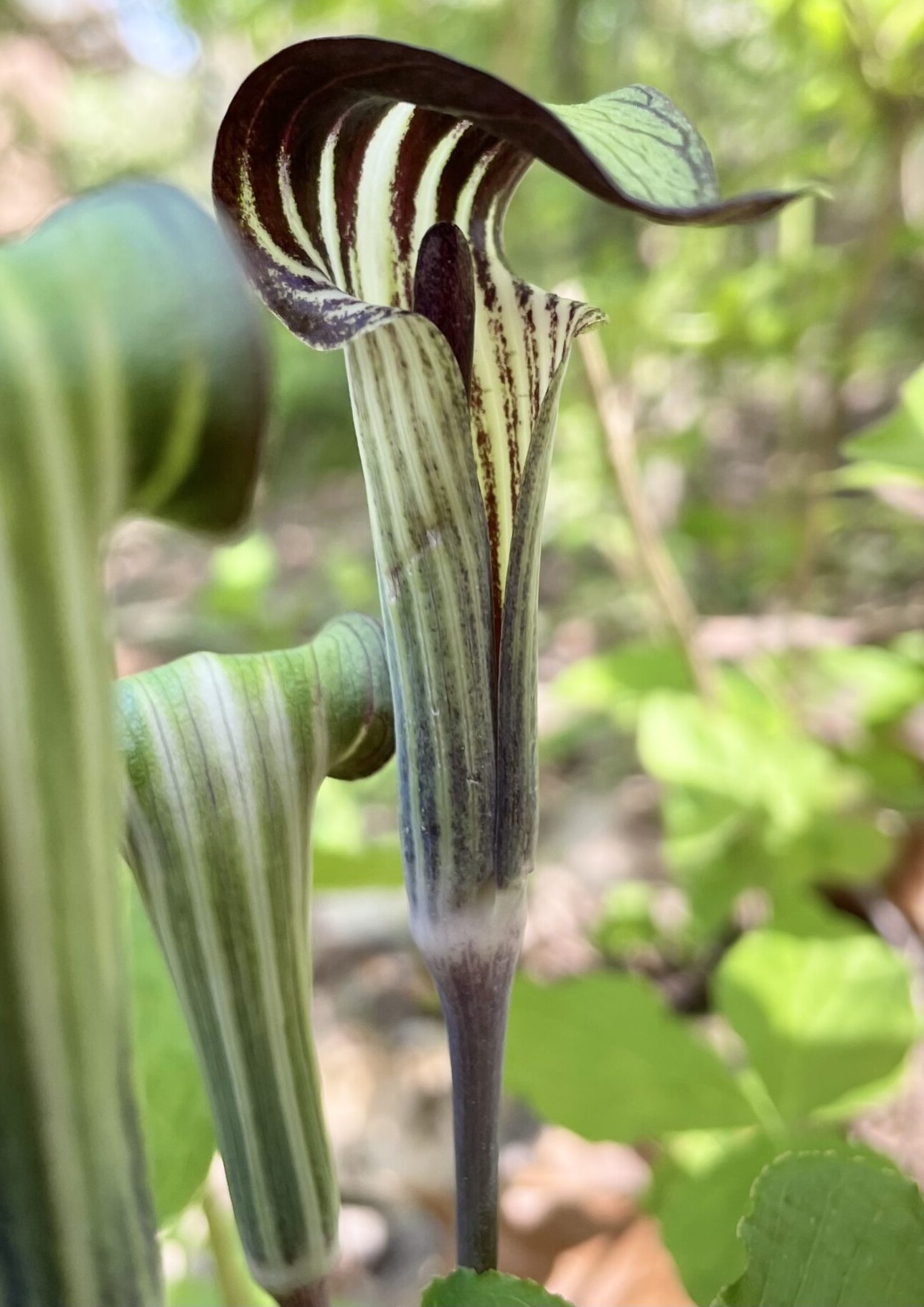
Jack-in-the-pulpit is Arisaema triphyllum, a long-lived woodland geophyte in Araceae. It grows from a solid underground corm, emerges during spring, produces its hooded inflorescence beneath or between the expanding leaves, and normally enters dormancy later in the growing season.
The accepted native range extends across central and eastern Canada and much of the central and eastern United States. It occurs in mesic deciduous forest, floodplain woods, swamp hummocks, wooded ravines, streambanks, shaded seeps, moist upland forest, and margins of seasonal wetlands. Cultivated plants create additional exposure in native gardens, woodland beds, shaded landscapes, and naturalized properties.
The familiar name has historically covered a complex of closely related eastern North American plants. Some treatments recognize one broad species with several subspecies or varieties; others recognize Arisaema triphyllum, A. pusillum, A. quinatum, A. stewardsonii, and sometimes A. acuminatum as separate species.
Those taxonomic distinctions involve spathe ridging, appendix shape, leaflet form, chromosome number, range, and habitat. They are important for accurate identification and conservation, but no evidence establishes one member of the complex as safe animal forage. A suspected exposure should be managed according to the shared Arisaema raphide hazard while the specimen is identified as precisely as possible.
The Underground Corm and Seasonal Exposure
The corm is a short, solid, swollen underground stem that stores carbohydrates and supports the next season’s growth. It differs from a bulb, which consists primarily of layered fleshy leaves, and from an ordinary root. The turnip-like appearance accounts for common names such as Indian Turnip, Wild Turnip, Pepper Turnip, Bog Onion, and Indian Onion.
During active growth, the plant replenishes the corm and may form replacement tissue and smaller cormlets around the primary structure. These offsets can produce additional shoots and gradually expand a colony.
Dormancy does not eliminate the poisoning risk. The visible leaves and inflorescence may disappear while the corm remains alive beneath the soil. Dogs can expose it during digging, and gardeners can uncover it while planting later-season species, moving leaf litter, repairing paths, or dividing a colony.
Erosion, flooding, wildlife activity, tree removal, construction, and storm damage can also bring corms and cormlets to the surface. Every underground piece should be collected after landscape work rather than left where an animal can carry or chew it.
Leaves, Spathe, Spadix, and Fruit
Each apparent leaf is compound and usually divided into three leaflets. A young or resource-limited plant may produce one compound leaf, while a larger flowering plant may produce two. The name triphyllum refers to the three-parted leaf structure rather than three separate leaves arranged in a whorl.
The conspicuous “flower” is an inflorescence. The fleshy central spadix is the Jack, while the enclosing hooded spathe is the pulpit. The true flowers are tiny and clustered around the lower portion of the spadix inside the spathe tube.
The spathe may be green, brown-green, maroon, purple-brown, or boldly striped with white, green, burgundy, or dark purple. Color does not indicate sex, toxicity, or a safe ornamental form.
After successful pollination, a female or female-dominant inflorescence develops a compact column of fleshy fruit. The fruit begins green and ripens to bright orange-red or scarlet after the spathe and much of the foliage have withered. The exposed fruit cluster can appear to belong to a different plant from the spring pulpit.
Each fruit may contain several seeds. Wildlife consumption contributes to seed dispersal but does not establish safety for pets, livestock, or captive birds. Different animals chew, swallow, digest, and metabolize the tissue differently, and a dog may consume an entire cluster rather than taking one fruit and moving on.
Size-Dependent Sex Expression and Pollination
Jack-in-the-pulpit can change sexual expression between growing seasons. Small flowering plants are most often male because pollen production requires fewer stored resources. Larger plants with substantial corm reserves are more likely to produce female flowers and support a crop of fruit.
Controlled field research has shown that the relationship is flexible rather than mechanically determined by one size. Reproductive history, environmental conditions, population genetics, damage, and current stored resources all influence whether an individual is nonflowering, male, bisexual, or female during a particular year.
One long-term study found frequent changes between categories from one season to the next. Plants that spend substantial resources producing fruit may return as male or remain nonflowering while rebuilding reserves. Favorable conditions can allow a male to become female, while drought, browsing, transplant stress, or corm injury can reverse that progression.
This biology affects exposure. A colony without fruit one year may produce conspicuous red clusters in another. Removing only the visible fruit-bearing shoot does not remove the underground corm or prevent future fruit production.
Small flies and fungus gnats are important pollinators. They enter the spathe and move toward the tiny flowers around the base of the spadix. Male inflorescences generally provide a basal escape opening after insects become dusted with pollen. Female inflorescences may retain visitors longer while pollen is transferred to receptive flowers. Exact pollinator composition and reproductive success vary among populations.
Green Dragon, Trillium, Pinellia, and Other Look-Alikes
Green Dragon, Arisaema dracontium, is a separate North American species. It usually produces one compound leaf divided into numerous leaflets and a narrow green spathe with a long whip-like spadix appendix. It also forms red fruit and should be treated as a raphide-containing plant.
Jack-in-the-pulpit is frequently confused with Trillium before flowering. A Trillium usually carries three separate leaves in a whorl around one stem and produces a conventional three-petaled flower. Jack-in-the-pulpit carries three leaflets as parts of one compound leaf and produces a spadix enclosed by a spathe on a separate stalk.
Five-leaflet or strongly lobed members of the wider Jack-in-the-pulpit complex can complicate that simple distinction. The complete plant, lower stem, inflorescence, corm, fruit, and photographs of the colony are more reliable than one detached leaf.
Pinellia ternata, an introduced Asian aroid, may occur in portions of eastern North America and can be confused with nonflowering or small Arisaema plants. Other arums, Cobra Lilies, Calla Lilies, Dieffenbachia, Philodendron, Monstera, and related aroids share the insoluble-calcium-oxalate mechanism but are not synonyms of Jack-in-the-pulpit.
Wake Robin may refer to Trillium. Lord-and-Lady may refer to European Arum. Dragon Root may refer to Green Dragon. Indian Turnip and Bog Onion may lead an inexperienced person to mistake the corm for ordinary food. Common names alone are not adequate for treatment decisions.
Historical Processing and Cultural Uses
The corm has a documented history of food use only after intensive preparation. Historical methods included prolonged drying, thin slicing, extensive heating, pit cooking, aging, and grinding the processed material into starch or flour. Fresh or incompletely processed corm produces immediate acrid oral and pharyngeal injury.
Prepared material was reportedly eaten in slices, crumbled into cereal, or incorporated into breads, biscuits, cakes, or other starch-based foods. The length and complexity of processing should be understood as evidence of the plant’s hazard rather than a casual recipe for turning a poisonous corm into pet food.
Colonists extracted starch from the corm for use in stiffening clothing. Historical accounts describe irritation, blistering, or swelling when insufficiently processed material retained its acrid properties. The name Starch Wort reflects that use.
The fruit was used in some accounts to produce a colored dye, and Pawnee traditions included placing dried seeds in gourd rattles. These uses relied on pigment or the physical properties of the seed rather than treating fresh fruit as ordinary food.
Recorded Indigenous practices varied by community, preparation, plant part, concentration, and route. Accounts include external and internal preparations used for headaches, snakebite, sores, skin disease, joint or muscle pain, ringworm, boils, coughs, colds, respiratory complaints, sore eyes, and traditions associated with temporary sterility. These records should be preserved respectfully as evidence of specialized cultural knowledge; they do not establish a standardized modern dose or justify veterinary self-treatment.
How Animals Encounter the Plant
Dogs may chew spring foliage, excavate a corm, play with a garden division, ingest red fruit, or carry dormant underground material from a disturbed woodland bed. Recently transplanted corms and freshly loosened soil increase access.
Cats are more likely to nibble foliage, investigate an ornamental planting, or ingest sap while grooming. Horses and livestock may encounter uprooted plants, woodland clearing debris, flooded or eroded corms, mowed material, garden waste, or vegetation dumped into a pasture.
Birds may shred leaves, spathes, fruit, and stems. Rabbits and guinea pigs should not receive the plant as forage, bedding, chew material, or enrichment. Dried corm slices, herb powders, traditional remedies, and unidentified Arisaema products require the same caution as living tissue.
A corm swallowed in a large piece adds choking, esophageal obstruction, gastric retention, and intestinal foreign-body risk to the contact irritation. Soil, stones, fertilizer, landscape fabric, wire, plant labels, or pesticides may be ingested during the same digging episode.
Diagnosis, Prognosis, and Prevention
No routine blood test confirms Jack-in-the-pulpit exposure. Diagnosis rests on rapid onset of oral pain after chewing a compatible plant, identification of the corm or aboveground structures, examination of the mouth and airway, and exclusion of caustic chemicals, electrical burns, foreign bodies, insect stings, allergic reactions, dental disease, seizures, and other poisonous plants.
Useful evidence includes the complete plant, corm, cormlets, leaf stalks, spathe, spadix, fruit, seeds, photographs of the colony through different seasons, nursery labels, vomited fragments, and every garden-product container from the area.
The prognosis is good to excellent after a limited oral exposure when breathing and swallowing remain secure. The outlook becomes more guarded with progressive airway swelling, aspiration, severe dehydration, prolonged food refusal, deep ocular injury, or obstruction by a swallowed corm.
Prevent exposure by placing the plant outside the reach of animals that browse or dig, fencing established colonies when necessary, collecting every cormlet and cut piece after garden work, and monitoring fruiting plants during late summer and fall. Dormant planting locations should remain marked so the underground corm is not accidentally exposed or discarded into an animal area.
Immediate Steps After Exposure
- Stop further access: Move the animal away from the plant, corm, cormlets, leaves, spathe, spadix, red fruit, seeds, garden divisions, woodland debris, and contaminated tools or surfaces.
- Identify the material: Determine whether the animal briefly bit a leaf, chewed fruit, excavated a corm, swallowed a compact piece, contacted sap, or may have ingested another aroid or landscape product.
- Preserve evidence: Save the complete plant, underground structure, fruit, seeds, nursery label, photographs, vomited fragments, and any fertilizer, pesticide, or herb-product packaging.
- Remove only loose visible pieces: When the animal is alert, breathing normally, and unlikely to bite, take plant material resting at the lips or front of the mouth. Do not reach blindly toward the throat.
- Wear gloves: Use gloves when handling sap-covered plant tissue, fruit pulp, vomit, saliva, or contaminated fur, and wash exposed human skin afterward.
- Watch breathing and swallowing continuously: Airway function is more important than calculating a precise plant dose.
Gently Clear the Mouth
Use a damp disposable cloth to lift sap, fruit pulp, soil, and loose plant fragments from the lips, front gums, and accessible tongue. Do not scrub tender tissue or repeatedly force the mouth open.
A gentle rinse with cool or lukewarm clean water may be used only when the animal is fully alert, breathing normally, and swallowing normally. Allow the water and saliva to drain outward instead of directing liquid toward the throat.
Stop immediately if the animal coughs, gags, struggles, becomes weak, makes abnormal respiratory sounds, or cannot handle saliva. Do not use high-pressure spraying or force water with a syringe.
Do not clamp the mouth closed. An animal with tongue or throat swelling may need to hold the mouth open to breathe and allow saliva to drain.
Do Not Force Milk, Food, or Medication
Milk does not dissolve or neutralize insoluble calcium oxalate raphides that are already formed and embedded in tissue. Added dietary calcium does not pull the crystals from the mouth or reverse laryngeal swelling.
Do not force milk, yogurt, cheese, bread, oil, food, broth, electrolyte solution, or another liquid. Sticky, solid, or bulky material can be difficult to swallow and may lodge in an inflamed throat.
Do not give antihistamines automatically. Raphide injury is primarily mechanical and inflammatory rather than a simple histamine-mediated allergy. Antihistamines do not remove crystals, and oral medication may be aspirated when swallowing is abnormal.
Do not give human pain relievers, oral numbing products, corticosteroids, antacids, sucralfate, bismuth products, loperamide, anti-nausea medication, or leftover veterinary drugs without direct veterinary instruction.
Do Not Induce Vomiting or Give Charcoal
- Do not give hydrogen peroxide: It can add gastric and esophageal injury, prolonged vomiting, bleeding, and aspiration.
- Never use peroxide in a cat: Hydrogen peroxide is not a safe feline emetic.
- Do not use salt, mustard, ipecac, dish soap, detergent, oil, fingers, or tools: These methods are unsafe and do not remove raphides.
- Do not bring plant tissue back through injured surfaces: Vomiting re-exposes the esophagus, throat, and mouth to the crystals.
- Do not force activated charcoal: Charcoal does not pull embedded crystals from tissue and can cause serious aspiration.
- Do not perform gastric lavage at home: The primary injury is local contact, and any invasive procedure would require a protected airway and direct professional justification.
Airway Emergency
Progressive enlargement of the tongue, swelling beneath the jaw, repeated swallowing, inability to close the mouth, inability to swallow saliva, or an altered voice requires immediate veterinary assessment.
Listen for wheezing, stridor, snoring-like sounds, harsh inspiration, gasping, or a high-pitched respiratory noise. Watch for open-mouth breathing, rapid shallow respirations, abdominal effort, flared nostrils, extended head and neck posture, and increasing panic.
Pale, gray, or blue gums, weakness, collapse, reduced responsiveness, or weak respiratory movement indicates inadequate oxygenation. Do not place water, milk, food, pills, charcoal, or liquid medication into the mouth.
Loosen a tight collar or restraint around the throat, keep the animal quiet, call the emergency clinic before arrival, and transport without delay.
Eye Exposure
Begin irrigation immediately with sterile saline or clean lukewarm water. Flush the affected eye continuously for at least 20 minutes, using a gentle stream that passes across the ocular surface and beneath the eyelids.
Prevent rubbing with the paws or against furniture, bedding, or the ground. Rubbing can spread crystals and deepen corneal injury.
Do not apply redness-relief drops, numbing medication, corticosteroid drops, antibiotic ointment, contact-lens solution, essential oils, milk, soap, or leftover prescriptions.
Continued pain, squinting, tearing, redness, eyelid spasm, swelling, light sensitivity, cloudiness, discharge, unequal pupils, or apparent vision loss requires prompt veterinary examination.
Skin and Coat Exposure
Brush loose plant debris and soil from the coat before wetting it. Remove contaminated collars, harnesses, clothing, bedding, and towels.
Wash exposed skin and fur with lukewarm water and a mild pet-safe cleanser, then rinse thoroughly. Prevent licking until cleanup is complete.
Persistent redness, swelling, blistering, pain, open skin, or intense itching requires examination and consideration of pesticide exposure, another plant, or a true allergic reaction.
Vomiting, Food Refusal, and Hydration
- Track vomiting: Record each episode and note plant tissue, corm fragments, fruit, foam, blood, dark material, soil, or foreign debris.
- Do not force food: Hard, dry, rough, or sticky foods can worsen oral injury and may be unsafe during dysphagia.
- Offer water only when safe: An alert animal with normal breathing and swallowing may have voluntary access to small amounts of fresh water.
- Never force fluids: A gagging, drooling, swollen, weak, vomiting, or poorly swallowing animal may inhale them.
- Watch for dehydration: Tacky gums, sunken eyes, reduced urination, increasing weakness, rapid heart rate, or worsening lethargy requires treatment.
- Seek reassessment for prolonged refusal: Cats, birds, rabbits, guinea pigs, very young animals, and small patients can develop serious secondary problems when they do not eat or drink.
Corm Ingestion and Foreign-Body Risk
Determine whether an intact corm or large solid piece is missing. A compact corm can cause choking, lodge in the esophagus, remain in the stomach, or obstruct the intestine independently of the raphide injury.
Heavy drooling, regurgitation, repeated swallowing, neck extension, immediate return of water, persistent vomiting, abdominal enlargement, increasing pain, reduced stool production, or illness returning after apparent improvement requires imaging.
Do not use bread, food, oil, water, fingers, or tools to push a suspected obstruction downward. Do not induce vomiting.
Radiographs, ultrasound, contrast imaging, or endoscopy may be required. Endoscopic or surgical removal may be necessary when the corm or associated garden material cannot pass safely.
Veterinary Examination and Supportive Treatment
There is no antidote that dissolves raphides already embedded in tissue. Veterinary care focuses on clearing residual plant material, controlling pain and inflammation, protecting the airway, maintaining hydration, supporting nutrition, and treating ocular or mechanical complications.
The veterinarian may inspect the lips, tongue, gingiva, palate, pharynx, laryngeal region, and eyes while monitoring respiratory effort, oxygenation, heart rate, temperature, hydration, and swallowing ability. Sedation may be necessary when pain prevents a complete examination.
Veterinarian-selected analgesia can reduce suffering and make voluntary drinking and eating possible. Anti-nausea medication may be used for persistent vomiting after airway and swallowing safety have been assessed. Subcutaneous or intravenous fluids may be required when drooling, vomiting, or refusal of water causes dehydration.
Clinically important edema may justify professional anti-inflammatory treatment. Antihistamines or corticosteroids are not universal antidotes and must be selected according to the airway examination, ocular findings, gastrointestinal condition, infection risk, and patient species.
Bloodwork is not always necessary after a limited exposure but may be appropriate with dehydration, prolonged vomiting, pre-existing disease, unexpected systemic abnormalities, or uncertain plant identification.
Veterinary Airway Care
Supplemental oxygen may be needed when respiratory effort is increased or oxygenation is reduced. Progressive pharyngeal or laryngeal swelling may require sedation and placement of an endotracheal tube before the airway becomes impossible to secure.
Assisted ventilation may be necessary when respiratory fatigue, aspiration, severe obstruction, or hypoxia compromises effective breathing. A temporary tracheostomy is rarely needed but may be lifesaving when swelling prevents ordinary intubation.
An animal with meaningful throat or laryngeal edema may remain hospitalized until breathing and swallowing are stable without intervention.
Veterinary Eye Care
The veterinarian may use fluorescein stain to identify corneal epithelial defects or ulceration and may examine beneath the eyelids for retained crystals or plant fragments.
Ophthalmic treatment depends on the depth of injury, corneal integrity, inflammation, tear production, infection risk, and pain. Medication that is acceptable on an intact cornea may be dangerous when an ulcer is present.
Pseudomembrane formation, nonhealing epithelial defects, stromal injury, corneal melting, or persistent pain may require repeated examinations and specialist referral.
Horses and Livestock
Remove the entire group from woodland colonies, uprooted plants, corms, flood debris, landscape waste, cut vegetation, and contaminated forage. Provide clean water and uncontaminated feed without forcing intake.
Monitor salivation, feed dropping, repeated swallowing, tongue swelling, coughing, nasal discharge, breathing sounds, colic, manure production, and awareness.
Horses, rabbits, guinea pigs, and other species incapable of vomiting must never receive an emetic. Do not drench a salivating, coughing, swollen, colicky, weak, recumbent, or poorly swallowing animal with water, milk, oil, charcoal, feed, or medication.
Respiratory noise, extended neck posture, blue-gray mucous membranes, collapse, or inability to swallow requires immediate large-animal veterinary treatment.
Recovery and Prognosis
Most limited exposures have a good to excellent prognosis. Pain and drooling often decline substantially within several hours after chewing stops and loose plant material is cleared.
More extensive stomatitis or pharyngeal irritation can interfere with eating and drinking for a day or longer. Recovery should include normal breathing, comfortable swallowing, declining drooling, voluntary intake, adequate hydration, and return of ordinary activity.
The outlook becomes more serious with airway edema, aspiration, severe dehydration, prolonged food refusal, deep corneal injury, or obstruction by a swallowed corm.
Worsening swelling, noisy breathing, continued food refusal, repeated vomiting, coughing, eye pain, corneal cloudiness, reduced fecal output, or renewed illness after apparent improvement requires re-examination.
Frequently Asked Questions About Jack-in-the-Pulpit and Animal Poisoning
Is the corm proven to contain more calcium oxalate than every other plant part?
No exact-species organ-by-organ quantification was found proving that the corm always contains the highest raphide concentration. It remains the highest-concern practical exposure because it is a large, dense mass of active tissue that can be excavated, chewed repeatedly, or swallowed as a solid foreign body.
Is the underground structure a root, bulb, tuber, or turnip?
It is a corm—a short, solid, swollen underground stem that stores resources for future growth. The plant also has true roots attached to the corm. It is not a layered bulb, onion, turnip, or ordinary root vegetable.
Do the raphides actively shoot into the mouth?
Chewing unquestionably ruptures crystal-containing tissue and disperses the raphides into contacted mucous membrane. Pressure-driven discharge from specialized idioblasts is documented in some aroids, but the exact ejector-cell anatomy has not been characterized sufficiently to claim that every Jack-in-the-pulpit raphide is actively fired. Mechanical release and chewing pressure are enough to produce the injury.
Is a protease an established second toxin in Jack-in-the-pulpit?
No named protease has been confirmed as an equal species-specific primary toxin of Arisaema triphyllum. Research from other plants supports a needle effect in which raphides improve the penetration of a protease or another defensive compound. That mechanism is plausible but should not be presented as exact proof of a particular Jack-in-the-pulpit enzyme.
Why can the mouth remain painful after all visible plant material is gone?
Microscopic crystals may remain embedded in epithelial tissue, and inflammation continues after the original puncture. Tongue movement, swallowing, pawing, and grooming can also move residual crystals across sensitive surfaces. Persistent or worsening pain into the following day requires examination.
Can Jack-in-the-pulpit really obstruct the airway?
Yes, although severe obstruction is uncommon. An exact-species human case documented oral-cavity and airway edema after root ingestion, and other Arisaema cases have required intubation. Noisy breathing, progressive tongue swelling, inability to swallow saliva, blue-gray gums, or collapse requires immediate emergency care.
Does milk neutralize Jack-in-the-pulpit crystals?
No. The crystals are already an insoluble calcium salt. Milk does not dissolve them, remove them from tissue, or reverse throat swelling. Cool water may be used for gentle rinsing only when the animal is fully alert and swallowing normally; no liquid should be forced.
Why should the animal not be made to vomit?
Vomiting brings crystal-bearing plant material back through the injured esophagus, pharynx, and mouth. It also creates aspiration risk when the animal is drooling, swollen, gagging, painful, or swallowing abnormally. Hydrogen peroxide adds its own gastric and esophageal injury.
Can activated charcoal adsorb the raphides?
No. Activated charcoal cannot pull insoluble crystals from the lips, tongue, throat, esophagus, or eye. Forcing it into an animal with oral pain or dysphagia can cause severe aspiration. It is not routine treatment for this exposure.
Can a corm cause obstruction even after the mouth pain improves?
Yes. A swallowed corm or large section can lodge in the esophagus, remain in the stomach, or obstruct the intestine. Persistent regurgitation, repeated vomiting, abdominal swelling, reduced stool, or recurrence after temporary improvement requires imaging and possible endoscopic or surgical removal.
Are the red fruits less dangerous because birds eat them?
No pet-safe conclusion can be drawn from wildlife feeding. Birds differ in anatomy, feeding pattern, amount consumed, and ecological adaptation. The fruit pulp is irritating, the seeds remain plant material, and a dog may eat the entire cluster rather than a few individual fruits.
Can Jack-in-the-pulpit sap cause permanent eye injury?
Exact animal evidence is lacking, but a related Arisaema ringens case produced pseudomembranous conjunctivitis, corneal edema, and epithelial erosion. Immediate prolonged irrigation and prompt veterinary examination are warranted for persistent squinting, pain, redness, or cloudiness.
Is every plant called Jack-in-the-pulpit the same species?
Not necessarily. The name has been applied broadly to an eastern North American complex whose members may be recognized as Arisaema triphyllum, A. pusillum, A. quinatum, A. stewardsonii, and sometimes A. acuminatum. The immediate raphide first aid remains similar, but the botanical identity should be recorded accurately.
Is Green Dragon another form of Jack-in-the-pulpit?
No. Green Dragon is Arisaema dracontium. It usually has one compound leaf divided into many leaflets and a narrow green spathe with an elongated whip-like spadix. It is a separate species but shares the genus-level calcium-oxalate hazard.
How does Jack-in-the-pulpit differ from Trillium?
Trillium normally has three separate leaves in a whorl and a conventional three-petaled flower. Jack-in-the-pulpit usually has a compound leaf divided into three leaflets and a spadix enclosed by a hooded spathe. Leaf variation within the Jack-in-the-pulpit complex can complicate identification, so flowers and underground structures are useful.
Why does the plant change from male to female?
Female fruit production requires substantially more stored resources than pollen production. Smaller plants are usually male, while larger plants with better-developed corm reserves are more likely to become female. Reproductive history, environment, damage, and population genetics can move the size threshold and cause the same plant to change again in another season.
Does a male plant remain safer because it produces no red fruit?
A male plant eliminates the fruit exposure for that season but still has toxic leaves, petioles, spathe, spadix, sap, roots, and corm. It may also become female during a later season if its size and stored resources increase.
Does historical food use mean the corm can be prepared safely for pets?
No. Historical use involved extensive processing such as prolonged drying, thin slicing, aging, pit cooking, or grinding carefully treated material into starch. Those practices do not provide a validated pet-food method, and incomplete processing can leave enough raphides to cause severe injury.
Can Jack-in-the-pulpit cause kidney failure?
Ordinary chewing is not expected to produce the systemic hypocalcemia or oxalate nephrosis associated with a major soluble-oxalate exposure. Kidney abnormalities require investigation for dehydration, another plant, medication, pre-existing disease, or an unrelated illness.
What is the expected prognosis?
The prognosis is generally good to excellent when exposure is limited and breathing and swallowing remain normal. Airway edema, aspiration, prolonged inability to eat or drink, severe dehydration, deep eye injury, or obstruction by a swallowed corm creates a more serious prognosis.