Persian Ivy Saponin Exposure, Gastrointestinal Irritation, and Contact Dermatitis
Is Persian Ivy Poisonous to Dogs, Cats, Horses, and Livestock?
Yes—Persian Ivy, Hedera colchica, should be considered poisonous to dogs, cats, horses, cattle, sheep, goats, pigs, rabbits, guinea pigs, birds, and other animals that chew or swallow it. Exact-species chemical research has identified a diverse mixture of triterpenoid saponins in its berries, leaves, and stems, including α-hederin, hederasaponins, colchisides, and hederacolchisides. These compounds can irritate the lips, mouth, throat, esophagus, stomach, and intestines and may cause excessive drooling, gagging, nausea, vomiting in animals capable of vomiting, abdominal pain, diarrhea, appetite loss, and temporary depression.
Most correctly identified uncomplicated exposures are expected to remain localized to the mouth, skin, eyes, or gastrointestinal tract rather than progress to primary liver failure, kidney failure, hemolytic anemia, seizures, or coma. Persistent vomiting and diarrhea can nevertheless produce substantial dehydration, electrolyte abnormalities, weakness, poor circulation, and aspiration. Severe or atypical findings require investigation for pesticide, fertilizer, another poisonous plant, medication, mold, foreign material, or an unrelated disease rather than being attributed automatically to Persian Ivy.
Freshly damaged true ivy may also irritate skin and eyes. Falcarinol and didehydrofalcarinol are confirmed contact allergens and irritants in English Ivy, and closely related polyacetylenes remain a reasonable genus-level concern when an animal contacts unidentified ivy sap. Pruning Persian Ivy can contaminate hands, tools, clothing, floors, collars, harnesses, bedding, paws, fur, feathers, and enclosure material, allowing prolonged skin contact or later ingestion during grooming.
Persian Ivy’s long fibrous stems and heavy woody growth create physical hazards in addition to chemical irritation. A vine may wrap around teeth or the tongue, lodge in the throat or esophagus, or contribute to gastrointestinal obstruction. Animals may also swallow plant ties, hooks, wire, trellis fragments, bark, plastic, stones, or container material while pulling down or chewing the plant.
Persian Ivy must not be confused with Pastuchov’s Ivy, English Ivy, Atlantic Ivy, Algerian Ivy, Boston Ivy, Swedish Ivy, Ground Ivy, Grape Ivy, or Poison Ivy. These names include several distinct true-ivy species and numerous unrelated plants with different chemistry. Preserve the complete vine, juvenile and adult leaves, aerial rootlets, flowers or berries when present, nursery label, photographs, and every associated landscaping product so treatment is based on the actual exposure rather than the word ivy alone.
About this guide: This page provides general pet-poisoning information and cannot diagnose or treat an individual animal. For any suspected exposure, contact a veterinarian or animal poison-control service immediately. Do not induce vomiting, give medication, or attempt home decontamination unless directed by a veterinary professional.
Persian Ivy
Hedera colchica (K.Koch) K.Koch
- Hedera helix var. colchica K.Koch — basionym and important historical placement beneath English Ivy
- Hedera acuta G.Nicholson — historical heterotypic synonym
- Hedera amurensis Hibberd ex Lawr. & Schulze — historical heterotypic synonym
- Hedera caucasica Carrière — historical name contributing to the common name Caucasian Ivy
- Hedera cordifolia Hibberd — historical name referring to the species’ broad heart-shaped foliage
- Hedera coriacea Hibberd — historical name referring to its thick leathery leaves
- Hedera dentata (Hibberd) Carrière — historical name associated with the large-toothed cultivated form
- Hedera rhombifolia Rupr. ex Regel — historical heterotypic synonym
- Hedera roegneriana Hibberd — historical horticultural name
- Hedera colchica var. dentata (Hibberd) Lawr. — historical varietal treatment of material now represented horticulturally by ‘Dentata’
- Hedera colchica var. dentatovariegata A.E.Schulze — historical varietal name associated with variegated ‘Dentata’ material
- Hedera pastuchovii Woronow — Pastuchov’s Ivy; a separate accepted Caucasian and Iranian species commonly confused with Persian Ivy
- Hedera helix L. — English Ivy or Common Ivy; a separate species providing much of the broader veterinary and contact-dermatitis evidence for the genus
- Hedera algeriensis Hibberd — Algerian Ivy; a separate large-leaved North African species
- Hedera hibernica Poit. — Atlantic or Irish Ivy; a separate accepted species
Araliaceae — Ginseng or Ivy Family
Persian Ivy; Colchis Ivy; Colchic Ivy; Caucasian Ivy; Caucasus Ivy; Iranian Ivy; Large-Leaved Ivy; Giant-Leaved Ivy; Bullock’s Heart Ivy; Elephant’s Ears Ivy; Variegated Persian Ivy; Dentata Variegata; Sulphur Heart; Sulfur Heart; Paddy’s Pride
Historical and taxonomic search variations include Hedera helix var. colchica, Hedera acuta, Hedera amurensis, Hedera caucasica, Hedera cordifolia, Hedera coriacea, Hedera dentata, Hedera rhombifolia, Hedera roegneriana, Hedera colchica var. dentata, and Hedera colchica var. dentatovariegata. Cultivated material may appear under names such as Hedera colchica ‘Dentata’, ‘Dentata Variegata’, ‘Sulphur Heart’, or ‘Paddy’s Pride’.
“Persian Ivy” and “Caucasian Ivy” are ambiguous because they are sometimes applied to Pastuchov’s Ivy, Hedera pastuchovii, or other regional ivies. “Ivy” alone may refer to English Ivy, Atlantic Ivy, Algerian Ivy, Boston Ivy, Swedish Ivy, Ground Ivy, Grape Ivy, or Poison Ivy. Poison Ivy is Toxicodendron radicans in Anacardiaceae and is unrelated to true ivies in Hedera.
Exact-Species Berry Saponins
Persian Ivy contains a diverse mixture of triterpenoid saponins rather than one single ivy toxin. Direct chemical investigation of the berries isolated fifteen separate saponins and established their structures through chemical and spectroscopic analysis. This exact-species research provides a substantially stronger foundation than simply transferring an English-Ivy toxin list to Persian Ivy.
The berry compounds included α-hederin, hederasaponins B, C, and D, saponin B, several previously known triterpene glycosides, and two newly characterized substances named colchiside A and colchiside B. Some compounds were reported in Persian Ivy berries for the first time during that investigation. The mature fruit therefore contains a complex and directly demonstrated saponin mixture even though wild birds may consume and disperse it.
Hederasaponin C is also known as hederacoside C. It is a bidesmosidic saponin whose sugar chains are attached to a hederagenin-based triterpene structure. Related monodesmosidic compounds such as α-hederin may be produced through hydrolysis or metabolic conversion and can differ substantially in membrane activity and absorption.
The exact berry study was designed to identify chemical structures rather than establish an animal toxic dose. It did not determine how many berries are safe for a dog, cat, horse, rabbit, bird, or livestock animal. Fruit maturity, genotype, season, growing conditions, digestion, and animal physiology may all influence exposure.
Leaf and Stem Saponins
Persian Ivy chemistry is not limited to the berries. Research on its leaves identified hederacolchisides E and F, complex hexaosides based respectively on oleanolic acid and hederagenin. Other work has examined hederacolchiside A1, a biologically active oleanene saponin isolated from this species.
Stem research isolated five triterpenoid saponins, including hederasaponin C, hederacolchisides E and F, and newly reported glycosides based on arjunolic acid or hederagenin. These findings confirm that woody and climbing tissues may contain a chemically meaningful saponin burden rather than serving merely as inert structural material. Roots and bark should also remain inaccessible because the complete tissue-by-tissue chemical profile has not been established for every cultivar and growth stage.
Juvenile climbing growth and mature reproductive branches may differ in age, anatomy, metabolism, and chemical allocation. No study has demonstrated that every Persian Ivy leaf contains precisely the same saponin concentration or that one cultivar is predictably safer than another. Variegation, leaf size, nursery name, and previous uneventful exposure do not establish a harmless plant.
Saponin Structure and Gastrointestinal Irritation
Saponins contain a sugar-rich portion attracted to water and a triterpenoid portion that interacts more readily with lipids and sterols. This amphiphilic structure gives many saponins soap-like surface activity and allows them to interact with biological membranes. The word saponin refers to a chemical family rather than one uniform poison with identical potency.
When raw Persian Ivy is chewed and swallowed, saponins contact the lips, oral mucosa, pharynx, esophagus, stomach, and intestines. The expected clinical result is irritation, increased salivation, nausea, retching, vomiting, abdominal discomfort, diarrhea, appetite loss, and temporary depression. The bitter and irritating taste may limit ingestion, but it does not protect a persistent chewer or an animal consuming the plant within familiar feed.
Repeated vomiting and diarrhea can become more dangerous than the original local irritant exposure. Continued fluid loss may produce dehydration, sodium or potassium abnormalities, acid-base disturbance, weak pulses, cold extremities, reduced urination, weakness, and low blood pressure. These secondary changes require treatment even when systemic absorption of the original saponins remains limited.
Hederacolchiside A1 and Experimental Membrane Injury
Hederacolchiside A1 has demonstrated substantial activity against cultured cells. Experimental studies found that it can damage cellular membranes, interact with membrane-associated targets, and produce pore formation followed by rapid leakage of intracellular proteins. Other studies documented cytoplasmic changes and non-apoptotic cell death at cytotoxic concentrations.
These findings provide a mechanistic explanation for the biologic activity of concentrated Persian Ivy saponins. They also show why purified compounds are studied as possible anticancer, antimicrobial, or pharmacologic agents. Laboratory potency does not make the raw plant medicinally safe.
A cultured cell exposed directly to a purified compound is not equivalent to an animal chewing one leaf. The gastrointestinal tract, metabolism, protein binding, incomplete absorption, vomiting, dilution, and elimination all modify the actual exposure. Concentrations selected to damage tumor cells experimentally should not be used to predict the result of an ordinary pet incident.
Widespread cellular destruction, liver failure, kidney failure, coma, or generalized tissue necrosis should not be presented as the expected outcome of limited Persian Ivy ingestion. Those findings require investigation for another toxin or disease. The laboratory studies establish potential membrane activity, not a routine veterinary multiorgan-failure syndrome.
Laboratory Hemolysis and the Risk of Overinterpretation
Many saponins can disrupt red-blood-cell membranes when they are mixed directly with blood at sufficient concentration in laboratory assays. This property is known as hemolytic activity and is frequently used when comparing purified saponins. It does not demonstrate that ordinary oral ingestion produces the same circulating concentration.
Normal digestion, poor absorption of large glycosides, hydrolysis, metabolism, protein binding, and elimination reduce the relevance of a direct blood-contact experiment to a small plant exposure. Hemolytic anemia is not the characteristic clinical outcome of limited Persian Ivy ingestion. Routine public copy should not warn owners that every leaf bite will destroy red blood cells.
Pale gums, jaundice, dark or red-brown urine, rapid breathing, profound weakness, collapse, or falling red-cell values still requires urgent evaluation. Blood loss, immune-mediated hemolysis, oxidative toxins, onion or garlic exposure, zinc, infection, inherited disease, or another poison may be responsible. The visible ivy must not prevent a broader investigation.
Falcarinol, Didehydrofalcarinol, and Contact Dermatitis
English Ivy contains falcarinol and didehydrofalcarinol, polyacetylenic compounds shown to be powerful direct irritants and moderate sensitizers. They occur in leaves, stalks, and roots and may remain present throughout the year. Contact with common ivy has produced irritant dermatitis, delayed allergic contact dermatitis, and occasionally severe blistering reactions in sensitized people.
The exact concentration of these compounds has not been established across every Persian Ivy cultivar, tissue, season, and growing condition. They should therefore be described as strong related-species and genus-level contact evidence rather than falsely labeled as uniformly quantified Persian Ivy toxins. Closely related defensive polyacetylenes may also contribute to true-ivy sap irritation.
Irritant dermatitis can develop after sufficient direct exposure without previous sensitization. Allergic contact dermatitis requires immune sensitization, so an initial encounter may cause little visible reaction while later contact produces a stronger delayed response. Redness, itching, swelling, papules, crusting, weeping lesions, tenderness, or blisters may appear several hours after pruning or prolonged contact.
Sap trapped beneath a collar, harness, bandage, clothing, blanket, feathering, or matted fur prolongs exposure. Licking the contaminated area converts a skin exposure into an oral and gastrointestinal exposure. Prompt washing and removal of contaminated equipment reduces both continuing skin contact and later ingestion.
Oral, Pharyngeal, and Esophageal Injury
Chewing leaves, berries, roots, or stems may cause burning, drooling, lip licking, face rubbing, pawing at the mouth, gagging, coughing, or repeated swallowing. Visible oral tissues may appear red, tender, swollen, eroded, or occasionally blistered. These effects may result from saponins, polyacetylenes, mechanical abrasion, or several factors acting together.
Persian Ivy’s large leaves and heavy vines can deliver a substantial mass of plant tissue in a single chewing episode. Fibrous stems may wrap around teeth, lodge beneath the tongue, become wedged across the palate, or remain in the pharynx. A woody fragment may lodge in the esophagus or injure the gastrointestinal tract after swallowing.
Continued gagging, neck extension, regurgitation, repeated unsuccessful swallowing, inability to drink, hoarse vocalization, or coughing whenever water is offered requires examination. These signs should not be dismissed as chemical irritation when retained material may require sedation, imaging, endoscopy, or surgery. Blind probing can push the object farther inward or injure the animal and handler.
Plant Parts, Fresh Cuttings, and Dried Material
Juvenile and adult leaves, climbing stems, heavy woody vines, bark, aerial rootlets, underground roots, sap, flowers, nectar-bearing structures, berries, pulp, and seeds should all be treated as unsuitable for animals. Berry chemistry is directly documented, while leaf and stem research confirms additional exact-species saponins. Lack of comparable analysis for every root or flower does not prove that those tissues are harmless.
Drying, wilting, freezing, aging, or cutting does not establish that saponins and contact irritants have disappeared. Dried wreaths, old vines, herbarium material, storm debris, fallen leaves, berries, pruning waste, and compost should remain inaccessible. Dry woody stems may become more rigid, splintered, and mechanically hazardous.
Compost and landscaping debris can contain Persian Ivy mixed with mold, mushrooms, fertilizer, herbicide, insecticide, wire, plastic, food waste, or another poisonous plant. Atypical neurologic, cardiovascular, hematologic, or organ findings after access to mixed debris should not be assigned automatically to ivy. Representative material from the entire pile should be preserved.
Pesticides, Fertilizers, and Other Co-Exposures
Persian Ivy may be treated with herbicide, insecticide, fungicide, horticultural oil, systemic pesticide, fertilizer, growth regulator, or leaf-shine product. Nursery plants may retain treatments applied before purchase, while landscaping contractors may use products unknown to the property owner. Sap and chemical residue can contaminate the same coat, paws, feathers, tools, or surfaces.
Marked muscle fasciculation, profuse airway secretions, pinpoint pupils, severe agitation, tremors, seizures, abnormal bleeding, major heart-rate changes, or profound weakness requires product-specific investigation. Those signs extend beyond a typical local saponin exposure. Preserve every label and request treatment records from the nursery, maintenance company, or landscaper.
Potting soil, decorative moss, stones, water-retaining crystals, mold, mushrooms, wire, plant ties, clips, hooks, broken containers, and support structures may also be swallowed. Treatment must account for the complete exposure scene. The most recognizable ivy leaf may not be the most dangerous item involved.
Toxic-Dose and Evidence Limitations
No validated toxic leaf count, berry count, vine length, plant weight, or body-weight dose exists for Persian Ivy in dogs, cats, horses, livestock, rabbits, guinea pigs, birds, reptiles, or other animals. Exact-species chemical studies isolated and characterized compounds but did not conduct veterinary dose-response trials. Risk assessment must therefore use the maximum possible amount, plant part, patient size, symptoms, repeated access, and co-exposures.
Most small exposures are expected to produce no signs or limited oral and gastrointestinal irritation. A determined animal may nevertheless consume enough plant material to develop repeated vomiting, diarrhea, dehydration, appetite loss, or weakness. A prior uneventful exposure does not establish a safe threshold for the next incident.
Severe neurologic, cardiovascular, hematologic, renal, hepatic, or respiratory findings require a broader investigation. They may reflect a massive exposure, concentrated extract, severe dehydration, aspiration, airway obstruction, foreign material, pesticide, another plant, medication, infection, or primary disease. The evidence does not support describing seizures or organ failure as routine Persian Ivy effects.
Expected Onset and Clinical Pattern
Signs may begin within minutes to several hours after an animal chews or swallows Persian Ivy. The timing depends on the amount, plant part, degree of chewing, stomach contents, animal size, species, and whether sap remained on the mouth, coat, skin, or feathers. Most uncomplicated exposures produce localized oral discomfort, vomiting, diarrhea, or dermatitis rather than progressive systemic toxicosis.
Early findings may include lip licking, repeated swallowing, excessive drooling, pawing at the mouth, facial rubbing, gagging, retching, apparent thirst, food refusal, nausea, abdominal discomfort, vomiting, diarrhea, depression, and temporary lethargy. Mouth pain may cause an animal to approach food or water and then pull away. Horses and ruminants may show salivation, reduced feed intake, abdominal discomfort, or altered manure rather than vomiting.
Improvement after one vomiting episode does not prove that the exposure has ended. Plant material may remain in the stomach, a vine may be caught around the teeth or within the esophagus, and sap may remain on the coat. Recurrent signs after temporary improvement require reassessment for retained material, continued grooming exposure, dehydration, aspiration, or another cause.
Oral Pain, Drooling, and Mucosal Inflammation
Saponins and ivy-associated contact irritants can inflame the lips, gums, tongue, palate, and pharynx. The animal may drool heavily, lick its lips repeatedly, rub its face, paw at its mouth, chew abnormally, drop food, gag, or swallow continuously. Visible tissue may become red, swollen, tender, eroded, or blistered after substantial exposure.
Oral discomfort may be intensified by fibrous stems, bark, or woody fragments caught around the teeth or beneath the tongue. A piece may become wedged across the palate or remain behind the last molars where it cannot be seen during a quick owner examination. Continued one-sided chewing, persistent bleeding, or pain after loose debris is removed may require sedation and a complete oral examination.
Rapidly increasing tongue or facial swelling, inability to swallow saliva, noisy breathing, blue-gray gums, panic, weakness, or collapse is not a routine mild-ivy presentation. Severe inflammation, an allergic response, a lodged foreign body, insect sting, caustic chemical, or another exposure must be considered. Food, water, pills, and liquid medication must not be forced into an animal with abnormal swallowing or breathing.
Nausea, Vomiting, and Esophageal Irritation
Vomiting is one of the most consistently recognized effects after true-ivy ingestion. Episodes may contain foam, mucus, food, berries, leaf fragments, pieces of stem, soil, decorative moss, or associated landscaping material. Repeated vomiting can inflame the esophagus and stomach, worsen abdominal pain, and occasionally produce streaks of blood.
Persistent retching, repeated unproductive attempts to vomit, large amounts of fresh blood, coffee-ground material, severe abdominal enlargement, or inability to settle requires urgent assessment. These findings may indicate severe mucosal injury, gastric distention, obstruction, pancreatitis, another toxin, or a swallowed object. A large woody vine should not be expected to pass safely because some leaves were vomited.
Animals that are depressed, weak, coughing, gagging, neurologically abnormal, or poorly responsive are at increased risk of aspirating vomit. Coughing, nasal discharge, fever, rapid breathing, abnormal lung sounds, or renewed lethargy after gastrointestinal improvement may indicate aspiration pneumonia. Respiratory complications may become more serious than the original plant irritation.
Diarrhea, Abdominal Pain, and Dehydration
Diarrhea may be soft, watery, urgent, mucus-covered, or accompanied by intestinal cramping and straining. Dogs and cats may adopt a hunched posture, become restless, repeatedly change position, or resist abdominal handling. Horses and livestock may show flank watching, pawing, reduced rumen activity, loose manure, feed refusal, or depression.
Persistent vomiting and diarrhea can cause clinically important dehydration even when systemic saponin absorption remains limited. Tacky gums, sunken eyes, reduced urination, increasing weakness, cold extremities, weak pulses, prolonged capillary refill, and inability to retain water indicate substantial fluid loss. Small animals, elderly patients, and animals with kidney, cardiac, endocrine, or gastrointestinal disease may deteriorate more rapidly.
Electrolyte and acid-base abnormalities may develop after prolonged losses. These changes can intensify weakness, alter mentation, reduce gastrointestinal motility, and contribute to an abnormal heartbeat. Oral electrolyte drinks, salt mixtures, sports drinks, or forced water are not safe substitutes for measured veterinary fluid and electrolyte correction.
Skin Irritation and Delayed Dermatitis
Sap exposure may cause stinging, redness, itching, tenderness, swelling, papules, crusting, weeping lesions, or fluid-filled blisters. Direct irritation can begin during or shortly after contact, while allergic dermatitis may appear later because it depends on immune sensitization. An animal or person exposed previously may react more strongly during a later pruning or removal event.
Plant residue trapped beneath a collar, harness, bandage, clothing, blanket, feathering, or matted fur can prolong contact for hours. Continuous licking, chewing, or scratching may cause hair loss, open wounds, secondary infection, and additional oral ingestion. Contaminated equipment and bedding must be removed and washed.
Extensive facial swelling, rapidly spreading lesions, severe pain, blistering over a large area, fever, lethargy, or purulent discharge requires veterinary examination. Contact with pesticide-treated ivy, caustic products, insects, or another plant may create a more severe reaction than raw sap alone. Continued exposure should be stopped before medication is considered.
Eye Exposure and Corneal Injury
Sap or plant fragments may enter an eye while an animal pushes through dense growth, chews a vine, or rubs its face with a contaminated paw. Immediate findings may include tearing, squinting, redness, eyelid swelling, discharge, light sensitivity, and persistent rubbing. A fragment can remain beneath an eyelid and continue abrading the cornea.
Continued squinting, cloudiness, visible surface irregularity, marked redness, discharge, or inability to open the eye requires examination. Corneal injury may require fluorescein staining, removal of retained debris, pain control, and prescribed ophthalmic treatment. Human redness-relief drops, topical anesthetics, antibiotics, and leftover steroid medication may worsen injury or delay healing.
Choking, Esophageal Obstruction, and Gastrointestinal Foreign Bodies
Persian Ivy produces exceptionally vigorous, thick, fibrous, and eventually woody vines. A stem may wrap around teeth, lodge under the tongue, become stuck in the pharynx, or remain in the esophagus. Continuous drooling, neck stretching, regurgitation, repeated swallowing, coughing when water is offered, or inability to swallow saliva may indicate obstruction rather than simple irritation.
Swallowed vine, bark, root material, plant ties, hooks, clips, wire, string, plastic, stones, trellis fragments, or container pieces may produce gastric or intestinal obstruction. Persistent vomiting, abdominal enlargement, pain, appetite loss, reduced stool, or symptoms recurring after temporary improvement may require radiographs, ultrasound, endoscopy, or surgery. Not every plant or plastic object appears clearly on routine radiographs.
String, wire, or vine extending from the mouth or rectum should not be pulled. It may be anchored internally and can cut, bunch, or perforate the gastrointestinal tract as normal contractions continue. Veterinary imaging and controlled removal are safer than home extraction.
Panic, silent respiratory effort, inability to move air, blue-gray gums, or collapse indicates choking and requires immediate emergency action. A published common-ivy fatality resulted from physical obstruction by a massive amount of leaves rather than proven lethal systemic saponin absorption. Mechanical obstruction must therefore remain separate from the question of chemical toxicity.
Dogs and Cats
Dogs may chew low vines, retrieve cut stems, dismantle trellises, raid pruning piles, or eat fallen berries. Puppies may continue chewing despite bitterness and may swallow plant ties, soil, bark, wire, stones, or container fragments with the foliage. Drooling, vomiting, abdominal pain, and diarrhea are the principal expected chemical findings.
Cats may bite hanging leaves, climb ivy-covered structures, play with berries, or groom sap from their paws and fur. Continued food refusal matters even when vomiting is limited because prolonged inadequate intake can create additional metabolic complications. Long indoor vines remain accessible even when the container is positioned high above the floor.
Persistent gagging, one-sided chewing, inability to drink, repeated vomiting, dehydration, severe dermatitis, or eye pain requires examination. Tremors, seizures, collapse, major rhythm abnormalities, profound depression, jaundice, or organ dysfunction requires investigation for pesticide, another plant, medication, foreign material, or unrelated disease rather than being accepted as routine Persian Ivy irritation.
Horses, Cattle, Sheep, Goats, and Other Livestock
Horses may encounter Persian Ivy through hedge trimmings, storm-damaged vines, branches from ivy-covered trees, ornamental waste, contaminated hay, browse piles, or vines growing along paddock fences. Horses cannot vomit and may instead develop salivation, feed refusal, mouth discomfort, coughing, abdominal pain, diarrhea, depression, or weakness. Long stems and woody material can also contribute to choke or gastrointestinal obstruction.
Cattle, sheep, and goats may consume ivy when desirable forage is scarce, after hedge cutting, during winter feeding, or when clippings are mixed into hay or browse. Bitter taste is not dependable protection for hungry, confined, young, or inexperienced animals. Apparently normal animals should be monitored after a shared exposure because intake may be uneven.
Older English-Ivy or nonspecific-ivy accounts describe excitement, staggering, bellowing, and a crushed-ivy odor in the breath or milk after very large consumption. Those observations are related-species historical evidence, not confirmed Persian Ivy case reports. The source may also have contained pesticide, another toxic plant, or poor-quality forage that could not be excluded with modern testing.
When one livestock animal becomes ill, remove the entire group and identify every plant in the debris. Yew, Oleander, rhododendron, azalea, Cherry Laurel, boxwood, pesticide-treated vegetation, mold, wire, and other hazards may be mixed with ivy. Severe neurologic, cardiovascular, or rapidly fatal illness requires investigation beyond Persian Ivy.
Rabbits, Guinea Pigs, Birds, Reptiles, and Other Exotics
Persian Ivy should not be offered to rabbits or guinea pigs as forage, bedding, nesting material, browse, or a chew branch. Oral and abdominal discomfort may reduce food intake and fecal output, creating a secondary gastrointestinal emergency. Drooling, food refusal, reduced feces, diarrhea, abdominal enlargement, or weakness requires prompt exotic-animal care.
Parrots and other companion birds can shred leaves, bark, woody stems, flowers, and berries and spread sap across the beak, tongue, face, feet, and feathers. Beak wiping, regurgitation, altered droppings, reduced feeding, poor balance, inability to perch, weakness, or abnormal breathing requires avian veterinary guidance. Wild-bird consumption of berries does not establish safety for a captive bird consuming a concentrated quantity.
Reptile, amphibian, and invertebrate keepers may use large-leaved ivy in humid enclosures. Direct chewing, prolonged skin contact, sap, pesticide, fertilizer, decaying leaves, and contaminated feeder insects create uncertainty. Exact species-specific safety studies are unavailable, so Persian Ivy should not be used where animals can chew it or remain in prolonged contact with damaged tissue.
Severe and Atypical Findings
Older broad ivy literature describes excitement, staggering, hypotension, bradycardia, convulsions, stupor, and coma after unusually heavy exposure. These findings are not well characterized as the routine veterinary response to Persian Ivy and should not be presented as expected after one or two leaves. They remain emergency findings because they may represent a massive exposure or a different hazard.
Tremors, seizures, profound depression, abnormal heart rate, collapse, severe anemia, dark urine, jaundice, kidney failure, or liver failure requires a broad diagnostic investigation. Possible causes include pesticide, slug bait, medication, nicotine, cannabis, mold toxin, another poisonous plant, hypoglycemia, electrolyte abnormality, trauma, aspiration, or primary organ disease. A mixed exposure is especially likely after access to landscaping debris or compost.
Persistent illness should not be explained indefinitely by ivy. Continued vomiting, food refusal, coughing, eye pain, dermatitis, or weakness may indicate retained vine material, obstruction, aspiration pneumonia, corneal injury, secondary infection, or another diagnosis. Reassessment is preferable to prolonged unsupervised home treatment.
Duration and Prognosis
Mild oral and gastrointestinal signs generally begin improving within several hours and may resolve within one or two days after access ends and hydration is maintained. Skin reactions may take longer, particularly when allergic sensitization or self-trauma is involved. Eye injuries and foreign bodies follow their own clinical course.
Continued oral pain, inability to drink, repeated vomiting or diarrhea, prolonged food refusal, coughing, extensive dermatitis, or illness beyond the expected short irritant phase requires reassessment. Complications may include dehydration, aspiration pneumonia, secondary skin infection, corneal ulceration, esophageal injury, and gastrointestinal obstruction.
The prognosis is generally good to excellent after a small uncomplicated exposure. The outlook depends on the actual complication when an animal develops severe dehydration, aspiration, airway swelling, extensive dermatitis, eye damage, obstruction, or an unidentified mixed poisoning. Permanent organ injury is not the characteristic outcome of limited Persian Ivy ingestion.
Plant Identity, Accepted Taxonomy, and Historical Names
Persian Ivy, Hedera colchica, is an evergreen woody climber and groundcover in Araliaceae, the Ginseng or Ivy family. It is a true member of Hedera and is closely related to English Ivy, Pastuchov’s Ivy, Atlantic Ivy, and Algerian Ivy. It is an accepted species rather than merely a large-leaved cultivar of Hedera helix.
Karl Heinrich Koch first published the plant as Hedera helix var. colchica before later treating it at species rank. That historical placement explains why the varietal name remains common in horticultural catalogs, older floras, chemical literature, and poison references. Current botanical treatment accepts Hedera colchica (K.Koch) K.Koch.
More than twenty historical synonyms have been applied to the species or its cultivated forms. Names such as Hedera caucasica, Hedera cordifolia, Hedera coriacea, Hedera dentata, and Hedera rhombifolia refer to its geographic origin, heart-shaped foliage, leathery texture, toothed margins, or leaf shape. These names remain important when searching older botanical and phytochemical records.
The common name Persian Ivy is not completely reliable. It is occasionally applied to Pastuchov’s Ivy, Hedera pastuchovii, or other regional ivies from the Caucasus and Iran. Poisoning and plant-removal decisions should therefore use the scientific name, complete specimen, and nursery label rather than the common name alone.
Colchis, the Caucasus, and Native Range
The names Colchis Ivy and Colchic Ivy refer to Colchis, the ancient region along the eastern Black Sea coast corresponding largely to western Georgia. Persian Ivy is native from northern Türkiye through the North Caucasus and Transcaucasus into the western Caucasus. Its natural distribution is more restricted than broad horticultural labels such as Persian or Iranian Ivy may imply.
The species grows primarily in temperate forest environments. It occurs in humid valleys, woodland margins, shaded rocky slopes, ravines, stream corridors, forest understories, and other locations where its roots remain cool and moist while climbing stems can reach brighter light. Local rainfall, soil, elevation, and available support influence its final size.
Cultivation has introduced Persian Ivy into portions of Europe and North America beyond its native range. Escaped or persistent plants may occur on old masonry, abandoned properties, woodland edges, ornamental trees, walls, and disturbed shaded ground. Seeds dispersed by birds can establish new plants away from the original ornamental planting.
Range alone cannot confirm identity. Nursery plants may be transported internationally, and cultivated specimens can occur far outside their native distribution. Leaf size, growth phase, aerial rootlets, flower and berry structure, cultivar features, and provenance must be considered together.
Growth Form, Aerial Rootlets, and Mature Woody Structure
Persian Ivy is a vigorous evergreen woody vine that spreads across the ground when no upright support is available. When stems contact a tree, wall, fence, rock face, trellis, or other textured surface, numerous short aerial rootlets attach the vine and allow it to climb. These rootlets anchor the plant but do not draw nutrients from the supporting tree.
Mature vines may extend several dozen feet and develop thick woody stems. Large established specimens can form a heavy mass across tree trunks, walls, roofs, and fences. Storm damage, pruning, tree removal, construction, and structural failure can suddenly bring large quantities of previously inaccessible foliage and fruit to ground level.
Low stems, fallen leaves, berries, exposed roots, and pruning debris create animal exposure even when the canopy remains high. Dogs may pull vines from a wall, cats may climb through the growth, livestock may encounter fallen branches, and birds may reach mature fruit clusters. Old woody material remains a choking or foreign-body hazard after sap production declines.
Persian Ivy may also function as dense groundcover. Ground-level mats place leaves and stems directly within reach of dogs, grazing animals, rabbits, poultry, and wildlife. Mowing or mechanical trimming can scatter fresh sap-bearing fragments through a yard or enclosure.
Juvenile and Adult Growth
True ivies display developmental heterophylly, meaning that juvenile vegetative growth and adult reproductive growth differ. Juvenile stems creep or climb, attach through aerial rootlets, and may bear leaves that are angular, shallowly lobed, wavy, or nearly entire. This phase can persist for years while the vine remains shaded or actively climbing.
Adult reproductive branches develop after the plant reaches adequate maturity and brighter conditions. These branches project outward from the support, become more self-supporting, and usually lose the dense clinging-rootlet habit. Their leaves are generally unlobed or less lobed and are often broadly heart-shaped.
A person may assume that an unlobed flowering branch and a lobed climbing stem belong to different plants. Both phases can occur on one mature Persian Ivy and both contain biologically active plant constituents. Preserve material from both growth forms when exact identification matters.
Adult branches create additional exposure because they bear flowers and fruit. Their outward-projecting habit may place berries within reach of birds, climbing cats, livestock beneath the vine, or animals accessing storm-fallen branches. Fallen fruit can roll away from the parent plant and remain after the visible clusters have disappeared.
Large Leathery Leaves and Cultivated Forms
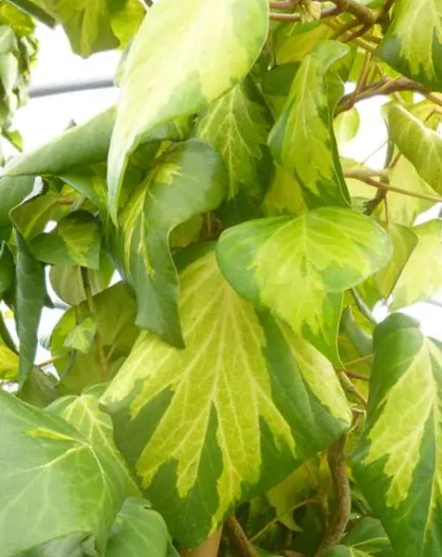
Persian Ivy produces some of the largest leaves among commonly cultivated ivies. Individual blades may be several inches long and can approach approximately ten inches under favorable conditions. They are generally dark green, thick, leathery, oval, broadly heart-shaped, slightly toothed, and often curled or drooping at the margins.
The naturally drooping or curled appearance may cause a healthy plant to look slightly wilted. Leaf size alone does not establish a greater toxin concentration than English Ivy, but one chewed Persian Ivy leaf can represent a substantially larger mass of plant tissue. A broad damaged leaf can also spread more sap across the mouth, skin, floor, or pruning equipment.
‘Dentata’ is commonly sold as Bullock’s Heart Ivy or Elephant’s Ears Ivy and is known for especially broad foliage. ‘Dentata Variegata’ carries cream or yellow variegation, while ‘Sulphur Heart’, also sold as Sulfur Heart or Paddy’s Pride, has a prominent yellow-green central marking. Variegation and cultivated names do not establish reduced saponin content or animal safety.
Nursery labels may shorten or alter cultivar names, and plants may be sold without complete scientific identification. Preserve the tag rather than relying on a phone photograph or common-name label. Cultivars change appearance and growth behavior, not the need to prevent ingestion.
Flowers, Berries, Seeds, and Wildlife Dispersal
Mature reproductive growth produces numerous small greenish or yellow-green flowers in rounded umbels. The flowers are nectar-rich and may attract bees, wasps, flies, and other insects during late summer or autumn. Animal contact with flowering ivy can therefore combine plant exposure with insect-sting risk.
Pollinated flowers develop into rounded berries that mature from green toward dark purple-black or black. Each fruit may contain several seeds, and clusters can persist into winter. Direct chemical analysis has demonstrated a complex fifteen-saponin mixture within Persian Ivy berries.
Wild birds consume and disperse ivy fruit, but this ecological relationship does not establish safety for dogs, cats, livestock, rabbits, or companion birds. Species differ in digestion, metabolism, feeding rate, seed handling, and evolutionary adaptation. A parrot crushing many fruits and seeds indoors is not equivalent to a wild bird consuming limited ripe fruit during seasonal foraging.
Fallen berries may accumulate beneath mature vines, in gutters, on patios, within groundcover, or among animal bedding and feed. Fruit should be collected before dogs, poultry, grazing animals, or small pets gain access. Seeds should not be saved where animals can open or overturn the container.
Persian Ivy, Pastuchov’s Ivy, and English Ivy
Pastuchov’s Ivy is Hedera pastuchovii, a separate species native to parts of the Caucasus and northern Iran. It generally has smaller, thinner, more elongated, and more variable foliage than Persian Ivy. Its exact leaf chemistry includes pastuchosides and hederasaponins rather than the same complete profile reported from Persian Ivy.
The common names Persian Ivy and Caucasian Ivy may be applied to either plant by nurseries and informal references. The distinction matters because exact-species chemical evidence should not be transferred silently. Both should nevertheless remain inaccessible to animals because both contain directly documented triterpenoid saponins.
English Ivy is Hedera helix, the most widely cultivated and toxicologically documented member of the genus. Its familiar juvenile leaves are commonly three- to five-lobed and much smaller than Persian Ivy foliage. Much of the available veterinary exposure and contact-dermatitis evidence concerns English Ivy.
Related-species English-Ivy evidence is useful for understanding expected gastrointestinal irritation, falcarinol dermatitis, medicinal extracts, and physical obstruction. It cannot establish an identical toxic dose, tissue concentration, clinical frequency, or prognosis for Persian Ivy. Exact-species berry, leaf, and stem chemistry should control the chemical description whenever available.
Algerian Ivy and Other True Ivies
Algerian Ivy, Hedera algeriensis, is another vigorous large-leaved species and is commonly sold in green or variegated forms. It is native to North Africa and can resemble Persian Ivy in landscapes and nurseries. The label, leaf undersurface, stem characteristics, mature foliage, and provenance may be needed for separation.
Atlantic Ivy or Irish Ivy is Hedera hibernica, while Himalayan Ivy is Hedera nepalensis. Several true ivies hybridize or have been treated differently by older taxonomic systems. A general common name may therefore conceal meaningful species differences.
All true ivies should be handled cautiously because triterpenoid saponins are widespread in the genus and contact irritants have been documented in closely related species. That genus-level precaution does not remove the need for exact-species evidence boundaries. Public copy should distinguish what was measured in Persian Ivy from what is inferred from English Ivy or another species.
Poison Ivy, Boston Ivy, Swedish Ivy, and Other False Ivies
Poison Ivy is Toxicodendron radicans in Anacardiaceae. It normally has compound leaves divided into three leaflets and contains urushiol, an oily allergen responsible for delayed dermatitis. Persian Ivy has simple individual leaves, belongs to Araliaceae, and contains triterpenoid saponins with ivy-associated polyacetylene irritants.
Boston Ivy is Parthenocissus tricuspidata in Vitaceae. It is deciduous, often turns red before dropping its leaves, and climbs with adhesive-tipped tendrils rather than Hedera’s aerial rootlets. Virginia Creeper and Grape Ivy also belong to Vitaceae despite carrying ivy-like common names.
Swedish Ivy commonly refers to Plectranthus verticillatus, a soft-stemmed member of the Mint family with opposite rounded leaves. Ground Ivy is Glechoma hederacea, while German Ivy, Cape Ivy, and Kenilworth Ivy belong to still other families. The word ivy alone cannot establish the plant or its toxic mechanism.
Exact-Species Chemistry and Evidence Boundaries
Persian Ivy has one of the better-developed phytochemical records among ornamental true ivies. Research has documented numerous berry saponins, hederacolchisides from leaves, additional saponins from stems, and substantial laboratory membrane activity from hederacolchiside A1. These findings support a real irritant and gastrointestinal hazard.
The research was conducted primarily to isolate chemical structures or evaluate pharmacologic and cytotoxic activity. It was not designed to determine how many leaves poison a dog, whether berries are safer than foliage, or which cultivar causes the most severe veterinary illness. Chemical richness should not be confused with a complete clinical dose-response literature.
I did not locate a confirmed natural veterinary case report specifically identifying *Hedera colchica*. Veterinary expectations therefore rely on the exact chemistry, general saponin toxicology, related *Hedera* exposures, and the animal’s actual findings. Severe systemic claims should be qualified rather than presented as common exact-species outcomes.
The correct evidence boundary is that Persian Ivy can cause meaningful oral, gastrointestinal, skin, and eye injury and may contribute to secondary dehydration or aspiration. Airway or gastrointestinal obstruction can occur mechanically. Seizures, coma, primary organ failure, and hemolytic anemia are not established routine consequences of limited ingestion.
Homes, Offices, Nurseries, and Greenhouses
Indoor Persian Ivy may trail from a hanging container, climb a conservatory trellis, cover an interior wall, or share a mixed planter with other species. Elevation alone does not prevent exposure because stems extend downward, leaves fall, cats climb, and dogs may pull on a reachable vine. Rooting jars and propagation containers may place fresh cuttings and contaminated water within reach.
Offices, hotels, atriums, clinics, stores, restaurants, and commercial interiors may use mature ivy on walls or trellises. Animal owners may not know the exact species, pesticide history, fertilizer schedule, or maintenance products used by a contractor. Product and maintenance records should be requested when the illness extends beyond expected irritation.
Nursery and greenhouse environments add fertilizer, systemic pesticide, fungicide, rooting hormone, growth regulator, labels, wire, ties, plastic, irrigation runoff, mold, and other ornamental plants. An animal entering these areas may experience several simultaneous exposures. The largest or most familiar ivy leaf should not become the automatic diagnosis.
Freshly purchased plants may be wrapped in plastic or foil and may contain decorative moss, stakes, clips, and slow-release fertilizer. A dog dismantling the arrangement may swallow more nonplant material than leaves. Preserve the complete damaged container rather than bringing only one plant fragment to the clinic.
Pruning, Storm Damage, and Landscape Work
Pruning and tree work create a high-contact period because large amounts of fresh stems, rootlets, leaves, adult branches, flowers, and berries are placed on the ground. Sap may contaminate saws, pruners, gloves, ladders, tarps, vehicles, shoes, clothing, patios, and indoor floors. Every cutting should go directly into a closed animal-inaccessible container.
Dogs may carry cut stems as sticks, cats may roll in debris, and livestock may consume clippings dumped near a fence. Drying in a pile does not establish safety. Heavy woody vines can remain mechanically hazardous long after the foliage wilts.
Storm or construction debris may combine ivy with branches, bark, nails, wire, insulation, glass, roofing material, treated lumber, and electrical components. Vomiting, oral injury, neurologic abnormalities, bleeding, or obstruction requires evaluation of the entire site. Persian Ivy may be only one part of the emergency.
Dogs and Cats
Dogs may chew groundcover, pull vines from walls, retrieve pruned stems, dismantle trellises, or eat fallen berries. Puppies and habitual plant chewers may continue despite the bitter taste. Associated wire, clips, stones, bark, soil, and container fragments may be swallowed simultaneously.
Cats may bite hanging leaves, climb through ivy-covered structures, bat at berries, or groom sap from their paws and coat. Long indoor stems can reach furniture, beds, windowsills, and shelves even when the pot appears inaccessible. Fallen leaves and fruit should be collected promptly.
Continued food refusal deserves attention even when vomiting is mild. Oral pain, nausea, esophageal irritation, or retained material may prevent comfortable eating. Prolonged inadequate intake creates an additional metabolic risk in cats.
Household animals may also encounter pruning tools, gloves, or clothing contaminated outdoors. A cat that never touched the vine may lick sap from a floor or shoe. Cleanup must include equipment and surfaces rather than focusing only on the living plant.
Horses and Livestock
Horses may encounter Persian Ivy through hedge trimmings, branches from ivy-covered trees, storm debris, vegetation growing along paddock fencing, ornamental waste, contaminated hay, or browse piles. Horses cannot vomit, so salivation, feed refusal, abdominal discomfort, diarrhea, depression, or weakness may be the first signs. Long woody stems also create choke and obstruction risks.
Cattle, sheep, goats, pigs, llamas, and alpacas may consume ivy when desirable forage is limited or when cut vines are mixed with familiar feed. Bitter taste does not protect a hungry or confined animal. One animal’s apparent tolerance should not be used to declare the debris safe for the group.
Historical livestock accounts concern English Ivy or nonspecific Hedera and often lack modern plant confirmation, toxin testing, feed analysis, or exclusion of other vegetation. They remain useful warnings about substantial exposure but do not establish an exact Persian Ivy dose. Severe neurologic behavior should trigger a broad investigation.
Remove the entire group when one animal becomes ill and preserve material from several locations. Ornamental debris may contain yew, Oleander, rhododendron, azalea, Cherry Laurel, boxwood, pesticides, mold, wire, and treated wood. Uneven mixing can expose one animal heavily while leaving others apparently normal.
Rabbits, Guinea Pigs, Birds, Reptiles, and Other Exotics
Persian Ivy should never be offered as rabbit or guinea-pig forage, bedding, browse, nesting material, or enrichment. Mouth and abdominal discomfort may interrupt food intake and fecal production, while diarrhea and dehydration can become significant in a small animal. Forced feeding is unsafe until swallowing and obstruction risks have been assessed.
Companion birds may shred leaves, bark, stems, flowers, and berries and spread sap across the beak, tongue, face, feet, and feathers. Wild-bird use does not establish companion-bird safety. Bird-safe enrichment should rely on plants with established safety rather than a saponin-rich ornamental vine.
Reptile, amphibian, and invertebrate enclosures may use Persian Ivy for large-leaved cover. Direct chewing, sap contact, pesticide residue, fertilizer, contaminated feeder insects, and decaying plant tissue create multiple uncertainties. The absence of prior chewing does not establish long-term safety.
Historical Livestock Evidence
Cooper and Johnson recorded an older account involving cattle that consumed a large quantity of English Ivy or nonspecific true ivy. The report is not an exact Persian Ivy case and should remain labeled accordingly:
“Cattle that ingested large quantities of English ivy vine became ill and excitable, started staggering, and bellowed loudly. The odor of crushed ivy leaves was on the breath and in the milk. Recovery was quick and complete in three days.”
M. R. Cooper and A. W. Johnson, Poisonous Plants in Britain and Their Effects on Animals and Man, 1984.
The account supports the possibility that unusually heavy true-ivy ingestion may extend beyond mild gastrointestinal irritation. It also records complete recovery rather than progressive organ destruction. The plant species, amount, chemical treatment, nutritional state, and accompanying vegetation could not be evaluated using modern methods.
Medicinal Ivy Extracts and the Related Canine Case
Standardized English-Ivy leaf extracts are used in some regulated human cough preparations because selected saponins influence mucus secretion and airway smooth-muscle function. Persian Ivy saponins have also been studied experimentally for pharmacologic activity. Medicinal research does not make raw leaves, berries, sap, or homemade extracts safe.
A published dog developed severe gastroenteritis after excessive and unprescribed administration of a human *Hedera helix* extract syrup. The dog improved after the product was discontinued and supportive veterinary care was provided. This related-species case supports gastrointestinal toxicity from concentrated ivy products but is not an exact Persian Ivy plant-ingestion case.
Human syrups may contain sweeteners, alcohol, preservatives, flavoring, herbs, or other ingredients that alter the risk. Raw Persian Ivy, teas, tinctures, concentrated extracts, and human cough products should never be used to treat an animal’s cough or respiratory illness without veterinary direction. A coughing animal may have heart disease, pneumonia, airway obstruction, or another condition requiring diagnosis.
Fatality Claims and Mechanical Suffocation
Older literature contains claims of animal deaths after ivy ingestion, but many reports identify the plant only as ivy or Hedera and lack complete clinical records. Mixed pasture vegetation, pesticide, severe dehydration, aspiration, foreign material, and unrelated herd disease may not have been excluded. These reports do not establish that limited Persian Ivy ingestion is commonly fatal.
A published human common-ivy fatality involved an extraordinary quantity of leaves packed into the mouth and throat. Hederacoside C was detected in gastric fluid, but no ivy toxin was detected in blood or urine, and investigators concluded that death resulted from mechanical suffocation. The case separates airway obstruction from systemic saponin poisoning.
An animal can likewise choke on a vine, root mass, or bundle of leaves without absorbing a lethal toxic dose. Panic, silent respiratory effort, inability to move air, blue-gray gums, or collapse requires immediate airway treatment. The plant’s moderate chemical toxicity must not obscure a mechanical emergency.
Diagnosis and Exposure Reconstruction
Diagnosis relies on plant identification, known or suspected access, compatible oral, gastrointestinal, skin, or eye findings, and exclusion of more serious causes. Preserve juvenile and adult leaves, stems with aerial rootlets, berries, flowering branches, roots, photographs of the entire vine, and the nursery label. One loose unlobed leaf may be impossible to distinguish confidently from another ivy.
Record whether plant material was swallowed, sap contacted the skin or fur, debris entered an eye, or the animal dismantled a trellis or container. Estimate the maximum amount missing and inventory wire, ties, hooks, clips, string, plastic, stones, and other foreign material. Preserve pesticide, fertilizer, and maintenance-product labels.
No routine clinical test confirms Persian Ivy saponin exposure. Bloodwork, electrolytes, glucose, urinalysis, blood pressure, ECG, skin examination, eye staining, radiographs, ultrasound, or endoscopy may be used when illness is persistent, severe, or inconsistent with ordinary irritation. Testing is directed toward complications and alternative diagnoses rather than one readily available ivy assay.
Atypical signs should broaden rather than narrow the investigation. Tremors, seizures, severe weakness, abnormal pupils, major heart-rate changes, bleeding, jaundice, dark urine, kidney abnormalities, or prolonged depression may indicate pesticide, medication, another plant, metabolic disease, or primary organ dysfunction. The presence of Persian Ivy does not prove that it caused every finding.
Prognosis and Prevention
The prognosis is generally good to excellent after a small uncomplicated ingestion or promptly washed skin exposure. Most animals recover as gastrointestinal irritation resolves, hydration is restored, and sap is removed. Skin reactions may last longer when allergic sensitization or self-trauma is involved.
The prognosis depends on the complication when an animal develops severe dehydration, aspiration, airway swelling, oral penetration, esophageal obstruction, gastrointestinal obstruction, extensive dermatitis, corneal injury, or prolonged food refusal. Severe or atypical systemic illness carries an uncertain prognosis until another toxin or disease has been excluded.
Keep indoor vines, hanging stems, berries, cuttings, and propagation containers in animal-inaccessible rooms rather than relying on height alone. Wear gloves during pruning, wash tools and contaminated surfaces, and place every cutting directly into a closed container. Do not leave a temporary pruning pile where dogs, cats, livestock, rabbits, or poultry can reach it.
Never dump Persian Ivy into a pasture, kennel, rabbit run, poultry area, animal enclosure, hay, bedding, browse pile, or accessible compost. Inspect storm and landscaping debris for other poisonous plants and hardware. Prevention must address the complete vine and work area rather than only the visible leaves.
Immediate Response After Exposure
- Stop further access: Move the animal away from the vine, fallen leaves, berries, roots, cuttings, sap, pruning debris, contaminated feed, bedding, tools, and surfaces.
- Preserve the complete plant: Save juvenile and adult leaves, stems with aerial rootlets, berries, flowers, roots, photographs, and the nursery label.
- Identify every exposure route: Determine whether material was swallowed, sap contacted skin or fur, debris entered an eye, or a vine became lodged.
- Estimate the maximum amount: Record the largest amount that could be missing, the animal’s weight, the earliest possible exposure time, and whether chewing occurred repeatedly.
- Inventory associated objects: Identify missing wire, hooks, clips, ties, string, plastic, stones, bark, trellis pieces, and container fragments.
- Preserve chemical information: Save pesticide, fertilizer, leaf-shine, fungicide, rooting-product, and maintenance-company records.
- Contact a professional: Call a veterinarian or animal poison-control service when more than a trivial amount was swallowed, signs have begun, or plant identity is uncertain.
Most small uncomplicated exposures cause short-lived oral or gastrointestinal irritation, but the initial appearance does not reveal whether a vine is lodged or whether another plant or chemical was involved. A complete exposure inventory prevents treatment from focusing too narrowly on Persian Ivy saponins.
Check Breathing and Swallowing First
- Listen for respiratory noise: Harsh inhalation, wheezing, gasping, or unusually loud breathing may indicate swelling or obstruction.
- Watch the tongue and face: Rapidly increasing lip, tongue, facial, or throat swelling requires emergency care.
- Check gum color: Pale, gray, or blue-gray mucous membranes indicate poor oxygenation or circulation.
- Assess swallowing: Inability to swallow saliva, continuous gagging, or coughing whenever water is offered requires examination.
- Watch body position: Open-mouth breathing or an extended head and neck may indicate respiratory distress.
- Give nothing by mouth during distress: Water, food, pills, charcoal, and liquid medication may be aspirated.
Severe airway involvement is not the expected outcome of a small ivy exposure, but a narrowing airway can deteriorate rapidly. Do not delay emergency transportation while attempting prolonged rinsing or home medication. Call ahead so oxygen and airway equipment can be prepared.
Remove Only Loose Visible Material
- Wear gloves: Ivy sap may irritate or sensitize human skin.
- Clear the front of the mouth: Remove only loose leaves, berries, bark, or stem fragments visible around the lips and front of the tongue.
- Do not perform a blind finger sweep: Reaching deeply may push material farther inward, injure tissue, or result in a bite.
- Check around the teeth: A fibrous stem may wrap around teeth, lodge beneath the tongue, or become wedged across the palate.
- Do not pull resistant material: A vine, wire, ribbon, or string may be anchored in the throat or gastrointestinal tract.
- Wipe gently: Use a damp cloth to remove visible sap and debris from the lips, gums, and front of the tongue.
Continued drooling, repeated swallowing, gagging, hoarseness, one-sided chewing, or inability to drink requires a complete oral and pharyngeal examination. Sedation may be necessary when pain prevents safe visualization. Blind probing is not a substitute for controlled examination.
Rinse the Mouth Only When Safe
- Use cool or lukewarm water: Direct a gentle stream across the front of the mouth rather than toward the throat.
- Position for drainage: Water, saliva, and debris must be able to leave the mouth freely.
- Do not force water: Never pour or syringe liquid into a gagging, vomiting, weak, sedated, or poorly swallowing animal.
- Do not scrub: Vigorous rubbing can worsen inflamed or blistered tissue.
- Stop if distress increases: Coughing, choking, panic, or worsening breathing requires immediate transportation.
Gentle rinsing may remove loose sap and plant particles but does not neutralize saponins already contacting the mucosa. The procedure should remain brief and calm. It must never delay airway treatment or transport.
Do Not Induce Vomiting
- Do not give hydrogen peroxide automatically: Ivy already irritates the esophagus and stomach, and additional vomiting can worsen injury, dehydration, and aspiration risk.
- Never give hydrogen peroxide to a cat: It can cause severe feline gastric and esophageal damage.
- Do not use salt, mustard, detergent, oil, syrup, or manual gagging: These methods can create another poisoning or physical injury.
- Do not induce vomiting after signs begin: Drooling, gagging, vomiting, weakness, coughing, abnormal breathing, tremors, seizures, or reduced awareness makes aspiration more likely.
- Do not induce vomiting after foreign-object ingestion: Wire, hooks, string, woody stems, plastic, glass, or container fragments may cause additional injury while returning through the esophagus.
- Never attempt vomiting in horses, rabbits, guinea pigs, ruminants, birds, or other non-vomiting species: Household emesis is ineffective or dangerous.
Routine emesis is generally unnecessary for an irritant ivy exposure. A veterinarian may assess an unusual recent ingestion individually, but airway safety, foreign material, and the likelihood of spontaneous vomiting must be considered. Once significant symptoms begin, supportive care takes priority.
Activated Charcoal and Oral Remedies
- Do not force activated charcoal: Benefit for raw ivy saponins is uncertain, and it can be aspirated by a vomiting, weak, coughing, or poorly swallowing animal.
- Do not use household charcoal: Barbecue briquettes, fireplace ash, burned food, and homemade carbon are not medical activated charcoal.
- Do not give milk or oil: These do not neutralize saponins or remove contact irritants.
- Do not give anti-diarrheal medication: Loperamide, bismuth products, kaolin mixtures, and owner-selected veterinary products do not neutralize the plant.
- Do not give sucralfate automatically: It is a prescription medication selected according to the actual gastrointestinal injury and swallowing ability.
- Do not give antihistamines automatically: They do not remove sap or secure an airway and may cause sedation.
- Do not apply numbing products: Benzocaine, lidocaine, and similar products may be toxic or interfere with swallowing.
- Do not give human pain medication: Ibuprofen, naproxen, aspirin, and acetaminophen can create a second poisoning.
Veterinary medication is directed toward the patient’s actual findings. An antiemetic may be appropriate for repeated vomiting, analgesia may be needed for painful oral injury, and an anti-inflammatory or antihistamine may be selected for documented swelling or dermatitis. None functions as a universal Persian Ivy antidote.
Skin and Fur Decontamination
- Remove contaminated equipment: Take off collars, harnesses, clothing, blankets, bandages, or bedding holding sap against the skin.
- Wash promptly: Use lukewarm water and mild pet-safe shampoo.
- Rinse thoroughly: Residual shampoo and sap can continue irritating the skin.
- Prevent grooming: Stop licking until plant residue has been removed from the coat.
- Do not scrub aggressively: Friction may worsen irritated or blistered skin.
- Do not break blisters: Opening lesions increases pain, contamination, and infection risk.
- Clean tools and surfaces: Wash pruners, gloves, floors, carriers, and other contaminated objects.
Redness and itching should improve after the irritant is removed rather than spread progressively. Delayed allergic dermatitis may become visible several hours later, particularly after prior exposure. Extensive swelling, blistering, severe pain, facial involvement, fever, discharge, or self-trauma requires veterinary treatment.
Eye Exposure
- Begin irrigation promptly: Flush with sterile saline or clean lukewarm water for at least 15 to 20 minutes.
- Flush from the inner corner outward: Direct liquid away from the opposite eye and face.
- Do not rub the eye: Rubbing may drag plant particles across the cornea.
- Do not apply human eye products: Redness relievers, topical anesthetics, antibiotics, and steroid drops may be inappropriate.
- Prevent continued scratching: Stop self-trauma without placing pressure on the eye or airway.
- Obtain prompt examination: Continued squinting, tearing, cloudiness, discharge, swelling, or inability to open the eye requires veterinary care.
A veterinarian may perform fluorescein staining, examine beneath the eyelids, remove retained debris, and prescribe pain control or ophthalmic medication. An embedded fragment or corneal ulcer cannot be treated adequately by rinsing alone.
Water, Food, and Swallowing
- Allow small voluntary drinks only when safe: Fresh water may remain available to an alert animal that is swallowing normally and not vomiting repeatedly.
- Prevent rapid gulping: Drinking a large volume after vomiting may trigger another episode.
- Do not syringe water: Forced liquid can enter the lungs and cannot correct clinically important dehydration.
- Do not force food: Oral pain, esophageal irritation, nausea, or retained material may make feeding unsafe.
- Give nothing during gagging or abnormal breathing: Coughing, neck stretching, repeated swallowing, weakness, or altered consciousness increases aspiration risk.
- Report continued food refusal: Persistent anorexia is especially important in cats, rabbits, guinea pigs, birds, and small exotics.
Watch for Gastrointestinal Deterioration
- Track vomiting: Record frequency, blood, dark material, leaves, berries, stems, soil, wire, string, and whether water remains down.
- Track diarrhea: Note frequency, blood, black stool, mucus, straining, and changes in activity.
- Watch hydration: Tacky gums, sunken eyes, reduced urination, weak pulses, cold extremities, or increasing lethargy requires treatment.
- Watch abdominal comfort: Severe pain, enlargement, repeated unproductive retching, or recurrence after improvement may indicate obstruction.
- Preserve representative material: Save recognizable plant and foreign material recovered from vomit or stool.
- Watch for aspiration: Coughing, fever, nasal discharge, rapid breathing, or renewed depression after vomiting requires reassessment.
Recognize Foreign-Body and Airway Emergencies
- Recognize choking: Panic, silent respiratory effort, blue-gray gums, collapse, or inability to move air requires immediate emergency action.
- Recognize esophageal obstruction: Continuous drooling, repeated swallowing, regurgitation, neck extension, or inability to swallow water requires examination.
- Never pull visible string or vine: Material extending from the mouth or rectum may be anchored internally.
- Inventory missing hardware: Identify missing wire, hooks, ties, clips, plastic, glass, stones, trellis parts, and container fragments.
- Bring a matching object: An identical tie, hook, or container fragment helps the veterinarian evaluate size and shape.
Emergency Findings
- Repeated gastrointestinal signs: Frequent vomiting or diarrhea, blood, black stool, severe pain, or inability to retain water requires care.
- Difficulty swallowing: Continued gagging, coughing, hoarseness, neck stretching, or inability to drink may indicate swelling or retained material.
- Breathing difficulty: Noisy breathing, open-mouth respiration, blue-gray gums, progressive swelling, or collapse is an emergency.
- Severe dermatitis: Extensive redness, swelling, blistering, facial involvement, or intense pain requires treatment.
- Eye injury: Persistent squinting, cloudiness, discharge, swelling, or visible damage requires urgent examination.
- Dehydration: Tacky gums, sunken eyes, reduced urination, marked weakness, or collapse requires fluid assessment.
- Atypical systemic findings: Tremors, seizures, profound depression, abnormal heart rate, jaundice, dark urine, severe incoordination, or coma requires a broader investigation.
Safe Transportation
- Call ahead: Tell the clinic that Persian Ivy ingestion, contact dermatitis, eye exposure, or a retained vine is suspected.
- Use a carrier or stretcher when necessary: Do not force a weak or uncoordinated animal to walk.
- Position for drainage: Keep the head so saliva and vomit can leave the mouth.
- Do not muzzle a vomiting or respiratory-compromised animal: A muzzle may trap vomit or restrict airflow.
- Prevent rubbing and scratching: Limit self-trauma without pressing on the face, eye, or throat.
- Bring the evidence: Transport the plant, label, photographs, chemical packages, foreign-object inventory, and contained vomited material.
Veterinary Evaluation and Treatment
There is no specific antidote for Persian Ivy saponins or ivy-associated contact irritants. Treatment is directed toward oral discomfort, vomiting, diarrhea, dehydration, skin inflammation, eye injury, airway function, aspiration, and retained foreign material. Most uncomplicated patients require supportive rather than intensive antidotal treatment.
A detailed oral and pharyngeal examination may identify a vine wrapped around teeth, lodged beneath the tongue, wedged across the palate, or caught near the throat. Sedation or anesthesia may be necessary when pain and movement prevent safe inspection. Radiographs, ultrasound, endoscopy, or surgery may be required when esophageal or gastrointestinal material is suspected.
Veterinarian-selected antiemetic medication may reduce continued vomiting, fluid loss, pain, and aspiration risk. Subcutaneous or intravenous fluids may be used according to hydration, cardiovascular condition, kidney function, electrolyte findings, and ongoing losses. Bloodwork and urinalysis may be appropriate when gastrointestinal signs are prolonged or weakness is more severe than expected.
Oral pain may require veterinary analgesia and selected gastrointestinal protection after swallowing safety is confirmed. Dermatitis treatment may include bathing, topical medication, systemic anti-inflammatory or antihistamine therapy, infection control, and prevention of self-trauma. Eye treatment may include irrigation, fluorescein staining, retained-particle removal, pain control, and prescribed ophthalmic medication.
Severe neurologic, cardiovascular, hematologic, renal, or hepatic abnormalities require a broader toxicology and medical investigation. ECG, blood pressure, imaging, coagulation testing, specialized toxicology, or treatment for pesticide, aspiration, obstruction, another plant, or primary disease may be needed. The presence of Persian Ivy should not prevent clinicians from pursuing a better explanation for an atypical syndrome.
Horses and Livestock
- Remove the entire group: Prevent access to ivy-covered branches, hedge trimmings, storm debris, ornamental waste, contaminated forage, and bedding.
- Identify every plant: Ivy may be mixed with yew, Oleander, rhododendron, azalea, Cherry Laurel, boxwood, or another more dangerous ornamental.
- Do not force-drench an affected animal: Salivation, coughing, weakness, recumbency, or impaired swallowing increases aspiration risk.
- Preserve representative samples: Collect leaves, stems, berries, roots, and several portions of feed or debris from different locations.
- Check for choke or obstruction: Thick stems and woody material create risks independent of saponin irritation.
- Seek prompt large-animal guidance: Staggering, bellowing, recumbency, abnormal pulse, tremors, convulsions, or respiratory signs is not a routine mild-ivy presentation.
Rabbits, Guinea Pigs, Birds, and Other Exotics
- Remove all access: Collect leaves, stems, berries, contaminated bedding, sap-covered items, and enclosure vegetation.
- Do not attempt vomiting: Rabbits and guinea pigs cannot vomit, and home emesis is unsafe for birds and other exotics.
- Do not force food or water: Oral pain, weakness, abdominal enlargement, or abnormal swallowing creates an aspiration risk.
- Monitor intake and output: Reduced eating, fewer feces, regurgitation, diarrhea, or abdominal enlargement requires prompt care.
- Wash contaminated feathers or skin carefully: Prevent grooming until sap and pesticide residue are removed.
- Seek emergency care for severe signs: Open-mouth breathing, inability to perch, recumbency, tremors, seizures, or reduced responsiveness is an emergency.
Monitoring and Recovery
- Monitor vomiting and stool: Gastrointestinal signs should become less frequent rather than worsen or become bloody.
- Monitor hydration: Gum moisture, drinking, urination, pulse quality, and activity should return to normal.
- Monitor eating and swallowing: Continued pain, gagging, regurgitation, or food refusal requires reassessment.
- Monitor the skin: Redness and itching should improve after washing rather than spread, blister, or develop discharge.
- Monitor the eyes: Squinting, cloudiness, or discharge requires prompt examination.
- Monitor breathing: Coughing after vomiting or increasing respiratory effort may indicate aspiration.
- Secure the plant permanently: Remove trailing stems, fallen berries, propagation material, cuttings, and contaminated waste from animal access.
A limited uncomplicated exposure generally has a good-to-excellent prognosis. Recovery may be prolonged by dehydration, aspiration, marked dermatitis, eye injury, esophageal damage, gastrointestinal obstruction, prolonged anorexia, pesticide, or another poisonous plant. New or recurring symptoms after apparent improvement require reevaluation rather than continued home treatment.
Frequently Asked Questions About Persian Ivy and Animal Poisoning
Is Persian Ivy poisonous to dogs and cats?
Yes. Persian Ivy contains directly documented triterpenoid saponins capable of irritating the mouth, throat, stomach, and intestines. Dogs and cats may develop drooling, oral pain, gagging, nausea, vomiting, abdominal discomfort, diarrhea, appetite loss, or temporary lethargy, while sap may irritate skin and eyes.
Is Persian Ivy poisonous to horses and livestock?
It should not be fed to horses, cattle, sheep, goats, pigs, or other livestock. Substantial true-ivy ingestion may cause salivation, feed refusal, gastrointestinal discomfort, diarrhea, depression, or weakness, and thick stems may cause choke or obstruction. Historical reports of excitement and staggering involved English Ivy or nonspecific ivy rather than confirmed Persian Ivy.
What is the accepted scientific name for Persian Ivy?
The accepted name is Hedera colchica (K.Koch) K.Koch. It was originally described as Hedera helix var. colchica, which remains an important historical synonym. Older records may also appear under names such as Hedera caucasica, Hedera cordifolia, Hedera dentata, or Hedera rhombifolia.
What toxins have been identified directly in Persian Ivy?
Berry research isolated fifteen triterpenoid saponins, including α-hederin, hederasaponins B, C, and D, colchiside A, colchiside B, and other glycosides. Leaves contain hederacolchisides E and F, while stem research identified additional hederagenin-, oleanolic-acid-, and arjunolic-acid-based saponins. The species therefore has a directly documented chemical profile rather than an assumed English-Ivy profile.
Are hederasaponin C and hederacoside C the same compound?
Yes. Hederasaponin C and hederacoside C are names used for the same major ivy saponin. It is chemically related to α-hederin and hederagenin, but these compounds are not identical in structure, absorption, or membrane activity.
What are colchiside A and colchiside B?
Colchiside A and colchiside B are triterpenoid saponins characterized from Persian Ivy berries. Their discovery helps distinguish exact *Hedera colchica* chemistry from toxin lists copied entirely from English Ivy. Their presence does not establish a practical berry count that is safe or toxic for every animal.
What is hederacolchiside A1?
Hederacolchiside A1 is an oleanene-type saponin isolated from Persian Ivy and studied for its effects on cultured cells. Experimental work shows that concentrated purified compound can disrupt membranes and form pores. Those laboratory findings explain biologic activity but do not mean that one leaf causes generalized cell destruction in a pet.
Can Persian Ivy cause hemolytic anemia?
Some saponins can rupture red blood cells during direct laboratory exposure, but ordinary oral ingestion does not reproduce that experiment. Hemolytic anemia is not the characteristic result of a small Persian Ivy exposure. Pale gums, jaundice, dark urine, or falling red-cell values requires urgent investigation for another toxin, blood loss, immune-mediated disease, or infection.
Can Persian Ivy cause a skin rash or blisters?
Yes. Sap may cause direct irritation, while falcarinol-type compounds confirmed in English Ivy can produce delayed allergic dermatitis after sensitization. Redness, itching, swelling, papules, crusts, weeping lesions, or blisters should be washed promptly and examined when extensive, painful, spreading, infected, or affecting the face.
Are falcarinol and didehydrofalcarinol confirmed at one concentration in Persian Ivy?
No. They are well documented in English Ivy, but they have not been quantified uniformly across every Persian Ivy cultivar, tissue, season, and location. They should be treated as strong genus-level contact evidence rather than exact proof that every Persian Ivy plant contains a fixed amount.
Are Persian Ivy berries poisonous?
Yes. Fifteen triterpenoid saponins have been isolated directly from the berries, including colchiside A and colchiside B. Wild birds may eat the fruit, but their feeding behavior and physiology do not establish safety for dogs, cats, livestock, rabbits, or companion birds consuming a concentrated amount.
Are the leaves more poisonous than the berries?
A dependable leaf-versus-berry toxicity ranking has not been established for Persian Ivy. Its berries contain a directly documented complex saponin mixture, while its leaves and stems contain additional exact-species saponins. Neither foliage nor fruit should be treated as safe.
Can a Persian Ivy vine become lodged in the mouth or digestive tract?
Yes. Thick fibrous stems can wrap around teeth, lodge beneath the tongue, become wedged across the palate, remain in the throat or esophagus, or contribute to gastrointestinal obstruction. Persistent drooling, regurgitation, recurrent vomiting, abdominal pain, reduced stool, or symptoms returning after improvement requires examination, and resistant vine or string must not be pulled.
Are dried leaves and cuttings still dangerous?
They should still be treated as unsafe. Drying does not prove that the triterpenoid saponins and contact irritants have disappeared, and dry woody vines may become more rigid or splintered. Wreaths, pruning waste, storm debris, pressed specimens, berries, and compost should remain inaccessible.
Is Persian Ivy the same as Pastuchov’s Ivy?
No. Persian Ivy is Hedera colchica, while Pastuchov’s Ivy is Hedera pastuchovii. Persian Ivy generally has much larger, thicker, leathery leaves, and each species has its own documented saponin profile despite sharing a broadly similar irritant hazard.
Is Persian Ivy the same as English Ivy?
No. English Ivy is Hedera helix, while Persian Ivy is a separate accepted species with exceptionally large leaves and directly documented colchisides and hederacolchisides. English-Ivy cases and dermatitis research are useful related-species evidence but cannot establish an identical toxic dose for Persian Ivy.
Is Persian Ivy related to Poison Ivy?
No. Poison Ivy is Toxicodendron radicans in Anacardiaceae and contains urushiol. Persian Ivy belongs to Araliaceae and contains triterpenoid saponins with ivy-associated contact irritants, so the two plants are botanically and chemically distinct.
Does medicinal ivy cough syrup mean the raw plant is safe?
No. Regulated products generally use standardized English-Ivy extracts manufactured to a defined composition and intended dose. Raw Persian Ivy contains an uncontrolled mixture, while human syrups may contain sweeteners, alcohol, preservatives, flavoring, herbs, or other ingredients unsuitable for animals.
Can Persian Ivy cause seizures, coma, or organ failure?
Those are not expected direct effects of a small uncomplicated exposure and are not well documented specifically for Persian Ivy. Tremors, seizures, profound depression, abnormal heart rate, jaundice, dark urine, kidney abnormalities, collapse, or coma requires immediate investigation for pesticide, medication, another poisonous plant, severe dehydration, metabolic disease, or another illness.
Should I make my dog vomit after eating Persian Ivy?
Do not induce vomiting unless a veterinarian or animal poison-control professional specifically directs it. Ivy already irritates the esophagus and stomach, and hydrogen peroxide may worsen inflammation, dehydration, or aspiration risk. Vomiting is especially unsafe when gagging, coughing, weakness, breathing abnormalities, or swallowed wire and woody material are involved.
Does activated charcoal help?
Activated charcoal is not an automatic treatment for a primarily irritant ivy exposure, and evidence for meaningful benefit against raw ivy saponins is limited. It may be aspirated by a vomiting, weak, coughing, sedated, or poorly swallowing animal. It does not treat skin irritation, eye injury, airway swelling, or a retained vine.
How do veterinarians treat Persian Ivy exposure?
There is no specific antidote. Treatment may include removal of retained plant material, oral examination and irrigation, antiemetics, fluids, electrolyte correction, pain control, gastrointestinal protection, bathing, dermatitis treatment, eye irrigation and fluorescein staining, oxygen or aspiration care, and imaging or endoscopy for suspected foreign material.
When is Persian Ivy exposure an emergency?
Emergency findings include inability to breathe or swallow, blue-gray gums, rapidly increasing facial or tongue swelling, repeated vomiting or diarrhea, blood, severe dehydration, persistent gagging, abdominal enlargement, extensive blistering, serious eye pain, profound weakness, collapse, tremors, seizures, or reduced responsiveness. Prompt care is also required when wire, hooks, string, glass, or another poisonous plant may have been swallowed.
What is the prognosis?
The prognosis is generally good to excellent after a small uncomplicated ingestion or promptly washed skin exposure. Most animals recover as irritation resolves and hydration remains adequate. Recovery may be prolonged by aspiration, airway swelling, severe dermatitis, corneal injury, esophageal damage, gastrointestinal obstruction, dehydration, prolonged food refusal, or another toxic exposure.
What should I do if an animal eats or contacts Persian Ivy?
Remove access, preserve the complete plant and label, inventory every missing foreign object, and determine whether the exposure involved ingestion, skin, fur, or an eye. Remove only loose visible material from the front of the mouth, wash contaminated skin and fur, flush exposed eyes, and contact a veterinarian or animal poison-control service. Do not induce vomiting or give peroxide, charcoal, food, milk, oil, antihistamines, anti-diarrheal medication, sucralfate, human medication, or leftover veterinary drugs unless specifically directed.