Saddle Leaf Philodendron Insoluble Calcium Oxalate Raphides, Immediate Oral Pain, Dysphagia, and Airway-Swelling Risk
Is Saddle Leaf Poisonous to Dogs, Cats, Horses, and Livestock?
Yes—Saddle Leaf or Horsehead Philodendron, Philodendron bipennifolium Schott, is poisonous to dogs and cats and should be treated as unsafe for horses, livestock, birds, rabbits, guinea pigs, reptiles, and other animals that chew it. Its leaves, petioles, stems, aerial roots, underground roots, cataphylls, flowering structures, immature fruit, sap, cuttings, and other tissues contain insoluble calcium oxalate crystals, including needle-shaped raphides. Chewing crushes specialized crystal-bearing cells and releases microscopic needles into the lips, tongue, gums, palate, throat, and upper digestive tract, causing immediate burning pain, excessive drooling, pawing at the mouth, gagging, vomiting in animals capable of vomiting, swelling, appetite loss, painful swallowing, and difficulty swallowing.
Most Saddle Leaf exposures remain localized to the mouth and upper digestive tract and resolve with supportive care, but the plant is still not safe to chew. Severe tongue, pharyngeal, or laryngeal swelling can interfere with swallowing or breathing, and secondary complications can include dehydration, aspiration, prolonged food refusal, corneal injury after eye exposure, and gastrointestinal stasis in rabbits or guinea pigs that stop eating. Saddle Leaf belongs to the insoluble-raphide group, not the soluble-oxalate kidney-poisoning group; kidney failure, permanent liver damage, seizures, coma, or major cardiac disease are not the expected direct syndrome and should trigger reassessment for another toxin, disease, dehydration, airway compromise, or misidentification.
About this guide: This page provides general pet-poisoning information and cannot diagnose or treat an individual animal. For any suspected exposure, contact a veterinarian or animal poison-control service immediately. Do not induce vomiting, give medication, or attempt home decontamination unless directed by a veterinary professional.
Saddle Leaf
Philodendron bipennifolium Schott
- Philodendron wayombense A.M.E.Jonker & Jonker — recognized botanical synonym
- Philodendron panduriforme Kunth — separate accepted species; sometimes misapplied to cultivated Saddle Leaf material but not a botanical synonym of Philodendron bipennifolium
- Philodendron hederaceum (Jacq.) Schott — Heartleaf Philodendron or Cordatum-type trade material; separate species, not Saddle Leaf
- Philodendron bipinnatifidum Schott ex Endl. — Split-Leaf Philodendron or Tree Philodendron in older horticultural use; separate large self-heading species and not an exact synonym
- Monstera deliciosa Liebm. — Fruit Salad Plant or Split-Leaf Philodendron in common trade language; separate aroid genus, not Saddle Leaf
- Ficus lyrata Warb. — Fiddle-Leaf Fig; unrelated Moraceae plant sometimes confused through the phrase “fiddle leaf”
- Kalanchoe tomentosa Baker — Panda Plant; unrelated succulent commonly bearing the same ambiguous common name
Araceae — Arum Family
Saddle Leaf; Saddle-Leaf Philodendron; Horsehead Philodendron; Horse-Head Philodendron; Horsehead Plant; Fiddle-Leaf Philodendron; Fiddleleaf Philodendron; Violin Philodendron; Violin-Leaf Philodendron; Panda Plant; Splash Gordon Plant; Philodendron bipennifolium; Philodendron wayombense.
Important misapplied, look-alike, and search-confusion names include Philodendron panduriforme, Heartleaf Philodendron, Cordatum, Split-Leaf Philodendron, Fruit Salad Plant, Monstera, Red Emerald, Red Princess, Fiddle-Leaf Fig, and Panda Plant. These names are not exact botanical synonyms of Philodendron bipennifolium, but they commonly appear in nursery listings, plant-identification apps, online marketplaces, and pet-poison searches.
“Fiddle-Leaf” is ambiguous and is also widely used for Ficus lyrata, the Fiddle-Leaf Fig, which contains irritating latex rather than the same Philodendron raphide system. “Panda Plant” commonly refers to Kalanchoe tomentosa, a fuzzy-leaved succulent unrelated to Philodendron. “Heartleaf Philodendron” and “Cordatum” ordinarily refer to Philodendron hederaceum or closely associated nursery material. “Fruit Salad Plant” ordinarily refers to Monstera deliciosa. “Split-Leaf Philodendron” is used for Monstera deliciosa and Philodendron bipinnatifidum and is not a dependable exact name for Philodendron bipennifolium. “Red Emerald” and “Red Princess” are nursery or cultivar names applied to other cultivated Philodendron material and should not be treated as synonyms of Saddle Leaf.
Insoluble Calcium Oxalate Raphides
The principal established toxic structures in Saddle Leaf are insoluble calcium oxalate crystals, including elongated needle-shaped crystals called raphides. These crystals develop inside specialized plant cells known as idioblasts. Idioblasts differ from neighboring cells because they accumulate concentrated mineral structures or other defensive materials. In Philodendron tissues, the crystal-bearing cells form a physical defense that is activated when an animal bites, tears, crushes, or chews the plant.
Species-specific anatomical research supports this classification rather than leaving it as a family-level assumption. A microscopic study that included Philodendron bipennifolium documented calcium oxalate structures in its petiole, leaf blade, and midrib. Druses and raphide-bearing cells were identified, and raphide packets in this species were reported at approximately 131.8 micrometers long and 24.5 micrometers wide. Those measurements are microscopic, but each damaged leaf can release large numbers of individual crystals from many cells, making a single chewed leaf capable of causing significant local tissue injury.
How Chewing Releases the “Microscopic Needles”
When the plant is chewed, pressure fractures or opens the idioblasts and releases tightly packed crystal bundles. Saliva, plant sap, jaw movement, tongue movement, pawing, licking, head shaking, and repeated swallowing spread the raphides across the lips, gums, tongue, palate, pharynx, and upper esophagus. The legacy explanation that microscopic needles become lodged throughout the mouth and throat remains accurate in practical owner terms, provided the page makes clear that the needles are plant calcium oxalate crystals rather than metal, glass, or a soluble chemical poison.
The crystals puncture and scrape wet tissues, producing immediate burning pain and activating a local inflammatory response. The pain is not merely an unpleasant taste. It is direct physical injury occurring at numerous microscopic points throughout the mouth and throat. Local blood vessels dilate, tissue fluid accumulates, pain receptors fire, and the lips, tongue, and throat may swell. This combination explains the abrupt drooling, pawing, gagging, food refusal, dysphagia, and possible airway concern after a bite.
Shape Matters: Raphides Versus Other Calcium Oxalate Crystals
The injury does not depend only on the mineral composition of calcium oxalate. Crystal shape is biologically important. Druses are rounded crystal aggregates, prisms are block-like, and raphides are needle-shaped. A needle-shaped raphide can penetrate soft tissue in a way that a non-needle-shaped crystal does not. That is why the Saddle Leaf page should discuss raphides specifically rather than reducing the toxin field to “calcium oxalate.”
General calcium oxalate crystal research also shows that the defensive value of these crystals varies by plant, crystal shape, tissue location, and the presence or absence of other plant compounds. This matters because not every plant with calcium oxalate produces the same clinical syndrome, and not every oxalate-bearing plant is a kidney toxin. Saddle Leaf belongs to the localized insoluble-raphide category, with the mouth, throat, upper esophagus, stomach lining, skin, and eyes as the most relevant contact sites.
Possible Proteinaceous Irritants and Protease Synergy
Possible proteinaceous irritants should remain in the scientific discussion, but they require qualification. Some veterinary and botanical discussions of Araceae toxicity mention additional protein-like irritants, proteolytic enzymes, or sap compounds that may intensify the reaction. Experimental research involving another raphide-bearing plant demonstrated that needle-shaped raphides greatly increased the defensive activity of an accompanying cysteine protease, while non-needle-shaped calcium oxalate did not create the same synergy. In that model, the raphides created microscopic access channels through which sap proteins could penetrate tissue more effectively.
This evidence supports preserving proteinases as a plausible contributing factor in some raphide-bearing plant syndromes. It does not prove that Saddle Leaf contains the same protease, at the same concentration, with the same mammalian effect, or that a named protease is the defining second toxin of Philodendron bipennifolium. The directly demonstrated and clinically established hazard remains insoluble calcium oxalate raphides, with other sap constituents treated as possible modifiers rather than proven primary toxins.
Inflammation, Kinins, Histamine, and Why This Is Not Just an Allergy
The punctures from raphides damage epithelial cells and activate normal inflammatory pathways. Damaged tissue can release inflammatory mediators, and local swelling may involve histamine-, kinin-, prostaglandin-, and pain-related signaling. This does not mean that every swollen mouth after Saddle Leaf chewing is a simple allergic reaction. Much of the swelling results from direct mechanical injury and local irritation.
This distinction matters for first aid and treatment. Antihistamines cannot physically remove embedded crystals, cannot undo mechanical tissue puncture, and cannot substitute for airway monitoring, pain control, careful mouth cleaning, hydration, or veterinary examination. A veterinarian may still consider antihistamines or corticosteroids in selected cases, especially when swelling is pronounced, but those medications are adjuncts, not antidotes, and should not delay airway protection if breathing or swallowing is compromised.
Insoluble Raphides Versus Soluble Oxalate Poisoning
Insoluble calcium oxalate raphides must be distinguished from soluble oxalate salts. Soluble sodium or potassium oxalates can enter the bloodstream, bind circulating calcium, cause hypocalcemia, and precipitate in renal tubules. Those plants may cause systemic illness, calcium disturbance, tremors, weakness, arrhythmias, and acute kidney injury. Saddle Leaf is not in that category.
Saddle Leaf belongs to the insoluble-raphide group. Its crystals act primarily where they touch tissue and are not expected to enter the circulation in quantities that routinely cause calcium depletion, kidney nephrosis, permanent liver damage, seizures, coma, or major cardiac disease. The shared phrase “calcium oxalate” has caused the two syndromes to be confused. On this page, the important immediate danger is pain, swelling, impaired swallowing, vomiting from local irritation, eye injury from sap or crushed tissue, and rare airway compromise.
Why Kidney Failure Is Not the Expected Syndrome
The crystals responsible for Saddle Leaf’s immediate oral effects do not normally dissolve and circulate in a quantity sufficient to produce systemic calcium depletion or calcium-oxalate nephrosis. Kidney failure should not be presented as the routine direct progression of Saddle Leaf chewing. Doing so creates unnecessary fear and can distract from the real first-hour priorities: clearing loose plant material, checking swallowing, controlling pain, preventing aspiration, and watching for tongue or throat swelling.
Renal abnormalities after a suspected exposure require diagnostic reassessment. Important alternatives include severe dehydration after prolonged vomiting or refusal to drink, ethylene glycol, grapes or raisins, medication exposure, urinary obstruction, infection, preexisting kidney disease, soluble-oxalate plants, pesticides, another toxic plant, or an incorrect plant identification. A Saddle Leaf bite can be part of the history without being the sole explanation for unrelated kidney findings.
All Raw Tissues Should Be Treated as Irritating
All raw Saddle Leaf tissues should be treated as irritating when chewed or crushed. Leaves receive the greatest attention because they are large and accessible, but petioles, stems, aerial roots, underground roots, cataphylls, flowering structures, immature fruit, sap, and pruning debris may also contain crystal-bearing tissue. A propagated cutting, wilted leaf, dried clipping, root fragment, or broken petiole should not be assumed harmless merely because it is no longer attached to the living plant.
The intense oral pain usually limits how much plant material is swallowed. Many animals bite once, begin drooling or pawing at the mouth, and stop eating. That self-limiting response explains why serious systemic illness is uncommon, but it does not guarantee safety. Puppies, cats that repeatedly chew foliage, parrots that shred plants, animals with pica, animals with limited sensation or abnormal behavior, and pets presented with chopped or damaged material may release and contact far more raphides before withdrawing.
Contact With Eyes, Skin, Coat, and Feathers
Sap, crushed leaf tissue, or plant fragments can irritate the eyes and sensitive skin. Eye exposure is more serious than ordinary intact-skin contact because crystals and sap can contact the cornea and conjunctiva directly. Immediate pain, tearing, blinking, redness, conjunctival swelling, light sensitivity, squinting, cloudiness, or reluctance to open the eye after exposure requires irrigation and veterinary evaluation if signs persist.
Intact skin is usually less sensitive than the mouth or eye, but sap can irritate thin, damaged, or sensitive skin. Plant material should be washed from paws, muzzle, coat, feathers, tools, counters, and human hands before it can be transferred to the eyes or swallowed during grooming. Birds, cats, rabbits, and small pets may ingest sap later while cleaning themselves, so external contamination is not merely cosmetic.
Immediate Oral Onset and Early Progression
Clinical signs usually begin immediately or within minutes of chewing Saddle Leaf. The animal may jerk away from the plant, shake its head, lick repeatedly, paw or rub at the mouth, gag, cough, retch, vocalize, or refuse to close the mouth normally. Excessive drooling can begin abruptly because raphides penetrate oral tissue and make swallowing painful. A dog may whine, yelp, gag, or bark hoarsely, while a cat may hold its mouth partly open, hide, drool onto the chest, or refuse to approach food and water.
The first phase is usually a local-contact injury rather than a delayed systemic poisoning. The lips, gums, tongue, palate, and back of the throat can become red, painful, swollen, and sensitive to touch. Saliva may hang in long strands because the animal is reluctant or unable to swallow normally. Difficulty swallowing is called dysphagia, while painful swallowing is called odynophagia. Affected animals may pick up food and immediately drop it, chew abnormally, repeatedly extend the neck, gag when drinking, or approach a water bowl and pull away without drinking.
Early improvement after rinsing and removal of visible plant material is common, but it should not be assumed when swelling, gagging, vomiting, voice change, or swallowing difficulty persists. The most important first-hour distinction is between a painful but stable mouth exposure and an exposure that is progressing toward airway compromise, aspiration risk, or inability to maintain hydration.
Oral Pain, Drooling, Swelling, and Dysphagia
Profuse drooling is one of the most recognizable signs. It may look dramatic because the animal is both producing more saliva and swallowing less effectively. The lips, tongue, gums, palate, and throat may be inflamed, and the animal may resist mouth examination because the tissue is painful. Pawing at the mouth, face rubbing, head shaking, abnormal chewing, repeated tongue movements, and refusal to eat are typical.
Swelling may involve the lips, tongue, floor of the mouth, pharynx, or tissues near the larynx. Mild swelling can make eating uncomfortable. More significant swelling can interfere with swallowing, voice, airway protection, and breathing. Saliva, water, milk, food, or medication should not be forced into an animal that is drooling continuously, gagging, swollen, vomiting, or unable to swallow normally.
Vomiting, Gagging, Diarrhea, and Upper Gastrointestinal Irritation
Dogs, cats, pigs, and other animals capable of vomiting may develop nausea, vomiting, abdominal discomfort, soft stool, or diarrhea when plant fragments, crystals, and sap reach the stomach and upper intestine. Vomiting may re-expose injured oral and esophageal tissue to plant fragments and stomach contents. It can also increase aspiration risk if the animal is painful, panicked, swollen, or poorly coordinated.
Horses, rabbits, guinea pigs, and rodents cannot vomit. Salivation, apparent retching, repeated swallowing, abdominal discomfort, feed refusal, or reduced fecal output in those species should not be interpreted as successful removal of the plant material. In small herbivores, mouth pain alone can reduce eating enough to trigger gastrointestinal stasis, which may become more dangerous than the original localized raphide injury.
Airway Swelling and Breathing Emergencies
The most dangerous direct complication is progressive swelling near the larynx. Hoarse or altered vocalization, stridor, noisy inhalation, open-mouth breathing, neck extension, rapid shallow gasps, blue-gray mucous membranes, panic, inability to swallow, or increasing respiratory effort can indicate that swollen tissues are narrowing the airway. This complication is uncommon, but it requires immediate veterinary stabilization because an animal can deteriorate faster than oral medication can take effect.
Airway protection takes priority over oral medication. A patient with noisy breathing, cyanosis, severe tongue swelling, or escalating effort should not be forced to swallow water, milk, food, charcoal, tablets, or home remedies. Veterinary care may require oxygen, sedation, airway visualization, endotracheal intubation, emergency airway procedures, or careful monitoring until swelling stabilizes.
Eye, Skin, Coat, and Feather Signs
Philodendron sap or crushed tissue entering the eye can produce immediate pain, tearing, blinking, redness, conjunctival swelling, light sensitivity, and corneal injury. Microscopic crystals may become embedded in ocular tissue. The eye should be irrigated immediately with sterile saline or clean lukewarm water. Continued squinting, cloudiness, discharge, visible swelling, or reluctance to open the eye requires veterinary examination and corneal staining.
Skin exposure is usually milder than oral or eye exposure, but sap can irritate thin, damaged, or sensitive skin. Contact may produce redness, itching, small inflammatory lesions, or localized discomfort in susceptible individuals. Plant material should be washed from paws, muzzle, coat, feathers, tools, and human hands before it can be transferred to the eyes or swallowed during grooming.
Dogs
Dogs may chew a hanging leaf, pull a vine from a support, investigate repotting debris, shred a propagated cutting, or eat plant material dropped during pruning. Puppies can chew a substantial amount before the pain causes them to stop. Head shaking, mouth pawing, profuse drooling, gagging, vomiting, swollen lips or tongue, appetite loss, and dysphagia are expected signs.
Noisy breathing, progressive swelling, weakness, blue-gray gums, repeated vomiting, inability to retain water, coughing after vomiting, or marked lethargy requires urgent care. A dog that destroyed the pot or support may also have swallowed potting soil, fertilizer, decorative stones, moss pole material, plastic labels, twine, plant clips, or another nearby plant. Continued vomiting or abdominal pain should not be blamed automatically on raphides alone.
Cats
Cats may chew leaves repeatedly, especially when the vine is trained near furniture, a windowsill, a climbing structure, a plant shelf, or a hanging planter. Cats may also contact sap during pruning and then ingest it while grooming. Dramatic drooling and mouth pawing can follow a small bite. Some cats hide rather than show obvious pain, so wet fur on the chest, food refusal, and sudden withdrawal after plant access can be important clues.
Continued refusal to eat is particularly important because cats can develop dehydration and secondary hepatic lipidosis after prolonged anorexia even when the original toxin caused only localized oral pain. Saddle Leaf is not established as a direct feline liver toxin, but a painful mouth can stop a cat from eating long enough to create secondary liver risk. Persistent anorexia, jaundice, severe lethargy, vomiting beyond the expected short course, or abnormal bloodwork requires diagnostic reassessment.
Horses, Ponies, and Donkeys
Direct species-specific horse cases involving Saddle Leaf are poorly documented because the plant is primarily a tropical ornamental and houseplant. The physical raphide mechanism can still injure equine oral tissue if greenhouse waste, landscape clippings, potted plants, or discarded houseplants become accessible. Horses, ponies, and donkeys cannot vomit, so drooling, repeated swallowing, mouth pain, tongue swelling, feed refusal, coughing, dysphagia, choke, colic, or diarrhea are the relevant signs.
A horse with impaired swallowing should not be drenched or offered loose feed. Aspiration and esophageal obstruction can become more dangerous than the initial plant injury. Nasal discharge containing feed or water, repeated attempts to swallow, coughing during drinking, or inability to eat after exposure requires large-animal examination.
Cattle, Sheep, Goats, Camelids, and Pigs
Livestock exposure is most likely when greenhouse plants, landscape clippings, storm-damaged ornamental vines, or discarded houseplants are placed in an enclosure, compost pile, or waste area accessible to animals. The immediate pain usually limits continued feeding, but chopped material mixed into desirable feed may reduce normal avoidance. Salivation, feed refusal, tongue swelling, repeated swallowing, coughing, diarrhea, and respiratory noise require examination.
Weak or dysphagic livestock should not be drenched with water, oil, milk, charcoal, or another oral preparation. Goats, pigs, and camelids may investigate unusual plant waste readily, and mixed debris may contain more dangerous plants than Saddle Leaf. A plant-waste exposure should be identified plant by plant before assuming the syndrome is only localized raphide irritation.
Birds
Parrots and other birds can shred leaves, petioles, stems, and aerial roots efficiently, releasing numerous raphides while swallowing relatively little plant material. Beak wiping, head shaking, regurgitation, refusal of food, altered voice, facial swelling, open-mouth breathing, inability to perch, weakness, or collapse requires immediate avian veterinary care. A bird’s small size means that even localized mouth and throat pain can rapidly interfere with eating, hydration, breathing, and stress tolerance.
Birds should not be housed near accessible Saddle Leaf plants, hanging vines, dropped leaves, pruning debris, or plant shelves. A leaf that appears out of reach can still shed fragments, and an inquisitive parrot may pull a vine through cage bars. Any bird with voice change or open-mouth breathing after aroid exposure should be treated as an airway concern.
Rabbits, Guinea Pigs, and Other Small Herbivores
Rabbits and guinea pigs cannot vomit. Oral exposure may cause salivation, mouth rubbing, painful chewing, food refusal, reduced fecal production, diarrhea, or gastrointestinal stasis. A small herbivore that stops eating because its mouth hurts can develop life-threatening secondary gastrointestinal disease even when the original raphide injury remains localized.
Reduced fecal output, tooth grinding, hunched posture, reluctance to chew hay, wet chin, abdominal discomfort, or quiet behavior after exposure warrants prompt exotic-animal veterinary advice. Waiting for vomiting is inappropriate in these species because vomiting cannot occur and appetite reduction may be the main warning sign.
Atypical Signs and Evidence Boundaries
Most exposures remain localized to the mouth and upper digestive tract. A 1991 poison-center review found predominantly mild effects among reported Philodendron exposures, and controlled oral administration of minced Heartleaf-Philodendron leaves to cats at doses reaching 9.1 g/kg produced no acute signs or lesions. Those studies involved people or another Philodendron species, so they do not establish a harmless dose for Saddle Leaf. They do show that older reports of inevitable seizures, kidney failure, coma, and death were not supported by controlled evidence.
A 2026 case report described a cat that developed anorexia, lethargy, jaundice, increased liver-enzyme activity, and hyperbilirubinemia after suspected chewing of an unidentified Philodendron. The plant was not identified to species, the diagnosis was presumptive, and the authors considered prolonged anorexia with secondary hepatic lipidosis a possible explanation. The case should remain in the record as an unresolved observation, not as proof that Philodendron bipennifolium commonly causes direct hepatotoxicity or permanent liver damage.
Duration, Complications, and Prognosis
Pain, drooling, and appetite reduction commonly begin improving after loose plant material is removed and the mouth is cleaned. Many uncomplicated animals recover over several hours to approximately one day. More extensive mucosal injury can cause ulcers, persistent tongue pain, hoarseness, or dysphagia lasting several days. Symptoms lasting two weeks have been described after major exposure to other raphide-bearing aroids, but that is not the expected course of an ordinary Saddle Leaf bite.
Repeated vomiting, diarrhea, inability to drink, or prolonged refusal of food can produce secondary dehydration and electrolyte abnormalities. Aspiration is another concern when a distressed animal inhales saliva, vomit, food, forced liquids, plant fragments, or activated charcoal. Coughing, fever, nasal discharge, rapid breathing, or worsening lethargy after the original oral reaction may indicate aspiration pneumonia rather than continuing direct crystal injury.
Convulsions, coma, direct renal failure, permanent liver damage, marked cardiac abnormalities, or death are not established as the routine progression of Philodendron bipennifolium poisoning. Such findings require urgent investigation for airway deprivation, shock, severe dehydration, prolonged anorexia, pesticide contamination, another plant, medication exposure, soluble oxalates, ethylene glycol, infection, or incorrect plant identification.
The Plant Behind the Saddle Leaf Name
This page addresses Philodendron bipennifolium, a climbing tropical aroid commonly known as Saddle Leaf, Horsehead Philodendron, or Fiddle-Leaf Philodendron. The names describe the unusual outline of the mature leaf blade. The accepted scientific name is Philodendron bipennifolium Schott, published by Heinrich Wilhelm Schott in 1855. Kew recognizes Philodendron wayombense as a botanical synonym.
The plant is not the self-supporting Tree Philodendron and is not the heart-shaped trailing Philodendron commonly sold in hanging baskets. It climbs tree trunks, poles, moss supports, and other structures by means of thick stems and adventitious aerial roots. Correct identity matters because common names such as Fiddle-Leaf, Panda Plant, Split-Leaf Philodendron, and Fruit Salad Plant may point to different plants with different toxin details, even when several are still irritating aroids.
Accepted Name, Native Range, and Natural Exposure
Philodendron bipennifolium is native from southern Venezuela through Suriname into northern, northeastern, and southeastern Brazil. It grows principally as a climber in wet tropical forest. In native habitat, the plant may climb tree trunks and use aerial roots to attach to bark and reach brighter light as it matures.
Outside that range, most animal exposure occurs indoors, in greenhouses, on shaded patios, in plant collections, in office interiors, or in frost-free ornamental landscapes. Dogs and cats are more likely to contact a potted plant, climbing stem, fallen leaf, propagated cutting, pruning debris, exposed aerial root, or plant material discarded during repotting than a wild population. Livestock and horse exposure is usually a human-created waste-disposal problem rather than a pasture problem.
How to Recognize Mature Saddle Leaf
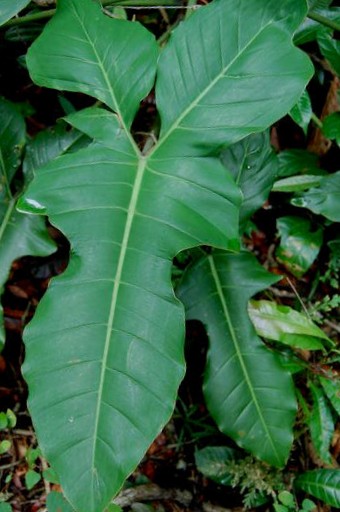
Mature leaves are glossy, leathery, olive to deep green, and commonly approximately 12 to 18 inches long in cultivation, although size varies with age, support, humidity, light, and growing conditions. The central portion of the blade is narrow and elongated, while broad side lobes create the outline of a horse’s head, saddle, violin, or fiddle. The exact leaf shape changes as the plant matures. Juvenile leaves may be less divided and less obviously horsehead-shaped, which contributes to nursery misidentification and mistaken common names.
Leaves are arranged alternately along the climbing stem. Thick petioles support the blades, while aerial roots emerge from the stem and attach to bark, poles, walls, moss poles, wood slabs, or other supports. The plant may be sold as a juvenile in a small pot, trained to a pole, grown as a large collector aroid, or propagated as cut stem sections with aerial roots. Mature leaf shape, stem form, petiole structure, cataphyll remnants, aerial roots, and the nursery label are all useful for identification.
Heartleaf Philodendron Is a Different Plant
Heartleaf Philodendron ordinarily refers to Philodendron hederaceum. Its mature foliage is generally heart-shaped rather than distinctly saddle- or horsehead-shaped, and it is commonly grown as a trailing or climbing houseplant. “Cordatum” is also frequently used in the houseplant trade for Heartleaf-Philodendron material. It should not be treated as an exact name for Philodendron bipennifolium.
Both plants contain insoluble calcium oxalate raphides and can cause the same general oral-irritation syndrome. Correct identification still matters because the site should not collapse several separate species into one record. A Heartleaf Philodendron exposure may be managed similarly in first-aid terms, but a Saddle Leaf page should still show the horsehead mature blade, climbing habit, and exact accepted name for search and taxonomy accuracy.
Fruit Salad Plant, Split-Leaf Philodendron, Tree Philodendron, and Monstera Confusion
Fruit Salad Plant ordinarily refers to Monstera deliciosa, a separate aroid whose mature leaves develop deep divisions and natural holes. The common name refers to its edible fully ripened fruit, although immature tissues contain irritating raphides. Split-Leaf Philodendron is also used for Monstera deliciosa and for the large self-supporting plant long known as Philodendron bipinnatifidum. Those plants do not have the same narrow horsehead or saddle-shaped mature leaf as Philodendron bipennifolium.
The plants share an insoluble-calcium-oxalate hazard, but the names should remain separated for identification, image labeling, search intent, and avoidance of duplicate content. Monstera, Tree Philodendron, Heartleaf Philodendron, and Saddle Leaf all belong in the broader aroid irritation category, yet each page should identify the correct plant and prevent owners from applying the wrong image or synonym to a real exposure.
Red Emerald, Red Princess, Panda Plant, and Fiddle-Leaf Ambiguity
Red Emerald and Red Princess are cultivated-trade names associated with red-stemmed or red-emerging Philodendron material rather than accepted botanical synonyms of Saddle Leaf. A plant sold under one of these names may still contain insoluble calcium oxalate because it belongs to Philodendron, but the label does not prove that it is Philodendron bipennifolium. Photographs of the mature leaf, petiole, stem, cataphyll, aerial roots, and nursery tag are needed for useful identification.
Panda Plant is sometimes attached to Saddle Leaf in nursery lists, but it more commonly refers to Kalanchoe tomentosa, a fuzzy-leaved succulent containing different toxic principles. Fiddle Leaf or Fiddle-Leaf Plant is also widely used for Ficus lyrata. Fiddle-Leaf Fig contains irritating latex rather than the same Philodendron raphide system. Common-name ambiguity is more than a botanical nuisance. It can change the toxin, expected clinical course, first-aid priorities, and veterinary differentials.
2016 Species-Specific Crystal Study
A 2016 anatomical study examined calcium oxalate crystals in multiple Philodendron species, including Philodendron bipennifolium. Researchers prepared transverse sections of the petiole, leaf blade, and midrib and examined the location, form, and measurements of crystal-bearing structures. This supplies direct species-level support for the poison classification. The page does not have to rely solely on the assumption that every member of Araceae contains an identical quantity and arrangement of raphides.
Druses were documented within the petiole, and raphide-bearing idioblasts were present in leaf tissues. Philodendron leaves in the study contained several idioblast and raphide arrangements, including spindle-shaped cells, biforine-like cells, wide cells, and overlapping crystal bundles. The crystal packets reported for P. bipennifolium measured approximately 131.8 micrometers in length and 24.5 micrometers in width. Those dimensions are invisible to the unaided eye, but each damaged leaf can release large numbers of individual crystals from many cells.
What an Idioblast Is
An idioblast is a specialized cell that differs substantially from the ordinary cells surrounding it. Depending on the plant, idioblasts may accumulate crystals, oils, latex, pigments, resins, mucilage, tannins, defensive proteins, or other materials. In Saddle Leaf, calcium oxalate crystals develop within these cells in organized packets. The cells isolate the crystals while the plant tissue remains intact.
Chewing crushes the tissue and releases the defensive structures at exactly the point where the animal is attempting to eat the plant. This helps explain the suddenness of the reaction. The animal is not waiting for a toxin to be digested, absorbed, metabolized, and distributed through the bloodstream. The damaging structures are released directly into the mouth during the first bite.
How Raphides Produce the Microscopic-Needle Effect
Raphides are elongated crystals whose narrow shape allows them to penetrate soft wet tissue. A bite can rupture many crystal-bearing cells simultaneously. Saliva spreads the released crystals, while the animal’s tongue and jaw continue moving. Head shaking, pawing, licking, and repeated swallowing can push crystals into more tissue.
The pain is therefore not merely an unpleasant taste. It is direct physical injury occurring at numerous microscopic points throughout the mouth and throat. The result is burning pain, drooling, reluctance to swallow, gagging, possible vomiting, and local swelling. A small bite can look dramatic because the mouth and throat are densely innervated and sensitive.
Inflammation, Pain, and Swelling
The punctures damage epithelial cells and activate the normal inflammatory response. Local blood vessels dilate, tissue fluid accumulates, pain receptors fire, and the lips, tongue, and throat may swell. Damaged cells can release inflammatory mediators, including histamine- and kinin-related signals. These responses intensify pain and edema even though the exposure is not necessarily a conventional allergy.
This distinction matters because an antihistamine cannot physically remove embedded crystals and may not control swelling produced mainly by mechanical injury. Airway monitoring, pain control, gentle cleaning, hydration support, and avoidance of aspiration are more important than assuming every swelling episode is a Benadryl problem. Medication decisions belong with the veterinarian who can actually see the mouth, throat, breathing, and swallowing ability.
Possible Proteinase Synergy
Research involving other raphide-bearing plants has shown that needle-shaped raphides and cysteine proteases can act together. The raphides create microscopic wounds, allowing the protease to enter tissue more effectively. In the experimental work, raphides alone and protease alone produced comparatively weak defensive effects at the tested concentrations. Their combination produced much stronger growth suppression and mortality in the experimental insects. Non-needle-shaped calcium oxalate did not create the same synergy.
This evidence supports preserving proteinases as a possible contributing factor in Araceae toxicity. It does not prove that Saddle Leaf contains the same protease, concentration, or insect-to-mammal effect. The species-specific confirmed hazard remains its calcium oxalate crystals. The safest wording is that insoluble raphides are the established primary hazard and that sap proteins or other irritants may plausibly intensify tissue effects in some aroids.
Insoluble Raphides Versus Soluble Oxalates
Insoluble calcium oxalate raphides remain largely at the contact site and cause mechanical injury, swelling, dysphagia, vomiting, and possible airway obstruction. Soluble oxalate salts enter the bloodstream, bind circulating calcium, and can precipitate within renal tubules. Those plants may cause hypocalcemia, tremors, seizures, and acute kidney injury.
The shared phrase “calcium oxalate” has caused the two syndromes to be confused. Saddle Leaf belongs to the localized insoluble-raphide category, not the ordinary soluble-oxalate renal-toxicity category. Owners should worry first about mouth pain, tongue swelling, throat swelling, swallowing ability, vomiting, aspiration, eye exposure, and secondary dehydration rather than assuming this plant behaves like a systemic soluble-oxalate poison.
Why Renal Failure Is Not the Expected Syndrome
The crystals responsible for Saddle Leaf’s immediate oral effects do not normally dissolve and circulate in a quantity sufficient to produce calcium depletion or calcium-oxalate nephrosis. Renal abnormalities following a suspected exposure require investigation for severe dehydration, ethylene glycol, grapes or raisins, medication, urinary obstruction, infection, preexisting kidney disease, soluble-oxalate plants, or another toxin.
Calling every insoluble-calcium-oxalate exposure a kidney-poisoning event creates unnecessary fear and can distract from the real immediate danger: pain, swelling, impaired swallowing, aspiration, and possible airway compromise. Kidney tests may be appropriate in a complicated or atypical case, but they are not a replacement for mouth and airway assessment in the first hour after chewing.
1991 Philodendron and Dieffenbachia Exposure Review
A poison-center study published in 1991 reviewed Philodendron and Dieffenbachia ingestion reports because severe warnings had spread despite limited cause-and-effect documentation. Later summaries of the data describe 127 Philodendron exposures in children as predominantly mild and limited to stomatitis. Serious systemic complications were not the typical outcome.
These were human cases involving unspecified Philodendron species and should not be converted into a pet toxic-dose study. They remain important evidence that the established raphide syndrome is usually localized rather than a routine cause of coma, kidney failure, liver failure, or multiorgan collapse. The study supports accurate risk calibration, not complacency. A painful mouth exposure can still become urgent if swelling, breathing difficulty, aspiration, dehydration, or species-specific feeding refusal develops.
1978 Controlled Cat Study
A 1978 toxicologic study exposed three cats to minced leaves of Heartleaf Philodendron material then known as Philodendron oxycardium, now associated with Philodendron hederaceum var. oxycardium. The reported oral exposures reached 9.1 grams of leaf material per kilogram of body weight. Acute clinical signs and lesions were not produced under the experimental conditions.
The plant was Heartleaf Philodendron rather than Saddle Leaf, and only three cats were studied. The experiment cannot establish a safe dose for Philodendron bipennifolium. It does show why uncontrolled historical reports of feline seizures, encephalitis, renal failure, and death should not be repeated as settled Philodendron toxicology without confirming the plant, exposure, clinical timeline, and alternative diseases.
2026 Suspected Feline Hepatopathy Report
A 2026 case report described a cat that developed anorexia, lethargy, jaundice, increased liver-enzyme activity, and hyperbilirubinemia after suspected chewing of unidentified Philodendron leaves. The cat’s jaundice resolved by approximately day 20, and liver enzymes returned to normal by approximately day 55. The prolonged recovery makes the case scientifically relevant when evaluating older claims that Philodendron can be associated with liver disease.
The plant was not identified to species, the diagnosis was presumptive, and biopsy or other definitive testing was not performed. The authors stated that the presentation was unlikely to be directly attributable to ordinary Philodendron toxicity and considered prolonged anorexia with secondary hepatic lipidosis a possible explanation. This case should therefore remain in the record as an unresolved observation, not as proof that Saddle Leaf contains a direct hepatotoxin or commonly causes permanent liver damage. It does, however, reinforce that cats that stop eating after painful oral plant exposure need prompt care.
Dogs and Cats
Dogs may chew a hanging leaf, pull a vine from a support, investigate repotting debris, or eat a propagated cutting. Puppies can shred a substantial amount before the pain causes them to stop. Head shaking, pawing, profuse drooling, gagging, vomiting, swollen lips or tongue, appetite loss, and dysphagia are expected. Noisy breathing, progressive swelling, weakness, coughing after vomiting, or blue-gray gums requires emergency treatment.
Cats may chew leaves repeatedly, especially when the vine is trained near furniture, a windowsill, plant shelf, or climbing structure. Cats may also contact sap during pruning and then ingest it while grooming. Dramatic drooling and mouth pawing can follow a small bite. Continued refusal to eat is particularly important because cats can develop dehydration and secondary hepatic lipidosis after prolonged anorexia even when the original toxin caused only localized oral pain.
Horses, Ponies, Donkeys, and Livestock
Direct species-specific horse cases involving Saddle Leaf are poorly documented because the plant is primarily a tropical ornamental and houseplant. The physical raphide mechanism can injure equine oral tissue if clippings or potted plants become accessible. Horses cannot vomit. Drooling, repeated swallowing, mouth pain, tongue swelling, feed refusal, coughing, dysphagia, choke, colic, or diarrhea may occur. A horse with impaired swallowing should not be drenched or offered loose feed. Aspiration and esophageal obstruction can become more dangerous than the initial plant injury.
Livestock exposure is most likely when greenhouse plants, landscape clippings, storm-damaged vines, or discarded houseplants are placed in an enclosure or accessible compost pile. The immediate pain usually limits continued feeding, but chopped material mixed into desirable feed may reduce normal avoidance. Salivation, feed refusal, tongue swelling, repeated swallowing, coughing, diarrhea, and respiratory noise require examination. Weak or dysphagic livestock should not be drenched with water, oil, milk, charcoal, or another oral preparation.
Birds, Rabbits, Guinea Pigs, Reptiles, and Other Exotics
Parrots can shred leaves, petioles, stems, and aerial roots efficiently and release numerous raphides while swallowing relatively little plant material. Repeated beak wiping, head shaking, regurgitation, refusal of food, altered voice, facial swelling, open-mouth breathing, inability to perch, or collapse requires immediate avian veterinary care. Birds should not be housed near accessible Saddle Leaf vines, hanging leaves, or pruning debris.
Rabbits and guinea pigs cannot vomit. Oral exposure may cause salivation, mouth rubbing, painful chewing, food refusal, reduced fecal production, diarrhea, or gastrointestinal stasis. A small herbivore that stops eating because its mouth hurts can develop life-threatening secondary gastrointestinal disease even when the original raphide injury remains localized. Herbivorous reptiles and tortoises should not be offered Saddle Leaf as browse or enclosure vegetation because species-specific safety data are lacking and raphide injury is avoidable.
Diagnosis, Prognosis, and Prevention
Diagnosis usually rests on immediate oral pain after chewing a correctly identified plant. Visible leaf fragments, head shaking, drooling, pawing, erythema, swelling, and dysphagia strongly support insoluble-raphide exposure. Useful photographs should show the entire vine, mature and juvenile leaves, petioles, aerial roots, stem, growing support, cataphylls, and nursery label. A detached green leaf may not distinguish Saddle Leaf from another Philodendron or a related aroid.
No routine blood test detects oral raphides. Bloodwork, imaging, corneal staining, airway evaluation, or other testing may be needed when vomiting persists, dehydration develops, the animal cannot eat, respiratory signs emerge, eye injury is suspected, or the clinical course suggests another toxin or disease. Important look-alikes include Philodendron hederaceum, Philodendron pedatum, Philodendron panduriforme, Philodendron bipinnatifidum, Monstera deliciosa, Ficus lyrata, Kalanchoe tomentosa, and other aroids.
The prognosis is good to excellent in most cases. Minor pain, drooling, and appetite reduction commonly improve within several hours, and many animals recover fully within approximately 12 to 24 hours. More extensive oral injury can remain uncomfortable for several days. Severe airway swelling, aspiration pneumonia, dehydration, prolonged inability to eat, gastrointestinal stasis, corneal injury, or secondary complications from anorexia can extend treatment. A progressive renal, hepatic, neurologic, or cardiac syndrome does not match the established direct effect of Saddle Leaf raphides and should trigger diagnostic reassessment.
Keep the vine in a room or enclosure inaccessible to pets rather than relying only on a tall shelf. Long stems, aerial roots, and fallen leaves may extend into reach as the plant grows. Confine animals elsewhere during pruning, propagation, repotting, and disposal. Collect every leaf, stem, root, sap-contaminated tool, and plant fragment before allowing animals back into the area. Never discard Saddle Leaf or other Philodendron material into livestock pens, horse paddocks, rabbit areas, aviaries, tortoise enclosures, open compost piles, or accessible household trash.
Immediate Steps After Exposure
Remove access to the plant and prevent additional chewing. Saddle Leaf injury begins in the mouth, so the first priority is to stop further contact with leaves, petioles, stems, aerial roots, cuttings, sap, and pruning debris. Keep other animals away from the plant and from any vomited material or wet plant fragments.
- Remove access to the plant: Collect loose leaves, petioles, stems, aerial roots, underground roots, cuttings, potting debris, and sap-contaminated material.
- Clear visible mouth material carefully: If the animal is alert, breathing normally, and cooperative, remove fragments from the front of the mouth without reaching deeply into the throat or risking a bite.
- Gently rinse or wipe the mouth: Use cool water or a clean wet cloth to remove loose crystals and sap. Do not direct a forceful stream toward the throat.
- Wash external contamination: Remove crushed plant material from the muzzle, paws, coat, feathers, skin, and tools before the animal can lick it or transfer it into the eyes.
- Check swallowing and breathing: Watch for continuous drooling, gagging, choking, voice changes, noisy breathing, tongue swelling, or inability to swallow water voluntarily.
- Contact a veterinarian for more than a minor exposure: Report species, amount chewed, time of exposure, vomiting, swelling, swallowing ability, appetite, and breathing.
- Preserve identification evidence: Bring photographs or a sealed sample showing mature leaves, juvenile leaves, stem, petiole, aerial roots, cataphylls, growing support, and nursery label.
Do Not Attempt Unsupervised Home Treatment
Do not treat Saddle Leaf like a systemic poison that can be fixed by making the animal vomit or giving charcoal. The problem is mostly microscopic crystals embedded in mouth and throat tissues. Owner treatment that forces material into a painful or swollen mouth can worsen aspiration, choking, and tissue injury.
- Do not induce vomiting: Hydrogen peroxide, salt, mustard, and manual gagging re-expose injured oral and esophageal tissue and increase aspiration risk.
- Do not administer activated charcoal automatically: Charcoal cannot remove raphides embedded in tissue and may be inhaled by a drooling, gagging, vomiting, or poorly swallowing animal.
- Do not attempt gastric lavage: Lavage is an invasive veterinary procedure and is not routine treatment for localized insoluble-crystal injury.
- Do not force milk, yogurt, cheese, food, or water: A small veterinarian-approved amount may sometimes be used when swallowing is entirely normal, but forced material can cause choking and aspiration.
- Do not give diphenhydramine automatically: Much of the swelling results from direct mechanical tissue injury rather than a simple allergic reaction. Antihistamines cannot remove embedded crystals or substitute for airway monitoring.
- Do not give antacids, antidiarrheals, sucralfate, pain medication, corticosteroids, anti-nausea medication, supplements, or human medication without veterinary direction: Species, swallowing ability, hydration, other medications, airway status, and the actual cause of signs must be considered.
When Emergency Examination Is Especially Important
- Noisy or labored breathing: Stridor, open-mouth breathing, neck extension, gasping, blue-gray mucous membranes, or rapidly increasing effort may indicate swelling near the larynx.
- Progressive facial, lip, or tongue swelling: Increasing edema can interfere with both swallowing and airflow.
- Inability to swallow: Continuous drooling, choking on water, repeated gagging, or fluid returning from the mouth or nostrils creates aspiration risk.
- Persistent vomiting or diarrhea: Continued fluid loss can cause dehydration and may indicate a larger exposure, another plant, potting-material ingestion, or unrelated illness.
- Voice changes: A hoarse bark, altered meow, abnormal whinny, weak bird vocalization, or new respiratory noise can indicate pharyngeal or laryngeal injury.
- Eye exposure: Continued squinting, tearing, redness, cloudiness, swelling, discharge, or obvious pain after irrigation requires examination.
- High-risk species: Birds, rabbits, guinea pigs, horses, and animals unable to vomit or unable to tolerate fasting should be evaluated sooner.
- Unexpected systemic abnormalities: Collapse, seizures, coma, jaundice, kidney abnormalities, severe weakness, or irregular heartbeat does not fit uncomplicated raphide exposure and requires investigation for another emergency.
Veterinary Examination and Mouth Care
The veterinarian removes remaining plant fragments and examines the lips, tongue, oral cavity, pharynx, swallowing reflex, and airway. The mouth may be flushed carefully while protecting the patient from aspiration. Sedation may be needed when pain, panic, or swelling prevents safe examination, but sedation must be selected with airway status in mind.
Pain control is often the most important medication. Veterinary antiemetics may be used for persistent vomiting, and oral, subcutaneous, or intravenous fluids may be provided when the animal cannot drink normally or has become dehydrated. An alert patient with completely normal swallowing may sometimes receive a small amount of milk or another calcium-containing food to help bind and clear loose insoluble oxalate from the oral cavity and esophagus. This is inappropriate when marked swelling, choking, gagging, repeated vomiting, or dysphagia is present.
Airway and Respiratory Treatment
Animals with significant tongue, pharyngeal, or laryngeal swelling require oxygen and close respiratory observation. Airway swelling can progress faster than oral medications can work. Sedation, endotracheal intubation, or an emergency surgical airway may be necessary if swelling obstructs airflow.
Antihistamines or corticosteroids may be considered by the attending veterinarian in selected cases, but neither physically removes embedded raphides and neither should delay airway protection, analgesia, or appropriate fluid support. Coughing, nasal discharge, fever, rapid breathing, or worsening lethargy after vomiting, forced liquids, or gagging may indicate aspiration pneumonia and requires reassessment.
Eye, Skin, Coat, and Feather Exposure
Eye exposure may require prolonged irrigation, fluorescein staining, topical pain management, removal of retained material, and treatment of corneal or conjunctival injury. Owners should not apply leftover eye drops, steroid drops, antibiotic drops, ointments, or human products unless a veterinarian directs it. Corneal ulcers can worsen if the wrong medication is used.
Skin, paw, coat, and feather contamination should be washed away to prevent grooming ingestion and transfer to the eyes. A mild animal-safe cleanser and thorough rinsing are usually sufficient for external contamination, but persistent redness, itching, swelling, feather damage, or skin pain should be evaluated. People handling crushed plant material should wash hands and avoid touching the eyes.
Dogs and Cats
Dogs should be monitored for drooling, mouth pain, vomiting, diarrhea, swelling, breathing effort, swallowing ability, hydration, appetite, and possible ingestion of potting soil, fertilizer, moss-pole material, plastic, clips, decorative stones, or another plant. Puppies may chew more material before stopping and may also swallow non-plant objects from the container or support.
Cats should be monitored for drooling, hiding, pawing, appetite, vomiting, hydration, swallowing, and sap on the coat. A cat that refuses food beyond a brief period needs veterinary attention because dehydration and secondary hepatic lipidosis can become serious. Saddle Leaf is not established as a direct liver toxin, but prolonged anorexia after painful oral injury can create secondary feline liver risk.
Horses, Livestock, Birds, Rabbits, Guinea Pigs, and Reptiles
Horses, ponies, and donkeys should be evaluated for mouth pain, tongue swelling, dysphagia, choke, coughing, nasal discharge, feed refusal, and colic if Saddle Leaf clippings or potted plants were accessible. Horses cannot vomit and should not be drenched when swallowing is impaired. Loose feed should be withheld until swallowing safety is clear.
Livestock should be removed from greenhouse waste, landscape debris, discarded houseplants, and accessible compost. Weak or dysphagic animals should not be drenched with milk, oil, water, charcoal, or other oral material. Birds with beak wiping, regurgitation, altered voice, facial swelling, open-mouth breathing, weakness, or inability to perch require avian veterinary care. Rabbits and guinea pigs require monitoring of appetite, fecal output, hydration, chewing, and gut motility. Reptile and tortoise exposures should be assessed with attention to temperature, hydration, appetite, oral injury, and all enclosure plants.
Recovery and Prognosis
Most minor exposures have a good to excellent prognosis. Pain and drooling commonly improve within several hours, and complete recovery is often expected within approximately 12 to 24 hours. Extensive oral injury can remain uncomfortable for several days, especially if the animal chewed multiple leaves, swallowed fragments, or developed ulceration.
The prognosis becomes more guarded when severe airway edema, aspiration pneumonia, dehydration, prolonged inability to eat or drink, corneal injury, gastrointestinal stasis, or another unidentified exposure complicates the case. Persistent food refusal in cats, rabbits, guinea pigs, birds, and other small animals requires treatment even when the original plant injury remains localized.
Prevention After the Incident
Keep the vine in a room or enclosure inaccessible to pets rather than relying only on a tall shelf. Long stems, aerial roots, and fallen leaves may extend into reach as the plant grows. Cats can climb, birds can fly, dogs can pull vines, rabbits can reach fallen leaves, and pruning fragments can travel farther than expected.
Confine animals elsewhere during pruning, propagation, repotting, training, support changes, and disposal. Collect every leaf, stem, root, sap-contaminated item, and plant fragment before allowing animals back into the area. Never discard Saddle Leaf or other Philodendron material into livestock pens, horse paddocks, rabbit areas, aviaries, tortoise enclosures, open compost piles, poultry yards, dog yards, or accessible household trash.
Frequently Asked Questions About Saddle Leaf and Animal Poisoning
What is the accepted scientific name for Saddle Leaf?
The accepted name is Philodendron bipennifolium Schott. Kew recognizes Philodendron wayombense as a botanical synonym. Philodendron panduriforme is a separate species despite being incorrectly applied to some cultivated Saddle Leaf plants. The corrected name matters because common names such as Fiddle-Leaf, Horsehead, Panda Plant, and Split-Leaf Philodendron are used loosely in plant commerce and can point to different plants.
Why is it called Horsehead or Fiddle-Leaf Philodendron?
The mature leaf has a long narrow central portion with broad side lobes. Depending on the viewer, the outline resembles a horse’s head, a saddle, a violin, or a fiddle. Juvenile leaves may look less divided, so young plants are sometimes misidentified. A mature leaf photograph, stem, petiole, aerial roots, and label are more useful than the common name alone.
Is Saddle Leaf the same as Heartleaf Philodendron?
No. Heartleaf Philodendron ordinarily refers to Philodendron hederaceum, a separate climbing species with predominantly heart-shaped foliage. Both contain insoluble calcium oxalate and can produce a similar oral-irritation syndrome, but they should not share one species record. Heartleaf toxicity data can help frame evidence boundaries, but it does not establish a safe dose for Philodendron bipennifolium.
Is Saddle Leaf the same as Fruit Salad Plant?
No. Fruit Salad Plant ordinarily refers to Monstera deliciosa. Monstera develops split and perforated leaves and can produce an edible fully ripened fruit, while immature tissues contain irritating raphides. It is botanically separate from Philodendron bipennifolium. The first-aid concern may still be similar because both are raphide-containing aroids, but the plant records and image labels should remain separate.
Is Split-Leaf Philodendron an exact name for this species?
No. Split-Leaf Philodendron commonly refers to Monstera deliciosa or Philodendron bipinnatifidum. It is too ambiguous to identify Philodendron bipennifolium reliably. A Saddle Leaf plant should show the characteristic horsehead or saddle-shaped mature leaf rather than the deeply divided self-heading form of Tree Philodendron or the perforated leaf of Monstera.
Are Red Emerald and Red Princess forms of Saddle Leaf?
No. Those names are used for cultivated or trade Philodendron material and are not botanical synonyms of Philodendron bipennifolium. A plant sold under either name may still contain insoluble calcium oxalate because it is a Philodendron, but the label does not establish that it is Saddle Leaf. Photographs of the mature foliage, petioles, stems, cataphylls, and nursery tag are needed for accurate identification.
Which parts of Saddle Leaf are poisonous?
All raw tissues should be considered irritating when chewed, including leaves, petioles, stems, aerial roots, underground roots, cataphylls, flowering structures, immature fruit, sap, and propagation debris. Leaves are the most common exposure because they are large and accessible, but cuttings, pruning waste, and fallen fragments can also release raphides. Drying, wilting, or detachment from the plant does not guarantee safety.
What did the microscopic study find in Philodendron bipennifolium?
A 2016 study documented calcium oxalate structures in the petiole, leaf blade, and midrib. The plant contained druses and raphide-bearing idioblasts. Reported raphide packets measured approximately 131.8 micrometers long by 24.5 micrometers wide, providing direct species-specific support for its toxic classification. That evidence is stronger than a generic assumption that every aroid contains the same crystal arrangement.
How do the raphides injure an animal?
Chewing breaks specialized crystal-bearing cells and releases bundles of microscopic needle-shaped crystals. The raphides penetrate the lips, gums, tongue, throat, and upper esophagus, causing numerous tiny wounds. Pain and swelling can begin during the first bite, before any toxin has to be absorbed into the bloodstream. Saliva and tongue movement can spread crystals across more tissue.
Does Saddle Leaf also contain a proteinase toxin?
Proteinaceous irritants and proteases are plausible contributors in some raphide-bearing plants. Experimental research shows that needle-shaped raphides can greatly increase the tissue effects of a cysteine protease. A specific protease has not been confirmed as a veterinary toxin of Philodendron bipennifolium, so insoluble calcium oxalate remains its established principal hazard. Proteinase language should be framed as possible synergy, not a proven second toxin for this species.
Can Saddle Leaf cause kidney failure?
Kidney failure is not the expected direct syndrome. The plant contains insoluble calcium oxalate raphides that primarily injure tissues where they make contact. They differ from soluble oxalates that enter the bloodstream, reduce circulating calcium, and precipitate in the kidneys. Kidney abnormalities after a suspected exposure should prompt evaluation for dehydration, ethylene glycol, grapes or raisins, medication exposure, urinary obstruction, infection, soluble-oxalate plants, or another disease.
Can it cause permanent liver damage?
Direct permanent liver damage has not been established as a routine consequence of Saddle Leaf ingestion. A 2026 report described hepatopathy after suspected chewing of an unidentified Philodendron, but the plant was not identified to species and the authors considered a direct toxic effect unlikely. Prolonged anorexia with secondary feline hepatic lipidosis was one possible explanation. A cat that stops eating after oral raphide injury still requires prompt care, even when the plant is not a proven direct hepatotoxin.
What did the controlled cat study show?
Three cats were orally exposed to minced Heartleaf-Philodendron leaves at doses reaching 9.1 g/kg without acute signs or lesions. That 1978 experiment involved another species and very few animals, so it cannot establish a safe Saddle Leaf dose. It does demonstrate that older uncontrolled reports of inevitable feline seizures, renal failure, encephalitis, and death were questionable and should not be repeated without stronger evidence.
Can symptoms last for two weeks?
Prolonged pain or dysphagia is possible after extensive raphide injury, but it is uncommon and is documented mainly with substantial exposures to other aroids. Most minor Philodendron exposures improve within hours and resolve within approximately one day. Persistent drooling, swallowing difficulty, mouth ulcers, food refusal, hoarseness, vomiting, or respiratory signs require veterinary reassessment because secondary complications may be present.
Can Saddle Leaf block an animal’s airway?
Severe swelling at the back of the throat is rare but possible. Stridor, open-mouth breathing, neck extension, gasping, rapidly increasing tongue swelling, altered voice, panic, or blue-gray mucous membranes requires immediate emergency treatment. Airway protection takes priority over oral medication. Do not force water, milk, food, tablets, or charcoal into an animal with swelling or breathing difficulty.
Should vomiting be induced after a dog or cat chews the plant?
No. Vomiting re-exposes already injured oral and esophageal tissues and increases aspiration risk. The immediate priorities are removing loose plant matter, gently rinsing or wiping the mouth, checking swallowing and breathing, preventing further access, and obtaining professional advice. A veterinarian may choose different treatment if another toxin was also involved, but home emesis is inappropriate for ordinary Saddle Leaf raphide exposure.
Is activated charcoal useful?
Activated charcoal cannot remove insoluble crystals embedded in tissue and is not routinely useful for localized raphide injury. A drooling, gagging, swollen, vomiting, or poorly swallowing animal can inhale charcoal into the lungs. Charcoal should not be administered at home. It would only become relevant if a veterinarian suspects another absorbable toxin in the same exposure.
Should milk or yogurt be offered?
A veterinarian or poison specialist may recommend a small amount for an animal that is fully alert and swallowing normally because calcium-containing food may help clear loose crystals. Nothing should be forced into an animal with marked drooling, tongue swelling, gagging, repeated vomiting, choking, or dysphagia. Forced milk, yogurt, water, or food can enter the lungs or worsen panic and gagging.
Should Benadryl be given for the swelling?
Do not administer diphenhydramine automatically. Much of the swelling is caused by direct mechanical injury rather than a simple allergic reaction, and antihistamines cannot remove the raphides. A veterinarian should decide whether antihistamines, corticosteroids, pain control, fluids, antiemetics, or airway monitoring are appropriate. Medication should never delay emergency care when breathing or swallowing is affected.
What should veterinarians evaluate after a significant Saddle Leaf exposure?
Veterinary evaluation should focus on oral and pharyngeal injury, tongue swelling, swallowing ability, hydration, pain, vomiting, airway noise, respiratory effort, aspiration risk, and eye exposure. Diagnostics are selected according to the case. Bloodwork may be useful for dehydration, prolonged anorexia, atypical systemic signs, or complicated vomiting, but there is no routine blood test that detects raphides embedded in the mouth.
How should a veterinarian interpret liver or kidney abnormalities after suspected Philodendron exposure?
Abnormal liver or kidney values should not be attributed automatically to Saddle Leaf. The established direct syndrome is localized insoluble-raphide injury. Liver changes may reflect prolonged anorexia, hepatic lipidosis in cats, another toxin, infection, medication exposure, or unrelated disease. Kidney changes may reflect dehydration, urinary disease, ethylene glycol, grapes or raisins, soluble-oxalate plants, or preexisting illness. The plant history matters, but it should not stop a broader workup when findings are atypical.
What evidence supports the raphide mechanism in this species?
The strongest species-specific evidence is the 2016 anatomical study documenting calcium oxalate structures, including raphide-bearing idioblasts, in Philodendron bipennifolium petiole, leaf blade, and midrib. Broader Araceae and raphide research supports the mechanism of microscopic needle injury and possible synergy with sap proteins in some plants. The clinical pattern of immediate oral pain, drooling, dysphagia, swelling, and localized irritation fits the raphide mechanism far better than a delayed systemic organ toxin.
What are the main research gaps for Saddle Leaf poisoning?
The main gaps are direct veterinary case reports for Philodendron bipennifolium, species-specific dose information, tissue-by-tissue crystal density studies beyond available anatomy, confirmation or exclusion of specific proteases in this species, and better clinical outcome data for cats, birds, rabbits, horses, and livestock. Existing evidence strongly supports localized insoluble-raphide injury, but it does not provide a precise safe dose or explain every rare atypical case.
What is the prognosis after Saddle Leaf ingestion?
The prognosis is good to excellent in most cases. Minor pain, drooling, and appetite reduction commonly improve within several hours, with full recovery often expected within approximately 12 to 24 hours. Severe airway swelling, aspiration, dehydration, corneal injury, prolonged inability to eat, or gastrointestinal stasis creates a more guarded course. Progressive kidney, liver, neurologic, or cardiac disease does not match uncomplicated Saddle Leaf raphide exposure and should trigger diagnostic reassessment.
How can Saddle Leaf poisoning be prevented?
Keep the vine in a room or enclosure inaccessible to animals rather than relying only on height. Long stems, aerial roots, and fallen leaves may extend into reach as the plant grows. Confine animals elsewhere during pruning, propagation, repotting, and disposal, then collect every plant fragment and sap-contaminated item before allowing animals back. Do not discard Saddle Leaf or other Philodendron material into livestock pens, horse paddocks, rabbit areas, aviaries, tortoise enclosures, open compost piles, or accessible trash.