Sheepkill and Mountain Laurel Grayanotoxins, Sodium-Channel Disruption, Bradycardia, Hypotension, Bloat, Regurgitation, and Livestock Browsing Risk
Is Sheepkill Poisonous to Dogs, Cats, Horses, and Livestock?
Yes—Sheepkill or Mountain Laurel, Kalmia latifolia L., is poisonous to dogs, cats, horses, ponies, donkeys, cattle, sheep, goats, camelids, pigs, rabbits, birds, reptiles, and other animals. Its evergreen leaves, flowers, flower buds, nectar, pollen, bark, stems, twigs, roots, fruits, seed capsules, seeds, sap, cut branches, dried clippings, wreath material, and floral-display debris contain grayanotoxins. These sodium-channel toxins can cause excessive salivation, repeated swallowing, vomiting in animals capable of vomiting, regurgitation in ruminants and camelids, diarrhea, abdominal pain, bloat, weakness, trembling, loss of coordination, visual impairment, slow or irregular heartbeat, low blood pressure, collapse, seizures, coma, aspiration pneumonia, and death.
Sheep and goats are especially important because they readily browse woody vegetation, but this is not only a sheep-and-goat plant. Horses may eat Mountain Laurel during forage shortage, snow cover, overgrazing, woodland turnout, storm damage, or when cut branches are thrown into a paddock. Dogs and cats may chew leaves, flowers, wreaths, or floral displays. Camelids, rabbits, birds, tortoises, pigs, and small pets can be exposed through ornamental clippings, contaminated hay, pet-accessible bouquets, or discarded landscape waste. “Sheepkill” is also used for other poisonous Kalmia shrubs, and “Mountain Laurel” can mean unrelated plants in other regions, so the plant should be identified from leaves, flowers, capsules, habitat, and photographs rather than the common name alone.
About this guide: This page provides general pet-poisoning information and cannot diagnose or treat an individual animal. For any suspected exposure, contact a veterinarian or animal poison-control service immediately. Do not induce vomiting, give medication, or attempt home decontamination unless directed by a veterinary professional.
Sheepkill
Kalmia latifolia L.
Historical botanical synonyms include:
- Chamaedaphne latifolia (L.) Kuntze
- Kalmia latifolia f. alba (Bosse) Rehder
- Kalmia latifolia f. fuscata (Rehder) Rehder
- Kalmia latifolia f. obtusata (Rehder) Rehder
- Kalmia latifolia f. polypetala (G.Nicholson) Rehder
- Kalmia latifolia var. alba Mouill.
- Kalmia latifolia var. fuscata Rehder
- Kalmia latifolia var. laevipes Fernald
Important horticultural and cultivar search names:
- Kalmia angustifolia L. — Sheep Laurel, Lambkill, Calfkill, Kill-Kid, or Narrow-Leaved Laurel; separate grayanotoxin-containing species, not a synonym of Kalmia latifolia
Important non-synonym confusion names:
- Dermatophyllum secundiflorum (Ortega) Gandhi & Reveal — Texas Mountain Laurel; unrelated Fabaceae plant with quinolizidine alkaloids, not Kalmia latifolia
- Laurus nobilis L. — culinary Bay Laurel; unrelated Lauraceae plant and not a safe substitute relationship
- Prunus laurocerasus L. and related Prunus species — Cherry Laurel or Carolina Cherry Laurel; unrelated cyanogenic plants, not Kalmia latifolia
- Nerium oleander L. — Oleander or Rosebay; unrelated Apocynaceae cardiac-glycoside plant
Ericaceae — Heath or Heather Family
Sheepkill; Sheep Kill; Mountain Laurel; Mountain-Laurel; American Mountain Laurel; American Laurel; Broadleaf Laurel; Broad-Leaved Laurel; Broad-Leaved Kalmia; Calico Bush; Calico-Bush; Calico Flower; Spoonwood; Ivy Bush; Ivybush; Mountain Ivy; Laurel; Poison Laurel; Lambkill Laurel.
Historical and taxonomic search variations include Kalmia latifolia L., Chamaedaphne latifolia (L.) Kuntze, Kalmia latifolia f. alba (Bosse) Rehder, Kalmia latifolia f. fuscata (Rehder) Rehder, Kalmia latifolia f. obtusata (Rehder) Rehder, Kalmia latifolia f. polypetala (G.Nicholson) Rehder, Kalmia latifolia var. alba Mouill., Kalmia latifolia var. fuscata Rehder, and Kalmia latifolia var. laevipes Fernald.
“Sheepkill” is ambiguous and may be used broadly for poisonous Kalmia shrubs. Sheep Laurel, Lambkill, Calfkill, Kill-Kid, and Narrow-Leaved Laurel more consistently refer to Kalmia angustifolia, a separate grayanotoxin-containing species. “Mountain Laurel” is also used for unrelated plants in other regions, including Texas Mountain Laurel, Dermatophyllum secundiflorum, which contains quinolizidine alkaloids, and culinary bay laurel, Laurus nobilis, which is unrelated and should never be confused with Mountain Laurel leaves. Cherry Laurel and Carolina Cherry Laurel are Prunus species capable of cyanide release, and Oleander may be called Rosebay or Laurel in some settings. Correct identification should use the whole plant, evergreen leaves, flower structure, seed capsules, habitat, and photographs rather than the word laurel alone.
Grayanotoxins and Older Toxin Names
The principal acute toxicants in Sheepkill are grayanotoxins, a group of closely related polyhydroxylated cyclic diterpenoids produced by several members of the Heath Family. Older publications may call the active principle andromedotoxin, acetylandromedol, rhodotoxin, or asebotoxin. Those terms largely reflect historical naming of grayanotoxin I or related grayanane compounds rather than four unrelated poisons. Modern toxicology uses grayanotoxins as the collective name for the sodium-channel-active compounds responsible for the characteristic gastrointestinal, cardiovascular, muscular, autonomic, and neurologic syndrome.
Grayanotoxins are also found in other poisonous Ericaceae plants, including many Rhododendron species, azaleas, Sheep Laurel, Japanese Pieris, Leucothoe, Fetterbush, Staggerbush, and related shrubs. Those plants are not all the same species, and their dose, palatability, habitat, and veterinary evidence differ. The shared toxicology is the grayanotoxin mechanism, not a license to treat every Ericaceae exposure as taxonomically identical.
Sodium-Channel Disruption
Grayanotoxins bind to voltage-gated sodium channels in excitable cell membranes. Under normal conditions, a sodium channel opens briefly when a nerve or muscle cell is stimulated and then inactivates so the cell can repolarize and return to its resting electrical state. Grayanotoxin binds preferentially to the activated channel and interferes with inactivation. Sodium continues entering the cell, the membrane remains depolarized longer than normal, and nerves and muscles become hyperexcitable and electrically unstable. Calcium entry may also be facilitated, further altering skeletal and cardiac-muscle contraction.
The United States Food and Drug Administration’s 1992 discussion of grayanotoxin described the mechanism this way:
“Grayanotoxins work by binding to sodium channels in cell membranes. The binding unit is the group II receptor site, localized on a region of the sodium channel that is involved in the voltage-dependent activation and inactivation. These compounds prevent inactivation; thus, excitable cells (nerve and muscle) are maintained in a state of depolarization, during which entry of calcium into the cells may be facilitated. This action is similar to that exerted by the alkaloids of veratrum and aconite. All of the observed responses of skeletal and heart muscles, nerves, and the central nervous system are related to the membrane effects.”
In practical language, grayanotoxins disrupt the normal electrical reset of nerve and muscle cells. Cells that should fire briefly and return to baseline remain persistently depolarized while the toxin is acting. This does not mean the damage is necessarily permanent. Sodium-channel function can recover as toxin dissociates, is metabolized, and is excreted, but during the acute period the heart, gastrointestinal tract, skeletal muscles, autonomic nerves, and central nervous system may all be unstable.
Cardiovascular, Autonomic, and Blood-Pressure Effects
The gastrointestinal tract, autonomic nerves, skeletal muscles, heart, and central nervous system can all be affected at the same time. Increased vagal activity contributes to profuse salivation, nausea, vomiting or regurgitation, bradycardia, and hypotension. Direct effects on myocardial cells and conducting tissue may produce sinus bradycardia, atrioventricular block, junctional rhythms, premature beats, ventricular tachyarrhythmias, or a changing mixture of slow and irregular rhythms.
Severe weakness and low blood pressure can reduce circulation to the brain, kidneys, muscles, and other organs even before an obviously dangerous arrhythmia appears. That is why the cardiovascular portion of Sheepkill poisoning cannot be evaluated from a single pulse check. Repeated or continuous electrocardiography, blood-pressure measurement, perfusion assessment, hydration assessment, electrolyte testing, oxygenation, and species-specific examination may all be needed.
Arbutin and What Not to Overstate
Arbutin, a hydroquinone glucoside, is also listed among the constituents of Kalmia latifolia. It remains appropriate to record because it is a documented ericaceous glycoside and appears in established plant-toxicology references. It should not, however, be presented as an equal proven cause of the rapid Sheepkill syndrome.
The characteristic salivation, gastrointestinal distress, hypotension, bradycardia, conduction disturbance, weakness, tremors, staggering, recumbency, and possible seizures are most convincingly explained by grayanotoxins. Arbutin may belong in the chemical profile, but public treatment and triage should be built around the grayanotoxin syndrome.
Not Turpentine, Not Cardiac Glycoside, and Not a Generic “Laurel” Poison
Grayanotoxin is not chemically similar to turpentine. Turpentine is composed primarily of volatile monoterpenes, whereas grayanotoxins are nonvolatile diterpenoid compounds. Mountain-Laurel foliage may taste bitter, acrid, or otherwise disagreeable, and that taste may cause some animals to stop chewing after a limited exposure. It is not dependable protection. Sheep and goats readily browse woody plants, hungry cattle may consume the foliage, and horses may eat it when ordinary forage is scarce or cut branches are placed directly within reach.
Sheepkill is also not a cardiac-glycoside plant merely because it causes vomiting, bradycardia, conduction disturbance, weakness, and collapse. Oleander, foxglove, lily-of-the-valley, and Kalanchoe affect the heart through sodium-potassium ATPase inhibition. Mountain Laurel affects voltage-gated sodium channels through grayanotoxins. Those two syndromes can overlap clinically but differ mechanistically and therapeutically.
The word laurel is especially misleading. Culinary bay laurel, Texas Mountain Laurel, Cherry Laurel, Carolina Cherry Laurel, Oleander, and Mountain Laurel belong to different plant families and can contain very different toxins. The common name alone should never drive treatment decisions.
Poisonous Parts and Year-Round Persistence
Every part of Sheepkill should be treated as poisonous. Established references list the bark, flowers, fruits, leaves, roots, seeds, and stems, and the nectar and pollen also belong to the grayanotoxin exposure pathway. Sap, buds, young shoots, cut stems, floral-display material, wreaths, storm debris, and dried or wilted clippings should also be treated as unsafe.
The evergreen leaves are especially important because they remain accessible in winter and early spring when pasture plants may be dormant. Wilted, dried, frost-damaged, storm-broken, cut, or discarded foliage should not be assumed safe. Cut foliage used in wreaths or floral displays can place leaves, flowers, buds, and branch fragments within reach of indoor dogs, cats, birds, rabbits, and other pets. A fresh branch thrown into a goat pen or horse paddock concentrates toxic browse at feeding height and may expose several animals at once.
Dose Uncertainty: Historical USDA Data and Newer Veterinary Review
The amount required to produce illness varies with plant chemistry, tissue, season, moisture, dose, rate of consumption, species, body size, digestive physiology, and underlying cardiovascular health. A 1930 USDA experiment reported minimum toxic green-plant-equivalent doses near 0.4% of body weight in cattle and goats and 0.35% in sheep, with one sheep dying at 0.5%. A modern systematic veterinary review cites an estimated toxic dose closer to 0.1% of body weight in fresh grayanotoxin-containing foliage for ruminants. These values demonstrate risk but do not establish a safe amount below them.
Historical dose calculations should never be applied mechanically to a dog or cat. For example, 0.2% of a 60-pound body weight equals approximately 1.92 ounces, but that arithmetic does not prove that anything below two ounces is safe. Older field estimates were drawn primarily from grazing-animal observations or experiments involving variable plant species, dried material, conversion assumptions, and unmeasured toxin concentrations. A small pet, young animal, medically fragile patient, bird, rabbit, or animal eating particularly potent leaves or flowers may become seriously ill after a much smaller absolute quantity.
Fresh, Wilted, Dried, Hay, Wreath, and Honey Exposures
Fresh foliage is the clearest hazard, but drying and wilting should not be trusted as detoxification. Grayanotoxins are not simply washed away by frost, storm damage, short-term drying, or ordinary pruning. Contaminated hay, brush piles, bedding, floral displays, wreaths, cemetery arrangements, compost, and discarded landscape waste can still create dangerous exposure, especially when pieces are mixed with safe forage or placed directly in animal enclosures.
Nectar and pollen can also carry grayanotoxins into honey when bees forage heavily on certain Ericaceae plants. Modern mad-honey poisoning is associated primarily with Eurasian rhododendrons such as Rhododendron ponticum and Rhododendron luteum. Mountain Laurel and Sheep Laurel are recognized North American potential nectar sources, but ordinary commercial honey is usually diluted from many floral sources and poisoning in the United States is uncommon. Honey of uncertain floral origin collected near dense stands of grayanotoxin plants should not be deliberately fed to animals.
Onset and Early Progression
Signs most commonly begin within one to four hours after ingestion, although delayed onset approaching 12 hours is possible. Historical Mountain-Laurel feeding experiments reported longer average observed times, but many animals were dosed in the evening and were not observed through the night, so signs first seen the next morning may have started earlier. A normal first hour does not clear an exposed animal.
Early effects usually involve the gastrointestinal and autonomic nervous systems. An affected animal may drool profusely, swallow repeatedly, water from the eyes or nose, refuse food, vomit or regurgitate, develop diarrhea, show abdominal pain, grind its teeth, or become bloated. Horses cannot vomit, while cattle, sheep, goats, and camelids may retch or regurgitate rumen or forestomach contents rather than vomit in the same manner as a dog or cat.
Early vomiting or regurgitation does not prove the danger is over. Some material may be expelled, but grayanotoxin may already have been absorbed, and additional leaves may remain in the stomach or forestomach. Cardiovascular and neurologic abnormalities can emerge after the gastrointestinal signs begin to improve.
Gastrointestinal Signs, Bloat, and Regurgitation
Dogs and cats may vomit, drool, develop diarrhea, refuse food, show abdominal discomfort, or become depressed and weak. Vomit may contain recognizable evergreen leaves, flowers, buds, capsules, or branch fragments. Repeated vomiting and diarrhea can cause dehydration, electrolyte disturbance, weakness, and aspiration risk, especially in small, young, elderly, or medically fragile animals.
Ruminants and camelids may show profuse salivation, repeated swallowing, retching, regurgitation, bloat, abdominal pain, teeth grinding, reduced rumination, forestomach hypomotility, diarrhea, dehydration, and acid-base disturbance. Bloat can become independently life-threatening by impairing breathing and circulation. Regurgitation creates a major aspiration risk, especially in weak, tremoring, or recumbent animals.
Cardiovascular Signs: Bradycardia, Hypotension, and Changing Rhythms
Cardiovascular abnormalities can develop as vagal stimulation increases and sodium-channel function becomes disrupted. The pulse may become slow, weak, irregular, rapid, or difficult to feel, and blood pressure may fall substantially. Cold extremities, pale, gray, blue, or muddy mucous membranes, severe lethargy, fainting, and collapse can accompany poor cardiac output.
Although bradycardia and atrioventricular block are characteristic findings, tachyarrhythmias and ventricular ectopy can also occur. The rhythm may change during the illness, so one pulse count cannot define the entire cardiovascular effect. Nodal rhythm, atrioventricular block, bundle-branch disturbance, ventricular tachycardia, and Wolff-Parkinson-White-like findings have been reported in human grayanotoxin literature, but those named patterns require electrocardiographic confirmation and are not a checklist of signs expected in every poisoned animal.
Neurologic, Muscular, and Sensory Signs
Neurologic and muscular signs include twitching, fine tremors, progressive weakness, irregular or staggering gait, head weaving, intermittent head pressing, impaired vision, inability to rise, recumbency, muscular spasms, seizures, paralysis, stupor, and coma. Some animals may appear drunk, unusually quiet, anxious, disoriented, or unwilling to move.
Human patients exposed through mad honey may describe dizziness, blurred vision, tingling, burning, numbness, or “pins and needles” around the mouth and extremities. Animals cannot report those subjective sensations, so veterinary descriptions should be limited to observable changes such as trembling, altered awareness, pawing at the face, weakness, visual impairment, abnormal coordination, or reluctance to stand.
Respiratory Signs and Aspiration Pneumonia
Respiratory difficulty may result from profound weakness, hypotension, neurologic depression, abdominal bloat, aspiration, or impaired neuromuscular function. Rapid shallow breathing, air hunger, coughing after regurgitation, fluid or feed material at the nostrils, blue-gray mucous membranes, abnormal lung sounds, open-mouth breathing, or increasing respiratory effort requires immediate intervention.
Aspiration pneumonia can emerge during or after the acute poisoning when a salivating, vomiting, or regurgitating animal inhales plant fragments or gastrointestinal material. The historical USDA necropsy of a sheep that died after Mountain-Laurel exposure described severe pulmonary edema and inflammatory changes around bronchi that the investigators considered likely related to regurgitated material entering the lungs. Aspiration is therefore not a minor afterthought; it is one of the ways a gastrointestinal plant poisoning becomes fatal.
Dogs
Dogs may chew low ornamental shrubs, fallen flower clusters, pruning debris, wreath material, or branches broken during storms. Early signs may include drooling, repeated swallowing, vomiting, diarrhea, abdominal discomfort, reduced appetite, depression, and weakness. A dog that vomits visible leaves still requires monitoring because absorbed grayanotoxin can continue affecting the heart and nervous system.
A slow or irregular pulse, pale mucous membranes, cold extremities, trembling, staggering, fainting, collapse, seizures, breathing difficulty, or unusual quietness indicates a more serious exposure. The amount missing from the plant may underestimate the dose because leaves can be swallowed whole, vomited material may be cleaned up, and mixed clipping piles may contain several poisonous plants.
Cats
Cats may chew leaves or flowers brought indoors, investigate floral arrangements, or contact clippings during pruning. The amount consumed may be difficult to estimate because only small bite marks may remain. Drooling, vomiting, hiding, weakness, poor coordination, abnormal heart rate, collapse, or seizures requires immediate assessment.
Continued food refusal also matters because prolonged anorexia and dehydration can create secondary complications in cats. A cat exposed through a bouquet or wreath should also be protected from true lilies, oleander, yew, lily-of-the-valley, Kalanchoe, and other plants that may be present in the same material and create different emergency priorities.
Horses, Ponies, and Donkeys
Mountain Laurel is generally not preferred when good forage is available, but horses may eat it during pasture shortage, overgrazing, snow cover, woodland turnout, storm damage, or disposal of cut branches. Historical reports associated Mountain Laurel with horse deaths, although controlled feeding data in horses are limited.
Horses cannot vomit. Potential signs include salivation, repeated swallowing, feed refusal, colic, diarrhea, sweating, weakness, visual impairment, slow or irregular pulse, low blood pressure, tremors, staggering, recumbency, seizures, and collapse. A weak or uncoordinated horse should not be forced to walk. Hypotension and cardiac-conduction abnormalities increase the risk of sudden collapse and traumatic injury.
Sheep and Goats
Sheep and goats readily browse woody vegetation and are among the species most strongly associated with grayanotoxin poisoning. The name Sheepkill reflects a real livestock hazard rather than horticultural exaggeration. Signs include profuse salivation, repeated swallowing, vomiting-like regurgitation, bloat, abdominal pain, teeth grinding, diarrhea, depression, head pressing, trembling, head weaving, staggering, weakness, recumbency, slow pulse, low blood pressure, seizures, and coma.
Several animals in one group may develop signs at different times because each consumed a different quantity. Goats and sheep may consume more than one mouthful before signs begin, particularly when hungry or when evergreen branches are mixed with ordinary browse. Weak, bloated, tremoring, or recumbent animals should never be drenched casually with oil, charcoal, water, or another oral preparation because aspiration can become fatal.
Cattle
Cattle are susceptible but may be less likely than sheep and goats to die from a comparable field exposure. The 1930 USDA experiment produced illness in cattle at approximately 0.4% of body weight, while cattle receiving as much as 0.9% survived under the study conditions. Those findings do not establish cattle resistance.
Hungry cattle can consume a substantial quantity rapidly, and group exposure may produce salivation, diarrhea, weakness, bloat, abnormal pulse, staggering, recumbency, seizures, or death. Cattle exposed to brush piles, storm debris, landscape dumping, or contaminated forage should be removed from the source and evaluated as a group, not only as individual animals already showing signs.
Alpacas and Llamas
Camelids can develop salivation, forestomach hypomotility, uncoordinated regurgitation, dehydration, acid-base and electrolyte abnormalities, weakness, ataxia, seizures, and cardiac arrhythmias after grayanotoxin-containing plant exposure. Species-specific treatment literature remains limited, so early veterinary involvement is important.
Aspiration, severe forestomach dysfunction, and prolonged recumbency may be as clinically important as the toxin’s direct sodium-channel effects. Nasal contamination, repeated regurgitation, absence of normal cud chewing, weakness, bloat, tremors, seizures, or inability to rise should be treated as urgent.
Birds, Rabbits, Guinea Pigs, Tortoises, and Other Small Animals
Reliable species-specific toxic-dose data are sparse. Historical reviews noted experimental susceptibility to andromedotoxin in dogs, cats, mice, rabbits, and doves, while grouse were historically observed eating Mountain-Laurel fruit. Wildlife observations do not prove domestic-pet safety because dose, selection, adaptation, and species tolerance differ.
Small body size makes a leaf or flower cluster proportionally significant. Birds may show weakness, regurgitation, inability to perch, tremors, loss of balance, respiratory difficulty, seizures, or collapse. Rabbits and guinea pigs cannot vomit. Drooling, food refusal, reduced fecal production, abdominal discomfort, weakness, tremors, altered heart rate, or collapse requires urgent veterinary advice.
Duration, Complications, and Prognosis
Many mildly or moderately affected animals improve within several hours as the toxin is metabolized and excreted, and uncomplicated recovery within approximately 24 hours is common with treatment. Human mad-honey literature frequently reports return of heart rate and blood pressure toward normal within approximately 2 to 9 hours, but veterinary patients must be judged by species, dose, aspiration, bloat, recumbency, and cardiovascular stability rather than by human recovery timelines.
Severe poisoning can progress to persistent hypotension, high-grade heart block, dangerous ventricular arrhythmia, severe bloat, repeated seizures, respiratory failure, aspiration pneumonia, coma, renal or other organ injury, prolonged inability to stand, and death. A patient that appears temporarily improved after vomiting or regurgitation should still be monitored because arrhythmias, hypotension, aspiration, or bloat can appear after the initial gastrointestinal phase.
Why This Page Is Titled Sheepkill
Sheepkill is an established common name for Kalmia latifolia in North American plant references, and the title accurately reflects the shrub’s long history as a livestock-poisoning plant. The name is especially meaningful because sheep and goats readily browse woody vegetation and may consume poisonous laurel leaves when ordinary forage is scarce, when branches are cut and discarded into enclosures, or when snow, ice, storms, or fence-line growth make evergreen foliage accessible.
The name is also ambiguous. Sheep Laurel, Lambkill, Calfkill, and Kill-Kid are more consistently applied to Kalmia angustifolia, a separate narrow-leaved species. Both plants contain grayanotoxins and both have poisoned livestock, but their appearance, habitat, experimental dose findings, and accepted species names differ. This page therefore preserves the existing Sheepkill title while centering the broad-leaved Mountain Laurel, Kalmia latifolia. A separate Sheep-Laurel page should address Kalmia angustifolia rather than duplicating this record.
Mountain Laurel Is Not a Culinary Laurel
Mountain Laurel belongs to Ericaceae and is unrelated to culinary bay laurel, Laurus nobilis. Its glossy evergreen leaves should never be collected as bay leaves or used to flavor food. A dried Mountain-Laurel leaf in a kitchen, pantry, trash bag, compost pail, or pet-accessible recipe area remains a poisoning hazard rather than a harmless herb.
Texas Mountain Laurel, Dermatophyllum secundiflorum, is another unrelated plant carrying the laurel name. It contains quinolizidine alkaloids, especially in its bright red seeds, and produces a different poisoning syndrome. Cherry Laurel and Carolina Cherry Laurel are Prunus species capable of releasing cyanide. Oleander may also be called Rosebay or Laurel and contains cardiac glycosides. The shared word laurel is not evidence that these plants contain the same toxin.
Accepted Name and Historical Synonyms
The accepted name is Kalmia latifolia L. Linnaeus published the name in 1753. The species has also appeared as Chamaedaphne latifolia, and several white-flowered, dark-marked, or regional forms and varieties have been described historically. These names are useful for older botanical, horticultural, herbarium, toxicology, and veterinary references.
The specific epithet latifolia means broad-leaved and helps distinguish this species from Kalmia angustifolia, whose name means narrow-leaved. That distinction is not cosmetic. The older USDA stock-poisoning experiments found different sign-producing doses for Mountain Laurel and Sheep Laurel, and common names have been applied loosely enough that the scientific name should be used whenever poisoning risk is being documented.
Native Range
Mountain Laurel is native to eastern North America. It is common through the Appalachian Mountains, plateaus, Piedmont, and coastal plains from southeastern Maine and southern Quebec to the Florida Panhandle, west to Louisiana, and north through southern Indiana. Its prominence in the Appalachians explains many regional names and the frequency with which livestock, dogs, hikers, landscapers, and property owners encounter it.
The species is also planted far beyond its natural range as an ornamental evergreen shrub. A landscaped Mountain Laurel in a suburban yard, park, school, cemetery, apartment complex, office landscape, or botanical collection is just as poisonous as a wild shrub in an Appalachian thicket. Cultivars selected for flower color, dwarf habit, or landscape form should not be assumed safer.
Habitat and Laurel Thickets
Mountain Laurel commonly occupies acidic rocky or sandy soils on ridges, upper slopes, mountain hillsides, pine-hardwood forest, oak-heath woodland, balds, forest margins, and disturbed openings. It can also occur on some well-drained mesic sites. In the southern Appalachians it may form dense, nearly impenetrable growth known as a laurel hell, laurel slick, or ivy thicket.
The shrub spreads through basal sprouting, layering, suckering, and persistent root or burl systems. Dense growth can place large quantities of evergreen foliage along trail edges, pasture margins, fence lines, woodland turnout, recently cleared areas, utility corridors, and road banks. Storms, forestry work, road maintenance, fence repair, and landscape pruning can bring branches down to an animal’s feeding height.
Growth Form
Mountain Laurel is usually a multistemmed broadleaf evergreen shrub, although older plants in favorable Appalachian valleys can become small trees. Established shrubs commonly reach approximately 5 to 15 feet, while exceptional plants may approach 30 to 40 feet. The plant grows slowly but can persist for decades.
It regenerates vigorously from basal burls, suckers, layered branches, and rhizome-like structures after cutting, fire, browsing, or other disturbance. Cutting the visible stems does not necessarily eliminate future access. New growth can appear along fence lines and woodland edges, and cut branches left on the ground may remain toxic even after the main shrub is removed.
Leaves
The leaves are alternate, simple, leathery, and glossy, usually elliptic to lance-shaped with smooth margins. They commonly measure approximately 2 to 5 inches long and remain on the plant for two or more years. The upper surface is usually dark green and shiny, while the underside is paler.
The evergreen foliage is a major poisoning concern because it remains visible and accessible while grasses, forbs, and deciduous browse are dormant. Fallen leaves, storm-broken branches, and cut stems remain potentially toxic. Winter and early spring are especially dangerous because animals may be hungry, pasture may be sparse, and green leaves may stand out as an available food source.
Flowers and the Spring Trap Mechanism
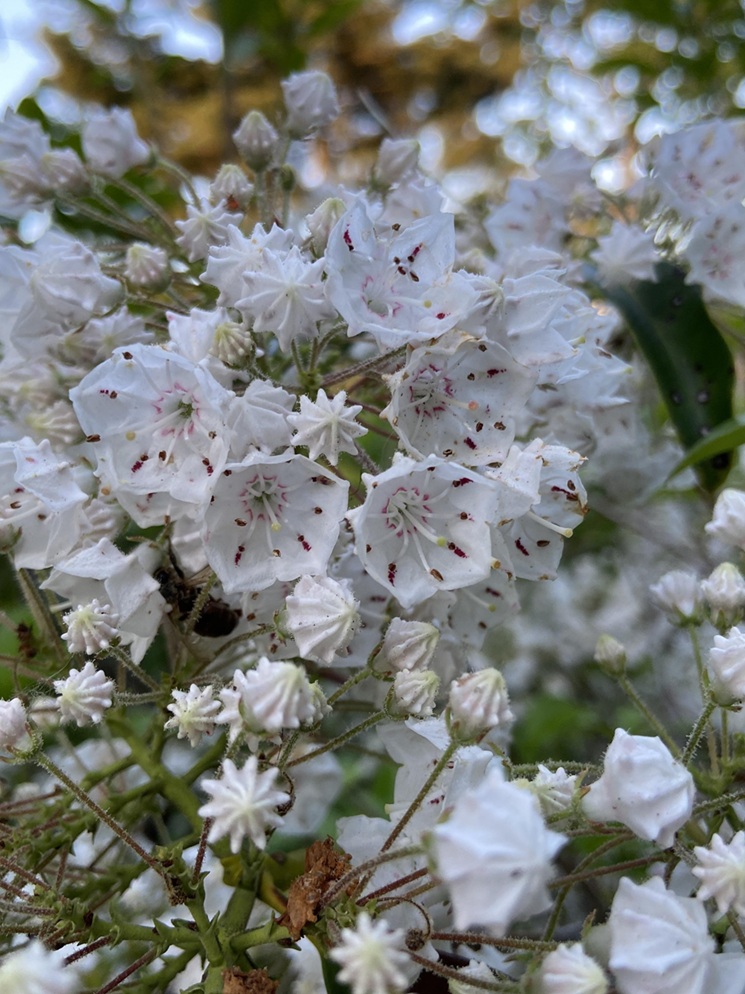
Mountain-Laurel flowers appear in rounded terminal clusters, usually during May and June. Individual flowers are white, pale pink, rose, or patterned with darker red, purple, or maroon marks. The fused corolla forms a shallow cup or five-sided bowl. Flowers, nectar, and pollen are part of the poisoning concern and should not be assumed safer than leaves merely because they are showy and short-lived.
Each stamen is held under tension with its anther tucked into a small pocket in the corolla. When an insect lands or disturbs the flower, the stamen springs free and throws pollen onto the visitor. This distinctive spring mechanism is useful for identification. It is also a reminder that the flower cluster is active plant tissue, not harmless decoration for bouquets, wreaths, rabbit forage, bird cages, or pet bedding.
Fruit and Seeds
The fruit is a dry, five-part capsule rather than a fleshy berry. Each capsule may contain hundreds of very small seeds, and one mature shrub can produce thousands of seeds during a season. Fruit capsules, seeds, and spent flower clusters should be treated as poisonous along with the rest of the plant.
The small size of the capsules and seeds may make them less likely to be eaten in bulk than leaves, but they should not be added to pet bedding, aviaries, rabbit forage, tortoise enclosures, livestock feed, craft material, potpourri, or dried floral arrangements within reach of animals. Dry-looking seed heads can still be mixed with more toxic fresh leaves and stems.
Poisonous Parts and Year-Round Risk
Bark, flowers, fruits, leaves, roots, seeds, and stems are all listed as poisonous. Sap, nectar, pollen, young shoots, flower buds, cut branches, dried clippings, wreaths, and floral displays should likewise be treated as unsafe. The evergreen habit creates a year-round exposure, with winter and early spring especially dangerous to grazing animals because the laurel remains green while preferred pasture and woodland forage may be absent.
Cut foliage used in wreaths or floral displays creates an additional indoor exposure. Fallen leaves and flower clusters may be reached by dogs, cats, birds, rabbits, and other animals even when the arrangement itself is placed high. Wreaths placed on doors, mantels, cemetery markers, vehicles, barns, stalls, and fence posts can shed toxic leaves or be pulled down by animals.
Historical Mad-Honey Poisoning
Honey can contain grayanotoxins when bees collect sufficient nectar from certain members of the Ericaceae. Modern mad-honey poisoning is associated primarily with Eurasian rhododendrons, particularly Rhododendron ponticum and Rhododendron luteum. Mountain Laurel and Sheep Laurel are recognized North American potential nectar sources, but ordinary commercial honey is diluted from many floral sources and poisoning in the United States is uncommon.
The first famous written account comes from the Greek soldier and writer Xenophon. In the Anabasis, he described troops affected by local honey during the retreat following Cyrus the Younger’s unsuccessful campaign against Artaxerxes II:
“the number of bee hives was extraordinary, and all of the soldiers that ate of the honey combs lost their senses, vomited and were affected with purging, and none of them was able to stand upright; such as had eaten only a little were like men greatly intoxicated, and such as had eaten much were like mad men and some like persons at the point of death. They lay upon the ground, in consequence, in great numbers, as if there had been a defeat; and there was general dejection. The next day, no one of them was found dead; and they recovered their senses about the same hour they had lost them on the preceding day.”
The account preserves a recognizable dose-dependent clinical pattern: gastrointestinal evacuation, altered mental status, severe weakness, inability to stand, apparent near-death illness in heavy consumers, and recovery as the toxin was cleared. It does not establish that honey produced near one American Mountain-Laurel shrub will necessarily contain a dangerous concentration. Honey of uncertain floral origin from dense grayanotoxin plant stands should not be fed deliberately to pets or livestock.
FDA Description of the Sodium-Channel Mechanism
The United States Food and Drug Administration’s 1992 discussion of grayanotoxin described the mechanism as follows:
“Grayanotoxins work by binding to sodium channels in cell membranes. The binding unit is the group II receptor site, localized on a region of the sodium channel that is involved in the voltage-dependent activation and inactivation. These compounds prevent inactivation; thus, excitable cells (nerve and muscle) are maintained in a state of depolarization, during which entry of calcium into the cells may be facilitated. This action is similar to that exerted by the alkaloids of veratrum and aconite. All of the observed responses of skeletal and heart muscles, nerves, and the central nervous system are related to the membrane effects.”
In layman’s terms, grayanotoxins disrupt the natural electrical current present in cells, preventing the cells from returning to normal and leaving them persistently excited while the toxin is active. “Persistently” is more accurate than permanently because many uncomplicated patients recover as the toxin dissociates, is metabolized, and is excreted. The explanation remains useful because it connects the stomach signs, weakness, tremors, heart rhythm changes, and low blood pressure into one coherent syndrome.
How Grayanotoxin Produces Bradycardia and Hypotension
Prolonged depolarization affects autonomic nerves as well as cardiac muscle. Increased vagal influence can slow the sinus node, impair conduction through the atrioventricular node, and lower blood pressure. Direct myocardial and conduction-system effects can produce premature beats, changing rhythms, and sometimes tachyarrhythmias. This explains why bradycardia and ventricular tachycardia can both appear within descriptions of severe grayanotoxin poisoning.
The heart rhythm is not diagnosed reliably by watching the chest or feeling one pulse. Continuous or repeated electrocardiography may be required because the pattern can change as toxin absorption, circulation, bloat, dehydration, electrolyte disturbance, oxygenation, and treatment evolve. Owner-administered heart medication is unsafe because the wrong rhythm drug can worsen the wrong rhythm.
Human Paresthesia and Named Rhythm Findings
Human mad-honey reports describe dizziness, sweating, blurred vision, weakness, tingling, burning, numbness, or prickling around the mouth and extremities. Those symptoms are important medical evidence but cannot be transferred word-for-word to an animal that cannot describe what it feels.
Veterinary equivalents may include pawing at the mouth, head shaking, unusual facial behavior, tremors, altered awareness, stumbling, weakness, visual impairment, or reluctance to move. These observations do not prove that an animal experienced paresthesia. Nodal rhythm, atrioventricular block, bundle-branch disturbance, ventricular tachycardia, and Wolff-Parkinson-White-like findings have been reported in human grayanotoxin literature. They demonstrate the toxin’s electrical effects but are not a checklist of rhythms expected in every poisoned animal.
USDA Technical Bulletin 219
One of the most important direct studies of Sheepkill was published by the United States Department of Agriculture in 1930 as Technical Bulletin 219, Mountain-Laurel (Kalmia latifolia) and Sheep Laurel (Kalmia angustifolia) as Stock-Poisoning Plants. The investigators conducted 8 experimental feedings in cattle, 5 in goats, and 16 in sheep using Kalmia latifolia. Plant material had been collected in the eastern United States, dried, shipped to the Salina Experiment Station in Utah, ground, weighed, moistened, and usually administered with a balling gun.
The dose tables converted the dry material back to an estimated green-plant equivalent by assuming 75% weight loss during drying. This design was artificial compared with ordinary browsing, and the plants’ exact grayanotoxin concentrations were not measured with modern analytical methods. Even so, the work supplied controlled dose, species, and outcome data that remain directly relevant to Mountain-Laurel toxicology and should not be discarded.
Experimental Toxic Doses of Mountain Laurel
The USDA investigators reported a minimum toxic dose of approximately 0.4% of body weight in green-plant equivalent for cattle, while 0.3% produced no recognizable effect in one case. The minimum toxic dose was approximately 0.4% for goats, with 0.3% producing no distinct effect in one trial. One goat recovered after a dose equivalent to 0.6% of body weight.
The minimum toxic dose reported for sheep was approximately 0.35% of body weight. One sheep died after receiving 0.5%, while another sheep receiving 0.6% became ill and survived. The researchers considered 0.5% a probable minimum lethal dose under their conditions but emphasized substantial individual variation. Cattle were fed amounts as high as 0.9% of their body weight and became ill without dying. The authors concluded that cattle, goats, and sheep were all susceptible but that sheep and goats were more likely than cattle to succumb.
Why the Old Dose Data Must Not Be Used as a Safe Threshold
The USDA work involved dried, transported, ground plant material converted mathematically to a green equivalent. The plants’ exact grayanotoxin concentrations were not measured with modern analytical methods, and the number of animals in each species group was limited. The difference between the sheep that died at 0.5% and the sheep that survived 0.6% demonstrates why a single percentage cannot predict outcome.
Plant chemistry, individual susceptibility, retention, regurgitation, digestive rate, hydration, cardiovascular status, and treatment all influence the result. A modern systematic review cites approximately 0.1% of body weight in fresh foliage as an estimated toxic dose for ruminants. The more conservative figure should reinforce emergency consultation rather than encourage owners to calculate whether an ingestion was “under the limit.”
Mountain Laurel Compared With Sheep Laurel
In the same USDA experiments, Kalmia angustifolia caused recognizable illness in some sheep at approximately 0.15% of body weight and in cattle at approximately 0.2%. The minimum sign-producing amounts were lower than those found for Kalmia latifolia. Mortality did not follow that same simple ranking. One sheep survived 1.2% Kalmia angustifolia, while a sheep receiving 0.5% Kalmia latifolia died.
The authors concluded that Sheep Laurel appeared more potent at producing signs but was not necessarily more likely to kill under every experimental condition. These findings are one reason the common names Sheepkill, Sheep Laurel, Lambkill, and Mountain Laurel should not be treated as interchangeable labels for one plant.
Historical Necropsy Findings
Only one animal died during the USDA experimental series: sheep 1022 after Mountain-Laurel exposure. The investigators described severe acute parenchymatous nephritis affecting the renal tubules, with necrobiotic changes, complete breakdown of some tubules, disorganization of epithelial cells, congestion, edema, hemorrhage, and degenerative changes in the blood. The liver cells were swollen and showed some albuminous degeneration, although the liver injury was considered less severe than the kidney damage.
Increased blood was also noted in the pancreas and spleen, probably secondary to the hepatic and circulatory effects. Sections of lung were congested and affected by severe pulmonary edema and inflammatory-cell invasion. The process appeared centered around bronchi and was considered likely to have resulted from regurgitated material entering the lungs. This historical pathology should remain part of the record, but it must be interpreted cautiously. It documents severe systemic and renal injury in one experimentally poisoned sheep. It does not establish that every Mountain-Laurel exposure causes primary kidney failure or that renal necrosis is the defining syndrome.
Historical Onset Observations
The USDA investigators calculated average observed onset times of approximately 16 hours and 50 minutes for cattle, 16 hours and 47 minutes for goats, and 14 hours and 44 minutes for sheep after Mountain-Laurel feeding. They immediately acknowledged a major limitation: most feedings occurred in the evening and no overnight observations were made. Signs first noticed in the morning may have begun many hours earlier.
Current veterinary evidence places onset more commonly within one to four hours, although some animals do not develop recognized signs for as long as 12 hours. An exposed animal should therefore be monitored and evaluated promptly rather than cleared because it appears normal during the first hour.
Historical Remedy Experiments
The 1930 USDA bulletin discussed numerous older remedies, including bleeding, milk, castor oil, lard, mineral oil, exercise, apomorphine, Epsom salt, and linseed-oil drenches. Many of those practices reflected the medical understanding and husbandry methods of the period and are not appropriate owner first aid today.
In one experimental series, several sheep received large Mountain-Laurel doses followed by linseed oil. Some remained unaffected and others became ill but recovered, leading the investigators to consider the oil beneficial. The study lacked a modern controlled design, and the potential for aspiration from drenching a weak or regurgitating ruminant was not evaluated by current standards. This historical treatment evidence should not be deleted, but it also should not be converted into instructions to give oil at home. Contemporary veterinary care prioritizes airway protection, cardiovascular monitoring, controlled decontamination, intravenous support, ECG-directed medication, and management of bloat and aspiration.
2026 Systematic Veterinary Review
A systematic review published in 2026 identified 31 records of animal grayanotoxin poisoning involving 111 livestock animals and 11 companion animals. Sheep and goats were the most frequently represented livestock species. Dogs, cats, rabbits, tortoises, miniature pigs, and other companion or nontraditional animals appeared less often.
Rhododendrons and Japanese Pieris were identified most frequently, while Mountain Laurel appeared in a smaller part of the published evidence base. Retching, regurgitation, and vomiting were especially common and may be useful clues when several ruminants become ill after access to ornamental or woodland shrubs. The review also emphasized incomplete reporting, small case numbers, inconsistent plant identification, and substantial gaps in species-specific dose information.
Confirmed Grayanotoxin Poisoning in Three Goats
A 2001 veterinary report involved six young Nubian goats exposed when a visitor fed them an azalea branch at a zoological park. Three goats developed illness the following day. The affected goats showed bloat, profuse regurgitation, depression, intermittent head pressing, and fine muscle tremors in the hind limbs. Clinically recognized bradycardia or arrhythmia was not reported in those three animals, demonstrating that significant grayanotoxin poisoning does not always produce an obvious slow pulse.
The goats received activated charcoal, magnesium hydroxide, and lactated Ringer’s solution and recovered within 24 hours. Liquid chromatography-mass spectrometry identified grayanotoxin exposure in biological samples, providing analytical confirmation. The plant was an azalea rather than Mountain Laurel. The case remains relevant because the gastrointestinal, neurologic, ruminal, aspiration, diagnostic, and treatment issues belong to the same grayanotoxin syndrome.
Dogs and Cats
Dogs may chew low ornamental shrubs, fallen flower clusters, pruning debris, wreath material, or branches broken during storms. Early signs may include drooling, vomiting, diarrhea, abdominal discomfort, reduced appetite, depression, and weakness. A slow or irregular pulse, pale mucous membranes, cold extremities, trembling, staggering, fainting, collapse, or seizures indicates a more serious exposure.
Cats may chew leaves or flowers brought indoors, investigate floral arrangements, or contact clippings during pruning. The amount consumed may be difficult to estimate because only small bite marks remain. Drooling, vomiting, hiding, weakness, poor coordination, abnormal heart rate, collapse, or seizures requires immediate assessment. Continued food refusal also matters because prolonged anorexia and dehydration can create secondary complications in cats.
Horses, Ponies, and Donkeys
Mountain Laurel is generally not preferred when good forage is available, but horses may eat it during pasture shortage, overgrazing, snow cover, woodland turnout, storm damage, or disposal of cut branches. Historical reports associated Mountain Laurel with horse deaths, although controlled feeding data in horses are limited.
Horses cannot vomit. Potential signs include salivation, repeated swallowing, feed refusal, colic, diarrhea, sweating, weakness, visual impairment, slow or irregular pulse, low blood pressure, tremors, staggering, recumbency, seizures, and collapse. A weak or uncoordinated horse should not be forced to walk. Hypotension and cardiac-conduction abnormalities increase the risk of sudden collapse and traumatic injury.
Sheep, Goats, and Cattle
Sheep and goats readily browse woody vegetation and are among the species most strongly associated with grayanotoxin poisoning. The name Sheepkill reflects a real livestock hazard rather than horticultural exaggeration. Signs include profuse salivation, repeated swallowing, vomiting-like regurgitation, bloat, abdominal pain, teeth grinding, diarrhea, depression, head pressing, trembling, head weaving, staggering, weakness, recumbency, slow pulse, low blood pressure, seizures, and coma.
Cattle are susceptible but may be less likely than sheep and goats to die from a comparable field exposure. The 1930 USDA experiment produced illness in cattle at approximately 0.4% of body weight, while cattle receiving as much as 0.9% survived under the study conditions. Those findings do not establish cattle resistance. Hungry cattle can consume a substantial quantity rapidly, and group exposure may produce salivation, diarrhea, weakness, bloat, abnormal pulse, staggering, recumbency, seizures, or death.
Alpacas, Llamas, Pigs, Rabbits, Birds, and Wildlife
Camelids can develop salivation, forestomach hypomotility, uncoordinated regurgitation, dehydration, acid-base and electrolyte abnormalities, weakness, ataxia, seizures, and cardiac arrhythmias after grayanotoxin-containing plant exposure. Aspiration, severe forestomach dysfunction, and prolonged recumbency may be as clinically important as the toxin’s direct sodium-channel effects. Pigs may investigate ornamental debris or rooted shrubs and should not receive Mountain-Laurel clippings as enrichment.
Reliable species-specific toxic-dose data are sparse for birds, rabbits, guinea pigs, reptiles, and other small animals. Small body size makes a leaf or flower cluster proportionally significant. Birds may show weakness, regurgitation, inability to perch, tremors, loss of balance, respiratory difficulty, seizures, or collapse. Rabbits and guinea pigs cannot vomit. Drooling, food refusal, reduced fecal production, abdominal discomfort, weakness, tremors, altered heart rate, or collapse requires urgent veterinary advice.
Mountain Laurel often grows in habitat used by white-tailed deer and other wildlife. Seeing deer browse a shrub does not establish that it is safe for sheep, goats, cattle, horses, dogs, cats, rabbits, birds, or pets. Wildlife selection, gradual exposure, rumen adaptation, body size, season, and amount consumed all influence outcome.
Diagnosis
No routine rapid test confirms Mountain-Laurel poisoning in most veterinary clinics. Diagnosis depends on credible access, compatible gastrointestinal, cardiovascular, neurologic, and ruminal signs, and reliable identification of Kalmia latifolia. Useful evidence includes complete branches, leaves, flower clusters, capsules, photographs of the entire shrub and habitat, vomited or regurgitated material, and information about pruning, storm damage, floral arrangements, forage shortage, woodland turnout, and group exposure.
Veterinary assessment may include electrocardiography, repeated heart-rate and blood-pressure measurements, hydration status, blood glucose, electrolytes, acid-base balance, kidney and liver values, neurologic examination, oxygenation, chest imaging, and evaluation for bloat or aspiration. Specialized laboratories can identify grayanotoxins in plant material, ingesta, feces, urine, or other biological samples using chromatographic methods. Those tests may confirm exposure but are rarely available quickly enough to determine initial emergency treatment.
Important Differential Diagnoses
Sheep Laurel, Staggerbush, Fetterbush, rhododendrons, azaleas, Japanese Pieris, Leucothoe, and other grayanotoxin-containing Ericaceae can produce nearly identical signs. Oleander, foxglove, lily-of-the-valley, Kalanchoe, and other cardiac-glycoside plants can also cause vomiting, bradycardia, conduction block, ventricular arrhythmias, weakness, and collapse through a different mechanism.
Yew, nicotine, ionophore-contaminated feed, pesticides, cardiovascular medications, toxic mushrooms, nitrate, cyanide, enterotoxemia, grain overload, choke, bloat from other causes, aspiration pneumonia, metabolic disease, infectious disease, and primary gastrointestinal or cardiac disease should also be considered according to the species and circumstances. Mixed plant exposures deserve special attention. Identifying one Mountain-Laurel branch does not eliminate the need to inspect the entire debris pile.
Prognosis and Prevention
Mild poisoning limited to gastrointestinal signs, depression, or temporary weakness generally has a favorable prognosis with timely treatment. Heart rate and blood pressure often improve within several hours as grayanotoxin is metabolized and excreted. The prognosis becomes guarded with persistent hypotension, high-grade heart block, ventricular arrhythmia, severe bloat, repeated seizures, aspiration pneumonia, coma, renal or other organ injury, or prolonged inability to stand.
Identify Mountain Laurel, Sheep Laurel, Staggerbush, Fetterbush, rhododendrons, azaleas, Japanese Pieris, and other poisonous Ericaceae before using wooded or landscaped areas for animal turnout. Provide adequate safe forage before turnout, especially during winter, early spring, drought, snow cover, transportation, or introduction to an unfamiliar enclosure. Inspect fence lines and paddocks after wind, ice, snow, tree work, trail clearing, landscaping, and utility maintenance. Remove every fallen or cut branch before animals return.
Never throw Mountain-Laurel clippings, wreaths, floral arrangements, cemetery arrangements, storm debris, or brush-clearing waste into goat pens, sheep lots, cattle pastures, horse paddocks, chicken runs, rabbit areas, aviaries, tortoise enclosures, dog yards, or accessible compost piles. Prevention depends as much on human disposal behavior as on the animal’s normal browsing choices.
Immediate Steps After Exposure
Remove every animal from the source immediately. Move pets and livestock away from the standing shrub, fallen branches, landscape clippings, wreaths, floral arrangements, contaminated hay, brush piles, compost, or fence-line growth. Keep the animal calm and quiet. Do not exercise, chase, crowd, or force a weak or uncoordinated animal to walk because hypotension and cardiac-conduction abnormalities can precipitate collapse.
- Contact a veterinarian immediately: Report the animal species, body weight, earliest possible exposure time, amount that may be missing, current signs, and whether other animals had access.
- Remove loose plant material carefully: Clear visible leaves or flowers from the front of the mouth only when the animal is alert and cooperative. Do not reach deeply into the throat.
- Save identification evidence: Collect representative leaves, flowers, stems, capsules, bark, seeds, photographs, nursery labels, hay samples, and vomited or regurgitated plant material in a sealed container.
- Watch for aspiration and bloat: Report coughing, feed or fluid at the nostrils, repeated regurgitation, abdominal enlargement, absent rumination, breathing difficulty, or increasing weakness immediately.
- Separate exposed animals from unaffected animals: Prevent additional browsing and allow individual monitoring because each animal may have consumed a different amount.
- Do not assume normal appearance means safety: Cardiovascular, neurologic, bloat, and aspiration complications may follow the early gastrointestinal signs.
Do Not Attempt Unsupervised Home Treatment
- Do not induce vomiting yourself: Hydrogen peroxide, salt, mustard, and manual gagging can cause gastrointestinal injury, prolonged vomiting, or aspiration. Horses, rabbits, rodents, and several other species cannot vomit.
- Do not administer activated charcoal automatically: A vomiting, regurgitating, weak, tremoring, seizing, or poorly coordinated animal can inhale charcoal into the lungs.
- Do not force fluids or drench livestock: Oil, water, milk, charcoal mixtures, electrolyte solutions, and other oral preparations can be aspirated when swallowing is impaired.
- Do not give atropine, quinidine, isoproterenol, lidocaine, procainamide, or another cardiac medication: Slow rhythms, heart block, premature beats, and ventricular tachyarrhythmias require different ECG-directed treatment.
- Do not give human anti-nausea, antidiarrheal, pain, sedative, or seizure medication: The product may be unsafe for the species or may worsen hypotension, aspiration risk, neurologic depression, or cardiac instability.
- Do not assume spontaneous vomiting removed the toxin: Plant material may remain in the stomach for hours, and cardiovascular or neurologic signs can develop after gastrointestinal symptoms begin to improve.
When Emergency Examination Is Especially Important
- Repeated vomiting or regurgitation: Continued gastrointestinal signs cause dehydration and create a substantial aspiration risk.
- Bloat or forestomach shutdown: Abdominal distention, absent cud chewing, repeated retching, or severe discomfort can become independently life-threatening.
- Slow, rapid, or irregular heartbeat: Weak pulses, pale mucous membranes, cold extremities, fainting, or collapse may indicate severe hypotension or a dangerous conduction disturbance.
- Neurologic abnormalities: Head weaving, head pressing, staggering, tremors, visual impairment, seizures, inability to stand, or coma requires immediate stabilization.
- Breathing abnormalities: Coughing, nasal contamination, rapid or labored breathing, blue-gray mucous membranes, or abnormal lung sounds may indicate aspiration or circulatory failure.
- Group exposure: Every exposed animal requires veterinary-directed assessment or monitoring because each may have consumed a different amount.
- High-risk species: Goats, sheep, camelids, horses, rabbits, guinea pigs, birds, and very small or medically fragile pets should be evaluated promptly even when early signs appear mild.
Veterinary Decontamination
A veterinarian may induce vomiting in a dog or cat when ingestion was recent and the patient remains alert, neurologically normal, cardiovascularly stable, and capable of protecting the airway. Plant material may remain in the stomach for hours, so professionally controlled emesis can still be useful after some delay. It is avoided once severe spontaneous vomiting, marked weakness, tremors, seizures, collapse, or impaired swallowing develops.
One veterinarian-administered dose of activated charcoal with an appropriate cathartic may reduce further absorption in selected patients. Routine repeated doses throughout the first day are not automatically required for grayanotoxin exposure and can increase dehydration, electrolyte disturbance, aspiration risk, and treatment stress. Charcoal must not be forced into a vomiting, regurgitating, weak, seizuring, bloated, or poorly coordinated animal.
Large-animal gastrointestinal treatment depends on species, swallowing ability, rumen or forestomach function, amount consumed, bloat, and degree of regurgitation. Any drench, stomach tube, lavage procedure, or oral adsorbent requires careful airway and aspiration assessment. The goal is not just to move material through the gut; it is to reduce absorption without creating aspiration pneumonia or worsening cardiovascular instability.
Cardiovascular Treatment
Intravenous fluids support blood pressure, circulation, hydration, and tissue perfusion. The fluid type and rate are adjusted according to pulse quality, blood pressure, cardiac rhythm, electrolyte status, urine production, respiratory condition, and the presence of bloat or aspiration. Fluids support circulation while toxin effects subside, but they do not replace rhythm monitoring.
Heart rate, electrocardiographic rhythm, and blood pressure are monitored until stable. Atropine may be administered for clinically important bradycardia or vagally mediated conduction delay. Tachyarrhythmias, premature ventricular beats, and other rhythm abnormalities require medication selected for the actual ECG pattern. Current veterinary decision-making may include agents such as lidocaine or procainamide when appropriate. Historical recommendations for quinidine or isoproterenol should not be applied automatically outside specialist judgment.
Neurologic, Respiratory, and Ruminant Support
Tremors may be managed with a veterinarian-selected muscle relaxant such as methocarbamol. Standard anticonvulsants may be required for seizures. Oxygen, airway support, suctioning, ventilation, and treatment for aspiration pneumonia may be necessary when vomiting, regurgitation, weakness, bloat, or neurologic depression compromises breathing.
Ruminants and camelids may require treatment for bloat, forestomach hypomotility, dehydration, acid-base and electrolyte disturbances, aspiration, and prolonged recumbency. Deep bedding, safe positioning, regular turning, and support of muscle and nerve circulation can be important in animals unable to rise. A recumbent goat, sheep, cow, alpaca, or llama should be positioned and monitored to reduce bloat, aspiration, pressure injury, and muscle damage.
Dogs and Cats
Dogs should be monitored for vomiting, diarrhea, drooling, weakness, tremors, pulse quality, heart rate, gum color, coordination, breathing, and alertness. A dog that vomits leaves may still have absorbed grayanotoxin or retained additional plant material. Cats should be monitored for hiding, vomiting, drooling, food refusal, weakness, abnormal heart rate, poor coordination, collapse, and dehydration.
If the exposure involved a wreath, bouquet, cemetery arrangement, or mixed clipping pile, the veterinarian should be told about every plant present. Cats are especially vulnerable to separate true-lily exposure, while dogs may also eat potting material, floral foam, ribbon, wire, pesticides, or fertilizer. Identifying Mountain Laurel does not eliminate the need to inspect the entire exposure source.
Horses and Livestock
Horses, ponies, and donkeys should be kept quiet and should not be walked for exercise or forced to move when weak, ataxic, hypotensive, or arrhythmic. Salivation, colic, diarrhea, weakness, abnormal pulse, visual impairment, tremors, staggering, or recumbency after Mountain-Laurel access warrants large-animal veterinary care. Transport should be planned with a veterinarian when the animal is weak or poorly coordinated.
Sheep, goats, cattle, alpacas, llamas, and pigs should be removed from all remaining branches, clippings, hay, and mixed debris. Bloat, regurgitation, head pressing, tremors, absent rumination, dehydration, and weakness must be reported immediately. Do not drench affected livestock. Oral fluids, oil, charcoal, milk, or medication can be aspirated when swallowing is impaired or the animal is regurgitating.
Birds, Rabbits, Guinea Pigs, Reptiles, and Small Pets
Birds, rabbits, guinea pigs, tortoises, reptiles, and other small pets require prompt species-specific care because safe doses are not established and body size is small. Birds with regurgitation, weakness, loss of balance, poor perching, tremors, respiratory difficulty, or collapse need avian veterinary attention. Rabbits and guinea pigs cannot vomit, so food refusal, reduced fecal production, drooling, abdominal discomfort, weakness, or altered heart rate is important.
Do not offer Mountain Laurel as browse, cage greenery, bedding, nesting material, tortoise forage, bird enrichment, or rabbit chew material. Remove any wreaths, floral arrangements, dried leaves, or decorative branches from pet-accessible rooms and enclosures.
Recovery and Prognosis
Animals with limited exposure and stable cardiovascular findings often begin improving within several hours and may recover fully within approximately one day. Monitoring remains necessary because arrhythmias, hypotension, aspiration, or bloat can appear after the initial gastrointestinal phase or after the animal seems temporarily improved.
The prognosis becomes guarded with persistent cardiovascular instability, severe bloat, repeated seizures, coma, aspiration pneumonia, organ injury, or prolonged recumbency. No animal should return to the affected enclosure until every branch, leaf, flower, capsule, seed, twig, hay fragment, wreath piece, and plant fragment has been removed.
Prevention After the Incident
Fence livestock and horses away from Mountain-Laurel thickets, leaving enough clearance that branches cannot grow, bend, or fall into enclosures. Inspect shaded fence lines, woodland turnout, trail margins, pasture edges, stream corridors, and landscaped borders before animals are introduced. Provide adequate safe forage before turnout, especially during winter, drought, snow cover, transport, or movement into an unfamiliar area.
Inspect enclosures after storms, ice, heavy snow, logging, tree removal, trail clearing, utility work, landscaping, pruning, and fence repair. Remove every fallen or cut branch before animals regain access. Never discard Mountain-Laurel clippings, wreaths, floral displays, cemetery arrangements, or storm debris in paddocks, goat pens, sheep lots, cattle pastures, rabbit runs, aviaries, tortoise enclosures, poultry yards, dog yards, open compost piles, or accessible brush piles.
Frequently Asked Questions About Sheepkill and Animal Poisoning
Does Sheepkill refer to Kalmia latifolia or Kalmia angustifolia?
The name is used ambiguously. This page covers Kalmia latifolia, the broad-leaved Mountain Laurel that is also called Sheepkill in North American references. Sheep Laurel, Lambkill, Calfkill, and Kill-Kid more consistently refer to Kalmia angustifolia, a separate narrow-leaved species. Both plants contain grayanotoxins and are dangerous to grazing animals, but they are separate species and should not be collapsed into one record.
Why is Mountain Laurel called Sheepkill?
The name reflects a long history of poisoning in sheep and other livestock that consumed the evergreen foliage. Sheep and goats readily browse woody plants and may eat significant quantities when grass and preferred forage are scarce. The name is therefore based on a genuine toxicologic hazard rather than a resemblance to another plant.
Which parts of Sheepkill are poisonous?
Bark, flowers, fruits, leaves, roots, seeds, stems, nectar, pollen, young shoots, buds, cut branches, wreath material, and dried or wilted clippings should all be considered poisonous. Evergreen leaves are the most important exposure source for grazing animals because they remain available through winter and early spring. Drying, wilting, frost, pruning, or storm damage should not be assumed to destroy the grayanotoxins.
Are andromedotoxin, acetylandromedol, rhodotoxin, and asebotoxin different poisons?
They are largely historical names associated with grayanotoxin I or closely related grayanane compounds. Modern veterinary toxicology uses grayanotoxins as the collective term. Treating every older name as a separate toxin exaggerates the number of independent toxic principles and makes the syndrome harder to understand.
What role does arbutin play in Mountain-Laurel poisoning?
Arbutin is a hydroquinone glucoside recorded in Mountain Laurel and other members of the Ericaceae. It belongs in the plant’s chemical profile, but it is not established as the principal cause of the rapid livestock and pet syndrome. Grayanotoxins best explain the salivation, vomiting or regurgitation, hypotension, bradycardia, conduction abnormalities, weakness, tremors, and collapse.
Is andromedotoxin chemically similar to turpentine?
No. Turpentine consists mostly of volatile monoterpenes, while grayanotoxins are polyhydroxylated cyclic diterpenoids. Mountain-Laurel leaves may taste bitter or irritating and discourage some animals, but that does not make the toxin chemically similar to turpentine or make the plant reliably self-limiting. Hungry sheep, goats, cattle, horses, or curious pets may still consume dangerous amounts.
How do grayanotoxins affect nerves and muscles?
They bind to activated voltage-gated sodium channels and prevent normal channel inactivation. Sodium continues entering the cell, producing prolonged depolarization and electrical hyperexcitability. Nerves, skeletal muscle, gastrointestinal tissue, and cardiac muscle can all be affected, explaining the combination of salivation, vomiting or regurgitation, weakness, tremors, bradycardia, heart block, hypotension, and arrhythmias.
How quickly do signs begin?
Signs commonly develop within one to four hours, although onset may occasionally be delayed to approximately 12 hours. Historical Mountain-Laurel experiments reported longer average observed times because animals dosed in the evening were not watched overnight. A normal first hour does not clear an exposed animal, especially when a goat, sheep, horse, dog, or cat had credible access to leaves or flowers.
What did the USDA Mountain-Laurel feeding study find?
The 1930 study experimentally fed Kalmia latifolia to cattle, goats, and sheep. Reported minimum toxic green-plant-equivalent doses were approximately 0.4% of body weight in cattle and goats and 0.35% in sheep. One sheep died at 0.5%, another survived 0.6%, a goat survived 0.6%, and cattle survived doses as high as 0.9%, demonstrating substantial individual variability. The study remains important but should not be used as a safe-dose calculator.
Does the old 0.35% or 0.4% dose mean smaller amounts are safe?
No. The historical experiment used dried, transported, ground plant material and converted it mathematically to a green equivalent without measuring modern grayanotoxin concentrations. A recent review cites an estimated toxic dose closer to 0.1% of body weight in fresh foliage for ruminants. Neither figure establishes a safe amount for an individual animal, a companion pet, a small ruminant, a young animal, or a medically fragile patient.
What organ damage was found in the sheep that died?
The USDA investigators described severe acute renal tubular injury with degeneration, tubular breakdown, congestion, edema, and hemorrhage. Lesser liver changes were present. The lungs had congestion, severe edema, and inflammation centered around bronchi, which the authors considered likely secondary to aspiration of regurgitated material. This was one historical necropsy and should not be generalized into a universal kidney-failure syndrome.
Can Mountain Laurel cause both a slow heart rate and ventricular tachycardia?
Yes. Increased vagal activity commonly produces sinus bradycardia, low blood pressure, and atrioventricular block, while direct myocardial electrical instability can produce premature beats or tachyarrhythmias. The rhythm may change during the illness. Continuous or repeated ECG assessment is more reliable than assuming one pulse abnormality will persist.
Does Wolff-Parkinson-White syndrome normally occur in poisoned animals?
No. Wolff-Parkinson-White-like findings appear in human grayanotoxin literature but are not a standard expected veterinary sign. Animals may develop several types of conduction disturbance or tachyarrhythmia, but a specific diagnosis requires electrocardiography. The practical concern is serious electrical instability, not one named rhythm.
Why are sheep and goats especially at risk?
They readily browse shrubs and may consume evergreen foliage when grasses and other plants are scarce. They can also ingest a large dose when neighbors, landscapers, or property owners throw ornamental clippings into an enclosure. Retching, regurgitation, bloat, depression, trembling, head pressing, weakness, and recumbency are important warning signs.
Can horses be poisoned even though Mountain Laurel is unpalatable?
Yes. Horses may avoid the plant when adequate forage is available but eat it during overgrazing, drought, snow cover, woodland turnout, storm damage, or disposal of cut branches. Horses cannot vomit and may instead develop salivation, colic, diarrhea, weakness, abnormal pulse, low blood pressure, tremors, staggering, or recumbency. A weak horse should not be forced to walk for observation.
Does vomiting or regurgitation mean the danger is over?
No. Some material may be expelled, but grayanotoxin may already have been absorbed and additional leaves can remain in the stomach or forestomach. Cardiac and neurologic abnormalities may develop after gastrointestinal signs begin. Regurgitating ruminants also face a substantial risk of aspiration pneumonia.
Should vomiting be induced after a dog or cat eats Sheepkill?
Do not induce vomiting at home. A veterinarian may use a controlled emetic after a recent ingestion when the animal remains alert, stable, neurologically normal, and capable of protecting its airway. Hydrogen peroxide, salt, mustard, and manual gagging can cause injury or aspiration and become especially dangerous after weakness, tremors, collapse, or spontaneous vomiting develops.
Is repeated activated charcoal necessary?
Not routinely. Current veterinary care may include one professionally administered charcoal dose with a cathartic in selected patients, but repeated doses can worsen dehydration, electrolyte disturbance, aspiration risk, and treatment stress. The attending veterinarian should decide according to the amount, timing, symptoms, species, bloat, swallowing ability, and airway safety.
How are bradycardia and arrhythmias treated?
Veterinary treatment includes intravenous cardiovascular support, blood-pressure measurement, and ECG monitoring. Atropine may be used for clinically important bradycardia. Ventricular or other arrhythmias require medication chosen for the documented rhythm, such as lidocaine or procainamide when appropriate. Owners should never select or administer cardiac drugs from the plant name alone.
Can Mountain Laurel contaminate honey?
Yes, grayanotoxins can enter honey when bees collect enough nectar from grayanotoxin-containing Ericaceae plants. Classic mad-honey cases are associated mainly with Eurasian rhododendrons, but Mountain Laurel and Sheep Laurel are recognized North American potential nectar sources. Ordinary commercial honey is usually diluted from many floral sources, but honey of uncertain floral origin from dense grayanotoxin plant stands should not be fed deliberately to animals.
What does the Xenophon mad-honey account show?
Xenophon’s account describes soldiers who ate local honey, became intoxicated-like, vomited, had diarrhea, could not stand, and then recovered the next day. It is historically important because it describes a recognizable grayanotoxin pattern: gastrointestinal evacuation, neurologic disturbance, weakness, inability to stand, and recovery as the toxin cleared. It does not prove that all American Mountain-Laurel honey is dangerous.
Can deer browsing Mountain Laurel prove it is safe?
No. Wildlife behavior does not establish domestic-animal safety. Deer may browse selectively, consume small amounts, tolerate gradual exposure differently, or avoid the most toxic material. Sheep, goats, cattle, horses, dogs, cats, rabbits, birds, and camelids differ in body size, digestive physiology, exposure pattern, and management. Seeing deer among Mountain Laurel does not make the plant safe for pets or livestock.
Is Mountain Laurel safe when dried?
No. Drying, wilting, frost, storm damage, pruning, or short-term storage should not be assumed to destroy grayanotoxins. Dried leaves, cut branches, hay contamination, wreath material, floral displays, and brush piles should be kept away from animals. A dried branch may also be mixed with fresh toxic material or other poisonous plants.
Can Mountain Laurel poison hay?
Yes. Hay or bedding contaminated with Mountain-Laurel leaves, twigs, flowers, or capsules should be treated as unsafe. When livestock become ill after eating suspect hay, retain representative samples from several portions of the lot because one handful may not show the full contamination. Hay exposures can also involve other poisonous plants, mold, pesticides, or foreign material.
Can wreaths or floral arrangements poison pets?
Yes. Mountain-Laurel foliage, flowers, buds, and branch fragments remain poisonous in wreaths and floral displays. Dogs, cats, birds, rabbits, and other pets may reach fallen leaves or pull down an arrangement. Vase water or floral debris may also contain other toxic plants, preservatives, bacteria, or fertilizer residue. Keep Mountain Laurel out of pet-accessible decorations.
Is Sheepkill the same as Texas Mountain Laurel?
No. Texas Mountain Laurel is Dermatophyllum secundiflorum, an unrelated Fabaceae plant with quinolizidine alkaloids, especially in its hard red seeds. Sheepkill or Mountain Laurel on this page is Kalmia latifolia, an Ericaceae shrub with grayanotoxins. The shared phrase Mountain Laurel does not mean the plants have the same toxicology.
Is Mountain Laurel the same as bay laurel?
No. Culinary bay laurel is Laurus nobilis, an unrelated plant used as a food seasoning. Mountain Laurel is Kalmia latifolia and is poisonous. Its leaves must never be used as bay leaves or allowed near animal food, treat recipes, kitchen scraps, compost, or pet-accessible pantry waste.
Is Mountain Laurel the same as Cherry Laurel?
No. Cherry Laurel and Carolina Cherry Laurel are Prunus species that can release cyanide. Mountain Laurel is Kalmia latifolia and contains grayanotoxins. Both can be dangerous, but they are different plants with different mechanisms and different treatment priorities. The word laurel is not enough for identification.
What should veterinarians monitor after suspected Sheepkill poisoning?
Important monitoring includes heart rate, rhythm, electrocardiography, blood pressure, mucous-membrane color, pulse quality, hydration, electrolytes, blood glucose, acid-base status, kidney values, oxygenation, neurologic status, respiratory effort, vomiting or regurgitation frequency, bloat, aspiration signs, and ability to stand. In ruminants and camelids, forestomach motility, regurgitation, recumbency, and bloat require special attention.
Can grayanotoxins be confirmed by laboratory testing?
Specialized laboratories can identify grayanotoxins or older andromedotoxin-type compounds in plant material, ingesta, feces, urine, or tissues using chromatographic methods. Those tests can confirm exposure but are rarely available quickly enough to guide initial emergency treatment. Diagnosis usually depends on credible access, compatible signs, plant identification, ECG and blood-pressure findings, and exclusion of similar toxins.
What differentials matter most?
Other grayanotoxin plants include Sheep Laurel, Staggerbush, Fetterbush, rhododendrons, azaleas, Japanese Pieris, and Leucothoe. Cardiac-glycoside plants such as Oleander, foxglove, lily-of-the-valley, and Kalanchoe can look similar but act through a different mechanism. Yew, nicotine, ionophores, pesticides, cardiovascular medications, toxic mushrooms, nitrate, cyanide, enterotoxemia, grain overload, choke, bloat, metabolic disease, and primary cardiac disease may also need consideration.
What evidence supports grayanotoxins as the main toxic principle?
Mountain Laurel belongs to the grayanotoxin-containing Ericaceae, and the clinical syndrome matches sodium-channel disruption: salivation, vomiting or regurgitation, hypotension, bradycardia, conduction disturbance, weakness, tremors, recumbency, and possible seizures. Historical stock-poisoning experiments with Kalmia latifolia, modern animal grayanotoxin review data, sodium-channel binding research, and confirmed animal grayanotoxin cases support this mechanism better than arbutin or a nonspecific “bitter plant” explanation.
What research gaps remain for Sheepkill poisoning?
The main gaps are modern tissue-by-tissue grayanotoxin measurements for Kalmia latifolia, species-specific dose data for dogs, cats, horses, camelids, birds, rabbits, reptiles, and pigs, better documentation of natural livestock outbreaks, clearer outcome data for aspiration and bloat, and more consistent laboratory confirmation of grayanotoxins in animal cases. The plant is clearly dangerous, but exact safe-dose and species-specific prognosis data remain incomplete.
What is the prognosis after Sheepkill ingestion?
The prognosis is often good when the exposure is limited and signs remain confined to temporary gastrointestinal illness, depression, or mild weakness. Persistent hypotension, serious arrhythmia, severe bloat, aspiration pneumonia, seizures, coma, organ injury, or prolonged recumbency produces a more guarded outlook. Many uncomplicated animals recover within approximately 24 hours with timely treatment, but severe cases can be fatal.
How can Sheepkill poisoning be prevented?
Identify Mountain Laurel and other poisonous Ericaceae before allowing livestock into woodland or landscaped turnout. Maintain adequate forage, especially during winter and early spring, and inspect fences after storms or pruning. Never discard Mountain-Laurel branches, wreaths, floral displays, or landscape waste where pets, horses, livestock, birds, rabbits, tortoises, or small herbivores can reach them.