Straight-Margined Dracaena Steroidal Saponins, Cat Mydriasis, Gastrointestinal Irritation, and Red-Margined Dracaena Taxonomy
Is Straight-Margined Dracaena Poisonous to Dogs, Cats, Horses, and Livestock?
Yes—Straight-Margined Dracaena, Dracaena reflexa var. angustifolia Baker, formerly and still widely called Dracaena marginata Lam., is poisonous to dogs and cats and should also be kept away from horses, livestock, rabbits, guinea pigs, birds, reptiles, and other animals. The best-supported toxic constituents are steroidal saponins, a diverse group of glycosides that can irritate the digestive tract and cause drooling, vomiting, appetite loss, depression, weakness, diarrhea, and incoordination. Cats may also develop noticeably dilated pupils, and some clinical summaries include abdominal pain or increased heart rate in cats.
Most limited household exposures are not fatal and recover with appropriate supportive care, but the plant is not safe to chew. Repeated vomiting, bloody vomit, inability to retain water, pronounced weakness, loss of coordination, collapse, abnormal breathing, persistent food refusal, or illness in a rabbit, guinea pig, bird, horse, or livestock animal requires veterinary attention. This plant is not a soluble-oxalate kidney poison, not a known cardiac-glycoside plant, and not expected to cause routine hemolytic anemia, liver failure, kidney failure, coma, or death after an uncomplicated small bite. Those severe or atypical findings should trigger investigation for dehydration, aspiration, chemical treatment, another plant, medication exposure, infection, or unrelated disease.
About this guide: This page provides general pet-poisoning information and cannot diagnose or treat an individual animal. For any suspected exposure, contact a veterinarian or animal poison-control service immediately. Do not induce vomiting, give medication, or attempt home decontamination unless directed by a veterinary professional.
Straight-Margined Dracaena
Dracaena reflexa var. angustifolia Baker
Historical synonyms include:
- Dracaena marginata Lam.
- Cordyline marginata (Lam.) Endl.
- Dracaena madagascariensis W.Bull
- Draco marginata (Lam.) Kuntze
- Pleomele marginata (Lam.) N.E.Br.
- Dracaena gracilis Salisb.
- Dracaena tessellata Willd.
Important cultivar and horticultural names include:
- Dracaena reflexa var. angustifolia ‘Bicolor’
- Dracaena reflexa var. angustifolia ‘Colorama’
- Dracaena reflexa var. angustifolia ‘Magenta’
- Dracaena reflexa var. angustifolia ‘Tarzan’
- Dracaena reflexa var. angustifolia ‘Tricolor’
Important non-synonym confusion names:
- Dracaena reflexa Lam. — broader species that includes Song of India and other reflexed-leaf cultivated forms
- Dracaena draco (L.) L. — Canary Islands Dragon Tree; separate species sometimes called dragon tree
- Dracaena cinnabari Balf.f. — Socotra Dragon Tree; separate species known for dragon’s blood resin
- Dracaena fragrans (L.) Ker Gawl. — Corn Plant or Cornstalk Dracaena; separate dracaena commonly kept indoors
- Dracaena sanderiana Mast. — Lucky Bamboo; separate dracaena often sold in water
- Dracaena trifasciata (Prain) Mabb. — Snake Plant; separate dracaena formerly placed in Sansevieria
- Cordyline fruticosa (L.) A.Chev. — Ti Plant or Good Luck Plant; separate Asparagales ornamental often confused with dracaenas
- Beaucarnea recurvata Lem. — Ponytail Palm; separate plant with a tufted, cane-like appearance but different toxicological profile
Asparagaceae
Agavaceae, Dracaenaceae, and Ruscaceae may appear in older horticultural, veterinary, and botanical references. Under the current broad classification, the plant belongs to the Asparagaceae.
Red-Margined Dracaena; Red Margined Dracaena; Red-Edge Dracaena; Red-Edged Dracaena; Straight-Margined Dracaena; Straight-Marginated Dracaena; Madagascar Dragon Tree; Madagascar Dragon-Tree; Malaysian Dracaena; Dragon Tree; Marginata; Dracaena Marginata; Red-Margined Dragon Tree; Narrow-Leaf Dragon Tree.
Scientific and historical search names include Dracaena reflexa var. angustifolia Baker, Dracaena marginata Lam., Cordyline marginata (Lam.) Endl., Dracaena madagascariensis W.Bull, Draco marginata (Lam.) Kuntze, and Pleomele marginata (Lam.) N.E.Br.
Common cultivated forms include ‘Bicolor,’ ‘Colorama,’ ‘Magenta,’ ‘Tarzan,’ and ‘Tricolor.’ These names describe differences in leaf width, color, margin intensity, variegation, and growth habit; they do not identify nontoxic forms. “Dragon Tree” is ambiguous and may also refer to Dracaena draco, Dracaena cinnabari, or other members of the genus. “Dracaena” alone may identify many different houseplants, including Corn Plant, Lucky Bamboo, Janet Craig dracaena, Song of India, and Snake Plant. A nursery label or photograph showing the narrow red-edged leaves and cane structure is useful for exact identification during a poisoning case.
Steroidal Saponins Are the Best-Supported Toxins
The confirmed toxic constituents of Straight-Margined Dracaena are steroidal saponins, not an unidentified alkaloid or simple indigestible plant fiber. Saponins are glycosides composed of one or more sugar chains attached to a steroid-like non-sugar portion called an aglycone or sapogenin. Their ability to interact with both water and membrane lipids gives them detergent-like properties and helps explain why ingestion principally irritates the stomach and intestinal lining.
The chemical evidence is specific to this plant under its widely used historical name, Dracaena marginata. A phytochemical investigation isolated three newly described steroidal saponins and ten previously known saponins from the bark, together with two known saponins from the roots. Additional root research identified several furostanol-type saponins, including closely related 22-hydroxy and 22-methoxy forms. These findings replace older poison-list wording that treated the toxic principle as unknown.
A Chemically Diverse Saponin Mixture
The isolated compounds include both spirostanol- and furostanol-related structures, some with multiple glucose, rhamnose, arabinose, fucose, or other sugar units attached to a steroidal nucleus. Sulfated saponins have also been described. These structural differences can affect solubility, membrane interaction, gastrointestinal absorption, metabolism, and biological activity.
The chemical studies were designed to identify molecules, not to reproduce poisoning in dogs, cats, horses, livestock, rabbits, birds, or reptiles. They did not determine which individual saponin produces vomiting, salivation, weakness, incoordination, or dilated pupils in an exposed cat. They also do not establish a safe number of leaves, a toxic cultivar ranking, or a predictable outcome for every animal.
How Saponins Irritate the Digestive Tract
When plant material is chewed and swallowed, steroidal saponins can disrupt or irritate cell membranes along the gastrointestinal tract. This may stimulate salivation, nausea-like behavior, vomiting, abdominal discomfort, reduced appetite, intestinal secretion, and diarrhea. Bitter taste and early stomach irritation may stop some animals from eating more, but those deterrents are unreliable in puppies, cats that repeatedly chew plants, browsing goats, parrots, or animals given clippings.
Many plant saponins are absorbed incompletely through an intact digestive tract, which helps explain why most Dracaena exposures remain dominated by gastrointestinal signs rather than progressing into a severe generalized poisoning. Limited absorption does not make the plant harmless. Repeated vomiting and diarrhea can still cause dehydration, electrolyte abnormalities, weakness, reduced kidney perfusion, aspiration risk, and prolonged food refusal.
Laboratory Hemolysis Does Not Equal Clinical Hemolysis
Saponins can damage red blood cells under certain laboratory conditions by interacting with cholesterol in the cell membrane. That in vitro property should not be converted into a claim that Straight-Margined Dracaena routinely causes clinical hemolytic anemia. A swallowed saponin mixture must survive digestion, cross the intestinal barrier, reach the bloodstream, and achieve sufficient concentration before laboratory membrane activity becomes clinically relevant.
Hemolysis, liver failure, kidney failure, or widespread organ injury has not been established as the expected syndrome after ordinary household ingestion. Pale gums, dark urine, jaundice, unusual bruising, collapse, or abnormal laboratory results require investigation for another toxin, severe dehydration, medication exposure, concurrent disease, chemical treatment of the plant, or an atypical exposure.
Why Cats May Develop Dilated Pupils
The mechanism behind dilated pupils in cats remains unresolved. Mydriasis is reported consistently enough to be included in veterinary poison references, but no exact saponin, alkaloid, autonomic receptor effect, or eye-specific mechanism has been identified as its cause. The finding should not be used to claim that the plant contains a proven atropine-like alkaloid.
Pupillary size also changes with light, fear, pain, blood pressure, medications, eye disease, and neurologic illness. A cat with vomiting, drooling, food refusal, and clearly dilated pupils after chewing a red-margined dracaena has a compatible exposure history, but a veterinarian may still need to exclude other causes when signs are severe, prolonged, asymmetric, or neurologic.
Poisonous Parts
Exact-species chemical studies have demonstrated saponins in bark and roots, while veterinary references treat the entire plant as potentially toxic. Leaves create most household exposures because they are accessible and may be chewed by cats, kittens, puppies, or bored indoor pets. Stems, bark, roots, sap, flowers, fruits, and seeds should not be regarded as safe.
Cuttings and fallen leaves remain capable of causing illness, and drying does not reliably remove nonvolatile steroidal saponins. Pruned cane sections, exposed roots, propagation cuttings, dead leaf tips, fallen leaves, and discarded pot material should be kept away from animals. Outdoor plants in warm climates may also produce flowers and yellow-orange berries, which should not be offered to animals as novelty food or enrichment.
Fresh, Dried, and Processed Material
Fresh plant material is most likely to be chewed in meaningful amounts because it is accessible and pliable. Dried leaves may be less appealing but should not be considered detoxified. Steroidal saponins are chemical constituents rather than living defensive cells that vanish as soon as the leaf dries.
Processing, chopping, blending, or mixing leaves into yard waste can increase exposure by removing the animal’s ability to select around the plant. Landscape debris, greenhouse waste, interior-plant pruning, and compost piles are more dangerous when they contain unknown mixtures of dracaena, pesticides, fertilizer, leaf-shine products, or other toxic ornamentals.
No Reliable Toxic Dose
No dependable toxic dose has been established for dogs, cats, horses, rabbits, birds, reptiles, cattle, sheep, goats, pigs, camelids, or other animals. The concentration and mixture of saponins can vary by tissue, cultivar, plant age, growing conditions, season, stress, and processing. A small bite may produce no signs or one episode of vomiting, while repeated chewing or a larger ingestion may cause prolonged gastrointestinal irritation, dehydration, weakness, or incoordination.
Owners should not rely on a leaf count, bite count, or cultivar name to declare an exposure safe. The practical questions are what plant part was eaten, how much appears missing, whether the animal is symptomatic, whether vomiting or diarrhea is repeated, whether pupils or coordination are abnormal, whether another substance was involved, and whether the animal can stay hydrated.
Onset and Early Progression
Vomiting is the most consistently reported sign after Straight-Margined Dracaena ingestion. It may begin within several hours of exposure, although a precise onset interval has not been established for this variety. Some animals vomit once and recover quickly, while others develop repeated vomiting accompanied by drooling, reduced appetite, abdominal discomfort, depression, or reluctance to move. Plant fragments may be visible in vomit, but their absence does not rule out exposure.
Early nausea-like behavior can include lip licking, grass eating, repeated swallowing, drooling, hiding, restlessness, or approaching food and then turning away. A pet that continues to drink and remains bright after one brief episode differs from one that vomits repeatedly, refuses all food, becomes weak, or develops abnormal coordination. Monitoring should focus on hydration, appetite, energy, stool, vomiting frequency, and neurologic-looking signs.
Vomiting, Bloody Vomit, Diarrhea, and Dehydration
Vomit may occasionally contain blood. A small streak can result from irritation caused by repeated retching, but blood should not be dismissed as an ordinary harmless sign. Repeated bloody vomiting, dark coffee-ground material, pale gums, abdominal pain, or inability to retain water requires veterinary examination because more substantial mucosal injury, a foreign body, medication exposure, another poisonous plant, or unrelated gastrointestinal disease may be present.
Diarrhea and stomach irritation are described in broader Dracaena references and may occur along with vomiting. Continuing fluid loss can lead to dehydration, tacky gums, weakness, reduced skin elasticity, sunken eyes, and decreased urination. Puppies, kittens, small pets, senior animals, and animals with kidney, heart, endocrine, or gastrointestinal disease may become dehydrated more quickly than a healthy adult after the same apparent exposure.
Cats: Salivation, Dilated Pupils, and Abdominal Signs
Cats may show a distinctive combination of excessive salivation and dilated pupils. The pupils may remain enlarged even in a reasonably bright room, although fear, pain, low light, medications, eye disease, high blood pressure, and neurologic disorders can produce the same appearance. Some clinical references also include abdominal pain and an increased heart rate in cats.
Mydriasis by itself does not measure the ingested dose, and normal-looking pupils do not exclude Dracaena poisoning. A cat with vomiting, drooling, food refusal, and large pupils after chewing the plant has a compatible syndrome, but asymmetric pupils, blindness, collapse, severe disorientation, tremors, seizures, or persistent neurologic findings require investigation beyond routine plant upset.
Weakness, Depression, and Incoordination
Depression, weakness, and incoordination are reported in both dogs and cats. Mild weakness may reflect nausea, reduced food intake, discomfort, or dehydration, but true staggering, falling, abnormal eye movements, tremors, marked disorientation, or inability to stand deserves more urgent evaluation. These signs can occur with severe illness but also raise concern for pesticides, medications, cannabis, nicotine, vestibular disease, hypoglycemia, neurologic disease, or another plant rather than uncomplicated saponin irritation.
Veterinary assessment may include hydration status, blood glucose, temperature, neurologic examination, blood chemistry, electrolytes, complete blood count, and review of the environment. Dracaena exposure should not become a convenient explanation for every abnormal neurologic-looking sign, particularly when the plant was recently treated with chemicals or when more dangerous plants were accessible.
Dogs and Puppies
Dogs most often develop vomiting, drooling, appetite loss, depression, weakness, diarrhea, or temporary abdominal discomfort. Puppies may chew the canes, exposed roots, dropped leaves, or fresh propagation cuttings during play or teething. A dog may shred and spit out plant material, making the amount swallowed difficult to estimate.
Repeated vomiting, blood in vomit, inability to retain water, progressive weakness, collapse, severe abdominal pain, incoordination, abnormal breathing, or illness lasting beyond one to two days requires veterinary reassessment. A dog that chewed a recently fertilized, insecticide-treated, leaf-shine-treated, or mixed clipping pile deserves more caution than a dog that briefly mouthed a clean indoor leaf.
Cats and Kittens
Cats may chew the narrow arching leaves, pull at dried leaf tips, climb into the pot, or reach foliage from nearby furniture. Fallen leaves remain accessible even when the pot itself is elevated. A cat may also return repeatedly to the same plant, creating a larger cumulative exposure than one witnessed bite suggests.
Expected signs include vomiting, salivation, food refusal, depression, weakness, incoordination, diarrhea, and dilated pupils. A cat that continues refusing food after the initial vomiting, becomes weak, develops abnormal coordination, has persistent pupil changes, or cannot keep water down needs veterinary attention because prolonged anorexia, dehydration, and secondary complications can become more important than the original plant exposure.
Horses, Ponies, and Donkeys
Horses are classified as susceptible, although detailed exact-species equine case reports are limited. Possible signs include salivation, feed refusal, depression, abdominal discomfort, diarrhea, weakness, or colic-like behavior. Horses cannot vomit, so gastrointestinal irritation will not follow the same visible pattern as it does in dogs and cats.
Exposure is most plausible through subtropical landscaping, greenhouse waste, stable decorations, interiorscape plants, or mixed ornamental clippings. Severe colic, profuse diarrhea, collapse, neurologic signs, nasal reflux, abnormal breathing, or several affected horses requires investigation of all available feed, plants, chemicals, and infectious causes. Weak or dysphagic horses should not be drenched.
Livestock, Rabbits, Birds, and Other Animals
Livestock exposure is most plausible where the plant is used in warm-climate landscaping, discarded from greenhouses or interiorscapes, or mixed into pruning debris. Goats and other browsing animals may consume leaves and bark more readily than grazing cattle or horses. No reliable cattle, sheep, goat, camelid, or pig toxic dose has been established, and illness affecting several animals should prompt examination of the complete clipping pile rather than assuming Dracaena was the only plant present.
A European review recorded Dracaena exposures involving dogs and cats and mentioned one fatal outcome in a rabbit. The available report does not provide enough clinical detail to establish the ingested amount, exact plant identification, treatment, concurrent disease, or whether another exposure contributed. It supports caution around rabbits and other small animals but does not demonstrate that fatal poisoning is typical. Rabbits and guinea pigs cannot vomit and may show food refusal, tooth grinding, abdominal discomfort, diarrhea, lethargy, or reduced fecal production. Birds may regurgitate, stop eating, develop altered droppings, wipe the beak, or become weak after shredding leaves.
Skin and Eye Signs
Sap may irritate sensitive skin, although severe contact dermatitis is not a defining feature of this plant. Redness, licking, rubbing, or swelling can occur after contact with freshly cut stems or damaged foliage. Animals may lick sap from the coat or paws and turn a skin exposure into an oral exposure.
An animal may transfer sap from the mouth or paws into an eye. Persistent tearing, squinting, redness, cloudiness, swelling, discharge, or inability to open the eye requires examination rather than treatment with household eye drops, old veterinary medication, essential oils, or home rinses.
Atypical or Severe Signs
Convulsions, coma, primary liver failure, primary kidney failure, clinical hemolytic anemia, and predictable fatality are not established ordinary features of Straight-Margined Dracaena ingestion. Severe findings may occur secondarily through dehydration, aspiration, shock, hypoglycemia, chemical exposure, another plant, infection, medication, or unrelated disease.
Most limited dog and cat exposures have a favorable prognosis. Signs often improve within several hours and resolve within one or two days once further access is prevented and hydration is maintained. Persistent vomiting, bloody vomit, pronounced depression, progressive weakness, loss of coordination, abnormal breathing, or symptoms lasting beyond the expected mild gastrointestinal course requires veterinary reassessment.
The Accepted Name Has Changed
Straight-Margined Dracaena is now accepted botanically as Dracaena reflexa var. angustifolia. The familiar name Dracaena marginata remains dominant in horticulture, veterinary poison-control references, houseplant guides, nursery labels, and phytochemical research. This taxonomic change does not mean that older poisoning or chemistry information belongs to a different plant.
Studies labeled D. marginata remain relevant to the narrow-leaved red-margined plant now placed within D. reflexa. The public page should therefore use the accepted name while retaining Dracaena marginata prominently as the essential search synonym.
Agavaceae Is an Older Family Classification
Older records place the plant in Agavaceae, Dracaenaceae, or Ruscaceae. Current classification places it in Asparagaceae. The family change reflects a broader reorganization of relationships among asparagus, dracaenas, snake plants, and several formerly separate plant families.
Older veterinary records should not be rejected merely because they list Agavaceae. The scientific and common names provide the more important connection to the plant involved. A poison-control entry using Dracaena marginata in Agavaceae may still refer to this same red-margined dracaena.
Native Range
The accepted variety is native to the western Indian Ocean, including Madagascar, Mauritius, Réunion, Rodrigues, the Comoros, Seychelles, Aldabra, and the Chagos Archipelago. It grows naturally as a shrub or small tree in wet tropical environments. Outdoor plants may become taller and more woody than the compact indoor specimens commonly sold in temperate regions.
Outside its native range, animal exposure occurs mainly through potted houseplants, offices, shopping centers, hotels, greenhouses, patios, and frost-free landscaping. In colder climates the plant generally remains indoors for much or all of the year. In warm climates, yard waste, outdoor pruning, storm-damaged plants, and landscape removal can expose animals to larger amounts of foliage, stems, bark, and roots.
How to Identify Straight-Margined Dracaena
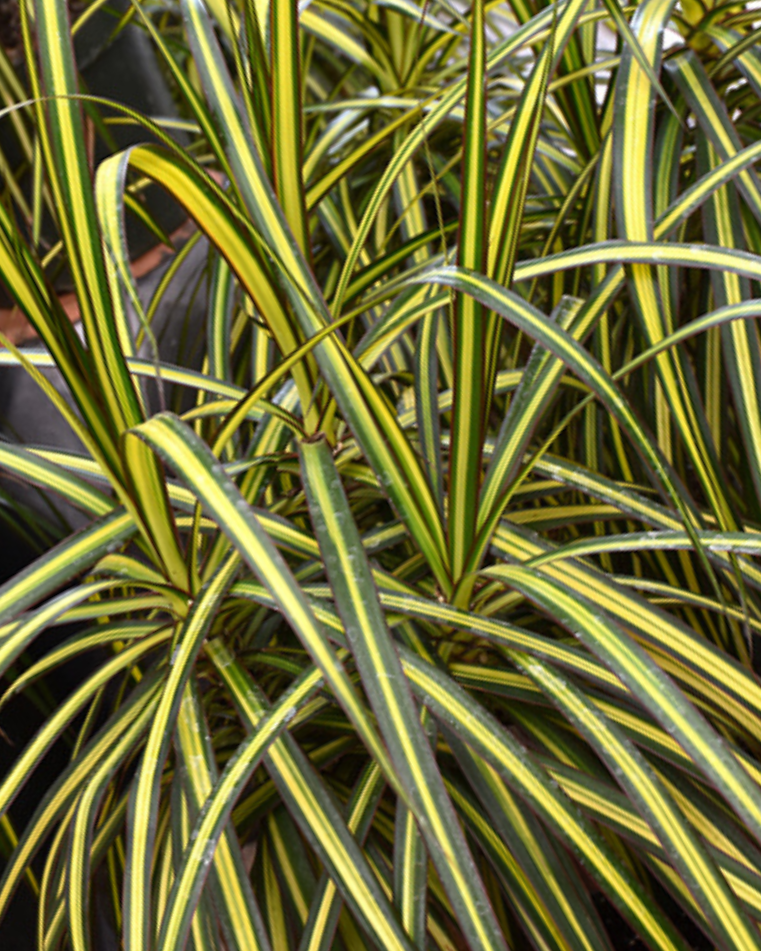
The plant develops slender upright or branching canes marked by persistent diamond-shaped leaf scars. Lower leaves fall as the plant matures, leaving tufts or rosettes of foliage near the tops of bare stems. Several canes are often planted together to create a fuller indoor specimen.
The leaves are simple, glossy, narrow, linear, and sharply pointed. Mature leaves may approach approximately two feet long while remaining about one-half inch wide. The typical form has dark green blades edged by a narrow red or reddish-purple margin. Small fragrant whitish flowers and round yellow-orange berries may develop on mature outdoor plants, but flowering and fruiting are uncommon indoors. Lack of flowers does not interfere with identification when the slender canes and narrow red-edged leaves are visible.
Cultivars Differ in Color but Not Safety
‘Bicolor’ generally has gray-green foliage with red or pink margins. ‘Tricolor’ adds cream or white striping between the green center and reddish edge. ‘Colorama’ may appear predominantly pink or red because the colored bands occupy much of each leaf. ‘Magenta’ has dark green leaves bordered by broad magenta-red margins, while ‘Tarzan’ typically produces thicker, broader, more rigid leaves in dense rosettes.
These cultivars remain forms of the same toxic plant and should not be treated as safer because their leaves differ in color, margin width, or growth habit. No cultivar-specific evidence establishes that a pinker, cream-striped, darker, broader, or denser selection is free of steroidal saponins or safe for pets.
Where Dogs and Cats Encounter It
Cats may chew the narrow arching leaves, pull at dried leaf tips, climb into the pot, or reach foliage from nearby furniture. Fallen leaves remain accessible even when the pot itself is elevated. A cat may also return repeatedly to the same plant, creating a larger cumulative exposure than one witnessed bite suggests.
Puppies may chew the canes, exposed roots, dropped leaves, or fresh propagation cuttings. Pruning often leaves sap-bearing stem sections on counters or floors, where they may be mistaken for sticks or toys. Repeated plant chewing may be associated with curiosity, boredom, pica, gastrointestinal disease, dietary issues, stress, or compulsive behavior. Preventing access is important, but persistent plant-eating behavior may also warrant behavioral or medical evaluation.
The Toxicity Is Not Merely Undigested Plant Fiber
Dogs and cats do not digest fibrous plant material as efficiently as specialized herbivores, and consuming almost any large mass of vegetation can provoke vomiting. That general fact does not explain the complete Dracaena syndrome. Steroidal saponins have been isolated directly from the bark and roots of this plant, and veterinary poison records repeatedly associate Dracaena exposure with vomiting, depression, excessive salivation, appetite loss, weakness, incoordination, and feline pupillary dilation.
The symptoms therefore cannot be dismissed as a purely mechanical response to grass-like leaves. At the same time, exact-species chemistry should not be exaggerated into a claim that ordinary exposure causes predictable multiorgan failure. The best-supported clinical picture remains gastrointestinal irritation, salivation, appetite loss, depression, weakness, and cat-specific mydriasis in some cases.
Exact-Species Steroidal-Saponin Research
A 2013 investigation of material identified as Dracaena marginata isolated three newly described and ten known steroidal saponins from the bark. Two additional known saponins were recovered from roots. The isolated compounds included complex steroidal glycosides with several attached sugar units. Some were furostanol derivatives, while others represented related steroidal structures.
Separate root research described several paired 22-hydroxy and 22-methoxy furostanol saponins. These compounds are scientifically important for understanding the plant’s chemistry, but their isolation does not establish a pet toxic dose or prove that one compound causes a particular clinical sign. Laboratory extraction of bark and roots is not the same exposure as a dog, cat, rabbit, bird, or horse chewing fresh leaves.
How Steroidal Saponins Cause Illness
Saponins combine a water-compatible sugar portion with a lipid-compatible steroidal portion. This amphipathic structure allows them to associate with membrane components and gives many saponin solutions their characteristic ability to foam. Within the digestive tract, membrane interaction can irritate epithelial cells and stimulate nausea, salivation, vomiting, intestinal secretion, abdominal discomfort, and diarrhea.
Poor absorption of many saponins limits systemic exposure, which helps explain the predominance of gastrointestinal signs. Laboratory membrane effects should not be confused with a proven clinical syndrome of hemolysis or multiorgan failure. The intact animal’s digestive barriers, metabolism, dose, hydration, plant part, and individual saponin structures all affect what happens after ingestion.
Why Cats May Develop Dilated Pupils
Dilated pupils are among the most distinctive signs listed for feline Dracaena exposure. The precise mechanism remains unknown, and the finding should not be used as evidence that the plant contains atropine-like alkaloids. Some clinical summaries also mention abdominal pain and an increased heart rate in cats, but these are less consistently documented than vomiting, salivation, appetite loss, depression, weakness, and mydriasis.
Pupillary size also changes with light, fear, pain, blood pressure, medications, eye disease, and neurologic illness. A cat with vomiting and clearly dilated pupils after chewing a red-margined dracaena has a compatible exposure history, but a veterinarian may still need to exclude other causes when the signs are severe, asymmetric, prolonged, or accompanied by collapse, seizures, blindness, or marked disorientation.
Dogs, Cats, Horses, Livestock, Rabbits, Birds, and Other Animals
The best-supported signs in dogs and cats are vomiting, excessive salivation, appetite loss, depression, weakness, and gastrointestinal discomfort. Incoordination may occur, and cats may develop dilated pupils. Diarrhea is described in broader Dracaena toxicology references. Most animals recover with removal from the source and supportive care, but concern increases when vomiting is repeated, blood is present, the animal cannot retain water, weakness is progressive, or coordination is abnormal.
ASPCA classifies the plant as toxic to horses, but detailed equine cases involving this exact variety are scarce. Horses may encounter it in subtropical landscaping, greenhouse waste, stable decorations, or mixed ornamental clippings. Goats and other browsing animals may be more willing to consume leaves and bark. The plant should never be placed in a paddock, livestock pen, rabbit enclosure, poultry run, tortoise enclosure, or feed pile after pruning or removal.
One European toxicology review records a fatal rabbit outcome among Dracaena exposure inquiries. The sparse report does not establish the dose, exact circumstances, or certainty that Dracaena alone caused death, but it argues against assuming that all small-animal exposures are trivial. Rabbits and guinea pigs cannot vomit. Possible illness may appear as food refusal, tooth grinding, abdominal discomfort, diarrhea, lethargy, or reduced fecal production. Prolonged appetite loss can lead to gastrointestinal stasis. Bird-specific data are limited. Parrots may shred the narrow leaves and can receive a substantial dose relative to body weight.
Skin and Eye Contact
Sap may irritate sensitive skin, although severe contact dermatitis is not a defining feature of this plant. Redness, licking, rubbing, or swelling can occur after contact with freshly cut stems or damaged foliage. Animals may transfer sap from the mouth or paws into an eye, especially after pawing at the mouth or grooming contaminated fur.
Persistent tearing, squinting, redness, cloudiness, swelling, discharge, or inability to open the eye requires examination rather than treatment with household eye drops. Owners should not apply essential oils, old veterinary medication, human redness drops, steroid drops, or herbal rinses without veterinary direction.
Diagnosis, Differential Diagnosis, Treatment, and Prognosis
Diagnosis usually depends on a credible exposure and compatible clinical signs. Photographs should show the whole plant, narrow red-edged leaves, canes, cultivar coloration, pot label, roots, and the portion that was chewed. A mild, rapidly improving case may not require extensive testing. Repeated vomiting, bloody vomit, dehydration, weakness, incoordination, or persistent illness may justify blood chemistry, electrolytes, complete blood count, urinalysis, abdominal imaging, or other testing. No routine clinical assay detects Dracaena saponins.
Other Dracaena species can produce a similar saponin-associated syndrome. Cordylines may resemble dracaenas and also contain steroidal saponins, while ponytail palm has a different safety profile despite a superficially similar tufted form. Incoordination, dilated pupils, salivation, and vomiting may also occur with medications, cannabis, nicotine, pesticides, toxic mushrooms, neurologic disease, vestibular disease, hypoglycemia, or other poisonous plants. Bloody vomiting may reflect gastric disease, a foreign body, caustic exposure, or repeated retching.
There is no specific antidote. Treatment is based on the animal’s symptoms and may include veterinarian-selected antiemetic medication, fluid and electrolyte therapy, gastrointestinal protection, nutritional support, and monitoring of coordination and hydration. Most limited exposures carry a good prognosis. Clinical improvement commonly occurs within several hours, with uncomplicated recovery over approximately one or two days. The outlook becomes more guarded when vomiting is persistent or bloody, dehydration is substantial, plant material is aspirated, neurologic-looking signs progress, or another toxin or chemical is involved.
Prevention
Keep the plant in a room animals cannot enter or inside a secure plant enclosure. A high stand alone may not protect a cat, and long arching leaves may remain within reach even when the container is elevated. Collect fallen leaves and every stem or root cutting after pruning.
Do not place discarded material in accessible compost, animal enclosures, paddocks, poultry runs, rabbit areas, tortoise enclosures, or livestock feed areas. Label the plant with both Dracaena reflexa var. angustifolia and Dracaena marginata. Keeping the familiar synonym on the label helps veterinarians and poison-control specialists connect the plant with established toxicology records.
Immediate Steps After Ingestion
Prevent further access. Move the animal away from the plant and collect fallen leaves, chewed stems, roots, and propagation cuttings before another animal reaches them. Straight-Margined Dracaena usually causes a gastrointestinal saponin syndrome, but repeated vomiting, dehydration, incoordination, cat mydriasis, or exposure involving a small animal can make the case more serious.
- Remove loose material safely: If the animal is alert and cooperative, clear visible plant fragments from the lips and front of the mouth. Do not reach deeply into the throat or risk being bitten.
- Gently clear residue when swallowing is normal: Wipe the lips and front of the mouth with a damp cloth. An alert animal may be allowed access to a small amount of clean water, but nothing should be forced.
- Preserve identification evidence: Photograph the whole plant, leaves, canes, cultivar coloration, nursery label, roots, and chewed area. Save a representative sample in a secure bag.
- Check for chemical treatments: Determine whether fertilizer, insecticide, fungicide, leaf-shine product, systemic pest treatment, or another chemical was recently applied and report that information to the veterinarian.
- Contact a veterinarian or animal poison-control service: Report the animal’s species, weight, estimated amount, time of exposure, vomiting frequency, pupil size, coordination, appetite, hydration, and existing medical conditions.
Skin or Eye Exposure
Rinse sap from skin or fur with lukewarm water and prevent grooming until visible residue has been removed. Use gloves when handling cut stems, roots, or sap-covered fur. Do not apply alcohol, peroxide, essential oils, topical anesthetics, steroid creams, antibiotic ointments, or human anti-itch products unless a veterinarian directs it.
Flush an exposed eye gently with sterile saline or clean lukewarm water. Do not rub the eye or use medicated human eye drops. Continued squinting, redness, tearing, cloudiness, swelling, discharge, or refusal to open the eye requires veterinary evaluation.
Do Not Attempt Unsupervised Home Treatment
- Do not induce vomiting: Hydrogen peroxide, salt, mustard, syrup of ipecac, and manual gagging can cause additional gastrointestinal injury or aspiration. Cats should never receive hydrogen peroxide as a home emetic.
- Do not administer activated charcoal automatically: Its benefit for a predominantly gastrointestinal saponin exposure is uncertain, and it may be aspirated by a vomiting, weak, uncoordinated, or poorly swallowing animal.
- Do not force food or fluids: Large amounts of water, milk, oil, broth, or food may trigger additional vomiting or enter the lungs.
- Do not give antidiarrheal or stomach medication without direction: Kaopectate, Kapectolin, bismuth products, loperamide, sucralfate, antacids, and antiemetics are not universal antidotes.
- Do not give human pain medication: Ibuprofen, naproxen, acetaminophen, aspirin, and other human products may cause a separate and more dangerous poisoning.
- Do not drench horses or livestock: Forced oral treatment may be aspirated, particularly by an animal that is weak, salivating, coughing, choking, recumbent, or swallowing abnormally.
When Emergency Examination Is Especially Important
- Vomiting is repeated or contains blood: Continuing vomiting can cause dehydration, electrolyte abnormalities, esophageal irritation, and aspiration.
- The animal cannot retain water: Repeatedly vomiting after drinking increases the need for professional fluid therapy.
- Weakness or depression is pronounced: Inability to stand, collapse, pale gums, abnormal temperature, or reduced responsiveness requires immediate assessment.
- Coordination is abnormal: Staggering, falling, tremors, disorientation, or abnormal eye movements may indicate a more complicated exposure or a different toxin.
- Breathing or swallowing is abnormal: Coughing, choking, noisy breathing, nasal reflux, or inability to handle saliva requires urgent care.
- A small animal stops eating: Food refusal in rabbits, guinea pigs, birds, or other small pets can rapidly lead to secondary complications.
- Several animals are affected: Group illness raises concern for chemically treated plants, mixed clippings, contaminated feed, or another shared exposure.
Veterinary Treatment
The veterinarian will assess hydration, abdominal comfort, swallowing, heart rate, pupil size, coordination, and the frequency and character of vomiting or diarrhea. Treatment is based on clinical severity rather than a fixed amount of plant material. Plant identification and chemical-treatment history are important because no routine clinical assay detects Dracaena saponins.
Supportive care may include veterinarian-selected antiemetic medication, intravenous or subcutaneous fluids, electrolyte correction, gastrointestinal protectants, nutritional support, and monitoring of coordination and hydration. Persistent weakness or incoordination may require blood glucose measurement, neurologic examination, blood testing, urinalysis, imaging, and investigation for additional toxins.
Veterinarian-induced vomiting may be considered after a recent substantial ingestion only when the animal is alert, stable, not already vomiting significantly, and able to protect its airway. Activated charcoal is a case-specific decision rather than routine treatment, particularly once spontaneous vomiting has begun or when coordination, airway protection, or swallowing is abnormal.
Dogs and Cats
Dogs should be monitored for vomiting frequency, diarrhea, drooling, appetite, abdominal pain, hydration, gum color, urination, weakness, and coordination. A puppy that chewed canes, roots, or propagation cuttings may have swallowed more than the visible leaf damage suggests. Bloody vomiting, repeated vomiting, severe lethargy, or abnormal coordination requires veterinary assessment.
Cats should be monitored for vomiting, salivation, food refusal, depression, weakness, incoordination, and pupil size. Dilated pupils can fit Dracaena exposure, but they are not specific. A cat with persistent food refusal, open-mouth breathing, collapse, asymmetric pupils, blindness, severe disorientation, or continuing vomiting needs veterinary care. Never give hydrogen peroxide to a cat as a home emetic.
Horses and Livestock
Horses, goats, sheep, cattle, camelids, pigs, and other livestock should be moved away from subtropical landscaping, greenhouse waste, stable decorations, interiorscape plants, discarded pots, and mixed ornamental clippings. Provide safe forage and clean water so hungry animals are not forced to browse the same material. Save representative samples from the entire debris pile because other toxic plants or chemicals may be present.
Do not drench affected livestock. Oil, water, milk, charcoal, electrolyte mixtures, or medication can be aspirated when an animal is weak, coughing, gagging, regurgitating, bloated, recumbent, or poorly coordinated. Horses cannot vomit, so illness may appear as salivation, feed refusal, diarrhea, depression, abdominal discomfort, weakness, or colic-like behavior rather than vomiting.
Rabbits, Guinea Pigs, Birds, Reptiles, and Small Pets
Rabbits and guinea pigs cannot vomit. Food refusal, tooth grinding, abdominal discomfort, diarrhea, lethargy, or reduced fecal production after exposure requires prompt veterinary guidance because gastrointestinal hypomotility or stasis can become serious. Do not offer Dracaena leaves, stems, roots, or cuttings as hay, browse, bedding, chew material, or enrichment.
Birds with regurgitation, beak wiping, reduced appetite, altered droppings, weakness, poor perching, or abnormal quietness after shredding leaves need avian veterinary advice. Reptiles and tortoises should not be offered Dracaena as enclosure greenery or browse. Species-specific safe doses are not established for these animals.
Recovery and Prognosis
Most dogs and cats with limited exposure recover fully. Mild vomiting, drooling, appetite loss, or diarrhea often improves within several hours and resolves within approximately one or two days. Continue monitoring until appetite, hydration, stool, activity, and coordination return to normal.
Repeated vomiting, blood loss, dehydration, aspiration, progressive weakness, or incoordination extends recovery and may indicate another exposure or medical condition. Follow-up is appropriate when appetite, activity, stool, hydration, or coordination does not return to normal. One poison-center review mentions a fatal rabbit case, but the available details are insufficient to define a typical lethal syndrome. Small animals should nevertheless be evaluated promptly when they develop appetite loss, diarrhea, weakness, or reduced fecal production after exposure.
Prevention After the Incident
Keep the plant in a room animals cannot enter or inside a secure plant enclosure. A high stand alone may not protect a cat, and long arching leaves may remain within reach even when the container is elevated. Collect fallen leaves and every stem, cane, or root cutting after pruning. Do not leave propagation cuttings in sinks, trash bags, potting trays, counters, windowsills, floors, or greenhouse benches accessible to animals.
Never place discarded Dracaena material in horse paddocks, goat pens, livestock pastures, rabbit areas, aviaries, poultry runs, tortoise enclosures, dog yards, or accessible compost. Label the plant with both Dracaena reflexa var. angustifolia and Dracaena marginata so veterinarians and poison-control specialists can connect the plant with established toxicology records.
Frequently Asked Questions About Straight-Margined Dracaena Poisoning
Is Dracaena marginata still the accepted scientific name?
The currently accepted name is Dracaena reflexa var. angustifolia. Dracaena marginata is now treated as a botanical synonym, but it remains the name found most often on nursery labels, in veterinary poison databases, and in the scientific studies that isolated the plant’s steroidal saponins. Both names refer to the familiar narrow-leaved Madagascar dragon tree.
Is Straight-Margined Dracaena really toxic, or does it merely cause vomiting because pets cannot digest the leaves?
It is genuinely toxic. Fibrous vegetation can make an animal vomit, but exact-species chemical research has isolated numerous steroidal saponins from the bark and roots. Veterinary poison records also describe a characteristic combination of vomiting, salivation, appetite loss, depression, weakness, incoordination, and dilated pupils in cats that cannot be explained solely by undigested plant fiber.
What toxins have been identified in Dracaena marginata?
The confirmed toxins are steroidal saponins and related glycosides. Researchers isolated three newly described and ten known saponins from the bark, with two known saponins from the roots. Additional root research identified several furostanol saponins, including related 22-hydroxy and 22-methoxy compounds. No alkaloid has been established as the principal explanation for the veterinary syndrome.
What do the exact-species saponin studies tell us about pet poisoning?
They prove that the plant contains a diverse steroidal-saponin mixture and replace older claims that the toxic principle was unknown. They do not identify one compound as the cause of every sign or establish how many leaves will make a particular animal ill. The isolated molecules came from laboratory extraction of bark and roots, not controlled feeding trials in dogs, cats, horses, rabbits, or birds.
Why do cats develop dilated pupils after eating Dracaena?
The mechanism remains unknown. Dilated pupils are reported consistently enough to be included in major veterinary plant references, but no specific saponin or atropine-like alkaloid has been shown to cause the effect. Fear, pain, low light, medications, eye disease, high blood pressure, and neurologic disorders can also enlarge a cat’s pupils, so the finding must be interpreted with the exposure history and other symptoms.
Which parts of Straight-Margined Dracaena are poisonous?
Leaves, stems, bark, roots, sap, flowers, fruits, and seeds should all be treated as potentially toxic. Leaves cause most household exposures because they are easy to reach, while exact chemical studies have demonstrated saponins in bark and roots. Cuttings, fallen leaves, dried material, and discarded pot debris should also remain inaccessible.
Are Colorama, Tricolor, Magenta, Bicolor, and Tarzan dracaenas also toxic?
Yes. These are cultivated forms distinguished by leaf color, variegation, width, or growth habit. They remain part of the same red-margined dracaena complex and should be considered capable of causing the same saponin-associated illness. Pink, cream, red, or heavily variegated foliage does not indicate reduced toxicity.
What symptoms are most likely in a dog or cat?
The most likely signs are vomiting, excessive salivation, appetite loss, depression, weakness, and gastrointestinal discomfort. Diarrhea and incoordination may occur. Cats may develop dilated pupils and, in some clinical summaries, abdominal pain or an increased heart rate. Vomiting can occasionally contain blood and should be assessed when it is repeated or more than a small streak.
How much of the plant is dangerous?
No validated toxic dose has been established. Risk depends on the animal’s species and size, the amount and tissue consumed, saponin concentration, chewing, existing disease, and whether exposure was repeated. One small bite may cause no signs, but owners should not use the absence of symptoms after one incident to conclude that future access is safe.
Can the plant cause kidney failure, liver failure, or hemolytic anemia?
Those are not established expected effects of ordinary Straight-Margined Dracaena ingestion. Saponins can disrupt red-cell membranes in certain laboratory systems, but routine clinical hemolysis has not been demonstrated. Kidney or liver abnormalities, pale gums, jaundice, dark urine, or unexplained bruising require investigation for dehydration, another toxin, medication exposure, chemical treatment, or unrelated disease.
Is Straight-Margined Dracaena poisonous to horses?
Yes, it should be kept away from horses. ASPCA classifies the plant as toxic to horses, although detailed exact-species equine cases are scarce. Possible signs include salivation, feed refusal, abdominal discomfort, depression, diarrhea, and weakness. Horses cannot vomit, so illness will not look the same as it does in dogs or cats.
Is it poisonous to goats, sheep, cattle, camelids, or pigs?
It should not be offered to livestock or discarded into animal areas. Goats and other browsers may be more willing to consume leaves and bark than grazing cattle or horses. No reliable production-livestock toxic dose has been established, and illness affecting several animals should prompt inspection of the entire clipping pile for other plants, pesticides, fertilizer, and contaminated feed.
What is known about exposure in rabbits?
Species-specific evidence is sparse. A European review recorded one fatal rabbit outcome among Dracaena exposure inquiries, but it did not provide enough detail to establish dose, exact circumstances, or certainty that Dracaena alone caused death. Rabbits cannot vomit and may show appetite loss, diarrhea, tooth grinding, lethargy, or reduced fecal output. Those signs require prompt veterinary guidance.
Is Straight-Margined Dracaena dangerous to birds?
Bird-specific data are limited, but the plant should not be offered to birds. Parrots may shred the narrow leaves and receive a substantial dose relative to body weight. Regurgitation, beak wiping, reduced appetite, altered droppings, weakness, poor perching, or abnormal quietness after exposure requires avian veterinary advice.
Can the sap irritate skin or eyes?
Sap may irritate sensitive skin, especially after contact with freshly cut stems or damaged foliage. Eye exposure may cause tearing, squinting, redness, cloudiness, swelling, or pain. Persistent eye signs require veterinary examination rather than household eye drops or home rinses.
Should I make my pet vomit?
No, not unless a veterinarian or animal poison-control specialist specifically directs it. Hydrogen peroxide can injure the stomach and cause aspiration and is particularly inappropriate for cats. Horses, rabbits, guinea pigs, rats, and several other species cannot vomit. Vomiting decisions depend on species, timing, amount, symptoms, and airway safety.
Should activated charcoal be given?
Not automatically. Activated charcoal is not a universal antidote and its benefit for a predominantly gastrointestinal saponin exposure is uncertain. It may be aspirated by an animal that is already vomiting, weak, uncoordinated, sedated, or swallowing abnormally. A veterinarian should decide whether charcoal is appropriate for the individual case.
Can milk, oil, or water help?
Do not force milk, oil, broth, food, or water. Large amounts can trigger more vomiting or enter the lungs when an animal is weak, nauseated, or swallowing abnormally. An alert animal that swallows normally may be allowed access to small amounts of clean water, but forced oral treatment is unsafe.
What signs require more than home observation?
Repeated or bloody vomiting, inability to retain water, marked weakness, collapse, pale gums, abnormal temperature, reduced responsiveness, incoordination, tremors, difficulty swallowing, abnormal breathing, or food refusal in a small animal requires veterinary examination. These signs may indicate dehydration, aspiration, another toxin, chemical treatment of the plant, infection, or another medical problem.
What should veterinarians consider when signs are severe or atypical?
Important considerations include dehydration, electrolyte disturbance, aspiration, hypoglycemia, vestibular disease, neurologic disease, infection, pesticides, cannabis, nicotine, medications, fertilizer, leaf-shine products, toxic mushrooms, other poisonous plants, foreign material, and unrelated gastrointestinal disease. No routine clinical assay detects Dracaena saponins, so exposure history and exclusion of other causes remain important.
Can old Dracaena marginata research still be used?
Yes, when the plant was correctly identified. Dracaena marginata is the dominant historical and horticultural name for the plant now accepted as Dracaena reflexa var. angustifolia. Exact-species saponin studies published under the older name remain directly relevant to this page.
What is the usual prognosis?
The prognosis is generally good after a limited dog or cat exposure. Mild vomiting, drooling, diarrhea, or appetite loss often improves within several hours and resolves within one or two days. Repeated or bloody vomiting, substantial dehydration, pronounced weakness, incoordination, collapse, persistent food refusal, or abnormal breathing makes the case more serious and warrants veterinary treatment.
How can repeat exposure be prevented?
Keep the plant in a room animals cannot enter or inside a secure plant enclosure, and do not rely on a high stand when cats can reach long arching leaves. Collect fallen leaves, stem cuttings, and root pieces after pruning. Never place discarded Dracaena material in paddocks, livestock pens, rabbit enclosures, poultry runs, tortoise areas, or accessible compost. Label the plant with both Dracaena reflexa var. angustifolia and Dracaena marginata.