Trumpet Lily Raphides, Calla Lily Mouth Injury, Rhizome Exposure, Cut-Flower Risk, and True-Lily Cat-Kidney Confusion
Is Trumpet Lily Poisonous to Dogs, Cats, Horses, and Livestock?
Yes—Trumpet Lily, Zantedeschia aethiopica, is poisonous to dogs, cats, horses, livestock, birds, rabbits, guinea pigs, reptiles, and other animals that chew it. This plant is more commonly called Calla Lily, White Calla Lily, Arum Lily, White Arum, Pig Lily, Florist’s Calla, or Garden Calla. It is an aroid in the Araceae, not a true lily in Lilium. Its leaves, petioles, white spathes, yellow spadices, sap, berries, seeds, roots, cut stems, and thick underground rhizomes contain insoluble calcium oxalate crystals, especially microscopic needle-shaped raphides that injure tissue immediately when the plant is chewed or crushed.
The usual poisoning syndrome is intense local contact injury rather than absorbed systemic poisoning. Affected animals may suddenly drop the plant, shake the head, paw at the mouth, drool heavily, gag, cough, vomit if physically capable of vomiting, refuse food or water, develop oral swelling, or show eye pain after sap transfer. Most limited exposures are painful rather than fatal, but progressive tongue or throat swelling, inability to swallow saliva, repeated choking, noisy breathing, open-mouth breathing, severe eye exposure, persistent vomiting or diarrhea, rabbit or guinea pig food refusal, bird respiratory signs, or livestock choke signs require prompt veterinary care.
The common name “Trumpet Lily” creates a critical cat-safety problem. Zantedeschia aethiopica does not cause the classic true-lily acute kidney failure syndrome seen in cats exposed to Lilium or Hemerocallis, but mixed bouquets may contain both Calla/Trumpet Lily and renal-toxic true lilies. If a cat reached a bouquet, vase, floral water, pollen, leaves, stems, or petals and the plant identity is uncertain, treat the situation as a possible true-lily emergency until every flower is identified.
About this guide: This page provides general pet-poisoning information and cannot diagnose or treat an individual animal. For any suspected exposure, contact a veterinarian or animal poison-control service immediately. Do not induce vomiting, give medication, or attempt home decontamination unless directed by a veterinary professional.
Trumpet Lily
Zantedeschia aethiopica (L.) Spreng.
Important botanical synonyms include:
- Arodes aethiopicum (L.) Kuntze
- Calla aethiopica L.
- Calla moschata Moench
- Colocasia aethiopica (L.) Link
- Otosma aethiopica (L.) Raf.
- Richardia aethiopica (L.) Spreng.
- Richardia africana Kunth
Historical varieties and misapplied or search-use names include:
- Calla aethiopica var. nana Hovey
- Calla ambigua Salisb.
- Pseudohomalomena pastoensis A.D.Hawkes
Important non-synonym confusion names:
- Lilium trumpet lilies — true lilies; separate plants that can cause acute kidney injury in cats
- Lilium longiflorum Thunb. — Easter Lily; true lily and feline renal emergency, not Calla Lily
- Hemerocallis spp. — daylilies; not true lilies botanically, but treated with true lilies as feline renal-emergency plants
- Arum maculatum L. and Arum italicum Mill. — separate aroids also called arum or lords-and-ladies; often have different leaf markings and red/orange berry spikes
- Calla palustris L. — Wild Calla or Water Arum; separate aroid species, not Zantedeschia aethiopica
- Zantedeschia albomaculata, Zantedeschia elliottiana, Zantedeschia rehmannii, and colored calla hybrids — related ornamental callas with overlapping aroid-raphide concerns but not the white Trumpet Lily page species
Araceae — Arum or Aroid Family
Trumpet Lily is an aroid, not a true lily. This family placement matters because the principal poisoning syndrome is the insoluble-calcium-oxalate contact injury shared by many arums, callas, dumb canes, peace lilies, elephant ears, philodendrons, pothos, and related houseplants and wetland ornamentals.
Trumpet Lily; Calla Lily; Common Calla Lily; White Calla Lily; Arum Lily; White Arum; White Arum Lily; Common Arum Lily; Pig Lily; Florist’s Calla; Garden Calla; Cape Arum; Cape Calla; Altar Lily; African Lily; Egyptian Lily; Lily of the Nile; Funeral Lily; Wedding Calla; Varkoor; Varkblom; Varkblommetjie; Calla; Calla Flower.
Historical and taxonomic search variations include Zantedeschia aethiopica, Calla aethiopica, Richardia aethiopica, Richardia africana, Colocasia aethiopica, Arodes aethiopicum, Otosma aethiopica, Calla ambigua, and Pseudohomalomena pastoensis.
“Trumpet Lily” is an unsafe common name when cats are involved because it may also refer to true trumpet lilies in Lilium. “Calla Lily” and “Arum Lily” are also ambiguous: they can refer to Zantedeschia aethiopica, related colored Zantedeschia hybrids, separate Arum species, or florist shorthand in a mixed bouquet. This page covers the white calla/arum species Zantedeschia aethiopica. If a cat reached a bouquet and any true Lilium or Hemerocallis flower may have been present, the case must be handled as a possible feline renal-toxic lily exposure until every flower is identified.
The Confirmed Hazard Is Insoluble Calcium Oxalate Raphide Injury
The confirmed toxic structures in Trumpet Lily are insoluble calcium oxalate crystals, especially bundles of long, narrow, needle-shaped crystals called raphides. These crystals occur in specialized plant cells called idioblasts. They are present in the living tissues that animals are likely to chew: leaves, petioles, white spathes, yellow spadices, flower stalks, sap-bearing tissues, roots, berries, seeds, and thick underground rhizomes. The plant does not need to be swallowed in large quantity before it causes pain. The injury begins when the crystals contact moist tissue.
When an animal bites a leaf, petiole, spathe, spadix, rhizome, root, or cut stem, the crystal-bearing cells are damaged. Saliva, sap, jaw pressure, and movement of the torn plant tissue release raphides into the mouth. Chewing, licking, swallowing, gagging, pawing, beak shredding, or repeated attempts to spit out the plant can then press those crystals into the lips, gums, tongue, palate, pharynx, esophagus, skin, or eye surface. The familiar comparison to a mouthful of microscopic needles is blunt but accurate enough for practical first aid.
The raphides create mechanical injury first. They puncture or abrade surface tissue, activate pain receptors, and trigger inflammation. The damaged tissue responds with local redness, burning pain, swelling, salivation, and sometimes vomiting or diarrhea when plant material irritates the upper digestive tract. This is a contact-toxicology event more than a systemic-poison event. The page should therefore emphasize mouth, throat, eye, swallowing, airway, and hydration monitoring rather than presenting Trumpet Lily as a classic absorbed organ poison.
Idioblasts, Crystal Release, and Why the Reaction Is So Fast
Idioblasts are plant cells that accumulate unusual contents not present in the same form in surrounding tissue. In aroids, those contents commonly include calcium oxalate crystals. Raphide-bearing idioblasts can pack many crystals in a mucilaginous matrix. When the cell is broken, opened, crushed, or otherwise disrupted, the crystal bundle can be released quickly into the surrounding sap and saliva.
Older explanations sometimes describe the idioblast as a tiny pressurized dart gun: the cell tip breaks, fluid enters, the gelatinous contents swell, and raphides shoot outward. That model captures why the animal may react almost instantly, but it should not be treated as the only process occurring in every tissue. Ordinary chewing also tears plant cells apart and physically drives crystal-bearing sap against the mouth. The practical result is the same: the animal experiences sharp mineral crystals directly against sensitive tissue before digestion has even begun.
The fast onset is clinically important. A dog that drops the flower and drools within seconds, a cat that paws at the mouth immediately, or a parrot that wipes its beak after shredding the spadix is showing a reaction that fits insoluble raphide injury. A delayed collapse, seizure syndrome, primary kidney failure, or profound neurologic depression does not fit that simple pattern and should trigger a broader search for true lilies, pesticides, fertilizers, another toxic plant, a foreign body, or an unrelated emergency.
Proteinase Language Belongs in the Evidence-Boundary Zone
Some raphide-bearing plants contain proteinaceous irritants or proteolytic enzymes that can intensify injury after crystals puncture tissue. Experimental work in other plants supports the “needle effect,” in which sharp raphides create microscopic entry channels that allow another defensive factor to reach tissue more effectively. Veterinary reviews of indoor plant poisoning also describe proteolytic enzymes in the calla-lily aroid syndrome and connect damaged plant cells with inflammatory mediator release.
That does not prove that every Zantedeschia aethiopica tissue, cultivar, growth stage, rhizome fragment, cut flower, dried arrangement, or vase-water exposure has a quantified clinically important proteinase concentration. The strongest accurate wording is that insoluble calcium oxalate raphides are the well-established principal toxic structures, while proteinaceous or proteolytic co-irritants may contribute to the intensity of inflammation and swelling but are not characterized enough in this exact species to replace raphides as the primary confirmed hazard.
Inflammatory Swelling Is the Dangerous Part of a Local Poison
Raphide injury activates pain and inflammation. Damaged tissue can release mediators such as kinins, histamine, prostaglandins, and related inflammatory signals. Blood vessels dilate, vascular permeability increases, and fluid moves into the injured tissue. On the lips or gums, that swelling is painful and dramatic. In the tongue, pharynx, glottis, or laryngeal area, the same process can become an airway problem.
This is why diphenhydramine is not a reliable home answer. Histamine may participate in the reaction, but the plant injury is not merely an allergy. Antihistamines do not remove raphides. Corticosteroids do not dissolve crystals. Activated charcoal does not clean embedded needles out of the mouth or eye. Milk, yogurt, cheese, oil, bread, and forced water do not extract the crystals and can become aspiration hazards when swallowing is painful or abnormal.
Veterinarians may still select medication for a specific animal. Pain control, nausea control, fluids, ocular treatment, airway monitoring, and anti-inflammatory treatment may all be appropriate in the right case. The safety boundary is that owners should not improvise those treatments at home, especially when the animal is drooling, gagging, vomiting, weak, frightened, coughing, poorly swallowing, or breathing abnormally.
All Plant Parts, Cut Flowers, Rhizomes, and Debris Matter
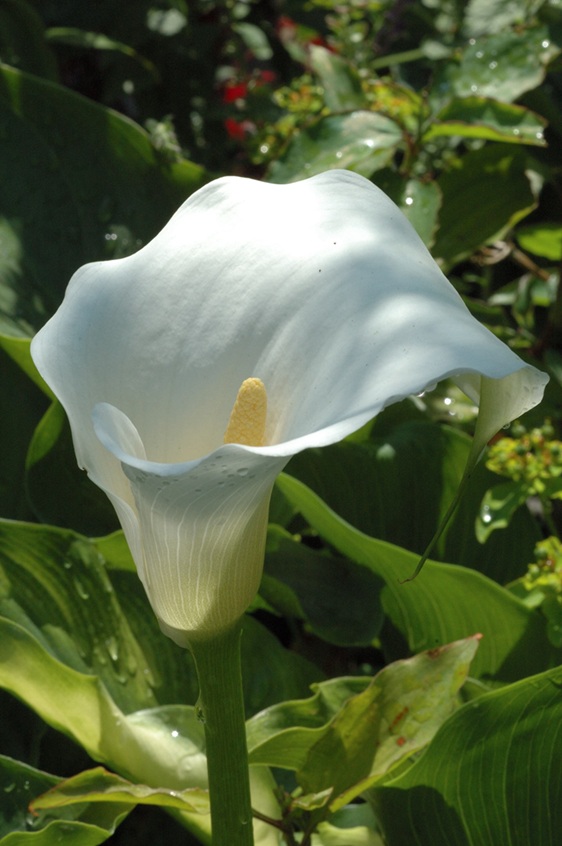
Every living part of Trumpet Lily should be treated as irritating. The showy white “trumpet” is not a true petal and not a harmless flower cup. It is a spathe, a modified leaf surrounding the yellow spadix. The spadix holds many tiny true flowers and later may be associated with fruiting structures. Leaves, petioles, spathes, spadices, berries, seeds, sap, roots, and rhizomes are all relevant exposure material.
The rhizome deserves special emphasis. Calla lilies are often casually sold or discussed as bulbs, but Zantedeschia aethiopica grows from a thick, fleshy, branching underground rhizome. That structure stores water and energy and can generate new growth from pieces left in soil. For a dog, pig, goat, or curious puppy, a freshly dug rhizome looks like a fleshy root or chew object. A rhizome exposure can be larger and more sustained than one bite from a leaf edge, especially during garden division, wetland removal, landscaping cleanup, or compost access.
Cut flowers remain toxic. Raphides do not disappear because the stem has been cut for a wedding bouquet, funeral arrangement, hotel display, altar arrangement, or home vase. Fallen spathes, trimmed stems, leaves, spadices, berries, floral debris, and arrangement water should all remain inaccessible. Vase water is not the primary toxin source in the same way as true-lily vase water for cats, but it may contain sap, bacteria, preservatives, fertilizer residues, or other flowers. Mixed bouquets are often more dangerous than a single Calla Lily because a cat may also encounter true Lilium or Hemerocallis material.
Wetland Stands, Dried Material, and Livestock Waste Exposure
Trumpet Lily is not only an indoor bouquet plant. It can grow in moist ground, pond margins, ditches, streambanks, riparian corridors, wet pastures, old gardens, and naturalized colonies in favorable climates. Outdoor animals may encounter far more plant material than a pet investigating a vase. Dogs may dig at rhizomes near water. Horses may browse wet margins when forage is poor. Goats or pigs may investigate dumped garden material. Poultry or waterfowl may reach leaves, spathes, berries, or fragments in wet runs.
Wilted or dried material should not be assumed safe. Calcium oxalate is a mineral crystal, not a volatile poison that evaporates when tissue loses water. Drying may reduce sap and may alter any proteinaceous activity, but the crystal-containing plant material can still abrade tissue when chewed. Dead-looking clumps, dried floral arrangements, rhizome fragments, discarded bouquets, garden waste, compost piles, pond-cleanout debris, and greenhouse sweepings may remain irritating.
Insoluble Raphides Are Not the Same as Soluble-Oxalate Kidney Poisoning
The word “oxalate” creates repeated confusion. Soluble oxalate salts can enter the circulation, bind calcium, contribute to hypocalcemia, and deposit calcium oxalate in renal tubules. Ethylene glycol poisoning can also produce renal oxalate deposition after metabolism. Trumpet Lily’s insoluble calcium oxalate raphides act mainly where they contact the mouth, throat, esophagus, stomach, eyes, or skin.
An uncomplicated Calla/Trumpet Lily bite is therefore not expected to produce the classic soluble-oxalate metabolic crisis, systemic hypocalcemia, or the true-lily feline acute kidney injury syndrome. Severe vomiting or diarrhea can secondarily cause dehydration and reduced kidney perfusion. Prolonged airway obstruction can cause oxygen deprivation and secondary organ injury. A published canine puppy case has associated Zantedeschia aethiopica ingestion with nephrocalcinosis, so kidney abnormalities after reported exposure should not be ignored. They should be investigated carefully rather than automatically treated as the routine mechanism of ordinary raphide injury.
No Reliable Safe Dose Has Been Established
No dependable safe dose has been established for dogs, cats, horses, cattle, sheep, goats, pigs, poultry, rabbits, guinea pigs, birds, reptiles, or other animals. Immediate pain usually limits how much plant material an animal swallows, which is why many exposures are self-limiting. That natural deterrent does not make the plant safe.
Risk depends on the animal’s species, size, mouth anatomy, chewing behavior, plant part, freshness, sap exposure, eye contact, ability to vomit, ability to swallow, airway reserve, amount of vomiting or diarrhea, and whether the exposure involved a rhizome, bouquet, wetland clump, garden debris, or mixed flowers. One brief leaf-edge bite in a large dog is not the same as a cat reaching an unidentified bouquet, a puppy chewing rhizomes, a rabbit refusing food after chewing a petiole, a parrot shredding a spadix, or livestock eating discarded plants from a wet ditch.
Onset and the First Minutes
Clinical signs usually begin while the animal is chewing Trumpet Lily or within minutes afterward. The speed of onset fits a contact injury. Raphides are already touching the lips, tongue, and oral lining before the plant is digested. A dog or cat may suddenly release the leaf or flower, shake the head violently, paw at the mouth, rub the muzzle, lick repeatedly, drool heavily, foam at the lips, gag, retch, cough, vocalize, or refuse to continue chewing.
The reaction can look dramatic because the pain is immediate and the mouth is a highly sensitive, moving surface. A pet may approach water and then jerk away because swallowing hurts. A bird may wipe the beak or shake the head after shredding a spathe or spadix. A rabbit or guinea pig may become quiet rather than noisy, then stop eating because every tongue movement is uncomfortable.
Swelling can continue after chewing stops. The first improvement the owner sees may simply mean the animal stopped biting the plant, not that the injury has resolved. The important early questions are whether the animal can swallow saliva, breathe quietly, stop gagging, keep the eyes open comfortably, and gradually return to normal behavior.
Mouth, Tongue, Throat, and Voice Changes
The lips, gums, tongue, palate, cheeks, and inner mouth lining may become red, tender, swollen, or painful. Saliva may pool or run from the mouth because swallowing is uncomfortable. The animal may smack the lips, hold the mouth partly open, rub the face, paw at the muzzle, or refuse food and water. Plant pieces can lodge between the teeth, along the gums, or near the back of the mouth and continue irritating tissue.
Gagging, choking motions, dry heaving, repeated swallowing, and coughing suggest that crystals, sap, or plant fragments have reached the pharynx or upper esophagus. The animal’s voice may become weak, raspy, or hoarse if swelling and irritation involve the pharynx or laryngeal region. A dog’s bark, a cat’s meow, or a livestock animal’s call may sound different. Voice change combined with increasing swelling, choking, inability to swallow saliva, or respiratory noise deserves more concern than drooling alone.
Vomiting, Diarrhea, and Fluid Loss
Dogs, cats, pigs, and other species capable of vomiting may vomit after plant material irritates the throat, esophagus, stomach, or upper intestine. Vomiting does not remove crystals already embedded in the mouth and throat, and it can re-expose injured tissue to irritating material. Repeated vomiting also increases the risk of dehydration and aspiration, especially when the animal is drooling, gagging, weak, frightened, or poorly swallowing.
More substantial ingestion can cause appetite loss, abdominal discomfort, depression, vomiting, and diarrhea. Crystal-bearing debris may continue irritating the upper digestive tract as it moves through. Persistent vomiting or diarrhea can lead to tacky gums, sunken eyes, weakness, lethargy, reduced urination, electrolyte abnormalities, and poor circulation. Those complications are important, but they arise from fluid loss and tissue irritation rather than from routine systemic absorption of insoluble raphides.
Horses, rabbits, guinea pigs, and several other animals cannot vomit. Their signs may therefore look different from the dog-and-cat pattern. Salivation, repeated swallowing, coughing, feed refusal, tooth grinding, abdominal discomfort, reduced fecal output, depression, or abnormal breathing may be the first obvious warnings.
Airway Swelling, Choke, and Aspiration
Progressive swelling of the tongue, pharynx, glottis, or larynx is uncommon after a brief exposure, but it is the most immediate life-threatening complication. Warning signs include saliva pooling in the mouth, repeated choking, inability to swallow water, extended head and neck posture, noisy inspiration, open-mouth breathing, rapid shallow breathing, blue-gray gums, panic, weakness, or collapse.
Cats with open-mouth breathing should be treated as emergency patients. Brachycephalic dogs and small animals have less airway reserve. Birds can deteriorate quickly when oral or upper-airway swelling interferes with breathing. Horses and livestock with feed, water, or saliva coming from the nostrils may have impaired swallowing, choke, or aspiration risk. No animal with suspected throat swelling should be forced to drink, eat, swallow charcoal, or take owner-selected medication.
Severe airway obstruction is not the normal outcome of every Calla Lily bite, but the anatomy leaves little room for complacency. Mild drooling that improves is one category. Noisy breathing, inability to swallow saliva, neck extension, cyanotic gums, or collapse is a different category and needs emergency care.
Eye, Skin, and Handler Exposure
Sap transferred into an eye can cause sudden pain, blinking, tearing, redness, conjunctival swelling, eyelid spasm, light sensitivity, and refusal to open the eye. Persistent cloudiness, severe pain, or squinting after gentle irrigation may indicate corneal injury. Eye exposure can occur when an animal chews the plant and rubs the face, when a cat grooms sap from the paws, when a bird wipes the beak, or when a handler transfers sap from cut stems or rhizomes to the eye.
Skin exposure is usually less severe than oral or ocular exposure, but sap entering cuts, abrasions, thin skin, eyelids, lips, or areas trapped under a collar, harness, bandage, or matted fur can cause burning, itching, redness, and localized swelling. People dividing rhizomes, trimming flowers, or cleaning garden debris should wear gloves and wash hands and tools because the same plant sap can irritate human eyes and mucous membranes.
Dogs, Cats, and Bouquet Exposures
Dogs may chew leaves in the garden, pull white spathes from arrangements, drag trimmed stems from the trash, dig up rhizomes, or investigate pond and ditch debris. Puppies may be drawn to fleshy rhizomes and thick petioles because they resemble chewable roots or sticks. Signs may include drooling, mouth pawing, gagging, vomiting, refusal to drink, tongue swelling, hoarse barking, choking, and eye pain after face rubbing.
Cats may bite leaf margins, investigate bouquets, step in sap, brush against pollen or floral debris, or groom contaminated paws. A cat that reached a floral arrangement creates a special identification problem. Calla/Trumpet Lily causes painful raphide injury, but true Lilium and Hemerocallis in the same bouquet can cause acute kidney injury. Vomiting, drooling, or mouth pain does not prove which flower was involved. Preserve the entire bouquet and identify every plant.
Horses, Livestock, Poultry, Birds, and Small Mammals
Horses and livestock may encounter Trumpet Lily in wet landscaping, naturalized drainage areas, pond margins, streambanks, greenhouse waste, discarded florist material, or piles of garden debris. Livestock may normally avoid acrid plants when forage is good, but hunger, confinement, drought, overgrazing, curiosity, recently cleared land, or mixed clippings can change behavior. Salivation, muzzle rubbing, feed refusal, coughing, painful swallowing, diarrhea, depression, abnormal respiratory sounds, or material from the nostrils requires attention.
Parrots and other birds can repeatedly shred spathes, spadices, leaves, berries, and petioles with the beak. This can create prolonged contact with the tongue, oral lining, and eyes even if little is swallowed. Beak wiping, head shaking, wet feathers around the mouth, regurgitation, refusal to eat, poor perching, voice change, weakness, or breathing difficulty after exposure needs avian veterinary guidance.
Rabbits and guinea pigs may chew leaves, petioles, rhizome fragments, or floral debris and then stop eating because of pain. They cannot vomit, so drooling, tooth grinding, food refusal, reduced fecal output, lethargy, and abdominal discomfort are key warning signs. A localized mouth injury can become a gastrointestinal emergency when these animals stop eating.
Expected Course, Atypical Signs, and Prognosis
Most uncomplicated cases improve substantially within several hours and resolve within about 12 to 24 hours. A recovering animal should drool less, paw less, swallow more comfortably, breathe quietly, show less eye discomfort, and gradually resume drinking and eating. A mild exposure that keeps improving is very different from one that worsens after the first hour.
More complicated cases can last several days. Significant oral ulceration, esophageal irritation, eye injury, aspiration, dehydration, laryngeal swelling, or prolonged food refusal can extend treatment and recovery. Signs that remain severe beyond the first day, continue beyond 24 to 48 hours, or worsen after initial improvement may indicate retained plant material, extensive tissue injury, dehydration, aspiration, corneal injury, foreign-body involvement, a true-lily exposure, pesticide contact, or another diagnosis.
Convulsions, coma, primary kidney failure, permanent liver damage, systemic hypocalcemia, profound paralysis, severe cardiovascular instability, and sudden death are not expected direct effects of a routine insoluble-raphide exposure. Those signs require immediate investigation for prolonged airway obstruction and oxygen deprivation, severe dehydration, aspiration, renal-toxic true lilies, soluble oxalates, ethylene glycol, pesticides, slug bait, another plant, medication exposure, foreign-body injury, or unrelated disease.
Trumpet Lily Is a Calla Lily, Not a True Lily
The common name Trumpet Lily is the biggest safety problem on this page. The plant covered here is Zantedeschia aethiopica, a white calla or arum lily in Araceae. It is not a true lily in the genus Lilium. It does not share the classic feline renal-toxic syndrome of Easter lilies, tiger lilies, Asiatic lilies, Oriental lilies, Stargazer lilies, true trumpet lilies, or daylilies in Hemerocallis.
The difference matters most for cats. Calla/Trumpet Lily causes immediate mouth and throat injury from insoluble calcium oxalate raphides. True lilies and daylilies can cause acute kidney injury in cats after small exposures, including leaves, petals, pollen, and vase water. A cat that chews a Calla Lily may drool, vomit, paw at the mouth, and have difficulty swallowing; that is painful and serious, but it is not the same mechanism as true-lily nephrotoxicity.
When identity is uncertain, act conservatively. Preserve the plant or bouquet. Photograph every flower, leaf, stem, pollen-bearing part, vase, and label. If a cat had access to a mixed arrangement and any true Lilium or Hemerocallis might have been present, the case should be treated as a possible renal-toxic lily exposure until proven otherwise. Do not let the familiar white Calla in a bouquet distract from a hidden true lily beside it.
Accepted Name, Synonyms, and Page-Title Context
The accepted scientific name is Zantedeschia aethiopica (L.) Spreng. Linnaeus originally described the plant as Calla aethiopica, and older literature may place it under Calla, Richardia, Colocasia, or other historical combinations. The genus name honors Giovanni Zantedeschi, an Italian physician and botanist. The species name aethiopica reflects an older broad geographical usage and should not be read as meaning the plant originated specifically in modern Ethiopia.
The page title remains Trumpet Lily because that is the established PAWS common-name page. The scientific-name and AKA fields carry the disambiguation. Trumpet Lily can also mean true Lilium trumpet lilies, while Calla Lily, Arum Lily, White Arum, Pig Lily, Florist’s Calla, Garden Calla, Cape Arum, and Lily of the Nile can point owners, florists, and veterinarians toward the same Zantedeschia aethiopica plant. Keeping the page title does not mean treating it as a true lily.
Native Wetland Habitat and Naturalized Exposure
Zantedeschia aethiopica is native to southern Africa, including parts of South Africa, Eswatini, and Lesotho. In its native range it grows in moist ground, marshes, streambanks, pond margins, drainage areas, seepage zones, and seasonally wet grassland. Its thick rhizomes let it persist through disturbance and seasonal change, and in favorable sites the plant can form expanding clumps or colonies.
The species has been cultivated around the world and has escaped or naturalized in many regions with suitable moisture and climate. That creates exposures beyond the household flower bed. Dogs may encounter plants along drainage ditches or stream margins. Horses and cattle may graze near wet pasture edges. Goats and pigs may investigate dumped rhizomes or wetland cleanout debris. Poultry, ducks, geese, tortoises, and wildlife may reach plant fragments in pond-edge plantings or wet enclosures.
Naturalized stands create a different practical risk from a single florist stem. A bouquet may expose one cat or dog to a leaf, spathe, or vase. A ditch or pond-edge colony can expose multiple animals to leaves, petioles, berries, and rhizomes. During removal, mowing, dredging, storm cleanup, or garden division, large volumes of irritating plant material may be piled where animals can reach it.
Identification: Leaves, Spathes, Spadices, Berries, and Rhizomes
Trumpet Lily is a robust clump-forming perennial. Leaves and flower stalks arise from thick underground rhizomes rather than from a woody trunk or true bulb. The leaves are large, glossy, dark green, fleshy, and heart-shaped to arrow-shaped, with long, thick, often spongy petioles. Leaf size and plant height vary with moisture, shade, climate, and age; plants in consistently wet, frost-free conditions may become larger than indoor specimens.
The white “trumpet” is not a single flower. It is a spathe, a modified leaf that wraps around or flares behind the upright yellow spadix. The spadix is the true flower-bearing structure, with many tiny flowers arranged on the column. After pollination, the spathe may green or fade while the spadix develops clusters of fleshy green to yellow-orange berries. Those berries, seeds, and fruiting structures should remain inaccessible to animals.
The underground structure is a rhizome, not a true bulb. Retail labels often call callas “bulbs” for convenience, but Zantedeschia aethiopica grows from a thick fleshy stem that branches underground. Gardeners dividing or removing plants may leave rhizome pieces on the soil surface or in a wheelbarrow. Those pieces can be attractive to dogs, pigs, goats, rabbits, and other animals because they look like roots or chewable tubers. Rhizome fragments can also regenerate new plants if left in moist soil.
Cut Flowers, Florist Arrangements, and Vase Water
Calla lilies are widely used in wedding flowers, funeral arrangements, church displays, hotel lobbies, restaurant arrangements, office décor, and home bouquets. Cut flowers remain toxic because the calcium oxalate crystals are mineral structures within plant tissue. Cutting the stem does not remove the crystals from the spathe, spadix, leaves, stem, or sap.
Fallen spathes, trimmed stems, spadices, pollen-bearing floral debris, leaves, berries, and arrangement waste should be removed promptly. Vase water from Calla Lily is not the central renal-toxic hazard associated with true lilies, but it still should not be offered to animals. It may contain sap, bacteria, plant fragments, floral preservatives, fertilizer residue, or material from other flowers in the arrangement.
Mixed bouquets deserve special handling. Florists may combine Calla Lilies with true lilies, daylilies, alstroemeria, irises, tulips, daffodils, baby’s breath, eucalyptus, greenery, ribbons, wire, floral foam, preservatives, and decorative picks. If a pet, especially a cat, accessed a bouquet, the owner should not focus only on the visible Calla Lily. Every plant and non-plant component should be identified because treatment priorities may change completely when true lilies, bulbs, wire, foam, or preservatives are involved.
How the Raphide Injury Develops
The plant stores calcium oxalate crystals inside idioblast cells distributed through its tissues. Needle-shaped raphides are bundled in those cells and released when the plant is chewed, crushed, cut, torn, or otherwise damaged. Chewing pressure, saliva, plant sap, and jaw movement spread crystals across the mouth and throat. The crystals puncture tissue and stimulate pain receptors immediately.
Inflammation then builds on the original mechanical injury. Local blood flow increases, vascular permeability rises, and fluid moves into tissue. This creates the swelling that owners see around the lips, tongue, cheeks, pharynx, and sometimes laryngeal area. The response may continue after the plant fragment is removed because the tissue has already been punctured and irritated.
Some aroids also contain proteolytic or proteinaceous irritants that intensify the effect of raphides. That mechanism is scientifically credible and belongs in the discussion, but exact Zantedeschia aethiopica proteinase contribution is less firmly characterized than the raphide injury itself. The page should therefore state the possible co-irritant role without turning proteinase into a proven, quantified, equal toxin for this exact species.
Why This Is Not the True-Lily Kidney Model
Trumpet Lily’s insoluble calcium oxalate raphides are not the same toxicological model as true-lily nephrotoxicity in cats. True Lilium and Hemerocallis exposures can produce acute kidney injury after small amounts, and early vomiting may be followed by delayed renal deterioration. Calla/Trumpet Lily instead produces immediate contact signs: burning mouth pain, drooling, swelling, gagging, vomiting, eye irritation, and swallowing difficulty.
It is also not the same as soluble-oxalate poisoning. Soluble oxalates can be absorbed and can affect circulating calcium and kidneys. Insoluble aroid raphides remain mostly where they contact tissue. An uncomplicated Calla Lily bite should not be expected to produce systemic hypocalcemia, primary kidney failure, permanent liver injury, or widespread renal oxalate deposition.
That does not mean abnormal kidney values after a reported exposure should be dismissed. A published puppy case associated Zantedeschia aethiopica ingestion with nephrocalcinosis, and severe vomiting, diarrhea, dehydration, shock, aspiration, oxygen deprivation, or mixed exposures can all affect organ values. The correct clinical position is balanced: routine Calla Lily injury is local raphide injury, but organ abnormalities deserve investigation rather than casual attribution or casual reassurance.
Dogs, Cats, and Household Exposures
Dogs may chew leaves, pull stems from bouquets, dig rhizomes from garden beds, drink from vases, raid compost, or investigate wetland debris. Puppies and adolescent dogs may treat thick petioles and rhizomes as chew objects. A dog that digs up several rhizome pieces may receive a larger and more sustained exposure than a dog that briefly bites a spathe.
Cats may bite leaf margins, investigate floral displays, brush against pollen and sap, step in vase spills, or groom contaminated paws. The plant can cause drooling and mouth pain in cats, but the more dangerous household mistake is bouquet misidentification. A cat that accessed a mixed bouquet should be evaluated for possible true-lily exposure even when the Calla Lily is the most obvious flower in the arrangement.
Household exposures can involve non-plant hazards. Broken vases, floral wire, ribbon, plastic picks, floral foam, preservatives, potting media, fertilizer granules, pesticides, mulch, and other plants may be chewed at the same time. Severe systemic signs, foreign-body signs, or kidney changes should trigger a broad exposure history rather than a single-plant assumption.
Horses, Livestock, Birds, Rabbits, Guinea Pigs, and Reptiles
Horses and livestock may encounter Trumpet Lily through wet landscaping, naturalized drainage areas, pond margins, discarded floral arrangements, greenhouse cleanouts, or garden debris. Do not throw leaves, rhizomes, flowers, or wetland-removal piles into paddocks, goat pens, cattle lots, pig enclosures, poultry runs, or feed areas. Good forage may reduce interest in acrid plants, but hunger, curiosity, confinement, drought, overgrazing, or mixed clippings can overcome avoidance.
Birds can shred spathes, spadices, petioles, and leaves with the beak. That repeated mechanical action can expose the tongue, oral lining, and eyes to sap and raphides for longer than a single mammal bite. Rabbits and guinea pigs may chew leaves or rhizome fragments and then stop eating because of mouth pain. Their inability to vomit makes food refusal, reduced fecal output, tooth grinding, and lethargy especially important.
Reptiles and tortoises should not be offered Trumpet Lily leaves, flowers, berries, or rhizomes as browse or enclosure décor. Wetland and pond-edge plants may look natural in an enclosure, but suitability for landscaping is not suitability for feeding. Reduced appetite, abnormal swallowing, mouth rubbing, lethargy, or breathing change after exposure should prompt reptile-veterinary guidance.
Diagnosis and Important Differentials
Diagnosis usually depends on witnessed chewing, rapid onset of oral pain, and accurate plant identification. Useful photographs show the whole clump, arrow-shaped leaves, white spathe, yellow spadix, berries, rhizome, pot label, bouquet label, and exact tissue that was damaged. If the plant came from a naturalized wet site, include habitat photos and a complete sample.
The most important differential for cats is true lily or daylily exposure. True lilies in Lilium and daylilies in Hemerocallis require different urgency because of renal toxicity. Other differentials include peace lily, Dieffenbachia, pothos, philodendron, Monstera, elephant ear, taro, Caladium, Italian arum, lords-and-ladies, wild calla, soluble-oxalate plants, ethylene glycol, pesticides, fertilizer, slug bait, corrosive chemicals, electrical burns, oral foreign bodies, and dental or throat disease.
Veterinary evaluation focuses on the mouth, pharynx, swallowing, breathing, hydration, gastrointestinal signs, eyes, and exposure context. Bloodwork is often unnecessary after a mild, clearly identified exposure that improves promptly, but it becomes appropriate when vomiting persists, dehydration is significant, breathing is abnormal, kidney values are questioned, a true lily may have been present, or the signs do not fit localized raphide injury.
Prevention
Keep potted plants, cut arrangements, and vase water in rooms animals cannot enter. A high shelf may not be enough because long leaves and flower stalks can hang over the edge, cats climb, and fallen spathes or stems may land on the floor. Florist arrangements should be checked before entering a cat household, especially if any flower is labeled lily, trumpet lily, Easter lily, tiger lily, Oriental lily, Asiatic lily, daylily, or Stargazer lily.
Wear gloves when cutting stems, dividing rhizomes, cleaning wetland stands, or removing garden clumps. Wash tools and hands, avoid touching the eyes or mouth, and collect every cut stem, leaf, spathe, spadix, berry cluster, root, and rhizome fragment. Do not leave removed plants beside a pasture, kennel, poultry run, rabbit run, reptile enclosure, pond margin, compost pile, or trash container animals can reach. A dead-looking clump can still contain persistent raphides.
Immediate Steps After Exposure
Stop further chewing and separate the animal from the plant, bouquet, vase, cut stems, fallen flowers, berries, roots, rhizomes, garden debris, pond-edge clumps, or compost pile. Secure the source so no other animal can reach it. Check breathing, swallowing, mentation, and safety before attempting mouth handling. A painful animal may bite, scratch, panic, or aspirate if first aid becomes forceful.
- Remove only loose visible fragments: If the animal is alert, cooperative, breathing normally, and safe to handle, remove plant pieces from the lips and very front of the mouth. Do not sweep deeply into the throat or pull on swallowed material.
- Gently wipe visible residue: Use a clean damp cloth on the lips, muzzle, and front of the mouth. A small gentle rinse may be considered only when breathing and swallowing are clearly normal.
- Prevent eye transfer: Stop the animal from rubbing sap-covered paws, muzzle, fur, feathers, or face into the eyes.
- Preserve identification evidence: Photograph the whole plant, white spathe, yellow spadix, leaves, berries, rhizome, label, bouquet contents, and chewed tissue. Save a plant sample in a sealed bag.
- Check for true lilies and daylilies: If a cat accessed a bouquet, identify every flower, not just the Calla Lily. Possible Lilium or Hemerocallis exposure is a separate renal emergency.
- Contact veterinary help early: Report the animal’s species, weight, plant part, estimated amount, exposure time, swallowing ability, breathing, vomiting, eye contact, rhizome exposure, and any mixed bouquet or chemical hazards.
Do not wait for dramatic signs if the exposure involved a cat and the bouquet identity is uncertain, a rhizome was chewed, a small herbivore stopped eating, an eye is painful, or swallowing and breathing are not clearly normal. The first phone call is often what separates a simple mouth-irritation case from a delayed airway, eye, hydration, or true-lily problem.
Skin, Coat, Paw, and Eye Decontamination
If sap is on the coat, paws, muzzle, feathers, or skin, prevent grooming and remove visible contamination when the animal is stable enough. Wear gloves when handling cut stems, rhizomes, fresh sap, wet garden debris, or contaminated fur. Lukewarm water and a mild cleanser can be used on skin or coat, followed by thorough rinsing. Do not use hot water, harsh scrubbing, alcohol, essential oils, peroxide, household cleaners, or irritating rinses.
If sap or plant debris enters an eye, gentle flushing with sterile saline or clean lukewarm water may reduce surface contamination. Do not delay emergency care trying to irrigate perfectly if the animal is collapsing, choking, or breathing abnormally. Persistent squinting, tearing, redness, swelling, cloudiness, light sensitivity, pawing, eyelid spasm, or refusal to open the eye requires veterinary examination and corneal evaluation.
Do Not Attempt Unsupervised Home Treatment
- Do not induce vomiting: Hydrogen peroxide, salt, mustard, syrup of ipecac, and manual gagging can worsen irritation, cause injury, and increase aspiration risk.
- Do not force water: Forced water may enter the lungs when swallowing is painful, the throat is swollen, or the animal is gagging.
- Do not use milk, yogurt, cheese, oil, bread, or food as an antidote: These do not remove embedded raphides and can be dangerous when swallowing is impaired.
- Do not administer activated charcoal at home: Charcoal does not extract insoluble crystals from oral tissue and can be aspirated by a drooling, gagging, vomiting, weak, sedated, or poorly swallowing animal.
- Do not give diphenhydramine automatically: Antihistamines do not remove raphides, and sedation can complicate assessment of swallowing, weakness, and airway function.
- Do not give corticosteroids, Kapectolin, Kaopectate, sucralfate, loperamide, antacids, antiemetics, antibiotics, human pain medication, or leftover veterinary medication: These are not universal antidotes and may be wrong for the species, airway status, hydration, eye condition, or medical history.
- Do not drench horses or livestock: Never force water, oil, milk, charcoal, electrolyte solution, or medication into an animal that is coughing, choking, salivating heavily, weak, recumbent, bloated, or unable to swallow normally.
The reason for these prohibitions is the mechanism. The crystals are already in the tissue. Home vomiting, dairy, forced water, and charcoal do not pull them out. The animal may be painful, swollen, gagging, or unable to protect the airway. Professional treatment is directed at pain, nausea, hydration, eye injury, swallowing, and airway safety rather than a household neutralization reaction.
When Emergency Examination Is Especially Important
- Breathing becomes noisy or difficult: Stridor, open-mouth breathing, neck extension, rapid shallow gasps, blue-gray gums, or increasing respiratory effort may indicate airway swelling.
- The animal cannot swallow normally: Saliva pooling, repeated choking, inability to swallow water, or feed and water coming from the nostrils requires urgent assessment.
- Swelling continues to increase: Progressive tongue, facial, pharyngeal, or throat swelling can worsen after chewing has stopped.
- Vomiting or diarrhea is persistent: Continuing fluid loss can cause dehydration, electrolyte imbalance, weakness, and shock.
- The eye may have been exposed: Severe pain, persistent squinting, redness, cloudiness, light sensitivity, eyelid spasm, or refusal to open the eye requires prompt examination.
- The animal chewed rhizomes or a large amount: Digging up and chewing the thick underground structure can produce a larger exposure than one bite of a leaf.
- A cat may also have contacted a true lily or daylily: Possible access to Lilium or Hemerocallis flowers, leaves, pollen, or vase water requires immediate renal-toxic lily assessment.
- Severe systemic signs develop: Tremors, seizures, collapse, coma, abnormal heart rhythm, kidney abnormalities, or profound weakness does not fit an uncomplicated raphide exposure and requires investigation for another toxin or severe secondary complication.
- A rabbit, guinea pig, bird, reptile, or other small animal stops eating: Food refusal can rapidly lead to gastrointestinal stasis, weakness, and other secondary complications.
- Several animals share the exposure: Livestock, poultry, kennel, greenhouse, or pond-edge exposures require removal of all suspect material and evaluation for mixed plants, pesticides, fertilizers, mold, wire, foam, or other hazards.
Veterinary Examination and Decontamination
The veterinarian will examine the lips, tongue, gums, oral cavity, pharynx, swallowing function, respiratory effort, hydration, abdominal comfort, vomiting, fecal output, and eyes. Loose plant fragments may be removed, and the mouth can be gently wiped or irrigated under controlled conditions. Pain control and airway assessment are generally more useful than aggressive gastrointestinal decontamination.
Induced vomiting is usually not useful for a straightforward insoluble-raphide exposure because the injury has already occurred at contact and vomiting can re-expose the mouth and esophagus. Activated charcoal is not a routine antidote for embedded crystals. If a cat may have true-lily exposure, or if pesticides, slug bait, fertilizer, medications, floral preservatives, or another toxic plant were involved, decontamination decisions change and must be made professionally based on the whole exposure.
Blood testing is not routinely necessary after a mild, clearly identified Calla Lily exposure that improves promptly. Persistent vomiting, serious dehydration, respiratory distress, seizures, coma, abnormal kidney values, possible true-lily exposure, or signs inconsistent with localized irritation may justify bloodwork, urinalysis, kidney monitoring, imaging, oxygen assessment, blood-gas analysis, or toxicology consultation.
Professional Treatment
No antidote removes raphides already embedded in tissue. Veterinary care focuses on clearing loose material, controlling pain and nausea, maintaining hydration, protecting the eyes, monitoring swallowing and breathing, and treating complications. Supportive care may include veterinarian-selected analgesics, antiemetic medication, intravenous or subcutaneous fluids, electrolyte correction, gastrointestinal support, and nutritional assistance. An animal that refuses food because of mouth pain may need temporary dietary modification or assisted feeding selected for its species.
Eye exposure may require prolonged irrigation, fluorescein staining, topical medication, and treatment of corneal injury. The animal should be prevented from rubbing the eye during transport and after examination. Do not apply leftover eye medication because steroid-containing products can be inappropriate when corneal injury is present.
Progressive pharyngeal, glottic, or laryngeal swelling is the major escalation point. Oxygen, careful sedation, anti-inflammatory treatment selected by the veterinarian, endotracheal intubation, or an emergency surgical airway may be needed. Mechanical ventilation may be necessary when swelling, aspiration, or respiratory fatigue prevents adequate breathing.
Dogs, Cats, and Mixed Bouquets
Dogs should be monitored for drooling, foaming, mouth pawing, gagging, vomiting, repeated swallowing, refusal to drink, tongue swelling, hoarse barking, choking, and breathing changes. Bring plant photographs, rhizome pieces, bouquet labels, vase additives, and any chewed non-plant materials. A dog that dug up a garden bed or destroyed a bouquet may have swallowed more than Calla Lily tissue.
Cats require special identity control. A cat that definitely chewed only Zantedeschia aethiopica should be monitored for painful mouth and throat injury, eye transfer, vomiting, and swallowing problems. A cat that accessed an unidentified bouquet or a bouquet containing any true lilies or daylilies needs immediate veterinary assessment for possible renal-toxic lily exposure. Cats should never be given hydrogen peroxide as a home emetic.
Horses, Livestock, Birds, Rabbits, Guinea Pigs, and Reptiles
Move horses, cattle, sheep, goats, pigs, camelids, poultry, and other livestock away from the plant, wetland stand, clipping pile, greenhouse waste, or discarded flowers. Provide safe feed and clean water, but do not force oral intake. Save samples of plant material and any mixed waste, bedding, feed, water, potting media, fertilizer, or chemical products involved.
Horses cannot vomit. Salivation, feed refusal, coughing, painful swallowing, water or feed from the nostrils, diarrhea, depression, and abnormal breathing are more relevant than waiting for vomiting. Do not drench affected animals. Forced liquids or medication can enter the lungs when swallowing is impaired.
Birds with beak wiping, regurgitation, wet feathers around the mouth, oral irritation, poor perching, voice change, refusal to eat, or breathing changes after Trumpet Lily exposure need avian veterinary guidance. Rabbits and guinea pigs that drool, grind the teeth, refuse food, produce fewer fecal pellets, become quiet, or show abdominal discomfort need prompt veterinary advice because food refusal can become a gastrointestinal emergency. Reptiles and tortoises should be assessed if they were offered Trumpet Lily or contaminated greens and then develop reduced appetite, abnormal swallowing, mouth rubbing, lethargy, or breathing changes.
Recovery, Monitoring, and Prevention After the Incident
Most animals recover completely after a limited Trumpet Lily exposure. Pain, drooling, mouth pawing, and temporary food refusal often improve substantially within several hours, with uncomplicated recovery expected within about 12 to 24 hours. Recovery should mean that breathing is quiet, swallowing is normal, salivation is decreasing, eye pain is absent or treated, and voluntary eating and drinking are returning.
Continuing mouth pain, inability to eat, vomiting, coughing, swallowing difficulty, respiratory noise, reduced fecal production, or eye pain deserves reassessment. Extensive oral, esophageal, airway, or ocular injury may require treatment for several days. Primary kidney failure and permanent liver damage are not expected from an uncomplicated bite, but kidney abnormalities, seizures, coma, cardiovascular collapse, or sudden deterioration should prompt investigation for true lilies, soluble oxalates, severe dehydration, oxygen deprivation, aspiration, pesticides, another plant, or unrelated disease.
After the incident, move potted plants and floral arrangements to rooms animals cannot enter. Discard or secure bouquets in closed containers. Collect fallen spathes, trimmed stems, berries, rhizomes, leaves, and wetland debris immediately. Do not dump removed callas beside pastures, kennels, rabbit runs, poultry areas, reptile enclosures, ponds, compost piles, or trash that animals can reach.
Frequently Asked Questions About Trumpet Lily Poisoning
Is Trumpet Lily poisonous to pets?
Yes. Trumpet Lily, Zantedeschia aethiopica, is poisonous to animals that chew it because its tissues contain insoluble calcium oxalate raphides. These microscopic needles injure the lips, tongue, mouth, throat, esophagus, skin, and eyes. Most limited exposures are painful rather than fatal, but progressive swelling, inability to swallow saliva, breathing difficulty, serious eye exposure, or food refusal in small animals needs veterinary care.
Is Trumpet Lily the same as a true trumpet lily?
No. The plant covered here is Zantedeschia aethiopica, an aroid commonly called Calla Lily, White Arum, or Arum Lily. True trumpet lilies are Lilium plants. The distinction is critical for cats because true lilies can cause acute kidney injury, while Calla/Trumpet Lily primarily causes immediate oral and throat injury from insoluble calcium oxalate crystals.
Can Calla Lily cause kidney failure in cats?
An uncomplicated Calla Lily exposure is not expected to cause the classic feline acute kidney-failure syndrome associated with true lilies and daylilies. Its insoluble raphides act mainly where they contact tissue. Kidney abnormalities after a reported exposure deserve investigation for dehydration, another toxin, a published but atypical Zantedeschia-associated renal case pattern, unrelated disease, or misidentification of the plant as a renal-toxic Lilium or Hemerocallis.
What makes Zantedeschia aethiopica poisonous?
The confirmed toxic structures are insoluble calcium oxalate crystals, especially microscopic needle-shaped raphides stored inside idioblast cells. Chewing releases those crystals and presses them into the lips, tongue, mouth, throat, and esophagus. The result is immediate burning pain, drooling, swelling, gagging, vomiting in species that can vomit, and difficulty swallowing.
Does Trumpet Lily contain a proteinase toxin?
Proteolytic enzymes can intensify raphide injury in some aroids by entering tissue through microscopic channels made by the crystals. That mechanism is scientifically credible and may help explain stronger irritation in some plants. For Zantedeschia aethiopica, insoluble calcium oxalate raphides remain the confirmed principal hazard; proteinaceous co-irritants should be described cautiously rather than as a fully characterized exact-species toxin.
Which parts of Trumpet Lily are poisonous?
Leaves, petioles, white spathes, yellow spadices, sap, berries, seeds, roots, cut stems, and thick underground rhizomes should all be treated as irritating. Cut flowers and dried plant debris may also retain calcium oxalate crystals. Rhizomes deserve special caution because dogs and pigs may dig them up and chew a larger piece than they would from a leaf.
Is the white trumpet actually a flower?
The white trumpet-shaped part is a spathe, which is a modified leaf. It surrounds the yellow spadix, a fleshy column carrying many tiny true flowers. Both structures are living plant tissue and should be kept away from animals. After pollination, the plant may develop clusters of berries that should also be treated as unsafe.
Is the underground part a bulb or a rhizome?
It is more accurately a rhizome. Calla lilies are often sold casually as bulbs, but Zantedeschia aethiopica grows from a thick, fleshy, branching underground stem. Rhizome pieces can remain irritating, may regrow if left in soil, and can be attractive to dogs, pigs, goats, rabbits, and other animals that chew roots or fleshy plant material.
How quickly do symptoms appear?
Signs usually begin immediately or within minutes because the crystals injure tissue as soon as the plant is chewed. An animal may suddenly drop the plant, shake the head, paw at the mouth, drool, gag, vomit, cough, or refuse food and water. Swelling can continue after chewing stops, so worsening swallowing or breathing should not be ignored.
Can symptoms continue for two weeks?
Most uncomplicated pet exposures improve within several hours and resolve in about 12 to 24 hours. Severe mucosal ulceration, esophageal injury, airway swelling, aspiration, dehydration, eye injury, or prolonged food refusal can cause signs for several days. A routine small bite should not produce two weeks of active illness, so prolonged or worsening signs deserve reassessment.
Can Trumpet Lily block an animal’s airway?
Severe airway obstruction is uncommon but possible. Swelling of the tongue, pharynx, glottis, or larynx can interfere with swallowing and breathing. Noisy respiration, open-mouth breathing, neck extension, inability to swallow saliva, blue-gray gums, weakness, or collapse requires immediate emergency treatment.
Can Trumpet Lily cause seizures, coma, or death?
Seizures and coma are not characteristic direct effects of a routine raphide exposure. They could occur secondarily if severe airway swelling causes prolonged oxygen deprivation, or if aspiration, shock, severe dehydration, pesticides, true lilies, soluble oxalates, another plant, or another poison is involved. Untreated airway obstruction can be fatal, but it is rare.
Are Calla Lily rhizomes more dangerous than the leaves?
The rhizomes are not proven to contain a universally higher concentration than every leaf, but they can create a larger practical exposure. A dog may dig up and chew a thick rhizome for longer than it would chew a leaf edge. Rhizomes also become accessible during transplanting, division, pond cleanup, and garden removal, so every fragment should be collected and discarded securely.
Are cut Calla Lilies still poisonous?
Yes. Cut Calla Lilies remain toxic because calcium oxalate crystals remain in the plant tissue after the stem is severed. Fallen spathes, trimmed stems, leaves, spadices, berries, floral debris, and arrangement water should be kept away from animals. A mixed bouquet also needs inspection for true lilies, which are a separate feline kidney emergency.
Is Calla Lily vase water dangerous?
Calla Lily vase water is not the primary toxin source in the same way true-lily vase water is for cats, but it still should not be offered to animals. It may contain sap, bacteria, floral preservatives, fertilizer residues, plant fragments, or material from other flowers. If a cat drank from a bouquet that may have included true lilies or daylilies, contact a veterinarian immediately.
Should milk, yogurt, or cheese be given after ingestion?
No. Do not force dairy products. Calcium-containing foods cannot remove raphides already embedded in tissue, and forced food or liquid can enter the lungs when an animal is gagging or the throat is swollen. Oral material should be offered only when swallowing is clearly normal and a veterinarian considers it appropriate.
Should diphenhydramine be given for swelling?
Do not give diphenhydramine automatically. Histamine may contribute to inflammation, but the primary injury is mechanical penetration by raphides. An antihistamine cannot remove those crystals, and sedation may complicate evaluation of swallowing, weakness, and breathing. Medication should be selected by a veterinarian for the individual animal.
Should I induce vomiting or give activated charcoal?
No, unless a veterinarian specifically directs treatment after assessing the animal. Vomiting can re-expose the mouth and esophagus to irritating plant material and can be aspirated when swallowing is abnormal. Activated charcoal does not extract insoluble crystals from tissue and may also be aspirated by a drooling, gagging, vomiting, weak, or poorly swallowing animal.
What should be done if sap enters an eye?
Begin gentle irrigation with sterile saline or clean lukewarm water if this can be done safely, and prevent rubbing. Persistent squinting, severe pain, redness, swelling, cloudiness, light sensitivity, eyelid spasm, or refusal to open the eye requires prompt veterinary examination for corneal injury.
Is Trumpet Lily poisonous to dogs?
Yes. Dogs may chew leaves, pull flowers from arrangements, dig up rhizomes, drink from vases, or investigate garden debris. Signs may include sudden mouth pain, drooling, foaming, head shaking, pawing at the mouth, gagging, vomiting, refusal to drink, tongue swelling, hoarse barking, choking, eye pain, or breathing difficulty. Puppies and digging dogs may create larger exposures by chewing rhizomes.
Is Trumpet Lily poisonous to cats?
Yes. Cats may chew leaves or bouquet flowers, step in sap, groom contaminated paws, or develop eye exposure. Drooling, mouth pawing, vomiting, hiding, food refusal, squinting, or open-mouth breathing after exposure needs attention. The bigger cat-specific issue is bouquet confusion: if true lilies or daylilies may also have been present, treat the case as a possible renal-toxic lily exposure.
Is Trumpet Lily poisonous to horses and livestock?
Yes. Horses, cattle, sheep, goats, pigs, camelids, and poultry may encounter Trumpet Lily through wet landscaping, naturalized drainage areas, pond margins, greenhouse waste, discarded bouquets, or garden debris. Horses cannot vomit, so signs may include salivation, feed refusal, painful chewing, coughing, material from the nostrils, diarrhea, depression, or respiratory noise. Do not drench an affected animal.
Is Trumpet Lily dangerous to rabbits and guinea pigs?
Yes. Rabbits and guinea pigs may chew leaves, petioles, rhizome fragments, or floral debris and then stop eating because of mouth pain. They cannot vomit, so drooling, tooth grinding, food refusal, reduced fecal output, lethargy, or abdominal discomfort may be the key signs. Food refusal can progress into gastrointestinal hypomotility or stasis.
Can birds be poisoned by Trumpet Lily?
Yes. Parrots and other birds can shred spathes, spadices, leaves, berries, and petioles with the beak, causing prolonged contact with the tongue, oral lining, and eyes. Beak wiping, wet feathers around the mouth, regurgitation, refusal to eat, poor perching, voice change, respiratory distress, or weakness after exposure requires avian veterinary guidance.
Can reptiles or tortoises eat Trumpet Lily?
No. Trumpet Lily should not be used as reptile browse, tortoise food, pond-edge enclosure vegetation, or humidity cover in any enclosure where the animal may mouth or eat plants. Reduced appetite, abnormal swallowing, mouth rubbing, lethargy, or breathing changes after exposure should be discussed with a reptile veterinarian.
What signs do not fit an uncomplicated Calla Lily exposure?
Seizures, coma, primary kidney failure, permanent liver damage, profound weakness, marked cardiovascular instability, sudden death, or severe neurologic disease does not fit a simple localized raphide injury. Those signs require emergency care and investigation for true lilies, soluble oxalates, ethylene glycol, pesticides, slug bait, fertilizer, medication, another plant, aspiration, severe dehydration, oxygen deprivation, or unrelated disease.
What is the usual prognosis?
The prognosis is good to excellent after most limited exposures. Oral pain, drooling, mouth pawing, and temporary food refusal often improve within several hours, with uncomplicated recovery in about 12 to 24 hours. Airway swelling, aspiration, serious eye injury, extensive mucosal ulceration, severe dehydration, kidney abnormalities, possible true-lily exposure, or prolonged food refusal makes the case more complicated.
How can Trumpet Lily poisoning be prevented?
Keep potted plants, florist arrangements, vase water, and garden debris in areas animals cannot access. Collect fallen spathes, cut stems, leaves, berries, roots, and rhizome fragments immediately. Do not dump removed plants near pastures, kennels, rabbit runs, poultry areas, reptile enclosures, ponds, compost piles, or trash animals can reach, and keep true lilies out of cat households entirely.