Wake Robin Cuckoo-Pint Raphide Injury, Tuber and Berry Exposure, Airway Swelling, and Name-Confusion Risk
Is Wake Robin Poisonous to Dogs, Cats, Horses, and Livestock?
Yes—Wake Robin, Arum maculatum, is poisonous to dogs, cats, horses, livestock, birds, rabbits, guinea pigs, reptiles, and other animals that chew or swallow the plant. This European woodland aroid is better known as Cuckoo-Pint, Lords-and-Ladies, Wild Arum, Starch-Root, Adder’s Root, Snakeshead, and Wild Arum. Every part should be treated as hazardous, including leaves, stalks, sap, spathe, spadix, berries, seeds, and the underground tuber. The page name is especially important because “wake robin” is also widely used for unrelated Trillium species, especially in North America; this page is specifically about Arum maculatum.
The best-established acute hazard is insoluble calcium oxalate arranged as needle-shaped raphides inside specialized plant cells. When fresh tissue is bitten, crushed, dug, or chewed, these microscopic crystals penetrate the lips, gums, tongue, mouth lining, throat, esophagus, skin, or eyes. Exposure can cause immediate burning pain, violent head shaking, pawing at the mouth, heavy drooling, gagging, retching, vomiting in species capable of vomiting, refusal to eat or drink, painful swallowing, lip or tongue swelling, pharyngeal swelling, skin irritation, and eye pain.
Most limited exposures remain localized because the plant is acrid and painful, so many animals stop quickly. That natural deterrent is not a safety guarantee. A dog that digs up and chews the starchy tuber, an animal that mouths numerous berries, a horse or cow exposed through chopped green fodder, or a small animal that cannot tolerate food refusal can become seriously ill. Severe exposures may cause persistent vomiting, diarrhea, dehydration, aspiration, upper-airway obstruction, pulmonary complications, collapse, tremors, seizures, coma, or death. These severe outcomes are uncommon but documented enough that tuber ingestion, numerous berries, progressive swelling, difficult breathing, or group livestock exposure must be treated seriously.
About this guide: This page provides general pet-poisoning information and cannot diagnose or treat an individual animal. For any suspected exposure, contact a veterinarian or animal poison-control service immediately. Do not induce vomiting, give medication, or attempt home decontamination unless directed by a veterinary professional.
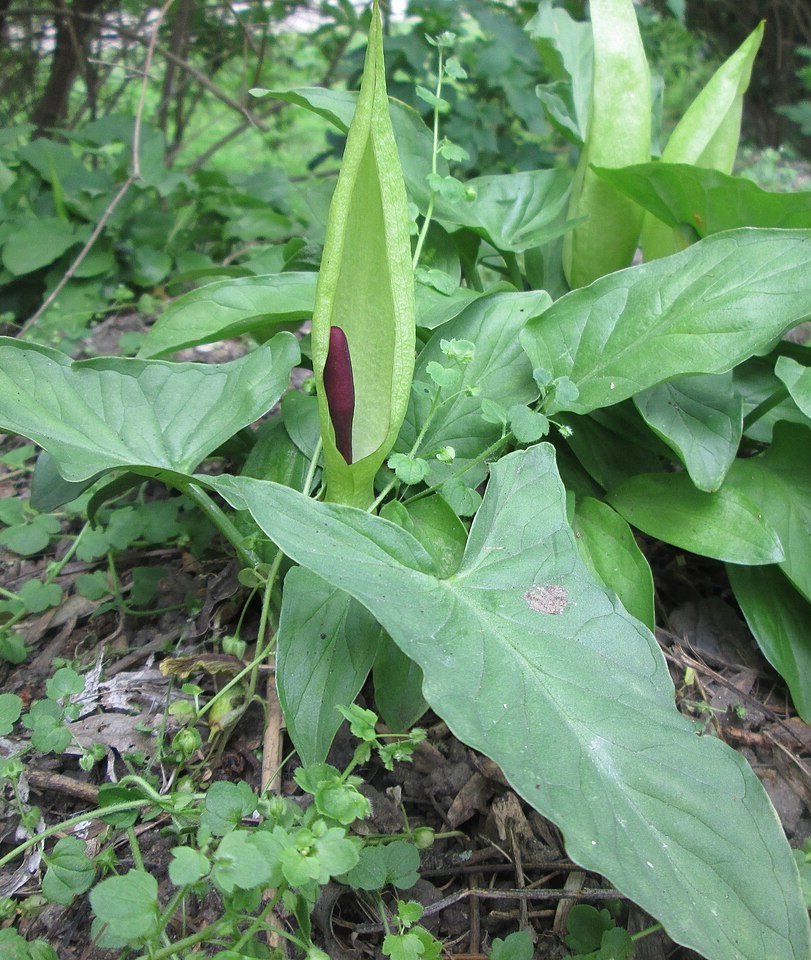
Wake Robin
Arum maculatum L.
Important botanical synonyms and historical names include:
- Arisarum maculatum (L.) Raf.
- Arum vernale Salisb.
- Arum byzantinum Blume
- Arum immaculatum (Rchb.) Rchb.
- Arum pyrenaeum Dufour
- Arum vulgare Lam.
- Arum zeleborii Schott
- Arum maculatum var. immaculatum Rchb.
- Arum maculatum var. pyrenaeum (Dufour) P.Fourn.
- Arum maculatum var. zeleborii (Schott) Nyman
- Arum malyi Schott
Important non-synonym confusion names:
- Trillium spp. — unrelated North American plants also commonly called wake robin; not botanical synonyms for Arum maculatum
- Arisaema triphyllum (L.) Schott — Jack-in-the-pulpit; separate North American aroid with overlapping raphide concerns
- Arum italicum Mill. — Italian arum or Italian lords-and-ladies; related but separate Arum species
- Zantedeschia aethiopica (L.) Spreng. and related Zantedeschia species — calla lily or arum lily; separate aroids, not exact synonyms for Arum maculatum
- Colocasia esculenta (L.) Schott — taro; separate food-crop aroid requiring specialized processing and not interchangeable with cuckoo-pint
- Lilium and Hemerocallis species — true lilies and daylilies; important cat kidney-poisoning plants, not the same toxicological problem as Arum maculatum
Araceae — Arum or Aroid Family
Wake Robin is an aroid. That family placement matters because many aroids contain insoluble calcium oxalate raphides that cause immediate oral and pharyngeal irritation when fresh tissue is chewed. It should not be treated as a true lily, a Trillium, a soluble-oxalate kidney plant, or a cardiac-glycoside plant simply because common names such as wake robin, arum lily, jack-in-the-pulpit, or starch-root overlap in public use.
Wake Robin; Wake-Robin; Wild Arum; Arum; Cuckoo-Pint; Cuckoo Pint; Cuckoopint; Lords-and-Ladies; Lords and Ladies; Lord-and-Ladies; Devils-and-Angels; Devils and Angels; Cows-and-Bulls; Cows and Bulls; Adam-and-Eve; Adam and Eve; Bobbins; Cuckoo Plant; Starch-Root; Starch Root; Snakeshead; Snake’s Head; Adder’s Root; Adder’s Meat; Friar’s Cowl; Naked Boys; Naked Girls; Soldiers Diddies; Arum Lily; Wild Arum Lily.
Historical and taxonomic search variations include Arum maculatum, Arisarum maculatum, Arum vernale, Arum byzantinum, Arum immaculatum, Arum pyrenaeum, Arum vulgare, Arum zeleborii, and historical Arum maculatum varieties or forms such as var. immaculatum, var. pyrenaeum, and var. zeleborii.
“Wake robin” is highly ambiguous. In North America it more commonly refers to Trillium species, which are unrelated to Arum maculatum. “Jack-in-the-pulpit” usually refers to Arisaema triphyllum. “Arum lily” often refers to Zantedeschia species. “Italian arum” is Arum italicum. Several of these plants can also contain irritating calcium oxalate raphides, but they are not exact synonyms and should be identified botanically during a poisoning emergency.
Insoluble Calcium Oxalate Raphides Are the Best-Established Acute Toxin
The principal established acute toxic system in Arum maculatum is insoluble calcium oxalate arranged as bundles of slender needle-shaped crystals called raphides. These crystals form inside specialized plant cells known as crystal idioblasts. Leaves, petioles, stalks, the spathe, spadix, berries, seeds, sap, and underground tuber should all be treated as poisonous. Crystal abundance and intensity of irritation can vary among tissues, developmental stages, individual plants, and growing conditions, so a safe-looking leaf or berry spike cannot be judged visually.
Chewing or crushing the plant breaks open crystal-bearing tissues and releases raphides into the mouth. The crystals penetrate the lips, gums, tongue, palate, cheeks, pharynx, and esophagus much like microscopic splinters. This is why signs begin almost immediately. The animal does not need to digest the plant, absorb it into the bloodstream, and wait for a distant organ effect before pain starts. The injury begins where the plant touches living tissue.
The same local injury can occur outside the mouth. Sap or crushed tissue on the paws, muzzle, coat, eyelids, feathers, skin folds, or handler’s hands can irritate skin or be transferred into the eyes. An animal that paws at a painful mouth can move raphides and sap into the eye or onto already inflamed facial skin.
How Raphides Produce Pain, Swelling, and Dysphagia
Raphide injury is primarily mechanical, but the body’s response is inflammatory. Thousands of rigid microscopic needles abrade and puncture soft tissue. Damaged cells release inflammatory mediators, blood vessels dilate, and fluid leaks into the surrounding tissue. The result is burning pain, redness, salivation, swelling, gagging, repeated swallowing, and reluctance or inability to drink.
Swelling of the lips and tongue is common after significant exposure. Edema that extends into the pharynx, glottic area, or larynx is less common but much more dangerous because it can interfere with swallowing, airway protection, or breathing. Severe airway obstruction is uncommon because the plant tastes acrid and painful, but it is not impossible. Large tuber exposure, repeated chewing, a small patient, or an animal that cannot clear saliva normally can change the risk.
Crystals may remain embedded after visible plant pieces are removed. Continued tongue movement, rubbing, retching, vomiting, or repeated swallowing can drive them into irritated tissue or move them along the esophagus. This is why forceful first aid can make a case worse. Deep finger sweeps, forced water, forced food, owner-induced vomiting, or drenching can re-expose tissue, increase aspiration risk, or push material toward the throat.
Tubers, Berries, and Whole-Plant Exposure Deserve Special Concern
The underground tuber is a major exposure concern because it is starchy, concentrated, and accessible during digging, gardening, erosion, transplanting, or yard clearing. A dog may dig it up and chew it like a root or toy. A pig may root it out. A gardener may leave fragments in a compost pile or along a fence line. Tuber ingestion can deliver much more plant tissue than a quick bite of a leaf.
The berries are a different hazard. After flowering, the leaves and spathe die back, leaving an upright spike of orange to bright red berries. That isolated berry spike can be conspicuous when the rest of the plant is no longer obvious. Dogs, children, poultry, birds, goats, pigs, and other animals may investigate the colorful fruit. The berries and seeds should not be treated as safe because birds may disperse them or because the leaves have disappeared.
Whole-plant contamination of green fodder can defeat the plant’s natural deterrent. Grazing animals may avoid fresh cuckoo-pint when they can choose around it, but chopped vegetation, hedge clippings, or cut green feed can mix leaves, stalks, berries, tubers, and other plants together. This can lead to a much larger exposure than voluntary browsing of a standing plant.
Additional Constituents: Triglochinin, Lectins, Saponins, Amines, and Other Compounds
Arum maculatum is chemically more complex than a bag of calcium oxalate needles. Research has reported triglochinin, a cyanogenic glycoside, in leaves and spathes. Saponins, lectins, volatile amines, terpenic compounds, alkaloid-like or nitrogen-containing constituents, and major tuber lectins have also been isolated or discussed from Arum maculatum or related aroids. These findings matter because they explain why very large, concentrated, historical, or unusual exposures may not always behave like a simple mouth irritation case.
That chemistry must be interpreted carefully. Chemical presence does not prove that every compound reaches a clinically important dose during ordinary pet chewing. The rapid, typical syndrome in dogs, cats, horses, livestock, and humans is most consistently explained by insoluble raphide injury. A classic cyanide-poisoning syndrome, a lectin-driven systemic toxicosis, or a primary alkaloid syndrome should not be described as the expected outcome of one small fresh-leaf bite unless signs and exposure history support something more complicated.
Similarly, a family-level statement that some aroids may contain proteolytic enzymes should not be converted into a firm plant-specific claim that a proven proteinase is the principal toxin in Arum maculatum. Proteinaceous irritants can intensify raphide injury in some aroids, but the strongest evidence-bound wording for this species is that raphides are the principal established acute hazard, while other constituents may contribute to severe or atypical cases.
Insoluble Raphides Are Not the Same as Soluble Oxalate Poisoning
“Oxalate poisoning” can mean two different things. Insoluble calcium oxalate raphides act mainly where they contact tissue. They are poorly absorbed and produce local mechanical irritation, swelling, salivation, dysphagia, vomiting, diarrhea, skin irritation, and eye injury. Soluble oxalates, such as sodium or potassium oxalates in different plants, can be absorbed, bind circulating calcium, cause hypocalcemia, interfere with muscle and cardiac function, and precipitate calcium oxalate in the kidneys.
Arum maculatum is managed principally as an insoluble-raphide plant. Ordinary small chewing exposures are not expected to cause the systemic hypocalcemia and renal oxalosis associated with soluble-oxalate plants. Reduced urination or abnormal kidney values after Wake Robin exposure should prompt assessment for dehydration, shock, poor perfusion, severe vomiting, aspiration, another toxic plant, another disease, or an unusually large and complicated exposure rather than automatic attribution to routine raphides.
Permanent liver injury is also not a recognized routine consequence of typical Wake Robin poisoning. Experimental extract effects, historical severe cases, and additional phytochemicals should not be used to tell an owner that a dog with a brief oral exposure will inevitably develop liver failure. The clinical picture and plant part matter.
Fresh, Wilted, Dried, Frozen, and Processed Material
Fresh plant material and sap generally produce the strongest immediate irritation. Wilting, drying, freezing, weathering, or cooking may change plant chemistry, sap flow, texture, and crystal availability, but none should be treated as a reliable home detoxification method. Calcium oxalate crystals are mineral structures and can persist in plant tissue after moisture changes. Dried or weathered fragments can still irritate if chewed or rubbed into the mouth or eyes.
Historical use of the tuber as starch, emergency food, laundry starch, soup ingredient, or medicine does not establish animal safety. Traditional preparation involved extensive processing such as repeated washing, prolonged heating, fermentation, drying, grinding, or combinations of methods intended to reduce irritants. Raw, partly cooked, casually dried, frozen, or home-processed cuckoo-pint should never be offered to an animal.
No Reliable Toxic Dose Exists
No validated toxic dose exists for dogs, cats, horses, cattle, sheep, goats, pigs, poultry, rabbits, guinea pigs, birds, reptiles, or people. Risk depends on the animal’s species and size, the plant part, whether the tuber or berries were eaten, freshness, amount chewed, degree of maceration, swallowing ability, eye exposure, current hydration, and whether the plant was mixed with other toxic vegetation, pesticides, herbicides, mold, or contaminated feed.
The practical safety rule is straightforward: every part of Arum maculatum should be kept away from animals, and tubers, berry spikes, fresh clippings, and contaminated green fodder deserve more concern than a single brief leaf taste that the animal immediately rejects.
Immediate Mouth, Tongue, and Throat Signs
Clinical signs usually begin while the animal is chewing Wake Robin or within minutes afterward. Dogs and cats may suddenly stop chewing, shake the head violently, paw at the mouth, rub the muzzle, lick the lips repeatedly, drool profusely, gag, retch, cough, or vocalize. The lips, gums, tongue, palate, and mouth lining may appear red, swollen, painful, blistered, eroded, or ulcerated after a more substantial exposure.
Pain and swelling can make eating and drinking difficult. An affected animal may hold the mouth partly open, extend the tongue, repeatedly attempt to swallow, approach water but refuse to drink, drop food, refuse treats, or show an altered bark, meow, whinny, or bleat when irritation extends toward the pharynx or larynx. Saliva may pool because swallowing is painful or poorly coordinated.
Coughing, choking, nasal discharge containing food or fluid, increased respiratory noise, or open-mouth breathing raises concern for pharyngeal swelling, aspiration, choke-like obstruction, or developing upper-airway compromise. These findings deserve more urgency than ordinary drooling after a small leaf taste.
Gastrointestinal Signs and Secondary Dehydration
Plant fragments, sap, and loosened crystals can irritate the esophagus, stomach, and intestines. Dogs, cats, pigs, and other species capable of vomiting may develop nausea, vomiting, retching, abdominal discomfort, appetite loss, and diarrhea. Vomit may contain recognizable plant fragments, berry material, or pieces of tuber.
Persistent vomiting or diarrhea can cause dehydration, electrolyte abnormalities, weakness, reduced urination, and poor circulation. Those are secondary consequences of fluid loss and poor intake, not proof that the usual small raphide exposure directly destroyed the kidneys or liver. A dehydrated animal still needs veterinary care, because secondary complications can become serious even when the original toxin mechanism was local irritation.
Bloody vomit, bloody diarrhea, severe abdominal pain, repeated retching, inability to keep water down, or profound depression suggests a more severe gastrointestinal case, a large plant ingestion, tuber ingestion, aspiration, mixed exposure, or another medical problem. These signs should not be managed with owner-selected antidiarrheals or stomach protectants.
Skin, Paw, Coat, and Eye Signs
Sap and crushed plant material can irritate exposed skin, especially where the skin is thin, wet, abraded, sparsely haired, or already inflamed. Redness, itching, swelling, burning, blistering, or ulceration may occur on the muzzle, lips, paws, eyelids, abdomen, groin, or any area where plant residue remains under a collar, harness, bandage, halter, or matted hair.
Eye exposure can occur when plant sap splashes directly into the eye, when an animal paws at a painful mouth and then rubs the face, or when a cat, bird, or small mammal grooms contaminated paws or fur. Signs include blinking, tearing, squinting, conjunctival redness, eyelid swelling, cloudiness, discharge, light sensitivity, or refusal to open the eye. Persistent eye pain needs veterinary examination because corneal abrasion or ulceration may occur from crystals, sap, and self-trauma.
Dogs and Cats
Dogs may chew leaves, pull berry spikes, dig up tubers, raid a compost pile, carry cut vegetation, or investigate woodland plants along a trail. Puppies and compulsive chewers may continue mouthing material longer than expected. A brief leaf bite commonly causes drooling, head shaking, mouth pawing, vomiting, and temporary food refusal. Tuber chewing or numerous berries deserves greater concern because it may deliver much more plant tissue.
Cats may nibble young leaves, brush against sap, walk through cut vegetation, or groom contaminated paws and fur. Drooling, mouth discomfort, vomiting, hiding, food refusal, pawing at the face, and eye pain are important signs. A cat that remains anorexic after the initial mouth pain should be examined because prolonged food refusal can create secondary metabolic problems.
Most limited dog and cat exposures improve within several hours, with substantial recovery often within 12 to 24 hours. Continued drooling, repeated vomiting, visible swelling, refusal or inability to drink, altered vocalization, eye pain, weakness, or any breathing change requires veterinary assessment.
Horses, Cattle, Sheep, Goats, Pigs, and Other Livestock
Horses cannot vomit. An exposed horse may salivate, toss or rub the head, chew abnormally, refuse feed, cough, show difficulty swallowing, develop signs resembling choke, or show colic, diarrhea, depression, tremors, weakness, or respiratory difficulty. Nasal reflux, material coming from the nostrils, coughing while eating or drinking, or inability to swallow creates aspiration risk and requires immediate examination.
Cattle, sheep, goats, pigs, camelids, and other grazing animals may show excessive salivation, repeated chewing movements, tooth grinding, tongue or facial swelling, reluctance to eat, abdominal discomfort, diarrhea, weakness, or respiratory distress. Group exposure may occur when whole plants contaminate cut green fodder, hedge clippings are dumped into an enclosure, or hungry animals enter woodland edges or shaded pasture margins containing accessible plants.
The amount eaten can differ dramatically among animals in the same group. One healthy animal does not prove the feed source was safe. The historical cattle poisoning report involving whole plants in green fodder supports a stronger livestock warning than a simple pet-houseplant paragraph would provide.
Rabbits, Guinea Pigs, Birds, Reptiles, and Other Small Animals
Rabbits and guinea pigs may chew leaves, berries, roots, or tuber fragments and then stop eating because of mouth pain or gastrointestinal discomfort. They cannot vomit, so drooling, tooth grinding, food refusal, reduced fecal output, hunched posture, lethargy, or abdominal discomfort may be the main warning signs. Food refusal can become dangerous quickly in these species.
Birds may peck berries or shred leaves and stalks with the beak, producing direct oral and eye exposure. Reptiles and tortoises should not be offered Wake Robin as browse, enclosure greenery, or “wild food.” Reduced appetite, abnormal swallowing, mouth rubbing, abnormal droppings, weakness, lethargy, or respiratory change after exposure should be discussed with a species-appropriate veterinarian.
Severe and Atypical Signs
Rapidly increasing tongue or throat swelling, noisy breathing, open-mouth breathing, blue or gray mucous membranes, collapse, persistent vomiting, severe weakness, tremors, abnormal heart rhythm, seizures, coma, or pulmonary edema represents severe poisoning or a complication beyond the typical localized raphide syndrome. These signs may reflect large tuber ingestion, numerous berries, aspiration, shock, airway obstruction, livestock whole-plant exposure, additional plant constituents, mixed vegetation, pesticide exposure, or another disease.
Convulsions, coma, and deaths appear in older human and livestock reports, but they are unusual and should not be described as expected after every chewed leaf. Their presence should trigger urgent evaluation and careful reconsideration of plant identification, amount consumed, plant part, airway status, hydration, oxygenation, and possible additional toxins.
Expected Course and Prognosis
Most uncomplicated pet exposures begin improving within several hours once access ends and the mouth is gently cleared. Mild soreness, drooling, food refusal, vomiting, or diarrhea may continue into the next day. More extensive mucosal injury, tuber ingestion, eye injury, esophageal irritation, aspiration, or severe pharyngeal swelling can prolong recovery.
A routine two-week illness is not typical of a correctly identified small exposure, but prolonged recovery is possible after severe tissue injury, aspiration pneumonia, dehydration, ulceration, or airway complications. Persistent pain, respiratory signs, inability to swallow, repeated vomiting, eye pain, collapse, tremors, seizures, or major weakness should prompt re-examination rather than continued home observation.
Wake Robin Is an Ambiguous Name
The Wake Robin covered on this page is Arum maculatum, a European woodland aroid also known as Cuckoo-Pint, Lords-and-Ladies, Wild Arum, Starch-Root, and Adder’s Root. In North America, wake robin is much more commonly used for Trillium species. Trilliums are unrelated plants and should not be treated as botanical synonyms for Arum maculatum.
Other common names create similar confusion. Jack-in-the-pulpit usually refers to Arisaema triphyllum. Arum lily commonly refers to Zantedeschia. Italian arum is Arum italicum. Taro is Colocasia esculenta. Several of these plants are aroids and can produce similar calcium-oxalate mouth irritation, but they are not the same species, do not have identical ranges, and may require different identification, prevention, or treatment emphasis.
The page title should remain Wake Robin because that is the supplied plant name, but the article must make Arum maculatum, Cuckoo-Pint, and Lords-and-Ladies unavoidable for search and emergency clarity. During a poisoning event, photographs and a complete plant sample are more reliable than a common name.
How to Identify Arum maculatum
Arum maculatum is a perennial tuberous aroid that emerges from the ground during the cooler part of the growing season. The leaves are long-stalked, glossy to moderately glossy, and arrow- or spear-shaped, with backward-pointing basal lobes. Mature leaves are commonly about 7 to 20 centimeters long, though size varies with growing conditions.
Some plants have dark purple or brown spots on the leaves; others are completely unspotted. The absence of spots does not rule out Arum maculatum. This is important because owners often expect “maculatum” to mean every plant must be visibly spotted.
The inflorescence consists of a pale green or yellow-green hood called a spathe surrounding a club-shaped spadix that is often purple, brownish purple, or occasionally yellow. The small true flowers are hidden near the base of the spadix inside the lower chamber of the spathe. After flowering, the leaves and spathe die back, leaving a short upright spike of berries that mature from green through orange to bright scarlet red.
Berry Spikes Are a Major Identification and Exposure Trap
The berry spike is one of the most important animal-exposure features. It often stands alone after the leaves have died back, so the plant no longer looks like the leafy spring aroid people may remember. Bright red-orange berries clustered on a bare spike can attract dogs, poultry, pigs, goats, children, and other curious animals.
The berries should be treated as poisonous. Birds may eat and disperse them, but bird dispersal does not establish safety for pets or livestock. Animals may chew berries, crush seeds, ingest multiple fruits, or eat the spike along with surrounding plant tissue. Numerous berries represent a larger exposure than a brief taste of a leaf.
Prevention should include searching for berry spikes after the foliage has disappeared. Pulling or cutting only the leaves in spring does not remove the later fruiting hazard if the plant has already flowered or if tubers remain in the ground.
Tubers, Digging Dogs, Pigs, and Garden Work
The underground tuber stores starch and can be attractive to digging animals. Dogs may excavate it from loose soil, compost, or a recently cleared bed. Pigs may root it up. Gardeners may expose tubers while weeding, transplanting, dividing soil, or clearing hedgerows. A tuber fragment left on the ground may look like a harmless root or chew object.
Tuber exposure is higher concern because the animal may chew and swallow a concentrated piece of plant tissue. The severe human tuber case shows that substantial tuber ingestion can produce prolonged swelling of the lips and tongue, severe burning of the mouth, throat, and upper abdomen, drooling, and difficulty breathing. That case should not be used to predict severe illness from every leaf bite, but it supports strict control of exposed tubers.
Dogs that dig should be kept away from recently cleared sites. Pulled plants should be bagged securely. Compost piles, green-waste heaps, and brush piles containing tubers should not be accessible to pets, pigs, poultry, goats, tortoises, or horses.
Range, Habitat, and Where Animals Encounter It
Arum maculatum is native across much of Europe and extends through northern Türkiye to the western Caucasus. It grows primarily in temperate habitats and is strongly associated with deciduous woodland, forest margins, hedgerows, riverbanks, floodplain woodland, shaded roadsides, and moist or partly shaded ground.
Animals may encounter it along woodland trails, beneath hedges, in shaded pasture margins, in naturalized gardens, at the edge of old walls, around damp lanes, and in sites where cut vegetation or hedge trimmings have been dumped. Dogs may investigate leaves, berries, or exposed tubers. Cats may contact sap while moving through patches and later groom their paws. Horses and livestock are more likely to consume significant amounts when desirable forage is scarce or when whole plants are cut and mixed into green fodder.
In regions where Arum maculatum is grown ornamentally or naturalizes, the same hazards apply even outside its native range. The plant should not be planted inside dog runs, rabbit areas, poultry yards, tortoise enclosures, goat pens, or horse paddocks.
Every Part Should Be Treated as Poisonous
Leaves, stalks, flowers, spathe, spadix, sap, berries, seeds, and underground tuber can all cause poisoning. The exact intensity may vary among tissues and growth stages, but there is no animal-safe part to offer. A leaf may be rejected quickly because it burns. A berry spike may be more attractive. A tuber may allow a larger dose. Cut fodder may hide the plant among safer vegetation.
The plant’s acrid taste usually limits ingestion. That is why many pet exposures involve dramatic drooling and mouth pain but not death. Avoidance is not guaranteed in young animals, compulsive chewers, animals with reduced oral sensation, hungry livestock, small exotics, or animals eating chopped or mixed material.
Dried or wilted material should not be relied on as safe. Fresh tissue is usually more irritating, but mineral crystals remain, and drying may be incomplete. Historical processing into starch or food involved deliberate, repeated, and specialized preparation. It does not justify feeding raw, dried, frozen, boiled, or home-processed Wake Robin to an animal.
How Raphide Cells Produce Such Intense Pain
Calcium oxalate raphides form inside crystal idioblasts. These cells differ from surrounding tissue by storing bundles of slender crystals. When the tissue is crushed, chewed, bent, or broken, the crystals escape and are pressed into the contacted surface by chewing pressure, tongue movement, saliva, and swallowing.
The result is not just a chemical taste. It is a mechanical splinter injury on a microscopic scale. The crystals puncture and abrade mucous membranes. Inflammation then amplifies the pain and swelling. Blood vessels become more permeable, fluid enters the tissue, and the tongue, lips, pharynx, or laryngeal region may swell.
Embedded crystals can continue irritating tissue after the visible plant has been removed. This explains why a pet may keep drooling, rubbing, gagging, or refusing food after the plant is gone. It also explains why charcoal is not a simple answer; charcoal cannot pull mineral needles out of the tongue or pharynx.
Other Compounds Reported in Arum maculatum
Arum maculatum contains additional biologically active constituents beyond calcium oxalate. Triglochinin, a cyanogenic glycoside, has been identified in leaves and spathes. Tuber lectins and other proteinaceous compounds have been characterized. Saponins, volatile amines, terpenic compounds, alkaloid-like constituents, and nitrogen-containing compounds have also been reported in different studies or tissues.
This broader chemistry supports a cautious approach to large, concentrated, or unusual exposures. It also explains why old severe reports cannot always be reduced to “tiny needles in the mouth.” Still, the ordinary veterinary syndrome after fresh chewing is most consistently raphide-mediated: immediate oral pain, salivation, swelling, vomiting, diarrhea, skin irritation, and eye injury.
Cyanide antidotes, lectin-poisoning assumptions, or broad systemic-toxin claims should not be used just because these compounds have been detected. Treatment should be guided by the patient’s signs, plant part, amount, exposure history, and veterinary assessment.
Published Severe Tuber Poisoning
A published human case involved intentional ingestion of about 50 grams of identified Arum maculatum tuber. Several hours later, the patient developed extensive swelling of the lips and tongue, difficulty speaking, severe burning of the tongue, throat, and upper abdomen, drooling, and difficulty breathing. The medical team prepared for airway intervention while providing closely monitored supportive care.
Swelling initially improved and then recurred. Reduction in tongue swelling became evident after about 24 hours, routine laboratory results remained within normal limits, and the patient was discharged after several days of observation. The case is useful because it proves that large tuber exposure can create prolonged and potentially life-threatening upper-airway swelling without proving that ordinary small leaf exposure causes kidney or liver failure.
Historical Cattle Poisoning
A 1954 northern Italian report described seven cows that received green fodder containing whole Arum maculatum plants during a severe shortage of hay. Three developed pulmonary edema and coma and died, while four remained healthy. Diarrhea was reportedly absent.
This report is important for livestock pages because it shows that whole-plant contamination of fodder can be much more serious than a pet’s quick taste exposure. It should also be framed honestly. It is an older report, individual toxin confirmation was not modern, and the outcome differed sharply among cows. Dose, selective feeding, plant part, individual susceptibility, forage shortage, and possible mixed-fodder context all matter.
The practical lesson is prevention: do not feed hedge clippings, woodland cuttings, or green fodder containing Wake Robin to livestock, and do not assume one healthy animal proves the entire group is safe.
Dogs and Cats
Dogs and cats are both susceptible. Dogs may chew leaves, play with berry spikes, dig up tubers, raid compost, or carry plant material from a woodland edge. Cats may mouth young leaves or contact sap while moving through a patch and then groom residue from the paws.
Immediate pain usually prevents a large ingestion, so many pet cases involve drooling, mouth irritation, head shaking, vomiting, and temporary food refusal. A small pet that chewed the tuber, swallowed numerous berries, has progressive swelling, cannot drink, or has breathing changes deserves much more concern than a dog that briefly mouthed the edge of a leaf and stopped.
Cats require special attention when they stop eating. Even if the original exposure is local mouth irritation, prolonged anorexia can create secondary metabolic illness. Eye exposure after face rubbing or grooming should also be treated seriously.
Horses and Livestock
Horses, cattle, sheep, goats, pigs, camelids, and poultry may encounter Arum maculatum in hedge bottoms, shaded field margins, woodland grazing, cut green feed, garden waste, or brush piles. The plant is usually unpalatable, but hunger, forage shortage, chopped vegetation, or contamination can defeat selective avoidance.
Horses may show salivation, oral pain, abnormal chewing, feed refusal, painful swallowing, coughing, nasal reflux, colic, diarrhea, weakness, depression, or respiratory difficulty. Because horses cannot vomit, vomiting should never be listed as an expected equine sign. Forced water, feed, medication, or drenching is especially dangerous when swallowing is impaired.
Ruminants may salivate, grind their teeth, stop eating, develop diarrhea, become weak, or show respiratory distress. Pigs may root up tubers or chew green waste. Any group exposure should trigger removal of the source and monitoring of every animal because individual consumption can differ dramatically.
Rabbits, Guinea Pigs, Birds, Reptiles, and Other Exotics
Rabbits and guinea pigs should not be given Wake Robin leaves, berries, stems, tubers, or clippings. They cannot vomit, and mouth pain can lead to reduced intake, gut slowdown, and secondary illness. Drooling, tooth grinding, food refusal, reduced fecal output, hunched posture, or lethargy after exposure needs veterinary guidance.
Birds may peck berry spikes or shred plant material with the beak. Reptiles and tortoises should not be offered Wake Robin as browse, habitat cover, or wild greens. There is no validated safe dose for these animals, and small body size makes casual exposure more concerning.
Diagnosis and Differentials
Diagnosis usually rests on witnessed access, rapid onset of oral pain, and identification of the plant. Useful photographs include the complete plant, both sides of a leaf, the base of the leaf stalk, any leaf spotting, the spathe and spadix if present, the berry spike, exposed tubers, and the growing location. A tuber that has been dug up should be retained securely for identification.
The veterinarian will assess the mouth, tongue, pharynx, swallowing ability, hydration, respiratory effort, oxygenation, eyes, skin, and gastrointestinal signs. Sedation or a more detailed oral and laryngeal examination may be necessary when pain or swelling prevents adequate inspection. Blood testing is generally unnecessary in a mild localized case but becomes appropriate after large ingestion, persistent vomiting, collapse, tremors, suspected dehydration, suspected renal compromise, or signs that do not match a simple raphide exposure.
Important differentials include other raphide-containing aroids such as Dieffenbachia, Philodendron, Monstera, Alocasia, Colocasia, Caladium, Zantedeschia, Arisaema, Epipremnum, Spathiphyllum, and Arum italicum. Non-plant causes include caustic cleaners, electrical burns, thermal burns, foreign bodies, insect stings, anaphylaxis, snakebite, trauma, dental disease, esophageal obstruction, choke in horses, pesticides, and mixed garden waste. In cats, do not confuse Wake Robin with true lilies, which cause a very different renal emergency.
Veterinary Treatment and Prognosis
There is no specific antidote that removes raphides already embedded in tissue. Veterinary treatment is supportive and directed toward limiting continued contact, controlling pain and vomiting, maintaining hydration, protecting the eyes, and preventing airway or aspiration complications. The mouth may be carefully rinsed or wiped, and remaining plant material may be removed under appropriate restraint or sedation.
Treatment may include analgesics, antiemetics, intravenous or subcutaneous fluids, electrolyte correction, gastrointestinal protection, oxygen, eye care, and veterinarian-selected medication for clinically important inflammation or edema. Antihistamines or corticosteroids may be considered in selected cases, but raphide injury is not simply an allergic reaction and these drugs do not physically remove the crystals.
The prognosis is good to excellent for most dogs and cats that briefly chew a leaf and develop only localized oral irritation. It becomes guarded with progressive airway swelling, persistent vomiting, aspiration, large tuber ingestion, numerous berries, pulmonary edema, collapse, seizures, coma, or major organ abnormalities. Severe presentations should not be dismissed as harmless mouth irritation.
Prevention
Remove Arum maculatum from animal-accessible woodland edges, hedgerows, shaded runs, paddocks, gardens, rabbit areas, poultry yards, and dog paths. Pay particular attention to berry spikes after the foliage has died back and to tubers exposed by digging or garden work. Wear gloves when handling pulled plants and collect every berry, seed, and tuber fragment.
Do not throw pulled plants, berry spikes, tubers, hedge clippings, or green fodder containing Wake Robin into animal enclosures or accessible compost piles. Inspect cut green vegetation collected from shaded margins before feeding it to livestock. Keep digging dogs away from recently cleared sites where tubers may remain underground.
Historical use as starch, emergency food, soup, or medicine does not establish animal safety. Those uses depended on specialized processing and do not make raw, casually dried, frozen, boiled, or home-processed Wake Robin safe for pets or livestock.
Immediate Steps After Exposure
Stop further contact immediately. Move the animal away from the plant, fallen berries, tubers, garden waste, hedge clippings, contaminated fodder, compost, or cut vegetation. Secure the source so other animals cannot reach it. Check whether the animal is alert, breathing normally, swallowing normally, and safe to handle before touching the mouth.
- Remove only easily accessible pieces: If the animal is alert and cooperative, gently remove loose plant material from the lips and front of the mouth. Do not reach deeply into the throat.
- Wipe visible residue carefully: Use a damp cloth on the lips, muzzle, paws, coat, tongue tip, and front of the mouth when safe. Do not scrub blistered or ulcerated tissue.
- Rinse only when swallowing is normal: A gentle rinse or voluntary small sips of cool water may be appropriate only when the animal is breathing normally and swallowing without difficulty.
- Prevent eye transfer: Keep sap-covered paws, muzzle, fur, feathers, or skin from rubbing the eyes. Use an Elizabethan collar when immediately available and safe, but do not delay veterinary care for it.
- Contact a veterinarian or animal poison-control service: Report the species, weight, plant part, estimated amount, time of exposure, current signs, and whether the tuber, berries, or contaminated fodder were involved.
- Preserve identification evidence: Save leaves, berry spikes, flowering structure, tuber fragments, and suspect fodder in a secure container. Photograph the complete plant and growing location.
Tuber ingestion, numerous berries, livestock group exposure, visible swelling, persistent vomiting, abnormal swallowing, or breathing change deserves prompt professional assessment. Do not wait to see whether a severe swelling case “settles down” on its own.
Do Not Attempt Unsupervised Home Treatment
- Do not induce vomiting: Hydrogen peroxide, salt, mustard, syrup of ipecac, and manual gagging can worsen oral and esophageal injury or cause aspiration. Horses, rabbits, guinea pigs, rats, and several other species cannot vomit.
- Do not force water, milk, yogurt, oil, broth, or food: An animal with tongue or throat swelling may be unable to protect its airway. Even normally harmless liquids can enter the lungs when swallowing is impaired.
- Do not give activated charcoal automatically: Charcoal does not remove crystals embedded in oral tissue and may be aspirated by an animal that is drooling, gagging, vomiting, weak, sedated, or unable to swallow.
- Do not administer diphenhydramine or another antihistamine on your own: The injury is primarily mechanical and inflammatory, and medication choice depends on species, airway findings, heart rate, other drugs, and severity of swelling.
- Do not give Kapectolin, Kaopectate, sucralfate, antacids, antidiarrheal drugs, corticosteroids, pain medication, antibiotics, calcium products, supplements, or human medication without direction: These do not neutralize embedded raphides and may be unsafe for the species or clinical condition.
- Do not drench horses or livestock: Forced oral liquids can be aspirated by an animal that is salivating, coughing, weak, colicky, neurologic, or swallowing abnormally.
- Do not delay emergency care while trying home remedies: Airway swelling can progress even after the animal stops chewing the plant.
Skin and Eye Decontamination
Wear gloves and wash sap or crushed plant material from the skin, coat, paws, feathers, muzzle, and exposed areas with lukewarm water when the animal is stable enough. A mild pet-safe cleanser may be used on the coat or paws. Rinse thoroughly and prevent licking until residue has been removed. Wash collars, harnesses, bedding, halters, buckets, tools, gloves, and transport surfaces if plant residue may be present.
For eye exposure, begin gentle irrigation with sterile saline or clean lukewarm water if this can be done safely. Do not rub the eye, scrape at crystals, or apply leftover ophthalmic medication. Persistent squinting, tearing, redness, swelling, cloudiness, discharge, eyelid closure, or apparent vision difficulty requires veterinary examination for corneal injury or another eye problem.
When Emergency Examination Is Especially Important
- Breathing is noisy, rapid, shallow, or labored: Open-mouth breathing, neck extension, blue-gray mucous membranes, or increasing respiratory effort may indicate upper-airway obstruction.
- The tongue, lips, face, or throat is visibly swelling: Rapidly progressive swelling can interfere with both swallowing and ventilation.
- The animal cannot swallow normally: Repeated swallowing, saliva pooling, dropped food, choking, gagging, coughing, or material coming from the nostrils creates aspiration risk.
- Vomiting or diarrhea is persistent: Repeated fluid loss can cause dehydration and electrolyte abnormalities, especially in small animals.
- A tuber or numerous berries were eaten: These exposures may involve a much larger amount of plant tissue than a brief bite of a leaf.
- Systemic signs develop: Severe weakness, tremors, collapse, seizures, coma, pulmonary distress, or marked depression does not fit a simple mild oral exposure and requires urgent investigation.
- Several livestock were exposed: Remove the feed or plants immediately and have every animal assessed or monitored because individual consumption may differ greatly.
- A rabbit, guinea pig, bird, reptile, or other small animal stops eating: Food refusal can become a serious secondary problem even when the original injury is local.
Veterinary Treatment
The veterinarian may perform a careful oral, pharyngeal, and respiratory examination; assess oxygenation and swallowing; check hydration and abdominal comfort; and examine the eyes and skin. Sedation or controlled restraint may be needed to inspect painful tissue safely, but airway stability must be considered first when swelling is progressing.
Treatment may include removal of remaining plant fragments, controlled oral irrigation, pain relief, antiemetics, intravenous or subcutaneous fluids, electrolyte correction, gastrointestinal protection, oxygen, suction, eye treatment, and nutritional support. Bloodwork is usually unnecessary for a mild localized exposure but may be appropriate after large tuber ingestion, numerous berries, repeated vomiting, collapse, tremors, suspected dehydration, kidney-value changes, or atypical systemic signs.
Progressive tongue, pharyngeal, or laryngeal swelling may require close respiratory monitoring. Oxygen, sedation, endotracheal intubation, or an emergency surgical airway may be necessary in a severe case. Animals with impaired swallowing should not receive food, water, charcoal, or oral medication until the airway and swallowing mechanism have been evaluated.
Activated charcoal, antihistamines, corticosteroids, gastrointestinal protectants, and other medications are used only when the veterinarian determines that their potential benefit outweighs their risks. Raphide injury is not simply an allergy, and no drug physically removes crystals already embedded in the tissue.
Dogs, Cats, Horses, Livestock, and Small Animals
Dogs should be monitored for drooling, head shaking, mouth pawing, vomiting, swelling, refusal to drink, eye rubbing, weakness, and breathing changes. Bring plant photographs and any tuber, berry spike, or chewed material. A dog that dug up a tuber or ate numerous berries deserves more concern than one that briefly mouthed a leaf and stopped.
Cats should be watched for drooling, hiding, vomiting, pawing at the mouth, food refusal, grooming of contaminated paws, eye pain, and open-mouth breathing. Cats should not receive hydrogen peroxide as a home emetic. Continued anorexia after mouth irritation should be addressed.
Horses and livestock should be removed from the plant, cut fodder, or contaminated hedge clippings. Provide safe forage and clean water, but do not force oral intake. Horses cannot vomit, so salivation, feed refusal, coughing, nasal reflux, choke-like signs, colic, diarrhea, depression, or abnormal breathing are important. Do not drench affected animals.
Rabbits, guinea pigs, birds, reptiles, and other exotics need a lower threshold for veterinary advice if they chew Wake Robin or stop eating afterward. Reduced fecal output, tooth grinding, beak wiping, abnormal droppings, weakness, lethargy, or continued food refusal can become more serious than the original mouth irritation.
Recovery and Prognosis
Most pets with limited oral exposure recover fully, often within 12 to 24 hours, although appetite may remain reduced while the mouth and throat are sore. Persistent pain, vomiting, dysphagia, eye signs, or respiratory signs requires re-examination rather than continued home observation.
Recovery can take longer after extensive tuber ingestion, numerous berries, severe pharyngeal swelling, esophageal injury, dehydration, eye injury, or aspiration. The prognosis is guarded when airway obstruction, pulmonary edema, collapse, seizures, coma, or major organ abnormalities develop.
Prevention After the Incident
Remove or fence off Arum maculatum in animal-accessible woodland edges, hedgerows, shaded runs, paddocks, and gardens. Collect berry spikes after foliage dies back. Dig and remove tubers where dogs, pigs, poultry, or goats can reach them. Bag plant waste securely and keep it out of open compost piles and animal enclosures.
Inspect hedge clippings, green fodder, brush piles, and woodland vegetation before any material is offered to livestock. Do not use animals as cleanup tools for Wake Robin patches. Label the plant clearly as Arum maculatum so it is not confused with Trillium, Jack-in-the-pulpit, calla lily, Italian arum, or true lilies during a future emergency.
Frequently Asked Questions About Wake Robin and Animal Poisoning
Does the name Wake Robin always mean Arum maculatum?
No. In North America, wake robin commonly refers to Trillium species. The poisonous plant covered on this page is Arum maculatum, more clearly identified as Cuckoo-Pint, Lords-and-Ladies, or Wild Arum. Confirm the scientific name whenever a common name could refer to unrelated plants.
Is Wake Robin the same plant as Jack-in-the-Pulpit?
No. Jack-in-the-pulpit usually means Arisaema triphyllum, a separate North American aroid. It can also contain irritating calcium oxalate raphides, so the first-aid concerns may overlap, but it is not an exact synonym for Arum maculatum.
Is Wake Robin the same as Arum Lily or Calla Lily?
No. Arum lily or calla lily usually refers to Zantedeschia species. Those plants are also aroids and can cause insoluble calcium oxalate mouth irritation, but they are not Arum maculatum. A photograph and scientific name should be used for emergency identification.
What is the principal toxin in Wake Robin?
The best-established acute toxin is insoluble calcium oxalate arranged in needle-shaped raphides. Chewing releases these crystals from specialized cells and drives them into the tissues of the mouth and throat. Other compounds have been reported in the plant, but the ordinary immediate syndrome is most consistently raphide-mediated.
Which parts of Wake Robin are poisonous?
Leaves, stalks, the spathe, spadix, sap, berries, seeds, and underground tuber should all be considered poisonous. The bright red-orange berries are conspicuous after the leaves die back, while the starchy tuber may be exposed by digging or gardening. Tuber or numerous-berry exposure deserves more concern than a brief leaf taste.
Why are the berries dangerous if birds eat them?
Birds may disperse the berries, but bird tolerance does not establish safety for dogs, cats, livestock, rabbits, poultry, reptiles, or people. Domestic animals may chew berries, crush seeds, eat multiple fruits, or consume the fruiting spike with other plant material. The berry spike should be removed from animal-accessible areas.
Why is the tuber especially concerning?
The tuber is a starchy underground storage organ that can be dug up by dogs, pigs, or garden work. It can provide a larger concentrated exposure than a quick bite of a leaf. A published severe tuber case in a person involved major tongue and lip swelling, burning pain, drooling, and breathing difficulty after a large tuber ingestion.
How quickly do symptoms begin?
Symptoms usually begin immediately or within minutes because the crystals act directly where the plant is chewed. The animal may suddenly drop the plant, shake the head, paw at the mouth, drool heavily, gag, vomit if capable of vomiting, or refuse food and water because the mouth and throat burn.
How long do symptoms last?
Most uncomplicated dog and cat exposures begin improving within several hours and substantially resolve within 12 to 24 hours. Severe swelling, tuber ingestion, numerous berries, esophageal injury, eye injury, aspiration, or dehydration can prolong recovery. A two-week course is not typical of an ordinary small leaf exposure.
Can Wake Robin cause kidney failure?
Kidney failure is not expected after a routine small exposure to insoluble raphides. Soluble oxalate plants cause the classic absorbed-oxalate syndrome involving hypocalcemia and kidney crystal deposition. Kidney abnormalities after Wake Robin exposure require assessment for dehydration, shock, severe vomiting, another toxin, or an unusually large and complicated exposure.
Can Wake Robin cause liver failure?
Permanent liver injury is not a recognized routine consequence of typical Wake Robin raphide exposure. Severe historical reports, experimental extracts, or additional plant constituents should not be converted into a prediction that a brief leaf bite causes liver failure. Abnormal liver values require veterinary evaluation and consideration of dehydration, shock, another toxin, or unrelated disease.
Why have seizures, coma, and deaths been reported if most cases are localized?
Severe reports generally involve unusual circumstances such as large tuber ingestion, numerous berries, whole-plant livestock exposure, airway obstruction, aspiration, shock, pulmonary complications, mixed vegetation, or historical cases without modern toxin confirmation. These reports prove serious poisoning is possible, but seizures and coma are not expected after every chewed leaf.
Is Wake Robin poisonous to dogs?
Yes. Dogs can develop intense mouth pain, drooling, head shaking, pawing at the mouth, gagging, vomiting, reduced appetite, difficulty swallowing, and swelling of the lips or tongue. Most limited leaf exposures have a good prognosis, but tuber chewing, numerous berries, increasing swelling, persistent vomiting, altered vocalization, or breathing difficulty requires urgent veterinary care.
Is Wake Robin poisonous to cats?
Yes. Cats may develop drooling, mouth pain, vomiting, hiding, pawing at the face, refusal to eat, and eye irritation after chewing the plant or grooming sap from the paws. Continued anorexia should be taken seriously because cats can develop secondary illness when they stop eating for an extended period.
Is Wake Robin poisonous to horses?
Yes. Horses may salivate, chew abnormally, refuse feed, cough, show difficulty swallowing, develop choke-like signs, have nasal reflux, or show colic and diarrhea. Horses cannot vomit, so vomiting should not be expected or induced. Do not drench a horse that is salivating, coughing, weak, colicky, or swallowing abnormally.
Is Wake Robin poisonous to cattle, sheep, goats, and pigs?
Yes. Livestock can develop salivation, repeated chewing, tongue or facial swelling, feed refusal, abdominal discomfort, diarrhea, weakness, and respiratory distress. Serious historical cattle poisoning occurred when whole plants contaminated green fodder during hay shortage. Remove contaminated fodder immediately and monitor every exposed animal.
Is Wake Robin dangerous to rabbits and guinea pigs?
Yes. Rabbits and guinea pigs should not be offered leaves, berries, stems, roots, or tuber fragments. They cannot vomit, and mouth pain can lead to food refusal, reduced fecal output, gut slowdown, and secondary illness. Drooling, tooth grinding, lethargy, or refusal to eat after exposure needs veterinary guidance.
Can birds, reptiles, or tortoises eat Wake Robin?
No. Wake Robin should not be used as bird food, reptile browse, tortoise food, enclosure greenery, or nesting material. Safe doses are not established, and the berries, leaves, sap, and tuber can irritate the mouth, eyes, and digestive tract. Food refusal, abnormal droppings, weakness, or abnormal swallowing after exposure warrants species-appropriate veterinary advice.
Should vomiting be induced after Wake Robin ingestion?
No. Vomiting can drag sharp crystals and irritating material back across the mouth and esophagus and can cause aspiration, especially when the animal is drooling, gagging, weak, or swallowing poorly. Horses, rabbits, guinea pigs, rats, and several other species cannot vomit. Use emesis only if a veterinarian or poison specialist identifies a separate reason.
Should activated charcoal be given?
Activated charcoal is not routine treatment for a limited Wake Robin raphide exposure. It does not remove crystals embedded in the mouth or throat and can be aspirated by a drooling, vomiting, weak, sedated, or poorly swallowing animal. It should be used only under veterinary or poison-control direction.
Should milk, yogurt, oil, or Benadryl be given?
Do not give these automatically. Calcium-containing foods or soothing liquids are sometimes discussed for minor insoluble-oxalate exposures, but forcing food or liquid into an animal with throat swelling can cause aspiration. Diphenhydramine does not remove raphides, and its usefulness depends on species, dose, other medications, airway status, and clinical findings.
Can Wake Robin sap damage the eyes?
Yes. Sap or crushed plant material transferred to the eyes can cause marked pain, blinking, tearing, conjunctival redness, eyelid swelling, cloudiness, or corneal injury. Begin gentle irrigation with sterile saline or clean lukewarm water if safe, and seek veterinary care if squinting, swelling, discharge, cloudiness, or apparent vision difficulty persists.
Does drying or cooking make Wake Robin safe?
No ordinary home drying, wilting, freezing, or casual cooking process should be treated as reliable detoxification. Historical food and starch uses depended on specialized washing, heating, fermentation, drying, or repeated processing. Raw, partly cooked, casually dried, frozen, or home-processed Wake Robin should never be fed to animals.
How can Wake Robin poisoning be prevented?
Remove Arum maculatum from animal-accessible woodland edges, hedgerows, shaded runs, paddocks, gardens, rabbit areas, poultry yards, and dog paths. Collect berry spikes after foliage dies back, remove tubers where dogs dig, and never discard pulled plants, berries, tubers, or hedge clippings into animal enclosures or accessible compost.