Wild Arum Calcium Oxalate Raphides, Raw Arum Acridity, Mouth and Throat Swelling, Eye Injury, and Soluble-Oxalate Boundary
Is Wild Arum Poisonous to Dogs, Cats, Horses, and Livestock?
Yes—Wild Arum, Arum palaestinum Boiss., is poisonous to dogs, cats, horses, livestock, rabbits, guinea pigs, birds, reptiles, and people when raw plant tissue is chewed, swallowed, rubbed into the skin, or splashed into the eyes. This Palestine Arum / Black Calla is an aroid, not a true lily, and its best-confirmed toxic principle is water-insoluble calcium oxalate arranged in long, sharp, needle-shaped raphide crystals. Chewing raw leaves, berries, seeds, inflorescences, stems, sap, or the underground tuber ruptures specialized crystal cells and drives microscopic needles into the lips, tongue, mouth, throat, esophagus, skin, or eyes. The result is usually immediate burning, stabbing pain rather than a delayed systemic poisoning.
Most limited exposures cause sudden head shaking, pawing at the mouth, lip licking, drooling, gagging, retching, vomiting in species capable of vomiting, refusal to eat, difficulty swallowing, and swelling of the lips, tongue, gums, or throat. The syndrome is primarily local and mucosal, not the kidney-failure pattern caused by soluble oxalate plants. That said, severe tongue, pharyngeal, or laryngeal swelling can interfere with breathing; eye exposure can damage the cornea; repeated vomiting can cause dehydration or aspiration; and swallowed berries, tuber fragments, or plant material mixed into feed may create more prolonged gastrointestinal irritation. Traditional human culinary processing in parts of the Levant does not make raw garden plants, household-cooked scraps, or improvised animal feed safe.
About this guide: This page provides general pet-poisoning information and cannot diagnose or treat an individual animal. For any suspected exposure, contact a veterinarian or animal poison-control service immediately. Do not induce vomiting, give medication, or attempt home decontamination unless directed by a veterinary professional.

Wild Arum
Arum palaestinum Boiss.
Important botanical synonyms include:
- Arum magdalenae Sprenger
- Arum sanctum E.Dammann & Sprenger
- Richardia sancta (Dammer) Pynaert
Important spelling note:
- Arum palestinum is a common misspelling. The accepted spelling is Arum palaestinum.
Important non-synonym confusion names:
- Calla palustris L. — Wild Calla, Water Arum, Bog Arum; separate wetland aroid
- Zantedeschia species and cultivars — florist Calla Lilies and dark-flowered “Black Calla” cultivars; separate aroid genus
- Arum maculatum L. — Lords-and-Ladies, Cuckoo-pint; separate European aroid with related raphide irritation
- Arum italicum Mill. — Italian Arum; separate ornamental and invasive aroid in some regions
- Dracunculus vulgaris Schott — Dragon Arum; separate foul-scented Mediterranean aroid
- Polygonatum species — Solomon’s Seal; not Solomon’s Lily and not an Arum
- Lilium species — true lilies; separate family and a different, kidney-dangerous syndrome in cats
Araceae
Commonly called the Arum or Aroid family.
Wild Arum; Palestine Arum; Palestinian Arum; Black Calla; Black Calla Lily; Black Arum; Solomon’s Lily; Solomon Lily; Priest’s Hood; Kardi; Noo’ah Loof; No’ah Loof; Noah Loof; Loof Falastini; Palestinian Loof; Arum palaestinum; Arum sanctum; Arum magdalenae; Richardia sancta.
Scientific and historical search names include Arum palaestinum Boiss., Arum magdalenae Sprenger, Arum sanctum E.Dammann & Sprenger, and Richardia sancta (Dammer) Pynaert. The spelling Arum palestinum is a common misspelling and should be redirected mentally to Arum palaestinum, not treated as a separate plant.
Naming caution: “Wild Calla” is ambiguous and is also widely used for Calla palustris, a separate wetland aroid. “Black Calla” may refer to Arum palaestinum or to dark-flowered Zantedeschia cultivars sold in the ornamental trade. “Solomon’s Lily” is a common name for A. palaestinum, but Solomon’s Seal refers to Polygonatum, a completely different plant. True lilies are Lilium species and have a different toxicological importance, especially for cats. This page refers specifically to Wild Arum, Arum palaestinum.
Confirmed Main Toxic Principle: Insoluble Calcium Oxalate Raphides
The best-confirmed toxic principle in Arum palaestinum is water-insoluble calcium oxalate arranged in long, needle-shaped crystals called raphides. These crystals occur in specialized plant cells and act as a physical defense against animals that bite or tear the plant. In the exact-species human poisoning literature, the leaves and seeds are specifically described as containing needle-shaped oxalate crystals. For veterinary safety, every part of the raw plant should be treated as potentially irritating, including leaves, sap, spathe, spadix, berries, seeds, stems, roots, and the underground tuber.
Raphides are not a vague “plant chemical.” They are microscopic mineral needles. When raw tissue is crushed, large numbers of sharp crystals can penetrate the lips, tongue, gums, cheeks, pharynx, esophagus, skin, or eye surface. That mechanical penetration explains why signs begin immediately or within minutes. The animal is injured at the point of contact before the plant has time to be digested or absorbed.
Insoluble Calcium Oxalate Is Not the Same as Soluble Oxalate Poisoning
Insoluble calcium oxalate must be distinguished from soluble oxalate salts. Soluble oxalates can be absorbed from the digestive tract, bind circulating calcium, contribute to hypocalcemia, and precipitate in the kidneys. That is the concern with plants such as certain Oxalis, sorrels, rhubarb leaves, greasewood, halogeton, and other soluble-oxalate hazards.
Aroid raphides behave differently. The calcium oxalate is already in an insoluble crystal form and acts mainly where the plant touches tissue. The ordinary Wild Arum syndrome is immediate oral pain, drooling, gagging, dysphagia, swelling, vomiting from irritation, and possible eye or skin injury. Kidney failure, blood-calcium collapse, and systemic soluble-oxalate crisis should not be copied automatically onto this plant just because the words “calcium oxalate” appear in the toxin description.
Idioblasts and Crystal Release
The crystals are stored inside specialized cells called idioblasts. An idioblast differs from surrounding plant tissue because it stores substances such as crystals, oils, pigments, tannins, resins, mucilage, latex, or other defensive materials. Raphide idioblasts hold bundles of calcium oxalate needles, often suspended within a gelatinous or mucilaginous matrix.
Chewing crushes the plant tissue, ruptures idioblasts, and releases the raphides. Saliva and plant sap can increase internal pressure and help push crystals out of damaged cells. Rather than remaining quietly inside the leaf or berry, the crystals are released into the mouth while chewing continues. The animal’s sudden reaction—head shaking, pawing, gagging, and dropping the plant—is part of the plant’s defense system working in real time.
Individual raphides may be sharply pointed, grooved, barbed, or shaped in ways that help them lodge in soft tissue. A small visible bite may therefore create a large number of microscopic punctures. Owners may see only a chewed leaf edge or a missing berry, while the animal feels a mouthful of needles.
Mechanical Injury Plus Inflammatory Amplification
The crystals do more than create a brief scratch. Once embedded, they provide numerous microscopic sites of tissue injury. Plant sap and other irritants can enter those punctures, while the damaged tissue releases inflammatory mediators that increase pain, redness, fluid leakage, and swelling. The lips, tongue, oral mucosa, pharynx, and eyelids can become visibly red and edematous.
Histamine, kinins, prostaglandins, and other local mediators may contribute to swelling and pain. This does not mean every swollen animal is having a true allergic reaction. Direct crystal injury alone can produce dramatic redness and edema. Antihistamines may be appropriate in selected veterinary cases when hypersensitivity is suspected, but they do not dissolve embedded raphides, reverse direct mechanical injury, or secure a narrowing airway.
Possible Proteinaceous and Chemical Co-Irritants
Some members of Araceae contain proteinaceous irritants, proteolytic enzymes, or other substances that intensify raphide injury. Proteases break peptide bonds in proteins and may worsen tissue irritation when carried into the tiny punctures created by crystals. Other proposed aroid irritants include asparagine-related compounds, saponins, acrid oils, and incompletely characterized proteins.
A specific protease has not been established as the principal toxin of Arum palaestinum. Proteinase involvement should therefore be described as a possible aroid-family contributor rather than a proven species-specific toxin. Veterinary references also recognize that Arum species may contain an incompletely identified gastrointestinal irritant in addition to the visible oxalate crystals. The safe evidence-bound statement is that raphides are confirmed and that additional sap-associated irritants may intensify the injury.
Poisonous Plant Parts
All raw plant parts should be considered hazardous. Leaves are the material most likely to be chewed by pets or livestock. The dark spathe and black-purple spadix may attract curious animals because they look and smell unusual. The tuber contains concentrated plant tissue and can be exposed during planting, dividing, digging, construction, composting, or garden cleanup. After flowering, clusters of orange-red berries and seeds create a separate risk because they are colorful and may be swallowed quickly.
Berries and seeds deserve special caution. A dog, cat, bird, child, goat, pig, or other animal may swallow berries without chewing long enough to be deterred by severe mouth pain. The seeds are specifically documented as containing needle-shaped oxalate crystals. Whole berries may also carry sap, fruit pulp, and plant irritants into the stomach and intestine, creating vomiting or diarrhea even if oral signs were brief.
Raw Plant Toxicity Versus Traditional Culinary Processing
Traditional culinary use does not make raw Wild Arum safe for animals. In parts of the Levant and surrounding regions, selected Arum material has been processed through methods such as prolonged boiling, discarding cooking water, leaching, acidifying with lemon, sumac, pomegranate, sorrel, or other sour ingredients, or combining several steps to reduce acridity. Those methods belong to culturally specific human food preparation, not pet or livestock feeding.
A pet chewing a raw garden plant does not receive that processing. A horse or goat eating clippings does not receive that processing. A dog stealing leftovers from an uncertain household preparation should still be treated cautiously because the exact species, plant part, preparation method, amount, salt, spice, oil, onion, garlic, or other ingredients may be unknown. Household cooking should never be improvised as a way to turn Wild Arum into animal food.
Why Most Exposures Are Limited but Still Need Triage
The bitter, acrid taste and immediate pain usually limit the dose. That natural deterrent is one reason most exposures remain mild and localized. Many animals stop chewing quickly, spit out the plant, drool, and then improve as the crystals and sap are cleared from the mouth.
The deterrent is not a guarantee. An animal may swallow berries quickly, dig and chew the tuber, continue chewing despite pain, have reduced oral sensation, be confined with plant material mixed into feed, groom sap from the coat repeatedly, or be small enough that modest swelling creates a large airway concern. Brachycephalic dogs, cats with prolonged food refusal, horses with pharyngeal irritation, and exotic animals with small airways or unusual digestive anatomy deserve extra caution.
No Validated Veterinary Safe Dose
No validated safe dose has been established for Arum palaestinum in dogs, cats, horses, cattle, sheep, goats, pigs, rabbits, guinea pigs, birds, reptiles, or other animals. Exact-species clinical data come mainly from human pediatric exposures, not controlled veterinary feeding trials. The absence of severe signs in one human series should not be treated as proof that every animal, every plant part, every dose, or every eye exposure is harmless.
The practical dose boundary is therefore clinical rather than numerical. A tiny leaf nibble with brief drooling and normal swallowing is different from progressive tongue swelling, repeated gagging, berry ingestion, tuber chewing, eye exposure, persistent vomiting, or respiratory noise. Owners should not count leaves or berries as a safety calculation; they should assess the plant part, species, signs, swallowing, breathing, and access to other toxins.
Immediate Mouth Pain and Drooling
Clinical signs usually begin immediately or within minutes of chewing raw Wild Arum. The animal may suddenly drop the leaf, shake its head violently, paw or rub at the mouth, lick the lips, gag, retch, cough, vocalize, or try to scrape the muzzle against the floor or ground. Heavy drooling often develops because the mouth is painful and swallowing becomes uncomfortable.
The lips, gums, tongue, and inner cheeks may become red and swollen. Small erosions, punctate areas of inflammation, vesicle-like lesions, or superficial ulceration may be visible where raphides entered the tissue. The animal may hold its mouth partly open, extend the tongue, refuse food, avoid water, or resist examination because touching the injured tissue increases pain.
Difficulty Swallowing and Throat Involvement
Involvement of the pharynx or larynx can change the voice. A dog’s bark may sound hoarse, weak, or strained, while a cat’s meow may become quiet or abnormal. Repeated swallowing, neck extension, coughing during attempts to drink, or saliva and plant material coming from the nostrils can indicate significant pharyngeal irritation or impaired swallowing.
Swelling may produce dysphagia, meaning difficulty or inability to swallow. An animal may approach water repeatedly but fail to drink normally, take a small amount and immediately pull away, or allow saliva to run from the mouth. Forced drinking is dangerous because painful or swollen tissues may not protect the airway effectively.
Airway Warning Signs
Most Wild Arum exposures do not obstruct the airway. The strongest exact-species clinical series found mild, local effects without severe upper-airway compromise or death. That finding is reassuring, but it is not a reason to ignore breathing changes. Severe edema of the tongue, pharynx, or larynx can make breathing difficult, and serious airway compromise is documented with other raphide-containing aroids.
Warning signs include noisy inspiration, wheezing, stridor, open-mouth breathing, rapid shallow gasps, exaggerated movement of the chest or abdomen, blue-gray mucous membranes, panic, weakness, or collapse. These signs are emergencies. Airway swelling can worsen faster than an owner can safely manage at home.
Vomiting, Diarrhea, and Gastrointestinal Irritation
Vomiting or dry heaving may follow oral irritation and swallowing of plant tissue. Raphides and other irritants can inflame the esophagus, stomach, and intestine, producing nausea, abdominal pain, reduced appetite, vomiting, and diarrhea. Diarrhea results from gastrointestinal irritation rather than from the crystals being absorbed and circulating through the body.
Repeated vomiting is more concerning than one gagging episode. Continuing vomiting can re-expose the esophagus and mouth to crystals, worsen throat discomfort, cause dehydration, and increase aspiration risk if swallowing is impaired. Blood in vomit, persistent abdominal pain, repeated diarrhea, weakness, or inability to keep water down requires veterinary assessment.
Eye and Skin Signs
Skin contact with broken leaves, fruit, sap, or tuber tissue may cause redness, itching, burning, or dermatitis, especially on hairless skin, thin skin, eyelids, lips, paw pads, or preexisting abrasions. Sap on fur, paws, feathers, or scales can prolong exposure when the animal grooms.
Eye exposure is more serious. Raphides in the eye can abrade the corneal surface and produce severe pain, blinking, tearing, redness, swelling, conjunctival irritation, corneal abrasion, and self-trauma from rubbing. Persistent squinting, cloudiness, discharge, swelling, pawing, rubbing, or apparent vision difficulty needs veterinary examination and corneal staining.
Dogs
Dogs may bite leaves, dig up tubers, chew the dark inflorescence, or swallow berries. Immediate signs include head shaking, pawing at the muzzle, drooling, gagging, vomiting, lip licking, and refusal to eat. A dog that continues chewing despite the initial pain can develop more marked oral swelling and gastrointestinal irritation.
Short-nosed breeds, animals with existing airway disease, very small dogs, and dogs that swallow berries or tuber pieces deserve extra caution. A normal-looking dog after one brief leaf nibble may only need professional phone triage and observation, but increasing swelling, repeated gagging, noisy breathing, repeated vomiting, or eye exposure requires examination.
Cats
Cats may nibble leaves, play with berries, chew household plant material, or acquire sap on the paws and coat. Grooming can prolong exposure by carrying residue repeatedly back into the mouth. Drooling, hiding, pawing at the mouth, oral pain, vomiting, and food refusal are common concerns.
Continued food refusal is more concerning in cats than in many other pets because prolonged anorexia can create secondary metabolic problems. A cat that refuses food after the immediate mouth pain should not be ignored for days. Home vomiting attempts are unsafe for cats, and force-feeding or force-watering a drooling or gagging cat can cause aspiration.
Horses, Ponies, and Donkeys
Horses may mouth garden plants, discarded tubers, landscape trimmings, plant material thrown into a paddock, or arum mixed with pulled vegetation. Horses cannot vomit, so poisoning appears as salivation, head tossing, muzzle rubbing, repeated swallowing, feed refusal, coughing, oral swelling, diarrhea, or colic-like discomfort.
Marked throat swelling can interfere with breathing, while painful swallowing can resemble choke. Nasal reflux, severe coughing, neck extension, repeated attempts to swallow, respiratory noise, or severe salivation requires immediate equine examination. Do not drench a horse with water, oil, charcoal, or feed when pharyngeal irritation or choke-like signs are possible.
Cattle, Sheep, Goats, Pigs, and Camelids
Cattle, sheep, and goats may salivate, stop eating, make repeated chewing or swallowing motions, rub the muzzle, develop oral swelling, or show ruminal discomfort and diarrhea. Ruminants may tolerate some oxalate-containing plants better than monogastric animals, but that does not protect their lips, tongue, pharynx, or esophagus from direct raphide injury.
Pigs and goats may root or browse through garden waste, tubers, compost, or discarded ornamental material. Alpacas and llamas may show salivation, feed refusal, mouth discomfort, depression, or abnormal swallowing. A group exposure should also prompt investigation for caustic chemicals, pesticides, soluble-oxalate plants, toxic bulbs, mold, or another contaminant mixed with the same feed or waste.
Rabbits, Guinea Pigs, Birds, Reptiles, and Other Small Animals
Wild Arum should not be used as browse, cage greenery, hay, bedding, tortoise forage, bird enrichment, or reptile enclosure décor. Rabbits and guinea pigs may show drooling, mouth pain, food refusal, reduced fecal output, diarrhea or soft stool, abdominal discomfort, weakness, or secondary gut slowing. They cannot vomit, so the first visible problem may be anorexia or reduced fecal production rather than obvious retching.
Birds may peck berries, leaves, or inflorescences and then show beak rubbing, head shaking, salivation-like wetness around the mouth, regurgitation, reduced appetite, poor perching, or respiratory distress. Reptiles and tortoises may show reduced appetite, mouth irritation, abnormal swallowing, inactivity, dehydration, or respiratory effort. Species-specific safe doses are not established.
Expected Course and Red Flags
Most limited A. palaestinum exposures are mild and self-limiting. In the largest exact-species clinical review, affected patients primarily developed mouth redness, irritation, agitation, and drooling, while others remained asymptomatic. No severe airway obstruction or death was identified in that series. Pain and swelling usually improve substantially within several hours and often resolve within 12 to 24 hours.
More substantial mucosal injury may remain painful for several days. Persistent signs may indicate retained plant fibers, ongoing exposure from sap on the coat, corneal injury, aspiration, infection, esophageal damage, a more severe aroid injury, or a different plant. Convulsions, coma, kidney failure, permanent liver damage, and death are not expected consequences of uncomplicated insoluble-raphide exposure; if they occur, the veterinarian should investigate severe airway obstruction, hypoxia, shock, dehydration, aspiration, medication exposure, another toxin, or misidentification.
Wild Arum on This Page Means Arum palaestinum
The Wild Arum covered here is Arum palaestinum, a tuberous perennial aroid native to the Levant. It is known for broad dark green arrow-shaped leaves and an unusually dark purple to black reproductive structure that gives rise to common names such as Black Calla, Black Arum, Palestine Arum, Palestinian Arum, Priest’s Hood, and Solomon’s Lily.
The plant is not a true lily. True lilies belong to Lilium in Liliaceae, while Wild Arum belongs to Araceae. That distinction matters because true lilies can cause fatal kidney failure in cats, whereas raw Arum palaestinum primarily causes immediate raphide injury to contacted tissue. The word “lily” in Solomon’s Lily or Black Calla Lily should not be used to merge these toxicology profiles.
Accepted Name and Correct Spelling
The accepted botanical name is Arum palaestinum Boiss. Pierre Edmond Boissier published the name in 1854. The spelling Arum palestinum omits the second “a” and is not the accepted scientific spelling, although it appears frequently in casual writing and search queries.
Kew recognizes Arum magdalenae, Arum sanctum, and Richardia sancta as synonyms. Those names may appear on older nursery records, herbarium specimens, botanical illustrations, ethnobotanical articles, regional plant lists, or plant-trade labels. They should be preserved as synonym and search terms, not treated as separate pet-toxicology pages unless Richard intentionally creates separate historical-name redirects.
Native Range and Introduction Outside the Levant
The native range extends through western Syria, Lebanon, Palestine, Israel, and Jordan. The species is a characteristic eastern Mediterranean and Levantine geophyte rather than a plant native throughout Europe, Africa, Asia, or the Americas.
It has been cultivated beyond its natural range and has been recorded as introduced in California. Outside the Levant it is most likely encountered as an unusual ornamental, specialty bulb, botanic-garden plant, cultural food plant, or escaped garden specimen. That exposure pattern is different from a common North American pasture weed, but a single plant in a yard, greenhouse, plant collection, or compost pile can still injure an animal.
Habitat and Seasonal Growth
Wild Arum grows on open hillsides, fallow ground, field margins, rocky slopes, waste places, woodland openings, and cultivated or formerly cultivated land. It occurs on limestone-derived red soils, calcareous rock, alluvial ground, basalt-derived soils, and other regional substrates across its native range.
The plant grows during the cooler, wetter season and retreats into a subterranean tuber during hot or dry conditions. This seasonal pattern matters for animal exposure. Leaves may emerge when other vegetation is limited, and the tuber can remain underground after the visible growth disappears. Dogs, pigs, goats, and people digging in a bed may find the tuber when the owner no longer sees a plant.
Growth Form and Leaves
Arum palaestinum is a tuberous geophyte. Its aboveground leaves and inflorescence emerge from a flattened or disk-shaped underground tuber that can measure several centimeters across. The plant is stemless in the ordinary aboveground sense. Individual leaf stalks and the flowering stalk arise directly from the underground structure.
The leaf blades are large, deep green, and sagittate to oblong-sagittate—arrow-shaped, often with backward-pointing basal lobes. Mature leaves may reach roughly 15 to 36 centimeters long and 10 to 25 centimeters wide. The leaf stalks are cylindrical and may be stained purple along part of their length. The smooth, broad leaves can resemble those of other Mediterranean arums, calla lilies, or young elephant-ear plants, so identification should not rely on leaf shape alone.
The Spathe and Spadix
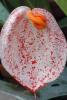
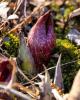
What appears to be one dark flower is actually an inflorescence composed of a fleshy spike called a spadix surrounded by a modified leaf called a spathe. The spathe forms a hood or funnel around the lower portion of the spadix. The outer spathe is commonly greenish or pale brown, while the inner surface is deep, uniform purple. The exposed appendix of the spadix is black-purple and may be nearly as long as the spathe blade.
The true flowers are small and hidden near the base of the spadix. Female flowers occupy the lower zone, with male flowers above them and rings of sterile bristles helping temporarily trap visiting insects. To a dog, cat, goat, child, or bird, the entire structure may look like a strange dark flower. Toxicologically, it should be treated as raw aroid tissue capable of oral and gastrointestinal irritation.
Odor, Heat, and Pollination
The inflorescence may smell like fermenting apples or fruit, weak carrion, dung, or another decaying organic material. The odor attracts flies and other insects that enter the spathe and move pollen between plants. Some animals may investigate the scent even if they would not normally chew a green leaf.
Arums can also generate heat within the inflorescence through thermogenesis. Warming helps volatilize scent compounds and increases their dispersal. Neither odor nor heat indicates that the plant is rotting, edible, or safe for an animal to investigate. The pollination system is botanical strategy, not a safety clue.
Fruits, Berries, and Seeds
After pollination, the leaves and spathe may disappear while a short cluster of berries matures near the ground. The fruits change color as they ripen and may become orange or red. This fruiting stage can be more attractive to pets, birds, children, pigs, goats, or small mammals than the bitter leaves.
The berries are visually appealing and may be swallowed with less chewing than a leaf. Their seeds contain documented needle-shaped oxalate crystals, and the fruiting spike should be treated with the same caution as the leaves and tuber. A missing berry cluster is not automatically mild just because the animal did not show dramatic oral pain at the moment of swallowing.
Why It Is Called Black Calla
The dark spathe and spadix resemble the showy inflorescences commonly called calla lilies. True florist callas belong to Zantedeschia, while Wild Calla is usually Calla palustris. All are aroids, but they are separate genera.
Dark-flowered Zantedeschia hybrids are also sold as black callas. A nursery label reading only “Black Calla” cannot prove that a plant is Arum palaestinum. For emergency identification, photographs should show leaves, spathe, spadix, berries, tuber if available, plant label, and the growing site.
Solomon’s Lily Is Not Solomon’s Seal
Solomon’s Lily is a common name for A. palaestinum. Solomon’s Seal refers to Polygonatum species, woodland plants with arching stems and hanging bell-shaped flowers. The names sound similar but the plants differ in appearance, chemistry, and toxicologic significance.
This distinction matters during phone triage. “My pet ate Solomon’s plant” is not enough. A complete photograph or specimen is necessary when an owner reports that an animal ate Solomon’s Lily, Solomon’s Seal, Black Calla, Wild Calla, or Wild Arum.
The Araceae Family
Araceae contains thousands of species ranging from tiny aquatic plants to large tropical climbers, terrestrial herbs, tuberous geophytes, and elephant-ear plants. Familiar members include Alocasia, Arisaema, Caladium, Calla, Colocasia, Dieffenbachia, Epipremnum, Monstera, Philodendron, Spathiphyllum, Zantedeschia, and Arum.
Many, but not every, member contains raphides. Related aroids can produce similar immediate oral pain, drooling, dysphagia, vomiting, and swelling, yet the exact mixture of crystals, proteins, enzymes, saponins, acrid compounds, and other irritants differs among genera and species. A Dieffenbachia airway case supports the seriousness of aroid raphides, but it should not be copied as the expected outcome of every Arum palaestinum exposure.
Idioblasts and Why the Pain Is Immediate
An idioblast is a specialized plant cell that differs markedly from surrounding cells. Idioblasts may store oils, tannins, pigments, latex, resins, minerals, mucilage, or defensive compounds. Raphide idioblasts contain densely packed bundles of calcium oxalate needles in mucilage and may be structurally adapted to release their contents when the tissue is injured.
Most swallowed chemical poisons require absorption and circulation before symptoms appear. Raphides act immediately because they are physical irritants. They begin penetrating tissue at the moment the plant is crushed against the mouth. The animal’s reaction—violent head shaking, pawing, drooling, and refusal to swallow—occurs because numerous microscopic contact points stimulate pain receptors simultaneously.
Inflammation Magnifies the Injury
Raphides create microscopic wounds and expose deeper tissue to sap and other plant constituents. Damaged cells release chemical mediators that dilate local blood vessels and make them leak fluid. This inflammatory fluid produces edema of the lips, tongue, oral mucosa, eyelids, pharynx, or larynx.
A modest increase in lip or tongue thickness is painful but usually manageable. Swelling in the narrow pharyngeal or laryngeal space can interfere disproportionately with airflow. Histamine may participate in the inflammatory response, but not every swollen animal is experiencing a true allergic reaction. Direct crystal injury alone can produce impressive redness and swelling.
Possible Proteinaceous and Gastrointestinal Irritants
Proteinaceous toxins and proteolytic enzymes have been proposed or demonstrated in several aroids. They may intensify raphide injury by damaging proteins, activating inflammatory pathways, or entering tissue through the crystal-made punctures. Species-specific confirmation is important. A protein isolated from Dieffenbachia, Alocasia, or another aroid cannot automatically be assigned to A. palaestinum.
Veterinary toxicology references describe an unidentified gastrointestinal irritant in Arum species capable of producing dose-dependent mucosal irritation, ulceration, abdominal discomfort, vomiting, diarrhea, and dehydration. This supports the observation that the syndrome may be more complex than inert needles alone. The precise chemical contributor has not been established sufficiently to place a named second toxin in the primary toxin field for this species.
Insoluble and Soluble Oxalates Are Different Poisoning Problems
Insoluble calcium oxalate raphides are already bound to calcium and do not dissolve readily in the digestive tract. Their principal danger is mechanical injury and local inflammation. Soluble oxalates occur in other plant groups and can be absorbed, bind circulating calcium, cause tremors or cardiac abnormalities through hypocalcemia, and form crystals in the kidneys.
Kidney failure from soluble-oxalate poisoning should not be transferred automatically to every plant containing the phrase “calcium oxalate.” The crystal form, solubility, dose, and plant chemistry determine the syndrome. For Wild Arum, the central concern is immediate contact injury, with systemic problems usually arising only as complications of severe swelling, aspiration, dehydration, shock, hypoxia, or a different exposure.
The 53-Patient Arum palaestinum Study
A clinical review examined 53 exposures reported to the Israel National Poison Information Center during one year. The patients ranged from infancy to adolescence. Thirty-four percent remained asymptomatic, while 66% developed minor effects, primarily oral redness and irritation, agitation, and drooling. Some were advised to obtain outpatient or emergency evaluation.
No patient developed severe poisoning, upper-airway compromise, or death in that series. The investigators concluded that the typical syndrome was self-limited and confined to contacted mucous membranes. The study involved children rather than dogs, cats, horses, livestock, or exotic pets, so it cannot define every veterinary outcome. It is nevertheless the strongest direct clinical series for this exact species and strongly limits claims that ordinary exposure routinely causes renal failure, coma, permanent organ damage, or death.
Why Severe Aroid Cases Still Matter
Serious upper-airway edema and near-asphyxiation have been documented after ingestion of other raphide-containing aroids. Anatomical location, amount retained in the mouth, plant species, individual sensitivity, delayed treatment, and whether the animal keeps chewing can all change severity.
Those reports justify immediate attention to altered breathing and swallowing. They do not justify telling every owner that coma, kidney failure, and death are the expected next stages after one bite of Wild Arum. The correct balance is practical: most limited exposures are local and self-limiting, but breathing changes, eye injury, inability to swallow, repeated vomiting, or progressive swelling are emergencies.
Duration of Symptoms
Burning and drooling begin almost immediately. Limited oral irritation often improves over a few hours and resolves within 12 to 24 hours. Visible ulceration, substantial tongue injury, eye damage, or deeper pharyngeal inflammation may take several days to heal.
Severe aroid injuries have occasionally caused discomfort lasting much longer, but a two-week course is not characteristic of the documented A. palaestinum series. Persistent signs may indicate retained plant fibers, ongoing exposure from sap on the coat, corneal injury, aspiration, infection, esophageal damage, a different aroid, a caustic substance, or a separate disease process.
Dogs
Dogs may bite leaves, dig up the tuber, chew the inflorescence, swallow berries, or eat garden waste containing Wild Arum. Immediate signs include head shaking, pawing at the muzzle, drooling, gagging, vomiting, and refusal to eat. A dog that continues chewing despite the initial pain can develop marked oral swelling and gastrointestinal irritation.
Short-nosed breeds, animals with existing airway disease, very small dogs, puppies, and dogs with unknown berry or tuber ingestion deserve extra caution. A dog that vomits once but then breathes and swallows normally is very different from a dog with progressive tongue swelling, stridor, repeated gagging, or eye exposure.
Cats
Cats may nibble leaves, play with berries, or acquire sap on the paws and coat. Grooming can prolong exposure by carrying residue repeatedly back into the mouth. Drooling, hiding, oral pain, vomiting, pawing, and food refusal are common concerns.
Continued anorexia requires attention because cats can develop serious secondary metabolic illness when they do not eat for an extended period. Force-feeding or forcing water into a cat with mouth pain, gagging, or throat swelling can cause aspiration. Home vomiting attempts are unsafe.
Horses
Horses may mouth garden plants, discarded tubers, landscape trimmings, or plant material thrown into a paddock. They cannot vomit, so poisoning appears as salivation, repeated swallowing, feed refusal, coughing, oral swelling, diarrhea, or colic-like discomfort.
Marked throat swelling can interfere with breathing, while painful swallowing can resemble choke. Nasal reflux, severe coughing, neck extension, repeated swallowing, or respiratory noise requires immediate equine assessment. Oral drenches, oil, charcoal, feed, or forced water can enter the lungs when swallowing is impaired.
Cattle, Sheep, Goats, Pigs, and Camelids
Livestock are unlikely to select large quantities when normal forage is available because the plant becomes painfully acrid as soon as it is chewed. Risk increases when tubers, leaves, berries, or clippings are mixed with pulled vegetation, garden waste, silage, compost, hay, or limited forage.
Salivation, feed refusal, repeated mouth movements, tongue swelling, ruminal discomfort, diarrhea, and respiratory distress are possible. A group outbreak should also prompt investigation for pesticides, soluble-oxalate plants, caustic chemicals, toxic bulbs, mold, or another contaminant because garden waste commonly contains more than one hazard.
Skin and Eye Exposure
Broken plant tissue may irritate bare skin, damaged skin, lips, eyelids, paw pads, and other sensitive surfaces. People removing the plant should wear gloves, long sleeves, and eye protection. Animal fur contaminated with sap should be cleaned carefully so the animal cannot continue licking it. Collars, bedding, tools, floors, sinks, grooming equipment, and transport surfaces may also retain irritating residue.
Raphides in the eye can abrade the corneal surface and produce severe pain, blinking, tearing, redness, and swelling. Rubbing can drive crystals deeper or create additional scratches. Immediate gentle irrigation is appropriate when it can be done safely, followed by veterinary examination if pain, squinting, cloudiness, discharge, swelling, or apparent vision difficulty persists. Eye medication containing corticosteroids should never be used without first excluding a corneal ulcer.
Diagnosis
Diagnosis usually rests on a witnessed exposure, the immediate oral-pain syndrome, and identification of the plant. Photographs should show the leaves, dark spathe and spadix, berries, tuber, plant label, pot, garden bed, and growing site. If the plant was eaten from prepared human food, the veterinarian needs the recipe ingredients and preparation details as well as the plant identity.
A veterinarian evaluates airway noise, tongue and pharyngeal swelling, swallowing, oxygenation, hydration, gastrointestinal signs, and ocular injury. Sedation may be necessary for a safe oral and throat examination. Blood testing is often unnecessary in a mild localized exposure. Repeated vomiting, prolonged inability to drink, weakness, collapse, suspected aspiration, organ abnormalities, or signs inconsistent with uncomplicated raphide injury may justify electrolyte, kidney, liver, acid-base, and oxygenation testing.
Important Differential Diagnoses
Other raphide-containing aroids include Calla Lily, Peace Lily, Elephant Ear, Dumb Cane, Philodendron, Pothos, Caladium, Anthurium, Jack-in-the-Pulpit, Italian Arum, Lords-and-Ladies, and several taro-like plants. They produce overlapping oral-pain syndromes. Exact identification still matters because plant part, severity reports, additional irritants, and species-specific evidence differ.
Caustic cleaning products, battery contents, electrical burns, caterpillar hairs, insect stings, bones, sticks, sewing needles, fishhooks, oral foreign bodies, esophageal foreign bodies, and choke can also cause sudden drooling, gagging, oral pain, and inability to swallow. True lilies cause fatal kidney injury in cats without the same immediate needle-like oral pain. Lily of the Valley causes cardiac-glycoside poisoning. Solomon’s Seal, dark calla cultivars, and unrelated plants called Wild Calla require separate identification.
Veterinary Treatment
There is no specific antidote that dissolves embedded raphides and instantly reverses injury. Treatment focuses on removing continuing exposure, relieving pain, controlling inflammation and vomiting, maintaining hydration, protecting the airway, and treating eye injury when present.
A veterinarian may gently irrigate the mouth, examine the pharynx, administer analgesia, provide antiemetic treatment, use carefully selected fluids, and observe the patient until breathing and swallowing are stable. Antihistamines may be selected when hypersensitivity is suspected, but they do not remove embedded crystals and are not adequate treatment for mechanical airway obstruction. Corticosteroids may be considered in selected severe inflammatory cases after the animal’s condition and risks are assessed.
Progressive tongue or laryngeal swelling may require oxygen, sedation, endotracheal intubation, or another emergency airway procedure. Eye exposure may require irrigation, corneal staining, pain control, topical medication selected by the veterinarian, and prevention of self-trauma. The animal should be observed until swelling is clearly receding and normal breathing and swallowing have returned.
Prognosis
The prognosis is excellent for most limited exposures. Immediate pain discourages continued eating, and the confirmed species-specific clinical pattern is usually localized and self-limiting. The prognosis remains favorable when vomiting and dehydration are treated promptly and the airway stays open.
The outlook becomes more guarded with severe laryngeal edema, aspiration, corneal injury, shock, persistent inability to swallow, severe vomiting, or exposure to an additional toxic substance. Permanent liver or kidney damage is not expected after uncomplicated insoluble calcium oxalate injury. Abnormal organ values should trigger investigation of dehydration, hypoxia, another plant, medication, pesticide, caustic chemical, or a separate disease process.
Prevention
Keep Wild Arum out of pet-accessible gardens, paddocks, runs, bird rooms, reptile enclosures, rabbit areas, and indoor plant collections. Remember that the tuber remains underground after visible growth disappears. Remove fallen berries before they can be swallowed, and do not place fruiting spikes, tubers, or clippings in open compost or livestock areas.
Wear gloves when digging, dividing, cutting, or disposing of the plant. Collect every tuber fragment, leaf, berry, and seed cluster. Clean tools, gloves, sinks, benches, floors, and transport containers after handling sap. Teach children and animal caretakers that traditional culinary use requires expert preparation and does not make the raw plant safe. Label ornamental plants with the accepted scientific name because common names such as Wild Calla, Black Calla, Solomon’s Lily, and Wild Arum are too ambiguous for emergency identification.
Immediate Steps After Exposure
Remove access immediately. Secure the plant, berries, tuber, inflorescence, clippings, compost, prepared food, and any material already dropped from the animal’s mouth. Prevent other animals from chewing the same plant while the exposed animal is being assessed.
- Contact a veterinarian or animal poison-control service: Report the species, body weight, plant part, estimated amount, time of exposure, current signs, and whether breathing or swallowing has changed.
- Clear loose material carefully: If the animal is alert, cooperative, breathing normally, and swallowing normally, remove visible pieces from the front of the mouth. Do not reach deeply into the throat or risk being bitten.
- Gently remove residue: Wipe the lips, gums, tongue, and accessible mouth surfaces with a damp cloth, or permit a gentle rinse only when swallowing is normal. Never force liquid toward the throat.
- Prevent grooming: Keep the animal from licking sap from paws, coat, feathers, scales, or face while transportation and veterinary advice are arranged.
- Bring identification evidence: Take clear photographs or a secured specimen showing leaves, dark spathe and spadix, fruit, berries, tuber, plant label, and growing site when available.
Do Not Attempt Unsupervised Home Treatment
- Do not induce vomiting: Vomiting re-exposes the esophagus and mouth to sharp crystals and increases aspiration risk when the throat is swollen.
- Do not force water into the mouth: An animal with dysphagia, gagging, coughing, drooling, or pharyngeal edema may inhale the liquid.
- Do not automatically give milk, yogurt, cheese, oil, bread, broth, or other food: These do not reliably dissolve or neutralize embedded insoluble raphides and may be aspirated by an animal that cannot swallow normally.
- Do not give diphenhydramine or another antihistamine without veterinary direction: Swelling may be caused primarily by direct crystal injury rather than allergy, and medication cannot protect a narrowing airway by itself.
- Do not administer Kapectolin, Kaopectate, sucralfate, antacids, antidiarrheal medication, antiemetics, or pain medication without veterinary direction: These products do not remove crystals and may be inappropriate for the species or clinical condition.
- Do not force activated charcoal: Charcoal has limited value against embedded raphides and creates an aspiration risk in a drooling, gagging, vomiting, or poorly swallowing animal.
- Do not delay care while attempting prolonged rinsing: Increasing tongue, throat, or facial swelling requires airway assessment rather than repeated home treatment.
When Emergency Examination Is Especially Important
- Breathing becomes noisy, rapid, open-mouth, or difficult: Stridor, gasping, blue-gray mucous membranes, weakness, or collapse may indicate airway compromise.
- The animal cannot swallow normally: Continuous drooling, repeated gagging, neck extension, coughing with water, or saliva from the nostrils requires examination.
- Tongue, throat, or facial swelling is increasing: Progressive edema can worsen even when the initial plant quantity appeared small.
- Vomiting or diarrhea is persistent: Continued fluid loss can cause dehydration and electrolyte disturbance.
- The eye was exposed: Persistent squinting, tearing, redness, cloudiness, swelling, rubbing, or apparent vision difficulty may indicate corneal injury.
- Severe systemic signs develop: Tremors, seizures, coma, abnormal heart rhythm, profound weakness, collapse, or greatly reduced urination is not the expected mild Wild Arum syndrome and requires investigation for complications or another toxin.
- A horse shows respiratory distress or choke-like signs: Nasal reflux, coughing, repeated swallowing, neck extension, severe salivation, or respiratory noise requires immediate equine care.
Skin and Coat Decontamination
Wear gloves and rinse sap from skin, paws, muzzle, coat, feathers, or scales with lukewarm water and a mild pet-safe cleanser when this can be done without delaying emergency care. Prevent grooming until the residue has been removed. Wash contaminated collars, bedding, tools, floors, sinks, benches, carriers, cages, transport surfaces, and grooming equipment.
Do not scrub raw skin aggressively. Raphides and sap can worsen irritation when rubbed into abrasions. If redness, swelling, blistering, itching, pain, or self-trauma persists after rinsing, veterinary examination is appropriate.
Eye Decontamination
For eye exposure, begin gentle irrigation with sterile saline or clean lukewarm water if this can be done safely. Do not rub the eye, attempt to scrape away crystals, use leftover eye medication, or apply human redness drops. Prevent the animal from rubbing the eye with paws, wings, bedding, or enclosure surfaces.
Continued pain, squinting, tearing, cloudiness, redness, swelling, discharge, or apparent vision difficulty requires veterinary examination and corneal staining. Eye medication containing corticosteroids should never be used unless a veterinarian has ruled out corneal ulceration or other contraindications.
Veterinary Treatment
The veterinarian may examine the mouth, tongue, pharynx, larynx, eyes, hydration, gastrointestinal status, respiratory effort, and oxygenation. Sedation may be needed for a safe oral or throat examination. Treatment can include analgesia, antiemetics, carefully selected fluids, oxygen, and medication directed at clinically important inflammation or hypersensitivity.
Significant upper-airway swelling may require continued observation, endotracheal intubation, or another airway procedure. Fluid and electrolyte therapy may be necessary when vomiting, diarrhea, or inability to drink causes dehydration. Blood testing and imaging are reserved for animals with persistent gastrointestinal disease, systemic weakness, suspected aspiration, organ abnormalities, or signs that do not match uncomplicated insoluble-raphide irritation.
Dogs and Cats
Dogs should be monitored for drooling, gagging, pawing, tongue swelling, vomiting, breathing noise, repeated swallowing, eye pain, and ability to drink normally. A dog that dug up the tuber or swallowed berries should be treated more cautiously than a dog that briefly mouthed one leaf tip and immediately spit it out. Short-nosed dogs and dogs with existing airway disease need earlier veterinary assessment if swelling develops.
Cats should be monitored for drooling, hiding, vomiting, pawing at the mouth, food refusal, grooming sap from the coat, and eye irritation. Do not induce vomiting in cats and do not force food or water. A cat that does not resume eating after the immediate pain improves needs veterinary guidance because prolonged anorexia can become a separate problem.
Horses and Livestock
Horses, ponies, donkeys, cattle, sheep, goats, pigs, alpacas, llamas, and other livestock should be removed from Wild Arum plants, garden waste, tubers, berries, clippings, compost, and contaminated feed. Do not drench an animal with oral fluids, oil, charcoal, or medication when salivation, coughing, repeated swallowing, nasal reflux, or throat swelling is present.
Horses cannot vomit and may resemble choke when the pharynx or esophagus is irritated. Nasal feed material, coughing, neck extension, repeated swallowing, or respiratory noise requires immediate equine care. Group livestock exposure should also trigger a search for other discarded ornamentals, caustic materials, pesticides, soluble-oxalate plants, or toxic bulbs mixed into the same waste or feed.
Birds, Rabbits, Guinea Pigs, Reptiles, and Small Pets
Birds, rabbits, guinea pigs, reptiles, tortoises, and other small pets should not be offered Wild Arum as browse, cage greenery, enclosure décor, or forage. If exposure occurs, remove plant material and contact an appropriate veterinarian. Do not force food, water, milk, oil, charcoal, or home remedies.
Rabbits and guinea pigs that stop eating, drool, develop reduced fecal output, show mouth pain, or become weak need prompt care. Birds with beak rubbing, regurgitation, poor perching, mouth irritation, or breathing effort need avian guidance. Reptiles and tortoises may show subtle signs such as reduced appetite, abnormal swallowing, open-mouth breathing, inactivity, or dehydration.
Recovery and Prognosis
Most animals improve substantially within several hours and recover completely within approximately 12 to 24 hours after limited exposure. Oral ulceration, substantial edema, persistent vomiting, or eye injury may require several days of treatment.
Normal breathing and swallowing should be confirmed before an animal with significant throat swelling is discharged from observation. Persistent or worsening signs require reassessment rather than repeated household medication. The prognosis remains excellent for ordinary localized exposure but becomes more guarded if airway obstruction, aspiration, severe dehydration, corneal ulceration, shock, or another toxin is involved.
Prevention After the Incident
Keep Wild Arum out of pet-accessible gardens, paddocks, runs, bird rooms, rabbit areas, tortoise pens, and indoor plant collections. Remove fallen berries and seed clusters promptly. Remember that the tuber remains underground after the leaves disappear and can be exposed during digging or garden cleanup.
Wear gloves when digging, dividing, pruning, or disposing of the plant. Secure every tuber fragment, berry, leaf, and clipping. Do not place Wild Arum waste in open compost, livestock areas, cages, pens, dog-accessible trash, or bedding. Label ornamental plants with the accepted scientific name because common names such as Wild Calla, Black Calla, Solomon’s Lily, and Wild Arum are too ambiguous for emergency identification.
Frequently Asked Questions About Wild Arum and Animal Poisoning
Is the correct scientific name Arum palestinum or Arum palaestinum?
The accepted spelling is Arum palaestinum Boiss. The form Arum palestinum is a common misspelling. Botanical synonyms include Arum magdalenae, Arum sanctum, and Richardia sancta. The spelling matters for accurate botanical records, but both spellings should be recognized during emergency searches.
Is Wild Arum poisonous to dogs and cats?
Yes. Chewing raw Wild Arum releases insoluble calcium oxalate raphides that penetrate the mouth and throat. Dogs and cats may develop immediate burning pain, head shaking, pawing at the mouth, drooling, gagging, vomiting, difficulty swallowing, and swelling of the lips or tongue. Most limited exposures remain localized, but breathing changes, eye exposure, repeated vomiting, or inability to swallow requires veterinary care.
Which parts of Wild Arum are poisonous?
Leaves, stems, inflorescences, berries, seeds, sap, roots, and the underground tuber should all be treated as poisonous when raw. Leaves and seeds are specifically documented as containing needle-shaped oxalate crystals. The tuber creates a digging hazard, while the orange-red berries create a swallowing hazard because animals may ingest them quickly with less chewing.
How do calcium oxalate raphides cause injury?
Raphides are microscopic needle-shaped crystals stored inside specialized plant cells called idioblasts. Chewing ruptures the cells and releases crystal bundles into the mouth. The needles puncture soft tissue, and the resulting inflammation produces intense pain, redness, drooling, swelling, gagging, and difficulty swallowing.
Does Wild Arum contain a proteinase toxin?
Some aroids contain proteinaceous irritants or proteolytic enzymes that can intensify raphide injury. A specific protease has not been confirmed as the principal toxin of Arum palaestinum. Calcium oxalate raphides are confirmed, while other contributing sap-associated irritants remain incompletely identified for this exact species.
Can Wild Arum block an animal’s airway?
Severe tongue, pharyngeal, or laryngeal swelling can interfere with breathing, although this is uncommon in ordinary A. palaestinum exposure. No upper-airway obstruction occurred in the largest exact-species clinical review. Noisy breathing, gasping, open-mouth breathing, blue-gray gums, inability to swallow, or collapse is still an emergency because serious airway compromise is documented with other raphide-containing aroids.
Can symptoms last for two weeks?
Most limited exposures improve within hours and resolve within approximately 12 to 24 hours. Significant ulceration, eye injury, or deeper throat inflammation may remain painful for several days. A two-week course is possible after unusually severe aroid injury, but it is not typical of documented A. palaestinum exposure and should prompt reassessment.
Can Wild Arum cause kidney failure?
Kidney failure is not an expected effect of ordinary insoluble calcium oxalate raphide exposure. That syndrome is more characteristic of soluble oxalate poisoning or another nephrotoxin. Severe dehydration, shock, aspiration, or prolonged oxygen deprivation could injure the kidneys secondarily, but direct renal failure is not the usual Wild Arum syndrome.
Can Wild Arum cause liver damage, seizures, coma, or death?
Those outcomes are not characteristic of uncomplicated Wild Arum exposure. They could occur secondarily after severe airway obstruction, hypoxia, shock, profound dehydration, aspiration, another unidentified toxin, medication exposure, or plant misidentification. Their presence requires immediate veterinary investigation beyond routine raphide irritation.
What did the 53-patient Arum palaestinum study find?
The clinical review found that 34% of exposed patients remained asymptomatic, while 66% developed primarily mild mouth redness, irritation, agitation, or drooling. No severe poisoning, airway compromise, or death occurred in that series. The study involved children rather than animals, but it provides valuable species-specific evidence that most exposures are local and self-limiting.
Should the mouth be flushed with water?
Loose residue may be gently wiped or rinsed away only when the animal is alert, cooperative, breathing normally, and swallowing normally. Do not force water into the mouth of an animal that is gagging, coughing, heavily drooling, or having difficulty swallowing because it may inhale the liquid. A damp cloth is often safer than pouring water.
Should milk, yogurt, or cheese be given?
Do not force dairy products. The raphides are already insoluble calcium oxalate crystals embedded in tissue, and additional dietary calcium does not reliably neutralize them. Food or liquid may be aspirated when throat swelling interferes with swallowing. Give nothing by force unless a veterinarian directs it for that specific animal.
Should diphenhydramine be given for swelling?
Only under veterinary direction. Histamine may contribute to inflammation or hypersensitivity, but much of the swelling results directly from microscopic crystal injury. An antihistamine cannot remove the crystals or secure an obstructed airway, and the correct dose, formulation, and safety depend on species, size, and clinical condition.
Should vomiting be induced after Wild Arum ingestion?
No. Vomiting brings sharp crystals and irritating plant material back across the esophagus and mouth and increases aspiration risk when swallowing is impaired. Professional treatment focuses on removing residue, pain relief, airway monitoring, hydration, eye care when needed, and control of gastrointestinal signs.
Should activated charcoal be given?
Do not force activated charcoal. Charcoal has limited value for crystals already embedded in the mouth and throat, and it creates an aspiration risk in a drooling, gagging, vomiting, or poorly swallowing animal. A veterinarian may consider decontamination only when the patient can swallow safely and the exposure details justify it.
Is Black Calla the same as an ornamental Calla Lily?
Not necessarily. Black Calla is a common name for Arum palaestinum, but dark-flowered Zantedeschia cultivars may also be sold as black callas. Both are aroids capable of causing oxalate irritation, but they are different genera and should be identified separately whenever possible.
Is Solomon’s Lily the same as Solomon’s Seal?
No. Solomon’s Lily is a name for Arum palaestinum. Solomon’s Seal belongs to Polygonatum and has arching leafy stems with hanging flowers. The similar common names should not be used as proof of plant identity, especially during a poisoning call.
Is Wild Arum a true lily?
No. Wild Arum is an aroid in Araceae. True lilies are Lilium species in Liliaceae and can cause severe kidney injury in cats. Wild Arum usually causes immediate local mouth and throat irritation from raphides, which is a different toxicological pattern. The word “lily” in a common name should never substitute for botanical identification.
Can traditionally prepared Wild Arum be fed safely to animals?
No. Human culinary use involves culturally specific harvesting and extensive processing intended to reduce acridity. It does not establish a safe preparation or dose for dogs, cats, horses, livestock, birds, reptiles, rabbits, or guinea pigs. Raw or household-prepared Wild Arum should never be offered as animal food.
Is cooked Wild Arum safe if people eat it traditionally?
Traditional preparation may involve repeated boiling, discarding cooking water, leaching, and acidifying with sour ingredients. Those details matter, and improper preparation can still be irritating or unsafe. Pets and livestock should not be used to test whether a batch was prepared correctly. Leftovers, cooking water, plant scraps, and trimmings should be kept away from animals.
Is Wild Arum poisonous to horses?
Yes. Horses may develop heavy salivation, repeated swallowing, feed refusal, coughing, oral swelling, diarrhea, colic-like discomfort, or choke-like signs after mouthing the plant or trimmings. Horses cannot vomit. Nasal reflux, neck extension, respiratory noise, severe coughing, or inability to swallow requires immediate equine care, and oral drenches should not be forced.
Is Wild Arum poisonous to cattle, sheep, goats, and pigs?
Yes. Livestock may salivate, stop eating, make repeated mouth movements, develop tongue or throat swelling, show ruminal discomfort, or develop diarrhea after chewing raw plant material. Goats and pigs may be exposed through garden waste or tubers. A group exposure should also trigger investigation for pesticides, caustic chemicals, soluble-oxalate plants, toxic bulbs, or other discarded ornamentals.
Is Wild Arum safe for rabbits, guinea pigs, birds, or reptiles?
No. Wild Arum should not be used as browse, bedding, cage greenery, tortoise food, bird enrichment, or reptile décor. Rabbits and guinea pigs may stop eating or develop gut slowing after oral pain. Birds may peck berries or leaves, and reptiles may show subtle mouth irritation or reduced appetite. Species-specific safe doses are not established.
What should I do if Wild Arum sap gets in my pet’s eye?
Begin gentle irrigation with sterile saline or clean lukewarm water if this can be done safely, and prevent rubbing. Do not use leftover eye drops or human redness drops. Persistent squinting, tearing, redness, swelling, cloudiness, discharge, rubbing, or apparent vision difficulty requires veterinary examination and corneal staining.
How do veterinarians diagnose Wild Arum poisoning?
Diagnosis usually depends on witnessed exposure, immediate oral-pain signs, and plant identification. Useful evidence includes photographs of the leaves, dark spathe and spadix, berries, tuber, label, and growing site. The veterinarian evaluates mouth and throat swelling, swallowing, airway noise, hydration, vomiting, diarrhea, and eye injury. Bloodwork is usually unnecessary in mild localized cases but may be needed when signs are severe or atypical.
What differentials matter most?
Important differentials include other raphide-containing aroids, caustic cleaning products, battery contents, electrical burns, caterpillar hairs, insect stings, oral foreign bodies, bones, sticks, fishhooks, esophageal foreign bodies, true lilies in cats, Lily of the Valley, Solomon’s Seal, dark calla cultivars, and soluble-oxalate plants. Sudden drooling and gagging should not be blamed on Wild Arum until the plant and exposure fit.
What is the usual prognosis?
The prognosis is excellent for most limited exposures. Pain and drooling often improve within hours and resolve within about 12 to 24 hours. The outlook becomes more guarded with severe throat swelling, aspiration, corneal injury, persistent inability to swallow, repeated vomiting, dehydration, or exposure to another toxic substance.
How can Wild Arum poisoning be prevented?
Keep the plant out of pet and livestock areas, remove fallen berries, and remember that the tuber remains underground after the leaves disappear. Wear gloves while digging, secure every tuber fragment and clipping, and label the plant with its accepted scientific name. Do not place trimmings in open compost, paddocks, cages, pens, or dog-accessible trash.