Yucca Steroidal Saponins, Sharp Leaf Trauma, Yucca Extract Boundaries, Cassava Name Confusion, and Livestock Exposure Risk
Is Yucca Poisonous to Dogs, Cats, Horses, and Livestock?
Yes—plants in the genus Yucca are considered mildly poisonous to dogs and cats and potentially harmful to horses, livestock, rabbits, guinea pigs, birds, reptiles, and other animals when enough plant material is eaten or when sharp leaves cause injury. Yucca tissues contain steroidal saponins, detergent-like glycosides that can irritate the mouth, stomach, and intestines. Dogs and cats most often develop drooling, nausea, vomiting, diarrhea, reduced appetite, abdominal discomfort, or temporary depression. Severe systemic poisoning from one small taste is uncommon, but substantial root, trunk, bark, rhizome, stem, leaf, flower, fruit, or concentrated-extract exposure should be handled more cautiously.
The second major Yucca hazard is mechanical, not chemical. Many yuccas have rigid sword-shaped leaves, fibrous margins, and hard terminal points capable of puncturing the lips, tongue, palate, nostrils, eye, throat, esophagus, stomach, intestine, skin, or paw pads. A dog that runs into a Spanish bayonet, a horse that catches a leaf tip near the eye, a cat chewing an indoor yucca cane, or livestock browsing sharp clippings may need veterinary care even when the saponin dose is small. Commercial low-dose Yucca schidigera feed additives are not equivalent to an animal chewing a landscape plant, digging up roots, swallowing sharp leaf fragments, or receiving a concentrated homemade extract.
About this guide: This page provides general pet-poisoning information and cannot diagnose or treat an individual animal. For any suspected exposure, contact a veterinarian or animal poison-control service immediately. Do not induce vomiting, give medication, or attempt home decontamination unless directed by a veterinary professional.
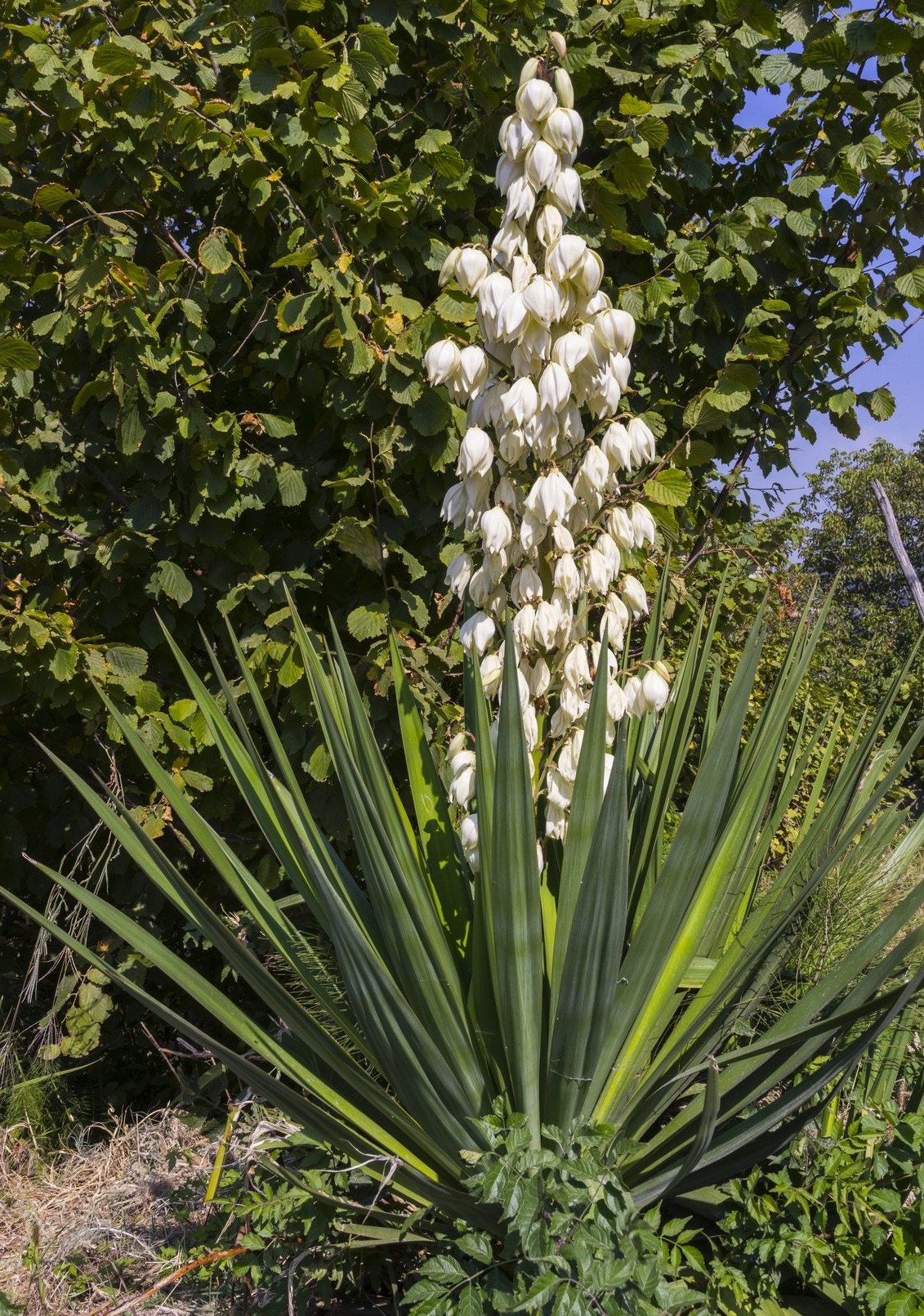
Yucca
Yucca spp.
Accepted Yucca species represented in the supplied record include:
- Yucca aloifolia L.
- Yucca angustissima Engelm. ex Trel.
- Yucca baccata Torr.
- Yucca constricta Buckley
- Yucca elata (Engelm.) Engelm.
- Yucca filamentosa L.
- Yucca filifera Chabaud
- Yucca flaccida Haw.
- Yucca gigantea Lem.
- Yucca glauca Nutt.
- Yucca gloriosa L.
- Yucca pallida McKelvey
- Yucca rupicola Scheele
- Yucca schidigera Roezl ex Ortgies
Important genus-level synonyms and historical segregate names include:
- Clistoyucca (Engelm.) Trel.
- Codonocrinum Willd. ex Schult. & Schult.f.
- Samuela Trel.
- Sarcoyucca (Trel.) Linding.
Important taxonomy and non-synonym confusion notes:
- Yucca radiosa is treated within Yucca elata var. elata, the soaptree yucca complex.
- Yucca concava and Yucca smalliana are treated under Yucca flaccida, while Yucca filamentosa remains accepted as a separate species.
- Yucca angustifolia Pursh is treated as a synonym of Yucca glauca.
- Yucca recurvifolia is treated under Yucca gloriosa var. tristis.
- Yucca tortifolia is treated as a synonym of Yucca rupicola.
- Yucca mohavensis, Sarcoyucca mohavensis, and one use of Yucca californica are associated with Yucca schidigera, the Mojave yucca.
- Yucca macrocarpa is treated under Yucca torreyi, not Yucca schidigera.
- Yucca whipplei is now generally treated as Hesperoyucca whipplei, a related but separate genus.
- Yucca funifera K.Koch is now treated as Hesperaloe funifera, not Hesperoyucca funifera.
- “Yuca” with one “c” usually refers to cassava, Manihot esculenta, an unrelated cyanogenic food plant in Euphorbiaceae.
Asparagaceae
Subfamily: Agavoideae
Yucca was formerly placed in Agavaceae, a family name that remains common in horticultural, veterinary, and older scientific literature.
Yucca; Yuccas; Yucca Cane; Yucca Palm; Soapweed; Soapweed Yucca; Spanish Bayonet; Spanish Dagger; Adam’s Needle; Needle Palm; Palm Lily; Beargrass; Bear Grass; Bayonet Plant; Dagger Plant; Candle of the Lord; Our Lord’s Candle; Banana Yucca; Datil Yucca; Datil; Mojave Yucca; Mohave Yucca; Soaptree Yucca; Soap Tree Yucca; Great Plains Yucca; Small Soapweed; Pale-Leaf Yucca; Twist-Leaf Yucca; Curly-Leaf Yucca; Weak-Leaf Yucca; Mound-Lily Yucca; Spanish Dagger Yucca; Joshua Tree; Yucca spp.
Species-specific names and search variants may refer to Yucca aloifolia, Yucca angustissima, Yucca baccata, Yucca elata, Yucca filamentosa, Yucca flaccida, Yucca gigantea, Yucca glauca, Yucca gloriosa, Yucca rupicola, Yucca schidigera, Yucca torreyi, Yucca brevifolia, and other accepted species. Common names vary greatly by species and region and should not be used as exact botanical synonyms.
Naming caution: “Yuca” with one “c” usually refers to cassava, Manihot esculenta, a completely unrelated cyanogenic food plant. “Red Yucca” and “Giant Hesperaloe” usually refer to Hesperaloe species rather than true Yucca. “Our Lord’s Candle” may refer to Hesperoyucca whipplei, formerly Yucca whipplei. “Japanese Plum Yew,” “Yew Pine,” “Dracaena,” “Cordyline,” “Snake Plant,” “Sotol,” “Nolina,” and “Ponytail Palm” are not true yuccas even when their stiff leaves create similar owner confusion.
Steroidal Saponins Are the Main Chemical Irritants
The principal chemical toxicants in true yuccas are steroidal saponins. A saponin consists of a fat-compatible steroidal aglycone, called a sapogenin, attached to one or more water-compatible sugar chains. This structure gives the molecule detergent-like or surfactant properties. Yucca saponins can foam in water, bind membrane sterols, alter membrane permeability, interact with bile salts and cholesterol, and irritate cells lining the mouth, stomach, and intestines.
For most dogs and cats, this chemistry produces a low-to-moderate gastrointestinal irritant syndrome rather than a dramatic organ-failure poisoning. The usual clinical concern is drooling, nausea, vomiting, diarrhea, reduced appetite, abdominal discomfort, and temporary depression. The dose, species, plant part, patient size, chewing, hydration, and whether a concentrated extract was involved all matter.
Saponins and Sapogenins Are Not the Same Thing
A saponin is the complete glycoside found in the plant. A sapogenin is the non-sugar steroidal core released after chemical hydrolysis, digestion, microbial metabolism, or laboratory processing. This distinction is important because many older plant lists name sapogenins as though they were complete naturally occurring toxins.
Tigogenin, chlorogenin, yuccagenin, kammogenin, sarsasapogenin, markogenin, gitogenin, neotigogenin, neogitogenin, hecogenin, gloriogenin, smilagenin, and trace diosgenin in certain species or tissues are sapogenin names. They identify steroidal aglycone cores, not every complete saponin molecule in every yucca. Sugar sequence, attachment position, stereochemistry, and aglycone structure determine how strongly an individual saponin foams, binds sterols, affects membranes, resists digestion, or influences gut microbes.
Correcting Older Chemical Names
The spellings “chlerogenin” and “higogenin” sometimes appear in older secondary lists, but they are not the standard chemical names. The intended compounds are generally chlorogenin and gitogenin. Neotigogenin and neogitogenin are genuine stereochemically related sapogenins. Gloriogenin is a genuine ketosteroidal sapogenin described from Yucca gloriosa and later identified in Yucca schidigera saponins.
The corrected genus-level list describes chemical diversity across the genus. No single yucca plant should be assumed to contain every listed sapogenin at the same concentration. Species, plant organ, plant age, season, environment, processing, and analytical method all affect the profile.
Species and Plant-Part Variation
Yucca is a genus, not one species. Roots, rhizomes, caudices, bark, stems, trunks, leaves, flowers, fruit, seedpods, and seeds may contain different saponins even within the same plant. A low stemless soapweed, a trunk-forming indoor yucca cane, a Mojave yucca, a Spanish bayonet, a soaptree yucca, and a Joshua tree are not chemically identical simply because they share the genus name.
That variation is the reason the safest public wording is “steroidal saponins” rather than a rigid species-universal toxin list. The page can name important sapogenins and saponin families, but it should not imply that every ornamental yucca leaf contains the exact same mixture as commercial Yucca schidigera stem extract or a laboratory-isolated Yucca aloifolia leaf fraction.
Yucca aloifolia and Tigogenin
Direct work on Yucca aloifolia leaves has confirmed tigogenin-derived steroidal chemistry. Researchers studying plants cultivated in Iraq extracted leaf material, compared it with an authentic tigogenin standard, and used thin-layer chromatography, high-performance liquid chromatography, melting-point analysis, and infrared spectroscopy to confirm the isolated compound.
This is useful because Y. aloifolia, commonly called Spanish bayonet, is a common sharp-leaved ornamental and landscape species. The study supports the page’s statement that leaves themselves may contain steroidal sapogenin chemistry, but it does not by itself define a dog, cat, horse, or livestock toxic dose from chewing one leaf.
Yucca schidigera Saponins and Commercial Extracts
Yucca schidigera, the Mojave yucca, is one of the richest and most commercially important sources of steroidal saponins. Its stem, bark, and processed extracts contain complex mixtures based on smilagenin, sarsasapogenin, tigogenin, hecogenin, gloriogenin, and related aglycones. Researchers have identified numerous individual spirostanol and furostanol glycosides rather than one compound called “yucca saponin.”
Commercial yucca powder and extracts are used in food, beverage, cosmetic, pharmaceutical, pet-food, and livestock-feed contexts. That controlled use is not a license to feed raw yucca roots, trunks, leaves, bark, or homemade extracts. Processing, dose, formulation, quality control, and intended species all differ.
Membrane Activity and Antimicrobial Effects
Yucca saponins have real membrane-active biological effects. A saponin fraction from Yucca schidigera stems inhibited several yeasts and fungi in laboratory testing, confirming that the plant’s defensive chemistry can affect microbial membranes. Other work has shown effects on rumen microorganisms and fermentation patterns.
That bioactivity helps explain why yuccas produce these compounds and why controlled extracts can alter odor, ammonia, protozoa, fermentation, or microbial populations. It does not establish that one dog chewing one leaf receives an antimicrobial or medicinal dose, and it does not make concentrated products harmless.
Why Oral Saponins Usually Cause Gut Irritation Rather Than Massive Hemolysis
Many saponins can rupture red blood cells in a laboratory dish or when injected directly into the bloodstream because they bind sterols in cell membranes. That does not mean oral yucca exposure usually causes immediate intravascular hemolysis. Most intact steroidal saponins are large, polar molecules and cross a healthy intestinal barrier poorly.
Poor absorption reduces the likelihood of dramatic systemic hemolysis from ordinary plant chewing. It does not mean no toxicity. High concentrations can irritate the gut, alter intestinal permeability, interact with bile salts and cholesterol, disturb microbial populations, and produce vomiting or diarrhea. Severe intestinal disease, very large intake, damaged gut lining, concentrated extracts, or another route of exposure could change the risk.
Rumen Effects and Livestock Feed-Additive Boundaries
Rumen microorganisms may remove sugar groups and release sapogenins, creating compounds with different absorption and biological properties. Yucca saponins can inhibit or alter rumen bacteria, fungi, and protozoa. Controlled low-dose Yucca schidigera extracts have been used in animal feeds to modify ammonia production, odor, protozoal populations, fermentation, or gut environment.
Those formulated uses are not equivalent to a goat eating dug-up roots, a cow browsing a large amount during forage shortage, a horse eating sharp clippings, or an owner adding loose yucca powder to feed. Feed-additive safety depends on standardization, dose, product quality, and the intended species. Raw plants and concentrated homemade preparations deserve separate assessment.
Sharp Leaves Are a Separate Hazard
Many yuccas possess hard, sharp terminal points, rigid leaf blades, coarse fibers, or serrated margins capable of cutting or puncturing tissue. Spanish bayonet, Spanish dagger, Mojave yucca, Joshua tree juveniles, and many other species can injure the lips, tongue, palate, gums, nostrils, ears, eyes, paws, pharynx, esophagus, stomach, or intestine.
A mechanical injury can cause drooling, gagging, retching, bleeding, difficulty swallowing, squinting, tearing, corneal ulceration, infection, abscess formation, obstruction, perforation, or abdominal pain even when the chemical saponin dose is small. This is often the more urgent problem after a dog runs into a plant, a horse brushes a leaf near the eye, or an animal swallows a stiff leaf section.
Roots, Trunks, Bark, and Homemade Products
Traditional soap use and modern supplement marketing often focus on yucca roots, trunks, stems, and bark because these tissues can be rich in foaming saponins. A root that produces soap-like lather should not be offered as an animal chew. A trunk piece from an indoor yucca cane should not be used as a dog toy, rabbit chew, bird perch, or reptile enclosure branch.
Teas, powders, capsules, loose bark preparations, concentrated extracts, and homemade decoctions can deliver a different dose and chemical profile from ordinary leaf chewing. They may also contain alcohol, preservatives, other herbs, flavorings, mold, contaminants, or dosing errors. Product exposures should be reported as product exposures, not just “the animal ate yucca.”
Typical Dog and Cat Signs
Dogs and cats most commonly develop signs of gastrointestinal irritation. Drooling, lip licking, nausea, reduced appetite, vomiting, soft stool, diarrhea, abdominal discomfort, and temporary depression may begin within several hours of chewing leaves, roots, stems, bark, trunk pieces, flowers, fruit, or other plant material. Some animals remain completely normal after one small taste because the bitter saponins discourage continued eating.
Repeated vomiting or diarrhea can produce dehydration, electrolyte loss, weakness, tacky gums, reduced urination, poor circulation, or worsening lethargy. Puppies, kittens, toy-breed dogs, small animals, geriatric patients, and animals with kidney, heart, endocrine, liver, or gastrointestinal disease may become dehydrated more rapidly. Blood in vomit or stool is not expected after a minor uncomplicated exposure and warrants examination for substantial irritation, foreign material, or physical injury.
Sharp-Leaf Trauma Signs
Sharp leaf points and fibers may create signs that resemble poisoning but result primarily from trauma. An affected animal may paw at the mouth, drool continuously, gag, cough, retch without producing vomit, refuse food, swallow repeatedly, cry when opening the mouth, extend the neck, or appear painful when eating. Oral punctures can hide under the tongue, along the gums, in the palate, or at the back of the throat.
A punctured eye may cause immediate squinting, tearing, redness, cloudiness, bleeding, swelling, or inability to keep the eyelids open. Yucca leaf tips can create deep narrow wounds that look minor from the surface. Eye pain after contact with a yucca leaf should be treated as urgent because corneal ulceration, penetrating injury, retained plant fiber, lens trauma, or infection can threaten vision.
Swallowed Leaf Fragments and Gastrointestinal Injury
Swallowed leaf sections can lodge in the pharynx or esophagus or scrape the stomach and intestines. Persistent gagging, repeated attempts to swallow, regurgitation, neck extension, abdominal pain, bloody stool, fever, abdominal distention, worsening depression, or illness that continues after vomiting has stopped may indicate retained plant material, ulceration, obstruction, or perforation rather than simple saponin irritation.
Rigid plant fragments may not show clearly on ordinary radiographs. Endoscopy, contrast imaging, ultrasound, sedation for oral examination, or surgical exploration may be needed when clinical signs suggest a retained or penetrating fragment. The absence of a visible piece in the mouth does not rule out deeper injury.
Dogs
Dogs may chew outdoor leaves, dig up roots, pull apart indoor yucca cane trunks, play with cut flower stalks, eat fallen flowers, raid yard waste, or grab sharp clippings. Most uncomplicated exposures cause no signs or temporary drooling, vomiting, diarrhea, appetite reduction, and lethargy.
The case becomes more serious when the dog repeatedly retches, cannot swallow comfortably, vomits blood, passes bloody stool, seems painful, develops abdominal swelling, or has eye trauma. A dog that repeatedly gags after chewing yucca needs evaluation for a lodged or penetrating fragment, not just treatment for stomach upset.
Cats
Cats may chew indoor yucca cane plants, narrow outdoor leaves, potting mix, fallen leaf tips, or cut plant material. Vomiting is the most consistently recognized toxic effect. Drooling, nausea, reduced appetite, depression, and diarrhea may accompany it.
Continued refusal to eat deserves attention because prolonged feline anorexia can lead to secondary hepatic lipidosis. Cats are also more difficult to examine thoroughly at home; a small puncture in the mouth or a corneal injury may be missed until the cat hides, stops eating, squints, or becomes lethargic.
Horses, Ponies, and Donkeys
Horses cannot vomit. Acute oral exposure may instead produce salivation, feed refusal, mild colic, soft manure, diarrhea, depression, or oral discomfort. Rigid leaves may injure the lips, tongue, gums, nostrils, eyes, and upper digestive tract. A horse with eye squinting after contact with sharp yucca leaves needs prompt ocular examination.
ASPCA lists liver disease and dermatitis as possible equine effects. Horses repeatedly grazing some yuccas may develop poor appetite, depression, weight loss, photosensitization, dermatitis, jaundice, or abnormal liver values, but detailed species-specific case evidence is limited. These signs should not be attributed to yucca without excluding pyrrolizidine-alkaloid plants, alsike clover, mycotoxins, infectious hepatitis, biliary disease, cholangiohepatitis, metabolic disease, and other better-established causes of equine liver injury.
Cattle, Sheep, Goats, Camelids, and Other Ruminants
Cattle, sheep, goats, alpacas, and llamas occasionally browse yucca and may tolerate limited amounts. A large raw-plant intake may cause reduced feed consumption, salivation, diarrhea, altered rumen function, bloat-like discomfort, or weakness. Sharp leaves may injure the mouth, eyes, udder, limbs, or upper digestive tract.
Group illness after access to yucca should trigger examination of the whole pasture, feed, water, mineral source, pesticides, mycotoxins, drought-stressed plants, nitrate plants, sharp debris, and other toxic vegetation. Controlled yucca extracts used in feed are not the same as unrestricted raw-plant intake, and herd signs should not be assigned automatically to yucca saponins.
Rabbits, Guinea Pigs, Birds, Reptiles, and Other Small Animals
Yucca should not be offered as rabbit browse, guinea pig hay, bird perch material, poultry greens, tortoise forage, reptile enclosure décor, bedding, or enrichment. Rabbits and guinea pigs may develop reduced appetite, soft stool, diarrhea, abdominal discomfort, reduced fecal output, dehydration, or gut slowing after eating irritating plant material. Sharp fibers can also injure the mouth.
Birds may chew leaves, flowers, fibers, or indoor plant trunks and may show reduced appetite, regurgitation, diarrhea, weakness, poor perching, or oral irritation. Reptiles and tortoises may show reduced appetite, abnormal stool, inactivity, dehydration, oral injury, or difficulty swallowing rather than the dog-and-cat vomiting pattern. Small body size makes concentrated products and sharp fragments more concerning than a casual glance suggests.
Signs That Are Not Typical of a Minor Yucca Nibble
Seizures, profound neurologic depression, severe incoordination, kidney failure, marked hemolytic anemia, respiratory failure, sudden death, severe jaundice, or severe collapse are not characteristic of an ordinary small yucca ingestion. When these signs occur, the veterinarian should investigate another plant, pesticide, medication, foreign body, concentrated supplement, contaminated feed, infectious disease, metabolic disease, or unrelated emergency.
Most uncomplicated companion-animal cases improve within several hours and recover within approximately one or two days. Continued vomiting, persistent diarrhea, refusal to eat, jaundice, photosensitization, eye pain, difficulty swallowing, abdominal enlargement, bloody gastrointestinal material, fever, or failure to improve requires veterinary reassessment.
Yucca on This Page Covers a Genus
This page covers plants in the accepted genus Yucca, not one single species. Current botanical treatment recognizes dozens of accepted species distributed naturally across North America, Central America, and Bermuda. The genus includes small stemless rosettes, spreading shrubs, trunk-forming plants, arborescent desert species, indoor cane plants, and large trees such as Joshua trees.
Because toxicology references commonly list “Yucca spp.,” an unidentified true yucca should be treated as potentially irritating even when its exact species has not been determined. The practical safety issue is not that every yucca is equally toxic. It is that many yuccas combine steroidal saponins with rigid, sharply pointed leaves that can injure animals mechanically.
Current Family Placement
Modern botanical classification places Yucca in Asparagaceae, subfamily Agavoideae. The genus was formerly placed in Agavaceae and, in still older treatments, within a broad Liliaceae. Agavaceae remains common in veterinary databases, nursery references, phytochemical papers, and older botanical literature.
That older family name should not be interpreted as a different plant. A veterinary or toxicology source that says “Yucca, family Agavaceae” may still be referring to the same modern Asparagaceae genus. The family update is a taxonomy correction, not a safety downgrade.
Accepted Species from the Original Record
The supplied scientific-name list included several currently accepted species: Yucca aloifolia, Y. angustissima, Y. baccata, Y. constricta, Y. elata, Y. filamentosa, Y. filifera, Y. flaccida, Y. glauca, Y. gloriosa, Y. pallida, Y. rupicola, and Y. schidigera. Yucca gigantea should also remain visible because many indoor “yucca cane” plants belong to that species or its horticultural forms.
These names represent important ornamental, native, range, landscape, indoor, and commercial yuccas. They should not be presented as synonyms of one another. A Spanish bayonet, an Adam’s needle, a Mojave yucca, a soaptree yucca, a banana yucca, a twist-leaf yucca, and a yucca cane may all be yuccas, but they are not the same species.
Important Taxonomy Corrections
Yucca radiosa is treated as a synonym of Yucca elata var. elata. The accepted species is commonly called soaptree yucca and is native from the southwestern United States into northern Mexico. Yucca concava and Yucca smalliana are included under Yucca flaccida, while Yucca filamentosa remains accepted as a separate species.
Yucca angustifolia is a synonym of Yucca glauca, the Great Plains soapweed or small soapweed. Yucca recurvifolia is placed under Yucca gloriosa var. tristis. Yucca tortifolia is included under Yucca rupicola, the twist-leaf yucca. Yucca mohavensis and Sarcoyucca mohavensis are synonyms associated with Yucca schidigera, the Mojave yucca.
Yucca macrocarpa is not a synonym of Mojave yucca; it is treated under Yucca torreyi. Yucca whipplei is now generally treated as Hesperoyucca whipplei. Yucca funifera is now treated as Hesperaloe funifera, not Hesperoyucca funifera. These corrections matter because several “yucca-like” plants in landscapes and nurseries are not current members of the genus Yucca.
Native Range and Global Cultivation
The natural range of Yucca extends from southern Canada through much of the United States, Mexico, Central America, and Bermuda. Species occupy deserts, grasslands, scrub, coastal dunes, pine-oak woodlands, prairies, rocky slopes, subtropical thickets, and seasonally dry tropical habitats.
Yuccas have been introduced widely as ornamentals in Europe, South America, the Caribbean, Africa, Australia, New Zealand, and Asia. Indoor plants sold as yucca cane are commonly forms of Yucca gigantea. In northern climates, most pet exposures involve indoor yucca cane, potted patio plants, or landscape plantings rather than wild range plants.
Growth Form
Most yuccas form a basal or terminal rosette of narrow sword-shaped leaves. Some remain nearly stemless, while others develop woody trunks and branches. Species such as Yucca filamentosa may form clumps of leaves close to the ground, while Yucca elata, Y. schidigera, Y. gigantea, and Y. brevifolia may develop obvious trunks or arborescent forms.
Leaves may be soft and arching or rigid and dagger-like. Margins may be smooth, finely toothed, or lined with curling fibers. Many species end in a hard terminal point capable of penetrating skin or an eye. This leaf architecture is central to the veterinary risk because mechanical injury can be more serious than mild saponin irritation.
Flowers and Fruit
Yuccas generally produce tall flowering stalks bearing numerous cream, white, or greenish-white bell-shaped flowers. The fruit may be a dry capsule or a fleshy berry-like structure depending on species. Flowers, flower stalks, fruits, and seeds from certain correctly identified species have long histories of human food use after appropriate preparation.
Human ethnobotanical use does not establish that every yucca plant part or species is safe for dogs, cats, horses, or livestock. Flowers and fruit can still contain saponins or fibrous material, and animals may eat them raw, in larger amounts, or together with leaves, stems, or sharp debris.
Yucca Moths and Plant Identity
True yuccas have a highly specialized pollination relationship with yucca moths. Female moths intentionally transfer pollen and lay eggs in the flowers, while developing larvae consume some, but not all, of the seeds. This relationship is botanically distinctive and helps define the ecological identity of the genus.
The yucca-moth relationship does not change the pet-poisoning risk. Flowers, developing fruit, seedpods, and fallen plant material may still contain saponins or sharp fibrous structures. A dog or livestock animal should not be allowed to browse the plant because it is “natural” or pollinated by specialist moths.
“Yucca” Is Not “Yuca” or Cassava
Yuca, cassava, manioc, and tapioca come from Manihot esculenta in Euphorbiaceae. Cassava contains cyanogenic glycosides and can release hydrogen cyanide when improperly processed. True yuccas belong to Asparagaceae and are characterized principally by steroidal saponins and sharp agavoid leaves.
The one-letter spelling difference represents a major toxicological and botanical distinction. If an owner says “my animal ate yuca,” the first question is whether the exposure was a yucca houseplant or cassava food material. The expected toxins and emergency priorities are different.
Saponins and Sapogenins Explained
A saponin is the complete glycoside containing a sapogenin joined to sugars. A sapogenin is the non-sugar aglycone released after hydrolysis. Tigogenin, smilagenin, hecogenin, yuccagenin, and similar names describe aglycones rather than every complete saponin present in the plant.
Yucca saponins are not one chemical. Sugar sequence, sugar attachment, stereochemistry, and aglycone structure determine how individual molecules foam, bind sterols, inhibit microbes, affect membranes, survive digestion, and interact with gut organisms. This is why the page should use both broad owner language and more precise toxicology language.
Yucca aloifolia: Spanish Bayonet and Tigogenin
Yucca aloifolia, often called Spanish bayonet or Spanish dagger, is a sharp-leaved ornamental with direct leaf chemistry evidence. A study of plants cultivated in Iraq confirmed tigogenin in the leaves using chromatography, isolation, purification, melting point, infrared spectroscopy, and comparison with an authentic standard.
That finding supports the statement that leaves can contain steroidal sapogenin chemistry. The species is also mechanically dangerous because its stiff leaves and sharp terminal points can injure the eyes, mouth, and skin. A Spanish bayonet exposure may therefore involve both chemical irritation and physical trauma.
Yucca schidigera: Mojave Yucca, Saponins, and Extracts
Yucca schidigera, the Mojave yucca, is a major commercial source of steroidal saponins. Its stem and bark extracts contain complex spirostanol and furostanol saponins along with phenolic compounds such as resveratrol-related yuccaols. Processed yucca powders and extracts have been used as foaming agents, odor-control ingredients, and feed additives.
This commercial history can confuse owners. A standardized Y. schidigera extract used at low regulated levels in a pet food or livestock ration is not the same as a dog chewing raw bark, a goat browsing stems, a cat eating a houseplant, or a person adding loose supplement powder to an animal’s meal.
Miyakoshi and Colleagues’ Antifungal Study
Masazumi Miyakoshi, Yukiyoshi Tamura, Hitoshi Masuda, and Kazuo Yamasaki published work on antiyeast steroidal saponins from Yucca schidigera. A saponin fraction from the stems inhibited several food-spoilage yeasts, film-forming yeasts, and dermatophytic fungi. The activity differed among organisms and individual compounds.
The study demonstrates a real defensive function for the plant’s membrane-active chemistry. It does not establish that the same concentration is reached in a dog or cat after chewing one leaf. It also does not justify owner use of concentrated yucca products as antimicrobial treatment.
Wang and Colleagues’ Rumen Study
Yuxi Wang and colleagues studied steroidal saponins from Yucca schidigera extract and their effects on rumen microbial protein synthesis and ruminal fermentation. Yucca saponins inhibited several cellulolytic rumen bacteria and fungi, while effects on other microbial groups varied. This helps explain why controlled yucca additives can alter fermentation, ammonia production, and microbial populations.
The results also show why dose and formulation matter. A small formulated feed-additive concentration and unrestricted access to raw or concentrated plant material are not the same exposure. Ruminants may tolerate limited browsing, but heavy raw-plant intake or concentrated extract use can still disturb appetite, manure, rumen function, or general health.
Oser’s 1966 Twelve-Week Rat Study
Bernard L. Oser evaluated Yucca mohavensis as a source of food-grade saponin. The historical name Yucca mohavensis is now included under Yucca schidigera. The study included repeated dietary exposure in rats for approximately twelve weeks and concluded that the tested food-grade preparation had low oral toxicity under the experimental conditions.
That study evaluated a processed extract intended for food use. It did not test every yucca species, sharp whole leaves, roots, houseplants, concentrated homemade products, horses grazing raw plant material, cats chewing indoor yucca cane, or dogs swallowing leaf tips. It should not be cited as proof that whole yucca plants are harmless to pets.
Bingham, Bellew, and Bellew’s Arthritis Report
Robert Bingham, B. A. Bellew, and J. G. Bellew published a report on yucca plant saponin in the management of arthritis. That human-use report is often repeated in supplement discussions. It was not the twelve-week rat toxicology study and did not define a safe veterinary dose for dogs, cats, horses, livestock, rabbits, or birds.
Later reviews have described the clinical evidence for anti-arthritic benefit as preliminary and limited. Historical medicinal use does not provide owner-directed veterinary dosing, and a plant marketed as a supplement can still be inappropriate for an individual animal.
Yucca Extract in Pet Food and Livestock Feed
Standardized Yucca schidigera extract is used in some commercial pet foods and livestock feeds to influence fecal odor, environmental ammonia, and gastrointestinal or rumen fermentation. Such products are manufactured, formulated, quality-controlled, and dosed for a specific purpose.
A regulated low-dose ingredient is not equivalent to a pet eating a landscape plant. Owners should not add loose yucca powder, homemade root tea, bark extract, root preparation, human arthritis supplement, or concentrated product to an animal’s food without veterinary guidance. Combination supplements may contain other herbs or ingredients that carry their own risks.
Sharp Leaves Can Be More Dangerous Than the Saponins
Spanish bayonet, Spanish dagger, Mojave yucca, Joshua tree juveniles, and many other species have rigid leaves ending in hard points. These points can penetrate skin, lips, nostrils, ears, eyes, or the roof of the mouth. An animal running into a plant may sustain a deep puncture even without eating it.
Eye penetration can injure the cornea, lens, or deeper ocular structures and requires immediate veterinary examination. Swallowed leaf tips and fibers can scrape or lodge in the pharynx, esophagus, stomach, or intestine. Persistent retching, bloody material, abdominal pain, or difficulty swallowing should not be dismissed as mild saponin irritation.
Flowers, Edible Uses, Soap, and Fiber
Flowers, flower stalks, fruits, and seeds from certain correctly identified yucca species have long histories of human food use. Preparation methods vary and may include removing reproductive parts, boiling, roasting, drying, or other processing. Species are not interchangeable, and some flowers are bitter or saponin-rich.
Roots and stems from several yuccas were used traditionally as soap because their saponins foam when agitated in water. Leaf fibers were made into cordage, sandals, baskets, mats, brushes, and other materials. The ability to produce cleansing foam is a visible demonstration of surfactant chemistry. A root that produces soap-like lather should not be offered as an animal chew.
Dogs
Dogs may chew outdoor leaves, dig up roots, pull apart houseplant trunks, shred cut flower stalks, play with fallen leaves, or raid pruning debris. Most uncomplicated dog cases involve no signs or temporary drooling, vomiting, diarrhea, reduced appetite, and lethargy.
The more dangerous dog scenarios involve sharp leaf injury, eye injury, repeated retching, swallowing a stiff leaf section, chewing large root or trunk pieces, eating concentrated product, or developing bloody vomit or stool. A dog that repeatedly gags after chewing yucca should be examined for a retained or penetrating fragment.
Cats
Cats may chew indoor yucca cane plants or narrow outdoor leaves. Vomiting is the most consistently recognized toxic effect. Drooling, nausea, reduced appetite, depression, and diarrhea may accompany the vomiting.
Continued refusal to eat deserves attention because prolonged feline anorexia can lead to secondary hepatic lipidosis. Cats should not receive hydrogen peroxide, forced charcoal, human antidiarrheals, essential oils, or leftover medication after a yucca exposure.
Horses
Horses may browse native or ornamental yuccas, encounter cut clippings, or injure themselves on rigid leaves. Acute exposure may cause salivation, feed refusal, diarrhea, mild colic, or oral injury. Rigid leaves can also injure the eye, nostrils, lips, tongue, gums, or upper digestive tract.
ASPCA lists liver disease and dermatitis in horses. A horse with weight loss, jaundice, photosensitization, abnormal behavior, or elevated liver enzymes requires a complete investigation rather than an assumption that yucca is automatically responsible. Other forage toxins and hepatotoxic plants are more thoroughly documented causes of equine liver disease and must be excluded.
Cattle, Sheep, and Goats
Ruminants occasionally browse yucca, particularly during dry seasons when other forage is scarce. Limited intake may produce no illness, and some low-dose extracts are deliberately used in feed. Heavy raw-plant intake can produce reduced appetite, diarrhea, altered rumen function, or weakness.
Sharp leaves also pose mechanical risks to the mouth and eyes. Group illness should trigger examination of the entire pasture, ration, water, pesticides, mycotoxins, mineral source, drought-stressed plants, and other weeds rather than attributing every sign to yucca saponins.
Diagnosis
Diagnosis usually depends on exposure history, plant identification, and development of compatible gastrointestinal or traumatic signs. Photograph the whole plant, leaves, trunk, flowers, fruit, nursery label, pot, landscape location, and any sharp fragments removed from the animal.
Persistent illness may justify complete blood count, electrolytes, kidney and liver values, urinalysis, abdominal imaging, endoscopy, oral examination under sedation, or surgical exploration for retained plant material. Eye exposure requires fluorescein staining and detailed ocular examination because a narrow puncture may be deeper than it appears externally.
Important Differential Diagnoses
Plants commonly confused with yucca include agaves, dracaenas, cordylines, snake plants, sotols, nolinas, ponytail palms, red yuccas, false yuccas, hesperaloes, and Hesperoyucca. Their chemistry and mechanical hazards differ, and their exact species names matter.
Vomiting and diarrhea may also result from dietary indiscretion, fertilizer, pesticides, potting soil, mold, bacterial or viral illness, pancreatitis, foreign material, another toxic plant, concentrated supplements, or an unrelated disease. Jaundice or photosensitization requires investigation for pyrrolizidine alkaloids, alsike clover, mycotoxins, biliary disease, infection, metabolic disease, and other hepatotoxins.
Veterinary Treatment
There is no yucca-specific antidote. Treatment is symptomatic and supportive and depends on the amount, plant part, formulation, symptoms, hydration, patient species, underlying disease, and possibility of physical injury. Veterinary care may include antiemetics, fluid replacement, electrolyte correction, nutritional support, oral examination, eye treatment, imaging, endoscopy, or surgical removal of penetrating or obstructing plant material.
Activated charcoal is not automatically indicated for mildly irritating saponins and can be aspirated by a vomiting or poorly swallowing animal. A veterinarian may consider charcoal when the exposure involves another toxin, a concentrated mixed product, or uncertainty about co-ingestion. Physical injury cannot be treated with charcoal.
Prognosis
The prognosis is excellent for most dogs and cats with limited uncomplicated ingestion. Gastrointestinal signs generally improve within several hours and resolve within one or two days.
The prognosis depends more heavily on dehydration, continued food refusal, eye penetration, esophageal injury, obstruction, perforation, substantial concentrated-product exposure, liver-sign differentials, or underlying disease when the case becomes severe. Recovery from mechanical injury depends on location, depth, contamination, and how quickly retained plant material is identified and removed.
Prevention
Place indoor yucca cane plants outside the reach of cats and dogs. Remove fallen leaves and prevent animals from digging into roots or chewing trunks. Do not use yucca stalks, roots, trunks, or sharp flower stems as fetch sticks, chew toys, cage enrichment, bird perches, reptile branches, livestock treats, or homemade supplements.
Position sharp-leaved landscape species away from gates, dog runs, horse lanes, narrow walkways, paddock edges, play areas, and kennel fences where animals may collide with them. Wear eye protection and gloves while pruning, collect every sharp leaf section, and dispose of clippings where animals cannot reach them.
Immediate Steps After Exposure
Prevent further chewing. Remove the animal from the plant and collect fallen leaves, roots, rhizomes, trunk pieces, bark, flowers, fruit, potting material, and pruning debris. Keep other animals away from the same plant until it has been identified and secured.
- Check for physical injury: Look for mouth bleeding, pawing at the mouth, retained leaf fragments, repeated gagging, eye squinting, puncture wounds, painful swallowing, or abdominal pain.
- Contact a veterinarian or animal poison-control service: Report the animal’s species, weight, exact plant or product, amount, plant part, time of exposure, and current signs.
- Remove loose material only when safe: If the animal is calm, alert, and swallowing normally, gently remove visible loose pieces from the front of the mouth without reaching deeply into the throat.
- Preserve identification evidence: Save the nursery label, photographs, plant sample, vomited material, chewed fragments, supplement packaging, and any sharp piece removed from the animal.
- Keep the animal calm: Limit chewing, running, rubbing, and rough handling while arranging care, especially if a mouth, throat, eye, or abdominal injury is possible.
Do Not Attempt Unsupervised Home Treatment
- Do not induce vomiting with hydrogen peroxide: Peroxide can cause severe stomach and esophageal irritation, prolonged vomiting, bleeding, and aspiration. Vomiting may also worsen injury if sharp fragments are present.
- Do not use salt, mustard, oil, syrup of ipecac, dish soap, or manual gagging: These methods can create additional poisoning, aspiration, or trauma.
- Do not force food, water, milk, broth, or electrolyte solution: A nauseated, gagging, vomiting, painful, or poorly swallowing animal can inhale the material.
- Do not force activated charcoal: It has no established routine benefit for a minor yucca exposure and can be aspirated.
- Do not give Kapectolin, Kaopectate, sucralfate, antacids, antihistamines, pain medication, probiotics, or antidiarrheal products without veterinary direction: These treatments do not remove a sharp fragment and may be inappropriate for the patient or product formulation.
- Do not pull on deeply embedded plant material: A leaf point penetrating the eye, throat, skin, mouth, or paw may be controlling bleeding or may break during removal.
- Do not add yucca supplement, tea, powder, or extract to food after exposure: More product can increase irritation and confuse the clinical picture.
Skin, Paw, and Coat Exposure
Wear gloves and wash crushed plant residue from the paws, coat, muzzle, skin, feathers, or scales with lukewarm water and a mild animal-safe cleanser. Prevent grooming until loose fibers, sap, soil, and plant residue have been removed.
Examine puncture sites carefully. Deep narrow wounds can close at the surface while trapping plant fibers or bacteria beneath the skin. Swelling, heat, pain, drainage, limping, persistent licking, or a retained spine-like point requires veterinary examination.
Eye Exposure
Do not pull an embedded leaf tip from the eye. Prevent rubbing and transport the animal for emergency examination. Yucca leaf points can puncture the cornea or deeper ocular structures, and the visible surface wound may underestimate the depth of injury.
If loose sap or debris entered the eye without visible penetration, gently irrigate with sterile saline or clean lukewarm water. Persistent squinting, redness, tearing, cloudiness, bleeding, swelling, unequal pupils, or inability to open the eye requires prompt veterinary care.
When Veterinary Examination Is Especially Important
- Vomiting or diarrhea is repeated: Continued fluid loss can cause dehydration and electrolyte disturbance.
- The animal repeatedly gags or retches: A sharp leaf section may be lodged in the mouth, pharynx, or esophagus.
- Swallowing appears painful or difficult: Dropping food, neck extension, regurgitation, repeated swallowing, or crying while eating can indicate injury or obstruction.
- Blood appears in saliva, vomit, or stool: Bleeding raises concern for significant irritation, laceration, ulceration, retained plant material, or perforation.
- An eye was struck by a leaf: Yucca tips can penetrate the cornea and deeper ocular structures.
- Abdominal pain or distention develops: Persistent pain may indicate retained plant material, obstruction, or gastrointestinal injury.
- A cat continues refusing food: Prolonged anorexia can lead to secondary hepatic lipidosis.
- Jaundice, photosensitization, marked weakness, or abnormal behavior occurs: These signs require liver evaluation and investigation of other possible toxins or diseases.
- A concentrated product was eaten: Loose powder, extract, supplement, root preparation, or mixed herbal product is not the same as one small leaf bite.
Veterinary Treatment
Veterinary treatment may include antiemetics, oral, subcutaneous, or intravenous fluids, electrolyte correction, pain control, nutritional support, and monitoring of kidney and liver values when indicated. Mild gastrointestinal cases may need only professional triage and monitoring after access is removed.
The mouth and throat may need examination under sedation. Radiographs, contrast studies, ultrasound, endoscopy, or surgery may be required when a rigid leaf fragment has lodged in or penetrated the digestive tract. Eye injuries may require fluorescein staining, topical medication, pain relief, foreign-body removal, pressure assessment, or ophthalmic surgery depending on depth.
Dogs and Cats
Dogs and cats with a small uncomplicated chew may recover quickly after the source is removed. Veterinary guidance is still appropriate when the amount is uncertain, the animal is small or medically fragile, vomiting repeats, appetite remains poor, or the plant was an indoor yucca cane treated with fertilizers, pesticides, or potting chemicals.
Cats should be monitored closely for appetite. A cat that stops eating after vomiting needs reassessment before dehydration or secondary hepatic lipidosis develops. Neither dogs nor cats should receive home emetics, forced charcoal, essential oils, human antidiarrheals, or leftover medication.
Horses and Livestock
Horses, ponies, donkeys, cattle, sheep, goats, alpacas, llamas, pigs, poultry, and other livestock should be removed from the plant source and provided safe feed and clean water. Do not throw yucca clippings into pens, paddocks, dry lots, goat yards, chicken runs, or compost accessible to animals.
Inspect the mouth and eyes carefully when animals have been browsing sharp yuccas. Save representative plant material and feed samples if several animals develop diarrhea, reduced appetite, weakness, dermatitis, photosensitization, jaundice, or unexplained illness. A group problem deserves a full pasture and feed investigation, not an automatic yucca-only diagnosis.
Rabbits, Guinea Pigs, Birds, Reptiles, and Small Pets
Small animals should not be fed yucca leaves, roots, flowers, trunks, clippings, or sharp fibers as greens, browse, cage décor, poultry greens, tortoise forage, bird perches, reptile branches, or bedding. If exposure occurs, remove the plant and call an appropriate veterinarian when the amount is meaningful or signs develop.
Rabbits and guinea pigs that stop eating, develop diarrhea, produce fewer fecal pellets, become weak, or show mouth pain need prompt care. Birds with poor perching, regurgitation, weakness, diarrhea, or oral injury need avian guidance. Reptiles and tortoises may show reduced appetite, abnormal stool, inactivity, oral trauma, or difficulty swallowing rather than obvious vomiting.
Recovery and Prognosis
Most uncomplicated gastrointestinal cases recover fully within several hours to approximately one or two days. Persistent vomiting, diarrhea, appetite loss, jaundice, eye injury, difficulty swallowing, abdominal pain, or failure to improve should not be attributed indefinitely to mild saponin irritation.
Recovery from mechanical injury depends on the location, depth, contamination, and speed with which retained plant material is identified and removed. Eye injuries, esophageal injuries, and penetrating abdominal injuries carry a different prognosis from a simple stomach upset.
Prevention After the Incident
Move indoor yucca cane plants out of pet reach, collect fallen leaves, and prevent animals from digging into roots or chewing trunks. Do not use yucca stalks, roots, trunks, or leaf bases as chew toys, fetch sticks, rabbit chews, livestock treats, bird perches, reptile décor, or homemade supplements.
Position sharp landscape species away from gates, kennel runs, horse lanes, narrow paths, and areas where animals play or crowd. Wear gloves and eye protection while pruning, and dispose of sharp clippings in secure containers where animals cannot reach them.
Frequently Asked Questions About Yucca and Animal Poisoning
Is Yucca poisonous to dogs and cats?
Yes. Yuccas contain steroidal saponins that most commonly cause drooling, nausea, vomiting, diarrhea, appetite loss, abdominal discomfort, or temporary depression. Serious systemic poisoning from one small taste is uncommon, but repeated vomiting, concentrated products, large ingestion, or sharp-leaf injury requires veterinary attention.
Are all Yucca species poisonous?
Steroidal saponins occur widely across the genus, but their identity and concentration vary among species, tissues, seasons, and products. An unidentified true yucca should be treated as potentially irritating rather than assumed safe. The sharpness of the leaves may also vary, so physical injury risk must be judged plant by plant.
What is the correct family for Yucca?
Current classification places Yucca in Asparagaceae, subfamily Agavoideae. Agavaceae is its familiar former family placement and remains common in older veterinary, horticultural, and phytochemical references. The family-name change does not change the practical pet-safety warning.
Is Yucca the same plant as yuca or cassava?
No. Yucca is an agavoid genus containing steroidal saponins. Yuca or cassava is Manihot esculenta, an unrelated cyanogenic crop in Euphorbiaceae. Cassava can release hydrogen cyanide when improperly processed, so confusing the two names can lead to the wrong toxicology response.
What is the difference between a saponin and a sapogenin?
A saponin is a complete glycoside made from a steroidal sapogenin attached to sugars. Tigogenin, smilagenin, hecogenin, yuccagenin, gloriogenin, and similar names describe aglycone cores rather than every complete saponin present in the plant. The sugar portion can strongly affect solubility, absorption, and biological activity.
Which steroidal compounds occur in Yucca?
Reported sapogenins include tigogenin, chlorogenin, yuccagenin, kammogenin, sarsasapogenin, markogenin, gitogenin, neotigogenin, neogitogenin, hecogenin, gloriogenin, smilagenin, and trace diosgenin in certain species or tissues. No single plant necessarily contains all of them, and concentrations vary by species and plant part.
Why can Yucca extract appear in pet food?
Standardized low-dose Yucca schidigera extract is used in some feeds to influence ammonia, odor, and gastrointestinal or rumen fermentation. That controlled ingredient is not equivalent to eating an ornamental plant, chewing roots, swallowing sharp leaves, or receiving a concentrated homemade supplement.
Did a twelve-week rat study prove that Yucca is nontoxic?
No. Bernard Oser’s 1966 study found low oral toxicity for a food-grade Mojave-yucca extract under specific experimental conditions. It did not establish that every whole yucca species, root, leaf, trunk, concentrated product, or sharp plant part is harmless to dogs, cats, horses, or livestock.
Was the Bingham arthritis paper a Yucca toxicity study?
No. Bingham, Bellew, and Bellew’s 1975 report concerned proposed use of yucca plant saponin in human arthritis. It was not the twelve-week rat safety study and did not define a safe veterinary dose. Historical supplement use should not be converted into owner-directed dosing for animals.
Can Yucca leaves physically injure an animal?
Yes. Rigid terminal points and coarse fibers can puncture the eye, mouth, throat, skin, esophagus, or digestive tract. Persistent gagging, eye pain, bleeding, difficulty swallowing, regurgitation, abdominal pain, or repeated retching requires veterinary examination even if only a small amount was eaten.
Is Yucca poisonous to horses?
Yucca is listed as toxic to horses, with saponin exposure and possible liver disease or dermatitis noted in veterinary plant listings. Acute exposure may cause salivation, feed refusal, diarrhea, mild colic, or mechanical injuries. Liver signs such as jaundice or photosensitization require full investigation for other more established hepatotoxins as well.
Can cattle, sheep, or goats eat Yucca?
Ruminants may browse limited amounts of some yuccas, and controlled yucca extracts are used in some feeds, but unrestricted raw-plant intake is not the same exposure. Heavy ingestion can cause reduced feed intake, diarrhea, rumen disturbance, or weakness, and sharp leaves can injure the mouth or eyes. Group illness requires full pasture and feed investigation.
Is indoor Yucca cane poisonous to cats?
Yes. Indoor yucca cane plants can cause vomiting, drooling, appetite loss, depression, or diarrhea if cats chew them. A cat that keeps vomiting, refuses food, hides, becomes weak, or continues not eating after exposure should be examined because dehydration and secondary hepatic lipidosis can become serious in cats.
Are Yucca flowers safe for pets?
Flowers from some correctly identified yucca species have human food uses after preparation, but that does not make them safe treats for pets. Flowers may still contain saponins, pollen, fibers, or pesticide residues, and animals may eat them with leaves, stems, or fruit. Do not offer yucca flowers as pet food.
Are Yucca roots or trunks more dangerous than leaves?
Roots, rhizomes, trunks, stems, and bark can contain saponins and are often associated with soap-like traditional uses or commercial extract production. Chewing these parts can deliver more concentrated irritating material than a tiny leaf nibble, and woody fragments may also cause obstruction or trauma. They should not be used as chew toys.
Should vomiting be induced after a pet eats Yucca?
No home vomiting should be attempted. Hydrogen peroxide can cause stomach and esophageal injury, prolonged vomiting, bleeding, and aspiration. If sharp leaf fragments were swallowed, vomiting could make trauma worse. A veterinarian should decide whether decontamination is appropriate based on the patient and exposure.
Should activated charcoal be given after Yucca exposure?
Not automatically. Activated charcoal has no established routine benefit for a minor yucca saponin exposure and can be aspirated by a vomiting or poorly swallowing animal. It also cannot treat a lodged leaf tip, eye puncture, esophageal injury, or obstruction. Use it only if a veterinarian directs it.
How long do Yucca poisoning symptoms last?
Mild vomiting, diarrhea, or appetite loss usually improves within several hours and resolves within approximately one or two days. Persistent signs suggest dehydration, retained sharp plant material, eye injury, another toxin, concentrated product exposure, or an unrelated illness and should be reassessed.
When is Yucca exposure an emergency?
Emergency care is needed for eye injury, difficulty swallowing, repeated gagging, repeated vomiting or diarrhea, blood in saliva, vomit, or stool, abdominal distention, severe weakness, collapse, jaundice, photosensitization, breathing difficulty, or suspected concentrated extract exposure. A sharp leaf strike to the eye should be treated urgently even before systemic signs develop.
What plants are commonly confused with Yucca?
Agaves, dracaenas, cordylines, snake plants, sotols, nolinas, ponytail palms, red yuccas, false yuccas, hesperaloes, and Hesperoyucca can all be confused with yucca by owners or nursery labels. Some share sharp-leaf injury risk, while their chemistry differs. Scientific identification is safest when illness occurs.
How can Yucca poisoning and injury be prevented?
Keep indoor plants outside pet reach, collect fallen leaves, prevent digging into roots, never use stalks as chew toys, and position sharp landscape species away from animal paths, gates, kennels, paddocks, and play areas. Wear gloves and eye protection while pruning, and dispose of clippings where animals cannot reach them.