Dog Daycare Dehydration, Heat Stress, Skin Turgor, Capillary Refill, Water Breaks, Cool-Down Policy, Emergency Vet Response, Staff Training, and Owner Communication
Understanding Dog Dehydration Symptoms and Treatment in Dog Daycare
A daycare does not get credit for noticing dehydration after the dog is already flat on the floor.
Dog daycare staff have to learn how to identify health symptoms before they become full emergencies. Dehydration is one of those problems that can start quietly, look like “the dog is just tired,” and then turn into heat exhaustion, heatstroke, shock, collapse, or a very bad phone call to the owner.
This matters even more in hot climates, outdoor play yards, high-energy playgroups, humid weather, poor airflow, thick-coated dogs, short-nosed dogs, overweight dogs, older dogs, puppies, and dogs that run hard but do not stop to drink like they have any sense at all.
Dogs lose fluid through breathing, panting, evaporation from paw pads and body surfaces, urination, defecation, vomiting, diarrhea, and hard physical activity. Daycare adds noise, movement, excitement, chase, wrestling, heat, sunshine, staff transitions, and dogs that would rather keep playing than take care of their own body.
The staff job is not to wait until the dog collapses. The staff job is to notice the dog that stops recovering, stops drinking normally, has tacky gums, has delayed capillary refill, stays hot, stays flat, loses interest in the room, or just looks wrong.
Dehydration first aid is not pretending to be a veterinarian. It is recognizing the problem, lowering stimulation, offering safe water, cooling the dog when heat is involved, calling the vet when the signs are serious, documenting what happened, and not doing dumb things that make a weak dog aspirate water or lose more time.
🚨
Operator rule
Dehydration, heat stress, and shock can overlap. Do not get married to one label while the dog is getting worse. If the dog is weak, collapsed, disoriented, vomiting, unable to drink, has abnormal gums, or is not recovering, stop debating and call the vet.
🗺️
Use This Page Like a Dehydration Response Map
Start with the dog in front of you: recovery, gums, water interest, behavior change, heat exposure, play history, and whether the dog is getting better or worse.
👀
Warning Signs
Dry gums, lethargy, sunken eyes, poor refill, and failure to recover matter.
🩸
Capillary Refill
Gum color return can warn staff about dehydration, perfusion, and shock.
💧
Why Dehydration Is a Dog Daycare Problem
Daycare can create the exact conditions where dogs lose fluid faster than staff realize.
Dehydration in daycare is not just about whether water bowls exist. A water bowl sitting in the room does not mean every dog drank, drank enough, drank calmly, or had enough recovery time for the body to catch up.
Dogs lose fluid through breathing, panting, paw pads, body surfaces, urination, defecation, vomiting, diarrhea, and physical activity. Hard play increases fluid loss. Heat increases fluid loss. Humidity makes cooling harder. A dog that runs like an idiot for 45 minutes and then refuses to stop is not managing himself. That is why staff exist.
The daycare environment can also hide early signs. A tired dog may look normal in a busy room. A dog that is starting to tip may still wag, still follow the group, and still appear interested until the body starts losing the argument.
Dehydration can progress toward heat exhaustion, heatstroke, poor circulation, shock, collapse, and death. That is not drama. That is the medical reality of a dog whose body cannot keep up with fluid loss, heat load, or both.
📌
Room rule
“Water was available” is not the same as “the dog stayed hydrated.” Staff have to watch whether the dog drinks, recovers, cools down, and acts normal after play.
🐕
Dogs Most at Risk for Dehydration and Heat Trouble
Some dogs need tighter supervision before the problem starts.
Any dog can become dehydrated, but some dogs give staff less margin for error. These dogs should not be managed by hope, vibes, or “he always plays hard.” They need water breaks, shade, rest cycles, staff observation, and clear stop points.
Swipe left/right to see the full table.
| Dog or Situation | Why It Matters | Staff Translation |
|---|---|---|
| Short-nosed dogs | Brachycephalic dogs may have more trouble cooling through panting. | Watch them early. Do not wait until breathing sounds like a broken accordion. |
| Thick-coated or dark-coated dogs | Heat can build faster, especially outdoors or in humid weather. | Shade, airflow, shorter play, and earlier rest matter. |
| Overweight dogs | Extra body weight increases heat and exertion load. | Do not run them like athletes and act surprised when they fail. |
| Puppies and senior dogs | They may have less physical reserve and worse self-regulation. | Shorter cycles. More observation. Less chaos. |
| High-drive play dogs | Some dogs will keep playing while their body is waving a white flag. | Staff must be the brake system. |
| Dogs with vomiting or diarrhea | Fluid loss can increase quickly. | This dog may need to leave daycare and be seen by a vet. |
| Dogs with medical history | Heart, respiratory, kidney, endocrine, or medication issues can change risk. | Intake notes matter. Medical history is not decoration. |
| Hot, humid, or outdoor play days | Heat load and fluid loss rise together. | Change the schedule before the dog makes the decision for you. |
👀
Dog Dehydration Symptoms Staff Should Watch
Do not wait for one perfect sign. Read the whole dog.
Dehydration is not always a single obvious symptom. Staff should look at the dog’s mouth, gums, eyes, energy, recovery, water interest, pulse, breathing, capillary refill, skin turgor, and behavior change.
A drop in fluid of only a few percent can start producing visible changes. As dehydration progresses, the signs become more obvious and more dangerous. If staff only notice severe dehydration, staff are late.
- Dry or tacky mouth, gums, or nose.
- Thick, sticky saliva instead of normal moisture.
- Increased heart rate or weak pulse.
- Lethargy, weakness, dullness, or unusual flat behavior.
- Loss of appetite or refusing something the dog normally wants.
- Sunken eyes or a tired, hollow look around the eyes.
- Skin that returns slowly after being gently lifted.
- Delayed capillary refill when gum color is slow to return after pressure.
- Panting that does not settle after rest.
- Vomiting, diarrhea, collapse, stumbling, confusion, abnormal gum color, or inability to drink normally.
⚠️
Emergency warning
Weakness, collapse, vomiting, diarrhea, abnormal gums, delayed refill, disorientation, heavy panting that will not settle, or a dog that cannot drink normally is not a “let’s just watch him” situation. Call the vet.
🖐️
The Skin Turgor Test
Skin snap-back can help staff notice dehydration, but it is not the whole answer.

Skin turgor means the skin’s ability to return to normal position after it is gently lifted and released. In a well-hydrated dog, the skin usually snaps back into place quickly. As dehydration progresses, the skin may return more slowly or remain tented.
To check it, gently lift a fold of skin over the dog’s shoulders or back, then release it. If the dog is hydrated, the skin should return promptly. If the dog is dehydrated, the skin may move back slowly. In more serious cases, the skin may stay raised.
Do not treat this test like a crystal ball. Skin turgor can be affected by age, body condition, breed, skin looseness, weight, and other factors. A dog can still be in trouble even if the skin test is not dramatic.
📌
Staff note
Poor skin turgor is usually a later sign. If staff wait for dramatic skin tenting before they care, they are probably already behind.
🩸
The Capillary Refill Test
Gum color return can tell staff whether circulation may be struggling.
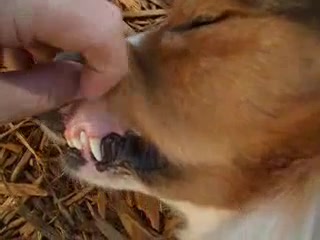
To check capillary refill, lift the dog’s lip and look at the gums. Healthy gums are usually pink, though some dogs have naturally pigmented gums that make this harder. Press a finger gently into a pink area of gum until it blanches white, then release.
The color should return quickly, usually within about one to two seconds. If it takes several seconds, that can be a warning sign of dehydration, poor circulation, shock, or another serious problem.
Do not read capillary refill alone. Read it with gum moisture, gum color, heart rate, energy, breathing, temperature risk, behavior, and whether the dog is improving or getting worse.
⚠️
Do not ignore abnormal gums
Pale, white, blue, gray, brick-red, muddy, tacky, or very dry gums are not something staff should explain away. Get veterinary guidance.
🌡️
Dehydration, Heatstroke, and Shock Are Not the Same Thing
They can overlap, and staff do not get to play guessing games while the dog declines.
Dehydration means the dog has lost more fluid than the body can safely tolerate. Heat stress means the dog is struggling with heat load and cooling. Heatstroke is a medical emergency. Shock means circulation is failing or inadequate. These are not casual labels.
A dog can be dehydrated without heatstroke. A dog can have heatstroke and also be dehydrated. A dog can look dehydrated and actually be in shock from another medical problem. Daycare staff do not need to win a diagnosis trophy. They need to see danger and move.
Swipe left/right to see the full table.
| Problem | What Staff May See | Operator Response |
|---|---|---|
| Mild dehydration concern | Tacky gums, hard play, not drinking enough, slower recovery, slightly dull behavior. | Rest, shade, fresh water, observation, shorter play, document, and reassess fast. |
| Moderate dehydration concern | Dry gums, lethargy, delayed skin return, slower capillary refill, weakness, poor appetite. | Remove from play, call owner/vet guidance, do not return to group, monitor closely. |
| Heat stress or heat exhaustion | Heavy panting, drooling, weakness, refusing to settle, hot body, red gums, distress after exertion. | Stop play, cool environment, airflow, safe cooling, small water if alert, call vet. |
| Heatstroke emergency | Collapse, confusion, vomiting, diarrhea, seizures, severe weakness, abnormal gum color, uncontrolled panting. | Emergency cooling and emergency vet transport. Do not wait. |
| Shock concern | Pale gums, delayed refill, weak pulse, collapse, cold extremities, severe weakness, mental dullness. | Emergency vet response. Keep the dog quiet and move toward medical care. |
🧯
What Staff Should Do Immediately
Remove the dog from the cause before the symptoms become the event.
The first step is to stop the dog’s play. Not “one more minute.” Not “he seems like he wants to keep going.” Stop the play, lower stimulation, move the dog to shade or a cool area, and assess the dog away from the noise.
Offer fresh water to a dog that is alert, able to stand or sit safely, and able to swallow normally. Let the dog drink calmly. Do not force water down a weak, collapsed, vomiting, neurologic, overheated, or semi-conscious dog. That is how you turn a bad problem into an aspiration problem.
If heat is involved, start appropriate cooling while contacting veterinary care. Move to shade or air conditioning, use airflow, and use cool water on the body when needed. Do not waste time arguing about whether the dog is “technically dehydrated” while the dog is cooking.
If the dog improves quickly with rest, water, and cooling, staff still need to document the event and change the play plan. If the dog does not improve quickly, or if signs are moderate to severe, the dog needs veterinary guidance or transport.
- Remove the dog from play immediately.
- Move the dog to shade, air conditioning, or a cooler low-stimulation area.
- Offer fresh water only if the dog is alert and swallowing normally.
- Check gums, capillary refill, skin turgor, heart rate, breathing, behavior, and recovery.
- Start appropriate cooling if heat stress is suspected.
- Call the vet if signs are serious, unclear, worsening, or not improving.
- Do not return the dog to group play after a dehydration or heat-risk event.
- Document the timeline, weather, play duration, signs, response, water intake, owner contact, and vet guidance.
🚫
What Not to Do
Bad first aid can waste time or make the dog worse.
- Do not force water into a dog that is weak, collapsed, vomiting, overheated, neurologic, or not swallowing normally.
- Do not add electrolyte powder to the group water supply as a casual default.
- Do not use electrolyte products as a substitute for veterinary care.
- Do not give IV or subcutaneous fluids unless you are legally allowed, trained, and acting under veterinary direction.
- Do not return the dog to play because the owner paid for daycare.
- Do not assume a dog is fine because one test looks normal.
- Do not wait for collapse before calling the vet.
- Do not write “tired” when the dog had dry gums, delayed refill, weakness, or abnormal recovery.
⚠️
Fluid warning
Severe dehydration may require veterinary fluid therapy, including IV or subcutaneous fluids. That is medical treatment, not something a daycare employee should freestyle from a web page.
🚰
Water, Rest, Shade, and Cool-Down Policy
Prevention is cheaper than emergency medicine and a crying owner phone call.
Dehydration prevention in daycare is not one bowl in the corner and a prayer. Dogs need clean water, accessible water stations, rest periods, shade, airflow, reasonable play cycles, staff observation, and weather-based adjustments.
After strenuous play, dogs need cool-down time. That gives them a chance to gear down, drink water, settle their breathing, and show staff whether they are recovering normally. The cool-down period is not dead time. It is where staff catch problems before they become emergencies.
Electrolytes should be handled with policy, owner approval, and veterinary guidance. Some dogs may benefit from specific products in specific circumstances. That does not mean the whole group water supply becomes a sports drink experiment.
- Keep multiple clean water stations available.
- Monitor whether dogs are actually drinking, not just whether bowls exist.
- Schedule cool-down periods after hard play.
- Shorten outdoor play in heat, humidity, poor airflow, or direct sun.
- Provide shade, airflow, and cool rest areas.
- Give high-risk dogs shorter play cycles and more frequent checks.
- Remove dogs from play before they fail, not after.
- Document dogs that repeatedly fail to drink, overheat, or recover poorly.
📝
Documentation and Owner Communication
“Seemed hot” is not enough. Write the facts.
Dehydration and heat-risk notes should create a useful timeline. Staff should document the weather, room temperature if known, play duration, outdoor time, water access, water intake, signs observed, gum condition, capillary refill, skin turgor, cooling steps, rest time, owner contact, veterinary guidance, and whether the dog improved or needed transport.
Owner communication should be direct. Do not sell fantasy. If the dog stopped recovering, had tacky gums, delayed refill, weakness, or heat stress signs, say that. If the dog needs a shorter day, fewer play cycles, indoor-only play, vet clearance, or a different service plan, say that too.
📞
Owner script
“Your dog showed signs today that concerned us: he was not recovering normally after play, his gums were tacky, and he needed to be removed from group to rest and cool down. We offered water, monitored him, and are not putting him back into play today. Because dehydration and heat stress can become serious quickly, we recommend veterinary guidance before his next daycare day.”
✅
Dog Daycare Dehydration Checklist
Use this when a dog looks hot, flat, dry, weak, or wrong.
- Has the dog been playing hard, outside, in heat, humidity, sun, or poor airflow?
- Is the dog panting normally, or failing to settle after rest?
- Are the gums moist and normal-colored, or tacky, dry, pale, red, gray, blue, or muddy?
- Does capillary refill happen quickly, or is gum color slow to return?
- Does the skin snap back normally, or return slowly?
- Is the dog alert and able to drink safely?
- Is the dog weak, dull, stumbling, vomiting, having diarrhea, refusing water, or collapsing?
- Has the dog been removed from play and moved to a cooler, quieter area?
- Does the dog improve quickly with rest, water, and cooling?
- Has staff called the owner or vet when signs are serious, unclear, worsening, or not improving?
- Has the dog been kept out of group play for the rest of the day?
- Did staff document signs, timeline, play conditions, response, owner contact, and next-service plan?
❓
Dog Dehydration FAQ for Daycare Operators
Straight answers for the stuff staff actually deal with.
Is dehydration the same thing as heatstroke?
No. They are different problems, but they can overlap. A dog can be dehydrated without heatstroke, and a dog with heatstroke may also be dehydrated. Staff should not waste time trying to win the label while the dog is getting worse.
Is the skin turgor test enough to know if a dog is okay?
No. Skin turgor is one clue. Age, body condition, loose skin, weight, and breed can affect it. Read the whole dog: gums, refill, breathing, behavior, heart rate, water interest, heat exposure, and recovery.
How fast should capillary refill be?
Gum color should usually return quickly after pressure is released, often within about one to two seconds. Slow refill can be a warning sign of dehydration, poor circulation, shock, or another medical problem.
Should daycare staff force a dehydrated dog to drink?
No. Offer water to a dog that is alert and swallowing normally. Do not force fluids into a weak, collapsed, vomiting, overheated, neurologic, or semi-conscious dog. That can create an aspiration risk.
Should electrolyte powder be added to group water?
Not as a casual default. Group water should be clean, fresh, and available. Electrolyte use should be controlled by facility policy, owner approval, and veterinary guidance. Do not turn the group water into a medical experiment.
Can daycare staff give fluids under the skin?
Only if legally allowed, properly trained, and acting under veterinary direction. Severe dehydration can require veterinary fluid therapy. That is not something staff should improvise.
When should a dehydrated dog go to the vet?
Call the vet when the dog is weak, collapsed, vomiting, having diarrhea, has abnormal gums, delayed refill, heavy panting that will not settle, cannot drink normally, is not improving quickly, or when staff are not sure what they are seeing.
🐾
The Bottom Line: Catch the Dog Before the Dog Fails
Dehydration management is staff work, not bowl decoration.
Dog daycare creates real dehydration and heat-risk conditions: hard play, excitement, outdoor yards, hot weather, humidity, poor recovery, dogs that ignore their own limits, and staff who may be watching behavior while missing body signs.
Good staff do not wait for the dog to crash. They watch recovery. They check gums. They know what normal drinking looks like. They know when a dog is not acting right. They understand that skin turgor and capillary refill are useful clues, not magic answers.
Fresh water matters. Rest matters. Shade matters. Airflow matters. Cool-down periods matter. Documentation matters. Veterinary escalation matters. And when the dog looks wrong, the dog is removed from play.
The goal is not to prove staff are tough enough to handle an emergency. The goal is to prevent the emergency when possible, recognize it when it starts, and move fast when prevention is no longer the situation.
Dog Daycare Start-Up Services
Build Procedures Before the Emergency Hits
Dehydration, heat stress, CPR, fights, injuries, owner communication, staff documentation, and emergency response all need written operating procedures before the dog is already in trouble.
- Staff training and emergency response planning.
- Dog daycare health and safety procedures.
- Practical documentation and owner communication systems.