PAWS Pet Poison Plant Guide
Is Balfour Aralia Poisonous to Dogs, Cats, Horses, and Livestock?
Yes—Balfour Aralia, Polyscias balfouriana, should be treated as potentially poisonous and irritating to dogs, cats, horses, livestock, and other animals that chew or swallow it. Exact-species veterinary case reports are limited, but direct chemical research has confirmed a triterpenoid saponin in the leaves. Saponin-containing Polyscias plants are associated primarily with oral and gastrointestinal irritation, including drooling, nausea, vomiting, diarrhea, reduced appetite, abdominal discomfort, depression, and temporary lethargy.
Severe kidney, liver, cardiac, or neurologic failure is not the expected uncomplicated syndrome. Repeated vomiting or diarrhea may still produce clinically important dehydration, while stems, roots, stones, potting mesh, fertilizer, pesticide, leaf-shine products, or broken container material can create additional toxic or mechanical hazards. Skin or eye irritation is also possible after contact with damaged foliage or sap, although the exact irritant responsible in Balfour Aralia has not been established.
About this guide: This page provides general pet-poisoning information and cannot diagnose or treat an individual animal. For any suspected exposure, contact a veterinarian or animal poison-control service immediately. Do not induce vomiting, give medication, or attempt home decontamination unless directed by a veterinary professional.
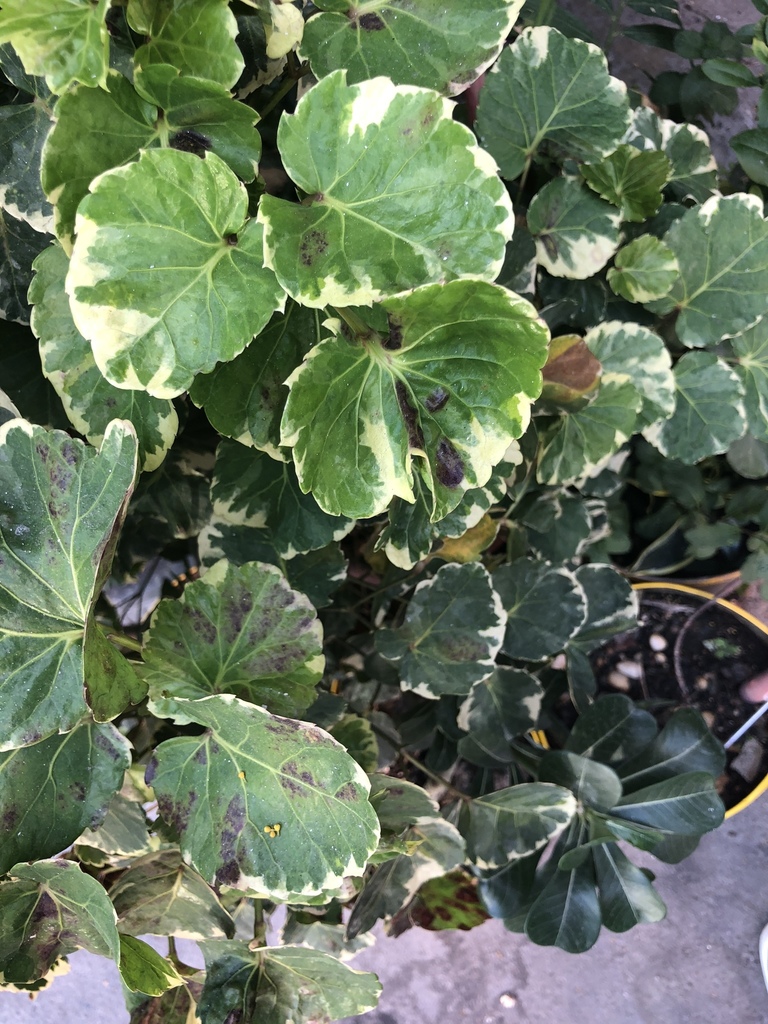
Balfour Aralia
Polyscias balfouriana (André) L.H.Bailey
Important botanical synonyms are Aralia balfouriana André and Panax balfourii Pynaert ex Sander.
The plant has also been treated horticulturally as Polyscias scutellaria ‘Balfourii’, but current taxonomy accepts Polyscias balfouriana and Polyscias scutellaria as separate species.
Araliaceae
Balfour Aralia, Aralia Balfour, Balfour Polyscias, Dinner Plate Aralia, Dinner-Plate Aralia, Plate Aralia, Aralia balfouriana, Panax balfourii, Polyscias balfouriana ‘Marginata’, Aralia Balfouriana Stump, Polyscias Balfouriana Stump
“Dinner Plate Aralia” and “Plate Aralia” are ambiguous nursery names also applied to Polyscias scutellaria and some cultivated forms sold under that species. Polyscias scutellaria ‘Balfourii’ is an alternative horticultural treatment encountered in older references, but current botanical treatment accepts Polyscias balfouriana and Polyscias scutellaria as separate species.
Shield Aralia, Plum Aralia, and Fabian Aralia most properly refer to Polyscias scutellaria or its cultivars and should not be presented as exact synonyms for authenticated Polyscias balfouriana. Lemon Lime Aralia is applied inconsistently to several variegated Polyscias selections and requires confirmation from a scientific label or complete plant identification.
Confirmed Chemistry and the Limits of the Poisoning Evidence
The principal toxicological concern in Balfour Aralia is its triterpenoid-saponin chemistry. Saponins are glycosides composed of a lipid-compatible triterpene aglycone attached to one or more water-compatible sugar chains. Their amphipathic structure allows them to interact with sterols and other lipids in biological membranes.
This membrane activity is often described as detergent-like. The comparison refers to molecular behavior and does not mean that the plant acts like bleach, drain cleaner, concentrated dish detergent, or another corrosive household chemical. When sufficient saponin-containing plant material contacts the digestive tract, irritation may contribute to salivation, nausea, vomiting, abdominal discomfort, appetite reduction, altered intestinal motility, and diarrhea.
The important evidence distinction is that exact-species chemistry is stronger than exact-species veterinary clinical evidence. A triterpenoid saponin has been isolated directly from authenticated Polyscias balfouriana leaves, but no controlled raw-leaf feeding experiment, canine or feline case series, equine outbreak report, or dependable livestock toxic dose has established how often natural ingestion produces illness.
Sugimoto and Colleagues’ Leaf Study
Sachiko Sugimoto, Yoshi Yamano, Hany Ezzat Khalil, Hideaki Otsuka, Mohamed Salah Kamel, and Katsuyoshi Matsunami published “Chemical structures of constituents from the leaves of Polyscias balfouriana” in the Journal of Natural Medicines in 2017.
“A new triterpene saponin, polyscioside A methyl ester (3), along with six known compounds (4–9) were isolated from the leaves of Polyscias balfouriana.”
The investigators also isolated a new pyrrolidine derivative, identified as (5S)-hydroxyethyl 2-oxopyrrolidine-5-carboxylate, and a new flavonol glycoside, tamaraxetin 3,7-di-O-alpha-L-rhamnopyranoside. The structures were established through extensive spectroscopic analysis.
This work directly confirms species-specific triterpenoid-saponin chemistry in Balfour-Aralia leaves. It did not expose dogs, cats, horses, livestock, or other companion animals to the plant, and it did not determine which compound produces any particular veterinary sign or how much raw foliage would be required.
The Mouse Extract Study Tempers Claims of Severe Toxicity
Sandhya S., Vinod K. R., Madhu Divakar C., and Nema Rajesh Kumar investigated extracts prepared from the leaves and roots of Polyscias balfouriana var. Marginata. Fresh plant material underwent hot extraction with 70 percent ethanol, followed by solvent partitioning that produced an n-butanol fraction described as a crude saponin extract.
The investigators administered leaf and root fractions orally to mice in several pharmacological experiments, including treatments at 250 and 500 milligrams per kilogram. As part of the preliminary work, they reported that their acute-toxicity procedure found the tested extracts non-toxic at an experimental exposure of 2.5 grams per kilogram.
That research amount is a published experimental finding, not an owner-facing safe dose. The study used processed and fractionated extracts rather than chewed raw foliage, provided limited acute-toxicity reporting, involved laboratory mice rather than common domestic species, and was designed primarily to investigate proposed adaptogenic effects. It therefore cannot establish that a dog, cat, horse, rabbit, bird, or livestock animal may safely consume the plant.
The result remains important because it contradicts any suggestion that authenticated Balfour Aralia has been shown experimentally to be a predictably severe systemic poison. The most defensible interpretation is that the plant contains biologically active saponin chemistry and should remain inaccessible, while the expected natural-exposure syndrome is more likely to be irritating and gastrointestinal than rapidly fatal.
Polyscioside A Methyl Ester Is Not Polysciosides A Through H
Polyscioside A methyl ester is the specific triterpene saponin isolated from Polyscias balfouriana. Its name should not be expanded into a claim that Balfour Aralia contains the complete polyscioside A-through-H series.
D. H. Vo and colleagues isolated polysciosides A through H from the leaves and roots of Polyscias fruticosa, the species commonly called Ming Aralia. Those compounds were eight new oleanolic-acid saponins accompanied by three previously known saponins.
Related Polyscias species frequently produce oleanane-type triterpenoid saponins, but the aglycones, sugar chains, concentrations, plant-part distribution, absorption, and biological activity can differ. Chemistry established in Ming Aralia cannot be assigned automatically to Balfour Aralia merely because both plants belong to the same genus.
Balfour Aralia and Shield Aralia Are Not Chemically Interchangeable
Balfour Aralia has sometimes been treated horticulturally as Polyscias scutellaria ‘Balfourii’ or as a cultivated form of Shield Aralia. Current botanical treatment accepts P. balfouriana and P. scutellaria as separate species.
Older horticultural records, poison lists, and chemical papers may still use the names interchangeably. Such records can help explain the expected saponin-associated hazard of the broader plant group, but they do not prove that every compound or concentration measured in Shield Aralia occurs in authenticated Balfour Aralia.
The 2018 Volatile-Oil Study
Naglaa S. Ashmawy, Haidy A. Gad, Mohamed L. Ashour, Sherweit H. El-Ahmady, and Abdel Nasser B. Singab published “Comparative Study on the Volatile Constituents of Polyscias guilfoylei and Polyscias balfouriana Leaves” in 2018.
Authenticated fresh leaves were collected in Egypt, and 50-gram samples were subjected to hydrodistillation for four hours. The Balfour-Aralia leaf oil represented approximately 0.4 percent of the original fresh weight. Across the two species, 42 volatile compounds were identified; 38 were reported from the Balfour-Aralia oil and represented approximately 79.17 percent of its volatile fraction.
The largest reported Balfour-Aralia constituents were beta-chamigrene at approximately 14.84 percent and gamma-muurolene at 12.70 percent. Caryophyllene oxide, beta-elemene, guaiazulene, phytol, and numerous minor constituents were also detected.
The researchers evaluated antimicrobial activity against selected bacteria and fungi and cytotoxic activity against a cultured human colon-carcinoma cell line. The concentrated hydrodistilled oil displayed biological activity under those laboratory conditions.
Hydrodistilled volatile oil is not equivalent to an animal chewing an untreated leaflet. Distillation selectively removes and concentrates volatile molecules while excluding much of the intact plant matrix. The study therefore characterizes chemical diversity but does not demonstrate that natural foliage ingestion produces the concentrations used in antimicrobial or cultured-cell assays.
Falcarinol Is Not a Confirmed Balfour-Aralia Toxin
Falcarinol is an irritant and sensitizing polyacetylene documented in several members of Araliaceae and in some other Polyscias species. Available exact-species research does not establish it as a constituent or principal toxin of Polyscias balfouriana.
Falcarinol was not among the 38 volatile constituents reported from the hydrodistilled Balfour-Aralia leaf oil. That negative finding does not prove complete absence from every tissue or nonvolatile chemical fraction, because one extraction and analytical method cannot detect every possible compound.
It does mean that Balfour Aralia should not be described as a confirmed falcarinol poison without direct analytical evidence. Localized skin irritation remains possible after sap or damaged foliage contacts sensitive tissue, but the exact responsible compound and the frequency of animal dermatitis have not been established.
Contact Irritation and Sensitization
General houseplant-toxicology literature includes Polyscias among plants associated with contact irritation or allergic reactions. A susceptible animal may develop redness, itching, small raised lesions, localized swelling, repeated licking, rubbing, chewing, or hair loss after contact with damaged plant tissue.
The evidence is broader than authenticated Balfour-Aralia veterinary cases. Localized redness after contact should therefore be described as possible rather than inevitable, and severe facial swelling or airway compromise should not be attributed automatically to this plant.
Continued licking and scratching can convert mild irritation into moist dermatitis, crusting, bacterial or yeast overgrowth, and self-inflicted wounds. Reactions that recur after contact with the same plant support permanent avoidance even when the specific allergen remains unidentified.
Leaves, Roots, Stems, Flowers, Fruit, and Sap
Direct compound isolation is strongest for the leaves. The mouse pharmacology study also prepared triterpenoid-positive fractions from leaves and roots, supporting the conclusion that underground tissues are not chemically inert.
Woody stems, petioles, flowers, fruit, seeds, sap, propagation cuttings, and pruning debris should remain inaccessible as a precaution. No comparative exact-species study has established that every tissue contains the same compounds or concentration, and no evidence proves that one part is a fixed multiple more toxic than another.
Wilted and dried material should not be assumed detoxified. Drying reduces moisture and changes texture, but triterpenoid glycosides are not expected to disappear simply because a leaf has wilted. Dry stems and roots may also create splinters, gagging, esophageal irritation, or gastrointestinal foreign-body concerns.
Laboratory Hemolysis Does Not Establish Clinical Anemia
Some purified saponins can disrupt red-cell membranes when placed in direct contact with them at sufficient concentrations in laboratory systems. Routine Balfour-Aralia ingestion has not been established as a predictable cause of hemolytic anemia in dogs, cats, horses, or livestock.
Pale gums, jaundice, red or dark urine, rapid breathing, profound weakness, or collapse requires investigation for blood loss, oxidative injury, immune-mediated disease, onion or garlic exposure, medication, another poisonous plant, or systemic illness.
No Characteristic Organ-Failure Syndrome
Acute kidney failure, liver failure, severe cardiac injury, persistent arrhythmias, respiratory paralysis, seizures, coma, and progressive multisystem deterioration are not established as the expected consequences of uncomplicated Balfour-Aralia ingestion.
Such findings should broaden the investigation to pesticides, fertilizer, leaf-shine products, human or veterinary medication, another plant, caustic material, foreign-body disease, infection, metabolic illness, or mixed exposure.
No Dependable Safe or Toxic Dose
No safe leaflet count, stem length, root amount, fruit quantity, total-saponin concentration, polyscioside dose, or sap exposure has been established for an individual dog, cat, horse, livestock animal, rabbit, bird, reptile, or other pet.
The mouse extract study cannot be converted into a raw-plant safe dose. Natural risk depends on the plant tissue, amount retained, preparation, animal species and size, underlying health, swallowing ability, prior sensitization, and any fertilizer, pesticide, potting material, or foreign object swallowed with it.
The available evidence supports treating the plant as a potential oral, gastrointestinal, and contact irritant while remaining honest that severe exact-species veterinary toxicity has not been demonstrated.
The Expected Syndrome Is Based on Chemistry and Broader Polyscias Evidence
No published exact-species veterinary case series defines the frequency, onset, severity, or duration of Balfour-Aralia poisoning. The expected syndrome is inferred from the confirmed presence of a triterpenoid saponin in the leaves, experimental work with processed extracts, broader Polyscias toxicology, and the recognized behavior of gastrointestinally irritating saponins.
A brief taste may produce no visible illness. A more meaningful exposure may cause drooling, nausea, vomiting, reduced appetite, abdominal discomfort, diarrhea, depression, or temporary lethargy. The absence of a dependable case series means these signs should be described as plausible and expected rather than inevitable.
Onset and Duration Are Not Established Precisely
Oral discomfort or nausea may become apparent soon after chewing, while vomiting, diarrhea, appetite loss, or lethargy may develop later as swallowed material reaches the stomach and intestines. No controlled study has established a specific minute-to-hour onset interval for raw Balfour-Aralia ingestion in dogs, cats, horses, or livestock.
Likewise, no exact-species study supports a guaranteed twelve-, twenty-four-, or forty-eight-hour recovery period. Mild uncomplicated irritation would be expected to improve after access ends and gastrointestinal losses stop, but persistent or worsening illness requires reassessment rather than reliance on a fixed timetable.
Early Oral Signs
Possible early signs include lip licking, repeated swallowing, salivation, gagging, brief coughing, pawing at the muzzle, or reluctance to continue eating. An unpleasant taste may discourage further chewing in some animals.
Balfour Aralia is not known to contain the insoluble calcium-oxalate raphides responsible for the immediate intense oral burning and dramatic tongue swelling associated with many aroids. Severe mouth pain, extensive ulceration, widespread blistering, or major tongue enlargement suggests another plant, caustic material, electrical injury, trauma, or a lodged foreign object.
Nausea and Vomiting
Nausea may appear as drooling, lip licking, repeated swallowing, pacing, grass eating, food refusal, hiding, or repeated approaches to food followed by turning away.
Vomiting may occur once or recur. Vomit can contain food, foam, mucus, or recognizable leaf and stem fragments. Repeated vomiting increases the risk of dehydration, electrolyte disturbance, esophageal irritation, and aspiration.
An animal that vomits whenever it drinks cannot replace clinically important fluid loss through voluntary water consumption alone and may require injectable anti-nausea treatment and professionally managed fluids.
Diarrhea and Abdominal Discomfort
Diarrhea may range from a soft bowel movement to repeated watery stool and may be accompanied by mucus, urgency, straining, gas, or intestinal cramping.
Abdominal discomfort may appear as pacing, repeated stretching, a hunched posture, guarding of the abdomen, reluctance to be picked up, or repeated changes in resting position.
Marked abdominal enlargement, repeated unproductive retching, severe focal pain, or inability to become comfortable is not adequately explained by a minor saponin exposure. Those findings require urgent assessment for gastric dilatation, pancreatitis, obstruction, perforation, another toxin, or unrelated gastrointestinal disease.
Appetite Loss, Depression, and Lethargy
Reduced appetite, temporary depression, and lethargy may result from nausea, abdominal discomfort, stress, or developing dehydration rather than direct injury to the brain.
A cat may hide, stop grooming, or refuse treats. A dog may sleep more than usual, appear withdrawn, or move reluctantly.
Profound depression, inability to stand, loss of responsiveness, progressive weakness, or collapse is more severe than expected after a minor foliage exposure and requires investigation for dehydration, hypoglycemia, blood loss, obstruction, another toxin, or systemic disease.
Dehydration and Electrolyte Disturbance
Repeated vomiting or diarrhea can become more medically significant than the original plant irritation. Water, sodium, potassium, chloride, bicarbonate, and other electrolytes may be lost when gastrointestinal signs continue.
Warning signs include dry or tacky gums, sunken eyes, reduced skin elasticity, increased thirst, reduced urination, rapid heart rate, weak pulses, cold extremities, worsening lethargy, and inability to retain water.
Puppies, kittens, toy-breed dogs, elderly animals, pregnant animals, and patients with kidney, heart, endocrine, or chronic gastrointestinal disease may tolerate fluid loss poorly.
Blood Is Not a Defining Balfour-Aralia Sign
Blood in vomit or stool is not a documented defining feature of authenticated Balfour-Aralia exposure. A small fresh streak can follow forceful retching or repeated straining, but it should not be dismissed automatically as a routine plant effect.
Clots, repeated fresh bleeding, coffee-ground material, black tarry stool, substantial red blood, pale gums, rapid breathing, abdominal pain, or worsening weakness requires prompt veterinary examination.
Potential causes include more significant mucosal injury, a foreign object, medication, another toxin, clotting disease, infection, parasites, pancreatitis, or unrelated gastrointestinal disease.
Possible Contact Dermatitis
Sap or damaged plant tissue may cause localized irritation in a sensitive animal, although exact-species veterinary evidence is limited. Possible findings include redness, itching, small bumps, localized swelling, repeated licking, rubbing, chewing, or hair loss from self-trauma.
The lips, muzzle, feet, abdomen, inner legs, and other sparsely haired areas may be exposed when an animal chews the plant, brushes against damaged foliage, lies beneath pruning debris, or grooms contaminated fur.
Crusting, discharge, odor, moist lesions, spreading redness, or continued self-trauma may indicate secondary bacterial or yeast infection rather than direct plant irritation alone.
Eye Exposure
Sap, dust, potting substrate, or plant fragments entering an eye may cause tearing, squinting, redness, eyelid spasm, light sensitivity, discharge, cloudiness, or pawing at the face.
Persistent pain, bleeding, cloudiness, or inability to open the eye may indicate a corneal abrasion, ulcer, retained particle, or chemical injury caused by an applied plant product.
Eye injury requires direct examination because the depth and severity of corneal damage cannot be determined reliably from external appearance.
Swallowing Difficulty and Foreign Material
A woody stem, root fragment, decorative stone, plastic mesh, wire, foam, moisture-retaining polymer, or broken container piece may become lodged in the mouth, throat, esophagus, stomach, or intestines.
Warning signs include repeated unproductive gagging, continuous drooling, regurgitation, repeated swallowing, inability to swallow saliva, neck extension, coughing, noisy breathing, recurrent vomiting, abdominal enlargement, pain, or reduced stool production.
These findings indicate a possible physical emergency rather than an ordinary saponin-associated gastrointestinal reaction.
Facial or Throat Swelling
Mild localized swelling may accompany irritation or an allergic response. Dramatic tongue enlargement, progressive throat swelling, and airway obstruction are not established as the ordinary Balfour-Aralia syndrome.
Any increasing facial, tongue, throat, or neck swelling requires immediate assessment because an allergic reaction, insect sting, caustic exposure, another plant, or retained foreign material may be responsible.
Noisy breathing, open-mouth breathing in a cat, blue-gray gums, panic, collapse, or inability to swallow saliva is an emergency.
Horses and Livestock
No dependable equine or livestock case series involving authenticated Polyscias balfouriana was identified. A substantial exposure could plausibly cause salivation, feed refusal, abdominal discomfort, depression, soft manure, or diarrhea through gastrointestinal irritation.
Horses cannot vomit. Continuing colic, profuse diarrhea, choke-like signs, feed refusal, weakness, fever, recumbency, or abnormal breathing requires investigation for another poisonous plant, contaminated feed, pesticide, infection, obstruction, or another gastrointestinal disorder.
Several affected animals should prompt immediate removal of all landscaping debris and a complete inspection of plants, feed, water, fertilizer, pesticides, chemicals, and discarded garden material.
Rabbits, Guinea Pigs, Rodents, Birds, and Reptiles
Species-specific evidence is insufficient to define a characteristic syndrome or toxic dose. Balfour Aralia should not be offered as forage, browse, nesting material, enrichment, or cage decoration.
Rabbits and guinea pigs cannot vomit. Appetite loss, reduced fecal production, a hunched posture, tooth grinding, abdominal discomfort, or lethargy may indicate gastrointestinal stasis or another serious condition.
Birds may show regurgitation, altered droppings, reduced appetite, weakness, poor balance, or reduced activity. Small and exotic animals can deteriorate rapidly when gastrointestinal illness limits water or food intake.
Atypical Signs Require a Broader Investigation
Tremors, seizures, profound incoordination, coma, collapse, kidney or liver abnormalities, severe anemia, persistent arrhythmias, or respiratory paralysis are not established expected effects of uncomplicated Balfour-Aralia ingestion.
These signs require investigation for an applied pesticide, fertilizer, medication, another poisonous plant, caustic product, foreign material, metabolic disease, infection, or mixed exposure.
Expected Clinical Course
The prognosis should be favorable when exposure is limited, gastrointestinal signs are mild, hydration remains normal, and no associated product or foreign object was swallowed.
Repeated vomiting, continuing diarrhea, blood, inability to retain water, marked pain, dehydration, swallowing difficulty, progressive swelling, weakness, eye pain, reduced stool production, or a worsening course requires veterinary reassessment. No fixed observation period can replace evaluation of the individual animal’s condition.
Accepted Identity and Native Range
Balfour Aralia is Polyscias balfouriana (André) L.H.Bailey, a woody evergreen shrub or small tree in Araliaceae.
Its accepted native range extends from New Guinea to Queensland, including the Coral Sea Islands Territory. It has been introduced into Cambodia, the Dominican Republic, Haiti, New Caledonia, Puerto Rico, and Vanuatu.
Outside tropical and subtropical climates, the species is encountered primarily as a container-grown houseplant, office plant, lobby specimen, patio plant, or bonsai-style ornamental.
Botanical Synonyms and Historical Treatment
The two recognized botanical synonyms are Aralia balfouriana André and Panax balfourii Pynaert ex Sander. These names explain the continued use of Aralia Balfour and older labels placing the species in Aralia or Panax.
Balfour Aralia has also been treated horticulturally as Polyscias scutellaria ‘Balfourii’ or simply as P. scutellaria. Current botanical treatment accepts P. balfouriana and P. scutellaria as separate species, but the older classification remains important when interpreting nursery labels and historical literature.
Ambiguous Common Names
Dinner Plate Aralia and Plate Aralia are widely applied to Balfour Aralia but are also used for Shield Aralia and cultivated forms of Polyscias scutellaria. The names therefore help locate the plant in the nursery trade but do not prove its scientific identity.
Shield Aralia, Plum Aralia, and Fabian Aralia more properly refer to P. scutellaria or its cultivars. Lemon Lime Aralia is used inconsistently for several variegated Polyscias selections.
A complete plant photograph and a reliable scientific label are more dependable than one broad common name when reconstructing an animal exposure.
Aralia Balfouriana Stump
Aralia Balfouriana Stump and Polyscias Balfouriana Stump describe a nursery presentation rather than a separate species or a non-toxic cultivar.
The plant is cut back, trained, or grown to produce a thick woody base with new stems and foliage above it, creating a miniature tree-like appearance. The stump, roots, shoots, leaves, and sap remain tissues of the same plant.
How to Recognize Balfour Aralia
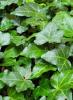
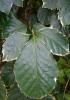
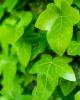
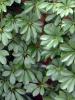
The plant usually develops a dense upright form with twisting green, brown, or gray-speckled woody stems. Leaves are commonly divided into three rounded leaflets, although form varies with cultivar, age, and growing conditions.
The leaflets may be elliptic, ovate, obovate, or broadly kidney-shaped. They are usually glossy or leathery with crenulated, scalloped, or shallowly serrated margins.
Solid-green plants occur, but variegated forms marked with cream, white, pale yellow, or lime-green margins and patches are especially common indoors. The rounded, plate-like foliage explains the Dinner Plate and Plate Aralia names.
Mature outdoor plants may produce terminal panicles containing small pale flowers arranged in umbels, followed by rounded drupes. Indoor specimens rarely flower or fruit.
Distinguishing Other Cultivated Aralias
Ming Aralia is Polyscias fruticosa and usually bears finely divided, fern-like foliage. Its chemistry includes polysciosides A through H, which should not be transferred automatically to Balfour Aralia.
Geranium-Leaf Aralia is Polyscias guilfoylei and commonly has pinnate leaves with rounded or irregularly margined leaflets.
Shield or Plum Aralia is Polyscias scutellaria and may have broad saucer-like leaves or leaflets. Some nursery forms sold as Fabian or Dinner Plate Aralia belong to this species rather than authenticated P. balfouriana.
These plants share a genus and may share broad saponin-associated concerns, but their accepted names, leaf forms, chemical profiles, and exact evidence should not be merged indiscriminately.
Where Dogs and Cats Encounter It
Dogs and cats most often encounter Balfour Aralia as a floor-standing houseplant, office or lobby plant, stump-form ornamental, patio container, or part of an indoor tropical display.
Cats may bat at or chew hanging leaflets and may climb furniture to reach a supposedly elevated plant. Puppies and persistent plant-chewing dogs may strip foliage, chew woody stems, overturn containers, or dig around the roots.
In frost-free landscapes, the species may be grown as an ornamental specimen, border, screen, or hedge. Animals may encounter low foliage, fallen leaves, pruned branches, uprooted plants, or landscaping waste.
Associated Pot and Landscape Hazards
An overturned container may expose an animal to fertilizer granules, systemic insecticides, surface pesticide residues, leaf-shine products, decorative moss, bark, stones, plastic mesh, foam, wire, moisture-retaining polymers, and broken pot fragments.
Drainage water may contain dissolved fertilizer, pesticide residue, soil organisms, mold, algae, or decomposing plant material.
Severe salivation, tremors, pronounced incoordination, abnormal heart activity, breathing difficulty, seizures, collapse, or prolonged illness is inconsistent with the expected uncomplicated Balfour-Aralia pattern and should raise concern for one of these associated hazards.
What the Exact-Species Research Establishes
The 2017 leaf study isolated polyscioside A methyl ester and several other constituents from authenticated P. balfouriana. This directly confirms triterpene-saponin chemistry in the foliage.
The 2018 volatile-oil study identified 38 constituents in hydrodistilled Balfour-Aralia leaf oil and demonstrated substantial chemical differences between P. balfouriana and P. guilfoylei.
The 2009 mouse study used processed n-butanol fractions prepared from the leaves and roots of P. balfouriana var. Marginata. It reported no acute toxicity at its tested extract exposure while documenting pharmacological activity at lower repeated doses.
Together, these studies show that the plant is chemically active but do not reproduce a natural dog, cat, horse, or livestock poisoning syndrome. The evidence supports precaution and monitoring without overstating the likelihood of severe systemic poisoning.
Contact Dermatitis and the Falcarinol Question
Broader horticultural and houseplant-toxicology literature associates Polyscias with contact irritation. Exact-species animal dermatitis reports and the responsible Balfour-Aralia irritant have not been established adequately.
Falcarinol is a known irritant in some Araliaceae and has been detected in other related plants. It was not reported in the detailed hydrodistilled volatile profile of P. balfouriana, and it should not be presented as a confirmed principal Balfour-Aralia toxin.
An animal with recurring redness, itching, swelling, or hair loss after contact should be separated from the plant and evaluated for irritant dermatitis, allergy, infection, parasites, grooming trauma, or another environmental exposure.
Horses and Livestock
Balfour Aralia should not be placed in pastures, stalls, livestock pens, hay, browse piles, or feed areas. Direct authenticated equine and livestock case evidence remains limited.
Fresh pruning debris may be eaten more readily than a standing ornamental, especially during feed scarcity or when cut branches are deposited directly inside an enclosure.
Salivation, feed refusal, colic, diarrhea, weakness, fever, respiratory abnormalities, recumbency, or illness affecting several animals requires a complete environmental and infectious-disease investigation rather than automatic attribution to Balfour Aralia.
Small and Exotic Animals
Published species-specific evidence involving rabbits, guinea pigs, hamsters, gerbils, pet birds, and reptiles is sparse. The plant should not be offered as browse, forage, enrichment, nesting material, or cage decoration.
Small body size can make dehydration clinically important after relatively modest vomiting, regurgitation, diarrhea, or food refusal. Rabbits and guinea pigs are also vulnerable to gastrointestinal stasis when pain, nausea, or stress reduces food intake.
Diagnosis
No routine veterinary test confirms Balfour-Aralia ingestion or measures a clinically useful polyscioside or total-saponin concentration.
Diagnosis depends on witnessed access, reliable identification, the plant part and approximate amount involved, timing, compatible oral or gastrointestinal signs, and exclusion of another plant, applied product, foreign object, or disease.
Useful evidence includes a leafy stem, root or fruit material when involved, nursery tag, photographs of the complete plant, fertilizer and pesticide labels, potting-product packaging, and plant fragments found in vomit or stool.
Bloodwork, electrolyte assessment, urinalysis, fecal testing, radiographs, ultrasound, oral examination, eye examination, endoscopy, or surgery may be appropriate when signs are repeated, bloody, painful, prolonged, obstructive, respiratory, or otherwise atypical.
Prognosis
The prognosis should be good to excellent after a limited uncomplicated exposure when gastrointestinal signs are mild and hydration is maintained.
The outlook becomes more guarded when repeated vomiting or diarrhea causes dehydration, food refusal persists, sap injures an eye, dermatitis becomes infected, aspiration occurs, or another chemical or foreign object was swallowed.
No exact-species study establishes a guaranteed recovery time. Clinical improvement, hydration, normal appetite, comfortable swallowing, normal stool production, and the absence of new signs are more useful than a fixed hourly deadline.
Prevention
Place Balfour Aralia inside a genuinely inaccessible room or plant enclosure rather than relying only on a high shelf. Long stems and leaves can hang within reach, and cats can climb furniture.
Remove fallen leaves and pruning debris promptly, secure propagation cuttings, restrict access to potting material and roots, and prevent animals from drinking drainage water.
Retain labels for fertilizer, pesticide, systemic insecticide, leaf-shine products, moss, water-retaining products, and other materials used around the plant.
Immediate Steps After Exposure
- Prevent further access: Move the animal away from the plant and secure leaves, stems, roots, fruit, flowers, fallen material, propagation cuttings, drainage water, and potting products.
- Remove only loose visible material: Carefully lift plant pieces resting at the lips or front of the mouth when the animal remains calm and this can be done safely. Do not reach blindly toward the throat.
- Allow voluntary access to fresh water: An alert animal swallowing normally may drink on its own. Do not pour, syringe, spray, or force fluid into the mouth.
- Preserve identification evidence: Save a leafy stem, nursery label, photographs of the complete plant, and any root, fruit, flower, or stem material involved.
- Identify associated products: Determine whether fertilizer, pesticide, systemic insecticide, leaf shine, decorative moss, soil, stones, plastic mesh, foam, wire, moisture-retaining crystals, or container fragments were swallowed.
- Record the clinical course: Note drooling, vomiting frequency, diarrhea, appetite, water intake, urination, activity, skin or eye contact, coughing, gagging, stool production, and the approximate time each change began.
- Contact a veterinarian when exposure is meaningful or signs develop: Prompt guidance is appropriate after more than a brief taste, an uncertain amount, ingestion of roots or woody material, access to applied products, or exposure involving a young, elderly, pregnant, very small, or medically fragile animal.
Do Not Attempt Unsupervised Home Treatment
- Do not induce vomiting: Hydrogen peroxide, salt, mustard, syrup of ipecac, detergent, oil, manual gagging, and fingers in the throat can cause aspiration, gastric injury, sodium poisoning, or trauma.
- Never give hydrogen peroxide to a cat: It can cause severe esophageal and gastric irritation, ulceration, and bleeding.
- Never attempt to induce vomiting in a horse, rabbit, or guinea pig: These animals cannot vomit.
- Do not force mouth flushing: Pouring or spraying water into the mouth may cause aspiration when an animal is gagging, vomiting, weak, resisting, sedated, or swallowing abnormally.
- Do not administer activated charcoal at home: It is not automatically indicated for this exposure and may be inhaled by an animal that is vomiting, depressed, weak, sedated, or swallowing poorly.
- Do not force food or fluids: Forced administration does not neutralize saponins and may provoke vomiting or enter the lungs.
- Do not give milk, oil, bread, broth, or another supposed antidote: These substances do not detoxify the plant and may worsen nausea.
- Do not give owner-selected medication: Antihistamines, bismuth products, antacids, antidiarrheal medication, sucralfate, corticosteroids, antibiotics, pain relievers, and human or leftover veterinary prescriptions must be selected according to the animal’s actual findings.
After Skin or Coat Contact
Prevent the animal from grooming fur contaminated with sap, damaged foliage, pesticide, fertilizer, or leaf-shine product.
Wear gloves and wash the exposed coat or skin gently with lukewarm water and a mild species-appropriate cleanser. Rinse thoroughly and clean collars, harnesses, bedding, towels, floors, and other items carrying sap or plant debris.
Do not apply solvents, alcohol, vinegar, baking soda, essential oils, human creams, or another household neutralizer unless specifically directed by a veterinarian.
Persistent redness, itching, bumps, swelling, repeated licking, pain, discharge, odor, moist lesions, or hair loss requires veterinary guidance.
Eye Exposure
If sap or loose plant debris entered an eye and no object is embedded, begin gentle irrigation with sterile saline or clean lukewarm water. Continue flushing for approximately fifteen minutes when the animal tolerates this safely, and prevent rubbing.
Do not use tweezers, cotton swabs, cloth, human redness-relief drops, topical anesthetics, corticosteroid eye medication, or leftover ophthalmic prescriptions on the eye surface.
An object that appears to penetrate the eye should remain in place during transport rather than being removed at home.
Continuing squinting, tearing, redness, cloudiness, eyelid spasm, discharge, bleeding, light sensitivity, or pawing at the face requires prompt examination.
When Emergency Examination Is Especially Important
- Repeated vomiting or diarrhea: Continuing fluid loss can cause dehydration, electrolyte abnormalities, esophageal injury, and aspiration.
- Inability to retain water: An animal that vomits after drinking may require injectable anti-nausea medication and professionally managed fluid therapy.
- Blood in vomit or stool: Bleeding is not a defining uncomplicated Balfour-Aralia sign and may indicate more substantial injury or another cause.
- Marked weakness, depression, or severe abdominal pain: These signs may reflect dehydration, obstruction, another toxin, blood loss, pancreatitis, or unrelated disease.
- Coughing, repeated gagging, regurgitation, or swallowing difficulty: A woody stem, root fragment, stone, plastic mesh, or another object may be lodged in the mouth, throat, or esophagus.
- Progressive facial, tongue, or throat swelling: Swelling that interferes with swallowing or breathing requires immediate emergency care.
- Reduced or absent stool: This may indicate gastrointestinal obstruction, particularly when vomiting and abdominal pain are also present.
- Persistent eye pain: Continuing squinting, cloudiness, discharge, bleeding, or inability to open the eye may indicate a corneal injury or retained material.
- Tremors, seizures, collapse, abnormal heart activity, or breathing difficulty: These are not characteristic of the expected uncomplicated syndrome and require immediate investigation.
- Continuing illness in a horse, livestock animal, rabbit, guinea pig, bird, or other small pet: Appetite loss and digestive illness can become serious quickly in some species.
Veterinary Decontamination
A veterinarian may consider medically induced vomiting after a recent substantial ingestion in a fully alert and clinically stable dog or cat that is breathing normally, swallowing safely, and able to protect its airway.
Professional emesis is generally inappropriate after repeated vomiting, weakness, depression, blood, breathing abnormalities, impaired swallowing, or suspected ingestion of sharp, woody, caustic, or obstructing material.
Activated charcoal is not a universal treatment for saponin-containing plants. Its value for raw Balfour-Aralia ingestion has not been established, and it may be unnecessary in a mild case or unsafe in a vomiting or depressed animal.
Gastric lavage is rarely justified for ordinary foliage exposure. It requires anesthesia, endotracheal intubation, airway protection, and a compelling clinical reason.
Veterinary Examination
The veterinarian will assess hydration, abdominal comfort, vomiting and diarrhea, gum color, oral tissues, swallowing, breathing, skin and eye exposure, and the possibility of another plant, applied product, or foreign object.
Bloodwork may evaluate hydration, electrolytes, glucose, kidney and liver values, red-cell status, and competing causes of weakness or gastrointestinal illness.
Radiographs, ultrasound, contrast imaging, endoscopy, or surgery may be appropriate when a woody stem, root, stone, plastic mesh, container fragment, or another object was swallowed.
Persistent coughing or breathing changes after vomiting may require chest imaging and evaluation for aspiration pneumonia.
Veterinary Gastrointestinal Treatment
There is no specific antidote for Balfour-Aralia saponins. Treatment is selected according to nausea, vomiting, diarrhea, hydration, pain, appetite, and any associated product exposure.
Veterinarian-selected anti-nausea medications such as maropitant or ondansetron may be used to control continuing nausea and vomiting.
Subcutaneous or intravenous fluids may correct dehydration and measured electrolyte abnormalities. The route and volume depend on hydration, cardiovascular health, urine production, ongoing losses, and the animal’s ability to drink safely.
Individualized analgesia may be used when abdominal, oral, or esophageal pain is clinically important.
Sucralfate or acid-suppressive treatment may be considered when hematemesis, esophagitis, erosive gastritis, ulceration, or another documented mucosal injury warrants protection. Sucralfate is a barrier medication rather than a Balfour-Aralia antidote.
Nutritional support may be required when nausea or pain prevents normal eating, particularly in cats with prolonged food refusal.
Veterinary Skin and Eye Treatment
Dermatitis treatment may include thorough cleansing, veterinarian-selected anti-inflammatory or antipruritic medication, and prevention of licking, chewing, and scratching.
Secondary bacterial or yeast infection may require cytology, culture, or other diagnostic testing followed by targeted antimicrobial treatment.
Eye evaluation may include prolonged irrigation, eyelid eversion, magnification, fluorescein staining, and removal of retained plant or potting material.
Corneal injury may require lubrication, prescription pain control, topical antimicrobial medication, and follow-up examinations. Steroid-containing eye medication should not be used when a corneal ulcer or infection is possible.
Horses and Livestock
Remove every animal from the plant, pruning debris, contaminated feed, drainage water, and treated landscaping material.
Do not drench or force oil, charcoal, feed, water, electrolytes, or medication into an animal that is coughing, bloated, weak, recumbent, or swallowing poorly.
Large-animal evaluation may include oral examination, hydration assessment, abdominal and forestomach evaluation, fluid therapy, and inspection of every available plant, pesticide, fertilizer, feed source, chemical, and water supply.
Several affected animals or severe systemic illness should not be attributed automatically to Balfour Aralia without a complete environmental and infectious-disease investigation.
Recovery, Prognosis, and Prevention
Most limited uncomplicated exposures should have a good to excellent prognosis. Recovery depends on cessation of vomiting or diarrhea, maintenance of hydration, return of appetite, normal stool production, and the absence of an associated chemical or foreign object.
No exact-species study establishes a guaranteed recovery period. Persistent or worsening vomiting, diarrhea, blood, weakness, abdominal pain, reduced urination, swallowing difficulty, eye pain, skin infection, or food refusal requires reassessment rather than continued home observation.
Keep Balfour Aralia inside a genuinely inaccessible room or plant enclosure, remove fallen leaves promptly, secure propagation cuttings, prevent access to drainage water and potting material, and collect every pruning fragment before animals return.
Frequently Asked Questions About Balfour Aralia and Animal Poisoning
Is Balfour Aralia poisonous to dogs and cats?
Yes. Balfour Aralia should be treated as poisonous and irritating because its leaves contain triterpenoid saponins. Dogs and cats may develop drooling, nausea, vomiting, diarrhea, abdominal discomfort, appetite loss, depression, or temporary lethargy. Contact with damaged foliage or sap may also cause localized dermatitis.
Is Balfour Aralia poisonous to horses and livestock?
It should be kept away from horses and livestock, although detailed case evidence involving authenticated Polyscias balfouriana is limited. A substantial ingestion may cause salivation, feed refusal, abdominal discomfort, depression, or diarrhea. Continuing colic, profuse diarrhea, weakness, fever, recumbency, or group illness requires a broader investigation.
What is the accepted scientific name?
The accepted name is Polyscias balfouriana (André) L.H.Bailey. Kew recognizes Aralia balfouriana André and Panax balfourii Pynaert ex Sander as its two botanical synonyms.
Is Balfour Aralia the same as Shield Aralia?
Not under current Kew taxonomy. Balfour Aralia is Polyscias balfouriana, while Shield or Plum Aralia is Polyscias scutellaria. Some horticultural references have treated the Balfour plant as P. scutellaria ‘Balfourii’, which explains the continuing name confusion.
Is Balfour Aralia the same as Ming Aralia?
No. Ming Aralia is Polyscias fruticosa and usually has finely divided, fern-like foliage. Balfour Aralia has broader, rounded, leathery leaflets. The distinction matters because many published saponins attributed broadly to aralias were isolated from Ming Aralia rather than Balfour Aralia.
Is it the same as Geranium-Leaf Aralia?
No. Geranium-Leaf Aralia is Polyscias guilfoylei. It commonly bears pinnate foliage with rounded or irregularly margined leaflets. Both plants are associated with saponin-related irritation, but their chemistry and species-specific evidence should not be combined indiscriminately.
What is an Aralia Balfouriana Stump?
It is a nursery form of the same species. The plant is cut back or trained to develop a thick woody base with new foliage above it. “Stump” does not identify a smaller non-toxic species. The woody base, roots, stems, leaves, and sap remain parts of Polyscias balfouriana.
Is Lemon Lime Aralia another name for Balfour Aralia?
The name is applied inconsistently in the nursery trade and may identify other variegated Polyscias selections. It should not be treated as an exact synonym without a scientific label or reliable identification of the plant.
What toxins are present in Balfour Aralia?
The best-supported toxic principles are triterpenoid saponins. Direct chemical analysis of the leaves identified a new saponin named polyscioside A methyl ester. The leaves also contain flavonoid, pyrrolidine, volatile-terpene, and other constituents, but these have not all been established as causes of ordinary pet poisoning.
What is polyscioside A methyl ester?
It is an oleanane-related triterpene saponin isolated directly from authenticated Polyscias balfouriana leaves by Sugimoto and colleagues. Its discovery confirms species-specific saponin chemistry but does not establish a veterinary toxic dose or prove that it causes every reported sign by itself.
Does Balfour Aralia contain polysciosides A through H?
That complete series was isolated from Polyscias fruticosa, not authenticated Balfour Aralia. The isolation of polyscioside A methyl ester from *P. balfouriana* does not establish the presence of polysciosides B through H in the species.
Does Balfour Aralia contain falcarinol?
Falcarinol occurs in parts of Araliaceae and has been demonstrated in some other Polyscias species. Available species-specific research does not confirm it as a principal constituent of P. balfouriana, and the detailed 2018 analysis of Balfour-Aralia leaf volatiles did not report it.
Can Balfour Aralia cause contact dermatitis without confirmed falcarinol?
Yes. Contact dermatitis is recognized for the broader Polyscias group, and plant sap can contain several possible irritants or allergens. The exact responsible compound does not need to be known for an animal to develop redness, itching, bumps, swelling, licking, or hair loss after contact.
What did the volatile-oil study find?
The 2018 study identified 38 constituents in hydrodistilled Balfour-Aralia leaf oil. The largest reported components were β-chamigrene and γ-muurolene, followed by caryophyllene oxide, β-elemene, guaiazulene, phytol, and numerous minor compounds. This was concentrated oil chemistry rather than an animal-ingestion experiment.
Does laboratory cytotoxicity mean the houseplant causes organ failure?
No. Cultured cells exposed to concentrated distilled oil are fundamentally different from a pet chewing fresh foliage. The study confirms biological activity but does not establish that ordinary ingestion causes widespread cell death, cancer-treatment effects, kidney failure, liver failure, or another organ-failure syndrome.
Which parts of Balfour Aralia are poisonous?
Leaves, stems, roots, sap, flowers, fruit, seeds, and cuttings should remain inaccessible. Direct chemistry is best documented in the leaves, but no reliable part-by-part study establishes that the remaining tissues are safe or quantifies their relative potency.
Can dried or wilted leaves still cause illness?
Yes. Drying reduces moisture but has not been shown to remove triterpenoid saponins reliably. Dry woody material may also scratch the mouth or contribute to gagging and gastrointestinal irritation. Fallen leaves and pruning debris should be collected promptly.
How quickly do symptoms begin?
Oral irritation, drooling, or nausea may begin within minutes to several hours. Vomiting, diarrhea, appetite loss, or lethargy may develop over the following hours. Mild signs should begin improving after access ends and generally resolve within approximately twelve to forty-eight hours.
Can Balfour Aralia cause blood in vomit or stool?
Blood is not a defining sign. A small streak may follow forceful vomiting or straining, but clots, coffee-ground vomit, black stool, substantial red blood, pale gums, rapid breathing, or weakness requires veterinary examination for significant gastrointestinal injury or another cause.
Can it cause severe mouth or throat swelling?
Mild mouth irritation and drooling are plausible. Dramatic blistering, tongue enlargement, or airway swelling is not an established routine syndrome. Progressive facial or throat swelling, inability to swallow saliva, noisy breathing, open-mouth breathing in a cat, blue-gray gums, or collapse requires immediate emergency care.
Can stems or potting materials cause an obstruction?
Yes. Woody stems, root pieces, decorative stones, plastic mesh, foam, wire, water-retaining material, or container fragments may lodge in the mouth, esophagus, stomach, or intestines. Repeated gagging, regurgitation, recurrent vomiting, abdominal enlargement, pain, or reduced stool production warrants imaging or endoscopic evaluation.
Can Balfour Aralia cause seizures, coma, or kidney failure?
Those are not characteristic expected effects of an uncomplicated exposure. Tremors, seizures, profound incoordination, collapse, coma, kidney or liver abnormalities, or severe cardiac signs require investigation for another plant, pesticide, medication, metabolic illness, or mixed ingestion.
Should I make my pet vomit?
No home vomiting method should be used. Hydrogen peroxide, salt, mustard, ipecac, detergent, and manual gagging can cause gastrointestinal injury or aspiration. A veterinarian may consider professional emesis only after a suitable recent exposure in a fully alert and stable dog or cat that can protect its airway.
Should I give activated charcoal or stomach medicine?
Do not give activated charcoal, bismuth products, antacids, antidiarrheal medication, sucralfate, or another stomach remedy without veterinary direction. Charcoal is usually unnecessary for this locally irritating plant and may be aspirated. Sucralfate is reserved for documented mucosal injury and is not an antidote.
How is Balfour-Aralia poisoning treated?
There is no specific antidote. Veterinary treatment may include anti-nausea medication, fluid therapy, pain control, nutritional support, and gastrointestinal protection when documented injury warrants it. Skin and eye reactions require lesion-specific treatment, while a lodged stem or potting object may require imaging, endoscopy, or surgery.
What is the prognosis?
The prognosis is good to excellent for most uncomplicated exposures. Mild signs generally resolve within approximately twelve to forty-eight hours. Dehydration, aspiration, obstruction, eye injury, infected dermatitis, applied chemicals, or another toxin can prolong recovery and create a more serious outlook.
How can exposure be prevented?
Keep the plant inside a genuinely inaccessible room or enclosure rather than relying only on a high shelf. Remove fallen leaves and cuttings, restrict access to soil and drainage water, secure fertilizer and pesticide products, and collect pruning debris before animals return to the area.