Dwarf Schefflera Insoluble Calcium Oxalate, Triterpenoid Saponins, Falcarinol Contact Allergy, and Airway-Swelling Risk
Is Schefflera Poisonous to Dogs, Cats, Horses, and Livestock?
Yes—Schefflera, especially dwarf schefflera now accepted botanically as Heptapleurum arboricola Hayata and still widely sold as Schefflera arboricola, is poisonous to dogs and cats and should be treated as unsafe for horses, livestock, birds, rabbits, guinea pigs, reptiles, and other animals that chew it. The plant contains microscopic insoluble calcium oxalate crystals, confirmed triterpenoid saponins, irritating sap, and the contact allergen falcarinol. Chewing leaves, leaflets, petioles, stems, cuttings, aerial roots, flowers, fruits, sap-wet clippings, or fallen plant material can cause immediate mouth pain, heavy drooling, foaming, pawing at the face, gagging, vomiting in animals capable of vomiting, difficulty swallowing, and swelling of the lips, tongue, mouth, or throat.
Most dwarf-schefflera exposures remain localized to the mouth, throat, upper digestive tract, skin, or eyes, and many uncomplicated cases improve with supportive care. The plant is still not safe. Severe tongue, pharyngeal, or laryngeal swelling can threaten the airway; vomiting, gagging, forced oral treatment, or poor swallowing can lead to aspiration; and prolonged food refusal can be serious in cats, rabbits, guinea pigs, birds, and other small animals. Schefflera belongs to Araliaceae, not Araceae, so its oxalate syndrome can resemble aroid poisoning without proving identical Dieffenbachia-style ejector-cell anatomy. It also belongs to the insoluble-oxalate category, not the soluble-oxalate kidney-poisoning category.
About this guide: This page provides general pet-poisoning information and cannot diagnose or treat an individual animal. For any suspected exposure, contact a veterinarian or animal poison-control service immediately. Do not induce vomiting, give medication, or attempt home decontamination unless directed by a veterinary professional.
Schefflera
Heptapleurum arboricola Hayata
Schefflera arboricola (Hayata) Merr. is the former scientific name and remains the name used most often in nurseries, houseplant references, veterinary poison lists, older scientific literature, plant apps, and owner searches.
- Schefflera arboricola (Hayata) Merr. — former accepted name and essential search synonym
- Heptapleurum actinophyllum (Endl.) Lowry & G.M.Plunkett — Australian Umbrella Tree or Octopus Tree; related but separate larger species, formerly Schefflera actinophylla
- Schefflera actinophylla (Endl.) Harms — former name for Australian Umbrella Tree, not dwarf schefflera
- Brassaia actinophylla Endl. — older name for Australian Umbrella Tree, not dwarf schefflera
- Cyperus alternifolius L. and Cyperus involucratus Rottb. — unrelated sedges sometimes called Umbrella Plant
The Asian species formerly included in the broadly defined genus Schefflera were returned to Heptapleurum after phylogenetic research showed that the old pantropical concept of Schefflera included several unrelated evolutionary lineages. The public page should keep “Schefflera” for owner search intent, while the scientific-name field should use the accepted name Heptapleurum arboricola.
Araliaceae
Commonly called the Ginseng, Ivy, or Aralia Family. Schefflera is not a member of the Araceae, even though its insoluble calcium oxalate crystals can cause an oral-irritation syndrome resembling that produced by many aroids.
Schefflera; Dwarf Schefflera; Dwarf Umbrella Tree; Dwarf Umbrella Plant; Umbrella Shrub; Umbrella Plant; Parasol Plant; Hawaiian Umbrella Tree; Hawaiian Schefflera; Hawaiian Elf Schefflera; Hawaiian Elf; Star Leaf; Starleaf; Arboricola; Bush Schefflera; Miniature Schefflera; Bonsai Schefflera; Schefflera Bonsai.
Scientific and search-name variations include Heptapleurum arboricola Hayata and Schefflera arboricola (Hayata) Merr. The former is the current accepted scientific name; the latter is the former name still used most often in commerce, older plant books, scientific papers, veterinary poison lists, and owner searches.
“Umbrella Tree,” “Australian Umbrella Tree,” “Australian Ivy Palm,” and “Octopus Tree” are ambiguous and are more commonly applied to the much larger Australian species Heptapleurum actinophyllum, formerly Schefflera actinophylla or Brassaia actinophylla. That species is related and may produce a similar irritant syndrome, but it is not the same plant as dwarf schefflera. “Umbrella Plant” can also refer to unrelated sedges such as Cyperus alternifolius or Cyperus involucratus. Common cultivated forms include ‘Gold Capella,’ ‘Trinette,’ ‘Janine,’ ‘Luseane,’ ‘Amate Soleil,’ ‘Dazzle,’ ‘Green Gold,’ and other green, cream, white, or yellow-variegated selections. Cultivar names are not synonyms for every schefflera plant and should not be treated as proof of safety.
Insoluble Calcium Oxalate Crystals
Dwarf schefflera contains microscopic water-insoluble calcium oxalate crystals within its tissues. Veterinary poison-control sources identify these crystals as a principal cause of the immediate oral pain, irritation, swelling, drooling, gagging, vomiting, and difficulty swallowing that can follow chewing. Crushing a leaflet, petiole, stem, aerial root, cutting, or pruning fragment releases crystals and plant sap directly onto the lips, tongue, gums, palate, pharynx, and upper gastrointestinal tract.
These insoluble crystals should not be confused with soluble oxalic acid or soluble oxalate salts. Soluble oxalates can enter the bloodstream, bind circulating calcium, contribute to hypocalcemia, and damage renal tubules. Insoluble schefflera crystals act primarily where plant tissue contacts the animal. Kidney failure, widespread calcium depletion, systemic oxalosis, seizures from hypocalcemia, and classic soluble-oxalate renal disease are therefore not expected consequences of an ordinary dwarf-schefflera chewing exposure.
Raphide-Type Injury and Evidence Boundaries
Veterinary references often describe the irritating crystals of schefflera and similar plants as needlelike or raphide-type calcium oxalates. Raphides are elongated crystals commonly stored in specialized crystal cells called idioblasts. When plant tissue is bitten, compressed, crushed, or torn, crystals are released and can puncture or abrade soft tissue. That mechanical injury activates pain fibers and initiates local inflammation involving redness, edema, and increased salivation.
The exact microscopic architecture of Heptapleurum arboricola has not been characterized as thoroughly as that of classic calcium-oxalate aroids such as Dieffenbachia, Philodendron, Pothos, or Calla Lily. Schefflera belongs to Araliaceae, not Araceae. The dramatic model in which gelatinous contents swell and forcibly fire millions of raphides from specialized ejector cells is well documented in certain aroids but should not be presented as proven species-specific anatomy for dwarf schefflera. The public safety conclusion remains the same: chewing releases irritating mineral crystals and sap, but the cellular mechanism should not be overstated beyond the evidence.
Local Inflammation, Pain, and Airway Concern
Mechanical crystal injury explains the rapid onset. The animal does not need to digest and absorb a systemic poison before signs begin. The crystals and sap contact moist oral tissue during the first bite. The lips, tongue, gums, palate, pharynx, and upper esophagus can become painful, red, and swollen. The animal’s attempts to lick, paw, swallow, rub, gag, or chew may spread crystals and sap over a larger area.
Most cases remain limited to local irritation, but local does not mean trivial. Swelling in the wrong place can become an airway problem. Inflammation near the pharynx or larynx may cause hoarse vocalization, repeated gagging, coughing, noisy inhalation, open-mouth breathing, rapid shallow respirations, panic, blue-gray mucous membranes, weakness, or collapse. A visibly swollen mouth does not always mean the airway is closing, but breathing and swallowing must be watched closely because inflammation can progress after the animal stops chewing.
Confirmed Triterpenoid Saponins
The plant also contains confirmed triterpenoid saponins. In 2003, researchers isolated nine saponins from the leaves and stems of Schefflera arboricola. Their aglycones included oleanolic acid and echinocystic acid, joined to combinations of glucuronic acid, rhamnose, glucose, galactose, arabinose, and apiose. These are genuine species-specific phytochemical findings rather than assumptions based only on the plant’s family.
A separate 2006 investigation isolated four newly described triterpenoid saponins from the stems and named them scheffarbosides A, B, C, and D. Five previously known saponins were isolated at the same time. Saponins are amphipathic compounds: one part of the molecule interacts with water while another interacts with lipids. At sufficient concentration, saponins can disturb cell membranes, irritate mucosa, alter membrane permeability, and contribute to nausea, vomiting, diarrhea, coughing, or other gastrointestinal and mucosal effects.
No controlled veterinary study has separated the amount of dwarf-schefflera illness caused by its oxalate crystals from the amount caused by its saponins. The abrupt mouth pain, drooling, pawing, and difficulty swallowing strongly fit direct crystal injury. Vomiting, diarrhea, prolonged stomach upset, coughing, or irritation after swallowed plant material may reflect swallowed crystals, sap, saponins, fibrous plant material, or a combination of physical and chemical irritation.
Laboratory Hemolysis Versus Expected Pet Syndrome
Some purified saponins have hemolytic activity in laboratory systems because they can interact with membrane sterols. That chemical property should not be converted into a claim that pets chewing dwarf schefflera commonly develop clinically important intravascular hemolysis. The expected animal syndrome remains oral irritation, drooling, dysphagia, vomiting, diarrhea, skin irritation, and possible airway or aspiration complications.
If anemia, hemoglobinuria, jaundice, widespread bleeding, shock out of proportion to vomiting, or abnormal red-cell findings occur after a suspected schefflera exposure, the veterinarian should investigate other causes. Possibilities include onion or garlic, red maple in horses, zinc, immune-mediated disease, infectious disease, toxins, trauma, or another plant. Saponins deserve mention because they are confirmed in the plant, but they should be framed as irritant and membrane-active constituents rather than as proof of routine hemolytic poisoning in pets.
Falcarinol and Contact Allergy
Schefflera also contains polyacetylenic compounds with dermatologic importance. Falcarinol, chemically identified as heptadeca-1,9(Z)-diene-4,6-diyne-3-ol, was isolated from Schefflera arboricola and identified as the elicitor of allergic contact dermatitis in a plant-nursery worker. Related compounds tested in the same investigation included falcarindiol, falcarinone, and dehydrofalcarinone.
Falcarinol-related dermatitis is different from immediate crystal injury. Insoluble oxalates can irritate tissue as soon as sap and crushed vegetation make contact. Allergic contact dermatitis is a delayed immune reaction that develops only after sensitization. An animal or person may therefore experience immediate local irritation, delayed dermatitis, or both, depending on route of exposure, skin condition, contact duration, repeated handling, grooming behavior, and individual susceptibility.
Proteinase Has Not Been Confirmed as a Schefflera Toxin
Proteinase or proteolytic-enzyme activity is sometimes included in general discussions of calcium-oxalate plants. In other species, raphides can create microscopic channels that enhance penetration by proteases or other defensive compounds. This has been called the “needle effect.” That comparative research is useful because it explains why crystals and sap chemistry can act together in some plants.
A specific clinically important proteinase has not been established in Heptapleurum arboricola, and proteinase should not be listed as a confirmed schefflera toxin merely because enzymes contribute to the toxicity of some unrelated plants. The established species-specific chemistry consists of insoluble oxalate crystals, triterpenoid saponins, and allergenic polyacetylenes such as falcarinol. Proteinase language should remain an evidence-limited comparison, not a proven Schefflera mechanism.
Plant Parts and Persistence After Cutting
No dependable tissue comparison establishes that one part of dwarf schefflera is safe. Leaves and stems have been used in phytochemical studies and are the parts most often chewed, but petioles, sap, aerial roots, flowers, fruits, bark, fresh cuttings, bonsai trimmings, hedge clippings, and pruning debris should also be treated as potentially irritating. Variegated cultivars should not be considered safer because they contain less green pigment.
Drying or wilting does not reliably eliminate mineral crystals, and cut stems still contain sap and saponins. Fallen leaves, bonsai trimmings, hedge clippings, broken branches, rooted cuttings, and discarded houseplants may therefore remain capable of causing oral, skin, or eye irritation after they are no longer attached to a living plant. A dead-looking clipping is not a safe chew toy, bird toy, rabbit forage, tortoise browse, livestock feed, or compost-pile snack.
No Reliable Toxic Dose
No reliable toxic dose has been established for dogs, cats, horses, cattle, sheep, goats, pigs, camelids, birds, rabbits, guinea pigs, reptiles, or other pets. The first bite usually causes enough pain to discourage further chewing. That self-limiting feature makes consumption of a massive quantity uncommon, particularly in dogs and cats. It does not prove safety.
An animal may swallow more material when it is very young, highly food-motivated, behaviorally abnormal, unable to feel pain normally, confined with no alternative forage, offered chopped plant material, or exposed to clippings mixed with desirable feed. Repeated vomiting and diarrhea can then cause dehydration, electrolyte abnormalities, weakness, and secondary shock even when the plant does not directly attack the kidneys or liver. The practical risk assessment depends on plant part, amount chewed, species, body size, current signs, swallowing ability, breathing, eye exposure, and whether the exposure involved other plants or products.
Immediate Oral Onset and Early Progression
Signs commonly begin while an animal is biting or chewing schefflera or within minutes afterward. Dogs and cats may suddenly drop the leaf, shake the head, paw at the muzzle, rub the face, lick repeatedly, drool heavily, foam at the mouth, gag, retch, cough, or run away from the plant. The immediate reaction often limits the amount swallowed because additional chewing becomes painful.
The first clinical phase is usually a contact-injury syndrome rather than delayed systemic poisoning. Veterinary examination may reveal redness and edema of the lips, gums, tongue, oral lining, palate, or pharynx. The animal may resist having its mouth opened, refuse dry food, approach food and then back away, repeatedly attempt to swallow, or hold the mouth partly open. Human descriptions of similar raphide exposure include intense burning, stinging, prickling, and the sensation of microscopic needles, but those subjective sensations must be inferred in animals from behavior and physical findings.
Most uncomplicated oral exposures improve substantially within several hours and resolve within approximately 12 to 24 hours. Mouth soreness, reduced appetite, or swallowing discomfort may occasionally last longer if tissue injury was extensive. Prolonged raphide-associated symptoms lasting up to two weeks have been documented in a human foodborne outbreak, but that outbreak did not involve confirmed schefflera and does not represent the expected course of a typical pet exposure.
Drooling, Foaming, Mouth Pain, and Swallowing Difficulty
Drooling can be dramatic. Saliva may hang in strings or become foamy when mixed with air from panting, gagging, or repeated mouth movement. Foaming after chewing schefflera often reflects oral pain and saliva production rather than a seizure. The important severity questions are whether the animal can breathe, swallow, stay alert, maintain gum color, and stop worsening.
Difficulty swallowing, painful swallowing, gagging, repeated swallowing, food dropping from the mouth, water falling back out, coughing when drinking, or fluid from the nostrils indicates a higher-risk exposure. A patient with swallowing difficulty should not be forced to take water, milk, yogurt, food, tablets, charcoal, or home remedies. Those materials can enter the lungs when the throat is painful or swollen.
Voice Changes, Airway Swelling, and Breathing Emergencies
Voice changes may develop when inflammation affects the back of the mouth or tissues near the larynx. A dog’s bark may become weak or hoarse, and a cat’s meow may sound altered. Coughing, repeated gagging, neck extension, noisy inhalation, open-mouth breathing, rapid shallow respirations, panic, or increasing effort is more concerning because it may indicate pharyngeal or laryngeal swelling rather than uncomplicated mouth irritation.
Severe upper-airway obstruction is uncommon but possible. Progressive tongue or throat swelling may cause pronounced breathing effort, anxiety, blue or gray mucous membranes, weakness, and collapse. A visibly swollen mouth does not always mean the airway is closing, but breathing and swallowing must be watched closely because deterioration can occur as inflammation develops. Airway protection takes priority over oral medication.
Vomiting, Diarrhea, and Secondary Dehydration
Vomiting can occur in dogs, cats, pigs, and other species capable of vomiting. Swallowed crystals, sap, saponins, and fibrous plant material may also cause nausea-like behavior, reduced appetite, abdominal discomfort, soft stool, or diarrhea. Vomiting and diarrhea are usually limited, but repeated fluid loss can produce secondary dehydration and electrolyte disturbance, particularly in small, young, elderly, or medically fragile animals.
Persistent vomiting can worsen oral and esophageal irritation by bringing plant material and stomach contents back across already painful tissue. It can also increase aspiration risk. Repeated vomiting, blood in vomit, black stool, mucus-heavy diarrhea, abdominal swelling, inability to retain water, reduced urination, severe lethargy, or worsening weakness requires veterinary examination and may indicate a larger exposure, another plant, potting-material ingestion, a foreign object, or unrelated illness.
Skin and Delayed Dermatitis
Contact with broken leaves, cut stems, sap, or plant debris may cause localized redness, itching, licking, rubbing, swelling, or dermatitis. Falcarinol can trigger delayed allergic contact dermatitis in a sensitized individual, so a skin reaction may not appear at the moment of contact. Repeated pruning, grooming sap from the coat, or recurrent contact with contaminated tools and surfaces may increase the risk of dermatitis.
Animal-specific falcarinol dermatitis is not documented as thoroughly as human occupational allergy, but redness, itching, inflamed skin, paw licking, muzzle rubbing, or worsening irritation after sap contact should be taken seriously. Sap on paws or fur can be transferred into the mouth or eyes during grooming, so external contamination should be washed away promptly.
Eye Exposure
Eye contamination can cause immediate pain, tearing, blinking, squinting, redness, light sensitivity, conjunctival swelling, and corneal injury. Plant sap, crystals, or small fragments can remain against the corneal surface and continue causing pain. Affected animals may rub the face against paws, bedding, carpet, furniture, cage bars, or the ground, worsening the injury.
Persistent squinting, cloudiness, discharge, redness, swelling, light sensitivity, or refusal to open the eye after gentle rinsing requires veterinary examination and fluorescein staining of the cornea. Human redness drops, numbing drops, leftover steroid drops, antibiotic ointments, herbal washes, and household eye products should not be used unless a veterinarian directs them.
Dogs and Cats
Dogs and cats usually develop mouth pain, drooling, pawing, face rubbing, food refusal, gagging, and vomiting. The amount visibly missing from the plant may be small because the animal spits out shredded pieces after the first painful bite. Puppies may chew woody stems, fallen leaflets, or pot debris, while cats may climb into the pot, bite new growth, pull low branches, or hide after the first painful contact.
A cat may hide after exposure, making it difficult to assess whether swallowing or breathing has changed. A dog may repeatedly ask to go outside, eat grass, drink and then vomit, or rub the muzzle on the floor. Neither behavior proves that the exposure is resolving. Persistent drooling, swelling, altered voice, repeated vomiting, food refusal, respiratory noise, or weakness requires professional care.
Horses, Ponies, and Donkeys
Horses cannot vomit. A horse that chews schefflera may salivate, shake its head, rub the muzzle, refuse feed, repeatedly chew or swallow, cough, or show discomfort involving the lips, tongue, and throat. Direct published equine case evidence for dwarf schefflera is limited because the plant is not a pasture species, but its irritant chemistry provides a reasonable basis for treating clippings and potted plants as unsafe.
Feed or water coming from the nostrils, repeated neck extension, inability to swallow, coughing when drinking, or respiratory noise raises concern for choke, aspiration, or pharyngeal swelling and requires urgent veterinary assessment. A horse with impaired swallowing should not be drenched, forced to eat, or offered loose feed until swallowing safety is clear.
Goats, Sheep, Cattle, Camelids, Pigs, and Other Livestock
Goats, sheep, cattle, camelids, pigs, and other livestock are unlikely to encounter dwarf schefflera in ordinary pasture, but they may gain access to greenhouse waste, landscaping clippings, potted displays, nursery waste, office-plant disposal, storm debris, or discarded houseplants. Expected signs include salivation, mouth pain, reluctance to eat, abnormal chewing, gagging or regurgitation where physiologically possible, local swelling, cough, and diarrhea.
Direct species-specific livestock case data for Heptapleurum arboricola remain limited, so absence of reports should not be treated as evidence of safety. Goats and pigs may be especially willing to sample ornamental waste. A weak, gagging, coughing, or dysphagic animal must not be drenched because water, oil, charcoal, milk, electrolyte solution, or medication may enter the lungs.
Birds, Rabbits, Guinea Pigs, Rats, and Other Small Animals
Birds use the beak to shred plant tissue and may expose the tongue and oral lining directly to sap and crystals. Beak wiping, repeated tongue movement, regurgitation, food refusal, oral redness, altered voice, facial rubbing, eye closure, or altered breathing should prompt veterinary advice. Birds should not be housed where falling leaflets, cuttings, or hanging branches can reach the cage.
Rabbits, guinea pigs, rats, and several other small mammals cannot vomit. Oral pain may appear as drooling, tooth grinding, reluctance to chew, facial rubbing, reduced appetite, smaller and fewer fecal pellets, diarrhea, or quiet behavior. Food refusal can become more dangerous than the original irritation because rabbits and guinea pigs are vulnerable to gastrointestinal stasis. A small herbivore that stops eating after schefflera contact needs prompt veterinary guidance.
Atypical Signs and Evidence Boundaries
Convulsions, marked pupillary dilation, coma, liver failure, renal failure, widespread hemorrhage, severe cardiac abnormalities, and permanent organ damage are not established direct effects of ordinary dwarf-schefflera ingestion. If these signs occur, the veterinarian should investigate another plant, pesticide contamination, aspiration, oxygen deprivation, profound dehydration, medication exposure, soluble oxalates, ethylene glycol, or another disease.
Permanent liver or kidney injury is not expected from uncomplicated insoluble calcium oxalate irritation. Abnormal organ values should not be blamed automatically on schefflera because the plant was present in the history. The exposure can still matter, but progressive systemic illness requires a broader diagnostic workup.
Duration, Complications, and Prognosis
Most uncomplicated oral exposures improve substantially within several hours and resolve within approximately 12 to 24 hours. Mouth soreness, reduced appetite, or swallowing discomfort may occasionally last longer if tissue injury was extensive. Continuing mouth pain, food refusal, vomiting, coughing, swallowing difficulty, respiratory noise, eye pain, or progressive dermatitis deserves reassessment.
The prognosis is good to excellent when breathing and swallowing remain normal. The prognosis becomes more guarded when swelling threatens the airway, eye injury is substantial, repeated vomiting causes dehydration, plant material is aspirated, or a nonvomiting herbivore stops eating long enough to develop gastrointestinal complications. A two-week course is not the expected routine course of schefflera exposure in pets and should trigger reassessment for deeper tissue injury, aspiration, eye damage, another plant, another toxin, or another medical disorder.
The Accepted Name Is Now Heptapleurum arboricola
The houseplant long known as Schefflera arboricola is now botanically accepted as Heptapleurum arboricola Hayata. The plant itself did not change; its scientific classification did. Nursery labels, veterinary poison databases, older books, scientific papers, plant apps, houseplant blogs, and millions of existing web pages continue to use Schefflera arboricola, so both names remain important for identification and emergency searches.
The old genus Schefflera once included hundreds of superficially similar tropical species from several continents. Molecular research demonstrated that this broad grouping was polyphyletic, meaning it combined plants from separate evolutionary lineages. The Asian lineage was returned to the older genus Heptapleurum, while the name Schefflera was restricted to a much smaller Pacific group. This is a taxonomy correction, not a safety downgrade.
Why the Page Title Should Remain Schefflera
“Schefflera” remains the dominant public and commercial name for the plant. A consumer buying a dwarf schefflera, a veterinarian taking an exposure history, a pet owner reading an old nursery tag, or a shelter worker identifying an office plant is much more likely to encounter Schefflera arboricola than Heptapleurum arboricola. Preserving the Schefflera page title serves the actual search intent while the scientific-name field provides the corrected modern taxonomy.
This approach also prevents an important safety page from becoming difficult to find merely because botanical classification has advanced. A page titled only with the accepted modern genus would be scientifically clean but less useful during a real exposure. The public-facing solution is to keep the search name in the title, put the accepted name in the scientific-name field, and explain the relationship clearly.
Dwarf Schefflera and Australian Umbrella Tree Are Different Species
Dwarf schefflera, Heptapleurum arboricola, should not be confused with the much larger Australian Umbrella Tree or Octopus Tree, Heptapleurum actinophyllum. The latter was formerly called Schefflera actinophylla or Brassaia actinophylla and is native to tropical Australia and New Guinea. The Australian species develops much larger leaflets and conspicuous radiating red flower spikes that resemble the arms of an octopus.
Dwarf schefflera has smaller leaflets, a denser shrubby habit, and much less conspicuous terminal flower clusters. Both plants may be sold simply as umbrella tree, schefflera, or octopus tree, and both are treated as irritating to animals. “Umbrella Plant” is even broader and can refer to unrelated sedges such as Cyperus alternifolius and Cyperus involucratus. Common-name identification alone is therefore unreliable when an animal has developed poisoning signs.
Native Range and Natural Habitat
Heptapleurum arboricola is native to Hainan and Taiwan. It grows in wet tropical forest, along stream banks, and in other humid habitats below approximately 900 meters in elevation. Plants may grow as free-standing evergreen shrubs, scramble through surrounding vegetation, or begin as epiphytes attached to trees.
The species has been introduced into warm regions including Florida, Hawaii, Bermuda, Jamaica, and the Nansei Islands. In frost-free landscaping it may form hedges, screens, foundation plantings, outdoor containers, or small trees. In cooler climates it is primarily an indoor foliage plant. That matters for poisoning prevention because most pet exposures occur in homes, offices, lobbies, plant collections, patios, greenhouses, and waste piles rather than in natural forest habitat.
How to Identify Dwarf Schefflera
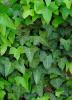
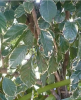
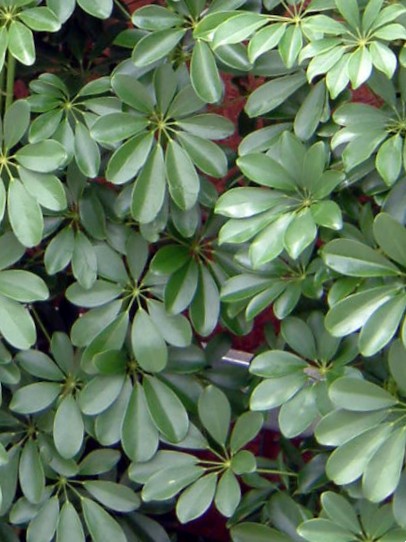
The plant is an evergreen shrub or small tree with smooth woody stems and glossy palmately compound leaves. A palmately compound leaf has several separate leaflets attached at one central point, creating a pattern resembling the ribs of an umbrella or the fingers of an outstretched hand. Mature leaves commonly contain seven to nine leaflets, although young growth may have fewer and some leaves may contain ten or more.
The leaflets are oval, elliptic, oblong, or slightly obovate, with smooth margins, a wedge-shaped base, and a blunt, acute, or occasionally shallowly notched tip. Wild or outdoor plants may grow several meters tall, while indoor plants are generally maintained at a much smaller size. Cultivation, pruning, container size, light, and cultivar all affect leaf and plant dimensions.
The small flowers are borne in terminal branching clusters composed of multiple umbels. Flowering is uncommon on ordinary indoor plants. The small fleshy fruits begin orange or reddish and become dark purple to black as they mature. An animal does not need access to flowers or fruit to be exposed because leaves and stems are available throughout the year.
Variegated Cultivars Are Not Pet-Safe Forms
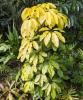
Dwarf schefflera is sold in solid-green and variegated forms. Cultivars may have cream, white, lime, or yellow markings along the leaflet edges, through the center, or across irregular patches. ‘Gold Capella,’ ‘Trinette,’ ‘Janine,’ ‘Luseane,’ ‘Dazzle,’ ‘Green Gold,’ and similar selections remain forms of the same general houseplant species.
No toxicological study establishes that a heavily variegated plant contains less insoluble oxalate, fewer saponins, less falcarinol, or less irritating sap than a green plant. Leaf color and pattern should never be used to decide whether a cultivar is safe for an animal to chew. A variegated leaflet can still irritate the mouth, throat, stomach, skin, or eye.
Where Animal Exposures Occur
Dogs and cats most often encounter schefflera as a floor plant in homes, offices, hotels, shopping areas, veterinary waiting rooms, apartment lobbies, atriums, and indoor public displays. Puppies may chew woody stems or fallen leaflets, while cats may climb into the pot, bite new growth, or pull down low branches. A plant placed on a high table can still shed leaflets into reach, and a cat may reach it easily.
Pruning and repotting create concentrated exposure opportunities. Freshly cut branches, loose leaflets, rooted cuttings, bonsai trimmings, spilled potting material, and sap-wet plant pieces may remain on the floor after the main plant has been moved. Sap on hands, tools, furniture, carriers, counters, or an animal’s coat can also reach the mouth or eyes.
Outdoor exposure occurs in subtropical landscapes where dwarf schefflera is planted as a hedge or shrub. Horses, goats, sheep, cattle, camelids, pigs, rabbits, poultry, tortoises, zoo animals, or aviary birds are more likely to encounter it through landscape clippings, greenhouse waste, storm debris, discarded houseplants, or access to ornamental grounds than through ordinary pasture grazing.
All Accessible Parts Should Be Treated as Irritating
Leaves and stems are most commonly involved because they are easily chewed and have been shown to contain triterpenoid saponins. Broken foliage and cut stems also expose the animal to sap and the skin allergen falcarinol. Petioles, aerial roots, flowers, fruits, and other tissues have not been established as safe. The concentration and distribution of insoluble crystals, saponins, and polyacetylenes may vary among tissues, cultivars, growth stages, and individual plants, but no practical safe-versus-toxic boundary is available.
Wilted leaves and dried clippings remain unsuitable for animals. Calcium oxalate crystals are mineral structures and do not disappear simply because a leaf has dried. Saponins and other constituents may also persist in discarded plant material. Fallen leaflets, bonsai trimmings, hedge clippings, broken stems, rooted cuttings, and dead-looking fragments should be collected and discarded securely.
Schefflera Is Not an Aroid
The similar poisoning syndrome has caused schefflera to be grouped casually with philodendrons, dieffenbachias, pothos, monsteras, peace lilies, calla lilies, syngoniums, and other members of Araceae. Schefflera actually belongs to Araliaceae, alongside plants such as ginseng, ivy, fatsia, and aralia. Its insoluble-oxalate signs can look aroid-like, but the plant is not botanically an aroid.
Calcium oxalate occurs in many unrelated plant families. The presence of insoluble crystals does not make every such plant anatomically identical. Aroid terminology can be useful for explaining general crystal injury, but it should not be used to claim that dwarf schefflera possesses every ejector-cell, protease, or toxin mechanism documented in Dieffenbachia or another aroid.
How Insoluble Calcium Oxalate Injures Tissue
Chewing crushes plant cells and brings microscopic crystals into contact with moist oral tissue. Needlelike crystals can pierce or abrade the lips, tongue, gums, palate, pharynx, and esophagus. The animal’s attempts to lick, paw, swallow, or rub the mouth may distribute sap and crystals over a larger area.
Mechanical injury activates sensory nerves and inflammatory pathways. Blood vessels dilate and become more permeable, producing redness and edema. Saliva production increases in response to pain and foreign material, which explains the dramatic drooling or foaming seen in some dogs and cats. The local mechanism also explains why severe systemic organ poisoning is uncommon. The immediate pain discourages prolonged chewing, and insoluble crystals are poorly absorbed. The main emergency concern is not renal oxalosis but swelling near the airway, aspiration, dehydration, eye injury, or inability to eat and drink.
Idioblasts and Raphides Require Careful Interpretation
Calcium oxalate crystals in many plants develop inside specialized cells known as idioblasts. Needle-shaped crystals arranged in parallel bundles are called raphides. The idioblast isolates these mineral structures from the surrounding living tissue until the cell is damaged. Some members of the Araceae contain highly specialized ejector cells that can release raphides forcefully when plant tissue is crushed and water enters the cell. That mechanism helps explain the immediate violence of dumbcane and similar exposures.
Veterinary sources describe schefflera crystals as microscopic insoluble oxalates and commonly use the same raphide model to explain their effect. However, a detailed species-specific anatomical demonstration of an identical ejector apparatus in Heptapleurum arboricola is lacking. The public safety conclusion remains the same—chewing releases irritating crystals—but the underlying cellular details should not be overstated.
Triterpenoid Saponins Are Confirmed in Leaves and Stems
Scientific analysis has established that dwarf schefflera contains a substantial group of triterpenoid saponins. In 2003, nine saponins were isolated from the leaves and stems. Their triterpene components included oleanolic acid and echinocystic acid, while their sugar chains contained different arrangements of rhamnose, glucuronic acid, glucose, galactose, arabinose, and apiose.
A second investigation published in 2006 isolated four previously undescribed stem saponins and named them scheffarbosides A through D. Five known saponins were isolated with them. These studies demonstrate that saponins are not merely a speculative family-level toxin but verified constituents of the exact species covered by this page.
Saponins are amphipathic compounds, which means one part of the molecule interacts with water while another interacts with lipids. At sufficient concentration they can disrupt cell membranes, irritate mucosa, alter membrane permeability, and contribute to vomiting or diarrhea. Some purified saponins have hemolytic activity in laboratory systems, but no evidence establishes clinically important intravascular hemolysis as a routine result of a pet chewing dwarf schefflera.
Falcarinol and Contact Allergy
Dwarf schefflera has documented allergenic chemistry. Researchers investigating allergic contact dermatitis in a nursery worker isolated falcarinol from Schefflera arboricola and identified it as the substance that reproduced the allergic reaction during testing. Falcarinol is a polyacetylene, also called a polyyne, with the chemical name heptadeca-1,9(Z)-diene-4,6-diyne-3-ol. Related compounds tested included falcarindiol, falcarinone, and dehydrofalcarinone.
The findings placed schefflera among Araliaceae plants capable of causing occupational plant dermatitis. Allergic contact dermatitis is a delayed hypersensitivity reaction rather than simple immediate irritation. An individual must become sensitized before the immune system reacts strongly to later contact. Repeated pruning, commercial plant handling, grooming of a contaminated animal, or recurrent skin exposure may therefore be more important than briefly touching an intact leaflet once.
Animal-specific falcarinol dermatitis is not documented as thoroughly as human occupational allergy. Nonetheless, redness, itching, licking, facial rubbing, or inflamed skin after sap contact should be taken seriously, particularly when the reaction worsens after repeated exposures.
Proteinase Has Not Been Confirmed as a Schefflera Toxin
Proteolytic enzymes are sometimes discussed with calcium oxalate because experimental work in other plants has shown that raphide punctures can enhance penetration by a protease. This has been called the “needle effect.” No specific protease has been demonstrated as a clinically important toxin of Heptapleurum arboricola.
Proteinase should therefore remain an evidence-limited comparative possibility rather than a confirmed component of schefflera poisoning. The established species-specific chemistry consists of insoluble oxalates, triterpenoid saponins, and allergenic polyacetylenes such as falcarinol. This distinction matters because a page should not import mechanisms from Dieffenbachia, Arisaema, or another plant and present them as proven for dwarf schefflera.
Dogs and Cats
Dogs and cats usually develop mouth pain, drooling, pawing, face rubbing, food refusal, gagging, and vomiting. The amount visibly missing from the plant may be small because the animal spits out shredded pieces after the first painful bite. Foaming at the mouth can look alarming but often represents large amounts of saliva mixed with air rather than a seizure or systemic collapse. Breathing effort, swallowing ability, tongue and throat swelling, alertness, and progression of signs are better indicators of severity.
A cat may hide after exposure, making it difficult to assess whether swallowing or breathing has changed. A dog may repeatedly ask to go outside, eat grass, or drink and then vomit. Neither behavior proves that the exposure is resolving. Persistent food refusal in cats needs attention because prolonged anorexia can create secondary complications even when the original plant injury is localized.
Horses and Livestock
Direct published case reports involving horses or grazing livestock and confirmed Heptapleurum arboricola are limited. The plant is not a common pasture species, but the known irritant chemistry provides a reasonable basis for treating it as unsafe when clippings or potted plants become accessible. Horses may show salivation, head shaking, muzzle rubbing, feed refusal, repeated chewing motions, coughing, or difficulty swallowing.
Horses cannot vomit. Nasal reflux, feed material at the nostrils, neck extension, or respiratory noise requires urgent evaluation for choke, aspiration, or throat swelling. Goats and other browsing animals may be more willing to sample ornamental cuttings. A weak, gagging, coughing, or dysphagic animal must not be drenched because water, oil, charcoal, milk, or medication may enter the lungs.
Birds, Rabbits, Guinea Pigs, and Other Small Animals
Birds use the beak to shred plant tissue and may expose the tongue and oral lining directly to sap and crystals. Beak wiping, repeated tongue movement, regurgitation, food refusal, oral redness, facial rubbing, eye closure, or altered breathing should prompt veterinary advice. Birds should not be housed near accessible schefflera plants, fallen leaflets, bonsai trimmings, or pruning debris.
Rabbits, guinea pigs, rats, and several other small mammals cannot vomit. Oral pain may appear as drooling, tooth grinding, reluctance to chew, facial rubbing, reduced appetite, or smaller and fewer fecal pellets. Food refusal can become more dangerous than the original irritation because rabbits and guinea pigs are vulnerable to gastrointestinal stasis. Herbivorous reptiles and tortoises should not be offered schefflera leaves, stems, fruits, or trimmings as browse or enclosure greenery.
Skin and Eye Exposure
Intact foliage may be handled without difficulty by many individuals, but broken plant tissue exposes sap containing irritants and falcarinol. Animals may transfer sap from the mouth or paws to the face, eyelids, and eyes. Eye exposure can produce marked pain, tearing, blinking, redness, conjunctival swelling, light sensitivity, or corneal abrasion.
Persistent squinting or cloudiness after gentle rinsing requires veterinary examination and fluorescein staining of the cornea. Skin exposure may require bathing and monitoring for delayed dermatitis. Sap on tools, floors, carriers, grooming tables, clothing, gloves, or human hands should be cleaned before pets regain access.
Diagnosis
Diagnosis usually depends on a credible exposure, compatible rapid-onset signs, and correct plant identification. Photographs should show the whole plant, compound leaves, individual leaflets, stems, variegation pattern, pot label, and any flowers or fruit. The veterinarian will evaluate the lips, tongue, oral lining, pharynx, breathing, swallowing, hydration, pain, eye exposure, and degree of progression.
A complete oral examination may require sedation, but airway swelling must be considered before sedating a compromised patient. Routine laboratory work may be unnecessary in a mild, rapidly improving case. Blood testing, imaging, airway examination, urinalysis, corneal staining, or hospitalization may be appropriate when signs are severe, persistent, inconsistent with local irritation, or complicated by repeated vomiting, aspiration, dehydration, eye injury, food refusal, or uncertain plant identification.
Important Differential Diagnoses
Philodendrons, pothos, dieffenbachias, monsteras, peace lilies, calla lilies, syngoniums, and other insoluble-oxalate plants can produce a similar oral syndrome. Their botanical identity differs, but the initial concerns of mouth pain, swelling, drooling, and airway protection are comparable. Fatsia, ivy, and other Araliaceae plants may also enter the differential depending on the exact houseplant or landscape material involved.
Soluble-oxalate plants and ethylene glycol poisoning are different disorders capable of causing hypocalcemia and kidney injury. Severe renal abnormalities should not be attributed automatically to dwarf schefflera merely because both conditions involve the words calcium oxalate. Caustic cleaners, electrical burns, insect stings, snakebite, allergic reactions, foreign material lodged in the mouth, dental disease, choke, pesticides, and more dangerous toxic plants may also cause drooling, vomiting, swelling, or respiratory distress. Seizures, coma, jaundice, profound cardiovascular abnormalities, or progressive organ failure require broader investigation.
Veterinary Treatment, Prognosis, and Prevention
There is no single antidote that instantly neutralizes schefflera crystals, saponins, and falcarinol. Treatment begins by stopping exposure, removing loose plant matter, gently clearing the mouth when safe, controlling pain and vomiting, and monitoring swallowing and respiration. An alert animal that is breathing comfortably and swallowing normally may be allowed to rinse the mouth with a small amount of water or may receive a veterinarian-approved small amount of milk or another calcium-containing food to help clear residual insoluble oxalate from the mouth and esophagus. This must never be forced into an animal that is gagging, choking, weak, vomiting, or unable to swallow.
Veterinary treatment may include analgesics, antiemetics, intravenous or subcutaneous fluids, gastrointestinal support, skin care, and treatment of eye inflammation. Persistent food refusal may require nutritional support, particularly in cats, rabbits, guinea pigs, birds, and other small animals. Marked pharyngeal or laryngeal edema may require oxygen, injectable veterinarian-selected medication, continuous respiratory monitoring, endotracheal intubation, or an emergency surgical airway. Treatment decisions are based on the patient’s examination rather than an automatic dose of diphenhydramine.
Most dogs and cats recover completely after limited exposure, often with substantial improvement within several hours and resolution within approximately 12 to 24 hours. The prognosis is good to excellent when breathing and swallowing remain normal. It becomes more guarded when swelling threatens the airway, eye injury is substantial, repeated vomiting causes dehydration, plant material is aspirated, or a nonvomiting herbivore stops eating long enough to develop gastrointestinal complications. Permanent liver or kidney injury is not expected from uncomplicated exposure.
Keep dwarf schefflera in a room pets cannot enter or inside a secure plant enclosure. A high table may not protect a cat, and fallen leaflets can place an otherwise inaccessible plant within reach. Collect every leaflet, stem, and clipping after pruning or repotting. Clean sap from tools and surfaces, wash exposed skin, and prevent animals from grooming contaminated fur or paws. Never throw schefflera trimmings into a horse paddock, goat yard, rabbit enclosure, bird aviary, livestock pasture, tortoise enclosure, poultry yard, or accessible compost pile. Label the container with both Heptapleurum arboricola and Schefflera arboricola to make emergency identification easier despite the taxonomic change.
Immediate Steps After Exposure
Stop further chewing first. Move the animal away from the plant and collect fallen leaflets, stems, cuttings, clippings, pot debris, bonsai trimmings, or sap-wet fragments before another animal reaches them. Schefflera irritation begins at the contact site, so preventing continued chewing, licking, grooming, pawing, or rubbing matters immediately.
- Remove loose plant fragments carefully: If the animal is alert and cooperative, take visible pieces from the lips and front of the mouth. Do not reach deeply into the throat or put your fingers near the teeth of a frightened, painful animal.
- Gently clear the mouth when safe: Wipe the lips and front of the mouth with a damp cloth or permit a small amount of clean water to rinse loose residue only when breathing and swallowing are normal.
- Do not force water into the mouth: Forced water can enter the airway or spread irritating material toward the throat.
- Prevent face rubbing and grooming: Keep sap-covered paws, fur, feathers, or muzzle areas away from the eyes and prevent the animal from swallowing additional residue.
- Preserve identification evidence: Photograph the full plant, compound leaves, individual leaflets, stems, variegation, pot label, and remaining chewed material.
- Contact a veterinarian or animal poison-control service: Report the animal’s species, weight, amount chewed, time of exposure, breathing, swallowing, vomiting, skin reaction, eye contact, and possible exposure to other plants or products.
Skin or Eye Exposure
Rinse exposed skin or coat with lukewarm water to remove sap and plant debris. Gloves can reduce additional human exposure when broken stems or sap are present. A mild animal-safe cleanser may be used on fur or paws when sap is visible, but the animal should be prevented from grooming contaminated areas until they are clean.
Flush an exposed eye promptly with sterile saline or clean lukewarm water and allow it to flow gently across the eye. Do not scrub the eye or attempt to remove embedded material with tweezers. Persistent squinting, tearing, redness, cloudiness, light sensitivity, swelling, discharge, or refusal to open the eye may indicate corneal injury and requires prompt veterinary examination.
Watch for delayed dermatitis. Falcarinol can produce delayed allergic contact dermatitis in a sensitized individual, so redness, itching, swelling, or inflamed skin may develop after the initial sap contact rather than immediately. Recurrent licking, rubbing, paw chewing, facial rubbing, or worsening dermatitis after repeated plant contact should be reported.
Do Not Attempt Unsupervised Home Treatment
Do not treat dwarf-schefflera exposure by forcing something into the mouth. Much of the injury occurs where crystals and sap have already contacted tissue. Forced home treatment can worsen aspiration, gagging, pain, vomiting, and airway risk.
- Do not induce vomiting: Hydrogen peroxide, salt, mustard, syrup of ipecac, and manual gagging can cause additional injury or aspiration. Horses, rabbits, guinea pigs, rats, and several other animals cannot vomit.
- Do not force milk, yogurt, food, or water: A veterinarian may sometimes recommend a small amount for an alert animal that is swallowing normally, but forced oral material can enter the lungs when the mouth or throat is swollen.
- Do not give diphenhydramine automatically: An antihistamine does not remove calcium oxalate crystals, neutralize saponins, or eliminate falcarinol. Sedation may be undesirable in an animal with swallowing or respiratory difficulty.
- Do not give activated charcoal without veterinary direction: Charcoal does not remove crystals embedded in oral tissue and may be aspirated by a drooling, gagging, vomiting, or dysphagic animal.
- Do not give antidiarrheal medication, antacids, sucralfate, antiemetics, human pain relievers, sedatives, eye drops, or leftover medication: Medication selection and dosing must account for species, weight, medical history, swallowing ability, eye status, and current signs.
- Do not drench livestock: Never force water, oil, milk, charcoal, electrolytes, or medication into an animal that is weak, coughing, gagging, choking, regurgitating, or unable to swallow normally.
When Emergency Examination Is Especially Important
- Breathing becomes noisy or difficult: Stridor, open-mouth breathing, neck extension, rapid shallow gasps, blue or gray gums, or increasing respiratory effort may indicate airway swelling.
- The animal cannot swallow normally: Repeated swallowing attempts, choking, gagging, coughing, water falling from the mouth, or nasal discharge after drinking requires urgent assessment.
- Swelling is increasing: Progressive tongue, lip, facial, pharyngeal, or throat swelling can become more dangerous after the animal has stopped chewing.
- Vomiting is repeated: Persistent vomiting can worsen oral and esophageal irritation and lead to dehydration or aspiration.
- The eye may have been exposed: Severe pain, cloudiness, marked redness, swelling, or continued squinting requires prompt corneal examination.
- A rabbit, guinea pig, bird, reptile, or other small animal stops eating: Food refusal can lead to gastrointestinal stasis, weakness, and other secondary complications.
- Severe systemic signs develop: Seizures, coma, collapse, jaundice, kidney abnormalities, abnormal heart rhythm, or profound weakness does not fit uncomplicated schefflera irritation and requires immediate investigation.
Veterinary Examination
The veterinarian will examine the lips, tongue, mouth, pharynx, respiration, and swallowing while minimizing stress. Loose plant matter may be removed, and the oral cavity may be gently wiped or rinsed. Pain relief is often more useful than aggressive gastrointestinal decontamination.
An alert patient that can swallow normally may receive a small veterinarian-approved amount of water, milk, yogurt, or another calcium-containing food to help clear remaining insoluble oxalate from the mouth and esophagus. This is avoided when swelling, gagging, vomiting, weakness, or impaired swallowing creates aspiration risk.
Veterinary care may include analgesics, antiemetic medication, fluid therapy, gastrointestinal support, and monitoring for dehydration. Animals that refuse food may need additional nutritional management, especially cats, rabbits, guinea pigs, birds, and other small animals. Bloodwork, imaging, or hospitalization may be needed when signs are severe, prolonged, atypical, or complicated by another exposure.
Airway and Respiratory Treatment
Animals with substantial pharyngeal or laryngeal swelling may require oxygen, injectable veterinarian-selected medication, continuous airway monitoring, endotracheal intubation, or an emergency surgical airway. The choice of antihistamine, corticosteroid, epinephrine, sedative, or another medication depends on the examination and should not be reduced to an automatic home dose.
Coughing, fever, nasal discharge, abnormal lung sounds, rapid breathing, or worsening lethargy after vomiting, gagging, forced liquids, or charcoal may indicate aspiration. Aspiration management may require oxygen, imaging, respiratory monitoring, and veterinarian-selected medication based on lung findings.
Eye and Skin Treatment
Eye exposure may require topical anesthetic for examination, extended irrigation, fluorescein staining, pain control, and treatment for corneal abrasion or ulceration. Owners should not use leftover eye drops, steroid drops, antibiotic ointments, redness drops, herbal products, or human eye medication without veterinary direction because the wrong product can worsen corneal injury.
Skin reactions may require bathing and veterinarian-selected anti-inflammatory treatment. Delayed falcarinol dermatitis may require different management from simple immediate sap irritation. Recurrent exposure should be prevented because sensitized individuals may react more strongly after later contact.
Dogs and Cats
Dogs should be monitored for drooling, pawing, face rubbing, vomiting, diarrhea, appetite, swallowing, voice, gum color, breathing effort, and possible ingestion of potting soil, fertilizer, moss-pole material, plastic labels, decorative stones, or another plant. Puppies may chew more plant material and container debris than owners first realize.
Cats should be monitored for hiding, drooling, food refusal, gagging, vomiting, coat contamination, eye contact, breathing changes, and prolonged anorexia. A cat that does not resume eating after oral pain improves needs veterinary attention because dehydration and secondary hepatic lipidosis can develop even when the original plant caused localized irritation.
Horses, Livestock, Birds, Rabbits, Guinea Pigs, and Reptiles
Horses and livestock should be removed from greenhouse waste, landscape clippings, discarded houseplants, hedge trimmings, and accessible compost. Horses cannot vomit, and weak or dysphagic animals should not be drenched. Salivation, muzzle rubbing, repeated swallowing, coughing, feed refusal, nasal discharge after drinking, respiratory noise, or choke-like signs require large-animal evaluation.
Birds with beak wiping, repeated tongue movement, regurgitation, food refusal, altered breathing, facial rubbing, eye closure, or weakness require avian veterinary guidance. Rabbits and guinea pigs require monitoring of appetite, fecal output, hydration, posture, chewing, and gut motility. Reptile and tortoise cases should include review of temperature, hydration, oral injury, all enclosure plants, and whether schefflera was deliberately offered as browse.
Recovery and Prognosis
Most animals recover completely after a limited exposure. Marked improvement often occurs within several hours, and uncomplicated cases commonly resolve within approximately 12 to 24 hours. Continuing mouth pain, food refusal, vomiting, coughing, swallowing difficulty, respiratory noise, eye pain, or progressive dermatitis deserves reassessment.
Permanent liver and kidney damage is not expected from insoluble calcium oxalate irritation. Evidence of systemic organ injury should prompt investigation for soluble oxalates, ethylene glycol, pesticides, another plant, another toxin, or an unrelated medical disorder. The prognosis becomes more guarded when airway swelling, aspiration, dehydration, corneal injury, prolonged anorexia, or small-herbivore gastrointestinal stasis complicates the case.
Prevention After the Incident
Keep dwarf schefflera in a room animals cannot enter or inside a secure plant enclosure. A high table may not protect a cat, and fallen leaflets can place an otherwise inaccessible plant within reach. Collect every leaflet, stem, and clipping after pruning or repotting. Clean sap from tools, floors, furniture, carriers, and surfaces. Wash exposed human skin and prevent animals from grooming contaminated fur or paws.
Never throw schefflera trimmings into a horse paddock, goat yard, rabbit enclosure, bird aviary, livestock pasture, tortoise enclosure, poultry yard, dog yard, or accessible compost pile. Mixed landscape debris may also contain plants substantially more dangerous than schefflera. Label the container with both Heptapleurum arboricola and Schefflera arboricola so the accepted and former names are available during emergency identification.
Frequently Asked Questions About Schefflera and Animal Poisoning
Is schefflera poisonous to dogs and cats?
Yes. Chewing dwarf schefflera can release insoluble calcium oxalate crystals, saponins, and irritating sap. Dogs and cats may develop immediate mouth pain, drooling, pawing at the face, gagging, vomiting, difficulty swallowing, and swelling of the lips, tongue, mouth, or throat. Most cases are localized, but breathing trouble, inability to swallow, repeated vomiting, eye exposure, or collapse requires urgent care.
What is the correct scientific name for dwarf schefflera?
The currently accepted name is Heptapleurum arboricola Hayata. Schefflera arboricola (Hayata) Merr. is its former scientific name and remains widely used in nurseries, veterinary references, older scientific studies, and owner searches. Both names should be retained for identification and search purposes.
Why was Schefflera arboricola renamed?
Research showed that the old, broadly defined genus Schefflera combined several unrelated evolutionary lineages. The Asian lineage was transferred back to the genus Heptapleurum. The plant commonly sold as dwarf schefflera therefore became Heptapleurum arboricola. The plant and its poisoning risk did not change; the scientific classification changed.
Why should the page still be titled Schefflera?
Because that is the name most pet owners, nurseries, old plant tags, veterinarians, plant apps, and poison lists still use. A page titled only Heptapleurum arboricola would be harder to find during an exposure. The safest public structure is to keep Schefflera as the searchable page title while placing the accepted name and former scientific name together in the identification fields.
Is dwarf schefflera the same as Australian umbrella tree?
No. Dwarf schefflera is Heptapleurum arboricola, native to Hainan and Taiwan. Australian Umbrella Tree or Octopus Tree usually refers to the larger Heptapleurum actinophyllum, formerly Schefflera actinophylla or Brassaia actinophylla. Both may be irritating, but they are separate species with different size, growth habit, flower structure, and identification features.
Is schefflera an aroid like philodendron or pothos?
No. Schefflera belongs to Araliaceae, while philodendrons and pothos belong to Araceae. They can produce similar oral irritation because all may contain insoluble calcium oxalate crystals, but their taxonomy and exact plant chemistry are different. Aroid raphide explanations can help owners understand the mouth injury, but Dieffenbachia-specific anatomy should not be copied onto dwarf schefflera as proven fact.
What toxins are confirmed in dwarf schefflera?
Veterinary sources identify microscopic insoluble calcium oxalate crystals as a principal irritant. Scientific studies have also confirmed numerous triterpenoid saponins in the leaves and stems, including scheffarbosides A through D from stems. Falcarinol, a polyacetylene capable of causing allergic contact dermatitis, has also been isolated from the plant. The expected syndrome is mostly local oral, gastrointestinal, skin, and eye irritation rather than primary kidney or liver failure.
Does schefflera contain a proteinase?
A clinically important proteinase has not been confirmed in Heptapleurum arboricola. Proteases can intensify raphide injury in some other plants, but that comparative mechanism should not be presented as established schefflera chemistry. Insoluble oxalates, saponins, and falcarinol have stronger species-specific support for this plant.
What are scheffarbosides?
Scheffarbosides A, B, C, and D are triterpenoid saponins first isolated from the stems of Schefflera arboricola. They were reported with five previously known saponins. Their discovery confirms that dwarf schefflera contains chemically diverse saponins in addition to its insoluble oxalate crystals. They should be discussed as species-specific phytochemistry, not as proof of a separate predictable organ-failure syndrome.
Which parts of schefflera are poisonous?
Leaves and stems are involved most often, but petioles, sap, aerial roots, flowers, fruits, bark, fresh cuttings, bonsai trimmings, hedge clippings, and other tissues should also be treated as potentially irritating. No reliable study has established a harmless plant part or a pet-safe cultivar. Fallen leaflets and dried clippings should still be kept away from animals.
Are variegated schefflera cultivars less toxic?
No evidence shows that variegated forms are safer. ‘Gold Capella,’ ‘Trinette,’ ‘Janine,’ and other cream-, white-, lime-, or yellow-marked cultivars remain forms of dwarf schefflera. Leaf color does not provide a dependable measure of oxalate, saponin, sap irritancy, or falcarinol content. A variegated plant should receive the same pet-safety precautions as a solid-green plant.
How quickly do symptoms begin?
Oral signs commonly begin immediately or within minutes because the plant material injures tissue as it is chewed. Drooling, head shaking, pawing at the mouth, gagging, sudden food refusal, and face rubbing are common early observations. Delayed dermatitis may appear later in an individual sensitized to falcarinol.
How long does schefflera poisoning last?
Most uncomplicated cases improve over several hours and resolve within approximately 12 to 24 hours. Oral soreness or reduced appetite may last longer after a substantial exposure. Symptoms persisting for days require reassessment for ongoing tissue injury, eye exposure, aspiration, another plant, another medical problem, or complications from not eating or drinking normally.
Can symptoms continue for two weeks?
Prolonged raphide-associated injury is possible but is not the expected course of ordinary dwarf-schefflera poisoning. A human foodborne outbreak involving raphide-containing plant material produced symptoms lasting two weeks in some patients, but that evidence is comparative and did not involve confirmed Heptapleurum arboricola. A prolonged pet illness should be reassessed rather than assumed to be normal schefflera recovery.
Can schefflera cause kidney or liver failure?
Kidney and liver failure are not expected direct effects of an uncomplicated exposure. Insoluble calcium oxalate crystals cause primarily local irritation and differ from absorbed soluble oxalates and ethylene glycol metabolites that can injure the kidneys. Abnormal organ values require investigation for another exposure, dehydration, another disease, medication, soluble-oxalate plant, ethylene glycol, infection, urinary disease, or unrelated illness.
Can schefflera cause seizures, coma, or death?
Seizures, coma, and death are not established primary effects of ordinary dwarf-schefflera ingestion. Rare severe airway swelling, aspiration, profound dehydration, or oxygen deprivation could create life-threatening secondary complications. Seizures, coma, collapse, jaundice, kidney abnormalities, or severe cardiac signs should prompt emergency evaluation for another toxin, another plant, pesticide contamination, medication exposure, or an additional medical problem.
Why is my cat foaming after biting schefflera?
Oral pain and irritation stimulate heavy saliva production, and saliva mixed with air may appear as foam. The appearance can be dramatic without indicating a seizure. Increasing swelling, inability to swallow, respiratory noise, weakness, blue-gray gums, repeated vomiting, or collapse is more concerning than foaming alone. A cat that hides or refuses food after exposure should also be monitored carefully.
Is schefflera poisonous to horses?
Direct equine case evidence for dwarf schefflera is limited, but its insoluble oxalates and irritating saponins make it unsafe to feed. Horses may salivate, refuse feed, cough, rub the muzzle, repeatedly swallow, or have difficulty swallowing. Horses cannot vomit, and nasal reflux, feed material at the nostrils, respiratory noise, or choking signs require immediate veterinary examination.
Is schefflera poisonous to goats, sheep, cattle, or camelids?
The plant is not a typical pasture hazard, and species-specific livestock reports are sparse. Goats and other browsers may nevertheless chew discarded landscape material, greenhouse waste, or potted plants and develop oral irritation, salivation, food refusal, abnormal chewing, coughing, or swallowing difficulty. Schefflera clippings should never be placed in an animal enclosure, livestock pen, rabbit run, aviary, tortoise enclosure, or accessible compost pile.
Can schefflera cause a skin rash?
Yes. Broken plant tissue and sap can irritate skin, and falcarinol from Schefflera arboricola has been identified as a human allergic contact allergen. An animal may show redness, itching, licking, rubbing, paw chewing, or inflammation after contact, although veterinary cases are less well documented than human occupational dermatitis. Delayed dermatitis may appear after sensitization rather than immediately.
What should I do if schefflera sap gets into an animal’s eye?
Flush the eye gently with sterile saline or clean lukewarm water and prevent rubbing. Persistent squinting, tearing, redness, cloudiness, swelling, pain, or light sensitivity requires prompt veterinary examination because plant crystals and sap can injure the corneal surface. Do not use leftover eye drops, steroid drops, human redness drops, ointments, or herbal treatments unless a veterinarian directs them.
Should I make my dog or cat vomit?
No, not unless a veterinarian specifically directs it after evaluating the case. Vomiting may bring irritating plant material back across the esophagus and mouth, while hydrogen peroxide can cause additional gastrointestinal injury or aspiration. Cats should never receive hydrogen peroxide as a home emetic, and vomiting is especially unsafe when an animal is gagging, swollen, weak, poorly coordinated, or unable to swallow normally.
Should I give milk, yogurt, or cheese?
Do not force food or liquid. A veterinarian may sometimes recommend a small amount of a calcium-containing food for an alert animal that is breathing comfortably and swallowing normally because it may help clear residual insoluble oxalate from the mouth. It is unsafe when the animal is gagging, choking, weak, vomiting, drooling continuously, or unable to swallow.
Will diphenhydramine or Benadryl stop the swelling?
Diphenhydramine is not a universal antidote. It does not remove embedded crystals, neutralize saponins, or eliminate falcarinol, and the swelling may not be driven entirely by histamine. A veterinarian must decide whether an antihistamine, corticosteroid, pain medication, oxygen, airway monitoring, or another treatment is appropriate, especially when swallowing or breathing is involved.
Is activated charcoal useful for schefflera poisoning?
Activated charcoal is generally of limited value because much of the injury comes from crystals and sap contacting the mouth and throat. Giving charcoal to a drooling, gagging, vomiting, or dysphagic animal creates an aspiration risk. It should not be administered without veterinary direction. Charcoal may become relevant only if a veterinarian suspects another absorbable toxin in the same exposure.
Are dried schefflera leaves still irritating?
Yes. Drying does not reliably eliminate mineral calcium oxalate crystals, and other plant constituents may persist in wilted or dried material. Fallen leaves, bonsai trimmings, hedge clippings, and dead stems should be kept away from animals. Dried material also may be mixed with other plants, mold, fertilizer, pesticides, or foreign debris.
What signs make schefflera exposure an emergency?
Noisy or difficult breathing, rapidly increasing tongue or throat swelling, inability to swallow, repeated choking or gagging, water falling from the mouth, blue or gray gums, profound weakness, or collapse requires immediate emergency care. Seizures, coma, jaundice, kidney abnormalities, severe cardiac signs, or progressive systemic illness also requires urgent investigation because those signs do not fit uncomplicated schefflera irritation.
What should veterinarians evaluate after a significant exposure?
Veterinary evaluation should focus on oral pain, tongue and pharyngeal swelling, swallowing ability, airway noise, respiratory effort, hydration, vomiting, eye injury, skin exposure, aspiration risk, and whether the animal can eat and drink safely. Bloodwork, imaging, corneal staining, airway examination, or hospitalization may be needed when signs are severe, prolonged, atypical, or complicated by another plant, another toxin, or repeated vomiting.
How should kidney, liver, neurologic, or cardiac abnormalities be interpreted?
They should not be attributed automatically to dwarf schefflera. The established direct syndrome is localized insoluble-crystal and sap irritation, with possible gastrointestinal, skin, and eye involvement. Kidney values, liver values, seizures, coma, severe arrhythmias, or profound collapse should prompt broader evaluation for soluble oxalates, ethylene glycol, medications, pesticides, another plant, aspiration, dehydration, hypoxia, infection, urinary disease, metabolic disease, or unrelated illness.
What evidence supports saponins as part of the plant’s chemistry?
A 2003 study isolated nine triterpenoid saponins from the leaves and stems of Schefflera arboricola. A 2006 study isolated four new stem saponins, scheffarbosides A through D, along with five known saponins. These studies confirm that saponins are real constituents of this species, but they do not prove that every pet chewing a leaf develops a saponin-dominant syndrome. The abrupt oral pain still fits crystal and sap contact injury best.
What evidence supports falcarinol as a contact allergen?
A human occupational dermatitis investigation isolated falcarinol from Schefflera arboricola and identified it as the compound that reproduced allergic contact dermatitis in a nursery worker. Related polyacetylenes were tested at the same time. That evidence supports falcarinol as a genuine dermatologic concern, while also showing that delayed allergic contact dermatitis is different from immediate mouth pain caused by crystals and sap.
What are the main research gaps for schefflera poisoning?
The main gaps are controlled veterinary case series, species-specific toxic-dose data, direct microscopic crystal architecture in Heptapleurum arboricola, tissue-by-tissue comparison of oxalate, saponins, and falcarinol, and better clinical data for birds, rabbits, horses, livestock, reptiles, and sensitized animals with dermatitis. Current evidence is strong enough to treat the plant as irritating and unsafe to chew, but not strong enough to claim routine organ failure or a precise safe dose.
How can schefflera poisoning be prevented?
Keep the plant in a room animals cannot enter or inside a secure plant enclosure, collect every fallen leaflet and pruning fragment, and clean sap from tools and surfaces. Never discard schefflera clippings in livestock, bird, rabbit, tortoise, poultry, or other animal enclosures. Label the plant with both Heptapleurum arboricola and Schefflera arboricola for reliable emergency identification.