Golden Pothos Toxicity and Insoluble Calcium Oxalate Injury
Is Ivy Arum or Golden Pothos Poisonous to Dogs, Cats, Horses, and Livestock?
Yes—Ivy Arum or Golden Pothos, Epipremnum aureum, is poisonous and intensely irritating to dogs, cats, horses, livestock, rabbits, birds, and other animals that chew it. The plant contains bundles of microscopic, needle-shaped insoluble calcium oxalate crystals called raphides. Chewing or crushing the tissue releases those crystals from specialized plant cells and drives or rubs them into the lips, tongue, gums, mouth, throat, esophagus, skin, or eyes.
The usual result is immediate burning or stabbing pain, head shaking, pawing at the face, heavy drooling, gagging, painful swallowing, refusal of food or water, and sometimes vomiting. Most limited oral exposures improve with prompt removal of plant residue and supportive care. Significant tongue, pharyngeal, or laryngeal swelling is uncommon but can narrow the airway and become life-threatening. Eye exposure can cause severe keratitis, corneal ulceration, scarring, and lasting visual injury.
About this guide: This page provides general pet-poisoning information and cannot diagnose or treat an individual animal. For any suspected exposure, contact a veterinarian or animal poison-control service immediately. Do not induce vomiting, give medication, or attempt home decontamination unless directed by a veterinary professional.
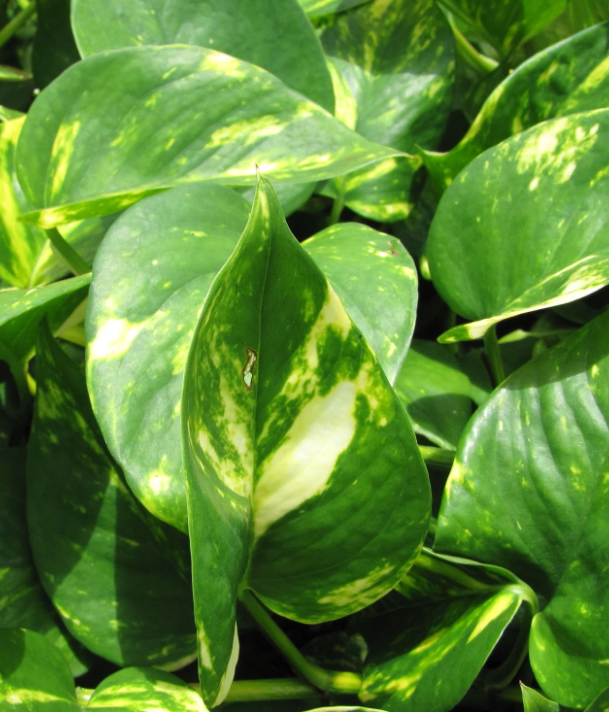
Ivy Arum (Golden Pothos)
Epipremnum aureum (Linden & André) G.S.Bunting
Accepted botanical synonyms and former combinations include:
- Pothos aureus Linden & André — basionym and source of the enduring common name Pothos
- Scindapsus aureus (Linden & André) Engl.
- Rhaphidophora aurea (Linden & André) Birdsey
- Epipremnum mooreense Nadeaud
Important botanical and horticultural distinctions:
- Epipremnum aureum is accepted as a species distinct from Epipremnum pinnatum, although older literature and horticultural labels may call it E. pinnatum ‘Aureum’ or E. pinnatum cv. aureum.
- Pothos is also a separate accepted genus in Araceae. The houseplant called Pothos does not currently belong to that genus.
- Satin Pothos is usually Scindapsus pictus, while Cebu Blue Pothos is Epipremnum pinnatum ‘Cebu Blue’.
- Heartleaf Philodendron, Philodendron hederaceum, is a related but separate aroid frequently mistaken for Golden Pothos.
Araceae — Arum or Aroid Family
Ivy Arum; Golden Pothos; Pothos; Devil’s Ivy; Devil’s Vine; Hunter’s Robe; Hunter’s Rove; Taro Vine; Golden Vine; Money Plant; Ceylon Creeper; Solomon Islands Ivy; Marble Queen Pothos; Jade Pothos; Neon Pothos; Epipremnum aureum; Pothos aureus; Scindapsus aureus; Rhaphidophora aurea; Epipremnum mooreense
Pothos is the dominant houseplant name, although Pothos is also a separate botanical genus. Nursery labels may continue to use Scindapsus aureus or the older horticultural treatment Epipremnum pinnatum ‘Aureum’.
Devil’s Ivy and Devil’s Vine refer to the plant’s persistence, rapid vegetative growth, and ability to remain alive under poor indoor conditions. It is not a true ivy in the genus Hedera.
Taro Vine is an established common name, but the plant is not true taro, Colocasia esculenta. Money Plant is highly ambiguous and is also used for Jade Plant, Chinese Money Plant, Money Tree, Lunaria, and several unrelated ornamentals.
Silver Vine is sometimes applied to Golden Pothos but more commonly refers to Actinidia polygama, a cat-attracting vine unrelated to Araceae. Solomon Islands Ivy is botanically misleading because the accepted native range of Epipremnum aureum is Mo‘orea in the Society Islands.
Insoluble Calcium Oxalate Raphides
The principal established toxic principle in Golden Pothos is insoluble calcium oxalate organized into microscopic needle-shaped crystals called raphides. Exact-species leaf microscopy performed while the plant was classified as Scindapsus aureus confirmed calcium oxalate crystals among the crystal forms present in its leaf tissue.
Calcium oxalate is produced when calcium ions and oxalate combine within plant cells. The mineral can form several shapes, including rounded druses, prisms, crystal sand, and elongated raphides. Shape is toxicologically important. A compact crystal does not interact with tissue in the same way as a long, sharply pointed needle.
The Pothos syndrome is therefore not caused merely by the presence of the elements calcium and oxalate. It is driven principally by the physical form and location of the insoluble crystals and by the tissue injury created when they are exposed during chewing.
Crystal Idioblasts and Release During Chewing
Raphides develop inside specialized cells called crystal idioblasts. An idioblast differs structurally or chemically from the ordinary cells surrounding it and may store crystals, oils, latex, pigments, tannins, resins, or other defensive substances.
In raphide-bearing aroids, an idioblast may contain a densely packed crystal bundle within its vacuole. Biting, tearing, crushing, pruning, or breaking the plant ruptures or opens crystal-containing tissue. The raphides are then dispersed through sap and damaged cellular material and become pressed, rubbed, or propelled into adjacent animal tissue.
Some aroids possess specialized biforines or biforine-like idioblasts capable of forceful crystal discharge when internal mucilage swells. That mechanism should not be stated as completely characterized in Epipremnum aureum. The exact-species evidence confirms leaf calcium oxalate crystals, while the finer discharge anatomy is inferred partly from related Araceae.
The practical outcome is the same: chewing exposes a large number of sharp microscopic needles and brings them into immediate contact with the lips, tongue, gingiva, palate, pharynx, and swallowed upper gastrointestinal tissue.
Mechanical Penetration and the Needle Effect
Raphides create numerous microscopic punctures in epithelial surfaces. The injury is mechanical as well as inflammatory and can be compared cautiously to embedding many nearly invisible needles in sensitive mucous membrane.
Experimental work with purified raphides demonstrated that their needle shape can enhance penetration and biological activity of other plant-defense factors. Raphides and a cysteine protease produced much stronger effects together than either produced alone, whereas amorphous calcium oxalate did not create the same synergy.
That study did not use Golden Pothos, dogs, cats, horses, or human oral tissue. It supports the broader “needle effect” concept but does not prove that bromelain, actinidin, or another named protease is a toxin in Epipremnum aureum.
The most accurate species-specific conclusion is that insoluble raphides are the confirmed primary hazard and that unidentified sap constituents may intensify pain or inflammation after the crystals breach the epithelial barrier.
Why Pain Can Continue After the Plant Is Removed
Removing the chewed leaf or vine ends continuing exposure but does not instantly remove crystals already embedded in tissue. Raphides can remain within irritated epithelium while saliva, swallowing, tongue movement, and grooming continue to move them across sensitive surfaces.
Inflammation also persists after the original mechanical penetration. Local blood vessels dilate, tissue fluid accumulates, pain receptors remain activated, and injured epithelium takes time to recover.
This explains why an animal may continue drooling, pawing, gagging, or refusing food after no visible plant material remains. It does not mean that the crystals are traveling through the bloodstream or depositing throughout the body.
Insoluble and Soluble Oxalates Are Different Hazards
Golden Pothos must not be confused with plants whose principal concern is absorbable soluble oxalate. Soluble oxalates occur in plants such as sorrel, dock, Oxalis, and rhubarb leaves and can bind circulating calcium after a sufficiently large ingestion.
A major soluble-oxalate exposure may cause hypocalcemia, tremors, weakness, abnormal cardiac function, or calcium oxalate deposition within the kidneys. That systemic mechanism is different from the local insoluble-raphide injury produced by Pothos.
Ordinary Golden Pothos chewing is not expected to cause hypocalcemia, generalized calcium-oxalate deposition, or the characteristic renal failure syndrome of soluble-oxalate poisoning. Abnormal kidney values, generalized tremors, seizures, or major cardiac abnormalities require investigation for dehydration, another plant, medication, toxin, or medical disorder.
Milk Does Not Neutralize the Crystals
Milk and other dairy products are sometimes recommended after insoluble calcium oxalate exposure. The proposed explanations include soothing irritated tissue or providing calcium that supposedly binds oxalate.
That binding explanation does not fit the established mechanism. The irritating structures are already formed, water-insoluble calcium oxalate crystals. Additional dietary calcium does not dissolve them, pull them from tissue, or reverse airway swelling.
A few voluntary laps of a familiar liquid are different from force-feeding. When an animal is fully alert and swallowing normally, cool water is the simplest mouth-rinsing option. Milk is not an antidote, may cause additional gastrointestinal upset, and must never be forced into an animal that is gagging, swollen, vomiting, sedated, or swallowing poorly.
All Accessible Plant Tissues Should Be Treated as Irritating
The most relevant household exposures involve juvenile leaves, mature leaves, petioles, stems, aerial roots, ordinary roots, sap, and propagation cuttings. Veterinary references specifically identify leaves and stems as raphide-containing tissues, while microscopy has confirmed crystal forms within the leaves.
Exact concentrations have not been compared across every root, aerial root, stem, petiole, cultivar, growth phase, flower, and fruit. The absence of an organ-by-organ concentration table does not establish that an untested structure is safe.
Golden Pothos rarely flowers naturally, so animals almost always encounter vegetative material. Experimentally induced flowers, inflorescences, and any rare fruiting material should remain inaccessible because they are parts of the same raphide-bearing aroid.
Fresh Cuttings and Propagation Material
Fresh pruning and propagation create short, portable pieces that are easier for pets to carry and chew than an established plant. Cutting also exposes wet sap directly at the wound surface.
A viable cutting normally includes a node. Nodes can produce roots and shoots in water, sphagnum, perlite, potting mix, aquarium filters, or other moist environments. A leaf attached to a node remains toxic whether or not it has developed roots.
Propagation jars can be tipped over, allowing access to cut stems, roots, broken glass, fertilizer solution, stagnant water, or small decorative stones. The cutting itself remains the principal raphide hazard.
Dried Leaves and Dead-Looking Vines
Drying does not dissolve insoluble calcium oxalate. Fallen yellow leaves, dried pruning debris, dead-looking vines, old roots, and discarded cuttings should not be treated as safe chew material.
Dried tissue may be less juicy but can still carry crystals capable of contacting the mouth, eyes, or skin. Brittle fragments can also break into smaller pieces that are easier to scatter through cages, kennels, bedding, or household dust.
Cultivars and Variegation
Golden, Jade, Neon, Marble Queen, Manjula, N’Joy, Pearls and Jade, Jessenia, Global Green, and other cultivars remain selections of Epipremnum aureum. Their differences in chlorophyll distribution, color, leaf shape, growth rate, and variegation do not establish a toxin-free form.
No controlled veterinary study has demonstrated that a green, yellow, chartreuse, cream-variegated, white-variegated, or green-on-green cultivar lacks raphides or can be fed safely.
No Established Safe or Lethal Dose
No dependable pet-safe leaf count, vine length, root amount, plant weight, toxic dose, or lethal dose has been established for dogs, cats, horses, livestock, rabbits, guinea pigs, poultry, or pet birds chewing Epipremnum aureum.
Clinical severity depends on the amount chewed, duration of chewing, tissue contacted, animal size, age, airway anatomy, degree of swelling, swallowing ability, vomiting, eye exposure, and whether potting products or another plant were involved.
The immediate pain usually limits continued consumption, which helps explain the generally favorable prognosis. It does not justify deliberately allowing an animal to test or browse the plant.
Immediate Oral Pain
Clinical signs usually begin during chewing or within minutes because the toxic injury occurs at the moment raphides contact tissue. An animal may bite once, recoil abruptly, drop the plant, cry out, shake the head, or begin frantic mouth and facial movements.
Burning, stinging, or stabbing discomfort may affect the lips, tongue, gums, palate, inner cheeks, and throat. The animal cannot describe the pain, but repeated mouth opening, tongue movements, lip smacking, rubbing the muzzle, and refusal to bite again are strongly suggestive.
Visible lesions may be limited despite severe discomfort because the crystals are microscopic. Absence of a large ulcer or obvious plant fragment does not exclude substantial oral irritation.
Drooling, Foaming, and Pawing at the Mouth
Salivation can range from mild drooling to thick ropes of saliva or heavy foaming. Increased saliva helps dilute sap and move loose crystals and plant fragments away from the mouth.
Dogs may paw repeatedly at the muzzle, rub the face against furniture or the floor, or shake the head violently. Cats may crouch, retreat, groom frantically, scrape at the lips, or hold the tongue abnormally.
Repeated rubbing can transfer sap and crystals from the mouth or paws into the eyes. It can also cause claw injury to the lips, tongue, face, or cornea.
Swelling and Stomatitis
The lips, tongue, gingiva, palate, oral mucosa, and pharyngeal tissue may become red, swollen, and painful. Stomatitis can interfere with eating even when breathing remains normal.
Food dropping, chewing on one side, approaching a bowl and backing away, vocalizing during swallowing, or refusing hard food may continue after the initial panic settles.
Severe stomatitis can prevent normal eating for more than one day. Persistent food refusal is particularly important in cats because prolonged anorexia can contribute to hepatic lipidosis.
Gagging, Coughing, and Painful Swallowing
Gagging, retching, dry heaving, repeated swallowing, throat clearing, coughing, and extension of the head and neck may follow contact with the back of the mouth or pharynx.
Painful swallowing is called odynophagia, while mechanical difficulty moving food or liquid through the throat is dysphagia. Either can cause an animal to refuse water despite thirst.
A hoarse, weak, altered, or unusually quiet bark, meow, chirp, or other vocalization may indicate irritation near the larynx. Persistent voice change or inability to swallow saliva requires veterinary examination.
Airway Swelling
Most Pothos exposures do not close the airway. Clinically important pharyngeal or laryngeal edema is an uncommon but potentially life-threatening complication of the broader insoluble-calcium-oxalate syndrome.
Warning signs include stridor, wheezing, harsh or snoring-like respiratory sounds, open-mouth breathing, flared nostrils, rapid shallow respiration, abdominal effort, extended head and neck posture, inability to settle, and increasing panic.
Pale, gray, or blue mucous membranes, collapse, weak respiratory movement, or declining responsiveness indicates inadequate oxygen delivery and requires immediate airway intervention.
Nausea and Vomiting
Vomiting may result from swallowed plant material, gagging, oral pain, or irritation of the esophagus and stomach. Some animals vomit once, while others have repeated episodes after chewing a larger amount.
Bringing raphide-bearing tissue back through the esophagus and mouth can renew irritation. This is why deliberate induction of vomiting is generally counterproductive.
Repeated vomiting, blood, coffee-ground material, inability to retain water, or progressive lethargy is more serious than uncomplicated brief oral irritation and requires veterinary assessment.
Diarrhea and Abdominal Discomfort
Diarrhea and abdominal discomfort can occur when enough plant material reaches the stomach and intestine, although oral pain and salivation usually dominate the presentation.
Dogs may become restless, stretch repeatedly, assume a hunched posture, or resist abdominal handling. Cats may hide, crouch, or stop grooming.
Severe or prolonged diarrhea is less characteristic of Golden Pothos than immediate oral pain. Fertilizer, pesticide, potting mix, another plant, spoiled propagation water, or an unrelated gastrointestinal disorder should be considered when lower gastrointestinal illness is prominent.
Dehydration
Heavy drooling, repeated vomiting, inability to drink, and prolonged food refusal can cause dehydration. Dry or tacky gums, sunken eyes, reduced urination, worsening lethargy, weak pulses, or a rapid heart rate indicates clinically important fluid loss.
Young, very small, elderly, or medically fragile animals can become dehydrated more quickly. Birds and small mammals have limited fluid reserves and require early assessment when oral pain prevents drinking.
Exact-Species Eye Injury
Golden Pothos sap and plant fragments can cause severe ocular injury. An exact-species human case documented bilateral epitheliopathy that progressed to epithelial defects and underlying stromal necrosis after the person rubbed both eyes following sap exposure.
The illness initially resembled severe infectious keratitis. Cultures, biopsy, and confocal examination did not identify an infectious organism. Healing required prolonged ophthalmic treatment, and corneal scarring remained; one eye later required corneal transplantation.
The case involved a human patient and cannot define the exact course in a dog or cat. It proves that Epipremnum aureum sap exposure can produce far more than brief conjunctival redness and supports immediate irrigation and prompt veterinary examination.
Ocular Signs in Animals
Eye exposure may cause intense pain, tearing, eyelid spasm, squinting, redness, swelling, light sensitivity, rubbing, corneal haze, discharge, or apparent visual impairment.
A dog or cat may transfer residue into the eye while pawing at an irritated mouth. Birds may contact the cornea while shredding leaves or rubbing the face against contaminated feathers or perches.
Continued pain after irrigation suggests retained crystals, corneal epithelial injury, ulceration, stromal inflammation, or secondary complications. Eye signs should not be dismissed merely because the oral drooling has stopped.
Skin and Coat Exposure
Fresh sap, crushed tissue, and plant residue may cause localized redness, burning, itching, papules, or dermatitis in susceptible animals and people. Repeated occupational contact with Golden Pothos has produced dermatitis in human plant handlers.
Contact through intact skin is less dangerous than chewing or eye exposure, but residue beneath a collar, harness, bandage, skin fold, or dense coat can remain against tissue and prolong irritation.
Licking contaminated paws or fur converts an external exposure into oral exposure.
Dogs and Cats
Dogs often pull down trailing vines, chew fallen leaves, raid pruning debris, or remove cuttings from propagation containers. Puppies may continue playing with a vine after the first painful bite and transfer sap across the muzzle and eyes.
Cats can reach hanging plants from furniture, shelves, railings, curtains, or climbing structures. They may chew leaves directly or contact residue while playing with a moving vine.
An Italian veterinary poison survey recorded dog poisonings involving Golden Pothos, supporting its clinical relevance as more than a theoretical houseplant listing. Detailed exact-species companion-animal case reports remain limited, so severe or atypical findings must not be attributed automatically to Pothos.
Birds and Small Mammals
Birds may shred leaves, vines, aerial roots, and cuttings and expose the beak, tongue, oral cavity, crop entrance, eyes, and skin. Drooling is not always obvious in birds, so repeated swallowing, bill wiping, food refusal, facial rubbing, voice change, or breathing difficulty may be more useful warning signs.
Rabbits and guinea pigs cannot vomit. Oral pain, salivation, food refusal, reduced fecal output, abdominal discomfort, and dehydration may be the first recognized findings.
Any small herbivore that stops eating after exposure requires prompt attention because gastrointestinal stasis and secondary metabolic complications can become more important than the original plant injury.
Horses and Livestock
Horses and livestock are most likely to encounter Golden Pothos through greenhouse waste, discarded houseplants, tropical landscaping, storm debris, or cuttings thrown into an enclosure. The plant is not appropriate forage.
Possible signs include salivation, repeated swallowing, feed dropping, reluctance to drink, tongue or oral swelling, coughing, nasal discharge, and reduced intake. Horses cannot vomit and may develop colic or gastrointestinal discomfort instead.
Marked tremors, seizures, widespread paralysis, severe cardiac abnormalities, kidney failure, or sudden group deaths do not fit the expected insoluble-raphide syndrome and require a broader feed, plant, chemical, infectious, and metabolic investigation.
Signs That Do Not Fit Ordinary Pothos Exposure
Hypocalcemic tetany, generalized calcium oxalate deposition, acute renal failure, major liver injury, persistent cardiac arrhythmia, seizures, coma, and sudden neurologic collapse are not expected effects of ordinary Golden Pothos chewing.
Possible alternative explanations include a soluble-oxalate plant, pesticide, medication, toxic mushroom, another houseplant, electrolyte disorder, hypoglycemia, kidney disease, liver disease, head trauma, severe hypoxia, or aspiration.
Collapse can occur secondarily if airway obstruction prevents oxygenation, but that mechanism should be accompanied by respiratory distress or other evidence of compromised breathing.
Expected Course and Emergency Warning Signs
Mild oral pain and drooling often improve substantially within several hours. Moderate inflammation may interfere with eating or drinking through the remainder of the day.
Persistent drooling, food refusal, vomiting, altered voice, or pain extending into the following day requires examination rather than acceptance as a normal prolonged course.
Emergency warning signs include progressive tongue or throat swelling, noisy or difficult breathing, inability to swallow saliva, blue-gray gums, repeated gagging, respiratory panic, eye pain or cloudiness, collapse, severe dehydration, or declining responsiveness.
Accepted Identity and Native Range
Ivy Arum or Golden Pothos is Epipremnum aureum, an evergreen climbing aroid in Araceae. The accepted native range is Mo‘orea in the Society Islands of French Polynesia.
Solomon Islands Ivy remains a widely repeated common name, but the Solomon Islands are part of the plant’s introduced rather than accepted native distribution. Cultivation has carried the vine throughout tropical and subtropical regions worldwide.
In frost-free climates, escaped or discarded cuttings can root and form extensive groundcover and climbing growth. This increases access for outdoor pets, horses, livestock, wildlife, and workers handling large amounts of cut vegetation.
A Complicated Taxonomic History
The plant was described originally as Pothos aureus from juvenile material in 1880. It was later placed in Scindapsus and Rhaphidophora, then compared closely with Epipremnum pinnatum after rare flowering material became available.
Closer examination of leaf shape, petiole and sheath structure, growth rate, mature morphology, and floral characters supported recognition as the separate species Epipremnum aureum.
The older names remain common in plant stores, scientific papers, poison lists, horticultural books, and online discussions. A study using the name Scindapsus aureus may therefore be exact evidence about Golden Pothos rather than research on modern Scindapsus pictus.
The Pothos Name Does Not Identify One Botanical Group
Pothos is a separate accepted genus in Araceae, but the plant called Pothos in homes and offices is usually Epipremnum aureum.
Satin Pothos is generally Scindapsus pictus. Cebu Blue Pothos is Epipremnum pinnatum ‘Cebu Blue’. Baltic Blue and several other commercial names may represent selections of E. pinnatum rather than E. aureum.
These related aroids may also contain calcium oxalate crystals, but exact organ distribution, concentration, and clinical evidence should not be transferred automatically from one species to another.
Juvenile Trailing Growth
The familiar indoor plant is usually maintained in juvenile form. It produces flexible vines and relatively small, glossy, entire leaves with rounded or heart-shaped bases and pointed tips.
A trailing stem that grows downward or horizontally tends to maintain smaller juvenile foliage. Long vines can eventually reach floors, cages, aquariums, pet furniture, window ledges, or climbing routes even when the original pot remains high above the animal.
Nodes along the stem can produce roots whenever they contact suitable moisture. A fallen or discarded section can therefore remain alive, root, and continue growing.
Adult Climbing Growth
When the vine climbs vertically in warm, humid conditions, its leaves become progressively larger. Mature blades can become several feet long and may develop deep divisions or pinnate splitting.
The mature form can resemble a Monstera or another large climbing aroid closely enough to confuse identification. Juvenile and adult foliage may occur on connected portions of the same vine.
Leaf enlargement does not indicate that the plant has become edible. Large adult leaves provide substantially more tissue and sap than the small juvenile leaves familiar in houseplant pots.
Aerial Roots and Attached Growth
Golden Pothos produces aerial roots at its nodes. These roots attach to bark, moss poles, wood, masonry, rock, and other textured surfaces, while some grow into moist organic material and contribute to water and mineral uptake.
The vine uses a host as physical support rather than tapping directly into the host’s vascular system. It is a climbing hemiepiphytic or root-climbing aroid rather than a true parasitic vine.
Aerial roots should remain inaccessible to pets. They are living plant tissue, often occur at convenient chewing height, and may be coated with sap, potting material, fertilizer, mold, or aquarium residue.
Variegation and Cultivars
The classic Golden Pothos has irregular yellow or golden marbling across green leaves. ‘Jade’ is predominantly solid green, while ‘Neon’ produces bright chartreuse foliage.
‘Marble Queen’, ‘N’Joy’, ‘Pearls and Jade’, ‘Manjula’, ‘Jessenia’, and other selections display different combinations of white, cream, gray-green, chartreuse, yellow, and dark green.
Variegation reflects differences in chlorophyll development and photosynthetic tissue. It does not establish meaningful differences in raphide hazard. Pale tissue, green tissue, reverted shoots, and patterned leaves should all be treated as irritating.
Rare Flowering and the Gibberellin Study
Golden Pothos is an angiosperm but flowers extraordinarily rarely without artificial intervention. Its inflorescence follows the aroid pattern of a spadix bearing numerous small flowers and a surrounding spathe.
A 2016 exact-species study compared horizontal juvenile growth with vertical adult growth and found absent expression of an important gibberellin-biosynthesis gene and extremely low or undetectable levels of several biologically active gibberellins.
External gibberellic-acid treatment induced flowering in both juvenile horizontal and adult vertical plants. The experiment demonstrated that the plant retains the developmental machinery needed to flower but normally lacks sufficient hormonal signaling to complete the transition.
The study explains why household exposure almost always involves leaves, vines, roots, and propagation material rather than flowers or fruit. It does not indicate that artificially induced reproductive tissue is safe.
Vegetative Propagation and Household Exposure
Golden Pothos is propagated primarily through stem cuttings. A cutting containing a viable node can generate new roots and a shoot in water, sphagnum, perlite, potting medium, or another moist substrate.
A detached leaf without a viable node may remain green temporarily but does not normally create a continuing vine. It still contains plant tissue capable of causing oral or ocular irritation.
Pruning sessions create numerous short pieces that resemble toys or moving strings to cats and puppies. Every leaf, node, stem, root, and sap-covered cloth should be collected before animals return to the area.
Aquarium and Hydroponic Displays
Golden Pothos is often grown with its roots in aquarium, pond-filter, or hydroponic water while the leaves and stems remain above the surface. Roots absorb dissolved nutrients and may develop into a large fibrous mass.
Insoluble raphides do not dissolve readily into the water simply because intact roots are submerged. This makes ordinary exposure to clear water fundamentally different from chewing roots or leaves.
The arrangement is not automatically risk-free. Fish, reptiles, amphibians, birds, cats, or other animals may chew accessible roots or foliage. Broken tissue, fertilizer, pesticides, root rot, bacterial contamination, glass containers, and plant fragments introduce additional hazards.
Do not interpret the plant’s use in aquarium filtration as proof that its roots or leaves are safe animal food.
Heartleaf Philodendron
Heartleaf Philodendron, Philodendron hederaceum, is one of the most frequent look-alikes. Both plants can trail, climb, root at nodes, and produce glossy heart-shaped juvenile leaves.
Heartleaf Philodendron commonly has thinner, more symmetrical leaves and papery cataphylls protecting new growth. Golden Pothos generally has more prominently grooved or winged petioles and lacks the same conspicuous free cataphyll.
Both belong to Araceae and can produce insoluble calcium oxalate irritation. Correct identification remains useful for exact botanical records and for excluding an unrelated vine.
Satin Pothos, Monstera, and Other Aroids
Satin Pothos, Scindapsus pictus, produces velvety green leaves marked with silver. It belongs to a separate genus despite the shared common name.
Monstera species may resemble adult Golden Pothos because both develop large divided or fenestrated foliage while climbing. Differences in petiole structure, sheath development, leaf shape, and mature growth aid identification.
Syngonium, Dieffenbachia, Rhaphidophora, Amydrium, Philodendron, and several other aroids can produce similar oral raphide syndromes. Severity and exact tissue chemistry should not be assumed identical.
Golden Pothos Is Not True Ivy or Taro
True ivies belong to Hedera in Araliaceae and contain triterpenoid saponins and contact allergens rather than the same primary raphide mechanism.
True taro belongs to Colocasia and grows from a corm. Raw taro also contains irritating calcium oxalate crystals, but its edible preparation, crop chemistry, and exposure pattern differ from those of a climbing ornamental vine.
Common names must not be used to transfer a toxic dose, prognosis, or treatment protocol between unrelated plants.
Exact-Species Ocular Case Evidence
The most important direct clinical report involved a 70-year-old man who developed pain in both eyes after plant debris exposure and later recalled rubbing his eyes after contact with Golden Pothos sap.
Bilateral epithelial disease progressed to frank corneal defects with underlying stromal necrosis. Repeated infectious testing was negative, and the clinical picture ultimately supported toxic keratopathy.
The defects healed only after prolonged treatment, leaving substantial corneal scarring. One eye later required penetrating keratoplasty. Five years after presentation, corrected vision was good, but the case demonstrates that delayed recognition can permit deep and lasting injury.
Veterinary eyes differ from human eyes, and one human case cannot predict every animal outcome. It directly establishes that exact-species sap exposure is capable of severe corneal damage.
Veterinary Evidence and Its Limits
Golden Pothos appears in veterinary poison references and in an Italian epidemiological survey of domestic-animal plant exposures. Dogs were represented among reported Pothos poisonings.
Detailed modern case reports describing exact amount, cultivar, organ, serial laboratory findings, treatment, and outcome in dogs or cats remain sparse. The expected syndrome is supported by plant anatomy, veterinary poison experience, broader aroid toxicology, and the consistent local-irritant mechanism.
This evidence is strong enough to classify the plant as poisonous and irritating but not strong enough to invent a universal toxic leaf count or claim that every exposure progresses to airway obstruction.
Diagnosis
Diagnosis begins with the history of chewing a recognizable aroid followed almost immediately by oral pain, drooling, pawing, gagging, or dysphagia.
Useful evidence includes intact leaves, stem and node structure, aerial roots, nursery labels, cultivar name, photographs of the entire plant, vomited fragments, propagation containers, and pesticide or fertilizer labels.
The veterinarian may examine the lips, tongue, gingiva, palate, pharynx, laryngeal region, eyes, respiratory effort, hydration, and swallowing ability. Sedation may be required when pain prevents a complete oral or ocular examination.
Bloodwork is not routinely necessary after a minor exposure but may be appropriate after prolonged vomiting, dehydration, pre-existing disease, unexpected neurologic signs, kidney abnormalities, or suspected mixed exposure.
Differential Diagnoses
Other insoluble-calcium-oxalate aroids include Dieffenbachia, Philodendron, Monstera, Syngonium, Calla Lily, Peace Lily, Anthurium, Aglaonema, Caladium, Alocasia, and Colocasia.
Soluble-oxalate plants include sorrel, dock, Oxalis, and rhubarb leaves. Their potential systemic calcium and renal effects differ from the Pothos syndrome.
Caustic cleaners, electrical burns, foreign material beneath the tongue, insect stings, allergic reactions, oral tumors, dental disease, seizures, and true choking can also cause drooling, pawing, and difficulty swallowing.
Severe eye pain may involve plant sap, a corneal foreign body, chemical cleaner, trauma, glaucoma, uveitis, or infection and requires direct examination.
Prognosis
The prognosis is generally good to excellent after a limited oral exposure. Immediate pain often prevents continued chewing, and most animals improve as loose material is cleared and inflammation subsides.
The outlook becomes more guarded with progressive airway edema, aspiration, severe dehydration, prolonged inability to eat or drink, deep corneal injury, or delayed treatment.
Kidney or liver failure is not expected from uncomplicated insoluble-raphide exposure. Detection of major organ dysfunction should prompt investigation for another cause rather than an assumption that it represents ordinary Pothos poisoning.
Prevention
A hanging basket is not permanently inaccessible. Vines lengthen, leaves fall, cats climb, and cuttings are often placed temporarily on counters, windowsills, or tables.
Keep the entire vine, aerial roots, fallen leaves, pruning material, propagation jars, and aquarium-root systems outside animal reach. Lightweight water containers should be secured against tipping.
Wear gloves during extensive pruning when skin sensitivity is a concern, avoid touching the eyes, wash tools and hands, and collect every cut section immediately.
In frost-free regions, dispose of cuttings securely rather than dumping them where they can root, invade surrounding vegetation, or become accessible to grazing animals.
Immediate Steps After Golden Pothos Exposure
- Stop further access: Move the animal away from the pot, trailing vines, fallen leaves, fresh cuttings, aerial roots, propagation jars, aquarium roots, pruning debris, and contaminated surfaces.
- Confirm the plant: Determine whether it is Golden Pothos, Heartleaf Philodendron, Satin Pothos, Monstera, Syngonium, Dieffenbachia, another aroid, or an unrelated vine.
- Preserve evidence: Save intact leaves, stems with nodes, roots, nursery labels, cultivar information, photographs, vomited fragments, and pesticide or fertilizer packaging.
- Remove only loose visible material: When the animal is alert, breathing normally, and unlikely to bite, take plant pieces resting at the lips or front of the mouth. Do not reach blindly toward the throat.
- Wear gloves: Use gloves when handling sap-covered plant pieces, vomit, saliva, or contaminated fur and wash exposed human skin afterward.
- Prioritize breathing and swallowing: The animal’s airway is more important than estimating the exact leaf area consumed.
Gently Clear the Mouth
Use a damp disposable cloth to lift sap and loose plant fragments from the lips, front gums, and accessible tongue. Do not scrub painful tissue or force the mouth open repeatedly.
A gentle rinse with cool or lukewarm clean water may be used only when the animal is fully alert, breathing normally, and swallowing normally. Allow water and saliva to drain outward instead of directing liquid toward the throat.
Stop immediately if the animal coughs, gags, struggles, becomes weak, breathes abnormally, or cannot manage saliva.
Do not use a high-pressure sprayer, syringe water forcefully, or perform blind finger sweeps. These actions can drive material backward, cause aspiration, worsen tissue injury, or result in a bite.
Do Not Force Milk, Yogurt, Cheese, or Food
Milk does not dissolve or neutralize calcium oxalate raphides already embedded in tissue. Calcium oxalate is already an insoluble calcium salt, so adding dietary calcium does not pull the crystals from the mouth or reverse swelling.
A few voluntary laps of cool water are sufficient for gentle rinsing when swallowing is normal. Do not force milk or another liquid merely because older guidance describes dairy as an antidote.
Yogurt, cheese, bread, kibble, hard treats, rawhide, and sticky or bulky food can be painful or difficult to swallow. They may lodge in an inflamed throat or be aspirated by an animal with dysphagia.
Do not force any food until comfortable swallowing has been established.
Do Not Induce Vomiting
- Do not give hydrogen peroxide: It adds gastric and esophageal irritation and can cause prolonged vomiting, bleeding, and aspiration.
- Never use peroxide in a cat: Hydrogen peroxide is not a safe feline emetic.
- Do not use salt, mustard, ipecac, dish soap, syrup, oil, fingers, or tools: These methods are unsafe and do not remove embedded raphides.
- Do not bring crystals back through injured tissue: Vomiting re-exposes the esophagus, throat, and mouth to abrasive plant material.
- Do not induce vomiting after signs begin: Drooling, gagging, swelling, vomiting, pain, altered voice, or impaired swallowing creates an especially high aspiration risk.
Activated Charcoal and Gastric Lavage
Activated charcoal is not routinely useful because the principal injury occurs where insoluble crystals contact the mouth, throat, esophagus, or eye. Charcoal cannot extract raphides embedded in tissue.
Do not force charcoal into an animal that is drooling, painful, gagging, vomiting, sedated, swollen, or swallowing abnormally. Aspiration of charcoal can cause severe lung injury.
Gastric lavage is rarely appropriate for an uncomplicated Pothos exposure. Any invasive gastrointestinal decontamination would require direct veterinary justification and a protected airway.
Airway Emergency
Progressive tongue enlargement, throat swelling, repeated swallowing, inability to close the mouth, or inability to handle saliva requires immediate veterinary assessment.
Listen for wheezing, stridor, snoring-like sounds, harsh inspiration, gasping, or a high-pitched respiratory noise. Watch for open-mouth breathing, flared nostrils, abdominal effort, rapid shallow respiration, or an extended head and neck.
Pale, gray, or blue gums, collapse, weak respiratory movement, profound panic, or declining responsiveness indicates inadequate oxygenation.
Do not place water, milk, food, charcoal, pills, or liquid medication in the mouth when swallowing is impaired. Loosen tight neck restraint, keep the animal quiet, call the emergency clinic, and transport immediately.
Veterinary Airway Management
The veterinarian may examine the oral cavity, tongue, pharynx, and laryngeal region while monitoring oxygenation, respiratory effort, and mucous-membrane color.
Supplemental oxygen may be provided when breathing is difficult or oxygenation is reduced. Veterinarian-selected anti-inflammatory treatment may be used for clinically important edema or severe stomatitis.
Sedation and endotracheal intubation may be required when swelling threatens the airway. A temporary surgical airway is rarely necessary but can be lifesaving when ordinary intubation is impossible.
An animal with meaningful airway swelling may require hospitalization until breathing and swallowing remain stable without intervention.
Oral Pain and Food Refusal
Do not force-feed an animal with painful or uncertain swallowing. Hard, dry, rough, or abrasive food can aggravate injured tissue.
After veterinary assessment confirms that swallowing is safe, a soft bland food may be introduced according to professional direction. The texture and timing should match the degree of stomatitis and the animal’s species.
Veterinarian-selected analgesia can reduce suffering and make voluntary drinking and eating possible. Human pain relievers and oral numbing agents must not be used.
Persistent food refusal, food dropping, crying during swallowing, or inability to drink into the following day requires re-examination. Cats, rabbits, guinea pigs, and birds require particular attention because fasting can create serious secondary disease.
Vomiting and Gastrointestinal Signs
- Track each episode: Record timing and appearance, including leaves, vine pieces, roots, foam, blood, dark material, soil, fertilizer, or foreign objects.
- Offer water only when safe: An alert animal with normal swallowing and no repeated vomiting may have voluntary access to small amounts of fresh water.
- Never force fluids: Syringed water can enter the lungs when swallowing is painful or impaired.
- Watch for dehydration: Tacky gums, sunken eyes, reduced urination, weakness, rapid heart rate, or worsening lethargy requires treatment.
- Report blood promptly: Bloody vomit, coffee-ground material, black stool, or bloody diarrhea requires veterinary evaluation.
- Consider another exposure: Severe prolonged diarrhea may involve fertilizer, pesticide, potting mix, another plant, spoiled water, or unrelated disease.
Do Not Give Antihistamines Automatically
Much of the pain and swelling follows direct mechanical crystal penetration and local inflammation rather than a classic histamine-driven allergy. Antihistamines do not remove raphides.
Oral medication may be unsafe when the tongue or throat is swollen or swallowing is abnormal. A pill can lodge, and liquid medication can be aspirated.
A veterinarian may still select an antihistamine when hives, facial swelling, allergic involvement, or other individual findings justify it. That decision does not make antihistamines a universal Pothos antidote.
Do Not Give Human or Unprescribed Medication
- Avoid human pain relievers: Ibuprofen, naproxen, acetaminophen, aspirin, and topical anesthetics can create additional poisoning.
- Avoid oral numbing products: Human gels and sprays may contain unsafe ingredients and can impair protective sensation during swallowing.
- Do not administer corticosteroids or anti-inflammatory drugs without examination: The veterinarian must consider airway swelling, eye injury, gastrointestinal irritation, infection, hydration, and species-specific risks.
- Do not give routine stomach medication: Sucralfate, antacids, bismuth products, loperamide, kaolin mixtures, and anti-nausea drugs are not raphide antidotes.
Eye Exposure
Begin irrigation immediately. Flush the affected eye with sterile saline or clean lukewarm water for at least 20 minutes. When substantial sap exposure is known and the animal tolerates continued irrigation, longer flushing may be appropriate while veterinary help is arranged.
Hold the eyelids open gently enough for fluid to reach beneath both lids. Direct a low-pressure stream across the ocular surface rather than forcefully at the cornea.
Prevent rubbing with the paws or against furniture because rubbing can embed or spread crystals and worsen corneal injury.
Do not apply redness-relief drops, numbing drops, corticosteroid drops, antibiotic ointment, contact-lens solution, milk, soap, or leftover prescriptions.
Continued pain, squinting, tearing, redness, eyelid spasm, light sensitivity, cloudiness, discharge, unequal pupils, or apparent vision loss requires prompt veterinary examination.
Veterinary Eye Treatment
The veterinarian may use fluorescein stain to identify corneal epithelial defects or ulceration and may examine beneath the eyelids for retained plant material.
Topical treatment is selected according to the depth of injury, risk of infection, inflammation, tear production, and corneal integrity. Medication appropriate for an intact cornea may be unsafe when an ulcer is present.
Deep stromal disease, nonhealing epithelial defects, corneal melting, or persistent pain may require intensive ophthalmic therapy and specialist referral.
Follow-up remains important even when the mouth has recovered because ocular injury can worsen or heal more slowly than oral irritation.
Skin and Coat Exposure
Brush loose plant debris from the coat before wetting it. Remove contaminated collars, harnesses, clothing, bedding, and towels.
Wash the exposed skin and fur with lukewarm water and a mild pet-safe cleanser, then rinse thoroughly. Prevent grooming until cleanup is complete.
Wash human hands, forearms, tools, work surfaces, and pruning equipment after handling cut vines or contaminated animal fur.
Persistent redness, swelling, blistering, pain, open skin, or intense itching requires veterinary assessment and consideration of an allergic reaction, pesticide, or another irritant.
Veterinary Supportive Treatment
There is no specific antidote that dissolves or neutralizes raphides embedded in tissue. Treatment focuses on clearing residual plant material, controlling pain and inflammation, maintaining hydration, supporting nutrition, protecting the airway, and treating ocular injury.
Persistent vomiting may require veterinarian-selected anti-nausea medication after airway and swallowing safety have been assessed. Subcutaneous or intravenous fluids may be used when drooling, vomiting, or refusal of water causes dehydration.
Severe oral pain may require injectable or otherwise safely administered analgesia. Assisted nutritional support may be considered when prolonged stomatitis prevents adequate intake, but only after airway and swallowing function are secure.
Bloodwork may be appropriate when dehydration is significant, signs persist, kidney or liver disease already exists, or another toxin is suspected. Routine expectation of hypocalcemia or oxalate kidney failure is not justified after uncomplicated Pothos chewing.
Birds, Rabbits, and Small Mammals
Remove contaminated plant material from the enclosure, perches, toys, bedding, food bowls, and water containers. Do not force water, charcoal, food, or medication into an animal with oral pain or abnormal swallowing.
Birds with repeated swallowing, voice change, bill wiping, eye pain, open-mouth breathing, or reduced food intake require avian veterinary assessment.
Rabbits and guinea pigs cannot vomit and must never receive an emetic. Drooling, reduced appetite, declining fecal output, abdominal discomfort, or lethargy can progress to gastrointestinal stasis and requires prompt care.
Horse and Livestock Exposure
Remove animals from tropical landscaping, discarded houseplants, greenhouse waste, rooted cuttings, pruning debris, and contaminated forage.
Provide uncontaminated feed and water but do not drench or force-feed an animal that is salivating, coughing, swollen, breathing abnormally, or swallowing poorly.
Monitor for tongue swelling, oral pain, feed dropping, repeated swallowing, coughing, nasal discharge, respiratory noise, reduced intake, and colic.
Horses cannot vomit and must not receive an emetic. Noisy breathing, extended neck posture, blue-gray mucous membranes, or respiratory effort requires emergency large-animal veterinary response.
Tremors, seizures, kidney failure, widespread paralysis, or sudden death does not fit uncomplicated Golden Pothos exposure and requires a broader investigation.
Recovery and Prognosis
Most limited oral exposures have a good to excellent prognosis. Pain and drooling often decrease substantially within several hours after chewing stops and loose plant material is cleared.
More extensive stomatitis may interfere with eating and drinking for a day or longer. Recovery should include comfortable swallowing, reduced drooling, normal breathing, voluntary intake, adequate hydration, and return of ordinary behavior.
The prognosis becomes more serious with laryngeal swelling, aspiration, severe dehydration, deep corneal injury, or prolonged inability to eat or drink.
Worsening swelling, noisy breathing, continued food refusal, repeated vomiting, coughing, eye pain, corneal cloudiness, or lethargy after apparent improvement requires re-examination.
Frequently Asked Questions About Ivy Arum, Golden Pothos, and Animal Poisoning
Has calcium oxalate been demonstrated directly in Golden Pothos?
Yes. Microscopic research examined the plant under its former scientific name Scindapsus aureus and confirmed calcium oxalate crystal forms in its leaves. The accepted name is now Epipremnum aureum.
Do Golden Pothos crystals actually shoot into the mouth?
Chewing unquestionably ruptures crystal-containing tissue and disperses sharp raphides into contacted mucous membrane. Forceful discharge from specialized biforine-type cells is documented in some aroids, but the exact pressure-driven discharge anatomy has not been characterized fully in Epipremnum aureum. The practical injury does not depend on describing every crystal as actively fired.
Are the crystals a chemical poison or a physical injury?
They produce both a physical and inflammatory injury. Their needle shape punctures epithelial surfaces, and the resulting tissue damage initiates pain, swelling, salivation, and inflammation. The crystals may also make it easier for other sap constituents to penetrate irritated tissue.
Does Golden Pothos contain a protease like bromelain?
No particular protease has been established as an equal species-specific primary toxin of Golden Pothos. Experimental research with raphides and cysteine protease from other plants supports a possible needle-assisted synergy, but that mechanism must not be converted into proof that Pothos contains bromelain, actinidin, or another named enzyme at a clinically important concentration.
Will milk bind or dissolve Pothos crystals?
No. The crystals are already insoluble calcium oxalate. Milk does not dissolve them, pull them from tissue, or reverse airway swelling. A few voluntary laps are different from force-feeding, but cool water is the simpler mouth-rinsing choice when breathing and swallowing are completely normal.
Why shouldn’t yogurt, cheese, or bread be given?
Solid, sticky, or bulky food can be painful to swallow and may lodge in an inflamed throat. It does not remove embedded raphides. Food should be withheld until normal swallowing is clear or a veterinarian recommends an appropriate soft diet.
Why is vomiting considered counterproductive?
Vomiting brings chewed plant material and crystals back through the already irritated esophagus, throat, and mouth. It also creates an aspiration risk when the animal is drooling, swollen, painful, or swallowing abnormally.
Can activated charcoal adsorb the raphides?
Activated charcoal cannot pull insoluble crystals out of the lips, tongue, throat, esophagus, or eye. Forcing charcoal into an animal with oral pain or dysphagia can cause severe aspiration. It is not routine Golden Pothos treatment.
Will Benadryl reverse Pothos swelling?
Not reliably. Much of the swelling follows direct microscopic penetration and local inflammation rather than a classic allergic reaction. Antihistamines do not remove crystals, and oral medication may be unsafe during dysphagia. A veterinarian may use an antihistamine when individual findings support it.
Can Golden Pothos cause permanent eye damage?
Yes. An exact-species human case progressed from bilateral epithelial injury to corneal defects, stromal necrosis, and lasting scarring after sap was rubbed into both eyes. One eye eventually required corneal transplantation. Immediate prolonged irrigation and prompt veterinary examination are warranted after animal eye exposure.
Why can eye injury continue after the oral signs improve?
The corneal epithelium heals differently from oral mucosa, and retained crystals or deeper stromal inflammation may persist. Drooling can resolve while a corneal ulcer or toxic keratitis continues worsening. Eye pain, squinting, or cloudiness always requires separate follow-up.
Can Golden Pothos cause kidney failure?
Ordinary Pothos chewing is not expected to cause the hypocalcemia or calcium-oxalate kidney injury associated with a major soluble-oxalate exposure. Kidney abnormalities require investigation for dehydration, pre-existing disease, another plant, medication, or unrelated illness.
What is the difference between insoluble and soluble oxalate?
Insoluble calcium oxalate is already bound into crystals and primarily injures the tissue it contacts. Soluble oxalate can be absorbed and bind calcium within the body, potentially causing hypocalcemia and renal injury after a sufficient dose. Golden Pothos belongs to the local insoluble-raphide group.
Can one bite make the throat swell shut?
Severe airway narrowing is uncommon, and immediate pain usually stops continued chewing. Individual anatomy, crystal contact near the larynx, the amount chewed, and the inflammatory response vary. Any noisy breathing, progressive tongue swelling, inability to swallow saliva, or respiratory effort must be treated as an emergency regardless of the reported amount.
Why does the animal keep drooling after the leaf is gone?
Crystals may remain embedded in irritated tissue, and inflammation persists after the visible plant material is removed. Saliva also helps rinse the mouth. Continued or worsening drooling into the following day requires examination for severe stomatitis, retained material, or another oral problem.
Are aerial roots poisonous?
They should be treated as irritating living plant tissue. Exact raphide concentrations have not been compared across every organ, but aerial roots are not established as safe chew material and may carry sap, fertilizer, mold, or aquarium residue.
Are Pothos roots growing in aquarium water dangerous?
Intact insoluble crystals do not simply dissolve into aquarium water. The greater concern is an animal chewing exposed roots or foliage, broken plant tissue entering the system, fertilizer or pesticide contamination, root decay, or access to a glass propagation container. Aquarium use does not make the plant edible.
Are dried Pothos leaves still irritating?
Yes. Drying does not reliably dissolve insoluble calcium oxalate crystals. Fallen leaves, dead-looking vines, dried cuttings, and old roots should remain inaccessible.
Are white-variegated or Neon Pothos safer?
No cultivar has been established as raphide-free. Golden, Jade, Neon, Marble Queen, Manjula, N’Joy, Pearls and Jade, Jessenia, Global Green, and other forms should all be treated as poisonous and irritating.
Is Golden Pothos really native to the Solomon Islands?
The accepted native range is Mo‘orea in the Society Islands of French Polynesia. Solomon Islands Ivy is a persistent common name, and the plant is introduced in the Solomon Islands and many other tropical regions.
Why does the scientific literature sometimes call it Scindapsus aureus?
The plant passed through several genera before the accepted name Epipremnum aureum was established. Research using Scindapsus aureus, Pothos aureus, or Rhaphidophora aurea may refer to the same species, while modern Scindapsus pictus is a separate plant.
Does Golden Pothos really never flower?
It flowers extraordinarily rarely without intervention. Exact-species research found very low biologically active gibberellins and absent expression of key flowering-related transcripts. Applying gibberellic acid induced inflorescences in both juvenile horizontal and adult vertical plants.
How long should oral symptoms last?
Mild pain and drooling often improve substantially within several hours. More severe stomatitis may interfere with eating through the remainder of the day or longer. Persistent pain, food refusal, drooling, vomiting, coughing, or altered swallowing into the following day requires veterinary examination.
What is the expected prognosis?
The prognosis is generally good to excellent after a limited oral exposure. The most important complications are airway edema, aspiration, dehydration, prolonged inability to eat or drink, and corneal injury after eye exposure.