Oilcloth Flower Toxicity and Insoluble Calcium Oxalate Injury
Is Oilcloth Flower Poisonous to Dogs, Cats, Horses, and Livestock?
Yes—Oilcloth Flower, Anthurium scherzerianum, is poisonous to dogs, cats, horses, livestock, rabbits, guinea pigs, birds, and other animals that bite or crush its tissues. Oilcloth Flower belongs to the aroid family and produces the rapid oral-irritation syndrome associated with water-insoluble calcium oxalate crystals. Chewing leaves, petioles, roots, sap-bearing tissue, the colorful spathe, the flower-bearing spadix, fruit, or seeds can release microscopic sharp crystals against the lips, tongue, gums, palate, pharynx, skin, or eyes.
Signs commonly begin immediately or within minutes and include sudden burning pain, head shaking, lip licking, pawing or rubbing at the face, excessive drooling, repeated swallowing, gagging, appetite loss, vomiting in animals capable of vomiting, and difficulty eating or drinking. Swallowed plant material may also cause nausea, abdominal discomfort, soft stool, or diarrhea. Most uncomplicated exposures remain localized and improve as loose material is removed and irritated tissue recovers, but significant tongue or throat swelling can occasionally interfere with swallowing or airflow.
Oilcloth Flower contains insoluble rather than readily absorbed soluble oxalate. Primary systemic hypocalcemia, calcium-oxalate kidney failure, liver failure, seizures, coma, or delayed multiorgan failure is not the expected syndrome after ordinary correctly identified exposure. Those findings require investigation for another plant, ethylene glycol, pesticide, medication, caustic chemical, electrical injury, severe dehydration, aspiration, foreign material, or unrelated disease.
Oilcloth Flower is frequently confused with Florist Anthurium, Anthurium andraeanum, because both are sold as Flamingo Flower, Flamingo Lily, Tailflower, and Painter’s Palette. Oilcloth Flower usually has narrower elongated leaves and a coiled or corkscrew-shaped spadix, while Florist Anthurium usually has broader heart-shaped leaves and a straighter spadix. Both are irritating aroids, but precise identification still matters when a mixed bouquet, nursery hybrid, pesticide-treated plant, or unrelated look-alike is involved.
About this guide: This page provides general pet-poisoning information and cannot diagnose or treat an individual animal. For any suspected exposure, contact a veterinarian or animal poison-control service immediately. Do not induce vomiting, give medication, or attempt home decontamination unless directed by a veterinary professional.
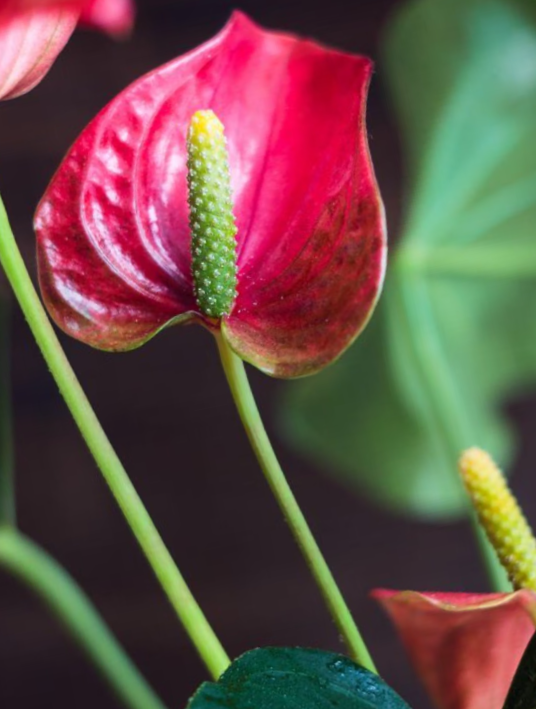
Oilcloth Flower
Anthurium scherzerianum Schott
- Anthurium rothschildianum (Pynaert) Pynaert — historical heterotypic synonym
- Anthurium williamsii (B.S.Williams) Anon. — historical heterotypic synonym
- Anthurium scherzerianum var. albopunctatum Engl. — historical white-spotted variety
- Anthurium scherzerianum var. albostriatum Engl. — historical white-striped variety
- Anthurium scherzerianum var. atrosanguineum Engl. — historical dark-red horticultural variety
- Anthurium scherzerianum var. aurorae Engl. — historical horticultural variety
- Anthurium scherzerianum var. giganteum Engl. — historical large-growing variety
- Anthurium scherzerianum var. roseum W.Bull — historical pink-flowered variety
- Anthurium scherzerianum var. sanguineum W.Bull — historical red-flowered variety
- Anthurium scherzerianum var. williamsii B.S.Williams — historical variety associated with the synonym Anthurium williamsii
- Anthurium scherzeranum — recurring misspelling found in pet-poison databases and secondary references; not the accepted botanical spelling
- Anthurium andraeanum Linden ex André — Florist Anthurium or Painter’s Palette; a separate species with broader often heart-shaped leaves and a usually straighter spadix
Araceae — Arum or Aroid Family
Oilcloth Flower; Flamingo Flower; Flamingo Plant; Flamingo Lily; Pigtail Plant; Pigtail Anthurium; Pig-Tail Anthurium; Tail Flower; Tailflower; Scherzer’s Anthurium; Scherzer Anthurium; Corkscrew Anthurium; Anthurium; Painter’s Palette; Painter’s Pallet
“Painter’s Pallet” is a common misspelling of Painter’s Palette. Flamingo Flower, Flamingo Lily, Tailflower, Anthurium, and Painter’s Palette are ambiguous trade names also applied to Florist Anthurium, Anthurium andraeanum, and to cultivated hybrids whose exact parentage may not be shown on the label.
Oilcloth Flower is best distinguished by its relatively narrow elongated leaves and characteristically curled, twisted, or corkscrew-shaped spadix. A common-name label alone should not be used to separate it from another Anthurium, a Peace Lily, a Calla Lily, or an unrelated plant included in a mixed floral arrangement.
Established Insoluble-Oxalate Hazard
Oilcloth Flower is an aroid associated with the acute local-irritation syndrome produced by water-insoluble calcium oxalate crystals. These crystals are formed inside specialized plant cells called idioblasts and may occur as elongated needle-like bundles known as raphides. When an animal bites, tears, crushes, or vigorously mouths plant tissue, the cells rupture and expose sharp mineral crystals to the lips, tongue, gums, palate, pharynx, esophagus, skin, or eyes.
The injury begins at the point of contact rather than after systemic absorption. Crystals puncture and abrade moist tissue, causing immediate burning pain, redness, inflammation, salivation, and swelling. This explains why an animal may react dramatically after one exploratory bite and why the sudden discomfort often limits continued chewing.
Veterinary and botanical literature consistently treats Anthurium as an insoluble-calcium-oxalate genus. Species-specific research establishing the exact number, shape, distribution, or concentration of crystal idioblasts in every tissue of Anthurium scherzerianum remains limited. The clinical classification is strong, but it should not be converted into unsupported claims about a fixed crystal concentration, a most-toxic cultivar, or an exact leaf dose.
Raphides, Idioblasts, and the Mechanical Injury
Raphides are not dissolved poisons circulating freely through the plant. They are mineral structures stored within living cells. Tissue damage exposes the crystals and accompanying cell contents, allowing them to contact vulnerable surfaces directly.
Idioblasts in different aroids vary in structure and in the way crystals are released. Some are described as pressure-sensitive or ejective, while in other tissues crystals are exposed more passively as chewing breaks surrounding cells. The practical veterinary result is the same: crushing places numerous microscopic sharp objects against sensitive tissue.
Crystals that have penetrated the surface cannot be neutralized by activated charcoal, milk, yogurt, antacids, oil, bread, antihistamines, or oral numbing products. Gentle wiping or rinsing may remove loose sap and unattached particles, but embedded crystals and the resulting inflammatory response must resolve through natural clearance, tissue healing, or veterinarian-assisted removal when retained material is visible.
Possible Proteinaceous Co-Irritants
Experimental research involving raphides from other plants demonstrates that needle-shaped crystals can intensify the biological activity of proteases by breaching protective barriers. In those experiments, raphides and cysteine protease caused a much stronger effect together than either component produced alone. The important feature was the needle shape rather than calcium oxalate merely being present as a chemical compound.
That evidence does not establish a specific clinically dominant protease in Oilcloth Flower. The experimental system did not use Anthurium scherzerianum, dogs, cats, horses, or other domestic animals. Proteinaceous or sap-borne co-irritants may contribute to inflammation in aroids, but insoluble crystal injury remains the established and most defensible toxicological explanation for the expected syndrome on this page.
Insoluble Oxalate Is Not Soluble-Oxalate Poisoning
Insoluble calcium oxalate must be distinguished from soluble sodium or potassium oxalates found in certain other plants. Soluble oxalates can enter circulation, bind ionized calcium, contribute to hypocalcemia, and form calcium oxalate within renal tissue. That systemic mechanism can produce weakness, muscle tremors, abnormal cardiac activity, and kidney injury.
Oilcloth Flower crystals remain primarily localized at contacting surfaces. Primary hypocalcemia, tetany, systemic oxalate nephrosis, widespread calcium oxalate crystalluria, and direct calcium-oxalate kidney failure are not expected after an uncomplicated correctly identified exposure.
Kidney abnormalities can still develop secondarily when repeated vomiting, diarrhea, painful swallowing, or food and water refusal causes substantial dehydration and reduced renal perfusion. Ethylene glycol, soluble-oxalate plants, medication, urinary disease, severe shock, and unrelated renal disorders must be investigated when laboratory findings do not fit localized aroid irritation.
Plant Parts and Exposure Forms
Leaves and flowering stalks are the most common household exposures, but petioles, short stems, roots, sap, spathes, spadices, true flowers, berries, and seeds should all remain inaccessible. Comparative research has not established a harmless Oilcloth Flower tissue or a plant part from which crystals are reliably absent.
The brightly colored structure commonly called the flower is a modified leaf known as a spathe. The numerous tiny true flowers are arranged along the central spadix. Both are plant tissues and should be treated as irritating rather than as harmless decorative petals.
Roots and divided crown material can create particularly messy exposures during repotting. Sap, soil, plant fragments, fertilizer, pesticide, and water-retaining potting additives may become mixed together on the floor, animal coat, tools, or hands. Each nonplant product requires its own toxicological assessment.
Fresh, Wilted, Dried, and Cut Material
Drying does not reliably dissolve or destroy calcium oxalate crystals. Wilted leaves, fallen spathes, dried flower stalks, herbarium-like material, wreaths, floral remnants, and old pruning waste may remain irritating when chewed or crushed.
Cut flowers introduce additional uncertainty because stems may have been treated with preservatives, dyes, surfactants, pesticides, leaf-shine products, or antimicrobial agents. Floral foam, wire, tape, ribbon, decorative picks, packets of flower food, and standing vase water may create risks unrelated to the plant’s raphides.
Cultivars and Hybrids
Oilcloth Flower has been bred into red, orange, pink, white, spotted, striped, dwarf, and compact ornamental forms. Historical botanical varieties also describe differences in spathe color, markings, or growth. No ornamental color form has been established as crystal-free or safe for chewing.
Commercial plants may be hybrids or selections sold only by a cultivar name. Modern genomic research confirms that Anthurium scherzerianum and Anthurium andraeanum are distinct species while also documenting extensive historical admixture within cultivated Anthurium material. Horticultural complexity does not justify assuming that a hybrid lacks insoluble oxalate.
A label reading simply “Anthurium” is sufficient reason to prevent chewing and to use aroid-oriented first aid, but it may not establish the exact species. Preserve the label and whole plant when the exposure is clinically significant.
Skin and Eye Exposure
Sap and crystal-bearing tissue may sting or inflame exposed skin, particularly where residue is trapped beneath a collar, harness, bandage, clothing, dense fur, or damaged skin. Redness, itching, licking, papules, swelling, or dermatitis may follow direct contact or repeated grooming.
Eye exposure can be more persistent because particles may remain beneath an eyelid and scrape the cornea during blinking. Sap, soil, crystals, or a sharp leaf tip can cause tearing, squinting, redness, eyelid swelling, light sensitivity, corneal abrasion, or ulceration.
Mechanical and Mixed-Exposure Hazards
A long flowering stalk, fibrous root mass, compact wad of leaves, plant-support tie, wire, decorative pick, or piece of floral foam can create choking, esophageal obstruction, or gastrointestinal foreign-body disease independently of crystal irritation. Persistent gagging, regurgitation, recurrent vomiting, abdominal pain, enlargement, or reduced fecal output requires investigation for retained material.
Potting soil may contain slow-release fertilizer pellets, systemic insecticide, fungicide, mold, mushrooms, water-retaining polymers, decorative stone, or treated moss. Bouquet water may contain flower food, bacteria, decaying organic material, dye, preservative, or pesticide residue. Severe neurologic, renal, hepatic, cardiovascular, or bleeding abnormalities should not be attributed automatically to Oilcloth Flower when these additional exposures are possible.
Toxic-Dose Limitations
No validated leaf count, spathe number, spadix length, berry number, root weight, sap volume, or body-weight dose has been established for dogs, cats, horses, livestock, rabbits, guinea pigs, birds, or reptiles. Local injury depends on how much tissue was crushed, the crystal-bearing surfaces contacted, the duration of chewing, and whether the mouth, airway, skin, or eyes were involved.
One bite may cause striking pain yet no lasting illness, while repeated chewing can increase swelling, vomiting, dehydration, and foreign-body risk. Statements that one leaf is fatal or that a particular number of leaves is universally safe are unsupported. Current breathing, swallowing, pain, hydration, and co-exposures are more useful for triage than an invented toxic threshold.
Immediate Oral Pain
Signs usually begin immediately or within minutes after Oilcloth Flower tissue is bitten or crushed. An animal may abruptly release the plant, shake its head, lick its lips, rub its face, paw at its mouth, vocalize, retreat from food, or appear suddenly distressed. This rapid onset reflects direct contact injury rather than a poison that requires prolonged absorption and metabolism.
The lips, gums, tongue, palate, and back of the mouth may become red, painful, or swollen. Small abrasions and superficial ulceration can occur where plant fragments and crystals contact tissue. Deep necrosis, extensive blistering, or severe chemical burns are not expected from a brief uncomplicated bite and should raise concern for a caustic product, electrical injury, another plant, or prolonged retained material.
Drooling, Gagging, and Painful Swallowing
Excessive drooling is one of the most characteristic signs. Saliva may appear thick, stringy, or foamy, and the animal may let it hang from the mouth because swallowing is uncomfortable. Repeated swallowing, gagging, coughing, neck extension, dropping food, or approaching water and then pulling away may indicate pharyngeal pain or swelling.
Continuous gagging, regurgitation, inability to swallow saliva, or coughing every time water is offered can also indicate a lodged flowering stalk, root, leaf wad, decorative object, or esophageal injury. A known plant exposure should not prevent investigation for mechanical obstruction.
Tongue, Pharyngeal, and Airway Swelling
Most cases remain limited to temporary oral discomfort, but inflammation may enlarge the tongue or tissues surrounding the pharynx and larynx. Severe airway compromise is uncommon, yet it becomes urgent when respiratory noise increases, inhalation sounds harsh, the animal breathes with its mouth open, or the head and neck remain extended.
Blue-gray gums, panic, weakness, collapse, reduced responsiveness, or visibly progressive swelling is an emergency. Food, water, pills, and liquid medication should not be offered when swallowing or breathing is impaired because material may enter the lungs and delay airway treatment.
Rapid facial swelling accompanied by hives, vomiting, profound weakness, low blood pressure, or collapse may indicate allergy or anaphylaxis in addition to local crystal injury. Airway and circulation take priority over determining the exact inflammatory mechanism.
Nausea, Vomiting, and Diarrhea
Dogs, cats, and other animals capable of vomiting may develop nausea, retching, vomiting, appetite loss, abdominal discomfort, soft stool, or diarrhea after plant material reaches the esophagus, stomach, or intestine. These effects may reflect local mucosal irritation, swallowed crystals, sap, indigestible plant fiber, stress, or a product associated with the plant.
A brief episode may resolve as loose material is cleared and the mouth becomes more comfortable. Repeated vomiting, diarrhea, and continued drooling can cause dehydration, electrolyte abnormalities, reduced tissue perfusion, weakness, and worsening lethargy even though the original crystals remain localized.
Blood in vomit or stool, coffee-ground material, black feces, severe abdominal pain, persistent unproductive retching, abdominal enlargement, or inability to keep water down is not a routine mild presentation. These findings require evaluation for significant gastrointestinal injury, a foreign body, infection, medication, chemical exposure, or another toxin.
Skin and Fur Exposure
Sap or crushed tissue on the skin may cause stinging, redness, itching, licking, localized swelling, papules, or dermatitis. Residue trapped beneath collars, harnesses, clothing, bandages, bedding, or dense fur can prolong exposure and may be transferred to the mouth during grooming.
Persistent inflammation, blistering, moist lesions, facial involvement, or spreading dermatitis warrants veterinary evaluation. Fertilizer, pesticide, floral preservative, adhesive, dye, or cleanser should be considered when the skin reaction is unusually severe.
Eye Exposure
Sap, crystals, soil, or broken plant material transferred into an eye may cause immediate tearing, blinking, squinting, redness, eyelid swelling, light sensitivity, and vigorous rubbing. A leaf tip, spadix, wire, or decorative pick may also scratch the cornea directly.
Particles trapped beneath an eyelid can continue abrading the corneal surface with every blink. Cloudiness, discharge, inability to open the eye, apparent vision change, or continuing pain after irrigation requires prompt examination and fluorescein staining.
Dogs and Cats
Dogs may chew low leaves, pull a plant from a table, raid a discarded arrangement, carry a flowering stalk, or investigate root material during repotting. Puppies and habitual plant chewers may crush more tissue before discomfort stops them. A root mass, floral foam, wire, ribbon, or long stalk creates an additional choking or obstruction concern.
Cats may bite leaves or spadices, bat at hanging flowers, walk through spilled sap, or groom residue from their coat and paws. Drooling, vomiting, repeated swallowing, facial rubbing, hiding, and food refusal are important findings. Continued anorexia deserves prompt attention because cats can develop secondary metabolic complications even after the original mouth pain begins improving.
Horses and Livestock
Horses and livestock are most likely to encounter Oilcloth Flower through greenhouse stock, discarded houseplants, floral waste, landscaping, nursery debris, or mixed ornamental clippings. The plant should never be used as browse or thrown into an enclosure.
Horses cannot vomit and may show salivation, painful chewing, repeated swallowing, coughing, feed refusal, throat discomfort, colic, diarrhea, weakness, or abnormal breathing. Cattle, sheep, goats, and pigs may develop similar oral and gastrointestinal signs. Several affected animals should prompt immediate inspection of all shared feed, water, clippings, fertilizer, and pesticide sources.
Rabbits and Guinea Pigs
Mouth pain may cause a rabbit or guinea pig to stop eating even when little plant tissue was swallowed. These species cannot vomit and depend on continuous food intake to maintain normal gastrointestinal movement. Drooling, reluctance to chew, reduced fecal output, abdominal discomfort, enlargement, or weakness can progress into gastrointestinal stasis.
Companion Birds
Parrots and other birds can crush leaves, spathes, spadices, and roots efficiently with the beak. Repeated beak wiping, facial rubbing, regurgitation, reduced feeding, oral swelling, weakness, poor balance, inability to perch, or open-mouth breathing requires avian veterinary attention.
Floral wire, decorative picks, pesticide residue, dye, and preservative may accompany the plant in household arrangements. A bird with neurologic or systemic illness requires evaluation beyond the expected local raphide syndrome.
Foreign-Body and Aspiration Complications
A swallowed flowering stalk, root mass, compact bundle of leaves, wire, ribbon, tape, or floral foam may lodge in the mouth, pharynx, esophagus, stomach, or intestine. Persistent gagging, regurgitation, recurrent vomiting, abdominal pain, enlargement, reduced stool, or deterioration after apparent improvement may require imaging, endoscopy, or surgery.
Vomiting combined with painful swallowing increases aspiration risk. Coughing, nasal discharge, fever, rapid breathing, increased respiratory effort, or renewed lethargy after gastrointestinal signs improve may indicate aspiration pneumonia rather than continuing plant irritation.
Findings That Do Not Fit Uncomplicated Oilcloth Flower Exposure
Seizures, coma, sustained tremors, primary liver failure, primary kidney failure, systemic hypocalcemia, major arrhythmia, uncontrolled bleeding, prolonged paralysis, or profound cardiovascular collapse is not the expected direct syndrome from insoluble Anthurium crystals. These findings require immediate investigation for another toxin, severe airway obstruction, anaphylaxis, hypoxia, aspiration, medication, pesticide, ethylene glycol, metabolic disease, or incorrect plant identification.
Similar oral signs may follow Dieffenbachia, Philodendron, Pothos, Peace Lily, Caladium, Syngonium, Calla Lily, caustic cleaner, electrical burn, insect sting, oral foreign body, dental injury, or anaphylaxis. True lilies in the genera Lilium and Hemerocallis are a separate and potentially fatal renal hazard to cats and should never be confused with an aroid merely because both are called lilies.
Duration and Prognosis
Most uncomplicated oral exposures improve substantially within several hours and resolve within approximately one day. Drooling, mouth pain, vomiting, or swallowing difficulty continuing for days is not expected and may indicate retained plant material, severe ulceration, dehydration, aspiration, corneal injury, infection, foreign-body obstruction, or an incorrect diagnosis.
The prognosis is generally good to excellent when breathing remains normal and signs are limited to temporary oral irritation or mild gastrointestinal upset. Severe airway swelling, anaphylaxis, aspiration, persistent vomiting, major dehydration, corneal injury, prolonged anorexia, or a swallowed foreign body creates a more guarded outlook.
Plant Identity and Taxonomy
Oilcloth Flower, Anthurium scherzerianum, is a compact evergreen aroid grown for its glossy foliage and brightly colored inflorescences. It belongs to Araceae, a family containing terrestrial, climbing, aquatic, epiphytic, and hemiepiphytic plants with a characteristic spadix-and-spathe flowering structure.
Heinrich Wilhelm Schott published the species in 1857. Numerous horticultural forms were later described as botanical varieties, and some received separate species names before being returned to synonymy. These historical names reflect the plant’s long cultivation and variation in spathe color, spotting, striping, size, and growth rather than separate poisoning mechanisms.
The accepted spelling is Anthurium scherzerianum. The form Anthurium scherzeranum occurs in pet-poison databases, nursery material, and secondary references but is not the accepted botanical spelling.
Native Range and Habitat
The species is native to Costa Rica, where wild populations occur in wet tropical and montane forest environments. Plants may grow terrestrially in organic forest substrate or epiphytically on trees and other supports.
Wild distribution is geographically limited compared with the enormous international ornamental trade. Most animal exposures occur through cultivated houseplants, greenhouses, florists, garden centers, cut-flower arrangements, discarded plants, and nursery waste rather than through contact with native populations.
Growth Form and Leaves
Oilcloth Flower usually forms a compact clump with short stems, numerous roots, and spreading leaves. It does not ordinarily develop the long climbing habit seen in many other Anthurium species.
The leaf blades are generally narrow, leathery, elongated, lance-shaped, oblong, or elliptic rather than deeply heart-shaped. Their glossy or semiglossy surface contributed to common names suggesting oilcloth or lacquered foliage.
Leaf form in cultivated plants may vary through breeding, hybrid ancestry, age, light, and growing conditions. One leaf feature should not override the complete inflorescence, nursery history, growth habit, and scientific label.
The Spathe Is Not a Petal
The vivid red, orange, pink, white, spotted, or patterned structure commonly called the flower is a modified leaf known as a spathe. It functions as part of the inflorescence display surrounding the flower-bearing spadix.
Because it looks waxy and decorative, owners may assume the spathe is chemically different from the foliage. It remains living plant tissue and should be treated as irritating when chewed, torn, or handled during pruning.
The Corkscrew Spadix
Numerous tiny true flowers are arranged along the elongated spadix. In Oilcloth Flower, the spadix is characteristically curved, twisted, or coiled into a pigtail or corkscrew shape. This feature is one of the most useful distinctions from the straighter spadix typical of many Florist Anthuriums.
A flowering stalk may project well beyond the pot or shelf and remain within reach even when the foliage appears inaccessible. Fallen or cut spadices should be collected rather than left where an animal can carry or chew them.
Fruit and Seeds
Pollinated flowers may develop fleshy orange to red berries along the spadix. Indoor plants do not always fruit, but berries and seeds should remain inaccessible. Their bright color may attract birds, puppies, and other curious animals.
Fruit should not be treated as safe because it appears soft or edible. It remains tissue from an insoluble-oxalate plant and may also create a choking risk for a small animal.
Wild Plants, Cultivars, and Hybrid Material
Commercial Oilcloth Flowers include compact cultivars and selections with red, orange, salmon, pink, white, spotted, striped, or multicolored spathes. No color, size, or variegation has been shown to eliminate insoluble calcium oxalate.
Anthurium breeding has produced complex cultivated material, and retail labels may omit parentage. Chromosome-level genomic work published in 2026 confirms that Anthurium scherzerianum and Anthurium andraeanum are distinct while also documenting extensive historical admixture in cultivated Anthurium accessions. A hybrid or cultivar name should therefore supplement, not replace, physical identification and exposure assessment.
Oilcloth Flower and Florist Anthurium
Florist Anthurium or Painter’s Palette is usually identified as Anthurium andraeanum. It commonly has broad heart-shaped leaves, a broad waxy spathe, and a relatively straight or gently curved spadix. Oilcloth Flower usually has narrower leaves and a much more strongly coiled spadix.
Both are treated as insoluble-calcium-oxalate aroids and require similar initial airway and mouth assessment. Confusing the two does not make chewing harmless, but exact identification remains important for botanical accuracy, mixed arrangements, hybrid plants, and research interpretation.
Oilcloth Flower and Peace Lily
Peace Lilies belong to Spathiphyllum. They generally have elongated dark-green leaves, white or greenish-white spathes, and straighter cream-colored spadices. They are not true lilies and cause a similar insoluble-oxalate oral-irritation syndrome.
True lilies in Lilium and daylilies in Hemerocallis are entirely different plants. Even a small true-lily exposure can cause life-threatening acute kidney injury in cats, making preservation of mixed bouquet material essential.
Oilcloth Flower and Calla Lily
Calla Lilies belong to Zantedeschia. Their funnel-shaped spathe wraps around a straighter central spadix, and their leaves differ from the narrow clumping foliage typical of Oilcloth Flower.
Calla Lily also produces insoluble-oxalate irritation, but a bouquet may contain true lilies, pesticides, floral preservatives, wire, and other materials requiring different treatment. Common symptom similarity should not replace identification.
Oilcloth Flower and Other Anthuriums
Anthurium is a large and diverse genus containing compact flowering houseplants, climbing species, strap-leaved epiphytes, bird’s-nest forms, and large ornamental foliage plants. The words Anthurium, Flamingo Flower, and Tailflower do not identify one species reliably.
Preserve the complete plant rather than one detached leaf. Useful features include roots, stems, petioles, mature leaf shape, spathe, spadix, berries, growth habit, nursery label, cultivar name, and photographs of the entire specimen.
Household and Office Exposure
Dogs may chew low leaves, pull down a pot, investigate repotting debris, or carry discarded flowering stalks. Cats may climb onto furniture, bite moving spadices, walk through spilled sap, or groom plant residue from the coat.
Office plants may receive systemic pesticide, leaf-shine product, fertilizer spikes, or maintenance chemicals that are unknown to the pet owner. An animal exposed in a workplace, lobby, hotel, clinic, or commercial building may therefore require information from the plant-maintenance company.
Cut Flowers and Bouquets
Oilcloth Flower and related Anthuriums are used as long-lasting cut ornamentals. Exposure may involve a whole flowering stalk, trimmed stem end, floral foam, wire, tape, ribbon, decorative pick, vase additive, dye, pesticide, or stagnant water.
A cut stem can act as a foreign body even when the animal stops chewing because of oral pain. Preserve the arrangement, florist packaging, flower-food packet, and an inventory of every plant in the bouquet.
Greenhouse, Nursery, and Landscape Exposure
Greenhouses and nurseries may contain concentrated fertilizer, pesticide, fungicide, rooting hormone, disinfectant, and large amounts of pruning debris. Animals should not have access to work areas where plant identity and chemical treatment are uncertain.
In warm climates, cultivated Anthuriums may be used outdoors in shaded landscapes or containers. Storm debris, discarded planting material, uprooted roots, and maintenance clippings can expose dogs, horses, livestock, poultry, rabbits, and wildlife.
Dogs and Cats
Dogs often encounter the plant through low foliage, dropped flowers, household trash, repotting, or floral arrangements. A dog that carries or shreds a stalk may sustain oral irritation while also swallowing a length capable of lodging in the esophagus or intestine.
Cats may chew foliage, investigate the spadix, rub against the plant, or groom contaminated paws and fur. Continued food refusal is important even when drooling decreases because prolonged inadequate intake can create secondary disease.
Horses and Livestock
Horses, cattle, sheep, goats, and pigs are unlikely to encounter Oilcloth Flower as natural forage across most regions. Exposure is more plausible through greenhouse plants, discarded houseplants, landscape waste, mixed floral refuse, or ornamental clippings thrown into an enclosure.
Adequate uncontaminated forage reduces exploratory eating. When several animals have access, preserve multiple plant specimens and inspect fertilizer, pesticide, mold, and every other plant mixed with the waste.
Rabbits, Guinea Pigs, and Birds
Oilcloth Flower should not be offered as forage, bedding, nesting material, browse, or enrichment. Rabbits and guinea pigs may develop gastrointestinal stasis when oral pain interrupts eating, even when systemic poisoning is not expected.
Companion birds can efficiently shred leaves, spathes, spadices, and fibrous roots. Floral wire and pesticide-treated cut flowers add risks that do not exist in one bite of a clean living plant.
Reptiles and Other Exotics
Anthuriums are sometimes placed in humid reptile, amphibian, and invertebrate enclosures. Direct ingestion, sap contact, pesticide residue, contaminated feeder insects, and plant-support materials should be considered. A decorative plant should not be assumed safe merely because the resident animal has ignored it previously.
Skin and Eye Exposure During Plant Work
Dividing the crown, trimming roots, removing dead leaves, and cutting flower stalks can spread sap and particles onto hands, tools, floors, clothing, and animal coats. Gloves reduce human contact, but contaminated gloves and tools should not be handled around animal food, eyes, or mouths.
Plant waste should go directly into a closed container rather than an open wastebasket or accessible compost pile. Floors and work surfaces should be cleaned before animals return to the area.
Diagnosis
Diagnosis usually combines reliable identification, witnessed chewing, rapid onset of oral pain and drooling, local swelling, vomiting, and exclusion of other causes. Finding recognizable plant material in the mouth or vomit supports exposure but does not prove that every abnormal finding came from the plant.
Preserve an entire plant or representative specimen with leaves, petioles, roots, spathe, spadix, berries, label, and photographs. Include bouquet packaging, floral-water additives, fertilizer, pesticide, potting products, and any missing foreign objects.
No routine blood or urine test confirms Oilcloth Flower ingestion. Laboratory testing becomes useful when vomiting is persistent, dehydration is important, respiratory signs develop, kidney or liver values are abnormal, or the clinical picture does not fit localized insoluble-oxalate irritation.
Veterinary Evaluation
The veterinarian may examine the lips, tongue, gums, palate, pharynx, swallowing ability, airway noise, hydration, abdomen, respiratory effort, skin, and eyes. Sedation may be necessary when pain or retained material prevents a safe and complete oral examination.
Blood testing may assess hydration, electrolytes, glucose, kidney function, liver values, inflammation, or another toxin. Neck, chest, or abdominal imaging, ultrasound, endoscopy, or surgery may be required when a flower stalk, root mass, floral wire, foam, ribbon, or another foreign object is missing.
Differential Diagnosis
Sudden drooling, mouth pain, and swelling may also follow Dieffenbachia, Philodendron, Pothos, Peace Lily, Caladium, Syngonium, Calla Lily, caustic cleaners, electrical burns, insect stings, oral foreign bodies, dental injury, toxic caterpillars, or anaphylaxis.
Tremors, seizures, coma, profound weakness, kidney failure, liver failure, or major arrhythmia should broaden the investigation to pesticides, medications, mushrooms, ethylene glycol, nicotine, cannabis, soluble-oxalate plants, true lilies in cats, metabolic disease, and hypoxia.
Prognosis and Prevention
The prognosis is generally good to excellent when exposure is limited and the airway remains normal. The outlook becomes more guarded with severe swelling, anaphylaxis, aspiration, persistent vomiting, dehydration, corneal injury, prolonged food refusal, or a swallowed foreign body.
Keep the entire plant and projecting flower stalk beyond reach, collect fallen material promptly, and block access to soil and saucer water. Wear gloves during pruning and repotting, clean tools and exposed surfaces, and place all waste directly into a closed animal-inaccessible container.
Immediate Response After Exposure
- Stop further access: Move the animal away from the plant, fallen leaves, flowering stalks, berries, roots, sap, cuttings, bouquet material, and contaminated surfaces.
- Preserve the complete plant: Save leaves, petioles, roots, spathe, spadix, fruit, nursery label, cultivar label, photographs, and representative material recovered from vomit.
- Wear gloves: Protect your hands and eyes while handling damaged plant tissue, sap, vomit, contaminated fur, or floral waste.
- Identify mixed exposures: Preserve fertilizer, pesticide, flower-food packets, vase additives, floral foam, wire, ribbon, tape, decorative picks, potting products, and every other plant in an arrangement.
- Record the exposure: Note the time, maximum amount missing, plant parts involved, first signs, vomiting episodes, and any breathing or swallowing change.
- Contact a professional: Obtain veterinary or animal poison-control guidance when signs persist, the amount is uncertain, the plant identity is unclear, or swallowing, breathing, or the eyes are affected.
Most uncomplicated exposures cause intense local pain rather than delayed systemic organ failure, but airway status can change quickly. Professional consultation should begin while identification is being completed rather than after swelling becomes severe.
Check the Airway and Swallowing First
- Listen for abnormal breathing: Harsh inhalation, wheezing, stridor, gasping, or unusually loud breathing may indicate upper-airway narrowing.
- Watch visible swelling: Rapid enlargement of the lips, tongue, face, or throat requires emergency care.
- Check gum color: Pale, gray, or blue-gray gums indicate inadequate oxygen delivery or circulation.
- Watch body position: Open-mouth breathing, an extended head and neck, panic, or inability to settle can indicate respiratory distress.
- Assess swallowing: Inability to manage saliva, continuous gagging, neck stretching, regurgitation, or coughing whenever water is offered requires examination.
- Leave immediately for emergency care: Do not continue rinsing or attempt oral medication when breathing or swallowing is impaired.
Airway protection takes priority over removing every crystal. Severe tongue, pharyngeal, or laryngeal inflammation may require oxygen, suction, sedation, intubation, ventilation, or emergency airway access before a detailed examination can be completed.
Remove Only Loose Visible Material
- Clear the front of the mouth: Carefully remove loose leaves, spathe fragments, spadix pieces, roots, or stem material visible around the lips, gums, and front of the tongue.
- Do not perform a blind sweep: Reaching deeply into the throat can push material farther inward or cause a bite injury.
- Do not pull resistant material: A stalk, root, wire, ribbon, or decorative object may be lodged or attached internally.
- Wipe gently: A damp cloth may remove visible sap and loose particles from accessible tissue in a cooperative, alert animal.
- Do not scrub: Vigorous rubbing can abrade inflamed tissue and force particles farther into the surface.
Continued discomfort after visible plant pieces are removed does not mean that the mouth should be scraped. Embedded crystals and inflammatory swelling require time, pain control, or veterinarian-assisted examination rather than increasingly aggressive home manipulation.
Rinse the Mouth Only When Safe
- Use cool or lukewarm water: Allow a gentle stream to pass across the front of the mouth without directing it toward the throat.
- Position for drainage: Water, saliva, and debris must be able to leave the mouth freely.
- Do not syringe liquid: Forced water can enter the lungs when swallowing is painful or impaired.
- Do not rinse a compromised animal: Gagging, repeated vomiting, weakness, sedation, coughing, neurologic abnormality, or breathing difficulty makes oral rinsing unsafe.
- Stop if distress increases: Coughing, choking, panic, worsening respiratory noise, or inability to clear liquid requires immediate care.
Rinsing is mechanical decontamination rather than an antidote. It may remove loose sap and unattached particles but cannot dissolve insoluble crystals or reverse established swelling.
Do Not Induce Vomiting
- Do not give hydrogen peroxide: Vomiting returns crystals and plant material across already injured oral and esophageal tissue.
- Never give peroxide to a cat: Hydrogen peroxide can cause severe feline gastric and esophageal injury.
- Do not use household emetics: Salt, mustard, dish soap, detergent, oil, syrup, manual gagging, and fingers in the throat are unsafe.
- Do not induce vomiting during swelling or gagging: Painful swallowing and airway inflammation increase aspiration risk.
- Do not induce vomiting after foreign material: Flower stalks, roots, wire, ribbon, tape, floral picks, or foam may cause additional injury while returning through the esophagus.
- Never attempt vomiting in horses, rabbits, or guinea pigs: These animals cannot vomit.
Insoluble crystals act at the contact surface and are not removed safely by making the animal vomit. A veterinarian may manage a separate pesticide, medication, or foreign-material ingestion differently, but that does not justify owner-induced emesis.
Do Not Give Activated Charcoal or Household Remedies
- Do not give activated charcoal automatically: Charcoal cannot adsorb or remove mineral crystals embedded in tissue.
- Do not force charcoal: Oral pain, drooling, vomiting, swelling, and poor swallowing make aspiration especially dangerous.
- Do not give milk or yogurt routinely: Dairy products do not dissolve embedded crystals, and swallowing may be unsafe while the mouth or throat is swollen.
- Do not force food, bread, oil, or treats: These products do not neutralize the plant and may worsen choking, nausea, or aspiration.
- Do not give antacids or anti-diarrheal products: Owner-selected gastrointestinal medications do not treat the primary mouth injury and may be inappropriate.
- Do not give sucralfate without veterinary direction: It does not remove crystals or protect a narrowing airway.
- Do not apply oral numbing gels: Benzocaine, lidocaine, and similar human products may be toxic and can interfere with protective swallowing.
- Do not give human pain medication: Ibuprofen, naproxen, aspirin, and acetaminophen can create a second poisoning.
Nothing should be forced into the mouth of an animal that cannot swallow normally. A veterinarian can determine when voluntary water, soft food, or assisted nutrition is appropriate after evaluating the airway and oral injury.
Antihistamines, Steroids, and Allergic Reactions
- Do not give diphenhydramine automatically: Antihistamines do not remove crystals, repair punctured tissue, or secure a narrowing airway.
- Do not rely on sedation: Sedating effects may complicate swallowing and respiratory assessment.
- Do not give leftover steroids: Steroids are not universal antidotes and may be inappropriate with infection, gastrointestinal injury, corneal ulceration, or another diagnosis.
- Recognize possible anaphylaxis: Hives, rapidly spreading facial swelling, vomiting with collapse, profound weakness, or low blood pressure requires emergency treatment.
- Prioritize breathing and circulation: Respiratory distress requires airway and cardiovascular support rather than delayed home medication.
A veterinarian may select antihistamines, corticosteroids, epinephrine, or other anti-inflammatory treatment when examination supports allergy, anaphylaxis, or clinically important inflammatory edema. These drugs do not neutralize calcium oxalate crystals.
Vomiting, Diarrhea, and Hydration
- Track every episode: Record frequency, volume, blood, dark material, plant fragments, floral foam, wire, ribbon, fertilizer pellets, and whether water remains down.
- Preserve representative material: Save recognizable plant or foreign material recovered from vomit or stool.
- Watch for dehydration: Tacky gums, sunken eyes, reduced urination, worsening weakness, or inability to retain water requires treatment.
- Watch for bleeding: Repeated blood, coffee-ground vomit, black stool, pale gums, or collapse requires urgent care.
- Watch for aspiration: Coughing, nasal discharge, fever, rapid breathing, or renewed lethargy after vomiting requires reassessment.
- Do not force fluids: Oral water cannot safely correct significant dehydration in a nauseated or poorly swallowing patient.
Veterinarian-selected antiemetic medication may reduce continued fluid loss and aspiration risk. Intravenous or subcutaneous fluids may be required when vomiting, diarrhea, drooling, or refusal to drink causes clinically important dehydration.
Skin and Fur Exposure
- Remove contaminated equipment: Take off collars, harnesses, blankets, or clothing holding sap against the skin.
- Wash exposed fur and skin: Use lukewarm water and mild pet-safe shampoo, followed by thorough rinsing.
- Prevent grooming: Stop the animal from licking contaminated fur until cleanup is complete.
- Clean tools and surfaces: Wash pruning tools, carriers, bedding, floors, counters, and other items carrying plant residue.
- Watch for persistent dermatitis: Redness, itching, papules, swelling, open lesions, or facial involvement requires examination.
Do not use solvents, alcohol, bleach, concentrated detergent, essential oils, or human skin medication on an animal. An unusually severe reaction may involve fertilizer, pesticide, floral dye, adhesive, or another substance associated with the plant.
Eye Exposure
- Begin irrigation promptly: Flush the eye with sterile saline or clean lukewarm water for at least 15 to 20 minutes.
- Allow fluid to drain: Rinse from the inner corner outward without washing material into the other eye.
- Prevent rubbing: Stop the animal from pawing the eye or rubbing against furniture, carpet, or bedding.
- Do not use tools: Tweezers, cotton swabs, cloth, and fingernails can worsen corneal injury.
- Do not use human eye drops: Redness relievers, topical anesthetics, and leftover prescriptions may obscure findings or delay healing.
- Seek prompt examination: Continued squinting, cloudiness, discharge, swelling, apparent vision change, or inability to open the eye requires veterinary care.
Veterinary eye care may include continued irrigation, eyelid eversion, removal of retained particles, fluorescein staining, pain control, and prescribed ophthalmic medication. Steroid-containing eye products can worsen some corneal ulcers and must not be used without examination.
Foreign-Body Concerns
- Watch for lodged material: Persistent gagging, regurgitation, neck extension, repeated swallowing, or inability to drink may indicate pharyngeal or esophageal obstruction.
- Watch for intestinal obstruction: Recurrent vomiting, abdominal pain, enlargement, appetite loss, or reduced stool requires examination.
- Do not pull resistant material: A stalk, root, wire, ribbon, or tape may be lodged, swollen into place, or attached internally.
- Do not push food behind an obstruction: Food and water may worsen impaction or enter the lungs.
- Report every missing object: Floral foam, support wire, decorative picks, ribbon, tape, plant stakes, and root material may be swallowed with the plant.
Radiographs do not reveal every plant fiber, ribbon, foam, or plastic object. Ultrasound, contrast imaging, endoscopy, serial examination, or surgery may be necessary when clinical evidence remains strong.
Dogs and Cats
- Inspect the complete scene: Look for disturbed soil, missing roots, fallen flowers, chewed stalks, fertilizer pellets, pesticide, floral foam, wire, ribbon, and vase additives.
- Monitor cats for food refusal: Continued anorexia requires prompt guidance even when drooling begins to improve.
- Do not assume vomiting removed everything: Embedded crystals, retained stalks, and absorbed co-exposures may remain important.
- Seek care for behavioral change: Hiding, profound quietness, confusion, marked weakness, or collapse does not fit a routine mild exposure.
Horses and Livestock
- Remove the entire group: Apparently normal animals may have consumed a different amount or may not yet show signs.
- Isolate ornamental waste: Preserve plants, roots, flowers, bouquet material, fertilizer, pesticide labels, and photographs.
- Never attempt vomiting: Horses and ruminants must not receive household emetics.
- Do not drench compromised animals: Salivation, coughing, weakness, or swallowing difficulty creates an aspiration risk.
- Avoid forced movement: Do not drive weak or respiratory-compromised animals long distances.
- Provide uncontaminated forage and water: Prevent continued exploratory consumption while veterinary assessment proceeds.
Rabbits, Guinea Pigs, and Birds
- Remove all plant access: Collect leaves, roots, flowers, fruit, contaminated bedding, wire, and enclosure decorations.
- Do not attempt vomiting: Rabbits and guinea pigs cannot vomit, and home emesis is unsafe for birds.
- Do not force food or water: Painful swallowing, respiratory distress, or weakness creates an aspiration risk.
- Monitor intake and droppings: Reduced eating, fewer feces, regurgitation, abdominal enlargement, or gastrointestinal stasis requires prompt care.
- Seek emergency care for respiratory or neurologic signs: Open-mouth breathing, inability to perch, tremors, recumbency, or reduced responsiveness is an emergency.
Recognize an Emergency
- Progressive swelling: Rapidly increasing tongue, lip, facial, or throat swelling can threaten the airway.
- Breathing difficulty: Harsh inhalation, open-mouth breathing, gasping, blue-gray gums, panic, or collapse requires immediate care.
- Swallowing failure: Inability to manage saliva, repeated choking, continuous gagging, or coughing whenever water is offered requires examination.
- Persistent gastrointestinal illness: Repeated vomiting or diarrhea, blood, severe pain, or inability to retain water requires treatment.
- Possible obstruction: Recurrent vomiting, abdominal enlargement, reduced stool, or a missing root mass or flowering stalk may require imaging or endoscopy.
- Unexpected systemic findings: Tremors, seizures, coma, reduced urination, jaundice, major weakness, or abnormal heart rhythm requires investigation for another cause.
Veterinary Examination and Treatment
There is no specific antidote for insoluble calcium oxalate crystals. Veterinary care focuses on removing loose plant material, evaluating the mouth and pharynx, controlling pain and nausea, protecting the airway, maintaining hydration and nutrition, and identifying eye, skin, aspiration, or foreign-body complications.
Veterinarian-selected analgesia may be necessary when the animal cannot rest, drink, or eat comfortably. Injectable antiemetic medication may reduce vomiting and aspiration risk. Fluids and electrolyte correction may be required after substantial drooling, vomiting, diarrhea, or prolonged refusal of water.
Severe upper-airway swelling may require oxygen, suction, sedation, intubation, ventilation, or emergency airway access. Antihistamines, corticosteroids, epinephrine, or other anti-inflammatory treatment may be used when allergy, anaphylaxis, or clinically important inflammatory edema is present, but these medications do not remove crystals.
Persistent gagging or abdominal signs may require radiographs, ultrasound, endoscopy, or surgery for a retained stalk, root mass, wire, foam, ribbon, or other obstruction. Unexpected systemic illness may justify complete blood counts, serum chemistry, electrolytes, glucose, urinalysis, blood gases, chest imaging, and investigation of pesticides, medications, ethylene glycol, true lilies, or another toxin.
Monitoring, Recovery, and Prevention
- Monitor breathing: Respiratory effort and noise should remain normal.
- Monitor swallowing: The animal should progressively regain the ability to manage saliva, drink, and eat comfortably.
- Monitor drooling: Salivation should decrease rather than continue or worsen.
- Monitor hydration: Normal gum moisture, drinking, urination, pulse quality, and activity should return.
- Monitor appetite and feces: Continued food refusal or reduced fecal output is especially important in cats, rabbits, guinea pigs, and birds.
- Monitor the eyes: Squinting, cloudiness, discharge, or rubbing should not persist after irrigation.
- Return for delayed signs: Coughing, fever, recurrent vomiting, abdominal pain, worsening lethargy, or spreading dermatitis requires reassessment.
- Prevent recurrence: Secure the entire pot and projecting flower stalks, collect fallen material, block soil and vase water, and dispose of cuttings in a closed container.
Limited oral exposure generally has a good to excellent prognosis and improves within several hours. Severe airway swelling, aspiration, dehydration, corneal injury, prolonged anorexia, obstruction, or a concurrent chemical exposure changes the prognosis and may require hospitalization.
Frequently Asked Questions About Oilcloth Flower and Animal Poisoning
Is Oilcloth Flower poisonous to dogs and cats?
Yes. Oilcloth Flower can cause rapid, painful irritation when a dog or cat bites its leaves, petioles, roots, spathe, spadix, fruit, or other tissue. Common findings include head shaking, lip licking, pawing or rubbing at the face, excessive drooling, repeated swallowing, gagging, vomiting, appetite loss, and difficulty eating or drinking. Cats may also transfer sap and plant particles from their paws or coat to the mouth or eyes while grooming. Most uncomplicated cases are temporary, but increasing swelling, repeated vomiting, prolonged food refusal, or breathing difficulty requires veterinary care.
Is Oilcloth Flower poisonous to horses and livestock?
Oilcloth Flower should not be used as browse or placed where horses, cattle, sheep, goats, or pigs can reach greenhouse plants, discarded houseplants, bouquets, or ornamental clippings. Exposure may cause salivation, mouth pain, feed refusal, repeated swallowing, coughing, throat irritation, colic, diarrhea, weakness, or abnormal breathing. Horses cannot vomit. Group exposure requires removal of every animal from the source and inspection of all plant waste, fertilizer, pesticide, mold, and other ornamentals mixed with it.
Why is Oilcloth Flower dangerous to rabbits and guinea pigs?
Crystal-related mouth pain may cause a rabbit or guinea pig to stop eating even when little plant material was swallowed. These species cannot vomit and rely on continued food intake to maintain gastrointestinal movement. Drooling, reluctance to chew, fewer droppings, abdominal discomfort, enlargement, or weakness can progress into gastrointestinal stasis and requires prompt exotic-animal veterinary care.
Can companion birds chew Oilcloth Flower safely?
No. Parrots and other birds can efficiently crush leaf, spathe, spadix, and root tissue with the beak and expose the mouth and face to irritating material. Repeated beak wiping, facial rubbing, regurgitation, reduced feeding, oral swelling, weakness, inability to perch, or open-mouth breathing requires avian veterinary attention. Cut flowers may also contain pesticide residue, floral dye, wire, tape, or preservative that creates a separate exposure.
What is the accepted scientific name for Oilcloth Flower?
The accepted scientific name is Anthurium scherzerianum Schott. Numerous historical horticultural varieties and synonyms were published during the plant’s long cultivation history, including Anthurium rothschildianum and Anthurium williamsii. The spelling Anthurium scherzeranum is a recurring misspelling rather than the accepted botanical name.
Why is the spelling Anthurium scherzeranum incorrect?
Schott published the species as Anthurium scherzerianum. The missing “i” in scherzeranum has been repeated by pet-poison lists, nursery material, and secondary websites, but repetition does not make it a valid botanical spelling. Searching both forms may help locate older material, while the public scientific-name field should use Anthurium scherzerianum.
What is the established toxic principle in Oilcloth Flower?
Oilcloth Flower is associated with water-insoluble calcium oxalate crystals stored within specialized plant cells. Chewing releases sharp crystals against the lips, tongue, gums, palate, and throat, producing immediate pain, inflammation, drooling, and difficulty swallowing. The syndrome is primarily a local contact injury rather than a poison that must enter the bloodstream before signs appear.
Have the raphides been measured directly in Anthurium scherzerianum?
Anthurium is consistently classified as an insoluble-calcium-oxalate genus, and the expected rapid oral syndrome fits that mechanism. However, exact-species research establishing the crystal forms, idioblast distribution, concentration in every plant part, and veterinary dose for Anthurium scherzerianum remains limited. A frequently cited 2009 Araceae experiment mentioned Oilcloth Flower as an ornamental but actually measured other aroid species, so those concentration results should not be presented as direct Oilcloth Flower data.
Are proteolytic enzymes also responsible for the irritation?
Broader experimental research demonstrates that needle-shaped raphides can intensify the activity of coexisting proteases by creating microscopic breaches in biological barriers. That makes a proteinaceous co-irritant contribution plausible in aroids. The experiment did not use Oilcloth Flower or domestic animals, and no clinically dominant protease has been established specifically in Anthurium scherzerianum, so insoluble crystal injury remains the confirmed central mechanism.
How are insoluble raphides different from soluble oxalates?
Insoluble calcium oxalate crystals act mainly where they contact tissue, causing local pain, inflammation, and swelling. Soluble sodium or potassium oxalates can be absorbed, bind circulating calcium, contribute to hypocalcemia, and damage renal tissue through calcium oxalate deposition. The expected Oilcloth Flower syndrome is local oral and gastrointestinal irritation rather than systemic hypocalcemia or primary oxalate nephrosis.
Can Oilcloth Flower cause kidney failure or low blood calcium?
Primary kidney failure and clinically important hypocalcemia are not expected from an uncomplicated correctly identified Oilcloth Flower exposure. Kidney values may worsen secondarily after severe dehydration, shock, medication, another toxin, or preexisting disease. Reduced urination, azotemia, tetany, sustained muscle tremors, or abundant urinary calcium oxalate crystals should prompt investigation for soluble-oxalate plants, ethylene glycol, urinary disease, or another disorder.
Which parts of Oilcloth Flower are poisonous?
Leaves, petioles, short stems, roots, sap, spathes, spadices, true flowers, berries, and seeds should all remain inaccessible. Comparative exact-species testing has not identified a harmless plant part. Broken roots and stems can spread sap and particles onto paws, fur, tools, clothing, and floors, creating secondary oral, skin, or eye exposure.
Is the red structure the flower?
The colorful red, orange, pink, white, or patterned structure is a modified leaf called a spathe. The tiny true flowers are arranged along the central spadix. Both structures are living plant tissue and should be treated as irritating when chewed, despite their waxy ornamental appearance.
Are dried or wilted Oilcloth Flower leaves still irritating?
Yes. Drying does not reliably dissolve calcium oxalate crystals. Fallen leaves, wilted flowers, dried stalks, old cuttings, wreath material, and discarded floral arrangements may still release irritating particles when crushed or chewed. Dried stalks and roots can also become choking or gastrointestinal foreign-body hazards.
Are all Oilcloth Flower cultivars poisonous?
Red, orange, pink, white, spotted, striped, dwarf, compact, and hybrid forms should all be treated as insoluble-oxalate plants. Flower color and horticultural variety describe ornamental appearance rather than removal of crystal idioblasts. No cultivated Oilcloth Flower has been validated as safe for chewing.
Is Oilcloth Flower the same as Florist Anthurium?
No. Oilcloth Flower is Anthurium scherzerianum, while the common Florist Anthurium or Painter’s Palette is usually Anthurium andraeanum. Oilcloth Flower generally has narrower elongated leaves and a curled or corkscrew-like spadix; Florist Anthurium usually has broader heart-shaped leaves and a straighter spadix. Both cause similar insoluble-oxalate irritation, but they remain separate species.
Can an Anthurium hybrid still be irritating?
Yes. Modern ornamental Anthuriums may have complex parentage, and retail labels may show only a cultivar or marketing name. Genomic research confirms that A. scherzerianum and A. andraeanum are distinct while also documenting historical admixture in cultivated material. Hybrid ancestry does not establish that a plant lacks insoluble calcium oxalate.
Is Oilcloth Flower the same as Peace Lily?
No. Peace Lilies belong to Spathiphyllum and generally have white or greenish-white spathes with elongated dark-green leaves. They cause a similar insoluble-oxalate irritation syndrome but are separate plants. Peace Lilies are also not true lilies; true Lilium and Hemerocallis species can cause fatal acute kidney injury in cats.
Is Oilcloth Flower the same as Calla Lily?
No. Calla Lilies belong to Zantedeschia and usually have a funnel-shaped spathe surrounding a straighter spadix. Calla Lily also contains insoluble calcium oxalate, but exact identification remains important when a mixed arrangement could contain true lilies, pesticides, preservatives, or other toxic plants.
What usually happens after one bite?
One bite may cause immediate burning, head shaking, pawing at the mouth, drooling, gagging, or refusal of food and water. Sudden pain often causes the animal to stop chewing, so a brief exposure may remain self-limited. Increasing tongue or throat swelling, repeated vomiting, inability to swallow, abnormal breathing, persistent food refusal, or signs continuing beyond the expected short course requires veterinary evaluation.
How much Oilcloth Flower is toxic?
No validated leaf count, spathe number, spadix length, berry number, root weight, or plant-dose threshold exists. Severity depends on how much tissue was crushed, the surfaces contacted, animal size, duration of chewing, swallowing ability, and whether fertilizer, pesticide, floral preservative, or foreign material was also involved. Breathing, swallowing, pain, and current symptoms are more useful for triage than an unsupported universal leaf count.
Can Oilcloth Flower block an animal’s airway?
Severe pharyngeal or laryngeal swelling is uncommon but can interfere with airflow. A flower stalk, root mass, or wad of foliage may also become lodged mechanically. Harsh or noisy inhalation, open-mouth breathing, an extended head and neck, rapidly increasing tongue or throat swelling, blue-gray gums, panic, collapse, or inability to swallow requires immediate emergency treatment rather than continued home rinsing.
Can a swallowed flower stalk or root cause an obstruction?
Yes. A long fibrous flowering stalk, root mass, floral wire, foam, ribbon, or compact bundle of leaves can cause choking, esophageal obstruction, or a gastric or intestinal foreign body in addition to crystal irritation. Persistent gagging, regurgitation, recurrent vomiting, abdominal pain, enlargement, appetite loss, or reduced stool may require imaging, endoscopy, or surgery. Do not pull resistant material from deep in the mouth or throat.
Can Oilcloth Flower cause vomiting and diarrhea?
Yes. Swallowed crystals, plant fiber, sap, and associated materials may cause nausea, appetite loss, vomiting, abdominal discomfort, soft stool, or diarrhea. A brief episode may resolve, but repeated gastrointestinal losses can cause dehydration and electrolyte abnormalities. Blood, black stool, severe pain, inability to retain water, reduced urination, marked weakness, or collapse requires veterinary care.
Can Oilcloth Flower irritate the skin?
Sap and crushed plant tissue may cause stinging, redness, itching, licking, papules, or localized swelling, especially where residue remains beneath a collar, harness, clothing, or dense fur. Wash exposed skin and coat with lukewarm water and mild pet-safe shampoo and prevent grooming until cleanup is complete. Persistent, spreading, blistering, or facial inflammation requires veterinary examination.
Why can eye exposure become serious?
Plant particles and crystals can remain beneath an eyelid and scrape the corneal surface repeatedly during blinking. Eye exposure may cause intense tearing, squinting, redness, cloudiness, swelling, light sensitivity, and rubbing. Flush promptly with sterile saline or clean lukewarm water for 15 to 20 minutes and seek examination when pain, cloudiness, discharge, or inability to open the eye continues.
Are cut Oilcloth Flowers in a bouquet dangerous?
The cut plant remains irritating, and the arrangement may introduce additional hazards. Floral foam, wire, tape, ribbon, decorative picks, flower-food packets, pesticides, dyes, preservatives, and stagnant vase water require separate assessment. Preserve the entire arrangement and product packaging because severe illness may result from something associated with the flowers rather than the Anthurium tissue alone.
Can pets drink water from an Anthurium vase?
Pets should not drink bouquet or vase water. It may contain flower food, sugar, antimicrobial chemicals, fertilizer, pesticide residue, dye, bacteria, mold, or decaying plant material. Remove access, preserve any additive package, and provide fresh water in the animal’s normal bowl. Treatment depends on what was actually added to the vase.
How quickly do symptoms begin?
Oral signs usually begin immediately or within minutes because crystals act as soon as plant tissue is crushed. Vomiting, diarrhea, dehydration, aspiration, and foreign-body complications may develop later. A symptom-free period immediately after access does not exclude a lodged stalk, swallowed floral material, or an associated chemical exposure.
How long should uncomplicated symptoms last?
Most uncomplicated mouth irritation improves substantially within several hours and resolves within approximately one day. Drooling, pain, vomiting, or swallowing difficulty continuing for days is not expected. Persistent signs may indicate retained plant material, severe ulceration, dehydration, aspiration, corneal injury, infection, foreign-body obstruction, or an incorrect plant diagnosis.
Should I rinse my animal’s mouth?
A gentle cool-water rinse or damp-cloth wipe may remove loose sap and particles when the animal is fully alert, breathing normally, swallowing normally, and able to let liquid drain from the mouth. Never force or syringe water into a gagging, vomiting, weak, sedated, coughing, neurologically abnormal, or poorly swallowing animal. Stop immediately if rinsing causes choking, panic, or breathing difficulty.
Should I give milk, yogurt, bread, or food?
Do not give owner-selected dairy products, bread, solid food, oil, or other oral remedies while the mouth or throat is painful or swollen. These products do not remove embedded crystals, and impaired swallowing can lead to aspiration. A veterinarian can decide when voluntary water, soft food, or assisted nutrition is safe after evaluating the airway and swallowing function.
Should I make my dog vomit?
No. Induced vomiting returns plant material and crystals across already injured oral and esophageal tissue and increases aspiration risk. Do not give hydrogen peroxide, salt, mustard, detergent, oil, syrup, or use manual gagging. A veterinarian may manage a separate chemical or foreign-body co-ingestion differently, but Oilcloth Flower irritation alone does not justify owner-induced vomiting.
Does activated charcoal help?
Activated charcoal is generally not useful for the primary Oilcloth Flower injury because it cannot adsorb or remove mineral crystals embedded in tissue. Charcoal may be inhaled when swallowing is painful and can obscure examination of the mouth and vomit. It should not be given at home after an isolated exposure, although a veterinarian may consider it when a separate adsorbable toxin was involved.
Can I give diphenhydramine or another antihistamine?
Do not give an antihistamine automatically. It does not remove crystals, repair punctured tissue, or secure a narrowing airway, and sedation may complicate swallowing and respiratory assessment. A veterinarian may select antihistamines, corticosteroids, epinephrine, or another treatment when examination supports allergy, anaphylaxis, or important inflammatory swelling, but respiratory distress requires emergency airway care rather than home medication.
How do veterinarians treat Oilcloth Flower poisoning?
There is no specific antidote. Treatment is directed at removing loose material, examining the mouth and throat, controlling pain and vomiting, maintaining hydration, protecting the airway, and treating eye, skin, aspiration, or foreign-body complications. Care may include oral irrigation, sedation for examination, veterinarian-selected analgesia, injectable antiemetics, intravenous or subcutaneous fluids, oxygen, intubation, treatment of an allergic reaction, fluorescein eye examination, imaging, endoscopy, or surgery.
When is Oilcloth Flower exposure an emergency?
Emergency findings include rapidly increasing tongue, facial, or throat swelling; harsh or noisy breathing; open-mouth breathing; blue-gray gums; inability to swallow saliva; repeated choking or gagging; persistent vomiting; severe weakness; collapse; reduced responsiveness; or significant eye pain. A missing flowering stalk, root mass, wire, ribbon, or floral pick with continued gagging, vomiting, abdominal pain, or reduced stool also requires urgent evaluation for obstruction.
What is the prognosis after Oilcloth Flower exposure?
The prognosis is generally good to excellent when exposure is limited and signs remain confined to temporary mouth irritation or mild gastrointestinal upset. The outlook becomes more guarded with severe airway swelling, anaphylaxis, aspiration, persistent vomiting, major dehydration, corneal injury, prolonged food refusal, or a swallowed flower stalk, root mass, wire, foam, or other foreign body.
How can Oilcloth Flower poisoning be prevented?
Keep the entire plant in a room animals cannot enter rather than relying only on a high shelf, because flowering stalks and fallen material may remain within reach. Wear gloves during pruning and repotting, collect every leaf, root, spathe, and spadix, wash tools and contaminated surfaces, and place waste directly into a closed container. Keep bouquets, vase water, floral foam, wire, fertilizer, and pesticides inaccessible.
What should I do if an animal eats Oilcloth Flower?
Stop access, preserve the complete plant and nursery label, wear gloves, and save chewed or vomited material and every fertilizer, pesticide, floral preservative, and foreign object involved. Carefully remove only loose visible pieces from the front of the mouth and gently wipe or rinse residue only when the animal is fully alert, breathing normally, and swallowing normally. Do not induce vomiting or give peroxide, charcoal, milk, yogurt, food, forced water, antihistamines, steroids, sucralfate, numbing gel, human pain medication, or leftover veterinary drugs. Seek immediate care for increasing swelling, abnormal breathing, inability to swallow, persistent vomiting, severe weakness, collapse, eye pain, or reduced responsiveness.