Painter’s Pallette Insoluble Calcium Oxalate Injury, Oral Burning, Swelling, and Airway Risk
Is Painter’s Pallette Poisonous to Dogs, Cats, Horses, and Livestock?
Yes—Painter’s Pallette, as identified on this page as Anthurium scherzerianum Schott, is toxic to dogs, cats, horses, livestock, rabbits, guinea pigs, birds, reptiles, and other animals. Leaves, petioles, short stems, roots, sap, colorful spathes, flower-bearing spadices, true flowers, fruit, seeds, seedlings, cut stalks, and discarded plant material should all be treated as irritating. The title preserves the commonly encountered “Pallette” spelling, while Painter’s Palette is the standard English spelling.
Anthurium tissues contain water-insoluble calcium oxalate crystals, including microscopic needle-shaped raphides. Chewing crushes crystal-bearing plant cells and releases the sharp crystals into the lips, gums, tongue, palate, pharynx, and other moist tissues. The result is usually immediate burning or stinging pain, head shaking, face rubbing, pawing at the mouth, excessive drooling, gagging, repeated swallowing, food refusal, and localized swelling.
Plant material that is swallowed may irritate the esophagus and gastrointestinal tract, causing nausea, vomiting in species capable of vomiting, abdominal discomfort, appetite loss, or diarrhea. The crystals remain primarily within the tissue they contact and do not ordinarily produce the systemic hypocalcemia or calcium-oxalate renal failure associated with soluble-oxalate poisoning. Kidney failure, seizures, coma, prolonged paralysis, or major cardiac abnormalities require investigation for another plant, chemical, medication, foreign body, or medical disorder.
Severe airway swelling is uncommon but can become life-threatening when inflammation involves the back of the tongue, pharynx, or larynx. Sap or plant particles in the eye can cause intense pain and corneal injury. Cut flowers, bouquet trimmings, vase water, floral preservatives, wires, picks, and other plants within a mixed arrangement create additional exposure pathways that must be evaluated separately.
About this guide: This page provides general pet-poisoning information and cannot diagnose or treat an individual animal. For any suspected exposure, contact a veterinarian or animal poison-control service immediately. Do not induce vomiting, give medication, or attempt home decontamination unless directed by a veterinary professional.
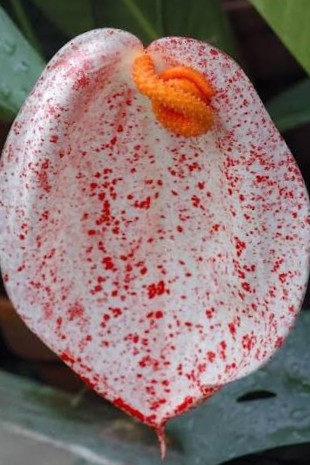
Painter's Pallette
Anthurium scherzerianum Schott
- Anthurium rothschildianum (Pynaert) Pynaert — historical horticultural synonym
- Anthurium williamsii (B.S.Williams) Anon. — historical horticultural synonym
- Anthurium scherzerianum var. rothschildianum Pynaert — historical spotted horticultural form
- Anthurium scherzerianum var. williamsii B.S.Williams — historical horticultural variety
- Anthurium scherzerianum var. album Burb. — historical white-spathed horticultural variety
- Anthurium scherzerianum var. roseum W.Bull — historical pink-spathed horticultural variety
- Anthurium scherzerianum var. wardii Van Geert — historical horticultural variety
- Anthurium scherzerianum var. albopunctatum Engl. — historical white-spotted horticultural variety
- Anthurium scherzerianum var. albostriatum Engl. — historical white-striped horticultural variety
- Anthurium scherzeranum — frequently encountered misspelling in pet-poison, nursery, and secondary-reference searches
Araceae — Arum or Aroid Family
Painter’s Pallette; Painter’s Palette; Painter’s Pallet; Flamingo Flower; Flamingo Plant; Flamingo Lily; Oilcloth Flower; Pigtail Plant; Pigtail Anthurium; Tail Flower; Tailflower; Scherzer’s Flamingo Flower; Scherzer’s Flamingo Plant; Anthurium
Historical and taxonomic search variations include Anthurium rothschildianum (Pynaert) Pynaert, Anthurium williamsii (B.S.Williams) Anon., Anthurium scherzerianum var. rothschildianum, Anthurium scherzerianum var. williamsii, Anthurium scherzerianum var. album, Anthurium scherzerianum var. roseum, Anthurium scherzerianum var. wardii, Anthurium scherzerianum var. albopunctatum, and the frequently encountered misspelling Anthurium scherzeranum.
Painter’s Palette, Flamingo Flower, Flamingo Lily, Oilcloth Flower, Tailflower, and Anthurium are ambiguous names and are frequently applied to Anthurium andraeanum, cultivated Anthurium hybrids, and other species in the genus. Anthurium scherzerianum usually has narrower oblong-to-elliptic leaves, a compact clumping habit, a broad scarlet to orange-red spathe, and a distinctive orange-red spadix that curls upward like a pigtail, while A. andraeanum usually has broader heart-shaped leaves and a straighter spadix. The scientific name, complete plant, leaf shape, spadix form, fruit, growth habit, and nursery or florist label should be used for identification.
Insoluble Calcium Oxalate Is the Established Hazard
Painter’s Pallette is an aroid oral irritant. Its established toxic principle is water-insoluble calcium oxalate occurring in microscopic crystal forms, especially needle-shaped raphides. These crystals injure tissue mechanically when plant cells are crushed and their contents contact the mouth, throat, eyes, skin, or gastrointestinal lining.
Direct quantitative toxicology research on exact Anthurium scherzerianum tissues is limited. The mechanism is supported by the recognized toxicity of the Anthurium genus, direct anatomical demonstrations of raphides and druses in related Anthurium andraeanum, surveys of calcium oxalate crystals across Araceae, and the immediate clinical syndrome consistently associated with raphide-containing aroids. The page should not imply that every tissue concentration or exact veterinary dose has been measured in this species.
Raphides, Druses, and Other Crystal Forms
Raphides are elongated needle-like crystals commonly grouped into bundles. Druses are rounded or rosette-like aggregates of crystals. Araceae research has documented raphides, druses, prismatic crystals, and crystal sand in different organs and taxa, and more than one crystal type may occur within the same plant.
Raphides receive the greatest clinical attention because their elongated shape allows them to puncture and abrade moist tissue. Druses and other crystal forms may contribute to the total plant mineral burden but do not necessarily produce the same needle-like mechanical effect. Exact crystal type, number, size, and location can differ among Anthurium species, tissues, plant ages, and growing conditions.
Idioblasts
Calcium oxalate crystals are commonly stored within specialized plant cells called idioblasts. These cells differ from surrounding tissue by accumulating crystals or other unusual products. Araceae leaf studies have identified spindle-shaped crystal idioblasts within mesophyll tissue, with raphides occurring particularly within internal leaf layers.
Chewing, tearing, crushing, pruning, repotting, and cutting disrupt crystal-bearing cells. Some raphide idioblasts in aroids are capable of rapid discharge under pressure, while others release their contents when the cell wall is ruptured. Either process can spread numerous microscopic crystals through sap and saliva.
The Needle Effect
The immediate injury is primarily physical. Raphides pierce and abrade the lips, gums, tongue, palate, pharynx, and other tissues, producing a sensation often described as burning, stinging, or numerous tiny needles. Pain receptors and inflammatory pathways are activated rapidly, which explains why signs usually begin while the animal is still chewing.
Direct experimental work has shown that the needle shape of raphides can intensify the biological effects of accompanying defensive proteins by creating microscopic breaches in tissue barriers. That experiment used purified kiwifruit raphides, cysteine protease, and insect larvae. It supports a general needle-effect concept but does not establish one named Anthurium protease or a mammalian toxic dose.
Possible Proteinaceous Co-Irritants
Some members of Araceae contain proteins or proteolytic enzymes that may intensify inflammation after raphides puncture tissue. The crystals can provide pathways through which accompanying substances contact deeper epithelial layers. This may help explain why plants with apparently similar calcium oxalate burdens differ in acridity.
No specific clinically important proteinase has been demonstrated as a separate established toxin in Anthurium scherzerianum. It would therefore be inaccurate to name bromelain, ficin, trypsin-like enzymes, or another protease as the plant’s confirmed toxin. Insoluble calcium oxalate remains the defensible primary toxic principle.
Local Injury Rather Than Systemic Oxalate Poisoning
Insoluble calcium oxalate raphides remain primarily within the tissue they contact. They do not ordinarily dissolve in sufficient quantity to bind circulating calcium throughout the body or precipitate diffusely within the kidneys. The expected syndrome is painful local inflammation rather than systemic oxalate absorption.
This differs from soluble sodium or potassium oxalates in certain forage plants. Soluble oxalates can enter the bloodstream, lower blood calcium, disturb cardiac and neuromuscular function, and contribute to calcium-oxalate renal injury. That systemic mechanism should not be assigned to a correctly identified uncomplicated Anthurium exposure.
Hypocalcemia, acute renal failure, profound neurologic depression, prolonged paralysis, seizures, coma, or major rhythm abnormalities require investigation for another plant, ethylene glycol, medication, pesticide, caustic substance, oxygen deprivation, metabolic disease, or a mixed exposure. Severe dehydration or shock from persistent vomiting is possible but is secondary rather than the characteristic crystal mechanism.
Leaves and Petioles
Leaves and their petioles are common household exposure sources because they project beyond the pot and may be chewed repeatedly by dogs or cats. Raphide-containing tissue can remain irritating after a leaf has wilted or fallen. A small bite may produce dramatic pain because the crystals act immediately at the contact site.
Leaf tips, torn margins, and tooth punctures may be difficult to see on a large plant. Preserve the complete leaf rather than removing only the visibly damaged portion. Nursery-applied pesticides, leaf-shine products, fertilizers, and cleaners may add separate hazards.
Spathe, Spadix, True Flowers, Fruit, and Seeds
The brightly colored spathe is a modified leaf rather than the complete flower. The central spadix bears many tiny true flowers and may later develop orange to red berries. Floral-organ research across Araceae demonstrates that calcium oxalate crystals can occur within reproductive structures and may be associated with pollen in some species.
Exact crystal distribution within every reproductive tissue of A. scherzerianum has not been quantified comprehensively. The spathe, spadix, flowers, berries, and seeds should nevertheless remain inaccessible because they are parts of the same irritant aroid and may be chewed directly or fall from a cut arrangement.
Roots, Short Stems, and Divided Plants
Roots, root crowns, short stems, offsets, and propagation material should be treated as irritating. Repotting and division crush tissue and spread sap onto hands, tools, potting benches, floors, containers, fur, and clothing. Root pieces may be especially accessible when a pet overturns a pot.
Potting medium introduces additional hazards, including fertilizer granules, insecticides, fungicides, mold, sharp support material, and stagnant drainage water. An animal chewing the root ball may therefore have a mixed exposure rather than uncomplicated raphide contact alone.
Skin and Fur Exposure
Sap and microscopic plant particles may cause stinging, redness, itching, localized swelling, or dermatitis, particularly on damaged skin or sensitive areas. Residue trapped beneath a collar, harness, clothing, bandage, or matted fur can prolong contact.
Licking contaminated fur creates a secondary oral exposure. Skin contact alone is generally less serious than chewing, but persistent inflammation, blistering, facial involvement, or widespread lesions requires examination. Gloves should be worn during plant cleanup.
Eye Exposure
Sap or plant particles in the eye can cause immediate pain, tearing, squinting, redness, eyelid swelling, light sensitivity, and vigorous rubbing. Raphides and rubbing may abrade the corneal surface. Eye signs can therefore persist longer than mild oral discomfort.
Eye exposure requires immediate gentle irrigation and prompt veterinary assessment when pain, squinting, redness, cloudiness, swelling, discharge, or inability to open the eye continues. Fluorescein staining and removal of retained particles may be needed.
Cut Flowers and Vase Water
Cut spathes and spadices remain irritating because cutting does not remove the crystals. Stems projecting from a vase may be chewed, and fallen floral material may remain accessible after the arrangement is discarded. Sap can contaminate the vase exterior, counter, sink, scissors, and surrounding surfaces.
Anthurium vase water is not equivalent to the highly nephrotoxic plant water associated with true lilies and daylilies. The primary Anthurium mechanism remains direct contact with plant tissue and sap. The water can nevertheless contain plant debris, sap, floral preservative, fertilizer, bacteria, dye, pesticide, or material from other flowers and should not be offered to animals.
Drying and Wilting Do Not Prove Safety
Calcium oxalate crystals are mineral structures and are not reliably destroyed merely because plant material dries, wilts, freezes, or becomes old. Spent spathes, dried stems, fallen leaves, dead roots, discarded houseplants, and old floral arrangements can remain irritating.
Dried material may fragment more easily and spread through floors, trash, compost, bedding, or cages. It should be placed directly into a closed animal-inaccessible container. Open compost and yard-waste piles are unsuitable when pets, livestock, poultry, rabbits, or wildlife can reach them.
No Validated Toxic Dose
No dependable toxic leaf count, bite size, spathe area, stem length, root weight, or plant mass has been established for dogs, cats, horses, livestock, rabbits, birds, or other animals. One bite may produce immediate intense pain, while repeated chewing exposes more tissue and increases swelling, vomiting, diarrhea, dehydration, and foreign-body risk.
The practical severity depends on the animal’s size, species, tissue involved, chewing, duration of contact, amount swallowed, retained fragments, airway location, eye exposure, and accompanying chemicals or bouquet plants. Management should be based on actual clinical findings rather than an unsupported universal dose.
Immediate Onset
Clinical signs usually begin immediately or within minutes because the crystals injure tissue as soon as the plant is bitten or crushed. An animal may abruptly release the leaf or stalk, cry out, shake its head, rub its face, lick its lips, or paw repeatedly at its mouth. This rapid onset strongly supports a local irritant rather than a toxin requiring prolonged absorption.
Absence of an immediate reaction does not prove that no exposure occurred. A small fragment may have been swallowed quickly, sap may have contacted the eye or skin, or another plant in the arrangement may produce a delayed syndrome. The complete exposure must be reviewed.
Oral Burning and Pain
Burning or stinging pain may involve the lips, gums, tongue, palate, inner cheeks, and back of the mouth. Visible tissue can appear red, swollen, abraded, or unusually sensitive. Small bleeding points may occur after substantial chewing or forceful rubbing.
The animal may approach food or water repeatedly and then pull away because swallowing hurts. Refusal to eat immediately after exposure commonly reflects pain rather than systemic organ failure. Persistent inability to eat requires treatment, especially in cats and small herbivores.
Drooling and Foamy Saliva
Excessive salivation is one of the most characteristic signs. Saliva may become thick, stringy, foamy, or blood-tinged and may hang from the mouth because swallowing is painful. Wet fur can develop around the chin, neck, chest, and front legs.
Heavy drooling can contribute to fluid loss in a small patient, but its greater importance is as evidence of oral or pharyngeal pain. Continued drooling after the expected early period raises concern for retained plant material, significant swelling, esophageal irritation, caustic exposure, dental injury, or another diagnosis.
Gagging, Repeated Swallowing, and Dysphagia
Repeated swallowing, gagging, coughing, retching, neck stretching, or reluctance to swallow may indicate irritation near the back of the tongue, pharynx, or esophagus. An animal may allow water to fall from the mouth or regurgitate immediately after attempting to drink.
Dysphagia can result from pain, swelling, or a lodged plant stalk or fragment. A rigid cut stem, root mass, florist pick, wire, or decoration component can create a mechanical obstruction separate from the oxalate injury. Persistent signs require oral and upper-airway examination.
Swelling and Airway Compromise
Mild localized swelling of the lips, tongue, gums, and oral tissues may accompany the pain. Severe pharyngeal or laryngeal swelling is uncommon but potentially life-threatening. Airway narrowing can progress rapidly in a small animal.
Harsh or noisy inhalation, wheezing, open-mouth breathing, head and neck extension, panic, rapidly increasing tongue or facial swelling, blue-gray gums, weakness, collapse, or reduced responsiveness requires immediate emergency airway management. Nothing should be given by mouth during respiratory distress.
Vomiting and Gastrointestinal Irritation
Dogs, cats, pigs, birds, and other species capable of vomiting or regurgitating may develop nausea, dry heaving, vomiting, abdominal discomfort, appetite loss, or diarrhea after swallowing plant material. Vomiting can return crystals across already injured tissue and increase aspiration risk.
One episode may resolve without complication, while repeated vomiting or diarrhea can cause dehydration, electrolyte abnormalities, weakness, and reduced urination. Blood, black material, severe abdominal pain, enlargement, or inability to retain water requires examination for significant injury, another toxin, or a foreign body.
Dogs
Dogs may pull a pot from a stand, chew a leaf or flowering stalk, investigate discarded roots, or carry a cut stem from a bouquet. Common signs include head shaking, pawing at the mouth, drooling, gagging, vomiting, food refusal, diarrhea, and painful swallowing. Puppies and habitual chewers may continue biting despite the discomfort.
A long stalk, root mass, florist wire, pick, or decoration can create choking or gastrointestinal obstruction. Persistent vomiting, abdominal pain, reduced stool, or renewed illness after oral signs improve requires imaging or endoscopic assessment.
Cats
Cats may chew leaf tips, investigate the spadix, rub against cut flowers, knock over a vase, or transfer sap from the paws and coat to the mouth during grooming. Drooling, lip licking, gagging, vomiting, hiding, and food refusal may follow. Oral irritation usually differs sharply from the delayed kidney failure caused by true lilies and daylilies.
Continued anorexia deserves prompt attention because cats can develop serious metabolic complications when they stop eating. A mixed bouquet may contain Lilium or Hemerocallis, and lack of severe mouth pain does not rule out those nephrotoxic plants. Every flower in the arrangement must be identified.
Horses
Horses may encounter Painter’s Pallette through discarded greenhouse plants, landscaping waste, floral debris, or plants placed around barns and event facilities. Horses cannot vomit. Possible findings include salivation, repeated swallowing, feed refusal, coughing, throat swelling, abnormal respiratory noise, colic, diarrhea, and reduced gastrointestinal sounds.
A horse with dysphagia should not be drenched. Material from the mouth may be aspirated, and forceful administration increases stress and airway risk. Respiratory noise, feed material from the nostrils, persistent coughing, or inability to swallow requires immediate large-animal veterinary care.
Cattle, Sheep, Goats, and Other Livestock
Livestock exposure is most likely after greenhouse waste, discarded houseplants, floral arrangements, or mixed landscaping debris is placed within reach. Salivation, oral discomfort, feed refusal, repeated swallowing, diarrhea, or respiratory noise may occur. The bitter painful exposure usually limits continued consumption.
Remove the entire group from the material and inspect every plant in the waste pile. Yew, Oleander, rhododendron, azalea, Sago Palm, true lilies, bulbs, pesticides, fertilizer, wire, and plastic may be mixed with the Anthurium and produce a very different syndrome.
Rabbits and Guinea Pigs
Rabbits and guinea pigs may stop eating after even limited oral injury. Drooling, food refusal, reduced fecal production, tooth grinding, abdominal discomfort, hiding, or weakness may develop. These animals cannot vomit.
Reduced intake can progress to gastrointestinal stasis and become more medically important than the original brief plant contact. Force-feeding is unsafe until severe mouth pain, obstruction, bloat, swallowing ability, and respiratory status have been assessed.
Companion Birds and Poultry
Parrots and other birds can efficiently crush leaves and flower stalks, releasing many crystals across a small oral surface. Repeated beak wiping, facial rubbing, regurgitation, food refusal, oral swelling, tongue abnormalities, open-mouth breathing, weakness, or inability to perch normally requires avian veterinary care.
Poultry may peck fallen berries, leaves, or greenhouse waste. Mixed floral debris may contain additional toxins, wire, foam, preservatives, or pesticide. Exact avian dose information for A. scherzerianum is limited, so significant signs should not be managed from mammalian assumptions alone.
Reptiles and Other Exotics
Herbivorous reptiles may bite leaves or flowers placed within an enclosure, while climbing reptiles may contact sap on branches or decor. Oral irritation may appear as food refusal, mouth rubbing, abnormal tongue movement, excess oral fluid, regurgitation, weakness, or breathing changes.
Exact species-specific information is sparse. Terrarium humidity, heat, stress, substrate ingestion, pesticide treatment, and other plants may complicate the case. Exotic-animal veterinary assessment is appropriate when signs are more than mild and transient.
Skin and Fur Signs
Sap exposure may cause stinging, redness, itching, localized swelling, or dermatitis. The animal may scratch, lick, rub, or chew the affected area. Residue beneath a collar, harness, clothing, or matted fur prolongs contact.
Continued grooming transfers crystals and sap to the mouth. Wash exposed fur and skin with lukewarm water and mild pet-safe shampoo when the patient is stable. Persistent pain, spreading lesions, blistering, facial swelling, or extensive exposure requires examination.
Eye Signs
Eye exposure can cause immediate tearing, squinting, eyelid spasm, redness, swelling, light sensitivity, and rubbing. The eye may appear cloudy or develop discharge. Plant particles and rubbing can scratch the cornea.
Ocular pain should not be dismissed as ordinary oral irritation. Continued squinting, cloudiness, inability to open the eye, visible material, or worsening redness requires prompt fluorescein examination and treatment. Human redness-relief drops should not be used.
Expected Duration
Most uncomplicated oral exposures improve substantially within several hours and resolve within approximately one day. Mild residual mouth sensitivity or reduced appetite can persist somewhat longer after heavier chewing. Clinical improvement should be steady rather than intermittent or worsening.
Routine symptoms lasting one or two weeks are not expected. Persistent drooling, swelling, gagging, vomiting, diarrhea, hoarseness, anorexia, coughing, eye pain, or respiratory noise may indicate retained material, deeper injury, dehydration, aspiration, corneal damage, foreign-body obstruction, another bouquet plant, or a different diagnosis.
Signs That Do Not Fit Uncomplicated Anthurium Irritation
Convulsions, coma, profound neurologic depression, systemic hypocalcemia, acute renal failure, liver failure, prolonged paralysis, major arrhythmia, or unexplained widespread bleeding does not fit the expected insoluble-calcium-oxalate syndrome. Severe oxygen deprivation or shock can produce neurologic collapse, but the underlying airway or circulatory emergency should be apparent.
Atypical findings require immediate investigation for ethylene glycol, soluble-oxalate plants, true lilies, daylilies, cardiotoxic plants, pesticides, medication, caustic chemicals, foreign material, metabolic disease, or another illness. Plant presence alone should not end the diagnostic process.
How This Page Uses the Name Painter’s Pallette
On this page, Painter’s Pallette refers specifically to Anthurium scherzerianum Schott. The page title preserves the frequently encountered “Pallette” spelling, while Painter’s Palette is the standard English spelling and Painter’s Pallet appears in some poison and nursery searches. Oilcloth Flower, Flamingo Flower, Pigtail Plant, and Tailflower may refer to the same species in particular contexts.
Common names alone are unreliable because Painter’s Palette, Flamingo Flower, Oilcloth Flower, and Anthurium are also used for Anthurium andraeanum and cultivated hybrids. Exact plant records should include the scientific name, nursery label, photographs, leaf form, spathe, spadix, fruit, and growth habit.
Accepted Scientific Name and Historical Taxonomy
Anthurium scherzerianum was described by Heinrich Wilhelm Schott in 1857. Current Kew treatment accepts the species within Araceae and records 34 historical synonyms. Most are nineteenth- and early-twentieth-century horticultural names assigned to forms differing in spathe color, markings, size, or growth.
Anthurium rothschildianum, Anthurium williamsii, and numerous varieties of A. scherzerianum are now included within the accepted species. The misspelling Anthurium scherzeranum appears in secondary sources but is not the correct botanical spelling.
Native Range and Habitat
The accepted native range is Costa Rica. Wild plants occur in wet premontane, lower montane, and montane rainforest on the Atlantic slopes of the Cordillera Central and Cordillera de Talamanca. Kew places the species at approximately 1,300–2,100 meters.
Plants may grow terrestrially with roots in forest soil or as epiphytes attached to trees. Their native habitat is humid, shaded, and tropical. Cultivation has spread the species and its hybrids worldwide as potted ornamentals and cut flowers.
Growth Form
Painter’s Pallette is a compact evergreen clump-forming perennial with a short stem, spreading leaves, and numerous roots. Cultivated plants usually remain small enough for desks, tables, counters, shelves, plant stands, windowsills, offices, lobbies, conservatories, and greenhouse benches.
Small size does not prevent exposure. Leaves and flower stalks may project beyond the pot, a cat may climb to the plant, and a dog may pull the entire container down. Fallen material can remain beneath furniture or among other houseplants.
Leaves
Leaves are leathery, oblong to elliptic, and generally narrower than the broad heart-shaped leaves associated with common florist Anthurium. Kew describes blades reaching approximately 25 centimeters long and 8 centimeters wide on petioles that may reach about 20 centimeters.
Both leaf surfaces may bear minute dark glands. Leaf dimensions vary among cultivars and growing conditions, so shape should not be used alone. Preserve the leaf base and petiole when identification matters.
The Colorful Spathe
The broad brightly colored structure is a spathe, a modified leaf associated with the inflorescence. In the wild type it is usually scarlet to orange-red and broadly oval. Cultivated forms may be white, pink, red, spotted, patterned, or differently marked.
Spathe color does not predict toxicity. White, red, orange, pink, patterned, dwarf, and hybrid forms should all be treated as raphide-containing aroids. A detached spathe remains plant tissue rather than a harmless decorative petal.
The Curled Pigtail Spadix
The central orange-red spadix bears many tiny true flowers. In A. scherzerianum, it characteristically curls or coils upward, creating the pigtail appearance responsible for the names Pigtail Plant and Pigtail Anthurium. The spadix may reach approximately 8 centimeters.
This curled spadix is one of the most useful distinctions from Anthurium andraeanum, whose spadix is usually straighter. Hybridization and horticultural selection can blur the distinction, so the nursery label and complete plant remain important.
True Flowers, Pollination, and Fruit
Numerous tiny flowers are packed closely along the spadix. After pollination, the infructescence may produce orange to red berries. Fruit and seeds should remain inaccessible to animals.
Calcium oxalate crystal surveys across Araceae have found crystals in floral tissues and, in some taxa, associated with pollen. The exact reproductive-tissue distribution in A. scherzerianum has not been mapped comprehensively enough to declare the spadix, pollen, berries, or seeds non-irritating.
Painter’s Pallette and Florist Anthurium
Anthurium andraeanum is the species most commonly sold as Painter’s Palette, Flamingo Flower, Oilcloth Flower, and Tailflower in the florist trade. It generally has broader heart-shaped leaves and a straighter pale, yellow, cream, or colored spadix projecting from a broad waxy spathe.
Anthurium scherzerianum is usually more compact, has narrower elongated leaves, and produces the curled orange-red spadix. Both are raphide-containing aroids expected to cause similar immediate oral irritation. Uncertainty between them should not delay first aid.
Cut-Flower Exposure
Anthurium inflorescences are valued as cut flowers because they remain attractive in water for an extended period. A home may therefore contain Painter’s Palette stalks without a potted plant. Pets may chew projecting stems, investigate fallen spathes, or contact sap during trimming.
Florist buckets, counters, scissors, sinks, wrappings, and delivery boxes can hold sap or plant fragments. Preserve labels and the entire arrangement after an exposure. Do not return a toxic arrangement to an accessible counter after removing only the damaged flower.
Mixed Floral Arrangements
Painter’s Palette may appear with true lilies, daylilies, tulips, daffodils, chrysanthemums, eucalyptus, palms, decorative berries, and unidentified greenery. Each plant must be evaluated separately. The immediate oral pain produced by Anthurium does not explain every possible bouquet toxin.
True Lilium lilies and Hemerocallis daylilies can cause fatal acute kidney injury in cats after small exposures, including pollen and plant water. Lily of the Valley contains cardiac glycosides. Tulip and daffodil bulbs produce different gastrointestinal and systemic hazards. Bring the complete bouquet to the veterinarian.
Floral Chemicals and Hardware
Cut arrangements may contain preservatives, fertilizer, dye, glitter, artificial snow, pesticide, antimicrobial products, adhesives, floral foam, wire, plastic picks, wooden skewers, ribbon, string, staples, batteries, or glass. These materials can create chemical, choking, laceration, linear-foreign-body, or obstruction hazards.
A missing rigid stalk or florist pick deserves particular attention when gagging or vomiting persists after oral pain improves. Imaging or endoscopy may be needed. Do not assume that every sign comes from the calcium oxalate crystals.
Raphides and Idioblasts
Raphides are elongated calcium oxalate crystals commonly stored in specialized idioblast cells. Araceae anatomy studies have documented crystal forms throughout leaves and reproductive structures. In related A. andraeanum, microscopy has demonstrated both druses and raphides within leaf tissue.
The crystals serve several potential plant functions, including calcium regulation and defense against herbivory. Chewing transforms that defense into immediate animal injury. Their mineral nature also explains why ordinary drying does not guarantee destruction.
Evidence for Co-Irritants
Direct experimental work demonstrates that raphides can synergistically intensify accompanying proteins by puncturing tissue barriers. This general mechanism is biologically plausible for strongly acrid aroids. It does not establish that A. scherzerianum contains the same cysteine protease used in the experiment.
Public toxicology should therefore avoid naming an unverified Anthurium enzyme. If future exact-species biochemical work identifies clinically relevant proteins, the mechanism can be refined. At present, insoluble calcium oxalate is the established hazard and possible proteinaceous co-irritants remain qualified.
Dogs
Dogs may chew leaves, pull a pot from a stand, carry a flowering stalk, raid discarded plants, or investigate bouquet waste. Puppies may continue chewing longer than expected or swallow a rigid stem. Oral pain, drooling, gagging, vomiting, diarrhea, and food refusal are the principal concerns.
Keep the plant out of rooms used by unsupervised puppies and object-eating dogs. Check beneath plant stands and furniture for fallen material. Secure potting soil and fertilizer as separate hazards.
Cats
Cats may chew leaf tips, brush against flowers, knock over pots or vases, walk through sap, and groom contaminated paws. An elevated shelf is not reliable because cats climb and flower stalks project outward. Continued anorexia requires prompt attention.
Mixed bouquets create the greatest diagnostic danger. A cat showing only mild mouth irritation may also have contacted a true lily or daylily that produces delayed renal injury. Preserve every flower and all vase water information.
Horses
Horses are unlikely to encounter the plant in ordinary pasture but may gain access to greenhouse plants, event decorations, landscaping waste, floral displays, or discarded houseplants. They cannot vomit and should not be drenched when drooling or swallowing abnormally.
Salivation, feed refusal, coughing, respiratory noise, colic, diarrhea, or repeated swallowing requires examination. Remove all horses from mixed ornamental debris because another plant may present a more severe systemic hazard.
Cattle, Sheep, Goats, and Other Livestock
Anthurium should never be discarded into a pasture, pen, feed bunk, poultry yard, or compost accessible to livestock. Greenhouse and florist waste may contain several ornamental species, fertilizer, pesticides, foam, and wire. The entire pile must be treated as an unknown mixed exposure.
One salivating or feed-refusing animal should prompt removal of the whole group and identification of every plant. Respiratory distress, neurologic disease, sudden death, or major cardiac abnormalities suggests another or additional toxicant.
Rabbits and Guinea Pigs
Painter’s Pallette must not be offered as browse. Oral pain can cause food refusal and reduced fecal production, which may progress to gastrointestinal stasis. Small body size and inability to vomit increase concern when a meaningful amount is chewed.
Monitor eating, feces, drooling, abdominal size, posture, and activity. Do not force-feed until swallowing, obstruction, pain, and respiratory status have been assessed. Species-experienced veterinary care is appropriate for continued signs.
Companion Birds and Poultry
Birds can use the beak to crush fibrous plant tissue efficiently. A parrot may release many crystals over the tongue and oral cavity while appearing to shred rather than swallow. Cut flower stalks must never be used as perches or enrichment.
Beak wiping, face rubbing, regurgitation, food refusal, swelling, respiratory distress, weakness, or inability to perch normally requires avian veterinary evaluation. Mixed floral material and florist hardware must be considered.
Reptiles and Other Exotics
Do not place Anthurium in terrariums, tortoise grazing areas, or mixed-species displays. Herbivorous reptiles may chew leaves or flowers, while climbing species may contact sap. Exact reptile toxicology is limited.
Mouth rubbing, refusal to eat, regurgitation, abnormal tongue use, facial swelling, weakness, or breathing changes requires specialized care. Heating, humidity, and enclosure stress may alter the presentation and treatment.
Diagnosis
Diagnosis usually rests on plant identification, witnessed chewing, rapid onset of oral pain, drooling, head shaking, pawing at the mouth, and localized swelling. There is no routine blood test that confirms Anthurium raphide exposure or measures a crystal dose.
Useful evidence includes the complete plant, nursery or florist label, leaves attached to petioles, spathe, curled spadix, berries, roots, chewed fragments, vomit, photographs, vase contents, and every species in a mixed bouquet. A detached red spathe alone may not establish the exact Anthurium species.
When Laboratory Testing Is Appropriate
Laboratory testing is not necessary for every mild brief exposure but may be indicated when vomiting or diarrhea persists, dehydration develops, food refusal continues, systemic findings are present, or another toxin is suspected. Blood count, electrolytes, kidney and liver measurements, glucose, acid-base status, and urinalysis may help identify complications or a different diagnosis.
Kidney failure, systemic hypocalcemia, major cardiac abnormalities, seizures, coma, or prolonged illness should not be attributed automatically to insoluble calcium oxalate. Mixed bouquet plants, ethylene glycol, medication, fertilizer, pesticide, caustic cleaners, foreign bodies, and unrelated disease require investigation.
Veterinary Treatment
There is no specific antidote because the primary injury is produced by crystals embedded in contacting tissue. Veterinary care may include oral examination and irrigation, removal of retained fragments, pain control, antiemetic treatment, hydration support, oxygen, airway monitoring, and treatment of severe inflammation.
Sedation may be needed when pain prevents a safe oral examination, but airway swelling must be considered before sedation. Severe laryngeal involvement may require endotracheal intubation or emergency airway management. An obstructing stalk, root mass, wire, or florist component may require endoscopic or surgical removal.
Eye treatment may include prolonged irrigation, topical anesthetic used by the veterinarian for examination, fluorescein staining, removal of retained particles, prescribed ophthalmic medication, and recheck. Human eye medication should not be substituted.
Prognosis
The prognosis is generally good to excellent when signs remain limited to temporary oral irritation and mild gastrointestinal upset. Most patients improve substantially within several hours as inflammation subsides and loose material is removed. Comfortable swallowing and normal appetite should return progressively.
The outlook becomes more serious with severe laryngeal swelling, aspiration, corneal ulceration, persistent vomiting, major dehydration, prolonged anorexia, gastrointestinal stasis, or an obstructing plant or florist component. Atypical systemic signs depend on the actual additional diagnosis.
Prevention
Keep potted plants, cut flowers, florist buckets, fallen spathes, berries, roots, and pruning material completely inaccessible. A high table is not sufficient when a cat can climb or a stalk extends over the edge. Closed rooms or removal from animal households provide better prevention.
Wear gloves while pruning, dividing, or repotting. Clean tools, counters, sinks, floors, containers, clothing, and exposed fur. Place every cutting directly into a closed animal-inaccessible container and inspect the work area before animals return.
Immediate Steps After Exposure
- Stop further exposure: Move the animal away from the potted plant, bouquet, fallen spathes, leaves, stalks, roots, berries, sap, vase water, and contaminated surfaces.
- Preserve the complete plant: Save the nursery or florist label and photograph the leaves, spathe, curled spadix, pot, roots, and every plant included in a mixed arrangement.
- Wear gloves: Protect your hands and eyes while handling sap-covered material, vomit, or contaminated fur.
- Record the exposure: Note the time, amount missing, plant parts involved, and when drooling, gagging, swelling, vomiting, or breathing changes began.
- Contact a professional: Call a veterinarian or animal poison-control service when symptoms are more than mild and brief, the amount is uncertain, or swallowing, breathing, or the eyes are affected.
Check the Airway Before Rinsing the Mouth
- Listen for respiratory noise: Harsh inhalation, wheezing, gasping, or unusually loud breathing may indicate upper-airway swelling.
- Watch the tongue and throat: Rapidly increasing swelling of the tongue, lips, face, or throat requires emergency treatment.
- Check gum color: Pale, gray, or blue gums indicate inadequate oxygenation or circulation.
- Watch body position: Open-mouth breathing or an extended head and neck may indicate respiratory distress.
- Give nothing by mouth during airway difficulty: Food, water, milk, pills, and liquid medication can be aspirated.
Airway evaluation takes priority over mouth rinsing. A distressed animal should be transported immediately rather than restrained for prolonged cleaning. Severe swelling may progress while an owner is attempting home treatment.
Remove Loose Plant Material
- Remove only visible loose pieces: Carefully take accessible plant material from the lips and front of the mouth when this can be done safely.
- Do not perform a blind finger sweep: Reaching deeply may push material toward the airway or result in a bite.
- Wipe gently: Use a damp cloth to remove visible sap and debris from the lips, gums, and front of the tongue.
- Do not scrub: Vigorous rubbing may drive crystals farther into irritated tissue.
- Preserve removed pieces: Place them in a closed container for identification.
Rinse the Mouth Only When Safe
A gentle rinse may remove loose crystals and sap but cannot extract raphides already embedded in tissue. The animal must be fully alert, cooperative, breathing normally, and swallowing normally.
- Use cool or lukewarm water: Allow a gentle stream to pass across the front of the mouth without directing it toward the throat.
- Position the head for drainage: Water, saliva, and plant debris must leave the mouth freely.
- Do not syringe or pour forcefully: Forced liquid can be aspirated.
- Stop if distress increases: Coughing, choking, panic, weakness, or worsening breathing requires immediate transportation.
Cool Water or Plain Milk as a Comfort Measure
A small voluntary amount of cool water or plain milk may help rinse loose material and soothe the mouth of a fully alert animal that is breathing and swallowing normally. This is a comfort measure rather than an antidote and should not delay veterinary care.
- Offer—do not force: Allow the animal to lick or drink voluntarily.
- Stop if gagging or vomiting begins: Continued oral intake increases aspiration risk.
- Do not offer solid food during swelling: Painful or impaired swallowing creates a choking hazard.
- Do not rely on dairy treatment: Milk does not remove embedded crystals, secure a narrowing airway, treat an eye injury, or remove a foreign body.
Do Not Induce Vomiting
- Do not give hydrogen peroxide: Vomiting returns crystals across injured oral and esophageal tissue and increases aspiration risk.
- Never give peroxide to a cat: Hydrogen peroxide can seriously injure the feline stomach and esophagus.
- Do not use salt, mustard, oil, detergent, syrup, fingers, or manual gagging: These methods create additional hazards.
- Do not induce vomiting in horses, rabbits, guinea pigs, or ruminants: These animals cannot vomit effectively or face serious handling and aspiration risks.
- Do not attempt vomiting after weakness or swelling develops: Impaired swallowing or breathing makes aspiration especially dangerous.
Do Not Give Unsupervised Medication
- Do not give activated charcoal automatically: Charcoal cannot remove crystals embedded in tissue and may be aspirated.
- Do not give diphenhydramine automatically: Antihistamines do not remove raphides or secure a narrowing airway and may cause sedation.
- Do not give anti-diarrheal products: Loperamide, bismuth products, and similar medication do not treat the primary injury and may be inappropriate.
- Do not give sucralfate without direction: It does not remove crystals or treat airway swelling.
- Do not apply human numbing gels: Benzocaine, lidocaine, and similar products may be toxic or interfere with swallowing.
- Do not give human pain medication: Ibuprofen, naproxen, aspirin, acetaminophen, and similar products can cause a second poisoning.
Vomiting, Diarrhea, and Hydration
- Record every episode: Note frequency, blood, black material, plant fragments, and whether water remains down.
- Do not force oral fluids: A vomiting, weak, sedated, or poorly swallowing animal may aspirate.
- Watch for dehydration: Tacky gums, sunken eyes, reduced urination, rapid heart rate, weakness, or worsening lethargy requires treatment.
- Watch for abdominal pain: Hunching, stretching, restlessness, guarding, bloating, or repeated lying down requires assessment.
- Report blood promptly: Repeated bloody vomit, black stool, or substantial bloody diarrhea is not a routine mild exposure.
Skin and Fur Exposure
- Remove contaminated equipment: Take off collars, harnesses, clothing, or bedding holding sap against the skin.
- Wash skin and fur: Use lukewarm water and mild pet-safe shampoo to remove sap and plant debris.
- Prevent grooming: Stop the animal from licking contaminated fur until cleaning is complete.
- Wash your hands and tools: Prevent transfer to the eyes, mouth, another animal, food, or water.
- Seek care for persistent dermatitis: Continued redness, swelling, blistering, pain, or spreading lesions requires examination.
Eye Exposure
- Begin irrigation immediately: Flush continuously with sterile saline or clean lukewarm water for approximately 15–20 minutes when possible.
- Flush from the inner corner outward: Direct liquid away from the opposite eye and face.
- Do not rub the eye: Rubbing may drag crystals or particles across the cornea.
- Do not use human eye drops: Redness-relief, anesthetic, antibiotic, or steroid products may be inappropriate.
- Obtain prompt veterinary care: Continued squinting, redness, tearing, cloudiness, swelling, discharge, or inability to open the eye requires examination.
Mixed Bouquet Exposure
- Identify every plant: Do not assume the Anthurium is the only plant contacted.
- Take the entire arrangement: Bring photographs, labels, loose flowers, greenery, water information, and a florist plant list when available.
- Treat true-lily or daylily exposure separately: Possible contact is an immediate feline kidney emergency even when mouth irritation is absent.
- Report floral chemicals: Tell the veterinarian about preservatives, dyes, glitter, sprays, fertilizer, or pesticides.
- Account for hardware: Wire, picks, ribbon, string, foam, plastic, glass, and batteries may create separate emergencies.
Possible Choking or Foreign Body
- Watch for persistent gagging: Repeated swallowing, neck extension, regurgitation, or inability to drink may indicate lodged material.
- Watch for gastrointestinal obstruction: Continued vomiting, abdominal pain, enlargement, reduced stool, or recurrence after temporary improvement requires examination.
- Do not push material deeper: Never force food, water, fingers, or tools toward a lodged stalk or object.
- Preserve matching material: A similar stalk, pick, or root piece helps the veterinarian assess size and rigidity.
- Expect imaging or endoscopy: Plant stalks and florist components may require physical retrieval.
Dogs and Cats
- Monitor breathing and swallowing: Rapid swelling, noisy breathing, or inability to drink requires emergency care.
- Monitor eating: Continued food refusal is particularly important in cats.
- Report bouquet access: True lilies, daylilies, medication, fertilizer, and floral chemicals may alter the emergency.
- Do not leave the plant accessible after improvement: Repeated exposure can occur from fallen material or contaminated surfaces.
Horses and Livestock
- Remove the entire group: Prevent further access to greenhouse waste, discarded houseplants, or floral debris.
- Do not drench an affected animal: Salivation, coughing, swelling, or impaired swallowing creates aspiration risk.
- Provide known safe feed and water: Isolate the ornamental waste while preserving representative samples.
- Inspect every plant in the pile: Another ornamental may present a greater systemic hazard.
- Seek urgent care for respiratory noise: Upper-airway swelling in a large animal requires immediate assessment.
Rabbits, Guinea Pigs, Birds, and Other Exotics
- Do not attempt vomiting: Household emesis is unsafe or impossible in these species.
- Monitor eating and feces: Reduced intake or output can become a secondary emergency.
- Do not force-feed before assessment: Pain, swelling, obstruction, bloat, or poor swallowing may make feeding unsafe.
- Minimize handling during breathing difficulty: Stress can worsen respiratory compromise.
- Seek specialized care: Open-mouth breathing, inability to perch, abnormal posture, weakness, or collapse requires immediate treatment.
Veterinary Examination
The veterinarian may assess the lips, tongue, gums, palate, pharynx, larynx, swallowing, respiratory noise, hydration, abdominal comfort, eyes, skin, and neurologic status. Pain or swelling may require sedation for a complete oral examination, but airway risk must be considered before sedation.
- Examine for retained material: Plant fragments may remain within oral folds, beneath the tongue, or near the pharynx.
- Evaluate airway patency: Severe swelling may require oxygen, intubation, or emergency airway access.
- Evaluate the eyes: Irrigation, fluorescein staining, and removal of particles may be needed.
- Evaluate hydration: Repeated vomiting, diarrhea, drooling, and food refusal can require fluid therapy.
- Investigate atypical signs: Kidney failure, seizures, coma, hypocalcemia, or arrhythmia suggests another cause.
Veterinary Treatment
There is no specific antidote. Treatment is directed at removing residual material, controlling pain and vomiting, protecting the airway, maintaining hydration, treating eye injury, and identifying foreign bodies or additional toxins.
Veterinarian-selected analgesics may be required when the patient cannot eat, drink, or rest comfortably. Antiemetic treatment can reduce fluid loss and aspiration risk. Subcutaneous or intravenous fluids may be appropriate for dehydration or prolonged refusal to drink, with the route and amount determined by the patient’s condition.
Severe pharyngeal or laryngeal swelling may require oxygen, continuous observation, endotracheal intubation, or emergency airway management. A lodged stalk, root mass, florist pick, wire, or other object may require endoscopy or surgery. Eye injury may require prescribed ophthalmic pain control, antibiotics, lubricants, or other treatment based on the examination.
Monitoring and Recovery
- Monitor breathing: Respiratory effort and noise should remain normal.
- Monitor swallowing: The animal should progressively regain the ability to eat and drink comfortably.
- Monitor drooling: Salivation should steadily decrease rather than continue or worsen.
- Monitor hydration: Normal gum moisture, drinking, urination, and activity should return.
- Monitor appetite: Continued food refusal requires reassessment, especially in cats and small herbivores.
- Monitor the eyes: Squinting, redness, cloudiness, or rubbing should resolve rather than recur.
Prognosis and Prevention
- Expected prognosis: Limited oral exposure usually has a good to excellent prognosis and improves within several hours.
- More serious prognosis: Severe airway swelling, aspiration, dehydration, corneal ulceration, prolonged anorexia, stasis, or obstruction increases risk.
- Remove the plant from accessible rooms: Do not rely on high shelves or supervision alone.
- Secure cut flowers: Collect every fallen spathe, stalk, berry, and leaf.
- Dispose of waste in a closed container: Do not use open compost or livestock-accessible greenhouse waste piles.
- Clean after pruning or repotting: Wash tools, surfaces, clothing, hands, and contaminated fur before animals return.
Frequently Asked Questions About Painter’s Pallette and Animal Poisoning
Is Painter’s Pallette the correct spelling?
Painter’s Palette is the standard English spelling. Painter’s Pallette is retained in this plant record because it is a frequently encountered title and search variation, while Painter’s Pallet also appears in secondary references. None of those spellings confirms the botanical species. Exact identification should use Anthurium scherzerianum, the complete plant, and its curled pigtail spadix.
Is Painter’s Pallette the same plant as Oilcloth Flower?
On this page, yes. Painter’s Pallette and Oilcloth Flower are alternate common-name entries for Anthurium scherzerianum. Both names are also used loosely in the flower trade, especially for Anthurium andraeanum and hybrids. The label and identifying features must therefore be checked rather than relying on the common name alone.
Is every plant called Painter’s Palette Anthurium scherzerianum?
No. Painter’s Palette is frequently applied to Anthurium andraeanum, the common florist Anthurium, and to cultivated hybrids. A. scherzerianum generally has narrower elongated leaves and a curled orange-red spadix, while A. andraeanum usually has broader heart-shaped leaves and a straighter spadix. Both are raphide-containing oral irritants, so uncertainty should not delay first aid.
What are the red “flower” and curled central structure?
The broad red or orange structure is a spathe, which is a modified leaf. The curled central structure is the spadix, which bears many tiny true flowers. The coiled spadix is the most recognizable feature of A. scherzerianum and explains the name Pigtail Plant. Spathe, spadix, flowers, fruit, and seeds should all remain inaccessible.
What exactly causes the burning pain?
Chewing ruptures plant cells containing microscopic calcium oxalate crystals. Needle-shaped raphides puncture and abrade the lips, tongue, gums, palate, and throat. The injury activates pain and inflammation almost immediately. The plant may contain additional substances that intensify irritation, but no specific clinically important A. scherzerianum protease has been proved.
Are raphides injected from the plant like tiny darts?
Some aroid idioblasts can discharge crystal bundles under pressure, while others release crystals when chewing ruptures the tissue. In either case, saliva, sap, pressure, and tissue destruction spread sharp crystals across moist surfaces. The clinically important result is microscopic mechanical injury. The process should not be described as a venom-injection system.
Can Painter’s Pallette cause kidney failure or dangerously low calcium?
Not as the expected direct effect of its insoluble calcium oxalate raphides. These crystals remain primarily in contacting tissue and do not ordinarily dissolve and circulate like soluble oxalates. Acute kidney failure, systemic hypocalcemia, seizures, coma, or major rhythm abnormalities requires investigation for another plant, ethylene glycol, medication, chemical, or disease. Severe dehydration from persistent vomiting is a separate secondary complication.
Can Painter’s Pallette cause life-threatening throat swelling?
Yes, although severe airway involvement is uncommon. Swelling near the back of the tongue, pharynx, or larynx can narrow the airway. Harsh inhalation, wheezing, open-mouth breathing, head and neck extension, blue-gray gums, panic, weakness, or collapse requires immediate emergency treatment. Do not give food, water, milk, pills, or liquid medication during breathing difficulty.
Should I make my dog or cat vomit?
No. Vomiting brings crystals back across already injured oral and esophageal tissue and increases aspiration risk. Hydrogen peroxide is especially unsafe in cats and should not be given. Remove only loose visible plant pieces and contact a veterinarian or animal poison-control service. Professional care should focus on the mouth, airway, pain, vomiting, hydration, eyes, and any foreign material.
Does activated charcoal treat Anthurium poisoning?
Activated charcoal does not remove crystals embedded in tissue and is not a routine antidote for the local raphide injury. It may be difficult or dangerous to administer when the animal is drooling, vomiting, swollen, or swallowing abnormally. Charcoal should not be forced at home. A veterinarian may consider it only when another ingestible toxin is also suspected.
Will Benadryl stop the swelling?
Diphenhydramine does not remove raphides or reverse their mechanical injury. It may also sedate an animal whose swallowing or airway must be monitored. Some patients with significant inflammation may receive veterinarian-selected medication, but airway protection and direct examination remain more important than an automatic antihistamine dose. Do not administer it unless directed for the individual animal.
Can I give water or milk?
A small voluntary amount of cool water or plain milk may rinse loose residue and soothe the mouth when the animal is fully alert, breathing normally, and swallowing normally. It must not be forced, and it is not an antidote. Stop if gagging or vomiting begins. Give nothing by mouth during swelling, respiratory noise, weakness, or impaired swallowing.
Is yogurt or cheese better than water?
No food has been proved to extract embedded raphides. Thick food and solid cheese can be difficult to swallow when the mouth or throat is painful or swollen. Plain milk or water is used only as a voluntary rinsing or comfort measure in a stable patient. Veterinary care should not be delayed while trying household foods.
Can cut Painter’s Palette flowers still poison a pet?
Yes. The spathe, spadix, and cut stalk remain plant tissue containing insoluble calcium oxalate crystals. Cutting or standing the stalk in water does not remove the irritant mechanism. Pets may chew stems projecting from a vase or contact fallen floral material. Sap-covered scissors, counters, sinks, and wrappings should also be cleaned.
Is Anthurium vase water as dangerous as true-lily water?
The mechanisms differ. Anthurium primarily causes direct raphide injury from plant tissue and sap, while true lilies and daylilies can cause fatal feline kidney injury and their plant water is treated as nephrotoxic. Anthurium water may still contain sap, debris, preservative, fertilizer, pesticide, bacteria, or material from other flowers. Keep it inaccessible and evaluate the complete arrangement.
Why must every plant in a mixed bouquet be identified?
Different bouquet plants produce entirely different emergencies. Anthurium causes immediate mouth pain, while true lilies and daylilies can cause delayed fatal kidney failure in cats. Lily of the Valley affects the heart, and bulbs such as daffodils or tulips produce other gastrointestinal and systemic effects. One identified Anthurium does not exclude a second more dangerous plant.
Can sap on the fur poison a cat when it grooms?
Yes. Sap and microscopic plant material transferred to the coat or paws can create an oral exposure when the cat licks itself. Prevent grooming and wash the contaminated area with lukewarm water and mild pet-safe shampoo. Continued drooling, gagging, vomiting, swelling, or food refusal requires veterinary guidance. Skin contact alone usually causes localized irritation rather than systemic oxalate poisoning.
What should I do if sap enters the eye?
Begin gentle continuous irrigation with sterile saline or clean lukewarm water and prevent rubbing. Continued squinting, tearing, redness, swelling, cloudiness, discharge, or inability to open the eye requires prompt veterinary examination. Calcium oxalate particles and rubbing can damage the cornea. Do not use human redness-relief or numbing drops.
Can a swallowed flower stalk cause problems after the mouth improves?
Yes. A rigid stalk, root piece, florist pick, wire, ribbon, or other arrangement component may lodge in the esophagus or gastrointestinal tract. Continued or recurrent vomiting, regurgitation, abdominal pain, reduced stool, inability to retain water, or renewed food refusal requires examination. Imaging, endoscopy, or surgery may be needed independently of the raphide treatment.
Why is continued food refusal especially important in cats and rabbits?
Mouth pain may prevent normal eating after the initial exposure. Prolonged anorexia can create serious metabolic complications in cats, while rabbits and guinea pigs may develop gastrointestinal stasis and reduced fecal output. Persistent food refusal should not be dismissed merely because the swelling appears mild. Force-feeding is unsafe until swallowing and obstruction have been assessed.
How long should ordinary symptoms last?
Most uncomplicated oral exposures improve substantially within several hours and resolve within approximately 24 hours. Improvement should be progressive. Signs lasting several days, worsening after initial improvement, or continuing for one or two weeks are not routine. Retained material, dehydration, aspiration, corneal injury, foreign-body obstruction, another bouquet plant, or a different diagnosis should be investigated.
How strong is the exact-species evidence for Anthurium scherzerianum?
The plant is accepted as an irritant Anthurium, but exact-species veterinary case series, crystal-dose studies, and tissue-by-tissue concentration data are sparse. The mechanism is supported by broader Araceae microscopy, direct studies of related Anthurium species, general veterinary houseplant toxicology, and the characteristic immediate oral syndrome. The evidence is strong enough for prevention and treatment guidance but not for a precise leaf count or tissue ranking.
What research is still needed?
Authenticated A. scherzerianum cultivars should be analyzed across leaves, petioles, roots, spathes, spadices, flowers, fruit, seeds, and sap for crystal type, density, size, distribution, and accompanying proteins. Prospective veterinary reports should document exact identification, plant part, amount, airway findings, eye injury, treatment, and outcome. Comparative work with A. andraeanum and hybrids would clarify whether common-name substitutions alter clinical risk.