Pale Laurel Grayanotoxin Poisoning and Cardiovascular Sodium-Channel Dysfunction
Is Pale Laurel Poisonous to Dogs, Cats, Horses, and Livestock?
Yes—Pale Laurel, Kalmia polifolia, is poisonous and potentially life-threatening to dogs, cats, horses, cattle, sheep, goats, pigs, rabbits, guinea pigs, birds, and other animals that ingest it. Exact-species chemical research has detected grayanotoxin I, historically called andromedotoxin or acetylandromedol, in this low evergreen bog shrub. Grayanotoxins are polyhydroxylated diterpenes that interfere with voltage-gated sodium channels in nerves, skeletal muscle, gastrointestinal smooth muscle, respiratory muscle, and cardiac tissue.
Early signs may include excessive drooling, repeated swallowing, nausea, vomiting in animals capable of vomiting, diarrhea, abdominal pain, colic, reduced appetite, depression, and weakness. More serious poisoning may produce staggering, tremors, muscle twitching, recumbency, seizures, impaired vision, profound muscular weakness, difficulty swallowing, respiratory depression, aspiration, an unusually slow or irregular heartbeat, atrioventricular block, low blood pressure, poor circulation, collapse, coma, or death.
Cardiovascular findings can change during the illness. Bradycardia and hypotension are characteristic, but escape rhythms, ectopic beats, conduction disturbances, or occasional tachyarrhythmias may also occur. One apparently normal pulse check does not exclude later cardiac involvement, and an animal may deteriorate after vomiting or diarrhea begins improving because plant material remains in the stomach or rumen and continues releasing toxin.
Leaves and tender stems are the most realistic grazing exposures, but flowers, nectar, pollen, roots, bark, sap, capsules, seeds, wilted vegetation, dried cuttings, contaminated hay, wetland vegetation, brush piles, and locally produced honey from grayanotoxin-rich forage should also be treated cautiously. Exact toxin concentrations have not been established for every Pale Laurel tissue, season, population, or growth stage, and no dependable safe leaf count or plant weight applies to every animal.
About this guide: This page provides general pet-poisoning information and cannot diagnose or treat an individual animal. For any suspected exposure, contact a veterinarian or animal poison-control service immediately. Do not induce vomiting, give medication, or attempt home decontamination unless directed by a veterinary professional.
Pale Laurel
Kalmia polifolia Wangenh.
- Kalmia glauca Aiton — important historical synonym widely used in botanical, agricultural, and toxicology literature
- Chamaedaphne glauca (Aiton) Kuntze — historical placement in the genus Chamaedaphne
- Kalmia glauca var. rosmarinifolia Pursh — historical varietal name
- Kalmia oleifolia Dum.Cours. — historical heterotypic synonym
- Kalmia rosmarinifolia Dum.Cours. — historical heterotypic synonym
- Kalmia polifolia var. rosmarinifolia (Pursh) Rehder — historical varietal combination
- Kalmia polifolia f. leucantha W.B.Schofield & E.C.Sm. — historical white-flowered form
- Kalmia poliifolia — recurring misspelling in secondary and pet-poison references; not the accepted botanical spelling
- Kalmia microphylla (Hook.) A.Heller — Western Bog Laurel or Alpine Laurel; a separate accepted western species formerly placed beneath Kalmia polifolia by some authorities
- Kalmia angustifolia L. — Sheep Laurel or Lambkill; a separate toxic species frequently confused with Pale Laurel in eastern wetlands
Ericaceae
Pale Laurel; Pale-Laurel; Bog Laurel; Bog-Laurel; Bog Kalmia; Swamp Laurel; Swamp-Laurel; Bog American-Laurel; Bog American Laurel; Glaucous Kalmia; Glaucous Laurel; Goowiddy; Gold-Withy; Gould; Gould-Withy
Historical and taxonomic search variations include Kalmia glauca, Chamaedaphne glauca, Kalmia glauca var. rosmarinifolia, Kalmia oleifolia, Kalmia rosmarinifolia, Kalmia polifolia var. rosmarinifolia, Kalmia polifolia f. leucantha, and the recurring misspelling Kalmia poliifolia.
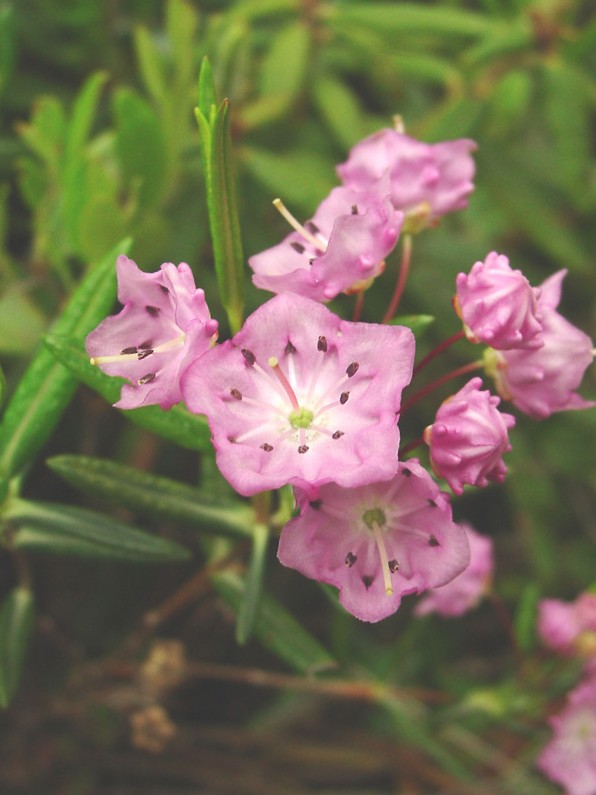
“Bog Laurel” may also refer to Western Bog Laurel, Kalmia microphylla, while regional names such as Goowiddy and Gold-Withy have also been applied to Sheep Laurel, Kalmia angustifolia. “Laurel” alone is highly ambiguous and may indicate Mountain Laurel, Rhododendron, Cherry Laurel, Bay Laurel, Oleander, or another unrelated plant. Pale Laurel should be confirmed by its low bog-growing habit, opposite narrow leathery leaves, revolute margins, pale lower leaf surfaces, and terminal clusters of open pink flowers.
Exact-Species Grayanotoxin Evidence
Pale Laurel contains grayanotoxins, a family of closely related polyhydroxylated diterpenes. Exact-species analytical research detected grayanotoxin I in Kalmia polifolia. Grayanotoxin I has also been called andromedotoxin, acetylandromedol, rhodotoxin, and asebotoxin in older chemical, medical, and veterinary literature.
Those historical terms should not be presented as several unrelated Pale Laurel toxins. They commonly refer to grayanotoxin I or to incompletely separated grayanotoxin-containing preparations studied before modern structural and analytical methods became available. Grayanotoxins are diterpenes rather than alkaloids, cardiac glycosides, cyanogenic glycosides, or soluble oxalates.
A 1938 phytochemical investigation examined this exact species under the accepted name Kalmia polifolia. Later work directly confirmed grayanotoxin I in the species. The available literature does not establish a complete modern grayanotoxin profile for every tissue, population, season, or developmental stage, so the plant should not be described as though only one compound is ever present.
Voltage-Gated Sodium-Channel Dysfunction
Voltage-gated sodium channels open briefly to initiate electrical activity in nerve, skeletal-muscle, gastrointestinal, respiratory, and cardiac cells. They normally inactivate rapidly so the cell can repolarize and prepare for the next signal.
Grayanotoxins bind to sodium channels and stabilize an abnormally activated state. The channels fail to inactivate normally, sodium permeability remains increased, and the cell remains depolarized longer than it should. Mechanistic experiments have shown that grayanotoxin can act from the intracellular side of the sodium channel and sustain an abnormal sodium current.
Prolonged depolarization initially disrupts normal excitability and ultimately prevents coordinated cellular function. The same fundamental mechanism can therefore produce gastrointestinal hyperactivity, salivation, vomiting, diarrhea, tremors, weakness, paralysis, altered cardiac conduction, vascular instability, and respiratory failure.
Reversible Binding Does Not Mean Harmless Exposure
Grayanotoxin does not permanently destroy every sodium channel it contacts. Clinical improvement can occur as active toxin redistributes, is metabolized, is eliminated, and dissociates from its target.
Reversibility at the molecular level does not guarantee an uncomplicated course. Severe hypotension, prolonged bradycardia, heart block, aspiration, seizures, respiratory muscle weakness, bloat, shock, or secondary tissue hypoxia can become life-threatening before toxin effects subside.
Plant material retained in the stomach or rumen may continue releasing toxin for hours. An animal can therefore worsen after access ends or after the first vomiting episode appears to have removed part of the exposure.
Vagal Activity, Bradycardia, and Heart Block
Increased parasympathetic or vagal influence contributes to the characteristic slow heart rate and low blood pressure seen in many grayanotoxin poisonings. Sinus bradycardia, atrioventricular conduction delay, second- or third-degree heart block, nodal rhythms, and escape rhythms may occur.
Cardiac sodium-channel dysfunction also affects conduction and contractility directly. Ectopic beats, rhythm changes, or less commonly tachyarrhythmias may occur during severe poisoning. The heart rate should therefore not be assumed to remain uniformly slow throughout the illness.
Atropine may improve clinically important vagally mediated bradycardia or heart block, but it is not a universal antidote. An animal with tachyarrhythmia, hypovolemia, severe myocardial dysfunction, or another rhythm may require a different response. Treatment must follow the ECG, blood pressure, pulse quality, perfusion, electrolytes, and changing clinical condition.
Hypotension and Circulatory Failure
Hypotension may result from bradycardia, impaired cardiac output, vascular effects, vomiting and diarrhea, reduced intake, or several mechanisms acting together. Pale gums, delayed capillary refill, cold extremities, weak pulses, confusion, reduced urine production, recumbency, and collapse may indicate inadequate tissue perfusion.
Gastrointestinal fluid loss can create true hypovolemia that must be corrected before persistent hypotension is treated as isolated toxin-mediated vasodilation. Intravenous fluids are individualized according to hydration, cardiac function, lung sounds, urine production, and response.
Vasopressors may be considered when clinically important hypotension persists after appropriate volume assessment and correction. They should not replace fluid resuscitation in a hypovolemic patient or be used without blood-pressure and cardiovascular monitoring.
Gastrointestinal Effects
Abnormal activation of autonomic nerves and gastrointestinal smooth muscle contributes to salivation, repeated swallowing, nausea, vomiting, diarrhea, abdominal cramping, altered motility, and colic. Gastrointestinal irritation may add to the functional effects of sodium-channel disruption.
Vomiting and diarrhea may become frequent or forceful. Continued losses can produce dehydration, electrolyte disturbance, acid-base abnormalities, poor perfusion, weakness, and shock. Blood or dark material may occur when gastrointestinal injury is severe, but hemorrhage should also prompt investigation for another plant, medication, foreign material, ulcer disease, or coagulation disorder.
Ruminants may develop frothing, reduced rumen contractions, abdominal enlargement, and bloat. Retching or regurgitation in ruminants does not make force-drenching safe because weak or poorly swallowing animals can aspirate rumen contents and administered liquids.
Neurologic and Skeletal-Muscle Effects
Grayanotoxin-induced depolarization can disrupt sensory processing, coordination, skeletal-muscle contraction, and maintenance of posture. Depression, altered responsiveness, staggering, muscle twitching, tremors, progressive weakness, recumbency, seizures, stupor, and coma may develop.
Apparent visual disturbance or transient blindness has been described in grayanotoxin syndromes. An affected animal may collide with obstacles, hesitate to move, adopt abnormal limb placement, or fail to follow normal visual cues. Hypotension, neurologic dysfunction, or another toxic exposure may contribute.
Profound weakness can impair swallowing, coughing, and ventilation even when consciousness is partly preserved. A recumbent animal also faces secondary complications such as aspiration, hypothermia, pressure injury, corneal drying, muscle damage, and urinary retention.
Respiratory Effects
Respiratory compromise may result from skeletal-muscle weakness, central nervous system depression, severe hypotension, seizure activity, aspiration, bloat, or terminal cardiovascular failure. Breathing may become rapid, shallow, irregular, labored, or progressively weaker.
Oxygen supplementation may improve oxygen availability but cannot correct inadequate ventilation caused by respiratory muscle failure. Intubation and assisted ventilation may be necessary when respiratory effort is failing, airway protection is lost, or aspiration is substantial.
Arbutin and Other Constituents
Older botanical and toxicology sources also report arbutin in Kalmia. Arbutin is a hydroquinone glycoside found in several members of Ericaceae.
Its exact concentration in Pale Laurel tissues and its contribution to the rapid gastrointestinal, cardiovascular, neurologic, and muscular syndrome have not been established adequately. It should be described as a reported secondary constituent rather than presented as equal to grayanotoxin in the acute poisoning mechanism.
Plant Parts and Exposure Forms
Leaves and tender stems are the most likely grazing and chewing exposures because they remain accessible and evergreen. Flowers and nectar add seasonal exposure, particularly where animals or bees enter dense stands.
Roots, bark, sap, pollen, fruit capsules, and seeds should also remain inaccessible because comparative toxin measurements have not established a harmless tissue. Exact concentrations may vary, and absence of data should not be treated as proof of safety.
Wilted, frozen, dried, cut, or partially decomposed plant material remains unsuitable for animals. Pale Laurel incorporated into hay, green chop, wetland vegetation, bedding, brush piles, pruning debris, collected botanical material, or compost may continue to expose animals after the living stand is no longer accessible.
Flowers, Nectar, and Honey
Grayanotoxins can enter honey when bees forage heavily from toxin-producing Ericaceae. Most documented mad-honey poisoning is associated with Rhododendron-rich honey from particular geographic regions rather than with confirmed Pale Laurel honey.
Direct quantitative evidence defining grayanotoxin concentrations in honey produced specifically from Kalmia polifolia remains limited. Nevertheless, honey collected near a dense stand of Pale Laurel or mixed grayanotoxin-producing shrubs should not be used as a pet remedy or assumed safe without reliable source information.
Ordinary blended commercial honey is less likely to contain a clinically important concentration because nectar from many locations and plant species is mixed. That lower likelihood does not make honey an antidote to plant ingestion.
Exact-Species and Related-Species Evidence
Exact Pale Laurel evidence establishes grayanotoxin I occurrence and supports the plant’s recognized toxicity. Detailed modern companion-animal case reports specifically naming Kalmia polifolia are scarce.
Much of the clinical and treatment evidence comes from Mountain Laurel, Kalmia latifolia, and from Rhododendron, Pieris, and other grayanotoxin-producing Ericaceae. Those cases are useful for understanding the shared sodium-channel mechanism but cannot establish identical toxin concentration, toxic dose, onset, severity, or prognosis for Pale Laurel.
A related Mountain Laurel case in a dog involved vomiting, bloody stool, bradycardia, weakness, and ataxia and required removal of retained gastric plant material in addition to supportive treatment. Grayanotoxin poisoning has also been documented in goats and other livestock. These cases support aggressive evaluation of cardiovascular, gastrointestinal, neurologic, and respiratory abnormalities while preserving the species boundary.
Toxic-Dose Limitations
Published livestock estimates for grayanotoxin-producing plants vary from approximately one-tenth to several-tenths of a percent of body weight in fresh foliage. The estimates combine different plant species, animal populations, plant conditions, and methods and should be treated as warnings rather than exact Pale Laurel thresholds.
No validated leaf count, flower count, branch length, plant weight, honey volume, or milligram-per-kilogram dose exists for dogs, cats, horses, cattle, sheep, goats, rabbits, guinea pigs, birds, or reptiles. Plant chemistry, animal size, rumen or stomach retention, repeated exposure, hydration, pregnancy, age, health, and access to alternative forage all affect outcome.
Statements that one leaf is harmless or that a fixed percentage guarantees poisoning are unsupported. Any confirmed ingestion should be assessed according to the maximum possible amount and the animal’s current cardiovascular, neurologic, gastrointestinal, and respiratory condition.
Onset and Clinical Progression
Clinical signs commonly begin within several hours after Pale Laurel ingestion, although onset and progression vary. Plant fragments can remain in the stomach or rumen and continue releasing grayanotoxin after the animal has left the plant.
Gastrointestinal signs frequently appear first, followed by weakness, impaired coordination, bradycardia, hypotension, tremors, or respiratory abnormalities. The order is not fixed, and serious cardiovascular findings may occur while vomiting or diarrhea still appears to be the dominant problem.
An animal that remains normal immediately after access is not necessarily safe. Continued observation and veterinary guidance are warranted because signs may develop after absorption increases or retained material releases additional toxin.
Salivation and Gastrointestinal Signs
Early findings may include lip licking, nausea, excessive drooling, repeated swallowing, appetite loss, vomiting, diarrhea, abdominal pain, colic, depression, and restlessness. Horses, rabbits, guinea pigs, and ruminants do not vomit in the same manner as dogs and cats.
Vomiting and diarrhea may become frequent, forceful, or prolonged. Mucus or blood may appear when gastrointestinal irritation is severe. Continued fluid loss can produce dehydration, electrolyte abnormalities, reduced tissue perfusion, and worsening weakness.
Tacky gums, sunken eyes, reduced urination, cold extremities, weak pulses, prolonged capillary refill, or inability to retain water indicates more than a minor digestive episode.
Ruminant Frothing, Reduced Motility, and Bloat
Cattle, sheep, and goats may develop profuse salivation, green froth, repeated retching or regurgitation, teeth grinding, diarrhea, reduced rumen contractions, abdominal enlargement, and bloat. Severe enlargement can impair breathing and venous return independently of the toxin’s direct cardiovascular effects.
Weak, recumbent, tremoring, or poorly swallowing animals are at high risk of aspiration. Force-drenching water, charcoal, oil, or medication may introduce liquid into the lungs and worsen the emergency.
Depression, Weakness, and Ataxia
Depression and weakness may develop with or shortly after gastrointestinal signs. An animal may become unusually quiet, reluctant to move, slow to respond, unsteady, or unable to remain standing.
Ataxia may appear as swaying, crossing the limbs, stumbling, abnormal foot placement, falling, or inability to coordinate turns. Hypotension, sodium-channel dysfunction, electrolyte abnormalities, and muscle weakness may contribute simultaneously.
Tremors, Seizures, and Altered Consciousness
Muscle twitching, trembling, generalized tremors, convulsions, stupor, and coma indicate severe poisoning or another concurrent disorder. Seizures increase oxygen demand, body temperature, aspiration risk, and acid-base disturbance.
Apparent blindness or transient visual impairment may occur. An animal may hesitate, bump into objects, fail to track movement, or become distressed in an unfamiliar environment. Hypotension, neurologic dysfunction, eye disease, or another toxin must be considered.
Bradycardia and Conduction Disturbances
Bradycardia is one of the most important grayanotoxin-associated findings. The pulse may become markedly slow, weak, or intermittently absent, and an animal may collapse when attempting to stand.
ECG abnormalities may include sinus bradycardia, atrioventricular block, escape rhythms, ectopic beats, and other conduction disturbances. The rhythm can change as toxin concentration, vagal activity, hydration, electrolytes, perfusion, and treatment change.
One normal pulse or brief period of normal rhythm does not exclude later cardiovascular involvement. Continuous or repeated monitoring is more informative in a symptomatic animal.
Tachyarrhythmias and Changing Heart Rate
Although a slow heart rate is characteristic, severe depolarization and conduction instability may occasionally produce rapid or irregular rhythms. A patient may move between bradycardia, escape activity, ectopic beats, and tachyarrhythmia.
Heart medication suitable for one rhythm may worsen another. ECG identification, blood pressure, pulse quality, perfusion, electrolytes, and oxygenation must guide treatment.
Hypotension and Shock
Low blood pressure may cause pale mucous membranes, delayed capillary refill, cold ears or extremities, weak pulses, confusion, reduced urine production, recumbency, and collapse. Vomiting and diarrhea may worsen hypotension through dehydration.
Severe hypotension reduces oxygen delivery to the brain, heart, kidneys, gastrointestinal tract, skeletal muscles, uterus, and fetus. Prolonged poor perfusion can cause secondary organ injury even though grayanotoxin primarily targets sodium-channel function.
Respiratory Abnormalities
Breathing may become rapid, shallow, irregular, labored, or progressively weaker. Respiratory abnormalities can result from muscular weakness, central depression, hypotension, seizure activity, aspiration, bloat, or terminal cardiac failure.
Blue-gray mucous membranes, gasping, open-mouth breathing, weak respiratory effort, inability to swallow, or reduced consciousness is an immediate emergency. An animal losing ventilatory strength may require intubation and assisted ventilation rather than oxygen alone.
Aspiration Pneumonia
Vomiting, regurgitation, salivation, weak swallowing, seizures, recumbency, and forced oral treatment increase aspiration risk. Inhaled plant material, saliva, stomach contents, or rumen fluid can cause chemical and bacterial pneumonia.
Coughing, nasal discharge, fever, rapid breathing, increased respiratory effort, abnormal lung sounds, or renewed depression after apparent improvement requires prompt reassessment.
Dogs
Dogs may encounter Pale Laurel while exploring bogs, wetland trails, northern gardens, collected plant specimens, brush piles, or contaminated yard waste. Early signs may include drooling, vomiting, diarrhea, abdominal discomfort, depression, and weakness.
Serious cases may progress to bloody stool, bradycardia, heart block, hypotension, ataxia, tremors, recumbency, seizures, respiratory compromise, collapse, or coma. Vomiting does not prove that all retained foliage has been expelled.
Cats
Cats are less likely to encounter Pale Laurel naturally unless they have outdoor wetland access or the plant has been brought into a garden, house, floral display, or collection. Chewing may cause drooling, vomiting, diarrhea, depression, weakness, pupil or vision changes, abnormal heart rate, trembling, or collapse.
Continued food refusal creates an additional metabolic risk. Cats must never be given hydrogen peroxide or subjected to home emesis, and forced oral treatment is dangerous when weakness or poor swallowing is present.
Horses
Horses generally avoid Kalmia when adequate forage is available but may consume it during forage scarcity, snow cover, overgrazing, confinement, wetland access, or contamination of hay and brush piles. Horses cannot vomit.
Possible signs include salivation, feed refusal, colic, diarrhea, sweating, depression, abnormal vision, ataxia, bradycardia, heart block, hypotension, weakness, recumbency, tremors, seizures, and breathing difficulty. Choke, colic from another cause, yew, cardiac glycoside plants, pesticides, and primary cardiac disease remain important differentials.
Cattle, Sheep, and Goats
Cattle may enter bog margins or consume Pale Laurel in cut wetland vegetation, hay, bedding, brush, or green chop. Sheep and goats may browse Kalmia more readily and can expose an entire group when toxic vegetation is accessible.
Salivation, frothing, teeth grinding, diarrhea, bloat, staggering, tremors, weakness, recumbency, convulsions, coma, or sudden death may occur. Apparently normal animals should be examined and monitored because intake and onset vary within the group.
Pigs and Other Livestock
Pigs, llamas, alpacas, and other livestock should not have access to collected bog vegetation, landscaping waste, flowers, honey, or contaminated feed. Species-specific Pale Laurel dose information is limited.
Gastrointestinal signs, abnormal pulse, weakness, tremors, poor coordination, recumbency, breathing change, or collapse requires urgent large-animal veterinary assessment and inspection of every shared feed source.
Rabbits and Guinea Pigs
Pale Laurel should never be offered as forage, browse, bedding, a chew branch, or enrichment. Rabbits and guinea pigs cannot vomit and depend on continued food intake for normal gastrointestinal movement.
Drooling, food refusal, diarrhea, reduced fecal production, abdominal enlargement, weakness, tremors, recumbency, or abnormal breathing requires prompt exotic-animal care. Forced feeding is unsafe until swallowing, neurologic status, and obstruction risk have been assessed.
Companion Birds and Poultry
Birds should not receive Pale Laurel foliage, flowers, nectar, capsules, seeds, or uncertain locally produced honey. Their small body size may make limited quantities clinically important.
Possible signs include regurgitation, diarrhea, reduced feeding, poor balance, tremors, weakness, inability to perch, seizures, breathing abnormalities, or collapse. Wild pollinator or wildlife use does not establish companion-animal safety.
Findings Requiring a Broader Differential
Similar gastrointestinal, cardiac, and neurologic signs can follow Rhododendron, azalea, Mountain Laurel, Sheep Laurel, Japanese Pieris, Fetterbush, yew, Oleander, foxglove, Lily of the Valley, medications, pesticides, and primary cardiac disease.
Yew can cause sudden fatal rhythm disturbance with limited gastrointestinal warning. Cardiac glycoside plants act through sodium-potassium ATPase rather than the sodium-channel mechanism of grayanotoxin. Treatment should never be based only on the word laurel.
Major anemia, uncontrolled bleeding, primary liver failure, persistent kidney failure, or focal neurologic deficits are not defining direct effects of uncomplicated grayanotoxin poisoning and require investigation for another or concurrent disorder.
Duration and Prognosis
Mild poisoning may begin improving within several hours, but clinical illness can continue for one to two days or longer after a large exposure, prolonged gastrointestinal retention, aspiration, severe hypotension, or rhythm disturbance.
Complete recovery requires normalization of heart rate and rhythm, blood pressure, pulse quality, breathing, gait, strength, appetite, hydration, gastrointestinal function, urine production, and mental status. Stopping vomiting alone does not establish recovery.
The prognosis is generally good when exposure is recognized early and signs remain limited. Marked bradycardia, heart block, persistent hypotension, changing arrhythmias, severe ataxia, recumbency, seizures, aspiration, respiratory failure, coma, or delayed discovery creates a guarded or grave outlook.
Plant Identity, Accepted Taxonomy, and Historical Naming
Pale Laurel, Kalmia polifolia, is a low evergreen shrub or subshrub in Ericaceae, the heath and blueberry family. It commonly spreads through low woody stems and may form loose colonies or broad mats over acidic peat, sphagnum, and other wet organic substrates. The plant is substantially smaller than Mountain Laurel and often remains partly hidden beneath sedges, leatherleaf, Labrador tea, cranberries, and other wetland vegetation until its pink flowers appear.
Friedrich Adam Julius von Wangenheim published the accepted name Kalmia polifolia in 1788. Older botanical, agricultural, herbarium, and toxicology literature frequently uses Kalmia glauca, a name referring to the pale, bluish-white, or glaucous appearance of the lower leaf surface. Historical records may also appear under Chamaedaphne glauca, Kalmia oleifolia, Kalmia rosmarinifolia, or older varietal combinations associated with narrow rosemary-like leaves.
The spelling Kalmia poliifolia appears repeatedly in secondary references and pet-poison material, but it is not the accepted botanical spelling. Searchers reviewing historical cases, herbarium records, or toxicology reports may need to use both the accepted name and these older variations to find all relevant material. Public identification should nevertheless use Kalmia polifolia consistently so that Pale Laurel is not confused with another Kalmia or an unrelated plant called laurel.
Western Bog Laurel, Kalmia microphylla, was formerly treated by some authorities as a variety, subspecies, or western expression of Kalmia polifolia. Current taxonomy recognizes it as a separate accepted species, primarily associated with western and northern North America. Historical treatments remain important when reviewing older floras and range records, but they should not override the modern species distinction or be used to transfer exact-species toxin concentrations without qualification.
Native Range, Wetland Habitat, and Ecological Setting
Pale Laurel is native from subarctic North America south into the north-central and northeastern United States. Its documented range includes the Northwest Territories, Nunavut, the Canadian prairie provinces, Ontario, Quebec, Atlantic Canada, New England, the Great Lakes region, Pennsylvania, and West Virginia. Distribution is not uniform across that large area because the species depends on specific combinations of acidic soil, persistent moisture, cool climate, and suitable peatland or wetland structure.
The plant is strongly associated with acidic bogs, fens, wet heaths, sphagnum mats, swamp margins, black-spruce bogs, peatland forests, and other cool wet habitats. It often grows on hummocks or slightly elevated microsites within otherwise saturated ground, allowing its roots access to oxygen while remaining surrounded by moisture-retaining peat. These raised microsites can bring the plant into reach of browsing livestock, wildlife, dogs on wetland trails, or workers cutting vegetation around drainage projects and peatlands.
Pale Laurel may also occur on cool wet slopes, rocky acidic openings, high-elevation sites, and other locations where water remains available and organic acidity is maintained. The plant can be overlooked because it grows among species with similar narrow evergreen foliage, including Bog Rosemary, Labrador tea, leatherleaf, cranberry, and other Ericaceae. During winter, drought, overgrazing, or snow cover, its evergreen leaves may remain visible and accessible after more desirable forage has disappeared.
The species is not broadly native across the Pacific coastal provinces and western states in the same manner as Western Bog Laurel. Geographic location can assist identification, but it should not be used alone because cultivated plants, historical taxonomic treatments, transported botanical specimens, and mixed nursery stock can place a species outside its expected wild range. A reliable identification combines geography with leaf arrangement, flower form, growth habit, habitat, and a preserved specimen.
Growth Form, Stems, and Colony Development
Pale Laurel usually remains approximately one to three feet tall, although its height and spread vary with light, peat depth, competition, snow load, browsing, and local moisture. Older stems become woody, may lie close to the surface of the peat, and often turn upward near their tips. This low arching growth allows the shrub to spread gradually through favorable wetland habitat and form colonies that may be much wider than an individual upright shoot suggests.
The plant is substantially smaller than Mountain Laurel, which may become a large shrub or small tree, and generally remains lower than mature Sheep Laurel. Its stems are slender rather than thick and tree-like, and dense growth may form an inconspicuous layer beneath taller wetland shrubs. Animals may encounter only the upper leafy tips while the main woody structure remains hidden within sphagnum, sedges, or brush.
Cut, uprooted, or storm-damaged stems remain hazardous after removal from the original habitat. Drainage work, trail maintenance, mowing, wetland restoration, utility clearing, and landscaping can move Pale Laurel from a bog into brush piles, trailers, yards, compost, barns, feed areas, or animal enclosures. Once mixed with familiar vegetation, dried leaves and stems may be consumed without the animal recognizing the plant it would have avoided while growing in place.
Leaves and Identification Features
The leaves are simple, narrow, leathery, evergreen, and usually arranged in opposite pairs along the stem. Individual blades may be linear, narrowly oblong, or narrowly elliptic, with entire margins that roll downward or inward. The rolled margins can make the leaves appear even narrower than they are and help the plant conserve moisture and tolerate exposed bog conditions.
The upper leaf surface is green to blue-green and may appear glossy, while the lower surface is paler, whitish, or distinctly glaucous. Fine hairs may be present, particularly on younger tissue, and the short leaf base can appear pressed against or partly clasping the stem. The combination of opposite leaves, pale lower surfaces, narrow shape, evergreen texture, and low bog-growing habit is more useful than any single feature considered alone.
Opposite leaf arrangement is one of the strongest field distinctions from Bog Rosemary and Labrador tea, whose leaves are normally alternate. It also helps separate Pale Laurel from many unrelated plants called laurel, including Cherry Laurel and Bay Laurel. Damaged, incomplete, dried, or chewed specimens can lose these diagnostic features, so several leaves attached to a stem should be preserved rather than submitting one loose leaf for identification.
Pale Laurel foliage should not be evaluated by taste, odor, or an animal’s willingness to chew it. Some toxic evergreen plants are bitter enough to discourage continued consumption, but hungry, inexperienced, confined, or forage-limited animals may continue eating despite an unpleasant taste. A previous uneventful encounter does not establish that the plant is safe or that the same animal will stop before receiving a dangerous exposure on another occasion.
Flowers, Spring-Loaded Anthers, Nectar, and Pollen
Pale Laurel produces terminal clusters of pink, rose, purple-pink, or occasionally very pale flowers. The corolla is broad, open, cup-shaped, or shallowly bell-shaped and consists of five fused lobes. Small pockets or depressions inside the corolla hold the ten anthers under tension before pollination.
When a pollinating insect disturbs a stamen, the anther springs free and throws pollen onto the visitor. This spring-loaded pollination mechanism is characteristic of Kalmia and helps distinguish the genus from unrelated wetland shrubs with tubular or urn-shaped flowers. The flowers may appear delicate and attractive, but ornamental appearance does not indicate that the floral tissues, pollen, or nectar are safe for animals.
Flowers and nectar create additional exposure pathways during the blooming season. Dogs may mouth flowering branches on trails, livestock may browse flowering shoots, companion birds may be offered collected blossoms, and bees may forage heavily where Pale Laurel grows in dense stands. Exact grayanotoxin concentrations have not been mapped adequately across Pale Laurel flowers, nectar, pollen, leaves, and stems, so none of these tissues should be treated as a safe exception.
Fallen flowers may remain mixed with sphagnum, grass, hay, green chop, or bedding after the main blooming display has ended. Nectar or pollen can also be transferred onto animal coats, equipment, collection bags, hive material, or human hands during plant work. These indirect exposures are less likely to produce a large dose than deliberate ingestion, but they remain relevant when a small animal, bird, or exotic species has access to concentrated plant material.
Fruit Capsules, Seeds, and Seasonal Persistence
Pale Laurel produces dry woody capsules rather than fleshy berries. The capsules mature from green toward brown and split into sections that release numerous small seeds. They may remain attached to stems after flowering, making old fruiting structures useful for identification even when the pink flowers are absent.
Capsules and seeds are less common animal exposures than evergreen leaves and tender stems, but they should not be offered as forage, seed mix, enrichment, nesting material, or botanical decoration. Comparative exact-species testing has not established that the capsules or seeds lack grayanotoxin. Small seeds can also become mixed with collected wetland material, dried plant specimens, bedding, or feeder-insect cultures without being recognized.
The evergreen foliage creates a year-round hazard. Pale Laurel remains available during late autumn, winter, and early spring when grasses and herbaceous forage may be dormant, buried, or depleted. Snow breakage, ice damage, frost, drying, and wilting do not establish that the grayanotoxin has been neutralized, and weather-damaged material may become more accessible at ground level.
Pale Laurel, Sheep Laurel, and Mountain Laurel
Sheep Laurel is Kalmia angustifolia, a separate grayanotoxin-producing species that commonly grows in bogs, wet heaths, forest openings, acidic pastures, roadsides, and other disturbed or naturally open habitats. Sheep Laurel often grows taller than Pale Laurel, and its leaves are frequently arranged in whorls of three rather than in opposite pairs. Its flower clusters commonly form laterally below the newest leafy shoot, while Pale Laurel flowers are generally borne terminally at the ends of stems.
The two species can grow in overlapping habitats and have both been associated historically with livestock poisoning. Regional names such as Lambkill, Sheepkill, Goowiddy, or Gold-Withy may be applied inconsistently, and a local name cannot establish which Kalmia was involved. Both species should be treated as dangerous, but exact identification remains important when interpreting range, ecology, chemical findings, or published poisoning evidence.
Mountain Laurel is Kalmia latifolia, a much larger evergreen shrub or small tree with broader leaves and large showy clusters of white or pink flowers. It usually occupies forests, slopes, woodland edges, and upland habitats rather than open peat bogs. A mature Mountain Laurel may tower above Pale Laurel and develop thick woody stems that would be impossible to confuse with a low bog mat when the complete plant is visible.
Modern companion-animal treatment evidence is stronger for Mountain Laurel than for exact Pale Laurel exposures. A published canine Mountain Laurel case involved vomiting, bloody stool, bradycardia, weakness, ataxia, retained gastric foliage, cardiovascular monitoring, and supportive treatment. That case is valuable because the species share grayanotoxin sodium-channel toxicity, but it must remain labeled as related-species evidence rather than being rewritten as a confirmed Kalmia polifolia case.
Western Bog Laurel, Bog Rosemary, and Labrador Tea
Western Bog Laurel is Kalmia microphylla, a separate accepted species occurring primarily in western and northern North America. Older references may list it as a variety, subspecies, or form of Kalmia polifolia, which can make historical range records and herbarium labels difficult to interpret. Both species are small wetland shrubs with narrow evergreen leaves and pink flowers, and exact separation may require geography, detailed floral examination, leaf measurements, and expert botanical review.
Bog Rosemary is Andromeda polifolia, another low evergreen shrub of northern bogs and peatlands. It generally has alternate narrow leaves with strongly pale lower surfaces and produces nodding urn-shaped pink or white flowers rather than the broad open flowers of Pale Laurel. Bog Rosemary is also associated with grayanotoxins, so confusion between the two plants does not make an exposure harmless even though it affects the exact-species interpretation.
Labrador tea is now placed in Rhododendron, with Rhododendron groenlandicum representing the familiar eastern species. Its leaves are alternate, aromatic when crushed, and densely covered beneath with white or rusty hairs. Pale Laurel has opposite leaves and lacks the characteristic strong Labrador-tea fragrance and thick rusty felt.
Collecting unidentified bog shrubs for tea is dangerous because several toxic Ericaceae may grow together. A person may collect Pale Laurel, Sheep Laurel, Bog Rosemary, Labrador tea, or a mixture while relying on one incomplete field feature. Plant material intended for tea, herbal preparation, animal enrichment, dried decoration, or educational handling should be identified before it is removed from the habitat.
Unrelated Plants Called Laurel
The word laurel is applied to numerous unrelated plants with very different toxic mechanisms. Cherry Laurel and other Prunus species may release cyanide from damaged tissue, Oleander contains cardiac glycosides, Bay Laurel is a culinary aromatic in Lauraceae, and Mountain Laurel or Sheep Laurel contains grayanotoxins. A poisoning response based only on the word laurel can therefore be dangerously wrong.
Yew is another important evergreen look-alike in mixed brush or landscaping waste, although it is not commonly called laurel. Yew contains taxine alkaloids capable of causing rapid fatal cardiac disturbance with little warning, and treatment differs from grayanotoxin poisoning. Mixed ornamental or brush waste must be preserved as a complete exposure rather than assuming one recognized Pale Laurel branch explains every clinical sign.
Oleander, foxglove, and Lily of the Valley can also cause vomiting, weakness, abnormal rhythms, low blood pressure, collapse, and death through cardiac-glycoside effects. The overlap in outward signs does not mean the mechanisms are interchangeable. Accurate plant identification, ECG interpretation, electrolyte assessment, and exposure history determine which treatments are appropriate.
How Dogs and Cats Encounter Pale Laurel
Dogs may encounter Pale Laurel while hiking through bogs, wetlands, northern trails, wildlife areas, or peatland boardwalks. Curious or plant-chewing dogs may mouth the low foliage, pull stems from sphagnum, retrieve branches, or investigate material collected by a person for identification. Dense low growth at trail edges can place leaves directly at muzzle height even when the owner does not recognize the shrub.
Household exposure can occur when Pale Laurel is cultivated in a native-plant garden, brought indoors as a botanical specimen, included in a floral or educational display, or transported with wetland soil and other plants. Cuttings, pressed plants, herbarium material, pruning debris, and collection bags may remain accessible long after the outdoor trip has ended. Vomit containing recognizable leaves should be preserved because it may provide the strongest link between a later cardiovascular syndrome and the original plant.
Cats are less likely to encounter Pale Laurel naturally unless they roam in suitable wetland habitat, but indoor exposure remains possible through collected specimens, floral material, gardening, or contaminated coats and paws. A cat may chew narrow evergreen leaves, play with a dried stem, or groom plant residue transferred from a dog, shoe, bag, or tool. Vomiting, food refusal, depression, weakness, abnormal pulse, pupil change, staggering, or collapse requires prompt guidance rather than waiting for the cat to expel the plant.
Continued food refusal creates a separate risk in cats even after cardiovascular and gastrointestinal signs begin improving. Cats should never receive hydrogen peroxide for emesis, and oral charcoal, water, food, or medication must not be forced into a weak, vomiting, tremoring, or poorly swallowing patient. Veterinary treatment must account for the cat’s airway, hydration, cardiac rhythm, blood pressure, temperature, and nutritional status.
Horse Exposure in Pastures, Hay, and Wetland Cuttings
Horses generally avoid Kalmia when adequate palatable forage is available, but avoidance is not dependable during drought, overgrazing, snow cover, winter feeding, confinement, curiosity, or limited access to suitable grass. Young or inexperienced horses may investigate vegetation that older animals have learned to avoid. Pale Laurel growing along bog margins, drainage channels, wet pasture edges, trails, or woodland openings may become accessible when fencing changes or animals are moved into unfamiliar ground.
Contaminated hay, green chop, brush piles, wetland cuttings, bedding, mower debris, drainage spoil, and discarded landscaping material create a greater risk because the plant is separated from its natural setting and mixed with familiar feed. Drying does not establish safety, and narrow leaves may be difficult to recognize once fragmented. A horse can consume a meaningful amount before detecting the plant when toxic stems are incorporated unevenly into a bale or feeder.
Horses cannot vomit, so gastrointestinal decontamination differs fundamentally from treatment in a fully alert dog. Salivation, colic, diarrhea, depression, abnormal vision, ataxia, bradycardia, heart block, hypotension, weakness, recumbency, tremors, seizures, or breathing difficulty requires urgent large-animal veterinary care. Force-drenching water, charcoal, oil, or medication into a weak or poorly swallowing horse creates a serious aspiration risk.
Exercise should be minimized because hypotension, conduction disturbance, and muscular weakness can produce sudden collapse. Affected horses should not be forced to walk long distances simply to demonstrate gait or reach a trailer. Safe movement may require veterinary guidance, supportive equipment, careful positioning, and preparation for recumbency during transport.
Cattle, Sheep, Goats, and Group Exposure
Cattle may encounter Pale Laurel when pastures include bog margins, fen edges, wet woodland, drained peat, or disturbed wetland vegetation. Drought, overgrazing, snow, feed shortage, land clearing, and movement into a new pasture can increase consumption of normally avoided plants. Cut vegetation may also be carried into dry lots, barns, feeding areas, or silage and hay systems.
Sheep and goats may browse Kalmia more readily than cattle, particularly when woody browse is part of the available diet. Historical names such as Lambkill and Sheepkill reflect the longstanding recognition that related laurels can poison small ruminants. Apparent browsing tolerance in one animal or one season does not establish that the plant is safe, because intake, toxin concentration, rumen retention, forage availability, and individual susceptibility vary.
Group signs may include salivation, frothing, teeth grinding, vomiting-like retching, diarrhea, reduced rumen contractions, bloat, staggering, tremors, weakness, recumbency, convulsions, coma, or sudden death. The entire group should be removed from the source because apparently normal animals may have consumed a smaller amount or may not yet have developed signs. Feed, hay, bedding, green chop, and brush should be isolated until representative samples from several locations can be examined.
Uneven distribution is common when toxic brush is mixed into a bale, wagon, silage pile, or brush heap. One animal may receive mostly desirable forage while another consumes a concentrated cluster of Pale Laurel. A single negative feed sample therefore does not exclude contamination elsewhere in the lot.
Weak, recumbent, tremoring, seizuring, frothing, or poorly swallowing ruminants must not be force-drenched. Rumen decompression, tubing, lavage, antifoaming treatment, or rumenotomy requires veterinary equipment, restraint, and airway-aware technique. Aspiration of rumen contents or administered liquid can become as life-threatening as the original grayanotoxin exposure.
Rabbits, Guinea Pigs, Birds, Reptiles, and Other Exotics
Pale Laurel should never be offered to rabbits or guinea pigs as forage, browse, bedding, a chew branch, nesting material, or enrichment. These species cannot vomit and depend on continuous food intake to maintain normal gastrointestinal movement. Drooling, food refusal, reduced fecal production, diarrhea, abdominal enlargement, weakness, tremors, recumbency, or abnormal breathing requires prompt exotic-animal veterinary care.
Companion birds should not receive leaves, flowers, nectar, pollen, capsules, seeds, or uncertain local honey from Pale Laurel habitat. Their small body size may make a limited quantity important, and birds may crush plant tissue efficiently with the beak. Regurgitation, diarrhea, reduced feeding, poor balance, inability to perch, tremors, seizures, open-mouth breathing, or collapse requires avian veterinary attention.
Reptiles, amphibians, and invertebrates may encounter Pale Laurel when keepers place wild-collected bog plants inside humid enclosures. Exposure may occur through direct chewing, contact with sap or pollen, contaminated feeder insects, pesticide residue, or decomposition of plant material in the enclosure. A plant that has been ignored for weeks is not automatically safe, because behavior, hunger, feeder movement, humidity, and access can change.
Small exotics often have limited physiologic reserve and may deteriorate quickly from dehydration, hypotension, impaired feeding, or respiratory weakness. Dog or livestock toxic-dose estimates cannot be scaled mechanically to these species. Species-experienced veterinary assessment is necessary because drug selection, fluid therapy, decontamination, and monitoring differ substantially.
Honey, Nectar, and the Mad-Honey Risk
Bees can transfer grayanotoxins from toxin-producing Ericaceae into honey. Clinically important mad-honey poisoning is most strongly documented from geographic regions where bees forage heavily on particular Rhododendron species. The resulting syndrome may include nausea, vomiting, weakness, dizziness, bradycardia, heart block, hypotension, altered consciousness, and collapse.
Pale Laurel flowers may contribute to a mixed grayanotoxin forage source, but direct modern quantification of toxin in honey produced specifically from Kalmia polifolia remains limited. Honey from a small apiary surrounded by dense Pale Laurel, Rhododendron, Bog Rosemary, Pieris, or related toxic Ericaceae deserves more caution than broadly blended commercial honey. The exact botanical source, season, nectar availability, colony foraging range, and honey blending practices all affect risk.
Honey must not be given as a home remedy after Pale Laurel ingestion. It does not bind grayanotoxin, restore sodium-channel inactivation, correct bradycardia, reverse heart block, or treat hypotension. Uncertain locally produced honey may add further grayanotoxin rather than reduce the original exposure.
Ordinary commercial honey is less likely to contain a clinically important grayanotoxin concentration because nectar from many plants, locations, seasons, and suppliers is blended. That lower probability does not make honey appropriate first aid for dogs, cats, horses, livestock, birds, or exotic animals. Sugar content, aspiration risk, gastrointestinal illness, diabetes, and the uncertain botanical source still matter.
The Historical Mad-Honey Account
One of the best-known historical descriptions of grayanotoxin poisoning appears in Xenophon’s account of Greek soldiers who consumed honey near the Black Sea. The event is generally associated with Rhododendron nectar rather than specifically with Pale Laurel. It remains valuable because it describes the gastrointestinal, neurologic, behavioral, and muscular features of a severe grayanotoxin syndrome long before the responsible compounds or sodium-channel mechanism were understood.
“The number of bee hives was extraordinary, and all of the soldiers that ate of the honey combs lost their senses, vomited and were affected with purging, and none of them was able to stand upright; such as had eaten only a little were like men greatly intoxicated, and such as had eaten much were like mad men and some like persons at the point of death. They lay upon the ground, in consequence, in great numbers, as if there had been a defeat; and there was general dejection. The next day, no one of them was found dead; and they recovered their senses about the same hour they had lost them on the preceding day.”
Xenophon recorded the event in the Anabasis, and the quoted passage should remain intact because its details closely parallel the vomiting, diarrhea, inability to stand, altered behavior, profound weakness, and recovery associated with grayanotoxin exposure. The survival of those soldiers does not establish that contaminated honey or plant ingestion is harmless to domestic animals. Dose, body weight, species, rumen retention, underlying cardiac disease, aspiration, access to supportive care, and the specific grayanotoxin mixture can produce a substantially different outcome.
Diagnosis and Exposure Reconstruction
Diagnosis relies on reliable plant identification, known or suspected access, compatible gastrointestinal signs, weakness or ataxia, bradycardia or another rhythm disturbance, hypotension, and exclusion of alternative causes. No single outward sign is unique to Pale Laurel. Vomiting and bradycardia may strongly support grayanotoxin poisoning, but similar findings occur with other toxic plants, medications, pesticides, electrolyte disorders, and primary cardiac disease.
Preserve a complete branch with several attached leaves, stems, flowers, and capsules when present. Include habitat photographs showing the entire plant and surrounding vegetation, because wetland associates can provide useful identification context. Chewed or vomited fragments, rumen or stomach contents, honey, hay, green chop, bedding, brush, and feed samples should be collected before the source is discarded.
Feed and brush samples should come from several locations rather than from one convenient handful. Toxic vegetation may be clustered unevenly within a bale, wagon, pile, or feeder. Photographs of the original distribution, disturbed plants, browse lines, broken branches, and animal access points may help reconstruct the maximum possible exposure.
A detailed timeline should record when the animal entered the area, when it was last observed normal, when gastrointestinal signs began, and when pulse, gait, breathing, or behavior changed. Record every treatment already attempted, including peroxide, charcoal, atropine, heart medication, fluids, drenches, honey, oil, or human medication. These details directly affect the assessment of aspiration, drug effects, electrolyte change, and the remaining opportunity for decontamination.
No commonly available rapid clinical test confirms Pale Laurel poisoning during emergency treatment. Specialized laboratories may identify grayanotoxins in plant material, gastric contents, biological samples, or honey, but results generally return too slowly to guide initial stabilization. Treatment must therefore proceed from the exposure history, plant identification, cardiovascular findings, gastrointestinal signs, neurologic examination, and exclusion of competing emergencies.
Veterinary Examination and Diagnostic Testing
Veterinary examination should include heart rate and rhythm, pulse quality, blood pressure, capillary refill, mucous-membrane color, hydration, temperature, respiratory effort, oxygenation, swallowing, abdominal comfort, gait, muscle strength, vision, mentation, and urine production. Cardiovascular findings may change rapidly, so one normal heart-rate measurement does not exclude later bradycardia, heart block, escape rhythms, ectopic beats, or tachyarrhythmia. Continuous or repeated ECG and blood-pressure monitoring is appropriate in a symptomatic patient.
Laboratory evaluation may include a complete blood count, serum chemistry, electrolytes, glucose, blood-gas analysis, acid-base status, lactate, kidney values, liver values, urinalysis, and other testing selected according to the animal’s condition. Vomiting and diarrhea can produce dehydration, potassium or sodium abnormalities, acid-base disturbance, and reduced renal perfusion that intensify toxin-related weakness and arrhythmia. Hypoglycemia, sepsis, renal disease, and primary electrolyte disorders can mimic or complicate the poisoning.
Chest imaging may be needed after vomiting, regurgitation, coughing, abnormal lung sounds, fever, or respiratory decline because aspiration pneumonia can develop during or after the acute episode. Abdominal imaging, endoscopy, stomach-content evaluation, rumen assessment, or exploratory procedures may be considered when a substantial amount of plant material remains. Retained leaves can continue releasing toxin after the animal has left the exposure site.
Large-animal assessment may include rumen motility, abdominal distention, manure production, hydration, pulse deficits, ECG, blood pressure when available, and evaluation of every exposed animal in the group. Apparently normal livestock may require monitoring because intake and onset differ. Pregnancy status also matters because severe maternal hypotension and hypoxia can threaten the fetus even when the dam survives.
Differential Diagnosis
Rhododendron, azalea, Sheep Laurel, Mountain Laurel, Western Bog Laurel, Japanese Pieris, Fetterbush, Bog Rosemary, and other grayanotoxin-producing Ericaceae can produce a similar syndrome. These plants share the sodium-channel mechanism broadly enough that initial stabilization may overlap. Exact species still matters for botanical accuracy, exposure reconstruction, published evidence, and any attempt to estimate the likely amount or duration.
Yew, Oleander, foxglove, Lily of the Valley, cardiac medication, pesticides, electrolyte disease, and primary cardiac disorders can also cause vomiting, weakness, abnormal rhythm, hypotension, collapse, or sudden death. Yew may produce sudden fatal cardiac disturbance with relatively little gastrointestinal warning. Oleander, foxglove, and Lily of the Valley contain cardiac glycosides that act through sodium-potassium ATPase rather than by maintaining voltage-gated sodium channels in an activated state.
Cholinesterase-inhibiting pesticides may cause salivation, diarrhea, weakness, tremors, pupil abnormalities, bronchial secretions, and bradycardia. Sedatives, beta blockers, calcium-channel blockers, digoxin, antiarrhythmics, and other medications can also produce overlapping cardiovascular findings. A history of plant access does not eliminate the possibility that the animal consumed a chemical or drug at the same location.
Major anemia, uncontrolled bleeding, primary liver failure, persistent kidney failure, focal neurologic deficits, or prolonged paralysis after cardiovascular recovery is not a defining uncomplicated Pale Laurel pattern. These findings require investigation for another toxin, infectious disease, metabolic disorder, aspiration complication, trauma, or concurrent illness. Mixed exposures are especially likely when animals enter brush piles, dumps, compost, greenhouses, landscaping waste, or contaminated feed.
Prognosis, Recovery, and Long-Term Monitoring
The prognosis is generally good when exposure is recognized early, plant material is removed when appropriate, and gastrointestinal, cardiovascular, neurologic, and respiratory signs respond promptly to supportive care. Grayanotoxin binding is reversible, and many animals recover as toxin concentration falls and normal sodium-channel function returns. Molecular reversibility does not protect the patient from severe hypotension, aspiration, prolonged heart block, seizures, bloat, or respiratory failure during the acute period.
Recovery should not be judged solely by the end of vomiting or diarrhea. Heart rate and rhythm, blood pressure, pulse quality, breathing, gait, strength, swallowing, appetite, hydration, rumen or intestinal function, urine production, temperature, and mental status should all return toward normal. Recurrence of weakness, collapse, coughing, abnormal pulse, or respiratory distress after apparent improvement requires immediate reassessment.
Marked bradycardia, third-degree heart block, changing arrhythmias, persistent hypotension, severe ataxia, recumbency, seizures, aspiration, respiratory-muscle failure, coma, delayed discovery, or inability to remove retained plant material creates a more guarded or grave prognosis. Underlying cardiac, respiratory, kidney, or neurologic disease reduces physiologic reserve. Very young, very small, elderly, pregnant, or debilitated animals may deteriorate after an exposure that a healthy adult survives.
Animals recovering from aspiration, prolonged recumbency, severe hypotension, or bloat may require follow-up beyond resolution of the toxin’s direct effects. Pneumonia, kidney injury from poor perfusion, muscle damage, pressure sores, corneal injury, weakness, and reduced appetite can prolong recovery. Livestock pregnancies may require later reproductive monitoring when the dam experienced severe hypoxia or circulatory compromise.
Prevention in Wetlands, Pastures, Homes, and Animal Facilities
Fence hazardous bog margins and wetland vegetation when practical, particularly where horses, cattle, sheep, or goats have limited alternative forage. Maintain adequate desirable feed during drought, winter, snow cover, overgrazing, relocation, and pasture transition. Animals are more likely to investigate toxic evergreen browse when familiar forage is scarce.
Inspect hay, green chop, silage, brush, bedding, mowing debris, and wetland cuttings before they enter feeding areas. Pale Laurel fragments should be removed with the surrounding contaminated material rather than picked out one branch at a time after mixing. Never discard bog vegetation, native-plant trimmings, collected specimens, or landscaping waste into pastures, pens, kennels, rabbit runs, poultry areas, or accessible compost.
Keep plant-chewing dogs on controlled paths around bogs and dense Kalmia stands. Do not allow dogs to retrieve wetland branches, chew botanical specimens, or investigate bags containing collected plants. After hiking or field work, inspect equipment, boots, vehicles, coats, and collection containers before pets gain access.
Pale Laurel should not be used in pet-safe gardens, vivariums, bird enclosures, rabbit areas, forage plots, chew-toy collections, floral displays, or animal enrichment. Do not collect unidentified bog shrubs for tea, tincture, honey remedies, decoration, educational handling, or livestock browse. The combination of similar-looking toxic Ericaceae and inconsistent common names makes expert identification essential before any wild wetland plant is brought into a home or animal setting.
Immediate Response After Exposure
- Stop further ingestion: Move the animal away from Pale Laurel, wetland vegetation, contaminated forage, hay, brush piles, flowers, nectar, honey, and vomited plant material.
- Contact a professional immediately: Call a veterinarian or animal poison-control service even when no signs are visible.
- Preserve the complete plant: Save a branch with leaves, flowers, stems, capsules, and roots when available.
- Document the location: Photograph the plant and record whether exposure occurred in a bog, pasture, trail, garden, hay, brush pile, bedding, collected specimen, or wetland cutting.
- Estimate the maximum exposure: Record the greatest amount that could be missing, animal’s weight, earliest possible ingestion time, and whether several animals had access.
- Keep the animal quiet: Restrict activity because exertion increases cardiovascular and oxygen demands in a hypotensive, bradycardic, arrhythmic, or weak patient.
Do not wait for the heart rate to become abnormal. Gastrointestinal signs may begin before clinically obvious hypotension, conduction disturbance, muscular weakness, or respiratory compromise.
Remove Only Loose Visible Material
- Wear gloves: Avoid hand-to-mouth transfer while collecting toxic vegetation, vomit, rumen material, or contaminated feed.
- Clear the front of the mouth: Remove only loose leaves or stems visible around the lips and front of the tongue when this can be done safely.
- Do not reach blindly: Deep probing can push material farther toward the throat or cause a bite injury.
- Do not force a mouth rinse: Grayanotoxin is a swallowed systemic toxin, and forceful liquid creates aspiration risk without removing absorbed toxin.
- Prevent grooming: Wash plant residue or vomit from the coat and keep other animals away from expelled material.
Do Not Induce Vomiting at Home
- Do not give hydrogen peroxide automatically: Weakness, bradycardia, hypotension, depression, tremors, seizures, or abnormal swallowing can make vomiting dangerous.
- Never give hydrogen peroxide to a cat: It can cause severe feline gastric and esophageal injury.
- Do not use household emetics: Salt, mustard, dish soap, detergent, oil, syrup, manual gagging, and fingers in the throat are unsafe.
- Do not induce vomiting after signs begin: Depression, ataxia, recumbency, tremors, seizures, breathing difficulty, or impaired swallowing makes aspiration likely.
- Never attempt vomiting in horses, rabbits, guinea pigs, ruminants, or other non-vomiting species: Household emesis is ineffective or dangerous.
- Reserve emesis for veterinary direction: A veterinarian may consider controlled emesis only in a fully alert, stable dog after a recent meaningful ingestion when the airway can be protected.
Cats should not undergo emesis for this exposure. Once systemic signs develop, stabilization takes priority over gastrointestinal decontamination.
Activated Charcoal and Gastric Decontamination
- Do not force activated charcoal: Drooling, vomiting, weakness, sedation, tremors, seizures, or poor swallowing creates a serious aspiration risk.
- Do not use household charcoal: Barbecue briquettes, burned wood, fireplace ash, and homemade carbon are not medical activated charcoal.
- Use only under professional direction: A veterinarian may consider one medically administered dose when the exposure is recent and the airway is secure.
- Do not repeat charcoal automatically: Repeated dosing can contribute to aspiration, dehydration, sodium abnormalities, constipation, or obstruction.
- Do not delay stabilization: Airway, breathing, circulation, seizures, shock, and severe bloat take priority.
Gastric lavage, endoscopic removal, or surgery may be considered in a selected anesthetized patient with a protected airway when substantial retained material creates ongoing danger. Large-animal rumen evacuation or rumenotomy requires veterinary assessment and safe restraint.
Do Not Give Unsupervised Medication
- Do not give atropine at home: A slow heart rate, heart block, tachyarrhythmia, and hypotension require ECG- and blood-pressure-guided treatment.
- Do not give heart stimulants: Caffeine, decongestants, epinephrine products, or human cardiac medication may worsen an unstable rhythm.
- Do not give antiarrhythmics: A medication appropriate for one rhythm may worsen another as the poisoning changes.
- Do not give anti-diarrheal medication: These products do not restore sodium-channel function and may be inappropriate when motility is abnormal.
- Do not give honey: Honey does not neutralize grayanotoxin, and uncertain locally produced honey may itself contain toxin.
- Do not give human pain medication: Ibuprofen, naproxen, aspirin, and acetaminophen can create another poisoning.
- Do not use milk, oil, food, herbs, or supplements as antidotes: None restores normal sodium-channel inactivation.
Food and Water
- Allow only cautious voluntary drinking: Small amounts of water may remain available when the animal is fully alert, swallowing normally, and not vomiting repeatedly.
- Prevent rapid drinking: Gulping a large volume may trigger additional vomiting.
- Do not syringe liquid: Forced water cannot correct shock and may enter the lungs.
- Do not force food: Feeding may worsen nausea, bloat, aspiration, or planned decontamination.
- Give nothing by mouth during weakness or neurologic signs: Ataxia, tremors, seizures, recumbency, or poor swallowing makes oral treatment unsafe.
Watch for Gastrointestinal and Ruminant Signs
- Record vomiting and diarrhea: Note frequency, blood, dark material, plant fragments, and whether water remains down.
- Watch hydration: Tacky gums, sunken eyes, reduced urination, cold extremities, or worsening weakness requires treatment.
- Watch abdominal size: Increasing left-sided enlargement in a ruminant may indicate bloat.
- Watch rumen activity: Reduced contractions, continued frothing, pain, or recumbency requires immediate veterinary intervention.
- Preserve expelled material: Save representative leaves and stems from vomit or rumen contents.
- Watch for aspiration: Coughing, nasal discharge, fever, or increasing respiratory effort after vomiting or regurgitation requires reassessment.
Recognize Cardiovascular Deterioration
- Check the pulse when safe: An unusually slow, rapid, irregular, weak, or intermittently absent pulse requires emergency evaluation.
- Check mucous membranes: Pale, gray, or blue-gray tissue may indicate poor perfusion or oxygenation.
- Watch capillary refill: Delayed color return can accompany hypotension and shock.
- Watch extremity temperature: Cold ears, feet, or limbs may reflect poor circulation.
- Monitor urine production: Reduced output may indicate dehydration, hypotension, or impaired kidney perfusion.
- Limit exertion: Walking or struggling may precipitate collapse in a hypotensive or arrhythmic animal.
Recognize Neurologic and Muscular Deterioration
- Prevent falls: Keep the animal away from stairs, water, traffic, fencing, slopes, and hard obstacles.
- Do not force walking: Use a carrier, stretcher, board, blanket, or sling when safe.
- Reduce stimulation: Keep the environment quiet during tremors, altered vision, agitation, or seizure risk.
- Do not place objects in the mouth: Animals do not swallow their tongue during seizures.
- Time seizure activity: Record duration, recurrence, and consciousness between episodes.
- Seek immediate care: Staggering, falling, recumbency, seizures, apparent blindness, stupor, or coma is an emergency.
Breathing and Airway Emergencies
- Watch respiratory effort: Shallow, slow, rapid, irregular, labored, or weakening respiration requires emergency care.
- Watch gum color: Blue-gray gums or tongue indicates inadequate oxygenation.
- Position for drainage: Keep the head so saliva, vomit, and rumen material can leave the mouth.
- Do not muzzle a vomiting or respiratory-compromised animal: A muzzle can trap vomit or restrict airflow.
- Call ahead: Tell the clinic that intubation, ventilation, aspiration treatment, or bloat relief may be needed.
Safe Transportation
- Prevent exertion: Carry or stretcher a weak small animal rather than forcing it to walk.
- Protect against falls: Pad the carrier and prevent contact with hard objects.
- Keep the animal quiet: Stress and struggling increase oxygen and cardiovascular demand.
- Maintain drainage: Position the head so fluid can leave the mouth.
- Bring the evidence: Transport plant material, photographs, honey, feed samples, pesticide labels, and contained vomit.
Dogs and Cats
- Do not wait for cardiac signs: Vomiting and diarrhea may precede detectable bradycardia, hypotension, weakness, or ataxia.
- Report timing precisely: Retained plant material affects whether veterinary decontamination may still help.
- Prevent access to vomit: Remove contaminated bedding and keep other animals away from expelled foliage.
- Monitor cats for food refusal: Continued anorexia creates a separate metabolic risk.
- Seek reassessment after temporary improvement: Stopping vomiting does not prove that rhythm and blood pressure are normal.
Horses and Livestock
- Remove the entire group: Move every animal away from the bog margin, pasture, brush pile, hay, bedding, or feed source.
- Do not force affected animals to walk: Hypotension, weakness, and abnormal rhythm may precipitate collapse.
- Do not drench weak animals: Frothing, recumbency, tremors, seizures, bloat, or poor swallowing creates an aspiration risk.
- Monitor bloat: Increasing abdominal enlargement, distress, breathing difficulty, or reduced rumen sounds requires immediate intervention.
- Preserve representative samples: Collect several complete plants and feed samples from different locations.
- Check apparently normal animals: Signs may be delayed, and intake may differ within the group.
Rabbits, Guinea Pigs, and Birds
- Remove all access: Collect foliage, flowers, capsules, seeds, honey, bedding, and enclosure material.
- Do not attempt vomiting: Rabbits and guinea pigs cannot vomit, and home emesis is unsafe for birds.
- Do not force food or water: Weakness, poor swallowing, tremors, or abnormal breathing creates an aspiration risk.
- Monitor food and output: Reduced eating, fewer feces, regurgitation, diarrhea, or abdominal enlargement requires prompt care.
- Seek emergency care for severe signs: Tremors, inability to perch, recumbency, seizures, open-mouth breathing, or reduced responsiveness is an emergency.
Veterinary Decontamination
Decontamination is most useful before substantial depression, weakness, tremors, seizures, cardiovascular instability, breathing abnormalities, or impaired swallowing develops. A veterinarian may induce vomiting only in a fully alert, stable dog after a recent meaningful ingestion and after evaluating aspiration risk.
Medical activated charcoal may be administered when expected benefit outweighs aspiration and electrolyte risks. Antiemetic medication may be used after appropriate decontamination to reduce continued vomiting and aspiration.
Gastric lavage, endoscopy, or surgical removal may be considered when a substantial quantity remains and ordinary decontamination is unsafe or unsuccessful. Large-animal rumen evacuation, lavage, decompression, or rumenotomy requires veterinary equipment and airway-aware restraint.
Veterinary Cardiovascular Treatment
Continuous ECG monitoring may identify sinus bradycardia, atrioventricular block, escape rhythms, ectopic beats, or tachyarrhythmia. Repeated blood-pressure measurement is essential because hypotension materially affects fluid and drug choices.
Intravenous fluids may replace gastrointestinal losses and support circulating volume. Fluid type, rate, and total volume are individualized according to hydration, cardiac function, lung sounds, urine production, blood pressure, and treatment response.
Atropine may be administered when clinically important bradycardia or atrioventricular block is accompanied by poor perfusion or hypotension. It is not required for every slow pulse and does not neutralize grayanotoxin.
Rhythm-specific antiarrhythmic treatment may be selected when an identified arrhythmia materially compromises circulation. Vasopressors may be used when hypotension persists after adequate volume correction. Blanket cardiac drug protocols are unsafe because the rhythm can change during poisoning.
Veterinary Neurologic and Respiratory Treatment
Methocarbamol may be used for substantial muscular tremors. Benzodiazepines or another veterinarian-selected anticonvulsant may control seizures.
Oxygen, suctioning, airway protection, intubation, assisted ventilation, and aspiration-pneumonia treatment may be required when breathing or swallowing is compromised. Recumbent patients may need padding, turning, temperature control, eye lubrication, bladder care, and prevention of pressure injury.
Veterinary Gastrointestinal and Ruminant Support
Veterinarian-selected antiemetic medication can reduce fluid loss and aspiration risk in vomiting species. Electrolytes, glucose, acid-base status, hydration, and nutrition are corrected according to measured abnormalities.
Ruminant bloat may require stomach-tube decompression, antifoaming treatment, trocarization, or surgery. Weak, recumbent, convulsing, or poorly swallowing animals must not be force-drenched.
Monitoring and Recovery
- Continue cardiac monitoring: A brief normal rhythm does not guarantee that conduction abnormalities will not recur.
- Monitor blood pressure and perfusion: Gum color, capillary refill, pulse quality, temperature, mental status, and urine production should improve together.
- Monitor breathing: Coughing, fever, nasal discharge, or increased effort after vomiting may indicate aspiration.
- Monitor strength and gait: Tremors, weakness, visual disturbance, and ataxia should steadily resolve.
- Monitor gastrointestinal function: Vomiting, diarrhea, colic, rumen activity, bloat, and appetite should normalize.
- Return for recurrence: Renewed weakness, rhythm abnormality, collapse, coughing, or respiratory change requires prompt reassessment.
Small exposures limited to transient gastrointestinal signs generally have a good prognosis. Marked hypotension, persistent bradycardia, heart block, severe arrhythmia, recumbency, seizures, aspiration, respiratory failure, or coma substantially worsens the outlook.
Frequently Asked Questions About Pale Laurel and Animal Poisoning
Is Pale Laurel poisonous to dogs and cats?
Yes. Pale Laurel contains grayanotoxins that interfere with voltage-gated sodium channels in nerves, muscles, the gastrointestinal tract, and the heart. Dogs and cats may develop drooling, vomiting, diarrhea, abdominal pain, depression, weakness, poor coordination, tremors, bradycardia, heart block, low blood pressure, breathing difficulty, seizures, collapse, coma, or death. Any confirmed ingestion warrants prompt veterinary or animal poison-control guidance because early gastrointestinal illness may precede serious cardiovascular or neurologic findings.
Is Pale Laurel poisonous to horses, cattle, sheep, and goats?
Yes. Horses, cattle, sheep, and goats can develop serious grayanotoxin poisoning after eating Kalmia foliage. Horses often avoid the plant when adequate forage is available, while sheep and goats may browse Kalmia more readily. Possible signs include salivation, frothing, diarrhea, colic, teeth grinding, bloat, weakness, staggering, tremors, bradycardia, heart block, hypotension, recumbency, seizures, coma, and death. Horses cannot vomit, and weak ruminants must not be force-drenched.
Is Pale Laurel dangerous to rabbits and guinea pigs?
Yes. Pale Laurel should not be offered as forage, browse, bedding, a chew branch, or enrichment. Rabbits and guinea pigs cannot vomit and depend on continued eating for normal gastrointestinal movement. Drooling, food refusal, diarrhea, reduced fecal output, abdominal enlargement, tremors, weakness, recumbency, or abnormal breathing requires prompt exotic-animal veterinary care.
Can companion birds eat Pale Laurel flowers or seeds?
No. Companion birds should not receive the foliage, flowers, nectar, pollen, capsules, seeds, or uncertain locally produced honey. Their small body size may make a limited exposure important. Regurgitation, diarrhea, poor balance, weakness, inability to perch, tremors, seizures, open-mouth breathing, or collapse requires avian veterinary attention.
What is the accepted scientific name for Pale Laurel?
The accepted scientific name is Kalmia polifolia Wangenh. Important historical synonyms include Kalmia glauca, Chamaedaphne glauca, Kalmia oleifolia, Kalmia rosmarinifolia, and Kalmia polifolia var. rosmarinifolia. The spelling Kalmia poliifolia is a recurring error rather than the accepted name.
Is Western Bog Laurel the same species as Pale Laurel?
No. Western Bog Laurel is now accepted as Kalmia microphylla. Older floras may list it as a variety or subspecies of Kalmia polifolia, which explains its appearance in historical search results. Both are toxic wetland Kalmia shrubs, but they should not be treated as exact modern synonyms or assumed to contain identical grayanotoxin concentrations.
What toxins are present in Pale Laurel?
Exact-species analytical research has detected grayanotoxin I in Kalmia polifolia. This compound has historically been called andromedotoxin, acetylandromedol, rhodotoxin, or asebotoxin. Older sources also report arbutin, but its role in the rapid gastrointestinal, cardiac, neurologic, and muscular syndrome has not been established adequately. Grayanotoxin remains the principal toxicological concern.
Are grayanotoxins glycosides or alkaloids?
No. Grayanotoxins are polyhydroxylated diterpenes. They are not cardiac glycosides like the toxins in Oleander, foxglove, or Lily of the Valley, and they are not alkaloids like the taxines in yew. This distinction matters because these plant groups affect the heart through different mechanisms and do not share one universal antidote.
How do grayanotoxins affect sodium channels?
Voltage-gated sodium channels normally open briefly and then inactivate so nerve and muscle cells can reset. Grayanotoxin stabilizes an abnormally active channel state and prevents normal inactivation, allowing a prolonged sodium current and sustained depolarization. This disrupts normal signaling in the gastrointestinal tract, skeletal muscles, nervous system, respiratory muscles, and heart. The result may include vomiting, diarrhea, weakness, tremors, impaired cardiac conduction, hypotension, and respiratory compromise.
Which parts of Pale Laurel are poisonous?
Leaves and tender stems are the most realistic grazing exposures, but flowers, nectar, pollen, roots, bark, sap, capsules, and seeds should also remain inaccessible. Comparative exact-species testing has not established a harmless plant part. Wilted, frozen, dried, or cut material must not be treated as safe forage.
Are dried Pale Laurel leaves still poisonous?
Drying does not establish safety. Pale Laurel mixed into hay, green chop, wetland vegetation, bedding, brush piles, pruning debris, or collected botanical material may continue to expose animals. Dried material may be harder to recognize and can be consumed with familiar forage before the animal detects it.
How quickly do Pale Laurel symptoms begin?
Signs commonly begin within several hours, although timing varies with the amount, plant condition, stomach contents, animal species, and gastrointestinal retention. Plant material can remain in the stomach or rumen and continue releasing toxin. An animal that appears normal immediately after ingestion may still develop vomiting, weakness, bradycardia, hypotension, tremors, or respiratory abnormalities later.
Why does Pale Laurel cause a slow heartbeat?
Grayanotoxin alters sodium-channel activity in cardiac and nervous tissue and can increase vagal influence on the heart. Sinus bradycardia, atrioventricular block, escape rhythms, weak pulses, and hypotension may result. The rhythm can change during poisoning, so a single pulse measurement cannot replace ECG and blood-pressure monitoring in a symptomatic animal.
Can Pale Laurel also cause a rapid or irregular heartbeat?
Yes. Bradycardia is characteristic, but ectopic beats, escape rhythms, conduction disturbances, and occasional tachyarrhythmias may occur. Dehydration, electrolyte abnormalities, hypoxia, hypotension, and another toxin can also alter the rhythm. Medication suitable for one ECG pattern may worsen another, which is why heart drugs must not be given at home.
Why can Pale Laurel cause low blood pressure?
Bradycardia, altered cardiac output, vascular effects, vomiting, diarrhea, and reduced intake can all contribute to hypotension. Pale gums, delayed capillary refill, cold extremities, weak pulses, confusion, reduced urination, recumbency, or collapse may indicate inadequate perfusion. Veterinary treatment evaluates dehydration and circulating volume before using vasopressors or other cardiovascular medication.
Can Pale Laurel cause seizures or paralysis?
Severe grayanotoxin poisoning can cause tremors, progressive muscular weakness, recumbency, seizures, stupor, coma, and impaired respiratory-muscle function. These findings require emergency stabilization and investigation for other toxins, electrolyte abnormalities, hypoglycemia, hypoxia, or primary neurologic disease. A weak animal is also at increased risk of aspiration and pressure injury.
Can Pale Laurel cause blindness?
Apparent transient visual impairment has been associated with grayanotoxin poisoning. An animal may hesitate to move, collide with objects, fail to track normal visual cues, or show abnormal limb placement. Hypotension, neurologic dysfunction, direct eye disease, or another toxin can produce similar behavior, so apparent blindness requires veterinary assessment rather than being attributed automatically to the plant.
Can Pale Laurel cause breathing failure?
Yes. Respiratory compromise may result from skeletal-muscle weakness, central depression, severe hypotension, seizures, aspiration, bloat, or terminal cardiovascular failure. Shallow breathing, gasping, blue-gray gums, open-mouth breathing, diminishing effort, or reduced consciousness is an immediate emergency. Intubation and assisted ventilation may be required when ventilation is failing.
How much Pale Laurel is toxic?
No dependable safe leaf count, branch length, flower number, plant weight, or body-weight threshold exists. Published ruminant estimates involve different Ericaceae species, plant conditions, and animal populations and should be treated as warnings rather than Pale Laurel safety boundaries. A small animal, repeated access, retained rumen material, limited forage, pregnancy, disease, and dehydration can materially change the outcome.
Can honey made from Pale Laurel flowers be poisonous?
Grayanotoxins can enter honey when bees forage heavily from toxin-producing Ericaceae. Most confirmed mad-honey poisoning is associated with Rhododendron-rich honey, and direct quantitative evidence for honey produced specifically from Kalmia polifolia is limited. Locally produced honey from dense Pale Laurel or mixed Ericaceae stands should nevertheless be treated cautiously and must not be used as a home remedy after plant ingestion.
Is Pale Laurel the same as Sheep Laurel?
No. Pale Laurel is Kalmia polifolia, while Sheep Laurel is Kalmia angustifolia. Pale Laurel generally has opposite narrow leaves and terminal flower clusters. Sheep Laurel commonly has leaves in whorls of three and lateral flower clusters below the newest shoot. Both contain grayanotoxins and require the same urgent initial response after suspected ingestion.
Is Pale Laurel the same as Mountain Laurel?
No. Mountain Laurel is Kalmia latifolia, a substantially larger shrub or small tree with broad leaves and large flower clusters. Pale Laurel is a low bog shrub with narrow opposite leaves. A published canine Mountain Laurel case provides useful related-species clinical evidence, but it is not an exact Pale Laurel case and cannot establish an identical toxic dose or course.
Can Pale Laurel be confused with Bog Rosemary?
Yes. Bog Rosemary, Andromeda polifolia, occupies similar northern peatlands and has narrow leaves with pale undersides. Its leaves are normally alternate, and its flowers are nodding and urn-shaped. Pale Laurel usually has opposite leaves and open cup-shaped pink flowers. Bog Rosemary can also contain grayanotoxins and is not a safe look-alike.
Can Pale Laurel be confused with Labrador tea?
Yes. Labrador tea has alternate aromatic leaves with dense white or rusty hairs underneath. Pale Laurel leaves are opposite and lack the characteristic Labrador-tea fragrance and thick rusty felt. Wild bog plants should never be collected for tea without expert identification because toxic look-alikes can grow together.
Should I make my dog vomit?
Do not induce vomiting unless a veterinarian or animal poison-control professional specifically directs it. A veterinarian may consider controlled emesis only in a fully alert, stable dog after a recent meaningful ingestion when airway protection remains reliable. Hydrogen peroxide must never be given to cats, and emesis must not be attempted in horses, rabbits, guinea pigs, ruminants, weak animals, or patients with tremors, seizures, respiratory abnormalities, or poor swallowing.
Does activated charcoal help?
A veterinarian may consider medical activated charcoal when the exposure is recent and the airway is protected. It must not be forced into a drooling, vomiting, weak, sedated, tremoring, seizuring, or poorly swallowing animal. Repeated charcoal is not an automatic grayanotoxin protocol and may contribute to aspiration, dehydration, sodium abnormalities, constipation, or obstruction.
Is atropine an antidote for Pale Laurel poisoning?
No. Atropine does not neutralize grayanotoxin or restore every affected sodium channel. A veterinarian may use it for clinically important bradycardia or atrioventricular block when ECG, blood pressure, pulse quality, and perfusion findings support treatment. It may be inappropriate when the rhythm is rapid, the problem is primarily hypovolemia, or another arrhythmia is present.
How do veterinarians treat Pale Laurel poisoning?
There is no specific antidote. Treatment may include carefully selected early decontamination, medical activated charcoal, antiemetics, individualized intravenous fluids, electrolyte and glucose correction, continuous ECG and blood-pressure monitoring, atropine for clinically important bradycardia or heart block, rhythm-specific antiarrhythmics, vasopressors after adequate volume correction, methocarbamol for tremors, anticonvulsants, oxygen, airway protection, assisted ventilation, aspiration treatment, bloat relief, rumen procedures, and intensive nursing care.
When is Pale Laurel exposure an emergency?
Emergency findings include repeated vomiting or diarrhea, severe salivation, bloat, blood, weakness, staggering, tremors, seizures, an unusually slow, rapid, irregular, or weak pulse, pale or blue-gray gums, cold extremities, prolonged capillary refill, breathing difficulty, recumbency, collapse, or reduced responsiveness. Any confirmed ingestion deserves prompt professional guidance because cardiovascular signs may follow the initial gastrointestinal illness.
What is the prognosis?
The prognosis is generally favorable when exposure is recognized early and signs remain limited or respond promptly to supportive care. The outlook becomes more guarded with marked hypotension, heart block, changing arrhythmias, severe ataxia, recumbency, seizures, aspiration, respiratory failure, coma, or delayed discovery. Recovery should include normalization of heart rhythm, blood pressure, breathing, strength, gait, appetite, hydration, and gastrointestinal function.
How can Pale Laurel poisoning be prevented?
Fence dangerous wetland margins when practical, provide adequate desirable forage, and inspect hay, green chop, brush piles, bedding, and collected wetland vegetation. Keep plant-chewing dogs on controlled paths around bogs and dense Kalmia stands. Do not collect unidentified bog shrubs for tea, decoration, pet enrichment, enclosure planting, or livestock feed, and do not use uncertain local honey as an animal remedy.
What should I do if an animal eats Pale Laurel?
Remove access immediately, preserve the complete plant and habitat photographs, save chewed or vomited material, honey, hay, feed, and wetland vegetation, and keep the animal quiet. Contact a veterinarian or animal poison-control service without waiting for symptoms. Do not induce vomiting or give peroxide, charcoal, atropine, heart medication, stimulants, honey, milk, oil, food, forced water, human medication, or leftover veterinary drugs unless specifically directed. Seek immediate care for gastrointestinal bleeding, weakness, staggering, tremors, seizures, abnormal pulse, poor circulation, breathing difficulty, recumbency, collapse, or reduced responsiveness.