Starleaf Insoluble Oxalates, Saponins, Triterpenoid Glycosides, Oral and Gastrointestinal Irritation, and Schefflera Name Confusion
Is Starleaf Poisonous to Dogs, Cats, Horses, and Livestock?
Yes—Starleaf, Heptapleurum actinophyllum (Endl.) Lowry & G.M.Plunkett, formerly Schefflera actinophylla or Brassaia actinophylla, is poisonous to dogs, cats, horses, livestock, rabbits, guinea pigs, birds, reptiles, and other animals that chew or swallow it. Veterinary references identify calcium oxalate crystals, saponins, and terpenoid or saponic glycoside constituents as the important toxic categories. Most exposures cause oral irritation, drooling, reduced appetite, vomiting, diarrhea, abdominal discomfort, or temporary lethargy, but larger exposures may produce painful mouth swelling, difficulty swallowing, dehydration, weakness, aspiration risk, or more complicated illness.
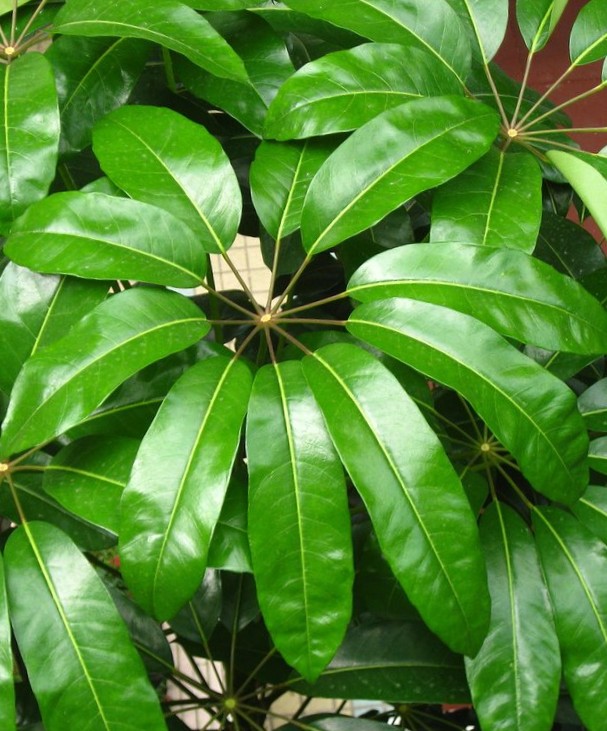
Starleaf is not the same plant as dwarf schefflera, Heptapleurum arboricola, even though both are still commonly sold as “Schefflera” or “Umbrella Tree.” Starleaf is the much larger New Guinean and Australian tree with large glossy palmately compound leaves and long radiating red flower spikes that give rise to the Octopus Tree name. The historical poodle case involving leaves and small stems should be preserved as case evidence, but ataxia and leukopenia are not established routine effects of every Starleaf exposure. Pronounced incoordination, fever, collapse, abnormal bloodwork, or illness lasting beyond the expected gastrointestinal course should trigger investigation for chemical contamination, another plant, infection, metabolic disease, or another diagnosis.
About this guide: This page provides general pet-poisoning information and cannot diagnose or treat an individual animal. For any suspected exposure, contact a veterinarian or animal poison-control service immediately. Do not induce vomiting, give medication, or attempt home decontamination unless directed by a veterinary professional.
Starleaf
Heptapleurum actinophyllum (Endl.) Lowry & G.M.Plunkett
Former scientific names and essential search synonyms include:
- Brassaia actinophylla Endl.
- Schefflera actinophylla (Endl.) Harms
Additional historical botanical synonyms include:
- Aralia longipes W.Bull
- Brassaia singaporensis Ridl.
Important cultivar and horticultural names include:
- Heptapleurum actinophyllum ‘Amate’ — compact horticultural selection of Starleaf
- Heptapleurum actinophyllum ‘Variegata’ — variegated horticultural material sold under Starleaf, Schefflera, or Umbrella Tree names
Important non-synonym confusion names:
- Heptapleurum arboricola Hayata, formerly Schefflera arboricola (Hayata) Merr. — dwarf schefflera or dwarf umbrella tree; smaller separate species native to Hainan and Taiwan
- Heptapleurum elegantissimum (Veitch ex Mast.) Lowry & G.M.Plunkett, formerly Schefflera elegantissima — false aralia; separate ornamental species
- Cyperus alternifolius L. and other Cyperus spp. — umbrella plants or umbrella sedges; unrelated sedges
- Melia azedarach L. — chinaberry or Texas umbrella tree; unrelated Meliaceae tree with a different and potentially more serious toxic syndrome
- Hedera helix L. — English ivy; related contact-allergy discussion through Araliaceae but not Starleaf
- Dracaena trifasciata (Prain) Mabb. — snake plant or mother-in-law’s tongue; unrelated Asparagaceae plant sometimes confused in houseplant lists
- Dieffenbachia, Philodendron, Epipremnum, Spathiphyllum, and other aroids — unrelated plants with a more classic insoluble-raphide oral-irritation syndrome
Araliaceae
Commonly called the Ivy, Ginseng, or Aralia Family.
Starleaf; Star Leaf; Australian Umbrella Tree; Australian Umbrella-Tree; Queensland Umbrella Tree; Queensland Umbrella-Tree; Umbrella Tree; Octopus Tree; Octopus-Tree; Australian Ivy Palm; Schefflera Tree; Large Schefflera; Queensland Schefflera; Australian Schefflera; Brassaia; Octopus-Plant; Amate.
Scientific and historical search names include Heptapleurum actinophyllum (Endl.) Lowry & G.M.Plunkett, Brassaia actinophylla Endl., Schefflera actinophylla (Endl.) Harms, Aralia longipes W.Bull, and Brassaia singaporensis Ridl.
“Schefflera” and “Umbrella Tree” are ambiguous. They may also identify dwarf schefflera, Heptapleurum arboricola, a smaller scrambling shrub or small tree native to Hainan and Taiwan. Starleaf, H. actinophyllum, is the much larger New Guinean and Australian tree with large glossy palmately compound leaves and long red octopus-like flower clusters. “Umbrella Plant” may refer to unrelated sedges in Cyperus, and “Texas Umbrella Tree” commonly refers to chinaberry, Melia azedarach. ‘Amate’ and ‘Variegata’ are horticultural Starleaf names, not nontoxic forms. Scientific identification is important because these common names do not all share identical toxins, treatment priorities, or prognosis.
A Mixed Irritant and Saponin-Triterpenoid Toxic Complex
Starleaf contains a chemically diverse toxic complex rather than one fully characterized poison. Veterinary references identify insoluble calcium oxalate crystals, saponins, and terpenoid or saponic glycoside constituents as important toxic categories. These categories should not be flattened into one compound. Insoluble oxalates are mineral irritants, while saponins and triterpenoid glycosides are organic compounds that may irritate membranes and the gastrointestinal lining.
The relative contribution of each component has not been determined in naturally poisoned dogs, cats, horses, livestock, rabbits, birds, or reptiles. A pet chewing one leaflet is not exposed in the same way as a dog eating small stems, a goat browsing fresh clippings, a bird shredding flowers or fruit, or an animal consuming chemically treated landscape waste. The public toxin field should therefore describe the confirmed and reported toxin categories while avoiding exaggerated claims that one exact isolated compound explains every clinical sign.
Insoluble Calcium Oxalates and Oral Irritation
Insoluble calcium oxalate crystals are associated most strongly with the immediate oral-irritation syndrome. Crushing leaves, petioles, small stems, bark, roots, flowers, fruit, or other tissue can release crystal-bearing sap into the mouth. The crystals irritate or abrade the lips, gums, tongue, oral lining, pharynx, and esophagus, causing pain, redness, salivation, swelling, vomiting, and difficulty swallowing.
Unlike soluble oxalate salts, these crystals act primarily at the point of contact and are not expected to cause the systemic calcium depletion and renal tubular crystal deposition associated with soluble-oxalate plants or ethylene glycol. Primary hypocalcemia, systemic oxalosis, and direct oxalate nephrosis are not the ordinary Starleaf syndrome. Kidney changes after a severe case would more likely reflect dehydration, shock, aspiration, another toxin, chemical contamination, or an unrelated disorder.
Do Not Import the Full Aroid Raphide Model
Starleaf belongs to Araliaceae, not Araceae. Its exact crystal anatomy has not been described as extensively as the classic raphide-bearing aroids such as Dieffenbachia, Pothos, Philodendron, Monstera, Peace Lily, and Calla Lily. The plant should not be assigned every ejector-cell, biforine, proteinase, or raphide-discharge mechanism documented in unrelated aroids merely because veterinary references report calcium oxalate crystals.
The clinically useful conclusion is narrower and stronger: damaged Starleaf tissue can irritate the mouth, throat, esophagus, stomach, and intestines. Oral pain, drooling, swelling, vomiting, and difficulty swallowing are plausible and recognized. Claims about forcefully fired raphide bundles, specific aroid proteases, or direct kidney oxalosis should be avoided unless exact-species evidence supports them.
Saponins and Gastrointestinal Irritation
Saponins are amphipathic glycosides whose sugar portions interact with water while their non-sugar aglycones interact with lipids. At sufficient concentrations, they can irritate the gastrointestinal lining and alter membrane permeability. This provides a plausible mechanism for nausea-like behavior, appetite loss, vomiting, abdominal discomfort, diarrhea, and depression after Starleaf ingestion.
Many orally ingested plant saponins are absorbed poorly, which helps explain why ordinary exposures usually remain localized to the mouth and gastrointestinal tract rather than becoming a predictable systemic poisoning. Poor absorption does not make the plant safe. Repeated vomiting and diarrhea can still cause dehydration, electrolyte abnormalities, weakness, aspiration risk, and prolonged food refusal, especially in small, young, elderly, or medically fragile animals.
Exact-Species Triterpenoid Research
Exact-species phytochemical research confirms substantial triterpenoid diversity. Investigators examining Starleaf foliage, then under the name Schefflera actinophylla, isolated three newly described ursane-type and four newly described lupane-type triterpenes, together with nine previously known lupane-type glycosides and glucosyl esters. These compounds were identified through spectroscopic and chemical analysis.
The study supports the broad veterinary labels “terpenoids,” “triterpenes,” and “saponic glycosides,” but it was designed to identify molecular structures rather than reproduce poisoning. It did not establish which compound causes vomiting in a dog, whether one compound is present in a toxic concentration in fresh foliage, whether the isolated molecules are absorbed intact by animals, or whether one cultivar is safer than another.
Leaf Extract Chemistry and Laboratory Boundaries
A separate analysis of dried Starleaf leaf extracts detected saponins in methanol and aqueous fractions. Phytosteroids appeared across all tested solvent fractions, while phenols or tannins appeared in selected fractions. Concentrated extracts can demonstrate membrane, antioxidant, enzyme-inhibiting, cytotoxic, or other biological activity under laboratory conditions, but that does not recreate a dog chewing several fresh leaves.
Extract concentrations and in vitro findings should not be converted into claims of routine hemolysis, organ failure, anticancer activity, antimicrobial treatment, or predictable systemic poisoning in animals. The safe public interpretation is that exact-species research confirms a chemically active plant, but the naturally exposed animal still most often develops oral and gastrointestinal irritation rather than a defined systemic triterpenoid toxicosis.
Contact Dermatitis and Sap Exposure
Contact with sap may cause skin irritation or delayed allergic contact dermatitis. Human allergic contact dermatitis has been reported after handling Brassaia actinophylla, including cross-reactivity in a person previously sensitized to common ivy. Repeated pruning, nursery work, invasive-tree removal, and handling fresh cut material may increase exposure to sap and potential sensitizers.
Falcarinol is a confirmed contact allergen in the related dwarf schefflera, Heptapleurum arboricola, but the exact responsible allergen in Starleaf has not been established conclusively. Skin reactions may represent direct irritation, delayed allergy, or both. Animals may lick contaminated fur and convert a skin exposure into an oral exposure, and sap transferred to the eye deserves separate attention.
Poisonous Parts
No dependable tissue comparison establishes a harmless plant part. Leaves and small stems are involved in the best-known canine case, but bark, roots, sap, flowers, fruits, seeds, seedlings, larger branches, and exposed root sections should also be treated as potentially toxic. Outdoor trees may drop large quantities of foliage and fruit, while pruning or invasive-tree removal places fresh sap-covered material at ground level.
Wilted or dried vegetation should not be assumed safe. Mineral crystals can remain in dead plant tissue, and less volatile glycosides or triterpenoid compounds may persist after tissue loses water. Fallen leaves, fruit clusters, cut branches, seedlings, storm debris, and root pieces should not be given to pets, poultry, parrots, rabbits, tortoises, horses, goats, sheep, cattle, or other animals as browse or enrichment.
No Reliable Toxic Dose
No veterinary toxic dose has been established for dogs, cats, horses, cattle, sheep, goats, pigs, camelids, rabbits, guinea pigs, birds, reptiles, or other animals. The amount and mixture of oxalates, saponins, and triterpenoids may vary with plant part, age, genetics, environment, season, growing conditions, stress, drying, and processing.
Immediate irritation or bitter plant chemistry may discourage continued chewing, but it cannot be relied upon to prevent a larger exposure in a puppy, habitual plant-chewing cat, browsing goat, parrot, tortoise, or animal given chopped landscape waste. The amount missing from the plant may also be misleading because an animal can shred and spit out much of a leaf while still exposing the mouth to sap and irritating tissue.
Onset and Early Progression
Most reported Starleaf exposures cause mild to moderate oral or gastrointestinal illness. Dogs and cats may lick their lips, drool, paw at the mouth, rub the muzzle, refuse food, vomit, develop diarrhea, or become quiet and uncomfortable. A pet may approach food or water and then turn away because swallowing is painful. Visible plant fragments may appear in vomit, but their absence does not exclude ingestion.
Signs often begin after chewing or swallowing fresh tissue, but the clinical timing can vary with amount, plant part, sap exposure, swallowed material, and whether fertilizer, pesticide, herbicide, or another plant was involved. A single leaf bite may remain brief. Chewing several small stems, fallen fruit, seedlings, or pruning debris can produce a more substantial exposure.
Oral Irritation, Drooling, and Dysphagia
Oral irritation can include redness, pain, and swelling of the lips, gums, tongue, or mouth. More extensive inflammation may make swallowing difficult and can cause repeated swallowing attempts, gagging, coughing, or saliva pooling around the lips. Veterinary sources differ in emphasis: some describe mild vomiting and diarrhea as the most common presentation, while others include the fuller insoluble-oxalate syndrome of oral pain, swelling, excessive drooling, and dysphagia.
Both patterns are plausible because exposure amount, plant part, tissue damage, and individual sensitivity vary. Serious throat or airway swelling appears uncommon, but any progressive oral or pharyngeal edema must be treated cautiously. Warning signs include neck extension, repeated choking, noisy inspiration, open-mouth breathing, inability to swallow saliva, blue or gray mucous membranes, severe agitation, weakness, or collapse.
Vomiting, Diarrhea, and Dehydration
Vomiting and diarrhea may occur separately or together. A mildly affected animal may vomit once, pass a soft stool, and recover without progression. Repeated vomiting or profuse diarrhea can produce dehydration, electrolyte abnormalities, weakness, and reduced kidney perfusion, particularly in small, young, elderly, or medically fragile animals.
These are secondary consequences of fluid loss rather than evidence that Starleaf normally causes primary renal or hepatic failure. Blood in vomit or stool, persistent abdominal pain, inability to keep water down, tacky gums, reduced urination, or worsening depression requires veterinary assessment and consideration of another plant, chemical contamination, foreign material, infection, pancreatitis, or another illness.
The Historical Poodle Case
One historical case provides the principal basis for including neurologic and hematologic abnormalities. A 13-kilogram poodle reportedly consumed leaves and several small stems from a household plant identified as Schefflera actinophylla. The dog developed moderate ataxia and anorexia followed by vomiting, and plant material was visible in the vomit. A routine blood count reportedly showed approximately 2,400 white blood cells per cubic millimeter, which represents marked leukopenia.
That case is important but narrow. The brief report did not identify a repeat exposure, dose-response relationship, bone-marrow examination, infectious-disease evaluation, or exclusion of pesticides, fertilizer, herbicides, medications, or unrelated illness. Ataxia and leukopenia should therefore be treated as unusual case findings rather than predictable Starleaf symptoms. Incoordination, tremors, collapse, fever, profound depression, pale gums, abnormal bruising, or a low white blood cell count requires a complete veterinary evaluation.
Dogs and Puppies
Dogs most often develop vomiting, diarrhea, reduced appetite, drooling, oral discomfort, or temporary lethargy. Puppies may chew small stems during teething, tug fallen leaves, or investigate pruning debris. The amount missing from the plant may be difficult to judge because a dog can shred and spit out much of a leaflet while swallowing sap, fragments, or small stems.
Repeated vomiting, inability to swallow, increasing facial or throat swelling, ataxia, severe depression, collapse, fever, bloody diarrhea, or illness lasting beyond one to two days requires reassessment and investigation for plant-treatment chemicals or another diagnosis. A dog that ate fresh clippings, fallen fruits, seedlings, or chemically treated material deserves more caution than one that mouthed one intact leaf.
Cats and Kittens
Cats may bite accessible leaflets, play with fallen foliage, dig in the container, or chew indoor juvenile plants labeled as Schefflera. Outdoor cats in subtropical areas may encounter fallen flowers, fruits, seedlings, or pruning debris beneath mature trees. Expected signs include drooling, vomiting, diarrhea, food refusal, hiding, mouth discomfort, and temporary lethargy.
Persistent food refusal is especially important in cats because prolonged anorexia can cause secondary complications. Open-mouth breathing, marked drooling, inability to swallow, progressive swelling, repeated vomiting, weakness, ataxia, or fever should not be managed as routine stomach upset.
Horses, Ponies, and Donkeys
Horses cannot vomit. Possible signs after chewing Starleaf include salivation, mouth irritation, repeated chewing motions, feed refusal, coughing, difficulty swallowing, abdominal discomfort, or diarrhea. Feed or water coming from the nostrils, marked respiratory noise, severe colic, weakness, or collapse requires immediate examination and investigation for choke, aspiration, other poisonous plants, and contaminated clippings.
Starleaf is not an ordinary temperate pasture plant, but it may grow in subtropical paddocks, around barns, in estate landscaping, along fence lines, or beside animal facilities. Fresh clippings, fallen fruit, seedlings, and storm-damaged branches create a greater exposure opportunity than an intact mature canopy.
Goats, Sheep, Cattle, Camelids, and Pigs
Goats, sheep, cattle, camelids, pigs, and other livestock are more likely to encounter Starleaf through subtropical landscaping, nursery waste, fallen branches, storm debris, invasive-tree removal, or discarded ornamental clippings than through ordinary pasture. Browsing animals may be more willing to sample woody foliage than horses or cattle.
Expected illness centers on oral and gastrointestinal irritation, but group outbreaks or severe systemic signs require analysis of every plant, pesticide, fertilizer, herbicide, feed, and water source involved. Several affected animals, profound weakness, severe colic, neurologic signs, or unexpected fatalities should never be attributed to Starleaf alone without inspecting the entire debris pile.
Rabbits, Guinea Pigs, Birds, and Other Small Animals
Rabbits, guinea pigs, rats, and several other small mammals cannot vomit. They may show drooling, tooth grinding, food refusal, abdominal discomfort, diarrhea, or reduced fecal production. Prolonged appetite loss can lead to gastrointestinal hypomotility or stasis, making prompt veterinary guidance important even when the original exposure seems mild.
Birds may shred leaves, flowers, fruit, or young stems with the beak and develop repeated beak wiping, regurgitation, food refusal, diarrhea, altered droppings, oral redness, or weakness. Wildlife consumption of nectar or fruit does not establish safety for captive parrots, poultry, aviary birds, rabbits, or reptiles. Species differ in seed handling, digestive physiology, toxin metabolism, and the amount consumed relative to body weight.
Skin and Eye Signs
Sap exposure may produce skin redness, itching, swelling, eczema, or vesicular dermatitis, particularly after repeated contact in a sensitized individual. Animals may lick, scratch, or rub the exposed area, spreading sap to the mouth, face, or eyes. Delayed skin reactions may appear after the initial exposure rather than immediately, especially after repeated pruning or occupational contact.
Eye contamination can cause tearing, blinking, squinting, redness, and pain. Persistent eye closure, cloudiness, light sensitivity, swelling, discharge, or apparent visual difficulty requires veterinary examination because ordinary skin-irritation advice is not adequate for the corneal surface.
Atypical or Severe Signs
Ataxia and leukopenia are not established routine effects, and seizures, coma, direct cardiac poisoning, primary liver failure, and primary kidney failure are not recognized as the ordinary Starleaf syndrome. Severe abnormalities may reflect dehydration, hypoglycemia, aspiration, infection, pesticide or fertilizer exposure, herbicide contamination, another plant, medication, metabolic disease, or a coincidental disorder.
Most uncomplicated exposures improve within several hours to one or two days after the source is removed and vomiting or diarrhea is controlled. Continuing vomiting, bloody stool, progressive swelling, pronounced weakness, fever, ataxia, abnormal bloodwork, or illness lasting beyond the expected gastrointestinal course warrants reassessment rather than continued reliance on the plant’s reputation for mild toxicity.
Starleaf Is Now Heptapleurum actinophyllum
The accepted name is Heptapleurum actinophyllum. The plant was originally described as Brassaia actinophylla and later became widely known as Schefflera actinophylla. Both former names remain common on plant labels, in veterinary databases, throughout older scientific literature, and in landscape records.
The 2020 transfer to Heptapleurum followed taxonomic work showing that the old pantropical concept of Schefflera included several separate evolutionary lineages. The large Asian, Malesian, Papuasian, and Australian lineage was returned to the older genus Heptapleurum. This name change does not make older Schefflera actinophylla toxicology irrelevant when the plant was identified correctly.
Why the Starleaf Title Should Remain
Starleaf is a longstanding poison-control and horticultural name for this species. It describes the way the glossy leaflets radiate from one central point like the rays of a star. The name is useful because many owners search “starleaf poisonous to dogs” or “starleaf toxic to cats” rather than searching the updated botanical name.
The title also provides a useful alternate-name page for people who may not search for Australian umbrella tree, Octopus Tree, or Heptapleurum actinophyllum. The page should nevertheless explain the ambiguous Schefflera terminology so the plant is not confused with dwarf schefflera or unrelated plants called umbrella plant.
Starleaf and Dwarf Schefflera Are Different Species
Starleaf, Heptapleurum actinophyllum, is a large tropical tree native to southern New Guinea and northern Australia. Dwarf schefflera, Heptapleurum arboricola, is a scrambling shrub or small tree native to Hainan and Taiwan. The two plants are frequently sold under overlapping common names, especially Schefflera and umbrella tree.
Starleaf commonly develops much larger leaflets, a taller multistemmed tree form, and long radiating red flower spikes. Dwarf schefflera has smaller leaves, a denser shrubby habit, and is much more common as a compact indoor or hedge plant. Both plants can produce oral and gastrointestinal irritation, but they are separate species with different growth forms, ranges, and species-specific chemistry. A photograph of the entire plant, leaflets, trunk, flowers, fruit, and label is more dependable than the common name alone.
Native Range and Natural Growth
Heptapleurum actinophyllum is native to southern New Guinea, Queensland, and Australia’s Northern Territory. It grows primarily in wet tropical forest and related humid habitats. Young plants may begin as epiphytes on a tree trunk or branch. Their roots later extend toward the ground, allowing the plant to become terrestrial.
This growth pattern can produce large root systems around or beside supporting trees. The species has been introduced into many tropical and subtropical regions, including Florida, Hawaii, Caribbean islands, Atlantic islands, and numerous Pacific islands. In those regions, animal exposure may occur outdoors through landscaping, naturalized seedlings, fallen fruits, pruning debris, and storm-damaged branches rather than only as an indoor houseplant.
How to Identify Starleaf
Starleaf is an evergreen shrub or multistemmed tree that may reach approximately 30 to 40 feet in cultivation and can become taller under favorable tropical conditions. Young trunks are green and smooth, becoming gray, brownish, and woody with age. Lower trunks may become bare as foliage concentrates toward branch tips.
Each leaf is palmately compound. Approximately five to eighteen individual leaflets radiate from the end of one long leaf stalk. The leathery leaflets are glossy dark green above, paler beneath, oblong to elliptical, and usually have smooth but slightly undulating margins. The leaflets of an outdoor tree may reach approximately 6 to 12 inches long, while indoor plants commonly produce smaller foliage. The conspicuous leaflet stalks help create the plant’s umbrella or star-like appearance.
Why It Is Called Octopus Tree
Mature outdoor trees produce stiff terminal clusters composed of long radiating racemes. The flower structure may span several feet and resembles the arms of an octopus or the ribs of an inverted umbrella. Hundreds of small red, pinkish-red, or dull crimson flowers develop along the racemes.
The flower clusters produce abundant nectar and can attract birds and other nectar-feeding wildlife. The flowers are followed by small round fleshy fruits that mature from reddish tones to purplish red or nearly black. Fruiting branches, fallen drupes, seedlings, and animal-dispersed seeds create exposure routes not present on many indoor juvenile specimens.
Every Part Should Be Treated as Potentially Toxic
Leaves, petioles, small stems, bark, roots, sap, flowers, fruits, and seeds are all classified as potentially toxic. The exact concentration and mixture of oxalates, saponins, and triterpenoids may differ among those tissues. The best-known canine case involved leaves and several small stems, but this does not establish those as the only toxic parts.
Freshly pruned branches, storm debris, seedlings, root sections, flower spikes, and fallen fruit should all be kept away from animals. Drying or wilting does not provide a dependable detoxification method. Mineral crystals can remain in dead plant tissue, while less volatile glycosides and terpenoid compounds may persist in clippings.
Exact-Species Triterpenoid Research
A 2010 investigation separated chemical constituents from ethyl-acetate and butanol fractions of Starleaf foliage. Researchers identified three newly described ursane-type and four newly described lupane-type triterpenes. The study also isolated nine previously known glycosides and glucosyl esters based on lupane-type triterpenes.
This establishes that the broad veterinary label “terpenoids” represents a chemically diverse group of real compounds within the exact species. The investigation was designed to identify molecular structures, not to reproduce poisoning. It did not determine which compound causes vomiting in a dog, whether one compound is present in a toxic concentration in fresh foliage, whether the isolated molecules are absorbed intact by an animal, or whether one cultivar is less toxic than another.
Saponins Have Also Been Detected Directly
Researchers examining dried Starleaf leaves found positive qualitative saponin reactions in methanol and water extracts. Phytosteroids appeared in all tested solvent fractions, while tannins or phenolic compounds occurred in selected fractions. This supports the listing of saponic glycosides but does not establish a simple one-compound mechanism.
Saponin composition, concentration, gastrointestinal absorption, and activity may vary considerably among plant tissues and individual trees. Concentrated laboratory extracts can show effects that do not occur after ordinary oral exposure. In vitro membrane activity must not be transformed into an unsupported claim that Starleaf routinely causes red-blood-cell destruction, systemic organ failure, or predictable neurologic disease.
How Saponins May Produce Gastrointestinal Illness
Saponins contain both water-compatible sugar groups and lipid-compatible aglycones. This structure allows them to associate with membranes and other lipid surfaces. Contact with the stomach or intestinal lining may increase irritation and membrane permeability, stimulating nausea, vomiting, intestinal secretion, abdominal discomfort, and diarrhea.
Fibrous plant material and insoluble oxalates may contribute at the same time. Many saponins are absorbed poorly through an intact gastrointestinal tract. Limited absorption helps explain why most reported veterinary cases remain gastrointestinal rather than progressing into a severe systemic toxicosis.
Insoluble Oxalates and Oral Irritation
Veterinary references list insoluble calcium oxalates among the toxic principles of Starleaf. These crystals can irritate the lips, tongue, mouth, pharynx, and esophagus when plant tissue is crushed. The clinical result can include drooling, oral discomfort, swelling, vomiting, and difficulty swallowing.
Starleaf is not an aroid, and its crystal anatomy has not been documented as extensively as the ejecting raphide cells of dumb cane. The clinical description should therefore focus on verified irritation without importing every microscopic mechanism from Araceae. Insoluble oxalates also should not be confused with absorbed soluble oxalates. Primary hypocalcemia, systemic oxalosis, and direct renal-tubular crystal injury are not recognized as the ordinary Starleaf syndrome.
The Historical Poodle Case
An older case described a 13-kilogram poodle that ate leaves and several small stems from a household plant identified as Schefflera actinophylla. Moderate ataxia and anorexia developed, followed by vomiting. Plant material was visible in the vomit. A routine blood count showed approximately 2,400 white blood cells per cubic millimeter, indicating marked leukopenia.
The report remains important because it documents more than simple diarrhea. It does not establish leukopenia or ataxia as predictable toxic effects, however. No pesticide, fertilizer, herbicide, infectious disease, medication, or unrelated disorder was excluded in the brief historical account. A modern animal with these abnormalities requires diagnostic testing rather than treatment based solely on the old case. A complete blood count may be reasonable when illness is pronounced, persistent, febrile, neurologic, or inconsistent with an uncomplicated gastrointestinal irritant.
Contact Dermatitis and Sap Exposure
Human allergic contact dermatitis has been reported after handling Brassaia actinophylla. Repeated occupational or household exposure can produce itching, redness, swelling, eczema, or vesicular lesions in a sensitized person. Sensitization may develop after repeated contact rather than after one brief exposure.
Falcarinol is an established contact allergen in the related dwarf schefflera, Heptapleurum arboricola. It should not be named automatically as the proven allergen in Starleaf because exact-species isolation has not been established conclusively. Animals may develop immediate skin irritation or a delayed reaction after sap contact. Redness, licking, rubbing, swelling, or dermatitis after pruning exposure deserves veterinary attention when it persists, spreads, or involves the eye.
Dogs and Cats
Dogs and cats most often develop vomiting, diarrhea, reduced appetite, drooling, oral discomfort, or temporary lethargy. The amount missing from the plant may be difficult to judge because an animal can shred and spit out much of a leaf. A puppy may chew stems during teething, while a cat may bite accessible leaflets or play with fallen foliage.
Outdoor cats and dogs in subtropical regions can also encounter fallen flowers, fruits, and seedlings beneath a mature tree. Repeated vomiting, inability to swallow, increasing facial swelling, ataxia, fever, severe depression, or illness lasting beyond one to two days requires reassessment and investigation for plant-treatment chemicals, infection, another toxin, or another diagnosis.
Horses and Livestock
Starleaf is not an ordinary temperate pasture plant, but it may grow in subtropical paddocks, around barns, in estate landscaping, or beside animal facilities. Fresh clippings and storm-damaged branches create a greater exposure opportunity than an intact mature canopy. Horses cannot vomit and may show salivation, feed refusal, coughing, dysphagia, diarrhea, depression, or colic-like discomfort.
Goats and other browsing livestock may consume foliage more readily than horses or cattle. Several affected animals, profound weakness, severe colic, neurologic signs, or unexpected fatalities should prompt investigation of every species in mixed clippings and testing for pesticides, herbicides, fertilizer, contaminated feed, and other toxic plants.
Birds, Rabbits, and Other Small Animals
Parrots and other birds may shred leaflets, flowers, fruit, or young stems. Possible signs include repeated beak wiping, regurgitation, reduced appetite, diarrhea, altered droppings, and weakness. Wildlife consumption of nectar or fruit does not establish safety for captive animals because species differ in seed handling, digestive physiology, metabolism, and dose relative to body weight.
Rabbits and guinea pigs cannot vomit. Gastrointestinal irritation may appear as food refusal, abdominal discomfort, tooth grinding, diarrhea, or reduced fecal production. Prolonged appetite loss can lead to gastrointestinal stasis. Reptiles and tortoises should not be offered Starleaf foliage, fruit, flowers, or seedlings as enclosure greenery or browse.
Diagnosis, Treatment, Prognosis, and Prevention
Diagnosis usually depends on a credible exposure, compatible signs, and correct identification. Useful photographs show the whole tree, palmately compound leaves, leaflet size, trunks, flower spikes, fruits, seedlings, roots, and any nursery label. The veterinarian will assess oral pain, swelling, swallowing, hydration, abdominal comfort, neurologic function, temperature, and the frequency of vomiting or diarrhea. Blood testing may be unnecessary in a mild, rapidly improving case, but a complete blood count, serum chemistry, electrolytes, urinalysis, imaging, or infectious-disease testing may be appropriate when ataxia, leukopenia, fever, collapse, persistent vomiting, bloody diarrhea, or severe weakness develops.
Important differential diagnoses include dwarf schefflera, English ivy, aroid houseplants, chinaberry, umbrella sedges, pesticides, herbicides, fertilizer, medications, infection, metabolic disease, foreign material, contaminated clippings, and other plants mixed into landscape waste. No species-specific antidote is available. Treatment begins by preventing further exposure, removing loose plant material safely, evaluating the mouth and swallowing, and treating vomiting, diarrhea, pain, or dehydration according to severity.
The prognosis is generally good when exposure is limited and signs remain confined to mild oral irritation, vomiting, or diarrhea. Many animals improve within several hours and recover completely within one or two days. The outlook becomes more guarded when swallowing is impaired, vomiting or diarrhea causes significant dehydration, plant material is aspirated, incoordination develops, fever appears, or laboratory abnormalities indicate another process. Starleaf is invasive or naturalized in several tropical and subtropical regions, and removal generates substantial amounts of potentially irritating foliage, fruit, sap, roots, and wood. Wear gloves, wash exposed skin, clean tools, and prevent animals from entering the work area until every clipping has been collected.
Immediate Steps After Exposure
Stop further ingestion. Move the animal away from the plant, fallen leaves, fruit, seedlings, pruning debris, storm-damaged branches, or chemically treated landscape material and prevent other animals from reaching the same source. First aid should focus on safe plant removal, mouth and swallowing assessment, hydration, and identifying whether the plant alone was involved.
- Remove loose plant pieces carefully: If the animal is alert and cooperative, take visible fragments from the lips and front of the mouth. Do not reach deeply into the throat or place your fingers near the teeth of a frightened or painful animal.
- Gently clear the mouth when safe: Wipe the lips and front of the mouth with a damp cloth or allow a small amount of clean water to rinse loose residue only when breathing and swallowing are normal. Do not force water into the mouth.
- Preserve identification evidence: Photograph the entire plant, palmately compound leaves, leaflet size, trunk, flowers, fruit, nursery label, seedlings, and chewed material. Save a representative sample in a secure bag.
- Check for chemicals: Determine whether fertilizer, systemic insecticide, foliar spray, herbicide, pesticide, mulch treatment, or another product was recently applied. Report every possible product to the veterinarian.
- Contact a veterinarian or animal poison-control service: Report the animal’s species, weight, plant part, amount missing, time of exposure, vomiting, diarrhea, swallowing ability, coordination, and existing medical conditions.
Skin or Eye Exposure
Rinse sap from skin and fur with lukewarm water to remove visible residue and prevent grooming until the contaminated area is clean. Wear gloves when handling cut material, sap-covered fur, pruning tools, or fallen fruit because repeated contact may irritate skin or trigger allergic contact dermatitis in sensitized people.
Flush an exposed eye promptly with sterile saline or clean lukewarm water and allow it to flow gently across the eye. Do not rub the eye or attempt to remove microscopic material with tweezers. Continuing squinting, cloudiness, marked redness, swelling, discharge, light sensitivity, or apparent visual difficulty requires veterinary care.
Do Not Attempt Unsupervised Home Treatment
- Do not induce vomiting automatically: Hydrogen peroxide, salt, mustard, syrup of ipecac, and manual gagging can cause gastrointestinal injury or aspiration. Horses, rabbits, guinea pigs, rats, and several other species cannot vomit.
- Do not give activated charcoal without veterinary direction: Charcoal is not a universal antidote and may be aspirated by a vomiting, weak, ataxic, sedated, or dysphagic animal.
- Do not force milk, food, water, oil, or broth: Forced oral material may trigger more vomiting or enter the lungs when swallowing is impaired.
- Do not give antihistamines automatically: An antihistamine does not neutralize saponins, remove insoluble oxalates, or prove that swelling is allergic. Sedation may complicate assessment of a weak or uncoordinated animal.
- Do not give Kapectolin, Kaopectate, sucralfate, antidiarrheal medication, antiemetics, antibiotics, corticosteroids, or human pain medication: Treatment must be selected for the individual patient after examination.
- Do not drench horses or livestock: Forced fluids or medication may be aspirated by an animal that is coughing, choking, weak, regurgitating, recumbent, or unable to swallow normally.
When Emergency Examination Is Especially Important
- Mouth or throat swelling is increasing: Progressive tongue, facial, pharyngeal, or laryngeal swelling can interfere with swallowing or breathing.
- The animal cannot swallow normally: Repeated swallowing attempts, choking, gagging, saliva pooling around the mouth, water falling from the lips, or nasal reflux requires urgent assessment.
- Vomiting or diarrhea is repeated: Continuing fluid loss can cause dehydration and electrolyte abnormalities.
- The animal becomes uncoordinated: Ataxia is not a routine expected effect and warrants evaluation for severe illness, chemical contamination, another toxin, hypoglycemia, or neurologic disease.
- Weakness or depression is pronounced: Inability to stand, collapse, pale gums, abnormal temperature, tremors, or altered responsiveness requires immediate care.
- Blood appears in vomit or stool: Significant gastrointestinal bleeding is not expected after a trivial exposure.
- Several animals are affected: Group illness raises concern for contaminated clippings, pesticide exposure, fertilizer, herbicide, or another plant mixed with Starleaf.
- A rabbit, guinea pig, bird, or other small animal stops eating: Food refusal can lead to gastrointestinal stasis, weakness, and additional complications.
Veterinary Treatment
The veterinarian will assess the mouth, swallowing, airway, hydration, abdominal comfort, coordination, body temperature, and severity of vomiting or diarrhea. Loose plant material may be removed and the mouth gently wiped or rinsed when this can be performed safely. Pain control and hydration support are often more useful than aggressive decontamination.
Supportive treatment may include veterinarian-selected antiemetic medication, analgesia, fluid and electrolyte therapy, gastrointestinal support, and monitoring of food and water intake. Progressive oral or throat swelling may require oxygen, injectable treatment, or airway intervention. Skin and eye exposure may require irrigation, examination, topical therapy, or protection from rubbing.
A complete blood count and serum chemistry may be appropriate when the animal is ataxic, severely depressed, febrile, persistently ill, exposed to a plant treated with chemicals, or showing signs beyond routine gastrointestinal irritation. Leukopenia should not be assumed to result from Starleaf without excluding infection, medication, bone-marrow disease, chemical exposure, and other toxins.
Activated charcoal, veterinarian-induced vomiting, and gastric lavage are case-specific decisions. They are not routine treatments for an animal already vomiting or showing local oral irritation, and they may be unsafe when swallowing, coordination, or airway protection is abnormal.
Dogs and Cats
Dogs should be monitored for drooling, mouth discomfort, vomiting, diarrhea, appetite, hydration, gum color, coordination, energy level, and whether the plant had been treated with chemicals. A puppy may chew stems or fallen branches during play, while an adult dog may shred leaves and spit out much of the plant. The fact that little appears missing does not exclude sap exposure.
Cats should be monitored for hiding, vomiting, diarrhea, drooling, food refusal, swallowing difficulty, eye rubbing, weakness, and open-mouth or noisy breathing. Persistent food refusal is important because cats can develop secondary complications after prolonged anorexia. Never give hydrogen peroxide to a cat as a home emetic.
Horses and Livestock
Horses, goats, sheep, cattle, camelids, pigs, and other livestock should be moved away from subtropical landscaping, barn plantings, storm debris, fresh clippings, fallen fruit, seedlings, and mixed ornamental waste. Provide safe forage and clean water so hungry animals are not forced to browse the same material. Save samples from the entire debris pile because chinaberry, oleander, yew, azalea, sago palm, or pesticide-treated material may be mixed in.
Do not drench affected livestock. Oil, water, milk, charcoal, electrolyte mixtures, or medication can be aspirated when an animal is weak, coughing, gagging, regurgitating, bloated, recumbent, or poorly coordinated. Horses cannot vomit, so mouth and throat irritation may appear as salivation, feed refusal, coughing, repeated swallowing, nasal reflux, diarrhea, depression, or colic-like discomfort rather than vomiting.
Rabbits, Guinea Pigs, Birds, Reptiles, and Small Pets
Rabbits and guinea pigs cannot vomit. Drooling, tooth grinding, facial rubbing, reduced appetite, reduced fecal output, diarrhea, weakness, or quiet behavior after exposure requires prompt veterinary guidance because gastrointestinal hypomotility or stasis can become serious. Do not offer Starleaf leaves, fruit, flowers, stems, bark, seedlings, or clippings as forage, bedding, chew material, or enrichment.
Birds with beak wiping, repeated tongue movements, oral redness, regurgitation, altered droppings, food refusal, weakness, poor perching, or abnormal breathing need avian veterinary advice. Reptiles and tortoises should not be offered Starleaf as enclosure greenery or browse. Anorexia, mouth irritation, diarrhea, weakness, abnormal posture, or respiratory change after exposure should be handled by a veterinarian familiar with the species.
Recovery and Prognosis
Most limited exposures have a good prognosis. Mild vomiting, diarrhea, appetite loss, and oral discomfort often improve within several hours and resolve within approximately one or two days. Continue monitoring until the animal is swallowing normally, eating, drinking, urinating, passing stool, and behaving normally.
Continuing vomiting, diarrhea, swallowing difficulty, pronounced lethargy, ataxia, fever, abnormal bloodwork, eye pain, or respiratory signs deserves reassessment. Recovery depends on whether the plant alone was involved or whether dehydration, aspiration, chemical contamination, infection, another plant, or another illness is present. A historical dog developed ataxia and marked leukopenia, but those abnormalities have not been established as predictable effects. Animals showing them should receive diagnostic testing rather than being managed as uncomplicated stomach upset.
Prevention After the Incident
Exclude animals from pruning and removal areas. Wear gloves, collect every leaf, flower cluster, fruit, seedling, root section, and branch, and clean sap from tools and surfaces. Do not leave cut material where dogs can chew it or where horses, goats, rabbits, poultry, tortoises, or livestock can browse it.
Do not place branches, fruits, seedlings, root pieces, or clippings in horse paddocks, goat pens, livestock pasture, rabbit areas, aviaries, poultry runs, tortoise enclosures, dog yards, or accessible compost. Dispose of debris through a secure municipal, green-waste, or invasive-plant waste method appropriate for the region. Label retained trees with both Heptapleurum actinophyllum and the former name Schefflera actinophylla for reliable emergency identification.
Frequently Asked Questions About Starleaf and Animal Poisoning
What is the correct scientific name for Starleaf?
The accepted name is Heptapleurum actinophyllum (Endl.) Lowry & G.M.Plunkett. Brassaia actinophylla and Schefflera actinophylla are older botanical names that remain common in veterinary databases, nursery labels, scientific publications, and landscaping records. All three names may therefore identify the same poisonous Australian umbrella tree.
Is Starleaf the same plant as dwarf schefflera?
No. Starleaf is Heptapleurum actinophyllum, a large tree native to southern New Guinea and northern Australia. Dwarf schefflera is Heptapleurum arboricola, a smaller shrub or scrambling tree native to Hainan and Taiwan. Both may be sold as Schefflera or umbrella tree and both can irritate animals, but they are separate species with different growth forms and species-specific chemistry.
Why was Schefflera actinophylla renamed?
The older broad genus Schefflera included several separate evolutionary lineages. Botanical work returned the Asian, Malesian, Papuasian, and Australian lineage to Heptapleurum. The name change is taxonomic, not toxicological. Older Schefflera actinophylla poison and chemistry literature remains relevant when the plant was correctly identified.
What toxic compounds have been confirmed in Starleaf?
Veterinary references identify calcium oxalate crystals, saponins, and terpenoids or saponic glycosides. Exact-species research has isolated numerous ursane- and lupane-type triterpenes, glycosides, and glucosyl esters from the leaves. A separate leaf-extract study detected saponins in methanol and water fractions. These findings confirm complex chemistry but do not identify one compound as the sole cause of every veterinary sign.
What do the triterpene studies tell us about poisoning?
The studies establish that Starleaf contains several structurally distinct triterpenes and related glycosides rather than one generic substance called “terpenoid.” They do not establish an animal toxic dose, absorption rate, or direct link between an individual isolated molecule and vomiting. The laboratory work strengthens the plant-specific chemistry while leaving the clinical mechanism partly unresolved.
Why do some sources list only vomiting and diarrhea while others list mouth swelling?
Both descriptions appear in veterinary and poison-reference material. Saponins and other constituents can cause gastrointestinal irritation, making vomiting and diarrhea common effects. Calcium oxalate crystals and sap can also irritate the lips, tongue, mouth, and throat, causing drooling, swelling, and painful swallowing. Different amounts, tissues, animals, and source records emphasize different parts of the same possible syndrome.
Is Starleaf an aroid like dumb cane or pothos?
No. Starleaf belongs to Araliaceae, while dumb cane, pothos, philodendron, peace lily, and calla lily belong to Araceae. Starleaf can still contain calcium oxalate crystals and cause mouth irritation, but its exact crystal anatomy should not be assumed to match the ejecting raphide cells of classic aroids. The clinical warning is valid, but the microscopic mechanism should stay evidence-bound.
Did Starleaf really cause ataxia and leukopenia in a dog?
One historical report described a 13-kilogram poodle that developed moderate ataxia, appetite loss, and vomiting after eating leaves and several small stems. Its white blood cell count was approximately 2,400 cells per cubic millimeter. The report did not exclude pesticides, fertilizer, infection, medication, or unrelated disease, and the findings have not been established as a recurring syndrome. They should be preserved as case evidence but not presented as routine symptoms.
Which parts of Starleaf are toxic?
Leaves, petioles, stems, bark, sap, roots, flowers, fruits, and seeds should all be treated as potentially toxic. Leaves and small stems were involved in the historical dog case, but that does not prove other tissues are safe. Fallen fruit, seedlings, pruning debris, storm-damaged branches, and exposed roots can all create realistic animal exposures.
Are the flowers and fruits safe because birds feed from the tree?
No. Wild birds may consume nectar or fruit without showing the same effects as a dog, cat, horse, parrot, rabbit, or grazing animal. Species differ in digestion, seed handling, metabolism, and dose relative to body weight. Flowers, fruits, and seeds remain potentially toxic and should not be offered as food or enrichment.
Can Starleaf cause allergic contact dermatitis?
Yes, contact dermatitis is possible. Human allergic contact dermatitis has been reported after handling the species under the name Brassaia actinophylla. The exact responsible allergen has not been established conclusively for Starleaf. Falcarinol is confirmed in related dwarf schefflera, but it should not be assigned automatically to Starleaf without exact-species evidence. Persistent redness, itching, swelling, or blistering after sap contact warrants medical or veterinary advice.
Is Starleaf poisonous to dogs?
Yes. Dogs may develop drooling, oral discomfort, appetite loss, vomiting, diarrhea, abdominal discomfort, or temporary lethargy. Puppies may chew small stems, and outdoor dogs may access fallen fruit, seedlings, or pruning debris. Repeated vomiting, difficulty swallowing, facial or throat swelling, ataxia, fever, severe weakness, or illness lasting beyond the expected short course requires veterinary examination.
Is Starleaf poisonous to cats?
Yes. Cats may chew accessible leaflets, play with fallen foliage, or contact sap during pruning. Expected signs include drooling, vomiting, diarrhea, reduced appetite, hiding, mouth discomfort, or temporary lethargy. A cat that refuses food persistently, breathes with the mouth open, has noisy breathing, cannot swallow, shows ataxia, or develops eye pain needs veterinary attention.
Is Starleaf poisonous to horses?
Yes, it should be kept away from horses. Horses cannot vomit, so exposure may appear as salivation, feed refusal, coughing, difficulty swallowing, abdominal discomfort, diarrhea, depression, or colic-like signs. Feed or water coming from the nostrils, marked respiratory noise, severe colic, weakness, or collapse requires immediate veterinary care and investigation for choke, aspiration, contaminated clippings, and other poisonous plants.
Is Starleaf poisonous to goats, sheep, cattle, camelids, or pigs?
Yes, it should not be offered to livestock or thrown into enclosures. Goats and pigs may be especially willing to sample woody foliage, fallen fruit, or fresh pruning debris. Expected illness centers on oral and gastrointestinal irritation, but group illness should trigger inspection for pesticides, fertilizer, herbicides, other toxic plants, contaminated feed, and mixed landscape debris.
Is Starleaf dangerous to rabbits or guinea pigs?
It should be kept away from them. Rabbits and guinea pigs cannot vomit, so exposure may appear as drooling, tooth grinding, food refusal, abdominal discomfort, diarrhea, or reduced fecal output. Food refusal can lead to gastrointestinal stasis and requires prompt veterinary guidance.
Is Starleaf poisonous to birds?
It should not be given to pet birds or poultry. Birds may shred leaves, flowers, fruit, or young stems with the beak and develop beak wiping, regurgitation, reduced appetite, diarrhea, altered droppings, weakness, or oral irritation. Wildlife use of nectar or fruit does not prove safety for captive birds.
Can Starleaf poisoning be fatal?
Most documented pet exposures appear to cause mild or moderate oral and gastrointestinal illness, and a recurring fatal companion-animal syndrome has not been established. Severe throat swelling, aspiration, dehydration, an intestinal complication, chemical contamination, or another plant in mixed clippings can still create a life-threatening emergency. Prognosis must be based on the animal’s actual condition rather than on the absence of frequent published fatalities.
Can Starleaf cause kidney or liver failure?
Primary kidney or liver failure is not the expected result of an uncomplicated Starleaf exposure. Insoluble oxalate crystals act mainly at the point of contact, and many saponins are absorbed poorly through the intact gut. Abnormal organ values should prompt evaluation for dehydration, shock, aspiration, chemical contamination, another plant, medication exposure, infection, or unrelated disease.
Should vomiting be induced after Starleaf ingestion?
Not without veterinary direction. Hydrogen peroxide can cause gastrointestinal injury and aspiration, especially in cats or an animal that is already vomiting, weak, uncoordinated, or unable to swallow normally. Horses, rabbits, guinea pigs, rats, and several other species cannot vomit. Decontamination decisions depend on species, timing, amount, signs, and possible chemical treatment of the plant.
Should activated charcoal be given?
Not automatically. Activated charcoal may provide little benefit for local calcium-oxalate and mucosal irritation and can be aspirated when swallowing is impaired. A veterinarian must decide whether charcoal is appropriate for a particular exposure, especially when a large amount, chemical contamination, or another plant is suspected.
Should antihistamines or steroids be given for swelling?
Do not give them automatically. An antihistamine does not neutralize saponins, remove insoluble oxalates, or prove that swelling is allergic. Steroids may or may not be appropriate depending on the animal, airway, infection risk, and diagnosis. Sedating medication can also make it harder to judge weakness or incoordination. These decisions belong with a veterinarian after assessment.
What signs require more than simple home observation?
Increasing mouth or throat swelling, inability to swallow, repeated vomiting, profuse or bloody diarrhea, severe weakness, collapse, difficult breathing, fever, tremors, or incoordination requires prompt veterinary examination. Ataxia and leukopenia are not ordinary expected effects, so they should trigger investigation for pesticides, fertilizer, infection, another toxin, medication exposure, or unrelated disease.
What should veterinarians consider when a Starleaf case is severe or prolonged?
Important considerations include hydration, aspiration, electrolyte disturbance, infection, fever, leukopenia, pesticide or herbicide exposure, fertilizer exposure, another plant mixed with clippings, foreign material, metabolic disease, and unrelated gastrointestinal disease. A complete blood count may be appropriate when the animal is ataxic, febrile, severely depressed, or persistently ill.
How can exposure be prevented when removing an invasive tree?
Exclude animals from the work area, wear gloves, collect every leaf, flower cluster, fruit, seedling, root section, and branch, and clean sap from tools and surfaces. Do not leave cut material where dogs can chew it or where horses, goats, rabbits, poultry, tortoises, or livestock can browse it. Dispose of debris through a secure municipal, green-waste, or invasive-plant waste method rather than an accessible compost pile.
What is the usual prognosis after Starleaf ingestion?
The prognosis is generally good when exposure is limited and signs remain confined to mild oral irritation, vomiting, diarrhea, or temporary appetite loss. Many animals recover within several hours to one or two days with appropriate supportive care. Persistent illness, dehydration, dysphagia, ataxia, fever, or abnormal bloodwork suggests a more complicated exposure and requires reassessment.