Dumb Cane Toxicity and Calcium Oxalate Injury
Is Dieffenbachia Poisonous to Dogs, Cats, Horses, and Livestock?
Yes, Dieffenbachia, commonly called Dumb Cane, is poisonous to dogs, cats, horses, and livestock that chew it. Its leaves, thick cane-like stems, roots, sap, and cuttings contain insoluble calcium oxalate crystals called raphides, together with inflammatory plant compounds. Chewing can cause immediate and intense burning pain, heavy drooling, pawing at the mouth, tongue and lip swelling, gagging, vomiting, difficulty swallowing, altered vocalization, and refusal to eat or drink. Serious systemic poisoning is uncommon, but severe throat or upper-airway swelling can become life-threatening.
About this guide: This page provides general pet-poisoning information and cannot diagnose or treat an individual animal. For any suspected exposure, contact a veterinarian or animal poison-control service immediately. Do not induce vomiting, give medication, or attempt home decontamination unless directed by a veterinary professional.
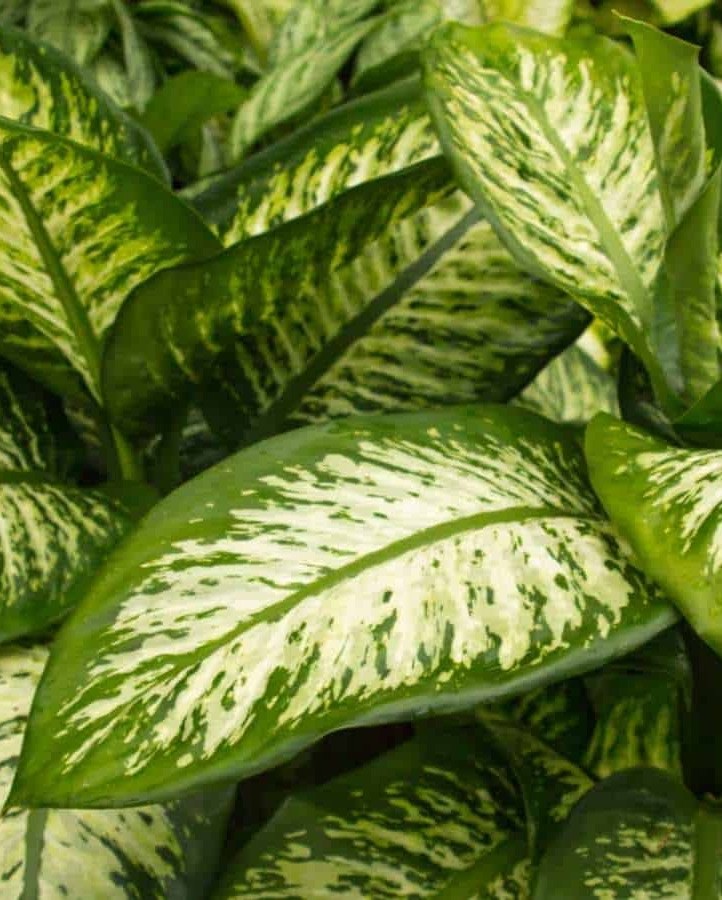
Dieffenbachia
Dieffenbachia spp.
The species most closely associated with commonly cultivated Dumb Cane houseplants is:
Dieffenbachia seguine (Jacq.) Schott
Important botanical synonyms and former horticultural names associated with Dieffenbachia seguine include:
Arum seguine L.
Caladium maculatum G.Lodd.
Dieffenbachia amoena W.Bull
Dieffenbachia maculata (G.Lodd.) Sweet
Dieffenbachia picta Schott
Dieffenbachia amabilis W.Bull
Other accepted species are also cultivated, and many commercial plants are complex horticultural selections whose labels provide only a cultivar name. A genus-level scientific field is therefore appropriate for a general Dieffenbachia poisoning page.
Araceae Juss. — Arum or Aroid Family
Dieffenbachia belongs to the order Alismatales and the subfamily Aroideae.
Other common insoluble-calcium-oxalate aroids include Aglaonema, Alocasia, Caladium, Colocasia, Epipremnum, Monstera, Philodendron, Spathiphyllum, Syngonium, and Zantedeschia.
Dieffenbachia, Dumb Cane, Dumbcane, Charming Dieffenbachia, Giant Dumb Cane, Giant Dumbcane, Spotted Dumb Cane, Variable Dieffenbachia, Gold Dieffenbachia, Leopard Lily, Exotica, Exotica Perfection, Tropic Snow, Camille, Compacta, Reflector, Seguine Dumb Cane, Dieffenbachia spp., Dieffenbachia seguine, Dieffenbachia amoena, Dieffenbachia maculata, Dieffenbachia picta
Common commercial selections include ‘Camille,’ ‘Compacta,’ ‘Exotica,’ ‘Exotica Perfection,’ ‘Tropic Snow,’ ‘Reflector,’ ‘Carina,’ ‘Rebecca,’ ‘Snow,’ and other named foliage cultivars. Leaf pattern, plant size, or cultivar name does not remove the calcium oxalate hazard.
“Leopard Lily” is an ambiguous common name that may also be applied to unrelated plants. “Mother-in-law’s tongue” has occasionally been used historically for Dieffenbachia but now more commonly refers to Dracaena trifasciata. The scientific name and plant structure should be used for identification.
Insoluble Calcium Oxalate Raphides
Dieffenbachia contains bundles of needle-like insoluble calcium oxalate crystals called raphides. These crystals are stored within specialized plant cells known as idioblasts and occur throughout the leaves, petioles, stems, cane sections, roots, and sap-containing tissues.
The crystals act immediately at the tissues they contact. They do not need to be digested or circulated through the bloodstream before producing pain and inflammation.
How the Idioblasts Discharge Their Crystals
When an animal bites into a leaf or thick stem, chewing pressure ruptures or activates the idioblasts. Moisture and pressure within the damaged tissue help eject raphide bundles into the surrounding sap and oral tissues.
The sharp crystals penetrate the lips, gums, tongue, palate, inner cheeks, pharynx, and other contacted surfaces. Affected animals often stop chewing abruptly, drop the plant, shake the head, paw at the face, gag, or begin salivating heavily.
Plant tissue already crushed or cut during pruning can continue releasing sap and crystals. A discarded cane section remains capable of causing injury even after it has been separated from the living plant.
Proteolytic and Inflammatory Plant Compounds
Dieffenbachia toxicity appears more complex than crystal puncture alone. Proteolytic activity has been identified historically, including an enzyme called dumbcain, and other plant proteins or inflammatory substances may enter tissue through the microscopic channels created by the raphides.
These compounds may intensify pain, vascular leakage, edema, and tissue inflammation. Their exact contribution varies among species and cultivars and has not been resolved completely.
The toxin field should therefore identify insoluble calcium oxalate raphides as the principal confirmed toxic structures while recognizing proteolytic and inflammatory plant activity as a probable contributing factor.
Why Dieffenbachia Can Cause Marked Swelling
The numerous microscopic punctures trigger an immediate inflammatory response. Blood vessels dilate and leak fluid into nearby tissue, producing redness, burning pain, and swelling of the lips, tongue, floor of the mouth, palate, and throat.
Dieffenbachia may produce more substantial oral and pharyngeal inflammation than many ordinary Pothos exposures because its thick, moist stems and broad leaves can release a considerable quantity of sap and crystal-containing tissue in one bite.
The plant’s reputation should not be exaggerated into the claim that every exposure causes airway obstruction. Most animals develop localized pain, drooling, and swelling without losing the ability to breathe.
The Origin of the Name “Dumb Cane”
The common name refers to painful swelling and irritation of the tongue and throat that can make speech, swallowing, barking, or meowing difficult. In people, severe oral exposure has historically been associated with temporary inability to speak.
In animals, voice changes may include a hoarse bark, weak meow, reduced vocalization, painful attempts to vocalize, or refusal to make normal sounds. These effects generally result from oral and pharyngeal inflammation rather than permanent destruction or paralysis of the vocal cords.
Rare Airway Compromise
Marked swelling of the tongue, pharynx, epiglottic region, or larynx can interfere with airflow in an unusually severe exposure. Continuous gagging, inability to swallow saliva, noisy inspiration, open-mouth breathing, blue-gray mucous membranes, or increasing respiratory effort requires emergency treatment.
Airway risk is greater when a thick stem was crushed extensively, a large amount remained in the mouth, the animal is very small, or swelling continues to progress after the plant was removed.
Esophageal and Gastrointestinal Irritation
Swallowed fragments can carry crystals and inflammatory sap into the esophagus and stomach. This may produce painful swallowing, retching, vomiting, appetite refusal, abdominal discomfort, or diarrhea.
Persistent vomiting can cause dehydration, electrolyte abnormalities, esophageal inflammation, aspiration, and weakness. These are complications of local injury and fluid loss rather than evidence of primary systemic oxalate poisoning.
Insoluble Oxalates Do Not Usually Cause Kidney Failure
Dieffenbachia raphides are insoluble and remain mainly at contacted tissue surfaces. They are not absorbed readily in a form that removes large amounts of calcium from the bloodstream or deposits crystals throughout the kidneys.
This differs from soluble-oxalate plants capable of producing hypocalcemia, muscle tremors, cardiac instability, and renal injury after substantial ingestion.
Primary kidney failure, persistent severe hypocalcemia, generalized seizures, coma, or multisystem organ failure is not the expected direct result of an uncomplicated Dieffenbachia exposure. Such findings require investigation for dehydration, hypoxia, another toxin, fertilizer, pesticide, medication, or unrelated disease.
Skin and Eye Exposure
Fresh sap can cause redness, burning, itching, swelling, or irritant dermatitis on the lips, muzzle, paws, eyelids, abdomen, damaged skin, or sparsely haired areas.
Eye exposure is especially important. Raphides can penetrate the corneal surface and produce intense pain, blinking, tearing, conjunctival inflammation, corneal erosion, blurred vision, or deposits of fine crystals within the cornea.
Eye signs may develop or persist even after immediate irrigation and require veterinary examination when pain, squinting, cloudiness, or discharge continues.
No Established Toxic Dose
No dependable leaf quantity, cane length, stem weight, sap volume, or gram-per-kilogram threshold has been established for dogs, cats, horses, rabbits, birds, or livestock.
Severity depends on the amount crushed, freshness and thickness of the tissue, quantity of sap released, location of exposure, animal size, amount swallowed, and whether swelling interferes with swallowing or breathing.
Immediate Oral Pain
Signs usually begin while the animal is chewing or within minutes. The animal may suddenly release the plant, shake its head, cry out, rub the muzzle, paw at the mouth, or resist anyone attempting to examine the tongue.
The lips, gums, tongue, palate, and inner cheeks may become intensely painful, red, or swollen. Contact with the injured surfaces may worsen the apparent discomfort.
Heavy Drooling and Foamy Saliva
Excessive salivation is one of the most recognizable signs. Saliva may drip continuously, hang in long ropes, or become foamy around the lips.
The salivation reflects pain, inflammation, nausea, and reluctance to swallow rather than an increase in systemic toxin secretion. An animal unable to swallow its own saliva requires urgent assessment.
Tongue, Lip, and Throat Swelling
The tongue may enlarge, become visibly red, or protrude from the mouth. Lip and facial swelling may also develop where plant tissue or sap made direct contact.
Pharyngeal inflammation can cause repeated swallowing attempts, neck extension, gagging, coughing, choking motions, or reluctance to lower the head toward food and water.
Swelling that continues progressing after the plant has been removed deserves closer monitoring than swelling that stabilizes and begins resolving promptly.
Difficulty Swallowing and Altered Vocalization
An affected animal may approach food or water but pull away because swallowing is painful. Food may fall from the mouth, and drinking may trigger gagging or coughing.
The bark, meow, whine, or other vocalization may become weak, hoarse, painful, or temporarily absent. Voice change accompanied by noisy breathing, continuous gagging, or inability to manage saliva requires immediate veterinary examination.
Vomiting and Gastrointestinal Signs
Dogs and cats may vomit or dry heave after swallowing sap and plant fragments. Reduced appetite, abdominal discomfort, and diarrhea are also possible.
Horses cannot vomit. In horses and livestock, swallowed material may instead produce salivation, feed refusal, abnormal chewing, dysphagia, coughing, abdominal discomfort, or reduced gastrointestinal activity.
Repeated vomiting, blood in vomit, black stool, severe abdominal pain, or inability to retain water is not expected after a minor bite and requires further evaluation.
Eye and Skin Signs
Skin contact may cause localized redness, itching, swelling, or discomfort. Sap on the coat creates a secondary oral exposure when the animal licks or grooms the area.
Eye exposure may cause intense squinting, tearing, conjunctival redness, eyelid swelling, rubbing, light sensitivity, discharge, corneal cloudiness, or apparent visual difficulty.
Respiratory Difficulty
Most affected animals continue breathing normally. Rarely, extensive pharyngeal or laryngeal edema produces noisy inspiration, rapid shallow breathing, increased chest or abdominal effort, open-mouth breathing, gasping, cyanosis, or collapse.
Respiratory signs take priority over oral cleaning, plant identification, or travel to a preferred clinic. The animal should be taken to the nearest facility capable of securing an airway.
Signs Suggesting Another or Mixed Exposure
Persistent cardiac arrhythmias, profound hypocalcemia, primary kidney failure, severe generalized seizures, paralysis, prolonged coma, or progressive multiple-organ failure is not characteristic of uncomplicated Dieffenbachia exposure.
Those findings warrant investigation for pesticides, fertilizers, medications, another plant, aspiration, severe dehydration, hypoxia, or unrelated illness.
Expected Course
Mild oral pain, drooling, and localized swelling commonly begin improving within several hours. Many uncomplicated animals are substantially better by the following day.
Recovery may take longer after extensive stem chewing, persistent vomiting, esophageal injury, dehydration, corneal involvement, aspiration, or substantial tongue and throat swelling.
Plant Identity and Growth Habit
Dieffenbachia plants are tropical evergreen herbs or subshrubs with thick, succulent cane-like stems and broad leaves carried on substantial petioles. The foliage is commonly patterned with cream, white, pale yellow, lime green, dark green, or combinations of these colors.
Older plants may lose lower leaves and develop a bare segmented cane topped by a crown of foliage. Pruned cane sections can root and produce new growth, which is one reason detached stems are often handled or propagated indoors.
The flowering structure is a typical aroid spadix surrounded by a greenish spathe, although flowering is uncommon in many indoor plants. Leaves and stems create the greater everyday animal exposure.
Why Dieffenbachia Commonly Enters Animal Environments
Dieffenbachia is widely used as a floor plant, office plant, lobby plant, reception-area accent, hotel plant, shopping-center display, school plant, sunroom specimen, and large indoor foliage plant.
Its tolerance of indoor conditions makes it common in spaces where animals may visit or live, including veterinary waiting rooms, apartment hallways, assisted-living facilities, workplaces, rental homes, and indoor communal areas.
Large specimens are often placed directly on the floor because of their size. This can position broad leaves and thick stems at the height of dogs, puppies, rabbits, and other chewing animals.
How Dogs and Puppies Are Exposed
Dogs may bite a low leaf, chew a thick cane like a stick, investigate a newly purchased plant temporarily placed on the floor, or pull damaged foliage from the container.
Puppies are especially likely to mouth cane sections, plant labels, potting material, and pruning debris. One forceful bite into a moist stem can release a substantial amount of sap and crystal-containing tissue.
A dog can also overturn the container while playing or digging, exposing roots, broken stems, fertilizer, decorative stones, water-retaining products, support stakes, and pieces of the pot.
How Cats Are Exposed
Cats may chew leaf edges, climb onto furniture to reach the plant, bat at a damaged or drooping leaf, or rub against sap leaking from a broken stem.
Sap transferred to the paws, chest, face, or coat may be swallowed during grooming. A contaminated paw can also carry crystals into the eye when the cat rubs its face.
Minor bite marks can be difficult to identify within variegated foliage. Sudden drooling, facial pawing, gagging, altered vocalization, or squinting in a plant-chewing cat should prompt inspection of the complete plant and nearby debris.
Direct Research on Crystal-Containing Cells
Anatomical investigation of Dieffenbachia seguine identified several calcium oxalate crystal forms that differed in shape, size, location, and distribution among plant organs. Raphides, biforines, druses, prismatic crystals, and other crystal arrangements may serve different structural, reproductive, storage, and herbivore-deterrent roles within the plant.
Separate observations of Dieffenbachia idioblasts demonstrated that specialized cells can forcibly discharge raphides when exposed to appropriate mechanical or chemical stimulation. This supports the practical concern that biting, crushing, cutting, or breaking moist tissue can propel sharp crystals with sap directly into contacted surfaces.
The research does not establish one identical crystal density in every species, cultivar, leaf, stem, or root. It does confirm that the plant’s injury mechanism is biologically specialized rather than equivalent to swallowing inert mineral particles.
The Mechanism Is More Complex Than One Crystal or Enzyme
Experimental research has produced evidence for both mechanical raphide injury and additional inflammatory activity in Dieffenbachia juice. Tissue exposed experimentally developed edema, vascular congestion, basement-membrane degeneration, and an acute inflammatory reaction.
Historical studies identified or proposed proteinaceous activity, including a proteolytic enzyme called dumbcain or dumbain. Reducing protein activity altered toxicity in some experiments, while other investigations did not identify a protein as the sole active principle.
The most accurate conclusion is that insoluble calcium oxalate crystals are central confirmed structures and that sap proteins or other inflammatory compounds may intensify the resulting injury. No single accompanying compound has been proven to explain every species, cultivar, tissue, or clinical exposure.
Documented Fatal Canine Airway Obstruction
A published veterinary case described fatal accidental poisoning in a nine-year-old female Poodle after ingestion of Dieffenbachia picta, a historical name associated with cultivated Dumb Cane plants.
The dog developed severe, locally extensive erosive and ulcerative inflammation of the tongue together with acute marked difficulty breathing. Emergency attempts to relieve the respiratory distress were unsuccessful.
Fatal asphyxiation resulted from edema of the glottis within hours after the first clinical signs appeared.
This case proves that Dieffenbachia-associated swelling can become fatal in a dog. It should not be interpreted to mean that airway obstruction is the routine outcome of every leaf nibble. Most exposures remain limited to oral pain, drooling, localized swelling, gagging, and temporary difficulty eating or drinking.
Its principal clinical lesson is that inability to swallow saliva, progressive tongue enlargement, continuous gagging, altered vocalization accompanied by respiratory noise, open-mouth breathing, or increasing effort must be treated as an airway emergency rather than observed at home.
Cane Cuttings and Propagation
Dieffenbachia can be propagated from top cuttings, stem sections, or pieces of cane containing viable nodes. These cuttings may be placed in water, damp growing medium, propagation trays, or plastic bags.
Freshly cut cane exposes moist internal tissue and sap directly. Cuttings left on counters, sinks, garage benches, floors, or potting tables can be more accessible than the intact parent plant.
Propagation water may contain sap, plant fragments, fertilizer, rooting products, or microbial growth and should not be used as animal drinking water. Direct chewing of the cutting remains the principal raphide hazard.
Pruning and Broken-Stem Exposure
Older plants are often cut back when they become tall, bare, damaged, or top-heavy. Pruning can produce several large cane sections, leaves, sap-contaminated tools, towels, gloves, clothing, and work surfaces.
A broken stem may continue releasing sap after the main cleanup appears complete. Animals should remain out of the work area until the floor, container, tools, clothing, and discarded material have been checked and cleaned.
Wilted or dried cuttings retain plant fibers and crystals and should not be treated as safe chew material.
Repotting and Root Exposure
Repotting places roots, cane sections, broken leaves, soil, and fertilizer at ground level. Dogs may dig in the loose substrate, while cats may investigate roots or rub against damaged foliage.
Confine animals elsewhere until every fragment and spill has been removed. Open trash bags containing roots and stems should not be left within reach.
Offices, Lobbies, and Shared Indoor Spaces
An animal may encounter Dieffenbachia outside its own home. Large specimens are common in offices, hotel lobbies, apartment entrances, retail stores, waiting rooms, indoor gardens, public atriums, and communal residential areas.
Dogs may brush against damaged leaves while on leash or investigate lower foliage while an owner is distracted. Service animals and pets accompanying workers or visitors may have repeated access to the same plant.
Owners of habitual plant-chewers should inspect unfamiliar indoor spaces rather than assuming every decorative plant is harmless.
Popular Cultivars Remain Poisonous
‘Camille,’ ‘Compacta,’ ‘Exotica,’ ‘Exotica Perfection,’ ‘Tropic Snow,’ ‘Reflector,’ ‘Carina,’ ‘Rebecca,’ and other named Dieffenbachia selections differ in height, leaf shape, and variegation.
White-centered, yellow-speckled, compact, giant, tissue-cultured, patented, or rare collector forms remain capable of causing raphide and sap injury. Variegation is not evidence that a cultivar lacks calcium oxalate idioblasts or inflammatory plant constituents.
Research has found variation in crystal content among cultivated plants, but no commercially available cultivar has been established as safe for dogs, cats, horses, rabbits, birds, or livestock.
Dieffenbachia Versus Aglaonema
Chinese Evergreen, Aglaonema species, is commonly confused with Dieffenbachia because both are variegated aroids with broad leaves.
Aglaonema generally forms thinner clustering stems, while Dieffenbachia more often develops a thicker upright cane with conspicuous leaf scars.
Both genera contain insoluble calcium oxalate crystals and can produce immediate oral pain, drooling, swelling, vomiting, and difficulty swallowing. Exact identification remains useful, but the immediate first response is similar.
Dieffenbachia Versus Dracaena and Corn Plant
Corn Plant, Dracaena fragrans, may also develop a tall cane topped with broad variegated leaves. Its foliage is usually narrower, strap-shaped, and arranged in rosettes around a woody cane.
Dracaena contains steroidal saponins rather than the characteristic Dieffenbachia combination of raphide-containing cells and inflammatory sap. Dracaena ingestion more commonly produces vomiting, appetite reduction, drooling, and depression without the same immediate intense oral burning and tongue swelling.
Dieffenbachia Versus Pothos and Philodendron
Pothos and Heartleaf Philodendron are usually trailing or climbing vines with flexible stems and smaller heart-shaped leaves. Dieffenbachia generally grows upright with larger leaves and thicker cane-like stems.
All three are calcium-oxalate aroids, so chewing can produce a similar local syndrome. Dieffenbachia’s thick, moist stems make pronounced tongue, floor-of-mouth, pharyngeal, and laryngeal inflammation particularly important to assess.
Eye Exposure During Plant Care
Cutting a moist stem can send sap droplets toward the face. Sap may also be transferred from contaminated gloves, fingers, pruning shears, towels, clothing, animal paws, or work surfaces.
Calcium oxalate crystals can enter the corneal epithelium and move into deeper corneal layers, creating numerous fine refractile or blue-appearing crystalline deposits.
Immediate irrigation is important, but pain and corneal findings may continue or emerge after the initial rinse. Repeated rubbing can worsen epithelial injury and drive additional material across the ocular surface.
Documented Crystalline Keratopathy
Published ocular cases describe intense pain, redness, tearing, blurred vision, conjunctival inflammation, corneal epithelial damage, and needle-like crystals distributed through the corneal epithelium and stroma after Dieffenbachia sap exposure.
One modern case developed persistent symptoms despite immediate copious irrigation. Examination identified numerous fine crystals through the epithelial and stromal layers. The deposits resolved during follow-up treatment without residual opacity in that patient.
Other reports document keratoconjunctivitis, corneal abrasion, stromal crystal penetration, and occasional inflammation within the eye. Clinical severity varies, and the absence of visible surface debris does not establish that no crystals entered the cornea.
These human cases cannot predict the exact veterinary course, but they confirm that Dieffenbachia sap can produce genuine crystalline corneal injury rather than only transient conjunctival stinging.
Persistent squinting, pain, tearing, redness, discharge, cloudiness, light sensitivity, inability to open the eye, or apparent visual difficulty requires veterinary examination after irrigation.
Horses, Livestock, Rabbits, and Birds
Horses and livestock rarely encounter Dieffenbachia as natural forage but may be exposed through discarded houseplants, greenhouse waste, tropical landscaping, or clippings dumped into pens and paddocks.
Rabbits and rodents may gnaw cane sections and roots. Parrots and other birds may shred leaves or stems during play and can receive a large sap exposure relative to body size.
Houseplant material should never be fed intentionally or placed in animal enclosures, poultry runs, aviaries, rabbit pens, feed bunks, or open compost accessible to animals.
Container and Foreign-Body Hazards
An animal overturning a Dieffenbachia pot may ingest fertilizer granules, systemic pesticide, decorative stones, water-retaining crystals, moldy soil, support stakes, plastic labels, hanging hardware, or broken ceramic.
Large cane sections, fibrous leaves, stones, support material, and pot fragments can produce choking or gastrointestinal obstruction in addition to the plant’s irritant effects.
Persistent abdominal distention, repeated unproductive vomiting, absent stool, focal pain, or prolonged illness after the oral inflammation improves may justify diagnostic imaging.
Diagnosis
No routine laboratory test confirms Dieffenbachia ingestion. Diagnosis usually depends on plant identification, witnessed chewing, sap exposure, fresh plant damage, material in the mouth or vomit, and rapid development of compatible oral signs.
Preserve photographs of the complete plant, cane, leaf pattern, nursery label, propagation cuttings, damaged stem, container, and material recovered from vomit. Photograph disturbed soil or broken plant tissue when this can be done without delaying care.
Blood testing is usually unnecessary after a minor localized exposure. Persistent vomiting, dehydration, respiratory abnormalities, collapse, neurologic signs, kidney changes, or an unexpectedly severe course may justify broader testing for complications and alternative diagnoses.
Eye examination may include eyelid eversion, inspection beneath the third eyelid, fluorescein staining, magnified corneal examination, assessment of intraocular inflammation, and repeat evaluation until epithelial injury and crystalline deposits resolve.
Prevention
Do not use Dieffenbachia as a floor plant in a home with dogs, puppies, rabbits, or other animals that chew vegetation. Elevation alone may not protect against climbing cats or a top-heavy container being knocked over.
A closed plant room or secure physical barrier is more dependable than bitter spray, decorative stones, or verbal correction.
Keep animals away during pruning, propagation, and repotting. Wear eye protection during extensive cutting, secure every cane section and leaf, clean sap from tools and surfaces, and inspect the area before animals return.
In homes with persistent plant-chewing animals, replacing Dieffenbachia with a verified pet-safer plant is the most reliable prevention.
Immediate Steps After Dieffenbachia Exposure
- Stop further chewing. Remove the animal from the plant, leaves, cane sections, roots, fallen material, propagation cuttings, pruning debris, and spilled potting material.
- Remove only loose visible fragments. If the animal is calm, alert, breathing normally, and able to swallow, take away material resting at the lips or front of the mouth. Do not scrape the tongue, probe the throat, or force the jaws open.
- Gently wipe away residue. Use a soft cloth dampened with water to remove visible sap and plant material from the lips, muzzle, tongue tip, and accessible gums. Avoid vigorous rubbing.
- Allow voluntary water only when swallowing is normal. An alert animal that handles saliva comfortably and is not gagging or vomiting repeatedly may drink fresh water on its own. Do not syringe, pour, or spray liquid into the mouth.
- Wash contaminated skin or coat. Wear gloves and use lukewarm water with a mild pet-safe cleanser. Rinse thoroughly and prevent licking until visible sap is gone.
- Irrigate an exposed eye immediately. Use sterile saline or clean room-temperature water and prevent rubbing. Persistent pain, squinting, cloudiness, discharge, or apparent vision change requires veterinary examination.
- Monitor the voice, swallowing, and airway. Watch tongue size, facial swelling, drooling, gagging, vocalization, respiratory noise, chest movement, and the animal’s ability to swallow saliva.
- Preserve identification material. Save photographs, the nursery label, a representative leaf and cane section, and any plant fragments found in vomit.
Do Not Attempt Unsupervised Home Treatment
- Do not induce vomiting. Returning raphide-containing tissue through an already inflamed throat and esophagus provides little benefit and increases pain and aspiration risk.
- Do not forcefully flush the mouth. Pouring or spraying water toward the throat can carry saliva, liquid, and plant fragments into the lungs when gagging or dysphagia is present.
- Do not force milk, yogurt, cheese, food, oil, honey, or another coating remedy. These substances do not remove crystals embedded in tissue and may be aspirated when swallowing is impaired.
- Do not administer activated charcoal routinely. Charcoal does not remove the local insoluble crystals and offers little benefit for the primary mechanism.
- Do not give antihistamines automatically. Most inflammation results from direct crystal and sap injury rather than a simple allergic reaction. Sedation may also complicate swallowing and airway evaluation.
- Do not give corticosteroids, anti-inflammatory drugs, anti-diarrheal medicine, stomach medication, or eye drops without veterinary direction. Their usefulness depends on the location and severity of the injury.
- Do not give human pain relievers or leftover prescriptions. Ibuprofen, naproxen, acetaminophen, aspirin, and similar medications can produce a more dangerous secondary poisoning.
When Emergency Examination Is Needed
- Possible airway compromise: Increasing tongue or throat swelling, inability to close the mouth, inability to swallow saliva, noisy breathing, open-mouth breathing, blue-gray gums, or increasing respiratory effort requires immediate care.
- Significant throat injury: Continuous gagging, neck extension, repeated regurgitation, marked voice change, blood in saliva, or complete refusal of water may indicate deeper pharyngeal or esophageal involvement.
- Persistent gastrointestinal illness: Repeated vomiting, inability to retain water, substantial diarrhea, severe abdominal pain, dry gums, reduced urination, weakness, or collapse requires treatment.
- Eye exposure: Continuing squinting, tearing, redness, discharge, corneal cloudiness, or apparent visual difficulty after irrigation requires urgent examination.
- Mixed container exposure: Swallowed fertilizer, pesticide, stones, support stakes, water-retaining material, glass, plastic, or broken pottery may require separate toxicologic treatment or imaging.
- Unexpected systemic abnormalities: Seizures, persistent arrhythmias, kidney failure, profound collapse, or coma is not typical of uncomplicated Dieffenbachia injury and requires investigation for another cause.
Veterinary Examination
The veterinarian will assess the lips, tongue, gums, floor of the mouth, palate, pharynx, and visible laryngeal region while evaluating swallowing, secretion handling, respiratory noise, oxygenation, hydration, and progression of swelling.
Inspection may require sedation when oral pain makes safe examination impossible. Sedation must be selected carefully when airway swelling or impaired swallowing is present.
Veterinary Oral Decontamination
Professional decontamination focuses on gentle wiping or irrigation of the accessible oral cavity and removal of retained plant fragments under appropriate restraint.
Aggressive scraping is avoided because crystals may already be embedded and additional abrasion can worsen inflammation.
Induced vomiting, routine activated charcoal, and gastric lavage are generally unnecessary for an uncomplicated insoluble-calcium-oxalate exposure.
Pain, Nausea, and Gastrointestinal Care
Significant mouth or throat pain may require veterinarian-selected analgesia. Medication should preserve swallowing and respiratory assessment rather than causing unnecessary heavy sedation.
Persistent nausea or vomiting may be treated with an antiemetic such as maropitant or ondansetron after foreign material, obstruction, and another toxin have been considered.
Sucralfate or acid suppression may be used when painful swallowing, esophagitis, hematemesis, melena, or another documented mucosal injury is present. These medications are not antidotes and are not required after every exposure.
Fluids and Hydration
Oral, subcutaneous, or intravenous fluids may be needed when drooling, vomiting, diarrhea, pain, or refusal to drink causes measurable dehydration.
Kidney monitoring is not required merely because Dieffenbachia contains calcium oxalate. It becomes relevant when dehydration, hypotension, another toxin, uncertain identification, or preexisting renal disease creates a separate concern.
Swelling and Airway Management
Antihistamines may be considered when a true allergic or histamine-mediated component is suspected. Corticosteroids or another anti-inflammatory treatment may be selected for substantial edema in individual cases, but neither replaces direct airway assessment.
Progressive pharyngeal or laryngeal swelling may require oxygen, controlled sedation or anesthesia, endotracheal intubation, suction of secretions, and intensive monitoring.
Mechanical ventilation may be necessary when respiratory effort is inadequate. A temporary emergency tracheostomy may be required if swelling prevents oral intubation.
Eye Treatment
Persistent ocular discomfort requires examination of the eyelids, conjunctiva, cornea, and tissue beneath the third eyelid. Fluorescein staining may identify epithelial defects or ulcers.
Treatment may include continued irrigation, removal of retained plant material, lubrication, veterinarian-selected pain control, topical antimicrobial medication when the corneal surface is damaged, and repeat examinations until healing is confirmed.
Human redness-relief drops, steroid eye medication, or leftover ophthalmic prescriptions should not be used without examination because some products can worsen corneal injury.
Horses and Livestock
Remove horses and livestock from discarded Dieffenbachia plants, greenhouse waste, tropical landscape clippings, and mixed ornamental debris. Horses cannot vomit.
Veterinary assessment may include examination of the mouth and pharynx, swallowing evaluation, endoscopy, airway monitoring, fluid support, and treatment of oral pain.
Several animals showing salivation or feed refusal should prompt inspection of the entire clipping pile, feed source, pesticides, fertilizer, and other plants rather than assuming Dieffenbachia was the only exposure.
Prognosis and Recovery
The prognosis is good to excellent for most ordinary exposures. Mild oral pain, drooling, voice changes, gagging, appetite reduction, and localized swelling commonly improve substantially within several hours.
Recovery may require one or more days after extensive cane chewing, esophagitis, persistent vomiting, dehydration, corneal injury, or aspiration.
The prognosis becomes guarded when severe airway swelling cannot be controlled, prolonged hypoxia occurs, or a mixed exposure produces additional systemic injury.
Frequently Asked Questions About Dieffenbachia Identification and Exposure
Has Dieffenbachia ever caused fatal airway obstruction in a dog?
Yes. A published case involved a nine-year-old female Poodle that developed severe erosive and ulcerative tongue injury, acute respiratory distress, glottic edema, and fatal asphyxiation within hours. This demonstrates that life-threatening airway compromise is possible, although most animal exposures cause localized oral pain, drooling, and swelling without complete obstruction.
Which signs distinguish ordinary oral irritation from a developing airway emergency?
Drooling, facial pawing, mouth pain, and stable localized swelling commonly occur without loss of airflow. Progressive tongue enlargement, inability to close the mouth, inability to swallow saliva, continuous gagging, increasing respiratory noise, open-mouth breathing, blue-gray mucous membranes, or visibly increasing breathing effort indicates an airway emergency.
Do Dieffenbachia crystals merely lie on the mouth surface after chewing?
No. Research has demonstrated specialized idioblasts capable of forcibly discharging raphides after mechanical or chemical stimulation. Chewing a moist leaf or cane can therefore propel crystals with sap into the lips, tongue, gums, palate, and throat rather than exposing the animal only to loose crystals resting on the surface.
Is dumbcain the proven sole toxin in every Dieffenbachia plant?
No. Historical research identified proteolytic activity called dumbcain or dumbain, and experimental studies support a role for proteins or other inflammatory constituents. Other findings have been inconsistent. Insoluble calcium oxalate crystals remain central confirmed structures, while the exact identity and importance of accompanying compounds may differ among species, cultivars, and tissues.
Can Dieffenbachia sap cause delayed or persistent eye injury?
Yes. Published cases document crystals within the corneal epithelium and deeper stromal layers after sap exposure. Pain, tearing, redness, blurred vision, cloudiness, or crystalline deposits may persist despite immediate irrigation. An animal that continues squinting, rubbing, producing discharge, or holding the eye closed requires veterinary examination.
Does a normal-looking eye after rinsing prove that no injury occurred?
No. Fine crystals may be difficult to see without magnification, and ocular signs can persist or become more apparent after the initial exposure. Prevent rubbing and seek examination when pain, tearing, redness, cloudiness, light sensitivity, or apparent visual difficulty continues after irrigation.
Are compact or highly variegated Dieffenbachia cultivars safer?
No cultivar has been established as animal-safe. Crystal content can vary among plants, but white-centered leaves, compact growth, tissue culture, unusual coloration, or a collector cultivar name does not demonstrate absence of raphide-containing cells or inflammatory sap.
Why can a detached cane section be more accessible than the parent plant?
A freshly cut cane exposes moist internal tissue and can release sap directly. Propagation, pruning, and disposal often leave these thick pieces on floors, counters, sinks, potting benches, or in open trash. A puppy, rabbit, bird, or other animal may chew the section like a stick even when it never approached the standing plant.
How can Dieffenbachia be distinguished from Chinese Evergreen?
Dieffenbachia usually develops a thicker upright cane with conspicuous leaf scars and large leaves near the upper stem. Chinese Evergreen, Aglaonema species, more often forms clusters of thinner stems from the base. Both are raphide-containing aroids, so uncertain identification does not justify delaying oral cleaning, swallowing assessment, or airway monitoring.
What evidence is most useful after a suspected exposure?
Photograph the complete plant, cane structure, leaves, damaged tissue, cuttings, nursery label, container, spilled substrate, and every other plant or product within reach. Preserve safely contained fragments found in vomit when requested. Do not delay transport to obtain a perfect specimen when swallowing or breathing is impaired.