Grooming Table Hardware • Grooming Nooses • Fabric Loops • Cable Nooses • Quick Release Nooses • Tub Restraints • Safety Hub
Grooming Nooses: Fabric, Cable, Quick Release, and Suction Cup Restraint Options
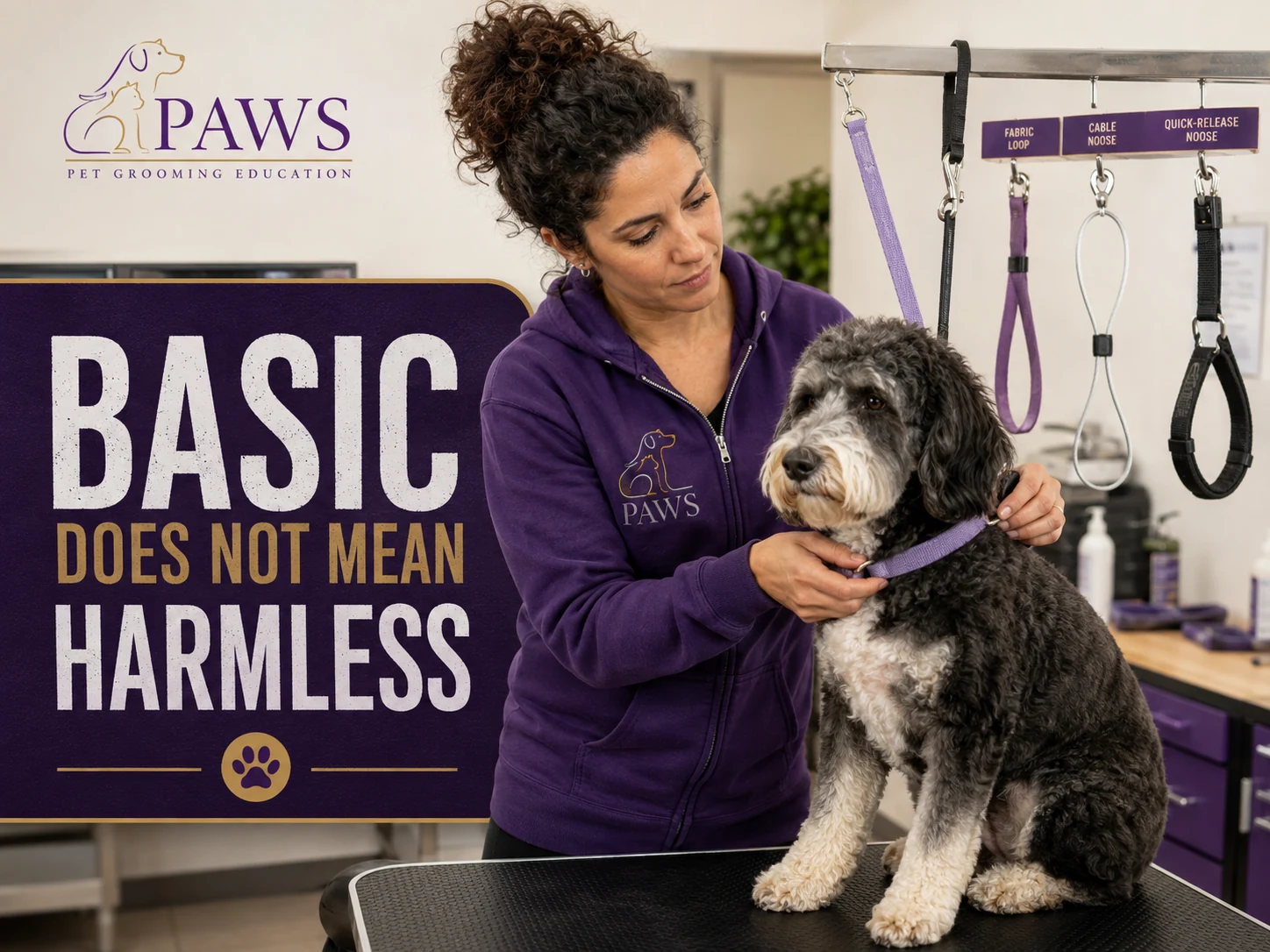
Grooming nooses are basic equipment, but basic does not mean harmless.
A grooming noose is one of the first restraint tools most groomers learn to use. It is also one of the easiest tools to misuse because it looks so simple that people stop thinking about what can go wrong.
Fabric loops, cable nooses, quick-release loops, waist restraints, tub restraints, muzzle conflicts, chew risk, choking risk, and emergency removal all matter.
The correct noose depends on the dog, the job, the table, the tub, the muzzle, the groomer’s handling plan, and the failure mode you are trying to avoid.
This hub is the entrance point for the grooming noose section. The individual pages break down each type separately.
⚠️
Operator rule
Do not treat every grooming noose like it is interchangeable. Some are forgiving, some are chew-resistant, some release fast, some can tighten dangerously, and some are only useful in very specific tub setups.
🗺️
Use This Page Like the Grooming Noose Gateway
This hub explains the main noose categories, what can go wrong, and where each individual review page fits.
🪢
Noose Overview
Why grooming nooses are basic equipment but still deserve real safety judgment.
🧰
Noose Directory
Jump to fabric, cable, quick-release, and suction-cup grooming noose pages.
⚠️
Failure Modes
Chewing, slipping, choking, tangling, muzzle removal, and emergency removal problems.
✅
Buying Filter
Questions to ask before choosing a grooming loop, noose, waist restraint, or tub restraint.
🪢
Grooming Nooses Are Simple Until Something Goes Wrong
Most grooming restraint problems are not complicated in theory. They become complicated when the dog panics, chews, slips, tangles, jumps, or fights the restraint.
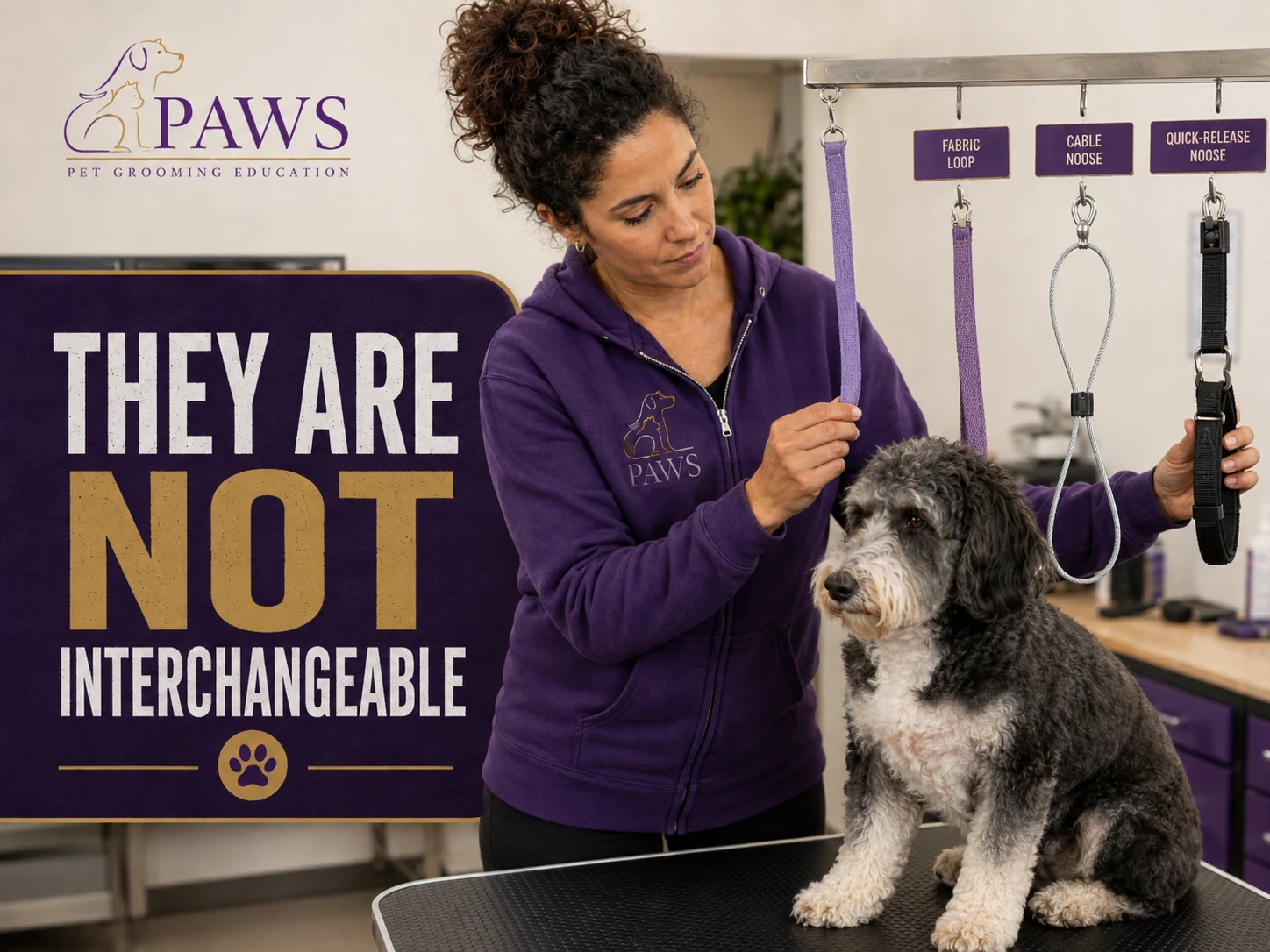
Grooming nooses are one of the most common pieces of equipment in a grooming room. They are used on tables, in tubs, with grooming arms, with belly straps, with harnesses, and sometimes as part of more advanced restraint systems.
That does not make them all the same.
A fabric grooming loop behaves differently than a cable noose. A quick-release noose solves a different problem than a standard loop. A suction-cup restraint in a tub is not the same thing as a properly mounted eye bolt or factory-installed tub restraint point.
The biggest mistake is choosing the noose by habit instead of choosing it by situation.
Some dogs chew. Some dogs back out. Some dogs fight neck pressure. Some dogs are muzzled. Some dogs jump. Some dogs thrash and tangle the restraint into their coat. Some dogs are older, weak, sore, nervous, or breathing-compromised.
The noose has to match the dog in front of you and the job being done.
Selection should begin with the dog’s likely movement, not the tool hanging closest to the table. Size, neck structure, coat, breathing, pain, fear, chewing, muzzle use, and the groomer’s ability to reach the release all change the safest choice.
The restraint plan also includes the table, grooming arm, clamp, tub, anchor, and floor around the dog. A good loop attached to weak hardware or used over an unsafe drop is still an unsafe system.
📌
The practical point
A grooming noose is not just “the thing that keeps the dog on the table.” It is a restraint choice with consequences. Pick the one that fails the least badly for the dog, the groomer, and the task.
🧰
Grooming Noose Directory
Use these cards to jump into the individual noose pages.
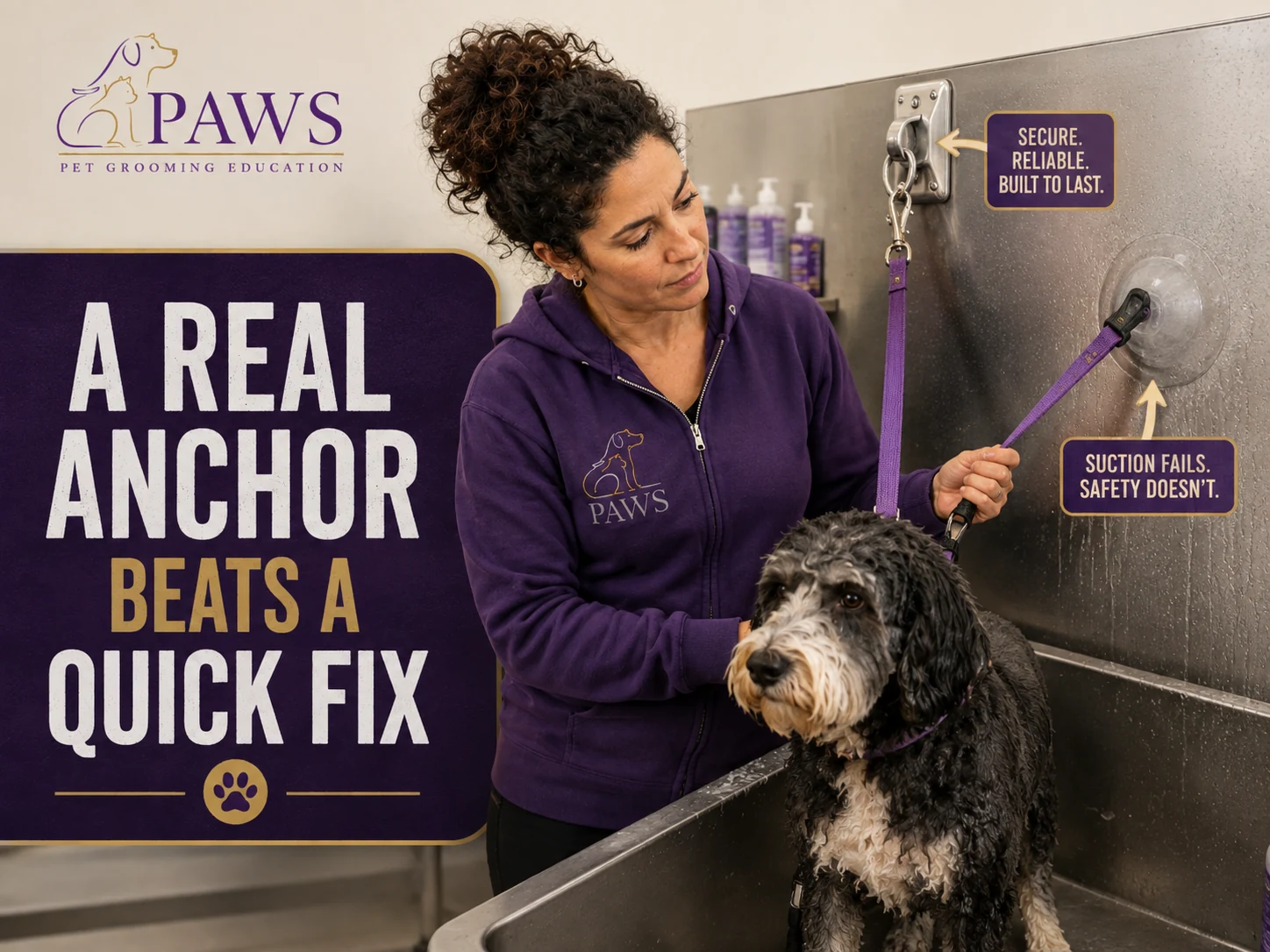
The directory should be treated as a set of separate tools, not four versions of the same strap. Each option changes how the dog can chew, tighten, back out, tangle, or be released during an emergency.
The restraint point matters as much as the noose. Table arms, clamps, tub eyelets, wall anchors, and suction cups should be inspected as one connected system before the dog is attached.
Use the individual pages to decide what problem each noose solves and what new failure mode it introduces.
🧵
Fabric Grooming Noose
The common everyday grooming loop: cheap, easy, forgiving, chewable, and not something I like as a solo waist restraint.
⛓️
Cable Grooming Noose
Chew-resistant cable nooses have a place, but they can tighten like a true noose and create emergency removal problems.
🔓
Quick Release Grooming Noose
A must-have in my opinion because it can be unclipped at the neck instead of dragged over the dog’s head or muzzle.
🛁
Suction Cup Grooming Noose
A specialty tub restraint for smooth surfaces, usually more of a quick fix than a proper anchor-point plan.
⚠️
Every Noose Has a Failure Mode
The right question is not “does this restrain the dog?” The right question is “what happens when the dog fights it?”
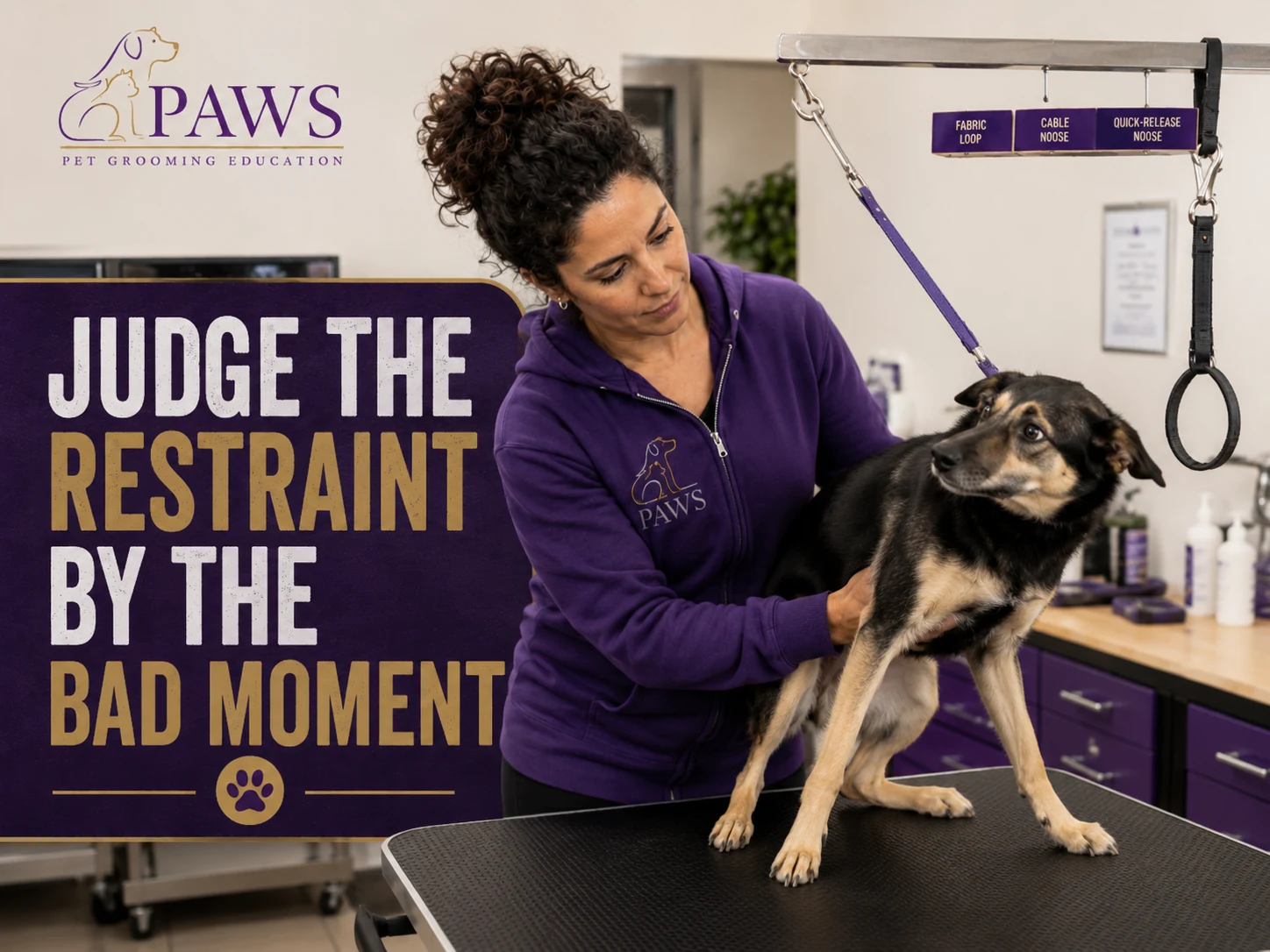
Grooming equipment should be judged by the bad moment, not the calm moment.
Almost any loop works on a quiet dog standing politely on the table. The equipment shows its real character when the dog chews, backs out, thrashes, jumps, tangles, fights the neck pressure, or has to be removed quickly.
That is why this section matters. The noose choice should be based on the problem you are trying to prevent and the problem you are willing to manage if things go sideways.
Staff should rehearse the response to each failure mode before it happens. That includes supporting the dog’s body, reducing tension, controlling the head, reaching the release, cutting the restraint when necessary, and calling for another handler.
Near misses should be documented. Backing out, chewing through a loop, coat tangling, anchor failure, and muzzle interference are evidence that the restraint plan needs to change before the next appointment.
Swipe left/right to see the full table.
| Failure Mode | Where It Shows Up | Why It Matters | Operator Take |
|---|---|---|---|
| Chewing | Fabric loops, dangling straps, unused harness loops, slack restraints. | A dog can chew through soft restraint faster than people expect. | Keep the loop snug enough to avoid mouth access and inspect worn straps. |
| True tightening | Cable nooses and other true noose-style restraints. | Struggling can tighten the restraint and create choking panic. | Use situationally, not casually, and have a removal plan. |
| Backing out | Fabric loops left too loose or used incorrectly. | Dogs can slip out, jump, or fall if the loop is not positioned and monitored. | Pay attention to loop fit, dog movement, and table behavior. |
| Waist restraint slipping | Fabric loops used alone around the body. | A jumping dog can slip the loop rearward and flip or fall awkwardly. | Use an actual waist strap or snug adjustable restraint when body restraint is needed. |
| Muzzle conflict | Any noose that must slide backward over the dog’s head. | The noose can catch muzzle straps and pull the muzzle off. | Quick-release nooses are much better when working around muzzles. |
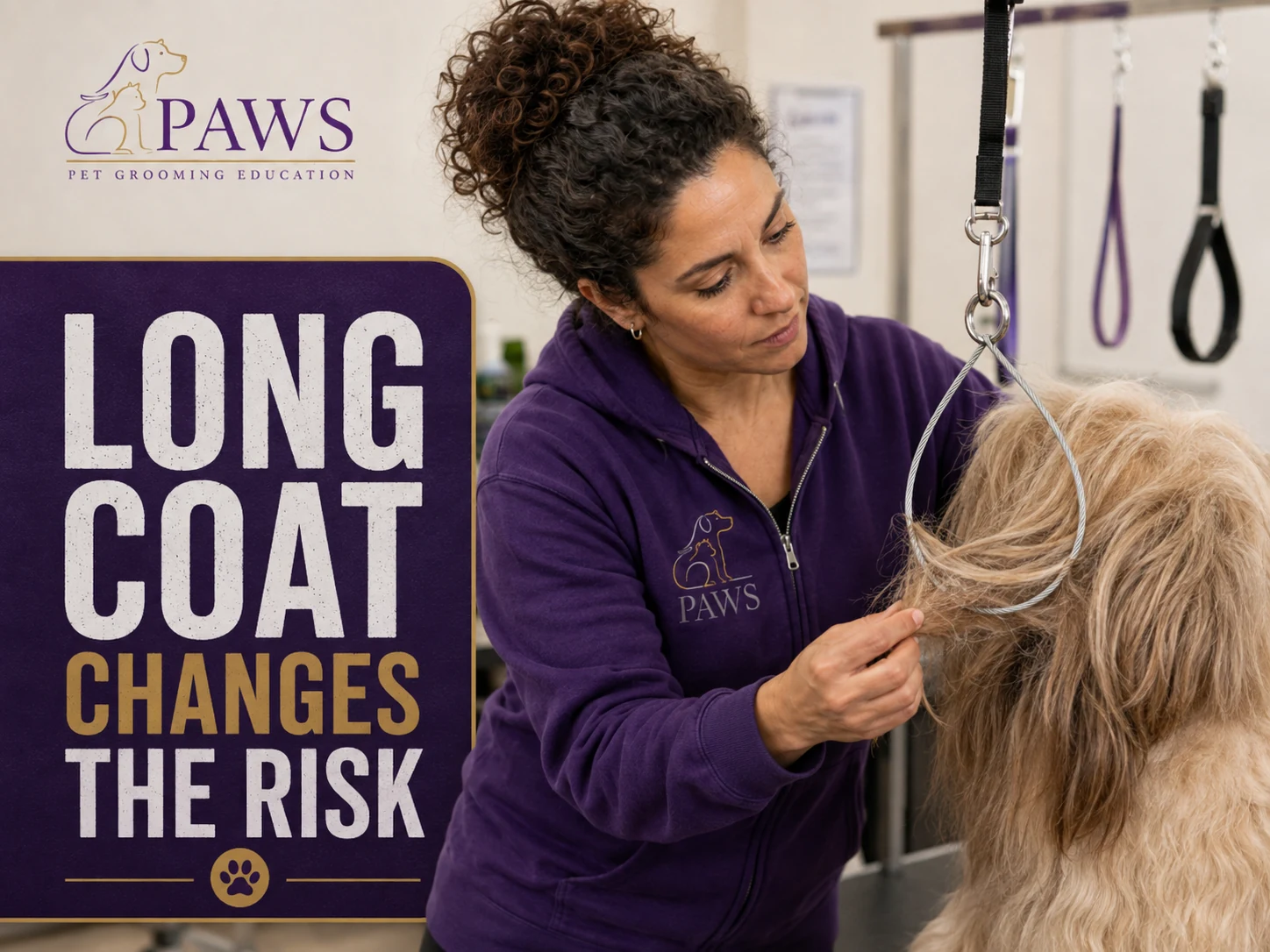
| Coat tangling | Cable loops, large metal loops, long-haired dogs, tension. | The restraint may not loosen quickly if hair is trapped in the hardware. | Avoid casual use on long coats and keep emergency tools accessible. |
| Weak anchor point | Suction cup nooses and improvised tub restraints. | Wet surfaces, lateral pull, and heavy dogs can defeat weak attachment points. | A real anchor point beats a suction-cup fix whenever possible. |
🎯
Match the Noose to the Dog and the Job
There is no one perfect grooming noose. There are tools that fit certain situations better than others.
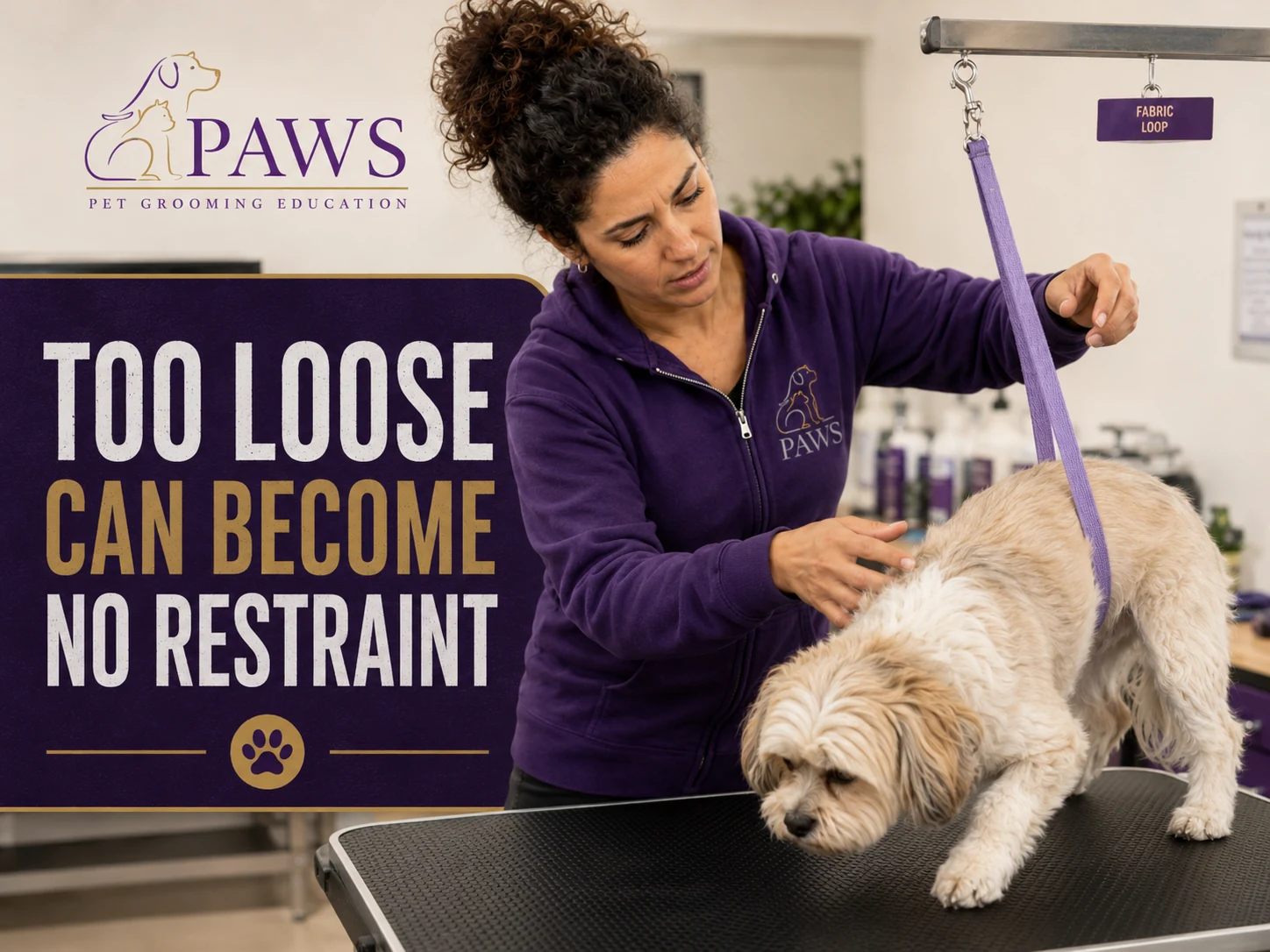
A calm, cooperative dog usually does not need anything fancy. A basic fabric grooming loop may be enough.
A dog that chews every soft strap it can reach may justify a cable noose, but that comes with more serious tightening and emergency-removal concerns.
A fear biter, muzzled dog, or dog where you need to be finger-conscious during removal is where a quick-release noose becomes extremely valuable.
A tub setup without proper eyelets may tempt someone toward a suction-cup restraint, but that should make you question the tub design before trusting a wet suction cup to handle a large animal throwing a tantrum.
The point is not to own every noose because the catalog sells every noose. The point is to know why each one exists and when it creates a worse problem than the one it solves.
Fit must be reassessed throughout the groom. A loop that was appropriate while the dog stood calmly may become too loose after coat removal, too tight when the dog sits, or badly positioned when the handling angle changes.
The simplest safe setup is usually better than adding hardware without a purpose. Every extra strap, clip, cable, or anchor creates another place for coat, feet, muzzle straps, tools, or hands to become trapped.
Swipe left/right to see the full table.
| Situation | Best Starting Point | Watch For | Related Page |
|---|---|---|---|
| Normal table grooming | Fabric grooming noose. | Chewing, slack, slipping, and hair buildup. | Fabric Grooming Noose |
| Known noose chewer | Cable grooming noose. | Tightening, choking panic, tangling, and emergency cutting. | Cable Grooming Noose |
| Muzzled dog or fear biter | Quick-release grooming noose. | Proper clip use, snug fit, and release access. | Quick Release Grooming Noose |
| Waist or belly support | Adjustable body strap, grooming harness, or second loop used correctly. | Rearward slipping and awkward falls. | Grooming Harness |
| Tub restraint without eyelets | Proper anchor planning whenever possible. | Suction cup sliding, wet surface failure, and heavy dog pull. | Suction Cup Grooming Noose |
🛟
Grooming Noose Safety Notes
Simple restraint still needs a real safety plan.
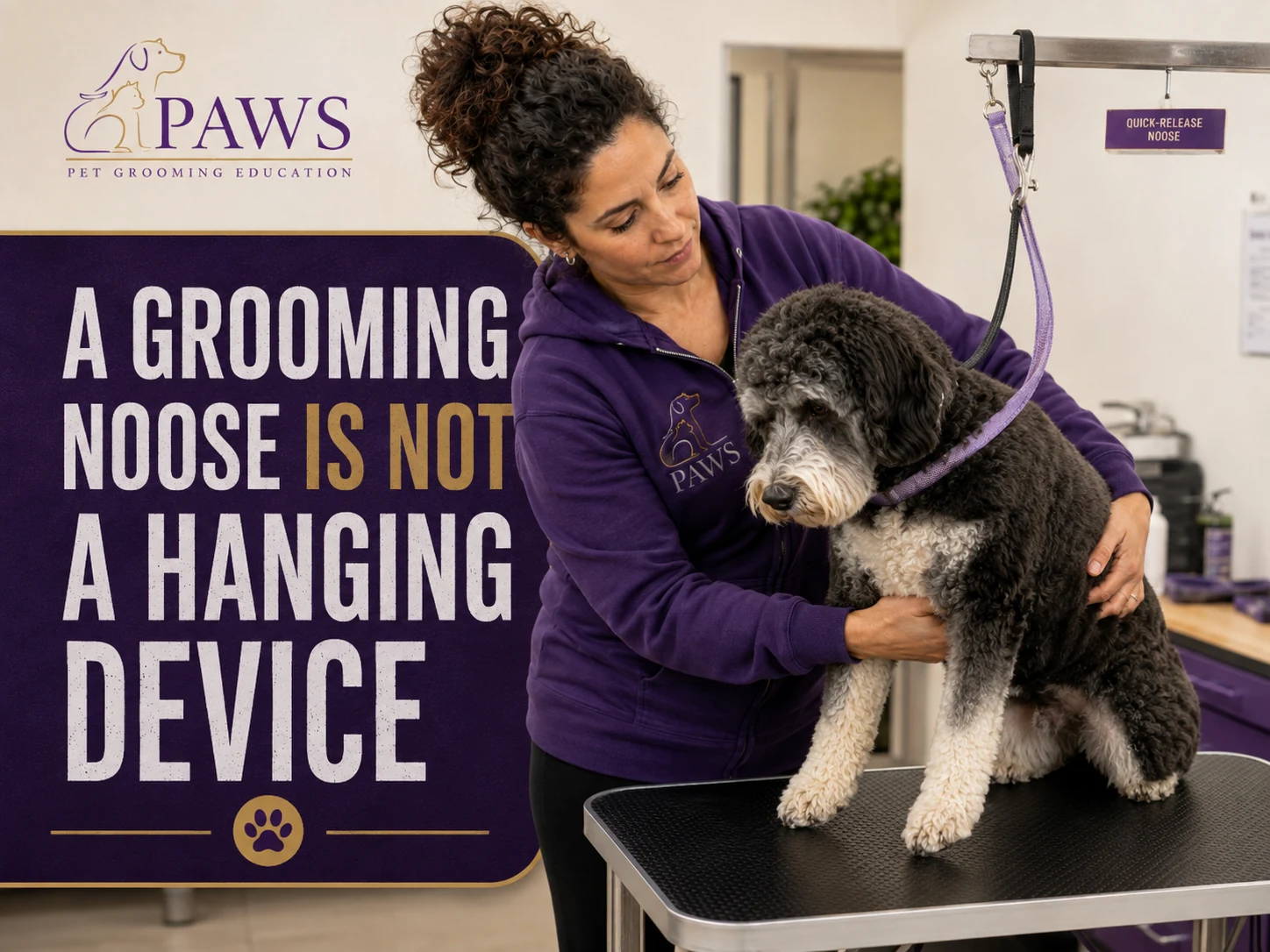
No grooming noose should be treated as a hanging device.
The restraint should help keep the dog positioned while the groomer works. It should not suspend the dog, choke the dog, or leave the dog fighting for air because the loop was chosen or adjusted poorly.
Keep restraints snug enough to prevent chewing and slipping, but not so tight that the dog is in distress. Watch the dog’s breathing, posture, panic level, coat tangling, and movement against the loop.
Pay special attention to muzzled dogs. Any restraint that has to slide off over the head can catch the muzzle straps and remove the muzzle at the worst possible time. That is not a theoretical problem. That is the kind of thing that turns a difficult dog into an unsecured, non-muzzled, irritated problem standing on your table.
Cable nooses need their own emergency plan because they are not cloth. A groomer can cut a fabric loop with scissors if needed. Cable is different. If you use cable nooses, keeping a small pair of cable cutters in the grooming cabinet is not paranoia. It is planning.
Also inspect restraint points. A good noose attached to a bad anchor point is still a bad setup.
Never leave a restrained dog unattended on a table or in a tub. A quiet dog can jump, collapse, panic, rotate, or slip in seconds, and the restraint may turn that movement into a neck, airway, limb, or fall emergency.
Emergency tools must be reachable from the working position. Scissors, cable cutters, quick-release access, towels, a second leash, and another trained handler do not help when they are across the room.
⚠️
Emergency-removal rule
Before you put a restraint on the dog, know how you will remove it if the dog panics, tangles, bites, jumps, or gets the noose caught in coat, hardware, or muzzle straps.
✅
Grooming Noose Buying Filter
Before buying or using a noose, make the tool pass these questions.
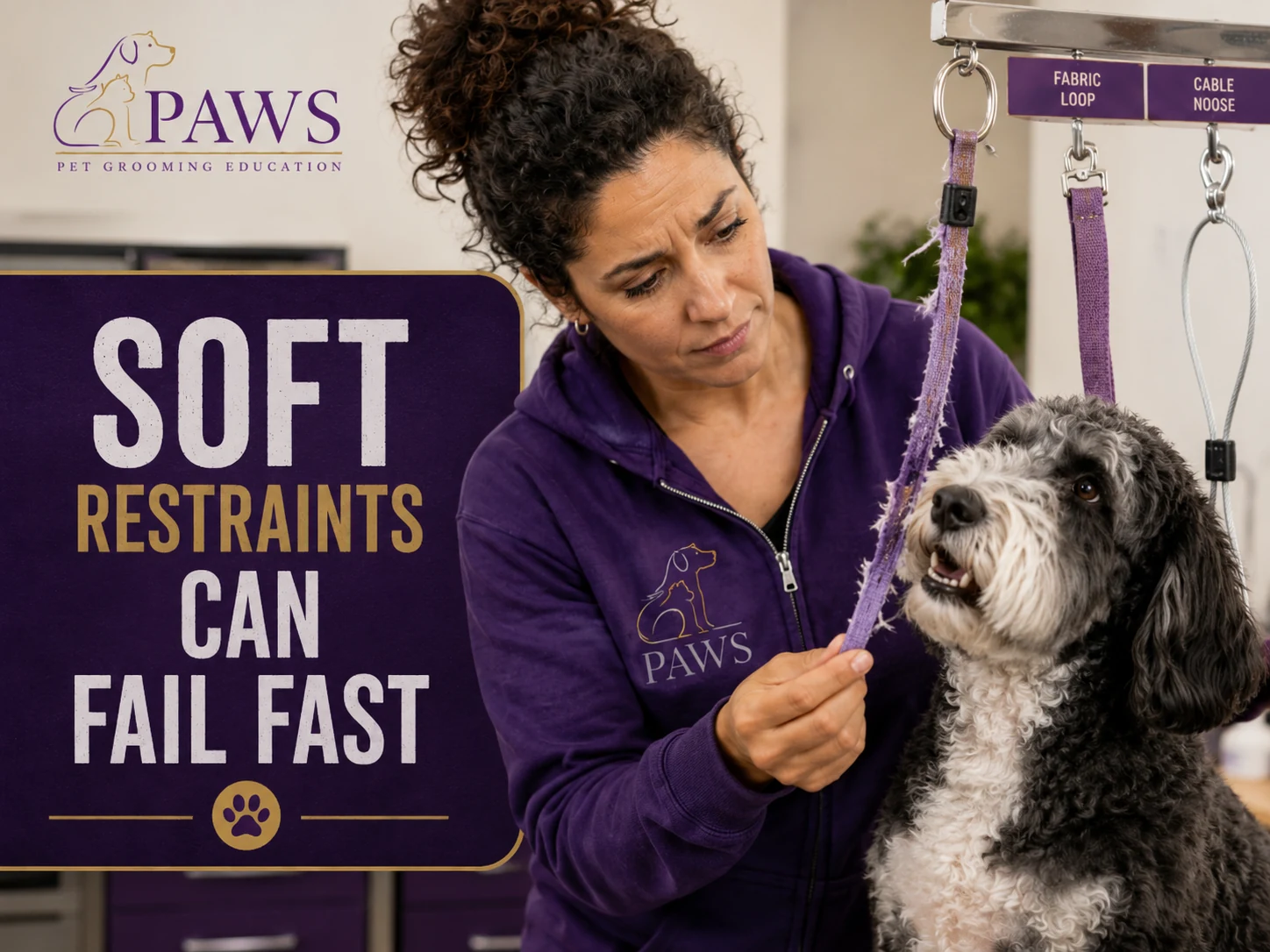
The buying decision should include inspection frequency, cleaning, replacement stock, emergency tools, staff training, and the exact dogs or tasks for which the restraint is approved.
Do not accept labels such as heavy duty, professional, chew resistant, or quick release without testing how the product behaves under tension and whether staff can operate it during a bad moment.
A low-cost loop replaced early and used correctly may be safer than expensive hardware that staff misunderstand or fail to inspect.
- Is this noose for table use, tub use, waist support, head control, chew resistance, or muzzle-safe removal?
- Does this noose tighten like a true noose when the dog fights it?
- Can the dog reach it with its mouth and chew it?
- Can the dog back out of it if it is left slack?
- Can it be removed quickly if the dog panics?
- Will it catch in long coat, under tension, or around metal hardware?
- Will it catch muzzle straps when being removed?
- Is it safe as a waist restraint, or will it slip off the rear of the dog?
- Is the restraint point strong enough, or are you trusting a weak clamp, suction cup, eyelet, or wall attachment?
- Do staff know which noose to use for which dog and why?
- Is there an emergency cutting or release tool available for the restraint type being used?
- Are you choosing this noose because it fits the dog and job, or just because it was the one hanging closest to the table?
✅
My Operator Verdict on Grooming Nooses
Own the basics, understand the risks, and do not use the wrong noose just because it is convenient.
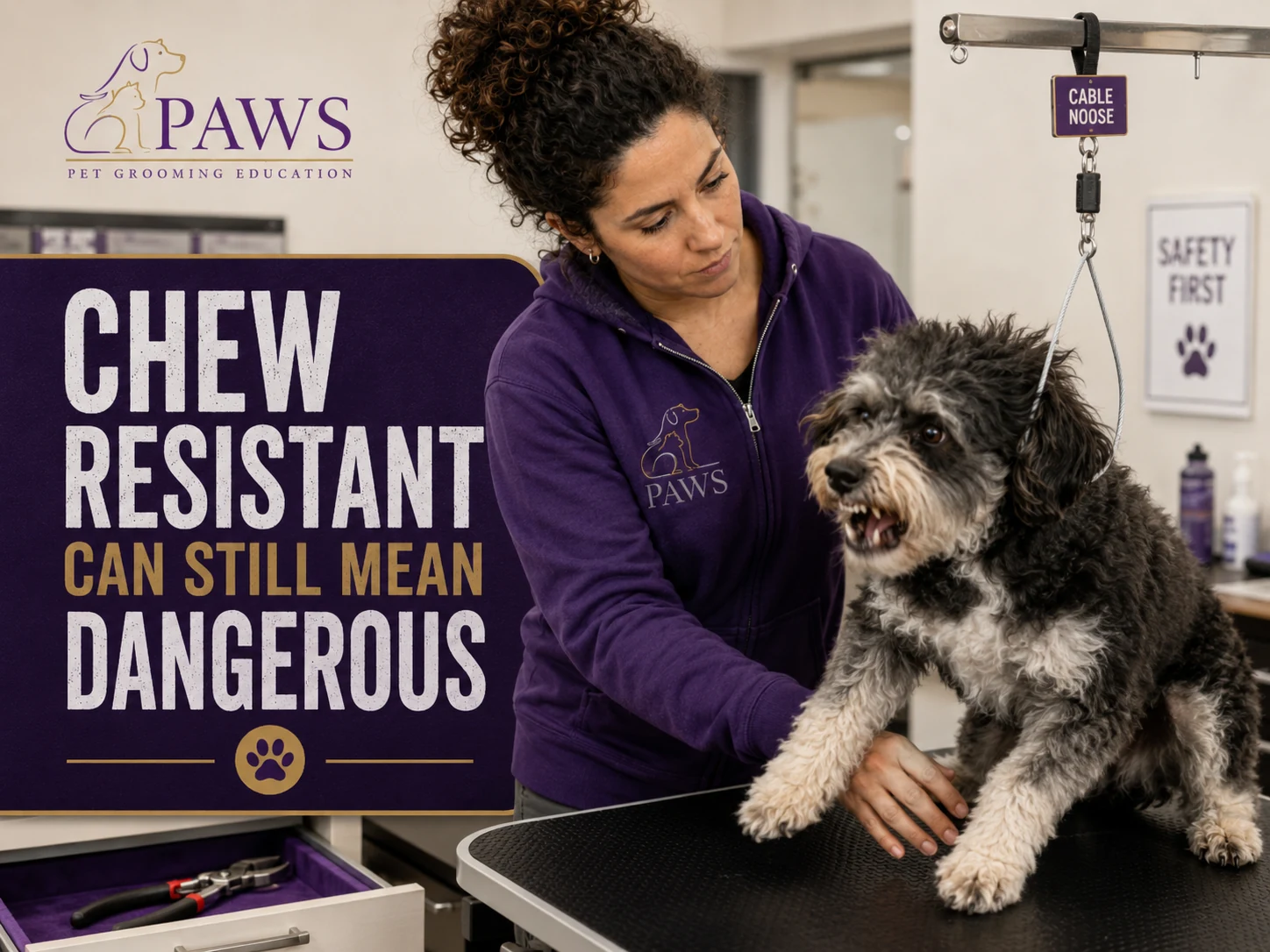
Grooming nooses are not exciting equipment, but they are important equipment.
Fabric loops are the everyday workhorse. Cable nooses are situational for chewers but need real caution. Quick-release nooses are a must-have in my opinion, especially when dealing with muzzles, fear biters, or dogs where removal needs to be fast and controlled. Suction-cup nooses belong in a narrow tub-restraint category and should make you think hard about whether the tub should have had a proper anchor point in the first place.
The main lesson is simple: do not think of grooming nooses as one generic item.
Think of them as restraint tools with different failure modes.
Choose the noose based on the dog, the coat, the table, the tub, the muzzle, the risk of chewing, the risk of choking, the risk of slipping, and how quickly you can get the restraint off if things go bad.
That is how basic equipment stays basic instead of becoming the reason everyone in the room suddenly has an exciting afternoon.
Remove a restraint from service when stitching loosens, fabric frays, cable kinks, coating cracks, clips stick, releases jam, suction surfaces deform, or hardware no longer moves smoothly.
The operator’s job is to standardize judgment. Staff should know which noose types are permitted, when a second restraint or handler is required, and who has authority to stop the groom.
⚠️
Final take
A grooming noose should make the job safer and cleaner. When the noose creates choking, tangling, muzzle-removal, slipping, or emergency-removal problems, it is the wrong tool for that dog or that setup.
❓
Grooming Noose Safety FAQ for Grooming Rooms
Detailed answers about fabric loops, cable nooses, quick releases, tub anchors, fitting, inspection, emergency removal, documentation, and when restraint should be refused.
What is a grooming noose supposed to do?
A grooming noose is a positioning and restraint aid. It should help keep the dog aligned with the table, arm, or tub while the groomer works. It should never suspend the dog, carry body weight, choke the dog, or replace hands-on support when the dog slips or panics.
Can a dog be left alone while attached to a grooming noose?
No. A restrained dog can jump, collapse, rotate, back out, chew through the loop, or become tangled within seconds. A trained handler must remain close enough to support the dog and release the restraint immediately.
Which noose is best for normal table grooming?
A properly fitted fabric grooming loop is a common starting point for a calm, cooperative dog. The groomer still has to monitor slack, chewing, slipping, coat buildup, breathing, posture, and changes in fit throughout the groom.
Why can a fabric loop fail?
Fabric can fray, weaken, absorb moisture, become contaminated, or be chewed through. A loop left too loose may allow backing out or jumping. Inspect the fibers and stitching before use and remove damaged restraints immediately.
Are cable grooming nooses safer because dogs cannot chew them?
Not automatically. Cable resists chewing, but it can tighten more severely, trap coat, kink, and become difficult to cut or release under tension. Cable use requires close monitoring, accessible cutters, and a clear reason for choosing it.
Should cable cutters be kept in the grooming room?
Yes when cable restraints are used. The cutters should fit the actual cable, remain within reach, and be familiar to staff. The dog’s body must be supported and tension reduced while the restraint is cut.
Why are quick-release grooming nooses useful?
They can be opened at the neck instead of pulled back over the dog’s head. That is especially helpful around muzzles, fear biters, painful ears, and situations where removal needs to be fast and controlled.
Can a quick-release noose still be dangerous?
Yes. Tension, coat, hardware, poor positioning, or a jammed clip can block release. Staff should test the mechanism before use, keep it accessible, and never assume the word quick means automatic.
How tight should a grooming loop be?
It should be snug enough to prevent backing out and mouth access without restricting breathing or creating distress. Recheck the fit when the dog sits, turns, lies down, or after coat is removed.
What should happen when a dog backs out of the loop?
Support the dog’s body immediately, stop the procedure, control the dog with hands or a second leash, and correct the setup before continuing. Do not grab only the noose or allow it to carry the dog at the table edge.
Can a standard grooming loop be used around the waist?
A loose fabric loop used alone around the waist can slide rearward when the dog jumps. When body support is needed, use equipment designed and adjusted for that purpose and monitor its position continuously.
Why are long-coated dogs different?
Long hair can wrap around cable, clips, rings, and adjustment hardware. Under tension, trapped coat may prevent loosening or delay emergency removal. Keep coat clear of the mechanism and avoid unnecessary snag points.
Are suction-cup nooses safe in grooming tubs?
They are temporary specialty restraints and depend on a clean, smooth surface and limited pulling force. Wet surfaces, soap, lateral movement, and heavy dogs can cause failure. A properly installed tub anchor is more dependable.
What should be inspected before attaching the dog?
Inspect the loop or cable, stitching, coating, clips, release, adjustment hardware, grooming arm, clamp, anchor point, table surface, tub surface, and the drop around the dog. The entire restraint system must be sound.
How often should grooming nooses be replaced?
Replace them based on condition. Fraying, loose stitching, persistent contamination, stiff or cracked material, cable kinks, damaged coating, sticky clips, distorted suction cups, or unreliable releases are reasons to remove the restraint.
What is the biggest muzzle conflict with grooming nooses?
A loop that must slide over the head can catch muzzle straps and remove or shift the muzzle. Plan removal before beginning and use a quick-release option when it reduces the need to move hardware across the muzzle.
What should staff do when a dog panics against the noose?
Stop the procedure, support the dog’s body, reduce tension, protect the airway, control the head, and release or cut the restraint. Call for another trained handler when needed. Stabilizing the dog comes before saving equipment.
Should a restraint near miss be documented?
Yes. Record what the dog did, which restraint and anchor were used, how the equipment behaved, how staff responded, whether injury occurred, and what must change before the next visit.
When should the groomer refuse to use a grooming noose?
Refuse when breathing, pain, panic, medical condition, aggression, body structure, coat, or behavior makes the setup unsafe, or when equipment, anchoring, emergency tools, staffing, or handling skill is inadequate.
What is the main operator rule for grooming nooses?
Choose the simplest restraint that safely fits the individual dog and task, monitor it continuously, and know exactly how it will be removed during the worst moment. Basic equipment still requires trained judgment and a real emergency plan.
🐾
Bottom Line: Basic Restraint Still Requires Judgment
The noose is simple. The dog may not be.
Grooming nooses are basic grooming-room equipment, but they are not all the same tool.
Fabric nooses, cable nooses, quick-release nooses, and suction-cup tub restraints each solve different problems and create different risks.
The right choice depends on the dog, the grooming task, the table or tub setup, muzzle use, coat type, chew risk, slipping risk, and how quickly the restraint can be released if the dog panics.
Use the individual pages in this section to compare the specific noose types.
My starting point stays the same: choose the simplest safe restraint that fits the dog and job, and always know what you will do if that restraint becomes the problem.
The final decision should include the dog’s behavior history and the groomer’s actual handling ability. Equipment should never be used to force a procedure that staff cannot perform humanely and safely.
When restraint risk cannot be controlled, the correct answer may be a different appointment structure, veterinary support, behavior preparation, another groomer, or refusing the service.