Franchise Disclosure Document, Fees, Royalties, Territory, Approved Vendors, Advertising, Financial Claims, Renewal, Termination, Transfers, and Contract Teeth
How to Read a Dog Daycare Franchise Disclosure Document Before You Sign Anything
The happy brochure dog is not the contract. The FDD is where fees, obligations, territory, supplier restrictions, renewal, termination, transfers, and financial claims start showing teeth.
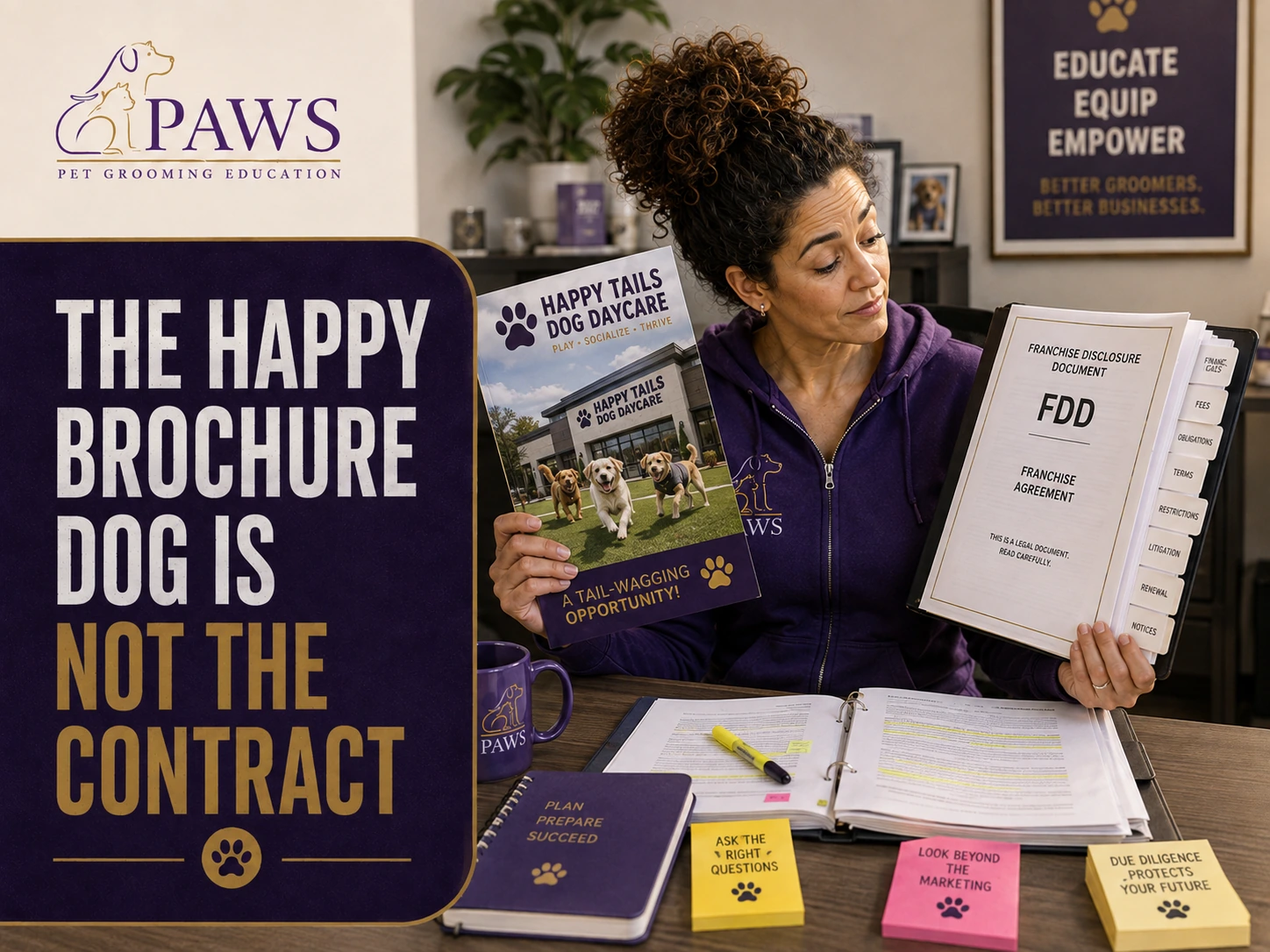
A franchise salesperson can tell a story. The FDD and franchise agreement define the relationship.
A dog daycare franchise brochure usually shows clean playrooms, smiling dogs, polished signage, happy staff, growth language, support promises, and a nice clean version of the business where nobody is covered in slobber and dog hair while a labradoodle tries to eat drywall.
The FDD is different. The Franchise Disclosure Document is where the deal starts putting numbers and contract obligations on the table. Fees. Royalties. Advertising funds. Required suppliers. Territory limits. Software requirements. Training. Support. Renewal. Default. Termination. Transfer. Financial performance claims. Current franchisees. Former franchisees. Contracts.
Do not read the FDD like homework. Read it like someone is asking for a long-term claim on your gross sales, your vendors, your signage, your software, your services, your exit, your future sale, and your ability to operate under somebody else’s rulebook.
This page is not legal advice. It is an operator’s field guide to the boring pages where expensive surprises like to hide. Read the FDD. Read the franchise agreement. Then pay a franchise attorney and accountant to read them before you sign anything or send money.
⚠️
Operator warning: the FDD is not optional paperwork.
If a franchisor delays the FDD, treats it like boring legal clutter, rushes you, dodges questions, or says, “That is just standard language,” slow down. Standard language is exactly the kind of language that can cost standard money for a very long time.
📄
FDD vs. UFOC: Same General World, Current Name Is FDD
Older franchise documents may say UFOC. Modern buyers usually deal with an FDD.
Older franchise disclosure documents were often called a UFOC, or Uniform Franchise Offering Circular. Today, the current buyer-facing term is Franchise Disclosure Document, usually shortened to FDD.
The names changed, the federal rule changed, and the modern format has its own requirements. Do not use an old UFOC as a current compliance template. But as a buyer, the basic lesson is still useful: franchise disclosure documents are supposed to force the deal into organized categories so you can see fees, restrictions, obligations, contracts, and risks before signing.
For a dog daycare buyer, the label matters less than the habit. Read the disclosure document item by item. Read the attached agreements. Make the franchisor explain the parts that sound vague. Then make a franchise attorney explain the parts the salesperson made sound harmless.
📌
The practical translation
UFOC is the old language. FDD is the modern language. The buyer’s job is the same: find the fees, restrictions, support promises, territory limits, renewal rules, default rules, transfer rules, financial claims, and people you need to call before signing.
🧾
What the FDD Actually Is
The FDD is the warning label. The franchise agreement is the machine.
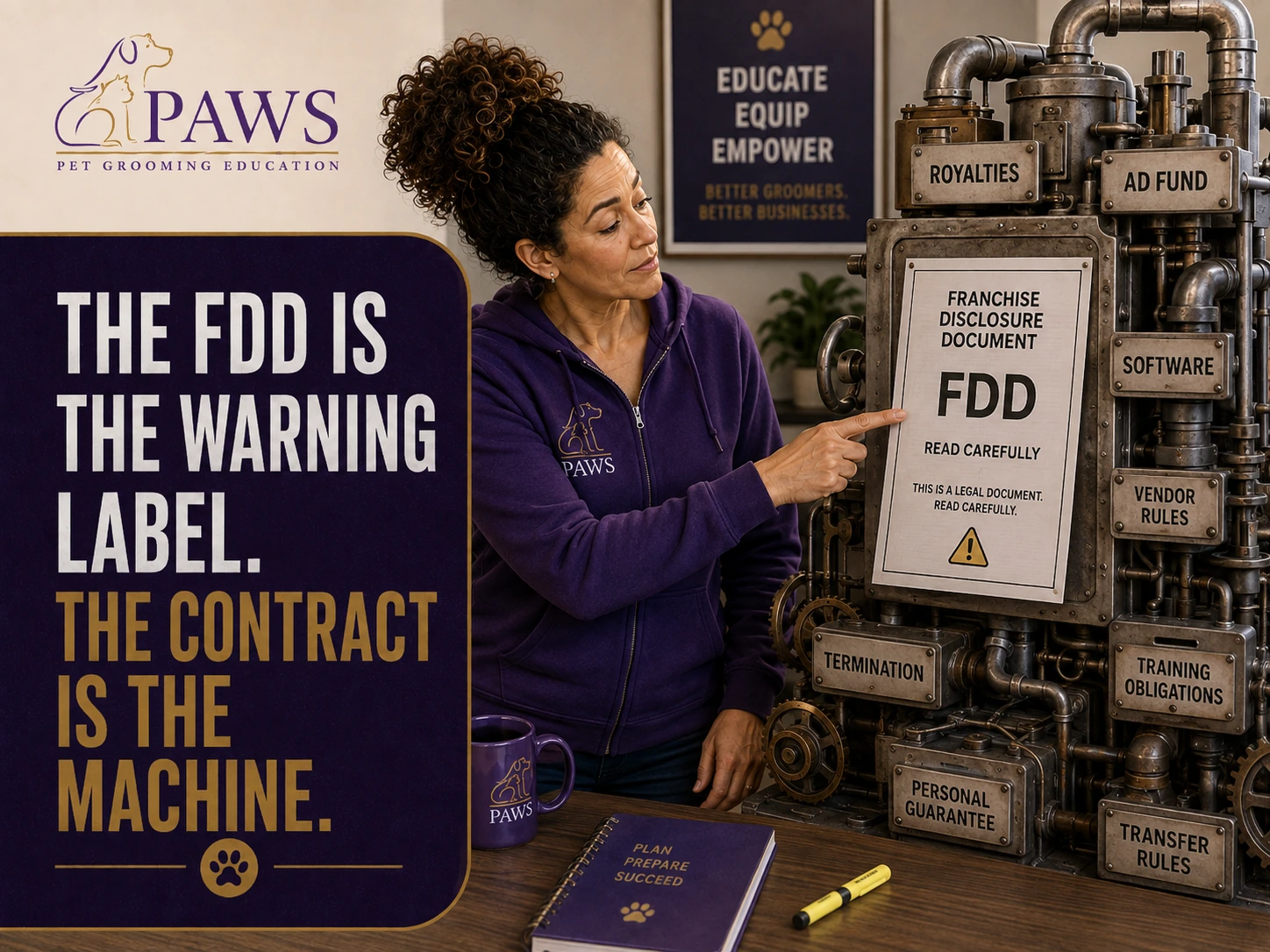
The Franchise Disclosure Document is a required disclosure document used in franchise sales. It is designed to give prospective franchise buyers organized information about the franchisor, the franchise system, fees, obligations, restrictions, financial claims, outlets, contracts, and other franchisee information.
The FDD is not the same thing as the franchise agreement. That distinction matters. The FDD summarizes and discloses information. The franchise agreement and attached contracts are what actually govern the relationship.
So do not say, “I read the FDD,” and then ignore the contract. That is like reading a warning label on a woodchipper and then sticking your arm in because the brochure had a puppy on it.
Read both. Keep copies. Mark them up. Ask questions. Then have a franchise attorney and accountant review them before you sign or pay.
Build a cross-reference list while you read. For every important disclosure, note the agreement section, exhibit, addendum, manual provision, fee table, and outside document that actually controls it. A summary without the controlling language is only the beginning of review.
Keep every version you receive. Changes between the first disclosure, later addenda, lease documents, software agreements, guarantees, and final signing package can matter as much as the original FDD.
⚠️
Blunt rule
The sales deck is not the deal. Discovery day is not the deal. A friendly call is not the deal. The FDD, franchise agreement, leases, guarantees, addenda, and attached contracts are where the deal lives.
⏳
The 14-Day Rule Is a Minimum, Not a Study Plan
Fourteen days is not enough time to learn franchise law while pretending you are calm.

Federal franchise rules generally require the franchisor to provide the FDD at least 14 calendar days before you sign a binding agreement or pay money to the franchisor or an affiliate in connection with the franchise sale.
That does not mean you should wait until day 13, skim the document, nod like you understood everything, and wire money while your stomach is doing gymnastics.
A dog daycare franchise decision touches lease obligations, zoning, construction, HVAC, drainage, flooring, dog handling, insurance, payroll, pricing, royalties, advertising funds, supplier restrictions, software, termination, non-competes, renewal terms, and transfer rules. Fourteen days is the legal minimum. It is not a business education.
Ask for the FDD early. Read it early. Start calling franchisees early. Get the lawyer and accountant involved early. The closer you get to signing, the more the sales process will try to feel like momentum. Momentum is not due diligence.
Use the review period as a work calendar. Assign time for franchise counsel, accounting, site and lease review, contractor pricing, zoning confirmation, insurance quotes, lender review, and calls to current and former franchisees.
The decision should not become urgent merely because a discovery day, territory conversation, financing deadline, or sales incentive creates pressure. A deadline created by the sales process is not a substitute for finished due diligence.
🗂️
How to Use This Dog Daycare FDD Guide
Open the FDD. Match the item number. Then ask what can bite you before you sign.

The Franchise Disclosure Document follows a required item structure. That is useful because it gives you a map. You do not have to wander through the document like a lost golden retriever in a hardware store.
Read each item in the FDD, then use this guide to translate that item into dog daycare and pet-care reality. The question is not just, “What does Item 1 say?” The question is, “How can Item 1 affect my money, control, territory, services, staff, lease, exit, or ability to run the business I actually want?”
This is the point of the page: item by item, what does the section generally cover, what does it mean for a dog daycare buyer, how can it bite you, and what questions should you ask before signing?
Create one issue log with four columns: what the FDD says, what the agreement says, what the salesperson said, and what current or former franchisees report. Any mismatch belongs on the lawyer-and-accountant question list.
Follow every dollar and every approval right. A small fee, vendor rule, software requirement, transfer condition, or renewal obligation may look manageable alone but become expensive when several provisions operate together.
⚠️
Read the FDD with the franchise agreement next to it.
The FDD helps you find the issue. The attached contracts usually control the issue. Do not stop at the summary if the agreement language is where the leash is actually tied.
🔍
The Language That Makes an FDD Dangerous
The expensive stuff is not always hidden. Sometimes it is sitting in plain sight wearing boring legal pants.
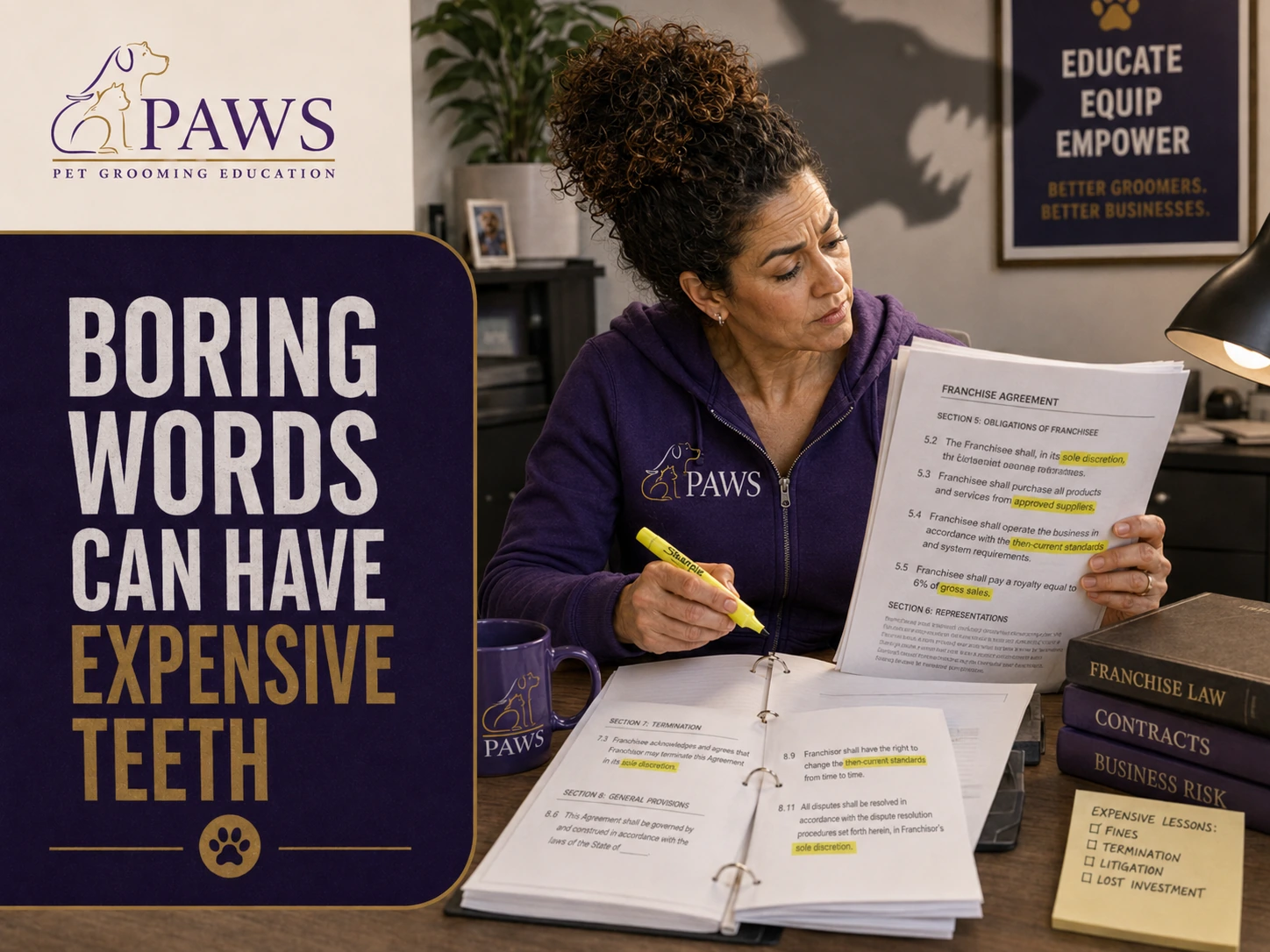
A bad franchise document does not always look like a scam. Sometimes it looks clean, organized, professional, and perfectly normal. The danger is in the words that give the franchisor future control while making the current sales conversation sound harmless.
Look for phrases like “in our sole discretion,” “as we may require,” “then-current standards,” “approved suppliers,” “designated vendors,” “system standards,” “not obligated,” “may change,” “not guaranteed,” “must comply,” “general release,” “right of first refusal,” “option to purchase,” “non-compete,” “post-termination obligations,” and “gross sales.”
None of those phrases automatically make a franchise bad. A good franchisor needs standards. A strong brand needs control. A real system needs rules. But those phrases tell you where the leverage sits.
The trick is not always that something is missing. The trick is that something is labeled politely. “Advertising support” may mean you pay into a fund that does not make your local phone ring. “Approved vendors” may mean you cannot shop price. “Protected territory” may have enough exceptions to drive a grooming van through. “Training” may mean opening-week basics, not long-term operator support. “Renewal rights” may require signing a new agreement with new terms. “Gross sales” may mean the franchisor eats before rent, payroll, insurance, repairs, and owner pay.
Read every FDD item with this question in your head: What power does this section give them later, after I have already signed the lease, spent the build-out money, hired staff, earned reviews, trained customers, and built local trust?
Also mark every place where the franchisor can change a requirement through a manual, policy, standard, approved-vendor list, technology system, or later written notice. The current cost may not be the maximum cost the contract permits.
Ask for concrete examples of how discretionary language has been used with existing franchisees. The practical history of enforcement can reveal whether a broad clause is rare protection or an everyday control mechanism.
⚠️
The real test
A strong franchisor should be able to answer hard questions clearly. If the answer is always “do not worry about that,” “that is just legal language,” or “everyone signs it,” that is not due diligence. That is pressure with a smile.
FDD Item 1: The Franchisor, Parents, Predecessors, and Affiliates
This is where you find out who is really behind the franchise system.
What It Covers
Item 1 generally identifies the franchisor, parent companies, predecessors, affiliates, business history, business being offered, competition, and certain industry-specific regulations.
Dog Daycare Translation
For a dog daycare buyer, this is where you start asking whether the company actually understands dog daycare, boarding, grooming, staffing, dog handling, zoning, kennel licensing, build-out, odor, noise, cleaning, live-animal risk, and local pet-care operations.
How This Can Bite You
A franchisor can sound polished while still being young, thin, inexperienced, heavily dependent on selling franchises, or more skilled at sales than support. Affiliates may also matter because affiliated companies can provide products, services, software, supplies, insurance, construction support, or marketing services that franchisees may be required or pressured to use.
🔪
Where the knife hides
Watch the affiliate structure. A franchisor may look like one company on the sales call, but the money can move through related companies that sell software, supplies, marketing, construction help, insurance, training, call-center services, real estate help, or required products. The question is not only “Who is the franchisor?” The question is, “Who else gets paid because I signed this agreement?”
Also watch for a short operating history dressed up with big-system language. A young dog daycare franchisor may talk like a national brand while still learning how to support real operators through zoning problems, sick dogs, employee turnover, bad build-outs, customer complaints, and slow ramp-up periods.
Questions to Ask
- How long has the franchisor actually operated dog daycare or pet-care locations?
- How long has it franchised dog daycare or pet-care locations?
- Are the people behind the system operators, franchise sellers, marketers, investors, or some mix of all of that?
- Do affiliates sell supplies, software, insurance, marketing, construction support, consulting, training, or other services to franchisees?
- Does the regulation section seriously discuss local kennel licensing, zoning, building approvals, animal care, noise, odor, waste, insurance, and employee requirements?
- Is this a mature operating system or a startup wearing a big-brand costume?
FDD Item 2: Business Experience
This is where you look at who is running the system, not just who is selling it.
What It Covers
Item 2 generally lists directors, principal officers, and key executives, along with their recent business experience.
Dog Daycare Translation
A dog daycare franchise is not just a logo and a software login. Leadership experience matters because the business involves dogs, staff, customers, disease control, injuries, odor, cleaning, leases, construction, insurance, payroll, grooming, boarding, and local marketing.
How This Can Bite You
A leadership team can be strong in franchising, finance, branding, sales, or technology while being weak in actual dog-care operations. That matters when the support you need is not “brand alignment” but “three dogs are coughing, two staff quit, the drains smell like a swamp, and a customer is melting down in the lobby.”
🔪
Where the knife hides
A resume can sound impressive without being useful to you. Franchise development, corporate finance, sales, marketing, private equity, or executive experience does not automatically mean the leadership team knows dog daycare operations.
Ask whether the people making the rules have actually lived the ugly parts of this business: dogs fighting, kennel cough, grooming no-shows, boarding stress, facility smells, staff quitting, bad floors, drainage problems, angry customers, and payroll pressure. If the leadership team mostly knows franchise sales, the support may be polished on paper and thin in the playroom.
Questions to Ask
- Who on the leadership team has actually run a dog daycare, boarding, grooming, or pet-care facility?
- Who has managed staff in a live-animal care environment?
- Who understands dog behavior, group play, disease control, cleaning, and incident handling?
- Who understands commercial lease build-outs, HVAC, flooring, drains, odor, and noise?
- Is the leadership team built to support operators, or mainly to sell franchise units?
- If the system is young, who fills the experience gap?
FDD Item 3: Litigation
This is where you look for fights, patterns, and smoke.
What It Covers
Item 3 generally discloses certain litigation involving the franchisor, predecessor, affiliates, and key people, including litigation related to the franchise relationship and certain other required legal matters.
Dog Daycare Translation
Litigation does not automatically mean a franchise is bad. Dog businesses can have disputes. But lawsuits can show patterns: franchisees unhappy with support, fee disputes, advertising disputes, termination fights, vendor issues, trademark issues, earnings-claim problems, or operational failures.
How This Can Bite You
If the franchisor has sued franchisees for unpaid royalties, ask why. Maybe the franchisees were bad operators. Maybe the model did not work for them. Maybe support was weak. Maybe the fees became impossible. The lawsuit list does not answer the question by itself. It tells you what questions need teeth.
🔪
Where the knife hides
Litigation is not just about whether lawsuits exist. It is about patterns. One dispute may be noise. Repeated disputes over royalties, support, advertising funds, required vendors, termination, territory, renewal, or financial claims should make your ears stand up.
Also be careful when a franchisor says, “Those were just bad franchisees.” Maybe. But if several operators had the same problem, the issue may not be the operators. The issue may be the model, the support, the fees, or the gap between the sales story and the operating reality.
Questions to Ask
- Has the franchisor sued franchisees?
- Have franchisees sued the franchisor?
- Were disputes about royalties, advertising funds, support, vendors, termination, territory, or financial claims?
- Are there repeated similar disputes?
- Did lawsuits involve failed locations or locations that could not pay?
- What do current and former franchisees say about the issues behind the litigation?
FDD Item 4: Bankruptcy
This is where you check whether the support system has financial skeletons.
What It Covers
Item 4 generally discloses certain bankruptcy history involving the franchisor, predecessor, affiliates, and key people.
Dog Daycare Translation
You are not just buying a logo. You are relying on the franchisor to support a long-term operating system. If the company or its key people have financial history that could affect stability, support capacity, or credibility, you need to know that before your lease, build-out, and life savings are sitting in the dog room.
How This Can Bite You
A financially weak franchisor may sell the dream but struggle to provide field support, training updates, software help, advertising support, crisis help, vendor coordination, or system improvements. A dog daycare franchise with thin support is not a system. It is a logo with paperwork.
🔪
Where the knife hides
Bankruptcy history is not always an automatic deal-killer, but it is a pressure point. A franchisor may have survived a past financial problem and rebuilt properly. Or it may still be thin, undercapitalized, and trying to fund the system by selling new franchises.
The hidden question is support capacity. Can this company afford field support, training updates, software help, advertising support, crisis support, and operational improvements after your franchise fee clears? A weak franchisor can sell you the boat and then disappear when the water gets rough.
Questions to Ask
- Has the franchisor or any key person been involved in bankruptcy?
- Was the bankruptcy connected to pet care, franchising, real estate, or another operating business?
- Does the history raise concerns about financial judgment or support capacity?
- Has the franchisor rebuilt with enough capital and experienced management?
- What does your accountant think after reviewing Item 4 and Item 21 together?
FDD Item 5: Initial Fees
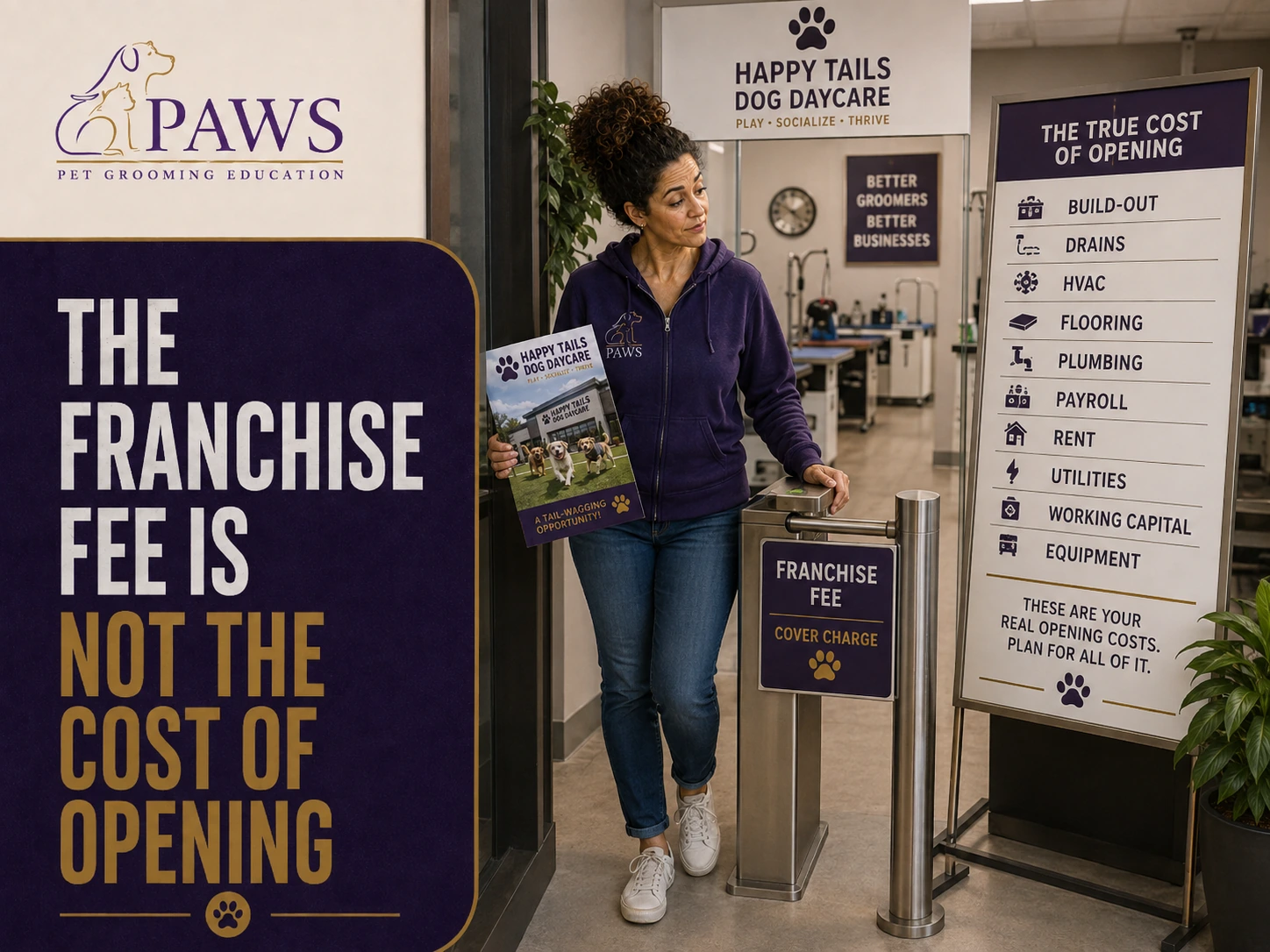
The franchise fee is the cover charge, not the cost of opening.
Put each upfront payment on a timeline showing when it becomes non-refundable and which conditions remain unresolved at that point. The safest sequence clears major site, lease, financing, zoning, and construction risks before irreversible money leaves the buyer.
Ask whether any affiliate, broker, developer, or referral source receives part of the initial payment. The answer helps show what the fee funds and whether the buyer is paying mainly for operating support or for the franchise sale itself.
What It Covers
Item 5 generally discloses the initial fees paid to the franchisor or affiliate before opening, including franchise fees and other required upfront payments.
Dog Daycare Translation
The initial fee may buy access to the system, brand, training, manuals, opening process, and franchise relationship. It does not build your facility, install your flooring, fix your drains, pay your staff, buy grooming equipment, install HVAC, or carry your business through slow months.
How This Can Bite You
Buyers can focus too much on the franchise fee because it is easy to understand. The real danger is thinking the franchise fee is the big number. In dog daycare, the big number may be the build-out, lease obligations, working capital, payroll ramp-up, equipment, software, and local marketing.
🔪
Where the knife hides
The initial franchise fee may be non-refundable and “earned” when paid. That sounds boring until zoning fails, financing falls apart, the landlord changes terms, the build-out quote explodes, or the approved location becomes impossible.
The trap is paying meaningful money before enough deal-killers are cleared. Before you pay, ask what happens if the site is not approved, the lease cannot be signed, permits fail, financing is denied, construction becomes unaffordable, or you decide not to move forward after professional review.
Questions to Ask
- What exactly does the initial franchise fee buy?
- Is it refundable under any circumstance?
- Is the fee uniform, negotiable, discounted, or different for multi-unit buyers?
- What is paid before site approval, lease signing, training, or opening?
- What happens to the fee if zoning, licensing, lease approval, financing, or build-out fails?
- Does the fee buy real dog daycare support, or mostly the right to enter the system?
FDD Item 6: Other Fees
This is where the fee treadmill starts showing itself.

Model the fee stack at weak, expected, and strong revenue levels. Include percentage fees, fixed monthly charges, minimums, local marketing, payment processing, software, audit exposure, late charges, renewal, transfer, and required upgrades.
Then compare the total with operating profit, not gross revenue. A fee that appears small as a percentage of sales can consume a much larger percentage of the cash left after payroll, occupancy, insurance, repairs, debt, and owner compensation.
What It Covers
Item 6 generally discloses other fees paid to the franchisor or affiliates, including ongoing fees such as royalties, advertising fees, technology fees, renewal fees, transfer fees, training fees, audit fees, late fees, and other charges.
Dog Daycare Translation
Dog daycare has thin-margin pressure from payroll, rent, insurance, cleaning, utilities, repairs, marketing, software, staff turnover, disease events, and facility wear. Fees based on gross sales can come out before you know whether the month actually worked.
How This Can Bite You
A 6% royalty, 2% ad fund, technology fee, local marketing requirement, software charge, audit fee, renewal fee, transfer fee, and late fee do not feel like one fee. They feel like several little raccoons in the dumpster, all eating at the same time. Item 6 tells you how many raccoons you are feeding.
🔪
Where the knife hides
The word to watch is "Gross Sales".
Gross sales is not profit. A royalty based on gross sales can be owed before rent, payroll, insurance, repairs, cleaning, debt, taxes, software, utilities, and owner pay are covered.
Also watch fee stacking. A royalty by itself may look survivable. Add ad fund, local marketing requirement, software fee, technology fee, audit fee, renewal fee, transfer fee, training fee, late fee, interest, inspection costs, and required upgrade costs, and suddenly the business has a lot of hands in the bowl before the owner eats.
Questions to Ask
- What fees are based on gross sales?
- Are royalties owed even during unprofitable months?
- Are there minimum royalties or minimum fees?
- What technology, software, reporting, advertising, renewal, transfer, audit, late, training, inspection, or support fees apply?
- Can any fees increase during the term or at renewal?
- Does the ad fund replace local marketing, or do I still pay for local marketing separately?
- What does the fee stack look like at $50,000, $75,000, or $100,000 per month in gross sales?
FDD Item 7: Estimated Initial Investment
Item 7 is not your final bill. It is the first wave of financial pain introducing itself.

Replace national ranges with local written quotes. Leasehold work, plumbing, HVAC, drainage, flooring, sound control, fencing, fire requirements, permits, equipment, and professional fees should be priced for the actual building and jurisdiction.
Add contingency and delay scenarios. Construction changes, permit corrections, landlord disputes, equipment lead times, weather, utility work, and opening delays can create both extra cost and months of rent without operating revenue.
What It Covers
Item 7 generally estimates the buyer’s total initial investment, often in low-to-high ranges, including categories such as initial fees, leasehold improvements, equipment, signage, inventory, supplies, training expenses, professional fees, and additional funds.
Dog Daycare Translation
Dog daycare build-outs are not normal office build-outs. Flooring, drainage, plumbing, HVAC, odor control, noise control, dog rooms, gates, turf, kennels, suites, grooming tubs, dryers, cameras, laundry, cleaning systems, outdoor yards, fire/code issues, and licensing can wreck a weak estimate.
How This Can Bite You
The low end of an Item 7 estimate can look friendly until you meet your actual landlord, contractor, zoning office, fire marshal, HVAC bill, plumbing problem, floor quote, and payroll ramp-up. A dog daycare can open underfunded and spend the first year drowning in “we did not budget for that.”
🔪
Where the knife hides
The low end of the investment range may be technically possible and still useless for your real market. A cheap build-out assumption does not help when your landlord hands you a shell, the city wants changes, the floor needs serious work, the HVAC is wrong, the drains are not there, and the outdoor area needs fencing.
Dog daycare estimates can understate working capital. Opening is not the finish line. You may need months of payroll, rent, utilities, cleaning, ads, software, insurance, repairs, and owner living expenses before the business is stable. If Item 7 does not include enough survival money, the business can be “open” and still financially bleeding on the floor.
Questions to Ask
- What does the estimate assume about square footage, rent, build-out condition, flooring, drains, HVAC, plumbing, and outdoor space?
- Does the estimate include enough working capital for a slow ramp-up?
- Does it include owner living expenses while the business is not paying you?
- Does it include grooming equipment, boarding suites, laundry, cameras, software, fencing, signage, and cleaning systems?
- What costs are excluded or easy to underestimate?
- What did recent franchisees actually spend?
- Did any franchisees exceed the high-end estimate, and why?
FDD Item 8: Restrictions on Sources of Products and Services
Approved vendors can protect quality. They can also turn your checkbook into a toll booth.
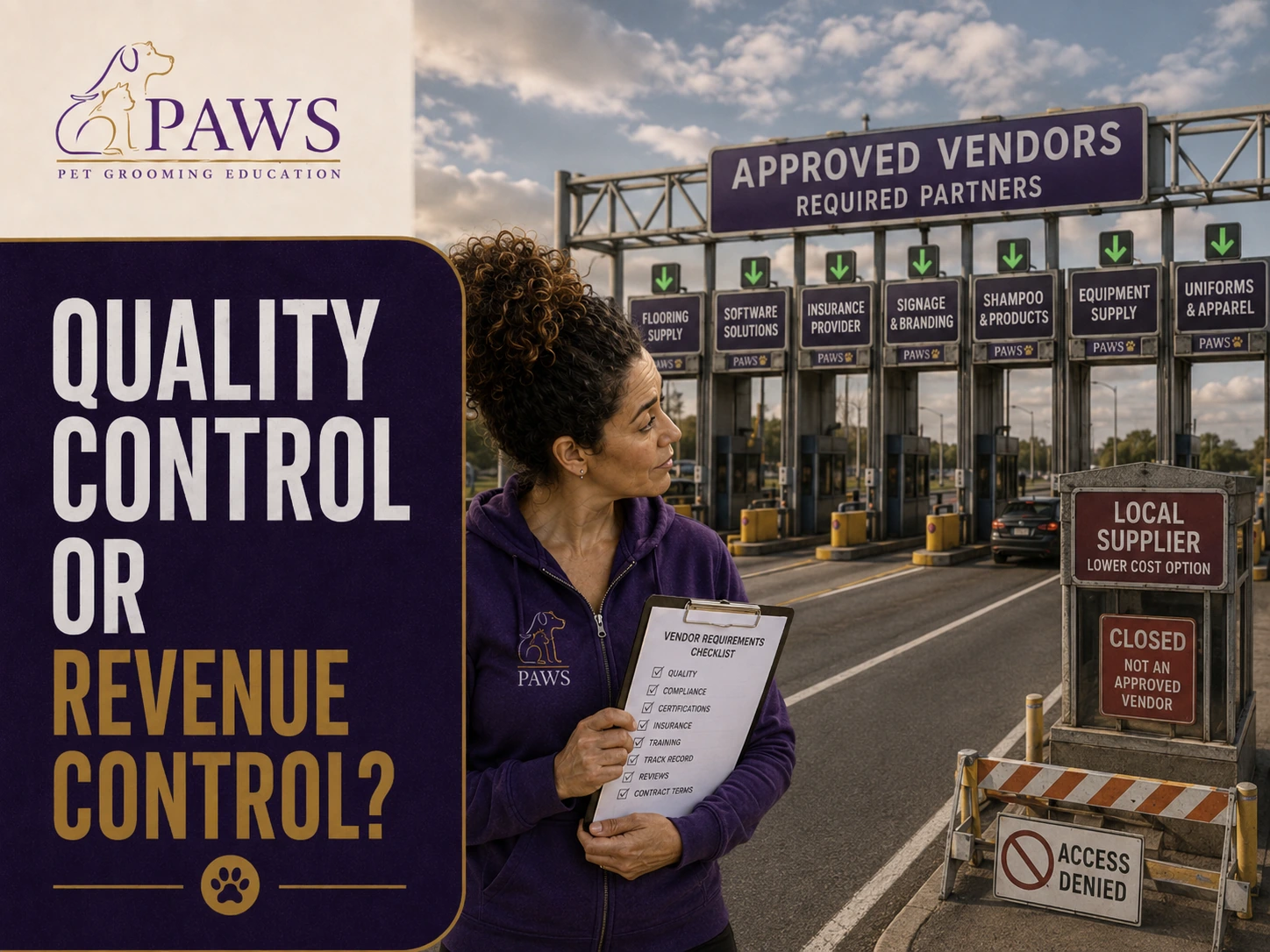
Compare required-vendor pricing, freight, service response, warranties, replacement times, and quality against realistic local alternatives. A nominal discount can disappear when shipping, downtime, or mandatory specifications are included.
Review the emergency process. Dog-care facilities cannot always wait for a designated supplier when cleaning chemicals, gates, software, cameras, HVAC components, or safety equipment fail. The agreement should not turn a routine repair into avoidable operational downtime.
What It Covers
Item 8 generally discloses restrictions on required purchases, approved suppliers, designated sources, specifications, supplier approval processes, and whether the franchisor or affiliates receive revenue or benefits from required purchases.
Dog Daycare Translation
This matters hard in dog daycare because required sources can touch flooring, cleaning chemicals, kennels, gates, grooming tools, tubs, dryers, uniforms, food, retail, signage, software, webcams, insurance, construction materials, marketing materials, and operating supplies.
How This Can Bite You
Required vendors may be better and safer. They may also be more expensive, slower, less flexible, or financially tied to the franchisor. If you find a better local option and cannot use it, the system may be protecting quality — or protecting somebody else’s revenue stream.
🔪
Where the knife hides
“Approved supplier” sounds clean. It may mean quality control. It may also mean you cannot buy a cheaper, better, faster, local option because the system requires a vendor that benefits the franchisor, an affiliate, or a preferred supplier relationship.
Ask whether the franchisor receives rebates, commissions, markups, referral fees, volume incentives, software revenue, private-label margins, or affiliate income. Also ask whether supplier approval is real or fake. If they can deny alternatives “in their sole discretion,” your ability to shop price may exist on paper but not in real life.
Questions to Ask
- What products and services must be purchased from approved or designated suppliers?
- Can I request approval of another supplier?
- How long does supplier approval take?
- Can approval be denied for broad or discretionary reasons?
- Are required products priced competitively?
- Does the franchisor, affiliate, or related party receive rebates, commissions, markups, or other financial benefits?
- What happens if a required supplier is delayed, overpriced, unavailable, or poor quality?
- Can required vendors or specifications change after I open?
FDD Item 9: Franchisee’s Obligations
This is the chore list. Do not skim it like it is decoration.
What It Covers
Item 9 generally provides a reference table of the franchisee’s principal obligations and points to where those obligations appear in the FDD and agreements.
Dog Daycare Translation
For a dog daycare buyer, Item 9 is where you find the operational promise list: site selection, lease approval, build-out, training, opening, fees, standards, products and services, advertising, insurance, records, reports, inspections, transfer, renewal, termination, non-competes, and dispute resolution.
How This Can Bite You
The danger is not one obligation. The danger is the pile. Each requirement may sound reasonable alone. Together they can create a controlled business where you need approval for location, lease, signage, software, services, suppliers, advertising, managers, reports, remodels, transfer, and exit.
🔪
Where the knife hides
Item 9 can look harmless because it is usually a reference table. That table is the index to your obligations. Every line points somewhere else, and somewhere else is where the binding language usually lives.
The trap is skimming the table and missing the pile. Site approval, lease approval, build-out, signage, software, advertising, records, inspections, reports, training, remodels, insurance, standards, transfer, renewal, non-competes, and post-termination duties can all stack into a business where nearly every meaningful move needs permission.
Questions to Ask
- What obligations require franchisor approval?
- What obligations cost money after opening?
- What obligations can trigger default or termination?
- What reporting and audit obligations apply?
- What standards can be changed through the operations manual?
- What obligations survive termination or expiration?
- Did my franchise attorney trace every major obligation back to the actual agreement language?
FDD Item 10: Financing
Lender interest is not proof the business model works.
What It Covers
Item 10 generally discloses financing arrangements offered directly or indirectly by the franchisor, affiliates, or related parties, if any.
Dog Daycare Translation
Dog daycare financing can involve franchise fees, build-out, equipment, leasehold improvements, software, signage, working capital, and sometimes SBA-style lending. Financing can help you open, but it also creates fixed obligations before the dog count is stable.
How This Can Bite You
A buyer may hear “financing available” and feel safer. Slow down. Financing does not make a weak location good, a bad lease safe, a thin budget enough, or a royalty-heavy model profitable. Debt just makes the monthly survival floor higher.
🔪
Where the knife hides
Financing can make a weak deal feel legitimate. It should not. A lender being willing to loan money does not mean the location is good, the lease is safe, the estimate is accurate, the brand creates customers, or the business can afford the debt.
The knife is debt service. Dog daycare ramp-up can be slower than the payment schedule. If the loan starts before the dog count, grooming schedule, boarding base, and staff efficiency are mature, financing can turn a survivable operating problem into a monthly cash emergency.
Questions to Ask
- Does the franchisor offer, arrange, refer, guarantee, or receive benefits from financing?
- Are loan terms tied to required vendors, build-out packages, or equipment suppliers?
- What personal guarantees are required?
- Does the financing include enough working capital, or only enough to open underfunded?
- What happens if construction delays push back revenue but loan payments still begin?
- Did an independent accountant stress-test debt service against realistic daycare, boarding, and grooming ramp-up?
FDD Item 11: Franchisor Assistance, Advertising, Computer Systems, and Training
“We provide support” is not an answer.
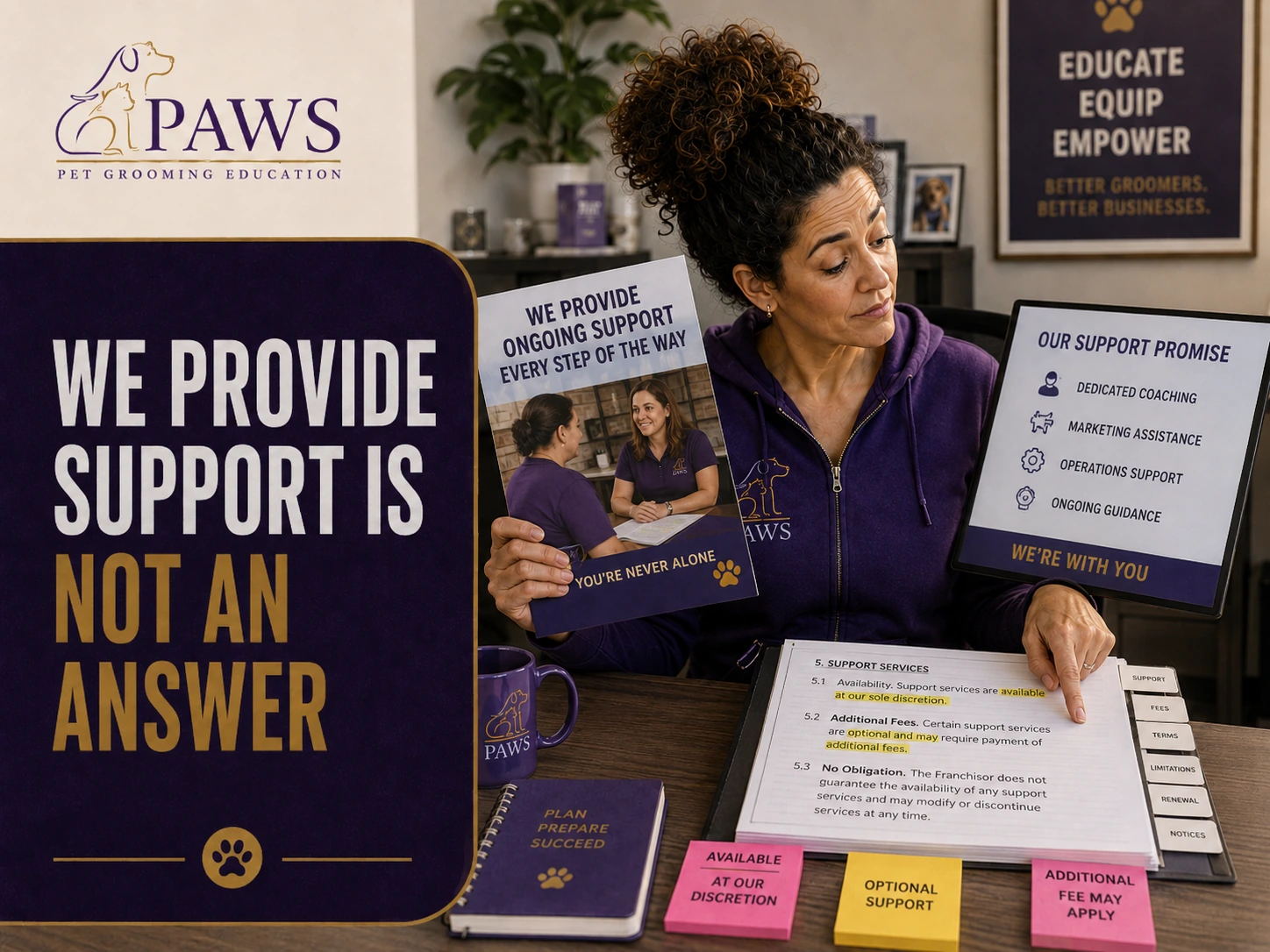
Turn every support promise into a deliverable: who performs it, when it occurs, how long it lasts, what it costs, whether it is mandatory, and what happens if the assigned person is unavailable. General availability is not the same as an enforceable operating obligation.
Ask current franchisees which support they used during the last twelve months and what changed because of it. The answer helps separate opening-stage assistance from continuing value that may justify continuing royalties and fees.
What It Covers
Item 11 generally describes the franchisor’s pre-opening assistance, ongoing assistance, advertising programs, computer systems, training programs, operations manuals, and related support obligations.
Dog Daycare Translation
This is one of the most important dog daycare sections. Support should be judged against real operations: temperament screening, group play, cleaning, disease control, boarding routines, grooming add-ons, staff training, software, customer communication, pricing, local marketing, reviews, complaints, incident documentation, and capacity decisions.
How This Can Bite You
Support may sound broad but be limited in practice. Training may be short. On-site help may be optional or extra. Software may be required and expensive. Advertising funds may not benefit your market. Local ads may need approval. Manuals may be useful early but less valuable later. If the support fades after opening, the royalty still keeps walking to the mailbox every month.
🔪
Where the knife hides
Watch the difference between “required,” “available,” “optional,” and “at our discretion.” “We provide support” may mean strong required support, or it may mean you can call someone if they feel like helping and maybe pay extra for the privilege.
Also watch software and advertising language. Required software can control reporting, customer data, billing, webcams, reservations, and access. Advertising funds may support systemwide brand goals without making your local phone ring. Local advertising may still be your problem, but subject to their approval.
Questions to Ask
- What support is required, not just available?
- What support happens before opening, during opening, and after opening?
- Who provides dog-handling, disease-control, cleaning, boarding, grooming, and staff-training support?
- Who pays for training travel, lodging, wages, and extra training?
- Is on-site assistance included or charged separately?
- What software, hardware, webcams, reporting tools, and booking systems are required?
- Can software or hardware upgrades be required at my expense?
- Who controls customer data, phone numbers, websites, booking systems, and local pages?
- Does the ad fund create local customers, or do I still pay for most local marketing myself?
- Can local advertising be rejected, delayed, or pulled?
FDD Item 12: Territory
Protected territory does not always mean protected wallet.
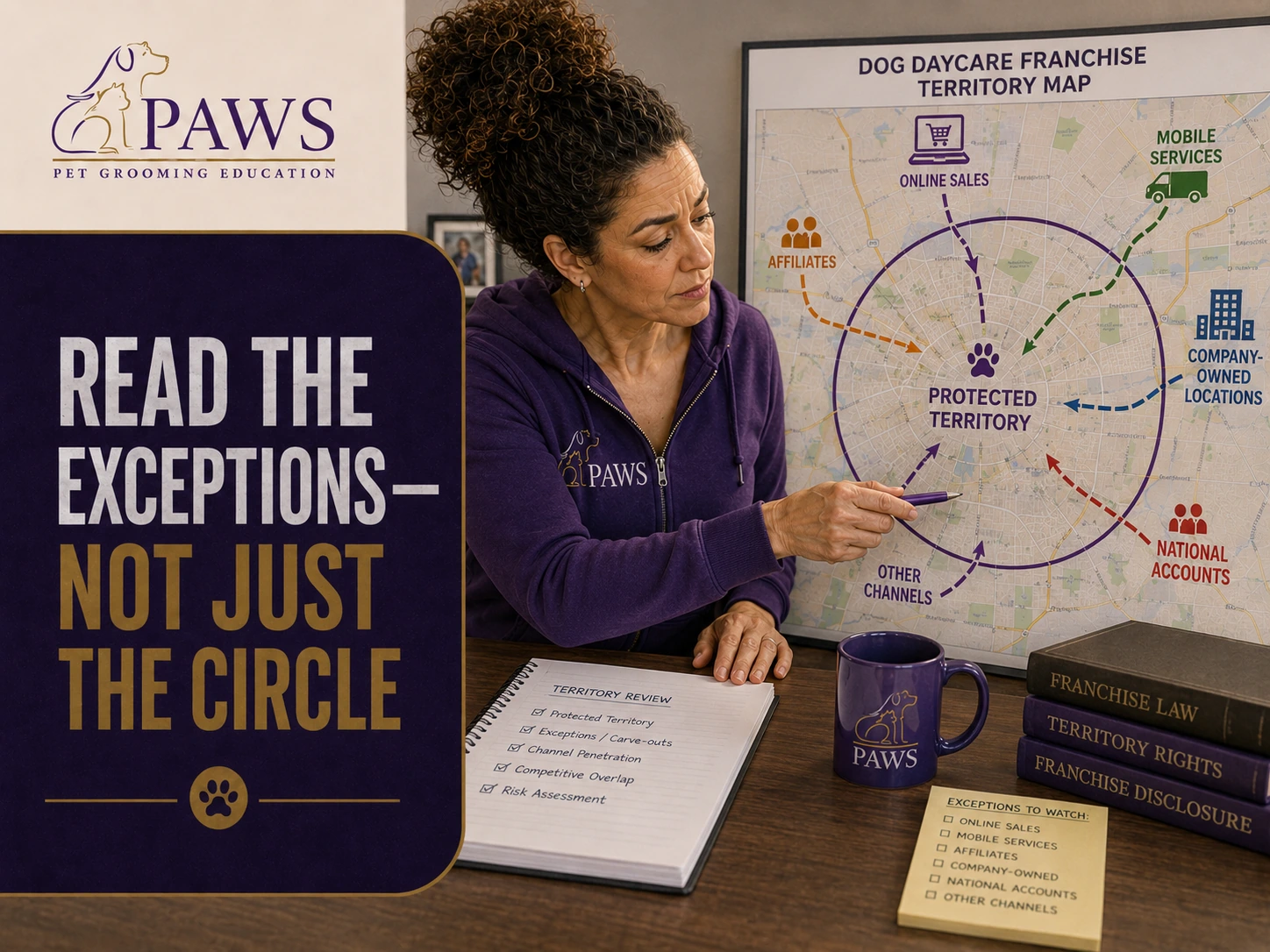
Map every exception next to the protected area. Online sales, mobile service, national accounts, affiliates, alternate brands, company-owned operations, partnerships, and different service channels can reduce the practical value of the territory without technically violating it.
Compare the legal territory with customer travel patterns. Commuting routes, bridges, school pickup, traffic, parking, employer clusters, veterinary referrals, and grooming loyalty may define the real market more accurately than a radius or ZIP-code boundary.
What It Covers
Item 12 generally discloses whether the franchisee receives a territory, whether it is exclusive or protected, what restrictions apply, and what rights the franchisor reserves.
Dog Daycare Translation
Dog daycare territory is not just a circle on a map. Customers choose based on commute, work schedule, school pickup, vet referrals, traffic, grooming convenience, boarding needs, parking, hours, reviews, and trust.
How This Can Bite You
A territory may protect you from another same-brand location nearby, but it may not protect you from online sales, alternate channels, affiliates, company-owned concepts, different brands, mobile services, national accounts, partnerships, or customer behavior that ignores the map completely.
🔪
Where the knife hides
“Protected territory” can sound stronger than it is. The exceptions matter more than the headline. The franchisor may reserve rights for websites, apps, national accounts, affiliate businesses, company-owned concepts, mobile services, alternate channels, different brands, or sales that touch your market without technically violating the territory language.
Also remember that pet owners do not behave like map software. They drive based on work, school, traffic, convenience, groomer loyalty, boarding trust, reviews, hours, parking, and comfort with the staff. A territory does not guarantee demand. It only describes certain restrictions.
Questions to Ask
- Is the territory exclusive, protected, limited, or simply described?
- Can another franchise open nearby?
- Can a company-owned or affiliate-owned location serve the area?
- Can the franchisor sell through websites, apps, national accounts, partnerships, mobile services, or alternate channels?
- Can other franchisees market into my area?
- What happens if I move locations?
- What happens if I fail development deadlines under an area development agreement?
- Does the territory match actual dog-owner travel behavior?
FDD Item 13: Trademarks
This is where you check what brand you are actually licensing.
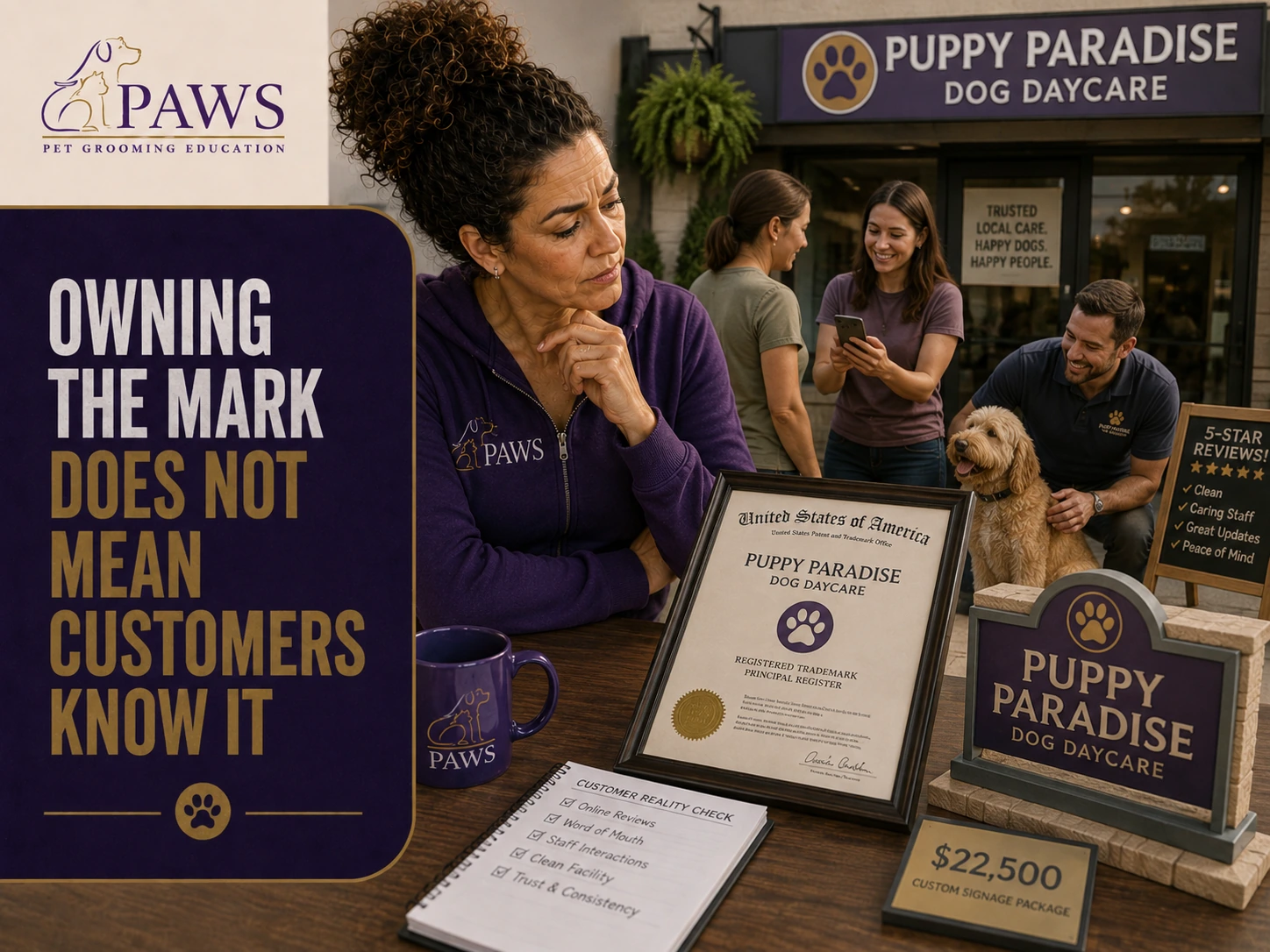
Trademark ownership and customer demand are separate assets. Confirm the legal status of the marks, then independently test whether local pet owners recognize the name, search for it, trust it, or choose it over established local competitors.
Budget the consequences of a required brand change. Signs, uniforms, printed materials, listings, websites, vehicle graphics, interior finishes, customer communication, and lost search continuity can make a trademark problem an operating expense for the franchisee.
What It Covers
Item 13 generally discloses information about trademarks, registrations, applications, litigation, limitations, and rights related to the marks used in the franchise system.
Dog Daycare Translation
This section ties directly to the Golden Arches Test. You are paying to use a name, logo, trade dress, and brand system. The question is whether those marks are protected, usable, known by customers, and valuable in your market.
How This Can Bite You
If the trademark is weak, pending, disputed, limited, similar to other pet-care names, or subject to change, the buyer may face rebranding costs or brand confusion. If the brand is not known by local pet owners, you may be paying for a sign that looks official but does not bring customers.
🔪
Where the knife hides
The brand may look official without having Golden Arches power. A trademark can be registered, pending, disputed, limited, weak, similar to other pet-care names, or unknown to local customers. The paperwork may prove the franchisor owns a mark. It does not prove customers care.
Also watch who pays if the marks change. If the franchisor can require new signage, new colors, new uniforms, new materials, new website assets, and new advertising, the brand change may be their decision but your invoice.
Questions to Ask
- Are the trademarks registered, pending, disputed, or limited?
- Are there similar pet-care businesses using similar names?
- Can the franchisor require a name, logo, or brand change?
- Who pays for new signage, colors, uniforms, forms, website changes, and marketing materials if the brand changes?
- Do local customers actually know the trademark?
- If the logo came off the building tomorrow, would the same dogs still show up?
FDD Item 14: Patents, Copyrights, and Proprietary Information
Do not price common-sense dog handling like a NASA patent.
What It Covers
Item 14 generally discloses patents, copyrights, proprietary information, and other protected materials not covered under trademarks.
Dog Daycare Translation
Dog daycare systems may include manuals, training materials, forms, cleaning procedures, grouping rules, intake scripts, customer policies, incident forms, advertising materials, software processes, and operating standards.
How This Can Bite You
A real operating system can be valuable. But some “proprietary” material may be ordinary dog-care operations, forms, policies, cleaning routines, and customer-service processes dressed up in fancy language. If you are paying royalties for years, ask what is truly proprietary and what could be learned, built, purchased, or hired independently.
🔪
Where the knife hides
“Proprietary” is a powerful word. It can mean a valuable system. It can also mean manuals, forms, checklists, customer scripts, cleaning routines, and operating procedures that are useful but not magical.
Watch for language that claims franchisee-created improvements, ideas, techniques, local marketing concepts, service ideas, or operating fixes become available to the franchisor without compensation. You may solve a real dog daycare problem with your own sweat, then discover the system can absorb the idea while you keep paying royalties.
Questions to Ask
- What patents, copyrights, manuals, forms, or proprietary materials are actually disclosed?
- What is truly unique to the franchise system?
- What could be learned through experience, consulting, training, templates, or independent operations?
- Are employees required to sign confidentiality or non-compete documents?
- Do improvements created by franchisees become available to the franchisor?
- What happens to manuals, forms, software access, and operating materials after termination?
FDD Item 15: Obligation to Participate in the Actual Operation
Dog daycare is usually not mailbox money.
What It Covers
Item 15 generally discloses whether the franchisee must personally participate in the operation of the business, whether a manager may run it, and what management requirements apply.
Dog Daycare Translation
Dog daycare is an active operating business. Dogs, staff, cleaning, customer service, incidents, payroll, tours, grooming schedules, boarding routines, and local marketing do not run themselves because the owner bought a logo.
How This Can Bite You
If the agreement requires owner participation, you may not be buying a passive investment. If it allows manager operation, you still need to know what happens when the manager quits, fails training, gets overwhelmed, or turns the playroom into a circus with mops.
🔪
Where the knife hides
Passive ownership language can be misleading if the real business requires active operator attention. Even when a manager is allowed, you may still be responsible for the manager’s training, mistakes, turnover, reporting, compliance, customer complaints, staff problems, and dog-care failures.
Also watch whether owners, spouses, partners, guarantors, or family members are restricted from other pet-care activity. You may think you are only agreeing to manage one location, while the contract limits what related people can do in the same industry.
Questions to Ask
- Must I personally manage or supervise the location?
- Can a trained manager run the business?
- Must the manager complete franchise training?
- What happens if the manager quits or fails training?
- Are owners, spouses, partners, or guarantors restricted from other pet-care work?
- How much owner time do current franchisees actually spend in the business?
FDD Item 16: Restrictions on What the Franchisee May Sell
Do not sign away the service mix you were planning to build.
What It Covers
Item 16 generally discloses restrictions on the goods or services the franchisee may sell and whether only franchise-approved products or services may be offered.
Dog Daycare Translation
Pet-care businesses often evolve. You may start with daycare and boarding, then want grooming, bathing, training, cat boarding, cat grooming, transportation, retail, enrichment, memberships, events, or photography. Item 16 tells you whether the system allows that freedom.
How This Can Bite You
A franchise can block or delay local opportunity if the services you want to add are not approved. The system may protect brand consistency, but it may also stop you from responding to local demand. If cat owners are asking for boarding and the brand says “dog only,” that matters.
🔪
Where the knife hides
The service menu is your revenue flexibility. If the franchisor controls what you may sell, you may not be able to respond when the local market asks for grooming, cat boarding, cat grooming, baths, training, transportation, retail, enrichment, memberships, events, or add-on services.
The sneaky part is that restrictions may be framed as brand consistency. That may be fair. But it can also keep you trapped in a narrower business model while an independent operator across town adds the services customers actually want.
Questions to Ask
- What services am I required to offer?
- What services am I prohibited from offering?
- Can I add grooming, boarding, training, baths, cat boarding, cat grooming, transportation, retail, enrichment, or memberships?
- Can the franchisor add, remove, or change required services later?
- Can I test local add-ons before systemwide approval?
- Would an independent pet-care business have more freedom to follow local demand?
FDD Item 17: Renewal, Termination, Transfer, and Dispute Resolution
Item 17 is where the leash length gets measured.

Build an exit map before signing. Show what happens to the lease, equipment, signs, software, phone numbers, websites, customer data, reviews, employees, local goodwill, non-compete exposure, and the ability to sell or continue operating.
Review transfer economics as carefully as opening economics. Approval standards, training requirements, transfer fees, required remodels, rights of first refusal, purchase options, releases, and buyer qualifications can materially reduce the marketability of the business you build.
What It Covers
Item 17 generally summarizes the franchise relationship: term, renewal, termination, default, post-termination obligations, transfer, right of first refusal, purchase options, non-competes, dispute resolution, forum, and governing law.
Dog Daycare Translation
This is where you find out what happens when the relationship stops being cute. Renewal may require signing a new agreement. Transfer may require approval. Termination may trigger de-identification, non-competes, software issues, phone number issues, website issues, customer data issues, and restrictions on continuing in pet care.
How This Can Bite You
You may build local value with your lease, staff, reviews, groomer, boarding clients, and years of customer trust, then discover that renewal, sale, exit, dispute location, or post-termination restrictions are not nearly as friendly as the sales process sounded.
🔪
Where the knife hides
Item 17 is one of the sharpest sections in the FDD. The sales process focuses on opening. Item 17 tells you what happens when you renew, default, sell, transfer, close, fight, terminate, or try to keep working in pet care after the relationship ends.
Watch for renewal requiring the then-current agreement, remodel obligations, general releases, transfer approval, right of first refusal, purchase options, non-competes, post-termination de-identification, phone number transfer, website control, customer data issues, arbitration, forum selection, and attorney-fee provisions. This is where a friendly franchise can become a very expensive leash.
Questions to Ask
- How long is the initial term?
- What must I do to renew?
- Do I have to sign the then-current agreement at renewal?
- Can fees, standards, remodel requirements, or service obligations change at renewal?
- What defaults can be cured, and what defaults cannot be cured?
- What happens after termination?
- What non-compete or non-solicitation language applies?
- Can I sell the business, and who approves the buyer?
- Does the franchisor have a right of first refusal or option to purchase?
- Where are disputes handled, and whose state law applies?
FDD Item 18: Public Figures
Celebrity sparkle is not an operating system.
What It Covers
Item 18 generally discloses whether a public figure is involved in promoting the franchise or associated with the franchise name or symbol, and what compensation or involvement may exist.
Dog Daycare Translation
This may not matter much for many dog daycare franchises. But if the brand leans on a celebrity trainer, veterinarian, influencer, TV personality, or public figure, you need to know whether that association is real, paid, temporary, limited, or mostly decoration.
How This Can Bite You
A famous face can create attention, but it does not clean kennels, train your staff, handle a dog fight, lower rent, answer angry customers, or make payroll. If the public figure leaves, gets controversial, or was never deeply involved, the sparkle may disappear while the contract remains.
🔪
Where the knife hides
A public figure can make the franchise feel more credible than it is. A celebrity trainer, veterinarian, influencer, or TV personality may create attention, but attention is not operating support.
Ask whether the public figure is actually involved, how long the arrangement lasts, what compensation exists, and what happens if the person leaves, gets sued, becomes controversial, or stops promoting the brand. Celebrity shine fades fast when payroll is due and six dogs are barking through a lobby tour.
Questions to Ask
- Is a public figure involved in the franchise?
- Is the person paid, invested, licensed, or only used in marketing?
- How long does the relationship last?
- Does the public figure provide real training, operational value, or brand trust?
- What happens if that person leaves, loses credibility, or is no longer associated with the brand?
FDD Item 19: Financial Performance Representations
Revenue is not profit. Average is not you.
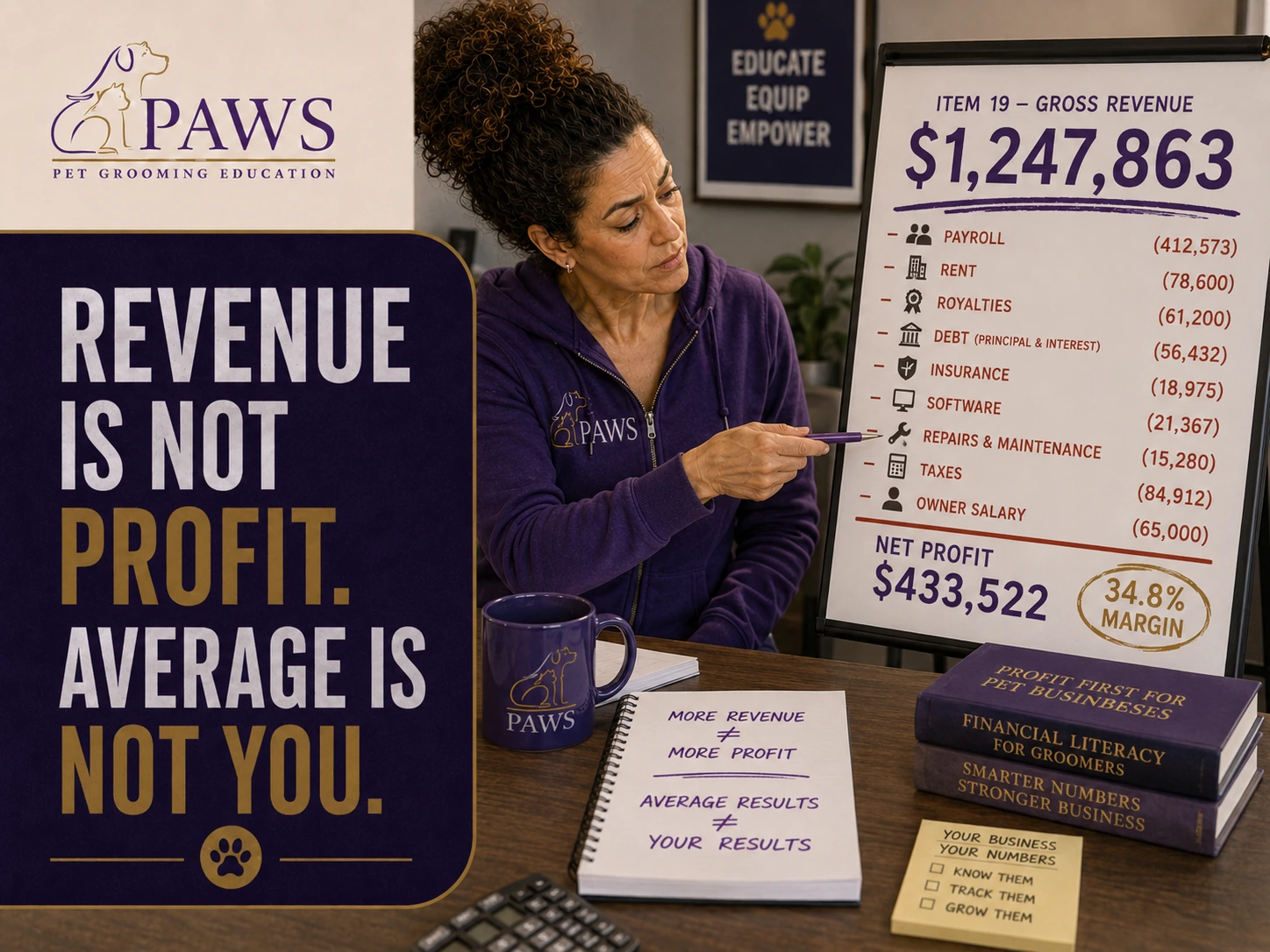
Rebuild the representation using your rent, wages, staffing model, service mix, capacity, pricing, royalties, local marketing, debt, repairs, insurance, taxes, software, and owner compensation. The franchisor’s average does not replace a location-specific operating model.
Ask for the denominator behind every percentage and average. The number of locations included, their ages, markets, ownership type, closures, transfers, and exclusions determines whether the headline figure is useful or merely attractive.
What It Covers
Item 19 is where the franchisor may provide financial performance representations if it chooses to make them. Some franchisors provide detailed information. Some provide limited information. Some provide no financial performance representation.
Dog Daycare Translation
Dog daycare numbers can look great at the top line while rent, payroll, royalties, ad fund, local marketing, insurance, utilities, debt, repairs, software, cleaning, labor, and owner salary wait behind the curtain with a baseball bat.
How This Can Bite You
A pretty revenue number can hypnotize buyers. Average revenue may not show median performance. Mature locations may not represent new locations. Company-owned locations may not match franchisee economics. Strong boarding or grooming locations may make daycare look better than it is. Closed or weak locations may be excluded in ways that matter.
🔪
Where the knife hides
Item 19 is where number games can look clean. Revenue can be shown without profit. Average can hide weak performers. Mature locations can be shown while new locations are ignored. Company-owned locations can have different labor, rent, management, or accounting realities than franchisee locations.
Watch what is excluded. Rent, payroll, owner salary, debt, royalties, ad fund, local marketing, repairs, software, insurance, taxes, cleaning, and build-out debt can change the whole picture. A location can produce impressive gross revenue and still leave the owner wondering why the checking account looks like it got hit by a leaf blower.
Questions to Ask
- Does Item 19 exist?
- What exactly is included?
- Does it show revenue, gross profit, net profit, owner benefit, or something else?
- Is the number average, median, high-low range, top quartile, or selected sample?
- Are company-owned outlets included?
- Are mature locations included while new locations are excluded?
- Are closed, transferred, or failed locations excluded?
- Are rent, payroll, labor, debt, royalties, ad fund, local marketing, owner salary, software, and repairs shown?
- Does the data match my market, wage rate, rent, build-out, competition, and service mix?
- Can current and former franchisees confirm the numbers privately?
FDD Item 20: Outlets and Franchisee Information
Item 20 is not decoration. It is your call list.

Create a call sample that the franchisor did not curate. Include recent openings, mature locations, first-in-market owners, multi-unit operators, transferred units, struggling operators, former franchisees, and locations with economics similar to your proposed market.
Record patterns instead of collecting isolated opinions. Ask the same core questions about opening cost, ramp-up, support, vendor pricing, local marketing, brand demand, staffing, profitability, renewal, and whether the owner would sign again.
What It Covers
Item 20 generally discloses outlet history, current franchisees, former franchisees, openings, closings, transfers, terminations, non-renewals, reacquisitions, ceased operations, company-owned outlets, projected openings, and franchisee contact information.
Dog Daycare Translation
This is where you find people who have already lived the deal. Current franchisees can tell you what support looks like after opening. Former franchisees can tell you why they left, what surprised them, what fees hurt, what the brand actually did, and whether they would sign again.
How This Can Bite You
If you only talk to the two happy owners the franchisor points at, that is not due diligence. That is a guided tour. You need patterns. One angry owner may be noise. Ten owners saying the same thing about royalties, weak support, vendor costs, poor ad fund value, slow ramp-up, or local marketing reality is smoke. Go find the fire.
🔪
Where the knife hides
Item 20 is where the sales story can be checked against real operators. Do not let the franchisor control your sample by handing you only happy owners. Call across the list: new owners, older owners, high performers, average owners, struggling owners, and former owners if available.
Watch transfers, reacquisitions, closures, non-renewals, and ceased operations. A transfer is not automatically bad, and a closure is not automatically fraud. But movement tells a story. If locations keep changing hands, closing, or getting bought back, you need to know whether the issue was the operator, the market, the support, the costs, the brand, or the model.
Questions to Ask
- How many outlets opened, closed, transferred, terminated, or were not renewed?
- How many were reacquired by the franchisor?
- How many ceased operations for other reasons?
- Are there too many transfers, closures, or reacquisitions for the system size?
- What did recent franchisees actually spend to open?
- Did franchisees open on time?
- Did the franchisor help with site selection, lease review, build-out, training, and opening?
- Does the brand actually bring local customers?
- Does the ad fund make the phone ring?
- How long did it take to break even?
- Would current and former franchisees sign again?
FDD Item 21: Financial Statements
Can the franchisor actually support the system it is selling?
What It Covers
Item 21 generally provides the franchisor’s financial statements, subject to applicable requirements.
Dog Daycare Translation
A dog daycare franchisor needs enough financial strength to provide training, support, field help, software support, advertising systems, operational updates, vendor coordination, crisis help, and real support after the franchise fee clears.
How This Can Bite You
A franchisor can grow fast and still support thin. If the company depends heavily on selling new franchises instead of healthy royalties from successful locations, ask whether you are joining an operating system or a sales machine with a headset.
🔪
Where the knife hides
Financial statements can show whether the franchisor is built on healthy support or constant franchise sales. A company may look like it is growing, but if much of the money comes from selling new units instead of royalties from successful existing units, ask whether the machine depends on new buyers more than strong operators.
Also ask whether the franchisor can afford the promises in Item 11. Field support, training, software, marketing, operations, vendor management, and crisis help require money and staff. A thin franchisor can make thick promises.
Questions to Ask
- Are the financial statements audited or otherwise prepared under the required standard?
- Does the franchisor appear financially stable?
- Does revenue come mostly from franchise fees, royalties, product sales, supplier programs, or other sources?
- Is the franchisor growing faster than support capacity?
- Does it have enough staff and money to support existing franchisees?
- What does an independent accountant say after reviewing Item 21?
FDD Item 22: Contracts
The FDD tells you where to look. The attached contracts are the leash.
What It Covers
Item 22 generally attaches the proposed agreements related to the franchise offering. That may include the franchise agreement, area development agreement, guarantees, lease addenda, software agreements, financing documents, purchase agreements, acknowledgments, and other contracts.
Dog Daycare Translation
This is where the relationship becomes binding language. The FDD summary may explain the deal, but the contracts usually control what you owe, what they control, what you can sell, how you renew, how you transfer, how you default, how you exit, and what happens after termination.
How This Can Bite You
A buyer may read the FDD summary and skip the attached agreements because they look long and boring. That is a mistake. The boring contract language can control your lease, personal guarantees, vendors, software, phone numbers, websites, customer data, non-competes, remodels, signage, transfer rights, renewal rights, and dispute location.
🔪
Where the knife hides
Item 22 is where the real leash is attached. The FDD may summarize the deal in plain language, but the franchise agreement, development agreement, guarantees, lease addenda, software agreements, acknowledgments, supplier agreements, and purchase agreements usually control the relationship.
Watch for acknowledgments that say you did not rely on anything outside the documents. Watch for personal guarantees. Watch for default provisions, non-competes, transfer limits, right of first refusal, option to purchase, required releases, software access, customer data, phone numbers, websites, and post-termination obligations. This is where the salesperson’s friendly explanation goes to be tested.
Questions to Ask
- What contracts are attached?
- Is there a personal guarantee?
- Is there a lease addendum or landlord-required language?
- Are there software, supplier, financing, or purchase agreements?
- Are there acknowledgments that limit what I can later say I relied on?
- Do the contracts match what the salesperson said?
- Did my franchise attorney read every attached agreement, not just the FDD summary?
⚠️
Do not rely on “we never enforce that.”
If the language is in the agreement, assume it matters until your franchise attorney explains exactly what it means and how enforceable it may be in your state.
FDD Item 23: Receipts
This is the paper trail. Do not sign false dates because everyone is “just moving things along.”
What It Covers
Item 23 generally contains receipts acknowledging delivery of the FDD. The receipt helps document what was received and when it was received.
Dog Daycare Translation
The receipt may look harmless, but timing matters. A dog daycare franchise buyer should know exactly when the FDD was received, what version was received, whether all exhibits and contracts were included, and whether any later changes required updated review.
How This Can Bite You
Do not sign a receipt saying you received documents on a date that is not true. Do not sign a receipt for a complete FDD if exhibits, agreements, addenda, or attachments were missing. Do not let the sales process treat the receipt like meaningless paperwork. The receipt is part of the timeline.
🔪
Where the knife hides
Receipts look harmless because they are short. They are not harmless if they create a false timeline. Do not sign anything saying you received the FDD on a date you did not receive it. Do not sign for exhibits, agreements, addenda, or attachments that were missing.
If the franchisor updates the FDD, changes agreements, adds terms, or gives you missing exhibits later, ask your franchise attorney whether the timing matters. The receipt is not just paperwork. It is part of the record showing what you received and when you received it.
Questions to Ask
- What date did I actually receive the FDD?
- Did I receive the full FDD with all exhibits and attached agreements?
- Did I receive the same version I am being asked to sign under?
- Were any changes made after delivery?
- Did my franchise attorney receive the same full document set?
- Am I signing only what is true?
🚩
FDD Red Flags
“That is just legal language” is exactly what people say right before the legal language eats somebody.
- The FDD arrives late or only after pressure.
- The FDD is incomplete or missing exhibits.
- The salesperson rushes you to sign or pay.
- Questions get dodged or answered with vague sales language.
- Numbers are discussed outside the formal financial-performance section.
- “Protected territory” sounds good but has broad exceptions.
- Supplier restrictions are broad or expensive.
- Ad fund use is vague.
- Local marketing costs are higher than expected.
- Support is “available” but not clearly required.
- Software, hardware, signage, remodel, or upgrade obligations can change.
- Renewal requires signing the then-current agreement.
- Non-compete language is broad.
- Transfer approval is subjective.
- The franchisor has a right of first refusal or option to purchase that needs serious review.
- Item 20 shows closures, transfers, terminations, or reacquisitions that need explanation.
- Financial statements look too thin to support the system.
- The salesperson says, “Do not worry about that part.”
⚖️
Bring in a Franchise Attorney and Accountant
This is not the place to save a few thousand dollars and lose a few hundred thousand.
Do not rely on PAWS, the salesperson, your cousin, your gut, a motivational podcast, or a YouTube lawyer wearing a blazer in a rental office.
Hire a franchise attorney to read the FDD, franchise agreement, renewal terms, termination rules, transfer language, non-competes, territory language, supplier restrictions, ad fund provisions, guarantees, lease addenda, and dispute-resolution terms.
Hire an accountant to pressure-test the numbers. Build a real startup budget. Build a cash-flow model. Include royalties, ad fund, local marketing, debt, payroll, rent, insurance, software, utilities, repairs, owner salary, and working capital.
If the franchise is worth buying, it should survive professional review. If it only works when nobody reads the documents carefully, that is not a business opportunity. That is a trap with better lighting.
❓
Questions to Ask Before Signing
Make the deal answer in plain English before you let it touch your money.
| Category | Questions to Ask |
|---|---|
| Fees | What do I pay upfront, monthly, annually, at renewal, at transfer, after default, and after termination? |
| Royalties | Are royalties based on gross sales, and are they owed even during weak or unprofitable months? |
| Advertising | What does the ad fund do, who controls it, does it help my market, and how much local marketing must I still buy? |
| Support | What support is mandatory, what is optional, what costs extra, and what continues after opening? |
| Territory | What is protected, what is not protected, and what rights does the franchisor reserve? |
| Vendors | What must I buy from approved suppliers, can I use alternatives, and does the franchisor benefit financially? |
| Software | What software is required, who controls data, can upgrades be required, and what happens if I leave? |
| Services | What am I required to sell, what am I prohibited from selling, and can the service menu change? |
| Financial Claims | What does Item 19 actually show, and does it reflect profit, mature units, local market reality, and full expenses? |
| Current Franchisees | What do current owners say privately about support, fees, brand value, local marketing, vendors, and renewal? |
| Former Franchisees | Why did they leave, what surprised them, what did support look like after opening, and would they sign again? |
| Exit | What happens if I want to sell, renew, transfer, close, default, terminate, or rebrand? |
🗂️
Keep Reading Before You Sign
The FDD is the legal map. The rest of the franchise decision still needs to survive the business test.
💵
Dog Daycare Franchise Costs
The franchise fee is not the full cost. Build-out, payroll, rent, HVAC, flooring, software, and working capital matter.
🧾
Franchise Royalties
Royalties usually come off revenue, not whatever is left after the business survives the month.
🔒
Control and Approved Vendors
A franchise is not just help. It is help with a leash attached: vendors, remodels, inspections, software, signage, and rules.
📣
Brand Recognition
Known by franchise buyers is not the same as known by local dog owners.
🍟
The Golden Arches Test
If the logo came off the building tomorrow and the same dogs still showed up, maybe the logo was not creating the value.
🧠
Consultant vs. Franchise
A consultant should help you avoid expensive mistakes and then get out of your pocket. A franchise may stay there.
❓
Dog Daycare Franchise Disclosure Document FAQ
Detailed answers about the 23 FDD items, fee stacks, investment ranges, suppliers, support, territory, trademarks, financial claims, franchisee calls, contracts, and professional review.
What is a Franchise Disclosure Document?
A Franchise Disclosure Document, or FDD, is the organized disclosure used in a franchise sale. It covers the franchisor, fees, required investment, suppliers, obligations, support, territory, financial claims, outlets, financial statements, contracts, and other information a buyer should review before signing.
Is the FDD the same as the franchise agreement?
No. The FDD discloses and summarizes information. The franchise agreement and attached contracts govern the relationship. Every important FDD issue should be traced to the controlling agreement, exhibit, addendum, guarantee, software document, lease provision, or other contract.
What is the difference between an FDD and an old UFOC?
UFOC was the older disclosure name and format. Modern buyers generally receive an FDD. An older UFOC may help explain the history of franchise disclosure, but it should not be treated as the current document or as a substitute for the current agreement package.
What does the 14-day rule mean?
The source page explains that federal franchise rules generally require delivery of the FDD at least 14 calendar days before signing a binding agreement or paying money in connection with the franchise sale. That is a minimum review period, not proof that the buyer is ready to sign.
How should I use the FDD review period?
Use it to coordinate franchise counsel, accounting, site and lease review, contractor pricing, zoning, insurance, financing, market testing, and franchisee calls. Request the document early enough that sales pressure, travel, discovery day, or a territory deadline does not control the review.
How many items are in an FDD?
The page identifies 23 required items. Together they address the franchisor, leadership, litigation, bankruptcy, fees, investment, suppliers, obligations, financing, support, territory, intellectual property, owner participation, service restrictions, relationship terms, financial performance, outlets, financial statements, contracts, and receipts.
Why does Item 5 matter?
Item 5 addresses initial fees paid to the franchisor or affiliates. Buyers should identify exactly what each payment purchases, when it becomes non-refundable, who receives it, and what happens when zoning, financing, site approval, lease negotiation, or construction prevents the opening.
Why is Item 6 more than the royalty percentage?
Item 6 can reveal the entire ongoing fee stack: royalty, advertising, software, technology, training, audit, late charges, renewal, transfer, inspections, and other charges. Model the combined burden at several revenue levels and compare it with cash left after real operating expenses.
Why is Item 7 not the final opening bill?
Item 7 provides estimated investment ranges, but local rent, build-out condition, drainage, plumbing, HVAC, flooring, fencing, permits, equipment, professional fees, delays, and working capital can move the real cost beyond the estimate. Replace broad ranges with local written quotes.
What should I investigate in Item 8?
Identify every required or approved supplier, the approval process for alternatives, pricing, freight, service, replacement time, and whether the franchisor or an affiliate receives rebates, commissions, markups, referral fees, or other benefits. Also ask what happens during shortages and emergencies.
What should Item 11 prove about support?
Item 11 should let the buyer distinguish required assistance from support that is optional, discretionary, or charged separately. Turn each promise into a specific deliverable with a provider, timing, duration, cost, and measurable result, then ask existing franchisees what support they actually used.
What should I look for in Item 12 territory language?
Read the exceptions, not only the protected-area headline. Review rights involving online sales, apps, mobile services, national accounts, affiliates, company-owned operations, alternate brands, partnerships, and other channels. Then compare the legal map with actual customer travel and referral behavior.
Does owning a trademark prove customer demand?
No. Item 13 can show rights in a name or logo, but trademark ownership does not prove local pet owners recognize, trust, search for, or choose the brand. Test customer awareness independently and identify who pays when signs, uniforms, websites, or other brand materials must change.
Why is Item 17 called the leash-length section?
Item 17 summarizes renewal, default, termination, transfer, rights of first refusal, purchase options, non-competes, post-termination duties, dispute resolution, forum, and governing law. Those provisions affect how long the relationship lasts and how easily the owner can renew, sell, exit, or continue in pet care.
How should I read Item 19 financial performance claims?
Separate revenue from profit and averages from location-specific reality. Review the sample, exclusions, age and type of locations, company-owned units, closures, and expenses omitted. Rebuild the numbers using your rent, wages, service mix, capacity, royalties, debt, marketing, repairs, and owner compensation.
Why is Item 20 a call list?
Item 20 identifies current and former franchisees and outlet movement. Do not rely only on franchisor-selected references. Call a broad sample of new, mature, strong, weak, transferred, first-in-market, and former operators and ask the same questions so patterns become visible.
What does Item 21 tell me?
Item 21 contains the franchisor’s financial statements. An independent accountant can assess financial stability, dependence on initial franchise sales, royalty and supplier revenue, and whether the company appears able to fund the training, field support, software, marketing, and operational help described elsewhere.
Why must every Item 22 contract be reviewed?
The franchise agreement, development agreement, guarantees, lease addenda, software agreements, acknowledgments, supplier documents, and other contracts contain binding language. A friendly sales explanation does not override a personal guarantee, default provision, transfer restriction, non-compete, data-control term, or post-termination duty.
Do I need both a franchise attorney and an accountant?
Yes. The page specifically recommends professional legal and financial review. Franchise counsel addresses control, territory, vendors, renewal, transfer, termination, guarantees, and dispute terms. The accountant pressure-tests opening cost, working capital, debt, fees, local economics, and realistic profit.
What should exist before I sign or send money?
You should have the complete current document set, a marked-up issue list, professional legal and accounting review, local cost quotes, a realistic cash-flow model, territory and market analysis, broad franchisee interviews, clear answers to unresolved questions, and a written understanding of the benefits, obligations, and exit risks.
🐾
The Bottom Line: Read the Boring Pages Where the Teeth Are
The FDD does not make a franchise good. It gives you the map to see whether the deal hangs together.
The FDD is not the sales story. It is the map of the deal. It shows who gets paid, what you owe, what they promise, what they control, what you can sell, where you can operate, how you renew, how you leave, what financial claims they are allowed to make, and who you should call before signing.
A dog daycare franchise may provide real value. Training, systems, manuals, brand standards, support, software direction, vendor guidance, opening help, and franchisee networks can all matter.
But the FDD is where the buyer asks whether that value is worth the fee stack, royalties, supplier restrictions, ad fund, territory limits, renewal rules, transfer rules, contract control, and long-term obligation.
Read it like your lease, payroll, savings, house, and next ten years are on the line — because they might be.
The final review should produce a written decision memo listing the benefits, obligations, unresolved risks, negotiated changes, professional advice, realistic economics, and reasons the buyer believes the franchise is better than the independent alternative.
Do not sign because the document was long, the meeting went well, or the territory feels scarce. Sign only when the numbers, control, support, exit terms, and local market evidence survive careful review together.