Franchise-Buyer Visibility, Local Dog Owner Awareness, Brand Demand, Reviews, Search Traffic, Referrals, Vet Outreach, and Local Trust
Dog Daycare Franchise Brand Recognition: Do Pet Owners Actually Know the Name?
A blunt operator guide to testing whether a dog daycare franchise brand actually creates customer demand in your market, or whether you are paying to build that recognition yourself.
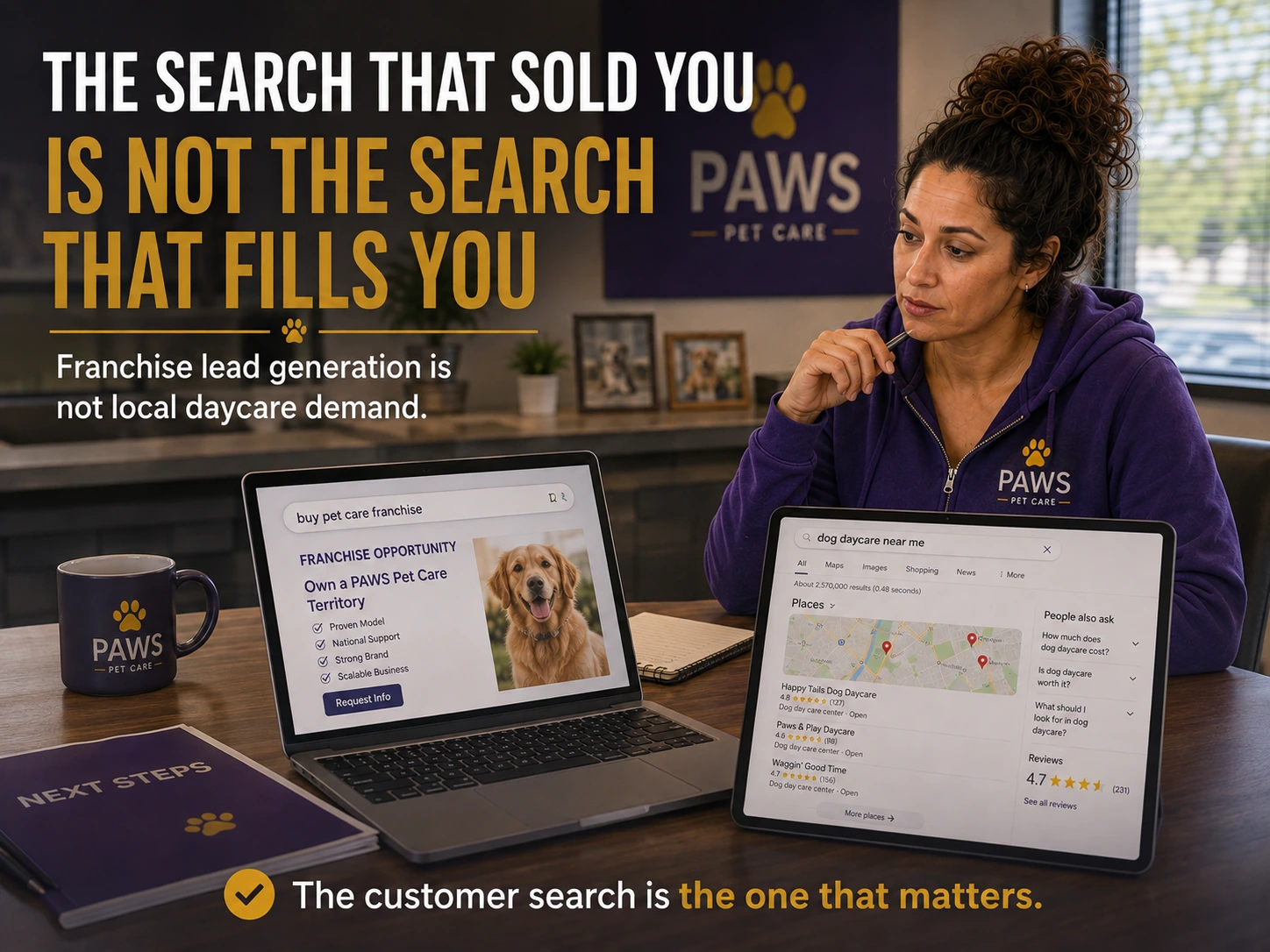
Known by franchise buyers is not the same as known by local dog owners.
That one sentence matters. A dog daycare franchise brand only helps your local business if the people who might buy daycare, boarding, grooming, bathing, or training services actually know it, trust it, search for it, and choose it.
Showing up when someone searches “dog daycare franchise” does not mean local dog owners know the brand. It means the franchisor knows how to advertise to people thinking about buying a franchise. That may be useful to them. It does not automatically put dogs in your playroom.
A major fast-food franchise can be different. Put up a nationally known sign and many customers already understand the product, menu, price range, and general experience. Dog daycare usually does not work that cleanly. In many markets, the local owner may be the person introducing the franchise brand to local dog owners for the first time.
That does not mean the brand has no value. It means the buyer has to prove what kind of value it has. Are you buying existing customer demand, or are you paying the franchise fee, funding the build-out, hiring the staff, buying the local ads, earning the reviews, and teaching your town that the brand exists?
⚠️
Operator warning: franchise visibility is not customer demand.
A franchisor ranking online for “dog daycare franchise” proves they know how to find franchise buyers. It does not prove a mother with a golden retriever in your town knows the brand, trusts the brand, or will drive past three local competitors because of the brand.
👀
Known by Whom?
“Known brand” is not one thing. Known by who? That is the question.
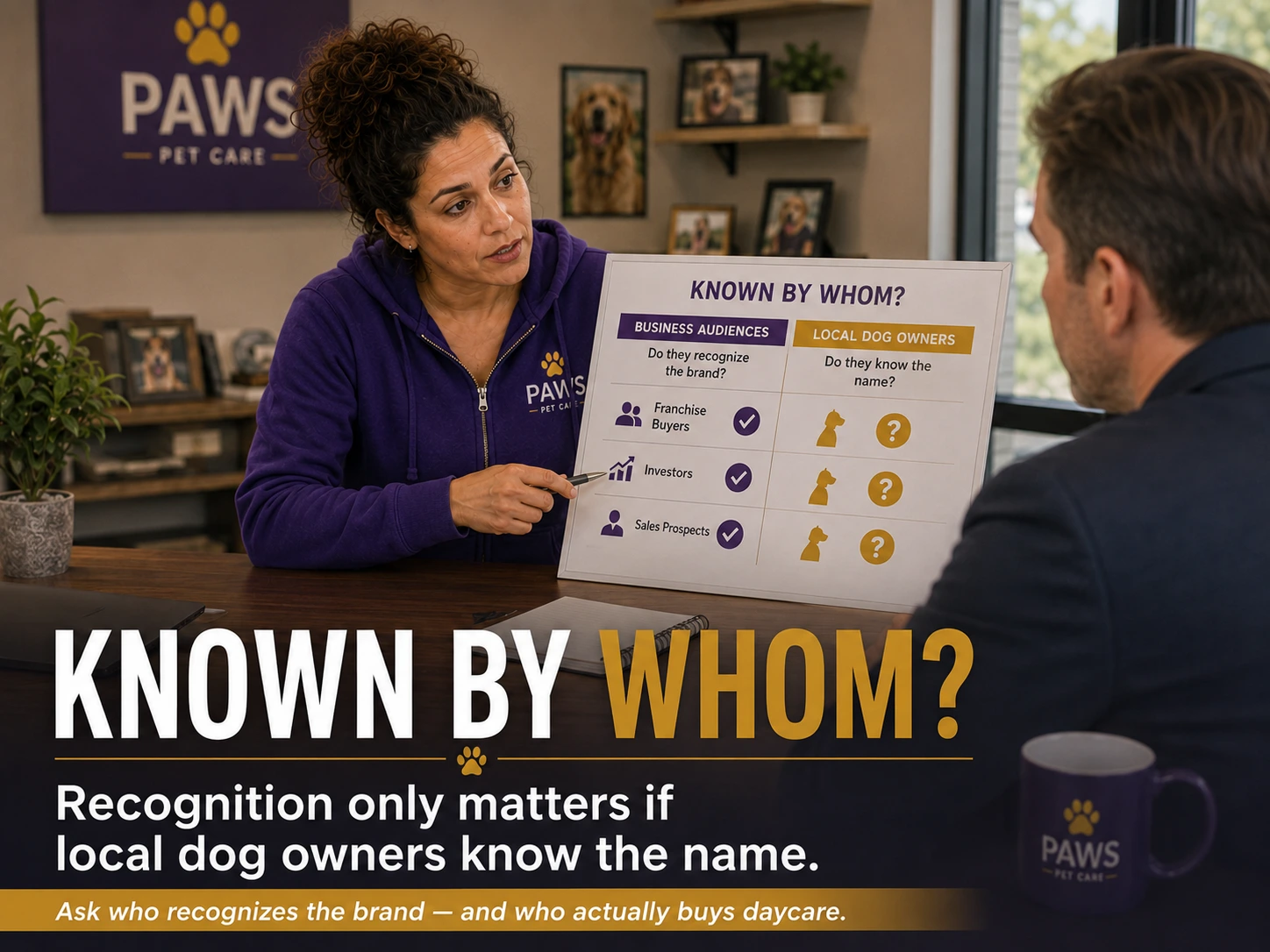
Franchise sales language can make brand recognition sound simple. “We are a recognized brand.” Fine. Recognized by whom? Franchise buyers? Brokers? Lenders? Pet industry insiders? Other franchisees? Local dog owners? Local veterinarians? Local groomers? The actual customers searching for daycare near your building?
Those are not the same audiences. A franchise company can be very visible to people researching franchise opportunities and still be almost invisible to the dog owners you need to reach on opening week.
The buyer needs to separate franchise-buyer awareness from local customer demand. Franchise-buyer awareness helps the franchisor sell franchises. Local customer demand helps your building sell daycare, boarding, grooming, bathing, and training.
There is also a middle category that can fool people: industry recognition. A dog daycare franchise may be known inside the pet-care business, known by other daycare operators, known by franchise brokers, or known by people who spend time researching pet franchises. That still does not mean a normal dog owner in your town has any idea what the name means. Other dog daycares are not paying your rent. You are trying to win customers from them, not impress them with how familiar the franchise name feels inside the business world.
A brand can be well known in the B2B franchise lane and still have weak consumer recognition in the local dog-owner lane. That difference matters because local dog owners are the ones buying daycare packages, boarding stays, baths, grooming appointments, and add-ons.
The buyer should rank each audience by economic value. Recognition among brokers or lenders may help a transaction, but recognition among local dog owners, veterinarians, groomers, trainers, apartment communities, and repeat customers is what supports daily occupancy.
Ask the franchisor to separate awareness from action. A person may recognize a name without trusting it, and trust may exist without producing a tour or reservation. The useful evidence is movement from recognition to inquiry, tour, purchase, repeat use, and referral.
💼
Known by Franchise Buyers
The brand may rank for franchise opportunity searches, show up in franchise directories, and look familiar to people shopping for a business to buy.
🏦
Known by Lenders or Brokers
A lender, broker, or franchise advisor may recognize the system. That can help financing or credibility, but it is not the same as customer demand.
🐾
Known by Local Dog Owners
This is the audience that matters most. They are the people who need to trust your staff, tour your building, and leave their dog with you.
🩺
Known by Vets and Groomers
Local pet professionals can influence referrals. If they do not know the brand, the logo may not be doing much local work yet.
🔎
Known in Local Search
Customers searching “dog daycare near me” or “dog boarding in my city” may never search the franchise name at all.
⭐
Known Through Reviews
Local review strength may matter more than the national logo, especially when customers are nervous about who touches their dog.
🔎
The Franchise Buyer Search Trap
The franchisor may dominate the search results that attracted you while being weak in the searches that attract customers.
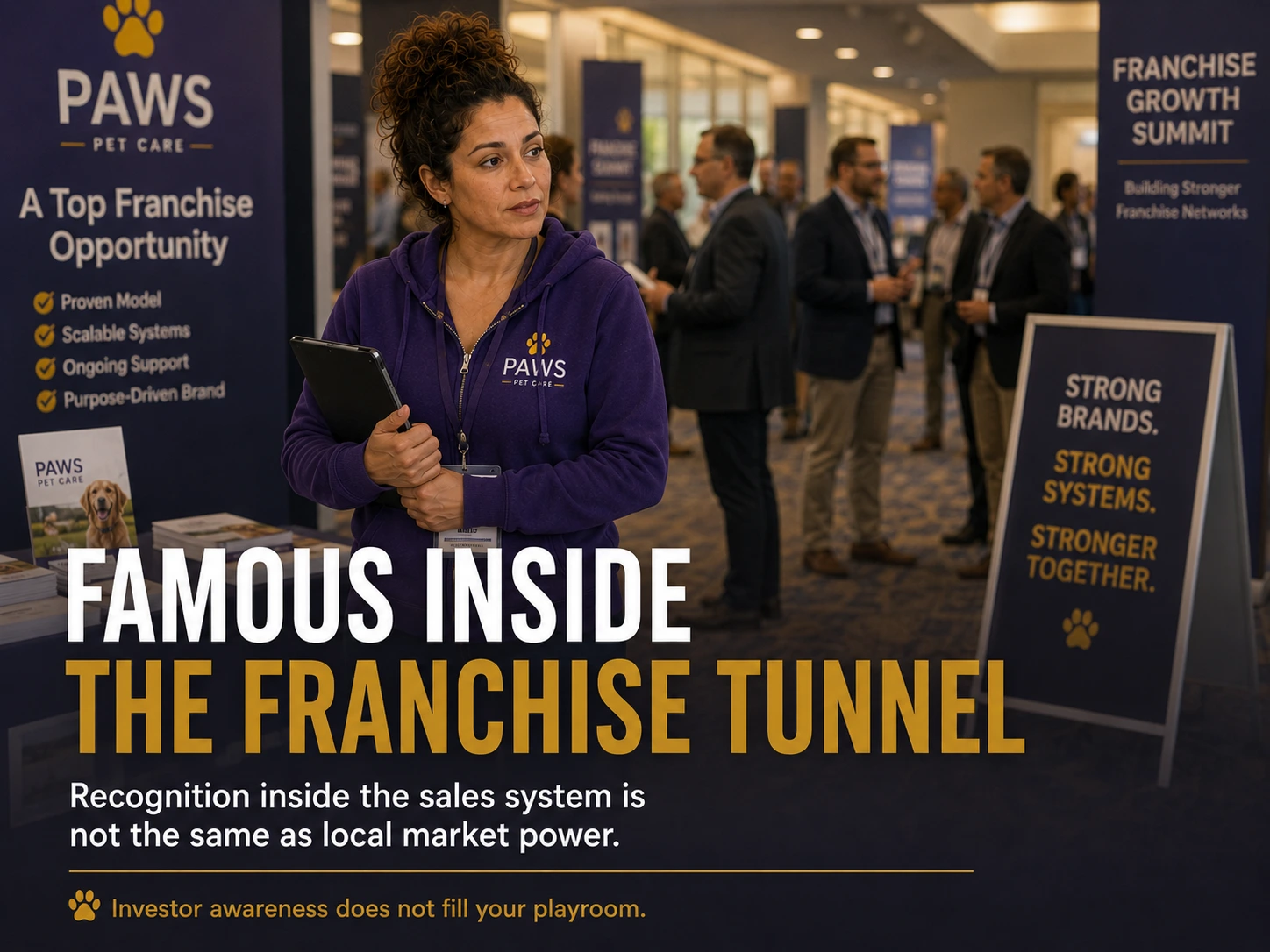
A dog daycare franchise company may be excellent at reaching people who want to buy a franchise. That is a different marketing game from reaching dog owners who need daycare, boarding, grooming, or training this week.
Franchise buyers search phrases like “dog daycare franchise,” “doggy daycare franchise,” “pet franchise opportunity,” “dog boarding franchise,” and “best pet franchises.” If the franchisor shows up there, that proves they understand franchise lead generation.
Local customers search differently. They search “dog daycare near me,” “dog boarding near me,” “dog grooming near me,” “puppy daycare near me,” “best dog daycare in my city,” “dog boarding in my city,” or they ask another dog owner, vet, groomer, apartment manager, rescue volunteer, trainer, neighbor, or coworker.
The franchisor may dominate the search results that attract buyers like you while being invisible to the customers you need.
This is why a franchise can feel bigger than it is. You search franchise terms, see the same names several times, read franchise pages, see franchise rankings, watch franchise ads, and start feeling like the brand must be famous. But you are inside the franchise-buyer tunnel. The average local dog owner is not searching those terms. They are trying to find a safe place near home or work where their dog will not get hurt, ignored, lost, sick, or sent home smelling like a wet gym sock.
The buyer has to step outside the tunnel. Search like a customer. Ask like a customer. Walk into local pet places and ask normal dog owners what they know. A brand that looks huge from the franchise-buying side may barely register with the people whose dogs you need in the building.
Run the comparison from a clean browser and from the actual market. Separate branded franchise-opportunity results from local map results, local service pages, reviews, directories, and competitors. The buyer should see the same search environment a customer sees.
Search visibility also needs a conversion test. Ranking does not matter when the listing has weak reviews, poor photos, no local proof, confusing service information, or a location too inconvenient for the customer’s routine.
| Search Audience | What They Search | What It Proves | What It Does Not Prove |
|---|---|---|---|
| Franchise Buyer | Dog daycare franchise, pet franchise opportunity, dog boarding franchise. | The franchisor can reach potential franchise investors. | It does not prove local dog owners know the brand. |
| Local Dog Owner | Dog daycare near me, dog boarding near me, dog grooming in my city. | These searches show local service demand. | They do not automatically favor the franchise brand. |
| Existing Customer | Brand name plus location, login, reservations, hours, phone number. | Existing customers know the location or brand. | It does not prove new customers would choose the brand without local trust. |
| Referral Source | Often no search at all. They ask a vet, groomer, friend, trainer, rescue, or neighbor. | Trust can move through local relationships. | National logo recognition may not be the thing creating the referral. |
⚠️
Search visibility warning
Do not let franchise-buyer search visibility masquerade as local consumer demand. The search that sold you the franchise may not be the search that fills your daycare room.
📋
The Local Dog Owner Test
Do not ask the franchisor whether the brand is strong. Ask the market.
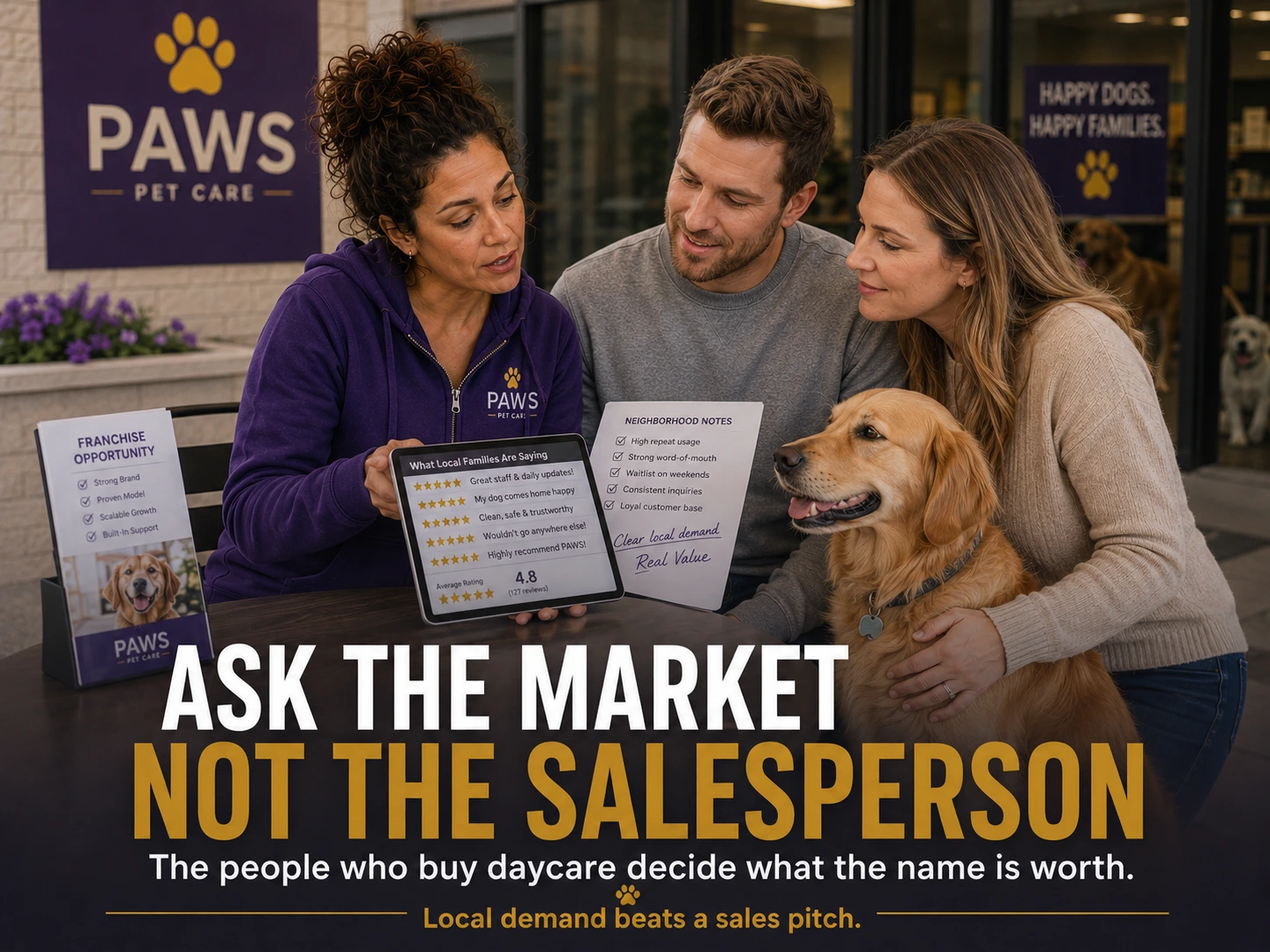
The only brand recognition that matters is the kind that turns into local leads, tours, reservations, packages, reviews, and repeat customers. You can test that before signing.
This does not require a PhD, a research firm, or a clipboard full of nonsense. It requires asking normal people normal questions and then being honest with yourself when the answers are not what the sales deck implied.
A practical operator version is simple. Go to a dog park. Go to a pet food aisle. Talk to people who actually own dogs in the area. Ask, “Have you heard of this dog daycare brand?” or “Would this name mean anything to you if you saw it on a building?” Do not coach the answer. Do not explain the franchise first. Just ask.
This is not a scientific survey, and you should not pretend it is. It is a market sniff test. If the overwhelming majority of normal dog owners have no idea what the brand is, that tells you something. It does not kill the deal by itself, but it means the brand recognition claim needs to be discounted until proven.
One person at the dog park saying, “Oh yeah, I think I heard of that,” is not the same thing as customer demand. You are looking for whether the brand already carries trust, not whether one person vaguely remembers seeing a logo online.
Record the answers instead of relying on memory. Note whether the person recognizes the name, what they think it provides, whether the recognition is positive, and whether the name would make them more likely to tour. Vague familiarity should not be counted as proven buying demand.
Repeat the test across different neighborhoods, income levels, commuting patterns, housing types, and referral sources. A brand may be known in one pocket of a market and irrelevant ten miles away.
- Ask 20 local dog owners whether they have heard of the franchise brand.
- Ask 10 local veterinarians, groomers, trainers, or rescue people whether they know the brand.
- Search the franchise brand name plus your city or county.
- Search service terms without the brand name: dog daycare, dog boarding, grooming, puppy daycare, and dog training in your city.
- Look for nearby franchise locations and compare their reviews, visibility, photos, service mix, and local search presence.
- Ask existing franchisees how many customers arrive already knowing the brand.
- Ask existing franchisees how many customers come from Google, reviews, referrals, ads, vets, groomers, and local outreach.
- Compare branded search interest against local non-branded service demand.
- Check whether customers mention the national brand or mostly mention staff, location, cleanliness, reviews, tours, convenience, and trust.
📌
The market does not care about your sales call
A franchise salesperson can tell you the brand is strong. Local dog owners tell you whether the brand means anything where the building will actually sit.
🏷️
Buying a Brand vs. Building a Brand
In some markets, you may be paying the franchise fee so you can spend your own money teaching the market that the brand exists.
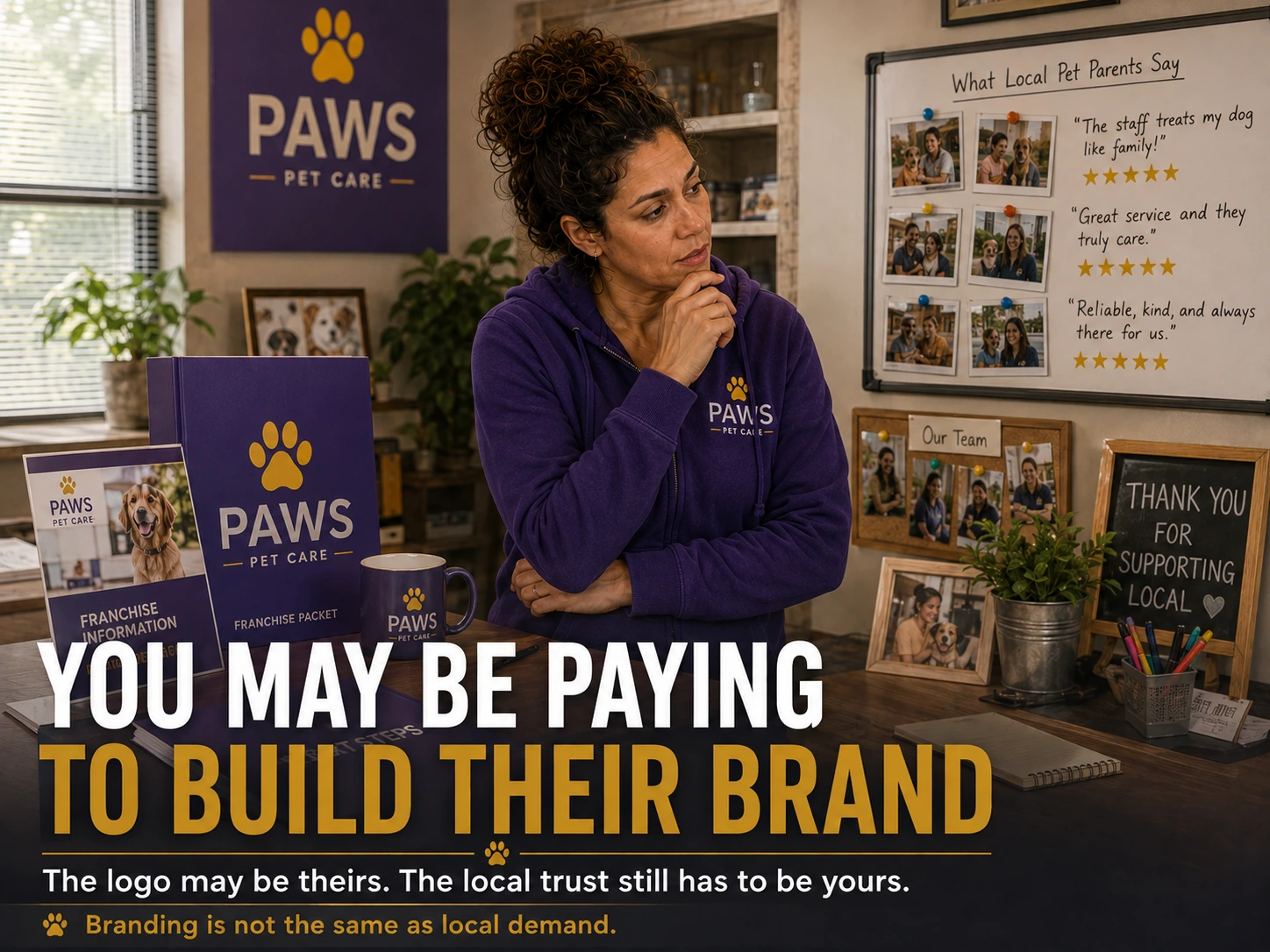
This is where dog daycare franchising can feel backwards compared with a giant household-name franchise. If you buy into a massive food brand, the public may already know the name before the building opens. The sign itself may pull customers because the customer already understands what the sign means.
With a dog daycare franchise, that may not be true. In many markets, nobody knows the brand until the local owner signs the lease, funds the build-out, opens the doors, buys the ads, hires the staff, earns the reviews, networks with vets and groomers, and slowly teaches the area that the brand exists.
That means the local owner may not just be receiving brand value. The local owner may be creating brand value.
That is why the buyer needs to ask what the franchisor will do before opening to warm up the market. Are they going to run real pre-opening advertising in your area? Are they going to build local search visibility before the doors open? Are they going to generate leads, tours, email signups, vet relationships, social awareness, and local press? Or are they going to hand you a template package and let you become the test case for whether their brand works in your market?
A cookie-cutter launch campaign may still have value, but call it what it is. If the same template gets dropped into every new market with a city name swapped in, that may not be the same as true local brand development. The buyer needs to know whether the franchisor is priming the water for your benefit or simply giving you a starter kit while you pay to prove their name can work in your area.
There is nothing wrong with being the first location in a market if the numbers, support, territory, marketing plan, and operating system justify it. But do not accidentally become the guinea pig and pay full price for brand recognition that has not been built yet.
That does not automatically make the franchise a bad deal. A franchise can still provide a valuable operating system, training, support, software path, vendor guidance, design standards, marketing templates, and a broader brand platform. But the buyer needs to understand the direction of the value. Is the brand bringing customers to you, or are you bringing customers to the brand?
You may be paying the franchise fee so you can promote their name in a market where their name did not mean much yet. That may be fine if the system is strong enough to justify the deal. But do not pay for existing brand recognition that does not exist.
The opening budget should distinguish franchisor-funded brand activity from franchisee-funded local demand creation. Paid search, local landing pages, direct mail, events, outreach, review building, signs, and launch offers should have owners, budgets, dates, and lead-tracking rules.
When the local franchisee creates recognition, the agreement still controls the resulting brand equity. Buyers should understand whether the value they build can be sold, transferred, rebranded, or carried forward if the franchise relationship ends.
⚠️
The brand-building warning
If nobody in your market knows the franchise until you spend your money opening and promoting it, you are not just buying the brand. You are building the brand locally for the franchisor.
🤝
Local Trust Beats Logo Theory
Customers do not hand over their dog because a logo looks official.
Dog daycare is not a casual purchase. Customers are not buying a sandwich. They are handing over a living animal they love and trusting strangers to keep that dog safe, healthy, watched, cleaned, managed, and returned in one piece.
That means trust matters more than theory. A polished logo can help. A professional brand can help. A nice lobby can help. But customers still want to know who is behind the counter, who is in the playroom, how the facility smells, how dogs are grouped, whether staff are awake, whether the reviews look real, and whether the tour makes them feel better or worse.
Local reputation is built through hundreds of small trust signals. Phone handling. Cleanliness. Staff confidence. Tour quality. Reviews. Photos. Dog safety. Boarding reliability. Grooming results. Referral relationships. Google visibility. Honest communication when something goes wrong. A calm front desk on a chaotic morning.
Customers do not hand over their dog because a logo looks official. They hand over their dog because they trust the people behind the counter.
Trust should be designed into the customer journey. Phone handling, tours, intake, dog grouping, staff introductions, incident communication, pickup feedback, and review responses all teach the customer whether the local operation deserves confidence.
The brand can accelerate trust only when the local execution supports the promise. One careless employee, dirty lobby, weak tour, or evasive incident response can erase the benefit of a polished national identity.
🧼
Clean Facility
Smell, floors, lobby, yards, suites, and cleaning habits tell customers whether the business is serious or pretending.
👥
Good Staff
Customers remember the people who answer questions, handle dogs calmly, and look competent when the room is loud.
⭐
Strong Reviews
Local reviews can carry more weight than a national name when the buyer is nervous about dog safety.
📍
Convenient Location
A strong brand still has to sit where people can reach it, park, drop off, pick up, and work it into their week.
🐕
Safe Dog Handling
Intake, grouping, staff training, incident response, boarding checks, and cleaning systems matter more than logo theory.
📞
Good Communication
Phone calls, emails, texts, updates, problem handling, and customer education build trust before and after the first visit.
⭐
Reviews Are the Real Local Brand
In dog daycare, five stars from local customers may matter more than a national logo nobody in town has heard of.
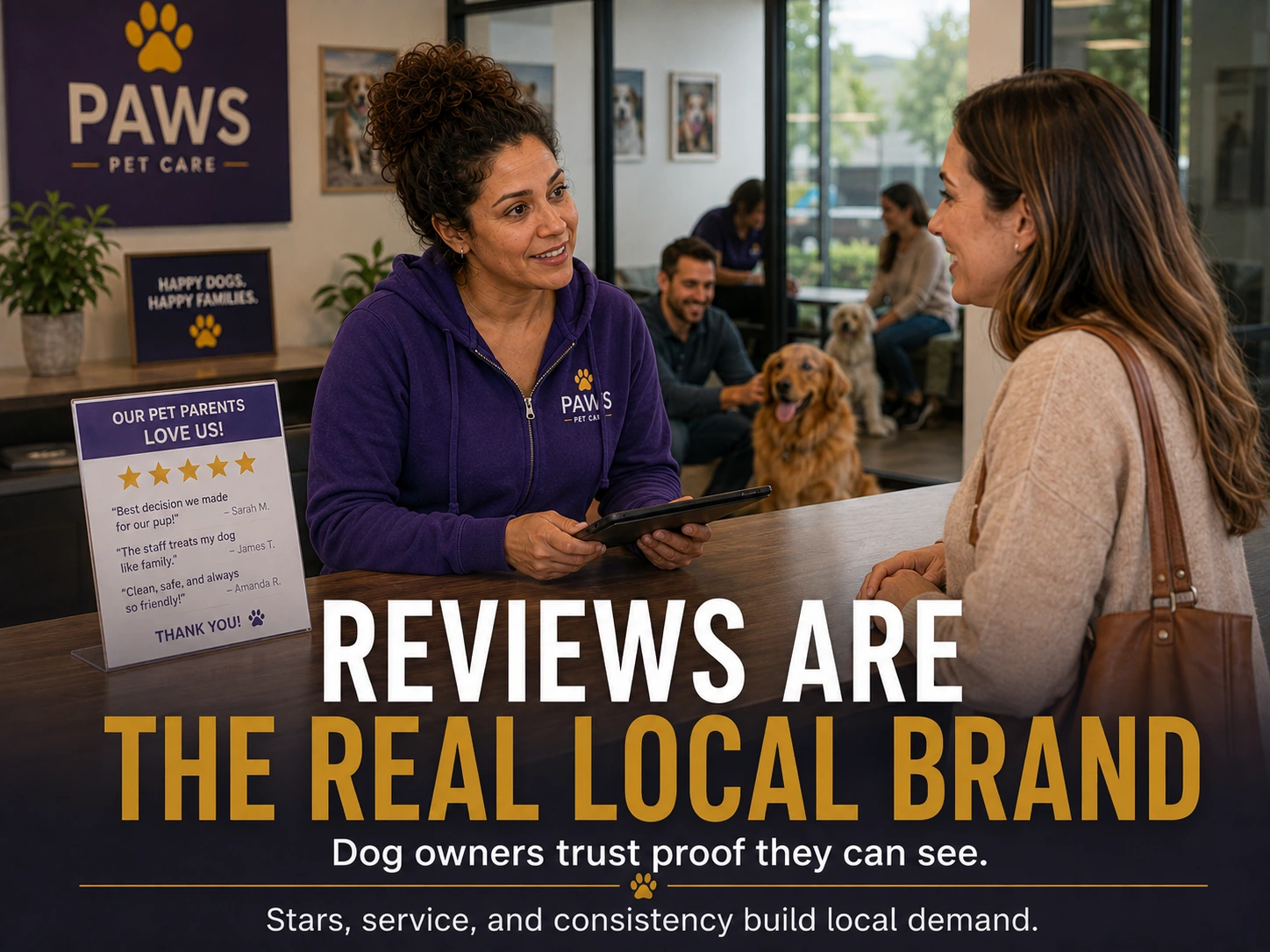
A local independent dog daycare with hundreds of strong reviews may beat a franchise brand that nobody recognizes. A franchise location with weak reviews may lose to a local operator with better trust. A strong national logo cannot carry a bad local reputation forever.
Reviews tell customers what the local operation actually does. They mention staff, cleanliness, communication, boarding experience, grooming results, nervous dogs, incidents, customer service, convenience, and whether the dog seems happy coming back.
That is why review strength matters so much. If customers search “dog daycare near me” and see one local business with deep review history, real photos, active responses, and obvious customer trust, the franchise logo has to compete with that. The logo does not get a free win just because the sales deck calls it a brand.
A franchise can absolutely build strong local reviews. But then the value may be coming from the local team, not just the franchise name. The buyer needs to know which engine is actually pulling the train.
Review analysis should go beyond the star average. Read the recurring subjects, dates, management responses, service categories, and whether recent reviews show the same quality as older ones. A large review count can hide a decline.
The buyer should also compare review velocity. A competitor adding strong reviews every week may be gaining local trust faster than a franchise location with a famous logo and a stale review profile.
📌
The review test
Search the service, not just the brand. If local competitors dominate reviews, local search, photos, and referrals, the franchise name may have a lot of work to do before it becomes a customer-demand advantage.
🚪
The “Would They Still Come?” Test
If the sign changed tomorrow, what would actually happen?
This is the simple test. If the franchise logo came off the building tomorrow and the same staff, same manager, same groomer, same building, same reviews, same phone number, same dogs, and same service quality remained, would customers still come?
If the answer is yes, then the local operation may be stronger than the franchise brand. The customers may be loyal to the staff, convenience, cleanliness, reviews, boarding reliability, grooming results, and local trust more than the name on the sign.
If the answer is no, and customers would leave because the brand itself carries real trust and demand, then the brand has stronger value. That is worth knowing.
The point is not to pretend the brand never matters. The point is to identify what the customer is actually buying.
The test is hypothetical, but useful when combined with real behavior. Ask what customers mention during tours, why they renew packages, whether they follow specific staff, and which reasons appear in reviews. Those answers reveal where loyalty actually lives.
Strong local loyalty can be an asset, but it can also create franchise tension if the agreement limits rebranding, customer-data use, transfer, or post-termination operations. Brand value and local goodwill should be examined together.
- Would daycare regulars still come if the sign changed but the staff stayed?
- Would boarding customers still book if the same manager and same care routines remained?
- Would grooming customers care more about the groomer or the franchise name?
- Would customers follow the staff if the business rebranded?
- Would local reviews still carry the business?
- Would convenience and location still matter more than the logo?
- Would local vets and groomers still refer the business?
- Would the franchise brand itself cause people to leave if removed?
⚠️
The logo-off warning
If the same dogs still show up when the sign changes, the local operation may be creating more value than the franchise brand. That matters when you are paying royalties, ad fund fees, and accepting brand control.
✅
When Franchise Brand Recognition Has Real Value
Brand recognition is valuable when customers recognize it, not when the sales deck says they should.
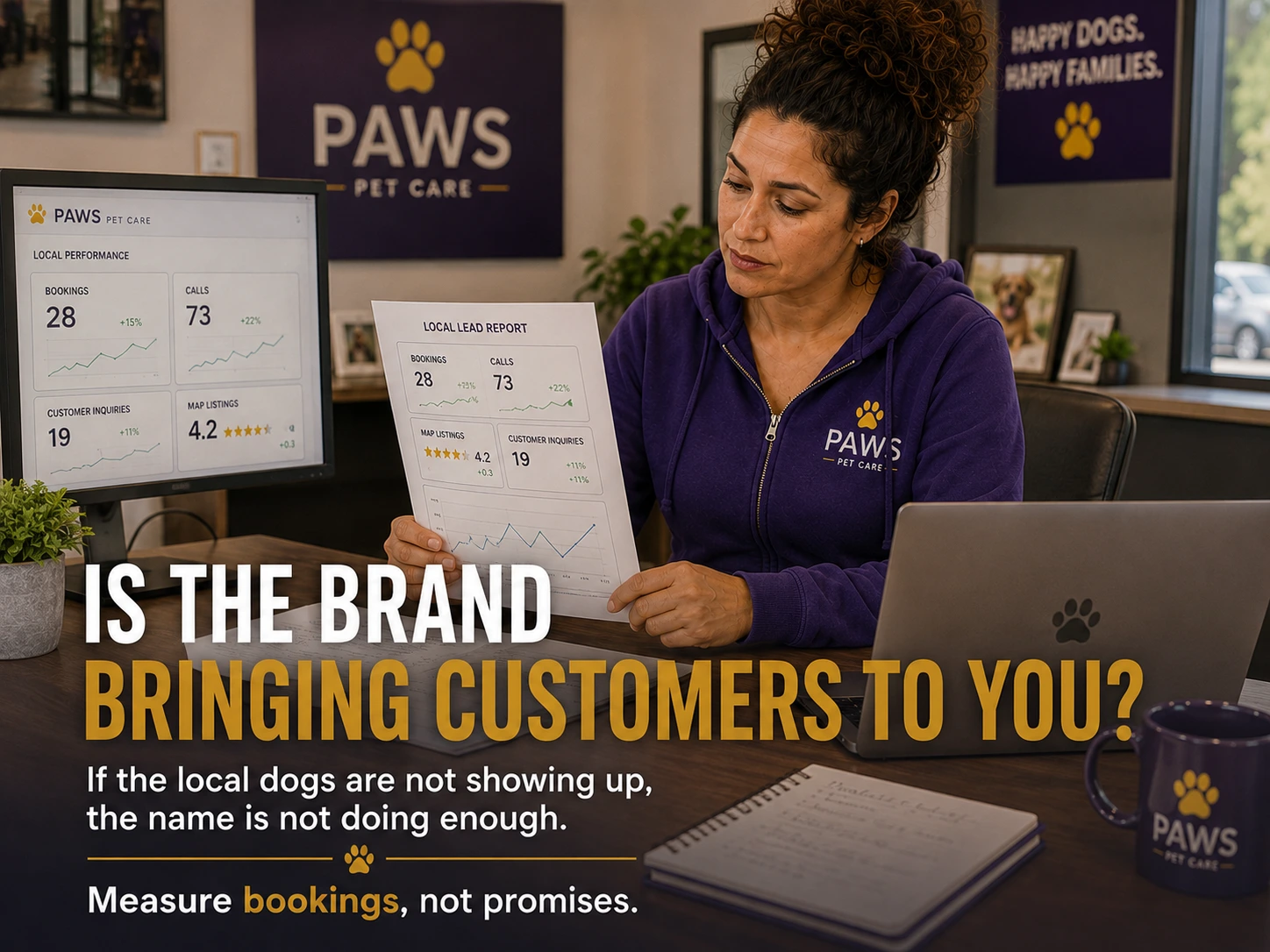
A franchise brand can have real value. If local dog owners already know the name, trust the name, search the name, and choose the name, that matters. If nearby locations have created strong regional awareness, that can help. If the brand produces leads before opening, converts tours faster, reassures nervous customers, or strengthens resale value, that is real.
Brand value can also help with landlords, lenders, employees, vendors, and buyers. A known system may make some conversations easier than a brand-new independent name nobody has seen before.
The buyer just needs to measure it correctly. Do not value the brand based on how familiar it became to you during the franchise research process. Value it based on what it does in your market with actual customers.
The value should appear in measurable operating outcomes: lower customer-acquisition cost, faster launch, higher tour conversion, stronger package sales, easier recruiting, better referral response, or improved resale demand.
A buyer should ask for comparable markets, not only system averages. Performance from an established cluster of locations may not predict a first location entering a market where the name has never been seen.
- Local dog owners already know the brand before you open.
- The brand has meaningful search demand in your market.
- Nearby locations create real regional awareness.
- Nearby locations have strong reviews and customer trust.
- The brand produces local leads before opening.
- The brand helps tours convert faster.
- The brand gives lenders, landlords, employees, or vendors more confidence.
- The brand supports resale value because buyers want that system.
- Existing franchisees can show that customers arrive already knowing the name.
🚩
When Brand Recognition Is Mostly Franchise-Buyer Marketing
A franchise company can be famous to people trying to buy franchises and unknown to people trying to buy dog daycare.
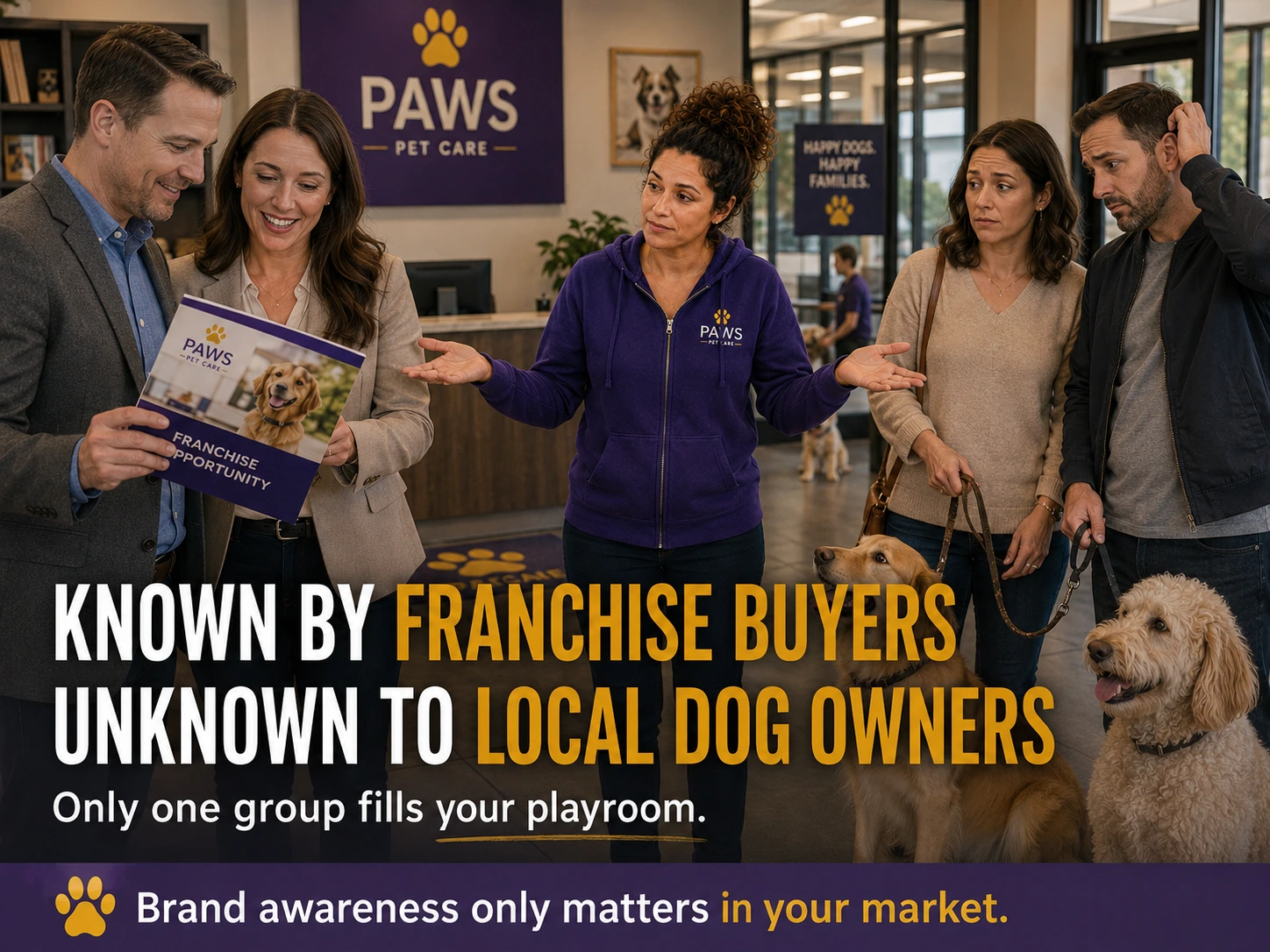
This is the danger zone. The brand feels big because you keep seeing it while researching franchise opportunities. You see franchise ads, franchise directories, franchise rankings, franchise brokers, franchise pages, franchise webinars, and franchise sales material.
That can create the illusion of customer brand recognition. But the people being targeted may be investors, not dog owners. The company may be excellent at finding franchise buyers while still needing each local owner to build customer awareness from the ground up.
There is nothing wrong with a franchisor marketing to franchise buyers. That is part of growing a franchise system. The problem is when a buyer mistakes that visibility for local customer demand.
Compare the franchisor’s recruitment machine with its consumer marketing machine. Separate websites, budgets, campaigns, agencies, lead reports, and goals may reveal that investor acquisition receives far more attention than local customer acquisition.
A strong franchise-sales organization is not a defect. The problem begins when visibility among prospects is presented as proof that customers already know the service brand.
| Warning Sign | What It May Mean | Buyer Response |
|---|---|---|
| The brand ranks for franchise opportunity searches but not local service searches. | The company may be better known to franchise buyers than dog owners. | Test local service demand before assigning value to the brand. |
| Local dog owners have never heard of the brand. | You may be building recognition, not receiving it. | Budget for local marketing and ask how much franchisees spend to create awareness. |
| The nearest location is hours away. | Regional awareness may be weak or nonexistent. | Ask franchisees in first-time markets how hard the local launch really was. |
| Searches for the brand plus your city show little or nothing. | There may be no local search demand yet. | Do not count on branded searches to fill the building. |
| Existing franchisees say most customers come from local ads and reviews. | The local operation, not the national brand, may be doing most of the work. | Compare royalty and ad fund costs against the value of building independently. |
| The ad fund does not produce measurable local leads. | You may pay system-level marketing fees and still buy your own local customers. | Ask where the ad fund is spent and how results are tracked. |
| The franchisor cannot show consumer demand in your market. | Brand strength may be assumed, not proven. | Treat the brand claim as unproven until the local market confirms it. |
☎️
Questions to Ask the Franchisor About Brand Recognition
Make the brand claim answer in numbers, not warm sales fog.
Require the answers in a format that can be checked. Ask for market examples, campaign calendars, lead-source reports, launch budgets, branded-search data, conversion measures, and contacts for franchisees who entered low-awareness territories.
Sales language should be reconciled with the FDD, agreement, marketing obligations, ad-fund provisions, and any written launch plan. A promise that does not appear in enforceable documents may disappear after the sale.
- How many customers arrive already knowing the brand in new markets?
- What branded search demand exists in my market right now?
- How many leads will the brand generate before opening?
- What percentage of leads come from brand searches versus local service searches?
- What local marketing will I still need to buy?
- How much ad fund spend will reach my market?
- What exactly will be done before opening to make local dog owners recognize the brand?
- Will there be actual pre-opening advertising in my area, or only templates and suggested local tasks?
- What pre-opening campaigns are included: paid search, local social ads, direct mail, radio, local video, local landing pages, email capture, vet outreach, events, PR, signage, or referral campaigns?
- Who pays for each part of the pre-opening marketing plan?
- Are the launch campaigns customized to my market, or are they cookie-cutter templates used in every new location?
- What proof do you have that this launch package creates leads in markets where the brand was previously unknown?
- Are there nearby locations creating regional awareness?
- Can I speak to franchisees who opened in markets where the brand was unknown?
- How long did it take those franchisees to build awareness?
- How much did they spend locally before opening and during the first year?
- What review strategy is required?
- How are local leads tracked?
- Does the franchise track whether customers choose the location because of the brand, reviews, staff, location, ads, or referrals?
- What does the brand do that an independent local brand cannot do?
- If I am the first location in this market, am I buying existing brand recognition or paying to create it?
⚠️
Do not accept brand strength as a feeling.
If the brand creates demand, there should be some way to show it: search data, lead sources, franchisee reports, opening performance, local awareness, referral patterns, or customer survey data.
🐾
Questions to Ask Existing Franchisees
Existing owners can tell you whether the brand name actually carried weight when the doors opened.
Speak with franchisees in mature and first-time markets. The brand may carry weight where several nearby locations have advertised for years and almost none where the buyer will be the first operator.
Ask owners to separate opening leads from current leads. Brand recognition may help launch and then become less important than reviews, staff, convenience, local search, and referrals—or the opposite may happen as regional density grows.
- Did local customers know the brand before you opened?
- How many customers came from brand recognition?
- How many came from Google, reviews, referrals, vets, groomers, social media, paid ads, or local outreach?
- How much local marketing did you spend before opening?
- How much local marketing do you still spend now?
- Does the ad fund help your location directly?
- Do customers mention the national brand when they call or tour?
- Do customers mostly mention staff, reviews, location, cleanliness, tours, convenience, or referrals?
- Did nearby locations help create awareness?
- How long did it take before the brand had local meaning?
- Would you still have customers if the sign changed but the same staff and building remained?
- Would you pay the same royalty and ad fund again based only on brand recognition?
📌
Listen for the real lead source
If franchisees keep saying customers came from reviews, Google, local ads, staff, referrals, vets, and tours, then the local operation may be doing most of the brand-building work.
🧪
Local Brand Recognition Test Table
Put the brand under bright lights before paying for it.
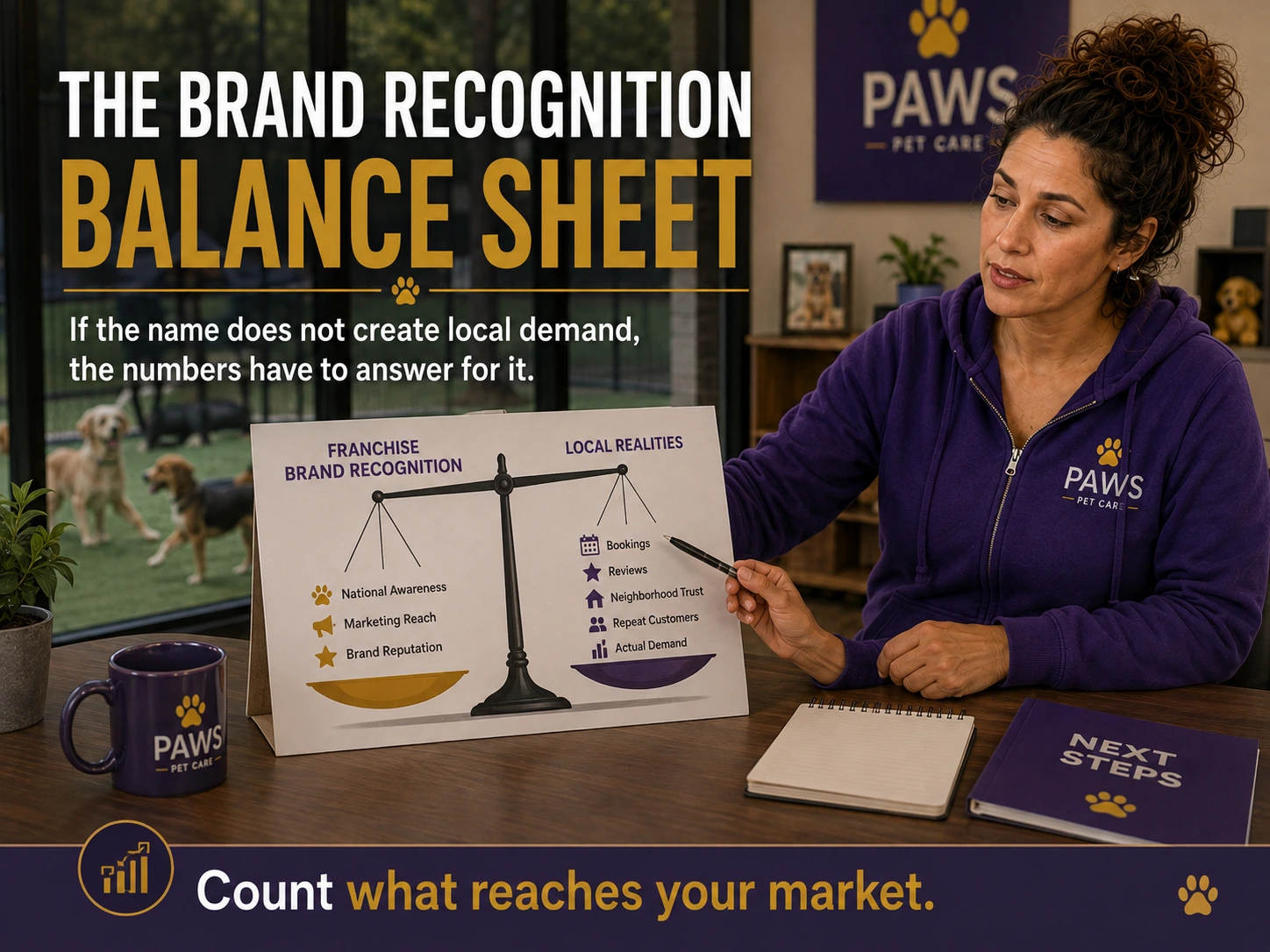
Use the table as a scored due-diligence worksheet. Assign evidence, source, date, market relevance, and confidence to each test rather than marking a vague yes or no.
The final result should change the valuation. Strong local recognition may justify part of the franchise premium. Weak recognition should move value toward operating systems, training, support, software, vendors, or other benefits that can be evaluated separately.
Retest the market before opening and after launch so the business can see whether awareness came from the franchisor, the local campaign, reviews, referrals, or the operation itself.
| Test | What to Look For | Good Sign | Warning Sign |
|---|---|---|---|
| Ask Local Dog Owners | Whether normal customers recognize the franchise name. | Several people know it and associate it with dog care. | Most people have never heard of it. |
| Ask Vets and Groomers | Whether local pet professionals recognize or refer the brand. | They know the brand or nearby locations. | They only know local independents and have no brand awareness. |
| Google Brand + City | Whether the brand has any existing local footprint. | Search results show local relevance, nearby locations, articles, reviews, or consumer awareness. | Search results show nothing useful or only franchise sales pages. |
| Google Service + City | Which businesses dominate local dog daycare, boarding, and grooming searches. | The franchise or nearby locations compete well. | Local independents dominate reviews, maps, and service pages. |
| Review Nearby Locations | Customer experience at existing franchise locations. | Strong reviews mention staff, cleanliness, safety, tours, boarding, and trust. | Weak reviews mention poor communication, odor, incidents, staffing, or management. |
| Search Social Media | Whether local customers discuss or tag the brand. | Real customers share, tag, recommend, or interact with the brand. | Mostly corporate posts, franchise ads, or little local engagement. |
| Check Competitor Reviews | How strong local independents already are. | Market has room and competitors are weak or thinly reviewed. | Competitors have deep trust, strong reviews, and loyal customers. |
| Ask Franchisees | Whether customers came for the brand or local marketing. | Franchisees can show real brand-driven demand. | Franchisees say they had to build awareness from scratch. |
| Compare Branded vs. Non-Branded Demand | Whether people search the brand or just the service. | Brand searches exist and convert. | Most demand is non-branded local service searches. |
| Track Early Lead Sources | Where opening leads actually come from. | Brand, ad fund, local ads, reviews, referrals, and search all show measurable value. | Lead sources are guessed, untracked, or mostly funded by your local spend. |
| Dog Park / Pet Aisle Gut Check | Ask normal local dog owners whether they recognize the brand without explaining it first. | Multiple people know the brand, understand what it offers, and associate it with dog care. | Most people have no idea what the name is, even if the brand looks big in franchise searches. |
| Pre-Opening Awareness Plan | Review what the franchisor will actually do before opening to create local recognition. | There is a real plan with budget, channels, lead tracking, local pages, ads, outreach, and accountability. | The plan is mostly templates, vague launch language, or “you will do local marketing” dressed up as brand support. |
| First-in-Market Risk | Determine whether your location is entering a market where the franchise brand is unknown. | The franchisor has proof from similar markets showing how awareness was built and what it cost. | You are expected to prove the brand in a new market while paying full freight for the privilege. |
🗂️
Keep Testing the Franchise Claim
Brand recognition is only one part of the decision. The costs, royalties, marketing support, and independent alternative still need to survive the math.
🍟
The Golden Arches Test
If the logo came off the building tomorrow and the same dogs still got dropped off, maybe the logo was not the thing creating the value.
📣
Franchise Marketing Support
National brand support does not automatically replace local SEO, reviews, vet outreach, ads, and local demand-building.
🧾
Dog Daycare Franchise Royalties
If the brand does not create local demand, the royalty has a much harder job defending itself in year five.
💵
Dog Daycare Franchise Costs
The franchise fee is not the full cost. Build-out, rent, payroll, marketing, working capital, and fee stacks matter.
⚖️
Franchise vs. Independent Startup
Compare packaged support against building your own local brand, hiring targeted help, and keeping control.
🔧
Starting Independent
Independent does not mean winging it. It means building the system, owning the local brand, and keeping the upside.
❓
Dog Daycare Franchise Brand Recognition FAQ
Detailed answers about local awareness, franchise-buyer visibility, branded search, reviews, pre-opening marketing, lead tracking, franchisee interviews, local goodwill, and proving customer demand.
Does a dog daycare franchise brand automatically bring customers?
No. A brand creates value only when people in the local market recognize it, trust it, search for it, tour because of it, and ultimately buy services. Visibility among franchise buyers, brokers, or industry professionals does not prove customer demand.
What is the difference between brand recognition and local demand?
Brand recognition means someone knows or remembers the name. Local demand means that recognition changes customer behavior through calls, tours, reservations, packages, repeat visits, and referrals. A familiar name without customer action may have limited operating value.
How do I test whether local dog owners know the brand?
Ask normal dog owners without explaining the franchise first. Record whether they recognize the name, what they think it offers, whether the impression is positive, and whether recognition would make them more likely to tour. Repeat the test across neighborhoods and referral sources.
Why can franchise-search visibility be misleading?
The searches that attract franchise investors are different from the searches that attract daycare customers. Ranking for dog-daycare franchise opportunities proves the franchisor can reach business buyers. It does not prove the brand appears or converts when local customers search for dog daycare, boarding, grooming, or training.
What should I search online before signing?
Search the brand plus the city, county, and region. Then search non-branded local service terms, map results, reviews, social media, nearby franchise locations, and strong independents. Use a clean browser so prior franchise research does not distort what a normal customer would see.
What if nobody in the market has heard of the franchise?
That means local recognition is unproven. The franchise may still offer valuable systems, training, software, vendors, support, and launch guidance, but the buyer should not pay for consumer demand as though it already exists. Local marketing and working capital may need to be higher.
Am I buying a brand or building one?
You are buying existing brand value when customers already search for, recognize, trust, and choose the name. You are building it when awareness begins only after you fund the lease, opening campaign, local outreach, reviews, staff performance, and customer relationships.
Why do local reviews matter so much?
Reviews show what the local operation actually delivers. Customers read about staff, cleanliness, safety, boarding, grooming, communication, incidents, and convenience. A strong logo cannot indefinitely overcome weak local proof, while deep local reviews can allow an independent business to outperform an unfamiliar franchise.
How should I evaluate nearby franchise locations?
Review their map visibility, ratings, recent review velocity, photos, service mix, customer comments, management responses, pricing, and local search strength. Ask whether those locations create regional awareness that will reach your territory or are too distant to influence customer behavior.
What is the Would They Still Come test?
Ask whether customers would continue using the same staff, manager, groomer, building, phone number, and service if the franchise sign changed. The answer helps identify whether loyalty belongs mainly to the national brand or to the local operation and relationships.
When does franchise brand recognition have measurable value?
It has measurable value when it lowers customer-acquisition cost, generates pre-opening leads, increases tour conversion, reassures customers, improves recruiting, helps landlord or lender conversations, creates regional referrals, supports expansion, or strengthens resale demand.
What should the franchisor provide before opening?
The franchisor should explain the launch plan, budget, channels, responsibilities, local pages, paid advertising, outreach, lead capture, reporting, and conversion process. The buyer should know which work is corporate-funded, which is locally funded, and what evidence exists from similar first-time markets.
Does an advertising fund prove the brand will create customers?
No. The fund may support national creative, public relations, regional campaigns, administration, or franchise-system growth. Buyers should ask how much reaches their market, how results are attributed, whether local leads are measured, and how much separate local marketing remains required.
What should I ask current franchisees?
Ask whether customers knew the name before opening, what generated early leads, how much local marketing they funded, what the ad fund produced, why customers renew, what people mention during tours, and whether they would pay the same fees again based on brand value.
Why should I speak with franchisees in different markets?
Brand value may differ sharply between a mature regional cluster and a first location entering an unfamiliar territory. Speak with new, established, high-volume, struggling, urban, suburban, and first-in-market owners so one favorable example does not stand in for the whole system.
Can a strong independent business beat a franchise?
Yes. An independent with strong reviews, skilled staff, a clean facility, good local search, trusted referrals, convenient location, and disciplined communication can outperform a franchise that lacks local awareness or executes poorly.
Can a franchise brand still be valuable when customers do not know it?
Yes, but the value must come from other parts of the package: operating systems, training, manuals, software, vendors, coaching, design standards, launch support, or network knowledge. Those benefits should be priced and tested separately from consumer recognition.
How should I measure brand-driven leads after opening?
Track branded search, non-branded local search, maps, paid ads, reviews, referrals, veterinarians, groomers, events, social media, direct traffic, and walk-ins. Ask each lead how they found the location and compare inquiry, tour, purchase, repeat, and referral rates by source.
What happens to local goodwill if the franchise relationship ends?
The agreement may control the name, signage, customer data, software, telephone numbers, websites, rebranding, transfer, and post-termination activity. A buyer should ask a franchise attorney how local goodwill can be sold, transferred, or lost before investing heavily in building recognition.
What is the simplest brand-recognition question before buying?
Ask what customer behavior the name already changes in the exact market where the facility will operate. Then require evidence through search data, lead sources, awareness tests, franchisee reports, review strength, launch performance, and comparable territories.
🐾
The Bottom Line: Prove the Brand Creates Local Demand
Brand recognition is only valuable if it creates real customer action.
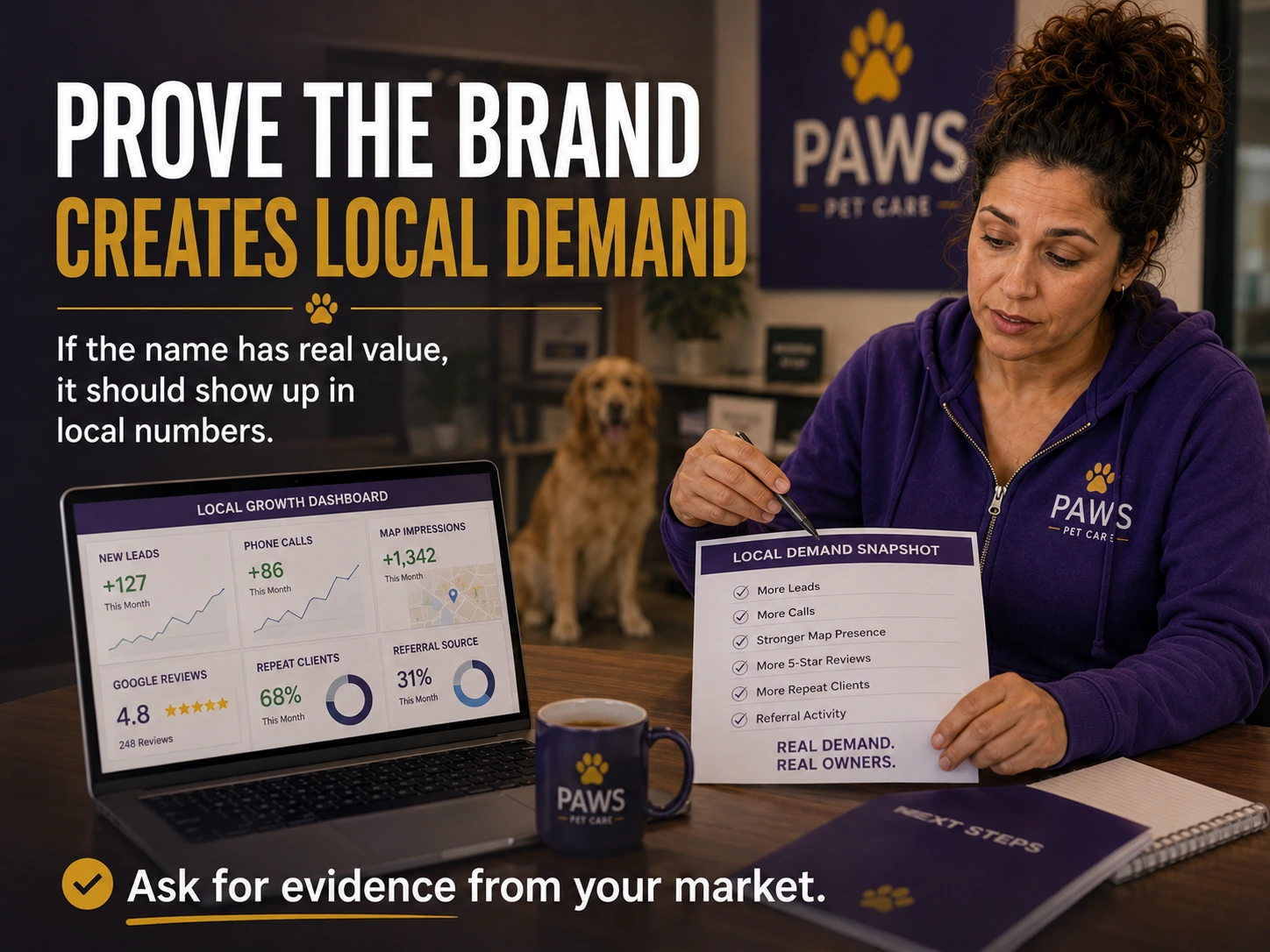
A dog daycare franchise brand can be valuable. If local dog owners already know the name, trust it, search for it, and choose it, that is worth something. If nearby locations have created regional awareness, strong reviews, and customer trust, that can help the next owner.
But if nobody in your market knows the name until you sign the lease, fund the build-out, hire the staff, buy the ads, earn the reviews, and explain the brand to local customers, then be honest about what is happening.
You are not just buying brand recognition. You are building it.
That may still be a good deal if the franchise system is strong enough. But make the franchisor prove the brand’s local customer value before you pay for it like it already exists.
Brand recognition should be priced as one asset inside the franchise package, not used as a blanket explanation for every fee and restriction. The buyer should identify exactly what the name contributes in the chosen market.
The final question is not whether the brand is attractive or professionally presented. It is whether the name changes customer behavior enough to justify the money, control, and long-term obligations attached to it.