Dog Daycare Franchise Marketing Support, National Brand Claims, Ad Funds, Marketing Templates, Local SEO, Google Reviews, Vet Visits, Events, Referral Tracking, Social Media, and the Local Grind
Dog Daycare Franchise Marketing Support: National Brand or Local Hustle?
National brand, ad fund, marketing templates, local SEO, reviews, events, vet visits, referral tracking, social media, and the local grind that still fills the building.
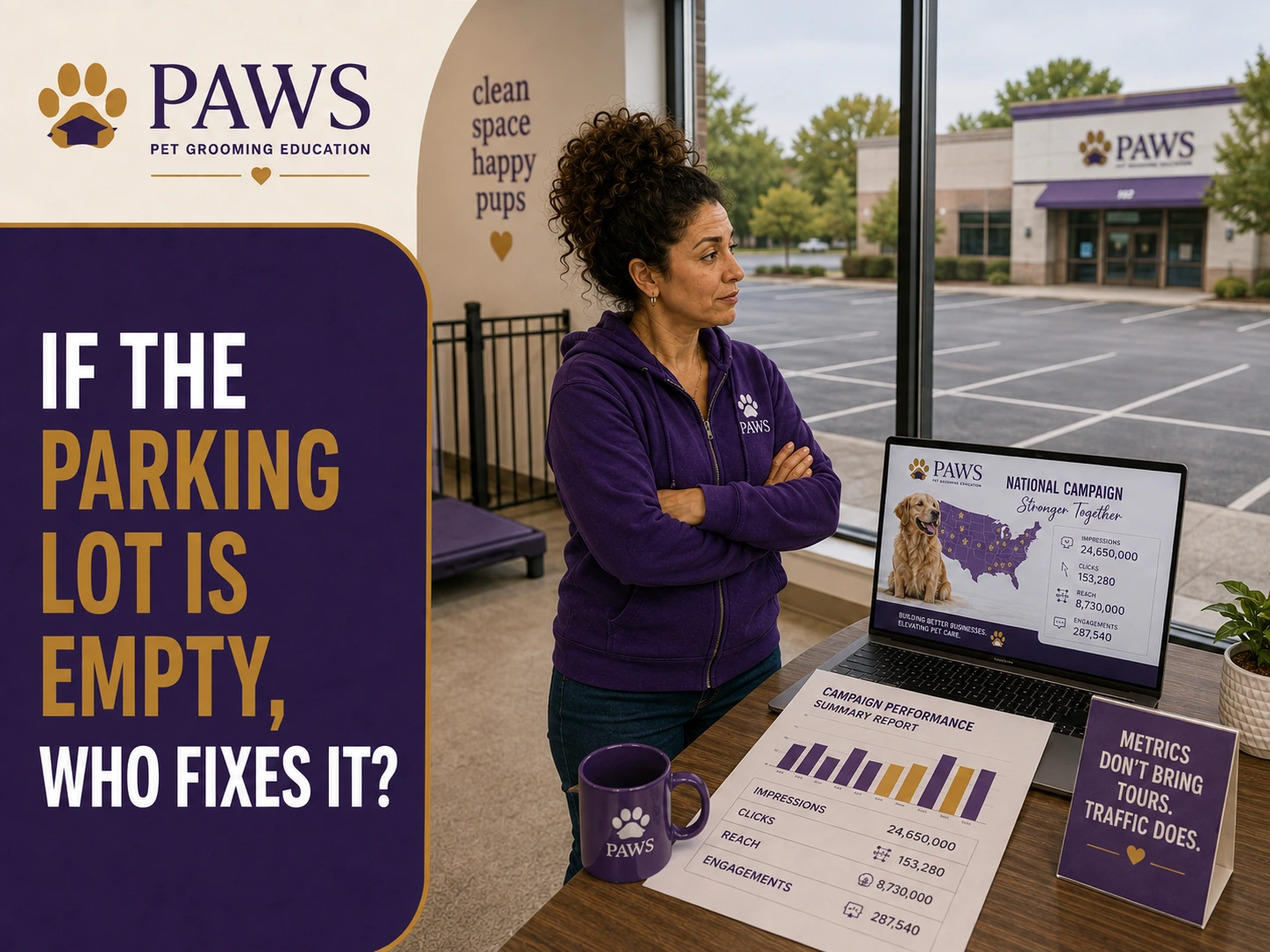
Franchise marketing support can help. But it does not magically fill a dog daycare building just because the logo came with a brand guide.
A dog daycare franchise may provide marketing templates, grand opening plans, brand graphics, social media assets, local ad ideas, email campaigns, review guidance, website pages, national campaigns, call scripts, referral tools, and advertising support.
That can be valuable, especially for a new owner who does not know how to promote a local pet-care business. Starting with a polished brand, a launch calendar, ready-made materials, and some marketing structure is better than staring at a blank Facebook page wondering what to post.
But dog daycare is still a local service business. Customers usually come from nearby neighborhoods, commute routes, apartment complexes, vet offices, groomer relationships, rescue events, Google searches, local reviews, referrals, and people who physically drive past the building.
The buyer needs to know whether the franchise marketing system creates real local customers or mostly provides templates, brand polish, and an ad fund that sounds better in the sales conversation than it feels when payroll is due.
⚠️
Operator warning: marketing support is not the same thing as customers walking through the door.
A franchisor may provide templates, graphics, campaigns, ads, brand rules, and a marketing calendar. That can help. But the building is still filled by local trust, local search, local reviews, local referrals, local visibility, local follow-up, and local hustle.
📢
What Dog Daycare Franchise Marketing Support Usually Includes
Marketing support can be real. The question is whether it reaches your actual local customer.
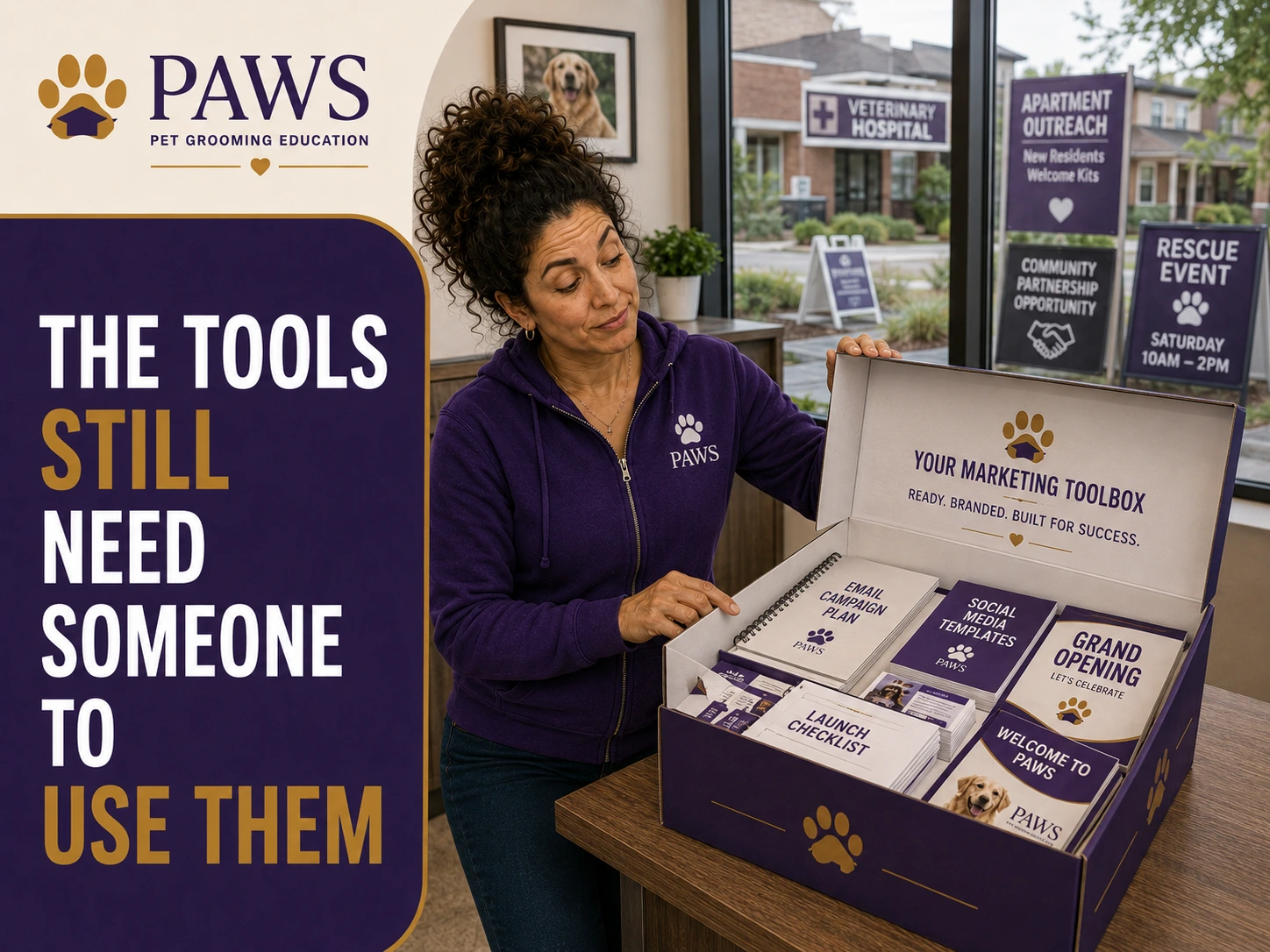
Dog daycare franchise marketing support may include brand standards, logos, brochures, flyers, social media graphics, email templates, grand opening plans, local advertising guidance, website pages, booking links, Google review guidance, promotional calendars, reputation management tools, referral ideas, vendor relationships, and national advertising campaigns.
That is not worthless. A new owner may not know what to say, where to advertise, how to explain daycare, how to promote boarding, how to launch grooming, how to ask for reviews, how to build local partnerships, or how to make the business look professional before the first customer shows up.
But marketing support needs to be judged by results. Does it help your location rank locally? Does it bring tours? Does it convert tours? Does it help you get reviews? Does it help you fill boarding holidays? Does it help grooming books stay full? Does it help daycare packages sell? Does it help you track what actually worked?
The buyer should not ask, “Do you provide marketing support?” That question is too soft. Ask what support exists, who does the work, what it costs, what is included, what is optional, what is required, who approves it, who owns the assets, and whether current franchisees can prove it helps.
Separate included tools from work the location must still perform, including customization, ad spend, posting, outreach, follow-up, photography, printing, and conversion.
Ask who provides ongoing strategic review, how quickly corrections are made, and what happens when a campaign or local page performs poorly.
🗺️
Franchise Marketing Support Map
A polished marketing system still needs to survive contact with the local market.
For every support area, identify the owner, cost, approval time, local flexibility, reporting, and measurable business result.
Trace one recent comparable campaign from spend through leads, tours, first purchases, repeat visits, reviews, and revenue.
| Marketing Area | What the Franchise May Provide | What You Still Need to Verify |
|---|---|---|
| Brand Assets | Logo, colors, signage, brochures, flyers, graphics, templates, photos, and design rules. | Do the assets create local trust, or just make everything look consistent? |
| Grand Opening | Opening calendar, launch offers, event ideas, ads, emails, social posts, press release, and signage guidance. | Does grand opening support create tours, reservations, reviews, and repeat customers? |
| Ad Fund | Systemwide advertising, brand campaigns, creative development, media buying, or marketing administration. | Does the ad fund create leads in your trade area, or mostly build the franchisor’s brand? |
| Local SEO | Website page, Google Business Profile guidance, location page, keywords, content, and review strategy. | Who controls the local page, Google profile, reviews, phone numbers, booking links, and updates? |
| Reviews | Review-request templates, reputation tools, customer follow-up, and review-response guidance. | Are reviews attached to your location and local goodwill, or mostly controlled by the brand platform? |
| Social Media | Brand posts, templates, captions, holiday graphics, campaigns, and posting rules. | Can you post real local dogs, events, staff, offers, and personality without slow approval? |
| Local Outreach | Vet visit scripts, apartment outreach, event ideas, rescue partnerships, referral cards, and community templates. | Who actually walks into the vet office, shakes hands, follows up, and builds the relationship? |
| Referral Tracking | Source tracking, promo codes, referral offers, CRM notes, reports, and campaign dashboards. | Can you tell which leads came from Google, vets, events, referrals, ads, social media, or drive-by visibility? |
| Promotions | Daycare packages, boarding pushes, grooming promos, seasonal offers, and membership ideas. | Can you adjust offers locally, or does corporate approval slow everything down? |
| Conversion | Phone scripts, tour scripts, inquiry forms, email follow-up, and customer onboarding. | Does the system help your staff turn leads into paying customers? |
🧾
Marketing Claims vs. Marketing Proof
A franchisor can say “we help with marketing.” The buyer needs to ask what that actually produces.
Modern dog daycare franchise marketing pitches are not just about brochures and pretty logos. Many systems now talk about local search, paid ads, social media management, SEO websites, lead tracking, grand opening campaigns, review systems, customer apps, call tracking, and local marketing support.
That sounds impressive. It may even be impressive. But the buyer needs to separate marketing infrastructure from actual customer flow.
A website is not a booked dog. A social media calendar is not a temperament test. A national campaign is not a full boarding holiday. A lead form is not revenue. A call recording is not a converted customer. The only reason marketing matters is because it helps attract, convert, and keep local customers.
Make the franchisor prove the chain: spend creates visibility, visibility creates leads, leads create tours, tours create evaluations, evaluations create customers, customers create repeat visits, and repeat visits create revenue.
Require location-specific proof rather than systemwide impressions that may hide weak performance in new or low-awareness markets.
Define lead, tour, evaluation, first purchase, active customer, and repeat customer before comparing results.
| Franchisor Says | Fair Point | Buyer Pushback |
|---|---|---|
| “We run local search.” | Local search can be one of the most important lead sources for dog daycare. | Show ranking, traffic, lead, call, tour, and conversion results for new locations in markets like mine. |
| “We manage social media.” | Consistent posting can keep a location visible. | Are posts real local content or generic brand content? Can I post local dogs, staff, events, offers, and urgent updates quickly? |
| “We provide paid ads.” | Paid ads can create leads faster than waiting for organic search. | Who pays the ad spend, who manages the campaigns, what is the cost per lead, and how many leads become paying customers? |
| “We build your website.” | A strong website can help customers trust and contact the location. | Who controls the local page, service pages, tracking numbers, booking links, SEO content, updates, and conversion testing? |
| “We have a grand opening plan.” | A good launch plan can reduce the empty-building problem. | How many tours, evaluations, booked daycare dogs, boarding reservations, reviews, and repeat customers does the average launch produce? |
| “We track leads.” | Lead tracking is useful if the numbers are honest and usable. | Can reports connect lead source to calls, tours, trial days, booked services, repeat visits, and revenue? |
| “We provide marketing templates.” | Templates can save time and keep the brand professional. | Are templates producing customers, or are they just approved files sitting in a portal? |
🏷️
National Brand Does Not Automatically Mean Local Demand
A dog owner in your town has to know, trust, and choose your building.
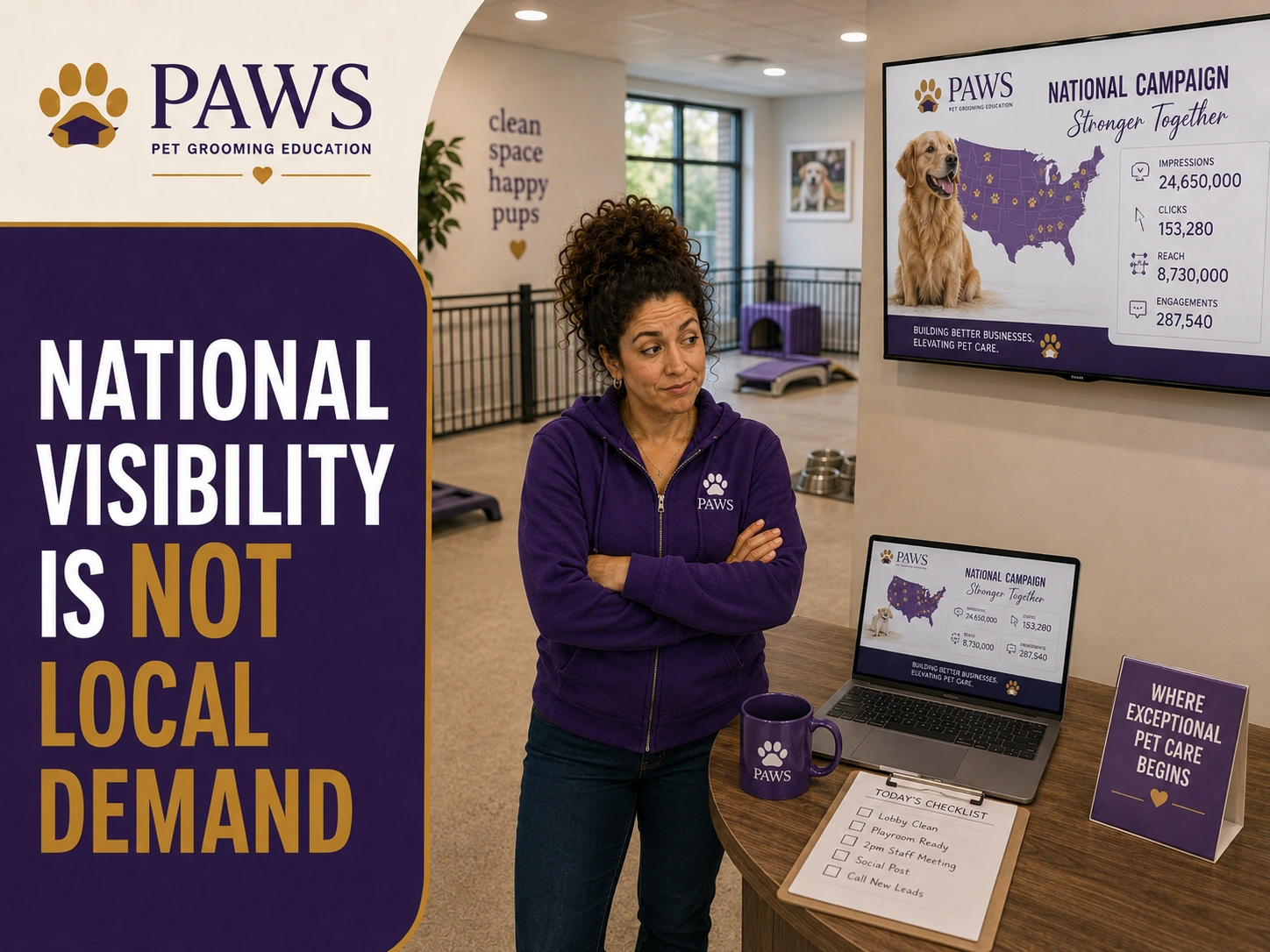
Franchise marketing often leans on the idea of brand recognition. That can matter if the brand is actually known by the customers in your area. But a dog daycare brand being known to franchise buyers, industry people, or people searching “dog daycare franchise” is not the same thing as being known by local pet owners.
Most customers are not sitting at home comparing franchise systems. They are searching “dog daycare near me,” asking their vet, reading Google reviews, checking photos, looking at the map, comparing hours, asking a neighbor, or driving past the sign on the way to work.
A national brand can help if it creates trust before the customer ever sees your location. But if the average local dog owner does not recognize the name, the local owner still has to build trust the hard way.
Test recognition in the actual trade area before signing through local surveys, search behavior, map results, and nearby pet-care referral sources.
Even a known brand must still win on distance, reviews, photos, hours, pricing, service mix, and trust.
📌
The local recognition test
Ask normal dog owners in your market if they know the franchise name before you tell them. If they do not, the marketing burden is still mostly local.
💸
Ad Fund vs. Local Marketing
Paying into an ad fund does not mean your local phone rings.
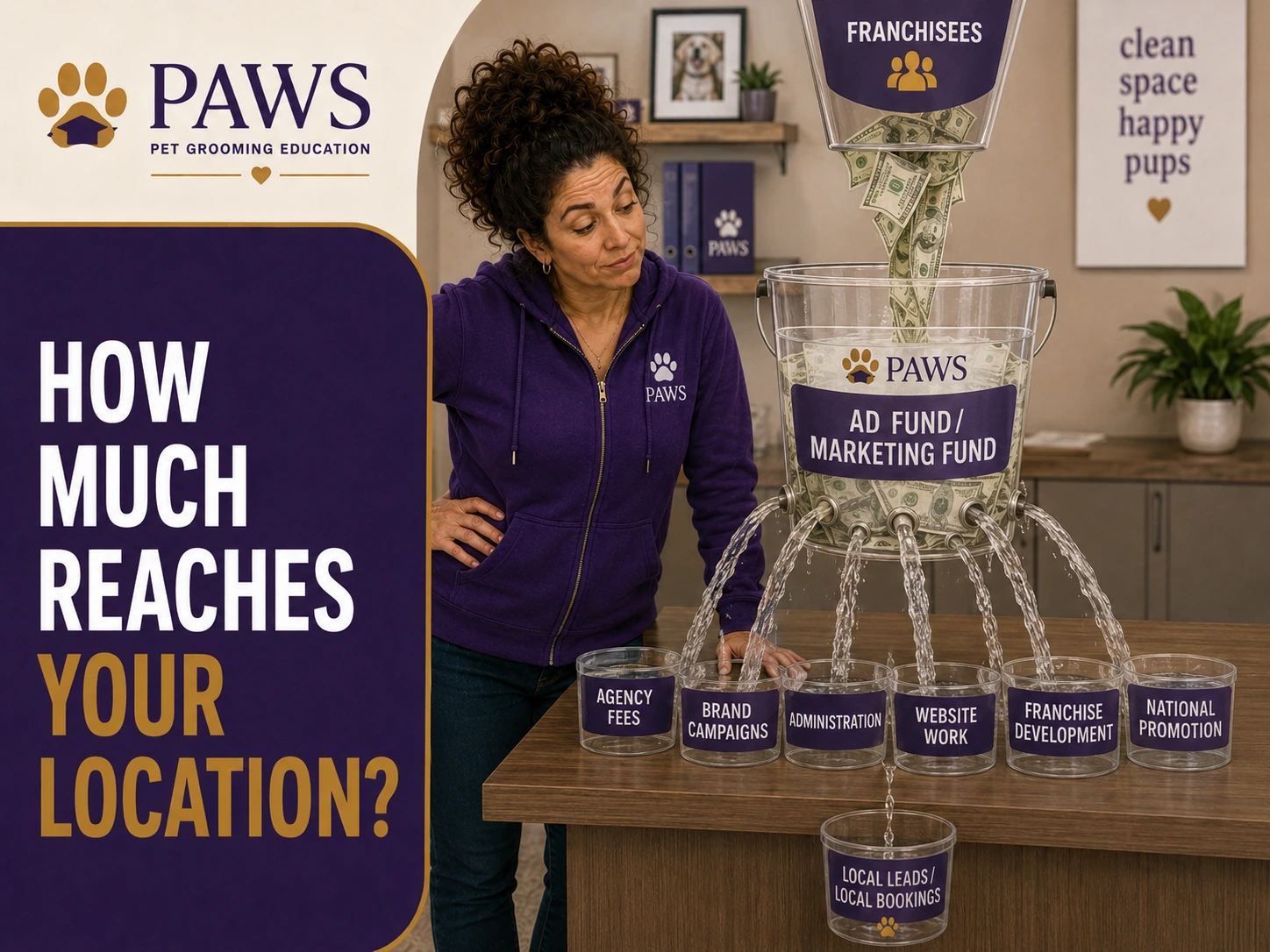
A franchise may require an advertising fee, brand fund contribution, marketing fund contribution, local advertising spend, or some combination of those. The buyer needs to separate systemwide brand spending from local lead generation.
A national or regional ad fund may support brand awareness, creative assets, campaigns, agency fees, website work, marketing administration, media buying, or corporate marketing efforts. Some of that may help the whole system over time.
But your lease, payroll, utilities, insurance, debt, and staff schedule are local. If the ad fund does not drive tours, trial days, boarding reservations, grooming appointments, reviews, phone calls, and booked customers in your market, you may still need to spend your own money on local marketing.
This is where buyers get surprised. They hear “marketing support” and picture customers being delivered. Then they open and learn that the national brand fund is one bucket, local advertising is another bucket, and the owner is still responsible for the daily grind of filling the building.
Request a flow of funds showing what enters the fund, what categories receive money, and what portion can be connected to existing-location customer acquisition.
Compare performance across market types because mature clusters and first-in-market locations may receive very different value.
⚠️
Ask what the ad fund did for your actual type of market.
A campaign that helps a mature location in a large metro may not do much for a new facility in a smaller market with weak brand recognition and no local reviews yet.
💵
The Marketing Fee Stack
Marketing support may come with several separate buckets of money.
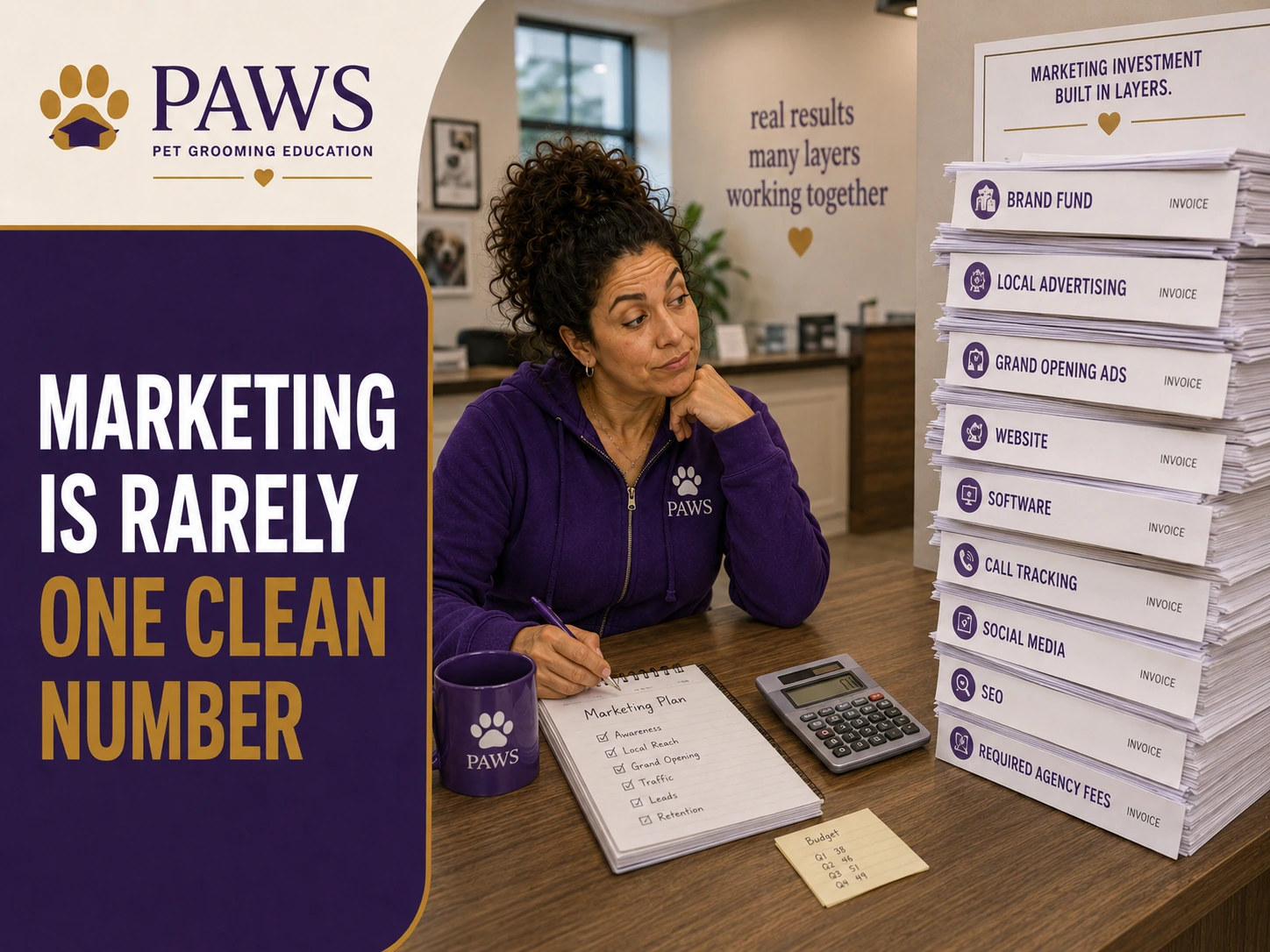
One of the biggest mistakes a buyer can make is treating “marketing fee” like one clean number. In franchise documents, marketing costs may show up as an ad fund fee, brand fund fee, local advertising requirement, grand opening advertising requirement, marketing platform fee, website fee, software fee, agency fee, call tracking fee, social media fee, re-launch advertising requirement, or required vendor cost.
That means the buyer needs to stack every marketing-related cost before deciding whether the support is worth it. A national ad fund may be one fee. Required local advertising may be another. Paid ad spend may be another. A marketing platform may be another. A website or technology fee may be another. Grand opening advertising may be another.
The important question is not just “How much is the ad fund?” The real question is “What is my total required marketing spend, who controls it, what does it buy, and how directly does it help my local location?”
Build a twelve-month and three-year budget combining every percentage fee, fixed fee, platform charge, local-spend minimum, launch requirement, and realistic paid-media need.
Separate money the location controls from money directed by corporate or a required vendor.
| Marketing Cost Bucket | What It May Cover | Question to Ask |
|---|---|---|
| Brand Fund / Ad Fund | Systemwide campaigns, creative, agency work, media buying, website support, marketing administration, or brand building. | How much benefits my local customer acquisition versus the broader brand? |
| Required Local Advertising | Local ads, local SEO, local sponsorships, social campaigns, events, flyers, mailers, or paid search. | Do I control the spend, or is it directed by corporate or a required vendor? |
| Grand Opening Advertising | Pre-opening campaigns, launch ads, signage, events, introductory offers, press, and lead generation. | What results should I expect before opening and in the first 90 days? |
| Marketing Platform Fee | Software, campaign portals, review tools, CRM, tracking dashboards, social tools, or ad management platforms. | Is this optional, useful, and measurable, or just another required subscription? |
| Website / SEO Fee | Local pages, hosting, updates, SEO, service pages, tracking, conversion tools, or booking integrations. | Who owns and controls the local page, content, phone number, and booking path? |
| Required Agency / Vendor Fees | Paid search, paid social, print, creative, call tracking, review management, or local campaign management. | Can I compare vendor performance and price, or am I locked in? |
| Re-Launch / Rebrand Advertising | Marketing required after ownership transfer, remodel, rebrand, relocation, or reopening. | When can this be required, and who decides the amount? |
🧩
Templates Are Not Leads
A flyer is not a customer. A social graphic is not a booked temperament test.
Marketing templates can save time. A new owner may need flyers, brochures, emails, social posts, opening announcements, review-request cards, vet outreach letters, apartment packets, and seasonal boarding reminders. Having those ready is better than building every piece from scratch.
But templates are only tools. Someone still has to use them. Someone has to visit vets, talk to apartment managers, respond to inquiries, ask for reviews, follow up with leads, post real local content, answer the phone, run tours, track referral sources, and convert interested dog owners into customers.
The buyer should ask whether the franchise marketing system is a working customer-acquisition process or mostly a folder full of approved materials.
- Are templates customized for my local market?
- Are they current, useful, and actually used by franchisees?
- Do they include vet outreach, apartment outreach, daycare packages, boarding pushes, grooming promotions, review requests, and event follow-up?
- Does the franchisor teach staff how to convert phone calls and tours?
- Does the system track which campaigns produced customers?
- Do current franchisees say templates helped them grow, or mostly made the brand look polished?
🔎
Local SEO and Google Reviews Fill More Dog Daycares Than National Slogans
In this business, the map pack may matter more than the mission statement.
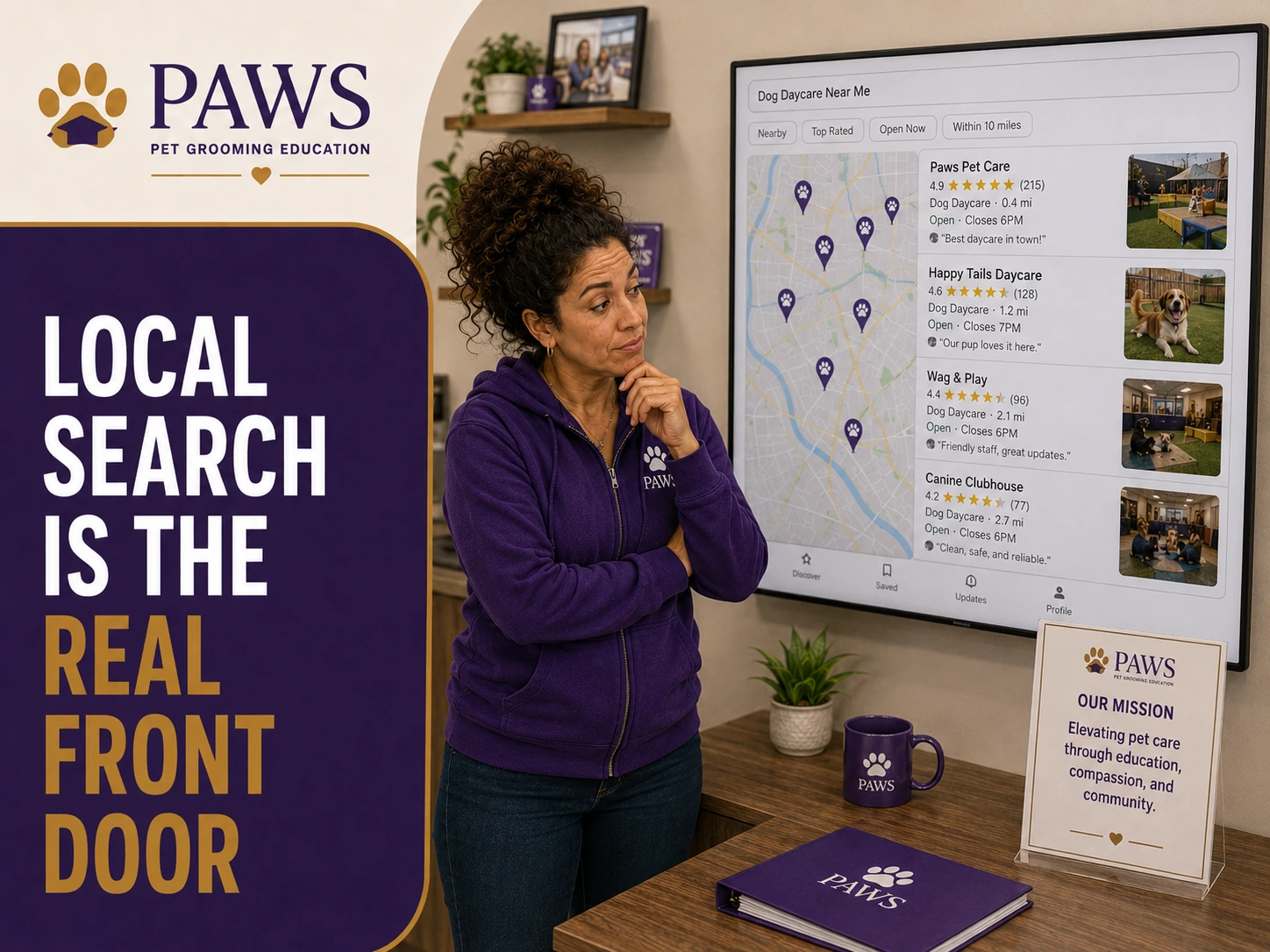
For many dog daycare customers, the search starts locally. They search for dog daycare near me, dog boarding near me, puppy daycare, dog grooming, overnight boarding, or pet boarding close to work or home. They look at the map, reviews, photos, hours, website, and distance.
That means local SEO, Google Business Profile management, reviews, photos, service pages, local content, and accurate contact information are not side issues. They are front-door issues.
A franchise may control the location page, main website, booking links, call tracking, review response rules, photos, service descriptions, and local SEO strategy. That can be useful if the franchisor is good at it. It can be painful if updates are slow, pages are thin, tracking is unclear, or local operators cannot make improvements quickly.
Assign ownership and response times for incorrect hours, broken booking links, weak photos, missing services, duplicate listings, and unanswered reviews.
Reports should connect local visibility to calls, forms, booking clicks, tours, evaluations, first purchases, and repeat customers.
⚠️
Local search control is marketing control.
Before signing, ask who controls the Google Business Profile, local landing page, phone number, booking links, photos, review responses, service descriptions, and local SEO content.
🔎
The Cookie-Cutter SEO Package Test
Local SEO support should not be a thin location page wearing a franchise logo.
A franchisor may say it provides SEO, location pages, Google support, website content, review tools, and digital marketing. That can be valuable if the system is strong.
But cookie-cutter SEO is common in franchise systems. Every location gets the same basic page, the same generic service language, the same stock photos, the same thin city paragraph, and the same slow update process. That may look organized, but it may not be enough to win local search in a competitive market.
Dog daycare local search needs local proof. Photos from the real facility, accurate hours, real services, real staff, local reviews, local neighborhood language, service-specific pages, good internal links, correct categories, current offers, fast booking paths, and clean tracking matter.
Google says local ranking is based mainly on relevance, distance, and prominence, and that complete and accurate business information helps customers know what a business does, where it is, and when they can visit. That makes local profile control, review volume, review quality, accurate services, and location-specific content more than decoration.
- Does each location get unique local content, or mostly copied franchise language?
- Can the location page target daycare, boarding, grooming, puppy daycare, enrichment, and local service terms?
- Can local staff update photos, hours, holiday boarding availability, service changes, and special events quickly?
- Who controls the Google Business Profile primary category, services, photos, posts, Q&A, hours, holiday hours, and review responses?
- Are phone numbers local, trackable, and portable?
- Are booking links controlled by the local business, franchisor, or software vendor?
- Can performance reports show rankings, calls, form fills, booking clicks, map views, tours, and customers?
- What happens if the local page is wrong and corporate is slow to fix it?
⭐
Reviews Are Local Goodwill
A five-star review usually belongs to the staff, service, dogs, and customer experience at that location.
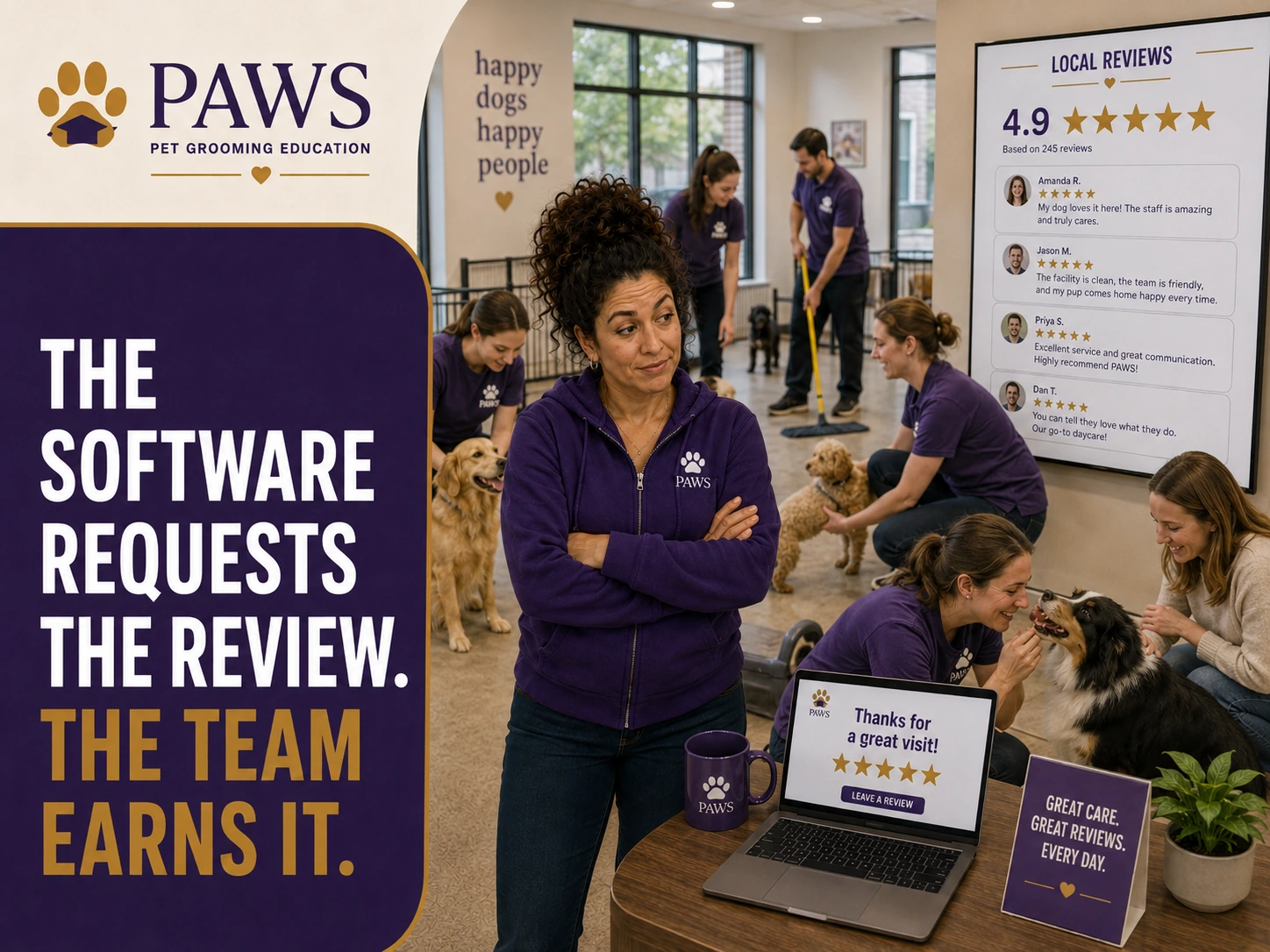
Reviews matter because dog owners are trusting you with a living animal. They want to know whether other local people had good experiences. They read complaints. They look at photos. They watch how the business responds. They notice patterns.
A franchise may provide review request systems, response templates, reputation management software, and customer follow-up processes. That can help. But reviews are earned locally by the way staff answer the phone, greet customers, handle dogs, communicate incidents, keep rooms clean, manage boarding, and make customers feel safe.
The buyer needs to know who owns and controls that local review presence. If you build hundreds of local reviews through your staff, service, and customer trust, what happens to that goodwill if you sell, renew, leave the system, or rebrand?
Use review themes as operating data, not only a marketing score. Repeated comments about communication, cleanliness, staff, boarding, grooming, billing, or incidents should influence management.
Protect authenticity by avoiding pressure, review gating, or systems that reward volume more than service quality.
- Who controls review-request tools?
- Who responds to reviews?
- Can local staff request reviews directly?
- Are reviews tied to the local Google Business Profile?
- What happens to reviews if the franchise relationship ends?
- Are negative reviews handled locally, corporately, or both?
👟
The Local Grind Still Fills the Building
Dog daycare marketing is not just ads. It is relationship work.
The local grind is the unglamorous work that actually builds a dog daycare: answering calls quickly, giving good tours, following up with leads, asking happy customers for reviews, visiting vets, talking to groomers, meeting apartment managers, showing up at rescue events, sponsoring local dog events, posting real dogs, keeping photos fresh, tracking referrals, and staying visible in the community.
A franchise can give you materials for that. It can give you scripts, flyers, brand standards, graphics, and advice. But it usually cannot walk into the vet office for you, shake the apartment manager’s hand for you, charm the nervous first-time customer for you, or turn a good tour into a committed daycare customer for you.
The buyer should ask whether the marketing system supports local hustle or replaces it in the sales pitch only.
📌
The parking-lot test
If the building is not filling up, who is responsible for fixing that: corporate marketing, the local owner, the manager, the ad agency, or all of the above?
📊
Referral Tracking: Know What Actually Works
If you cannot track the source, you may keep paying for the wrong thing.
A good marketing system should help track where customers come from. Google search, Google ads, Facebook, Instagram, vet referrals, apartment referrals, rescue events, customer referrals, drive-by traffic, email campaigns, flyers, groomer referrals, and local partnerships should not all disappear into one vague “marketing worked” bucket.
Referral tracking matters because dog daycare marketing can waste money fast. The owner needs to know which campaigns create leads, which leads book tours, which tours convert, which customers stay, and which services they buy.
Without tracking, the franchisee may keep funding national ads, local ads, templates, campaigns, events, and promotions without knowing what actually fills the playrooms, boarding suites, and grooming schedule.
- Does the software track lead source?
- Can staff assign referral source during phone calls, tours, and online inquiries?
- Are promo codes or tracking links available?
- Can reports show leads, tours, conversion, booked services, repeat visits, and revenue by source?
- Does corporate review local marketing performance with franchisees?
- Can the franchisee change spending based on what performs locally?
☎️
Leads Do Not Matter If the Location Cannot Convert
Marketing can make the phone ring. Staff still have to turn interest into business.
One of the most overlooked parts of franchise marketing is conversion. A campaign may create phone calls, form fills, emails, social messages, or tour requests. But if the phone is answered badly, tours are weak, follow-up is slow, staff sound confused, or pricing is explained poorly, the lead dies at the front desk.
Dog daycare customers are nervous. They want to know who will watch their dog, how dogs are evaluated, what vaccines are required, how groups are managed, what happens if there is an incident, how boarding works, whether grooming is available, what it costs, and whether the facility feels safe.
A strong franchise marketing system should not stop at ads. It should train inquiry handling, phone scripts, tour scripts, follow-up, evaluation scheduling, package selling, boarding conversion, grooming add-ons, and review requests.
⚠️
Marketing support should reach the front desk.
If the campaign creates leads but the staff cannot convert them, the owner is paying to leak water from a bucket with a hole in it.
🔗
The Lead-to-Revenue Chain
Marketing support should be judged by the whole chain, not the first click.
Dog daycare marketing does not end when someone clicks an ad or fills out a form. The real question is whether that lead turns into a paying, repeating customer.
A franchise marketing system may be good at creating attention but weak at conversion. Or it may create leads, but the local staff may fail to answer calls, follow up, schedule evaluations, explain pricing, sell packages, or ask for reviews.
The buyer should ask the franchisor to prove the full path from marketing spend to revenue. Otherwise, everyone can brag about leads while the owner is still staring at an empty playroom.
| Step | What to Track | Why It Matters |
|---|---|---|
| Visibility | Search rankings, map views, ad impressions, social reach, event attendance, referral contacts. | Shows whether the market is seeing the location. |
| Lead | Calls, forms, emails, messages, booking clicks, tour requests, evaluation requests. | Shows whether visibility is turning into interest. |
| Response | Call answer rate, response time, missed calls, voicemail follow-up, email follow-up, text follow-up. | Shows whether the front desk is leaking leads. |
| Tour / Evaluation | Scheduled tours, completed tours, scheduled temperament tests, completed evaluations. | Shows whether leads are moving toward real enrollment. |
| First Purchase | First daycare day, first boarding stay, first grooming appointment, first package, first membership. | Shows whether interest becomes revenue. |
| Repeat Customer | Repeat visits, package renewals, boarding rebookings, grooming frequency, daycare schedule adoption. | Shows whether marketing created a customer or just a one-time trial. |
| Review / Referral | Reviews requested, reviews received, rating trend, referrals, referral source, customer testimonials. | Shows whether customers are becoming local proof. |
🔒
Marketing Support Can Also Be Marketing Control
The same system that helps you advertise may also limit what you can say.
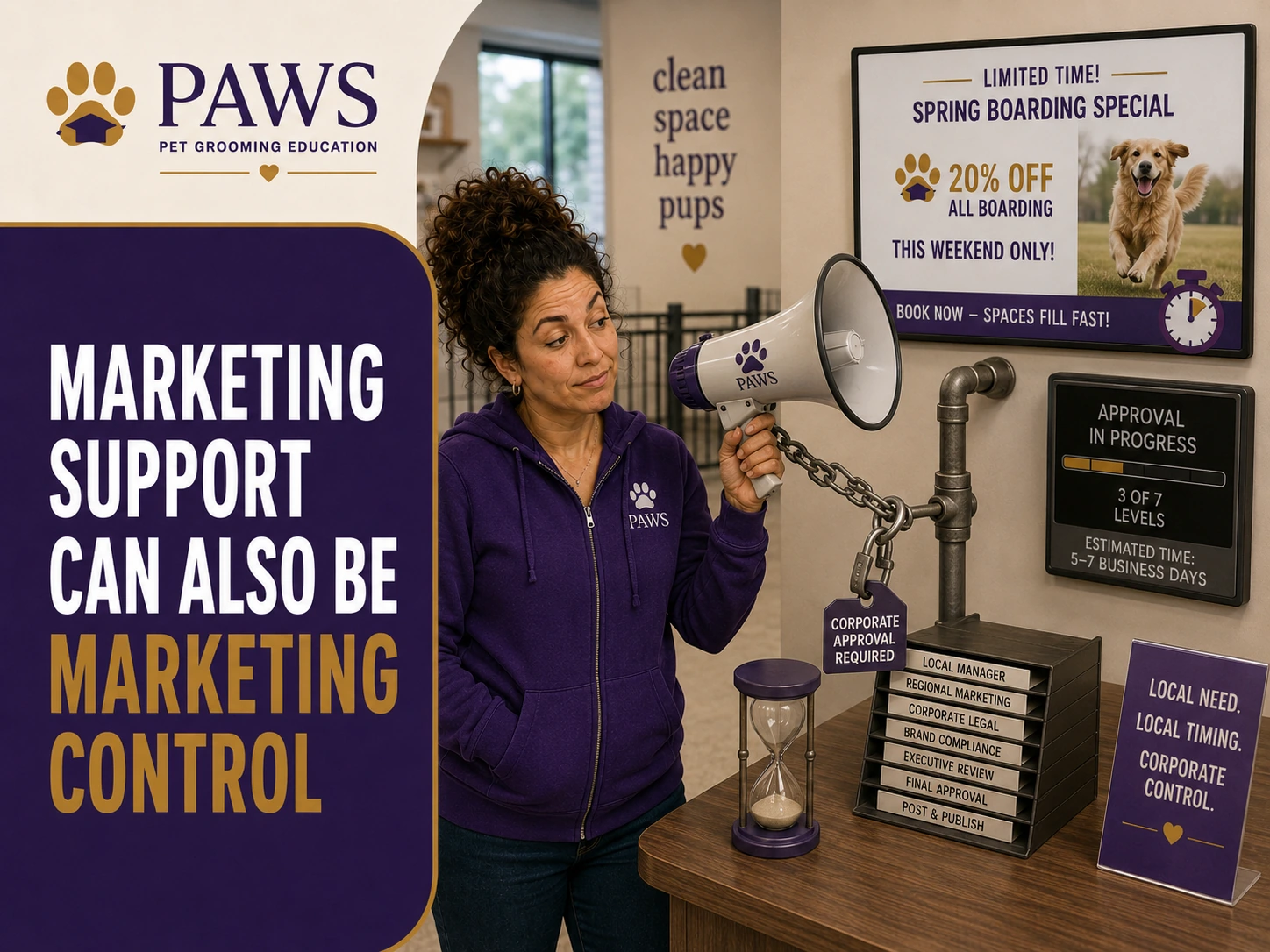
Marketing support and marketing control often travel together. The franchisor may control logos, fonts, colors, claims, offers, website language, photos, ads, promotions, social media, landing pages, review responses, email campaigns, print materials, sponsorships, and public messaging.
That can protect the brand. It can also slow the local owner down. If every local campaign, flyer, Google update, social post, seasonal offer, or landing page change needs approval, the location may lose speed in the market.
The buyer needs to know where the line is. Can you respond to local competitors? Can you run a boarding holiday push? Can you promote grooming openings? Can you advertise puppy daycare? Can you sponsor a rescue event? Can you create a local page about your neighborhood? Can you fix outdated website content quickly?
Create an approval matrix showing what can be published immediately, what needs local review, what needs corporate review, and what requires legal or crisis approval.
Identify whether corporate can require campaigns, block offers, control pricing language, or restrict service-specific content after opening.
- What marketing requires prior approval?
- What marketing can be done locally without approval?
- How fast are approvals?
- Can approvals be denied for broad brand reasons?
- Are local promotions allowed?
- Can the location create local SEO content?
- Can the location respond to reviews and local complaints?
- Who controls emergency messaging if something serious happens?
🧷
Marketing Asset Ownership: Who Keeps the Local Goodwill?
The customer relationship may be local, but the marketing assets may not be yours.
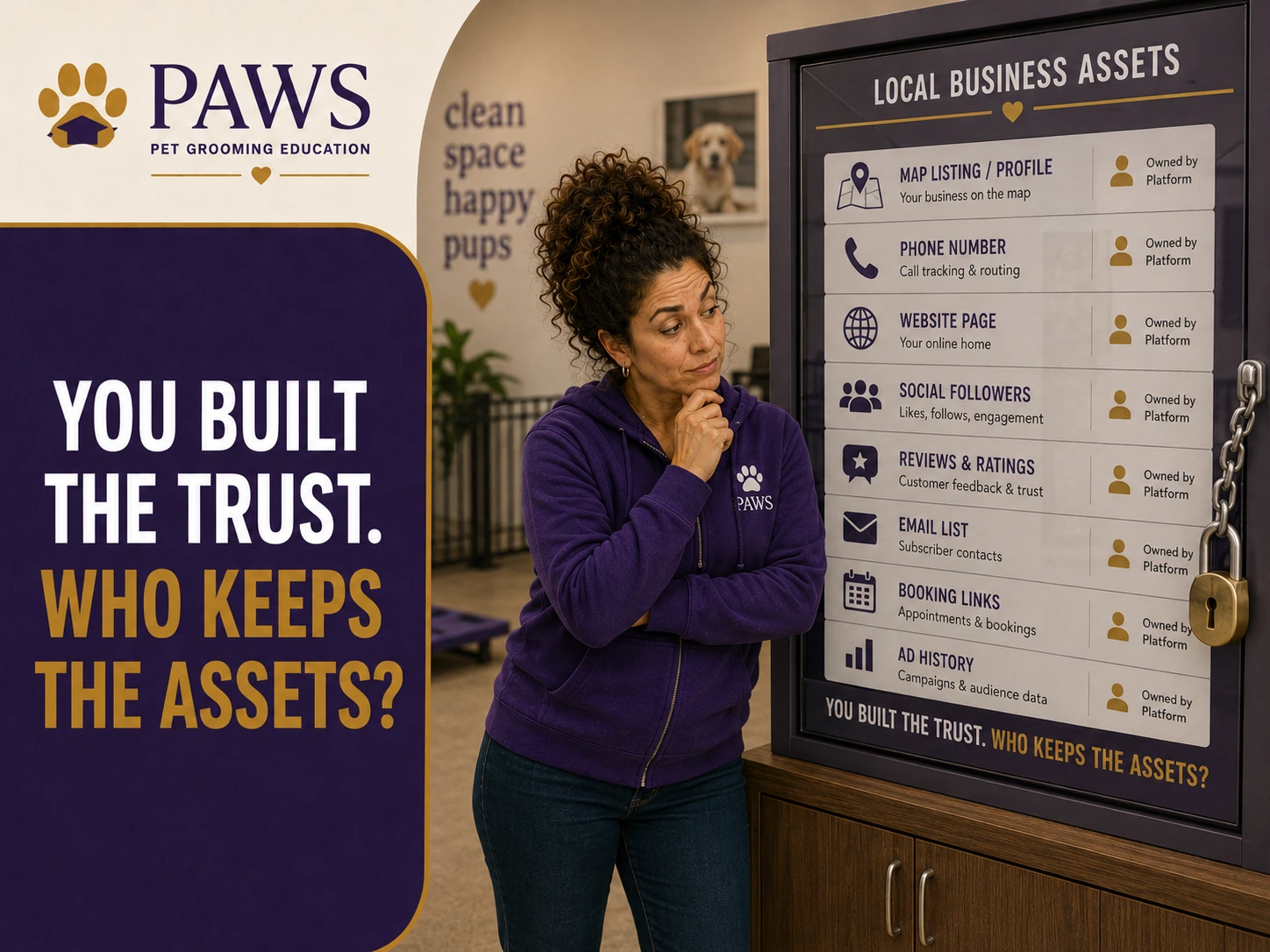
This is one of the biggest marketing-control questions in a franchise. If the local owner builds reviews, customer lists, photos, social followers, local search visibility, referral relationships, and community goodwill, who controls those assets?
A franchise may control the website, booking links, phone numbers, tracking numbers, Google Business Profile, social pages, email list, customer app, CRM, review platform, ad account, and local landing page. That may be convenient while the relationship is good. It can become a major issue if the owner sells, renews, transfers, rebrands, disputes, or exits.
The buyer should not treat marketing asset ownership as a small technical detail. Those assets may be part of the real value of the local business.
Document the legal owner, administrator, recovery email, phone number, export rights, transfer process, and post-termination treatment for every marketing account.
Loss of a phone number, booking link, customer list, domain, profile, or ad history can interrupt local goodwill even when reviews remain visible.
| Asset | Why It Matters | Question to Ask |
|---|---|---|
| Google Business Profile | Holds local search visibility, reviews, photos, calls, directions, and map trust. | Who owns, manages, and controls it during the term and after exit? |
| Local Phone Number | Customers may remember and save it. | Is the number portable, or does it stay with the franchise system? |
| Local Website Page | Converts local searchers into calls, bookings, and tours. | Can I update it quickly, and what happens to it if I leave? |
| Booking Links | Control the customer path from interest to appointment. | Who controls the links, forms, app, customer portal, and tracking? |
| Reviews | Reviews are local trust built by staff and service quality. | Do reviews stay attached to the location, brand, Google profile, or platform? |
| Social Pages | Local customers may follow the page for photos, events, boarding updates, grooming work, and personality. | Who owns the page and followers if the relationship ends? |
| Email / SMS Lists | Customer lists can drive boarding, daycare, grooming, reactivation, and reviews. | Can I export and use the list, or is it locked inside the franchise platform? |
| Ad Accounts and Pixels | Paid ads improve with history, audiences, conversion data, and retargeting. | Are ad accounts local-owned, corporate-owned, agency-owned, or vendor-owned? |
📄
Where Marketing Support Shows Up in the FDD
Do not rely on the sales deck. Find the marketing obligations in the documents.
| FDD Area | What to Look For | Marketing Issue |
|---|---|---|
| Item 6 | Advertising fees, brand fund fees, technology fees, software fees, website fees, and other recurring charges. | What you keep paying after opening. |
| Item 7 | Initial marketing, grand opening advertising, pre-opening expenses, and opening support assumptions. | What you must spend before the location has stable revenue. |
| Item 8 | Required marketing vendors, approved suppliers, signage vendors, website vendors, software vendors, or print vendors. | Whether marketing purchases are controlled. |
| Item 11 | Advertising programs, ad fund administration, local advertising requirements, websites, computer systems, training, manuals, and support. | What the franchisor says it provides and what you must do locally. |
| Item 12 | Territory, reserved rights, internet sales, online marketing, and customer channels. | Whether your local market is actually protected. |
| Item 13 | Trademark rules, brand use, website rules, domain restrictions, and required brand presentation. | What you can say, show, and use in the market. |
| Item 17 | Defaults, renewal, transfer, termination, post-termination obligations, and dispute resolution. | What happens if you violate marketing rules or leave the system. |
| Item 22 | Franchise agreement, software agreements, website agreements, marketing agreements, supplier agreements, and other contracts. | Binding marketing documents outside the sales conversation. |
❓
Questions to Ask the Franchisor About Marketing Support
Make them explain what actually fills the building.
- What marketing support is included before opening?
- What marketing support continues after opening?
- What marketing support costs extra?
- What are the required ad fund, brand fund, local advertising, software, website, and marketing technology fees?
- What does the ad fund actually pay for?
- How much of the ad fund is spent on national brand advertising, regional advertising, local lead generation, creative production, agency fees, marketing administration, website work, technology, or franchise development advertising?
- Do franchisees have any vote, advisory role, reporting access, or budget input on ad fund spending?
- Can any ad fund money be used to advertise for new franchisees instead of customers?
- What percentage of ad fund spending directly supports existing locations?
- Can you show examples of ad fund campaigns and explain how they helped local franchisees?
- Can you show campaign performance by market type, including cost per lead, call volume, form completions, tours, evaluations, first purchases, repeat visits, and revenue?
- Can you show performance for locations that opened in the last 12 to 24 months, not only mature locations?
- What local marketing spend is required in addition to the ad fund?
- Who controls the website, local landing page, Google Business Profile, phone number, booking links, tracking numbers, email lists, and review responses?
- Can I create local SEO content and local service pages?
- Can I run local promotions for daycare, boarding, grooming, memberships, packages, or events?
- How long does marketing approval take?
- What marketing can I do without approval?
- What marketing vendors or software are required?
- Does the franchisor or an affiliate receive money from required marketing vendors?
- How are leads tracked by source?
- Are call recordings, missed calls, form fills, booking clicks, tour requests, evaluation completions, and customer conversions tracked in one report?
- Can I see which marketing sources produce profitable repeat customers, not just leads?
- Does the system track tours, trial days, conversion, repeat visits, reviews, and revenue by marketing channel?
- What happens to my local website page, Google profile, reviews, phone number, customer list, email list, and social media pages if I leave the system?
- Can I speak with franchisees in markets similar to mine about whether marketing support actually worked?
☎️
Questions to Ask Current and Former Franchisees
The franchisor sells the marketing system. Franchisees find out whether it brings customers.
- Did franchise marketing support help before opening?
- Did grand opening support create real customers or mostly initial attention?
- What marketing source brings most of your customers now?
- Can you prove that from reports, or is it mostly your best guess?
- Which source brings your best repeat customers, not just the most inquiries?
- Does the ad fund produce leads in your market?
- Do you understand where the ad fund money goes?
- Do franchisees have any meaningful input into how ad fund money is spent?
- Would you rather keep part of the ad fund money and spend it locally yourself?
- How much local marketing do you still pay for yourself?
- Are the templates useful or mostly generic?
- Does corporate marketing help with local SEO and Google reviews?
- Who controls your Google Business Profile?
- Can you change your local website content quickly?
- Does approval slow down local promotions or social posts?
- Are you able to respond quickly to local competitors?
- Do you know which campaigns actually produced paying customers?
- Did the franchisor train your staff to convert calls and tours?
- What marketing did you have to build yourself anyway?
- If you left the system, what marketing assets would you lose?
- Would you keep your phone number, Google Business Profile, local reviews, social pages, email list, booking links, customer records, and ad account history?
- Would leaving the system damage your ability to keep reaching your existing local customers?
- Would you still pay the same marketing fees knowing what you know now?
📋
Franchise Marketing Support Scorecard
Pretty marketing is nice. Measurable local customer flow is better.
Score results, control, and portability separately, because a system may perform well while creating serious asset dependence.
Support every score with franchisee evidence, invoices, approval times, lead reports, account access, and exit experience.
| Score Area | Strong Sign | Warning Sign |
|---|---|---|
| Local Lead Generation | Franchisees can identify real local leads from search, reviews, ads, events, referrals, and outreach. | Marketing support sounds good but nobody can show what produced customers. |
| Ad Fund Value | Fund spending is transparent, useful, and connected to franchisee benefit. | Franchisees pay the fund but still feel entirely responsible for local customer acquisition. |
| Local SEO | Location pages, Google profiles, reviews, photos, content, and service listings are actively managed. | Local SEO is thin, slow, generic, or controlled by people who do not understand the local market. |
| Reviews | The system helps request, monitor, respond to, and learn from reviews. | Reviews are treated as an afterthought even though they drive trust. |
| Templates | Templates are practical, updated, localizable, and used by franchisees. | Templates are polished but generic, stale, or disconnected from actual lead conversion. |
| Local Flexibility | The owner can move quickly within brand rules. | Corporate approval slows down common-sense local marketing. |
| Conversion Support | Staff are trained to handle inquiries, tours, evaluations, packages, boarding, grooming, and follow-up. | The system creates ads but does not help the front desk close customers. |
| Tracking | Leads, tours, trial days, bookings, reviews, and revenue can be tied to marketing source. | Owners spend money without knowing what works. |
| Long-Term Value | Experienced franchisees still say marketing support is worth the fees. | Marketing value was mostly front-loaded around launch. |
🗂️
Keep Reading Before You Sign
Marketing support only makes sense when you compare it against cost, control, brand recognition, and royalties.
🏷️
Brand Recognition
Marketing support is stronger when local customers already recognize and trust the name.
🍟
Golden Arches Test
If the logo disappeared tomorrow, would your marketing engine still bring customers?
🧾
Franchise Royalties
Marketing support may be one reason for ongoing fees. Make sure the value is still there after opening.
🔒
Control and Approved Vendors
Marketing support often comes with approval rules, website control, brand rules, and required vendors.
📄
Franchise FDD
Advertising fees, marketing obligations, website control, and required systems should show up in the documents.
🧠
Consultant vs. Franchise
A consultant can help build a local marketing plan without taking long-term control of your brand assets.
❓
Dog Daycare Franchise Marketing Support FAQ
Detailed answers about ad funds, local marketing, SEO, reviews, templates, social media, lead tracking, conversion, marketing control, asset ownership, and proving local customer demand.
Does franchise marketing support guarantee local customers?
No. A franchisor may provide a recognizable brand, launch calendar, website, advertising templates, paid-campaign guidance, social media materials, review tools, and lead-tracking software, but none of those assets guarantees that nearby dog owners will call, schedule a tour, complete an evaluation, or become repeat customers.
Local demand still depends on whether the location is visible in nearby searches, has strong reviews, answers inquiries quickly, presents a trustworthy facility, explains its services clearly, follows up with prospects, and delivers care that customers recommend. Marketing support should therefore be judged by the customers and revenue it helps produce, not by the number of files, campaigns, or dashboards the franchisor provides.
What should franchise marketing support include?
Useful support may include brand standards, grand-opening planning, local website pages, Google Business Profile guidance, paid-ad strategy, social media materials, email campaigns, review-request systems, referral tools, community-outreach materials, phone scripts, tour scripts, conversion training, and reporting that connects marketing activity to customer behavior.
The buyer should determine who performs each task, what is included in the franchise fees, what requires additional spending, how quickly corporate responds, and what remains the local owner’s responsibility. A strong system should explain not only what tools exist, but how the owner and staff are expected to use them to generate tours, daycare enrollments, boarding reservations, grooming appointments, reviews, and repeat visits.
What is the difference between marketing infrastructure and marketing results?
Marketing infrastructure includes the website, local landing page, Google profile, software, tracking numbers, advertising accounts, templates, email platform, social media accounts, CRM, review system, campaign calendar, and reporting dashboard. These tools create the structure through which marketing can be planned, launched, measured, and improved.
Marketing results are the business outcomes that follow: calls, forms, tours, temperament evaluations, first daycare visits, boarding stays, grooming appointments, package sales, memberships, repeat visits, reviews, referrals, and revenue. A franchisor may have impressive infrastructure while still producing weak local results, so the buyer should insist on evidence showing how the tools move customers through the entire lead-to-revenue chain.
Does a national brand automatically create local demand?
No. A franchise may be visible to investors, industry professionals, or people researching franchise opportunities while remaining largely unknown to dog owners in the buyer’s actual market. National reach, website traffic, social followers, and brand impressions do not prove that nearby pet owners recognize the name or intend to use the location.
Buyers should test local recognition before assigning substantial value to the brand. That means reviewing local search results, asking ordinary dog owners whether they know the name, comparing nearby competitors, studying existing regional locations, and determining whether the brand produces measurable calls, tours, and bookings in comparable markets.
Is an ad fund the same as local advertising?
No. A systemwide ad fund may pay for national campaigns, regional media, brand development, creative production, agency fees, website work, public relations, marketing administration, technology, or other activities intended to benefit the franchise system as a whole.
Local advertising is the activity intended to bring customers to one specific facility. It may include local paid search, map visibility, review generation, apartment outreach, veterinary relationships, rescue events, community sponsorships, direct mail, local social campaigns, signage, and seasonal boarding or grooming promotions. A franchisee may be required to fund both the systemwide ad fund and a separate local-marketing budget.
How can I tell how much ad-fund money reaches my market?
Ask for reports showing how the fund is divided among media spending, agencies, administration, technology, creative production, national campaigns, regional campaigns, website work, public relations, franchise-development advertising, and direct support for existing locations. The buyer should also ask whether franchisees receive regular financial reporting or have any advisory role in how the fund is used.
Then ask for campaign results from markets similar to the proposed territory. Useful evidence includes local impressions, branded and non-branded search activity, calls, forms, tours, evaluations, first purchases, repeat visits, acquisition cost, and revenue. A broad statement that the fund builds awareness is not enough to show that it helps fill one location.
Why is franchise marketing rarely one clean number?
Marketing costs may be spread across a percentage-based brand fund, required local advertising, grand-opening spending, website fees, software fees, review platforms, call tracking, social media services, SEO services, required agencies, printing, photography, paid-search budgets, and other approved vendors.
Buyers should combine every required and realistically necessary expense into one monthly, annual, and multi-year marketing budget. The analysis should also show who controls each expense, whether the amount can increase, whether the franchisee can change vendors or channels, and whether the spending produces measurable customers rather than merely maintaining access to the marketing system.
Are marketing templates valuable?
They can be valuable because they save time, keep the brand professional, and give an inexperienced owner a starting point for launch announcements, flyers, social posts, review requests, veterinary outreach, apartment partnerships, boarding reminders, grooming promotions, and seasonal campaigns.
Their value depends on whether they are current, localizable, easy to use, connected to a real campaign, and supported by tracking and follow-up. A polished template sitting unused in a franchise portal does not create customers. Buyers should ask which materials franchisees actually used recently and what measurable results those campaigns produced.
Why does local SEO matter so much for dog daycare?
Many customers begin by searching for nearby daycare, boarding, grooming, puppy care, or pet services. They compare map placement, distance, reviews, photos, hours, service descriptions, facility information, and booking convenience before deciding which businesses to contact.
That makes the Google Business Profile, local landing page, accurate categories, current photos, service-specific content, review activity, phone number, hours, and booking links part of the location’s front door. The buyer should know who controls those assets, how quickly errors can be corrected, and whether reporting connects local search visibility to calls, tours, bookings, and repeat customers.
What is the cookie-cutter SEO risk?
A franchise may give every location the same basic page, repeated service descriptions, generic city language, stock photographs, identical FAQs, and a centralized update process. That creates consistency, but it may provide little evidence that the page understands the real facility, neighborhood, service mix, staff, customers, or competitive market.
Strong local search usually requires accurate and location-specific proof. Buyers should examine whether the page can include real facility photographs, current staff, local reviews, neighborhood information, distinct service pages, holiday hours, events, actual amenities, boarding availability, grooming details, and timely updates without waiting weeks for corporate approval.
Who earns local reviews?
Software may send the review request, but the local staff earns the review. Customers respond to how calls are handled, how their dog is introduced, whether rooms are clean, how staff communicate, how incidents are managed, whether boarding instructions are followed, whether grooming work meets expectations, and whether billing is accurate.
A useful franchise system should make requesting and monitoring reviews easier while also helping the location learn from them. Repeated comments about communication, safety, cleanliness, staff, billing, grooming, or boarding should be treated as operating information that affects training and management, not merely as a public star rating.
What local marketing work still belongs to the owner and staff?
The local team usually remains responsible for answering calls, responding to messages, conducting tours, following up with prospects, requesting reviews, posting real local content, building veterinary and grooming relationships, visiting apartment communities, attending rescue events, developing referral partners, and staying visible in the neighborhood.
A franchise can provide scripts, graphics, schedules, and guidance, but it generally cannot build every local relationship or convert every customer. The buyer should decide who on the local team owns each marketing responsibility and how that work will continue during busy periods, staff turnover, vacations, or management changes.
Why does generic social content often underperform local content?
Generic corporate posts may look professional, but they do not necessarily show customers what happens inside the location they are considering. Dog owners often want to see real staff, real dogs, current playgroups, facility improvements, grooming work, boarding activities, events, community relationships, and the personality of the local business.
A practical franchise policy should allow routine local content to be posted quickly while reserving closer approval for legal claims, crisis communications, major promotions, or sensitive brand issues. When every photograph or local update requires a long approval process, the social page can become polished but stale and disconnected from the community.
How should referral sources be tracked?
Staff should record how each prospect found the business during calls, online inquiries, tours, evaluations, and first purchases. Sources may include Google search, maps, paid ads, social media, veterinarians, apartments, rescue events, customer referrals, groomers, direct mail, signage, drive-by traffic, or local partnerships.
Reporting should connect the original source to response time, completed tours, evaluations, first purchases, repeat visits, package or membership adoption, reviews, referrals, and revenue. Tracking only the first inquiry can cause the owner to favor channels that create many weak leads while overlooking sources that produce fewer but more loyal and profitable customers.
Why do leads not automatically create revenue?
A lead can disappear through a missed call, slow email response, confusing website, weak tour, poor explanation of pricing, unavailable evaluation appointment, inconsistent follow-up, or staff who cannot confidently explain daycare, boarding, grooming, safety procedures, and service expectations.
Marketing support should therefore reach the front desk and management team. A strong system should help the location monitor response time, missed calls, tour completion, evaluation scheduling, first purchases, no-shows, lost leads, price objections, and follow-up so the owner can see exactly where potential customers are being lost.
What should the lead-to-revenue chain measure?
It should begin with visibility, including search rankings, map views, advertising reach, social activity, event exposure, and referral contacts. It should then track calls, forms, messages, response time, tours, evaluations, first purchases, packages, memberships, boarding reservations, grooming appointments, and other initial revenue.
The chain should continue through repeat visits, retention, average customer value, reviews, referrals, acquisition cost, and profitability. A campaign that produces many discounted trial visits but few repeat customers may be less valuable than a smaller referral channel that produces long-term daycare, boarding, and grooming clients.
How can marketing support also become marketing control?
The same system that provides brand assets and campaigns may also control claims, promotions, pricing language, photographs, local pages, social posts, emails, advertising accounts, review responses, sponsorships, signs, landing pages, and emergency communications. Some control may be reasonable to protect the brand and avoid misleading statements.
The risk appears when approval is slow, standards are vague, local opportunities expire, or the owner cannot correct inaccurate information quickly. Before signing, the buyer should obtain a clear approval matrix showing what can be done locally, what requires corporate review, how long review takes, and what happens when corporate does not respond.
Which marketing assets should I investigate before signing?
Investigate the Google Business Profile, local phone numbers, tracking numbers, domain names, local website pages, booking links, social accounts, email accounts, customer lists, SMS lists, review platforms, advertising accounts, pixels, analytics, photographs, videos, call recordings, CRM data, and campaign history.
For each asset, determine the legal owner, administrator, login holder, recovery contact, export rights, transfer rights, and treatment after renewal, transfer, termination, or rebranding. A local business can lose substantial goodwill if it loses access to the phone number, customer list, reviews, booking path, ad history, or profile through which customers already know the location.
What should I ask current and former franchisees?
Ask which marketing sources produce their best customers, how much they still spend locally, whether the ad fund generates measurable leads, how useful the templates are, whether corporate approval causes delays, who controls the Google profile and website, and whether the system helps staff convert inquiries.
Also ask what they had to build themselves, which required vendors performed poorly, whether reports connect marketing to revenue, what assets they would lose by leaving, and whether they would pay the same marketing fees again. Speak with newly opened, mature, struggling, successful, transferred, and former locations because marketing value may change significantly over time.
What is the bottom-line test for franchise marketing support?
The system should help the location attract nearby customers, respond to them, convert them, retain them, understand where they came from, and improve the process over time. Those benefits should be measurable through calls, tours, evaluations, bookings, repeat visits, reviews, referrals, revenue, acquisition cost, and customer retention.
The buyer should compare that value with the complete marketing fee stack, required local spending, approval delays, vendor restrictions, asset-control risks, and the cost of building an independent marketing system. Marketing support is valuable when it produces a stronger local business, not merely when it produces polished materials and impressive systemwide statistics.
🐾
The Bottom Line: Marketing Support Should Produce Local Customers
Brand polish is nice. Filled playrooms, booked boarding, full grooming days, and steady inquiries are better.
Dog daycare franchise marketing support can have real value. Brand materials, templates, grand opening plans, social media calendars, local SEO help, review tools, outreach scripts, ads, and conversion training can help a new owner start faster and look more professional.
But the buyer has to separate marketing appearance from marketing performance. The question is not whether the franchisor has graphics, slogans, templates, and a brand guide. The question is whether the system helps your actual location attract, convert, and keep local customers.
A national brand may help. An ad fund may help. Templates may help. But the local grind still matters: Google reviews, local search, vet relationships, apartment outreach, rescue events, community visibility, phone handling, tours, follow-up, and staff service.
Before signing, make the franchisor explain exactly how marketing support turns into local revenue. Who does the work? Who pays? Who controls the assets? What can you change locally? What gets tracked? What happens if the leads do not show up?
Connect every required marketing dollar to a deliverable, owner, metric, and local result.
The strongest system helps the location attract, convert, retain, and understand customers while preserving practical access to the relationships and assets it helped build.
📱
Social Media: Corporate Content vs. Real Local Personality
Generic posts do not build the same trust as real dogs, real staff, and real local proof.
A franchise may provide social media calendars, captions, holiday graphics, educational posts, brand-approved images, campaign templates, and posting rules. That can save time and keep the brand consistent.
But dog daycare social media works best when it feels local and real. Customers want to see dogs playing, staff interacting, holiday photos, boarding updates, grooming before-and-after moments, happy dogs, clean rooms, facility improvements, and personality from the actual location they use.
If every location posts the same generic content, the page may look professional but not especially local. The buyer should ask whether the franchise allows enough local personality to build trust without turning every post into an approval process.
Distinguish routine local content from higher-risk claims, crisis messaging, promotions, and brand changes so ordinary posts do not require unnecessary delay.
Maintain account ownership, recovery access, permissions, and continuity through staff or agency changes.